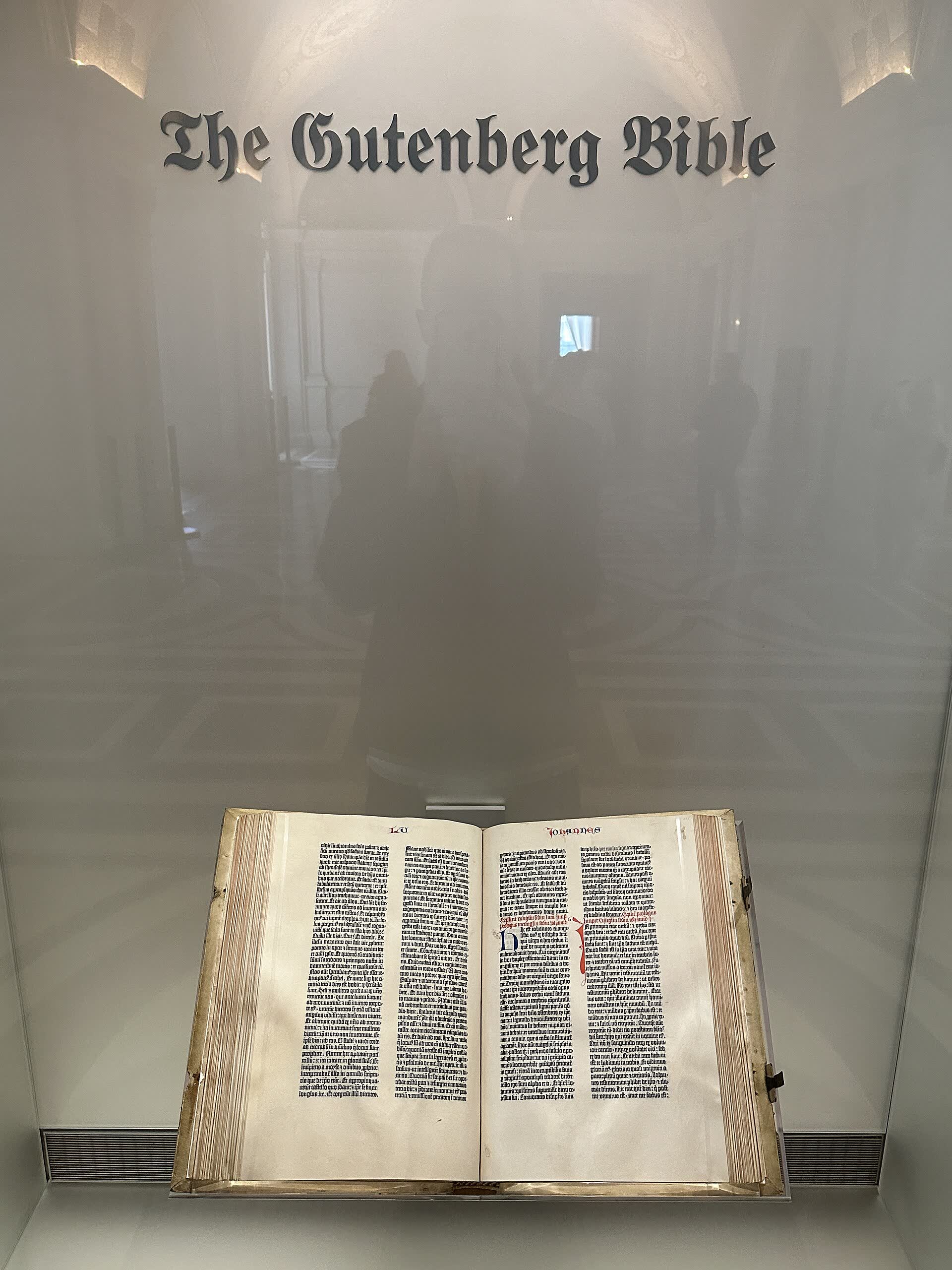
A page of the Gutenberg Bible, c. 1455
APK, CC BY 4.0, via Wikimedia Commons
Documentary IV · VI chapters · a 10-minute walk
The Residue
A great many people say their Bibles have changed — that verses they knew by heart now read differently. This is not a debunking and it is not an endorsement. It is a test, run on the one instrument that can actually settle part of it: the 1611 itself.
Every reading in this documentary links to the page it came from. Check all of it.
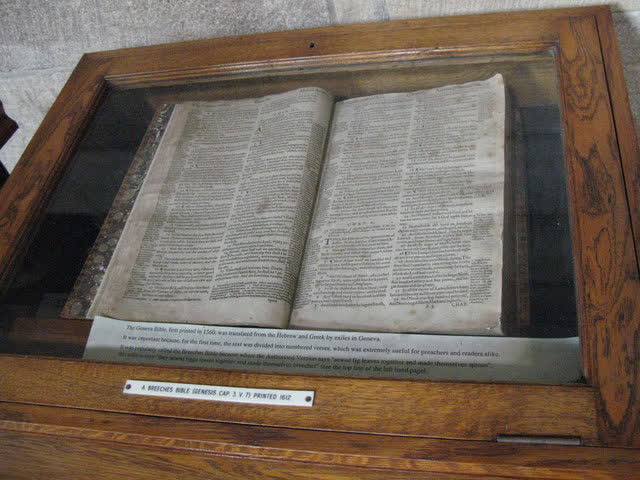
A 17th-century Geneva 'Breeches' Bible
Mike Quinn, CC BY-SA 2.0, via Wikimedia Commons
Chapter I — The Memory
The term was coined in 2009, by a writer named Fiona Broome, who found that she and a room full of strangers shared a vivid memory of Nelson Mandela dying in prison in the 1980s. He had not. He was released in 1990 and died in 2013. The memory was detailed, confident, and wrong — and it was shared.
That is the whole engine of the thing. Not that a person misremembers — people misremember constantly — but that large numbers of people misremember the same detail the same way. A bear family spelled Berenstein. A cornucopia in a fruit-company logo. A line of dialogue nobody ever said.
Applied to scripture, the claim sharpens into something far more serious. Not ‘I misremembered a verse’ but ‘the verse itself has been altered’ — retroactively, supernaturally, in every printed copy at once. That is the claim this documentary takes seriously enough to actually test.
And it deserves testing rather than mockery, because the people making it are not fools. They are, overwhelmingly, people who read their Bibles closely enough to notice wording at all. That is not nothing.
So: three of the most-cited examples, put to the 1611.
What is remembered
The lion shall lie down with the lamb.
The modern KJV
The wolf also shall dwell with the lamb, and the leopard shall lie down with the kid…
The 1611, as printed
The wolfe also shall dwell with the lambe, and the leopard shall lie downe with the kid…
The remembered line is not in the modern KJV — and it was not in the 1611 either. Whatever produced this memory, it was not a change to the printed text.
Readings set from the 1611 first edition and the modern KJV
Text from this site's own 1611 Reader — check any of it yourself
Chapter II — The Test
Start with the most famous one. Almost everyone can finish the sentence: the lion shall lie down with the lamb. It is on greeting cards. It is in sermons. It is the single most-cited example of a changed verse.
The modern King James does not say it. It reads the wolf also shall dwell with the lamb — and the lion turns up two verses later, eating straw.
And the 1611 first edition, in its own spelling, reads ‘The wolfe also shall dwell with the lambe.’ Same animal. Four hundred years ago.
This one does not survive the test. The memory is real and it is widespread — but the text it is measured against never read that way.
The second claim
Try one people know even better than Isaiah — the words most Christians could recite in their sleep. Our Father, who art in heaven.
The King James reads Our Father which art in heaven. Not ‘who.’ And people are certain — genuinely, sincerely certain — that it used to say who.
The 1611 sets it ‘Our father which art in heauen.’ Which, again. The remembered wording is not an invention, though — it is the Book of Common Prayer, recited in churches for centuries alongside the King James.
A memory can be accurate to something and still not be accurate to this.
The third claim
One more, and this one is in the catalog as its very first entry: Genesis 1:1, where a great many people remember ‘the heavens’, plural.
The modern King James reads the heaven and the earth, singular. And the 1611 sets it singular too — ‘the Heauen, and the Earth.’
Here the reporters have a real point buried in the claim: the Hebrew shamayim is plural in form, and plenty of translations render it ‘heavens.’ The catalog’s own note says exactly that.
But that is an argument about translation, not evidence of alteration. The King James has read ‘heaven’ here since the year it was printed.
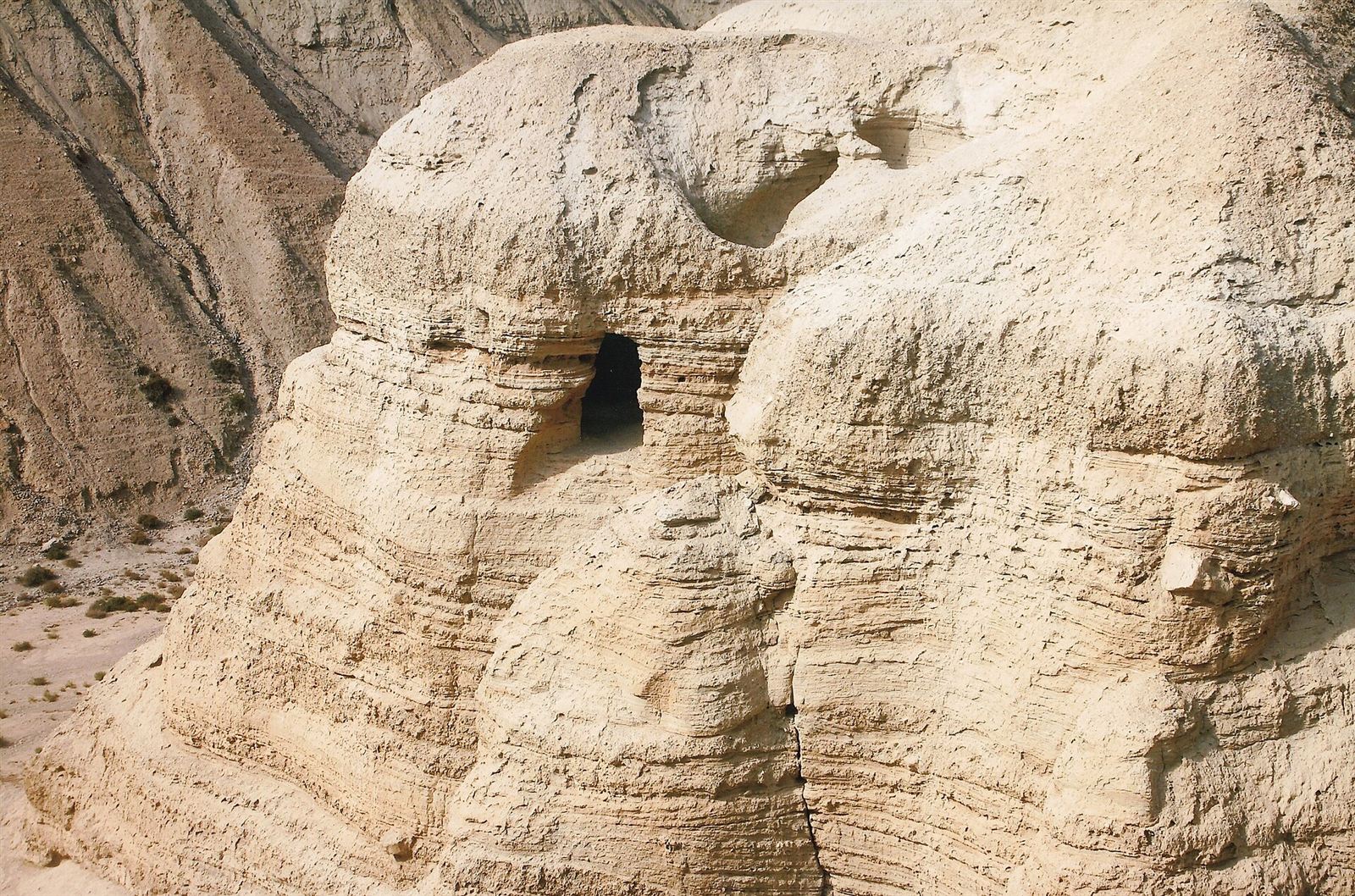
A cave at Qumran
Peter van der Sluijs, CC BY-SA 4.0, via Wikimedia Commons
Chapter III — The Control
Every test needs a control — something that would show drift if drift were happening. For the question of whether a biblical text changes over time, we have an unusually good one, and it was found in a cave.
In 1947, in the cliffs above the Dead Sea at Qumran, a scroll of Isaiah came out of a jar essentially complete. It dates to roughly 125 BC — about a thousand years older than the oldest complete Hebrew Bible anyone had before it.
A thousand years of hand-copying, by scribes, with no printing press and no way to check against a master. If a text is going to drift, that is where you would see it.
It had not drifted. The Great Isaiah Scroll is substantially identical to the medieval Hebrew text — the differences are spelling, word order, and the odd scribal slip. Nothing that moves a doctrine.
This is the strongest single piece of physical evidence in the whole conversation, and it cuts against the maximal version of the claim. A text that survived a thousand years of scribes intact is not a fragile thing.
‘The grasse withereth, the flowre fadeth: but the word of our God shall stand for euer.’
A page of the Gutenberg Bible, c. 1455
APK, CC BY 4.0, via Wikimedia Commons
Chapter IV — What the Presses Did
Here is the part that usually gets left out of the argument on both sides. The King James Bible has, in fact, changed since 1611. A great deal. And all of it is documented.
There were major revisions in 1629, 1638, 1762 and 1769. The 1769 Blayney edition out of Oxford is the one nearly every modern ‘King James Bible’ is actually printed from. It altered spelling, punctuation, capitalisation and italics in tens of thousands of places.
Printers also simply made mistakes. The 1631 edition dropped a single word from the seventh commandment and instructed its readers to commit adultery. The crown fined the printers and burned the copies. It is known as the Wicked Bible.
Printed Bibles differing from one another is not an anomaly. It is the norm, and it has a paper trail.
A worked example
Take Ruth 3:15. The 1611 first edition ends the verse ‘and he went into the citie’ — Boaz. Your Bible today almost certainly says she — Ruth.
Two printings of the 1611 exist and they disagree on that one pronoun. Collectors have called them the ‘He’ and ‘She’ Bibles for centuries.
So when somebody opens two Bibles and finds different words, they have found something real. The question is only ever what they have found.
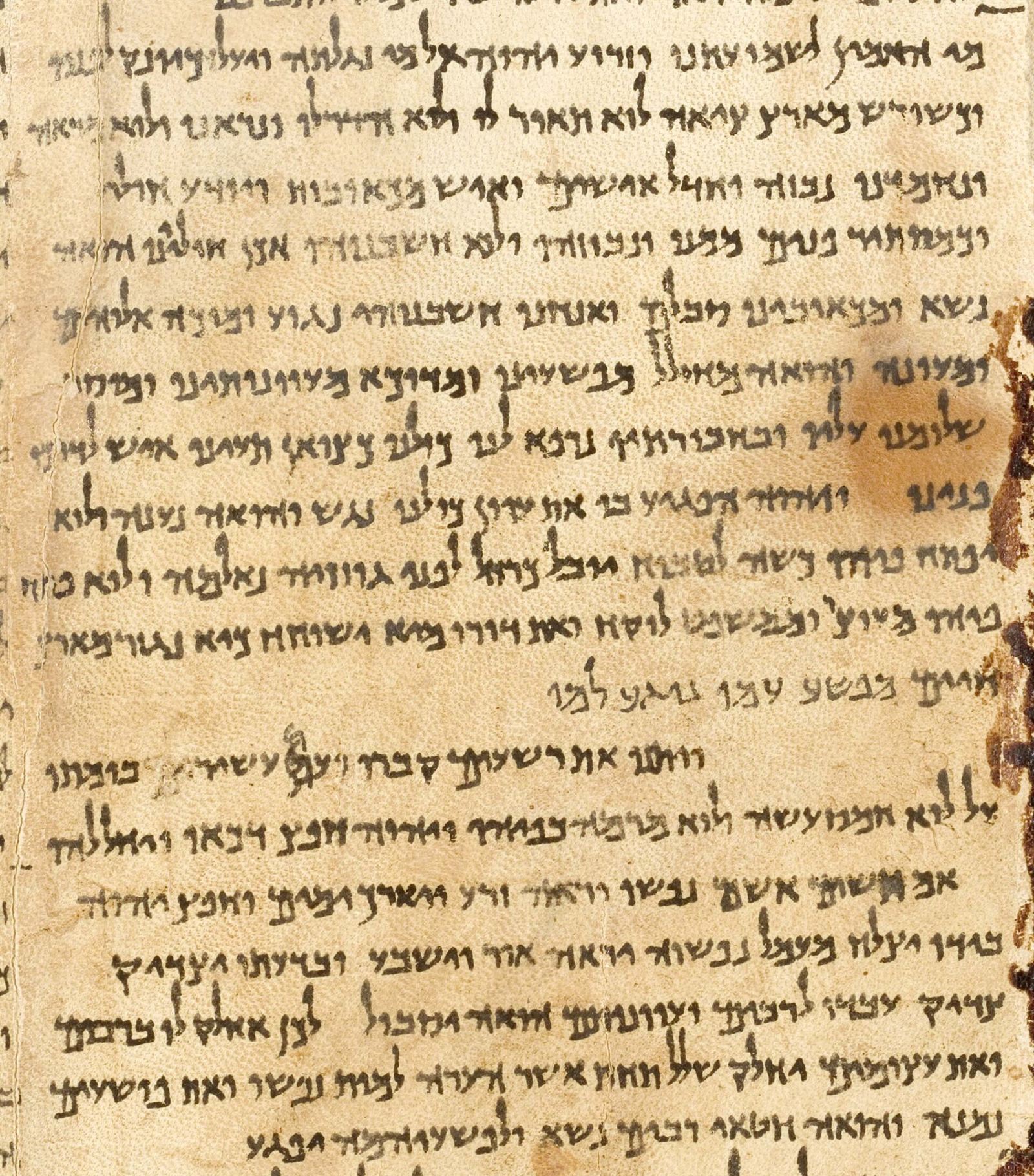
The Great Isaiah Scroll — column detail
Photograph by Ardon Bar Hama / Google Art Project, public domain
Chapter V — What That Leaves
So where does the honest accounting land? Three things are now on the table, and they do not all point the same way.
One
Some of the most famous examples do not survive contact with the 1611. The lion and the lamb was never in it. ‘Who art in heaven’ was never in it. Those memories have ordinary sources — other translations, the prayer book, a thousand sermons.
Two
Some differences between Bibles are entirely real and entirely explained. Four centuries of revisions and printers’ errors will do that, and the record of it is public.
Three
And a residue remains — readings people insist on that the editions do not account for, held with real conviction by people who know the text well. The largest public catalog of them runs to 355 reported changes across 39 books, most heavily in Matthew, Genesis, Mark and John.
This site does not tell you what that residue is. It gives you the instrument to examine it. The 1611 Reader now carries the whole catalog as an overlay: switch on Reported changes and every catalogued verse is flagged in the text, showing the 1611 reading, the modern reading, and the claimed earlier one side by side, with whatever attribution the reporter gave.
Open the Reader and switch it on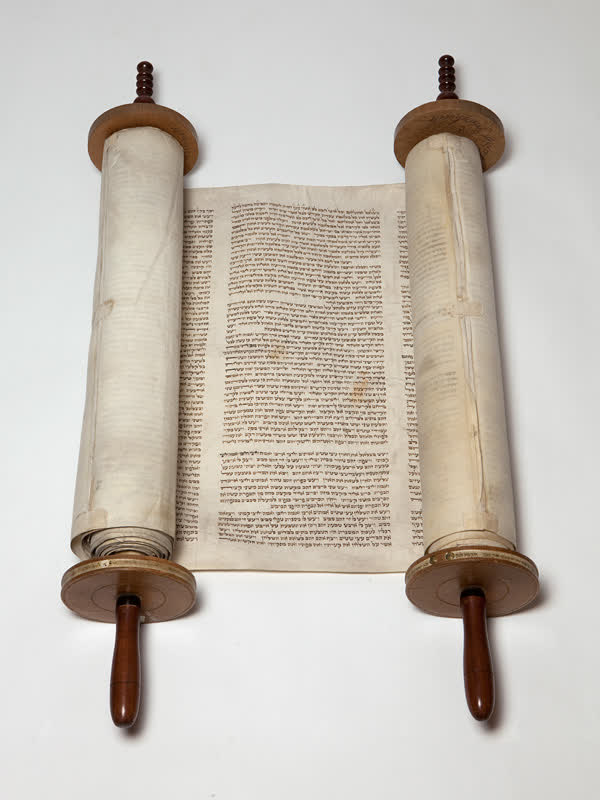
Torah scroll, 1821
LGLou, CC BY-SA 4.0, via Wikimedia Commons
Chapter VI — The Verdict
The movement rests a good deal of weight on Amos 8:11 — a famine, not of bread, but of hearing the words of the LORD — and on Revelation 22:18–19, the warning against adding or taking away.
Those are real passages and they are worth sitting with. They are also read by most of the church as describing something other than this. Both of those things can be true at once, and pretending otherwise helps nobody.
What this documentary will not do is tell you the people reporting these things are stupid, or tell you they are certainly right. The first is false. The second is not established. The evidence is mixed, and mixed is what we will call it.
‘Proue all things: hold fast that which is good.’
That is the instruction, and it is the reason this site put the 1611 online in the first place. Not so anyone would take our word for the text — so that nobody would have to.
Go and read it. Then decide.
Sources & Credits
Photographs & artworks
- A page of the Gutenberg Bible, c. 1455 — APK, CC BY 4.0, via Wikimedia Commons
- The Great Isaiah Scroll — full length and column detail — Photograph by Ardon Bar Hama / Google Art Project, public domain
- A cave at Qumran — Peter van der Sluijs, CC BY-SA 4.0, via Wikimedia Commons
- A 17th-century Geneva 'Breeches' Bible — Mike Quinn, CC BY-SA 2.0, via Wikimedia Commons
- Torah scroll, 1821 — LGLou, CC BY-SA 4.0, via Wikimedia Commons
Texts & sources
- Every reading shown was set from this site's own 1611 first-edition text and the modern KJV — /library/reader
- The Great Isaiah Scroll (1QIsaᵃ), c. 125 BC — Israel Museum, Shrine of the Book
- KJV editions of 1611, 1629, 1638, 1762 (Paris) and 1769 (Blayney)
- The Supernatural Bible Changes catalog — 355 reader-reported changes, search.thesupernaturalbiblechanges.com
- Amos 8:11–12 · Daniel 12:4, 9 · Revelation 22:10, 18–19 · 1 Thessalonians 5:21
Where this documentary states a fact, it links to the page that carries it. Where it reports a claim, it says whose claim it is. Where the evidence is mixed, it says so rather than picking a side for you.