An Evidence Walk
Is Any of This
Twelve chapters, walked honestly — the ache, the case, and the invitation. Free. No account needed.
Chapter
The Ache
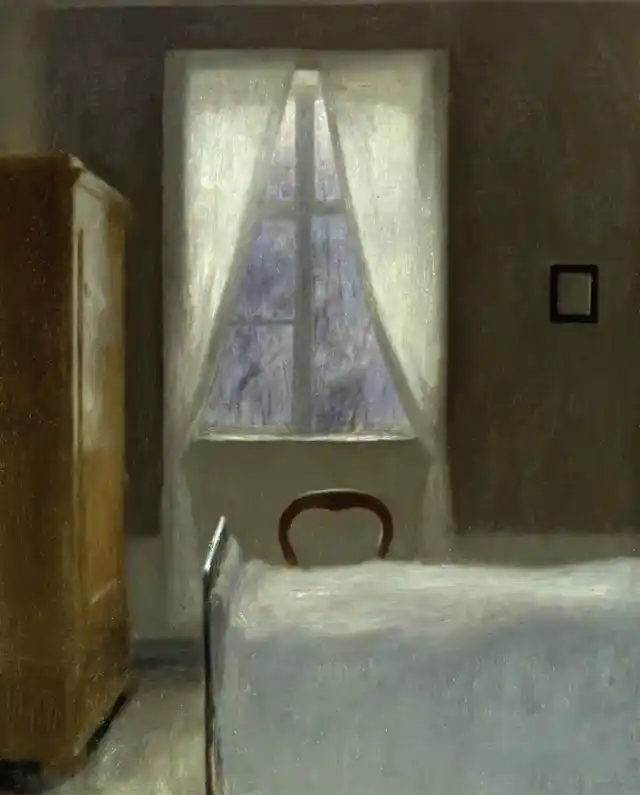

Interior
Interior, Vilhelm Hammershøi, 1890 — Ordrupgaard, Charlottenlund. Public domain, via Wikimedia Commons.
Chapter I · The Ache
omething isn't resolved. That's most of why you're here.
Scripture doesn't call that a mood you'll grow out of. It names it — something set into you on purpose, that nothing here has ever been big enough to answer:
‘He hath made every thing beautiful in his time: also he hath set the world in their heart, so that no man can find out the work that God maketh from the beginning to the end.’
This page makes its case first and asks nothing of you until the very end — and even then, nothing is required. Twelve short movements. Leave whenever you need to.
Chapter
What's Actually Wrong
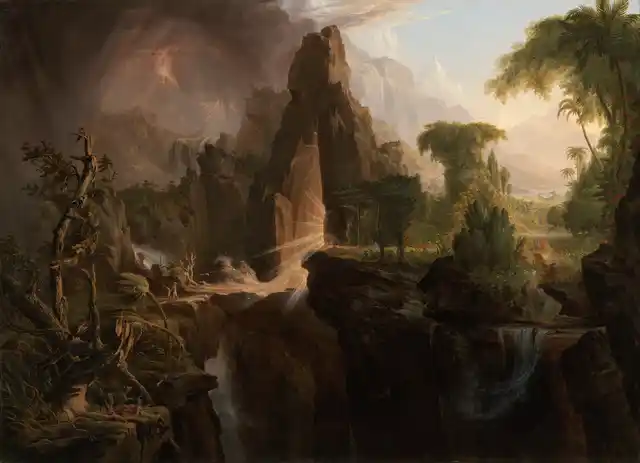

Expulsion from the Garden of Eden
Expulsion from the Garden of Eden, Thomas Cole, 1827/28 — Museum of Fine Arts, Boston. Public domain, via Wikimedia Commons.
Chapter II · What's Actually Wrong
efore anything else, here's the plain claim Scripture makes about every person reading this, including the one writing it:
‘For all have sinned, and come short of the glory of God;’
Not a metaphor for feeling bad. An actual wage, actually owed:
‘For the wages of sin is death; but the gift of God is eternal life through Jesus Christ our Lord.’
Death isn't the end of the account, either. What follows is the actual size of the problem this page is about to answer — not a small one, and not yours to solve by trying harder:
‘And as it is appointed unto men once to die, but after this the judgment:’
Chapter
Who He Says He Is
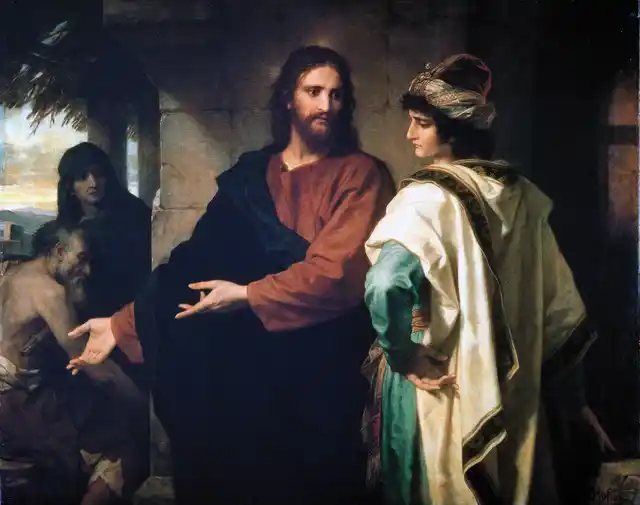

Christ and the Rich Young Ruler
Christ and the Rich Young Ruler, Heinrich Hofmann, c. 1889 — The Riverside Church, New York. Public domain, via Wikimedia Commons.
Chapter III · Who He Says He Is
e didn't offer himself as one option among several:
‘Jesus saith unto him, I am the way, the truth, and the life: no man cometh unto the Father, but by me.’
He claimed to exist before the man history calls the father of the Jewish nation:
‘Jesus said unto them, Verily, verily, I say unto you, Before Abraham was, I am.’
John's gospel opens by identifying exactly who Jesus is, before the story of his life even starts: “In the beginning was the Word, and the Word was with God, and the Word was God.” — John 1:1 (KJV) Thirteen verses later it says who that Word became:
‘And the Word was made flesh, and dwelt among us, (and we beheld his glory, the glory as of the only begotten of the Father,) full of grace and truth.’
He said this plainly, in public, to people who understood exactly what he meant by it — and picked up stones because of it:
‘I and my Father are one.’
He also claimed an authority no ordinary teacher claims: “When Jesus saw their faith, he said unto the sick of the palsy, Son, thy sins be forgiven thee.” — Mark 2:5 (KJV) Those are the terms he set. This page isn't asking you to accept them yet — just to see them plainly. And the men watching him understood exactly what that claim was:
‘Why doth this man thus speak blasphemies? who can forgive sins but God only?’
Chapter
What It Cost
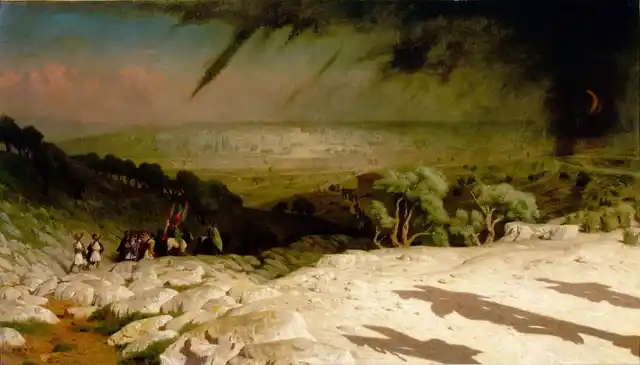

Consummatum Est (Golgotha)
Consummatum Est (Golgotha), Jean-Léon Gérôme, 1867 — Musée d'Orsay, Paris. Public domain, via Wikimedia Commons.
Chapter IV · What It Cost
ritten roughly seven hundred years before the crucifixion — a description of exactly what would happen to him:
‘But he was wounded for our transgressions, he was bruised for our iniquities: the chastisement of our peace was upon him; and with his stripes we are healed.’
Not after you cleaned yourself up. Before:
‘But God commendeth his love toward us, in that, while we were yet sinners, Christ died for us.’
The cost wasn't symbolic. It was borne, in a body, once:
‘Who his own self bare our sins in his own body on the tree, that we, being dead to sins, should live unto righteousness: by whose stripes ye were healed.’
Chapter
The Tomb Is Empty
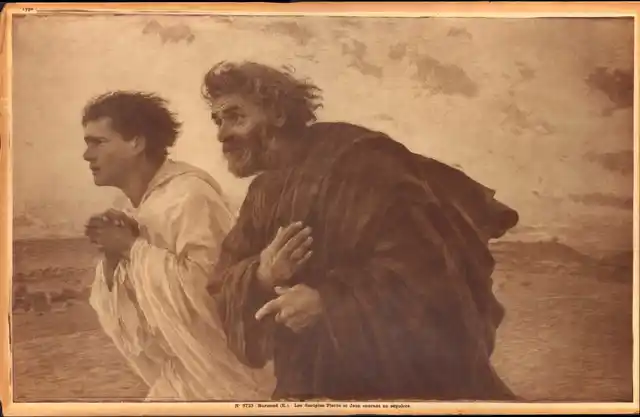

The Disciples Peter and John Running to the Sepulchre on the Morning of the Resurrection
The Disciples Peter and John Running to the Sepulchre on the Morning of the Resurrection, Eugène Burnand, 1898 — Musée d'Orsay, Paris. Public domain, via Wikimedia Commons.
Chapter V · The Tomb Is Empty
his is the hinge the whole case turns on. Not a story about a spirit living on. An empty tomb, and witnesses who went to check:
‘He is not here, but is risen: remember how he spake unto you when he was yet in Galilee,’
Paul, writing to a church full of people who could still go find the eyewitnesses and ask them directly, put it this way:
‘For I delivered unto you first of all that which I also received, how that Christ died for our sins according to the scriptures; And that he was buried, and that he rose again the third day according to the scriptures:’
The same writer said, in the same letter, what it would mean if this were false — he didn't ask you to take it on faith without saying what was at stake: “And if Christ be not risen, then is our preaching vain, and your faith is also vain.” — 1 Corinthians 15:14 (KJV) So the next chapters take that claim seriously enough to actually examine it, rather than asking you to just believe it. He pressed the point once more, three verses on:
‘And if Christ be not raised, your faith is vain; ye are yet in your sins.’
Chapter
The Case — History & Manuscripts
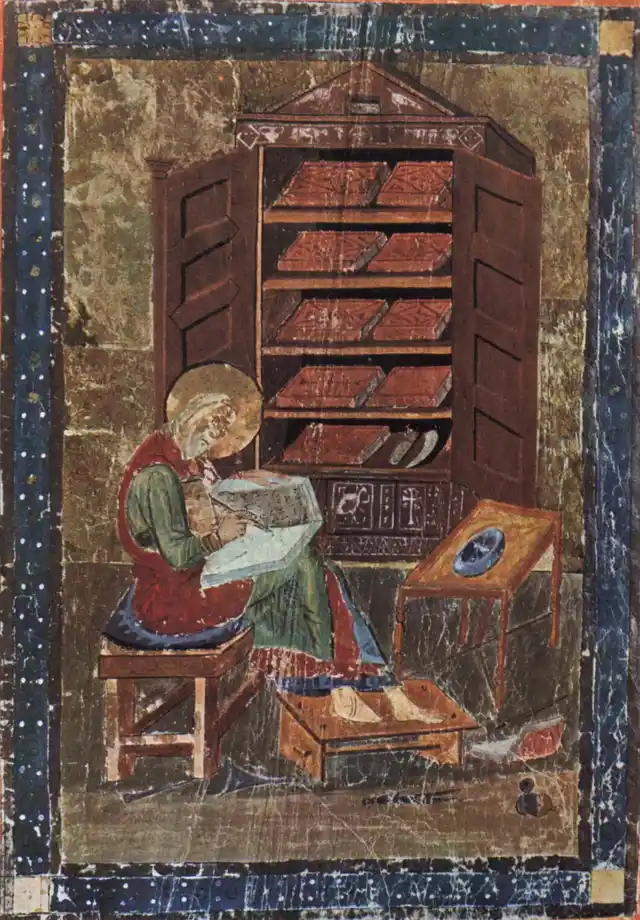

Ezra the Scribe (Codex Amiatinus, folio 5r)
Ezra the Scribe (Codex Amiatinus, folio 5r), Anglo-Saxon scriptorium, c. 700 — Biblioteca Medicea Laurenziana, Florence. Public domain, via Wikimedia Commons.
Chapter VI · The Case — History & Manuscripts
efore the resurrection claim can be weighed, a prior question: can the document making the claim be trusted at all? Manuscript count, transmission accuracy, the actual evidence — not assumed, examined:
What non-Christian Roman and Jewish historians — people with no reason to help Christianity's case — wrote about a man named Jesus:
Historical, prophetic, and manuscript evidence, laid out together in one place:
Chapter
The Case — Prophecy
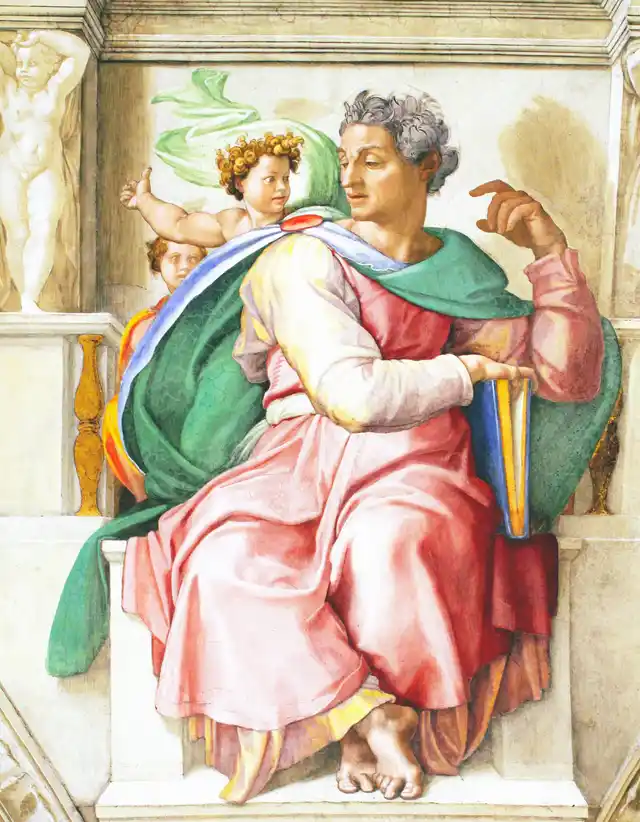

Isaiah (Sistine Chapel ceiling)
Isaiah (Sistine Chapel ceiling), Michelangelo, 1508–12 — Sistine Chapel, Vatican Museums. Public domain, via Wikimedia Commons.
Chapter VII · The Case — Prophecy
specific town, named as the birthplace of a ruler, roughly seven hundred years before he was born there:
‘But thou, Bethlehem Ephratah, though thou be little among the thousands of Judah, yet out of thee shall he come forth unto me that is to be ruler in Israel; whose goings forth have been from of old, from everlasting.’
The same prophet who wrote of the wounds in Chapter IV also wrote of the rejection, before it happened:
‘He is despised and rejected of men; a man of sorrows, and acquainted with grief: and we hid as it were our faces from him; he was despised, and we esteemed him not.’
Written centuries before Rome made crucifixion its method of execution — a description of one: “For dogs have compassed me: the assembly of the wicked have inclosed me: they pierced my hands and my feet.” — Psalm 22:16 (KJV) And two verses later, the soldiers at the foot of it:
‘They part my garments among them, and cast lots upon my vesture.’
And this one, naming the LORD himself as the one who would be pierced:
‘And I will pour upon the house of David, and upon the inhabitants of Jerusalem, the spirit of grace and of supplications: and they shall look upon me whom they have pierced, and they shall mourn for him, as one mourneth for his only son, and shall be in bitterness for him, as one that is in bitterness for his firstborn.’
Chapter
The Case — Witnesses & Changed Lives
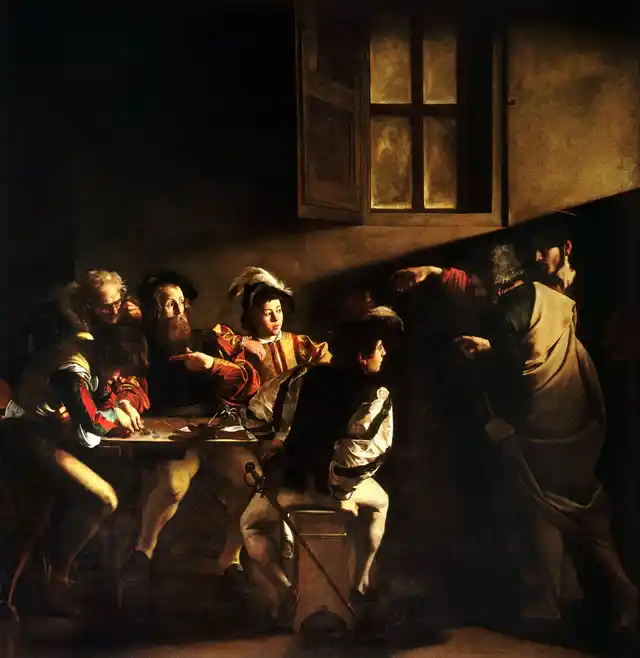

The Calling of Saint Matthew
The Calling of Saint Matthew, Caravaggio, 1599–1600 — Contarelli Chapel, San Luigi dei Francesi, Rome. Public domain, via Wikimedia Commons.
Chapter VIII · The Case — Witnesses & Changed Lives
ot a private vision one person claimed alone. Paul names a specific, checkable number, and says most of them were still alive to ask:
‘After that, he was seen of above five hundred brethren at once; of whom the greater part remain unto this present, but some are fallen asleep.’
And it hasn't stopped at the first century. Scientists, philosophers, journalists, and outright skeptics who set out to disprove this and ended up somewhere they didn't expect:
Or hear it from someone alive right now, in their own words — what they say happened to them. Their account is their own; weigh it for yourself:
If none of this is convincing secondhand, there's a page for testing it directly rather than taking anyone's word for it — including this one's:
Chapter
Going Further — Kyle's Own Convictions
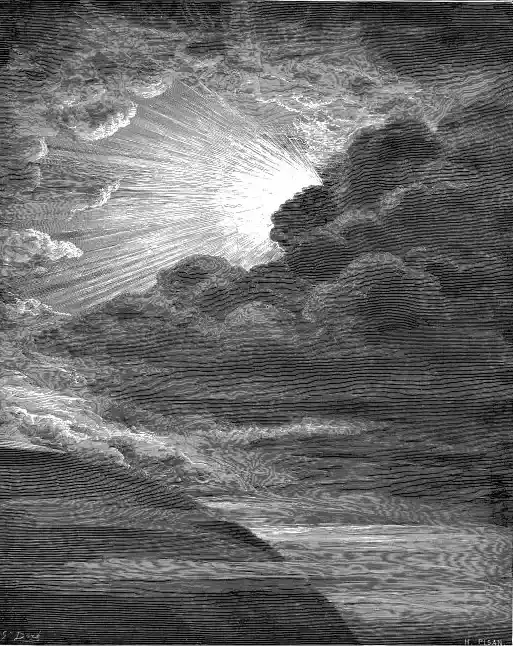

The Creation of Light
The Creation of Light, Gustave Doré, 1866 — Doré's Bible Gallery. Public domain, via Wikimedia Commons.
Chapter IX · Going Further — Kyle's Own Convictions
Kyle's conviction
verything above this line is the direct case, and nothing past this point is required to weigh it. But if you want to go further, this is where Kyle's own convictions live — labelled as his, not as settled consensus:
What follows names a real enemy. If that is hard to read tonight, this page is here first.
Kyle's conviction
Interactive documentaries built from real, credited photographs — the giants, the thousand years, the war Scripture says isn't against flesh and blood. The walks say it about themselves, in their own words: “conviction, not consensus.”
If what you just read frightened you, stop and read this first.
Kyle's conviction
One specific conviction, argued at length, and marked throughout as an argument rather than a finding: that the thousand years of Revelation 20 already happened, in the medieval church. Weigh it yourself; nothing above required you to accept it first:
Chapter
What's Being Offered
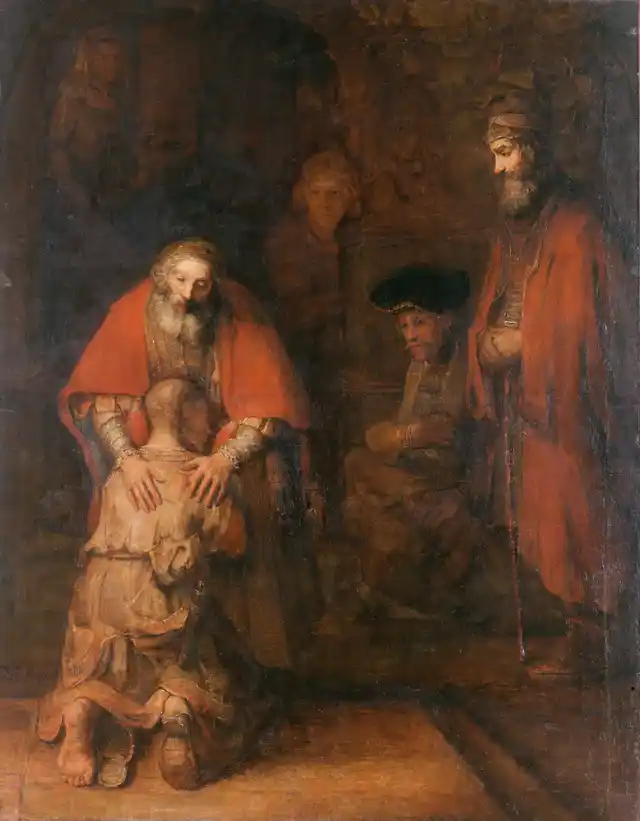

The Return of the Prodigal Son
The Return of the Prodigal Son, Rembrandt, c. 1668–69 — The State Hermitage Museum, Saint Petersburg. Public domain, via Wikimedia Commons.
Chapter X · What's Being Offered
fter the case, the offer. It was never in question that God was willing:
‘For God so loved the world, that he gave his only begotten Son, that whosoever believeth in him should not perish, but have everlasting life.’
Not self-improvement. Something Jesus called being born again — a real, new start, not a better version of the old one:
‘Jesus answered and said unto him, Verily, verily, I say unto thee, Except a man be born again, he cannot see the kingdom of God.’
Same verse from Chapter II, read again now that the case has been made — the wage was real, and so is the gift standing next to it:
‘For the wages of sin is death; but the gift of God is eternal life through Jesus Christ our Lord.’
Chapter
The Invitation
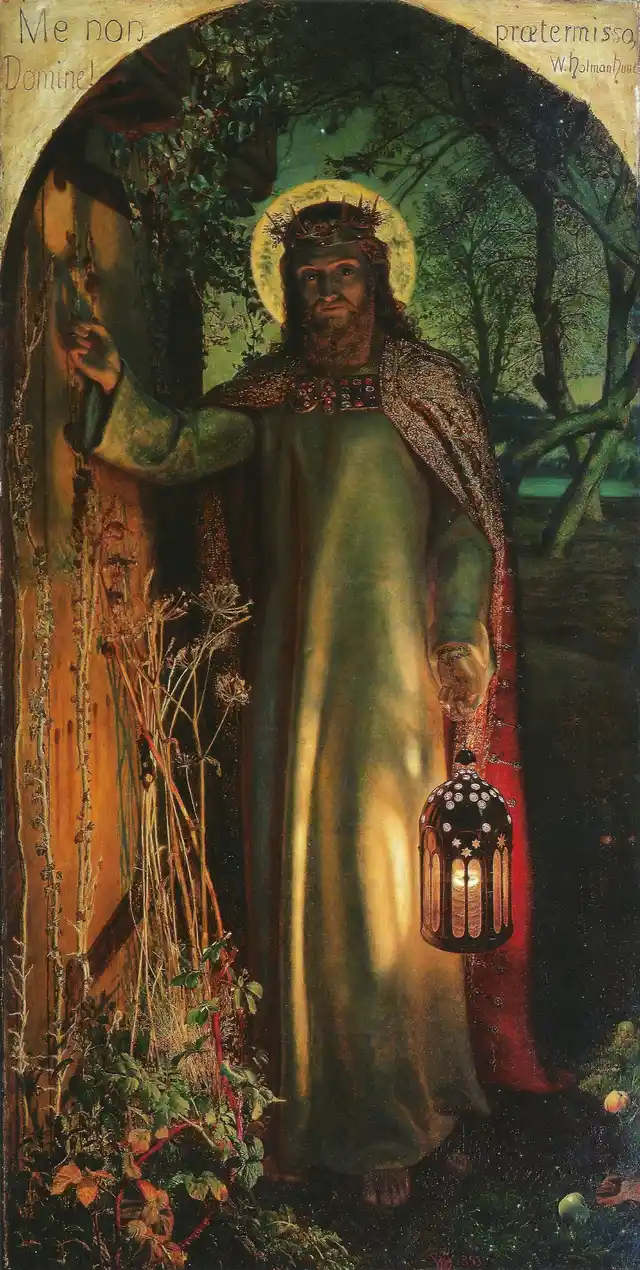

The Light of the World
The Light of the World, William Holman Hunt, 1851–53 — Keble College, Oxford. Public domain, via Wikimedia Commons.
Chapter XI · The Invitation
othing on this page can open a door for you. Only you can, if you want to. This is the invitation in his own words — not forced open, offered:
‘Behold, I stand at the door, and knock: if any man hear my voice, and open the door, I will come in to him, and will sup with him, and he with me.’
Before the words, the thing the words rest on — because it was never the praying that saves anyone:
‘That if thou shalt confess with thy mouth the Lord Jesus, and shalt believe in thine heart that God hath raised him from the dead, thou shalt be saved.’
If you want to, you can say this now — out loud or silent, in your own words or these. Nobody is watching, nobody is grading it, and nothing here tracks whether you did:
If you're not ready to say that yet, that's honestly fine — nothing on this page expires, and nobody's tracking whether you came back. If you did just mean it, though, there's a whole next page built for exactly what happens after:
Chapter
Still Not Sure
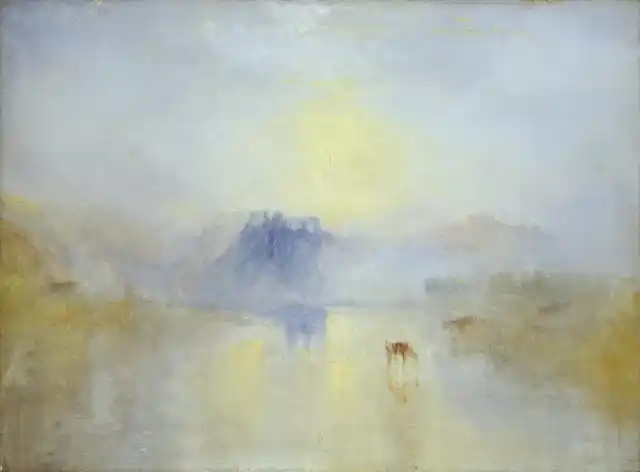

Norham Castle, Sunrise
Norham Castle, Sunrise, J.M.W. Turner, c. 1845 — Tate, London. Public domain, via Wikimedia Commons.
Chapter XII · Still Not Sure
f you read all of that and you're still not sure — that's not a failure of the case, and it's not a failure in you. Here's where the actual hard questions get actual answers:
Or ask the thing that's actually stuck with you, directly, and get an answer built the same way every answer on this site is built — one verse, then the next, with a plain note on each:
And if you'd rather find your own way in than follow this page's order, there's a page built to ask you the question directly and route you from there:
Images & Sources
- Interior (Chapter I)
- Interior, Vilhelm Hammershøi, 1890 — Ordrupgaard, Charlottenlund. Public domain, via Wikimedia Commons.
- Expulsion from the Garden of Eden (Chapter II)
- Expulsion from the Garden of Eden, Thomas Cole, 1827/28 — Museum of Fine Arts, Boston. Public domain, via Wikimedia Commons.
- Christ and the Rich Young Ruler (Chapter III)
- Christ and the Rich Young Ruler, Heinrich Hofmann, c. 1889 — The Riverside Church, New York. Public domain, via Wikimedia Commons.
- Consummatum Est (Golgotha) (Chapter IV)
- Consummatum Est (Golgotha), Jean-Léon Gérôme, 1867 — Musée d'Orsay, Paris. Public domain, via Wikimedia Commons.
- The Disciples Peter and John Running to the Sepulchre on the Morning of the Resurrection (Chapter V)
- The Disciples Peter and John Running to the Sepulchre on the Morning of the Resurrection, Eugène Burnand, 1898 — Musée d'Orsay, Paris. Public domain, via Wikimedia Commons.
- Ezra the Scribe (Codex Amiatinus, folio 5r) (Chapter VI)
- Ezra the Scribe (Codex Amiatinus, folio 5r), Anglo-Saxon scriptorium, c. 700 — Biblioteca Medicea Laurenziana, Florence. Public domain, via Wikimedia Commons.
- Isaiah (Sistine Chapel ceiling) (Chapter VII)
- Isaiah (Sistine Chapel ceiling), Michelangelo, 1508–12 — Sistine Chapel, Vatican Museums. Public domain, via Wikimedia Commons.
- The Calling of Saint Matthew (Chapter VIII)
- The Calling of Saint Matthew, Caravaggio, 1599–1600 — Contarelli Chapel, San Luigi dei Francesi, Rome. Public domain, via Wikimedia Commons.
- The Creation of Light (Chapter IX)
- The Creation of Light, Gustave Doré, 1866 — Doré's Bible Gallery. Public domain, via Wikimedia Commons.
- The Return of the Prodigal Son (Chapter X)
- The Return of the Prodigal Son, Rembrandt, c. 1668–69 — The State Hermitage Museum, Saint Petersburg. Public domain, via Wikimedia Commons.
- The Light of the World (Chapter XI)
- The Light of the World, William Holman Hunt, 1851–53 — Keble College, Oxford. Public domain, via Wikimedia Commons.
- Norham Castle, Sunrise (Chapter XII)
- Norham Castle, Sunrise, J.M.W. Turner, c. 1845 — Tate, London. Public domain, via Wikimedia Commons.
Seven mornings by email · The Walk
You are not sure where to go. Seven pages, and he says where.
Seven mornings for the person who is searching: the page in the 1611, a work of art, one real person who says they met him, and a room on the site for the next step. Free.
Free. One a morning. Unsubscribe with one tap.