The documented stories of men and women who rejected God, set out to disprove Christianity or followed another faith, and came to Christ, with what their stories show and what they do not.
Abstract
What happens when an honest unbeliever looks hard at Christianity? This paper gathers documented conversions from atheism and other faiths, told only from the converts' own books and public statements: the apostle Paul and Augustine from the ancient world; C. S. Lewis, Joy Davidman and Alister McGrath from the university; Frank Morison, Josh McDowell, Lee Strobel and J. Warner Wallace, who set out to investigate the evidence; Rosaria Butterfield, Nabeel Qureshi and Ayaan Hirsi Ali; the philosopher Antony Flew, who changed his mind about God but not about Christ; and former atheists and seekers who have told their stories on The King Is Coming Show. It sets each story beside the King James Bible, draws out the patterns they share, and is honest about what testimony can and cannot prove. It is written for skeptics who suspect that no thinking person believes, and for Christians who want to tell their own story well.
What’s inside
·Introduction
Part 1Part 1: The First Skeptics
Part 2Part 2: The Scholars
Part 3Part 3: The Investigators
Part 4Part 4: From Other Faiths, and Back from Unbelief
Part 5Part 5: Former Atheists on The King Is Coming Show, and My Own Story
Part 6Part 6: What These Stories Show, and What They Do Not
Part 7Part 7: If You Are Investigating
·Conclusion
Research paper · 9 chapters · 28 notes · October 2026
About 27 minutes · 9 parts · the PDF has the same text
Introduction
2 min read
There is a particular kind of story that unsettles an unbeliever. It is not the story of someone raised in church who never doubted. It is the story of someone who stood where the unbeliever stands, who mocked, argued, or simply never gave God a thought, and then, often against his will, came to believe.
This paper collects stories of that kind. It does so for two reasons.
The first is for the skeptic. Many people assume, without ever quite saying it, that Christians believe because they were raised to, because they never looked at the evidence, or because they need a crutch. The men and women in this paper are a living answer to that assumption. Several of them were among the sharpest minds of their generation. Several set out on purpose to disprove the faith. Their stories do not prove Christianity true, as Part 6 explains. They do show that a thinking person can examine it and believe.
The second reason is for the Christian. The Bible commands believers to tell what God has done for them, and gives them a pattern for doing it honestly. Seeing how others have told their stories, and how carefully the best of them separate what they saw from what they concluded, helps a believer tell his own.
How these stories are told
Every story here is of a real, documented person, told from the person's own book, essay or public interview, with a note telling you where to find it. Nothing is added: no invented conversations, no imagined feelings, no "composite" converts. Where a person's own words are quoted, they have been checked against the source. Where a person's later views differ from the faith this paper teaches, the paper says so plainly.
The stories of guests on The King Is Coming Show, the podcast I host, are told in a sentence or two from the published title of their episode, with a link so you can hear them in their own words. What they report is their account, shared as testimony, and you should weigh it for yourself.
A word about me
I am one of the people this paper is about. I was raised Roman Catholic but never really connected — I went through the motions, fell asleep in the pews, and faked being sick to skip Mass. Eventually I gave up and called myself an atheist. I decided to read the Bible for one reason: to disprove it, so I'd have an excuse to stop going to church for good. It did the opposite. Part 5 tells the rest of the story in my own words.
A note on Scripture: every verse in this paper is quoted from the King James Bible. You can read it free in the 1611 Reader at kylelauriano.com/library.
This part matters because the pattern of skeptic-turned-believer did not begin with modern apologetics. It runs through the New Testament itself, and through the first great Christian autobiography.
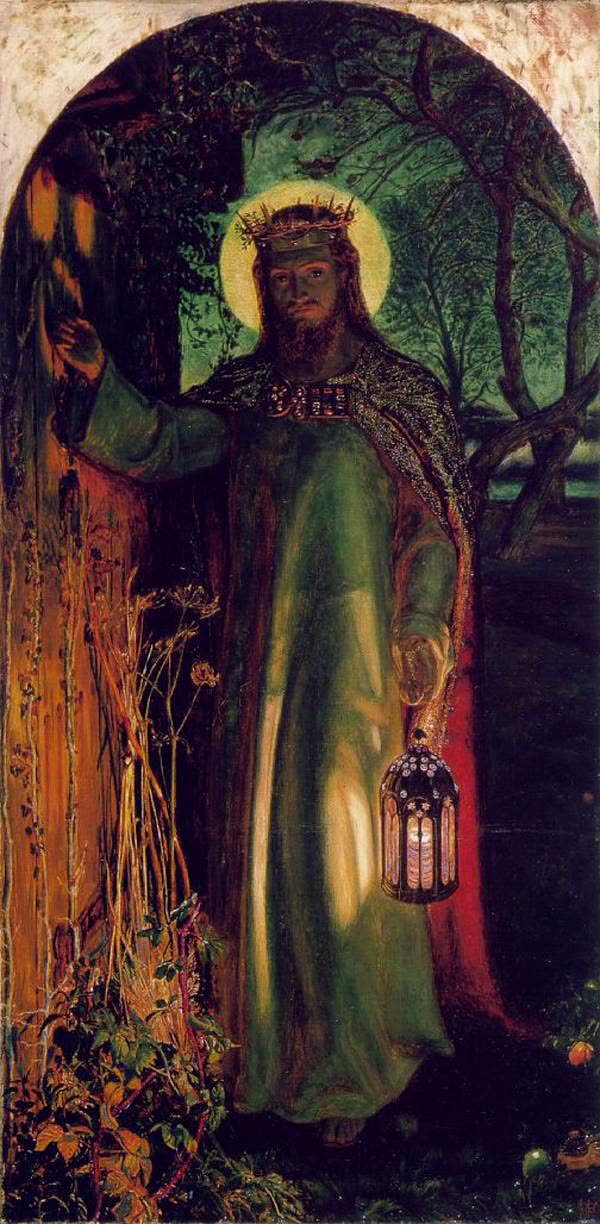
William Holman Hunt’s The Light of the World (1853) — Christ knocking at a door with no outside handle; it only opens from within.William Holman Hunt, 1853 · Public domain
Nathanael: "Come and see"
When Philip told his friend Nathanael that he had found the Messiah, and that He came from Nazareth, Nathanael's answer was a sneer at a small and unimportant town: "Can there any good thing come out of Nazareth?" Philip did not argue. He said, "Come and see" (John 1:46).
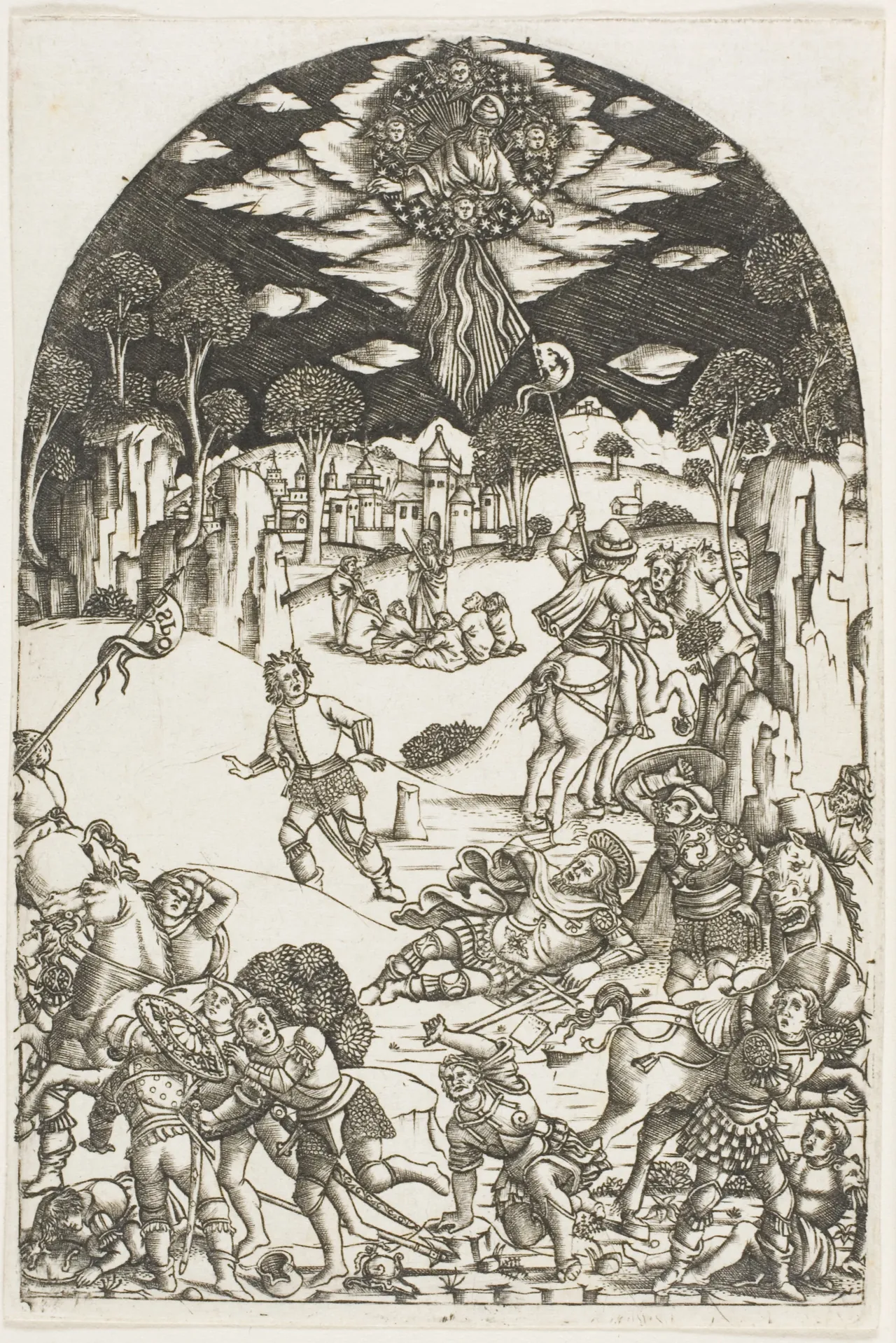
An Italian engraving of the Conversion of Saint Paul, the persecutor Saul of Tarsus turned on the road by an appearance of the risen Jesus.The Conversion of Saint Paul · n.d. · Art Institute of Chicago · CC0 · museum record · Galeria Regni
That is still the best answer to a skeptic. The Christian faith does not ask to be believed unexamined. It asks to be looked at.
The man born blind
In John 9 the Lord healed a man who had been blind from birth. The religious leaders interrogated him repeatedly, trying to get him to say that Jesus was a sinner and the healing a fraud. He did not claim to understand everything. He simply stated what had happened to him.
“He answered and said, Whether he be a sinner or no, I know not: one thing I know, that, whereas I was blind, now I see.” (John 9:25)
That verse is the shape of honest testimony. It separates what the man knew from what he did not. He could not settle every theological question his questioners raised; he could tell them what he had experienced, and leave them to account for it.
Thomas
Thomas was not an unbeliever in God, but he was the first great skeptic of the resurrection. When the other disciples told him they had seen the risen Lord, he refused to believe without evidence he could touch.
“The other disciples therefore said unto him, We have seen the LORD. But he said unto them, Except I shall see in his hands the print of the nails, and put my finger into the print of the nails, and thrust my hand into his side, I will not believe.” (John 20:25)
Eight days later the Lord appeared again and offered Thomas exactly the evidence he had demanded. Thomas's answer is the highest confession of Christ's deity in the Gospels: "My LORD and my God" (John 20:28). And the Lord added a word for everyone who would come after: "blessed are they that have not seen, and yet have believed" (John 20:29). John then explains why he wrote his Gospel at all: "these are written, that ye might believe that Jesus is the Christ, the Son of God; and that believing ye might have life through his name" (John 20:31). The written record is meant to do for us what the wounds did for Thomas.
Saul of Tarsus
The most famous conversion in history was of a man who was not indifferent to Christianity but violently opposed to it. Saul of Tarsus, a trained Pharisee, tried to destroy the early church. He later described it himself:
“I verily thought with myself, that I ought to do many things contrary to the name of Jesus of Nazareth. Which thing I also did in Jerusalem: and many of the saints did I shut up in prison, having received authority from the chief priests; and when they were put to death, I gave my voice against them. And I punished them oft in every synagogue, and compelled them to blaspheme; and being exceedingly mad against them, I persecuted them even unto strange cities.” (Acts 26:9-11)
On the road to Damascus, Luke records, a light from heaven struck him down, and a voice asked, "Saul, Saul, why persecutest thou me?" When Saul asked who was speaking, the answer came: "I am Jesus whom thou persecutest" (Acts 9:4-5).
What followed is a matter of history. The persecutor became the church's greatest missionary. The churches of Judea, Paul wrote, "had heard only, That he which persecuted us in times past now preacheth the faith which once he destroyed. And they glorified God in me" (Galatians 1:23-24). He never stopped telling the story, and never told it as though he had earned anything: "Christ Jesus came into the world to save sinners; of whom I am chief" (1 Timothy 1:15).
Notice too how Paul's hearers reacted. When he told his story to the Roman governor Festus, Festus shouted that Paul was mad. Paul answered, "I am not mad, most noble Festus; but speak forth the words of truth and soberness" (Acts 26:25). Testimony has always been met with that charge. The answer has always been the same: these are sober words about real events.
Augustine
Augustine of Hippo (354–430), the most influential theologian of the Western church after Paul, was not an atheist in the modern sense. But he spent his youth as a skeptic of the faith of his Christian mother, Monica, joining the Manichaean sect, chasing career and pleasure, and living with a mistress. His Confessions, written around 397, is the first great Christian autobiography, and it opens with a sentence that has been quoted ever since: "Thou madest us for Thyself, and our heart is restless, until it repose in Thee."1
In Book 8 he describes the moment in a garden in Milan in 386 when, weeping over his inability to give up his sins, he heard a child's voice from a nearby house chanting, "Take up and read; Take up and read." He opened the book of Paul's letters lying nearby and read the first words his eyes fell on.2 They were these:
“Let us walk honestly, as in the day; not in rioting and drunkenness, not in chambering and wantonness, not in strife and envying. But put ye on the Lord Jesus Christ, and make not provision for the flesh, to fulfil the lusts thereof.” (Romans 13:13-14)
"No further would I read," Augustine wrote; "nor needed I: for instantly at the end of this sentence, by a light as it were of serenity infused into my heart, all the darkness of doubt vanished away."3
Three things in Augustine's story recur, again and again, in the stories that follow: a long intellectual search, a moral struggle as much as an intellectual one, and the decisive part played by reading the Bible itself.
This part matters because the charge most often made against Christian belief is that it cannot survive serious thought. The people in this part spent their lives in serious thought, at the highest levels of the university, and came to believe.
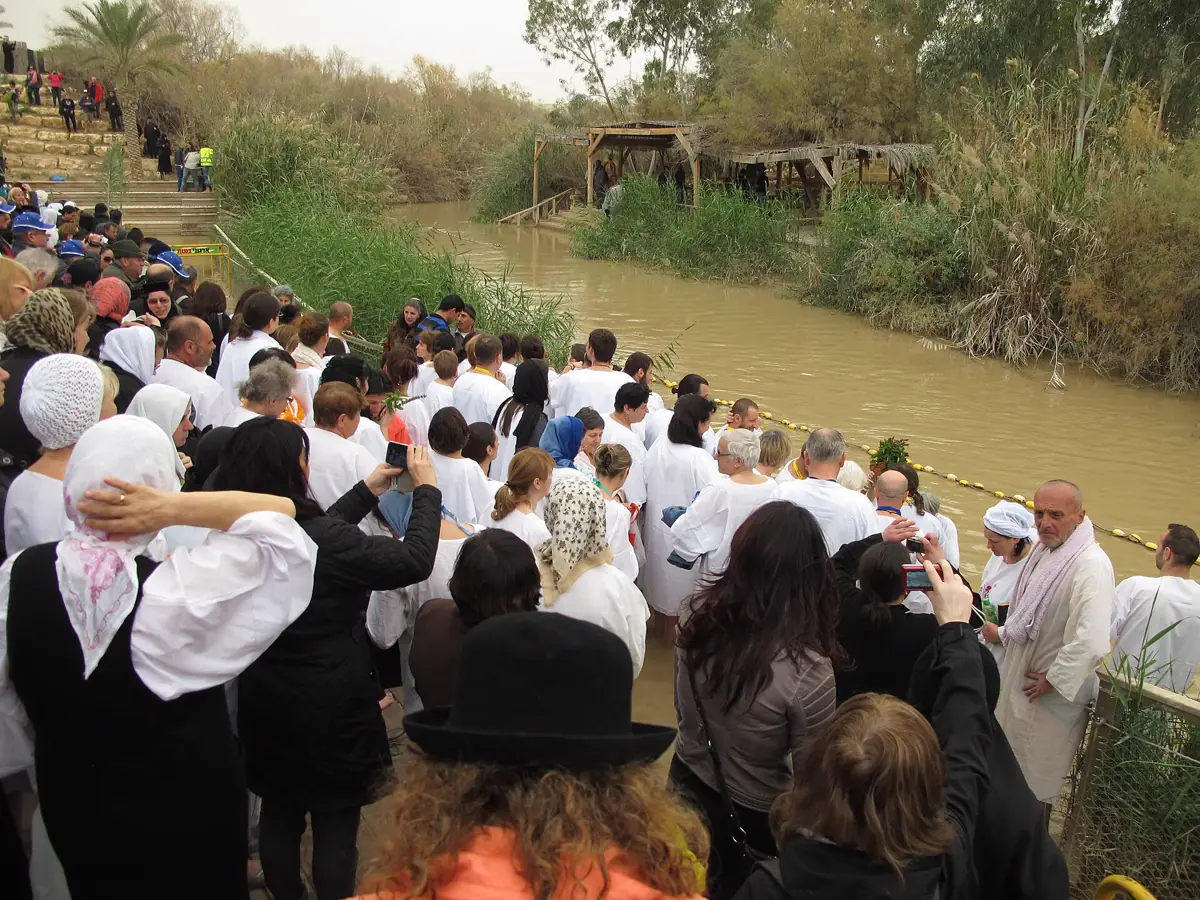
The Jordan River at Qasr el-Yahud, the traditional baptism site — pilgrims still go down into the same water.Ratoncito Perez · CC0
C. S. Lewis: "the most dejected and reluctant convert"
Clive Staples Lewis (1898–1963) was a fellow of Magdalen College, Oxford, and later professor at Cambridge, one of the leading scholars of medieval and Renaissance literature of his century. He had been raised in a churchgoing family in Belfast, lost his faith as a schoolboy, and was for years a convinced atheist.
His autobiography, Surprised by Joy (1955), tells how the conviction slowly crumbled: through his reading, through friends at Oxford who were believers, and through a longing he could not explain. Its most famous passage describes the night he gave in:
"You must picture me alone in that room in Magdalen, night after night, feeling, whenever my mind lifted even for a second from my work, the steady, unrelenting approach of Him whom I so earnestly desired not to meet. That which I greatly feared had at last come upon me. In the Trinity Term of 1929 I gave in, and admitted that God was God, and knelt and prayed: perhaps, that night, the most dejected and reluctant convert in all England."4
That was belief in God, not yet faith in Christ. The second step came in 1931, after a long night's conversation walking along Addison's Walk at Magdalen with his friends J. R. R. Tolkien and Hugo Dyson. Lewis records that he made the final commitment to Christian belief not long afterward, on the way to the zoo with his brother.5
What makes Lewis's story so important is what came after. His wartime broadcast talks for the BBC became Mere Christianity (1952), one of the most influential Christian books of the century.6 His The Problem of Pain (1940) and Miracles (1947) took on the hardest objections he had once raised himself. He did not leave his mind behind when he came to faith. He brought it with him, and spent the rest of his life using it in Christ's service.
Joy Davidman
Joy Davidman (1915–1960) was a gifted American poet and novelist, born in New York to Jewish parents. In an essay published in 1951 she described herself as having been raised a child of materialism, an atheist and the daughter of an atheist.7 She joined the American Communist Party.
In the spring of 1946 her husband, the novelist William Lindsay Gresham, telephoned her to say that he was having a nervous breakdown and did not know when he would come home. In her own account, "for the first time my pride was forced to admit that I was not, after all, 'the master of my fate'," and the walls of arrogance and self-love behind which she had hidden from God came down.8 She went on to study her way toward the Redeemer who had made Himself known, and concluded that He was Jesus. By 1948 she was receiving instruction at a Presbyterian church, and she and her sons were baptized. She began reading C. S. Lewis, then writing to him, and in time married him; her death from cancer in 1960 led Lewis to write A Grief Observed (1961).
Davidman's own best-known book, Smoke on the Mountain (1954), is an exposition of the Ten Commandments; its British edition of 1955 carried a foreword by Lewis.9 The atheist and Communist became a teacher of God's law.
Alister McGrath
Alister McGrath, who grew up in Northern Ireland, went up to Wadham College, Oxford, in 1971 to read chemistry. He arrived an atheist. Reflecting on his time as an undergraduate, he wrote that he "was discovering that Christianity was far more intellectually robust than I had ever imagined." Before that first term was out, in his telling, he had made his decision and turned from one faith to another.10
The faith he turned his back on was atheism itself, which he had come to see as a belief like any other. He went on to take a doctorate in molecular biophysics at Oxford in 1977 and then a first in theology, and became one of the best-known Christian writers on science and faith. In The Dawkins Delusion? (2007), written with Joanna Collicutt McGrath, he answered Richard Dawkins's The God Delusion as a fellow scientist.11
Antony Flew: a mind changed, but not all the way
Antony Flew (1923–2010) was for half a century one of the most prominent atheist philosophers in the English-speaking world. His essay "Theology and Falsification" (1950) and his book The Presumption of Atheism (1976) were standard reading for students of the philosophy of religion.
In 2004, at the age of eighty-one, Flew announced that he had come to believe in God. His reason, he said, was the evidence of design: above all the lack of any plausible account of how the complex molecules of life, and the first reproducing organisms, could have arisen from simple beginnings. Asked about his change of mind, he said he had to go where the evidence leads.12 In 2007 he published, with Roy Abraham Varghese, There Is a God: How the World's Most Notorious Atheist Changed His Mind.13
Honesty requires the rest of the story. Flew did not become a Christian. He described his God as an Aristotelian God of power and intelligence, known by reason and not by revelation, and he accepted the label of deist. In the same interview he said he still did not believe in an afterlife, and that he did not think the resurrection of Jesus was a historical fact, though he granted that its evidence was better than that for the miracles claimed by any other religion. His book of 2007 included, as an appendix, a dialogue on Jesus with N. T. Wright.14 Critics, notably Mark Oppenheimer in the New York Times Magazine, alleged that Varghese had written most of the book and that Flew's memory was failing; Varghese disputed it.15
Flew's story belongs here not as a conversion to Christ but as a warning against a lazy assumption: that the arguments for God are only made by people who already believe. One of the most respected atheist philosophers of the century weighed them and changed his mind. He went as far as the evidence of nature can take a man, to a Maker, and, as far as the public record shows, he stopped there. The step from a Maker to the Saviour is taken another way: by hearing the word of God concerning His Son.
Francis Collins
Francis Collins, who led the Human Genome Project and later directed the National Institutes of Health, has told in The Language of God (2006) how, as a young medical man and an atheist, he looked into the evidence for and against God, visited a Methodist minister, and on his recommendation read Lewis's Mere Christianity. After several years of thought he came to faith during a trip to the Cascade Mountains, where the sight of a frozen waterfall, in his telling, removed his last resistance.16
Collins's conversion is well documented and belongs in any account of scientists who came to Christ. Readers should know that his view of origins, which he calls BioLogos, is theistic evolution, and that this ministry does not hold it; the paper Science and Faith explains why. His story is told here for what it shows about how he came to believe, not as a guide to Genesis.
This part matters because the people in it did not drift into faith. Each of them set out, deliberately and with the tools of his profession, to examine the evidence for Christianity, and several expected to refute it.
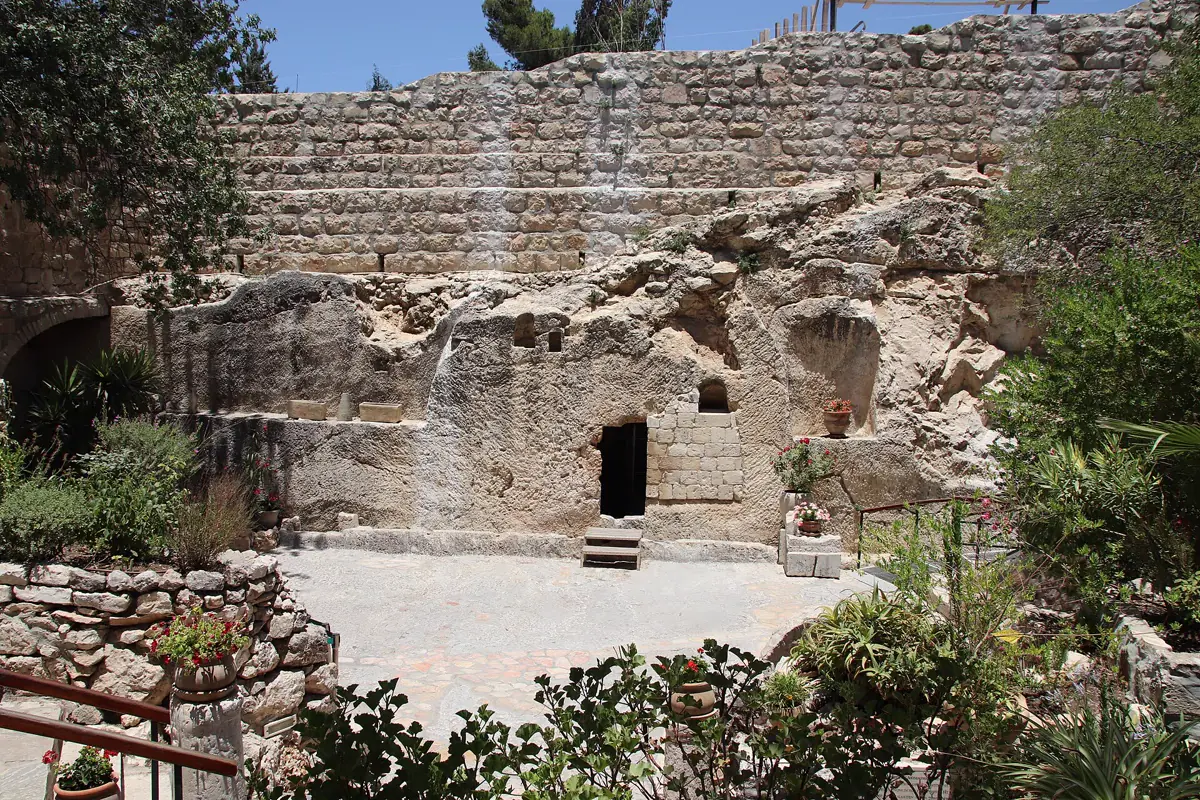
The Garden Tomb in Jerusalem — a rock-cut burial place of the very kind the Gospels describe, its stone bench still empty.Gary Todd · CC0
Frank Morison: the book that would not be written
Albert Henry Ross (1881–1950) was an English advertising man and writer who published under the name Frank Morison. As a very young man, in his own account, he believed the history of Jesus rested on insecure foundations, and he planned a short study, which he meant to call "Jesus, the Last Phase," of the last seven days of Jesus' life. He chose that period, he wrote, partly because it "seemed remarkably free from the miraculous element that on scientific grounds I held suspect." He meant to strip it "of its overgrowth of primitive beliefs and dogmatic suppositions, and to see this supremely great Person as He really was."17
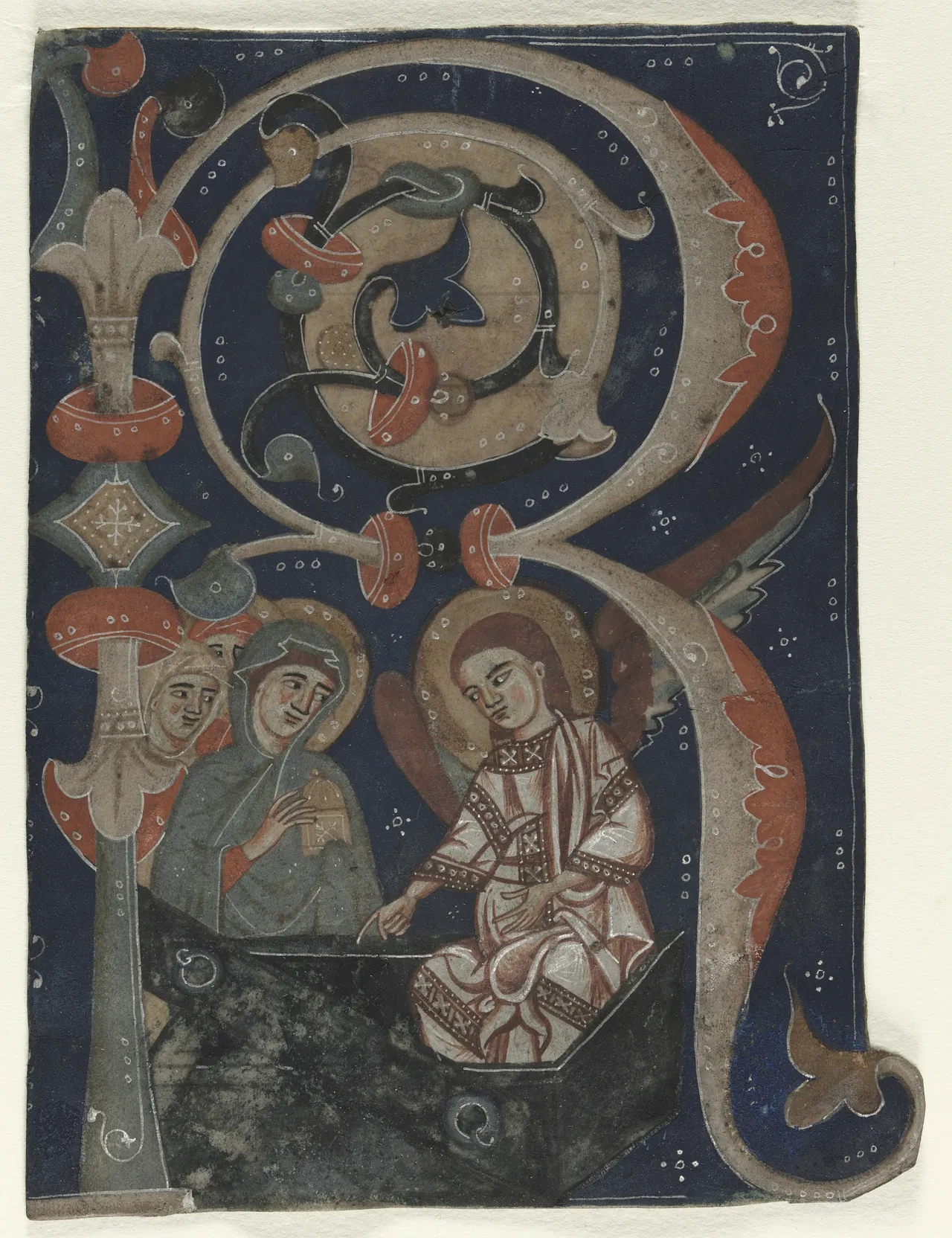
An Italian initial of about 1200 to 1230 showing the three Marys at the tomb with the angel, the tomb and stone that Frank Morison set out to investigate.Historiated Initial (R) Excised from a Gradual: The Three Marys at the Tomb · c. 1200–1230 · Cleveland Museum of Art · CC0 · museum record · Galeria Regni
As he worked through the sources, the book he had planned would not come. What he wrote instead was Who Moved the Stone?, published by Faber & Faber in 1930. Its first chapter, telling how his plan collapsed, is titled "The Book That Refused to Be Written." The book has been reprinted many times since.18
Morison's method was simple: take the accounts of the last week of Jesus' life seriously as history and ask what best explains them. He found that the hypotheses he had expected to hold up, such as a stolen body, a mistaken tomb or a story invented later, explained less than the plain one.
“For I delivered unto you first of all that which I also received, how that Christ died for our sins according to the scriptures; And that he was buried, and that he rose again the third day according to the scriptures: And that he was seen of Cephas, then of the twelve: After that, he was seen of above five hundred brethren at once; of whom the greater part remain unto this present, but some are fallen asleep. After that, he was seen of James; then of all the apostles. And last of all he was seen of me also, as of one born out of due time.” (1 Corinthians 15:3-8)
Josh McDowell
Josh McDowell, by his own account, was an agnostic student at Kellogg Community College in Battle Creek, Michigan, when Christian students challenged him to examine the evidence for their faith. He decided to write a paper examining the historical evidence for Christianity in order to disprove it. The evidence, he has said, persuaded him instead.19
The notes he gathered became Evidence That Demands a Verdict (1972), a large reference work on the historical case for the Bible and the resurrection. In 2006 Christianity Today ranked it thirteenth among the fifty books published since the Second World War that had most shaped evangelicals.20 It has been revised several times, most recently with his son Sean in 2017.
Lee Strobel: the journalist and his wife
Lee Strobel trained in journalism at the University of Missouri, took a Master of Studies in Law at Yale Law School, and worked for fourteen years as a journalist, including at the Chicago Tribune. He has said that he was an atheist when his wife Leslie became a Christian, and that her conversion led him to investigate the claims of Christ with the methods of a reporter.
After nearly two years the investigation ended, in 1981, with his own conversion.21 Years later he retraced it in The Case for Christ (1998), interviewing scholars on the reliability of the Gospels, the manuscript evidence, the archaeology, and the evidence for the resurrection, and setting out the questions he had asked as a skeptic.22 The book was later made into a feature film.
J. Warner Wallace: the cold-case detective
J. Warner Wallace spent his career as a police officer in Southern California and became a cold-case homicide detective, solving murders that had gone unsolved for years; his cases have been featured on national television. He was an atheist until the age of thirty-five. In 1996, having begun to read the Gospels as he would read witness statements in a cold case, testing them for the marks of genuine eyewitness testimony, he became a Christian.23
In Cold-Case Christianity (2013) he sets out ten principles of cold-case investigation and applies them to the New Testament: how to test whether witnesses were present, whether they were corroborated, whether they were accurate, and whether they were biased. His point is not that the Gospels are proven by detective work, but that they hold up under the same tests he used every day to send people to prison.
“Forasmuch as many have taken in hand to set forth in order a declaration of those things which are most surely believed among us, Even as they delivered them unto us, which from the beginning were eyewitnesses, and ministers of the word;” (Luke 1:1-2)
Rosaria Butterfield: the professor and the pastor
Rosaria Champagne Butterfield was a tenured professor of English at Syracuse University, a specialist in critical theory, and a lesbian activist. In 1997 she wrote a newspaper article criticising the evangelical men's movement Promise Keepers. Among the letters she received was one from Ken Smith, then pastor of the Syracuse Reformed Presbyterian Church. It was kind, and it asked her questions she could not easily answer. He invited her to dinner.
What followed, in her telling, was a long friendship with Smith and his wife, many conversations at their table, and her own reading of the Bible. She came to faith in 1999. She tells the story in The Secret Thoughts of an Unlikely Convert (2012), and more briefly in "My Train Wreck Conversion" for Christianity Today (2013).24
Butterfield's story is a reminder that the evidence is not only in books. It is also in Christian homes. A pastor's open door and a long patience did what argument alone had not.
Part 4 — From Other Faiths, and Back from Unbelief
2 min read
This part matters because not every skeptic is an atheist. Some are devout followers of another faith, convinced that Christianity is false. Others have tried everything, including atheism, and found that nothing held. The Gospel has met both.
Nabeel Qureshi
Nabeel Qureshi (1983–2017) was raised in a devout Ahmadi Muslim family in the United States. He studied the arguments for Islam and engaged Christians in debate. As a student at Old Dominion University in Virginia he met a Christian, David Wood, after one such discussion; the two became close friends and began a debate about the historical claims of Islam and Christianity that lasted for years.
Qureshi said later that he was happy in his faith and his community and did not want to leave. But the evidence that Jesus died on the cross, that He rose again, and that He claimed to be God persuaded him, and he became a Christian at great personal cost; his conversion grieved the family he loved. He earned a doctorate in medicine, then studied religion at Duke and Oxford, and told his story in Seeking Allah, Finding Jesus (2014), followed by No God but One: Allah or Jesus? (2016).25 He died of stomach cancer on 16 September 2017, at the age of thirty-four.
Ayaan Hirsi Ali
Ayaan Hirsi Ali was born in Somalia and raised a Muslim. As a teenager in Kenya she embraced a strict political Islam. She later renounced Islam, fled to the Netherlands, became a member of the Dutch parliament, and for years was one of the best-known atheists in the world, closely associated with Richard Dawkins and Christopher Hitchens. She told the first half of this story in her memoir Infidel (2007).26
In November 2023 she published an essay titled "Why I Am Now a Christian." She gave several reasons, some of them about the defence of Western civilisation. But she was also personal: she wrote that she had "found life without any spiritual solace unendurable," and that "Atheism failed to answer a simple question: what is the meaning and purpose of life?"27
Some Christians and many atheists criticised the essay for saying more about civilisation than about Christ. That is a fair observation about the essay; it is not a verdict on her heart, which is God's business. Her public turn shows at least that one of the most prominent atheists of her generation came to find atheism empty. Near the end of the essay she wrote: "That is why I no longer consider myself a Muslim apostate, but a lapsed atheist."
Two seekers on The King Is Coming Show
Two guests on my own podcast came out of Eastern spiritual practice.
Mike Shreve told his story on The King Is Coming Show (TKIC #46): from kundalini guru and yoga teacher with three hundred students to being born again on a Tampa roadside, in his telling after one prayer. Watch it in his own words: youtube.com/watch?v=oqAq58bDC4k
Mike's account of what happened to him, shared as his testimony — weigh it for yourself.
Steve Kang told his story on The King Is Coming Show (TKIC #49): he chanted eight hours a day to reach nirvana and, in his own telling, woke up in hell instead. Watch it in his own words: youtube.com/watch?v=46SP1FgXfbY
Steve's account of what happened to him, shared as his testimony — weigh it for yourself.
Part 5 — Former Atheists on The King Is Coming Show, and My Own Story
2 min read
This part matters because conversion is not only a thing that happened to famous people in books. It happens now, to ordinary people, and they will tell you about it if you ask.
Two guests
Michael Ray Lewis told his story on The King Is Coming Show (TKIC #48): an atheist who mocked Christians, until, in his telling, one question undid him. Watch it in his own words: youtube.com/watch?v=Rd-RdSqeQDk
Michael's account of what happened to him, shared as his testimony — weigh it for yourself.
Sy Garte told his story on The King Is Coming Show (TKIC #47): three generations of atheists in his family, until, in his own telling, a vision on a Pennsylvania highway. Watch it in his own words: youtube.com/watch?v=h-a_uZBKgDk
Sy's account of what happened to him, shared as his testimony — weigh it for yourself.
My story, in my own words
I promised at the beginning to tell the rest of my own story. Here it is, as I have told it on the site.
I was raised Roman Catholic but never really connected — I went through the motions, fell asleep in the pews, and faked being sick to skip Mass. College was rebellion: parties, drugs, freedom I loved and abused. When real life hit — a lost job, a pregnant wife, constant fights — I went looking for peace anywhere I could find it. New Age, crystals, astral projection, tarot, angel numbers. None of it held. So I swung back hard to religion, said the rosary every night, and still felt nothing. Eventually I gave up and called myself an atheist. I decided to read the Bible for one reason: to disprove it, so I'd have an excuse to stop going to church for good. It did the opposite. Genesis gripped me. In Matthew I read Jesus' own words and felt the weight of my own sin for the first time. I wept at worship music I'd never have been caught listening to. Then one day I got on my knees and prayed: "Jesus, if you are real, show me — and I'll serve you." A warmth ran from the top of my head to the soles of my feet. Peace I'd never known, and it didn't leave. I came to faith in 2022, and my wife came to faith a month later. Today we're raising three kids in a home that was transformed — and I haven't stopped telling people since.
I came to disprove God. He met me instead — and I couldn't unsee what time it is. You can watch me tell it at youtube.com/watch?v=FR7cNUiaAqU, and read it at kylelauriano.com/about.
I tell my story here because it has the same shape as theirs.
Part 6 — What These Stories Show, and What They Do Not
4 min read
This part matters because testimony is powerful, and powerful things can be misused. A careful reader should know both what these stories can establish and where their force ends.
Patterns that recur
The people in this paper came from very different places: an Oxford common room, a Chicago newsroom, a Los Angeles police department, a Syracuse lecture hall, an Ahmadi family in Virginia, a Muslim household in Somalia. Yet certain things appear again and again.
They began certain. Lewis, Davidman, McGrath and Flew were not people who had never thought about God. They had thought about Him and decided against Him. Their unbelief was a conviction, not an absence.
Many set out to disprove. Morison planned a study that would leave the miracles out. McDowell set out to write a paper refuting Christianity. Strobel, an atheist, began investigating after his wife became a Christian. In my own story, I decided to read the Bible for one reason: to disprove it, so I'd have an excuse to stop going to church for good.
The Bible itself did the work. Augustine read Romans 13. Butterfield, a professor of literature, read the Bible for herself. Wallace read the Gospels as witness statements. Morison worked through the passion accounts. For many of them, the decisive thing was not a clever argument about the Bible but the Bible read for itself.
“For the word of God is quick, and powerful, and sharper than any twoedged sword, piercing even to the dividing asunder of soul and spirit, and of the joints and marrow, and is a discerner of the thoughts and intents of the heart.” (Hebrews 4:12)
A believer was nearby. Lewis had Tolkien and Dyson. Qureshi had David Wood. Butterfield had a pastor's dinner table; Collins had a Methodist minister and a book by Lewis. Strobel had his wife. Very few came to faith alone.
The resurrection was central. Morison, McDowell, Strobel, Wallace and Qureshi all found that the historical case for the resurrection of Jesus was the hinge. That is exactly where Paul put it: "if Christ be not raised, your faith is vain; ye are yet in your sins" (1 Corinthians 15:17).
The will was involved as well as the mind. Lewis described "the steady, unrelenting approach of Him whom I so earnestly desired not to meet." Davidman described the collapse of her pride. Augustine wept over sins he could not give up. The obstacles to faith were not only intellectual, and the people who were honest about that are the most convincing.
There was a cost. Qureshi lost the approval of the family he loved. Butterfield lost a world, a community and a reputation. Hirsi Ali took a public position that drew criticism from friends on every side. Christianity was not the easy path for any of them.
What testimony can establish
A testimony is evidence. In a court of law, the testimony of witnesses is the main way facts about the past are established. In the New Testament, the apostles called themselves witnesses, and appealed to what they had "heard," "seen with our eyes," "looked upon," and "handled" (1 John 1:1).
The stories in this paper establish at least three things. First, that Christianity can be examined by a serious, educated, skeptical mind and found persuasive. The claim that only the uninformed believe is false. Second, that the change Christ makes in a life is often real and lasting, visible to people who knew the person before. Third, that the evidence these people found, especially the evidence for the resurrection, is worth examining for yourself.
What testimony cannot establish
But a testimony is not a proof, and a Christian should be honest about that.
People also convert away from Christianity, and some of them tell their stories with equal sincerity. Followers of every religion report experiences. A changed life shows that something happened; it does not by itself show what it was. The force of a conversion story depends on what the person found and whether it is true.
The Bible itself makes this point. Many Samaritans first believed because of the woman at the well, "which testified, He told me all that ever I did" (John 4:39). But when they met Jesus, they said to her, "Now we believe, not because of thy saying: for we have heard him ourselves, and know that this is indeed the Christ, the Saviour of the world" (John 4:42). A testimony is meant to bring you to Christ, not to replace Him.
And the Lord gave a sobering warning about what even the most dramatic evidence can do for a heart that has decided not to believe:
“And he said unto him, If they hear not Moses and the prophets, neither will they be persuaded, though one rose from the dead.” (Luke 16:31)
That is why the decisive question is not "Has anyone ever been converted?" but "Did Jesus rise from the dead?" The stories in this paper point to that question. They cannot answer it for you.
A word to Christians telling their stories
The best testimonies in this paper share a discipline worth copying. They separate what happened from what they concluded. They do not exaggerate. They do not claim to know more than they know. The man born blind said, "one thing I know." Lewis, describing the night he gave in, said "perhaps" he was the most reluctant convert in England.
When you tell your story, tell it plainly and truthfully. Say what you did and what you experienced. Be careful about putting words in God's mouth, and honest about what you still do not understand. And point past yourself.
“Come and hear, all ye that fear God, and I will declare what he hath done for my soul.” (Psalm 66:16)
“Howbeit Jesus suffered him not, but saith unto him, Go home to thy friends, and tell them how great things the Lord hath done for thee, and hath had compassion on thee.” (Mark 5:19)
This part matters because some readers have come this far as skeptics, and deserve practical next steps rather than pressure.
Do what they did
Almost every person in this paper did the same few things. You can do them too.
1. Read a Gospel. Start with Mark, the shortest, or John, written "that ye might believe" (John 20:31). Read it as a historical document. Ask what kind of book it is, who wrote it, and what it claims happened. The 1611 Reader at kylelauriano.com/library is free. 2. Examine the resurrection. It is the claim on which everything else stands or falls. Read Paul's list of witnesses in 1 Corinthians 15, then read one of the books written by people who examined it: Morison, Strobel, Wallace, or Habermas and Licona's The Case for the Resurrection of Jesus.28 Ask what best explains the facts. 3. Talk to a Christian who will take your questions seriously. Ask hard questions. A faith that cannot survive your questions is not worth having, and a Christian who cannot hear them is not representing his Lord well. 4. Be honest about your will as well as your mind. Ask yourself whether there is anything you would not want to give up if Christianity turned out to be true. Lewis and Augustine both found that this was the real battle. 5. Pray an honest prayer. You do not have to be sure God exists to ask Him to show you. My own prayer was: "Jesus, if you are real, show me — and I'll serve you." The Bible makes Him a promise to take hold of: "And ye shall seek me, and find me, when ye shall search for me with all your heart" (Jeremiah 29:13).
Count the cost
The Lord Jesus never hid the price of following Him.
“For which of you, intending to build a tower, sitteth not down first, and counteth the cost, whether he have sufficient to finish it?” (Luke 14:28)
The people in this paper counted it. Paul, looking back on everything his old life had given him, wrote that he counted it all "but loss for the excellency of the knowledge of Christ Jesus my Lord" (Philippians 3:8). That is the testimony of every person here: whatever it cost, He was worth it.
Suppose a friend says…
Suppose a friend says to you, "Those people just wanted to believe." It is a fair question to ask of anyone. But it fits these stories poorly. Lewis "earnestly desired not to meet" God. Qureshi did not want to leave Islam. McDowell set out to prove the opposite. Morison expected his study to strip the story of the miraculous. The honest thing is to ask what they found that changed their minds, and to go and look at it.
This paper began with a kind of story that unsettles unbelief: the story of someone who stood where the skeptic stands and came to believe. We have looked at a persecutor on the Damascus road and a restless young man in a Milan garden; at an Oxford don on his knees in Magdalen; at a Communist poet whose walls came down; at an atheist chemist who found Christianity more robust than he had imagined; at a journalist, a detective and an advertising man who set out, doubting, to examine the resurrection; at a professor at a pastor's table; at a Muslim student and his Christian friend; at a famous atheist who found life without spiritual solace unendurable; and at a philosopher who followed the argument to a Maker and stopped there.
Their stories do not prove Christianity true. They show that it can be examined and believed by honest and intelligent people, and they point, with remarkable consistency, to the same question: did Jesus of Nazareth rise from the dead? That question deserves your own investigation.
An invitation
If you are a skeptic, I am not asking you to believe because these people did. I am asking you to do what they did: look. Read the Gospel. Examine the resurrection. Ask God, if He is there, to show you.
The gospel these men and women came to believe is simple. Every one of us has sinned: "For all have sinned, and come short of the glory of God" (Romans 3:23). Sin earns death, and God offers life as a gift: "For the wages of sin is death; but the gift of God is eternal life through Jesus Christ our Lord" (Romans 6:23). Christ died for our sins and rose again the third day. He calls for "repentance toward God, and faith toward our Lord Jesus Christ" (Acts 20:21). It is a gift: "For by grace are ye saved through faith; and that not of yourselves: it is the gift of God: Not of works, lest any man should boast" (Ephesians 2:8-9). And it comes with a promise that has never failed anyone who took it: "him that cometh to me I will in no wise cast out" (John 6:37).
I came to disprove God. He met me instead — and I couldn't unsee what time it is. He can meet you too.
“Come unto me, all ye that labour and are heavy laden, and I will give you rest. Take my yoke upon you, and learn of me; for I am meek and lowly in heart: and ye shall find rest unto your souls. For my yoke is easy, and my burden is light.” (Matthew 11:28-30)
4C. S. Lewis, Surprised by Joy: The Shape of My Early Life (London: Geoffrey Bles, 1955), chap. 14, "Checkmate." Lewis's biographer Alister McGrath argues that the date was in fact 1930: Alister McGrath, C. S. Lewis — A Life: Eccentric Genius, Reluctant Prophet (Carol Stream, IL: Tyndale House, 2013).↩
5Lewis, Surprised by Joy, chap. 15; McGrath, C. S. Lewis — A Life.↩
6C. S. Lewis, Mere Christianity (London: Geoffrey Bles, 1952).↩
7Joy Davidman, "The Longest Way Round," in David Wesley Soper, ed., These Found the Way (Philadelphia: Westminster Press, 1951).↩
8Davidman, "The Longest Way Round." The quoted sentence, and the instruction and baptism of 1948, are given in Lyle W. Dorsett, "Profiles in Faith: Helen Joy Davidman," C. S. Lewis Institute, December 7, 2005, https://www.cslewisinstitute.org/resources/profiles-in-faith-helen-joy-davidman/↩
9Joy Davidman, Smoke on the Mountain: An Interpretation of the Ten Commandments (Philadelphia: Westminster Press, 1954).↩
10Alister McGrath, Mere Theology: Christian Faith and the Discipleship of the Mind (London: SPCK, 2010).↩
11Alister McGrath and Joanna Collicutt McGrath, The Dawkins Delusion? Atheist Fundamentalism and the Denial of the Divine (London: SPCK, 2007).↩
12Antony Flew and Gary R. Habermas, "My Pilgrimage from Atheism to Theism: A Discussion between Antony Flew and Gary Habermas," Philosophia Christi 6, no. 2 (2004): 197–211, https://www.epsociety.org/?p=459.↩
13Antony Flew with Roy Abraham Varghese, There Is a God: How the World's Most Notorious Atheist Changed His Mind (New York: HarperOne, 2007).↩
14Flew and Habermas, "My Pilgrimage from Atheism to Theism"; Flew, There Is a God, appendix B.↩
15On the dispute, see Mark Oppenheimer, "The Turning of an Atheist," New York Times Magazine, November 4, 2007, https://www.nytimes.com/2007/11/04/magazine/04Flew-t.html.↩
16Francis S. Collins, The Language of God: A Scientist Presents Evidence for Belief (New York: Free Press, 2006).↩
17Frank Morison, Who Moved the Stone? (London: Faber & Faber, 1930), chap. 1, "The Book That Refused to Be Written." Text at https://www.gospeltruth.net/whomovedthestone.htm.↩
18Frank Morison, Who Moved the Stone? (London: Faber & Faber, 1930). Morison is sometimes described as a lawyer; he was an advertising man and writer. See Philip Johnson, "Frank Morison and Who Moved the Stone?: Advertiser, Novelist, Apologist, Spy," Global Journal of Classical Theology 14, no. 3 (January 2018).↩
19McDowell tells the story in More Than a Carpenter (Wheaton: Tyndale House, 1977) and in the introduction to Josh McDowell and Sean McDowell, Evidence That Demands a Verdict: Life-Changing Truth for a Skeptical World (Nashville: Thomas Nelson, 2017).↩
20"The Top 50 Books That Have Shaped Evangelicals," Christianity Today, October 2006, https://www.christianitytoday.com/ct/2006/october/23.51.html.↩
22Lee Strobel, The Case for Christ: A Journalist's Personal Investigation of the Evidence for Jesus (Grand Rapids: Zondervan, 1998).↩
23J. Warner Wallace, Cold-Case Christianity: A Homicide Detective Investigates the Claims of the Gospels (Colorado Springs: David C. Cook, 2013).↩
24Rosaria Champagne Butterfield, The Secret Thoughts of an Unlikely Convert: An English Professor's Journey into Christian Faith (Pittsburgh: Crown & Covenant, 2012); Butterfield, "My Train Wreck Conversion," Christianity Today, January–February 2013, https://www.christianitytoday.com/ct/2013/january-february/my-train-wreck-conversion.html.↩
25Nabeel Qureshi, Seeking Allah, Finding Jesus: A Devout Muslim Encounters Christianity (Grand Rapids: Zondervan, 2014); Qureshi, No God but One: Allah or Jesus? (Grand Rapids: Zondervan, 2016).↩
26Ayaan Hirsi Ali, Infidel (New York: Free Press, 2007).↩
27Ayaan Hirsi Ali, "Why I Am Now a Christian," UnHerd, November 2023, https://unherd.com/2023/11/why-i-am-now-a-christian/.↩
28Gary R. Habermas and Michael R. Licona, The Case for the Resurrection of Jesus (Grand Rapids: Kregel, 2004).↩
Seven people who say they met Jesus. What happened, in their own words.
Seven testimonies from The King Is Coming Show, one a morning — the story as they tell it, the verse the story lands on in the 1611 King James, and the page itself. Then the teaching that explains it. Free.
Some of the answers in this resource are strong — well-attested, widely accepted, and historically grounded. Others are an honest step of faith — positions I hold because of Scripture and personal experience, not because I can prove them in a lab. I've tried to be clear about which is which. Where I'm less certain, I say so.
"And they overcame him by the blood of the Lamb, and by the word of their testimony; and they loved not their lives unto the death." — Revelation 12:11 (KJV)