A practical, honest week of reading, prayer and obedience for anyone who wants to find out whether Jesus Christ is who He said He was.
Abstract
Is it right to "test God", and if so, how? This paper answers from the King James Bible, which forbids one kind of testing (demanding signs from God in unbelief, as Israel did at Massah) and invites another ("O taste and see," "Prove all things," "If any man will do his will, he shall know of the doctrine"). It draws on Strong's Concordance for the Bible's words for testing, on the historical evidence for the resurrection (Paul's early creed, Tacitus, Josephus, Pliny and Gary Habermas), and on the accounts of former skeptics such as C. S. Lewis, Lee Strobel and J. Warner Wallace. It then sets out a seven-day experiment built on the Gospel of Mark: an honest prayer, a daily reading, questions to weigh, one act of obedience, and a written record. It explains plainly what the experiment cannot do: it cannot force God, guarantee a feeling or a sign, or prove anything by emotion. It ends with how to read your results and what to do next, with the gospel and Acts 2:38 set out in full. It is written for skeptics and seekers who want to look for themselves.
What’s inside
·Introduction
Part 1Part 1: May You Test God?
Part 2Part 2: The Honest Experimenter
Part 3Part 3: The Seven Days
Part 4Part 4: Reading Your Results
Part 5Part 5: After the Seventh Day
·Conclusion
Research paper · 7 chapters · 15 notes · October 2026
About 31 minutes · 7 parts · the PDF has the same text
Introduction
3 min read
Most people who doubt God have never tested the question. They have heard arguments, absorbed opinions, been hurt by Christians or bored by church. But very few have done what a fair-minded person does with any serious claim: looked at the evidence for themselves, in the original sources, with an open mind and a clear method.
This paper offers a way to do that in one week.
Why "test God"?
The title may sound irreverent. It is meant seriously. The Bible itself invites some kinds of testing and forbids others, and the difference matters. Part 1 explains it. For now, the short version: you cannot put God in a test tube, and you cannot make Him perform on demand. But you can test His claims, and you can put yourself where He has promised to meet those who seek Him. The Psalmist put the invitation in five words: "O taste and see that the LORD is good" (Psalm 34:8).
What this experiment is, and is not
It is an honest week of reading, thinking, praying and doing. You will read the whole Gospel of Mark, the shortest account of Jesus' life, together with a few other passages. You will pray a short, honest prayer each day, even if you are not sure anyone is listening. You will weigh specific questions. On one day you will do one specific thing Jesus commanded. And you will write down what you notice.
It is not a trick. Nobody is watching. There is no one to report to, nothing to sign, and no pressure at the end. You are free to stop at any point. If at the end of seven days you conclude that Christianity is false, this paper will not call you names. It will ask you to be honest about why, and leave the door open.
It is also not a guarantee. This paper will not promise that you will see a sign, feel a feeling, or have a dramatic experience. Anyone who promises that is not speaking for God. What the Bible promises is something else, and Part 1 sets it out.
A word about me
This is my story, in the words I have told it before:
Eventually I gave up and called myself an atheist. I decided to read the Bible for one reason: to disprove it, so I'd have an excuse to stop going to church for good. It did the opposite. Genesis gripped me. In Matthew I read Jesus' own words and felt the weight of my own sin for the first time. I wept at worship music I'd never have been caught listening to. Then one day I got on my knees and prayed: "Jesus, if you are real, show me — and I'll serve you." A warmth ran from the top of my head to the soles of my feet. Peace I'd never known, and it didn't leave.
That is my account. I tell it honestly, and I also tell you honestly that your week may look nothing like it. God does not deal with everyone the same way, and a feeling, mine or yours, proves nothing on its own. What I can tell you is that the prayer I prayed, "if you are real, show me," is a prayer anyone can pray. The rest of my story is at kylelauriano.com/about.
A note on Scripture: every verse here is quoted from the King James Bible. You can read it free in the 1611 Reader at kylelauriano.com/library. A KJV with Strong's Concordance is the best study tool most people will ever own.
This part matters because there is a wrong way to test God, and the Bible is clear about it. There is also a right way, and the Bible invites it. If you know the difference before you start, you will know what to expect.
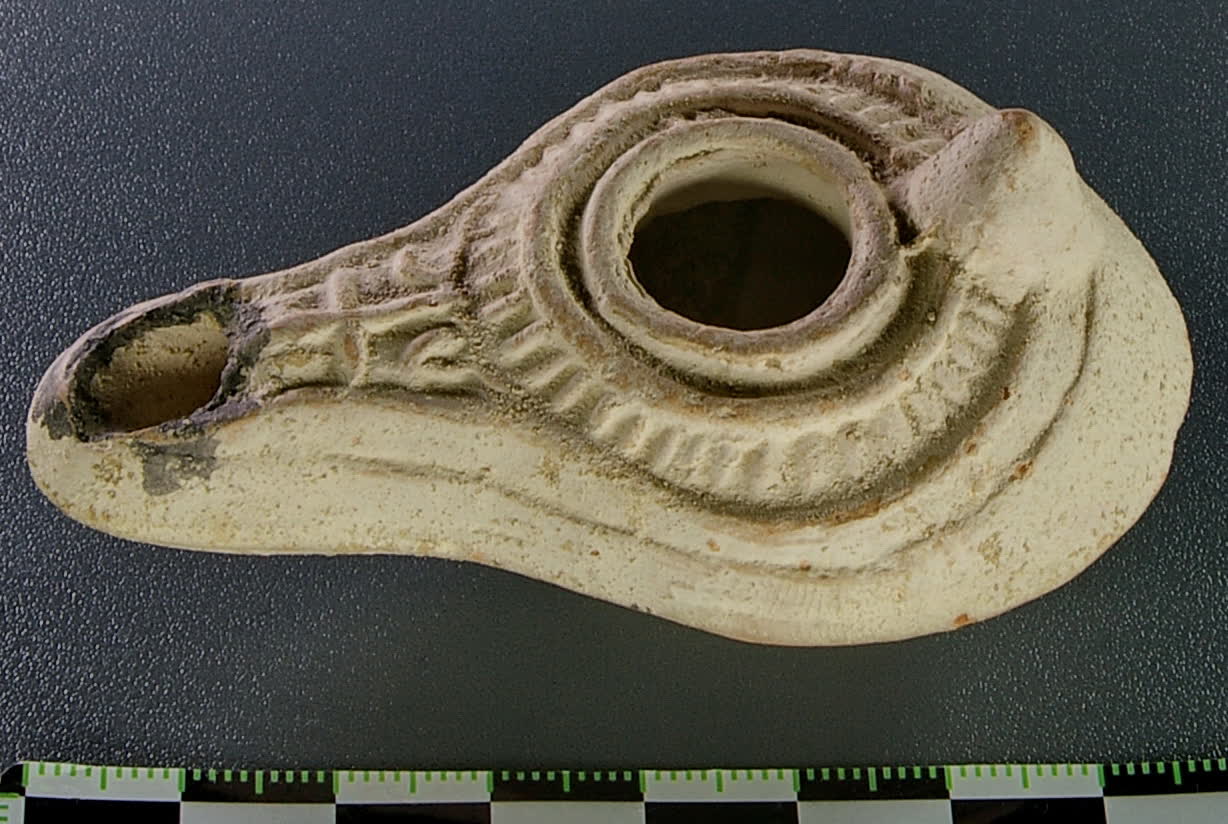
A simple clay oil lamp of the Roman era — trimmed wick and ready oil, the small daily disciplines behind Jesus’ parable of the ten virgins.Johann H. Addicks · CC BY-SA 3.0
The Bible's words for testing
The Old and New Testaments use several words that the King James Bible translates "prove", "try" or "tempt."
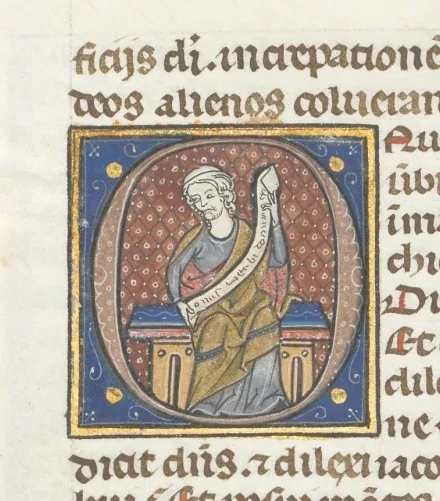
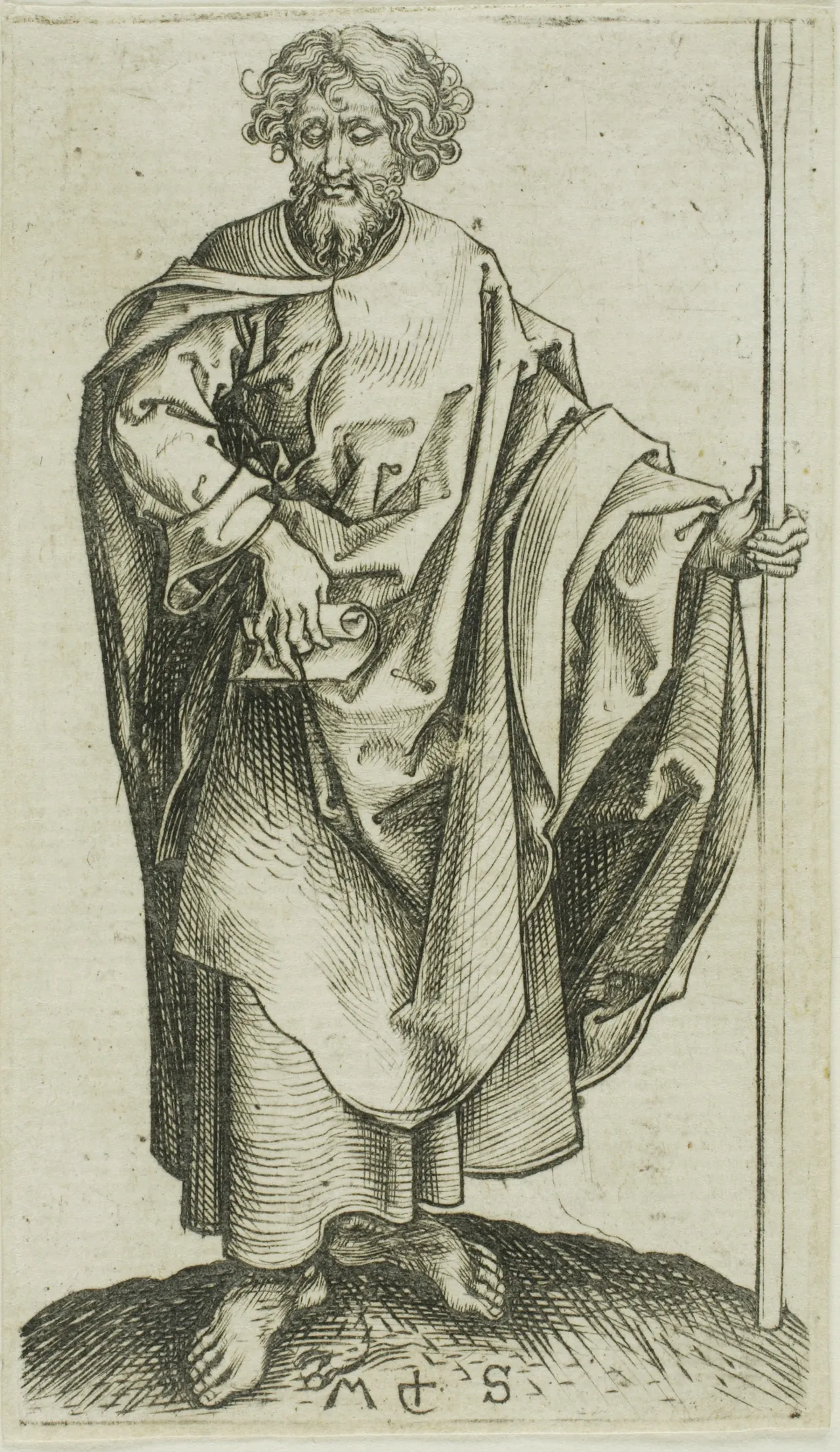
The opening of Malachi in a thirteenth-century Bible from southern France, with the prophet seated holding a scroll, the book in which God invites Israel to prove Him.Fol. 368v, Malachi, historiated initial O, Malachi seated with a scroll · c. 1275–1300 · Cleveland Museum of Art · CC0 · full page · museum record · Galeria RegniA German engraving of the apostle Thomas from a series of the Apostles, the disciple whose demand to see and touch for himself is weighed in this part.St. Thomas, from Apostles · n.d. · Art Institute of Chicago · CC0 · museum record · Galeria Regni
**H974, bachan**: "to test (especially metals); generally and figuratively, to investigate."1 It is the word in Malachi 3:10, "prove me now herewith."
**H5254, nasah**: "to test; by implication, to attempt."2 It is the word in Deuteronomy 6:16, "Ye shall not tempt the LORD your God."
**G1381, dokimazo**: "to test (literally or figuratively); by implication, to approve."3 It is the word in 1 Thessalonians 5:21, "Prove all things."
**G3985, peirazo**: "to test (objectively), i.e. endeavor, scrutinize, entice, discipline."4 It is used of Satan tempting Jesus, and of people trying to trap Him.
**H2938, ta'am**: "to taste; figuratively, to perceive."5 It is the word in Psalm 34:8, "O taste and see."
The words overlap. What separates the forbidden testing from the invited kind is not the vocabulary. It is the heart behind it.
The testing God forbids
In the wilderness, after God had brought Israel out of Egypt with plagues and parted the sea before them, the people ran out of water at a place called Rephidim. They quarrelled with Moses, and Moses "called the name of the place Massah, and Meribah, because of the chiding of the children of Israel, and because they tempted the LORD, saying, Is the LORD among us, or not?" (Exodus 17:7).
That is the testing God forbids. Moses later warned, "Ye shall not tempt the LORD your God, as ye tempted him in Massah" (Deuteronomy 6:16). It is the demand of people who have already seen enough, and who put God on trial anyway: prove Yourself again, on our terms, or we will not trust You.
Satan tried to get Jesus to do the same thing. He took Him to the pinnacle of the temple and quoted a psalm: throw Yourself down, and God will catch You. Jesus answered, "It is written again, Thou shalt not tempt the Lord thy God" (Matthew 4:7). Jesus would not stage a test to force His Father's hand.
When the religious leaders demanded a sign, "Master, we would see a sign from thee" (Matthew 12:38), Jesus refused: "An evil and adulterous generation seeketh after a sign; and there shall no sign be given to it, but the sign of the prophet Jonas" (Matthew 12:39). The sign He promised was His death and resurrection: "For as Jonas was three days and three nights in the whale's belly; so shall the Son of man be three days and three nights in the heart of the earth" (Matthew 12:40).
Notice what was wrong. These men had seen healings and heard His teaching. They did not want evidence. They wanted a performance they could judge, and they had already decided against Him. Jesus said of people like that, "If they hear not Moses and the prophets, neither will they be persuaded, though one rose from the dead" (Luke 16:31).
So the forbidden test looks like this: demanding that God do a specific thing, at a specific time, as the price of your belief, when your mind is already made up.
The testing God invites
Now set beside that the invitations.
"Taste and see." "O taste and see that the LORD is good: blessed is the man that trusteth in him" (Psalm 34:8). You cannot know a food by reading about it. You have to taste it.
"Prove all things." "Prove all things; hold fast that which is good" (1 Thessalonians 5:21). Christians are not told to believe whatever they hear. They are told to test it.
"Search the scriptures." When Paul preached in the Macedonian town of Berea, Luke records that the Jews there "were more noble than those in Thessalonica, in that they received the word with all readiness of mind, and searched the scriptures daily, whether those things were so" (Acts 17:11). They were praised for checking.
"Come and see." When Nathanael scoffed, "Can there any good thing come out of Nazareth?", Philip did not argue. "Philip saith unto him, Come and see" (John 1:46).
"Do his will, and know." The most important invitation came from Jesus Himself: "If any man will do his will, he shall know of the doctrine, whether it be of God, or whether I speak of myself" (John 7:17). This is a remarkable promise. Jesus says that the way to know whether His teaching is from God is not only to think about it but to be willing to do it. Knowledge follows willingness.
"Prove me now." In Malachi, God says to Israel, "Bring ye all the tithes into the storehouse, that there may be meat in mine house, and prove me now herewith, saith the LORD of hosts, if I will not open you the windows of heaven, and pour you out a blessing, that there shall not be room enough to receive it" (Malachi 3:10). This verse is often misused, as if God had promised to make anyone rich who gives money. In context it is God calling His covenant people back to faithfulness after they had robbed Him of what His law required. The principle is that God invites His people to trust Him and see that He is faithful. It is not a formula for getting wealth, and this experiment will not treat it as one.
Gideon and his fleece
Many people know the story of Gideon's fleece. Called to lead Israel against the Midianites, Gideon asked God for a sign: dew on a fleece and the ground dry (Judges 6:37). God did it. Then Gideon asked again, the reverse: "Let not thine anger be hot against me, and I will speak but this once: let me prove, I pray thee, but this once with the fleece" (Judges 6:39). Scripture says: "And God did so that night" (Judges 6:40).
What should we learn? That God is patient with a frightened man who is trying to obey. Gideon had already been told what to do (Judges 6:36). He was not refusing to believe; he was afraid. God met him in his weakness. But notice Gideon's own sense that he was pressing his luck: "Let not thine anger be hot against me." The story is about God's patience, not a method God has promised to honour every time someone sets conditions. This experiment does not ask you to set a fleece.
Thomas
The clearest picture of honest doubt in the New Testament is Thomas. When the other disciples told him they had seen the risen Lord, he said, "Except I shall see in his hands the print of the nails, and put my finger into the print of the nails, and thrust my hand into his side, I will not believe" (John 20:25).
Eight days later Jesus came and said to him, "Reach hither thy finger, and behold my hands; and reach hither thy hand, and thrust it into my side: and be not faithless, but believing" (John 20:27). Thomas answered, "My LORD and my God" (John 20:28).
Jesus met Thomas's test. But He added: "Thomas, because thou hast seen me, thou hast believed: blessed are they that have not seen, and yet have believed" (John 20:29). And John immediately tells his readers why he wrote his book: so that those who would never see the wounds could believe on the testimony of those who had (John 20:30-31). The evidence you will weigh this week is that testimony.
What God has promised
So what can a seeker expect? Not a performance on demand. But the Bible does make promises to those who seek.
"And ye shall seek me, and find me, when ye shall search for me with all your heart." (Jeremiah 29:13)
"But without faith it is impossible to please him: for he that cometh to God must believe that he is, and that he is a rewarder of them that diligently seek him." (Hebrews 11:6)
"And I say unto you, Ask, and it shall be given you; seek, and ye shall find; knock, and it shall be opened unto you." (Luke 11:9)
Notice the words: "with all your heart", "diligently", "seek". God does not promise to be found by people who glance in His direction for a moment while keeping their options open. He promises to be found by those who really look. Notice also that He does not say when, or how. That is His to decide. "For my thoughts are not your thoughts, neither are your ways my ways, saith the LORD" (Isaiah 55:8).
This part matters because the result of any experiment depends on how honestly it is run. A scientist who has decided the answer before he starts will find a way to get it. So will a seeker.
Bias runs both ways
People often assume that only believers are biased. But a skeptic can want the answer to be "no" just as badly as a believer wants it to be "yes." I did. I decided to read the Bible for one reason: to disprove it, so I'd have an excuse to stop going to church for good.
C. S. Lewis, who was an atheist for years before he came to faith, wrote about how his reading kept undermining his unbelief. With a wry look back, he wrote, "Really, a young Atheist cannot guard his faith too carefully."6 He meant that an atheist who reads widely and honestly will keep running into things that do not fit. He also described his conversion to belief in God not as a triumph but as a surrender: "In the Trinity Term of 1929 I gave in, and admitted that God was God, and knelt and prayed: perhaps, that night, the most dejected and reluctant convert in all England."7
Lewis did not want God. He was honest enough to follow the evidence anyway. That is the attitude this experiment asks for: not that you want a particular answer, but that you are willing to accept the true one.
Ask yourself the hard question first
Jesus' promise in John 7:17 has a condition: "If any man will do his will." Before you start, ask yourself honestly: if I became convinced that Jesus is who He said He was, would I be willing to follow Him? If the honest answer is no, notice that. It does not mean you cannot do the experiment. It means you know where the real obstacle lies, and it may not be the evidence.
Feelings are not proof
This experiment will ask you to pray, and some people feel things when they pray. Others feel nothing. Neither proves anything by itself. The Bible is blunt about the human heart: "The heart is deceitful above all things, and desperately wicked: who can know it?" (Jeremiah 17:9). Feelings can be produced by music, by expectation, by tiredness, by wanting something badly. And the absence of feeling can come from the same causes.
John Wesley, who later led a great revival in England, wrote in his journal, in the entry for the very night of his own conversion in 1738, that the "transports of joy" which often come at the beginning of faith God "sometimes giveth, sometimes withholdeth."8 He had to learn not to measure his faith by his feelings.
So write down what you feel, if you feel anything. But weigh it lightly. Weigh more heavily what you read, what you learn, what the evidence shows, and what happens when you obey.
What counts as evidence
Over the week you will be weighing several kinds of evidence. Keep them distinct in your notes.
| Kind of evidence | What to ask | |---|---| | The text | What does Jesus actually say and do in Mark? What does He claim about Himself? | | The history | Is there good reason to think these events happened, especially the resurrection? | | Your conscience | When you read God's law, what does your conscience say about you? | | Obedience | What happens when you do one thing Jesus commanded? | | Prayer | Do you notice anything when you pray honestly? (Weigh lightly.) |
The rules
1. Be honest. With God, if He is there; with yourself in your notes; with the evidence. 2. Read the actual text. Not a summary, not a video about it. The words themselves. 3. Do every day. Seven days in a row if you can. If you miss one, pick up where you left off. 4. Write it down. Each day, a few lines: what you read, what struck you, what you prayed, what you did, what you noticed. 5. Do not set conditions for God. No fleeces. You are testing His claims, not demanding a show. 6. Do not fake anything. If you do not believe something, do not pretend you do. If you do, do not pretend you don't. 7. You may stop. This is your choice. No one is keeping score.
What you need
A King James Bible. The free 1611 Reader at kylelauriano.com/library works on any phone.
A notebook.
Twenty to forty minutes a day, somewhere quiet.
Seven days.
The daily pattern
Each day in Part 3 has the same shape:
The aim: what the day is for.
Read: the passage, in the King James Bible.
Weigh: questions to think about and write on.
Pray: a short prayer. You may pray it even if you are unsure anyone is there. If you cannot pray it honestly, say instead what you can honestly say.
This part is the experiment itself. Before you begin Day 1, read Part 1 and Part 2 if you have not. Then start.
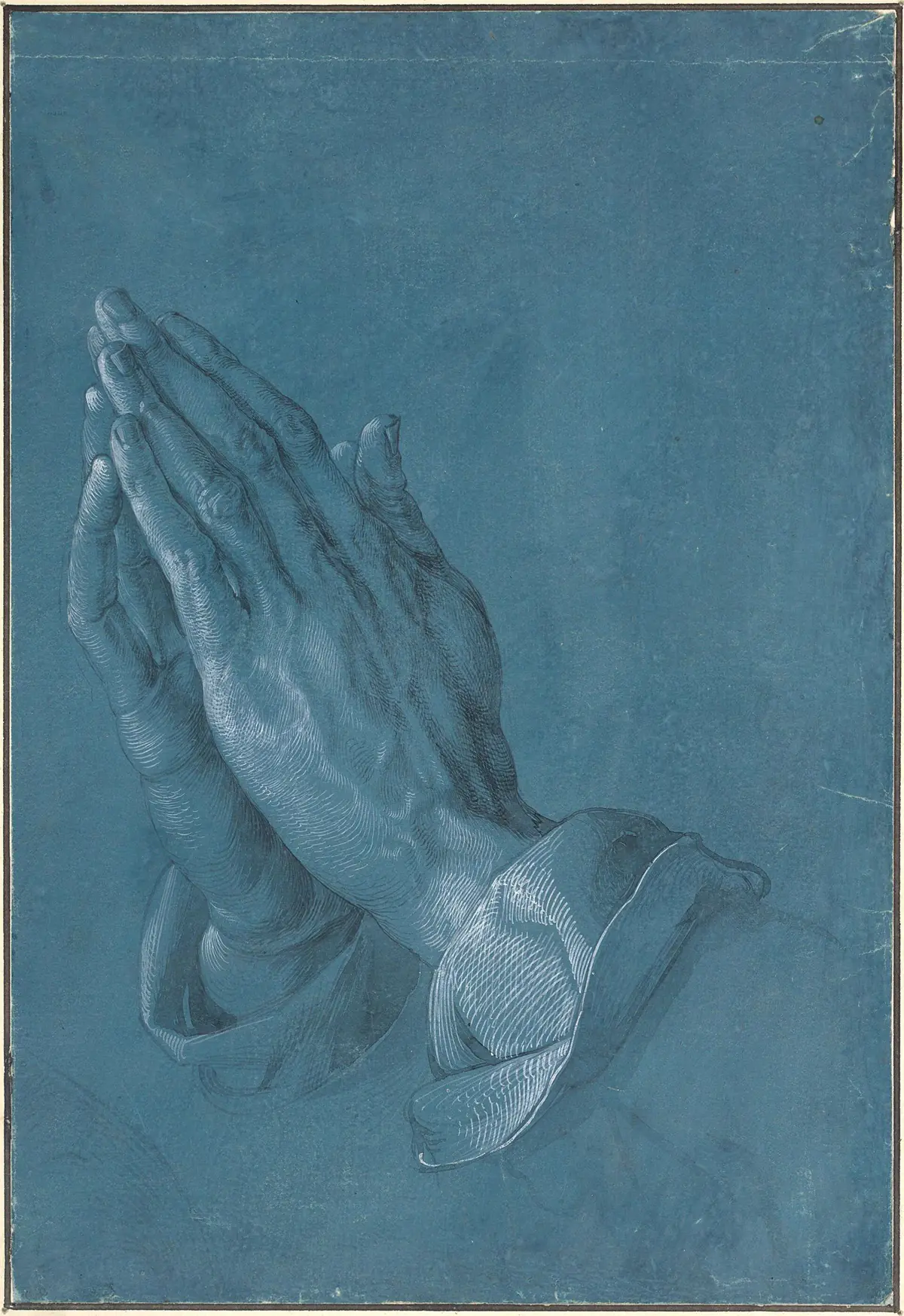
Albrecht Dürer’s Praying Hands (1508) — a working study of hands folded in petition, five centuries old and still legible at a glance.Albrecht Dürer, 1508 · Public domain
Day 1 — Break the silence
The aim. To begin honestly: to speak to God, if He is there, and to meet Jesus in the first pages of Mark.
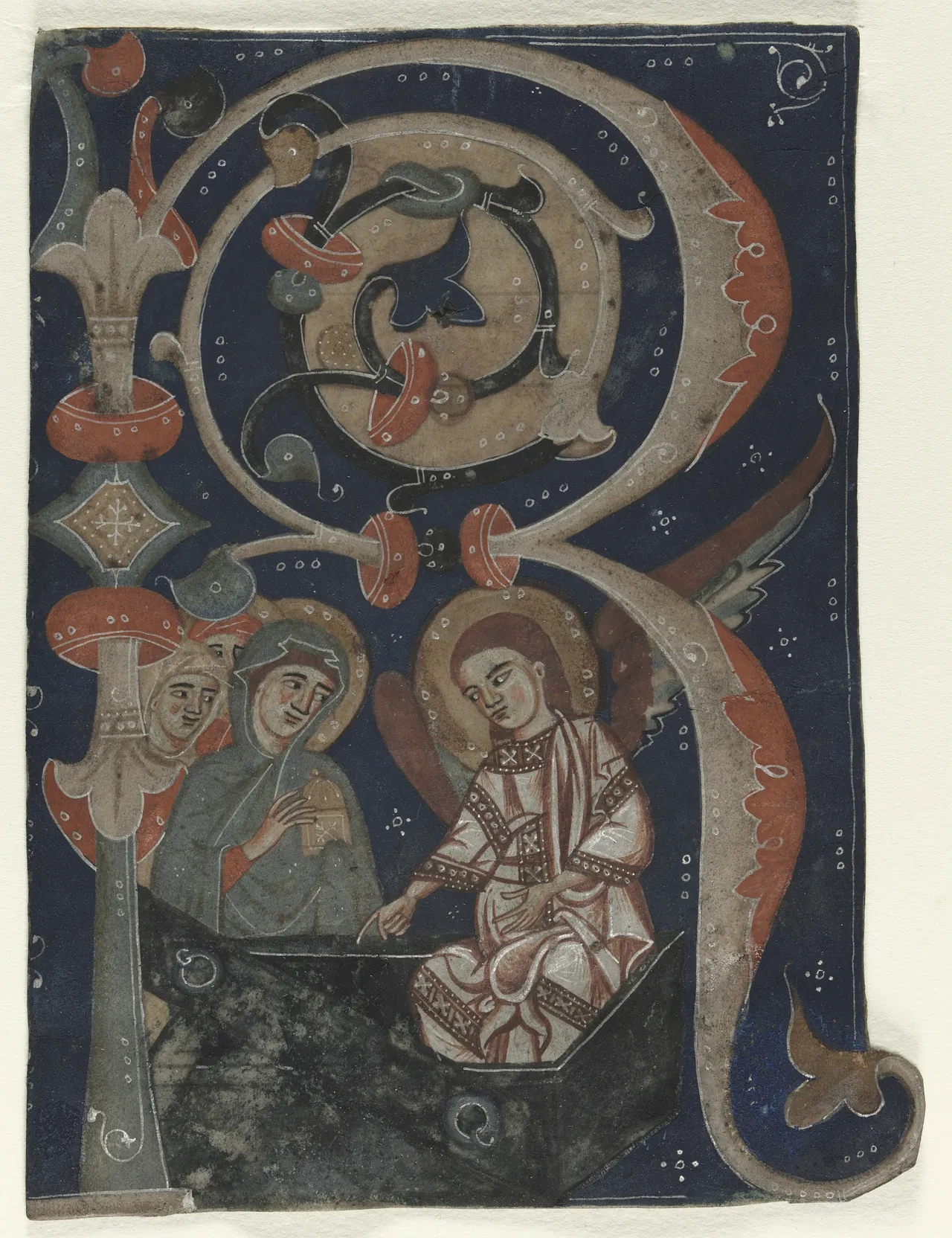
An Italian gradual initial of about 1200 to 1230 showing the Three Marys at the Tomb, beside the day of the experiment given to the empty tomb.Historiated Initial (R) Excised from a Gradual: The Three Marys at the Tomb · c. 1200–1230 · Cleveland Museum of Art · CC0 · museum record · Galeria Regni
Read. Mark 1–2.
Mark's Gospel opens with a claim: "The beginning of the gospel of Jesus Christ, the Son of God" (Mark 1:1). It moves fast. Within two chapters Jesus has preached, called His first followers, cast out an unclean spirit, healed a fever and a leper, and forgiven a man's sins. His first recorded words of preaching are: "The time is fulfilled, and the kingdom of God is at hand: repent ye, and believe the gospel" (Mark 1:15).
Weigh. - What is your first impression of Jesus in these chapters? - What does He ask of people? What does He offer them? - In Mark 2, the religious leaders are angry that Jesus forgives sins. Why? (Read Mark 2:7.) - What do you hope will happen this week? What do you fear?
Pray. Out loud if you can, alone.
God, I do not know if You are there. If You are, I want to know. Show me the truth about Jesus this week, whatever it is. I will try to be honest.
If you cannot pray that, pray what you can. The father in Mark 9 prayed, "Lord, I believe; help thou mine unbelief" (Mark 9:24). You might only manage, "If anyone is listening." Say that.
Record. Your honest starting point: what you believe now, and why. What you prayed. Anything that struck you in the reading.
Day 2 — Who does He say He is?
The aim. To weigh what Jesus claims about Himself, and what His actions claim.
Read. Mark 3–5.
In these chapters Jesus calms a storm, frees a man possessed by many devils, heals a woman who touched His clothes, and raises a dead girl. After He stills the storm, His own disciples ask the question this whole day is about: "What manner of man is this, that even the wind and the sea obey him?" (Mark 4:41).
Go back, too, to Mark 2. When Jesus told the paralysed man his sins were forgiven, He added, "But that ye may know that the Son of man hath power on earth to forgive sins, (he saith to the sick of the palsy,)" and healed him (Mark 2:10). The healing was offered as evidence for the claim.
Weigh. - List what Jesus does in these chapters that only God could do. - C. S. Lewis argued that Jesus' claims rule out the idea that He was only a good teacher: "A man who was merely a man and said the sort of things Jesus said would not be a great moral teacher."9 Do you agree? If Jesus was not who He claimed, what was He? - What is your honest answer, so far, to the disciples' question in Mark 4:41?
Pray.
Jesus, if You are who these chapters say, show me. Open my eyes to see who You are.
You may pray it in the words of a psalm: "Open thou mine eyes, that I may behold wondrous things out of thy law" (Psalm 119:18).
Record. The claims you noticed. Your answer to "What manner of man is this?" Anything else.
Day 3 — The mirror
The aim. To let God's law speak to your conscience. This is the hardest day for many people, and the most important.
In Mark 7, Jesus says that what defiles a person does not come from outside but from within: "That which cometh out of the man, that defileth the man" (Mark 7:20). In Matthew 5, He takes the commandments deeper. "Thou shalt not kill" reaches to anger and contempt (Matthew 5:21-22). The commandment against adultery reaches to the eyes: "But I say unto you, That whosoever looketh on a woman to lust after her hath committed adultery with her already in his heart" (Matthew 5:28).
Weigh. Go slowly through the commandments. For each one, ask honestly, in private, and write the answer only if you want to: - Have I put anything before God (Exodus 20:3)? - Have I used God's name carelessly or as a curse (Exodus 20:7)? - Have I honoured my parents (Exodus 20:12)? - Have I hated anyone, or held them in contempt (Matthew 5:22)? - Have I looked at anyone with lust (Matthew 5:28)? - Have I stolen anything, of any size (Exodus 20:15)? - Have I lied (Exodus 20:16)? - Have I coveted what belongs to someone else (Exodus 20:17)?
Paul says the law is written on the human conscience, "their conscience also bearing witness, and their thoughts the mean while accusing or else excusing one another" (Romans 2:15). What did your conscience say today?
Then read Mark 8:29, where Jesus asks His disciples, "But whom say ye that I am?" Notice that the day you look honestly at your own sin is also the day you are asked who Jesus is. The two questions belong together.
Pray.
God, I have read Your commandments, and I know I have broken them. If You are there, I am sorry. Show me what I am, and show me if there is mercy.
The shortest version is the one the tax collector prayed: "God be merciful to me a sinner" (Luke 18:13).
Record. Not a list of your sins unless you want to. But write down what this day was like. Was it uncomfortable? Did you find yourself excusing anything? Did you find yourself wanting mercy?
Day 4 — Do what He says
The aim. To test Jesus' promise in John 7:17 by doing one thing He commands.
In Mark 10 a rich man asks how to inherit eternal life. Jesus tells him to sell what he has, give to the poor and follow Him, and the man goes away grieved (Mark 10:21-22). In Mark 12, a scribe asks which commandment is first, and Jesus answers: "And thou shalt love the Lord thy God with all thy heart, and with all thy soul, and with all thy mind, and with all thy strength: this is the first commandment. And the second is like, namely this, Thou shalt love thy neighbour as thyself" (Mark 12:30-31).
Do. Choose one thing Jesus commands that applies to you, and do it today. Here are some He gave:
Forgive someone. "And when ye stand praying, forgive, if ye have ought against any" (Mark 11:25). Name the person before God and release the debt. You do not have to tell them, unless it would be right to.
Be reconciled. "Leave there thy gift before the altar, and go thy way; first be reconciled to thy brother, and then come and offer thy gift" (Matthew 5:24). Is there someone you have wronged? Apologise, or put something right.
Give. Quietly, to someone in real need, without anyone knowing it was you.
Stop one thing. One thing you already know is wrong. Not forever as a promise; today, as an act of obedience.
Tell the truth. If there is a lie standing between you and someone, correct it.
Choose something real, not something easy. This is not a good deed to earn credit with God, and it is not a bargain ("I'll do this if You do that"). It is a way of taking Jesus at His word: "If any man will do his will, he shall know of the doctrine."
Weigh. - What did you choose, and why? - Was it hard? What resisted? - Does Jesus' teaching look different from the inside of obeying it?
Pray.
Jesus, You said that anyone who does God's will shall know whether Your teaching is from God. I have tried to do one thing You said. Show me whether Your words are true.
Record. What you did, how it went, and what you noticed in yourself.
Day 5 — The cross
The aim. To understand why Jesus died, in His own words and the Bible's.
Read. Mark 11–14. Then Isaiah 53.
Mark builds toward the cross. In Mark 10 Jesus has already said why He came: "For even the Son of man came not to be ministered unto, but to minister, and to give his life a ransom for many" (Mark 10:45). In Mark 14, in the garden of Gethsemane, He prays, "Abba, Father, all things are possible unto thee; take away this cup from me: nevertheless not what I will, but what thou wilt" (Mark 14:36). At His trial, asked directly if He is the Christ, He answers, "I am: and ye shall see the Son of man sitting on the right hand of power, and coming in the clouds of heaven" (Mark 14:62). That is what condemned Him.
Isaiah 53, written centuries earlier, describes a servant of God who suffers for others: "But he was wounded for our transgressions, he was bruised for our iniquities: the chastisement of our peace was upon him; and with his stripes we are healed" (Isaiah 53:5).
Weigh. - Jesus said He came "to give his life a ransom for many." A ransom for what? From what? - Put Day 3 and Day 5 side by side. If you are guilty before God's law, what would it mean that someone else was "wounded for our transgressions"? - How do you account for Isaiah 53?
Pray.
Jesus, if You died for my sins, I want to understand it. Show me what You did on the cross, and why.
Record. What you understand about the cross now that you did not before. What still puzzles you.
Day 6 — The empty tomb
The aim. To weigh the evidence for the resurrection, the claim on which everything else depends.
Mark records the death plainly: "And Jesus cried with a loud voice, and gave up the ghost" (Mark 15:37). The Roman centurion who watched said, "Truly this man was the Son of God" (Mark 15:39). Then, on the first day of the week, women came to the tomb and found it empty, and a young man in white said, "Be not affrighted: Ye seek Jesus of Nazareth, which was crucified: he is risen; he is not here: behold the place where they laid him" (Mark 16:6). (Mark 16:9-20 stands in the King James Bible; many modern versions bracket or question it. You can see where the 1611 and the modern texts part ways at kylelauriano.com/library/changes.)
Paul, writing to the Corinthians some twenty-five years later, put everything on this one event: "And if Christ be not risen, then is our preaching vain, and your faith is also vain" (1 Corinthians 15:14).
Weigh the history. Here are four pieces of evidence to think through. Each has a source you can check.
1. An early creed. In 1 Corinthians 15:3-7 Paul hands on a list of witnesses he says he "received": Peter, the twelve, "above five hundred brethren at once; of whom the greater part remain unto this present" (1 Corinthians 15:6), James, and all the apostles. Gary Habermas, summarising the scholarship, wrote that "many scholars date Paul's receiving of this creed from two to eight years after the crucifixion itself, or from about A.D. 32-38."10 That is very early, while the witnesses were alive and could be questioned. 2. A Roman historian. Tacitus, writing in the early second century and hostile to Christians, recorded that "Christus, from whom the name had its origin, suffered the extreme penalty during the reign of Tiberius at the hands of one of our procurators, Pontius Pilatus," and that the movement, "checked for the moment, again broke out."11 He confirms the execution, and that it did not end the movement. 3. A Jewish historian. Josephus, writing in the 90s, mentions the stoning in Jerusalem of "the brother of Jesus, who was called Christ, whose name was James."12 John tells us that during His ministry "neither did his brethren believe in him" (John 7:5). Paul lists James among those to whom the risen Jesus appeared. What changed him? 4. Early worship. Around 112, the Roman governor Pliny wrote to the emperor that Christians "met on a stated day before it was light, and addressed a form of prayer to Christ, as to a divinity."13 Within a lifetime of the crucifixion, Jesus was being worshipped as God by people who would die rather than curse Him.
Weigh. - What explanation best fits these facts: the death, the early claim of appearances, the transformed skeptics, the worship of Jesus as God? - People have proposed other explanations: the disciples stole the body, they saw hallucinations, Jesus did not really die, the story grew as legend. Which of these fits the evidence above, and which does not? - If Jesus rose, what follows?
Men who investigated these questions professionally have come to faith through them. Lee Strobel, an atheist journalist at the Chicago Tribune, began investigating after his wife became a Christian, and became a Christian himself at twenty-nine; he retraced the investigation in The Case for Christ.14 J. Warner Wallace, a Los Angeles County cold-case homicide detective and an atheist until his mid-thirties, applied his methods for weighing witness statements to the Gospels and tells the story in Cold-Case Christianity.15 You do not have to agree with them. But you can read them.
Michael Ray Lewis told his story on The King Is Coming Show (TKIC #48): an atheist who mocked Christians, until, in his telling, one question undid him. Watch it in his own words: youtube.com/watch?v=Rd-RdSqeQDk Michael's account of what happened to him, shared as his testimony — weigh it for yourself.
Pray.
God, if Jesus rose from the dead, I want to know it. Help me to see the evidence honestly, and not to explain away what is true.
Record. Your assessment of the evidence, in your own words. Where you are now.
Day 7 — The verdict
The aim. To look back over the week, weigh what you have found, and decide honestly where you stand.
Acts 2 is the first public preaching of the resurrection, in Jerusalem, about fifty days after the resurrection, to people who could have walked to the tomb. Peter said, "This Jesus hath God raised up, whereof we all are witnesses" (Acts 2:32). When the crowd was "pricked in their heart" and asked what they should do (Acts 2:37), Peter answered:
"Then Peter said unto them, Repent, and be baptized every one of you in the name of Jesus Christ for the remission of sins, and ye shall receive the gift of the Holy Ghost." (Acts 2:38)
John 20 tells of Thomas's doubt and confession, and ends with the reason the Gospel was written: "But these are written, that ye might believe that Jesus is the Christ, the Son of God; and that believing ye might have life through his name" (John 20:31).
Weigh. Read back through your notes from Day 1. - What did you believe on Day 1? What do you believe now? - What did you learn about Jesus' claims (Day 2), about yourself (Day 3), about obedience (Day 4), about the cross (Day 5), about the resurrection (Day 6)? - If you are not convinced, what exactly is the obstacle? Is it evidence, or is it something else? - If you are convinced, what will you do?
Pray. Honestly, whatever you have concluded. Here are three possibilities. Use the one that is true, or your own words.
If you believe:
Lord Jesus, I believe You are the Son of God, that You died for my sins and rose again. I have sinned, and I turn from my sin. I trust You alone to save me. I will follow You. Forgive me and make me new.
If you are not sure:
God, I am not there yet. I want to keep looking. Keep showing me the truth.
If you do not believe:
God, if You are there, I have not found You this week. If I am wrong, show me.
Record. Your verdict, and why. Date it. Keep the notebook.
This part matters because people come out of a week like this in very different places, and each place needs an honest word.
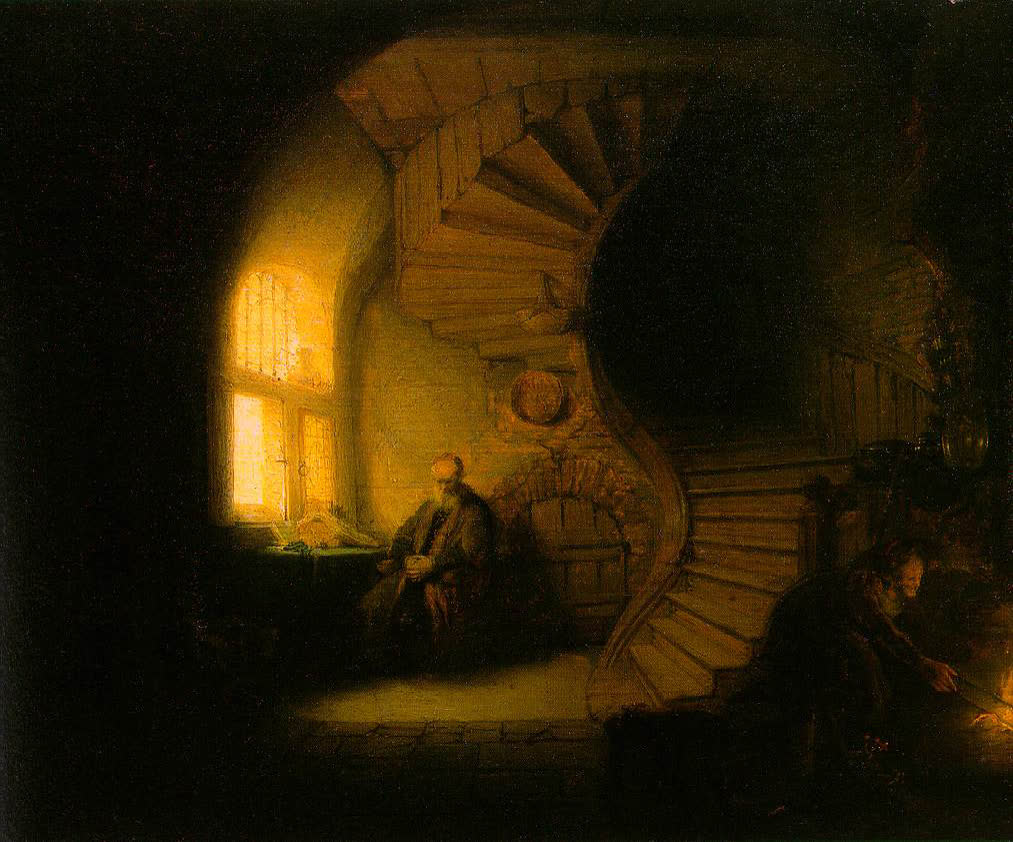
Rembrandt’s Philosopher in Meditation (1632) — the long, honest work of thinking a hard question through in the light available.Rembrandt, 1632 · Public domain
If nothing seemed to happen
Some people finish seven days and feel they have found nothing. If that is you, consider three things.
First, ask what you were looking for. If you were waiting for a sign or a feeling, remember that the experiment never promised one. Ask instead what you learned. Do you know more about who Jesus claimed to be? About the evidence? About yourself? Those are results.
Second, God often works quietly. When the prophet Elijah, worn out and afraid, stood on the mountain to meet God, there was a great wind, "but the LORD was not in the wind: and after the wind an earthquake; but the LORD was not in the earthquake: And after the earthquake a fire; but the LORD was not in the fire: and after the fire a still small voice" (1 Kings 19:11-12). Some of the most important changes in a person are hard to see from the inside while they are happening.
Third, seven days is not long. The promise is to those who "diligently seek him" (Hebrews 11:6). Many people who came to faith did so over months or years. Lewis came to believe in God in 1929 and to faith in Christ about two years later. Rosaria Butterfield, the Syracuse professor whose story is told in the companion paper Ready to Follow Jesus, read the Bible for a long time before she came to faith. Keep going. Read the Gospel of John next. Read Strobel and Wallace. Keep praying the honest prayer.
If something small happened
Perhaps you noticed something: a verse that would not let you go, a moment of conviction on Day 3, an unexpected lightness after obeying on Day 4, a growing sense that the evidence on Day 6 is stronger than you expected. Do not overstate it, and do not dismiss it. Write it down. Follow it. "I love them that love me; and those that seek me early shall find me" (Proverbs 8:17).
If you have come to believe
If at the end of this week you believe that Jesus Christ is the Son of God who died for your sins and rose again, the Bible tells you what to do, and Part 5 sets it out.
Do not wait for a feeling to confirm it. Wesley's words are worth remembering: God sometimes gives the "transports of joy" at the beginning, and sometimes withholds them. Faith is trusting Christ, not reaching an emotional pitch.
If you are further from belief than when you started
That happens too. If so, be honest about why. Was it something in the text that troubled you? Write it down and look into it; serious Christian scholars have written on almost every difficulty. Was it the evidence? Then say what you think better explains the facts on Day 6, and test that explanation as hard as you tested this one. Was it Day 3, or Day 4? Sometimes the obstacle is not the evidence but what believing would cost. Jesus said, "If any man will do his will, he shall know." If you are not willing, notice that.
And remember that the question does not go away by being set aside. "And as it is appointed unto men once to die, but after this the judgment" (Hebrews 9:27). This is not a threat to pressure you. It is the reason the question is worth more than one week.
The danger of a hidden test
One honest warning. Some people come to an experiment like this with a secret condition: "If God does X, I'll believe." When X does not happen, they conclude He is not there. But that is the Massah test, the one the Bible forbids. God is not obliged to meet terms we set. The experiment in this paper was designed to avoid that: it asks you to test the claims, not to demand a show. If you set a hidden condition anyway, be honest that it was yours, not God's.
The danger of a manufactured result
The opposite danger is just as real. A person who badly wants to believe can talk himself into an experience. This paper has tried not to encourage that. It has not promised feelings, has warned you to weigh them lightly, and has kept the focus on the text, the history, your conscience and obedience. If you have come to believe, test your belief by those things, not by how you felt on one evening. Faith that rests on Christ crucified and risen will stand when feelings change.
This part matters because the experiment was never the point. It was a doorway.
If you believe: what the apostles said to do
When the crowd at Pentecost believed Peter's message about Christ crucified and risen, he told them exactly what to do: repent, be baptized in the name of Jesus Christ for the remission of sins, and receive the gift of the Holy Ghost (Acts 2:38). Here is what that means for you.
Repent. Turn from your sin to God. Not a promise of perfection; a real change of direction. Paul preached "that they should repent and turn to God, and do works meet for repentance" (Acts 26:20).
Believe. Trust Christ alone to save you, not your goodness or your religion. "For by grace are ye saved through faith; and that not of yourselves: it is the gift of God: Not of works, lest any man should boast" (Ephesians 2:8-9).
Be baptized. Find a church that preaches the gospel and ask to be baptized. In Acts, believers were baptized at once, the same day or the same night (Acts 8:36-38; 16:33).
Tell someone. "Whosoever therefore shall confess me before men, him will I confess also before my Father which is in heaven" (Matthew 10:32).
Join a church. The first believers "continued stedfastly in the apostles' doctrine and fellowship, and in breaking of bread, and in prayers" (Acts 2:42).
Keep reading and praying. Read the Gospel of John next, then Acts, then Romans. Pray every day.
The companion papers Becoming a Christian, Ready to Follow Jesus and First Prayers on this site take each of these further.
If you are still seeking: a second week
If you are not there yet but want to keep looking, here is a second week, built the same way:
| Day | Read | Weigh | |---|---|---| | 8 | John 1 | Who John says Jesus is, and why | | 9 | John 3 | What it means to be born again | | 10 | John 6 | Why many left, and why Peter stayed | | 11 | John 11 | Jesus' claim to be the resurrection and the life | | 12 | John 14 | His claim to be the only way to the Father | | 13 | John 18–19 | The trial and the cross, through John's eyes | | 14 | John 20–21 | The risen Christ, Thomas and Peter |
Pray the honest prayer each day. And read one of the books cited in this paper: Strobel's The Case for Christ, Wallace's Cold-Case Christianity, or Lewis's Mere Christianity.
If you do not believe
Thank you for being honest enough to look. The door is not shut. Jesus said, "Behold, I stand at the door, and knock: if any man hear my voice, and open the door, I will come in to him, and will sup with him, and he with me" (Revelation 3:20). He does not force the door. He knocks.
When Paul preached the resurrection in Athens, "some mocked: and others said, We will hear thee again of this matter" (Acts 17:32). If you are in the second group, come back to it. Keep the notebook. Read it again in a year.
The experiment in this paper rests on one promise more than any other. Jesus said, "If any man will do his will, he shall know of the doctrine, whether it be of God, or whether I speak of myself" (John 7:17). It is an extraordinary thing to say. He did not ask to be believed without evidence. He gave evidence: His words, His works, His death and His rising, witnessed and written down. And He offered a further test, from the inside: be willing to do what God says, and you will know.
I decided to read the Bible for one reason: to disprove it, so I'd have an excuse to stop going to church for good. It did the opposite. I cannot promise you my story; it is mine, and yours will be your own. What I can promise is what the Bible promises: "And ye shall seek me, and find me, when ye shall search for me with all your heart" (Jeremiah 29:13).
An invitation
Try it. Seven days. The Gospel of Mark, an honest prayer, one act of obedience, and a notebook. Nobody is watching, and there is no pressure at the end. If you want to talk about what you found, whatever it was, write to contact@kylelauriano.com.
"O taste and see that the LORD is good: blessed is the man that trusteth in him" (Psalm 34:8).
5Strong, Exhaustive Concordance, Hebrew and Chaldee Dictionary, no. 2938, ta'am.↩
6C. S. Lewis, Surprised by Joy: The Shape of My Early Life (London: Geoffrey Bles, 1955).↩
7Lewis, Surprised by Joy, chapter 14, "Checkmate."↩
8John Wesley, The Journal of John Wesley, entry for May 24, 1738. Online: https://www.ccel.org/ccel/wesley/journal.vi.ii.xvi.html.↩
9C. S. Lewis, Mere Christianity (London: Geoffrey Bles, 1952), book 2, chapter 3, "The Shocking Alternative."↩
10Gary R. Habermas, "Jesus' Resurrection and Contemporary Criticism: An Apologetic (Part II)," Criswell Theological Review 4, no. 2 (1990): 375. Online: https://biblicalelearning.org/wp-content/uploads/2022/01/Habermas-Resurrection2-CTR.pdf.↩
11Tacitus, Annals 15.44, trans. Alfred John Church and William Jackson Brodribb. Online: https://www.perseus.tufts.edu/hopper/text?doc=Perseus:text:1999.02.0078:book=15:chapter=44.↩
12Josephus, Antiquities of the Jews 20.9.1, trans. William Whiston. Online: https://www.gutenberg.org/ebooks/2848.↩
13Pliny the Younger, Letters 10.96, in Letters of Pliny, trans. William Melmoth, ed. F. C. T. Bosanquet. Online: https://www.gutenberg.org/ebooks/2811.↩
14Lee Strobel, The Case for Christ (Grand Rapids: Zondervan, 1998).↩
15J. Warner Wallace, Cold-Case Christianity: A Homicide Detective Investigates the Claims of the Gospels (Colorado Springs: David C. Cook, 2013).↩
You are not sure where to go. Seven pages, and he says where.
Seven mornings for the person who is searching: the page in the 1611, a work of art, one real person who says they met him, and a room on the site for the next step. Free.
This is practical teaching, not proof. It's drawn from Scripture and from walking this road myself. If you're still weighing the basics — whether God is real, whether the Bible can be trusted — I'd encourage you to start with the Skeptic resources in the Research Hub before diving in here.