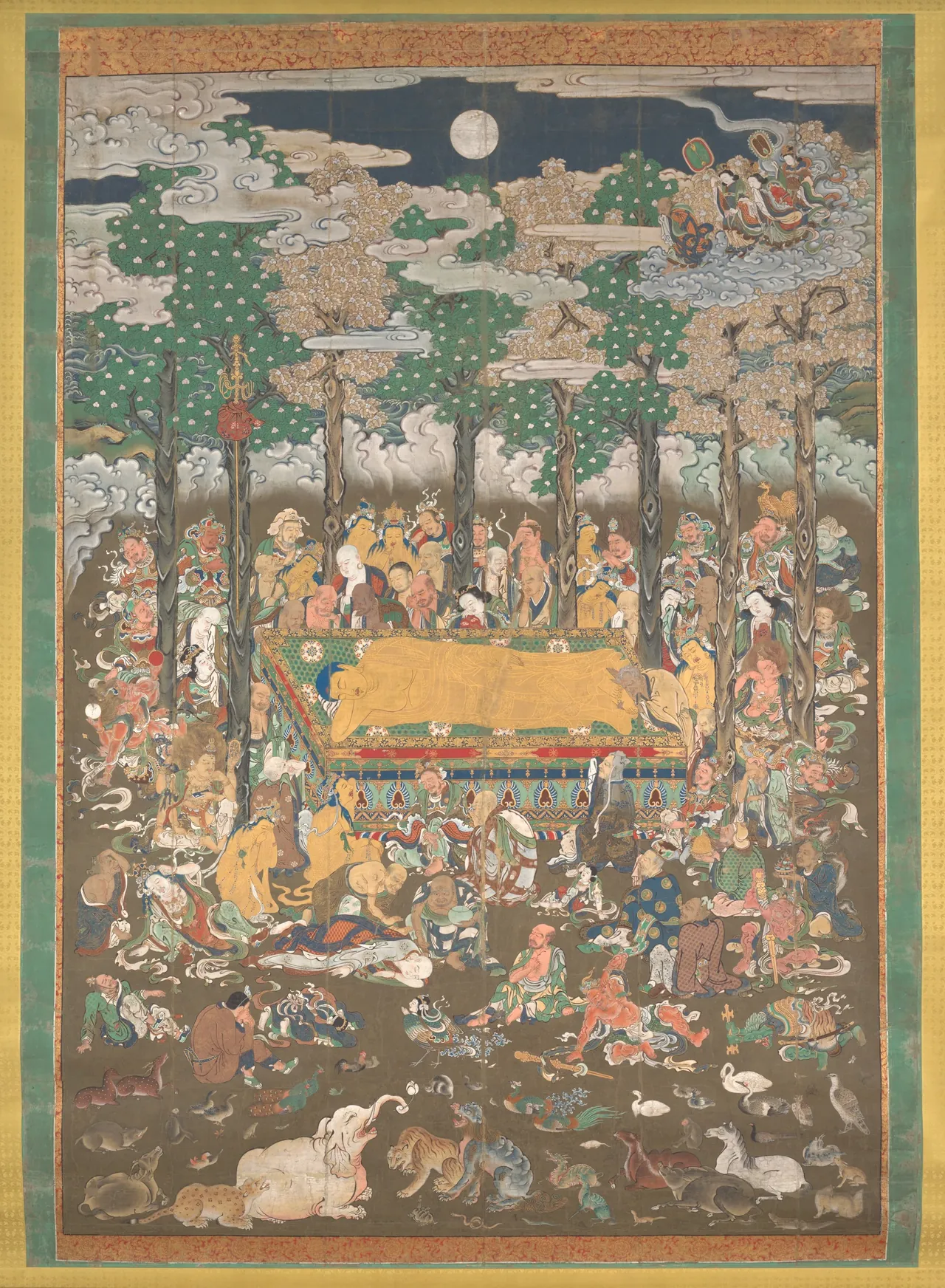
A philosopher in meditation beside a sunlit window

Seeker · Checklist

Rembrandt, 1632 · Public domain

Back to Research Hub

Comparative Religions

Read the paper (PDF)·or read it here ↓

THE WORLD'S FAITHS IN THEIR OWN WORDS, AND THE GOSPEL BESIDE THEM

A fair study of what Judaism, Islam, Hinduism, Buddhism and other paths actually teach, from their own scriptures, set beside the claims of Jesus Christ.

Abstract

Do all religions say the same thing in different words? This paper tests that idea by letting each of the great faiths speak for itself. Judaism is heard from the Hebrew Scriptures, the Mishnah, the Talmud and Rashi; Islam from the Qur'an by surah and verse and from Sahih al-Bukhari; Hinduism from the Upanishads and the Bhagavad Gita; Buddhism from the Pali discourses and the Dhammapada; Sikhism from the Guru Granth Sahib; Confucius and the Tao Te Ching from Legge's translations. Each is described as its own followers would recognise it, with its real beauty and its real claims. Then the claims of Jesus Christ, from the King James Bible, are set beside them on the questions that matter most: who God is, what is wrong with us, how we are put right, and what happens when we die. The conclusion is that the religions do not agree, that they cannot all be true, and that the gospel stands alone in offering grace instead of a path, and a risen Saviour instead of a teacher. It is written for seekers, and for Christians who want to love their neighbours of other faiths honestly.

What’s inside

  1. Introduction
  2. Part 1: Can Religions Be Compared?
  3. Part 2: Judaism: The Root of the Tree
  4. Part 3: Islam: The Prophet and the Book
  5. Part 4: Hinduism: Many Paths, One Self
  6. Part 5: Buddhism: The Path Without a Saviour
  7. Part 6: Other Paths: Sikhism, the Chinese Traditions and the Spiritual Marketplace
  8. Part 7: What Only the Gospel Says, and How to Share It
  9. Conclusion

Research paper · 9 chapters · 57 notes · October 2026

Read the paper here

About 51 minutes · 9 parts · the PDF has the same text

Introduction

3 min read

Most of us now live beside people of other faiths. The family next door may keep the fast of Ramadan. A colleague may have a small shrine to Ganesh on her desk. A friend may meditate every morning and call himself a Buddhist, or "spiritual but not religious". Our children's classmates come from homes that pray in five or six different ways.

That is not a threat. It is an opportunity, and a question. If you are a seeker, the question is simple: with so many religions in the world, how could anyone know which one, if any, is true? If you are a Christian, the question is just as real: how do I speak honestly and lovingly to neighbours whose faith I do not share — and do I even understand what they believe?

The size of the question

The question is not small. In June 2025 the Pew Research Center published its study of how the world's religions changed between 2010 and 2020. By its count, in 2020 Christians numbered about 2.3 billion people (28.8 percent of the world), Muslims about a quarter of the world (25.6 percent), the religiously unaffiliated about 1.9 billion (24.2 percent), Hindus about 1.2 billion (14.9 percent), Buddhists about 324 million (4.1 percent), and Jews about 14.8 million (about 0.2 percent). All other religions together made up about 2.2 percent.1

Behind each of those numbers are real people who pray, hope, fear death and love their children. Anyone who wants to talk about religion honestly has to begin there.

What this paper is

This is a study, not a debate. It has one rule above all others: every religion is described from its own sources, in words its own followers would recognise. When this paper says what Islam teaches, it quotes the Qur'an by surah and verse. When it says what the Buddha taught, it quotes the Pali discourses that Buddhists themselves preserve. When it describes Hinduism, it goes to the Upanishads and the Bhagavad Gita. The translations used are named in the notes, so you can check every line.

That rule matters because Christians have not always kept it. It is easy to win an argument against a caricature. It is much harder, and much more honest, to understand what a thoughtful Muslim, Hindu or Buddhist actually believes, and then to ask whether it is true. Scripture commands the harder way: "Thou shalt not bear false witness against thy neighbour" (Exodus 20:16) applies to our neighbours' religions as much as to their reputations.

The second rule is that the Christian claims are set out just as plainly, from the King James Bible. This paper does not pretend to be neutral. It is written by a Christian who believes Jesus Christ is "the way, the truth, and the life" (John 14:6). But it tries to show why Christians believe that, by setting the claims side by side and letting you weigh them.

The paper moves in seven parts. Part 1 asks whether religions can be compared at all, and whether they might all be saying the same thing. Parts 2 to 6 take the great traditions one at a time: Judaism, Islam, Hinduism, Buddhism, and then Sikhism, the Chinese traditions and the modern spiritual marketplace. Part 7 sets out what the gospel says that no other faith says, and closes with practical help for talking with friends of other faiths with honesty and love.

A word about me

I was raised Roman Catholic but never really connected — I went through the motions, fell asleep in the pews, and faked being sick to skip Mass. When real life hit — a lost job, a pregnant wife, constant fights — I went looking for peace anywhere I could find it. New Age, crystals, astral projection, tarot, angel numbers. None of it held. So I swung back hard to religion, said the rosary every night, and still felt nothing.

Eventually I gave up and called myself an atheist. I decided to read the Bible for one reason: to disprove it, so I'd have an excuse to stop going to church for good. It did the opposite. I came to faith in 2022, and my wife came to faith a month later. That is my story, and the rest of it is at kylelauriano.com/about.

I mention it because this paper is written for people who are still looking, and for those who love them.

A note on Scripture: every Bible verse here is quoted from the King James Bible. You can read it free in the 1611 Reader at kylelauriano.com/library. Quotations from other religions' scriptures are from the translations named in the notes; they are given so that you can hear those faiths in their own words, not because they are Scripture.

Part 1 — Can Religions Be Compared?

5 min read

This part matters because many people never get past the first objection. "Who are you to say one religion is right? Aren't they all saying the same thing?" If that is true, comparing religions is pointless. If it is not true, comparing them is one of the most important things a person can do.

The elephant and the king

The most famous picture of religious pluralism is the story of the blind men and the elephant. One man feels the trunk and says the elephant is like a snake; another feels the leg and says it is like a pillar; another feels the ear and says it is like a fan. Each has a part of the truth; none has the whole. So, the story is often told, the religions each grasp a piece of the divine, and none should claim to see it all.

It is worth knowing where the story comes from. One of its oldest forms is in the Buddhist scriptures themselves, in the Udana of the Pali Canon. There the Buddha tells of a king of Savatthi who gathered men blind from birth and had an elephant shown to them, part by part. Asked what an elephant is like, those who felt the head said a pot, those who felt the ear a winnowing fan, those who felt the tusk a ploughshare, and so on, until "they punched each other with their fists." The Buddha's point was about the wandering teachers of rival schools: they are "blind and sightless," quarrelling because they "see just one part."2

Notice what the story actually needs in order to work. Someone in it is not blind. The king sees the whole elephant, and so does the Buddha who tells the story. The parable does not say that no one can know the truth. It says that the teller knows it, and the others do not. Whoever uses the story to say "all religions see only part of the truth" is quietly claiming to be the king — to see the whole, and to know better than Muslims, Hindus, Jews and Christians what they are really worshipping. That is not humility. It is a very large claim of its own.

The religions do not say they are the same

The second problem is that the religions themselves do not say they are the same. Each of them makes claims that rule out the others.

The Qur'an says, "And whoever desires other than Islam as religion - never will it be accepted from him, and he, in the Hereafter, will be among the losers."3 The Dhammapada, one of the best-loved Buddhist texts, calls the eightfold path the only way: "This is the path, there is no other / for the purification of vision."4 Jewish faith confesses each day that "The LORD our God is one LORD" (Deuteronomy 6:4) and has, through its history, refused to worship any man as God. And Jesus said, "I am the way, the truth, and the life: no man cometh unto the Father, but by me" (John 14:6).

On the central questions they give different answers. Is God one person, three persons in one God, an impersonal absolute, or not the point at all? Did Jesus die on a cross, or did he not? Do we live one life and then face judgment, or are we born again and again? Is the self real, or an illusion? These are not different words for the same thing. They are different claims about what is real.

Contradictions cannot all be true

This leads to a simple point of logic that every honest conversation depends on. Two statements that contradict each other cannot both be true at the same time and in the same sense. Either Jesus died on the cross or he did not. Either each of us has one life followed by judgment, or we are reborn many times. Respect for other people does not require us to pretend otherwise; in fact, it requires us to take their claims seriously enough to see that they differ from ours.

A neighbour who says "I respect your faith, but I think it is mistaken" is treating you as an adult. A neighbour who says "your faith and mine are really the same" when they plainly are not has not listened to either.

What we will compare

So the religions can be compared, and should be. This paper asks the same five questions of each:

| Question | What it asks | |---|---| | God | Who or what is ultimate? Personal or impersonal? One or many? | | The problem | What is wrong with the world and with us? | | The answer | How is that problem solved? By what we do, or by what is done for us? | | Jesus | What does this faith say about Jesus of Nazareth? | | Death and after | What happens when we die? |

The questions are not loaded in Christianity's favour. Every serious religion has answers to all five. That is exactly why they can be set side by side.

How Paul spoke at Athens

There is a model for this in the Bible itself. When the apostle Paul came to Athens, a city full of temples and philosophers, he did not mock what he saw. He started with what they already knew. "For as I passed by, and beheld your devotions, I found an altar with this inscription, TO THE UNKNOWN GOD. Whom therefore ye ignorantly worship, him declare I unto you" (Acts 17:23). He quoted their own poets: "For in him we live, and move, and have our being; as certain also of your own poets have said, For we are also his offspring" (Acts 17:28).

But he did not stop at common ground. He went on to the point where the gospel parted company with everything in Athens: "And the times of this ignorance God winked at; but now commandeth all men every where to repent: Because he hath appointed a day, in the which he will judge the world in righteousness by that man whom he hath ordained; whereof he hath given assurance unto all men, in that he hath raised him from the dead" (Acts 17:30-31).

That is the pattern for this paper: real understanding, real common ground, and then the real difference — which, for Paul as for us, comes down to a man raised from the dead.

Part 2 — Judaism: The Root of the Tree

6 min read

Judaism comes first because Christianity cannot be understood without it. Jesus was a Jew, born under the law. His apostles were Jews. The first church was a Jewish church in Jerusalem. The Christian Old Testament is the Hebrew Bible. Paul writes that to Israel belong "the adoption, and the glory, and the covenants, and the giving of the law, and the service of God, and the promises; Whose are the fathers, and of whom as concerning the flesh Christ came, who is over all, God blessed for ever. Amen" (Romans 9:4-5). Jesus Himself said, "salvation is of the Jews" (John 4:22).

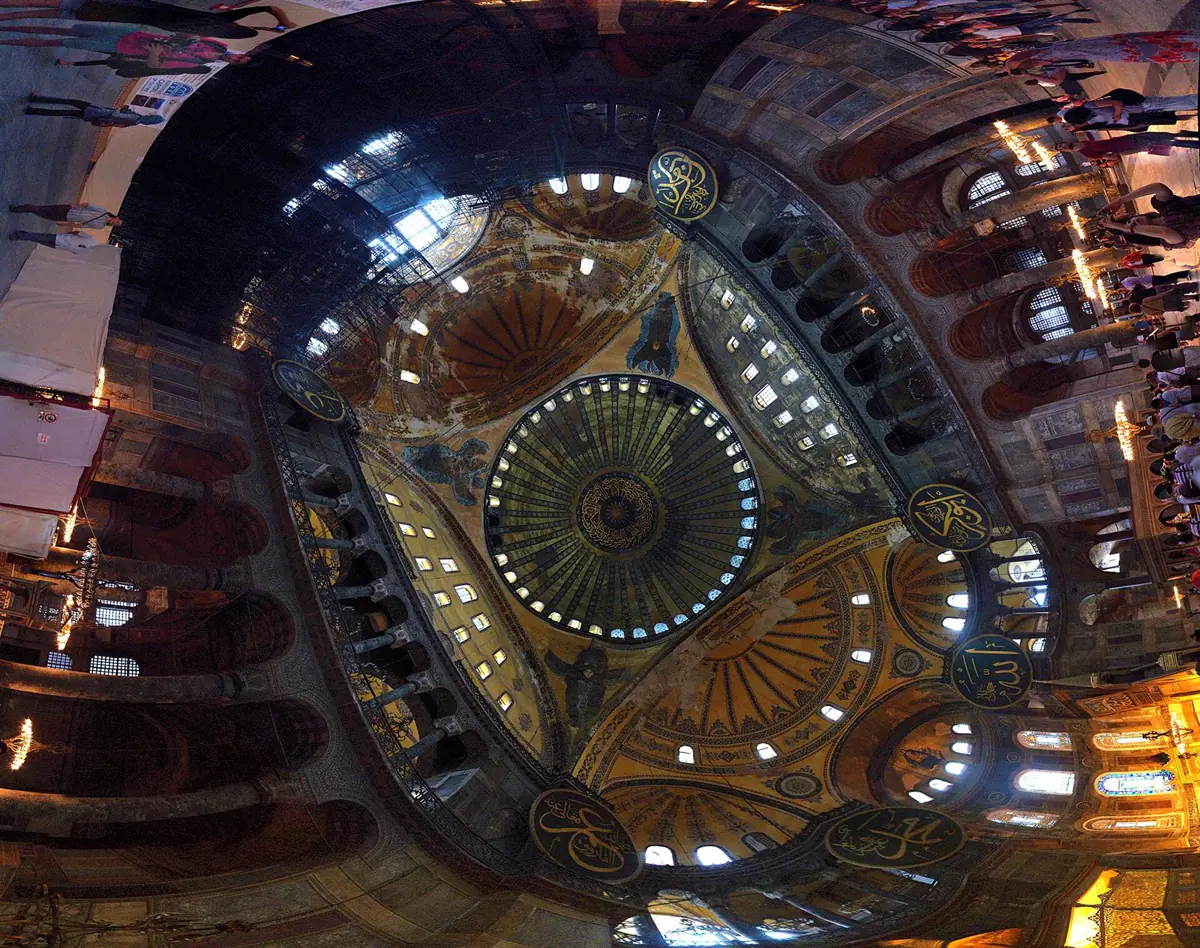
The vast domed interior of Hagia Sophia
Hagia Sophia, consecrated in 537 AD — for a thousand years the largest church in the world.Ronan Reinart · CC BY-SA 3.0

So the relationship between Christianity and Judaism is not like the relationship between Christianity and any other faith. It is a family relationship, with all the closeness and all the pain that brings.

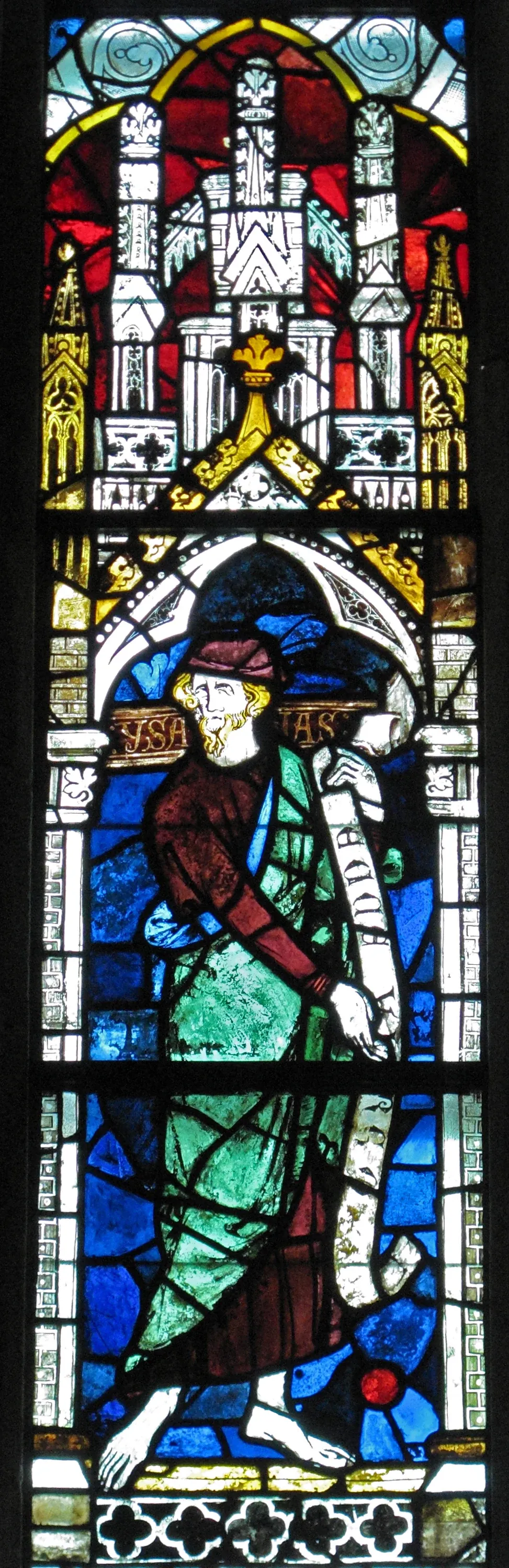
Prophet Isaiah
A French stained-glass figure of the prophet Isaiah from about 1325, the prophet whose fifty-third chapter stands at the centre of the long conversation between Jews and Christians.Prophet Isaiah · ca. 1325 · The Metropolitan Museum of Art · CC0 · museum record · Galeria Regni

What Judaism believes

At the heart of Jewish faith is the Shema, recited morning and evening: "Hear, O Israel: The LORD our God is one LORD" (Deuteronomy 6:4). God is one, the Creator of all, holy, just and merciful. He chose Abraham and his descendants, gave the law to Moses at Sinai, and made a covenant with Israel. He will one day send the Messiah, gather His people, and raise the dead.

Judaism as it is practised today is rabbinic Judaism. When the Romans destroyed the temple in AD 70, the sacrifices ended. The rabbis rebuilt Jewish life around the study of the Torah, prayer, and the commandments. Their teaching was gathered in the Mishnah (about AD 200) and then in the vast commentary called the Talmud. The Mishnah teaches that "All of the Jewish people, even sinners and those who are liable to be executed with a court-imposed death penalty, have a share in the World-to-Come," and then names those who do not — first among them the one who says there is no resurrection of the dead derived from the Torah.5

In the twelfth century the great Jewish scholar Moses Maimonides summed up the faith in thirteen principles in his commentary on that same chapter of the Mishnah. They include the unity and incorporeality of God, the prophecy of Moses, the divine origin and permanence of the Torah, reward and punishment, the coming of the Messiah, and the resurrection of the dead.6 Many Jewish prayer books still print them, and Jews often sing them in the hymn Yigdal.

There is no single Jewish view on every question. Orthodox, Conservative and Reform Jews differ on how binding the law is and on many points of belief. Many Jews today are secular. But the main lines above are the faith that observant Jews confess.

Common ground

No other religion shares as much with Christianity. Jews and Christians worship the God of Abraham, Isaac and Jacob. They read the same law, prophets and psalms. They believe that God made the world good, that man is made "in his own image" (Genesis 1:27), that God speaks, that He judges sin, that He keeps His promises, and that history is going somewhere. The Ten Commandments, the Psalms, and the hope of resurrection are a shared inheritance.

The parting of the ways: the Messiah

The great question between them is the one Jesus asked His disciples: "But whom say ye that I am?" Peter answered, "Thou art the Christ, the Son of the living God" (Matthew 16:16). Most Jews, then and now, have answered differently. The reasons are serious and should be heard.

Jewish teachers have usually argued that Jesus cannot be the Messiah because the Messiah's work is visible: he is to rebuild the temple, gather the exiles, and bring peace to the world. The world is not at peace; therefore the Messiah has not yet come. They have also held that worshipping a man as God breaks the first commandment, and that the Christian doctrine of the Trinity compromises the oneness of God confessed in the Shema.

Christians answer from the same Scriptures. The prophets speak of a Messiah who reigns, but also of one who suffers. Daniel says that "after threescore and two weeks shall Messiah be cut off, but not for himself: and the people of the prince that shall come shall destroy the city and the sanctuary" (Daniel 9:26) — a Messiah cut off before the destruction of the temple. Jesus taught that He would come twice: once to suffer and once to reign. "So Christ was once offered to bear the sins of many; and unto them that look for him shall he appear the second time without sin unto salvation" (Hebrews 9:28).

Isaiah 53 and how it has been read

The most debated passage is Isaiah's song of the suffering servant, which begins at Isaiah 52:13 and runs through chapter 53. "But he was wounded for our transgressions, he was bruised for our iniquities: the chastisement of our peace was upon him; and with his stripes we are healed. All we like sheep have gone astray; we have turned every one to his own way; and the LORD hath laid on him the iniquity of us all" (Isaiah 53:5-6).

The great medieval Jewish commentator Rashi (1040–1105) read the servant as the people of Israel. On the opening verse he wrote that the servant is "Jacob, [i.e.,] the righteous among him," and he explained that this is "the custom of this prophet: he mentions all Israel as one man."7 That reading is still common among Jewish teachers today, and it has real support: Isaiah does call Israel God's servant elsewhere (Isaiah 44:1-2).

But it was not the only Jewish reading. The ancient Aramaic paraphrase of the prophets, the Targum attributed to Jonathan ben Uzziel, renders the opening line of the song this way: "Behold, my servant the messiah shall prosper, he shall be exalted and extolled, and he shall be very strong."8 The Babylonian Talmud records a debate about the mourning in Zechariah 12, and one rabbi's view that it is a lament "for Messiah ben Yosef who was killed." The Talmud then ties that to the verse "And they shall look unto Me because they have thrust him through; and they shall mourn for him, as one mourns for his only son."9 So the idea of a Messiah who is pierced and killed was not invented by Christians. It is present, in its own form, within the Jewish tradition.

The Christian reading rests on the details of the text. The servant suffers not for his own sins but for others: "for the transgression of my people was he stricken" (Isaiah 53:8). He is innocent: "he had done no violence, neither was any deceit in his mouth" (Isaiah 53:9). He dies as "an offering for sin," and yet afterwards "he shall see his seed, he shall prolong his days" (Isaiah 53:10). Israel, in Isaiah's own preaching, is not sinless; the prophet calls the nation "a people laden with iniquity" (Isaiah 1:4). A sinless one who dies for the sins of the people, and then lives, is exactly what the New Testament says happened to Jesus of Nazareth.

What Christians owe the Jewish people

Christians have a long and shameful record of contempt and violence against Jews. That history must be named and repented of. It has no root in the New Testament, which was written almost entirely by Jews. Paul, who suffered at the hands of some of his own people, still wrote: "Brethren, my heart's desire and prayer to God for Israel is, that they might be saved" (Romans 10:1). And he asked, "Hath God cast away his people? God forbid. For I also am an Israelite, of the seed of Abraham, of the tribe of Benjamin" (Romans 11:1).

The gospel is "the power of God unto salvation to every one that believeth; to the Jew first, and also to the Greek" (Romans 1:16). A Christian speaking with a Jewish friend is not bringing a foreign religion. He is pointing to Moses and the prophets and saying, with Jesus, "had ye believed Moses, ye would have believed me: for he wrote of me" (John 5:46).

Part 3 — Islam: The Prophet and the Book

8 min read

Islam is the world's second-largest religion, and the one with which Christianity has the longest and most complicated history. It honours Jesus more than any other religion apart from Christianity — and denies the two things Christians say matter most about Him. This part tries to describe Islam as a thoughtful Muslim would, and then to name that difference clearly.

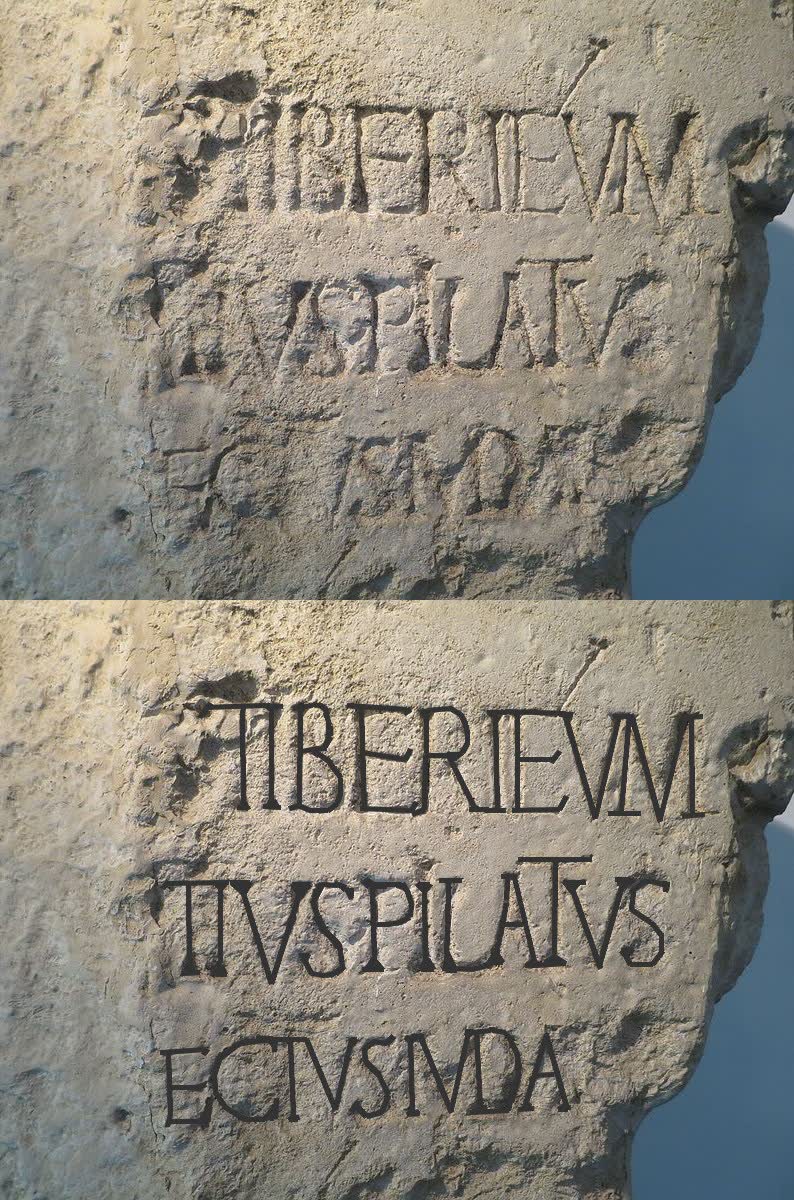
Replica of the Pilate Stone, inscribed with the name of Pontius Pilate
The Pilate Stone (shown in replica; the original, 1st century AD, was found at Caesarea Maritima) — the inscription naming Pontius Pilate, prefect of Judea, the governor of the Gospels.Reinhard Dietrich · CC BY-SA 4.0
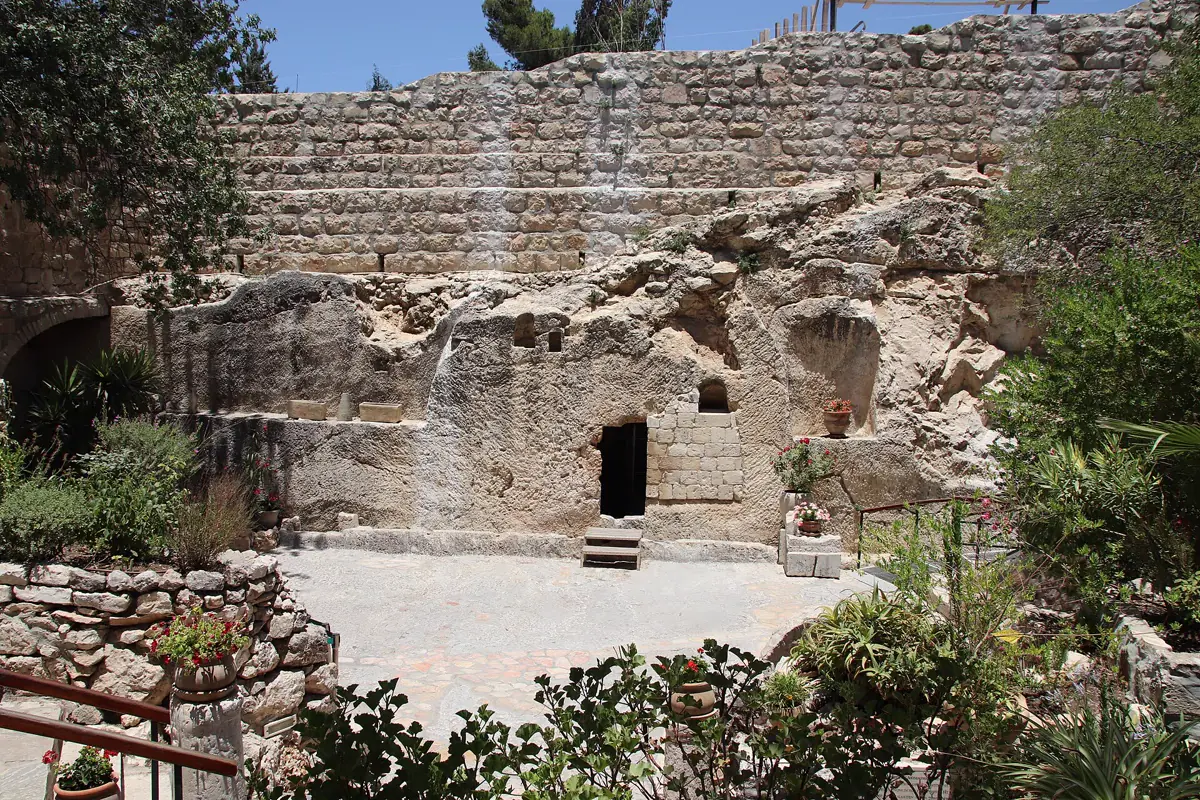
The Garden Tomb in Jerusalem, a rock-cut burial chamber
The Garden Tomb in Jerusalem — a rock-cut burial place of the very kind the Gospels describe, its stone bench still empty.Gary Todd · CC0

Beginnings

Muhammad was born in Mecca, in Arabia, around AD 570, and died in Medina in 632. According to Islamic tradition, he received his first revelation around 610, while praying in a cave on Mount Hira. The account preserved in Sahih al-Bukhari, the collection of hadith (reports of the Prophet's words and deeds) that Sunni Muslims regard as the most reliable, comes from his wife Aisha. An angel came to him and commanded him to read; he answered, "I do not know how to read"; the angel pressed him hard three times and then recited the opening words of what is now Surah 96. Muhammad returned home "with his heart beating severely" and said to his wife Khadija, "Cover me! Cover me!"10

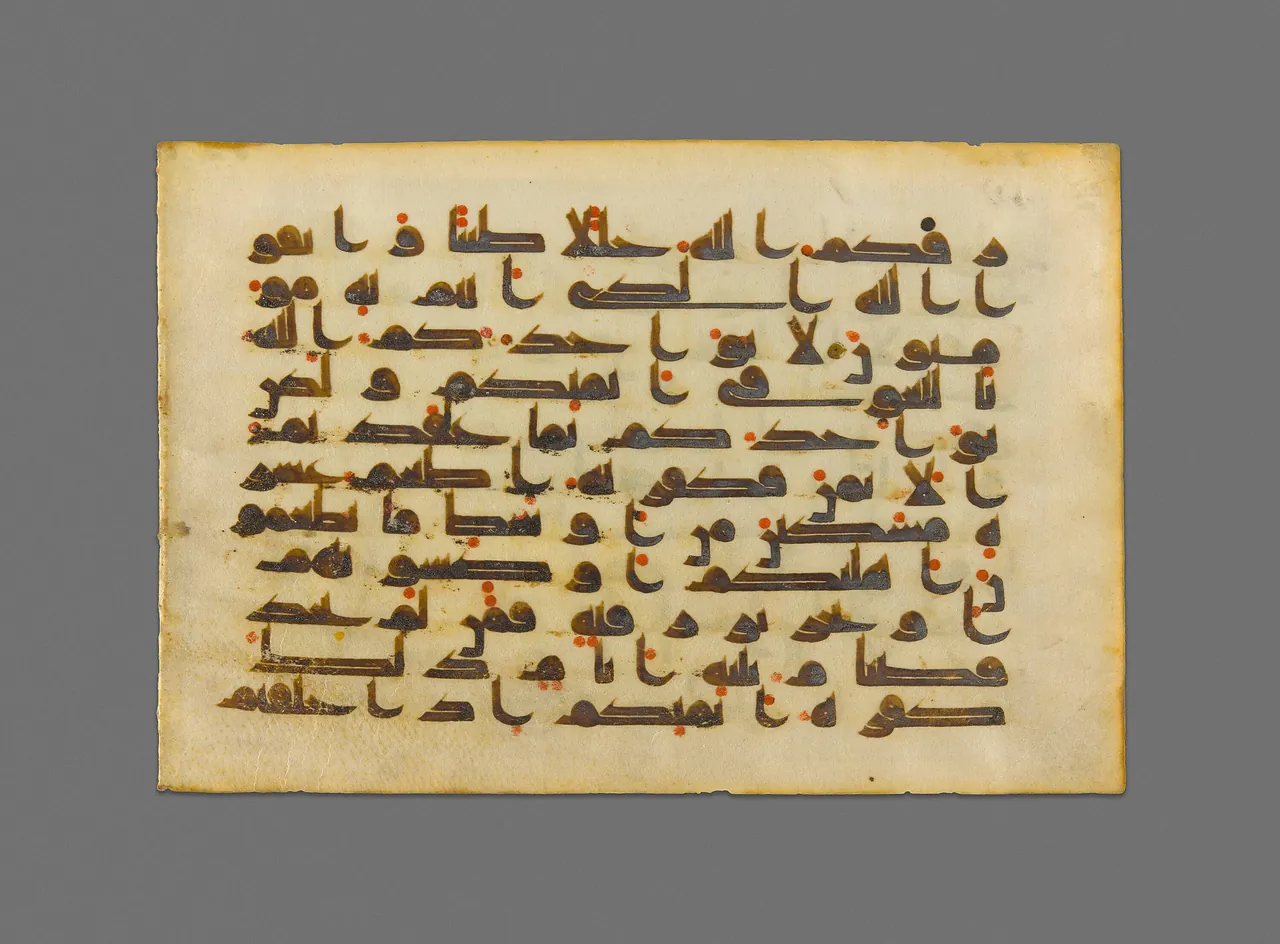
Page from a Copy of The Qur'an
A page from a ninth- or tenth-century copy of the Qur'an from the Middle East, in ink and colour on vellum, the book Muslims hold to be the final revelation.Page from a Copy of The Qur'an · 9th/10th century · Art Institute of Chicago · CC0 · museum record · Galeria Regni

Muslims believe that over the next twenty-three years the angel Gabriel brought the Qur'an to Muhammad piece by piece. After his death, the recited and written portions were gathered. Bukhari also records that the third caliph, Uthman, had a standard text copied and sent to every province, and "ordered that all the other Qur'anic materials, whether written in fragmentary manuscripts or whole copies, be burnt."11 Muslims regard the Qur'an as the uncreated, perfectly preserved word of God, revealed in Arabic. Translations are interpretations; the Qur'an itself is the Arabic.

What Islam teaches

The centre of Islam is tawhid, the absolute oneness of God. Surah 112, which Muslims recite often, says it in four lines: "Say, 'He is Allah, [who is] One, Allah, the Eternal Refuge. He neither begets nor is born, Nor is there to Him any equivalent.'"12 The one sin that God will not forgive, if a person dies in it, is shirk, associating anything with God: "Indeed, Allah does not forgive association with Him, but He forgives what is less than that for whom He wills."13

God has sent many prophets — Adam, Noah, Abraham, Moses, David, Jesus — and Muhammad is the last: "Muhammad is not the father of [any] one of your men, but [he is] the Messenger of Allah and seal [i.e., last] of the prophets."14 God has given scriptures: the Torah to Moses, the Psalms to David, the Gospel (Injil) to Jesus, and the Qur'an to Muhammad.

The practice of Islam is summed up in the five pillars: the confession that there is no god but God and Muhammad is His messenger; the five daily prayers; almsgiving; the fast of Ramadan; and the pilgrimage to Mecca for those who are able. There is a day of judgment, when every soul's deeds are weighed: "So those whose scales are heavy - it is they who will be the successful. And those whose scales are light - they are the ones who will lose themselves."15 No one can carry another's sin: "no bearer of burdens will bear the burden of another."16

Islam also speaks warmly of God's mercy. Every surah but one opens, "In the name of Allah, the Entirely Merciful, the Especially Merciful."17 And the Qur'an says, "O My servants who have transgressed against themselves [by sinning], do not despair of the mercy of Allah. Indeed, Allah forgives all sins."18 A Christian who speaks of Islam as a religion without mercy has not read it. The question is not whether Islam speaks of mercy, but on what ground mercy is given — and that is where the scales of Surah 7 and the cross of the gospel part company.

Jesus in the Qur'an

Many Christians are surprised by how much the Qur'an says about Jesus (Isa). He is born of the virgin Mary. He is called the Messiah. He is called a word from God: "O Mary, indeed Allah gives you good tidings of a word from Him, whose name will be the Messiah, Jesus, the son of Mary."19 He works miracles; in the Qur'an He heals the blind and the leper and gives "life to the dead - by permission of Allah."20 He is taken up to God.

But the Qur'an is equally clear about what Jesus is not. He is not God, and not the Son of God. "The Messiah, son of Mary, was not but a messenger; [other] messengers have passed on before him."21 To call Him God is unbelief: "They have certainly disbelieved who say, 'Allah is the Messiah, the son of Mary.'"22 The idea that God has a son is described in the strongest terms: "The heavens almost rupture therefrom and the earth splits open and the mountains collapse in devastation That they attribute to the Most Merciful a son."23 And the Trinity is rejected: "do not say, 'Three'; desist - it is better for you. Indeed, Allah is but one God. Exalted is He above having a son."24

Most important of all, the Qur'an denies that Jesus died on the cross. "And [for] their saying, 'Indeed, we have killed the Messiah, Jesus, the son of Mary, the messenger of Allah.' And they did not kill him, nor did they crucify him; but [another] was made to resemble him to them... Rather, Allah raised him to Himself."25 Muslim scholars have explained this verse in different ways, but the mainstream view is that Jesus did not die on the cross and was taken up to God alive.

Where the difference lies

Here the two faiths meet head on. The Christian gospel, in its earliest summary, is "that Christ died for our sins according to the scriptures; And that he was buried, and that he rose again the third day according to the scriptures" (1 Corinthians 15:3-4). Paul says that if this is not true, Christianity is empty: "And if Christ be not raised, your faith is vain; ye are yet in your sins" (1 Corinthians 15:17). The Qur'an says the first part of that summary did not happen.

Both claims cannot be true. And this is a question of history, not only of theology. The death of Jesus by crucifixion under Pontius Pilate is one of the best-attested facts of ancient history. The Roman historian Tacitus, writing in the early second century and no friend of Christians, says that "Christus, from whom the name had its origin, suffered the extreme penalty during the reign of Tiberius at the hands of one of our procurators, Pontius Pilatus."26 The Jewish historian Josephus also records Pilate's condemnation of Jesus to the cross.27 The letters of Paul, written within about twenty-five years of the event, take it as known to all. The Qur'an's denial comes some six hundred years later, from Arabia, without new evidence. For a historian, the weight is all on one side.

The Qur'an and the earlier Scriptures

There is a further question that thoughtful Muslims themselves wrestle with. The Qur'an speaks of the Torah and the Gospel as revelations from God. It says that Jesus was given "the Gospel, in which was guidance and light," and it tells Christians, "let the People of the Gospel judge by what Allah has revealed therein."28 It even tells the Prophet, "So if you are in doubt, [O Muhammad], about that which We have revealed to you, then ask those who have been reading the Scripture before you."29

Many Muslims today hold that the Bible was corrupted after the time of Jesus, and that this is why it disagrees with the Qur'an. But the Christians of Muhammad's day, whom the Qur'an tells him to ask, were reading Gospels that already said Jesus died on the cross and rose again — the same Gospels we have now, copied long before Muhammad was born. If the Gospel was trustworthy enough in the seventh century for the Qur'an to appeal to it, it is fair to ask what changed. This is one of the questions the former Muslim Nabeel Qureshi describes facing in his book Seeking Allah, Finding Jesus, and later weighed at length in No God but One: Allah or Jesus?30

What Muslims often misunderstand about the Trinity

It is also fair to notice that the Qur'an's picture of the Trinity is not what Christians believe. One verse pictures God asking Jesus on the last day, "did you say to the people, 'Take me and my mother as deities besides Allah?'"31 No Christian creed has ever taught that Mary is part of the Godhead. The Trinity is not three gods, still less a god, his wife and their son. It is one God, eternally existing as Father, Son and Holy Ghost: "Go ye therefore, and teach all nations, baptizing them in the name of the Father, and of the Son, and of the Holy Ghost" (Matthew 28:19) — one name, three persons. A Christian can honestly agree with the Qur'an that God is one, that He has no consort, and that He did not beget a son in the way the pagan gods were said to. What he cannot agree with is that the eternal Word could not become flesh.

The heart of it: scales or a substitute

The deepest difference is not about history but about grace. In Islam, the believer submits to God, keeps His law, and hopes that on the last day his good deeds will outweigh the bad and that God will be merciful. No one can bear another's burden. In the gospel, the believer comes to God confessing that his scales can never balance — "all our righteousnesses are as filthy rags" (Isaiah 64:6) — and trusts in One who did bear the burden of others: "Who his own self bare our sins in his own body on the tree" (1 Peter 2:24). As Paul puts it, "For by grace are ye saved through faith; and that not of yourselves: it is the gift of God: Not of works, lest any man should boast" (Ephesians 2:8-9).

The Qur'an says, "no bearer of burdens will bear the burden of another." The gospel says, "the LORD hath laid on him the iniquity of us all" (Isaiah 53:6). Those two sentences are the whole difference between the two faiths in miniature.

Part 4 — Hinduism: Many Paths, One Self

6 min read

Hinduism is the oldest of the great living religions and the hardest to describe in a few pages. It has no single founder, no single creed, and no single scripture that all Hindus accept as binding. The word "Hinduism" itself was largely given by outsiders to the many traditions of India. A Hindu may worship Vishnu, Shiva or the Goddess, or many gods, or none; he may be a philosopher who believes all is one, or a devoted worshipper of Krishna. Any short account will leave much out. What follows tries to describe the main ideas that most Hindu traditions share, from their own texts.

The scriptures

The oldest Hindu scriptures are the four Vedas, hymns and rituals in ancient Sanskrit, of which the Rig Veda is the earliest. The later parts of the Vedic literature, the Upanishads, turn from ritual to philosophy: they ask what is ultimately real, and what the true self is. Alongside these stand the great epics, the Ramayana and the Mahabharata. Within the Mahabharata is the Bhagavad Gita, the "Song of the Lord", a dialogue between the warrior Arjuna and the god Krishna on a battlefield. For many Hindus today the Gita is the best-loved scripture of all.

Brahman and atman

The Upanishads teach that behind the changing world there is one ultimate reality, Brahman. The deepest self in each person, the atman, is not finally different from it. The most famous statement of this comes in the Chandogya Upanishad, where a father teaches his son Svetaketu. Of the subtle essence that underlies everything, he says, "in it all that exists has its self. It is the True. It is the Self, and thou, O Svetaketu, art it."32 The Sanskrit phrase, tat tvam asi, "that thou art", became one of the great sayings of Hindu philosophy.

Hindu thinkers have read this in different ways. The school of Advaita ("non-dual") Vedanta, associated with the teacher Shankara, holds that the self and Brahman are strictly identical and that the world of separate things is, in the end, an illusion (maya). Other schools, such as the qualified non-dualism of Ramanuja, hold that the soul is distinct from God while wholly dependent on Him. Hindu tradition often expresses its openness with a line from the Rig Veda that is usually summarised as "Truth is one; the wise call it by many names."33

Karma and rebirth

Most Hindu traditions teach that the soul passes through many lives. The Gita puts it in a famous image: "Just as a man casts off worn-out clothes and puts on new ones, so also the embodied Self casts off worn-out bodies and enters others which are new."34 The soul itself, the Gita says, is never born and never dies: "It is not born, nor does It ever die... unborn, eternal, changeless and ancient, It is not killed when the body is killed."35

What shapes each next life is karma, the moral law of action and consequence. The Brihadaranyaka Upanishad teaches that as a person acts and behaves, so he becomes: good deeds make him good, evil deeds make him evil.36 The round of birth, death and rebirth is called samsara. The goal of the religious life is moksha, release from that round.

Three paths to release

Hindu tradition speaks of several paths to moksha. There is the path of knowledge (jnana), the insight that the self is one with Brahman. There is the path of action (karma yoga), doing one's duty without attachment to the results. The Gita's best-known line on this is, "Thy right is to work only, but never with its fruits; let not the fruits of action be thy motive, nor let thy attachment be to inaction."37 And there is the path of devotion (bhakti), loving surrender to a personal God.

The path of devotion has some of the most moving lines in Hindu scripture. Krishna says, "The same am I to all beings; to Me there is none hateful or dear; but those who worship Me with devotion are in Me and I am also in them."38 At the climax of the Gita he says to Arjuna, "Abandoning all duties, take refuge in Me alone: I will liberate thee from all sins; grieve not."39 Christians reading those words for the first time often hear in them a longing that Scripture answers.

Avatars and the incarnation

Hinduism also speaks of God coming down in visible form. Vishnu is said to take many avatars ("descents"), among them Rama and Krishna. Krishna explains why: "Whenever there is decline of righteousness, O Arjuna, and rise of unrighteousness, then I manifest Myself. For the protection of the good, for the destruction of the wicked and for the establishment of righteousness, I am born in every age."40

Some people say the incarnation of Christ is simply one more avatar. But the two ideas are very different. The avatars appear again and again, "in every age", and in much Hindu thought the forms they take belong to the passing world. The incarnation happened once, in history, and was permanent: "And the Word was made flesh, and dwelt among us" (John 1:14). The Son of God did not appear as a man for a while and then leave the body behind. He was born, died, rose bodily, and still has a human body: "Behold my hands and my feet, that it is I myself: handle me, and see; for a spirit hath not flesh and bones, as ye see me have" (Luke 24:39). And He came not to destroy the wicked but to save them: "But God commendeth his love toward us, in that, while we were yet sinners, Christ died for us" (Romans 5:8).

One life, or many?

The deepest difference concerns karma and rebirth. Karma is a law of strict moral consequence, worked out over many lives. In one sense it is like the Bible's "whatsoever a man soweth, that shall he also reap" (Galatians 6:7). But karma has no place for forgiveness in the strict sense. A debt of karma is not cancelled by another; it is worked off, or burned away by knowledge, or (in the devotional traditions) eased by the grace of a god.

Scripture says something different on both points. First, we live once: "it is appointed unto men once to die, but after this the judgment" (Hebrews 9:27). There is no second, third or thousandth life in which to do better. Second, the debt can be paid by another, once for all: "So Christ was once offered to bear the sins of many" (Hebrews 9:28). Again, "By the which will we are sanctified through the offering of the body of Jesus Christ once for all" (Hebrews 10:10).

That is not bad news but good news. Under karma, the weight of every life rests on the one who lived it. Under the gospel, it rests on the cross.

A personal God, or the Self?

There is one more difference. In the non-dual reading of the Upanishads, the goal is to realise that one's deepest self is the ultimate reality. In the Bible, the goal is to know God, who is not ourselves: "And this is life eternal, that they might know thee the only true God, and Jesus Christ, whom thou hast sent" (John 17:3). We are creatures, "formed... of the dust of the ground" (Genesis 2:7), made for a relationship of love with our Maker. We do not become God; we are reconciled to Him, adopted as His children: "ye have received the Spirit of adoption, whereby we cry, Abba, Father" (Romans 8:15).

The longing in the Gita's devotional verses — for a God who loves His worshippers and frees them from sin — finds its true answer not in absorption into the Self, but in the Father who runs to meet the prodigal.

A guest's story

Mike Shreve told his story on The King Is Coming Show (TKIC #46): in his own telling, he went from Kundalini guru to born again on a Tampa roadside. Watch it in his own words: youtube.com/watch?v=oqAq58bDC4k Mike's account of what happened to him, shared as his testimony — weigh it for yourself.

Part 5 — Buddhism: The Path Without a Saviour

6 min read

Buddhism is admired in the West as a gentle, rational, almost scientific path of meditation and compassion. Much in it is admirable. But it is not what many Westerners think it is, and its starting point is very different from the gospel's. This part lets the Buddha speak in the words his followers preserved.

The man and the texts

Siddhartha Gautama, who became the Buddha ("the awakened one"), lived in north-eastern India, probably in the fifth century BC; scholars differ on his exact dates. According to Buddhist tradition, he was a prince who left his palace after seeing old age, sickness and death, tried and abandoned extreme self-denial, and attained awakening while meditating under a tree.

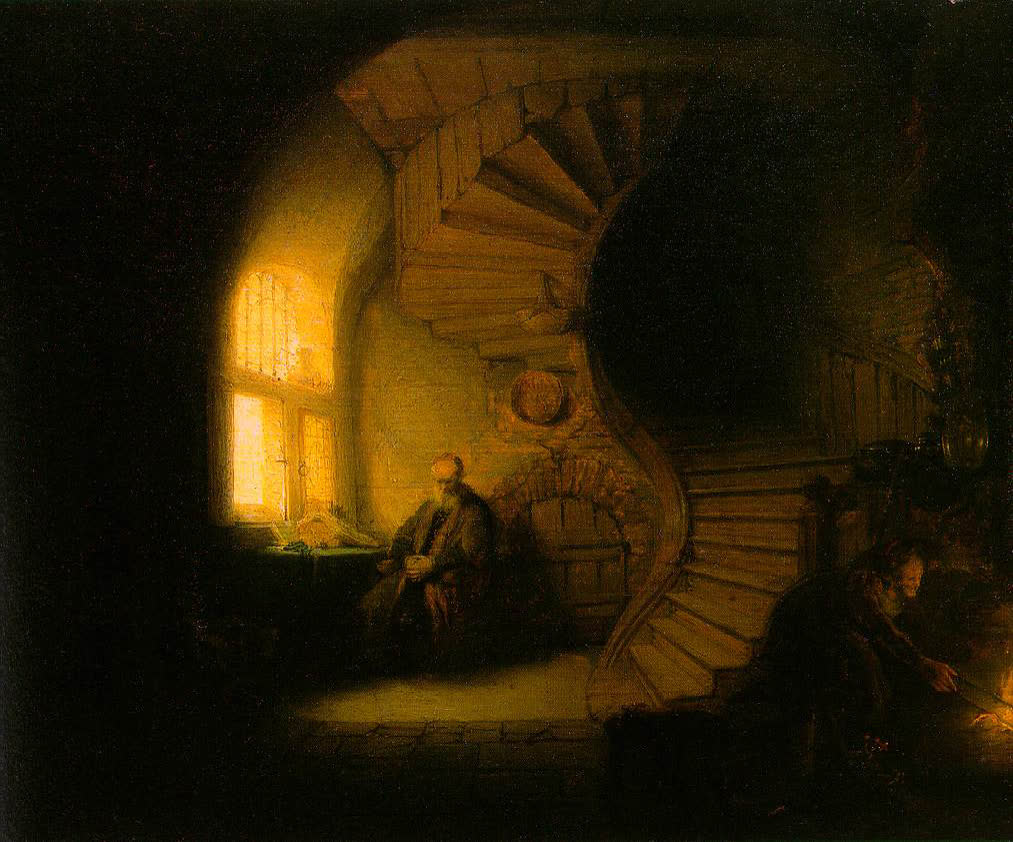
Nehan: Death of the Buddha
A Japanese hanging scroll of the late seventeenth or early eighteenth century showing the death of the Buddha, the teacher whose path offers release but no saviour.Nehan: Death of the Buddha · late 17th/early 18th century · Art Institute of Chicago · CC0 · museum record · Galeria Regni

His teachings were handed down orally for several centuries. The Theravada tradition of Sri Lanka and South-East Asia preserves them in the Pali Canon, which, according to the Sri Lankan chronicles, was first written down in the first century BC.41 Other schools — the Mahayana traditions of China, Korea and Japan, and the Tibetan traditions — have their own large collections of later scriptures. This part quotes the Pali texts, because they are generally held to be the oldest record of the Buddha's teaching.

The Four Noble Truths

The Buddha's first sermon, in the deer park near Varanasi, sets out the heart of his teaching. First, "Now this is the noble truth of suffering. Rebirth is suffering; old age is suffering; illness is suffering; death is suffering; being coupled with the disliked is suffering; separation from the liked is suffering; not getting what you wish for is suffering." Second, the origin of suffering: "It's the craving that leads to future lives." Third, the cessation of suffering: "the fading away and cessation of that very same craving." Fourth, the path to that cessation: "this noble eightfold path, that is: right view, right purpose, right speech, right action, right livelihood, right effort, right mindfulness, and right immersion."42

The goal is nibbana (in Sanskrit, nirvana), the "extinguishment" of craving and with it the end of rebirth. At the end of that first sermon the Buddha says, "My freedom is unshakable; this is my last rebirth; now there'll be no more future lives."43

Not-self

A second key teaching is anatta, "not-self". In another early discourse, the Buddha goes through each part of the human person — body, feeling, perception, choices, consciousness — and says of each that it is "not-self".44 There is, in this teaching, no permanent soul that passes from life to life. What continues is a stream of causes and effects. The Dhammapada says, "All things are not-self— when this is seen with wisdom, one grows disillusioned with suffering: this is the path to purity."45

No creator, and no saviour

Many people are surprised to learn that early Buddhism does not teach a creator God. The Buddhist scriptures speak of gods (devas), but they are beings within the cycle of rebirth, not the Maker of all. On some of the great questions — whether the cosmos is eternal, whether a realised one exists after death — the Buddha declined to give an answer. In a famous discourse he compares a man who insists on answers to such questions to a man "struck by an arrow thickly smeared with poison" who will not let the surgeon remove it until he knows who shot it, his name and clan, and what the bow was made of. The questions are set aside, the Buddha says, "Because they aren't beneficial or relevant to the fundamentals of the spiritual life."46

Salvation, in this teaching, is by one's own effort along the path. The Buddha shows the way; the disciple must walk it. "You yourselves must do the work, the Realized Ones just show the way."47 And again: "For it is by oneself that evil's done, one is corrupted by oneself. It's by oneself that evil's not done, one is purified by oneself. Purity and impurity are personal matters, no one can purify another."48

The Buddha's last words, according to the account of his death in the Long Discourses, were: "Conditions fall apart. Persist with diligence."49 Before that, he had told his disciple Ananda to "live as your own island, your own refuge, with no other refuge," with the teaching as their refuge.50

It should be said that later Mahayana Buddhism developed the figure of the bodhisattva, a being who delays his own final release to help others, and some schools, such as Pure Land Buddhism, teach reliance on the vow of the Buddha Amitabha to bring the faithful to a pure land. Buddhism is not one thing, any more than Hinduism is. But the early teaching is clear: no one can purify another.

Where Buddhism and the gospel meet

Christians should be the first to agree with the Buddha about the fact of suffering. The Bible does not pretend that life is easy. "For we know that the whole creation groaneth and travaileth in pain together until now" (Romans 8:22). The Buddha's honesty about old age, sickness and death is closer to the Bible than the cheerful denial of much modern life. And Christians can admire the Buddhist call to self-control, kindness and freedom from greed. Scripture, too, warns that "the love of money is the root of all evil" (1 Timothy 6:10).

Where they part

But the two teachings part on almost every major question.

The cause of suffering. For the Buddha, the root of suffering is craving. For the Bible, the root is sin — not desire as such, but desire turned away from God. God made the world good, and desire is part of that goodness. The problem is that we love the wrong things, or the right things in the wrong order: "For all have sinned, and come short of the glory of God" (Romans 3:23). Suffering came into the world through the Fall (Romans 5:12), and creation itself "was made subject to vanity, not willingly, but by reason of him who hath subjected the same in hope" (Romans 8:20).

The self. For the Buddha, the self is not real in the end. For the Bible, every person is real, made in God's image, known by name, and loved. The gospel does not dissolve the self; it saves it. "A new heart also will I give you, and a new spirit will I put within you" (Ezekiel 36:26).

The remedy. For the Buddha, release comes by one's own effort: "no one can purify another." For the gospel, that is exactly the problem — we cannot purify ourselves. "Not by works of righteousness which we have done, but according to his mercy he saved us, by the washing of regeneration, and renewing of the Holy Ghost" (Titus 3:5). The Saviour does not merely show the way; He is the way (John 14:6), and He carries those who cannot walk it.

The goal. For the Buddha, the goal is the extinguishing of craving and the end of rebirth. For the Bible, the goal is not extinction but resurrection life with God, a new creation where "God shall wipe away all tears from their eyes; and there shall be no more death, neither sorrow, nor crying, neither shall there be any more pain: for the former things are passed away" (Revelation 21:4). Suffering is not escaped by ceasing to desire; it is ended by the One who conquered death.

The founder. The Buddha's tradition says he died and was "fully extinguished", like a lamp going out. Jesus said, "I am the resurrection, and the life: he that believeth in me, though he were dead, yet shall he live" (John 11:25) — and then, His followers testified, He rose.

A guest's story

Steve Kang told his story on The King Is Coming Show (TKIC #49): in his telling, he chanted eight hours a day to reach Nirvana, and woke up in hell instead. Watch it in his own words: youtube.com/watch?v=46SP1FgXfbY Steve's account of what happened to him, shared as his testimony — weigh it for yourself.

Part 6 — Other Paths: Sikhism, the Chinese Traditions and the Spiritual Marketplace

4 min read

The four traditions above are not the only ones. This part looks more briefly at three more: Sikhism, the ancient Chinese teachings of Confucius and the Tao, and the loose, do-it-yourself spirituality that many Westerners now follow.

Sikhism

Sikhism began in the Punjab with Guru Nanak (1469–1539) and the nine human Gurus who followed him. The fifth Guru, Arjan, compiled the scripture called the Adi Granth in 1603–1604, and the tenth, Gobind Singh, declared before his death in 1708 that the scripture itself would be the Guru from then on. Sikhs call it the Guru Granth Sahib.

It opens with the Mool Mantar, the root statement of faith. In one common English rendering: "One Universal Creator God. The Name Is Truth. Creative Being Personified. No Fear. No Hatred. Image Of The Undying, Beyond Birth, Self-Existent. By Guru's Grace."51 Sikhism is firmly monotheistic. It teaches devotion to God's Name, honest work, sharing with others, and the equality of all people, and it rejects caste.

Like Hinduism, Sikhism teaches karma and rebirth. But it also speaks strongly of God's grace (nadar). The opening prayer, the Japji, says: "By the karma of past actions, the robe of this physical body is obtained. By His Grace, the Gate of Liberation is found."52

Christians can gladly agree that God is one, that He is the Creator, that He hates no one, and that liberation is by His grace. The difference is in how that grace reaches us. In Sikhism, grace comes through devotion to the Name and the Guru's teaching, within a cycle of many lives. In the gospel, grace has a name and a face and a cross: "Being justified freely by his grace through the redemption that is in Christ Jesus" (Romans 3:24). And it is received in one life, the one we are living now.

Confucius

Confucius (Kong Fuzi, traditionally 551–479 BC) is less a founder of a religion than a teacher of ethics, family duty and good government. His sayings, collected by his disciples in the Analects, have shaped Chinese culture for more than two thousand years. He taught a form of the golden rule. Asked for one word that could guide a whole life, he answered: "Is not RECIPROCITY such a word? What you do not want done to yourself, do not do to others."53

It is worth setting that beside Jesus' words: "Therefore all things whatsoever ye would that men should do to you, do ye even so to them: for this is the law and the prophets" (Matthew 7:12). The two are not the same. Confucius said what not to do; Jesus said what to do. One is a wise limit on harm; the other is a command to active love.

Confucius was also reticent about the unseen world. When a disciple asked about serving the spirits of the dead, he replied, "While you are not able to serve men, how can you serve their spirits?" And asked about death, he answered, "While you do not know life, how can you know about death?"54 That honesty is worth respecting. But it leaves the greatest questions open. Jesus did not leave them open. He spoke plainly of death, judgment, heaven and hell, and He claimed to have come from God and to be going back to Him.

The Tao

The Tao Te Ching, traditionally attributed to Laozi, is the classic text of Taoism. It begins with a famous paradox: "The Tao that can be trodden is not the enduring and unchanging Tao. The name that can be named is not the enduring and unchanging name."55 The Tao is the nameless way behind all things, to be followed by yielding, simplicity and harmony with nature rather than by force.

The Christian answer is not to mock the Tao's humility before mystery, but to say that the nameless has spoken. "No man hath seen God at any time; the only begotten Son, which is in the bosom of the Father, he hath declared him" (John 1:18). The Word that was "in the beginning" (John 1:1) has a name, and it is Jesus.

The spiritual marketplace

Many people today belong to no religion but still pray, meditate, consult horoscopes, or use crystals, tarot or "energy". They take a little from yoga, a little from Buddhism, a little from Christianity, and something from the latest book. Pew's "unaffiliated" are not all atheists; many are seekers.

As I said in the Introduction: New Age, crystals, astral projection, tarot, angel numbers. None of it held. The spiritual marketplace promises peace without surrender, a God who asks nothing, and a self that is its own authority. In practice it leaves a person in charge of his own salvation — which is exactly what he cannot manage.

Scripture is not neutral about some of these practices. "There shall not be found among you any one that maketh his son or his daughter to pass through the fire, or that useth divination, or an observer of times, or an enchanter, or a witch. Or a charmer, or a consulter with familiar spirits, or a wizard, or a necromancer. For all that do these things are an abomination unto the LORD" (Deuteronomy 18:10-12). That is not because God is jealous of our curiosity. It is because those doors open onto powers that are not God, and He loves us too much to leave us there.

Part 7 — What Only the Gospel Says, and How to Share It

11 min read

Having heard the great faiths in their own words, we can now set the Christian claims beside them. This part matters because many people think Christianity is simply another set of moral rules with a different founder. It is not. On the five questions of Part 1, it says things no other faith says.

The five questions side by side

| | Judaism | Islam | Hinduism | Buddhism | Christianity | |---|---|---|---|---|---| | God | One God, personal Creator | One God, absolutely single (tawhid) | Brahman; many gods or one Lord, by school | No creator; gods within rebirth | One God in three persons, Father, Son and Holy Ghost | | The problem | Sin and exile; need to keep God's law | Forgetfulness and disobedience | Ignorance and karma; bondage to rebirth | Craving, which causes suffering | Sin against a holy God, and death as its wage | | The answer | Repentance and obedience; Messiah to come | Submission, deeds weighed, God's mercy | Knowledge, action or devotion; release | One's own effort on the eightfold path | Grace: Christ's death and resurrection, received by repentance and faith | | Jesus | A Jewish teacher, not the Messiah | A great prophet, not God, not crucified | A holy man, or one avatar among many | An enlightened teacher, for some | God the Son made flesh, crucified, risen, Lord | | After death | Judgment; resurrection | Judgment by scales; paradise or fire | Rebirth until release | Rebirth until extinguishment | One life, then judgment; resurrection to life or to everlasting punishment |

The table simplifies, as every table must; each tradition has its own debates. But it is fair enough to show the shape of the differences.

God became man

Every religion has its holy men. Christianity alone says that the one Creator God, who made all things, became a single human being at a single point in history, and remains one for ever. "In the beginning was the Word, and the Word was with God, and the Word was God" (John 1:1). "And the Word was made flesh, and dwelt among us" (John 1:14). Paul adds, "For in him dwelleth all the fulness of the Godhead bodily" (Colossians 2:9).

This is not a claim the disciples made up later. Jesus made it Himself, and His enemies understood Him. When He forgave a man's sins, the scribes said, "Why doth this man thus speak blasphemies? who can forgive sins but God only?" (Mark 2:7). When He said, "Before Abraham was, I am" (John 8:58), they took up stones. At His trial the high priest asked, "Art thou the Christ, the Son of the Blessed?" and He answered, "I am: and ye shall see the Son of man sitting on the right hand of power, and coming in the clouds of heaven" (Mark 14:61-62).

C. S. Lewis, himself a former atheist, put the choice this forces in a passage that has become famous. He wrote that a man who said what Jesus said and was merely a man "would not be a great moral teacher," and went on: "You can shut Him up for a fool, you can spit at Him and kill Him as a demon; or you can fall at His feet and call Him Lord and God. But let us not come with any patronising nonsense about His being a great human teacher. He has not left that open to us."56 That is why the common view — that Jesus was a good teacher, one among many — is the one view the evidence does not allow.

Grace, not a path

Every other faith in this paper, in its main forms, offers a path: commandments to keep, pillars to practise, duties to do, a noble eightfold way to walk. Some of them speak beautifully of mercy and grace. But in each, the burden finally rests on the worshipper's own effort, or is worked out over many lives.

The gospel begins at the other end. It says the path cannot be walked by us, because "all have sinned" (Romans 3:23), and "None of them can by any means redeem his brother, nor give to God a ransom for him" (Psalm 49:7). And then it says that God Himself has walked it for us. "For he hath made him to be sin for us, who knew no sin; that we might be made the righteousness of God in him" (2 Corinthians 5:21). And again, "Christ hath redeemed us from the curse of the law, being made a curse for us" (Galatians 3:13).

That is why the gospel is called good news, not good advice. Advice tells you what to do. News tells you what has been done.

A substitute who bears the burden

The Qur'an says that no bearer of burdens will bear the burden of another. The Buddha said that no one can purify another. Karma says each soul reaps what it has sown. Each of these is, in its way, an honest statement of justice. The law of Moses says the same: "The soul that sinneth, it shall die" (Ezekiel 18:20).

The gospel does not deny that justice. It fulfils it. The penalty is real, and it is paid — by One who had no sin of His own. "Who his own self bare our sins in his own body on the tree, that we, being dead to sins, should live unto righteousness: by whose stripes ye were healed" (1 Peter 2:24). That is not a loophole in justice. It is love that satisfies justice. "Herein is love, not that we loved God, but that he loved us, and sent his Son to be the propitiation for our sins" (1 John 4:10).

A risen Saviour

Finally, Christianity stands or falls on a single event in history: the bodily resurrection of Jesus. No other faith in this paper rests on such a claim. Muhammad died and was buried in Medina; Muslims honour his grave. The Buddha died and, in his followers' words, was "fully extinguished". Jesus' followers said that He rose bodily from the dead on the third day and was seen alive by many.

The earliest written summary of this claim is in Paul's first letter to Corinth, written in the mid-50s AD. Paul says he is passing on what he himself "received": "how that Christ died for our sins according to the scriptures; And that he was buried, and that he rose again the third day according to the scriptures: And that he was seen of Cephas, then of the twelve: After that, he was seen of above five hundred brethren at once; of whom the greater part remain unto this present, but some are fallen asleep. After that, he was seen of James; then of all the apostles. And last of all he was seen of me also, as of one born out of due time" (1 Corinthians 15:3-8). Many scholars, including sceptical ones, date the tradition Paul repeats there to within a few years of the crucifixion.57

Paul does not say "believe it because I feel it". He says, in effect: here are the witnesses, most of them still alive; go and ask them. And he is willing to stake everything on it: "And if Christ be not risen, then is our preaching vain, and your faith is also vain" (1 Corinthians 15:14).

That is what makes the gospel testable in a way that mystical experience is not. If Jesus did not rise, Christianity is false, and Christians should be the first to say so. If He did rise, then His claims about Himself are vindicated by God, and every other path must be measured by Him.

The exclusive claim, rightly heard

This is why Christians say what can sound arrogant: "Neither is there salvation in any other: for there is none other name under heaven given among men, whereby we must be saved" (Acts 4:12). And Paul: "For there is one God, and one mediator between God and men, the man Christ Jesus" (1 Timothy 2:5).

But notice the shape of that claim. It does not say that Christians are better people than Muslims, Hindus, Jews or Buddhists. Often they are not. It does not say Christians earned their place by finding the right path. It says the opposite: that no one finds the path, and so God came looking for us. The exclusive claim is not about us. It is about Him. It is exclusive in the way a single lifeboat is exclusive — and open to every person who will climb in. "Look unto me, and be ye saved, all the ends of the earth: for I am God, and there is none else" (Isaiah 45:22).

What about those who never hear?

Honest seekers ask this, and it deserves an honest answer. Scripture teaches that God has not left any people without a witness: "Nevertheless he left not himself without witness, in that he did good, and gave us rain from heaven, and fruitful seasons" (Acts 14:17). Creation speaks of Him: "For the invisible things of him from the creation of the world are clearly seen, being understood by the things that are made, even his eternal power and Godhead; so that they are without excuse" (Romans 1:20). Conscience speaks too: the Gentiles "shew the work of the law written in their hearts" (Romans 2:15). And God "hath made of one blood all nations of men... That they should seek the Lord, if haply they might feel after him, and find him, though he be not far from every one of us" (Acts 17:26-27).

The judge of all the earth will do right. But Scripture never offers another way of salvation besides Christ, and it never tells us to stay silent and hope. It tells us to go. "Go ye therefore, and teach all nations" (Matthew 28:19). The question for you, reading this, is not what will happen to someone who never heard. It is what you will do now that you have.

Speaking with neighbours of other faiths

The last question is practical. Truth spoken without love is a clanging cymbal, and love that will not speak the truth is not love. Scripture gives the balance: "Let your speech be alway with grace, seasoned with salt, that ye may know how ye ought to answer every man" (Colossians 4:6). And to Timothy: "And the servant of the Lord must not strive; but be gentle unto all men, apt to teach, patient, In meekness instructing those that oppose themselves" (2 Timothy 2:24-25).

Five habits

Listen first. Ask your friend what he believes and why, and listen to the answer. You may find he does not believe what you assumed. Many Muslims, Hindus and Buddhists have never been asked about their faith by a Christian who actually wanted to know.

Describe their faith fairly. Before you disagree, be able to state your friend's belief in a way he would accept. If you cannot, you are not yet ready to disagree with it.

Find the real common ground. Muslims and Christians agree that God is one, that He judges, that Jesus was born of a virgin. Hindus and Christians agree that there is a spiritual reality behind the visible world, and that devotion matters. Buddhists and Christians agree that suffering is real and that greed and hatred poison the heart. Start there.

Go to the real difference. Do not stay forever on common ground. The difference that matters is Jesus: who He is, and what He did. Gently turn the conversation there.

Leave room. You are not required to win. Planting a question is often better than finishing an argument. "And be ready always to give an answer to every man that asketh you a reason of the hope that is in you with meekness and fear" (1 Peter 3:15). Meekness and fear — not pride and pressure.

With a Jewish friend

  • Honour the shared Scriptures. Read the prophets together.
  • Acknowledge, without defensiveness, the history of Christian mistreatment of Jews.
  • Ask: Who is the servant in Isaiah 53? Why did some ancient Jewish sources speak of a Messiah who would be pierced?
  • Point to Jesus as the fulfilment of the law, not its enemy: "Think not that I am come to destroy the law, or the prophets: I am not come to destroy, but to fulfil" (Matthew 5:17).

With a Muslim friend

  • Show respect for his devotion and prayer.
  • Clarify the Trinity: not three gods, not Mary, but one God in three persons.
  • Ask: If the Qur'an tells Christians to judge by the Gospel, and the Gospel already said in the seventh century that Jesus died and rose, what are we to make of that?
  • Ask gently: How can you know your scales will be heavy enough? Then share the One who carried the burden.

With a Hindu friend

  • Ask which tradition he follows, and which god or teacher he is devoted to. Hindus differ widely.
  • Appreciate the longing for liberation and for a God who loves His worshippers.
  • Explain the difference between an avatar and the incarnation: once, bodily, for ever, and for sinners.
  • Ask: If karma must be worked off, who can ever be free? Then share the grace that pays the debt.

With a Buddhist friend

  • Ask whether he follows a Theravada, Mahayana, Tibetan or Western form; they differ.
  • Agree honestly about suffering and the danger of craving.
  • Ask: If no one can purify another, and I cannot purify myself, where is hope?
  • Share the Saviour who does not just point the way but carries us, and the resurrection that ends suffering rather than extinguishing the self.

With a friend in the spiritual marketplace

  • Share your own story if you have one; many people in that world are tired.
  • Ask: What are you looking for? Has anything you have tried actually held?
  • Point to Jesus' invitation: "Come unto me, all ye that labour and are heavy laden, and I will give you rest" (Matthew 11:28).

If you are the seeker

If you are reading this not as a Christian but as someone weighing the options, here is a suggestion. Do what I did: read it for yourself. Read one of the Gospels — Mark is the shortest — slowly, from beginning to end, and ask one question: who is this man? Read what He says about Himself, what He does, how He dies, and what His followers say happened three days later. Then weigh it against what you have read here from the other faiths. You do not have to decide today. But you should decide.
Conclusion

2 min read

We began with a question: with so many religions in the world, how could anyone know which one is true? We have seen that the religions do not all say the same thing. They differ on God, on the human problem, on the answer, on Jesus, and on death. They cannot all be true.

We have also seen that each of them, read in its own words, contains real wisdom and real longing. The Shema's confession of the one God. The Qur'an's call to submit to Him. The Gita's longing for a Lord who frees from sin. The Buddha's honesty about suffering. Guru Nanak's hope of grace. Confucius's humble ethics and the Tao's awe before mystery. A Christian can honour all of that.

But on the question that matters most — how a sinful person can be made right with a holy God — the gospel stands alone. It does not offer a better path. It offers a Person who walked the path for us, bore the burden we could not bear, and rose from the dead to prove it. "He that hath the Son hath life; and he that hath not the Son of God hath not life" (1 John 5:12).

A next step

  • Read the Gospel of Mark this week, in the King James Bible, free at kylelauriano.com/library.
  • If you have a friend of another faith, ask him this week what he believes and why, and listen.
  • If you are a Christian, pick one tradition in this paper and read one of its scriptures for yourself, so that you can speak of it fairly.
  • Read the companion paper in this series, Defending Your Faith, for the historical case for the resurrection.

An invitation

If you are still looking, the invitation is the one Jesus gave: "him that cometh to me I will in no wise cast out" (John 6:37). The way in is the way the apostles preached: "repentance toward God, and faith toward our Lord Jesus Christ" (Acts 20:21). Peter told the crowd at Pentecost what to do: "Repent, and be baptized every one of you in the name of Jesus Christ for the remission of sins, and ye shall receive the gift of the Holy Ghost" (Acts 2:38).

This is how it went for me. Then one day I got on my knees and prayed: "Jesus, if you are real, show me — and I'll serve you." A warmth ran from the top of my head to the soles of my feet. Peace I'd never known, and it didn't leave. You can pray the same prayer today. He is not one path among many. He is the One who came looking for you.

“For God so loved the world, that he gave his only begotten Son, that whosoever believeth in him should not perish, but have everlasting life.” (John 3:16)

Notes and sources

  1. 1Pew Research Center, "How the Global Religious Landscape Changed From 2010 to 2020," June 9, 2025, https://www.pewresearch.org/religion/2025/06/09/how-the-global-religious-landscape-changed-from-2010-to-2020/. ↩
  2. 2Udana 6.4, "Followers of Various Other Religions (1st)," trans. Bhikkhu Sujato, SuttaCentral, https://suttacentral.net/ud6.4/en/sujato. ↩
  3. 3Qur'an 3:85. Unless noted otherwise, quotations of the Qur'an are from the Sahih International translation, as published at https://quran.com. ↩
  4. 4Dhammapada 274, trans. Bhikkhu Sujato, SuttaCentral, https://suttacentral.net/dhp273-289/en/sujato. ↩
  5. 5Mishnah Sanhedrin 10:1, William Davidson Edition (English), Sefaria, https://www.sefaria.org/Mishnah_Sanhedrin.10.1. ↩
  6. 6Moses Maimonides, Commentary on the Mishnah, Sanhedrin 10:1 (the introduction to Perek Helek). The thirteen principles are summarised and discussed in Menachem Kellner, Dogma in Medieval Jewish Thought: From Maimonides to Abravanel (Oxford: Oxford University Press for the Littman Library of Jewish Civilization, 1986). ↩
  7. 7Rashi on Isaiah 52:13 and 53:3, in The Complete Tanach with Rashi, trans. A. J. Rosenberg (New York: Judaica Press), via Sefaria, https://www.sefaria.org/Rashi_on_Isaiah.53. ↩
  8. 8Targum Jonathan on Isaiah 52:13, in C. W. H. Pauli, trans., The Chaldee Paraphrase on the Prophet Isaiah (London: London Society's House, 1871), via Sefaria, https://www.sefaria.org/Targum_Jonathan_on_Isaiah.52.13. ↩
  9. 9Babylonian Talmud, Sukkah 52a, William Davidson Edition (English), Sefaria, https://www.sefaria.org/Sukkah.52a. ↩
  10. 10Sahih al-Bukhari 3, trans. Muhammad Muhsin Khan, https://sunnah.com/bukhari:3. ↩
  11. 11Sahih al-Bukhari 4987, trans. Muhammad Muhsin Khan, https://sunnah.com/bukhari:4987. ↩
  12. 12Qur'an 112:1-4. ↩
  13. 13Qur'an 4:48. ↩
  14. 14Qur'an 33:40. ↩
  15. 15Qur'an 7:8-9. Compare 23:102-103. ↩
  16. 16Qur'an 6:164; the same words appear at 17:15 and 35:18. ↩
  17. 17Qur'an 1:1. ↩
  18. 18Qur'an 39:53. ↩
  19. 19Qur'an 3:45. ↩
  20. 20Qur'an 3:49. ↩
  21. 21Qur'an 5:75. ↩
  22. 22Qur'an 5:72. ↩
  23. 23Qur'an 19:90-91. ↩
  24. 24Qur'an 4:171. ↩
  25. 25Qur'an 4:157-158. ↩
  26. 26Tacitus, Annals 15.44, trans. Alfred John Church and William Jackson Brodribb (1876), via Wikisource, https://en.wikisource.org/wiki/The_Annals_(Tacitus)/Book_15. ↩
  27. 27Josephus, Antiquities of the Jews 18.3.3, trans. William Whiston, https://www.gutenberg.org/ebooks/2848. Most scholars believe a Christian copyist added to this passage, but that Josephus wrote its core, including the condemnation by Pilate; see John P. Meier, A Marginal Jew: Rethinking the Historical Jesus, vol. 1 (New York: Doubleday, 1991). ↩
  28. 28Qur'an 5:46-47. ↩
  29. 29Qur'an 10:94. ↩
  30. 30Nabeel Qureshi, Seeking Allah, Finding Jesus: A Devout Muslim Encounters Christianity (Grand Rapids: Zondervan, 2014); Nabeel Qureshi, No God but One: Allah or Jesus? A Former Muslim Investigates the Evidence for Islam and Christianity (Grand Rapids: Zondervan, 2016). ↩
  31. 31Qur'an 5:116. ↩
  32. 32Chandogya Upanishad 6.8.7, in The Upanishads, Part 1, trans. F. Max Müller, Sacred Books of the East, vol. 1 (Oxford: Clarendon Press, 1879). ↩
  33. 33Rig Veda 1.164.46. See the translation in Ralph T. H. Griffith, The Hymns of the Rigveda, 2nd ed. (Benares: E. J. Lazarus, 1896). ↩
  34. 34Bhagavad Gita 2.22, trans. Swami Sivananda. Unless noted otherwise, quotations of the Gita are from Sivananda's translation as published by the Indian Institute of Technology Kanpur, https://www.gitasupersite.iitk.ac.in (verse pages at https://heritage.iitk.ac.in/SBG/). ↩
  35. 35Bhagavad Gita 2.20. ↩
  36. 36Brihadaranyaka Upanishad 4.4.5, in The Upanishads, Part 2, trans. F. Max Müller, Sacred Books of the East, vol. 15 (Oxford: Clarendon Press, 1884). ↩
  37. 37Bhagavad Gita 2.47. ↩
  38. 38Bhagavad Gita 9.29. ↩
  39. 39Bhagavad Gita 18.66. ↩
  40. 40Bhagavad Gita 4.7-8. ↩
  41. 41Richard F. Gombrich, Theravada Buddhism: A Social History from Ancient Benares to Modern Colombo (London: Routledge & Kegan Paul, 1988). ↩
  42. 42Samyutta Nikaya 56.11, "Rolling Forth the Wheel of Dhamma," trans. Bhikkhu Sujato, SuttaCentral, https://suttacentral.net/sn56.11/en/sujato. ↩
  43. 43Samyutta Nikaya 56.11. ↩
  44. 44Samyutta Nikaya 22.59, "The Characteristic of Not-Self," trans. Bhikkhu Sujato, SuttaCentral, https://suttacentral.net/sn22.59/en/sujato. ↩
  45. 45Dhammapada 279, trans. Sujato. ↩
  46. 46Majjhima Nikaya 63, "The Shorter Discourse With Malunkyaputta," trans. Bhikkhu Sujato, SuttaCentral, https://suttacentral.net/mn63/en/sujato. ↩
  47. 47Dhammapada 276, trans. Sujato. ↩
  48. 48Dhammapada 165, trans. Bhikkhu Sujato, SuttaCentral, https://suttacentral.net/dhp157-166/en/sujato. ↩
  49. 49Digha Nikaya 16, "The Great Discourse on the Buddha's Extinguishment," 6.7, trans. Bhikkhu Sujato, SuttaCentral, https://suttacentral.net/dn16/en/sujato. ↩
  50. 50Digha Nikaya 16, 2.26. ↩
  51. 51Guru Granth Sahib, Ang 1, trans. Sant Singh Khalsa, via BaniDB, https://www.banidb.com. ↩
  52. 52Guru Granth Sahib, Ang 2 (Japji, pauri 4), trans. Sant Singh Khalsa, via BaniDB. ↩
  53. 53Confucius, Analects 15.23, trans. James Legge, The Chinese Classics, vol. 1 (1861), https://www.gutenberg.org/ebooks/3330. ↩
  54. 54Confucius, Analects 11.11, trans. Legge. ↩
  55. 55Laozi, Tao Te Ching, ch. 1, trans. James Legge, The Tao Teh King, or the Tao and Its Characteristics (1891), https://www.gutenberg.org/ebooks/216. ↩
  56. 56C. S. Lewis, Mere Christianity (London: Geoffrey Bles, 1952), Book 2, ch. 3, "The Shocking Alternative." ↩
  57. 57Gary R. Habermas and Michael R. Licona, The Case for the Resurrection of Jesus (Grand Rapids: Kregel, 2004). The companion paper in this series, Defending Your Faith, sets out the historical case for the resurrection in more detail. ↩

Bring your questions on other religions to the Scripture Desk →

The Plains of Heaven, John Martin, 1851–53

Keep reading · Seven mornings by email

You are not sure where to go. Seven pages, and he says where.

Seven mornings for the person who is searching: the page in the 1611, a work of art, one real person who says they met him, and a room on the site for the next step. Free.

Start the seven days

Free. One a morning. Unsubscribe with one tap.

Where I'm honest with you

Some of the answers in this resource are strong — well-attested, widely accepted, and historically grounded. Others are an honest step of faith — positions I hold because of Scripture and personal experience, not because I can prove them in a lab. I've tried to be clear about which is which. Where I'm less certain, I say so.

"Jesus saith unto him, I am the way, the truth, and the life: no man cometh unto the Father, but by me." — John 14:6 (KJV)