A plain study, from the King James Bible and the history of the early church, of what a Christian is, what the gospel says, and how a person comes to Christ.
Abstract
What does it actually mean to become a Christian, and how does a person do it? This paper answers from the King James Bible first. It sets out what the Bible says a Christian is (not a culture, a ritual or a moral grade, but a person born again and joined to Christ); the bad news of sin and judgment, told without softening; the good news of Christ crucified and risen, with the historical evidence that Christians did not invent the resurrection years later (Paul's early creed, Tacitus, Josephus, Pliny, and the scholarship of Gary Habermas); and the response the apostles called for: repentance, faith, and baptism, with Acts 2:38 quoted as written. It draws on the Westminster Shorter Catechism, Strong's Concordance, Justin Martyr and the Didache, and on the conversions of Augustine, Bunyan and Spurgeon. It ends with honest answers to the questions seekers ask, a word on assurance, and first steps. It is written for anyone who is asking, "What must I do to be saved?"
What’s inside
·Introduction
Part 1Part 1: What a Christian Is
Part 2Part 2: The Bad News: God, Sin and Judgment
Part 3Part 3: The Good News: Christ Crucified and Risen
Part 4Part 4: The Response: Repentance and Faith
Part 5Part 5: Baptism: The Obedience the Apostles Required
Part 6Part 6: Questions Seekers Ask
Part 7Part 7: Coming to Christ Today
·Conclusion
Research paper · 9 chapters · 19 notes · October 2026
About 43 minutes · 9 parts · the PDF has the same text
Introduction
3 min read
There is one question in the Bible that every person eventually has to ask for himself. A jailer in the Roman colony of Philippi asked it in the middle of the night, after an earthquake had thrown his prison doors open: "Sirs, what must I do to be saved?" (Acts 16:30).
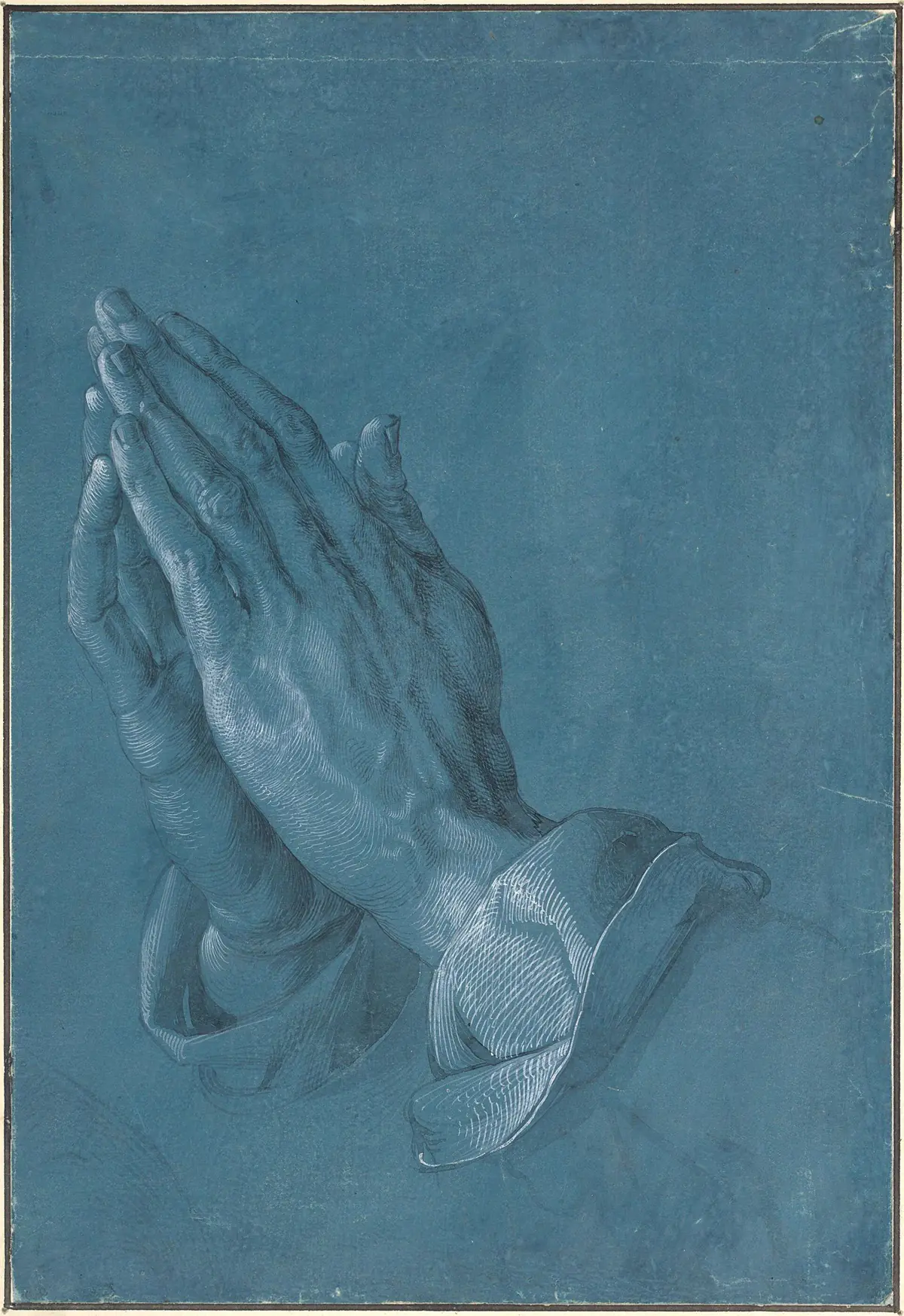
Albrecht Dürer’s Praying Hands (1508) — a working study of hands folded in petition, five centuries old and still legible at a glance.Albrecht Dürer, 1508 · Public domain
He got a straight answer: "Believe on the Lord Jesus Christ, and thou shalt be saved, and thy house" (Acts 16:31). Before the night was over, Luke tells us, "he took them the same hour of the night, and washed their stripes; and was baptized, he and all his, straightway" (Acts 16:33).
That is what this paper is about. Not religion in general, not spirituality, not self-improvement, but the question the jailer asked and the answer the apostles gave.
What this paper is
This is a study, not a sales pitch. It argues from the King James Bible first, because that is where the gospel is written down. Where history helps, it gives the history with its source: what the earliest Christian creed said, what Roman and Jewish writers recorded about Jesus, how the first churches baptized new believers. Where Christians of earlier centuries came to Christ and wrote down how it happened, their own words are quoted from their own books.
It is written for the person who is asking. You may have grown up in church and never understood it. You may have grown up with nothing. You may be curious, or skeptical, or desperate. You do not have to agree with anything here to read it. You only have to be honest with what it says.
Seven parts follow. Part 1 asks what a Christian actually is. Part 2 gives the bad news, because the good news makes no sense without it. Part 3 gives the good news: who Jesus is, what He did on the cross, and why we have good reason to believe He rose. Part 4 explains repentance and faith. Part 5 explains baptism. Part 6 answers the questions seekers ask most. Part 7 shows how a person comes to Christ today, and what to do next.
A word about me
This is my story, in the words I have told it before:
I was raised Roman Catholic but never really connected — I went through the motions, fell asleep in the pews, and faked being sick to skip Mass. College was rebellion: parties, drugs, freedom I loved and abused. When real life hit — a lost job, a pregnant wife, constant fights — I went looking for peace anywhere I could find it. New Age, crystals, astral projection, tarot, angel numbers. None of it held. So I swung back hard to religion, said the rosary every night, and still felt nothing. Eventually I gave up and called myself an atheist. I decided to read the Bible for one reason: to disprove it, so I'd have an excuse to stop going to church for good. It did the opposite. Genesis gripped me. In Matthew I read Jesus' own words and felt the weight of my own sin for the first time.
The rest is at kylelauriano.com/about. I mention it here because it shows something this paper will say again and again: being near religion is not the same as being born again.
A note on Scripture: every verse in this paper is quoted from the King James Bible. You can read it free in the 1611 Reader at kylelauriano.com/library. A KJV with Strong's Concordance is the best study tool most people will ever own.
This part matters because many people think they are Christians who are not, and many people think they could never be one who could. Both mistakes come from not knowing what the Bible means by the word.
Where the word comes from
The word "Christian" appears only three times in the Bible. The first tells us where it started: "And the disciples were called Christians first in Antioch" (Acts 11:26). Antioch was the great city of Roman Syria, and the name seems to have been given by outsiders. It meant, simply, the Christ-people: those who belonged to the one they called Christ.
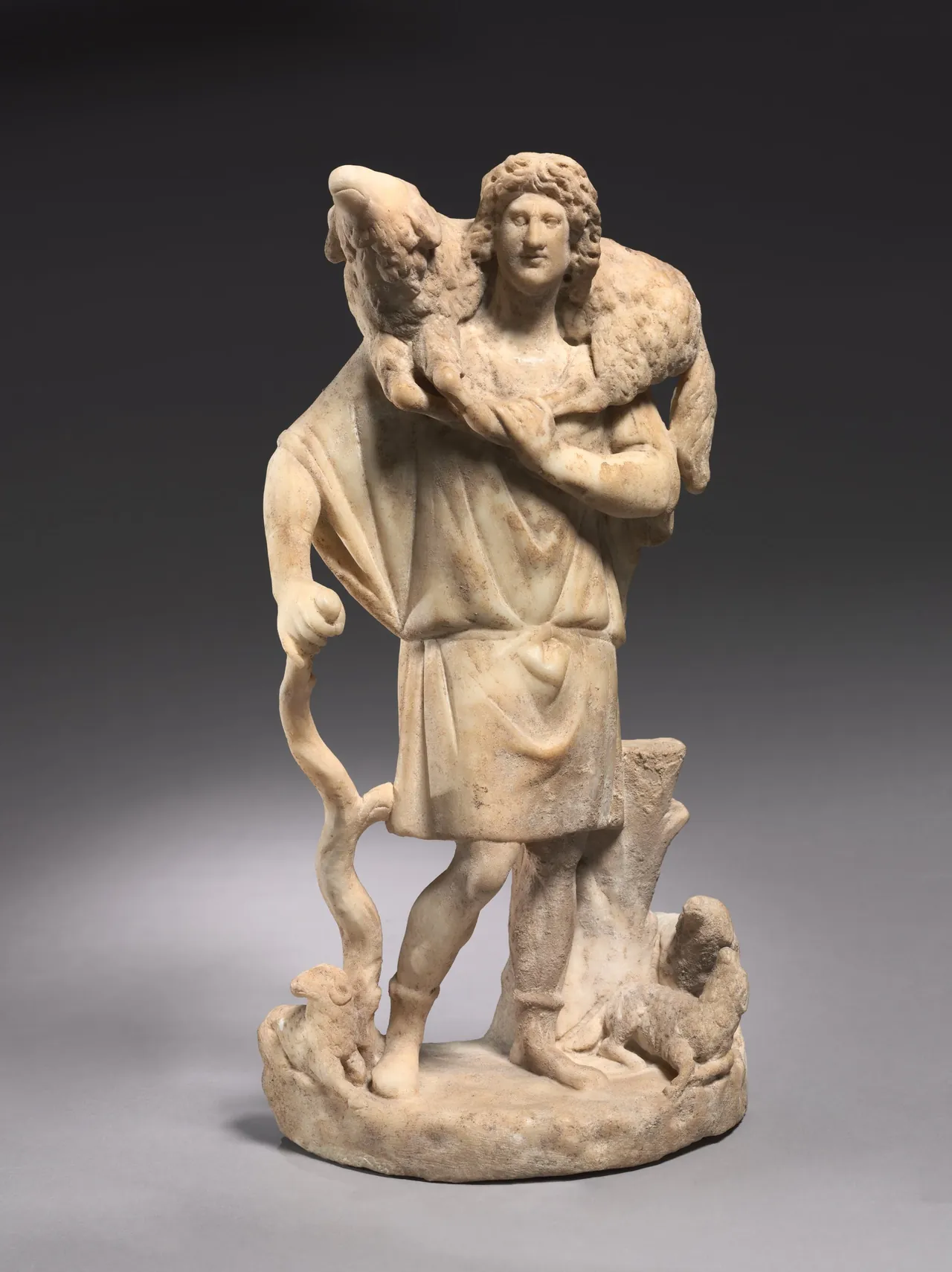
A marble Good Shepherd carved in Anatolia about 280 to 290 CE, an early Christian picture of the people who belong to Christ as His sheep.The Good Shepherd · 280–90 CE · Cleveland Museum of Art · CC0 · museum record · Galeria Regni
Notice the order. They were disciples first and called Christians afterward. The name described something already true of them. They had heard about Jesus of Nazareth, they had believed that He was the Christ, the anointed King God had promised, and they had begun to follow Him. That is the root of the word. A Christian is a person who belongs to Christ.
What a Christian is not
Because the word is so common, it has picked up meanings the Bible never gave it.
It is not a nationality or a culture. A person can be born in a "Christian country", into a "Christian family", and know nothing of Christ. Jesus told one of the most religious men in Jerusalem, a teacher of Israel, "Verily, verily, I say unto thee, Except a man be born again, he cannot see the kingdom of God" (John 3:3). Nicodemus had the right birth, the right religion and the right reputation. He still needed to be born again.
It is not a ritual by itself. Baptism matters a great deal (Part 5 is given to it), and so does the Lord's Supper. But a ritual performed on a person who does not repent and believe does not make him a Christian. Paul could write to the Corinthians, who had been baptized, "Examine yourselves, whether ye be in the faith; prove your own selves" (2 Corinthians 13:5).
It is not a moral grade. Many people think a Christian is someone who has become good enough. The Bible says the opposite. "For by grace are ye saved through faith; and that not of yourselves: it is the gift of God: Not of works, lest any man should boast" (Ephesians 2:8-9). A Christian is not someone who has passed. He is someone who has been forgiven.
It is not saying the right words. Jesus warned, "Not every one that saith unto me, Lord, Lord, shall enter into the kingdom of heaven; but he that doeth the will of my Father which is in heaven" (Matthew 7:21). He went on to describe people who had prophesied and cast out devils in His name, and said He would tell them, "I never knew you: depart from me, ye that work iniquity" (Matthew 7:23). That is one of the most sobering sentences He ever spoke. The question is not whether you know about Jesus. It is whether He knows you.
What a Christian is
The New Testament gives a cluster of descriptions, and they all point the same way.
A Christian is born again. "Marvel not that I said unto thee, Ye must be born again" (John 3:7). This is not self-improvement. It is a new beginning given from outside, by God. Jesus said it is of "water and of the Spirit" (John 3:5).
A Christian is a new creature. "Therefore if any man be in Christ, he is a new creature: old things are passed away; behold, all things are become new" (2 Corinthians 5:17).
A Christian has the Spirit of Christ. "Now if any man have not the Spirit of Christ, he is none of his" (Romans 8:9). Being a Christian is not only believing facts about God. It is God Himself, by the Holy Ghost, coming to live in a person.
A Christian has received Christ. "But as many as received him, to them gave he power to become the sons of God, even to them that believe on his name" (John 1:12).
Put simply: a Christian is a sinner who has turned from his sin and trusted Jesus Christ, crucified and risen, as his Saviour and Lord; who has been forgiven, born again and given the Holy Ghost; and who now belongs to Christ and follows Him. The rest of this paper unpacks that sentence.
Religion is not the same as new birth
It is possible to be very religious and not born again. The apostle Paul was. Before Christ he was, in his own words, "touching the righteousness which is in the law, blameless" (Philippians 3:6). He was also persecuting the church.
My own story is one example: So I swung back hard to religion, said the rosary every night, and still felt nothing. Others have told similar stories.
Criselle Mendoza told her story on The King Is Coming Show (TKIC #51): baptized at twelve in Iglesia Ni Cristo, and, in her own telling, not saved until 2025. Watch it in her own words: youtube.com/watch?v=_7vjNP6A_z8 Criselle's account of what happened to her, shared as her testimony — weigh it for yourself.
None of this is said to sneer at anyone's upbringing. It is said because the Bible says it: "Ye must be born again." If you have been religious all your life and never known Christ, you are not too far from Him. You may be closer than you think. But you need Him, not only the religion around Him.
This part matters because the good news is good only against the bad news. If you do not know what you are saved from, "salvation" will sound like a slogan. Jesus did not soften this part, and neither will this paper.
God is holy
The Bible's account of sin starts with God, not with us. When the prophet Isaiah saw a vision of the Lord on His throne, the angels around the throne were crying, "Holy, holy, holy, is the LORD of hosts: the whole earth is full of his glory" (Isaiah 6:3).
Isaiah was a good man by any human measure. His response was not, "At last, someone who appreciates me." It was, "Woe is me! for I am undone; because I am a man of unclean lips, and I dwell in the midst of a people of unclean lips: for mine eyes have seen the King, the LORD of hosts" (Isaiah 6:5).
That is what happens when a sinner sees God as He is. We do not usually feel our sin because we compare ourselves with each other. When we compare ourselves with God, there is no comparison left.
What sin is
The Bible defines sin plainly: "for sin is the transgression of the law" (1 John 3:4). God has spoken. He has told us what is right. Sin is crossing the line He drew.
It is more than wrong actions. Jesus traced sin to its source: "For from within, out of the heart of men, proceed evil thoughts, adulteries, fornications, murders, Thefts, covetousness, wickedness, deceit, lasciviousness, an evil eye, blasphemy, pride, foolishness: All these evil things come from within, and defile the man" (Mark 7:21-23). Notice that "evil thoughts" and "pride" sit in the same list as murder. The problem is not only what we have done. It is what we are.
And it is universal. "As it is written, There is none righteous, no, not one" (Romans 3:10). And again: "For all have sinned, and come short of the glory of God" (Romans 3:23). There are no exceptions in those verses: not the religious, not the decent, not the reader, not the writer.
The weight of sin
Most people, if they are honest, already know this. Our consciences accuse us. The Greek word the New Testament uses for repentance (Strong's G3341, metanoia) carries, in Strong's definition, the idea of "compunction (for guilt, including reformation)".1 That word compunction is the sting of conscience, the moment you know you have done wrong and that it is not a small thing.
I told my story in the Introduction. This is the part of it that belongs here: "In Matthew I read Jesus' own words and felt the weight of my own sin for the first time." That is what the word of God does. "For the word of God is quick, and powerful," as Hebrews puts it, and it reaches to "the thoughts and intents of the heart" (Hebrews 4:12).
The wages of sin
Sin is not only wrong. It is deadly. "For the wages of sin is death" (Romans 6:23). Death in Scripture is more than the body stopping. It is separation: the body from the soul, and, finally, the person from God.
The Bible is direct about what follows death. "And as it is appointed unto men once to die, but after this the judgment" (Hebrews 9:27). John saw it in a vision: "And I saw the dead, small and great, stand before God; and the books were opened: and another book was opened, which is the book of life: and the dead were judged out of those things which were written in the books, according to their works" (Revelation 20:12).
Hell is real
It is tempting to leave this out. Jesus did not. In fact, He spoke of hell more than anyone else in the Bible.
"But I will forewarn you whom ye shall fear: Fear him, which after he hath killed hath power to cast into hell; yea, I say unto you, Fear him." (Luke 12:5)
He described it as a place "where their worm dieth not, and the fire is not quenched" (Mark 9:44). (That verse stands in the King James Bible; several modern versions leave it out. You can see where the 1611 and the modern texts part ways at kylelauriano.com/library/changes.) He said that at the judgment the unrighteous "shall go away into everlasting punishment: but the righteous into life eternal" (Matthew 25:46). Paul wrote of those "Who shall be punished with everlasting destruction from the presence of the Lord, and from the glory of his power" (2 Thessalonians 1:9).
Near the end of the Bible, John names those who will be there, and the list should stop every reader: "But the fearful, and unbelieving, and the abominable, and murderers, and whoremongers, and sorcerers, and idolaters, and all liars, shall have their part in the lake which burneth with fire and brimstone: which is the second death" (Revelation 21:8).
All liars. That includes me. It includes you. Hell is not reserved for monsters. It is what sin earns, and all have sinned.
The wrath of God now
Judgment is not only future. "For the wrath of God is revealed from heaven against all ungodliness and unrighteousness of men, who hold the truth in unrighteousness" (Romans 1:18). And John's Gospel says of anyone who will not believe on the Son, "the wrath of God abideth on him" (John 3:36). Abideth: it stays. A person who has not come to Christ is not in a neutral place, waiting to decide. He is already under judgment.
Why this is said
This is hard to read. It is meant to be. But hear why it is said. God does not tell us this to crush us. He tells us because He does not want us to perish. "Have I any pleasure at all that the wicked should die? saith the Lord GOD: and not that he should return from his ways, and live?" (Ezekiel 18:23). Peter says the same: "The Lord is not slack concerning his promise, as some men count slackness; but is longsuffering to us-ward, not willing that any should perish, but that all should come to repentance" (2 Peter 3:9).
A doctor who tells you the truth about a disease is not your enemy. He is your friend, especially if he also has the cure.
Part 3 — The Good News: Christ Crucified and Risen
7 min read
This part matters because it is the heart of everything. The word "gospel" means good news, and Paul summed it up in a few lines that every Christian should know by heart.
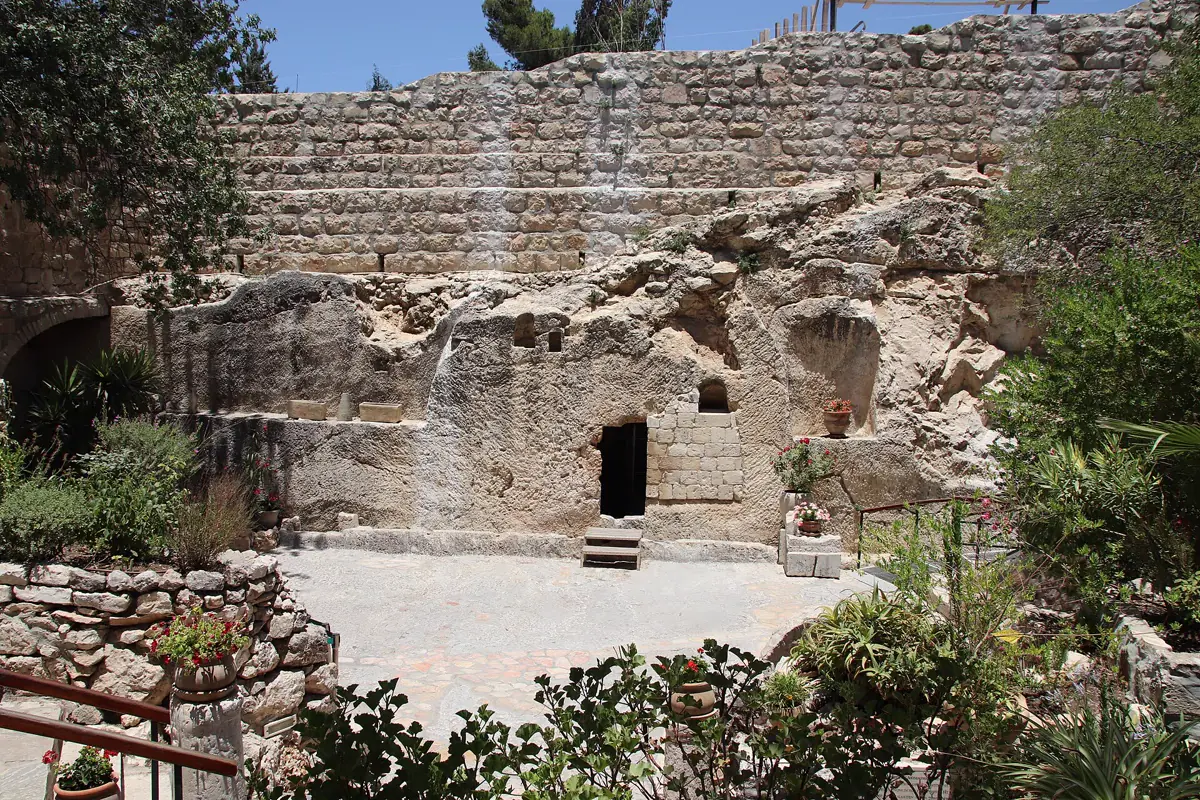
The Garden Tomb in Jerusalem — a rock-cut burial place of the very kind the Gospels describe, its stone bench still empty.Gary Todd · CC0
The gospel in Paul's words
"Moreover, brethren, I declare unto you the gospel which I preached unto you, which also ye have received, and wherein ye stand; By which also ye are saved, if ye keep in memory what I preached unto you, unless ye have believed in vain. For I delivered unto you first of all that which I also received, how that Christ died for our sins according to the scriptures; And that he was buried, and that he rose again the third day according to the scriptures." (1 Corinthians 15:1-4)
Three facts carry the whole message. Christ died for our sins. He was buried. He rose again the third day. Everything else in the Christian faith hangs on these.
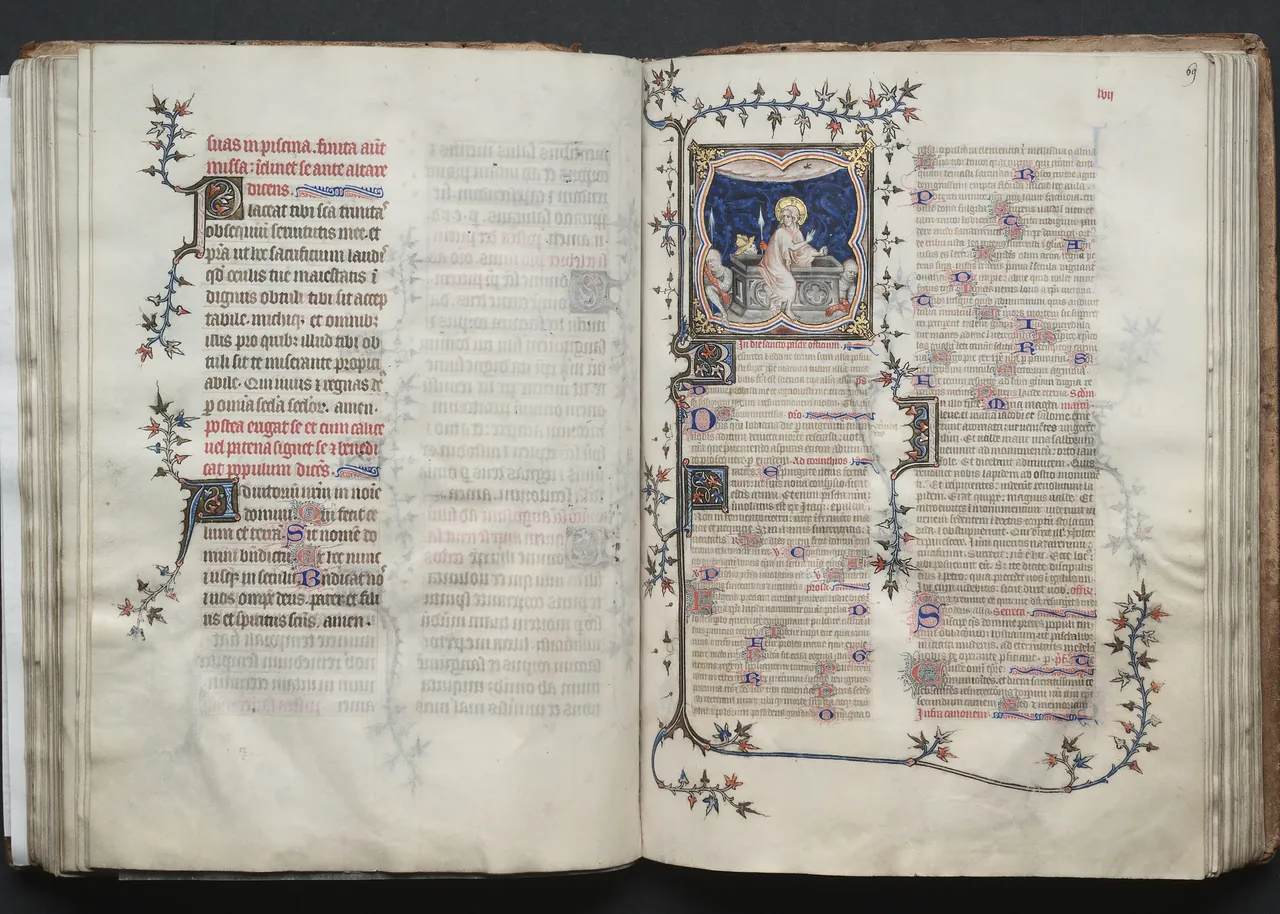
A page of the Gotha Missal, painted in France about 1375, with a miniature of the Resurrection, the risen Christ at the heart of the good news.The Gotha Missal: Fol. 69r, The Resurrection · c. 1375 · Cleveland Museum of Art · CC0 · museum record · Galeria Regni
Who Jesus is
The good news is not that a good man died. Good men die every day. It is who died.
Jesus made claims no sane, honest man could make unless they were true. When a paralysed man was let down through a roof to Him, Jesus said, "Son, thy sins be forgiven thee" (Mark 2:5). The scribes understood exactly what He meant: "Why doth this man thus speak blasphemies? who can forgive sins but God only?" (Mark 2:7). He said, "Before Abraham was, I am" (John 8:58), taking the name God gave Himself at the burning bush. He said, "I and my Father are one" (John 10:30). At His trial, when the high priest asked Him directly, "Art thou the Christ, the Son of the Blessed?", He answered, "I am: and ye shall see the Son of man sitting on the right hand of power, and coming in the clouds of heaven" (Mark 14:61-62). That answer is what condemned Him.
C. S. Lewis, who had been an atheist himself, put the choice these claims leave us with in a famous passage of Mere Christianity: "A man who was merely a man and said the sort of things Jesus said would not be a great moral teacher."2 Lewis's point was that the claims rule out the polite middle option. Either Jesus was who He said He was, or He was something far worse than a teacher. The one thing He cannot be is merely a good man.
Why He died
The cross was not an accident or a tragedy that God made the best of. It was the plan. Seven centuries before, Isaiah wrote of a coming servant of the Lord:
"But he was wounded for our transgressions, he was bruised for our iniquities: the chastisement of our peace was upon him; and with his stripes we are healed. All we like sheep have gone astray; we have turned every one to his own way; and the LORD hath laid on him the iniquity of us all." (Isaiah 53:5-6)
That is the centre of the gospel. The punishment our sin deserved was laid on Him. "For he hath made him to be sin for us, who knew no sin; that we might be made the righteousness of God in him" (2 Corinthians 5:21). Peter puts it this way: "For Christ also hath once suffered for sins, the just for the unjust, that he might bring us to God" (1 Peter 3:18).
When John the Baptist first saw Jesus, he said, "Behold the Lamb of God, which taketh away the sin of the world" (John 1:29). Every Jew who heard that knew what a lamb was for. For centuries lambs had been sacrificed at the temple, a life given for a life. They pointed forward. Jesus was the Lamb they pointed to.
And He did it for people who did not deserve it. "But God commendeth his love toward us, in that, while we were yet sinners, Christ died for us" (Romans 5:8). Not after we cleaned up. While we were yet sinners.
He rose again
If the story ended at the tomb, there would be no gospel. Paul said so bluntly: "And if Christ be not raised, your faith is vain; ye are yet in your sins" (1 Corinthians 15:17). The resurrection is God's public verdict that the sacrifice was accepted. Jesus "was delivered for our offences, and was raised again for our justification" (Romans 4:25), and He was "declared to be the Son of God with power, according to the spirit of holiness, by the resurrection from the dead" (Romans 1:4).
When Paul preached in Athens, he called the resurrection God's proof to the whole world: God "hath appointed a day, in the which he will judge the world in righteousness by that man whom he hath ordained; whereof he hath given assurance unto all men, in that he hath raised him from the dead" (Acts 17:31).
Why it is reasonable to believe it
A seeker has every right to ask whether this is history or legend. The question deserves a serious answer, and there is one. This paper can only sketch it; the paper on the reliability of the Bible on this site goes further.
The earliest creed. In 1 Corinthians 15, Paul says he "delivered" what he had first "received": that Christ died, was buried, rose the third day, and "was seen of Cephas, then of the twelve: After that, he was seen of above five hundred brethren at once; of whom the greater part remain unto this present, but some are fallen asleep. After that, he was seen of James; then of all the apostles" (1 Corinthians 15:5-7). Scholars of every persuasion recognise this as a formula Paul was handing on, not composing. Gary Habermas, who has spent his career on the resurrection, summarised the scholarship this way: "many scholars date Paul's receiving of this creed from two to eight years after the crucifixion itself, or from about A.D. 32-38."3 That is not a legend growing over generations. It is a claim made while the witnesses were alive, by a man who invited his readers to go and ask them.
Roman testimony. The Roman historian Tacitus, writing in the early second century and no friend of Christians, recorded that "Christus, from whom the name had its origin, suffered the extreme penalty during the reign of Tiberius at the hands of one of our procurators, Pontius Pilatus," and that the "most mischievous superstition, thus checked for the moment, again broke out not only in Judæa, the first source of the evil," but in Rome itself.4 Tacitus did not believe the resurrection. But he confirms the execution, the time, the place and the governor, and that the movement did not die with its founder. It broke out again.
Jewish testimony. The Jewish historian Josephus, writing in the 90s, records how the high priest Ananus had a man stoned in Jerusalem in the early 60s. He names him as "the brother of Jesus, who was called Christ, whose name was James."5 This is the same James Paul lists among the witnesses of the risen Christ. The Gospels tell us that during Jesus' ministry His brothers did not believe in Him (John 7:5). Something turned James from a skeptic into a leader of the church who died for it.
Worship of Christ as God. Around the year 112, Pliny the Younger, governor of Bithynia in what is now Turkey, wrote to the emperor Trajan asking how to handle Christians. Those he interrogated told him "that they met on a stated day before it was light, and addressed a form of prayer to Christ, as to a divinity, binding themselves by a solemn oath, not for the purposes of any wicked design, but never to commit any fraud, theft, or adultery."6 Within eighty years of the crucifixion, ordinary Christians far from Judea were worshipping Jesus as God and binding themselves to holiness, and some were dying rather than curse Him.
None of this forces anyone to believe. Evidence never does. But it shows that the Christian claim is not a feeling or a myth. It is a claim about something that happened in a real place, under a named governor, witnessed by people who would not take it back under threat of death. "But these are written," John says of his Gospel, "that ye might believe that Jesus is the Christ, the Son of God; and that believing ye might have life through his name" (John 20:31).
Michael Ray Lewis told his story on The King Is Coming Show (TKIC #48): an atheist who mocked Christians, until, in his telling, one question undid him. Watch it in his own words: youtube.com/watch?v=Rd-RdSqeQDk Michael's account of what happened to him, shared as his testimony — weigh it for yourself.
Only one way
The gospel makes one more claim that offends modern ears. Jesus said, "I am the way, the truth, and the life: no man cometh unto the Father, but by me" (John 14:6). Peter told the same council that had condemned Jesus, "Neither is there salvation in any other: for there is none other name under heaven given among men, whereby we must be saved" (Acts 4:12).
This is not arrogance. If there were another way, the cross would have been unnecessary. The fact that the Son of God had to die is the clearest proof that there was no other way. And the way that exists is open to anyone: "For there is one God, and one mediator between God and men, the man Christ Jesus" (1 Timothy 2:5).
This part matters because the gospel is not only something to understand. It is something to answer. When Paul summed up his whole ministry to the elders of Ephesus, he said he had spent it "Testifying both to the Jews, and also to the Greeks, repentance toward God, and faith toward our Lord Jesus Christ" (Acts 20:21). Those two words, repentance and faith, are the two sides of one turning.
Repent and believe
The first sermon Jesus preached in Galilee had two commands in it: "The time is fulfilled, and the kingdom of God is at hand: repent ye, and believe the gospel" (Mark 1:15). He did not treat repentance as optional. "I tell you, Nay: but, except ye repent, ye shall all likewise perish" (Luke 13:3). Paul told the philosophers of Athens that God "now commandeth all men every where to repent" (Acts 17:30).
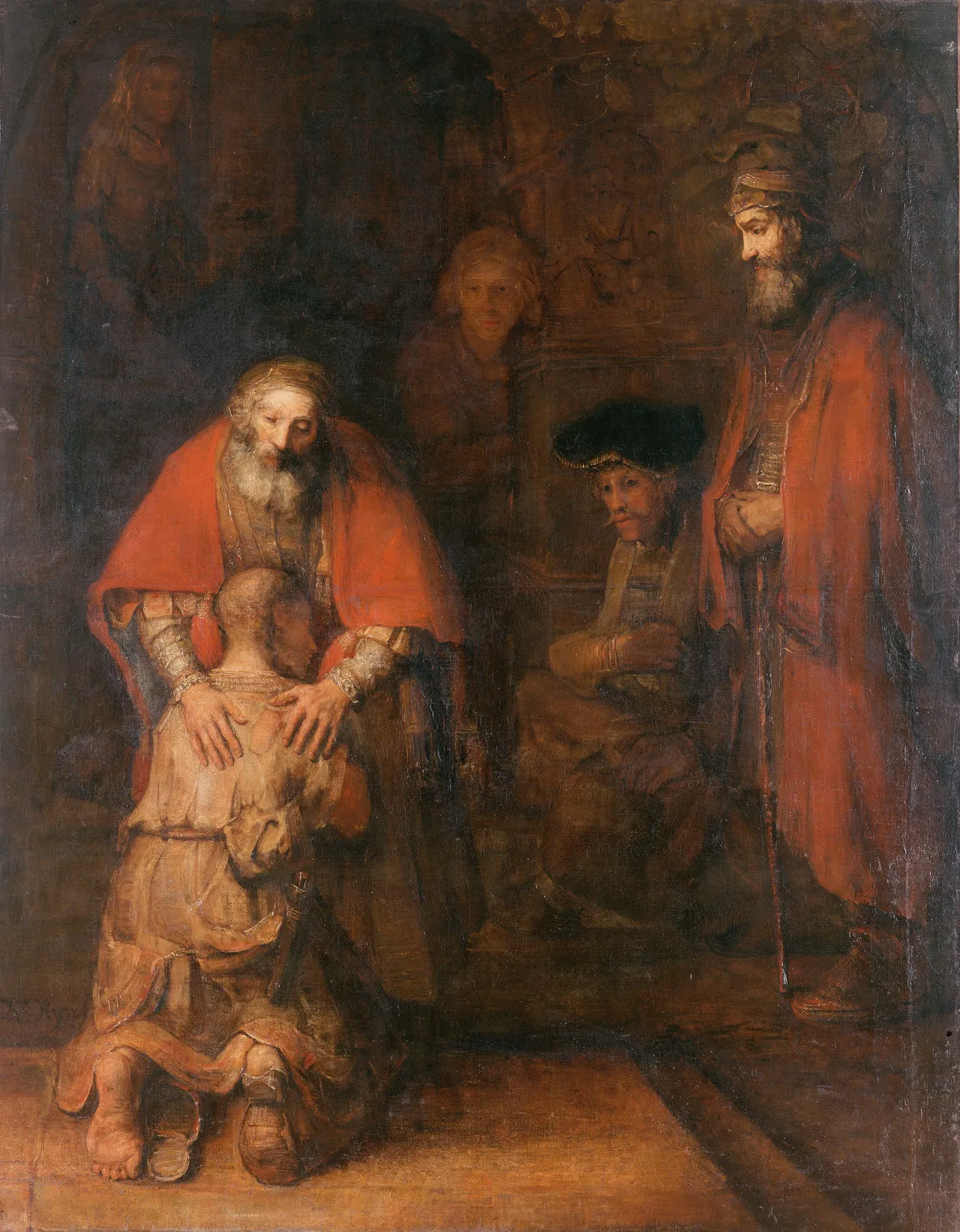
Rembrandt's Return of the Prodigal Son, painted about 1668, the son kneeling before his father, the picture of repentance this part describes.The Return of the Prodigal Son, Rembrandt van Rijn · c. 1668 · Wikimedia Commons · Public domain · museum record · Galeria Regni
Repentance is not a work that earns salvation, and faith is not a feeling. Both are a sinner's response to God's grace. One faces away from sin. The other faces toward Christ.
What repentance is
The New Testament verb for repent (Strong's G3340, metanoeo) means, in Strong's words, "to think differently or afterwards, i.e. reconsider (morally, feel compunction)."7 It begins in the mind: you see sin, and God, and yourself, as God sees them. But it does not stay in the mind. The Old Testament's great word for the same thing (Strong's H7725, shuwb) is a physical word: "to turn back."8
The Westminster Shorter Catechism, written in 1647, gives as careful a definition as any:
Repentance unto life is a saving grace, whereby a sinner, out of a true sense of his sin, and apprehension of the mercy of God in Christ, doth, with grief and hatred of his sin, turn from it unto God, with full purpose of, and endeavor after, new obedience.9
Notice its parts. A true sense of sin: not a vague regret, but seeing it. Apprehension of the mercy of God in Christ: repentance without the cross is only despair. Grief and hatred of sin: not only being sorry you were caught. Turning from it unto God. And a full purpose of new obedience: not a promise of perfection, but a real change of direction.
Paul distinguished true repentance from its counterfeit: "For godly sorrow worketh repentance to salvation not to be repented of: but the sorrow of the world worketh death" (2 Corinthians 7:10). Worldly sorrow is sorry for the consequences. Godly sorrow is sorry for the sin, because it was against God. And Paul expected repentance to show: he preached "that they should repent and turn to God, and do works meet for repentance" (Acts 26:20).
The picture of the prodigal
Jesus told a story that shows repentance better than any definition. A young man took his inheritance early, went to a far country and wasted it. When famine came, he was feeding pigs and hungry enough to eat their food.
"And when he came to himself, he said, How many hired servants of my father's have bread enough and to spare, and I perish with hunger! I will arise and go to my father, and will say unto him, Father, I have sinned against heaven, and before thee." (Luke 15:17-18)
That is repentance: he came to himself, he saw what he was, he named his sin, and he got up and went home. And this is what he found: "But when he was yet a great way off, his father saw him, and had compassion, and ran, and fell on his neck, and kissed him" (Luke 15:20).
He did not have to clean himself up first. He came as he was, in the clothes he had worn among the pigs. The father ran.
What faith is
Faith is the other side of the turning. The Greek verb for believe (Strong's G4100, pisteuo) means "to have faith (in, upon, or with respect to, a person or thing), i.e. credit; by implication, to entrust (especially one's spiritual well-being to Christ)."10 Faith is not only agreeing that something is true. It is entrusting yourself to someone.
James makes the difference sharp: "Thou believest that there is one God; thou doest well: the devils also believe, and tremble" (James 2:19). The devils know the facts. They do not trust Christ. Saving faith does.
The Shorter Catechism again:
Faith in Jesus Christ is a saving grace, whereby we receive and rest upon him alone for salvation, as he is offered to us in the gospel.11
Receive and rest. You receive Christ as a gift; you rest your whole weight on Him, the way a tired man rests his weight on a chair. Not on Christ plus your record, or Christ plus your church, but "upon him alone."
Faith is not a work
This is where many people stumble. They hear "believe" and turn it into a new kind of effort: if I can just believe hard enough, sincerely enough. But Paul says the opposite: "But to him that worketh not, but believeth on him that justifieth the ungodly, his faith is counted for righteousness" (Romans 4:5). Faith is the empty hand that receives. Its power is in the one it trusts, not in itself.
Jesus used a picture from Israel's history to make this plain. In the wilderness, when the people were bitten by fiery serpents and dying, God told Moses to make a serpent of brass and set it on a pole, "and it came to pass, that if a serpent had bitten any man, when he beheld the serpent of brass, he lived" (Numbers 21:9). Jesus said, "And as Moses lifted up the serpent in the wilderness, even so must the Son of man be lifted up: That whosoever believeth in him should not perish, but have eternal life" (John 3:14-15). The bitten man did not heal himself. He looked.
Spurgeon's look
Charles Spurgeon, who became the best-known preacher in Victorian London, came to faith through that very idea. As a fifteen-year-old in January 1850, deeply troubled about his sin, he was driven by a snowstorm into a small Primitive Methodist chapel in Colchester. The minister did not come; a layman, "a shoemaker, or tailor, or something of that sort," as Spurgeon later remembered, preached instead on the text, "Look unto me, and be ye saved, all the ends of the earth: for I am God, and there is none else" (Isaiah 45:22).
Spurgeon recalled the man fixing his eyes on him and crying out: "Young man, look to Jesus Christ. Look! Look! Look! You have nothing to do but to look and live." And then, in Spurgeon's own words: "There and then the cloud was gone, the darkness had rolled away, and that moment I saw the sun." His comment afterward is one every seeker should hear: "Oh, that somebody had told me this before, 'Trust Christ, and you shall be saved.'"12
Faith that works
But faith that is real does not stay idle. Paul, right after saying we are saved "Not of works," goes on: "For we are his workmanship, created in Christ Jesus unto good works, which God hath before ordained that we should walk in them" (Ephesians 2:10). James says, "Even so faith, if it hath not works, is dead, being alone" (James 2:17). We are not saved by works. We are saved for them. A faith that never changes anything is not the faith the Bible describes.
Cheap grace
The German pastor Dietrich Bonhoeffer, executed by the Nazis in 1945, saw the danger of a gospel that offers forgiveness and asks for nothing. In The Cost of Discipleship he wrote:
Cheap grace is the preaching of forgiveness without requiring repentance, baptism without church discipline, Communion without confession, absolution without personal confession. Cheap grace is grace without discipleship, grace without the cross, grace without Jesus Christ, living and incarnate.13
Grace is free. It is never cheap. It cost the Son of God His life, and it calls the one who receives it to follow Him. Jesus told the crowds to count that cost before they started: "And whosoever doth not bear his cross, and come after me, cannot be my disciple. For which of you, intending to build a tower, sitteth not down first, and counteth the cost, whether he have sufficient to finish it?" (Luke 14:27-28). The paper Ready to Follow Jesus on this site is given to that cost.
Calling on His name
The way the New Testament describes the moment of faith is simple. "That if thou shalt confess with thy mouth the Lord Jesus, and shalt believe in thine heart that God hath raised him from the dead, thou shalt be saved. For with the heart man believeth unto righteousness; and with the mouth confession is made unto salvation" (Romans 10:9-10). And: "For whosoever shall call upon the name of the Lord shall be saved" (Romans 10:13).
Whosoever. There is no one excluded from that word who does not exclude himself.
Part 5 — Baptism: The Obedience the Apostles Required
6 min read
This part matters because the apostles never preached the gospel without it. Many modern presentations of the gospel leave baptism out, or treat it as an optional extra for later. The New Testament does not.
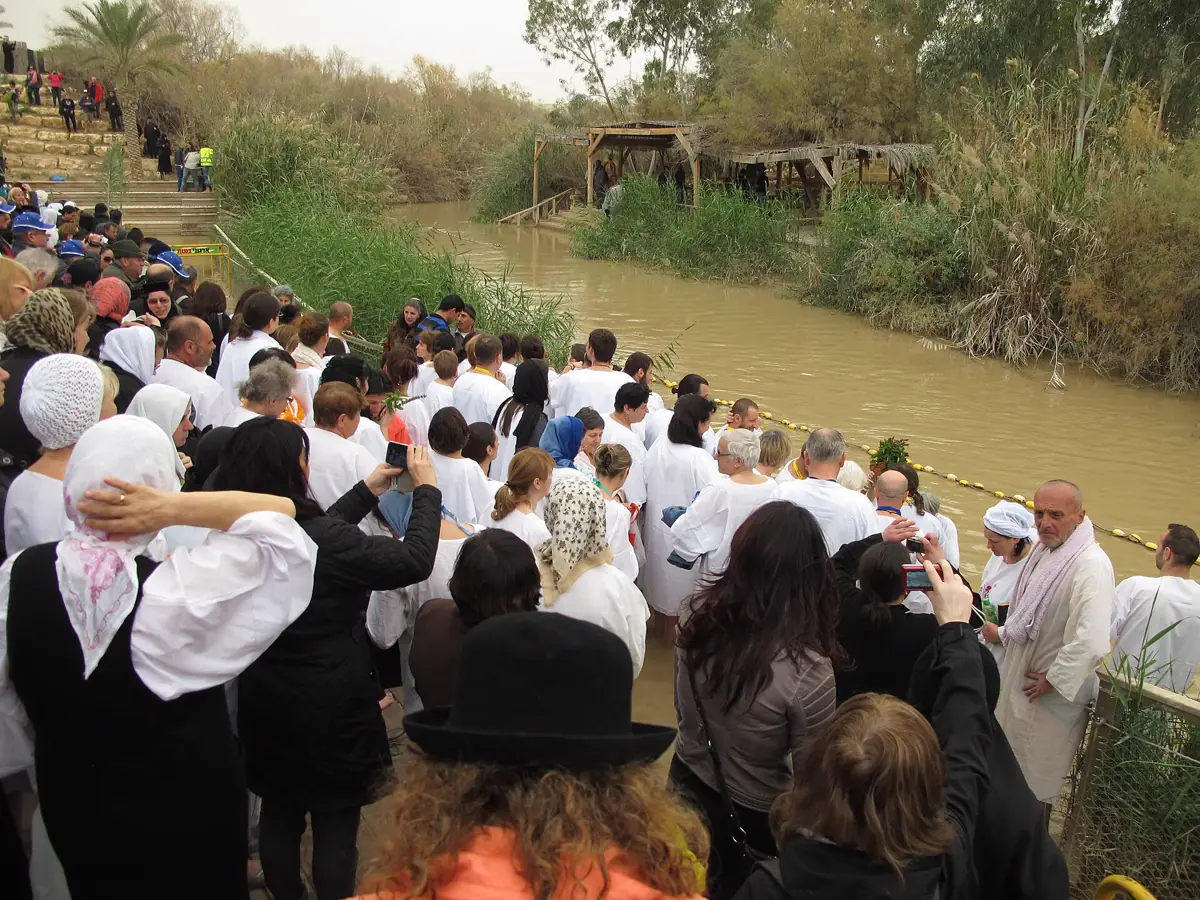
The Jordan River at Qasr el-Yahud, the traditional baptism site — pilgrims still go down into the same water.Ratoncito Perez · CC0
The first gospel sermon
On the day of Pentecost, fifty days after the resurrection, Peter preached to a crowd in Jerusalem, many of whom had been in the city when Jesus was crucified. He ended: "Therefore let all the house of Israel know assuredly, that God hath made that same Jesus, whom ye have crucified, both Lord and Christ" (Acts 2:36).
"Now when they heard this, they were pricked in their heart, and said unto Peter and to the rest of the apostles, Men and brethren, what shall we do?" (Acts 2:37).
This was Peter's answer, the first answer the church ever gave to that question:
"Then Peter said unto them, Repent, and be baptized every one of you in the name of Jesus Christ for the remission of sins, and ye shall receive the gift of the Holy Ghost." (Acts 2:38)
He added, "For the promise is unto you, and to your children, and to all that are afar off, even as many as the LORD our God shall call" (Acts 2:39). And Luke records what happened: "Then they that gladly received his word were baptized: and the same day there were added unto them about three thousand souls" (Acts 2:41).
Repent. Be baptized. Receive the gift of the Holy Ghost. That is the apostolic answer, and it is written here as Peter spoke it.
The command of Christ
The apostles did not invent this. Before He ascended, Jesus commanded it: "Go ye therefore, and teach all nations, baptizing them in the name of the Father, and of the Son, and of the Holy Ghost: Teaching them to observe all things whatsoever I have commanded you" (Matthew 28:19-20). And in Mark's account: "He that believeth and is baptized shall be saved; but he that believeth not shall be damned" (Mark 16:16). (Mark 16:9-20 stands in the King James Bible; many modern versions bracket or question it. See kylelauriano.com/library/changes.)
Baptism throughout Acts
Every conversion in Acts that tells us what happened next includes baptism, and usually at once.
The Ethiopian official (Acts 8). Philip "preached unto him Jesus" from Isaiah 53 (Acts 8:35). The Ethiopian saw water by the road and asked, "See, here is water; what doth hinder me to be baptized?" (Acts 8:36). Philip answered, "If thou believest with all thine heart, thou mayest. And he answered and said, I believe that Jesus Christ is the Son of God" (Acts 8:37). They went down into the water, and Philip baptized him. (Acts 8:37 stands in the 1611; most modern versions remove it. See kylelauriano.com/library/changes.)
Saul of Tarsus (Acts 9; 22). After the risen Christ met him on the Damascus road, Ananias told him, "And now why tarriest thou? arise, and be baptized, and wash away thy sins, calling on the name of the Lord" (Acts 22:16).
Cornelius and his household (Acts 10). The Holy Ghost fell on them while Peter was still preaching, and Peter asked, "Can any man forbid water, that these should not be baptized, which have received the Holy Ghost as well as we?" (Acts 10:47). Luke goes on: "And he commanded them to be baptized in the name of the Lord" (Acts 10:48).
The Philippian jailer (Acts 16). Told to believe, he "was baptized, he and all his, straightway" (Acts 16:33). The same hour of the night.
The pattern is clear. The gospel was preached; people repented and believed; they were baptized without delay; they received the Holy Ghost. No one in Acts was told to believe and wait for a convenient baptism Sunday months later.
What baptism means
Paul explains baptism as a union with Christ in His death and resurrection: "Know ye not, that so many of us as were baptized into Jesus Christ were baptized into his death? Therefore we are buried with him by baptism into death: that like as Christ was raised up from the dead by the glory of the Father, even so we also should walk in newness of life" (Romans 6:3-4). And to the Galatians: "For as many of you as have been baptized into Christ have put on Christ" (Galatians 3:27).
Peter, writing years later, made two things clear in one sentence: "The like figure whereunto even baptism doth also now save us (not the putting away of the filth of the flesh, but the answer of a good conscience toward God,) by the resurrection of Jesus Christ" (1 Peter 3:21). Baptism is not magic water that cleans the skin. It is a good conscience answering God, and its power is in the risen Christ.
How the early church baptized
The earliest Christian writings outside the New Testament show that baptism followed faith and repentance as a matter of course. The Didache, a short church manual probably from around the end of the first century or early in the second, instructs: "baptize into the name of the Father, and of the Son, and of the Holy Spirit, in living water," and directs that the one being baptized fast beforehand.14
Around the year 150, Justin Martyr explained to the Roman emperor what Christians did with new converts:
As many as are persuaded and believe that what we teach and say is true, and undertake to be able to live accordingly, are instructed to pray and to entreat God with fasting, for the remission of their sins that are past, we praying and fasting with them. Then they are brought by us where there is water.15
Persuaded and believing, resolved to live accordingly, praying for the remission of sins, and then brought to the water. That is the order of Acts, a century on.
Let the texts speak
Christians have long differed over exactly what baptism does. The way through is to hear every text as it is written, without trimming any of them.
Peter joined baptism to forgiveness: "Repent, and be baptized every one of you in the name of Jesus Christ for the remission of sins" (Acts 2:38). Ananias told Saul, "arise, and be baptized, and wash away thy sins, calling on the name of the Lord" (Acts 22:16). Jesus said, "He that believeth and is baptized shall be saved; but he that believeth not shall be damned" (Mark 16:16), and the warning names unbelief. Peter wrote that baptism "doth also now save us", and in the same breath, "not the putting away of the filth of the flesh, but the answer of a good conscience toward God" (1 Peter 3:21). And to the thief on the cross, who was never baptized, Jesus said, "Verily I say unto thee, To day shalt thou be with me in paradise" (Luke 23:43).
All of these are the word of God, and all of them stand. On the practical question they speak with one voice: a person who repents and believes should be baptized, and should not put it off. The thief on the cross is a comfort to the dying who have no water. He is not an excuse for the living who do. If you have come to Christ, ask the Ethiopian's question: "what doth hinder me to be baptized?" Then find a church that preaches the gospel and ask to be baptized.
If you were baptized as a child, or without faith
Some readers were baptized long before they understood or believed anything. What then? Churches answer this differently, and you should talk honestly with a pastor who holds the Bible as God's word. What matters is not repeating a ceremony for its own sake. It is that your baptism be the answer of a good conscience toward God, joined to real repentance and faith in the risen Christ.
This part matters because honest people have honest questions, and they deserve straight answers from Scripture rather than slogans.
"What if I have doubts?"
Doubt is not the same as unbelief. The father of a demon-tormented boy came to Jesus and, when Jesus said all things are possible to him that believes, "straightway the father of the child cried out, and said with tears, Lord, I believe; help thou mine unbelief" (Mark 9:24). Jesus healed his son. He did not demand a faith without questions. He met a man who was honest about both.
If you have questions, bring them. Read the Gospels for yourself. Read the history. The God of the Bible says, "Come now, and let us reason together" (Isaiah 1:18). And He promises, "And ye shall seek me, and find me, when ye shall search for me with all your heart" (Jeremiah 29:13). The paper Test God on this site lays out a practical way to do that.
"What if I have done terrible things?"
Paul had been a persecutor who dragged Christians to prison and approved of their deaths. He wrote: "This is a faithful saying, and worthy of all acceptation, that Christ Jesus came into the world to save sinners; of whom I am chief" (1 Timothy 1:15).
To the church at Corinth, a port city with a reputation for vice, he listed the kinds of people who will not inherit the kingdom of God: fornicators, idolaters, adulterers, thieves, drunkards and more. Then he wrote: "And such were some of you: but ye are washed, but ye are sanctified, but ye are justified in the name of the Lord Jesus, and by the Spirit of our God" (1 Corinthians 6:11). Such were some of you. The church was full of people with pasts.
The blood of Christ is enough for your sin. "Though your sins be as scarlet, they shall be as white as snow" (Isaiah 1:18). There is no sin you bring to Christ in repentance that His blood cannot wash. (On the "unpardonable sin", see Assurance of Salvation, Part 6.)
"Do I have to clean up my life first?"
No. You could not if you tried. The prodigal came home in the clothes he had worn among the pigs. Jesus said, "All that the Father giveth me shall come to me; and him that cometh to me I will in no wise cast out" (John 6:37). You come as you are. But you do not stay as you are. Coming to Christ means turning from sin, and He gives the power to change that you never had on your own.
"What if my family is against it?"
Jesus did not hide this cost. "Think not that I am come to send peace on earth: I came not to send peace, but a sword" (Matthew 10:34). And: "He that loveth father or mother more than me is not worthy of me" (Matthew 10:37). Following Christ sometimes divides families, at least for a time.
But He also promised that no one who loses for His sake loses in the end: "There is no man that hath left house, or brethren, or sisters, or father, or mother, or wife, or children, or lands, for my sake, and the gospel's, But he shall receive an hundredfold now in this time, houses, and brethren, and sisters, and mothers, and children, and lands, with persecutions; and in the world to come eternal life" (Mark 10:29-30). Notice "with persecutions". He did not promise ease. He promised that He and His people would be enough. And many who have come to Christ alone have later seen their families follow. In my own story, I came to faith in 2022, and my wife came to faith a month later. Pray for yours, love them well, and leave them to God.
"What about other religions?"
This was answered in Part 3. Jesus claimed to be the only way to the Father (John 14:6). Either that claim is true or it is not. If it is true, love requires us to say so. If you are from another faith, you are welcome to weigh the claims of Christ honestly, and especially His resurrection. Christianity rests its whole case on one public event, the resurrection of its founder, and invites anyone to examine it.
"What if I cannot keep it up?"
You will not keep it up by your own strength. No Christian does. "If we say that we have no sin, we deceive ourselves, and the truth is not in us" (1 John 1:8). But: "If we confess our sins, he is faithful and just to forgive us our sins, and to cleanse us from all unrighteousness" (1 John 1:9). And, "My little children, these things write I unto you, that ye sin not. And if any man sin, we have an advocate with the Father, Jesus Christ the righteous" (1 John 2:1).
Peter denied Jesus three times on the night of His arrest. Jesus restored him (John 21:15-17), and Peter preached the sermon of Acts 2. The Christian life is not never falling. It is getting up, confessing, and going on with Christ.
"How can I know I am really saved?"
This is the most important question in this part, and the Bible answers it with two kinds of texts that must be held together.
First, real assurance is possible. John wrote one of his letters for this very purpose: "These things have I written unto you that believe on the name of the Son of God; that ye may know that ye have eternal life" (1 John 5:13). Jesus said of His sheep, "My sheep hear my voice, and I know them, and they follow me: And I give unto them eternal life; and they shall never perish, neither shall any man pluck them out of my hand" (John 10:27-28). Paul wrote that nothing "shall be able to separate us from the love of God, which is in Christ Jesus our Lord" (Romans 8:39). And the Holy Ghost Himself "beareth witness with our spirit, that we are the children of God" (Romans 8:16).
John Bunyan, the tinker who wrote The Pilgrim's Progress, lived for years in terror that he was lost. In his autobiography he records the day the fear broke, when he saw that "it was not my good frame of heart that made my righteousness better, nor yet my bad frame that made my righteousness worse; for my righteousness was Jesus Christ Himself."16 That is where assurance rests: not on how strong your feelings are on a given day, but on Christ.
Second, the warnings are real too. The same New Testament that gives assurance gives some of the most serious warnings in Scripture. Hebrews says: "For it is impossible for those who were once enlightened, and have tasted of the heavenly gift, and were made partakers of the Holy Ghost, And have tasted the good word of God, and the powers of the world to come, If they shall fall away, to renew them again unto repentance; seeing they crucify to themselves the Son of God afresh, and put him to an open shame" (Hebrews 6:4-6). And again: "For if we sin wilfully after that we have received the knowledge of the truth, there remaineth no more sacrifice for sins, But a certain fearful looking for of judgment and fiery indignation, which shall devour the adversaries" (Hebrews 10:26-27). And: "It is a fearful thing to fall into the hands of the living God" (Hebrews 10:31). Peter tells believers, "give diligence to make your calling and election sure: for if ye do these things, ye shall never fall" (2 Peter 1:10).
Christians have argued for centuries over how these two kinds of texts fit together, and this paper will not take a side in that argument. It will do what the Bible does: give you both. The promises are there so that a trembling believer can rest in Christ. The warnings are there so that no one treats grace as a licence to sin. A true Christian is not someone who once said a prayer and then lives as he likes. "And hereby we do know that we know him, if we keep his commandments" (1 John 2:3). Assurance grows as you walk with Christ: trusting His promises, heeding His warnings, and following His voice.
"What about Christians who are hypocrites?"
There are many, and Jesus was harder on religious hypocrisy than anyone. Recall Matthew 7:21-23. But the failure of people who claim Christ does not change who Christ is. You are not asked to trust Christians. You are asked to trust Christ.
This part matters because a person can understand everything in this paper and still not come. The question is not only "Is it true?" but "What will I do about it?"
No magic words
There is no formula in the Bible that a person recites to be saved. Jesus warned against prayer as a technique: "But when ye pray, use not vain repetitions, as the heathen do: for they think that they shall be heard for their much speaking" (Matthew 6:7). What God looks for is a heart that turns to Him in repentance and trusts His Son.
Jesus told of two men who went to the temple to pray. One, a Pharisee, thanked God he was not like other men. The other, a tax collector, "standing afar off, would not lift up so much as his eyes unto heaven, but smote upon his breast, saying, God be merciful to me a sinner" (Luke 18:13). Jesus said, "I tell you, this man went down to his house justified rather than the other" (Luke 18:14). Seven words. No ceremony. Everything.
The thief on the cross had less than a day to live. He said, "Lord, remember me when thou comest into thy kingdom" (Luke 23:42), and Jesus promised him paradise.
My own prayer, in my own words: Then one day I got on my knees and prayed: "Jesus, if you are real, show me — and I'll serve you." A warmth ran from the top of my head to the soles of my feet. Peace I'd never known, and it didn't leave. That is my story; I do not tell it as a pattern anyone has to repeat, or a feeling anyone should expect. God deals with each person as He chooses. Some, like Spurgeon, see the cloud lift in a moment. John Wesley, the evangelist, wrote of the night in May 1738 when he "felt my heart strangely warmed" and "did trust in Christ, Christ alone, for salvation."17 C. S. Lewis described himself, on the night he first knelt and admitted that God was God, as "perhaps, that night, the most dejected and reluctant convert in all England."18 And for others there is no single moment they can point to, only a slow dawning. What matters is not the feeling. It is the turning, and the One you turn to.
If you want to come now
If you are ready to turn from your sin and trust Christ, you can speak to Him now, in your own words. You do not need these words; they are only an example of what a repenting, believing heart might say:
Lord God, I have sinned against You. I have broken Your law in what I have done, and in what I am. I deserve Your judgment, and I cannot save myself. I believe that Jesus Christ is Your Son, that He died on the cross for my sins, and that You raised Him from the dead. I turn from my sin. I trust Jesus alone to save me. Lord Jesus, I want to follow You. Forgive me, make me new, and fill me with Your Holy Ghost. In Jesus' name, amen.
If that is the cry of your heart, take God at His word: "whosoever shall call upon the name of the Lord shall be saved" (Romans 10:13). Then do what the apostles told new believers to do next.
First steps
Tell someone. "Whosoever therefore shall confess me before men, him will I confess also before my Father which is in heaven" (Matthew 10:32). Tell a Christian you trust. Tell your family when you are ready. Faith that is hidden tends to wither.
Be baptized. Recall Acts 2:38 and 22:16. Find a church that preaches the gospel of Christ crucified and risen, tell the pastor you have come to Christ, and ask to be baptized. Do not wait for a perfect moment.
Join a church. The first believers "continued stedfastly in the apostles' doctrine and fellowship, and in breaking of bread, and in prayers" (Acts 2:42). Hebrews tells us not to be "forsaking the assembling of ourselves together" (Hebrews 10:25). A Christian alone is like a coal taken out of the fire. Look for a church that holds the Bible as God's word, preaches Christ and calls people to repentance, and where you can be known.
Read the Bible. "As newborn babes, desire the sincere milk of the word, that ye may grow thereby" (1 Peter 2:2). Start with the Gospel of Mark or John. Read a chapter a day. The free 1611 Reader at kylelauriano.com/library has the whole King James Bible, and a KJV with Strong's Concordance will take you as deep as you want to go.
Pray. Talk to God every day, simply and honestly. The paper First Prayers on this site is written for exactly this stage.
Expect a fight. "Be sober, be vigilant; because your adversary the devil, as a roaring lion, walketh about, seeking whom he may devour: Whom resist stedfast in the faith" (1 Peter 5:8-9). New believers are often surprised by how hard the first weeks are: old temptations, doubts, opposition. That is normal. It is not a sign that God has left you. The paper Overcoming Struggles on this site is for that fight.
If you are not ready
If you are not ready, do not pretend. God is not impressed by a show. Keep reading. Keep asking. Read the Gospel of John from beginning to end and ask God, if He is there, to show you whether it is true. But do not treat the question as one you can leave open forever. Scripture says, "behold, now is the accepted time; behold, now is the day of salvation" (2 Corinthians 6:2). None of us is promised tomorrow.
Augustine of Hippo, who had spent years running from God through philosophy, ambition and lust before he came to Christ in the year 386, began his Confessions with a prayer: "Thou madest us for Thyself, and our heart is restless, until it repose in Thee."19 He had tried everything else. Nothing else held.
In my own story, when real life hit — a lost job, a pregnant wife, constant fights — I went looking for peace anywhere I could find it. New Age, crystals, astral projection, tarot, angel numbers. None of it held. I came to disprove God. He met me instead — and I couldn't unsee what time it is.
The whole of this paper comes to this. You were made for God. Your sin has separated you from Him, and it deserves His judgment. But God so loved the world "that he gave his only begotten Son, that whosoever believeth in him should not perish, but have everlasting life" (John 3:16). Christ died for sinners, was buried, and rose the third day. And the apostles' answer to the question, "What shall we do?" still stands: repent, believe the gospel, be baptized in the name of Jesus Christ for the remission of sins, and receive the gift of the Holy Ghost.
An invitation
Jesus' own invitation is still open: "Come unto me, all ye that labour and are heavy laden, and I will give you rest" (Matthew 11:28). And the last invitation in the Bible is addressed to anyone at all: "And the Spirit and the bride say, Come. And let him that heareth say, Come. And let him that is athirst come. And whosoever will, let him take the water of life freely" (Revelation 22:17).
Freely. There is nothing to buy here and no one to impress. If you have come to Christ through this paper, or you want to talk about what you have read, write to contact@kylelauriano.com. If you are still asking, keep asking. He has promised to be found by those who seek Him with all their heart.
1James Strong, The Exhaustive Concordance of the Bible (New York: Hunt & Eaton, 1890), Greek Dictionary, no. 3341, metanoia.↩
2C. S. Lewis, Mere Christianity (London: Geoffrey Bles, 1952), book 2, chapter 3, "The Shocking Alternative."↩
3Gary R. Habermas, "Jesus' Resurrection and Contemporary Criticism: An Apologetic (Part II)," Criswell Theological Review 4, no. 2 (1990): 375. Online: https://biblicalelearning.org/wp-content/uploads/2022/01/Habermas-Resurrection2-CTR.pdf.↩
4Tacitus, Annals 15.44, trans. Alfred John Church and William Jackson Brodribb. Online: https://www.perseus.tufts.edu/hopper/text?doc=Perseus:text:1999.02.0078:book=15:chapter=44.↩
5Josephus, Antiquities of the Jews 20.9.1, trans. William Whiston. Online: https://www.gutenberg.org/ebooks/2848. A second passage in Josephus about Jesus (Antiquities 18.3.3) is disputed by scholars in its present wording; the reference to James is not.↩
6Pliny the Younger, Letters 10.96 (letter XCVII to Trajan in this edition), in Letters of Pliny, trans. William Melmoth, ed. F. C. T. Bosanquet. Online: https://www.gutenberg.org/ebooks/2811.↩
12C. H. Spurgeon, C. H. Spurgeon's Autobiography, Compiled from His Diary, Letters, and Records by His Wife and His Private Secretary, vol. 1 (London: Passmore and Alabaster, 1897), chapter 11, "The Great Change — Conversion." Online: https://gracegems.org/Spurgeon/autobiography1.htm.↩
13Dietrich Bonhoeffer, The Cost of Discipleship, trans. R. H. Fuller (New York: Macmillan, 1959), chapter 1, "Costly Grace."↩
14The Didache 7, trans. M. B. Riddle, in Ante-Nicene Fathers, vol. 7, ed. Alexander Roberts, James Donaldson and A. Cleveland Coxe (Buffalo, NY: Christian Literature Publishing, 1886). Online: https://www.newadvent.org/fathers/0714.htm.↩
15Justin Martyr, First Apology 61, trans. Marcus Dods and George Reith, in Ante-Nicene Fathers, vol. 1, ed. Alexander Roberts, James Donaldson and A. Cleveland Coxe (Buffalo, NY: Christian Literature Publishing, 1885). Online: https://www.newadvent.org/fathers/0126.htm.↩
16John Bunyan, Grace Abounding to the Chief of Sinners (1666), §229. Online: https://www.gutenberg.org/ebooks/654.↩
17John Wesley, The Journal of John Wesley, entry for Wednesday, May 24, 1738. Online: https://www.ccel.org/ccel/wesley/journal.vi.ii.xvi.html.↩
18C. S. Lewis, Surprised by Joy: The Shape of My Early Life (London: Geoffrey Bles, 1955), chapter 14, "Checkmate."↩
19Augustine, The Confessions of St. Augustine, trans. E. B. Pusey, book 1, chapter 1. Online: https://www.gutenberg.org/ebooks/3296.↩
Seven mornings for the person who just prayed: what happened, the first night, the Bible, prayer, church, the pushback, and who to tell — the page in the 1611, one person who says they walked it, and a room on the site each morning. Free.
This is practical teaching, not proof. It's drawn from Scripture and from walking this road myself. If you're still weighing the basics — whether God is real, whether the Bible can be trusted — I'd encourage you to start with the Skeptic resources in the Research Hub before diving in here.
"That if thou shalt confess with thy mouth the Lord Jesus, and shalt believe in thine heart that God hath raised him from the dead, thou shalt be saved." — Romans 10:9 (KJV)