A study of what Jesus offers, what He asks, how people in Scripture and history have come to Him, and how to know whether you are ready.
Abstract
Jesus never asked anyone to "make a decision" in the modern sense. He said, "Follow me." This paper asks what that call means and what it would mean to answer it. It works from the King James Bible: the calls of the first disciples, the gospel of Christ crucified and risen, the rest and life Jesus offers, and the cost He told the crowds to count (Luke 9 and 14, Mark 8 and 10). It traces the pattern of conversion through every account in Acts, with Acts 2:38 quoted as written, and through the recorded conversions of Augustine, John Newton, John Wesley, Charles Spurgeon, C. S. Lewis, Rosaria Butterfield, Lee Strobel and J. Warner Wallace, quoting their own words where they can be confirmed. It answers the barriers seekers name: the past, unanswered questions, mockery, family, fear of failure and the temptation to wait. It ends with what God does when a sinner comes, real assurance with the warnings kept in view, and first steps. It is written for the person who suspects Jesus is calling and wants to know what saying yes involves.
What’s inside
·Introduction
Part 1Part 1: What It Means to Follow
Part 2Part 2: The Gospel You Are Answering
Part 3Part 3: What Jesus Offers
Part 4Part 4: What Jesus Asks: Counting the Cost
Part 5Part 5: How People Have Come
Part 6Part 6: "Am I Ready?"
Part 7Part 7: When You Decide
·Conclusion
Research paper · 9 chapters · 19 notes · October 2026
About 36 minutes · 9 parts · the PDF has the same text
Introduction
2 min read
Jesus never used the phrase "make a decision for Christ." He said two words, over and over, to fishermen, to a tax collector, to a rich young man and to crowds: "Follow me."
"And he saith unto them, Follow me, and I will make you fishers of men. And they straightway left their nets, and followed him." (Matthew 4:19-20)
This paper is about that call. It asks what it means to follow Jesus, what He offers, what He asks, how people have actually come to Him, and how a person can know whether he is ready.
Why it matters
Many people are near Jesus without following Him. They admire Him. They may go to church. They may have prayed a prayer once. But they have never counted the cost and come after Him. Others hold back because they think they must first be good enough, or certain enough, or feel the right thing. Both groups need the same thing: to hear what Jesus Himself said about following Him.
What this paper is
This is a study, not a pitch. It argues from the King James Bible, and where history helps, it gives the history with its source. Where men and women of earlier centuries came to Christ and wrote down how, their own words are quoted where they can be confirmed.
It does not pressure you. Jesus never pressured anyone either. He let the rich young man walk away grieving. But He did tell people the truth, and He told them it mattered more than anything else in their lives. So will this paper.
Seven parts follow. Part 1 asks what following means. Part 2 sets out the gospel you are answering. Part 3 looks at what Jesus offers, and Part 4 at what He asks. Part 5 traces how people have come to Him, in Acts and in history. Part 6 takes the barriers seekers name one by one. Part 7 explains what God does when you come, and what you do next.
A word about me
This is my story, in the words I have told it before:
When real life hit — a lost job, a pregnant wife, constant fights — I went looking for peace anywhere I could find it. New Age, crystals, astral projection, tarot, angel numbers. None of it held. So I swung back hard to religion, said the rosary every night, and still felt nothing. Eventually I gave up and called myself an atheist. I decided to read the Bible for one reason: to disprove it, so I'd have an excuse to stop going to church for good. It did the opposite.
I came to faith in 2022, and my wife came to faith a month later. The rest is at kylelauriano.com/about. I tell it because it shows that readiness is not a feeling you wait for. It is a turning God makes possible, often in the people least expecting it.
A note on Scripture: every verse here is quoted from the King James Bible. You can read it free in the 1611 Reader at kylelauriano.com/library. A KJV with Strong's Concordance is the best study tool most people will ever own.
This part matters because you cannot be ready for something you do not understand. "Following Jesus" has become a phrase people use loosely. In the Gospels it was concrete.
The calls
Look at how the first followers were called.
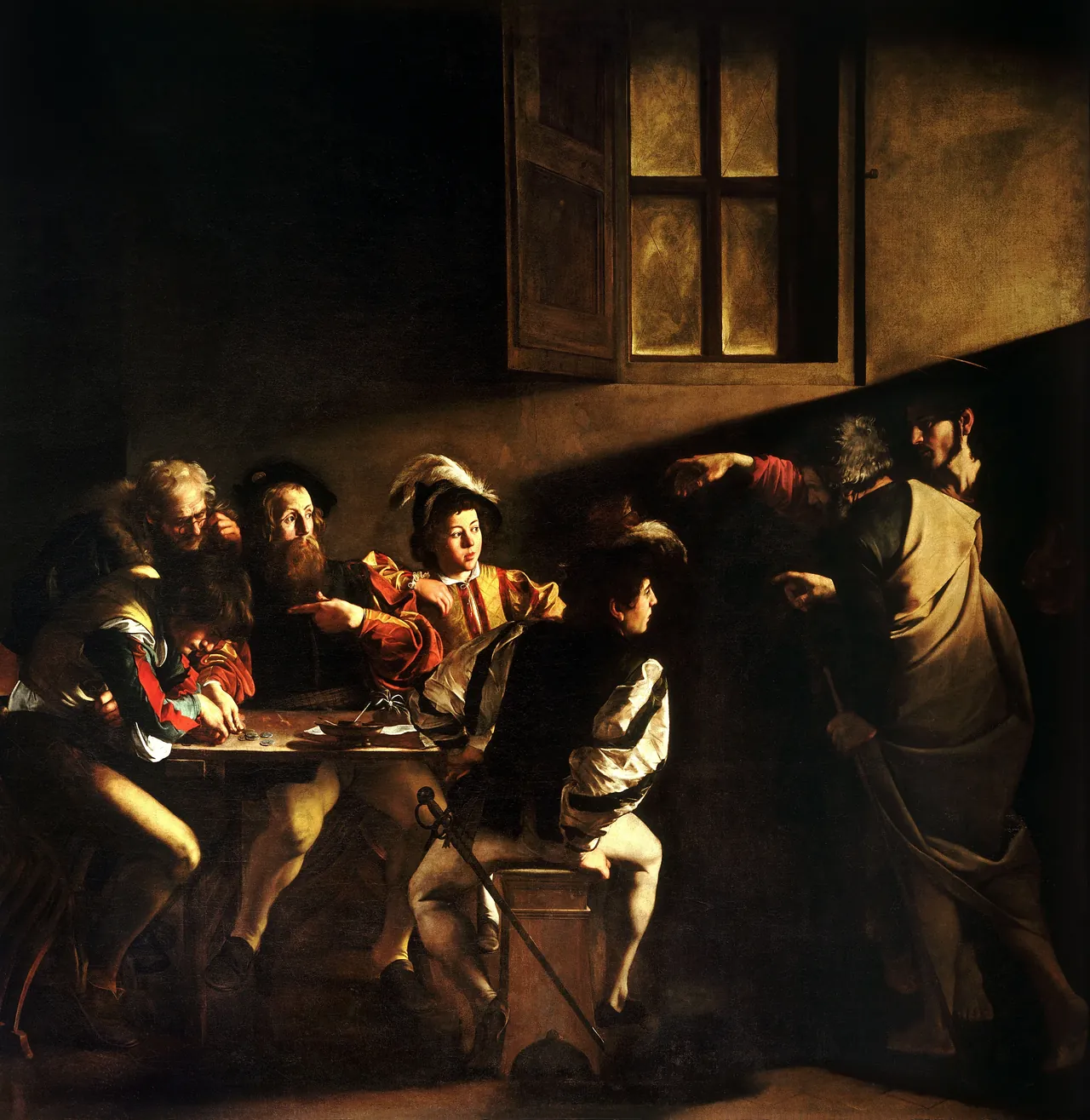
Caravaggio's Calling of Saint Matthew of about 1599 to 1600, Jesus pointing toward the tax collectors at their table, a call answered by rising and following.The Calling of Saint Matthew-Caravaggo (1599-1600) · circa 1599-1600 · Wikimedia Commons · Public domain · museum record · Galeria Regni
Simon and Andrew were casting nets into the Sea of Galilee. Jesus said, "Follow me, and I will make you fishers of men," and "they straightway left their nets, and followed him" (Matthew 4:19-20). Luke adds that when they brought their ships to land, "they forsook all, and followed him" (Luke 5:11).
Levi, also called Matthew, was a tax collector, a man most Jews of his day regarded as a collaborator with Rome. Jesus "saw a publican, named Levi, sitting at the receipt of custom: and he said unto him, Follow me" (Luke 5:27). Luke records the response in nine words: "And he left all, rose up, and followed him" (Luke 5:28).
Two disciples of John the Baptist began to walk after Jesus and asked Him where He was staying. "He saith unto them, Come and see. They came and saw where he dwelt, and abode with him that day" (John 1:39). When Philip told his friend Nathanael about Jesus, Nathanael scoffed, "Can there any good thing come out of Nazareth?" Philip did not argue. He said, "Come and see" (John 1:46).
The words
The New Testament word for disciple (Strong's G3101, mathetes) means simply "a learner, i.e. pupil."1 The word for follow (Strong's G190, akoloutheo) means "properly, to be in the same way with, i.e. to accompany (specially, as a disciple)."2 Its root is the Greek word for a road.
That is the picture. A disciple is someone who has gone onto the same road as Jesus, walking behind Him, learning from Him. Not an admirer standing at the roadside. A follower.
Following is a relationship, not a programme
Jesus did not hand the fishermen a list of doctrines and send them home. He said, "Follow me." The centre of the Christian life is a Person. "I am the light of the world: he that followeth me shall not walk in darkness, but shall have the light of life" (John 8:12). And He defined eternal life itself as knowing Him: "And this is life eternal, that they might know thee the only true God, and Jesus Christ, whom thou hast sent" (John 17:3).
That does not mean doctrine is unimportant. Jesus said, "If ye continue in my word, then are ye my disciples indeed; And ye shall know the truth, and the truth shall make you free" (John 8:31-32). A follower listens to what his Master says and does it. But the word is His word, and the obedience is to Him.
The marks of a follower
Jesus named several marks by which His followers would be known.
They love one another: "By this shall all men know that ye are my disciples, if ye have love one to another" (John 13:35).
They bear fruit: "Herein is my Father glorified, that ye bear much fruit; so shall ye be my disciples" (John 15:8).
They keep His commandments out of love: "If ye love me, keep my commandments" (John 14:15).
None of these is a way to earn His acceptance. They are what life with Him looks like. A branch does not bear fruit to become part of the vine. It bears fruit because it is.
This part matters because the call to follow Jesus is not a call to admire a teacher. It is a call to a Saviour. You cannot follow Him rightly until you know why you need Him and what He has done. The companion paper Becoming a Christian treats this at length; here is the heart of it.
The problem
God is holy, and we are not. "For all have sinned, and come short of the glory of God" (Romans 3:23). Sin is not only bad behaviour; it comes from the heart, and it earns death: "For the wages of sin is death" (Romans 6:23). After death comes judgment (Hebrews 9:27), and Jesus spoke plainly of hell, of "everlasting punishment" (Matthew 25:46). Those who will not believe on the Son, John tells us, "shall not see life; but the wrath of God abideth on him" (John 3:36).
The rescue
Paul's summary is the gospel in its shortest form:
"For I delivered unto you first of all that which I also received, how that Christ died for our sins according to the scriptures; And that he was buried, and that he rose again the third day according to the scriptures." (1 Corinthians 15:3-4)
Christ died in our place: "For he hath made him to be sin for us, who knew no sin; that we might be made the righteousness of God in him" (2 Corinthians 5:21). He rose, and the resurrection is God's assurance to the world (Acts 17:31). Salvation is a gift, not a wage: "For by grace are ye saved through faith; and that not of yourselves: it is the gift of God: Not of works, lest any man should boast" (Ephesians 2:8-9).
The response
The apostles called for one turning with two sides: "repentance toward God, and faith toward our Lord Jesus Christ" (Acts 20:21). And from the first day of the church, they joined it to baptism. When the crowd at Pentecost asked what they should do, Peter answered:
"Then Peter said unto them, Repent, and be baptized every one of you in the name of Jesus Christ for the remission of sins, and ye shall receive the gift of the Holy Ghost." (Acts 2:38)
That is the gospel you are being asked to answer. Following Jesus is what the answer looks like for the rest of your life.
This part matters because Jesus did not only make demands. He made offers, and they are the reason anyone has ever counted the cost and found it worth paying.
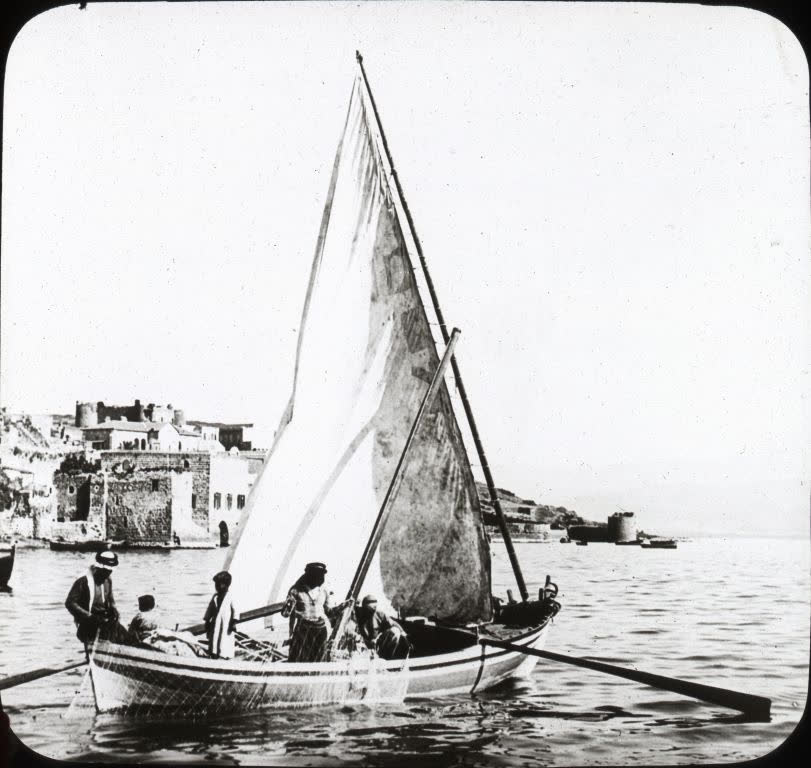
Fishing boats on the Sea of Galilee — the working world of the first disciples, called off these waters into a movement.OSU Special Collections & Archives · Public domain
Rest
"Come unto me, all ye that labour and are heavy laden, and I will give you rest. Take my yoke upon you, and learn of me; for I am meek and lowly in heart: and ye shall find rest unto your souls. For my yoke is easy, and my burden is light." (Matthew 11:28-30)
Notice that rest and a yoke come together. A yoke was the wooden frame that joined an animal to a plough. Jesus does not offer rest by taking all work away. He offers rest by joining you to Himself, so that the weight is shared and the direction is His. The burden of earning God's favour, of carrying your guilt, of being your own god, is lifted. A lighter one is given.
Forgiveness
The deepest need of every person is to be forgiven by God. Jesus offers it completely. "To him give all the prophets witness, that through his name whosoever believeth in him shall receive remission of sins" (Acts 10:43). Paul wrote of Christ, "In whom we have redemption through his blood, even the forgiveness of sins" (Colossians 1:14). And the result is a verdict that no accuser can overturn: "There is therefore now no condemnation to them which are in Christ Jesus, who walk not after the flesh, but after the Spirit" (Romans 8:1).
When a woman known in her town as a sinner washed Jesus' feet with her tears in a Pharisee's house, He said to her, "Thy sins are forgiven" (Luke 7:48), and then, "Thy faith hath saved thee; go in peace" (Luke 7:50). Luke does not tell us her name or what her sins were, and we should not guess. What he tells us is that Jesus forgave her, publicly, in the house of a host who had already judged her (Luke 7:39).
Life
"The thief cometh not, but for to steal, and to kill, and to destroy: I am come that they might have life, and that they might have it more abundantly" (John 10:10). This is not a promise of an easy life or a rich one. The word Jesus uses (Strong's G2222, zoe) is defined by Strong simply as "life (literally or figuratively)."3 He means life as it was meant to be: life with God, starting now and never ending. "Verily, verily, I say unto you, He that heareth my word, and believeth on him that sent me, hath everlasting life, and shall not come into condemnation; but is passed from death unto life" (John 5:24).
Hath. Present tense. Eternal life is not only something you receive when you die. It begins the day you come to Christ.
Satisfaction
At a well in Samaria, Jesus spoke with a woman who had come to draw water. He told her plainly about her life: "For thou hast had five husbands; and he whom thou now hast is not thy husband" (John 4:18). He also offered her something no relationship had given her: "Whosoever drinketh of this water shall thirst again: But whosoever drinketh of the water that I shall give him shall never thirst; but the water that I shall give him shall be in him a well of water springing up into everlasting life" (John 4:13-14). She went back into the town and said, "Come, see a man, which told me all things that ever I did: is not this the Christ?" (John 4:29).
Augustine, sixteen centuries ago, opened his Confessions with a sentence that has never been bettered: "Thou madest us for Thyself, and our heart is restless, until it repose in Thee."4 Jesus offers the thing the restless heart was made for: Himself.
Peace
"Peace I leave with you, my peace I give unto you: not as the world giveth, give I unto you. Let not your heart be troubled, neither let it be afraid" (John 14:27). And again: "These things I have spoken unto you, that in me ye might have peace. In the world ye shall have tribulation: but be of good cheer; I have overcome the world" (John 16:33).
Notice both halves. Peace in Him; tribulation in the world. Jesus never promised that following Him would remove trouble. He promised peace in the middle of it, and final victory over it.
Adoption and the Spirit
Those who come to Christ are not only pardoned prisoners. They become children. "For ye have not received the spirit of bondage again to fear; but ye have received the Spirit of adoption, whereby we cry, Abba, Father" (Romans 8:15). John could hardly contain his wonder: "Behold, what manner of love the Father hath bestowed upon us, that we should be called the sons of God" (1 John 3:1).
And God gives Himself, by the Holy Ghost, to live within those who come. "And because ye are sons, God hath sent forth the Spirit of his Son into your hearts, crying, Abba, Father" (Galatians 4:6). That is the "gift of the Holy Ghost" Peter promised at Pentecost (Acts 2:38).
This part matters because Jesus insisted on it. He did not want followers who started and quit. He told people the cost before they began.
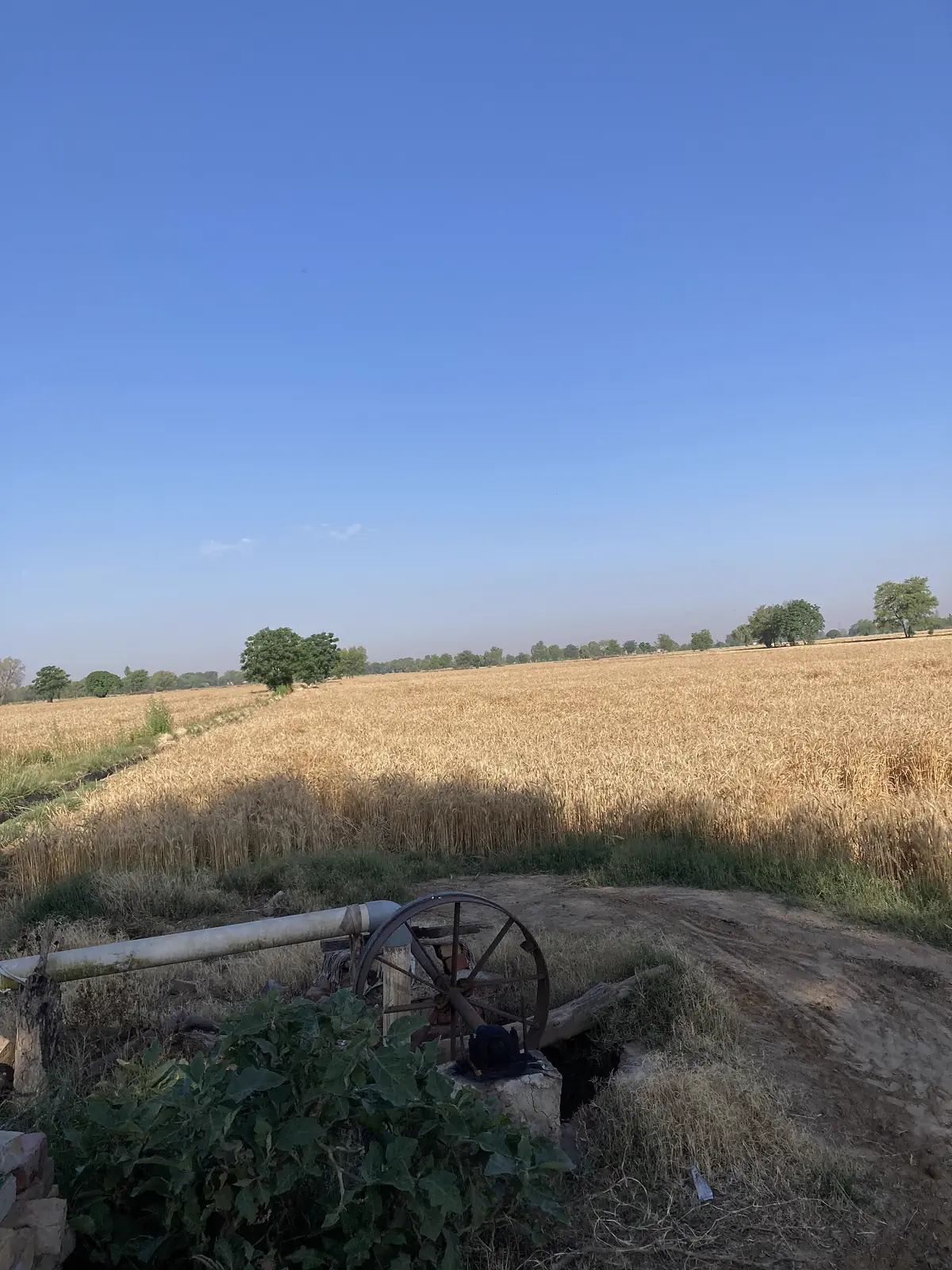
Wheat at harvest — the image Jesus reached for when He said the harvest is plentiful but the workers are few (Matthew 9).Chparveshtaak · CC BY-SA 4.0
Deny yourself, take up your cross
"And he said to them all, If any man will come after me, let him deny himself, and take up his cross daily, and follow me. For whosoever will save his life shall lose it: but whosoever will lose his life for my sake, the same shall save it. For what is a man advantaged, if he gain the whole world, and lose himself, or be cast away?" (Luke 9:23-25)
In the first century, a man carrying a cross was not wearing jewellery. He was a condemned man walking to his execution. The word for cross (Strong's G4716, stauros) carries, in Strong's definition, the figurative sense of "exposure to death, i.e. self-denial."5 To take up the cross is to say, "My old life, run by me for me, is over."
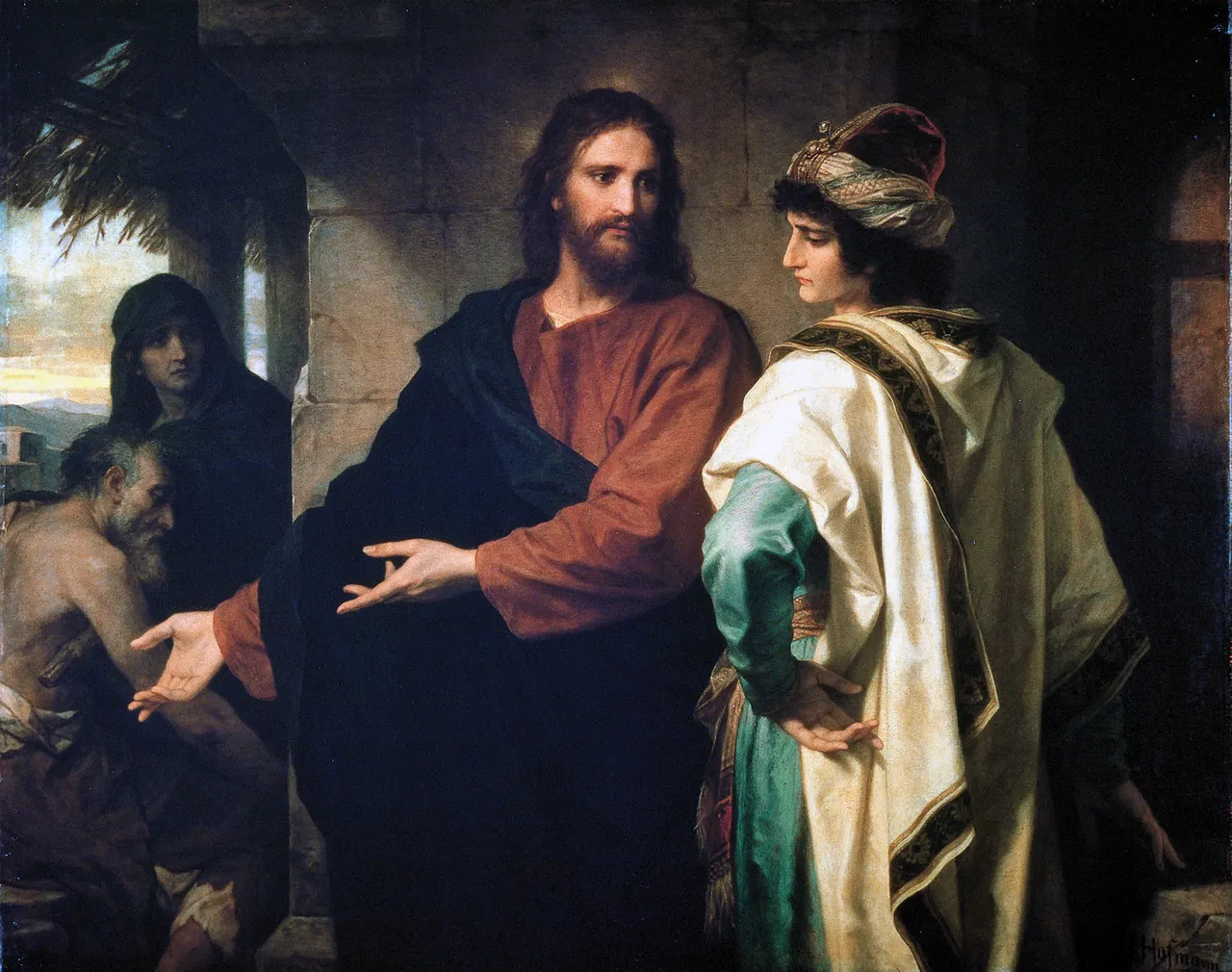
Heinrich Hofmann's Christ and the Rich Young Ruler of 1889, the young man who heard the cost of following and went away grieving.Christ and the Rich Young Ruler, Heinrich Hofmann · 1889 · Wikimedia Commons · Public domain · museum record · Galeria Regni
Mark adds a warning: "Whosoever therefore shall be ashamed of me and of my words in this adulterous and sinful generation; of him also shall the Son of man be ashamed, when he cometh in the glory of his Father with the holy angels" (Mark 8:38).
Three men on the road
Luke records three brief encounters, one after another, that show what Jesus meant (Luke 9:57-62).
The first man volunteered: "Lord, I will follow thee whithersoever thou goest." Jesus answered, "Foxes have holes, and birds of the air have nests; but the Son of man hath not where to lay his head" (Luke 9:57-58). In other words: know what you are signing up for. Following me is not a path to comfort.
The second was called, and said, "Lord, suffer me first to go and bury my father." Jesus said, "Let the dead bury their dead: but go thou and preach the kingdom of God" (Luke 9:59-60). Whatever the man's situation exactly was, his "first" was the problem. Jesus will not be second.
The third said, "Lord, I will follow thee; but let me first go bid them farewell, which are at home at my house." Jesus replied, "No man, having put his hand to the plough, and looking back, is fit for the kingdom of God" (Luke 9:61-62). A ploughman who keeps looking over his shoulder ploughs a crooked furrow.
Counting the cost
The fullest statement comes in Luke 14, when great crowds were following Him. Jesus turned and spoke words meant to thin the crowd:
"If any man come to me, and hate not his father, and mother, and wife, and children, and brethren, and sisters, yea, and his own life also, he cannot be my disciple. And whosoever doth not bear his cross, and come after me, cannot be my disciple." (Luke 14:26-27)
"Hate" here is the language of comparison, as the parallel in Matthew shows: "He that loveth father or mother more than me is not worthy of me" (Matthew 10:37). Jesus is not commanding hostility to your family. Elsewhere He commands honouring parents and loving even enemies. He is saying that your love for Him must be so much greater than every other love that, beside it, the others look like hate.
Then He told two short parables. A man building a tower first "sitteth not down first, and counteth the cost, whether he have sufficient to finish it?" (Luke 14:28), lest people mock him, "Saying, This man began to build, and was not able to finish" (Luke 14:30). A king going to war first "consulteth whether he be able with ten thousand to meet him that cometh against him with twenty thousand" (Luke 14:31). And He drew the conclusion: "So likewise, whosoever he be of you that forsaketh not all that he hath, he cannot be my disciple" (Luke 14:33).
This is not a call to give away every possession tomorrow. It is a call to hand over ownership. Everything you have becomes His, to use as He directs.
The man who walked away
One man counted the cost and decided it was too high. Mark tells us he came running and knelt before Jesus and asked, "Good Master, what shall I do that I may inherit eternal life?" (Mark 10:17). He had kept the commandments from his youth, he said.
"Then Jesus beholding him loved him, and said unto him, One thing thou lackest: go thy way, sell whatsoever thou hast, and give to the poor, and thou shalt have treasure in heaven: and come, take up the cross, and follow me. And he was sad at that saying, and went away grieved: for he had great possessions." (Mark 10:21-22)
Notice three things. Jesus loved him. Jesus put His finger on the one thing the man would not give up. And Jesus let him go. He did not run after him and lower the price.
Riches are not every person's "one thing." For one person it is money; for another a relationship, a habit, a reputation, a grudge, a career, control. The question is what you would refuse to hand over. When the disciples asked who then could be saved, Jesus said, "With men it is impossible, but not with God: for with God all things are possible" (Mark 10:27).
Costly grace
Dietrich Bonhoeffer, the German pastor executed by the Nazis in 1945, wrote that the church of his day had cheapened the gospel. "Cheap grace," he wrote, "is grace without discipleship, grace without the cross, grace without Jesus Christ, living and incarnate."6 Against it he set costly grace: "Such grace is costly because it calls us to follow."7
This is not a contradiction of salvation by grace. Salvation cannot be bought. But the grace that saves is the grace of a King, and it calls you into His service.
The early church knew the cost
The first Christians did not follow a comfortable Christ. Around the year 112, Pliny the Younger, the Roman governor of Bithynia, wrote to the emperor Trajan describing how he dealt with people accused of being Christians. Those who denied it he tested by having them offer incense to the emperor's statue and curse Christ, "whereas there is no forcing, it is said, those who are really Christians into any of these compliances."8 Those who confessed and persisted, he wrote, "I ordered them to be at once punished."
Most readers of this paper will not face a Roman governor. But many believers in the world today do face real loss for Christ, and every believer faces some. "Yea, and all that will live godly in Christ Jesus shall suffer persecution" (2 Timothy 3:12).
Why anyone pays it
If that were the whole story, no one would follow. But Jesus told two other parables that show the cost from the other side.
"Again, the kingdom of heaven is like unto treasure hid in a field; the which when a man hath found, he hideth, and for joy thereof goeth and selleth all that he hath, and buyeth that field. Again, the kingdom of heaven is like unto a merchant man, seeking goodly pearls: Who, when he had found one pearl of great price, went and sold all that he had, and bought it." (Matthew 13:44-46)
For joy thereof. The man is not grimly sacrificing. He has found something worth more than everything he owns, and he cannot sell fast enough. Paul, who gave up a brilliant career for Christ, wrote the same thing: "Yea doubtless, and I count all things but loss for the excellency of the knowledge of Christ Jesus my Lord: for whom I have suffered the loss of all things, and do count them but dung, that I may win Christ" (Philippians 3:8).
Counting the cost is not only adding up what you will lose. It is also weighing what you will gain, and what you lose if you refuse. "For what shall it profit a man, if he shall gain the whole world, and lose his own soul? Or what shall a man give in exchange for his soul?" (Mark 8:36-37).
This part matters because seekers often wonder whether their experience must match someone else's. It does not. But when we look at how people came to Christ in Scripture and in history, a pattern appears beneath the differences.
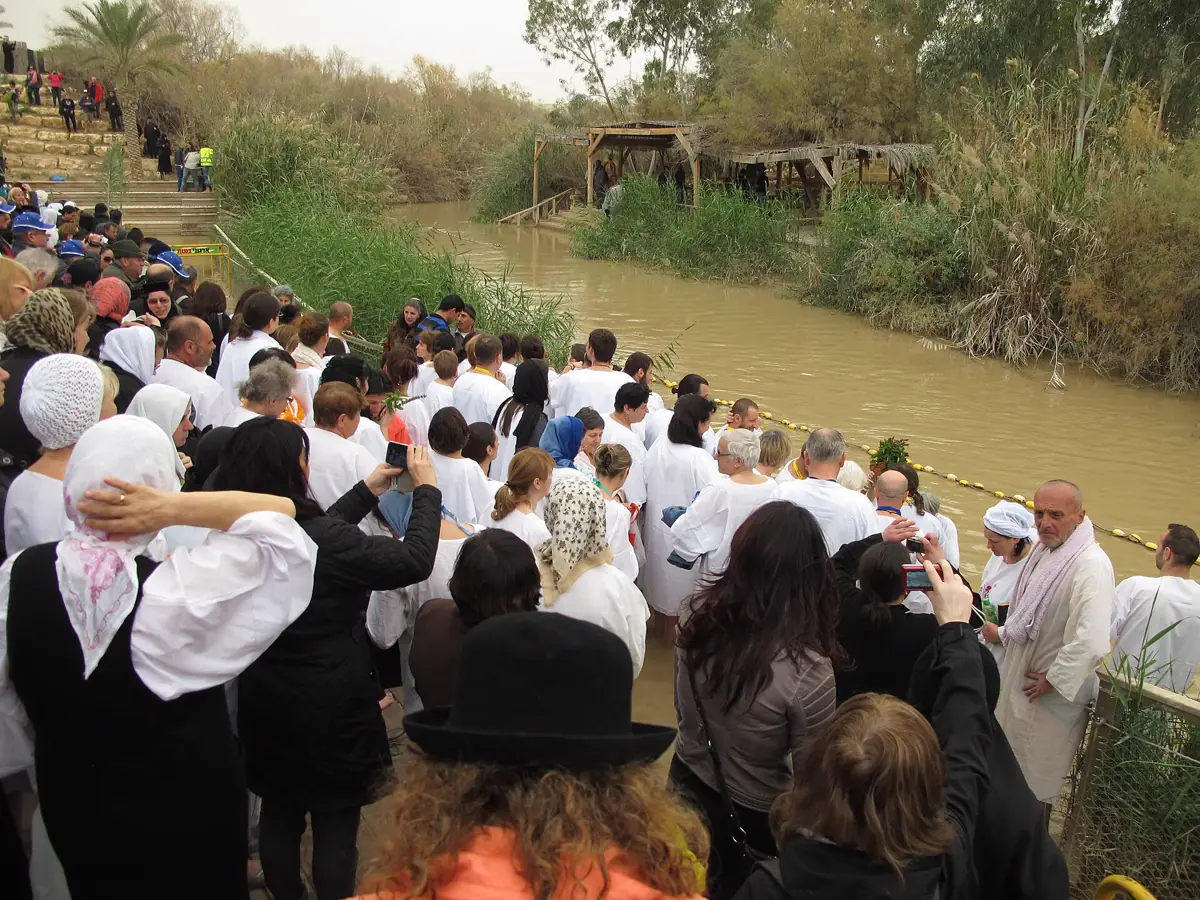
The Jordan River at Qasr el-Yahud, the traditional baptism site — pilgrims still go down into the same water.Ratoncito Perez · CC0
In the book of Acts
Acts records conversion after conversion. Look at what they have in common.
Pentecost (Acts 2). The people heard Peter preach Christ crucified and risen. "Now when they heard this, they were pricked in their heart, and said unto Peter and to the rest of the apostles, Men and brethren, what shall we do?" (Acts 2:37). Peter told them to repent and be baptized for the remission of sins, and promised the Holy Ghost (Acts 2:38). Luke records: "Then they that gladly received his word were baptized: and the same day there were added unto them about three thousand souls" (Acts 2:41). Afterward they were found "Praising God, and having favour with all the people. And the Lord added to the church daily such as should be saved" (Acts 2:47).
The Ethiopian official (Acts 8). He was reading Isaiah 53 in his chariot. Philip "began at the same scripture, and preached unto him Jesus" (Acts 8:35). At the first water they came to, the Ethiopian asked to be baptized, and confessed, "I believe that Jesus Christ is the Son of God" (Acts 8:37). (That verse stands in the 1611; most modern versions omit it. See kylelauriano.com/library/changes.) After his baptism, "he went on his way rejoicing" (Acts 8:39).
Saul of Tarsus (Acts 9). He was on his way to arrest Christians when "suddenly there shined round about him a light from heaven" (Acts 9:3). He heard the risen Jesus say, "I am Jesus whom thou persecutest" (Acts 9:5). Luke goes on: "And he trembling and astonished said, Lord, what wilt thou have me to do?" (Acts 9:6). Three days later, "there fell from his eyes as it had been scales: and he received sight forthwith, and arose, and was baptized" (Acts 9:18).
Cornelius (Acts 10). A Roman centurion who already prayed and gave alms, he sent for Peter and gathered his household to hear. Peter preached that "through his name whosoever believeth in him shall receive remission of sins" (Acts 10:43). The Holy Ghost fell on them as they listened, and Peter commanded them to be baptized (Acts 10:47-48).
Lydia (Acts 16). A businesswoman from Thyatira who "worshipped God" heard Paul by a riverside, "whose heart the Lord opened, that she attended unto the things which were spoken of Paul" (Acts 16:14). She and her household were baptized.
The Philippian jailer (Acts 16). Terrified after an earthquake, he asked, "Sirs, what must I do to be saved?" and was told, "Believe on the Lord Jesus Christ, and thou shalt be saved, and thy house" (Acts 16:30-31). He was baptized that same night.
The pattern
Set side by side, these accounts show a consistent shape:
| Element | Where it appears | |---|---| | The word about Christ is heard | Every account | | The hearer is convicted or his heart is opened | Pentecost, Saul, Lydia, the jailer | | Repentance and faith in Jesus | Pentecost, the Ethiopian, Cornelius, the jailer | | Baptism, without delay | Every account that records what followed | | The Holy Ghost received | Pentecost, Saul, Cornelius | | Joy, and joining God's people | Pentecost, the Ethiopian, Lydia, the jailer |
What is not in the pattern is just as important. There is no waiting period to prove oneself. There is no ladder of religious achievement. There is no single emotional experience everyone must have: Saul was struck to the ground, Lydia simply listened. The constant is not the feeling. It is Christ preached, a heart that turns to Him, and obedience that follows.
In history
The same Christ has gone on calling people in every century. Their stories differ wildly. Here are a few, in their own words where those words can be confirmed.
Augustine (386). For years the brilliant North African teacher of rhetoric knew Christianity might be true and would not give up his sins. He later confessed that as a young man he had prayed, "Give me chastity and continency, only not yet."9 In a garden in Milan, weeping, he found himself asking, "How long, how long, 'tomorrow, and tomorrow?' Why not now?" He heard a child's voice chanting, "Take up and read," opened the apostle Paul's letters, and read a passage calling him to put on the Lord Jesus Christ and make no provision for the flesh. "No further would I read; nor needed I," he wrote.10 The passage was Romans 13:13-14.
John Newton (1748). A young sailor in the slave trade, Newton was caught in a violent Atlantic storm in March 1748 aboard the ship Greyhound. He dated the beginning of his turning to God from that night, though by his own account his grasp of the gospel came only gradually afterward.11 Years later, as a minister, he wrote the hymn "Amazing Grace," published in the Olney Hymns of 1779.
John Wesley (1738). Wesley was an ordained clergyman and had been a missionary before he knew peace with God. On the evening of May 24, 1738, he "went very unwillingly to a society in Aldersgate Street," where someone was reading Luther's preface to Romans. "About a quarter before nine, while he was describing the change which God works in the heart through faith in Christ, I felt my heart strangely warmed. I felt I did trust in Christ, Christ alone, for salvation." That same night he was troubled that he did not feel more joy, and wrote in the same entry that the "transports of joy" that usually attend the beginning of faith God "sometimes giveth, sometimes withholdeth."12 That sentence has helped many people who did not feel what they expected.
Charles Spurgeon (1850). A troubled fifteen-year-old, driven by snow into a small chapel in Colchester, heard a lay preacher take Isaiah 45:22 as his text. The man cried out, "Young man, look to Jesus Christ. Look! Look! Look! You have nothing to do but to look and live." He looked. "There and then the cloud was gone, the darkness had rolled away, and that moment I saw the sun."13
C. S. Lewis (1929–1931). The Oxford don had been an atheist for years. He described the moment he first gave in: "In the Trinity Term of 1929 I gave in, and admitted that God was God, and knelt and prayed: perhaps, that night, the most dejected and reluctant convert in all England."14 That was belief in God; faith in Christ followed some two years later, as he tells in the same book.
Rosaria Butterfield (1999). A professor of English and women's studies in Syracuse, New York, who described herself as "a leftist lesbian professor," she wrote a newspaper article attacking the Christian men's movement Promise Keepers. A local pastor, Ken Smith, wrote her what she later called "a kind and inquiring letter," and invited her to dinner. A long friendship with Ken and his wife followed, and she began reading the Bible. "I read the way a glutton devours," she wrote. Her verdict on what followed: "Conversion was a train wreck."15 Following Christ cost her much of the world she had built.
Lee Strobel. An atheist and a journalist at the Chicago Tribune, Strobel was alarmed when his wife Leslie became a Christian. He set out to investigate the evidence for Jesus, and at twenty-nine became a Christian himself. He later retraced the investigation in The Case for Christ (1998).16
J. Warner Wallace. A Los Angeles County homicide detective who worked cold cases, Wallace was an atheist until his mid-thirties. He has said he was thirty-five when he first walked into a church, and that he began to examine the Gospels the way he examined witness statements. He tells the story in Cold-Case Christianity (2013).17
And people are still coming today, by roads as different as these.
Sy Garte told his story on The King Is Coming Show (TKIC #47): three generations of atheists, and then, in his telling, a vision on a Pennsylvania highway. Watch it in his own words: youtube.com/watch?v=h-a_uZBKgDk Sy's account of what happened to him, shared as his testimony — weigh it for yourself.
Mike Shreve told his story on The King Is Coming Show (TKIC #46): a kundalini guru who, in his own telling, was born again on a Tampa roadside. Watch it in his own words: youtube.com/watch?v=oqAq58bDC4k Mike's account of what happened to him, shared as his testimony — weigh it for yourself.
What the stories teach
A garden in Milan, a ship in a storm, a meeting room in London, a snowbound chapel, a college room in Oxford, a pastor's dinner table, a reporter's investigation, a detective's case file. One man wept; one felt his heart warmed; one saw the cloud lift; one came, by his own account, dejected and reluctant. Some came in a moment; others over years.
What they share is the pattern of Acts. Each heard the word about Christ. Each was brought to see his sin and his need. Each turned and trusted Christ. None of them was ready by his own measure. Each was made ready.
This part matters because most people who hold back have a reason, and the reasons deserve honest answers. Here are the ones seekers name most.
"I am not good enough"
You are right. Neither was anyone else in Part 5. That is not a barrier to coming; it is the reason to come. "This is a faithful saying, and worthy of all acceptation, that Christ Jesus came into the world to save sinners; of whom I am chief" (1 Timothy 1:15).
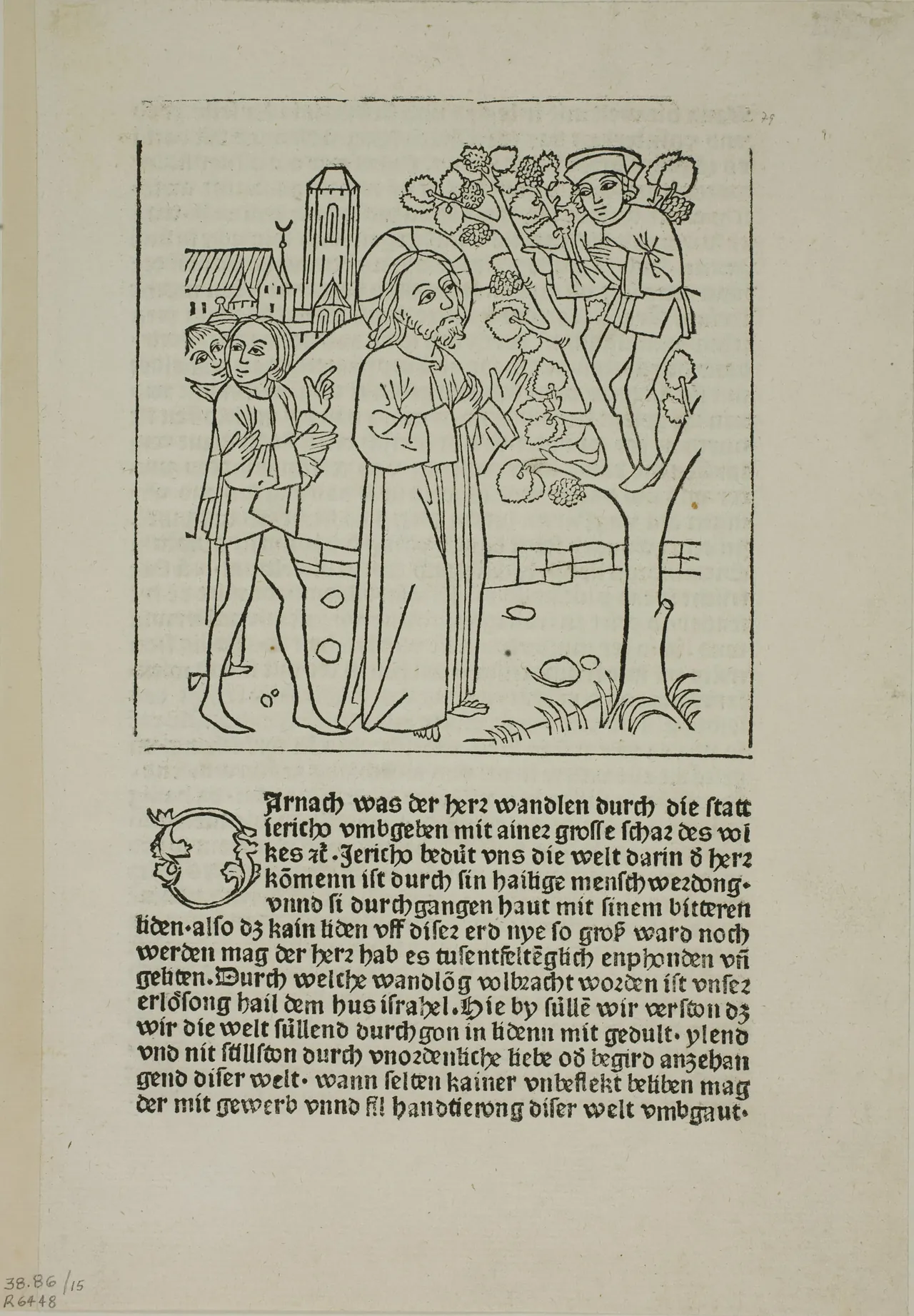
A German woodcut page of about 1485 from a printed life of Christ showing Jesus calling Zacchaeus down from the tree, a cheat Jesus called by name.Jesus Calling Zacchaeus from Geistliche Auslegung des Lebens Jesu Christi (The Spiritual Interpretation of the Life of Christ), Plate 15 from Woodcuts from Books of the 15th Century · c. 1485, portfolio assembled 1929 · Art Institute of Chicago · CC0 · museum record · Galeria Regni
Zacchaeus, the chief tax collector of Jericho, was rich by cheating his neighbours. Jesus invited Himself to his house. Zacchaeus stood and said, "Behold, Lord, the half of my goods I give to the poor; and if I have taken any thing from any man by false accusation, I restore him fourfold" (Luke 19:8). Jesus said, "This day is salvation come to this house" and added, "For the Son of man is come to seek and to save that which was lost" (Luke 19:9-10). Zacchaeus did not clean himself up to be accepted. He was accepted, and then he cleaned up.
"My past is too dark"
Mary called Magdalene is described in Scripture as a woman "out of whom went seven devils" (Luke 8:2). That is all Scripture says of her past. It also says she followed Jesus, stood at the cross and was the first to see Him risen (Mark 16:9; John 20:14-18). Saul hunted Christians to their deaths. The Corinthian church contained former fornicators, idolaters, adulterers, thieves and drunkards: "And such were some of you: but ye are washed, but ye are sanctified, but ye are justified in the name of the Lord Jesus, and by the Spirit of our God" (1 Corinthians 6:11).
There is no past Christ's blood cannot wash. "He that covereth his sins shall not prosper: but whoso confesseth and forsaketh them shall have mercy" (Proverbs 28:13).
"I still have questions"
Of course you do. So do mature Christians. The question is not whether you have questions but whether you have enough light to take the next step. Nathanael had a question about Nazareth; Philip said, "Come and see" (John 1:46). The father who cried, "Lord, I believe; help thou mine unbelief" (Mark 9:24) did not have every doubt settled.
Bring your questions to the sources. Read a Gospel through. Look at the evidence for the resurrection (the paper Becoming a Christian sketches it, and Strobel's and Wallace's books go further). But be honest with yourself about whether your questions are reasons or shelters. Some people keep asking so they never have to answer.
"I am not sure I feel it"
Feelings are real but they are not the test. Wesley's journal, quoted above, is worth remembering: joy at the beginning of faith God "sometimes giveth, sometimes withholdeth." Lewis was "dejected and reluctant." Saving faith is trusting Christ, not reaching an emotional pitch. You may feel a great deal or very little. Christ is the same either way.
"People will mock me"
They may. Peter wrote to believers whose old friends "think it strange that ye run not with them to the same excess of riot, speaking evil of you" (1 Peter 4:4). Jesus said, "If the world hate you, ye know that it hated me before it hated you" (John 15:18).
But listen to what Jesus said about it: "Blessed are ye, when men shall revile you, and persecute you, and shall say all manner of evil against you falsely, for my sake. Rejoice, and be exceeding glad: for great is your reward in heaven" (Matthew 5:11-12). When the apostles were beaten for preaching, "they departed from the presence of the council, rejoicing that they were counted worthy to suffer shame for his name" (Acts 5:41). And Paul: "For I am not ashamed of the gospel of Christ: for it is the power of God unto salvation to every one that believeth" (Romans 1:16).
"My family will object"
Jesus warned that He would divide households (Matthew 10:34-37), and He promised that no one who loses family for His sake will be the loser in the end (Mark 10:29-30). Count this cost honestly; for some readers it will be the heaviest. Then love your family better than you ever have, pray for them, and trust them to God. In my own story, I came to faith in 2022, and my wife came to faith a month later. It does not always happen that quickly, or at all. But the gospel has gone through families for two thousand years.
If you are under your parents' roof, or in a culture where conversion brings danger, talk with a mature Christian and a pastor you trust about how to follow Christ wisely. Following Him never requires recklessness. It does require that He be first.
"What if I fail?"
You will stumble. Every Christian does. Peter swore he would die with Jesus, and that night he denied Him three times. "And the Lord turned, and looked upon Peter... And Peter went out, and wept bitterly" (Luke 22:61-62). But before it happened, Jesus had said to him, "But I have prayed for thee, that thy faith fail not: and when thou art converted, strengthen thy brethren" (Luke 22:32). After the resurrection Jesus asked him three times, "lovest thou me?" and three times gave him work to do: "Feed my sheep" (John 21:17).
The question is not whether you will fall but whether you will get up. "If we confess our sins, he is faithful and just to forgive us our sins, and to cleanse us from all unrighteousness" (1 John 1:9). And the one who calls you is the one who keeps you: "Now unto him that is able to keep you from falling, and to present you faultless before the presence of his glory with exceeding joy" (Jude 1:24).
"What about other religions?"
Jesus did not present Himself as one way among many. "I am the way, the truth, and the life: no man cometh unto the Father, but by me" (John 14:6). His apostles said the same (Acts 4:12). Elijah's challenge to Israel still stands: "How long halt ye between two opinions? if the LORD be God, follow him" (1 Kings 18:21). If Jesus rose from the dead, He has the right to say what He said. Weigh that question first.
"I will do it later"
This is the most common barrier, and the most dangerous, because it feels so reasonable.
When Paul stood before the Roman governor Felix, he "reasoned of righteousness, temperance, and judgment to come," and "Felix trembled, and answered, Go thy way for this time; when I have a convenient season, I will call for thee" (Acts 24:25). Scripture never records that the convenient season came. King Agrippa, hearing Paul's defence, said, "Almost thou persuadest me to be a Christian" (Acts 26:28). Almost.
Augustine prayed for years, "only not yet," until he asked, "Why not now?" Scripture asks the same question: "behold, now is the accepted time; behold, now is the day of salvation" (2 Corinthians 6:2). And Hebrews: "To day if ye will hear his voice, harden not your hearts" (Hebrews 3:15). James asks: "For what is your life? It is even a vapour, that appeareth for a little time, and then vanisheth away" (James 4:14).
This is not said to pressure you. No one can repent for you, and no one should be hurried into a profession they do not mean. But if you know that Christ is calling and you are putting Him off, be honest: later is a decision too.
So, are you ready?
Readiness, in the Bible, is not a level of goodness, knowledge or feeling. It comes to this. Do you see that you are a sinner who cannot save yourself? Do you believe that Jesus Christ died for sinners and rose again? Are you willing to turn from your sin and follow Him as Lord, whatever it costs? If the honest answer is yes, or "Lord, I believe; help thou mine unbelief", you are as ready as anyone has ever been.
This part matters because coming to Christ is a beginning, not an ending. It helps to know what God does, what you can be sure of, and what to do first.
Coming
There is no formula. The tax collector prayed, "God be merciful to me a sinner" (Luke 18:13). Saul asked, "Lord, what wilt thou have me to do?" (Acts 9:6). My own prayer was this. Then one day I got on my knees and prayed: "Jesus, if you are real, show me — and I'll serve you." What matters is a heart that turns from sin and trusts Christ.
If that is where you are, tell Him so in your own words. You might say something like this:
Lord Jesus, I have counted the cost, and You are worth it. I have sinned against You and I cannot save myself. I believe You died for my sins and rose from the dead. I turn from my sin and from running my own life. I trust You alone to save me. I will follow You. Forgive me, make me new, and fill me with Your Holy Ghost. Amen.
Then take the steps the apostles gave: confess Christ openly, and be baptized (Acts 2:38). The companion papers Becoming a Christian and First Prayers say more.
What God does
Scripture describes what happens when a sinner comes to Christ in several ways, each one a different angle on the same gift.
Forgiven. "In whom we have redemption through his blood, even the forgiveness of sins" (Colossians 1:14).
Justified. "Therefore being justified by faith, we have peace with God through our Lord Jesus Christ" (Romans 5:1). God declares you righteous, on the ground of Christ's righteousness.
Born again. "Being born again, not of corruptible seed, but of incorruptible, by the word of God, which liveth and abideth for ever" (1 Peter 1:23).
Adopted. "Ye have received the Spirit of adoption, whereby we cry, Abba, Father" (Romans 8:15).
Rescued. "Who hath delivered us from the power of darkness, and hath translated us into the kingdom of his dear Son" (Colossians 1:13).
Indwelt and sealed by the Holy Ghost. "In whom also after that ye believed, ye were sealed with that holy Spirit of promise, Which is the earnest of our inheritance until the redemption of the purchased possession" (Ephesians 1:13-14).
That last word deserves a moment. The verb "sealed" (Strong's G4972, sphragizo) means "to stamp (with a signet or private mark) for security or preservation."18 And "earnest" (Strong's G728, arrhabon) is "a pledge, i.e. part of the purchase-money or property given in advance as security for the rest."19 The Holy Ghost is God's own mark of ownership on you, and His down payment on everything still to come.
What you can be sure of, and what you must heed
New believers often ask, "Can I be sure?" The Bible gives two kinds of answer, and both must be heard.
There is real assurance. John wrote, "These things have I written unto you that believe on the name of the Son of God; that ye may know that ye have eternal life" (1 John 5:13). Jesus said of His sheep, "And I give unto them eternal life; and they shall never perish, neither shall any man pluck them out of my hand" (John 10:28). Paul was "persuaded" that nothing in all creation "shall be able to separate us from the love of God, which is in Christ Jesus our Lord" (Romans 8:38-39). And: "The Spirit itself beareth witness with our spirit, that we are the children of God" (Romans 8:16).
There are real warnings. The same apostle who wrote of being sealed also wrote, "And grieve not the holy Spirit of God, whereby ye are sealed unto the day of redemption" (Ephesians 4:30). Paul told the Colossians they would be presented holy before God "If ye continue in the faith grounded and settled, and be not moved away from the hope of the gospel" (Colossians 1:23). Hebrews warns of those who were "once enlightened" and "made partakers of the Holy Ghost" and then "fall away" (Hebrews 6:4-6), and says, "For if we sin wilfully after that we have received the knowledge of the truth, there remaineth no more sacrifice for sins" (Hebrews 10:26). Peter urges, "give diligence to make your calling and election sure: for if ye do these things, ye shall never fall" (2 Peter 1:10).
Christians have long debated how these texts fit together, and this paper will not pick a side in that debate. It will do what the New Testament does: give you both, and let each do its work. The promises are for the trembling, so that you can rest in Christ and not in yourself. The warnings are for the careless, so that no one mistakes a moment's profession for a life of following. Jesus' own words hold both together: "My sheep hear my voice, and I know them, and they follow me" (John 10:27). Those who are His keep following.
The first thirty days
These are not rules for earning anything. They are the ordinary means by which a new follower grows.
Week one. - Tell a Christian you trust that you have come to Christ (Matthew 10:32). - Find a Bible-believing church and go this Sunday. Tell the pastor what has happened and ask about baptism. - Begin reading the Gospel of Mark, a chapter a day, in the King James Bible (the free 1611 Reader is at kylelauriano.com/library). - Pray every day, simply. Thank God, confess sin, ask for help.
Week two. - Be baptized, if you have not been, or talk with your pastor about it if you were baptized before you believed (Acts 22:16). - Keep reading: finish Mark and begin John. - Identify one thing in your life that does not fit following Christ and, with His help, put it away (Romans 12:1-2).
Week four. - Read the book of Acts and watch how the first believers lived. - Look for one way to serve in your church. - Tell one person outside the church what Christ has done for you, simply and without pressure.
Following for life
Paul ended his great chapter on the resurrection with a charge for every follower: "Therefore, my beloved brethren, be ye stedfast, unmoveable, always abounding in the work of the Lord, forasmuch as ye know that your labour is not in vain in the Lord" (1 Corinthians 15:58). And he was confident about the One who does the keeping: "Being confident of this very thing, that he which hath begun a good work in you will perform it until the day of Jesus Christ" (Philippians 1:6).
In John 6, after a hard sermon, many who had been following Jesus turned back. "From that time many of his disciples went back, and walked no more with him" (John 6:66). Jesus turned to the twelve and asked a simple question: "Will ye also go away?" (John 6:67).
Peter's answer is the best reason anyone has ever given for following Jesus:
"Then Simon Peter answered him, Lord, to whom shall we go? thou hast the words of eternal life. And we believe and are sure that thou art that Christ, the Son of the living God." (John 6:68-69)
Peter did not understand everything. He would fail badly within the year. But he knew there was nowhere else to go. Everything else he could follow would lead, in the end, to the grave. Only Jesus had the words of eternal life.
That is what readiness comes down to. Not having every answer, not feeling a certain way, not being good enough, but knowing there is no one else, and turning to Him.
An invitation
Jesus is still saying the same two words: "Follow me." He tells you the cost honestly. He offers rest, forgiveness, life and Himself. And He promises, "him that cometh to me I will in no wise cast out" (John 6:37).
If you have decided to follow Him, or want to talk about what you have read, write to contact@kylelauriano.com. If you are still counting the cost, keep counting honestly, and count both sides. "For what shall it profit a man, if he shall gain the whole world, and lose his own soul?" (Mark 8:36).
8Pliny the Younger, Letters 10.96 (letter XCVII to Trajan in this edition), in Letters of Pliny, trans. William Melmoth, ed. F. C. T. Bosanquet. Online: https://www.gutenberg.org/ebooks/2811.↩
9Augustine, Confessions, trans. Pusey, book 8, chapter 7.↩
10Augustine, Confessions, trans. Pusey, book 8, chapter 12.↩
11John Newton, An Authentic Narrative of Some Remarkable and Interesting Particulars in the Life of John Newton, published anonymously (London, 1764).↩
12John Wesley, The Journal of John Wesley, entry for Wednesday, May 24, 1738. Online: https://www.ccel.org/ccel/wesley/journal.vi.ii.xvi.html.↩
13C. H. Spurgeon, C. H. Spurgeon's Autobiography, vol. 1 (London: Passmore and Alabaster, 1897), chapter 11, "The Great Change — Conversion." Online: https://gracegems.org/Spurgeon/autobiography1.htm.↩
14C. S. Lewis, Surprised by Joy: The Shape of My Early Life (London: Geoffrey Bles, 1955), chapter 14, "Checkmate."↩
15Rosaria Champagne Butterfield, "My Train Wreck Conversion," Christianity Today, January/February 2013, https://www.christianitytoday.com/2013/02/my-train-wreck-conversion/; see also her The Secret Thoughts of an Unlikely Convert (Pittsburgh: Crown & Covenant, 2012).↩
16Lee Strobel, The Case for Christ (Grand Rapids: Zondervan, 1998).↩
17J. Warner Wallace, Cold-Case Christianity: A Homicide Detective Investigates the Claims of the Gospels (Colorado Springs: David C. Cook, 2013); interview, "The Side B Stories: J. Warner Wallace," C. S. Lewis Institute, https://www.cslewisinstitute.org/resources/the-side-b-stories-j-warner-wallace/.↩
Seven mornings for the person who just prayed: what happened, the first night, the Bible, prayer, church, the pushback, and who to tell — the page in the 1611, one person who says they walked it, and a room on the site each morning. Free.
This is practical teaching, not proof. It's drawn from Scripture and from walking this road myself. If you're still weighing the basics — whether God is real, whether the Bible can be trusted — I'd encourage you to start with the Skeptic resources in the Research Hub before diving in here.