WHAT A CALLING IS, HOW GOD CALLS, AND HOW TO ANSWER
A study of what Scripture means by God's call — first to Himself, then to a life and a work — how He called men and women in the Bible, how He guides today, and how to answer Him.
Abstract
Many people sense they were made for something, and wonder whether God is calling them and how they would know. This paper answers from the King James Bible first: the Greek words for calling, checked in Strong's Concordance; the calls of Abraham, Moses, Samuel, David, Isaiah, Jeremiah, Esther, Mary, the fishermen and Paul; and the New Testament's teaching on work, family, ministry, missions and prayer. It draws second on the church's long reflection on vocation, in the words of Augustine, Martin Luther, John Calvin, the Westminster divines and Charles Spurgeon. Its conclusion is that the first call of God is to Himself, through repentance and faith in Jesus Christ; that every other calling flows from that one and is lived out mostly in ordinary places; and that God guides His people through His word, wisdom, prayer, the counsel of the church and His providence, with every impression tested by Scripture. It is written for seekers and new believers asking what their life is for.
What’s inside
·Introduction
Part 1Part 1: What a Calling Is
Part 2Part 2: How God Called People in Scripture
Part 3Part 3: Calling in Ordinary Life
Part 4Part 4: Particular Callings in the Church and the World
Part 5Part 5: How God Guides
Part 6Part 6: Answering the Call
·Conclusion
Research paper · 8 chapters · 10 notes · October 2026
About 40 minutes · 8 parts · the PDF has the same text
Introduction
3 min read
Most people, at some point, ask what their life is for. Some ask it in a hospital corridor, some at a graveside, some at two in the morning with a phone in their hand. Some ask it because they have everything and it is not enough. Some ask it because they have lost everything and have nothing left to hold.
The Bible's answer begins with a word that runs through its pages from the garden to the last chapter: God calls. He called to Adam, “Where art thou?” (Genesis 3:9). He called Abraham out of his country, Moses out of a desert, Samuel out of his sleep, and fishermen out of their boats. And the last invitation in Scripture is a call to everyone who will hear it: “And the Spirit and the bride say, Come. And let him that heareth say, Come. And let him that is athirst come. And whosoever will, let him take the water of life freely” (Revelation 22:17).
This paper is about that call — what it is, how God has given it, how He guides those who answer, and how to answer Him yourself.
What this paper is
This is a study, not a personality test. It argues from the King James Bible first, and where a Greek word matters it gives the word and its number in Strong's Concordance so you can check it. It also draws on the church's long thinking about vocation, quoting its writers from their own books, with sources.
Six parts follow. Part 1 asks what a calling is, and shows that the first call of God is to Himself. Part 2 walks through ten calls in Scripture and draws out what they share. Part 3 turns to the callings most people live in — work, family, neighbourhood and church. Part 4 looks at particular callings within the church and the world: preaching and teaching, leadership, missions, prayer, service, creative work and the prophetic voice, each with the guardrails Scripture gives. Part 5 is about guidance: how God leads His people today, and how to test what you think you are hearing. Part 6 is about answering: the objections people raise, the cost, and the faithfulness of the God who calls.
My story
Here is my story, in my own words:
I was raised Roman Catholic but never really connected — I went through the motions, fell asleep in the pews, and faked being sick to skip Mass. College was rebellion: parties, drugs, freedom I loved and abused.
When real life hit — a lost job, a pregnant wife, constant fights — I went looking for peace anywhere I could find it. New Age, crystals, astral projection, tarot, angel numbers. None of it held. So I swung back hard to religion, said the rosary every night, and still felt nothing.
Eventually I gave up and called myself an atheist. I decided to read the Bible for one reason: to disprove it, so I'd have an excuse to stop going to church for good.
It did the opposite. Genesis gripped me. In Matthew I read Jesus' own words and felt the weight of my own sin for the first time. I wept at worship music I'd never have been caught listening to. Then one day I got on my knees and prayed: "Jesus, if you are real, show me — and I'll serve you." A warmth ran from the top of my head to the soles of my feet. Peace I'd never known, and it didn't leave.
I came to faith in 2022, and my wife came to faith a month later. Today we're raising three kids in a home that was transformed — and I haven't stopped telling people since.
My testimony video is at https://www.youtube.com/watch?v=FR7cNUiaAqU, and the full story is at kylelauriano.com/about. I tell it here for one reason. Notice the order. When real life hit — a lost job, a pregnant wife, constant fights — I went looking for peace anywhere I could find it. None of it held. What I needed first was not a plan for my life. It was the Lord Himself. Everything else in this paper comes after that.
A note on Scripture: every verse in this paper is quoted from the King James Bible. You can read it free in the 1611 Reader at kylelauriano.com/library. A KJV with Strong's Concordance is the best study tool most people will ever need.
This part matters because most of the confusion about calling comes from starting in the wrong place. If calling means only “the job God wants me to do”, then everyone who is not in ministry, and everyone who is unsure of their career, will feel uncalled. Scripture starts somewhere else.
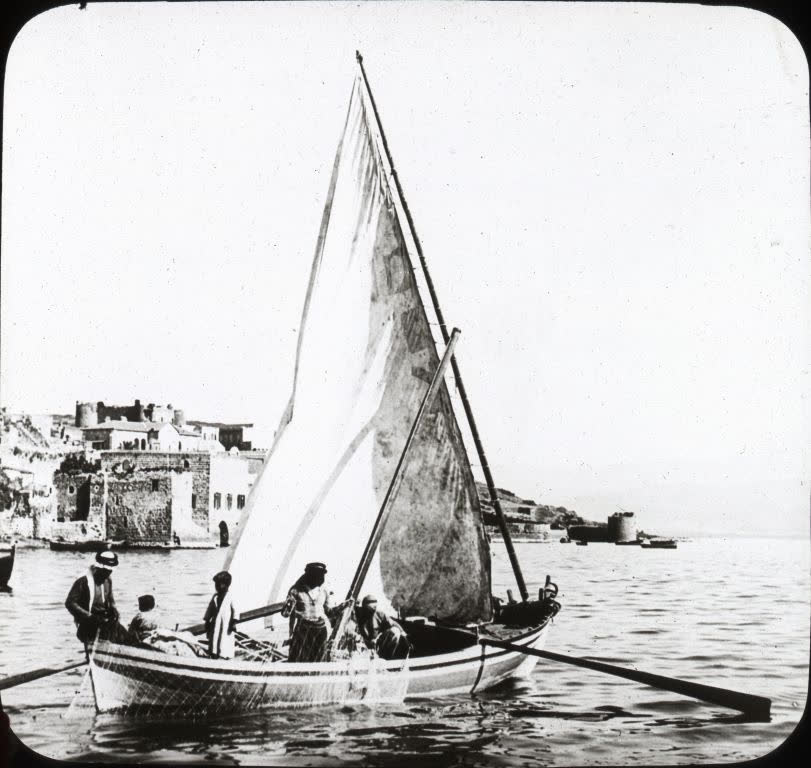
Fishing boats on the Sea of Galilee — the working world of the first disciples, called off these waters into a movement.OSU Special Collections & Archives · Public domain
The words
The New Testament word for “call” is kaleo (Strong's G2564). The King James renders it “call” 125 times and “bid” sixteen times; it is the word for inviting a guest, summoning a servant, and naming a child.1 The noun klesis (G2821) appears eleven times, rendered “calling” ten times and “vocation” once.2 The English word “vocation” comes from the Latin for calling. A vocation, in the Bible's sense, is not something you choose. It is something you receive.
That one occurrence of “vocation” is worth reading:
“I therefore, the prisoner of the Lord, beseech you that ye walk worthy of the vocation wherewith ye are called, With all lowliness and meekness, with longsuffering, forbearing one another in love; Endeavouring to keep the unity of the Spirit in the bond of peace.” (Ephesians 4:1-3)
Paul is not talking about a career. He is talking about what every believer in Ephesus had been called to: belonging to Christ and to His people. The way to “walk worthy” of that vocation is humility, gentleness, patience and love.
The first call is to Christ
When the New Testament speaks of calling, it nearly always means this first call. Look at how the apostles use the word:
To fellowship with the Son: “God is faithful, by whom ye were called unto the fellowship of his Son Jesus Christ our Lord” (1 Corinthians 1:9).
To belong to Him: “Among whom are ye also the called of Jesus Christ” (Romans 1:6).
To holiness: “For God hath not called us unto uncleanness, but unto holiness” (1 Thessalonians 4:7).
Out of darkness: “But ye are a chosen generation, a royal priesthood, an holy nation, a peculiar people; that ye should shew forth the praises of him who hath called you out of darkness into his marvellous light” (1 Peter 2:9).
Into His kingdom: “That ye would walk worthy of God, who hath called you unto his kingdom and glory” (1 Thessalonians 2:12).
By grace, not works: “Who hath saved us, and called us with an holy calling, not according to our works, but according to his own purpose and grace, which was given us in Christ Jesus before the world began” (2 Timothy 1:9).
Before God calls anyone to a task, He calls them to Himself. The question “What is God calling me to do?” is a good question, but it is the second question. The first is, “Have I answered His call to come to Him?”
The Westminster Shorter Catechism of 1647 put the purpose of human life in one sentence: “Man's chief end is to glorify God, and to enjoy him forever.”3 Long before that, Augustine opened his Confessions with a prayer that explains why nothing else satisfies: “Thou madest us for Thyself, and our heart is restless, until it repose in Thee.”4 That restlessness is not a sign that you have missed your career. It is the sign that you were made for God.
The call goes out to all
The Lord Jesus gave the call in words that anyone can hear:
“Come unto me, all ye that labour and are heavy laden, and I will give you rest. Take my yoke upon you, and learn of me; for I am meek and lowly in heart: and ye shall find rest unto your souls. For my yoke is easy, and my burden is light.” (Matthew 11:28-30)
Isaiah had given the same invitation centuries before: “Ho, every one that thirsteth, come ye to the waters, and he that hath no money; come ye, buy, and eat” (Isaiah 55:1). The call costs nothing to receive. It is free because Someone else paid for it.
Scripture also says that not all who hear the call answer it. The Lord ended a parable about a wedding feast with the words, “For many are called, but few are chosen” (Matthew 22:14). And Paul writes of those whom God has called in a way that brings them all the way home: “Moreover whom he did predestinate, them he also called: and whom he called, them he also justified: and whom he justified, them he also glorified” (Romans 8:30).
Christians have long debated how those texts fit together. Here is what the texts themselves say: the invitation is real and goes out to “whosoever will” (Revelation 22:17); those who come are received, for Jesus said “him that cometh to me I will in no wise cast out” (John 6:37); the God who calls is faithful to finish what He begins (Philippians 1:6); and believers are told to take their calling seriously: “Wherefore the rather, brethren, give diligence to make your calling and election sure: for if ye do these things, ye shall never fall” (2 Peter 1:10).
Calling, then callings
Once that first call is answered, Scripture speaks of the particular places and tasks God gives each believer. Paul writes, “But as God hath distributed to every man, as the Lord hath called every one, so let him walk” (1 Corinthians 7:17). Some are called to particular works in the church, as Barnabas and Saul were: “Separate me Barnabas and Saul for the work whereunto I have called them” (Acts 13:2). Part 3 and Part 4 take these up.
It helps to keep the two together and in order:
| | The first call | Particular callings | |---|---|---| | To what | To Christ: salvation, fellowship, holiness | To a place, a people, a work | | Who receives it | Everyone who hears the gospel | Every believer, differently | | How it is answered | Repentance and faith | Faithful obedience over time | | Can it change? | No; it is the foundation | Often; seasons change | | Key text | 1 Corinthians 1:9 | 1 Corinthians 7:17 |
The danger is to chase the second while ignoring the first. A person can spend years trying to discover his purpose and never come to the One for whom he was made.
This part matters because the Bible teaches about calling mostly by telling stories. Reading them closely corrects two opposite mistakes: the idea that a real call must always be dramatic, and the idea that God does not call anyone at all.
The Valley of Elah southwest of Jerusalem — the battlefield where David met Goliath (1 Samuel 17), a real and walkable place.Davidbena · CC0
Abraham: called to leave
“Now the LORD had said unto Abram, Get thee out of thy country, and from thy kindred, and from thy father's house, unto a land that I will shew thee: And I will make of thee a great nation, and I will bless thee, and make thy name great; and thou shalt be a blessing” (Genesis 12:1-2)
Abraham was told what to leave, not where he was going. “By faith Abraham, when he was called to go out into a place which he should after receive for an inheritance, obeyed; and he went out, not knowing whither he went” (Hebrews 11:8). His answer was simple: “So Abram departed, as the LORD had spoken unto him” (Genesis 12:4). He was seventy-five. The call came late, and it came with a promise larger than his own life: “in thee shall all families of the earth be blessed” (Genesis 12:3).
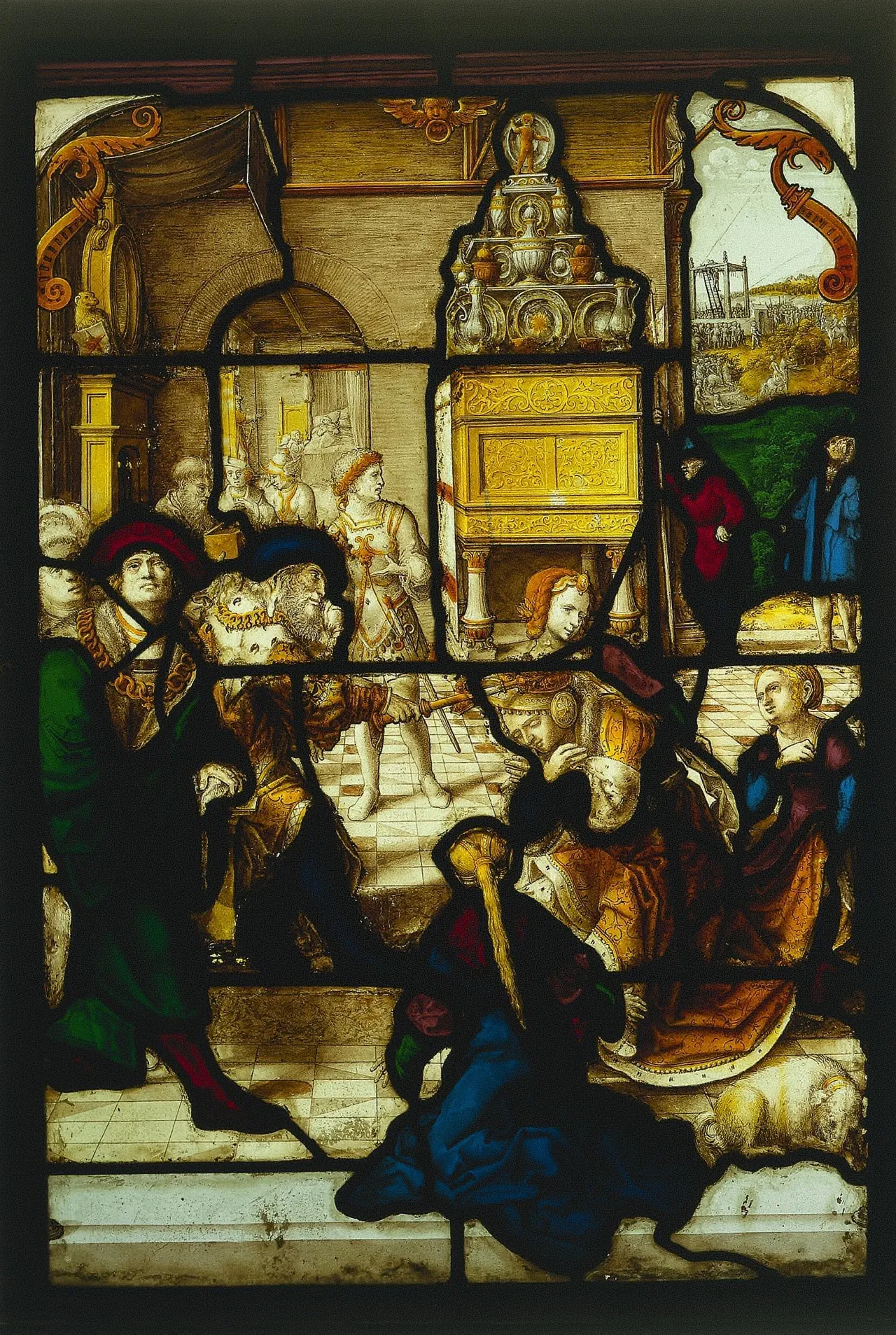
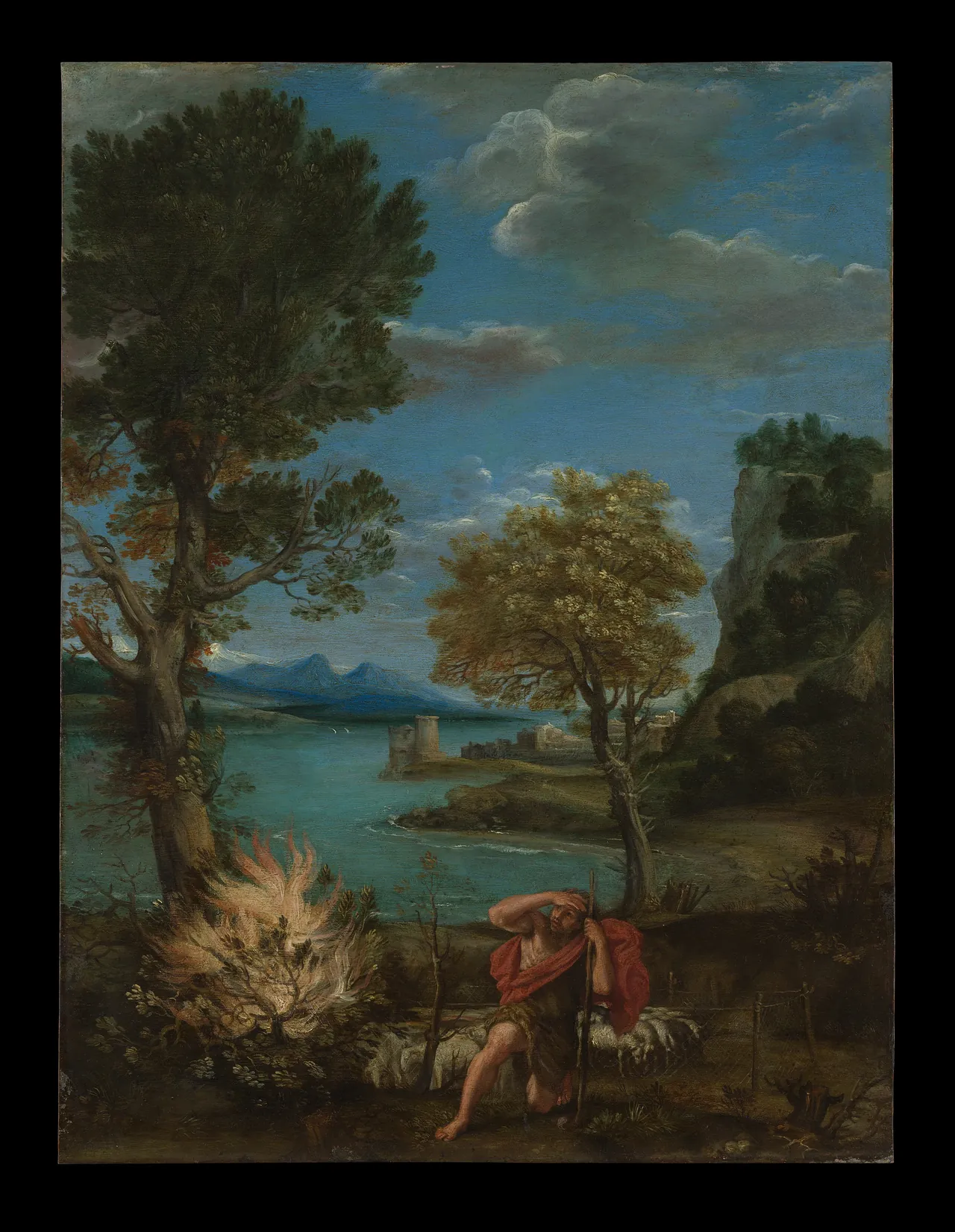
A Netherlandish stained-glass panel of about 1530 by Dirk Vellert showing Esther before Ahasuerus, the queen called through circumstances to speak for her people.Esther before Ahasuerus · c. 1530 · Cleveland Museum of Art · CC0 · museum record · Galeria RegniA Landscape with Moses and the Burning Bush, oil on copper of about 1610 to 1616, the shepherd called at his work and full of objections.Landscape with Moses and the Burning Bush · 1610–16 · The Metropolitan Museum of Art · CC0 · museum record · Galeria Regni
Moses: called at work, and full of objections
Moses was keeping sheep, forty years after a failed attempt to rescue his people by his own strength. “And the angel of the LORD appeared unto him in a flame of fire out of the midst of a bush” (Exodus 3:2). God called his name twice, and Moses answered, “Here am I” (Exodus 3:4).
Then came the objections. “Who am I, that I should go unto Pharaoh” (Exodus 3:11). What is Your name (Exodus 3:13). What if they will not believe me (Exodus 4:1). Then, “O my LORD, I am not eloquent” (Exodus 4:10). And finally, “O my LORD, send, I pray thee, by the hand of him whom thou wilt send” (Exodus 4:13) — in plain words, send someone else.
God's answers are the heart of the story. To “Who am I?” He did not answer “You are capable.” He said, “Certainly I will be with thee” (Exodus 3:12). To “I am not eloquent,” He said, “Who hath made man's mouth? … Now therefore go, and I will be with thy mouth, and teach thee what thou shalt say” (Exodus 4:11-12). A call is not based on the confidence of the one called. It rests on the presence of the One who calls.
Samuel: called as a child, and taught to listen
Samuel was a boy serving in the tabernacle in a dark time: “And the word of the LORD was precious in those days; there was no open vision” (1 Samuel 3:1). The Lord called him three times, and three times Samuel ran to the old priest Eli, thinking Eli had called. Scripture explains why: “Now Samuel did not yet know the LORD, neither was the word of the LORD yet revealed unto him” (1 Samuel 3:7).
It was Eli, an imperfect old man, who recognised what was happening and taught the boy how to answer: “Speak, LORD; for thy servant heareth” (1 Samuel 3:9). Samuel needed someone older to help him recognise the call. Most of us do.
David: called while no one was looking
When Samuel went to Bethlehem to anoint a king, Jesse's eldest son looked the part. The Lord said, “Look not on his countenance, or on the height of his stature; because I have refused him: for the LORD seeth not as man seeth; for man looketh on the outward appearance, but the LORD looketh on the heart” (1 Samuel 16:7). Seven sons passed by. The one God had chosen was not even in the room: “There remaineth yet the youngest, and, behold, he keepeth the sheep” (1 Samuel 16:11).
David was anointed that day, and then went back to the sheep. Years of service, danger and waiting passed before he took the throne. The call was settled in a moment; it was fulfilled over a lifetime.
Isaiah: called by a vision of holiness
“In the year that king Uzziah died I saw also the LORD sitting upon a throne, high and lifted up, and his train filled the temple.” (Isaiah 6:1)
Isaiah's first response was not eagerness but confession: “Woe is me! for I am undone; because I am a man of unclean lips” (Isaiah 6:5). Only after his sin was purged did he hear the question: “Whom shall I send, and who will go for us? Then said I, Here am I; send me” (Isaiah 6:8).
The order matters. Isaiah saw God, saw himself, was cleansed, and then volunteered. A call that skips the first three steps is usually about us.
Jeremiah: called before birth, and afraid
“Before I formed thee in the belly I knew thee; and before thou camest forth out of the womb I sanctified thee, and I ordained thee a prophet unto the nations.” (Jeremiah 1:5)
Jeremiah's answer was the answer of every young person who has ever felt too small: “Ah, Lord GOD! behold, I cannot speak: for I am a child” (Jeremiah 1:6). And God's answer was the same as to Moses: “Be not afraid of their faces: for I am with thee to deliver thee, saith the LORD” (Jeremiah 1:8).
Jeremiah's call was unique; he was a prophet whose words became Scripture. But the shape of his fear, and the shape of God's answer, belong to every believer.
Esther: called through circumstances
The book of Esther never records God speaking. There is no bush, no vision, no voice. There is a young woman in a palace, a decree of death against her people, and an older cousin who sees the hand of God in where she has been placed:
“For if thou altogether holdest thy peace at this time, then shall there enlargement and deliverance arise to the Jews from another place; but thou and thy father's house shall be destroyed: and who knoweth whether thou art come to the kingdom for such a time as this?” (Esther 4:14)
Esther's answer was prayer and courage: “Go, gather together all the Jews that are present in Shushan, and fast ye for me … and so will I go in unto the king, which is not according to the law: and if I perish, I perish” (Esther 4:16).
This is how many believers are called: not by a voice, but by a need they are placed in front of, a position they did not seek, and the counsel of someone who says, “Perhaps this is why you are here.”
Mary: called to say yes
The angel Gabriel told Mary that she would bear the Son of the Highest. Her question was honest — how can this be — and her answer was surrender: “Behold the handmaid of the Lord; be it unto me according to thy word” (Luke 1:38). She did not know what it would cost her. Simeon told her later that a sword would pierce her own soul (Luke 2:35). She said yes anyway.
The fishermen and the tax collector: called to follow
“And he saith unto them, Follow me, and I will make you fishers of men. And they straightway left their nets, and followed him.” (Matthew 4:19-20)
James and John “immediately left the ship and their father, and followed him” (Matthew 4:22). Matthew was “sitting at the receipt of custom” when Jesus said “Follow me. And he arose, and followed him” (Matthew 9:9).
These calls were not first to a job. They were to a Person: “Follow me.” The job — “fishers of men” — would come, but only as they followed Him.
Paul: called on the road, and prepared in the desert
Saul of Tarsus was on his way to arrest Christians when “suddenly there shined round about him a light from heaven” (Acts 9:3). His first questions were the right ones: “Who art thou, Lord?” and “Lord, what wilt thou have me to do?” (Acts 9:5-6). The Lord told Ananias that Saul was “a chosen vessel unto me, to bear my name before the Gentiles, and kings, and the children of Israel” (Acts 9:15), and added, “For I will shew him how great things he must suffer for my name's sake” (Acts 9:16).
Paul's call was dramatic. But notice what came after. He wrote that he “went into Arabia, and returned again unto Damascus. Then after three years I went up to Jerusalem to see Peter” (Galatians 1:17-18). Years later, at Antioch, the church was told to “Separate me Barnabas and Saul for the work whereunto I have called them” (Acts 13:2). Even the most dramatic call in the New Testament was confirmed over years and recognised by the church before Paul was sent out.
Near the end of his life he summed up his response in one sentence: “Whereupon, O king Agrippa, I was not disobedient unto the heavenly vision” (Acts 26:19).
What these calls share
Set side by side, these accounts show a clear pattern.
| Pattern | Where you see it | |---|---| | God takes the first step | Every account | | The call often comes in ordinary life | Moses with sheep, David with sheep, the fishermen at their nets, Matthew at his table | | The one called feels unworthy or unable | Moses, Isaiah, Jeremiah, Gideon | | God answers with His presence, not with flattery | “Certainly I will be with thee” (Exodus 3:12); and “I am with thee” (Jeremiah 1:8) | | Other people help recognise it | Eli for Samuel, Mordecai for Esther, the church at Antioch for Paul | | It costs something | Abraham's home, Mary's soul, Paul's suffering | | It unfolds over time | David waited years; Paul spent three years before Jerusalem | | Not every call is dramatic | Esther heard no voice |
Two cautions follow. First, some of these callings were unique: Moses, Isaiah, Jeremiah and Paul were prophets and apostles whose words became Scripture. We should not expect the same experiences, and we should not claim the same authority. Second, the pattern of how God dealt with them — His initiative, His patience with fear, His promise of presence, His use of other people, His timing — is the same for every believer.
This part matters because most believers will spend most of their waking hours at work, at home and among neighbours, not in a church building. If calling only applies to ministry, most of life is left outside it. The Bible does not leave it outside.
Work before the Fall
The first job in Scripture was given before sin entered the world: “And the LORD God took the man, and put him into the garden of Eden to dress it and to keep it” (Genesis 2:15). Work is not a curse. The Fall made it hard, but God gave it as good.
The Reformation's recovery of ordinary callings
For much of the Middle Ages, the word “vocation” was used mainly for priests, monks and nuns. Ordinary work was thought to be a lower kind of life. The Reformers challenged that directly.
In his Address to the Christian Nobility of 1520, Martin Luther wrote: “A cobbler, a smith, a peasant, every man has the office and function of his calling, and yet all alike are consecrated priests and bishops, and every man in his office must be useful and beneficial to the rest.”5 In The Babylonian Captivity of the Church, the same year, he argued that the works of priests and the religious orders, however lofty, “differ not at all in the sight of God from the works of a husbandman labouring in his field, or of a woman attending to her household affairs.”6
John Calvin made the same point in his Institutes: “Every man's mode of life, therefore, is a kind of station assigned him by the Lord, that he may not be always driven about at random.” And he ended the chapter with a sentence of great comfort to anyone whose work seems small: “in following your proper calling, no work will be so mean and sordid as not to have a splendour and value in the eye of God.”7
In our own time Gene Edward Veith has set out this Reformation teaching for modern readers in God at Work: Your Christian Vocation in All of Life, emphasising not so much what careers we are called to as what God Himself does through us in our ordinary stations.8
“Abide in the same calling”
Paul gave the Corinthians practical counsel on this. New converts were wondering whether they had to change their whole situation to serve God. He wrote:
“Let every man abide in the same calling wherein he was called. Art thou called being a servant? care not for it: but if thou mayest be made free, use it rather.” (1 Corinthians 7:20-21)
And he summed it up: “Brethren, let every man, wherein he is called, therein abide with God” (1 Corinthians 7:24). The phrase “with God” is the key. Conversion does not usually mean leaving your job; it means doing it now with God, for God, before God. Paul did not forbid change — “if thou mayest be made free, use it rather” — but he refused to make it the measure of faithfulness.
Work done for the Lord
Paul's instruction to servants in Colossae, many of them slaves, applies to every worker:
“And whatsoever ye do, do it heartily, as to the Lord, and not unto men; Knowing that of the Lord ye shall receive the reward of the inheritance: for ye serve the Lord Christ.” (Colossians 3:23-24)
In Ephesians he adds the masters' side: “And, ye masters, do the same things unto them, forbearing threatening: knowing that your Master also is in heaven” (Ephesians 6:9). An employer has a calling too.
Work is also how we provide and give. “Let him that stole steal no more: but rather let him labour, working with his hands the thing which is good, that he may have to give to him that needeth” (Ephesians 4:28). Paul himself worked as a tentmaker: “because he was of the same craft, he abode with them, and wrought: for by their occupation they were tentmakers” (Acts 18:3). And he was blunt about the alternative: “if any would not work, neither should he eat” (2 Thessalonians 3:10).
Home and family
For most people the first place of calling is the home. Moses told Israel's parents to teach God's words “diligently unto thy children, and shalt talk of them when thou sittest in thine house, and when thou walkest by the way, and when thou liest down, and when thou risest up” (Deuteronomy 6:7). Paul says that providing for one's household is a matter of faith itself: “But if any provide not for his own, and specially for those of his own house, he hath denied the faith, and is worse than an infidel” (1 Timothy 5:8). He gives older women a calling to teach younger ones (Titus 2:3-5), and husbands and wives their callings to one another (Ephesians 5:22-33).
A father reading the Bible with his children at night, a mother teaching a child to pray, a grown son caring for his ageing parents — these are not interruptions to a calling. They are a calling.
Craft and creative work
When God commanded the building of the tabernacle, He called artists by name:
“See, the LORD hath called by name Bezaleel the son of Uri, the son of Hur, of the tribe of Judah; And he hath filled him with the spirit of God, in wisdom, in understanding, and in knowledge, and in all manner of workmanship” (Exodus 35:30-31)
The same passage says God put it in Bezaleel's heart “that he may teach, both he, and Aholiab” (Exodus 35:34). Metalwork, stone-cutting, carving, embroidery and weaving were all named (Exodus 35:32-35). Skilled, beautiful work done for God is a calling, and it can be taught to others.
Quiet faithfulness
Paul's counsel to the Thessalonians sounds almost too plain to be spiritual: “And that ye study to be quiet, and to do your own business, and to work with your own hands, as we commanded you; That ye may walk honestly toward them that are without” (1 Thessalonians 4:11-12). Many believers are called to exactly this: a quiet, honest, useful life that makes the gospel credible to their neighbours. Solomon's word fits: “Whatsoever thy hand findeth to do, do it with thy might” (Ecclesiastes 9:10).
Part 4 — Particular Callings in the Church and the World
7 min read
This part matters because God does call some believers to particular works — to preach, to lead, to go to the nations, to pray, to serve. These callings are real, and they are often misunderstood. Scripture describes each of them, and Scripture also sets their limits.
The Cave of the Apocalypse on Patmos — the traditional site where John, in exile around 95 AD, received the Revelation.Vladimir Boskovic at English Wikipedia · Public domain
Preaching and teaching
Paul writes, “This is a true saying, If a man desire the office of a bishop, he desireth a good work” (1 Timothy 3:1). Desire is the starting point, but it is not the whole of it; the next verses list the character and ability that must go with it: “blameless, the husband of one wife, vigilant, sober, of good behaviour, given to hospitality, apt to teach” (1 Timothy 3:2), and “Not a novice, lest being lifted up with pride he fall into the condemnation of the devil” (1 Timothy 3:6).
James adds a warning: “My brethren, be not many masters, knowing that we shall receive the greater condemnation” (James 3:1). Those who teach will be judged more strictly.
Charles Spurgeon, who trained preachers at the Pastors' College of the Metropolitan Tabernacle in London, told his students that the first sign of a call to the ministry is “an intense, all-absorbing desire for the work,” and then immediately added that this desire must be thoughtful, tested and joined with real ability to teach.9 The companion paper in this series, Signs You Are Called, looks at his marks of a call in detail.
Leadership
When James and John asked for the best seats in the kingdom, the Lord Jesus defined Christian leadership by contrast with the world:
“Ye know that they which are accounted to rule over the Gentiles exercise lordship over them; and their great ones exercise authority upon them. But so shall it not be among you: but whosoever will be great among you, shall be your minister: And whosoever of you will be the chiefest, shall be servant of all. For even the Son of man came not to be ministered unto, but to minister, and to give his life a ransom for many.” (Mark 10:42-45)
That is the whole theology of leadership in four verses. A leader in Christ's kingdom serves. Peter told elders to lead “Neither as being lords over God's heritage, but being ensamples to the flock” (1 Peter 5:3). A call to lead is a call to go first in humility, in sacrifice and in example.
The qualifications in 1 Timothy 3 are mostly about character, not skill: self-control, hospitality, gentleness, freedom from the love of money, and a well-ordered home. “For if a man know not how to rule his own house, how shall he take care of the church of God?” (1 Timothy 3:5). A person who senses a call to lead should begin by asking whether these marks are growing in him, and whether the people who know him best would say so.
Missions
The Great Commission was given to the whole church: “Go ye therefore, and teach all nations, baptizing them in the name of the Father, and of the Son, and of the Holy Ghost: Teaching them to observe all things whatsoever I have commanded you” (Matthew 28:19-20). Every believer shares in it — by going, by sending, by giving and by praying.
Some are sent further. Paul's logic in Romans makes the need plain:
“For whosoever shall call upon the name of the Lord shall be saved. How then shall they call on him in whom they have not believed? and how shall they believe in him of whom they have not heard? and how shall they hear without a preacher? And how shall they preach, except they be sent?” (Romans 10:13-15)
The book of Acts shows how a missionary call was recognised. At Antioch the call came to men who were already serving: “As they ministered to the Lord, and fasted, the Holy Ghost said, Separate me Barnabas and Saul for the work whereunto I have called them. And when they had fasted and prayed, and laid their hands on them, they sent them away” (Acts 13:2-3). The church prayed, the church confirmed, the church sent.
And once on the road, guidance came step by step. They were “forbidden of the Holy Ghost to preach the word in Asia”; they tried to go into Bithynia, “but the Spirit suffered them not”; then Paul saw a man of Macedonia in a vision, and “immediately we endeavoured to go into Macedonia, assuredly gathering that the Lord had called us for to preach the gospel unto them” (Acts 16:6-10). The word “gathering” means concluding. They reasoned together from what had happened. Closed doors were part of the guidance.
Prayer and intercession
All believers are called to pray for others: “I exhort therefore, that, first of all, supplications, prayers, intercessions, and giving of thanks, be made for all men; For kings, and for all that are in authority; that we may lead a quiet and peaceable life in all godliness and honesty” (1 Timothy 2:1-2).
Some carry this work with unusual faithfulness. Paul describes one such man: “Epaphras, who is one of you, a servant of Christ, saluteth you, always labouring fervently for you in prayers, that ye may stand perfect and complete in all the will of God” (Colossians 4:12). Epaphras's prayer was specific, persistent and aimed at the spiritual growth of a particular church. God's lament in Ezekiel shows how much He values those who pray in this way: “And I sought for a man among them, that should make up the hedge, and stand in the gap before me for the land, that I should not destroy it: but I found none” (Ezekiel 22:30).
Because this calling attracts some practices the Bible does not teach, it is worth being plain. Intercession in Scripture is asking God — the Father, in the name of the Son, by the Spirit. It is not:
“Spiritual mapping” — drawing maps of the evil spirits supposedly ruling cities or regions and naming them in order to bind them. No apostle did this, and no text teaches it.
Acting out prayers — dramatised rituals or symbolic performances believed to release power in the spiritual realm.
Commanding, summoning or praying to angels. Angels are God's servants; we pray to God.
Declarations or formulas treated as if the words themselves had power.
Real intercession is quieter and harder than any of these. It is Epaphras on his knees, “labouring fervently … in prayers” for people he loved.
Service and mercy
The church's first organised ministry, after preaching, was feeding widows (Acts 6:1-6). James defines pure religion in the same practical terms: “To visit the fatherless and widows in their affliction, and to keep himself unspotted from the world” (James 1:27). Some believers are called to give much of their lives to the hungry, the sick, the imprisoned, the unborn, the addicted and the poor. The Lord said that what is done for the least of His brethren is done for Him (Matthew 25:40). This calling is not second to preaching. It is the gospel lived out in hands and feet.
The prophetic voice, tested
Some believers sense a calling to speak God's word into their generation — to warn, to call to repentance, to strengthen the church. The New Testament does give a gift of prophecy for the building up of the church: “But he that prophesieth speaketh unto men to edification, and exhortation, and comfort” (1 Corinthians 14:3). It also surrounds that gift with guardrails, and anyone who senses this calling must take them more seriously than anyone else:
It is tested. “Let the prophets speak two or three, and let the other judge” (1 Corinthians 14:29). Paul also wrote, “Despise not prophesyings. Prove all things; hold fast that which is good” (1 Thessalonians 5:20-21). John adds, “Beloved, believe not every spirit, but try the spirits whether they are of God” (1 John 4:1).
It stands under Scripture. “If any man think himself to be a prophet, or spiritual, let him acknowledge that the things that I write unto you are the commandments of the Lord” (1 Corinthians 14:37). Nothing is added to the faith “once delivered unto the saints” (Jude 1:3).
It does not claim “thus saith the LORD.” The Old Testament prophets spoke with that formula and their words became Scripture. No one today should present a word, dream or impression as “Thus saith the LORD”, as if it could not be questioned. It is offered to be weighed.
It is in order and self-controlled. “And the spirits of the prophets are subject to the prophets. For God is not the author of confusion, but of peace” (1 Corinthians 14:32-33). And Paul closes, “Let all things be done decently and in order” (1 Corinthians 14:40).
The most faithful “prophetic voice” most believers will ever exercise is to open the Bible and say what it says, plainly and with love, when it is not popular. Micaiah, pressed to agree with four hundred court prophets, answered, “As the LORD liveth, what the LORD saith unto me, that will I speak” (1 Kings 22:14). Today we know what the Lord has said, because it is written.
This part matters because people who sense a call usually want to know one thing: how will I know? Some wait for a sign that never comes. Others act on every feeling and call it God. Scripture gives a better way.
Begin with what God has already said
Much of God's will is not hidden at all. It is written.
“For this is the will of God, even your sanctification” (1 Thessalonians 4:3).
“In every thing give thanks: for this is the will of God in Christ Jesus concerning you” (1 Thessalonians 5:18).
“He hath shewed thee, O man, what is good; and what doth the LORD require of thee, but to do justly, and to love mercy, and to walk humbly with thy God?” (Micah 6:8).
“But seek ye first the kingdom of God, and his righteousness; and all these things shall be added unto you” (Matthew 6:33).
A person who is ignoring these is not ready to hear more. And a person who is obeying these is already walking in the will of God, even if he does not yet know which job to take. “Thy word is a lamp unto my feet, and a light unto my path” (Psalm 119:105). A lamp shows the next step, not the whole road.
The Westminster Confession states the principle that guards all guidance: the whole counsel of God for faith and life is set down in Scripture, “unto which nothing at any time is to be added, whether by new revelations of the Spirit, or traditions of men.”10 God will never lead you to do what His word forbids.
Ask for wisdom
Where Scripture does not name the choice — this city or that, this job or that, this person or that — God promises wisdom:
“If any of you lack wisdom, let him ask of God, that giveth to all men liberally, and upbraideth not; and it shall be given him.” (James 1:5)
Wisdom is not usually a voice telling you which door to open. It is the God-given ability to weigh the choices well in the light of His word. Paul says it grows with a renewed mind: “And be not conformed to this world: but be ye transformed by the renewing of your mind, that ye may prove what is that good, and acceptable, and perfect, will of God” (Romans 12:2). And Proverbs gives the posture: “Trust in the LORD with all thine heart; and lean not unto thine own understanding. In all thy ways acknowledge him, and he shall direct thy paths” (Proverbs 3:5-6).
Seek counsel
“Without counsel purposes are disappointed: but in the multitude of counsellors they are established” (Proverbs 15:22). Samuel needed Eli. Esther needed Mordecai. Paul was sent by the church at Antioch. If you sense a call, tell the mature believers who know you, especially your pastor, and ask for their honest view. If they all hesitate, take that seriously.
Watch the doors
God governs circumstances. “A man's heart deviseth his way: but the LORD directeth his steps” (Proverbs 16:9). In Acts 16 the closed doors to Asia and Bithynia were as much a part of the guidance as the open door to Macedonia. Opportunities, provision, health, family needs and the timing of events are not random. They are among the means God uses.
But doors must be read with care. An open door is not always God's door; Jonah found a ship ready to sail the wrong way, “so he paid the fare thereof” (Jonah 1:3). Circumstances confirm what Scripture, wisdom and counsel already point to. On their own they can mislead.
Impressions, dreams and voices — tested
God can and does speak to the hearts of His people. Jesus said, “My sheep hear my voice, and I know them, and they follow me” (John 10:27). Paul's guidance into Macedonia came in part through a vision (Acts 16:9). Elijah heard “a still small voice” (1 Kings 19:12).
At the same time, impressions are the easiest thing to mistake. The human heart can produce them; so can fear, desire, fatigue, and, Scripture warns, deceiving spirits. That is why every impression is tested. “Beloved, believe not every spirit, but try the spirits whether they are of God” (1 John 4:1). Ask:
1. Does it agree with Scripture? If not, it is not from God, however strong it feels (Isaiah 8:20). 2. Does it honour Christ? The Holy Ghost “shall glorify me” (John 16:14). 3. Does it lead toward holiness, or away from it? 4. Do mature believers who know you confirm it? 5. Does it persist over time, through prayer, without pressure?
Gideon's fleece is sometimes held up as a model for guidance (Judges 6:36-40). Read the passage closely. Gideon had already been told plainly what God wanted: “Surely I will be with thee, and thou shalt smite the Midianites as one man” (Judges 6:16). The fleece was not a way of finding God's will; it was a request for reassurance about a will he already knew, and he himself asked God, “Let not thine anger be hot against me” (Judges 6:39). God was patient with him. That does not make setting conditions for God a pattern for us.
The apostles cast lots to replace Judas (Acts 1:26), as Israel had long done: “The lot is cast into the lap; but the whole disposing thereof is of the LORD” (Proverbs 16:33). It is worth noticing that this is the last time the New Testament records it. After the Holy Ghost was poured out at Pentecost, the church sought guidance through prayer, the word, the counsel of the brethren and the Spirit's leading in the assembly, as in Acts 13 and Acts 15.
Bria Isaac told her story on The King Is Coming Show (TKIC #53), I said, I'm going to take it to my grave — then I heard this voice. In her telling, she meant to take it to her grave — and then she heard a voice. Watch it in her own words: https://www.youtube.com/watch?v=Uk-02EJ6FD0 Bria's account of what happened to her, shared as her testimony — weigh it for yourself.
Peace — rightly understood
Many people say, “I just have a peace about it.” Paul does write, “And let the peace of God rule in your hearts, to the which also ye are called in one body” (Colossians 3:15). Notice the end of the verse: “in one body”. The peace Paul means is the peace of Christ ruling among believers together, settling quarrels and binding the church. It can include a settled heart about a decision, but it is not a private feeling that overrides Scripture or the counsel of the church. A person can feel peace about a sinful choice simply because he has stopped resisting it.
When the way is not clear
Sometimes, after prayer and counsel, two good paths remain and neither is forbidden. Then do the next right thing, with wisdom, and trust God with the result. “Trust in the LORD with all thine heart … and he shall direct thy paths” (Proverbs 3:5-6). He has promised to guide those who walk with Him: “I will instruct thee and teach thee in the way which thou shalt go: I will guide thee with mine eye” (Psalm 32:8).
You are not a passenger trying to guess the secret code to God's plan. You are a child walking with your Father. He is more committed to getting you where He wants you than you are.
This part matters because knowing a call is not the same as answering it. Many people have sensed God's call and have never moved. Scripture speaks plainly to the reasons, and to the God who calls.
The objections
The calls in Part 2 are full of objections. They are worth naming, because they are ours.
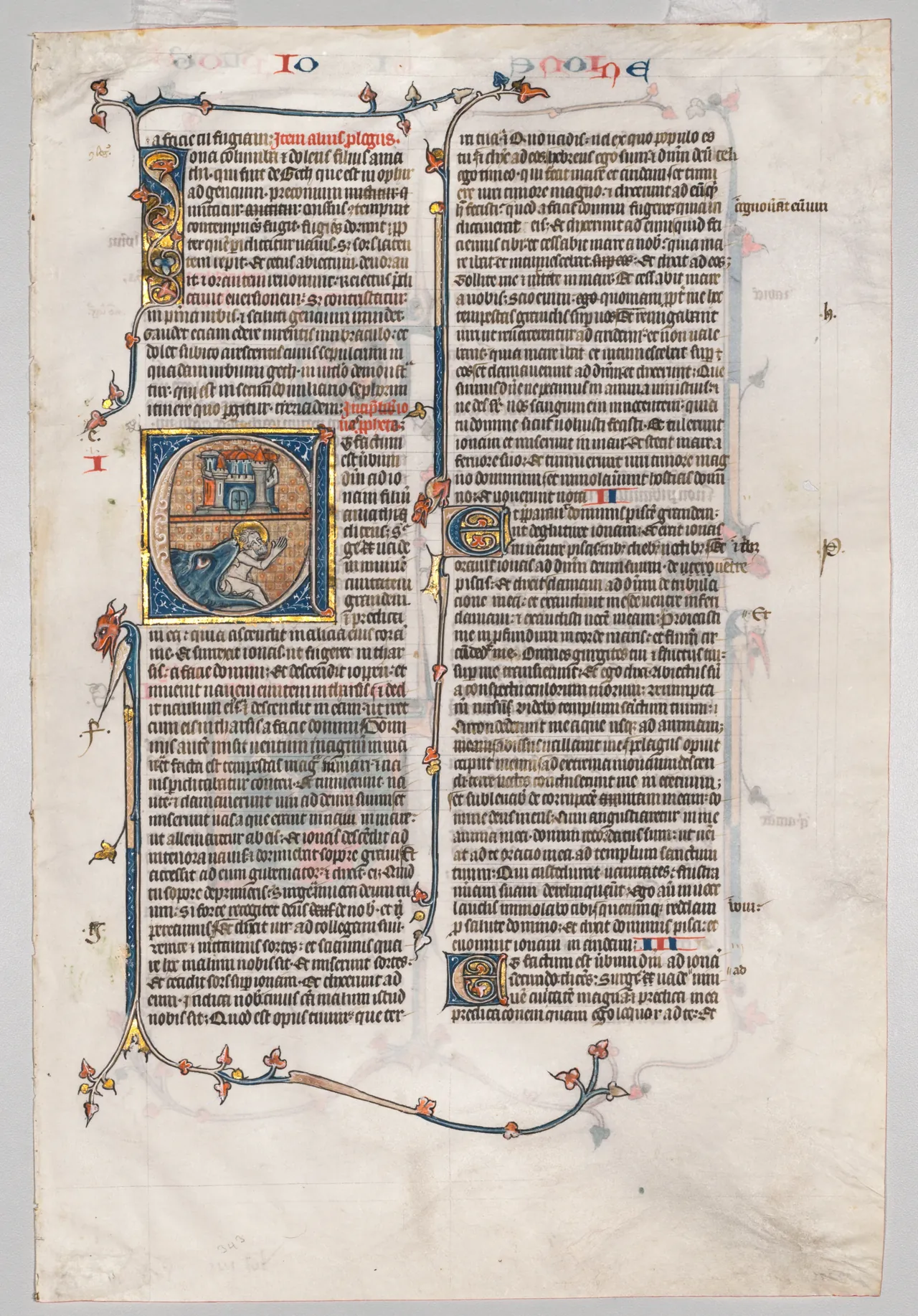
A Paris Bible leaf of about 1290 opening the book of Jonah, its initial showing Jonah swallowed by the whale, the runaway God would not let go.Single Leaf from a Bible: Initial E[t factum est] with Jonah Swallowed by the Whale · c. 1290 · Cleveland Museum of Art · CC0 · museum record · Galeria Regni
“Who am I?” Moses' question (Exodus 3:11). God's answer was not about Moses at all: “Certainly I will be with thee” (Exodus 3:12). Paul told the Corinthians the same thing about their own calling: “For ye see your calling, brethren, how that not many wise men after the flesh, not many mighty, not many noble, are called: But God hath chosen the foolish things of the world to confound the wise” (1 Corinthians 1:26-27). God chooses this way “That no flesh should glory in his presence” (1 Corinthians 1:29).
“I can't speak.” Moses (Exodus 4:10) and Jeremiah (Jeremiah 1:6). God's answer: “I will be with thy mouth” (Exodus 4:12); and to Jeremiah, “Behold, I have put my words in thy mouth” (Jeremiah 1:9).
“I'm the least.” Gideon: “behold, my family is poor in Manasseh, and I am the least in my father's house” (Judges 6:15). God's answer: “Surely I will be with thee” (Judges 6:16).
“My past disqualifies me.” Paul had persecuted the church. Peter had denied the Lord. Isaiah confessed unclean lips. In each case God dealt with the sin and then sent the man. If you have come to Christ, your past is forgiven; it may also become part of your testimony.
“It's too late.” Abraham was seventy-five when he left Haran (Genesis 12:4). Moses was eighty when he stood before Pharaoh (Exodus 7:7).
“Send someone else.” This one is not an objection; it is a refusal, and Scripture says the anger of the Lord was kindled against Moses when he said it (Exodus 4:14). Even so, God did not cast him off. He gave him Aaron, and sent him anyway.
The runaway
Jonah heard the call clearly: “Arise, go to Nineveh, that great city, and cry against it” (Jonah 1:2). He went the other way: “But Jonah rose up to flee unto Tarshish from the presence of the LORD” (Jonah 1:3). The rest of the book is the story of a God who would not let His servant go, and of a city that repented when he finally preached. If you have run, you are not the first. The way back is the same as the way in: turn around.
The cost
The Lord Jesus never hid the cost of following Him. When a man said he would follow wherever He went, Jesus answered, “Foxes have holes, and birds of the air have nests; but the Son of man hath not where to lay his head” (Luke 9:58). When others wanted to delay, He said, “No man, having put his hand to the plough, and looking back, is fit for the kingdom of God” (Luke 9:62). And He told the crowds to count the cost, as a builder does: “For which of you, intending to build a tower, sitteth not down first, and counteth the cost, whether he have sufficient to finish it?” (Luke 14:28).
Counting the cost is not a sign of weak faith. It is obedience to His own instruction. Answer with your eyes open.
Faithful in little
Many people wait for a great calling and neglect the small one in front of them. The Lord said, “He that is faithful in that which is least is faithful also in much” (Luke 16:10). The faithful servant in the parable was told, “thou hast been faithful over a few things, I will make thee ruler over many things” (Matthew 25:21). And Zechariah asked a question for every season of small beginnings: “For who hath despised the day of small things?” (Zechariah 4:10).
If you sense a call to teach, teach a children's class. If you sense a call to missions, befriend the internationals in your own town. If you sense a call to lead, serve faithfully under someone else's leadership. The larger call, if it is real, will usually grow out of faithfulness in the smaller one.
Waiting
David was anointed long before he was crowned. Paul spent years in Arabia, Damascus and Tarsus before the church sent him out (Galatians 1:17-18; Acts 11:25-26). Waiting is not wasted. It is often where God shapes the person He has called. Wait actively: obey what you know, serve where you are, learn the Scriptures, and let the people around you see your life.
The God who calls is faithful
The final word on calling is not about us. Paul ends his first letter to the Thessalonians with a promise:
And to the Philippians he wrote, “Being confident of this very thing, that he which hath begun a good work in you will perform it until the day of Jesus Christ” (Philippians 1:6). The God who calls also equips, sustains and completes. Your faithfulness matters; His faithfulness is what holds it all up.
God calls. He called Abraham, Moses, Samuel, David, Isaiah, Jeremiah, Esther, Mary, Peter, Matthew and Paul. He still calls today.
His first call is to Himself. Before He gives anyone a task, He invites them to come: to turn from sin, to trust His Son, and to find in Him the rest their heart was made for. Every other calling flows from that one. Most of those callings are lived out in ordinary places — at work, at home, among neighbours, in the local church — and none of them is small in His sight. Some are called to particular works: to preach, to lead, to go to the nations, to pray, to serve, to speak His word. Those callings are recognised over time, confirmed by the church, and kept within the guardrails of Scripture.
God guides those who answer Him — by His word first, by wisdom given in answer to prayer, by the counsel of His people, by His providence over doors and seasons, and by the inward leading of His Spirit, always tested by what He has written. And He is faithful to finish what He starts.
What to do next
Settle the first call. If you have never repented and trusted Christ, begin there.
Read the calls in Genesis 12, Exodus 3–4, 1 Samuel 3, Isaiah 6, Jeremiah 1, Esther 4, Luke 1, Matthew 4 and Acts 9 in the 1611 Reader at kylelauriano.com/library.
Obey what God has already made plain: holiness, thanksgiving, justice, mercy, humility.
Be faithful in the place you are, and in the small task in front of you.
Tell a mature believer or your pastor what you sense, and ask for their honest counsel.
Test every impression by Scripture.
An invitation
If you have read this far and you are not sure you have ever answered God's first call, this is the moment. Scripture is plain about what we are: “For all have sinned, and come short of the glory of God” (Romans 3:23). And it is plain about what God has done: “For God so loved the world, that he gave his only begotten Son, that whosoever believeth in him should not perish, but have everlasting life” (John 3:16).
The answer the apostles preached was “repentance toward God, and faith toward our Lord Jesus Christ” (Acts 20:21). Paul wrote, “That if thou shalt confess with thy mouth the Lord Jesus, and shalt believe in thine heart that God hath raised him from the dead, thou shalt be saved” (Romans 10:9). Salvation is a gift: “For by grace are ye saved through faith; and that not of yourselves: it is the gift of God: Not of works, lest any man should boast” (Ephesians 2:8-9). And Peter told those who asked what to do, “Repent, and be baptized every one of you in the name of Jesus Christ for the remission of sins, and ye shall receive the gift of the Holy Ghost” (Acts 2:38).
I decided to read the Bible for one reason: to disprove it, so I'd have an excuse to stop going to church for good. It did the opposite. Then one day I got on my knees and prayed: "Jesus, if you are real, show me — and I'll serve you." You can pray your own version of that prayer today. He has promised: “him that cometh to me I will in no wise cast out” (John 6:37).
“Come unto me, all ye that labour and are heavy laden, and I will give you rest.” (Matthew 11:28)
1James Strong, The Exhaustive Concordance of the Bible (New York: Hunt & Eaton; Cincinnati: Cranston & Curts, 1890), Greek dictionary, no. 2564; KJV usage counts from the Blue Letter Bible lexicon, https://www.blueletterbible.org/lexicon/g2564/kjv/tr/0-1/.↩
2Strong, Exhaustive Concordance, Greek dictionary, no. 2821; Blue Letter Bible lexicon, https://www.blueletterbible.org/lexicon/g2821/kjv/tr/0-1/.↩
4Augustine, The Confessions of St. Augustine 1.1, trans. E. B. Pusey, https://www.gutenberg.org/ebooks/3296.↩
5Martin Luther, Address to the Christian Nobility of the German Nation (1520), in First Principles of the Reformation, ed. Henry Wace and C. A. Buchheim (London: John Murray, 1883), https://ccel.org/ccel/luther/first_prin.↩
6Martin Luther, On the Babylonian Captivity of the Church (1520), in Wace and Buchheim, First Principles of the Reformation.↩
7John Calvin, Institutes of the Christian Religion 3.10.6, trans. Henry Beveridge (Edinburgh: Calvin Translation Society, 1845), https://www.ccel.org/ccel/calvin/institutes.v.xi.html.↩
8Gene Edward Veith Jr., God at Work: Your Christian Vocation in All of Life (Wheaton, IL: Crossway, 2002).↩
9C. H. Spurgeon, “The Call to the Ministry,” Lecture II in Lectures to My Students, First Series (New York: Sheldon & Company, 1875), 35–65, https://archive.org/details/lecturestomystud00spurrich.↩
10The Westminster Confession of Faith (1646), 1.6, https://opc.org/wcf.html.↩
You are not sure where to go. Seven pages, and he says where.
Seven mornings for the person who is searching: the page in the 1611, a work of art, one real person who says they met him, and a room on the site for the next step. Free.
This is practical teaching, not proof. It's drawn from Scripture and from walking this road myself. If you're still weighing the basics — whether God is real, whether the Bible can be trusted — I'd encourage you to start with the Skeptic resources in the Research Hub before diving in here.