A study of how a believer can tell whether God is calling him or her to a particular work — the inward and outward call, ten marks Scripture gives, the false signs to distrust, and a practical way to test a call with the church.
Abstract
How does a believer know that God is calling him to a particular work — to preach, to lead, to go to the mission field, or to give his life to some other service? This paper answers from the King James Bible first: the pastoral letters, the book of Acts, and the calls of the prophets and apostles. It draws second on the church's long tradition of testing calls, in the words of John Calvin, Richard Baxter, the Westminster divines and Charles Spurgeon, whose lecture “The Call to the Ministry” remains one of the clearest treatments in English. It argues that a particular call is recognised not in one dramatic moment but in the meeting of an inward call and an outward one: a persistent, holy desire, fitting gifts and godly character on the one hand, and the affirmation of the church, fruit, open doors and confirmation over time on the other. It sets out false signs to distrust, and a practical process for testing a call. It is written for disciples who sense a call, and for the pastors and friends who help them weigh it.
What’s inside
·Introduction
Part 1Part 1: Two Witnesses: The Inward Call and the Outward Call
Part 2Part 2: Ten Marks of a Genuine Calling
Part 3Part 3: False Signs
Part 4Part 4: The Many Forms of a Call
Part 5Part 5: Testing a Call: A Practical Process
Part 6Part 6: Answering: Obedience, Faithfulness and Trust
·Conclusion
Research paper · 8 chapters · 13 notes · October 2026
"Before I formed thee in the belly I knew thee; and before thou camest forth out of the womb I sanctified thee." — Jeremiah 1:5 (KJV)Read in the 1611 →
About 31 minutes · 8 parts · the PDF has the same text
Introduction
2 min read
Sooner or later, many disciples ask a sharper question than “What is my life for?” They ask, “Is God calling me to this?” A young man cannot stop thinking about preaching. A woman in her forties feels drawn to a people group she has never met. A businessman wonders whether he should leave his firm and plant a church. A retired couple asks whether their last good years belong somewhere else.
The question matters because the stakes are real on both sides. Spurgeon put one side of it plainly to his students: “When I think upon the all but infinite mischief which may result from a mistake as to our vocation for the Christian pastorate, I feel overwhelmed with fear lest any of us should be slack in examining our credentials.”1 A man who enters a work God has not given him can do great harm, to himself and to others. But a believer who refuses a work God has given him is like Jonah buying passage to Tarshish. Neither mistake is small.
What this paper is
This is a study, not a quiz with a score at the end. It argues from the King James Bible first. It also draws on the church's long experience of testing calls — the Reformers, the Puritans, the confessions and the great pastors of the nineteenth century — quoting each from its own text, with sources.
It is a companion to Recognizing God's Call, which deals with what a calling is, how God called people in Scripture, and how He guides. This paper takes the next step. It assumes the first call — the call to Christ — and asks how a particular calling can be recognised and tested.
Six parts follow. Part 1 sets out the two witnesses to a call: the inward call and the outward call. Part 2 gives ten marks of a genuine calling, each from Scripture. Part 3 names the false signs that often mislead. Part 4 looks at the many forms a call can take, and how callings change across a life. Part 5 gives a practical process for testing a call with the church. Part 6 is about answering: obedience, faithfulness and trust.
A word from me
Eventually I gave up and called myself an atheist. I decided to read the Bible for one reason: to disprove it, so I'd have an excuse to stop going to church for good. It did the opposite. I came to faith in 2022, and my wife came to faith a month later. Today we're raising three kids in a home that was transformed — and I haven't stopped telling people since. The rest of the story is at kylelauriano.com/about.
I mention it for one reason. Every particular calling begins with the first one. If you have not settled whether you belong to Christ, start there; the last pages of this paper will help. If you have, read on.
A note on Scripture: every verse in this paper is quoted from the King James Bible. You can read it free in the 1611 Reader at kylelauriano.com/library. A KJV with Strong's Concordance is the best study tool most believers will ever need.
Part 1 — Two Witnesses: The Inward Call and the Outward Call
4 min read
This part matters because most mistakes about calling come from relying on one witness alone. Some people trust only their own sense of call and resent anyone who questions it. Others wait passively for someone to appoint them and never examine their own hearts. Scripture and the church's long practice point to two witnesses that must agree.
The pattern at Antioch
The clearest picture of a particular call in the New Testament is the sending of Barnabas and Saul:
“Now there were in the church that was at Antioch certain prophets and teachers; as Barnabas, and Simeon that was called Niger, and Lucius of Cyrene, and Manaen, which had been brought up with Herod the tetrarch, and Saul. As they ministered to the Lord, and fasted, the Holy Ghost said, Separate me Barnabas and Saul for the work whereunto I have called them. And when they had fasted and prayed, and laid their hands on them, they sent them away.” (Acts 13:1-3)
Notice four things. Barnabas and Saul were already serving in the church; the call came to men at work, not to men waiting for one. The Holy Ghost had already called them — “the work whereunto I have called them”, in the past tense. The church heard, prayed and fasted again before acting. And then the church laid hands on them and sent them. Luke then writes, “So they, being sent forth by the Holy Ghost, departed” (Acts 13:4). The Spirit sent them, and the church sent them. Both are true.
Calvin: the secret call and the external call
The Reformers named these two witnesses. John Calvin, writing about the calling of ministers in his Institutes, said he was dealing with “the external and formal call which relates to the public order of the Church,” and set beside it “that secret call of which every minister is conscious before God, but has not the Church as a witness of it.” He described that secret call as “the good testimony of our heart, that we undertake the offered office neither from ambition nor avarice, nor any other selfish feeling, but a sincere fear of God and desire to edify the Church.”2
Calvin was honest that the two can come apart. “A man may have been duly called by the Church,” he wrote, “though he may have accepted with a bad conscience, provided his wickedness is not manifest.” The outward call cannot see the heart. That is why the inward call matters. And the inward call can be self-deceived. That is why the outward call matters.
The Westminster divines: gifted, approved and called
The Westminster Larger Catechism of 1647 summed up the church's practice in one answer: “The Word of God is to be preached only by such as are sufficiently gifted, and also duly approved and called to that office.”3 Three words carry it. Gifted: God has equipped the person. Approved: the church has examined and recognised it. Called: the person has been set apart to the work.
That answer is about preaching in particular, but the same logic runs through every serious calling in the church. Paul told Timothy to put deacons to the test before they served: “And let these also first be proved; then let them use the office of a deacon, being found blameless” (1 Timothy 3:10). And he warned him against haste: “Lay hands suddenly on no man, neither be partaker of other men's sins” (1 Timothy 5:22).
Spurgeon: two questions, in order
Charles Spurgeon, lecturing the students of the Pastors' College at the Metropolitan Tabernacle in London, began with the order of the questions. A man, he said, must not enter the ministry until he has made solemn quest and trial of himself as to his call; and “His own personal salvation being secure, he must investigate as to the further matter of his call to office; the first is vital to himself as a Christian, the second equally vital to him as a pastor.” And he added a sentence worth memorising: “As well be a professor without conversion, as a pastor without calling.”4
That order — first conversion, then calling — is the frame for everything that follows.
Why both witnesses are needed
| | The inward call | The outward call | |---|---|---| | What it is | A settled, God-given desire and conviction in the heart | The recognition and sending of the church | | Who sees it | The person, before God | The church, by the person's life and work | | What it guards against | Serving without heart, for the wrong reasons | Self-deception, ambition, unfitness | | Biblical picture | “If a man desire the office of a bishop” (1 Timothy 3:1) | “they sent them away” (Acts 13:3) | | Its weakness alone | It can be mistaken for ambition or fantasy | It cannot see motives |
A call with only the inward witness is a private conviction. A call with only the outward witness is an appointment. A genuine call usually has both.
This part matters because Scripture does not give a single test that settles a call, but it does give a number of marks that, taken together and over time, point clearly one way or the other. No single mark is enough. A real call usually shows most of them.
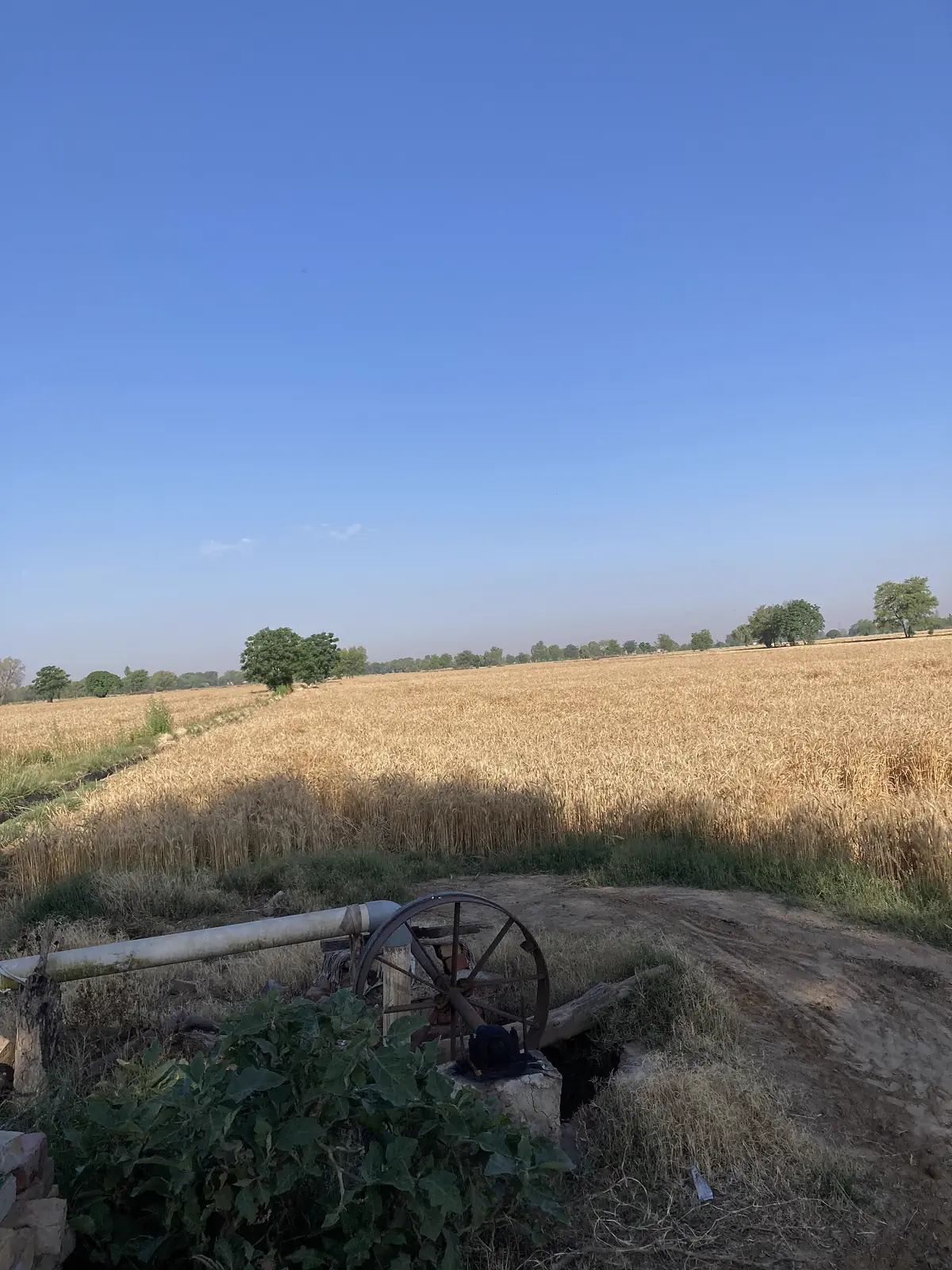
Wheat at harvest — the image Jesus reached for when He said the harvest is plentiful but the workers are few (Matthew 9).Chparveshtaak · CC BY-SA 4.0The Cave of the Apocalypse on Patmos — the traditional site where John, in exile around 95 AD, received the Revelation.Vladimir Boskovic at English Wikipedia · Public domain
The marks below fall into three groups: what is in the heart (desire, burden, willingness), what is in the person (gifts, character), and what is seen by others and by events (the church's affirmation, fruit, open doors, agreement with Scripture, and confirmation over time).
A Psalter leaf from northeastern France, about 1270 to 1290, with Samuel anointing David, who was anointed long before he reigned, a picture of confirmation over time.Single Leaf Excised from a Psalter: Initial D[ominus illuminatio mea] with Samuel Anointing David · c. 1270–1290 · Cleveland Museum of Art · CC0 · museum record · Galeria Regni
1. A persistent, holy desire
Paul begins his qualifications for elders with desire: “This is a true saying, If a man desire the office of a bishop, he desireth a good work” (1 Timothy 3:1). Peter tells elders to serve “not by constraint, but willingly” (1 Peter 5:2). God usually calls by giving a desire for the work.
Spurgeon made this his first sign: “The first sign of the heavenly call is an intense, all-absorbing desire for the work.” He illustrated it with the bluntest test in his lecture. “If any student in this room could be content to be a newspaper editor, or a grocer, or a farmer, or a doctor, or a lawyer, or a senator, or a king, in the name of heaven and earth let him go his way.”5
But he was just as careful about what kind of desire this must be. “This desire must be a thoughtful one,” he said. “It should not be a sudden impulse unattended by anxious consideration. It should be the outgrowth of our heart in its best moments, the object of our reverent aspirations, the subject of our most fervent prayers.” It must last “when tempting offers of wealth and comfort come in to conflict with it.”6
Jeremiah describes this kind of desire from the inside. He tried to stop speaking God's word because it brought him only trouble, and could not: “But his word was in mine heart as a burning fire shut up in my bones, and I was weary with forbearing, and I could not stay” (Jeremiah 20:9). Paul says the same of the gospel: “for necessity is laid upon me; yea, woe is unto me, if I preach not the gospel!” (1 Corinthians 9:16).
A passing enthusiasm is not this. Neither is a desire for a title, a platform or an escape from a hard job. The test is persistence and holiness: does the desire last, through prayer, through difficulty, through other offers, and is it a desire for the work itself and for the people it serves?
2. Gifts that fit the work
God equips those He calls. Every believer has some gift: “As every man hath received the gift, even so minister the same one to another” (1 Peter 4:10). A particular call will normally match the gifts God has given.
Paul lists ability among the marks of an elder: “apt to teach” (1 Timothy 3:2), and “Holding fast the faithful word as he hath been taught, that he may be able by sound doctrine both to exhort and to convince the gainsayers” (Titus 1:9). Spurgeon made aptness his second sign: “combined with the earnest desire to become a pastor, there must be aptness to teach, and some measure of the other qualities needful for the office of a public instructor. A man to prove his call must make a successful trial of these.”7
He was quick to add that no one starts polished. He reminded his students that the great Baptist preacher Robert Hall had broken down three times in his early attempts. Gifts grow. But there should be some evidence of them, tested in real service. A man who longs to preach but whom no one can follow, after repeated trial and help, should take that seriously. So should a woman who longs to serve the sick but cannot bear the sight of suffering. The desire is real; it may be pointing elsewhere.
3. Godly character
The longest lists in the New Testament about leaders are not lists of skills but of character:
“A bishop then must be blameless, the husband of one wife, vigilant, sober, of good behaviour, given to hospitality, apt to teach; Not given to wine, no striker, not greedy of filthy lucre; but patient, not a brawler, not covetous; One that ruleth well his own house, having his children in subjection with all gravity” (1 Timothy 3:2-4)
Titus 1:6-9 repeats and extends the list: “not selfwilled, not soon angry … But a lover of hospitality, a lover of good men, sober, just, holy, temperate” (Titus 1:7-8). Deacons too must be “grave, not doubletongued, not given to much wine, not greedy of filthy lucre; Holding the mystery of the faith in a pure conscience” (1 Timothy 3:8-9).
Richard Baxter, the Puritan pastor of Kidderminster, made this the first charge of his Reformed Pastor (1656): “Take heed to yourselves, lest you be void of that saving grace of God which you offer to others, and be strangers to the effectual working of that gospel which you preach.” He urged ministers to “preach to yourselves the sermons which you study, before you preach them to others.”8
Character does not mean sinlessness. It means a life that is visibly being made holy, over time, where the people closest to you would agree. A call to a public work of God that is carried by a private life of unrepented sin is not a call to be trusted. Deal with the sin first.
4. The affirmation of the church
We have already seen this mark at Antioch. It appears again with Timothy. When Paul came to Lystra he found “a certain disciple was there, named Timotheus … Which was well reported of by the brethren that were at Lystra and Iconium. Him would Paul have to go forth with him” (Acts 16:1-3). Timothy's call was recognised by the believers who knew him before Paul took him. Later his gift was confirmed “with the laying on of the hands of the presbytery” (1 Timothy 4:14).
Spurgeon made this his fourth sign: “The will of the Lord concerning pastors is made known through the prayerful judgment of his church. It is needful as a proof of your vocation that your preaching should be acceptable to the people of God.” He was not naive about churches — “Churches are not all wise,” he admitted — yet he concluded, “I had sooner accept the opinion of a company of the Lord's people than my own upon so personal a subject as my own gifts and graces.”9
That is a humble and wise rule. If you sense a call, the mature believers who know you best are one of God's chief means of confirming or correcting it. Ask them. Listen to them.
5. Fruit in the work
The Lord Jesus said, “Ye have not chosen me, but I have chosen you, and ordained you, that ye should go and bring forth fruit, and that your fruit should remain” (John 15:16). Paul pointed to the believers at Corinth as the proof of his own call: “If I be not an apostle unto others, yet doubtless I am to you: for the seal of mine apostleship are ye in the Lord” (1 Corinthians 9:2).
Spurgeon's third sign was this: after some exercise of his gifts, a man “must see a measure of conversion-work going on under his efforts, or he may conclude that he has made a mistake.” He did not expect quick results — “It is not to be expected that upon the first or even twentieth effort in public we shall be apprized of success” — but he expected some fruit in time.10
Fruit must be judged with care. “I have planted, Apollos watered; but God gave the increase” (1 Corinthians 3:6). Some faithful servants labour long in hard places and see little. Fruit is not the same as numbers. But a person who serves for years in a role and sees no one helped, no one built up, no one brought nearer to Christ — and whose fellow believers agree — should ask honestly whether this is the work God has given.
6. Open doors
Paul spoke often of doors. “For a great door and effectual is opened unto me, and there are many adversaries” (1 Corinthians 16:9). At Troas “a door was opened unto me of the Lord” (2 Corinthians 2:12). He asked the Colossians to pray “that God would open unto us a door of utterance, to speak the mystery of Christ” (Colossians 4:3). And in Acts 16 doors closed to Asia and Bithynia before one opened to Macedonia (Acts 16:6-10).
God governs opportunity. A call usually comes with a place to exercise it: a pulpit that needs filling, a mission that needs workers, a ministry that asks for help. Spurgeon told his students, “God usually opens doors of utterance for those whom he calls to speak in his name. Impatience would push open or break down the door, but faith waits upon the Lord.”11
Two cautions. First, an open door is not always God's door (Jonah found a ship, Jonah 1:3). Second, notice the end of 1 Corinthians 16:9: “and there are many adversaries.” Opposition does not mean the door is closed. Doors confirm what the other marks point to; they do not stand alone.
7. Agreement with Scripture
A genuine call never leads a person to do what God's word forbids. It will not lead a married man to abandon his wife and children, a woman to take a role the text forbids, or anyone to teach what the Bible does not teach. “To the law and to the testimony: if they speak not according to this word, it is because there is no light in them” (Isaiah 8:20).
This also means a call is measured by the qualifications the Bible itself gives for the work. If you sense a call to be an elder, read 1 Timothy 3 and Titus 1 and ask whether the description fits. If you sense a call to teach, read James 3:1 and 2 Timothy 2:15: “Study to shew thyself approved unto God, a workman that needeth not to be ashamed, rightly dividing the word of truth” (2 Timothy 2:15).
8. A burden for a particular people or need
Many callings begin with a burden. Nehemiah heard that Jerusalem's wall was broken down, and “it came to pass, when I heard these words, that I sat down and wept, and mourned certain days, and fasted, and prayed before the God of heaven” (Nehemiah 1:4). Paul carried a lifelong burden for his own people: “Brethren, my heart's desire and prayer to God for Israel is, that they might be saved” (Romans 10:1), and “I have great heaviness and continual sorrow in my heart” (Romans 9:2). He also had a burden for those who had never heard: “so have I strived to preach the gospel, not where Christ was named” (Romans 15:20).
A burden is different from a passing sympathy. It returns. It moves you to pray before it moves you to plan. It is usually for people, not for a position. If you find that a particular people, place or need keeps rising in your prayers, year after year, pay attention.
9. Willingness to count the cost
Every true call in Scripture costs something, and a genuine call usually comes with a willingness to pay. The Lord said, “For which of you, intending to build a tower, sitteth not down first, and counteth the cost, whether he have sufficient to finish it?” (Luke 14:28). Paul, warned of chains in Jerusalem, said, “But none of these things move me, neither count I my life dear unto myself, so that I might finish my course with joy, and the ministry, which I have received of the Lord Jesus” (Acts 20:24). He told Timothy, “Thou therefore endure hardness, as a good soldier of Jesus Christ” (2 Timothy 2:3).
A person who wants the work only if it is comfortable, well paid and admired should ask whether he wants the work or what comes with it. Peter's warning to elders is pointed: “not for filthy lucre, but of a ready mind” (1 Peter 5:2).
10. Confirmation over time
Finally, a genuine call is usually confirmed over time, not settled in a single moment. David was anointed long before he reigned. Paul was converted on the Damascus road, then went into Arabia, back to Damascus, and only “after three years” up to Jerusalem (Galatians 1:17-18). When he arrived, the disciples were afraid of him, and it was Barnabas who vouched for him: “But Barnabas took him, and brought him to the apostles, and declared unto them how he had seen the Lord in the way” (Acts 9:27). Years more passed — Tarsus, Antioch — before the church sent him out.
Time tests desire, refines character, reveals gifts and allows fruit to appear. It also allows the church to see. If something is truly from God, it will survive waiting.
The marks together
| Mark | What to ask | Key text | |---|---|---| | 1. Desire | Has it lasted, through prayer and difficulty? Is it for the work and the people? | 1 Timothy 3:1 | | 2. Gifts | Has real service shown ability for this work? | 1 Peter 4:10 | | 3. Character | Would those closest to me say these qualities are growing? | 1 Timothy 3:2-7 | | 4. The church | Do mature believers who know me affirm it? | Acts 16:2 | | 5. Fruit | Have others been helped and built up? | John 15:16 | | 6. Doors | Is there a real opportunity, honestly come by? | 1 Corinthians 16:9 | | 7. Scripture | Does everything about it agree with the word? | Isaiah 8:20 | | 8. Burden | Does a people or need keep rising in my prayers? | Nehemiah 1:4 | | 9. Cost | Am I willing to pay what it will cost? | Luke 14:28 | | 10. Time | Has it been confirmed over months and years? | Galatians 1:17-18 |
This part matters because some of the things most often taken as signs of a call are not signs at all. Some are neutral; some are warnings. Knowing them protects both the person and the church.
Fishing boats on the Sea of Galilee — the working world of the first disciples, called off these waters into a movement.OSU Special Collections & Archives · Public domain
“I have failed at everything else”
Spurgeon met this sign so often that he made a story of it: a young man who had failed in a lawyer's office, then in a grocer's shop, then in life assurance, and concluded that Providence had hedged up every other path because he was meant to preach. Spurgeon's reply was typical: “Yes, I see; you have failed in everything else, and therefore you think the Lord has especially endowed you for his service; but I fear you have forgotten that the ministry needs the very best of men, and not those who cannot do anything else.” And he added, “Jesus Christ deserves the best men to preach his cross, and not the empty-headed and the shiftless.”12
God does use people the world overlooks: “God hath chosen the foolish things of the world to confound the wise” (1 Corinthians 1:27). But failure elsewhere is not a mark of calling. Faithfulness elsewhere is closer to one: “He that is faithful in that which is least is faithful also in much” (Luke 16:10).
“I had an experience”
A dramatic experience — a dream, a vision, a powerful moment in worship, a sense of a voice — may be part of how God leads a person. Paul's call began on the Damascus road. But even Paul's experience was followed by years of confirmation, and by the church's sending. An experience alone, however vivid, is not enough. Every such thing is to be tested: “Beloved, believe not every spirit, but try the spirits whether they are of God” (1 John 4:1). Ask whether the other marks are present.
“Someone prophesied over me”
Many believers have been told by a stranger at a conference, or by a friend in prayer, that they are called to some great work. Such words should be received humbly and weighed carefully, as the New Testament commands: “Let the prophets speak two or three, and let the other judge” (1 Corinthians 14:29); and “Prove all things; hold fast that which is good” (1 Thessalonians 5:21).
No word of that kind carries the authority of Scripture, and no one should present it as “Thus saith the LORD.” In Acts, when disciples at Tyre told Paul “through the Spirit, that he should not go up to Jerusalem” (Acts 21:4), Paul weighed what they said and went anyway, “ready not to be bound only, but also to die at Jerusalem for the name of the Lord Jesus” (Acts 21:13). A prophecy that agrees with the other marks may encourage you. A prophecy that stands alone, or that pushes you toward something the other marks do not support, should be set aside.
“People tell me I'd be great at it”
Encouragement from the church is a real mark. Flattery is not. The difference is usually in who is speaking and why. The affirmation that counts comes from mature believers who know your life well and who are willing to tell you hard things too. Compliments after a single good moment are not the same.
“I just feel restless”
Restlessness can be God stirring a person toward change. It can also be boredom, discontent, avoidance of a hard situation, or plain sin. Paul's counsel to the restless convert was, “Brethren, let every man, wherein he is called, therein abide with God” (1 Corinthians 7:24). Restlessness is a reason to pray and seek counsel, not a sign in itself.
“I want to be seen”
Some desires that look like a call are, on examination, desires for importance. John wrote about a church leader whose problem was exactly this: “Diotrephes, who loveth to have the preeminence among them, receiveth us not” (3 John 1:9). Simon of Samaria wanted the apostles' power and offered money for it (Acts 8:18-20). Paul warned, “Let nothing be done through strife or vainglory” (Philippians 2:3). If what draws you most is the platform, the title, the following or the income, step back and ask the Lord to search your heart.
“I couldn't wait any longer”
King Saul was told to wait for Samuel to offer the sacrifice. When Samuel was late and the people were scattering, Saul offered it himself: “I forced myself therefore, and offered a burnt offering” (1 Samuel 13:12). Samuel's verdict was, “Thou hast done foolishly” (1 Samuel 13:13). Impatience pushes through doors God has not opened. The Lord's complaint through Jeremiah describes the result: “I have not sent these prophets, yet they ran: I have not spoken to them, yet they prophesied” (Jeremiah 23:21). Spurgeon quoted that passage to his students and said its words “should alarm all fruitless preachers.”13
This part matters because “calling” is often heard as “full-time ministry”, and that leaves most believers feeling either uncalled or second-class. Scripture shows a wide range of particular callings, many of them alongside ordinary work, and it shows callings changing over a life.
Offices and services in the church
The New Testament names two settled offices in the local church: elders (also called bishops or overseers) and deacons (1 Timothy 3; Titus 1; Philippians 1:1). Paul and Barnabas “ordained them elders in every church, and had prayed with fasting” (Acts 14:23). The seven of Acts 6 are often seen as the first deacons. All of these were recognised by the church against the qualifications in the text.
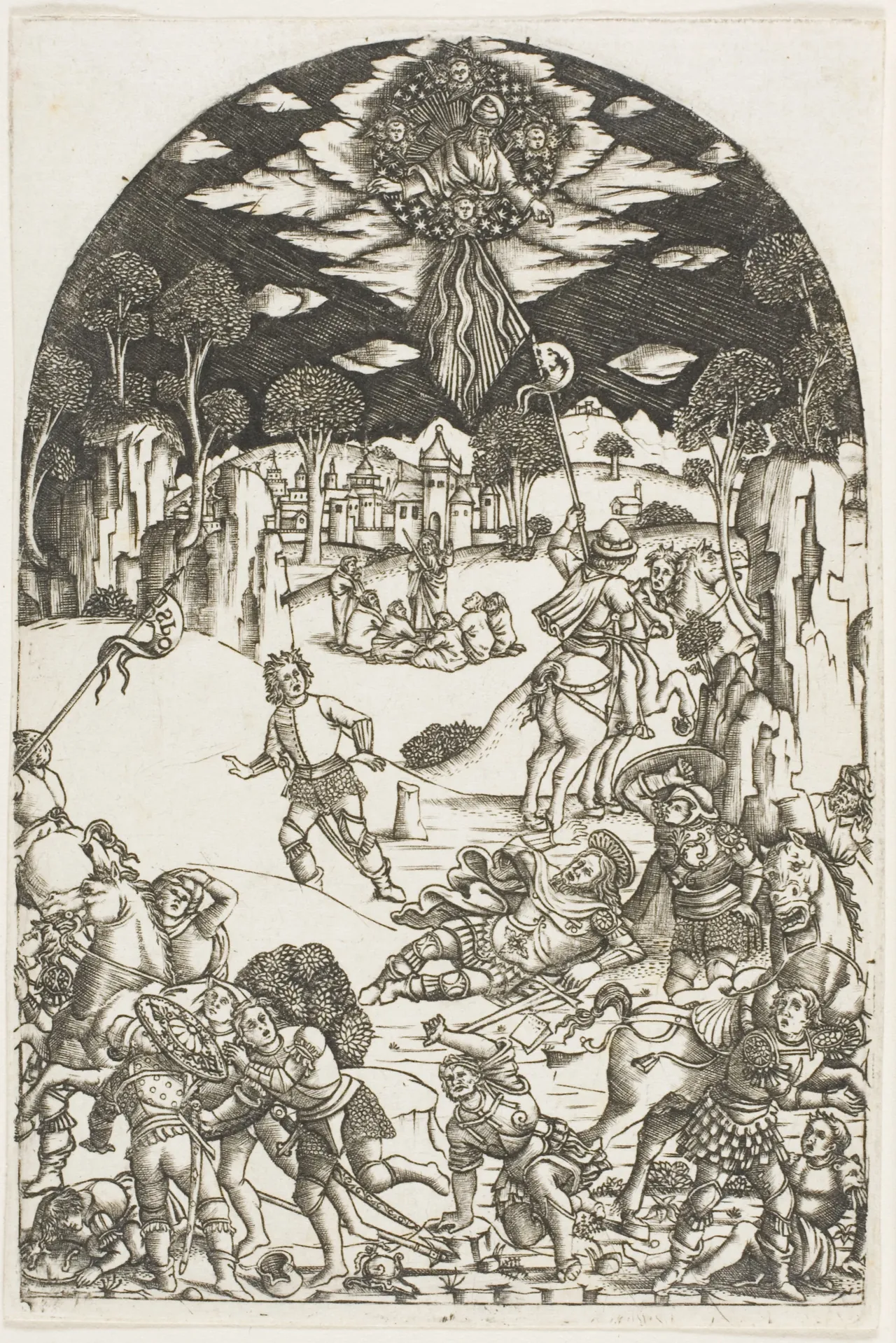
An Italian engraving of the Conversion of Saint Paul, the church's fiercest enemy who became its greatest missionary and the plainest case of an unlikely call.The Conversion of Saint Paul · n.d. · Art Institute of Chicago · CC0 · museum record · Galeria Regni
Around these offices the New Testament shows many other callings: evangelists like Philip, teachers, missionaries sent out like Barnabas and Saul, households given to service like the house of Stephanas, who “addicted themselves to the ministry of the saints” (1 Corinthians 16:15), and servants of the church like Phebe of Cenchrea (Romans 16:1-2). These are real callings, and the same marks apply.
Women and callings in the church
Scripture records women serving the church in many ways — Phebe, Priscilla with her husband Aquila (Acts 18:26), Philip's daughters who prophesied (Acts 21:9), the older women of Titus 2:3-5 who are to be “teachers of good things” to the younger. Scripture also contains these words, which should be read as written and not dismissed as merely cultural:
“Let the woman learn in silence with all subjection. But I suffer not a woman to teach, nor to usurp authority over the man, but to be in silence.” (1 Timothy 2:11-12)
Churches that hold the Bible as their authority apply this text in different ways — for example, in whether it governs only the office of elder and the preaching of the gathered church, or a wider range of teaching settings. A woman who senses a call should read 1 Timothy 2, 1 Corinthians 11 and 14, and Titus 2 with her church's leaders, and the marks in Part 2 apply to her exactly as to anyone else, including the seventh: agreement with Scripture.
Callings alongside ordinary work
Paul himself often worked a trade while he preached. He reminded the Thessalonians, “For ye remember, brethren, our labour and travail: for labouring night and day, because we would not be chargeable unto any of you, we preached unto you the gospel of God” (1 Thessalonians 2:9). In Corinth he lodged with Aquila and Priscilla, “for by their occupation they were tentmakers” (Acts 18:3).
Many believers are called to a particular ministry — teaching a class, leading a small group, serving as an elder or deacon, evangelising in their workplace, caring for prisoners, raising foster children — while keeping their ordinary job. These callings are not lesser. In many churches they are most of the ministry that happens.
Callings change across a life
Philip was first chosen to serve tables (Acts 6:5); soon after, he “went down to the city of Samaria, and preached Christ unto them” (Acts 8:5), and years later he was known as “Philip the evangelist” (Acts 21:8). John Mark left the mission at Pamphylia, was the cause of the split between Paul and Barnabas, and later was the man of whom Paul wrote, “he is profitable to me for the ministry” (2 Timothy 4:11). Timothy began as a young helper and became the trusted pastor of Ephesus.
A call can grow, narrow or shift with the seasons of life: when children are young, when parents need care, when health changes, when a church's needs change. What does not change is the first call. And Paul's word to the Romans is a comfort: “For the gifts and calling of God are without repentance” (Romans 11:29). God does not take back what He gives.
The unlikely called
The New Testament's greatest missionary began as the church's fiercest enemy. Paul never forgot it: “And I thank Christ Jesus our Lord, who hath enabled me, for that he counted me faithful, putting me into the ministry” (1 Timothy 1:12). God still calls unlikely people. Michael tells one such story in his own words.
Michael Ray Lewis told his story on The King Is Coming Show (TKIC #48), An Atheist Who Mocked Christians — Until One Question Undid Him. Watch it in his own words: https://www.youtube.com/watch?v=Rd-RdSqeQDk Michael's account of what happened to him, shared as his testimony — weigh it for yourself.
This part matters because it is one thing to know the marks and another to put them to work. What follows is a simple process drawn from the texts above. It is not a formula that guarantees an answer; it is a way of seeking God's will humbly, with His people, over time.
Step 1: Settle the first call
Before anything else, be sure you belong to Christ. “Wherefore the rather, brethren, give diligence to make your calling and election sure” (2 Peter 1:10). Spurgeon's order holds: personal salvation first, then the call to office.
The opening of First Timothy in a thirteenth-century Bible from southern France, with Paul seated in the initial, the letter that sets out the qualifications for elders and deacons.Fol. 456r, Timothy I, historiated initial P, Paul seated · c. 1275–1300 · Cleveland Museum of Art · CC0 · museum record · Galeria Regni
Step 2: Pray, and examine your desire
Bring the desire to God plainly. Ask Him to search your motives. Keep a simple record over months: when the desire is strongest, what it is for, whether it survives hard days and other offers. “Commit thy works unto the LORD, and thy thoughts shall be established” (Proverbs 16:3).
Step 4: Tell your pastor and two or three mature believers
Choose people who know your life, love you, and will tell you the truth. Tell them what you sense and ask them directly:
Have you seen gifts in me that fit this work?
Have you seen the character this work requires?
Do you see anything that concerns you?
Would you be glad to see me do this?
Then listen, especially if their answer is not what you hoped. “Without counsel purposes are disappointed: but in the multitude of counsellors they are established” (Proverbs 15:22).
Step 5: Serve in a smaller way first
Deacons were to “first be proved” (1 Timothy 3:10). Find a way to exercise the gift in a smaller setting: teach a class, lead a study, serve on a short mission trip, help in the ministry you feel drawn to. Watch for gifts, fruit and joy. Ask those you serve, and those who watch you serve, what they see.
Step 6: Watch the doors, and do not force them
Notice what opportunities come, and which close. Do not manipulate, pressure or campaign for a position. “Impatience would push open or break down the door, but faith waits upon the Lord,” as Spurgeon said. Remember Saul at Gilgal.
Step 7: Count the cost together
If you are married, your spouse shares the call in a real way. Talk through the costs — financial, family, health, time — and pray together. A call that would require you to neglect the first callings of family and provision needs very careful testing (1 Timothy 5:8).
Step 8: Give it time
Few genuine calls need to be settled this month. Let the seasons pass. If the desire, the burden, the church's affirmation and the fruit keep pointing one way over a year or more, that is significant. If they fade, that is significant too.
Step 9: Be sent, or wait
When the marks agree, let the church send you, as Antioch sent Barnabas and Saul. If the church does not yet affirm it, wait, keep serving, and keep asking. A delay is not necessarily a no. It may be preparation.
A hypothetical example
Suppose a man in his thirties has felt drawn to preaching for several years. He tells his pastor. The pastor gives him a chance to teach an adult class for six months. The class grows in understanding; several members say they have been helped. The elders observe his home life and find it in order. Over the next year he preaches twice on Sunday evenings; the church receives it gladly. His wife, who was hesitant, comes to share his sense of call. An opportunity opens to train while keeping his job. Desire, gifts, character, the church's affirmation, fruit, doors and time are all pointing the same way. That is what a call usually looks like from the outside: not a lightning bolt, but a convergence.
Now suppose a different man, equally sincere. He has the same desire, but every time he teaches, people are confused; his temper is a known problem at home; the elders gently tell him they do not see it yet. If he is wise, he will not conclude that the church is against him. He will work on his character, keep serving where he is fruitful, and let the Lord show him in time whether the desire was pointing to preaching or to something else.
When the answer is “not this”
Sometimes, after honest testing, the answer is that the work you hoped for is not your calling. That is not failure. It is guidance. God may be pointing your gifts somewhere else, or asking you to be faithful where you are. “But now hath God set the members every one of them in the body, as it hath pleased him” (1 Corinthians 12:18). Every member matters.
Questions for reflection or discussion
1. What did Calvin mean by the “secret call” and the “external call”? Why are both needed? 2. Which of the ten marks in Part 2 do you see most clearly in your own life? Which least? 3. Why does Paul place so much emphasis on character in 1 Timothy 3 and Titus 1? 4. Read Acts 13:1-4. What did the church do, and what did the Holy Ghost do? 5. Which of the false signs in Part 3 have you been tempted to rely on? 6. How did Paul's calling unfold over time (Acts 9; Galatians 1; Acts 11; Acts 13)? 7. What is the smallest step of faithful service you could take this month in the direction you sense God leading?
Part 6 — Answering: Obedience, Faithfulness and Trust
2 min read
This part matters because the goal of discerning a call is not information. It is obedience. A call recognised and not answered is worse than a call never sensed.
Obedience, not interest
Paul summed up his whole life before King Agrippa in one sentence: “Whereupon, O king Agrippa, I was not disobedient unto the heavenly vision” (Acts 26:19). Isaiah's answer was “Here am I; send me” (Isaiah 6:8). Mary's was “be it unto me according to thy word” (Luke 1:38). Each of them moved from hearing to doing.
Some believers keep a call at the level of interest for years — reading about missions, admiring preachers, talking about what they might do one day. At some point, testing must give way to obedience. If the marks are present and the church affirms it, go.
Faithfulness, not success
What God requires of those He calls is faithfulness. “Moreover it is required in stewards, that a man be found faithful” (1 Corinthians 4:2). Paul's last word about his own calling was not a report of results but a statement of faithfulness: “I have fought a good fight, I have finished my course, I have kept the faith” (2 Timothy 4:7).
That frees the called from two burdens. It frees them from pride when things go well, because “God gave the increase” (1 Corinthians 3:6). And it frees them from despair when things go slowly: “And let us not be weary in well doing: for in due season we shall reap, if we faint not” (Galatians 6:9).
Trust, not self-sufficiency
No one is adequate for the work of God. Paul knew it: “Not that we are sufficient of ourselves to think any thing as of ourselves; but our sufficiency is of God; Who also hath made us able ministers of the new testament” (2 Corinthians 3:5-6). The God who calls also works within: “For it is God which worketh in you both to will and to do of his good pleasure” (Philippians 2:13).
A particular call from God is a serious thing, and Scripture gives us serious ways to recognise it. It is not usually found in one moment, one feeling or one word from someone else. It is found in the meeting of two witnesses: an inward call — a persistent, holy desire, a burden for people, a willingness to pay the cost — and an outward call — gifts that fit, character that is growing, the affirmation of the church, fruit in the work, open doors and confirmation over time. All of it stands under Scripture.
The church has tested calls this way for a long time. Calvin named the secret and the external call. The Westminster divines required that preachers be gifted, approved and called. Baxter charged pastors to take heed to themselves first. Spurgeon told his students to test their desire, their aptness, their fruit and the judgment of God's people — and warned them against mistaking failure elsewhere for a call to the pulpit. The marks they named are the marks of Scripture.
If you sense a call, do not hurry and do not hide. Pray, examine your heart, read what the Bible says about the work, tell your pastor, serve in a smaller way, and give it time. If the marks agree, go when the church sends you. If they do not, be faithful where you are. Either way, the One who calls is faithful.
An invitation
If you are reading this and you are not sure you have answered God's first call — the call to come to Christ — that is where every other calling begins. “For all have sinned, and come short of the glory of God” (Romans 3:23). But “God so loved the world, that he gave his only begotten Son, that whosoever believeth in him should not perish, but have everlasting life” (John 3:16).
The apostles preached “repentance toward God, and faith toward our Lord Jesus Christ” (Acts 20:21). Salvation is God's gift: “For by grace are ye saved through faith; and that not of yourselves: it is the gift of God: Not of works, lest any man should boast” (Ephesians 2:8-9). And Peter said to those who asked what they must do, “Repent, and be baptized every one of you in the name of Jesus Christ for the remission of sins, and ye shall receive the gift of the Holy Ghost” (Acts 2:38).
Here is my own story, in my own words. I decided to read the Bible for one reason: to disprove it, so I'd have an excuse to stop going to church for good. It did the opposite. Then one day I got on my knees and prayed: "Jesus, if you are real, show me — and I'll serve you." His promise still stands: “him that cometh to me I will in no wise cast out” (John 6:37).
1C. H. Spurgeon, “The Call to the Ministry,” Lecture II in Lectures to My Students, First Series (New York: Sheldon & Company, 1875), 35–65, https://archive.org/details/lecturestomystud00spurrich.↩
2John Calvin, Institutes of the Christian Religion 4.3.11, trans. Henry Beveridge (Edinburgh: Calvin Translation Society, 1845), https://www.ccel.org/ccel/calvin/institutes.vi.iv.html.↩
Seven people who say they met Jesus. What happened, in their own words.
Seven testimonies from The King Is Coming Show, one a morning — the story as they tell it, the verse the story lands on in the 1611 King James, and the page itself. Then the teaching that explains it. Free.
This is practical teaching, not proof. It's drawn from Scripture and from walking this road myself. If you're still weighing the basics — whether God is real, whether the Bible can be trusted — I'd encourage you to start with the Skeptic resources in the Research Hub before diving in here.
"Before I formed thee in the belly I knew thee; and before thou camest forth out of the womb I sanctified thee, and I ordained thee a prophet unto the nations." — Jeremiah 1:5 (KJV)