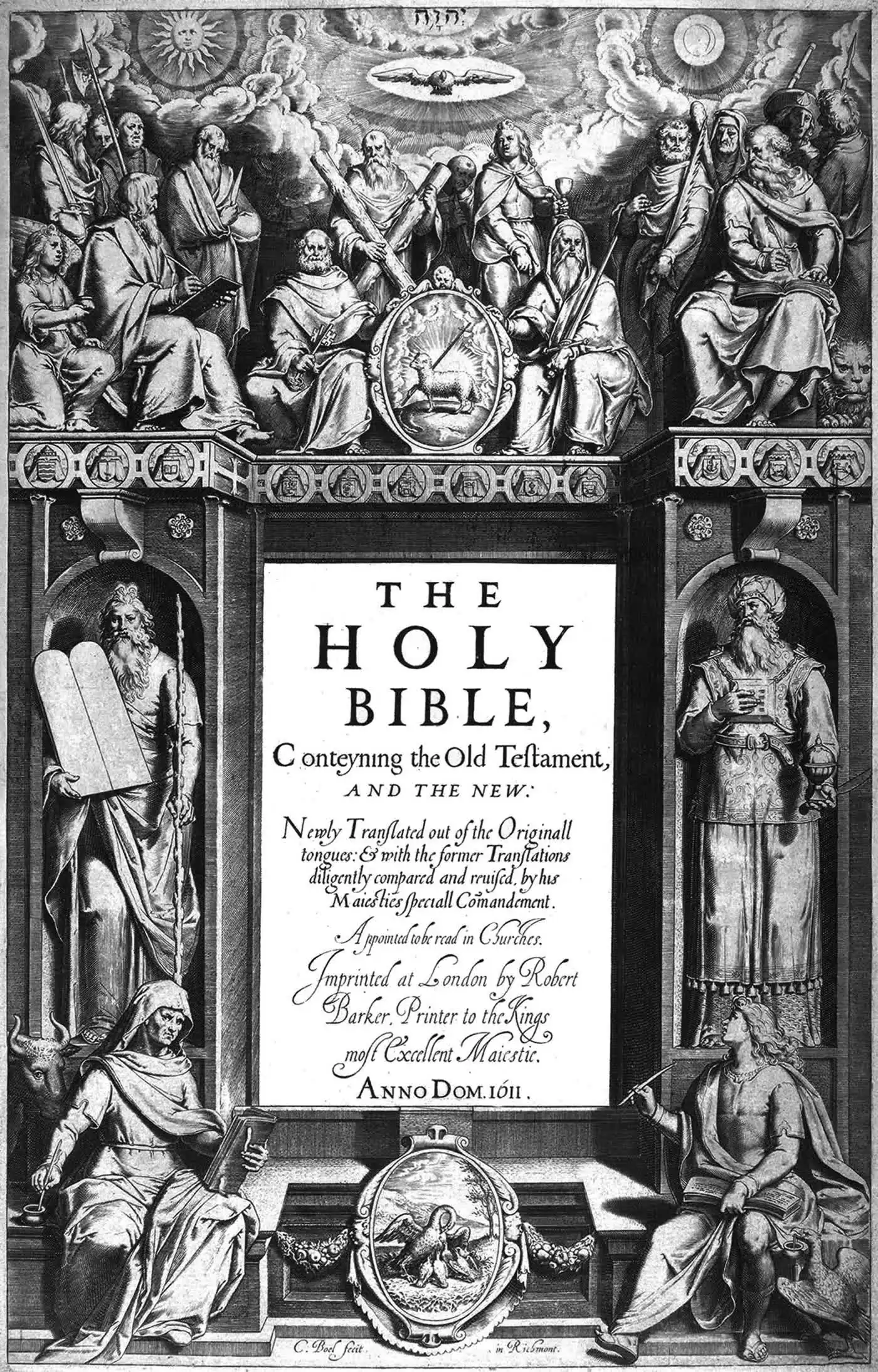
Engraved title page of the 1611 King James Bible

Disciple · Guide

Church of England, 1611 · Public domain

Back to Research Hub

Spiritual Disciplines Checklist

Read the paper (PDF)·or read it here ↓

FOR THE DAILY, WEEKLY AND YEARLY WALK

A practical tool, grounded in Scripture and in believers who kept these habits before us, for building the means of grace into an ordinary life, with lists to tick, a thirty-day start and questions for a friend to ask you.

Abstract

Many believers want to grow and do not know where to begin; many others began and stopped. This short paper is a working tool. It turns the means of grace that Scripture gives (the Word, prayer, fasting, the Lord's day, confession, service, giving and witness) into daily, weekly, monthly and yearly checklists, a thirty-day starting plan, and a set of accountability questions. Each list is grounded in the King James text and in the practice of believers who wrote down how they kept these habits: the Didache, Jonathan Edwards, Thomas Watson, Richard Baxter, John Wesley, George Müller and Robert Murray M'Cheyne. It also gives one honest finding from habit research, on how long new habits take. Its conclusion is that a checklist is a servant, never a master: it helps us keep our appointments with God, and must never become a way of measuring our worth before Him. It is written for anyone who wants a plain place to start.

What’s inside

  1. Introduction
  2. Part 1: The Daily Checklist
  3. Part 2: The Weekly Checklist
  4. Part 3: Monthly, Seasonal and Yearly
  5. Part 4: Starting Well: Thirty Days
  6. Part 5: Accountability and Troubleshooting
  7. Conclusion

Research paper · 7 chapters · 19 notes · October 2026

"But the fruit of the Spirit is love, joy, peace, longsuffering, gentleness, goodness, faith." — Galatians 5:22 (KJV)Read in the 1611 →

Read the paper here

About 19 minutes · 7 parts · the PDF has the same text

Introduction

2 min read

This is a tool. It is meant to be printed, written on, folded into a Bible, and used.

It is the companion to a longer study in this series, Spiritual Disciplines: The Means of Grace and the Training of a Disciple, which sets out from Scripture what each discipline is and why it matters. This paper assumes that groundwork and gets practical. If you want to know why a Christian should fast, read the longer paper. If you want to know how to start on Thursday, read this one.

A checklist is a servant

Before the lists, a warning. A checklist can help a believer keep his appointments with God. It can also turn into a scorecard, and a scorecard turns into pride on good weeks and despair on bad ones.

Jesus told of a man with an excellent scorecard: "I fast twice in the week, I give tithes of all that I possess" (Luke 18:12). He went home unjustified. The man who went home justified had nothing to show but a prayer: "God be merciful to me a sinner" (Luke 18:13). Paul warns against rules that have "a shew of wisdom in will worship, and humility, and neglecting of the body" (Colossians 2:23).

So hold these lists loosely. They are not commands; the commands are in Scripture, and the lists only help you keep them. You are not more loved by God on a day you tick every box, or less loved on a day you tick none. "For by grace are ye saved through faith; and that not of yourselves: it is the gift of God: Not of works, lest any man should boast" (Ephesians 2:8-9).

Why lists help anyway

Having said that, structure helps. Richard Baxter, writing in 1650 about setting a regular time for meditation, put it in one line: "Stated time is a hedge to duty, and defends it against many temptations to omissions." He added the important qualification: so long as you suit the time to the work "without placing any religion in the time itself."1

Jonathan Edwards wrote seventy resolutions as a young man in 1722 and 1723, and put two lines at the top. The first was a prayer: "Being sensible that I am unable to do any thing without God's help, I do humbly entreat him, by his grace, to enable me to keep these Resolutions, so far as they are agreeable to his will, for Christ's sake." The second was a plain instruction to himself: "Remember to read over these Resolutions once a week."2

That is the spirit of this paper. Pray over your plan. Read it once a week. Keep it by grace.

How to use this paper

1. Read Part 1 (the daily list) and choose only what you can actually do. 2. Read Part 2 (the weekly list) and choose the Lord's day, plus one more thing. 3. Leave Part 3 (monthly and yearly) for later, unless you are already steady. 4. If you are starting from nothing, go straight to Part 4, the thirty-day start. 5. Find a friend and give him or her the questions in Part 5.

A note on Scripture: every verse here is from the King James Bible. You can read it free in the 1611 Reader at kylelauriano.com/library. A KJV with Strong's Concordance is the only study tool you need to begin.
Part 1 — The Daily Checklist

4 min read

The daily disciplines are the roots. J. C. Ryle called private prayer, private reading of the Scriptures, and private meditation and self-examination "the roots of true Christianity," and added, "Wrong here, a man is wrong all the way through!"3

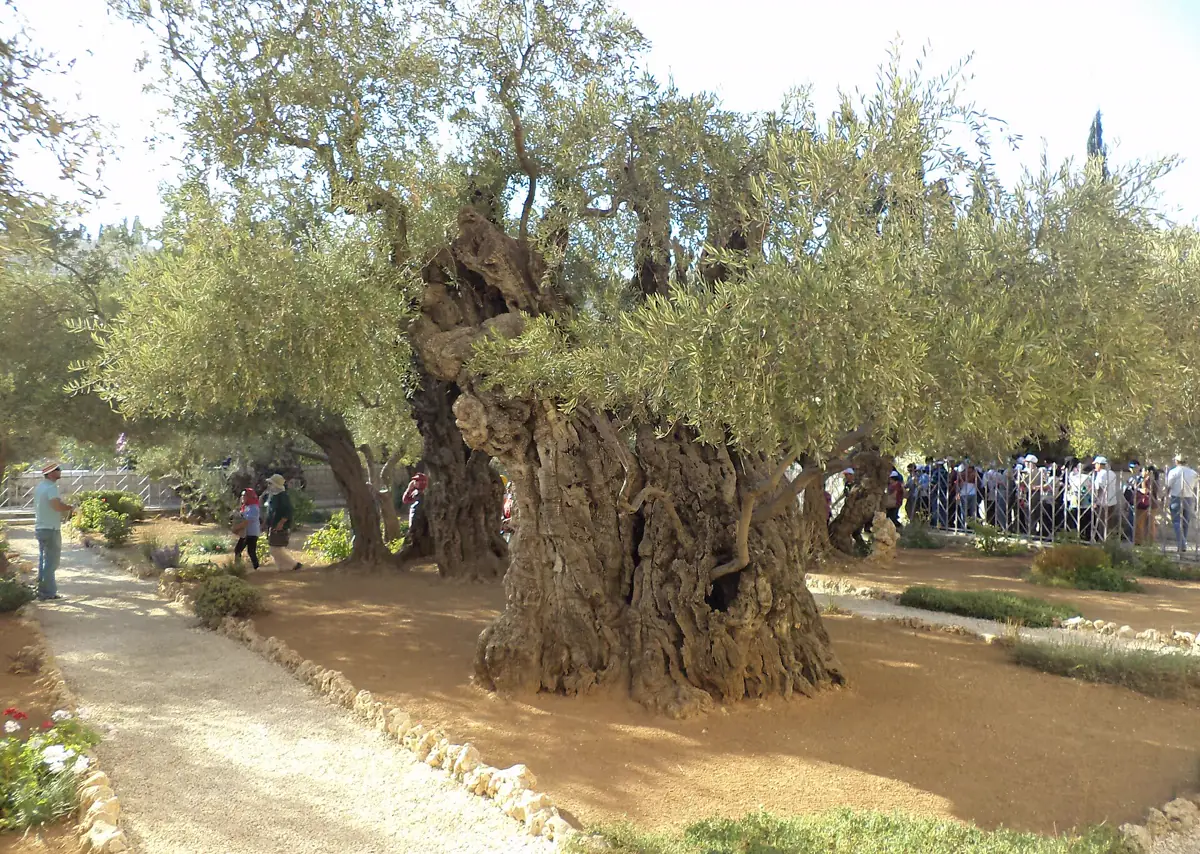
One of the oldest olive trees in the Garden of Gethsemane
One of the oldest olive trees in the Garden of Gethsemane, rooted through centuries of continuous growth — the grove where Jesus prayed on the night of His arrest.Bogdan Kosar · CC BY-SA 4.0

Morning: the Word, then prayer

The order matters. George Müller, after years of beginning his day with prayer and struggling with a wandering mind, changed the order in 1841. He began with the Bible, meditated on it verse by verse, and found that "after a very few minutes my soul has been led to confession, or to thanksgiving, or to intercession, or to supplication."4 The Word fed the prayer. Thomas Watson, writing nearly two centuries earlier, gave the morning first place: "the morning is the fittest time for meditation," calling it "the cream of the day."5 And David: "My voice shalt thou hear in the morning, O LORD; in the morning will I direct my prayer unto thee, and will look up" (Psalm 5:3).

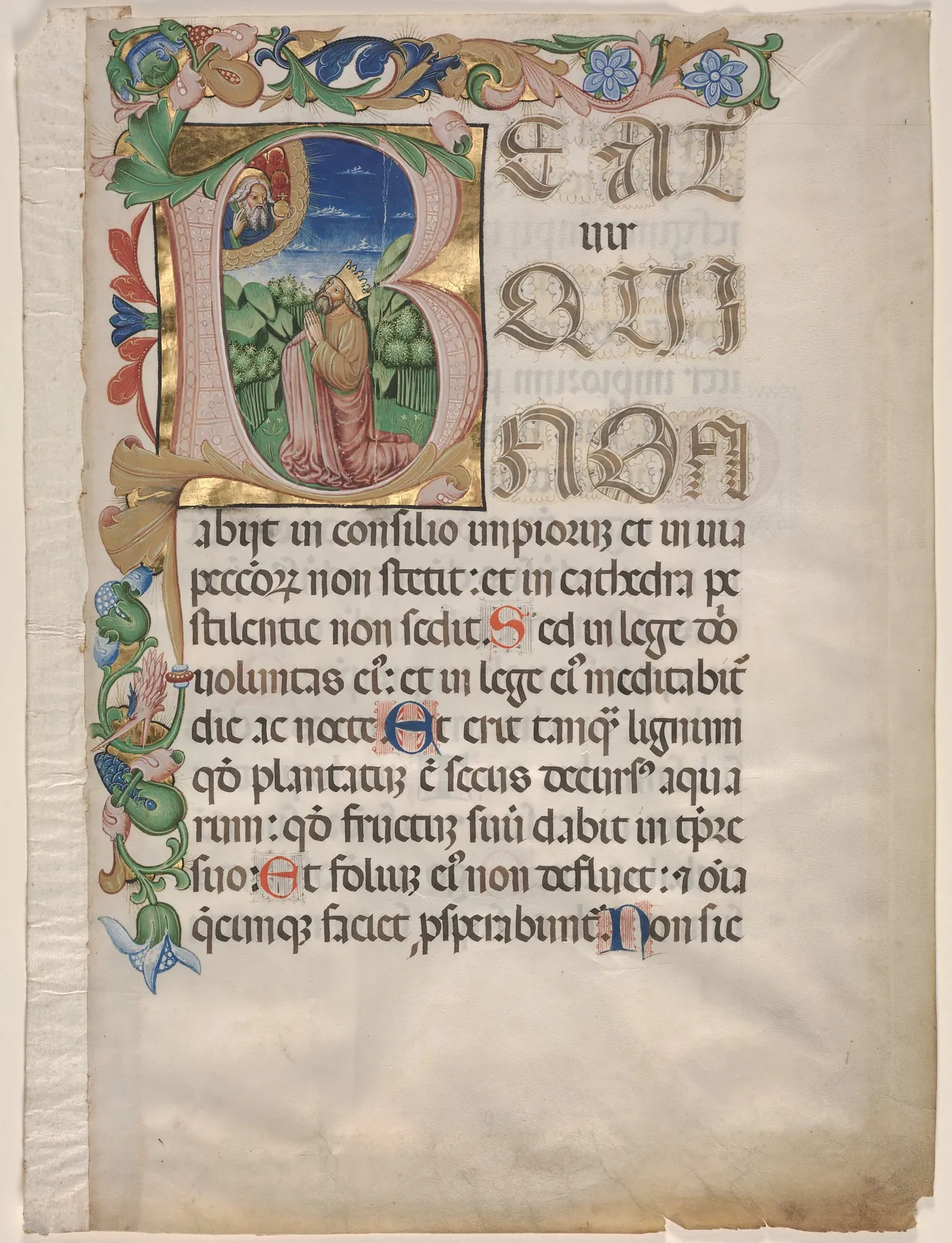
Leaf from a Choir Psalter: Initial B with King David in Prayer
A leaf from an Italian choir Psalter of about 1460 to 1470, with King David at prayer in the initial B, beside the morning habit of Word, then prayer.Leaf from a Choir Psalter: Initial B with King David in Prayer · c. 1460–1470 · Cleveland Museum of Art · CC0 · museum record · Galeria Regni

Morning (15–30 minutes)

  • ☐ A brief prayer before reading: "Open thou mine eyes, that I may behold wondrous things out of thy law" (Psalm 119:18).
  • ☐ Read today's passage (from your plan; see Part 3).
  • ☐ Choose one verse or phrase.
  • ☐ Meditate on it: what does it show about God, about Christ, about me? Is there a promise, a command, a warning?
  • ☐ Write one or two lines in a notebook.
  • ☐ Turn it into prayer: praise, confession, thanks, requests.
  • ☐ Pray through your prayer list (family, church, those who do not know Christ, needs).
  • ☐ Commit the day to God.

If fifteen minutes is all you have, keep the order and shorten each step. If you have five minutes, read one psalm and pray it.

For the method of meditation in full, see Encountering God in this series.

Through the day

Scripture asks for set times and a life of prayer: "Pray without ceasing" (1 Thessalonians 5:17). Watson explained that this means not unbroken praying but that "we should every day set some time apart for prayer," and keep the habit up as the old law kept its "continual" morning and evening sacrifice.6 Between the set times, short prayers rise as the day goes.

Through the day

  • ☐ Carry the morning's verse (a card in your pocket, or your phone's lock screen) and read it at least twice.
  • ☐ Short prayers: thanks when something good comes, help when something hard comes, a name lifted up as it comes to mind.
  • ☐ Grace before meals, meant and not mumbled.
  • ☐ One act of quiet service to someone: "let us do good unto all men" (Galatians 6:10).
  • ☐ Watch your words: "Let the words of my mouth, and the meditation of my heart, be acceptable in thy sight, O LORD, my strength, and my redeemer" (Psalm 19:14).

The early church kept fixed hours of prayer through the day. The Didache, an early Christian manual, gives the Lord's Prayer and says, "You should pray in this way three times a day."7 Daniel prayed three times a day too (Daniel 6:10). Some believers find a short midday prayer, even a minute, holds the day together.

Evening: review and rest

"Stand in awe, and sin not: commune with your own heart upon your bed, and be still. Selah" (Psalm 4:4). The evening is for looking back over the day in God's presence, confessing what needs confessing, and giving thanks.

Evening (5–15 minutes)

  • ☐ Read a short passage (a psalm, or the second column of your reading plan).
  • ☐ Look back over the day. Where did I see God's kindness? Where did I sin, in word, thought or deed?
  • ☐ Confess specifically: "If we confess our sins, he is faithful and just to forgive us our sins, and to cleanse us from all unrighteousness" (1 John 1:9).
  • ☐ Make right anything you can tonight (an apology, a message).
  • ☐ Thank God for three things by name.
  • ☐ Pray for your family.
  • ☐ Give the night to God: "I will both lay me down in peace, and sleep: for thou, LORD, only makest me dwell in safety" (Psalm 4:8).

The daily tracker

Use this to see your pattern over a week. Tick what you did. The point is to notice, not to grade yourself.

| Day | Word | Meditation | Prayer | Verse carried | Evening review | | --- | --- | --- | --- | --- | --- | | Lord's day | ☐ | ☐ | ☐ | ☐ | ☐ | | Monday | ☐ | ☐ | ☐ | ☐ | ☐ | | Tuesday | ☐ | ☐ | ☐ | ☐ | ☐ | | Wednesday | ☐ | ☐ | ☐ | ☐ | ☐ | | Thursday | ☐ | ☐ | ☐ | ☐ | ☐ | | Friday | ☐ | ☐ | ☐ | ☐ | ☐ | | Saturday | ☐ | ☐ | ☐ | ☐ | ☐ |

Part 2 — The Weekly Checklist

4 min read

The weekly disciplines are the ones we keep with others, plus the few that do not fit every day.

The Lord's day

From the beginning Christians gathered on the first day of the week, the day of the resurrection: "upon the first day of the week, when the disciples came together to break bread, Paul preached unto them" (Acts 20:7). The Didache says, "On every Lord's Day—his special day—come together and break bread and give thanks, first confessing your sins so that your sacrifice may be pure."8 And Hebrews commands it: "Not forsaking the assembling of ourselves together, as the manner of some is; but exhorting one another: and so much the more, as ye see the day approaching" (Hebrews 10:25).

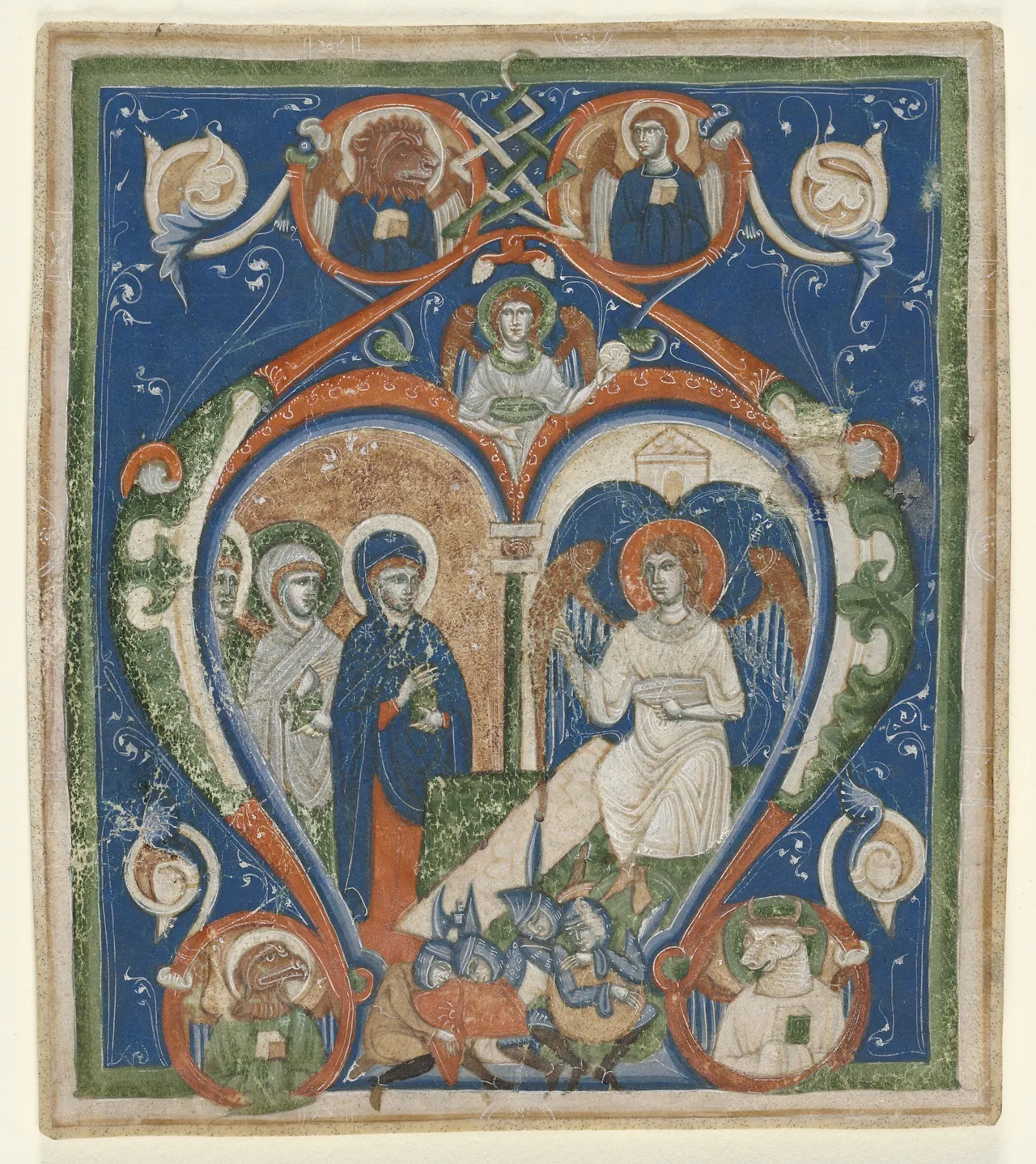
Initial A[ngelus Domini descendit] from an Antiphonary: The Three Marys at the Tomb
A Sienese antiphonary initial of about 1280 to 1300 showing the Three Marys at the Tomb, recalling that the Lord's day is kept on the day of the resurrection.Initial A[ngelus Domini descendit] from an Antiphonary: The Three Marys at the Tomb · c. 1280–1300 · Cleveland Museum of Art · CC0 · museum record · Galeria Regni

The Westminster Shorter Catechism (1647) tells hearers how to listen to the Word: "with diligence, preparation, and prayer; receive it with faith and love, lay it up in our hearts, and practice it in our lives."9 That gives a natural checklist.

Saturday evening: preparation

  • ☐ Pray for the preacher, the church and your own heart.
  • ☐ Read the passage that will be preached, if you know it.
  • ☐ Confess sin; make peace with anyone you are at odds with, if you can.
  • ☐ Go to bed in time to be awake in worship.

The Lord's day

  • ☐ Gather with a Bible-believing church.
  • ☐ Sing with understanding: "Let the word of Christ dwell in you richly in all wisdom; teaching and admonishing one another in psalms and hymns and spiritual songs, singing with grace in your hearts to the Lord" (Colossians 3:16).
  • ☐ Listen to the sermon with an open Bible; write down the text and one point.
  • ☐ Take the Lord's Supper when it is offered, having examined yourself (1 Corinthians 11:28).
  • ☐ Speak to someone you do not know, and to someone who is struggling.
  • ☐ Give (see below).
  • ☐ In the afternoon or evening, think over the sermon again. Watson warned that preaching not meditated on is "like writing in sand, or like pouring water into a sieve."10
  • ☐ Rest, and leave room for family.

Giving

Paul's instruction is weekly, personal, planned and proportionate: "Upon the first day of the week let every one of you lay by him in store, as God hath prospered him" (1 Corinthians 16:2). It is also glad: "Every man according as he purposeth in his heart, so let him give; not grudgingly, or of necessity: for God loveth a cheerful giver" (2 Corinthians 9:7).

  • ☐ Set the amount at the start of the month, not in the moment.
  • ☐ Give to your local church first.
  • ☐ Keep something aside for a need you will meet this week.
  • ☐ Give in secret (Matthew 6:3-4).

Giving does not buy blessing. We give because we have been given everything.

A weekly fast (optional)

Jesus said "when ye fast" (Matthew 6:16), not "if". The Didache shows that early Christians kept a weekly rhythm: "They fast on Mondays and Thursdays; but you should fast on Wednesdays and Fridays."11 John Wesley noted that the ancient church kept half-fasts on those days, taking no food until three in the afternoon.12 None of this is commanded; but a regular fast is an old and good habit.

  • ☐ Choose a day and a length (one meal; breakfast to mid-afternoon; or supper to supper).
  • ☐ Write down the purpose.
  • ☐ Use mealtimes for prayer and Scripture.
  • ☐ Keep it quiet (Matthew 6:17-18).
  • ☐ Give the money saved to someone in need (Isaiah 58:7).

Before you fast: ask your doctor first if you are pregnant or nursing, diabetic, on medication, have a history of eating disorders, or have any medical condition. Wesley's caution: "care is to be taken, whenever we fast, to proportion the fast to our strength. For we may not offer God murder for sacrifice, or destroy our bodies to help our souls."13

The rest of the week

  • ☐ Family worship two or more evenings: a passage, a question, a prayer, perhaps a hymn (Deuteronomy 6:6-7).
  • ☐ Memory verse: one new verse; review the old ones on the Lord's day. "Thy word have I hid in mine heart, that I might not sin against thee" (Psalm 119:11).
  • ☐ Fellowship: one meal, call or coffee with another believer.
  • ☐ Accountability: a check-in with your partner (see Part 5).
  • ☐ Service: one regular task in your church or community.
  • ☐ Witness: pray by name for two or three people who do not know Christ, and look for an open door: "be ready always to give an answer to every man that asketh you a reason of the hope that is in you with meekness and fear" (1 Peter 3:15).
  • ☐ Longer time alone: thirty to sixty minutes with Scripture and prayer, away from noise. "Come ye yourselves apart into a desert place, and rest a while" (Mark 6:31).
  • ☐ Read your plan over, as Edwards read his resolutions weekly.

The weekly tracker

| Week of | Lord's day | Giving | Fast | Family worship | Memory verse | Fellowship | Service | Witness | | --- | --- | --- | --- | --- | --- | --- | --- | --- | | ________ | ☐ | ☐ | ☐ | ☐ | ☐ | ☐ | ☐ | ☐ | | ________ | ☐ | ☐ | ☐ | ☐ | ☐ | ☐ | ☐ | ☐ | | ________ | ☐ | ☐ | ☐ | ☐ | ☐ | ☐ | ☐ | ☐ | | ________ | ☐ | ☐ | ☐ | ☐ | ☐ | ☐ | ☐ | ☐ |

Part 3 — Monthly, Seasonal and Yearly

3 min read

The longer rhythms are for depth and for checking direction. "So teach us to number our days, that we may apply our hearts unto wisdom" (Psalm 90:12).

A reading plan for the year

Read the whole Bible. The best-known plan is the one drawn up by Robert Murray M'Cheyne, minister of St Peter's Church, Dundee, from 1836 to 1843. It takes a reader through the whole Bible once in a year and the Psalms and New Testament twice, with separate columns for family reading and for private reading.14 That is four chapters a day, which is a lot for a beginner. Three good options:

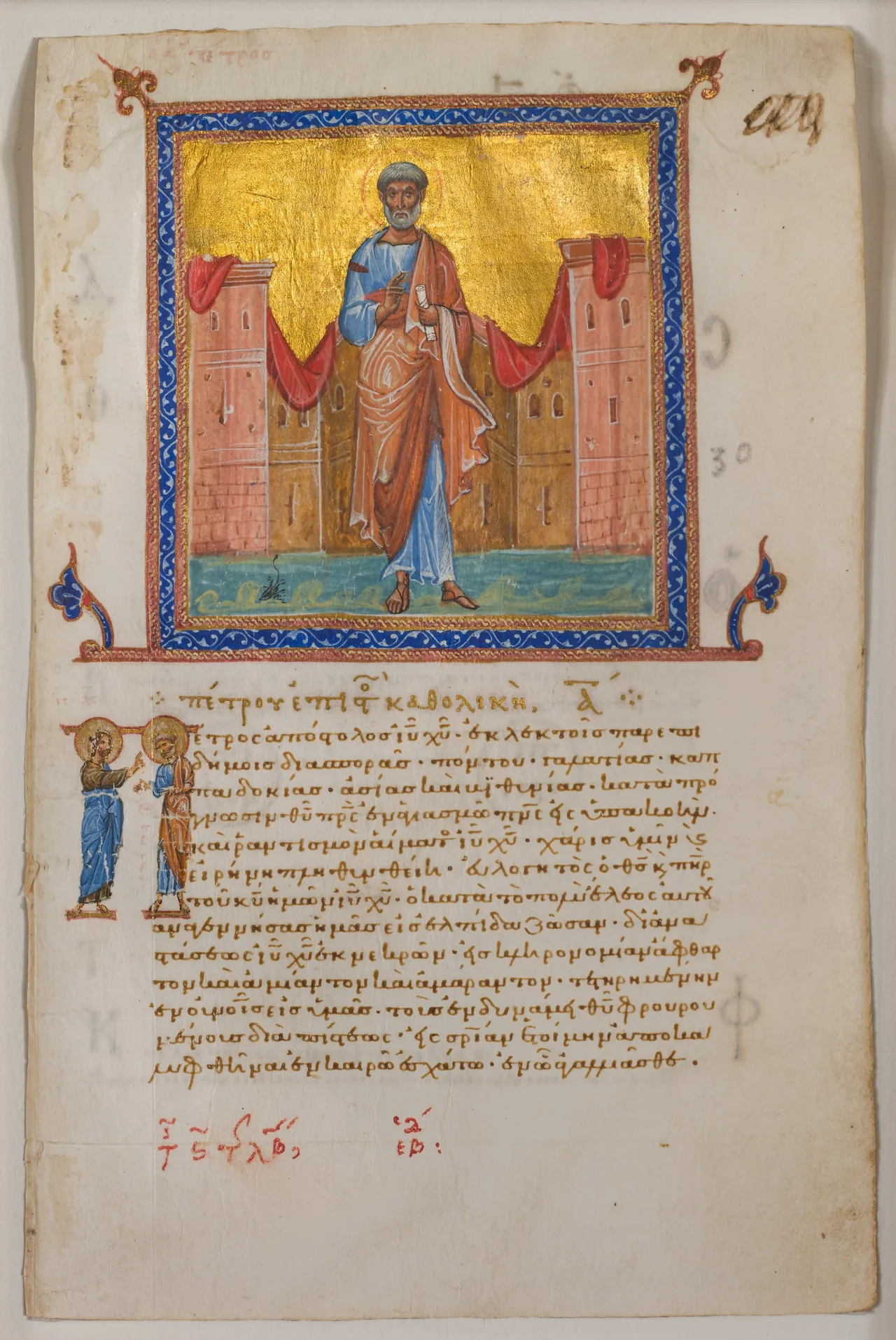
Leaf from a Greek Psalter and New Testament
A leaf from a Greek Psalter and New Testament made in Constantinople in 1084, set beside the plan for reading through the Bible across a year.Leaf from a Greek Psalter and New Testament · 1084 · Cleveland Museum of Art · CC0 · museum record · Galeria Regni

| Plan | Daily reading | Covers | Good for | | --- | --- | --- | --- | | Full M'Cheyne | 4 chapters | Whole Bible once, Psalms and New Testament twice, in a year | Those already reading steadily | | Half M'Cheyne | 2 chapters (the private columns, or the family columns) | The same ground over two years | Most believers | | One chapter a day | 1 chapter | Start with Mark, then John, Acts, Romans, Genesis, Psalms | Beginners |

  • ☐ Choose a plan before the first of the month.
  • ☐ Mark where you are; if you miss days, start again from today's reading. Do not try to catch up.

Monthly

  • ☐ An extended time alone with God: two to four hours, perhaps one Saturday morning. Read a whole book of the Bible at a sitting (Philippians, 1 John, Jonah, Mark). Pray at length. Write.
  • ☐ A longer fast, if you are able and your doctor agrees.
  • ☐ Review your prayer list: mark answers, add new names, take off what is settled.
  • ☐ Review your giving.
  • ☐ A deeper check-in with your accountability partner.
  • ☐ Self-examination: "Examine yourselves, whether ye be in the faith; prove your own selves" (2 Corinthians 13:5). Use the questions in Part 5.

Each season (every three months)

  • ☐ A half-day or day of retreat. Baxter advised "some private retirement," recalling how often Christ withdrew "to some mountain, or wilderness, or other solitary place."15 A day at a quiet place with a Bible, a notebook and a packed lunch will do.
  • ☐ Look back: what has God taught me these three months? What answers to prayer have I seen?
  • ☐ Look forward: one discipline to strengthen, one to add, one to adjust.
  • ☐ Talk with a pastor or mature believer about your plan.

The yearly review

Choose a set time each year (the end of December, or your spiritual birthday) for a longer review. Edwards's twenty-eighth resolution is a good test for the whole year: "Resolved, To study the Scriptures so steadily, constantly, and frequently, as that I may find, and plainly perceive, myself to grow in the knowledge of the same."16 Can you perceive growth?

  • ☐ The Word: Did I finish my plan? How much? What books did I read? What verses did I learn?
  • ☐ Meditation: Has Scripture been staying with me, or running through me?
  • ☐ Prayer: Is my prayer life steadier than last year? What answers can I name?
  • ☐ Fasting: How often did I fast? What did God teach me through it?
  • ☐ The Lord's day: How many Sundays did I miss, and why?
  • ☐ Confession and fellowship: Do I have at least one believer who knows the truth about me?
  • ☐ Service: Where did I serve? Where is a need I could meet next year?
  • ☐ Giving: Did I give as God prospered me? Gladly?
  • ☐ Witness: Whom did I pray for? With whom did I speak about Christ?
  • ☐ Fruit: Am I more loving, joyful, peaceful, patient, gentle, good, faithful, meek and self-controlled than a year ago (Galatians 5:22-23)? Ask someone who lives with you.
  • ☐ Thanks: Write a list of the year's mercies. "Bless the LORD, O my soul, and forget not all his benefits" (Psalm 103:2).
  • ☐ Next year: Choose the plan. Pray over it. Write it down.

Part 4 — Starting Well: Thirty Days

2 min read

If you are starting from nothing, this is the place to begin. It adds one thing at a time, on purpose.

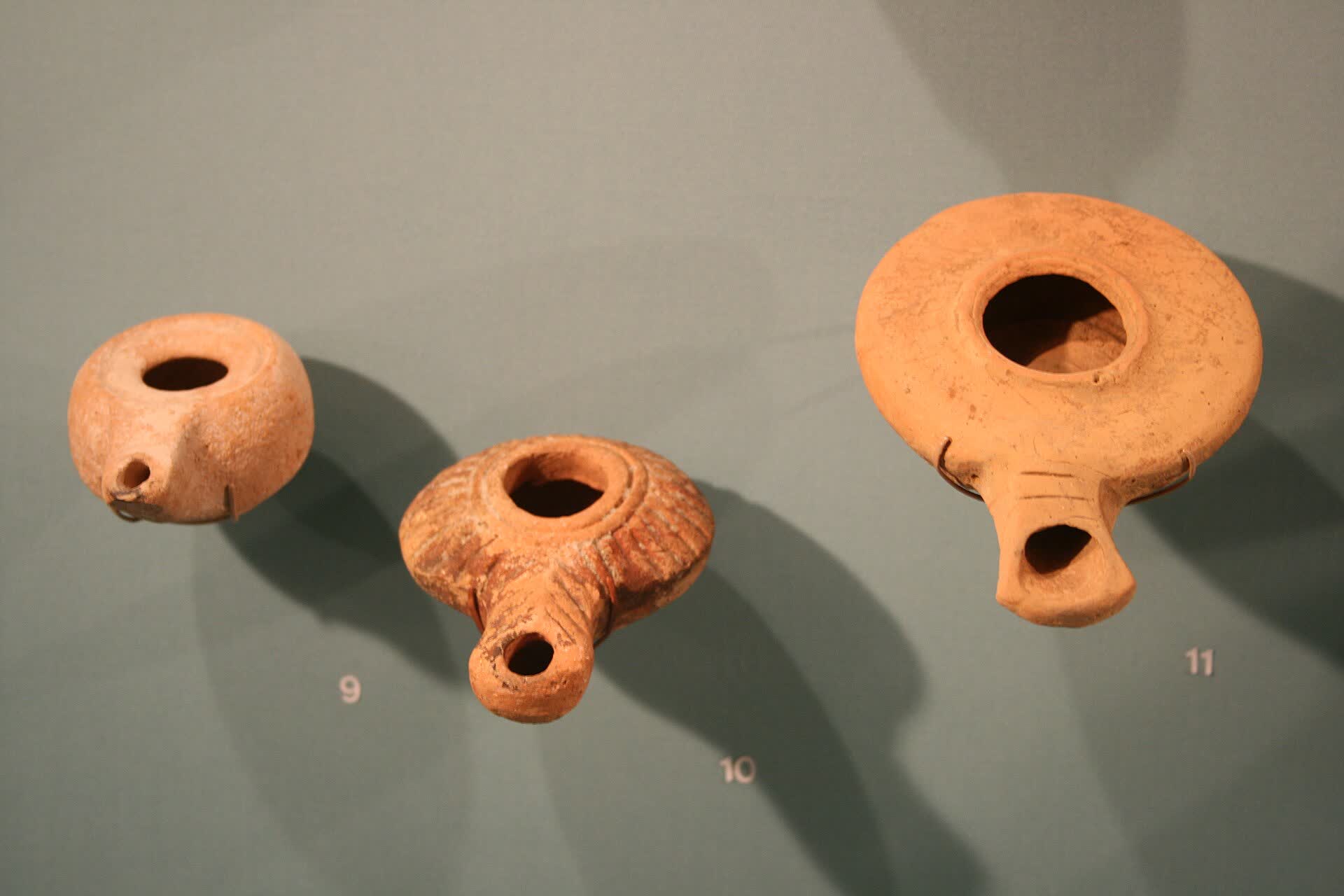
Hellenistic and Herodian clay oil lamps in a museum case
Hellenistic and Herodian clay oil lamps — the ordinary household light of the world the Gospels describe.Gary Todd · CC0

What to expect

Habits take time, and the time varies. In a study published in the European Journal of Social Psychology in 2010, Phillippa Lally and her colleagues followed people trying to build a new daily habit in ordinary life. The time it took for the new behaviour to feel automatic ranged from 18 days to 254 days, with an average of about 66.17

So thirty days will not make the habit effortless. That is fine. The aim of the first month is simply to begin, and to keep going on the days it feels like work. "And let us not be weary in well doing: for in due season we shall reap, if we faint not" (Galatians 6:9).

It helps to fasten each new habit to something you already do every day: the first cup of coffee, the drive to work, lunch, turning out the light.

Week 1 (days 1–7): the Word

  • ☐ Choose your time and place. Write them here: ______________________
  • ☐ Each day, read one chapter of the Gospel of Mark.
  • ☐ Each day, write down one verse that stood out.
  • ☐ Go to church on the Lord's day.

Week 2 (days 8–14): prayer

  • ☐ Keep reading (finish Mark; it has sixteen chapters).
  • ☐ After reading, pray for five minutes, starting from your verse, as Müller did.
  • ☐ Pray the Lord's Prayer once a day, slowly, line by line (Matthew 6:9-13).
  • ☐ Start a prayer list: five names.
  • ☐ Go to church on the Lord's day. Pray beforehand for the preacher.

Week 3 (days 15–21): meditation and memory

  • ☐ Keep reading (begin the Gospel of John).
  • ☐ Spend five minutes on your chosen verse before you pray: What does it show about God? About me? What must I do?
  • ☐ Learn one verse by heart this week. Suggestion: "Thy word have I hid in mine heart, that I might not sin against thee" (Psalm 119:11).
  • ☐ Add a short evening review: thanks for three things, confession, the night given to God.
  • ☐ Go to church on the Lord's day.

Week 4 (days 22–30): others

  • ☐ Keep the daily pattern: read, meditate, pray, review.
  • ☐ Ask a mature believer of your own sex to be your accountability partner (see Part 5).
  • ☐ Plan your giving for next month.
  • ☐ Do one act of service in your church.
  • ☐ Pray daily for two people who do not know Christ.
  • ☐ Go to church on the Lord's day.
  • ☐ On day 30, read this checklist again and choose your plan for the next month.

The thirty-day tracker

| Days | Read | Prayed | Verse written | Notes | | --- | --- | --- | --- | --- | | 1–7 | ☐☐☐☐☐☐☐ | ☐☐☐☐☐☐☐ | ☐☐☐☐☐☐☐ | | | 8–14 | ☐☐☐☐☐☐☐ | ☐☐☐☐☐☐☐ | ☐☐☐☐☐☐☐ | | | 15–21 | ☐☐☐☐☐☐☐ | ☐☐☐☐☐☐☐ | ☐☐☐☐☐☐☐ | | | 22–30 | ☐☐☐☐☐☐☐☐☐ | ☐☐☐☐☐☐☐☐☐ | ☐☐☐☐☐☐☐☐☐ | |

Part 5 — Accountability and Troubleshooting

3 min read

No one keeps these habits alone for long. "Iron sharpeneth iron; so a man sharpeneth the countenance of his friend" (Proverbs 27:17). James puts it plainly: "Confess your faults one to another, and pray one for another, that ye may be healed" (James 5:16).

Choosing a partner

  • A believer of your own sex, further along than you if possible.
  • Someone who keeps confidences.
  • Someone who will ask hard questions kindly, and who will let you ask them back.
  • Someone who points you to Christ, not to his own rules.

Ryle's counsel on friendship is the best short guide: "Let us seek friends that will stir us up about our prayers, our Bible-reading, and our employment of time—about our souls, our salvation, and a world to come."18

What to say when you ask: "I'm trying to build the habits of the Word, prayer and church into my life, and I don't want to do it alone. Would you check in with me once a week, ask me a few questions, and pray for me?"

Questions for a weekly check-in

Give these to your partner. Answer them honestly. Ask them back.

1. How has it been with the Word this week? What did God show you? 2. How has your prayer life been? What are you praying for? 3. Were you at the Lord's table and in the Lord's house? 4. Is there sin you need to confess? (James 5:16) 5. Is there anyone you need to forgive, or ask forgiveness from? 6. Where have you been tempted? How did you fight it? 7. How have you served someone this week? 8. Whom are you praying for who does not know Christ? 9. How is your home: your marriage, your children, your parents? 10. Is there anything you are hiding from me? 11. How can I pray for you?

The ninth and tenth questions matter most. "He that covereth his sins shall not prosper: but whoso confesseth and forsaketh them shall have mercy" (Proverbs 28:13).

When you miss days

You will. "For a just man falleth seven times, and riseth up again" (Proverbs 24:16). God's mercies "are new every morning: great is thy faithfulness" (Lamentations 3:23).

  • ☐ Do not try to make up missed readings. Start again with today's.
  • ☐ Ask why it happened. Too ambitious a plan? Wrong time of day? Too little sleep? Adjust the plan, not your standing with God.
  • ☐ Tell your partner.

When it feels dry

  • ☐ Keep going. Watson admitted meditation is hard at first, but "when once we are entered it is sweet and pleasant."19
  • ☐ Change the form, not the habit: read aloud, walk while you pray, read a different book of the Bible, pray the Psalms.
  • ☐ Ask God for delight: "Open thou mine eyes" (Psalm 119:18).
  • ☐ Check for unconfessed sin or an unresolved quarrel.
  • ☐ Check your health and sleep; tiredness can feel like spiritual dryness.
  • ☐ Talk to a pastor or mature believer.

When you are doing too much

  • ☐ Go back to the Word, prayer and the Lord's day. Drop the rest for a month.
  • ☐ Remember Martha, "cumbered about much serving", and the Lord's word that "one thing is needful" (Luke 10:40-42).

When you feel proud of your habits

When you feel condemned by your list

  • ☐ Put the list down for a day.
  • ☐ Read Romans 8:1 and Ephesians 2:8-9.
  • ☐ Remember that the list serves you, not the other way round.

Conclusion

1 min read

These lists are scaffolding. They help a believer keep his appointments with God until the appointments become the shape of his life. The goal is not a full tracker. The goal is the man of Psalm 1, whose "delight is in the law of the LORD; and in his law doth he meditate day and night" (Psalm 1:2), and who becomes "like a tree planted by the rivers of water, that bringeth forth his fruit in his season" (Psalm 1:3).

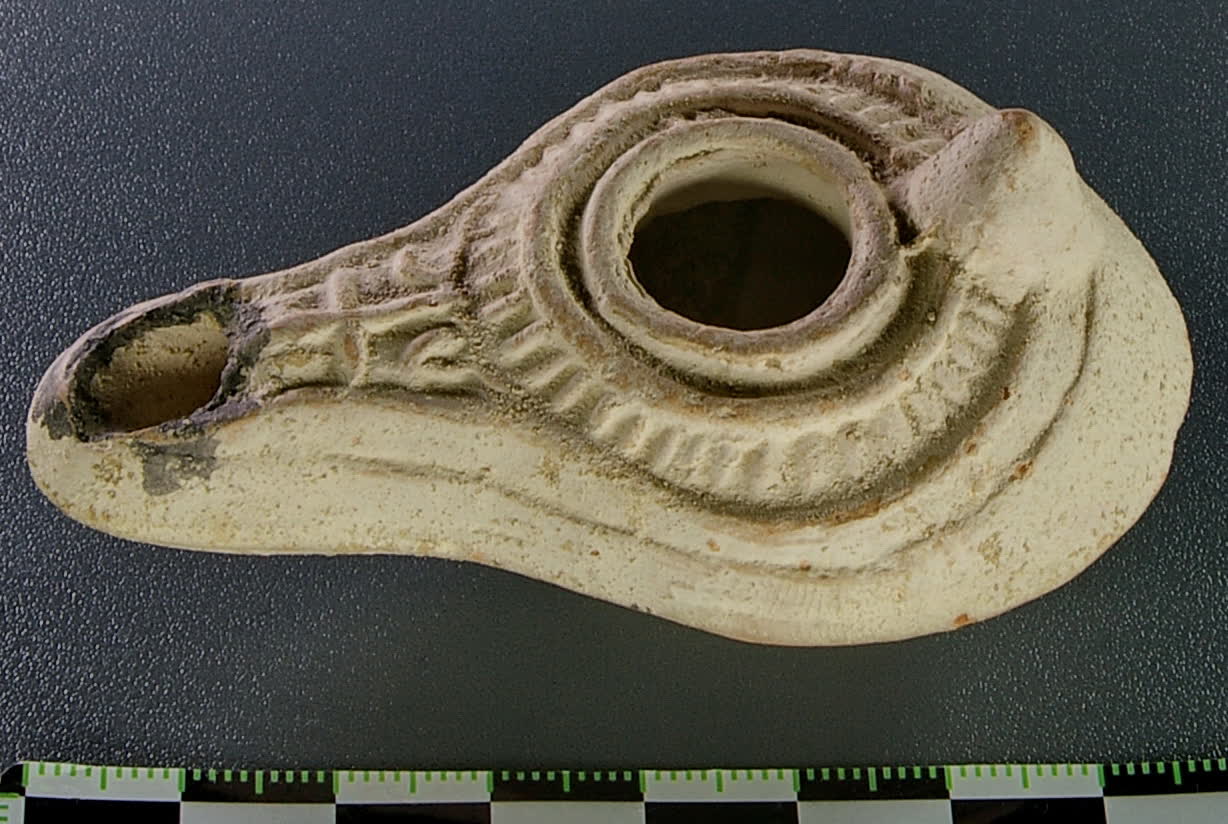
A simple clay oil lamp of the Roman era
A simple clay oil lamp of the Roman era — trimmed wick and ready oil, the small daily disciplines behind Jesus’ parable of the ten virgins.Johann H. Addicks · CC BY-SA 3.0

Start small. Keep the order: the Word, then prayer. Keep the Lord's day. Find a friend. When you fall, rise again tomorrow. And remember whose work it is: "For it is God which worketh in you both to will and to do of his good pleasure" (Philippians 2:13).

A next step

Turn to Part 4. Write your time and place on the first line. Open the Gospel of Mark tomorrow morning. Read the longer study, Spiritual Disciplines, for the reasons behind each list, and Encountering God for the full method of biblical meditation. Read the Bible free at kylelauriano.com/library.

An invitation

If you are not yet a follower of Jesus, this list is not your starting point. He is. "Come unto me, all ye that labour and are heavy laden, and I will give you rest" (Matthew 11:28). Repent, believe the gospel, and come to Him. The disciplines are for disciples; and He makes disciples of all who come.

Notes and sources

  1. 1Richard Baxter, The Saints' Everlasting Rest (1650), abridged by Benjamin Fawcett (New York: American Tract Society, n.d.), ch. 13. Online: https://www.ccel.org/ccel/baxter/saints_rest.html. ↩
  2. 2Jonathan Edwards, "Resolutions" (1722–1723), preface, in Sereno E. Dwight, "Memoirs of Jonathan Edwards," ch. 3, in The Works of Jonathan Edwards, ed. Edward Hickman, vol. 1 (London, 1834). Online: https://www.ccel.org/ccel/edwards/works1.i.iii.html. ↩
  3. 3J. C. Ryle, Holiness: Its Nature, Hindrances, Difficulties, and Roots (1877; London: James Clarke, 1952), ch. 6, "Growth", section III (a). Online: https://www.ccel.org/ccel/ryle/holiness.html. ↩
  4. 4George Müller, The Life of Trust: Being a Narrative of the Lord's Dealings with George Müller, Written by Himself, ed. H. Lincoln Wayland (Boston: Gould and Lincoln, 1861), entry for May 7, 1841. Online: https://www.gutenberg.org/ebooks/27288. ↩
  5. 5Thomas Watson, A Christian on the Mount: A Treatise Concerning Meditation (London, 1657), part XIII. Modernised text online: https://www.preceptaustin.org/a-christian-on-the-mount-a-treatise-concerning-meditation-thomas-watson. ↩
  6. 6Watson, A Christian on the Mount, part I. ↩
  7. 7Didache 8.3, in Cyril C. Richardson, ed. and trans., Early Christian Fathers, Library of Christian Classics 1 (Philadelphia: Westminster Press, 1953), 174. Online: https://www.ccel.org/ccel/richardson/fathers.viii.i.iii.html. ↩
  8. 8Didache 14.1, in Richardson, Early Christian Fathers, 178. ↩
  9. 9The Westminster Shorter Catechism (1647), Q. 90. Online: https://www.apuritansmind.com/westminster-standards/shorter-catechism/. ↩
  10. 10Watson, A Christian on the Mount, part VII. ↩
  11. 11Didache 8.1, in Richardson, Early Christian Fathers, 174. ↩
  12. 12John Wesley, Sermon 27, "Upon Our Lord's Sermon on the Mount, Discourse VII," part I, section 3. Online: http://wesley.nnu.edu/john-wesley/the-sermons-of-john-wesley-1872-edition/sermon-27-upon-our-lords-sermon-on-the-mount-discourse-seven/. ↩
  13. 13Wesley, Sermon 27, part IV, section 4. ↩
  14. 14"Where can I obtain M'Cheyne's Bible Reading Calendar?", in "FAQ – Robert Murray M'Cheyne," mcheyne.info, https://mcheyne.info/faq-robert-murray-mcheyne/; his dates at St Peter's are given on the site's home page, https://mcheyne.info/. ↩
  15. 15Baxter, The Saints' Everlasting Rest, ch. 13, part II. ↩
  16. 16Edwards, "Resolutions," no. 28. ↩
  17. 17Phillippa Lally, Cornelia H. M. van Jaarsveld, Henry W. W. Potts and Jane Wardle, "How Are Habits Formed: Modelling Habit Formation in the Real World," European Journal of Social Psychology 40, no. 6 (2010): 998–1009. The 18-to-254-day range is in the article's abstract; the 66-day average is Lally's own summary in "Does It Really Take 66 Days to Form a Habit? We Asked the Expert, Dr Pippa Lally," University of Surrey, 21 January 2026, https://www.surrey.ac.uk/news/does-it-really-take-66-days-form-habit-we-asked-expert-dr-pippa-lally. ↩
  18. 18Ryle, Holiness, ch. 6, section III (d). ↩
  19. 19Watson, A Christian on the Mount, part XI. ↩

Bring your questions on building habits to the Scripture Desk →

The Last Judgement, John Martin, 1853

Keep reading · Seven mornings by email

Seven people who say they met Jesus. What happened, in their own words.

Seven testimonies from The King Is Coming Show, one a morning — the story as they tell it, the verse the story lands on in the 1611 King James, and the page itself. Then the teaching that explains it. Free.

Start the seven days

Free. One a morning. Unsubscribe with one tap.

Where I'm honest with you

This is practical teaching, not proof. It's drawn from Scripture and from walking this road myself. If you're still weighing the basics — whether God is real, whether the Bible can be trusted — I'd encourage you to start with the Skeptic resources in the Research Hub before diving in here.

"Exercise thyself rather unto godliness." — 1 Timothy 4:7 (KJV)