THE BIBLICAL THEOLOGY, HISTORY AND PRACTICE OF A NEGLECTED DISCIPLINE
A study of what Scripture teaches about fasting joined to prayer, how the church has practised it from the apostles to today, and how to begin wisely and safely.
Abstract
Jesus said "when ye fast", not "if". Yet many Christians have never fasted, and many who do are unsure why. This paper asks what fasting is, why Scripture joins it to prayer, and how a believer should practise it. It surveys every kind of fast in the King James Bible, from the Day of Atonement to the church at Antioch, and reads five key texts closely (Isaiah 58; Matthew 4, 6 and 9; 2 Samuel 12). It traces the practice through the church's history in its own words: the Didache, Polycarp, the Shepherd of Hermas, John Chrysostom, John Calvin, the Westminster divines, John Wesley, Abraham Lincoln's 1863 proclamation and Andrew Murray. It closes with practical guidance drawn from Scripture and from current medical sources (the NHS, NICE and published research). The conclusion: fasting is not leverage over God but a God-given way of humbling ourselves and seeking Him, which He meets with Himself. It is written for believers who want to begin, and for those who want to fast better.
What’s inside
·Introduction
Part 1Part 1: The Words and the Witness of Scripture
Part 2Part 2: Five Texts Read Closely
Part 3Part 3: What Fasting Is, and What It Is Not
Part 4Part 4: Fasting Joined to Prayer
Part 5Part 5: Fasting in the History of the Church
Part 6Part 6: Practising Fasting Wisely
Part 7Part 7: Common Questions
·Conclusion
Research paper · 9 chapters · 31 notes · October 2026
"Is not this the fast that I have chosen? to loose the bands of wickedness, to undo the heavy burdens." — Isaiah 58:6 (KJV)Read in the 1611 →
About 44 minutes · 9 parts · the PDF has the same text
Introduction
3 min read
For much of church history, fasting was as ordinary a part of Christian life as prayer and giving. Within a generation of the apostles, believers were fasting twice a week. The Reformers wrote in its defence. The Puritans called days of public fasting. An American president proclaimed one in the middle of a civil war. Today many believers have never fasted once, and many who have are not sure what they were doing it for.
That matters, because the Lord Jesus spoke of fasting as something His people would do. In the Sermon on the Mount He gave three instructions in the same form: "when thou doest thine alms" (Matthew 6:2), then "when thou prayest" (Matthew 6:5), and finally "when ye fast" (Matthew 6:16). He assumed His disciples would do all three. And when He was asked why His disciples did not fast while He was with them, He answered: "the days will come, when the bridegroom shall be taken from them, and then shall they fast" (Matthew 9:15). We live in those days.
What this paper is
This is a study of fasting joined to prayer. It argues from the King James Bible first, and second from the believers who practised fasting and wrote about it, quoted from their own works. It also gives practical and medical guidance, because fasting is done in a body, and some bodies should not fast from food at all.
Part 1 surveys every kind of fast in Scripture. Part 2 reads five key passages closely. Part 3 asks what fasting is and is not. Part 4 asks why Scripture joins fasting to prayer, and what "breakthrough" can and cannot mean. Part 5 traces fasting through the history of the church. Part 6 gives practical guidance for beginning, including health cautions. Part 7 answers common questions and offers questions for study.
The argument of the whole can be put in a sentence: fasting is not leverage over God; it is a God-given way of humbling ourselves and seeking Him, and He meets the humble with Himself.
A word about me
I was raised Roman Catholic but never really connected — I went through the motions, fell asleep in the pews, and faked being sick to skip Mass. Eventually I gave up and called myself an atheist. I decided to read the Bible for one reason: to disprove it, so I'd have an excuse to stop going to church for good. It did the opposite. I came to faith in 2022, and my wife came to faith a month later. The full story is at kylelauriano.com/about.
I mention where I came from because many readers will come to fasting with one of two pictures: a set of rules you keep because the church says so, or a spiritual technique for getting results. This paper argues that Scripture gives us something better than either.
A note on Scripture: every verse in this paper is quoted from the King James Bible. You can read it free in the 1611 Reader at kylelauriano.com/library. A KJV with Strong's Concordance is the best study tool most believers will ever need.
A note on health: if you have diabetes, take regular medication, are pregnant or nursing, are under eighteen or underweight, or have ever struggled with an eating disorder, read Part 6 before you fast from food, and talk to your doctor. There are good ways to fast that do not involve food at all.
This part matters because we cannot practise what we have not first understood. Scripture says a great deal about fasting, in many settings and forms, and the variety is itself a lesson.
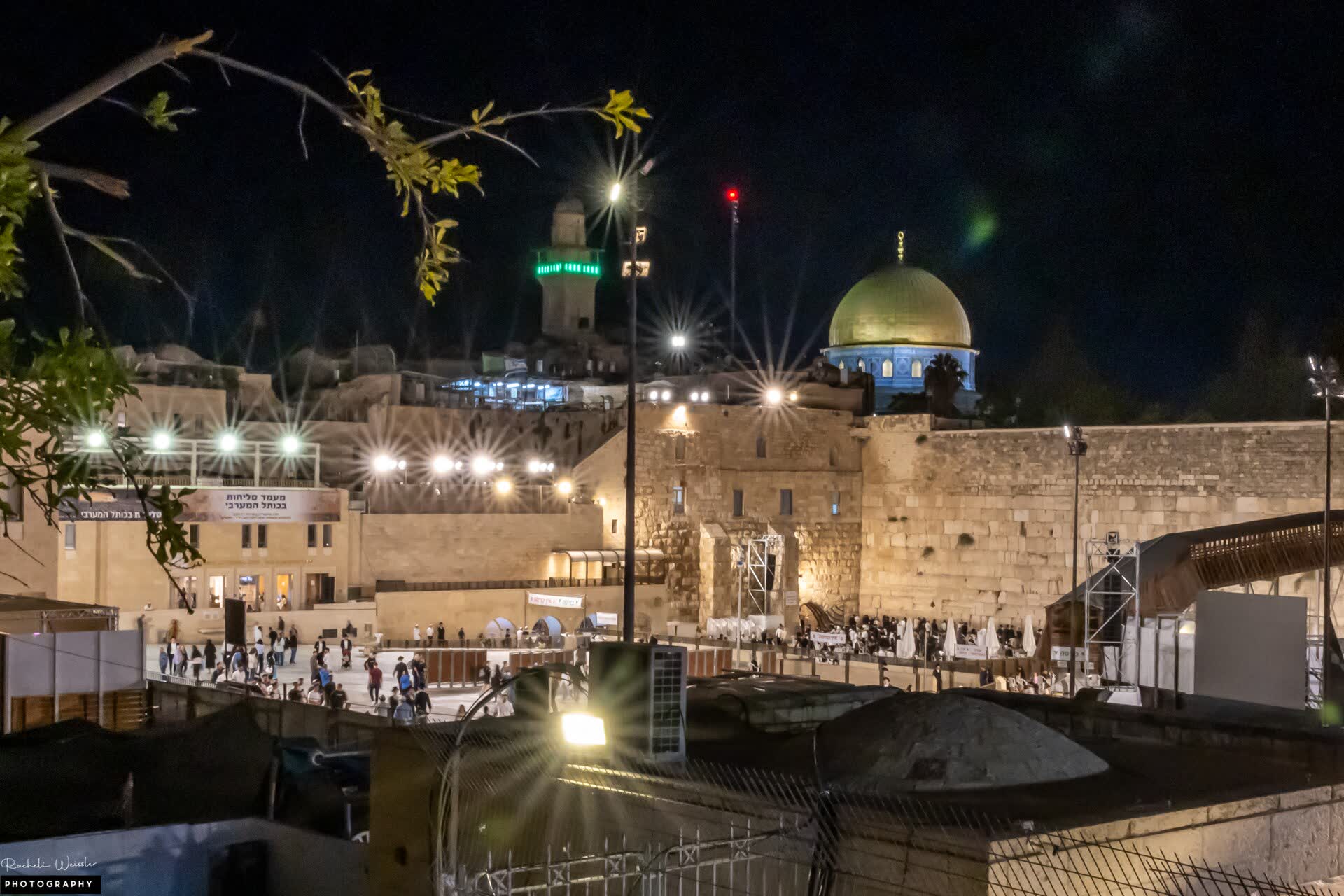
The Western Wall in Jerusalem — Herodian stones of the Second Temple platform where prayer has not stopped in two thousand years.רחל וייסלר · CC BY 2.5
The words
The ordinary Hebrew verb for fasting is tsum (Strong's H6684). Strong's defines it as "a primitive root; to cover over (the mouth), i.e. to fast."1 The New Testament verb is nēsteuō (Strong's G3522), defined as "to abstain from food (religiously)."2 Both words mean going without food. A fast in Scripture is not a general "giving something up"; it is, first of all, doing without food for a time for the sake of God.
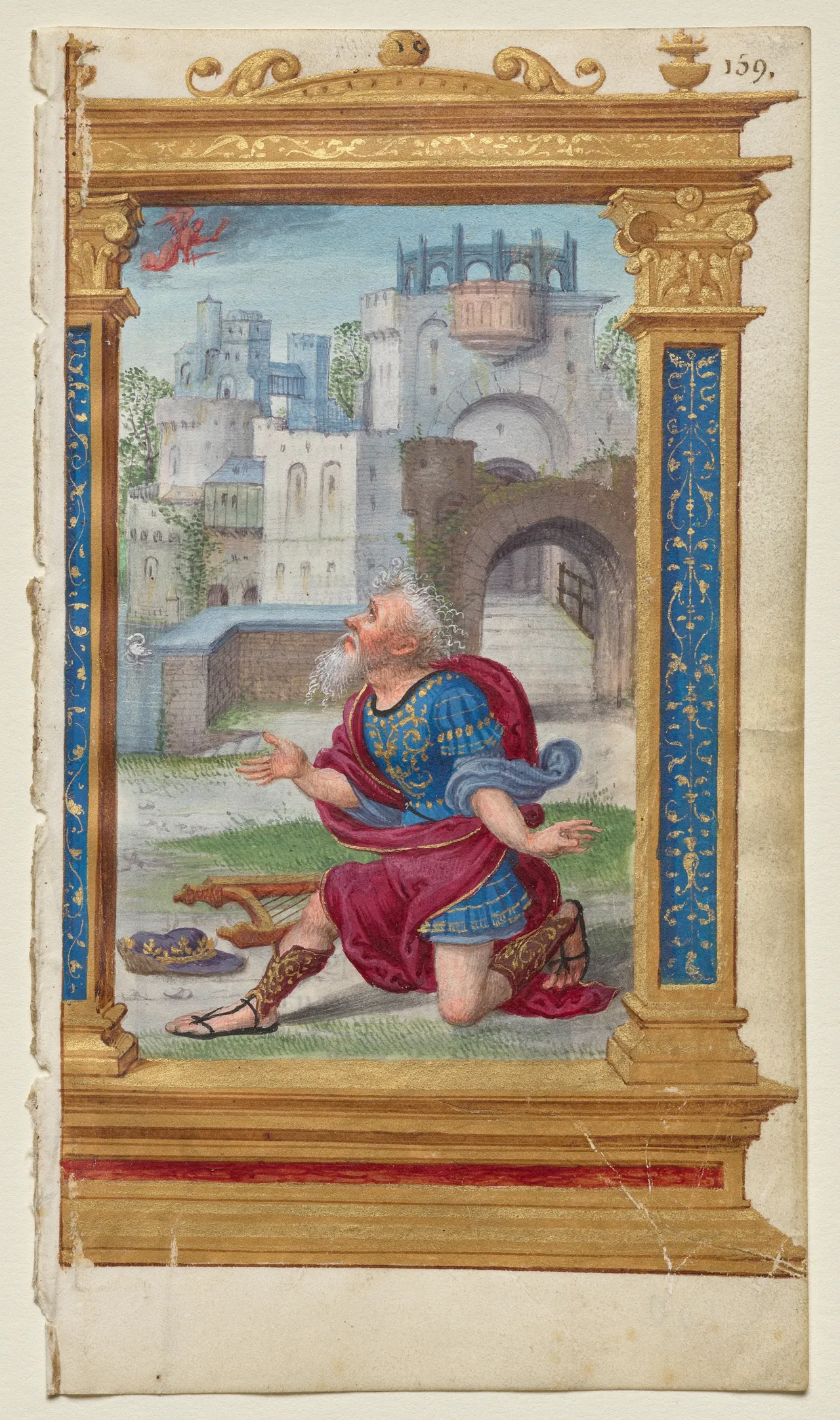
A French manuscript leaf of about 1530 to 1535 showing King David kneeling in prayer, the king who fasted and prayed for his dying child.Leaf from a Book of Hours: King David in Prayer (2 of 3 Excised Leaves) · c. 1530–35 · Cleveland Museum of Art · CC0 · museum record · Galeria Regni
Scripture also uses a second way of speaking. The law of the Day of Atonement says: "ye shall afflict your souls, and do no work at all" (Leviticus 16:29). Israel understood "afflicting the soul" as fasting, and by the New Testament the Day of Atonement could be called simply "the fast". Luke writes that sailing had become dangerous "because the fast was now already past" (Acts 27:9). David uses the same language: "I humbled my soul with fasting" (Psalm 35:13). Fasting is the body's way of humbling the soul.
Fasting in the law
Strikingly, the law of Moses commands only one regular fast: the Day of Atonement, once a year, when the high priest entered the most holy place to make atonement for the sins of the people (Leviticus 16:29). Every other fast in the Old Testament is voluntary, called in response to a particular need.
That shapes how we should think of fasting. It is not, in Scripture, a rule for counting holiness. It is a response: to sin, to danger, to grief, to God.
Moses himself fasted on the mountain: "And he was there with the LORD forty days and forty nights; he did neither eat bread, nor drink water. And he wrote upon the tables the words of the covenant, the ten commandments" (Exodus 34:28). This was an extraordinary event in the very presence of God, not a pattern given to Israel, and no one should try to copy it. A person cannot survive forty days without water by natural means.
Fasting in the history of Israel
The historical books show fasting in almost every kind of crisis.
In defeat and repentance. After a terrible civil war, "all the children of Israel, and all the people, went up, and came unto the house of God, and wept, and sat there before the LORD, and fasted that day until even" (Judges 20:26). At Mizpeh under Samuel, the people "fasted on that day, and said there, We have sinned against the LORD" (1 Samuel 7:6).
In grief. When the men of Jabesh-gilead recovered the bodies of Saul and his sons, "they took their bones, and buried them under a tree at Jabesh, and fasted seven days" (1 Samuel 31:13). Hannah, grieving her childlessness, "wept, and did not eat" (1 Samuel 1:7).
In intercession. David fasted for his dying child (2 Samuel 12:16), a passage we will read closely in Part 2.
In national danger. When a vast army came against Judah, "Jehoshaphat feared, and set himself to seek the LORD, and proclaimed a fast throughout all Judah" (2 Chronicles 20:3).
For guidance and protection. Ezra, about to lead families across dangerous country with the temple treasures, proclaimed a fast "that we might afflict ourselves before our God, to seek of him a right way for us, and for our little ones, and for all our substance." He had told the king God would protect them, and was ashamed to ask for soldiers. "So we fasted and besought our God for this: and he was intreated of us" (Ezra 8:21-23).
In burden for God's work. When Nehemiah heard that Jerusalem's walls lay broken, "I sat down and wept, and mourned certain days, and fasted, and prayed before the God of heaven" (Nehemiah 1:4).
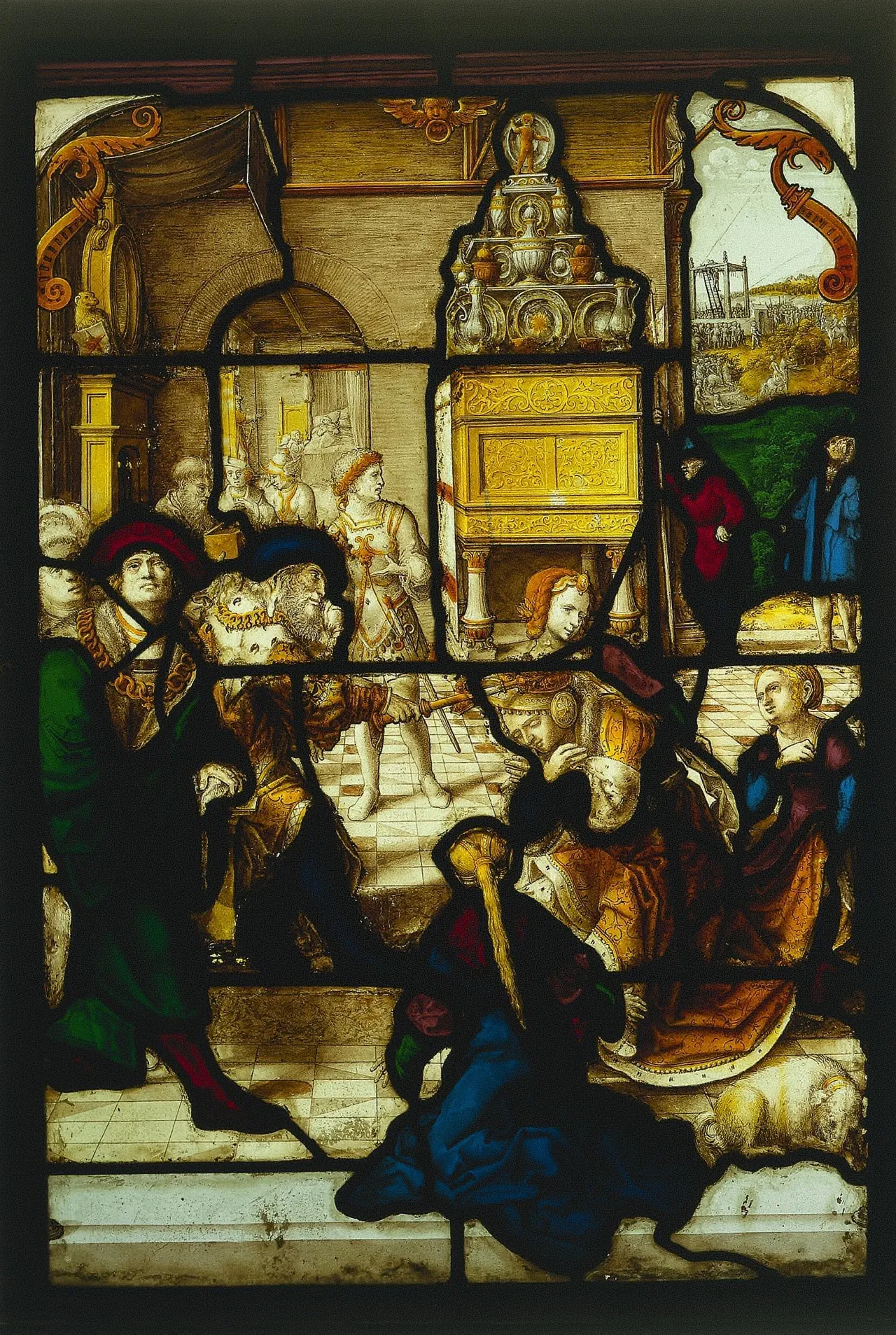
Facing death. When Haman's decree threatened every Jew in the empire, Esther sent word to Mordecai: "Go, gather together all the Jews that are present in Shushan, and fast ye for me, and neither eat nor drink three days, night or day: I also and my maidens will fast likewise; and so will I go in unto the king, which is not according to the law: and if I perish, I perish" (Esther 4:16).
In seeking understanding. Daniel, reading Jeremiah's prophecy of seventy years, "set my face unto the Lord God, to seek by prayer and supplications, with fasting, and sackcloth, and ashes" (Daniel 9:3), and later mourned three weeks with a partial fast (Daniel 10:2-3). The companion paper 21-Day Warfare Fast reads those chapters closely.
Fasting in the prophets
The prophets call for fasting and, at the same time, expose false fasting.
The call. Joel, in a time of disaster, called the nation back: "Therefore also now, saith the LORD, turn ye even to me with all your heart, and with fasting, and with weeping, and with mourning: And rend your heart, and not your garments, and turn unto the LORD your God: for he is gracious and merciful, slow to anger, and of great kindness, and repenteth him of the evil" (Joel 2:12-13).
The pagan city that fasted. The most dramatic fast in the Old Testament is kept by Gentiles. When Jonah preached, "the people of Nineveh believed God, and proclaimed a fast, and put on sackcloth, from the greatest of them even to the least of them" (Jonah 3:5). Their king decreed that they should "cry mightily unto God: yea, let them turn every one from his evil way" and asked, "Who can tell if God will turn and repent, and turn away from his fierce anger, that we perish not?" (Jonah 3:8-9). And "God saw their works, that they turned from their evil way" (Jonah 3:10). Notice what God saw: not the fasting as such, but the turning.
The exposure. Isaiah 58 is God's long answer to a people who fasted and wondered why He did not notice. We read it in Part 2. Zechariah carries the same rebuke. Asked whether Israel should keep the fasts it had kept in exile, God answered with a question: "When ye fasted and mourned in the fifth and seventh month, even those seventy years, did ye at all fast unto me, even to me?" (Zechariah 7:5). Then He promised a day when those fasts would become feasts: "The fast of the fourth month, and the fast of the fifth, and the fast of the seventh, and the fast of the tenth, shall be to the house of Judah joy and gladness, and cheerful feasts; therefore love the truth and peace" (Zechariah 8:19).
Fasting in the Gospels
Anna. The first person in Luke's Gospel to speak of the infant Christ to those who looked for redemption was a widow "of about fourscore and four years, which departed not from the temple, but served God with fastings and prayers night and day" (Luke 2:37). Her fasting was a form of waiting for the Messiah.
The Lord Jesus. Before His public ministry, Jesus "being full of the Holy Ghost returned from Jordan, and was led by the Spirit into the wilderness, Being forty days tempted of the devil. And in those days he did eat nothing: and when they were ended, he afterward hungered" (Luke 4:1-2). Afterwards "Jesus returned in the power of the Spirit into Galilee" (Luke 4:14).
His teaching. Jesus taught how to fast (Matthew 6:16-18), when His disciples would fast (Matthew 9:14-15), and that a certain kind of spirit "goeth not out but by prayer and fasting" (Matthew 17:21). We consider these in Parts 2 and 4.
The Pharisees. Jesus' parable of the Pharisee and the publican shows the danger of fasting turned into a boast: "I fast twice in the week, I give tithes of all that I possess" (Luke 18:12).
Fasting in Acts and the epistles
The church after Pentecost fasted, especially when seeking God's direction.
At Antioch, "As they ministered to the Lord, and fasted, the Holy Ghost said, Separate me Barnabas and Saul for the work whereunto I have called them. And when they had fasted and prayed, and laid their hands on them, they sent them away" (Acts 13:2-3). On their journey Paul and Barnabas appointed leaders the same way: "And when they had ordained them elders in every church, and had prayed with fasting, they commended them to the Lord, on whom they believed" (Acts 14:23).
Saul of Tarsus, blinded on the Damascus road, "was three days without sight, and neither did eat nor drink" (Acts 9:9). The Gentile centurion Cornelius told Peter: "Four days ago I was fasting until this hour; and at the ninth hour I prayed in my house, and, behold, a man stood before me in bright clothing" (Acts 10:30).
Paul lists "fastings" among the marks of his ministry: "In stripes, in imprisonments, in tumults, in labours, in watchings, in fastings" (2 Corinthians 6:5), and again, "in hunger and thirst, in fastings often" (2 Corinthians 11:27). He also gives married believers counsel about it: "Defraud ye not one the other, except it be with consent for a time, that ye may give yourselves to fasting and prayer; and come together again, that Satan tempt you not for your incontinency" (1 Corinthians 7:5).
A note on the text
Several of these verses read differently in modern versions. Matthew 17:21 is missing from many of them altogether, and the words "and fasting" are absent in their Mark 9:29, 1 Corinthians 7:5 and Acts 10:30. All stand in the 1611 and the Received Text. You can see every place where the 1611 and the modern Critical Text differ at kylelauriano.com/library/changes. The point for this paper is simple: in the King James Bible, the joining of prayer and fasting runs through the Gospels, Acts and Paul.
What the survey shows
Taken together, the biblical evidence shows several things.
Fasting is almost always joined to prayer. It is rarely mentioned alone.
Fasting is a response, not a calendar. Only one fast was commanded in the law; the rest arose from sin, grief, danger, burden and the seeking of God's will.
Fasting can be private or shared. David fasted alone; Nineveh fasted as a city; the church at Antioch fasted together.
Fasts vary in form and length: a day until evening, three days, seven days, three weeks of partial fasting, and the rare and extraordinary forty days.
God looks at the heart. Fasting without turning from sin is rebuked again and again.
This part matters because a few passages carry most of Scripture's teaching on fasting. If we read them well, the rest falls into place.
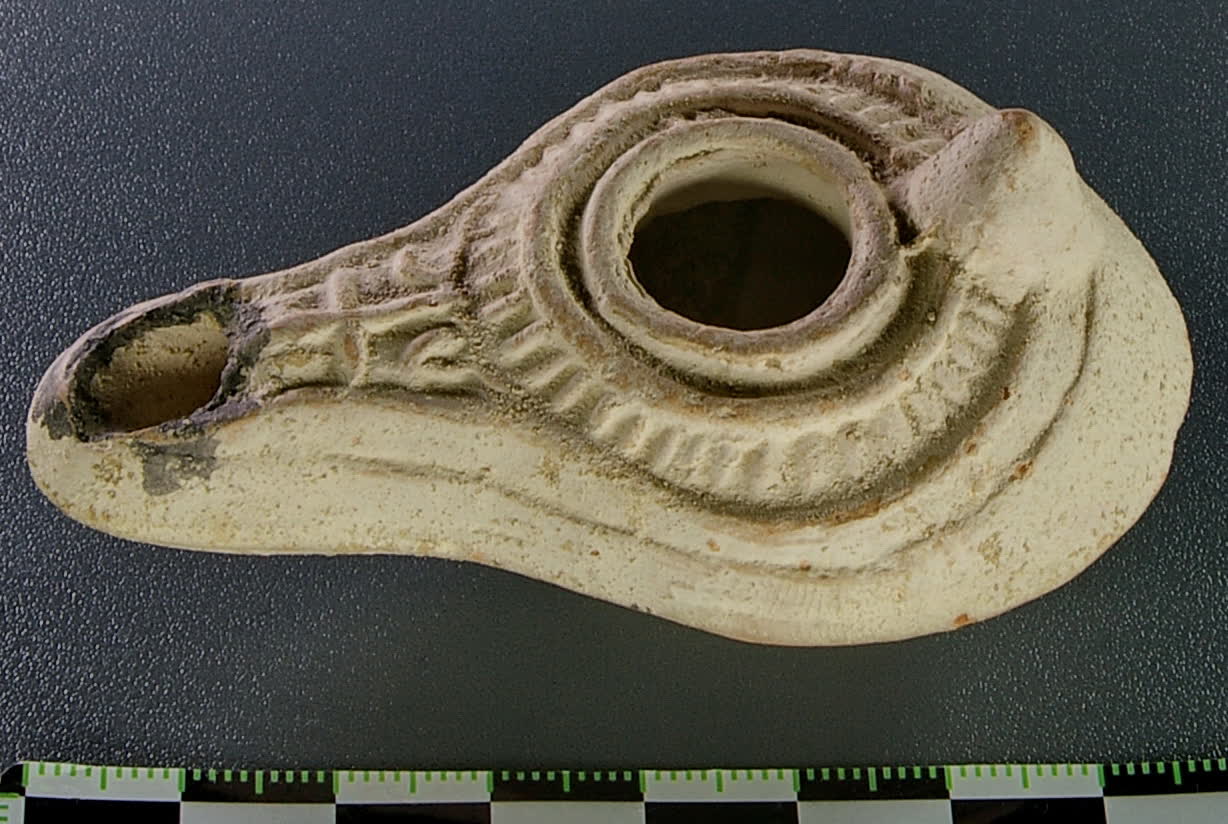
A simple clay oil lamp of the Roman era — trimmed wick and ready oil, the small daily disciplines behind Jesus’ parable of the ten virgins.Johann H. Addicks · CC BY-SA 3.0
Isaiah 58 — The fast God chooses
Isaiah 58 opens with God's people complaining: "Wherefore have we fasted, say they, and thou seest not? wherefore have we afflicted our soul, and thou takest no knowledge?" God's answer is blunt:
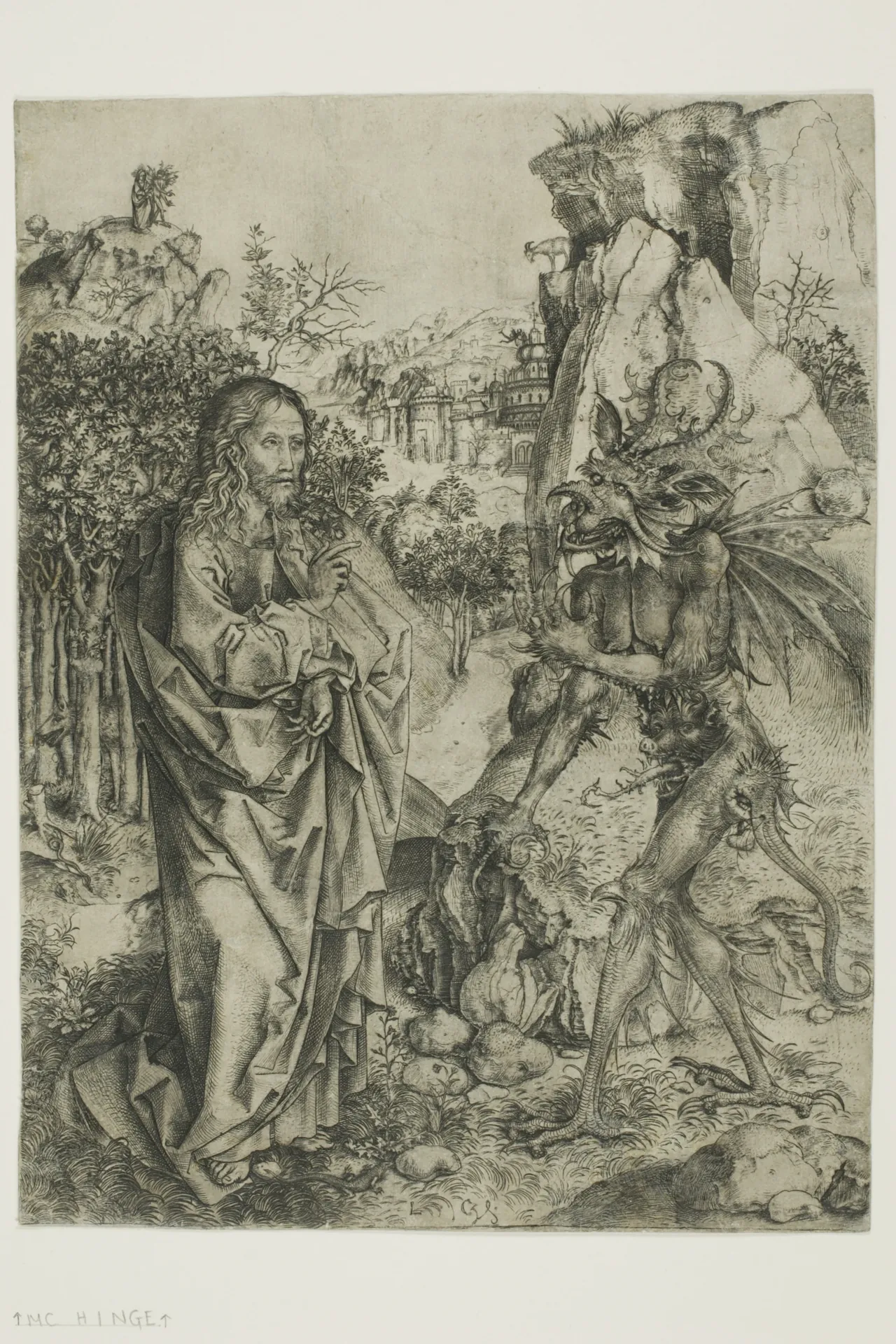
A German engraving of about 1490 showing the Temptation of Christ, when the tempter came to Jesus after His forty days of fasting in the wilderness.The Temptation of Christ · c. 1490 · Art Institute of Chicago · CC0 · museum record · Galeria Regni
“Behold, in the day of your fast ye find pleasure, and exact all your labours. Behold, ye fast for strife and debate, and to smite with the fist of wickedness: ye shall not fast as ye do this day, to make your voice to be heard on high. Is it such a fast that I have chosen? a day for a man to afflict his soul? is it to bow down his head as a bulrush, and to spread sackcloth and ashes under him? wilt thou call this a fast, and an acceptable day to the LORD?” (Isaiah 58:3-5)
They were fasting while they drove their workers hard and quarrelled among themselves. The outward signs were all there: the bowed head, the sackcloth, the ashes. The heart was not. Then God says what He does want:
“Is not this the fast that I have chosen? to loose the bands of wickedness, to undo the heavy burdens, and to let the oppressed go free, and that ye break every yoke? Is it not to deal thy bread to the hungry, and that thou bring the poor that are cast out to thy house? when thou seest the naked, that thou cover him; and that thou hide not thyself from thine own flesh?” (Isaiah 58:6-7)
Three things are worth noticing.
First, the "bands of wickedness", "heavy burdens" and "yoke" are, in context, the injustices God's people were laying on others. Isaiah 58:6 is often quoted as a promise that fasting breaks spiritual bondage in the one who fasts. Read in its chapter, it says something more searching: the fast God chooses sets other people free.
Second, the fast God chooses includes giving away bread. Abstaining from food and giving food belong together. We will see the early church draw exactly this conclusion.
Third, God attaches real promises to this kind of fast: "Then shall thy light break forth as the morning, and thine health shall spring forth speedily: and thy righteousness shall go before thee; the glory of the LORD shall be thy rereward. Then shalt thou call, and the LORD shall answer; thou shalt cry, and he shall say, Here I am" (Isaiah 58:8-9). God does respond. But He responds to a fast that is joined to justice and mercy, not to hunger alone.
Matthew 4 — Not by bread alone
“Then was Jesus led up of the Spirit into the wilderness to be tempted of the devil. And when he had fasted forty days and forty nights, he was afterward an hungred. And when the tempter came to him, he said, If thou be the Son of God, command that these stones be made bread. But he answered and said, It is written, Man shall not live by bread alone, but by every word that proceedeth out of the mouth of God.” (Matthew 4:1-4)
Jesus answers from Deuteronomy 8, where Moses explained Israel's forty years in the wilderness: God "humbled thee, and suffered thee to hunger, and fed thee with manna ... that he might make thee know that man doth not live by bread only, but by every word that proceedeth out of the mouth of the LORD doth man live" (Deuteronomy 8:3).
Israel was hungry in the wilderness and grumbled. Jesus was hungry in the wilderness and trusted. Where Israel failed, the Son of God stood. That is the first meaning of the passage: Christ as the faithful Israel, the obedient Son.
But it also teaches us what hunger is for. God "suffered thee to hunger" so that His people would learn that they live by His word. Every Christian fast is a small, voluntary entry into that lesson. Hunger becomes a teacher. It tells us, many times a day, that bread is not our life.
Jesus showed the same truth in another way when His disciples urged Him to eat: "I have meat to eat that ye know not of ... My meat is to do the will of him that sent me, and to finish his work" (John 4:32-34).
Matthew 6 — In secret
“Moreover when ye fast, be not, as the hypocrites, of a sad countenance: for they disfigure their faces, that they may appear unto men to fast. Verily I say unto you, They have their reward. But thou, when thou fastest, anoint thine head, and wash thy face; That thou appear not unto men to fast, but unto thy Father which is in secret: and thy Father, which seeth in secret, shall reward thee openly.” (Matthew 6:16-18)
This passage settles several questions at once.
Jesus expects His people to fast. "When ye fast", like "when thou prayest", assumes it.
The danger of fasting is display. The hypocrites made sure their faces showed it. They got what they wanted: to be seen. "They have their reward." That is all the reward they will get.
The remedy is ordinariness. Wash your face. Do your hair. Look like yourself. Let no one guess.
The Father sees and rewards. Jesus is not shy of speaking about reward. But the reward comes from the Father, not from people, and it is given in His way and time. It is not described as a particular result. The greatest reward of seeking God is God.
Secrecy here is about motive, not about never telling anyone. A husband and wife must agree on a fast (1 Corinthians 7:5), and a church can fast together (Acts 13:2). What Jesus forbids is fasting in order to be admired.
Matthew 9 — The bridegroom taken away
“Then came to him the disciples of John, saying, Why do we and the Pharisees fast oft, but thy disciples fast not? And Jesus said unto them, Can the children of the bridechamber mourn, as long as the bridegroom is with them? but the days will come, when the bridegroom shall be taken from them, and then shall they fast.” (Matthew 9:14-15)
This is the most important text for why Christians fast at all. Jesus links fasting with mourning, and both with His absence. While He was with His disciples, fasting would have been as out of place as mourning at a wedding. But He would be taken away, and then His disciples would fast.
He was taken away at the cross, and then, after rising, He ascended to the Father. We live in the time between His going and His coming again. Christian fasting, then, is not first of all a technique for spiritual results. It is the longing of a bride for her absent bridegroom. It says, with the body, what Revelation says with the voice: "Blessed are they which are called unto the marriage supper of the Lamb" (Revelation 19:9). We fast now because we will feast then. At the last supper Jesus said, "I will not drink henceforth of this fruit of the vine, until that day when I drink it new with you in my Father’s kingdom" (Matthew 26:29).
That is why fasting fits a people waiting for their King.
2 Samuel 12 — "Who can tell?"
When the child born to David and Bathsheba fell ill, the prophet Nathan had already said that the child would die. David fasted anyway: "David therefore besought God for the child; and David fasted, and went in, and lay all night upon the earth" (2 Samuel 12:16). On the seventh day the child died. His servants were afraid to tell him, but when David understood, he rose, washed, worshipped, and ate. They asked why. He answered:
“While the child was yet alive, I fasted and wept: for I said, Who can tell whether GOD will be gracious to me, that the child may live? But now he is dead, wherefore should I fast? can I bring him back again? I shall go to him, but he shall not return to me.” (2 Samuel 12:22-23)
This is one of the wisest passages in the Bible on fasting, and it guards us against two errors.
Against fatalism. David fasted even after God had spoken through the prophet, because he knew God is merciful and might relent. Fasting is not pointless just because God is sovereign.
Against presumption. David did not believe his fast obligated God. "Who can tell" is the language of hope, not of a guarantee. When God said no, David did not rage or conclude that he had not fasted hard enough. He worshipped.
The same "who can tell" is on the lips of the king of Nineveh (Jonah 3:9), and Joel's call to fast carries the same hope: "Who knoweth if he will return and repent, and leave a blessing behind him" (Joel 2:14). It is the honest posture of every biblical fast.
This part matters because fasting is easily twisted, and the twisted forms do real harm: to the soul that grows proud or anxious, and to the body that is punished in God's name.
Fasting is humbling, not earning
The Pharisee who fasted twice a week went home unjustified; the publican who could only say "God be merciful to me a sinner" went home justified (Luke 18:13-14). Fasting cannot earn God's favour, because nothing can. "For by grace are ye saved through faith; and that not of yourselves: it is the gift of God: Not of works, lest any man should boast" (Ephesians 2:8-9).
What fasting can do is express and deepen humility. "Humble yourselves therefore under the mighty hand of God, that he may exalt you in due time: Casting all your care upon him; for he careth for you" (1 Peter 5:6-7). The French reformer John Calvin, who wrote at length in defence of fasting, gave it three purposes: "to mortify and subdue the flesh, that it may not wanton"; "to prepare the better for prayer and holy meditation"; and "to give evidence of humbling ourselves before God."3 Each of these is something fasting does in us and through us. None of them is a payment.
Fasting is unto God
Zechariah's question cuts to the heart: "did ye at all fast unto me, even to me?" (Zechariah 7:5). A fast can be about many things: losing weight, proving willpower, getting something, being seen. A biblical fast is about God. John Wesley, preaching on Matthew 6 in 1748, put it first among his rules for fasting: "let it be done unto the Lord, with our eye singly fixed on Him."4
Fasting is not contempt for the body
Scripture never treats the body or food as evil. Paul warned of teachers who would come "commanding to abstain from meats, which God hath created to be received with thanksgiving of them which believe and know the truth. For every creature of God is good, and nothing to be refused, if it be received with thanksgiving" (1 Timothy 4:3-4). He said of man-made rules of self-denial that they "have indeed a shew of wisdom in will worship, and humility, and neglecting of the body; not in any honour to the satisfying of the flesh" (Colossians 2:23). And "the kingdom of God is not meat and drink; but righteousness, and peace, and joy in the Holy Ghost" (Romans 14:17).
A Christian fasts from food not because food is bad but because God is better. Fasting is a temporary laying aside of a good gift in order to seek the Giver. That is why it must never become a way of punishing the body or of feeding an unhealthy relationship with food. "What? know ye not that your body is the temple of the Holy Ghost which is in you, which ye have of God, and ye are not your own?" (1 Corinthians 6:19). Wesley warned: "For we may not offer God murder for sacrifice, or destroy our bodies to help our souls."5
Fasting exposes what rules us
One of fasting's quieter gifts is that it shows us ourselves. Take away the meal, the snack, the coffee, and we find out how much they were holding up: our mood, our patience, our sense of comfort. Paul spoke of those "whose God is their belly" (Philippians 3:19). Most of us would never say that of ourselves, and a day without food can still leave us shaken.
John Piper, in A Hunger for God (1997), made the point memorably: "The greatest enemy of hunger for God is not poison but apple pie." He went on: "It is not the banquet of the wicked that dulls our appetite for heaven, but endless nibbling at the table of the world."6 The things that crowd God out are usually not wicked. They are ordinary, good and constant. Fasting interrupts them so that a deeper hunger can surface.
Fasting is longing
The psalmists used hunger and thirst as pictures of desire for God. "As the hart panteth after the water brooks, so panteth my soul after thee, O God" (Psalm 42:1). Another psalm says, "O God, thou art my God; early will I seek thee: my soul thirsteth for thee, my flesh longeth for thee in a dry and thirsty land, where no water is" (Psalm 63:1). Jesus said, "Blessed are they which do hunger and thirst after righteousness: for they shall be filled" (Matthew 5:6).
Fasting turns that picture into practice. The body's hunger becomes an image, and a reminder, of the soul's. And the promise answers it: "For he satisfieth the longing soul, and filleth the hungry soul with goodness" (Psalm 107:9). And Jesus said, "I am the bread of life: he that cometh to me shall never hunger" (John 6:35).
Fasting is a means of grace
Christians have long spoken of the "means of grace": the ordinary ways God gives His people to receive His help. The word, prayer, the Lord's Supper and the fellowship of believers are chief among them. Fasting belongs with prayer as one of the ways we seek God. It has no power of its own. Its value lies wholly in the God it helps us seek.
Wesley expressed this balance exactly. Fasting, he said, "is only a way which God hath ordained, wherein we wait for his unmerited mercy." And in the same breath: "let us beware, Secondly of fancying we merit anything of God by our fasting."7 Fasting is a way of waiting, not a way of earning. The mercy we wait for remains unmerited.
This part matters because Scripture almost never speaks of fasting alone. Fasting without prayer is only hunger. Prayer joined to fasting becomes, in the old phrase, prayer with the whole person.
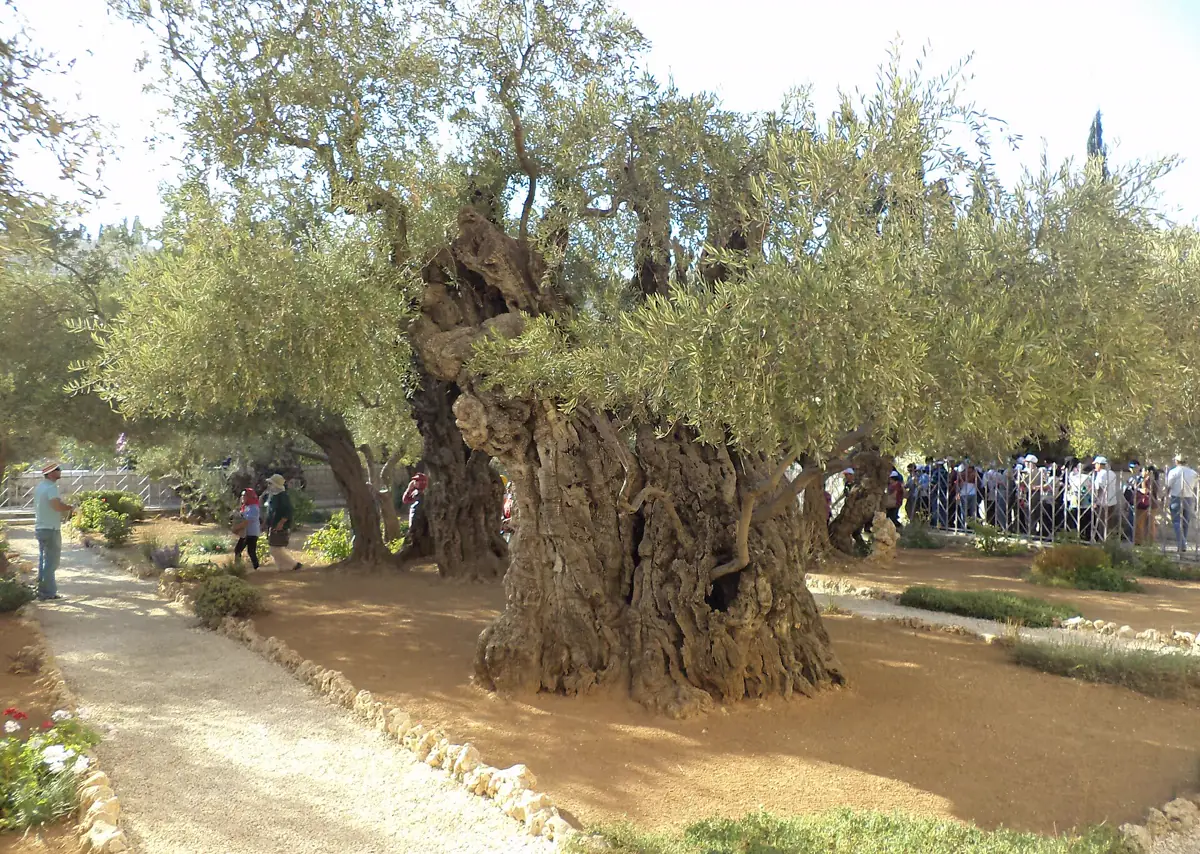
One of the oldest olive trees in the Garden of Gethsemane, rooted through centuries of continuous growth — the grove where Jesus prayed on the night of His arrest.Bogdan Kosar · CC BY-SA 4.0
Why the two belong together
Look again at the biblical examples. Nehemiah "fasted, and prayed before the God of heaven" (Nehemiah 1:4). Daniel sought God "by prayer and supplications, with fasting" (Daniel 9:3). Ezra's company "fasted and besought our God" (Ezra 8:23). Anna "served God with fastings and prayers night and day" (Luke 2:37). The church at Antioch "fasted and prayed" (Acts 13:3). The elders were appointed after the church "had prayed with fasting" (Acts 14:23). Paul's counsel to married couples was about giving themselves "to fasting and prayer" (1 Corinthians 7:5).
A Netherlandish stained-glass panel of about 1530 showing Esther before Ahasuerus, the queen who asked all the Jews of Shushan to fast with her before she went in.Esther before Ahasuerus · c. 1530 · Cleveland Museum of Art · CC0 · museum record · Galeria Regni
Wesley observed the same pattern: "Thus, we may observe, the men of God, in ancient times always joined prayer and fasting together."8
Why? Andrew Murray, the South African pastor whose With Christ in the School of Prayer (1885) has been read for well over a century, gave an answer that is hard to improve on. Prayer, he wrote, "is the reaching out after God and the unseen; fasting, the letting go of all that is of the seen and temporal." Prayer is "the one hand with which we grasp the invisible", and fasting "the other, with which we let loose and cast away the visible."9
Murray also noted that fasting helps "to express, to deepen, and to confirm the resolution" to seek God.10 A person who says he is desperate for God and then goes on exactly as before has said one thing with his lips and another with his life. Fasting makes the body agree with the prayer.
Prayer and fasting against the enemy
The text most associated with fasting and spiritual conflict comes after the disciples failed to cast a spirit out of a boy.
“Then came the disciples to Jesus apart, and said, Why could not we cast him out? And Jesus said unto them, Because of your unbelief: for verily I say unto you, If ye have faith as a grain of mustard seed, ye shall say unto this mountain, Remove hence to yonder place; and it shall remove; and nothing shall be impossible unto you. Howbeit this kind goeth not out but by prayer and fasting.” (Matthew 17:19-21)
Murray titled his lesson on this passage "The Cure of Unbelief", and that is the key. Jesus' diagnosis was unbelief. His remedy was not a technique but a life: prayer that lays hold of God, and fasting that lets go of everything else. The authority Christ gives His people over evil spirits is real (Luke 10:19; Mark 16:17), and deliverance is for today. But it flows from dependence on Him, not from the length of our fast. The seven sons of Sceva used the right name and the wrong way, and were overpowered (Acts 19:13-16).
Fasting therefore belongs in the believer's armour as a form of prayer. It does not make us stronger than the devil. It throws us more fully on the One who is. "Submit yourselves therefore to God. Resist the devil, and he will flee from you. Draw nigh to God, and he will draw nigh to you" (James 4:7-8).
Fasting together
Many of Scripture's fasts were shared. Esther asked all the Jews in Shushan to fast with her. Jehoshaphat proclaimed a fast "throughout all Judah" (2 Chronicles 20:3). The church at Antioch fasted as a body when the Holy Ghost spoke.
Shared fasting does not contradict Matthew 6. Jesus forbade fasting to be seen and admired, not fasting together for a shared need. When a church fasts for revival, for guidance in calling a pastor, for a nation in crisis, or for the persecuted, it stands in a long biblical line. Each person's heart must still be turned to God, not to the others in the room.
What "breakthrough" can and cannot mean
Much modern teaching speaks of fasting for "breakthrough". The word can mean something biblical: that God answers His people when they humble themselves and pray. "If my people, which are called by my name, shall humble themselves, and pray, and seek my face, and turn from their wicked ways; then will I hear from heaven, and will forgive their sin, and will heal their land" (2 Chronicles 7:14). God answered Ezra, Esther, Nineveh and the church at Antioch.
But the word can also smuggle in something unbiblical: the idea that fasting guarantees a particular outcome, or that a sufficient amount of fasting obliges God to act. Scripture does not teach that.
David fasted seven days, and his child died (2 Samuel 12).
Paul prayed three times for his thorn to be removed, and God said, "My grace is sufficient for thee: for my strength is made perfect in weakness" (2 Corinthians 12:9).
Paul, who fasted often, left a fellow worker sick: "Trophimus have I left at Miletum sick" (2 Timothy 4:20).
A teaching that promises guaranteed results in exchange for fasting sets people up for heartbreak and, worse, for blaming themselves (or being blamed) when God in His wisdom answers differently. It also quietly turns God into a mechanism. The prophets called that kind of religion what it was.
The right posture is David's "who can tell", joined to the confidence John gives: "And this is the confidence that we have in him, that, if we ask any thing according to his will, he heareth us" (1 John 5:14). We ask boldly, as children. We leave the answer with our Father. And we can be sure of this much: "Draw nigh to God, and he will draw nigh to you" (James 4:8). Nearness to God is promised to every humble seeker. That is the breakthrough that never fails.
This part matters because we are not the first Christians to fast, and the church's long experience is a gift. It shows how faithful believers practised fasting, and it shows the two errors the church has had to correct again and again.
The first generations
The Didache. One of the earliest Christian writings outside the New Testament is the Didache, or Teaching of the Twelve Apostles, a short church manual usually dated to the late first or early second century. It is not Scripture, but it shows us what early believers did. It required fasting before baptism: "Before the baptism, moreover, the one who baptizes and the one being baptized must fast, and any others who can." Candidates were to be told "to fast for one or two days beforehand."11
It also set a weekly rhythm: "Your fasts must not be identical with those of the hypocrites. They fast on Mondays and Thursdays; but you should fast on Wednesdays and Fridays."12 The "hypocrites" here are those Jesus described in Matthew 6. The early Christians kept fasting, but marked it off as their own.
Polycarp. Polycarp, bishop of Smyrna, who was martyred in the mid-second century, wrote to the church at Philippi urging them to hold to the apostolic teaching, "watching unto prayer," and persevering in fasting.13
The Shepherd of Hermas. A second-century Christian writing called the Shepherd of Hermas, widely read in the early church but never received as Scripture, took up Isaiah 58 in a strikingly practical way. On a day of fasting, it says, "you will taste nothing but bread and water." Then, "having reckoned up the price of the dishes of that day which you intended to have eaten," the believer is to set that sum aside and "give it to a widow, or an orphan, or to some person in want."14 Whatever we make of the rest of the book, this counsel is pure Isaiah 58: the food you do not eat becomes bread for the hungry.
John Chrysostom
By the fourth century the church kept a forty-day fast before Easter, the season later called Lent. John Chrysostom, the great preacher of Antioch and later bishop of Constantinople, preached a series of sermons in 387 during a civic crisis, known as the Homilies on the Statues. In the third he warned his hearers against thinking that skipping food was the whole of fasting: "the honour of fasting consists not in abstinence from food, but in withdrawing from sinful practices." He pressed it home: "Do you fast? Give me proof of it by your works!" And then: "If you see a poor man, take pity on him!" The whole body, he said, should fast: "For let not the mouth only fast, but also the eye, and the ear, and the feet, and the hands."15
That is the prophets' teaching in a preacher's voice. Fasting from food that leaves the tongue sharp, the eyes wandering and the hands closed is not the fast God chooses.
The medieval centuries and the first error
Over the following centuries fasting became fixed in the church's calendar: Lent, weekly fast days, the eves of feasts. There was real good in this. Whole communities fasted together, and the discipline was handed down through generations. But fixed rules brought a danger: the slide from fasting as a turning of the heart to fasting as a rule kept for merit, and from the fast God chooses to a list of permitted and forbidden foods.
This is the first of the two errors the church has had to correct again and again: fasting as merit.
The Reformers
The Reformers did not abandon fasting. They tried to restore it to its biblical purpose. John Calvin gave several sections of his Institutes of the Christian Religion to fasting (Book 4, chapter 12). He commended it for private believers and for the church, for example "whenever supplication is to be made to God on any important occasion", and in public calamity, "when pestilence begins to stalk abroad, or famine or war."16
He defined fasting carefully. It is not simply eating sparingly, which should mark every Christian's life ("The life of the pious should be tempered with frugality and sobriety"), but "something else": a time "when we retrench somewhat from our accustomed mode of living," for a purpose.17
And he named the danger plainly. Fasting, he said, "is a thing which is in itself indifferent", valuable only for its ends, and "it is a most pernicious superstition to confound it with the works enjoined by God", treating it as if it earned something before Him. He complained that "the superstitious observance of Lent had everywhere prevailed."18 Calvin wanted more fasting, not less, but fasting of the right kind.
The Puritans and public fasts
The English and Scottish Puritans carried this into the life of nations. The Directory for the Public Worship of God, drawn up by the Westminster Assembly in the 1640s, included a section "Concerning Publick Solemn Fasting." It called for days of public fasting when God's judgments were felt or feared, or when some special blessing was sought, to be kept the whole day with abstinence from food, from ordinary work and from worldly pleasures. It also allowed those whose bodily weakness made total abstinence unsafe to take a little food to sustain them.19 Even at their most demanding, the Puritans made room for the weak.
John Wesley
John Wesley, the founder of Methodism, preached on fasting and pressed it on his hearers. His sermon on Matthew 6:16-18, the seventh of his discourses on the Sermon on the Mount, is one of the best short treatments of fasting in English. He set out the reasons for fasting, answered objections, and gave rules for fasting well. We have already quoted several of them: that fasting must be "unto the Lord, with our eye singly fixed on Him"; that we must not imagine we "merit anything of God by our fasting"; that the fast must be fitted to our strength, for "we may not offer God murder for sacrifice"; and that prayer and fasting belong together. He added a final rule straight from Isaiah 58: "that we add alms thereto; works of mercy, after our power, both to the bodies and souls of men."20
A nation fasts
One of the best-known public fasts is President Abraham Lincoln's proclamation of March 30, 1863, in the middle of the Civil War, made at the request of the Senate. Lincoln wrote that "it is the duty of nations as well as of men to own their dependence upon the overruling power of God," and set apart "Thursday, the 30th day of April, 1863, as a day of national humiliation, fasting, and prayer."21 Whatever one thinks of nations and fasting, the proclamation shows how recently the language of Joel and Jonah was common public speech.
Neglect and recovery
In the twentieth century fasting largely fell out of ordinary Protestant life. Writers have worked to recover it. The British Bible teacher Arthur Wallis wrote a book-length study, God's Chosen Fast, in 1968, its title taken from Isaiah 58.22 John Piper's A Hunger for God (1997) argued that fasting is an expression of desire for God Himself.23 Whatever their differences, the best of these writers agree with the Reformers and the early church: fasting is for God, and it is dangerous only when it becomes about something else.
The two errors
The church's history shows two errors, each corrected again and again.
The first is merit: fasting as a work that earns God's favour, or a lever that obliges Him to act. The Reformers fought it in the form of calendar rules; it returns today in the form of guaranteed breakthroughs.
The second is neglect: dropping fasting altogether because it has been abused. The Reformers did not make this mistake; much of the modern church has.
The way between them is the one Scripture marks out: fast, unto the Lord, in secret, with prayer, with mercy for the poor, within the limits of your body, and with open hands.
This part matters because good theology has to become good practice, and because fasting is done in a body that God made and cares for.
Kinds of fast
Scripture describes several kinds of fast. None is more spiritual than another.
| Kind of fast | What it is | Example in Scripture | | --- | --- | --- | | A normal fast | No food, but water | Nehemiah 1:4; Judges 20:26 (Scripture names water only where it too is withheld) | | A partial fast | Plain food only; no "pleasant bread", meat or wine | Daniel 10:2-3 | | A total fast | No food or water; brief and in extremity | Esther 4:16; Acts 9:9 | | A shared fast | A church or people fasting together | 2 Chronicles 20:3; Acts 13:2-3 | | A regular fast | A recurring fast as a rhythm of life | Luke 2:37; the Didache's weekly fasts |
A total fast, without water, appears in Scripture only for very short periods in extreme circumstances. It is dangerous beyond a short span and should never be undertaken as a feat. A long fast without food, beyond a few days, should only be undertaken with medical supervision (see below).
Health first
This paper is not medical advice. What follows comes from public health sources so you can have an informed conversation with yours. Caring for your body is not a lack of faith. It is stewardship of a temple that belongs to God.
Do not fast from food without first speaking to your doctor if:
You have diabetes, or take insulin or tablets that lower blood sugar. The NHS lists skipping or delaying meals among the causes of low blood sugar in people with diabetes, and advises, "Do not skip or delay meals."24 Fasting can be dangerous unless your treatment is adjusted with your diabetes team.
You take regular medication, especially medicine that must be taken with food. Never stop or change a medicine for a fast without medical advice.
You are pregnant or breastfeeding.
You are under eighteen. Growing bodies need regular food. A young person can fast from something other than food.
You are underweight, frail or elderly, recovering from illness, or have heart, kidney or liver disease.
You have, or have had, an eating disorder, or find yourself drawn to fasting as a way to control weight or to punish yourself. A 2008 five-year study of 496 adolescent girls found that fasting for weight control generally predicted the later onset of binge eating and bulimia more strongly than ordinary dieting did.25 For someone who struggles with food, a food fast can reinforce the very bondage it is meant to break. Choose a different fast, and talk to your doctor or a counsellor.
On longer fasts. The UK's National Institute for Health and Care Excellence lists having had little or no nutritional intake for more than five days among the risk factors for refeeding syndrome, a dangerous shift in the body's minerals and fluids when eating resumes.26 Anyone considering a fast of more than a few days without food should do so only under medical supervision, and must break it slowly.
On partial fasts. A plain-food partial fast in the pattern of Daniel 10 is usually much gentler. A 2010 study of 43 adults who kept a twenty-one-day "Daniel Fast" of fruit, vegetables, whole grains, legumes, nuts and seeds reported that it was well tolerated and that average cholesterol and blood pressure fell over the three weeks, though "good" HDL cholesterol fell too and the authors called for larger studies.27 One small study is not a promise, and health is not the purpose of a spiritual fast, but it suggests a sensible partial fast is a safe option for most healthy adults.
On water and caffeine. Keep drinking water during any fast without food. The NHS lists thirst, headache, light-headedness, tiredness and dark yellow urine among the signs of dehydration.28 If you drink coffee or tea daily, the first day of a fast can bring a heavy headache: a 2004 review of 66 studies found caffeine withdrawal symptoms begin 12 to 24 hours after the last dose and can last 2 to 9 days, with headache in about half of people in experimental studies.29 Cutting down gradually before a longer fast will spare you.
When to stop. End a fast and seek medical help if you have signs of low blood sugar (shaking, sweating, a racing heart, confusion), fainting or severe dizziness, chest pain, or signs of serious dehydration such as confusion or great difficulty staying awake. If you have thoughts of harming yourself, call or text 988, the Suicide & Crisis Lifeline, or 911 in an emergency.30
When you cannot fast from food
If food fasting is not safe for you, the heart of the discipline is still open. You can set aside a good thing that has grown too large (social media, television, games, news, a habitual comfort) for a season, and give the time to God. Chrysostom's sermon already pointed this way: let the eyes, the ears and the hands fast. Scripture's word for fasting is about food, and we should be honest that this is a substitute, not the same thing. But God, who "knoweth our frame" and "remembereth that we are dust" (Psalm 103:14), sees the heart that humbles itself however it can.
A first fast
If you have never fasted, begin small. Here is a simple pattern.
Before. Choose a fast you can keep: one meal, or one day from evening meal to evening meal (as Judges 20:26 "that day until even"). Name your purpose before God and write it down. Make sure fasting is safe for you. If you are married, agree on it together.
During. When hunger comes, let it call you to prayer. Spend the time you would have spent eating with your Bible open. Keep drinking water. Do not announce your fast.
Praying. Bring your purpose to God again and again. Confess what the fast reveals: irritability, anxiety, craving. Pray for others, not only yourself.
Giving. Following Isaiah 58 and the early church, set aside the cost of the meals you skip and give it to someone in need.
After. Break the fast with a light meal and with thanksgiving. Thank God for what He showed you, whether or not anything outward changed. Note what you learned.
From there you might keep a regular rhythm, as the early church did: a meal or a day each week, or each month. Regular, modest fasting shapes the soul more than a rare heroic effort.
Joining fasting to Scripture
Choose Scripture that fits the purpose of your fast. For repentance, Psalm 51 and Daniel 9. For guidance, Acts 13 and James 1:5. For grief, the Psalms of lament and 2 Samuel 12. For longing after God, Psalms 42, 63 and 84. For spiritual conflict, Ephesians 6:10-18 and Matthew 4. For the needs of others, Isaiah 58.
Read slowly. Turn what you read into prayer. This is the meditation Scripture itself commends: "But his delight is in the law of the LORD; and in his law doth he meditate day and night" (Psalm 1:2). It is not emptying the mind, repeating a word or seeking a feeling. It is filling the mind with what God has said, and answering Him.
Breaking a fast well
How a fast ends matters. Physically, after a fast of more than a day, eat lightly and return to normal meals gradually. After a long fast, follow medical advice, for the reasons given above.
Spiritually, end with thanksgiving. The Bible ends fasts with feasts. When the people wept at the reading of the law, Nehemiah told them: "Go your way, eat the fat, and drink the sweet, and send portions unto them for whom nothing is prepared: for this day is holy unto our LORD: neither be ye sorry; for the joy of the LORD is your strength" (Nehemiah 8:10). Fasting is a season, not a permanent gloom. It points towards a joy still to come.
A testimony
One guest on my podcast has told how a short fast stood at the turning point of her life.
Brittany Sivels told her story on The King Is Coming Show (TKIC #52): two decades in homosexuality and lust, and then, in her telling, a three-day fast that changed everything. Watch it in her own words: https://www.youtube.com/watch?v=JJ0SsSLQgEg Brittany's account of what happened to her, shared as her testimony — weigh it for yourself.
This part matters because most people who hesitate to fast have honest questions. Here are the most common, with Scripture's answers.
"Isn't fasting an Old Testament practice we've outgrown?"
No. Jesus fasted, taught His disciples how to fast, and said they would fast after He was taken from them (Matthew 9:15). The church in Acts fasted (Acts 13:2-3; 14:23). Paul fasted often (2 Corinthians 11:27). Fasting belongs to the age between Christ's ascension and His return, the age we live in.
"If fasting doesn't change God, why do it?"
Because God commends it, and because He meets those who seek Him. Scripture speaks freely of God responding to His people's humbling (Jonah 3:10; Ezra 8:23). What it denies is that fasting compels Him, as if the act obliged Him whatever the heart or whatever His wisdom. We fast to seek the face of a Father who delights to be sought, not to operate a mechanism. And fasting changes us: it humbles, sharpens prayer, exposes what rules us, and expresses longing for Christ.
"How long, and how often?"
Scripture gives no universal rule, and that is itself instructive. Fasts in the Bible last a day until evening, three days, seven days, three weeks of partial fasting, and in extraordinary cases forty days. The early church kept two weekly fast days. Begin where you are. Let length and frequency grow with maturity, and let them be governed by purpose, health and wisdom, not by comparison with others.
"Is a partial fast a real fast?"
Yes. Daniel's three weeks were a partial fast: "I ate no pleasant bread, neither came flesh nor wine in my mouth" (Daniel 10:3). Calvin defined fasting as a time "when we retrench somewhat from our accustomed mode of living." A partial fast is often the wisest choice for a longer season or for those who must keep working hard.
"What about coffee, juice or medication?"
These are matters of wisdom, not law. Water is essential in any fast without food. Many people drink herbal tea; some take a little juice on longer fasts. Medication should never be stopped for a fast without your doctor's advice. Obedience to God does not require endangering the body He gave you.
"What if I fail and break the fast early?"
A broken fast is not a broken relationship with God. You did not earn His favour by fasting, and you do not lose it by eating. Confess anything that needs confessing, receive His mercy, and begin again another day. "It is of the LORD’s mercies that we are not consumed, because his compassions fail not. They are new every morning: great is thy faithfulness" (Lamentations 3:22-23). Discovering how weak we are is itself one of fasting's lessons.
"What should I expect to feel?"
At first, probably hunger, distraction and irritability more than spiritual heights. That is normal, and it is useful: it shows how much we lean on comfort. The fruit of fasting usually comes quietly and over time: a softer heart, more earnest prayer, a looser grip of appetite, a deeper sense of dependence. Measure a fast by whether it turned you towards God, not by how you felt.
"Should I fast in secret or with others?"
Both are biblical. Personal fasts are kept hidden from the desire for praise (Matthew 6:16-18). Churches may rightly fast together for shared needs (Acts 13:2-3). Telling your spouse, or a friend who will pray for you, is not the display Jesus forbade.
"Should Christians keep Lent?"
Scripture does not command it, and churches differ. The forty-day fast before Easter grew up in the early centuries and became, by Calvin's time, a matter of "superstitious observance" in many places. A believer may use the season to seek God with fasting, or may fast at other times; what matters is that the fast is unto the Lord and free of any idea of earning. Do not judge another believer either way (Romans 14:5-6).
"Can fasting help me get free of a sin or addiction?"
It can be part of the fight, as prayer is, because it trains the will and casts us on God. But it is not a cure on its own. Freedom from sin comes through Christ, by the Spirit: "For if ye live after the flesh, ye shall die: but if ye through the Spirit do mortify the deeds of the body, ye shall live" (Romans 8:13). Join fasting to confession, accountability to other believers, the church's care and, where an addiction has a medical side, a doctor's help.
Questions for study
For personal reflection or a small group:
1. Read Matthew 6:1-18. Why does Jesus treat giving, prayer and fasting together? What do they have in common? 2. Read Isaiah 58:1-12. What was wrong with Israel's fasting? What would the "fast that I have chosen" look like in your own week? 3. Read Matthew 9:14-15. How does Jesus' picture of the bridegroom change the way you think about why Christians fast? 4. Read 2 Samuel 12:15-23. What does David's response to his child's death teach about holding the outcome of a fast with open hands? 5. Calvin gave three purposes for fasting: to subdue the flesh, to prepare for prayer, and to show humility before God. Which of these do you most need? 6. Chrysostom said, "Do you fast? Give me proof of it by your works!" How could you join a fast to an act of mercy? 7. What "apple pie" in your life most dulls your hunger for God? 8. What is one small, sustainable step you could take to make fasting part of your walk with God?
Fasting joined to prayer is one of the gifts God has given His people. From the Day of Atonement to Nehemiah's tears, from Nineveh's sackcloth to Anna's long watch in the temple, from the Lord's forty days to the church at Antioch, Scripture shows God's people laying aside bread in order to seek God with their whole selves.
The argument of this paper has been that fasting is formation, not leverage. It does not earn God's favour, oblige Him to act, or guarantee an outcome. It humbles the one who fasts. It makes room for prayer. It exposes what rules the heart. It joins hunger for food to hunger for God. It opens the hand to the poor. And it expresses the longing of a bride whose bridegroom has gone ahead and will return.
The church's history, from the Didache to Wesley and beyond, bears this out, and it warns of two errors: turning fasting into merit, and abandoning it altogether. The way between is the one Jesus taught: fast, when you fast, unto your Father who sees in secret, and He will reward you, in His way and His time. The greatest reward is Himself. "Thou wilt shew me the path of life: in thy presence is fulness of joy; at thy right hand there are pleasures for evermore" (Psalm 16:11).
If you have never come to Christ, fasting is not where to start. The gospel is not something we achieve but something we receive: "For by grace are ye saved through faith; and that not of yourselves: it is the gift of God: Not of works, lest any man should boast" (Ephesians 2:8-9). Paul summed up the message he preached as "repentance toward God, and faith toward our Lord Jesus Christ" (Acts 20:21), and Peter told the crowd at Pentecost, "Repent, and be baptized every one of you in the name of Jesus Christ for the remission of sins, and ye shall receive the gift of the Holy Ghost" (Acts 2:38). I came to disprove God. He met me instead — and I couldn't unsee what time it is. He is still found by those who seek Him: "And ye shall seek me, and find me, when ye shall search for me with all your heart" (Jeremiah 29:13).
For further study, the companion paper 21-Day Warfare Fast gives a guided three-week fast built on Daniel 10. Donald S. Whitney's Spiritual Disciplines for the Christian Life (1991) places fasting among the other disciplines of the Christian life,31 and Wesley's sermon and Murray's lesson, both free online, repay slow reading. Read the King James Bible free at kylelauriano.com/library.
1James Strong, A Concise Dictionary of the Words in the Hebrew Bible (1890), entry 6684. Online: https://www.blueletterbible.org/lexicon/h6684/kjv/wlc/0-1/.↩
2James Strong, A Concise Dictionary of the Words in the Greek Testament (1890), entry 3522. Online: https://www.blueletterbible.org/lexicon/g3522/kjv/tr/0-1/.↩
3John Calvin, Institutes of the Christian Religion (1559), 4.12.15, trans. Henry Beveridge (1845). Online: https://www.ccel.org/ccel/calvin/institutes.vi.xiii.html.↩
4John Wesley, Sermon 27, "Upon Our Lord's Sermon on the Mount, Discourse VII" (1748), IV.1. Online: https://www.ccel.org/ccel/wesley/sermons.v.xxvii.html.↩
6John Piper, A Hunger for God: Desiring God through Fasting and Prayer (Wheaton: Crossway, 1997), 18, as quoted in Marshall Segal, "What Dulls Your Appetite for God?" Desiring God, July 26, 2019, https://www.desiringgod.org/articles/what-dulls-your-appetite-for-god.↩
9Andrew Murray, With Christ in the School of Prayer (1885), Thirteenth Lesson, "Prayer and Fasting; Or, The Cure of Unbelief." Online: https://www.ccel.org/ccel/murray/prayer.xiii.html.↩
10Murray, With Christ in the School of Prayer, Thirteenth Lesson.↩
11Didache 7, in Cyril C. Richardson, ed., Early Christian Fathers (Philadelphia: Westminster Press, 1953). Online: https://www.ccel.org/ccel/richardson/fathers.viii.i.iii.html.↩
12Didache 8, in Richardson, Early Christian Fathers.↩
13Polycarp, Epistle to the Philippians 7, in The Ante-Nicene Fathers, vol. 1, ed. Alexander Roberts and James Donaldson. Online: https://tertullian.org/fathers2/ANF-01/anf01-11.htm.↩
14The Shepherd of Hermas, Similitude 5.3. English text online: https://bkv.unifr.ch/works/cpg-1052/versions/the-pastor-of-hermas/divisions/70.↩
15John Chrysostom, Homilies on the Statues 3.11, trans. W. R. W. Stephens, in Nicene and Post-Nicene Fathers, First Series, vol. 9, ed. Philip Schaff (Buffalo: Christian Literature Publishing Co., 1889). Online: https://www.newadvent.org/fathers/190103.htm.↩
19The Directory for the Public Worship of God (Westminster Assembly, 1645), "Concerning Publick Solemn Fasting." Online (1645 text, lightly modernised by William H. Gross): https://onthewing.org/user/Directory%20for%20the%20Public%20Worship%20-%201645.pdf.↩
21Abraham Lincoln, "Proclamation 97—Appointing a Day of National Humiliation, Fasting, and Prayer," March 30, 1863. The American Presidency Project. https://www.presidency.ucsb.edu/documents/proclamation-97-appointing-day-national-humiliation-fasting-and-prayer.↩
22Arthur Wallis, God's Chosen Fast (London: Victory Press, 1968).↩
25Eric Stice, Kendra Davis, Nicole P. Miller and C. Nathan Marti, "Fasting Increases Risk for Onset of Binge Eating and Bulimic Pathology: A 5-Year Prospective Study," Journal of Abnormal Psychology 117, no. 4 (2008): 941–946, https://doi.org/10.1037/a0013644.↩
26National Institute for Health and Care Excellence, Nutrition Support for Adults: Oral Nutrition Support, Enteral Tube Feeding and Parenteral Nutrition, Clinical Guideline CG32 (2006, updated 2017). https://www.nice.org.uk/guidance/cg32.↩
27Richard J. Bloomer et al., "Effect of a 21 Day Daniel Fast on Metabolic and Cardiovascular Disease Risk Factors in Men and Women," Lipids in Health and Disease 9 (2010): 94, https://doi.org/10.1186/1476-511X-9-94.↩
29Laura M. Juliano and Roland R. Griffiths, "A Critical Review of Caffeine Withdrawal: Empirical Validation of Symptoms and Signs, Incidence, Severity, and Associated Features," Psychopharmacology 176, no. 1 (2004): 1–29, https://doi.org/10.1007/s00213-004-2000-x.↩
The Bible says something is fighting you. It names it.
Seven passages in the 1611 King James, one a day — the armour, the princes over the nations, the war in heaven — with the page, a work of art, a clip, and a real person who says they were delivered. Free.
This is practical teaching, not proof. It's drawn from Scripture and from walking this road myself. If you're still weighing the basics — whether God is real, whether the Bible can be trusted — I'd encourage you to start with the Skeptic resources in the Research Hub before diving in here.