DANIEL'S THREE WEEKS, THE ARMOUR OF GOD, AND A GUIDED FAST
A study of what Daniel's three-week fast was, what the New Testament teaches about spiritual warfare, and a safe, sourced twenty-one-day guide for seeking God with fasting and prayer.
Abstract
Many churches keep a twenty-one-day fast, usually pointing to Daniel 10. What did Daniel actually do, why did his fast last three weeks, and what does the New Testament teach a Christian about fasting, prayer and the war with the devil? This paper reads Daniel 1, 9 and 10 closely from the King James Bible, with Albert Barnes's notes and the 1611 margins, then sets beside them the New Testament's teaching on spiritual warfare (Ephesians 6, James 4, Luke 10, Mark 9). It answers the claims that often travel with these fasts: that twenty-one is a sacred number, that fasting guarantees a breakthrough, that curses can be sent back. It then gives a complete twenty-one-day guide, with daily readings and prayer, built on a Daniel-style partial fast, with current medical guidance from the NHS, NICE and published research. The conclusion: fasting does not force God's hand, but God draws near to those who humble themselves and seek Him. It is for believers who want to fast seriously and safely.
What’s inside
·Introduction
Part 1Part 1: What Daniel Actually Did
Part 2Part 2: The War a Christian Is In
Part 3Part 3: What Fasting Does, and What It Does Not
Part 4Part 4: Before You Begin: Body and Soul
Part 5Part 5: The Twenty-One Days
Part 6Part 6: When It Gets Hard
Part 7Part 7: Ending the Fast and Walking On
·Conclusion
Research paper · 9 chapters · 17 notes · October 2026
About 47 minutes · 9 parts · the PDF has the same text
Introduction
3 min read
Every January, and at other times of the year, many churches call their people to a twenty-one-day fast. It is a good instinct. The Lord Jesus said "when ye fast" (Matthew 6:16), not "if", and a church that seeks God together with fasting is doing something Scripture commends.
But a lot of teaching travels with these fasts that Scripture does not give. You may have heard that twenty-one is God's number for breakthrough, that three weeks of fasting will force the devil to let go of your finances, that you must bind the territorial spirits over your city, or that a fast guarantees the answer you want. This paper takes the fast seriously enough to test those claims against the text, and then to give you a guide you can actually follow.
What this paper is
This is a study and a guide. The first three parts are the study: what Daniel actually did (Part 1), what the New Testament teaches about the war a Christian is in (Part 2), and what fasting does and does not do in that war (Part 3). Part 4 prepares you, body and soul, with medical guidance from public health sources. Part 5 is the twenty-one days themselves, one reading and one prayer for each day. Part 6 covers the hard days, and Part 7 how to end the fast and walk on.
Three things are said plainly from the start, because they shape everything else.
First, twenty-one is not a magic number. Daniel's fast lasted three weeks because that is how long he mourned before the answer came. The Bible attaches no special power to the number, and neither does this paper. You could fast for one day, three, seven or forty and be just as biblical.
Second, fasting guarantees nothing. God is not a vending machine and a fast is not a coin. He hears His people, and He answers as a Father who knows better than we do. Part 3 shows this from the text.
Third, your body matters. Fasting is not safe for everyone. If you have diabetes, take medication, are pregnant or nursing, are under eighteen, are underweight, or have ever struggled with an eating disorder, read Part 4 before you change what you eat, and talk to your doctor. Choosing a gentler fast because of your health is not a lack of faith.
A word about me
Here is my story, as I tell it on my site: When real life hit — a lost job, a pregnant wife, constant fights — I went looking for peace anywhere I could find it. New Age, crystals, astral projection, tarot, angel numbers. None of it held. So I swung back hard to religion, said the rosary every night, and still felt nothing.
Eventually I gave up and called myself an atheist. I decided to read the Bible for one reason: to disprove it, so I'd have an excuse to stop going to church for good. It did the opposite. I came to faith in 2022, and my wife came to faith a month later. The full story is at kylelauriano.com/about.
I mention the angel numbers for a reason. I know the pull of angel numbers. The belief that numbers, rituals and the right words unlock spiritual power is what the occult sells. The gospel is different. It gives us a Person, not a technique. A fast is one way of seeking that Person, and that is all it is meant to be.
A note on Scripture: every verse here is quoted from the King James Bible. You can read it free in the 1611 Reader at kylelauriano.com/library. A KJV with Strong's Concordance will serve you well through these three weeks.
This part matters because almost every twenty-one-day fast is built on Daniel 10. If we get Daniel wrong, we will fast for the wrong reasons and expect the wrong things. If we read him carefully, we will find a better model than the one we were sold.
Three fasts in one life
Daniel fasts, or abstains, three times in his book, and each time is different.
Daniel 1: a stand, not a fast. As a young captive in Babylon, Daniel "purposed in his heart that he would not defile himself with the portion of the king’s meat, nor with the wine which he drank" (Daniel 1:8). He asked for a ten-day trial: "Prove thy servants, I beseech thee, ten days; and let them give us pulse to eat, and water to drink" (Daniel 1:12). The point was not hunger. It was faithfulness. The king's table almost certainly included food the law of Moses forbade, and food that had been offered to Babylon's gods. Daniel and his friends kept themselves clean, and at the end of ten days "their countenances appeared fairer and fatter in flesh than all the children which did eat the portion of the king’s meat" (Daniel 1:15). This is where the modern "Daniel fast" gets its vegetables and water, but Daniel 1 was about obedience under pressure, not about a set number of days of prayer.
Daniel 9: a short, intense fast with confession. Decades later, reading Jeremiah, Daniel "understood by books the number of the years, whereof the word of the LORD came to Jeremiah the prophet, that he would accomplish seventy years in the desolations of Jerusalem" (Daniel 9:2). His response was to pray: "And I set my face unto the Lord God, to seek by prayer and supplications, with fasting, and sackcloth, and ashes" (Daniel 9:3). The prayer that follows is almost all confession: "We have sinned, and have committed iniquity, and have done wickedly, and have rebelled" (Daniel 9:5). And it rests on mercy, not merit: "we do not present our supplications before thee for our righteousnesses, but for thy great mercies" (Daniel 9:18). The answer came while he was still praying. Gabriel told him, "At the beginning of thy supplications the commandment came forth, and I am come to shew thee" (Daniel 9:23).
Daniel 10: three weeks of mourning. This is the passage our fasts are named after. It is worth reading slowly.
Daniel 10, verse by verse
“In the third year of Cyrus king of Persia a thing was revealed unto Daniel, whose name was called Belteshazzar; and the thing was true, but the time appointed was long: and he understood the thing, and had understanding of the vision.” (Daniel 10:1)
The third year of Cyrus places us a few years after Cyrus's decree that the Jews could go home and rebuild the temple (Ezra 1:1-3). Daniel, by now an old man, had not gone with them. Daniel 1 tells us he "continued even unto the first year of king Cyrus" (Daniel 1:21), the year of the decree, and he is still alive and in the east two years later.
“In those days I Daniel was mourning three full weeks. I ate no pleasant bread, neither came flesh nor wine in my mouth, neither did I anoint myself at all, till three whole weeks were fulfilled.” (Daniel 10:2-3)
Notice three things.
It is called mourning. Daniel does not say "I fasted for breakthrough." He says he was mourning. The text does not tell us the cause. The American commentator Albert Barnes, writing in 1853, thought there could be little doubt it was for his people.1 The book of Ezra gives the likely reason: the returned exiles had begun to rebuild, but "the people of the land weakened the hands of the people of Judah, and troubled them in building, And hired counsellors against them, to frustrate their purpose, all the days of Cyrus king of Persia" (Ezra 4:4-5). The work Daniel had prayed for in chapter 9 was stalling. He grieved before God.
It was a partial fast. Daniel ate, but he ate no "pleasant bread", no meat, no wine, and he did not anoint himself with oil, which in that world was part of ordinary grooming and comfort. The 1611 margin gives the Hebrew of "pleasant bread" as "bread of desires." Barnes took it to mean that Daniel ate only plain, coarse food.2 Daniel laid aside what he enjoyed, not everything he needed.
The length was not chosen in advance. Daniel did not announce a twenty-one-day fast. He mourned "till three whole weeks were fulfilled", that is, until the answer came. The 1611 margin on verse 2 gives the Hebrew as "weeks of days", to make clear these are ordinary weeks, not the "weeks of years" of chapter 9.
“And in the four and twentieth day of the first month, as I was by the side of the great river, which is Hiddekel;” (Daniel 10:4)
The first month of the Hebrew year was the month of the Passover. The law said, "In the fourteenth day of the first month at even is the LORD’s passover. And on the fifteenth day of the same month is the feast of unleavened bread unto the LORD: seven days ye must eat unleavened bread" (Leviticus 23:5-6). Barnes noted that this was the month of the Passover and so a fitting time for extraordinary prayer.3 If the three weeks ended near the twenty-fourth, Daniel mourned straight through the feast that celebrated Israel's deliverance from Egypt, far from Jerusalem, while the rebuilding stalled. That is the setting of the most famous fast in the Bible: an old man grieving over God's people in the season meant for joy.
What the messenger said
Then Daniel saw "a certain man clothed in linen" whose face was "as the appearance of lightning" (Daniel 10:5-6). The men with him fled, and Daniel fell on his face with no strength left in him (Daniel 10:7-9). A hand touched him and set him on his knees, and the messenger spoke:
“O Daniel, a man greatly beloved, understand the words that I speak unto thee, and stand upright: for unto thee am I now sent. And when he had spoken this word unto me, I stood trembling. Then said he unto me, Fear not, Daniel: for from the first day that thou didst set thine heart to understand, and to chasten thyself before thy God, thy words were heard, and I am come for thy words. But the prince of the kingdom of Persia withstood me one and twenty days: but, lo, Michael, one of the chief princes, came to help me; and I remained there with the kings of Persia.” (Daniel 10:11-13)
Here is the whole basis for the number twenty-one, so let us be careful with it.
Daniel was heard on the first day. "From the first day that thou didst set thine heart to understand, and to chasten thyself before thy God, thy words were heard." The fast did not earn the hearing. God heard at the start. The three weeks were not Daniel building up enough spiritual pressure to get through. They were the time it took for the answer to arrive, while a conflict Daniel could not see went on.
The twenty-one days describe the conflict, not a formula. The prince of Persia "withstood me one and twenty days." That is a report of how long the resistance lasted. Nothing in the text says that twenty-one days is the length of fast that defeats spirits, or that the number has power of its own. If the conflict had lasted ten days, Daniel would have mourned ten. Scripture gives special weight to some numbers in some places, but it never teaches us to treat a number as a key that unlocks God's power, and it does not do so here. Treating numbers that way belongs to the world I came out of (angel numbers), not to the Bible.
Daniel did not fight the prince of Persia. This is the point most often missed. Daniel never spoke to the prince of Persia. He did not bind him, rebuke him, name him or command him. He did not know the conflict was happening until he was told. He did not summon Michael or give orders to angels. What Daniel did was mourn, humble himself, set his heart to understand, and pray to God. The fighting was done by God's servants, at God's direction. "Are they not all ministering spirits, sent forth to minister for them who shall be heirs of salvation?" (Hebrews 1:14). We pray to the Lord of the angels, not to the angels.
Who was the prince of Persia? Barnes argued that the phrase points to an angelic being set over a nation, and since he resisted God's messenger and had to be met by Michael, an evil one.4 That is the common reading, and it agrees with Paul's "principalities" and "powers" (Ephesians 6:12). It tells us the unseen world is real and that it touches the affairs of nations. It does not give us a method for mapping or attacking such powers. Even Michael, as Jude records, did not rail against the devil: "Yet Michael the archangel, when contending with the devil he disputed about the body of Moses, durst not bring against him a railing accusation, but said, The Lord rebuke thee" (Jude 1:9).
God's purpose was understanding. The messenger told Daniel why he had come: "Now I am come to make thee understand what shall befall thy people in the latter days: for yet the vision is for many days" (Daniel 10:14). Daniel wanted to understand, and God gave him understanding. The rest of the book (chapters 11 and 12) is that answer.
"A man of desires"
There is a quiet detail in the 1611 margin that is worth carrying through your fast. Where the angel calls Daniel "a man greatly beloved" (Daniel 10:11), the margin gives the Hebrew as "a man of desires." The margin uses the same word it used for the "pleasant bread", the "bread of desires", that Daniel set aside in verse 3.
Daniel gave up the bread of desires, and heaven called him a man of desires, a man God delighted in. Whatever else that wordplay means, it captures the heart of a biblical fast. You set aside something you desire, not to earn God's love, but because you desire Him more, and you find that you were already loved.
What Daniel teaches us to do
Put together, Daniel 1, 9 and 10 give a far better model than "twenty-one days of warfare."
Fast for God's people and God's purposes, not only for your own needs. Daniel's great fasts were for Jerusalem.
Fast with the Scriptures open. Daniel 9 began with reading Jeremiah.
Fast with confession. Daniel's prayer is full of "we have sinned."
Fast on God's mercy, not your merit. "we do not present our supplications before thee for our righteousnesses, but for thy great mercies" (Daniel 9:18).
Fast to understand, not to control. Daniel set his heart to understand (Daniel 10:12).
Leave the unseen battle to God. Daniel prayed. God sent His servants.
Expect to be heard from the first day, even if the answer takes time.
This part matters because a fast called "warfare" will go wrong if we misunderstand the war. Some Christians ignore the devil altogether. Others see him behind every headache. Scripture is more sober than either.
The enemy is real
Jesus spoke of Satan as a real person, and so did the apostles. "Be sober, be vigilant; because your adversary the devil, as a roaring lion, walketh about, seeking whom he may devour" (1 Peter 5:8). Paul did not want believers ignorant: "Lest Satan should get an advantage of us: for we are not ignorant of his devices" (2 Corinthians 2:11). And he named the real nature of the struggle:
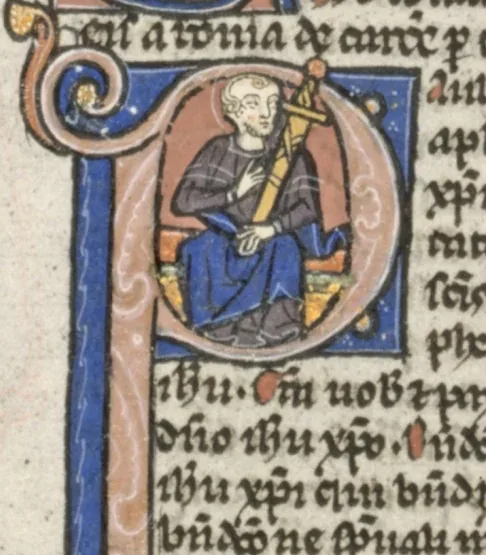
A French Latin Bible leaf of about 1250 opening the Epistle to the Ephesians, with Paul holding a sword, the letter that names the Christian's armour and war.Leaf from a Latin Bible: Initial P with St. Paul Holding a Sword (St. Paul's Epistle to the Ephesians) · c. 1250 · Cleveland Museum of Art · CC0 · full page · museum record · Galeria Regni
“For we wrestle not against flesh and blood, but against principalities, against powers, against the rulers of the darkness of this world, against spiritual wickedness in high places.” (Ephesians 6:12)
This verse cuts two ways. It tells us the enemy is spiritual. It also tells us the enemy is not your spouse, your boss, your pastor or the person who hurt you. They are flesh and blood. A warfare fast that leaves you more suspicious and bitter towards people has missed the point of the verse it quotes.
The battle is already won
The war is real, but its outcome is not in doubt. "For this purpose the Son of God was manifested, that he might destroy the works of the devil" (1 John 3:8). At the cross, Christ "having spoiled principalities and powers, he made a shew of them openly, triumphing over them in it" (Colossians 2:15). He took flesh "that through death he might destroy him that had the power of death, that is, the devil; And deliver them who through fear of death were all their lifetime subject to bondage" (Hebrews 2:14-15).
So a Christian does not fast in order to win a battle Christ has not yet won. We stand in a victory already won, and we resist an enemy already defeated who has not yet been finally removed. "And the God of peace shall bruise Satan under your feet shortly" (Romans 16:20).
What the New Testament tells us to do
When you gather the New Testament's instructions about the devil, they are strikingly simple.
Submit and resist. "Submit yourselves therefore to God. Resist the devil, and he will flee from you. Draw nigh to God, and he will draw nigh to you" (James 4:7-8). The order matters. Submission to God comes first. Resistance follows. And the very next sentence is about drawing near to God.
Stand in the armour. Paul's great passage on spiritual warfare uses one verb again and again: stand.
“Finally, my brethren, be strong in the Lord, and in the power of his might. Put on the whole armour of God, that ye may be able to stand against the wiles of the devil.” (Ephesians 6:10-11)
“Wherefore take unto you the whole armour of God, that ye may be able to withstand in the evil day, and having done all, to stand. Stand therefore, having your loins girt about with truth, and having on the breastplate of righteousness; And your feet shod with the preparation of the gospel of peace; Above all, taking the shield of faith, wherewith ye shall be able to quench all the fiery darts of the wicked. And take the helmet of salvation, and the sword of the Spirit, which is the word of God: Praying always with all prayer and supplication in the Spirit, and watching thereunto with all perseverance and supplication for all saints;” (Ephesians 6:13-18)
Look at what the armour is. Truth. Righteousness. The gospel. Faith. Salvation. The word of God. Prayer. Every piece is something God gives and the believer receives and lives in. None of it is a technique. The armour is the Christian life itself, lived on purpose, under attack.
Use the word as Jesus did. When Jesus was tempted at the end of His forty-day fast, He answered each temptation with Scripture: "It is written, Man shall not live by bread alone, but by every word that proceedeth out of the mouth of God" (Matthew 4:4). To the second He said, "It is written again, Thou shalt not tempt the Lord thy God" (Matthew 4:7). To the third, "Get thee hence, Satan: for it is written, Thou shalt worship the Lord thy God, and him only shalt thou serve" (Matthew 4:10). He did not argue at length. He did not ask the devil questions. He answered with the written word and sent him away.
Keep the doors shut. "Be ye angry, and sin not: let not the sun go down upon your wrath: Neither give place to the devil" (Ephesians 4:26-27). Unconfessed sin and nursed bitterness give the enemy ground. Confession and forgiveness take it back.
Gifts and deliverance are for today, with guardrails
The Lord Jesus gave His followers authority over the enemy. When the seventy came back saying "Lord, even the devils are subject unto us through thy name", He answered, "Behold, I give unto you power to tread on serpents and scorpions, and over all the power of the enemy: and nothing shall by any means hurt you" (Luke 10:17-19). In the 1611 Mark 16 stands with its promise: "And these signs shall follow them that believe; In my name shall they cast out devils; they shall speak with new tongues" (Mark 16:17). (Some modern versions set the end of Mark apart. It stands in the 1611; you can see every place the 1611 and the modern Critical Text differ at kylelauriano.com/library/changes.) Paul cast a spirit out of a slave girl at Philippi: "I command thee in the name of Jesus Christ to come out of her. And he came out the same hour" (Acts 16:18). And among the gifts of the Spirit Paul lists "discerning of spirits" (1 Corinthians 12:10).
The gifts of the Spirit and deliverance from evil spirits are for today, and guests on my show testify to both. Every gift is tested by the word of God and kept within the limits the word sets. Christ still sets people free. But the same New Testament puts firm guardrails around deliverance, and a warfare fast needs them more than most.
Rejoice in the right thing. Right after giving the seventy authority, Jesus said: "Notwithstanding in this rejoice not, that the spirits are subject unto you; but rather rejoice, because your names are written in heaven" (Luke 10:20). Power over demons is not the centre of the Christian life. Salvation is.
The name is not a spell. The seven sons of Sceva tried to use the name of Jesus as a formula: "We adjure you by Jesus whom Paul preacheth." The spirit answered, "Jesus I know, and Paul I know; but who are ye?" and the man "leaped on them, and overcame them" (Acts 19:13-16). The name of Jesus is not a magic word. It carries authority for those who belong to Him, living under Him. Jesus even warned that some who "in thy name have cast out devils" would hear, "I never knew you" (Matthew 7:22-23).
Do not talk with demons. When Jesus cast out spirits, He did not hold conversations with them. "And Jesus rebuked him, saying, Hold thy peace, and come out of him" (Mark 1:25). He "suffered not the devils to speak, because they knew him" (Mark 1:34). Any practice of interviewing demons, asking their names and ranks, or seeking information from them has no warrant in Christ's example.
Do not pray to angels or command them. Angels are God's servants, sent by Him. When John fell down before an angel, he was told, "See thou do it not: for I am thy fellowservant ... worship God" (Revelation 22:9). Paul warned against "worshipping of angels" (Colossians 2:18). We ask God. He sends whom He will.
A born-again believer is not owned by the devil. A Christian can be tempted, attacked, oppressed and deceived. Peter was sifted (Luke 22:31). Paul was buffeted by "the messenger of Satan" (2 Corinthians 12:7). But a believer belongs to Christ: "We know that whosoever is born of God sinneth not; but he that is begotten of God keepeth himself, and that wicked one toucheth him not" (1 John 5:18). God "hath delivered us from the power of darkness, and hath translated us into the kingdom of his dear Son" (Colossians 1:13). John writes, "Greater is he that is in you, than he that is in the world" (1 John 4:4). A believer under attack needs to resist, confess, be prayed for and be cared for. He does not need to be told he belongs to a demon.
Do not send curses back. Some prayer guides teach believers to "return to sender" every curse and evil word. The Lord forbids it: "Bless them that curse you, and pray for them which despitefully use you" (Luke 6:28). Paul says the same: "Bless them which persecute you: bless, and curse not" (Romans 12:14). Peter: "Not rendering evil for evil, or railing for railing: but contrariwise blessing" (1 Peter 3:9). As for curses spoken against you, the believer can rest in this: "As the bird by wandering, as the swallow by flying, so the curse causeless shall not come" (Proverbs 26:2). You do not need to fight curses with curses. You belong to Christ.
Deliverance belongs in the church. If you believe you or someone you love needs prayer for deliverance, do not attempt it alone at the end of a long fast, and do not do it on the strength of a list of "signs" from the internet. Go to your pastor and the elders of your church. "Is any sick among you? let him call for the elders of the church; and let them pray over him ... Confess your faults one to another, and pray one for another, that ye may be healed" (James 5:14-16). And because many of the things that feel like spiritual attack (sleeplessness, panic, dark thoughts) are also medical, see a doctor as well. Seeking both is not a lack of faith. It is wisdom.
A testimony
One guest on my podcast has spoken about this very subject.
Jackie VanTine shared an account of faith, deliverance, and marriage under Christ on The King Is Coming Show (TKIC #16). Hear it in full: https://www.youtube.com/watch?v=wjU6N7arAbA Jackie's account of what happened, shared as testimony — weigh it for yourself.
This part matters because it decides what you expect on day twenty-one. If you think a fast forces outcomes, you will finish either proud or crushed. If you understand what Scripture says a fast is, you will finish closer to God whatever happens.
"This kind goeth not out but by prayer and fasting"
The text most quoted for warfare fasting is Jesus' answer to His disciples after they failed to cast a spirit out of a boy.
“Then came the disciples to Jesus apart, and said, Why could not we cast him out? And Jesus said unto them, Because of your unbelief: for verily I say unto you, If ye have faith as a grain of mustard seed, ye shall say unto this mountain, Remove hence to yonder place; and it shall remove; and nothing shall be impossible unto you. Howbeit this kind goeth not out but by prayer and fasting.” (Matthew 17:19-21)
Mark gives it briefly: "This kind can come forth by nothing, but by prayer and fasting" (Mark 9:29). Both verses stand in the 1611 with the words "and fasting." Many modern versions drop Matthew 17:21 and the words "and fasting" from Mark 9:29. You can see these and the other places at kylelauriano.com/library/changes.
Notice Jesus' first answer: "Because of your unbelief." The problem was not that the disciples had skipped a ritual. It was that they were not living in dependence on God. Prayer and fasting are named as the life that cures that unbelief.
The South African pastor Andrew Murray saw this clearly. His book With Christ in the School of Prayer (1885) gives a whole lesson to these verses and titles it "Prayer and Fasting; Or, The Cure of Unbelief." He describes prayer as the reaching out after God and the unseen, and fasting as the letting go of all that is of the seen and temporal. In his words, prayer is "the one hand with which we grasp the invisible", and fasting "the other, with which we let loose and cast away the visible."5
That is the right picture. Fasting does not make you stronger than the devil. It empties your hands of lesser things so that they are free to take hold of God.
Five things fasting does
Gathering the biblical evidence, fasting does at least these things.
It humbles. David wrote, "I humbled my soul with fasting" (Psalm 35:13). Ezra proclaimed a fast "that we might afflict ourselves before our God" (Ezra 8:21). God's promise to those who humble themselves runs all through Scripture: "Humble yourselves therefore under the mighty hand of God, that he may exalt you in due time" (1 Peter 5:6).
It turns hunger into prayer. Every pang becomes a reminder. Moses told Israel that God "humbled thee, and suffered thee to hunger, and fed thee with manna ... that he might make thee know that man doth not live by bread only, but by every word that proceedeth out of the mouth of the LORD doth man live" (Deuteronomy 8:3). Jesus quoted that verse at the end of His own fast.
It expresses earnestness. Esther, Ezra, Nehemiah and Daniel fasted when the need was great. Fasting says with the body what prayer says with the mouth: this matters more than food.
It exposes what rules us. Take away the coffee, the sugar or the evening snack, and you quickly learn how much they were carrying. That is part of the gift. "Whose God is their belly" (Philippians 3:19) is a warning a fast can bring home.
It strengthens self-control. Paul wrote, "But I keep under my body, and bring it into subjection" (1 Corinthians 9:27). Temperance is a fruit of the Spirit (Galatians 5:23). Saying no to food for a season trains the will to say no to sin.
Three things fasting does not do
It does not earn God's favour. The Pharisee in Jesus' parable boasted, "I fast twice in the week, I give tithes of all that I possess" (Luke 18:12), and went home unjustified. The French reformer John Calvin, who commended fasting, called it "a most pernicious superstition to confound it with the works enjoined by God", that is, to treat it as a work that merits something.6 John Wesley warned in a 1748 sermon: "let us beware, Secondly of fancying we merit anything of God by our fasting." Fasting, he said, "is only a way which God hath ordained, wherein we wait for his unmerited mercy."7
It does not guarantee the outcome you want. David fasted for seven days for his dying son, and the child died. His explanation is one of the wisest things in the Bible on fasting: "While the child was yet alive, I fasted and wept: for I said, Who can tell whether GOD will be gracious to me, that the child may live? But now he is dead, wherefore should I fast? can I bring him back again? I shall go to him, but he shall not return to me" (2 Samuel 12:22-23). "Who can tell" is the honest posture of a fast. Paul prayed three times for his thorn to be removed, and God said no: "My grace is sufficient for thee: for my strength is made perfect in weakness" (2 Corinthians 12:9). Paul even left a co-worker sick: "Trophimus have I left at Miletum sick" (2 Timothy 4:20). Any fast that promises a guaranteed breakthrough, in money, health, relationships or anything else, promises what God has not.
It does not replace obedience. Isaiah 58 is God's own word on the subject. His people complained, "Wherefore have we fasted, say they, and thou seest not?" God answered that they fasted while oppressing their workers and quarrelling: "Behold, ye fast for strife and debate, and to smite with the fist of wickedness" (Isaiah 58:3-4). Then He said what He wanted:
“Is not this the fast that I have chosen? to loose the bands of wickedness, to undo the heavy burdens, and to let the oppressed go free, and that ye break every yoke? Is it not to deal thy bread to the hungry, and that thou bring the poor that are cast out to thy house? when thou seest the naked, that thou cover him; and that thou hide not thyself from thine own flesh?” (Isaiah 58:6-7)
The "bands of wickedness" and "yoke" in Isaiah 58 are, in context, injustice that God's people were doing to others. The fast God chooses sets other people free. Our three weeks should make us kinder to our families, more generous to the poor, and more honest at work. If they do not, they have not been the fast God chose.
What we may rightly hope for
None of this means fasting is pointless. God responds to His people. "Then shalt thou call, and the LORD shall answer; thou shalt cry, and he shall say, Here I am" (Isaiah 58:9). When Ezra's company fasted for protection on a dangerous road, "we fasted and besought our God for this: and he was intreated of us" (Ezra 8:23). When the church at Antioch "ministered to the Lord, and fasted, the Holy Ghost said, Separate me Barnabas and Saul for the work whereunto I have called them" (Acts 13:2).
So pray boldly. Ask God for the things on your heart: freedom from a sin, the salvation of a child, wisdom for a decision, healing, provision, a softened marriage. Ask as a child asks a father. "If ye then, being evil, know how to give good gifts unto your children: how much more shall your heavenly Father give the Holy Spirit to them that ask him?" (Luke 11:13). And leave the answer with Him. "And this is the confidence that we have in him, that, if we ask any thing according to his will, he heareth us" (1 John 5:14).
The one thing you may be sure of is God Himself. "Draw nigh to God, and he will draw nigh to you" (James 4:8). That promise is for every humble seeker, on day one and on day twenty-one.
This part matters because a fast that harms your body or begins without a clear purpose will rarely reach its end, and should not. Preparation is not a lack of faith. Jesus told us to count the cost before we build (Luke 14:28).
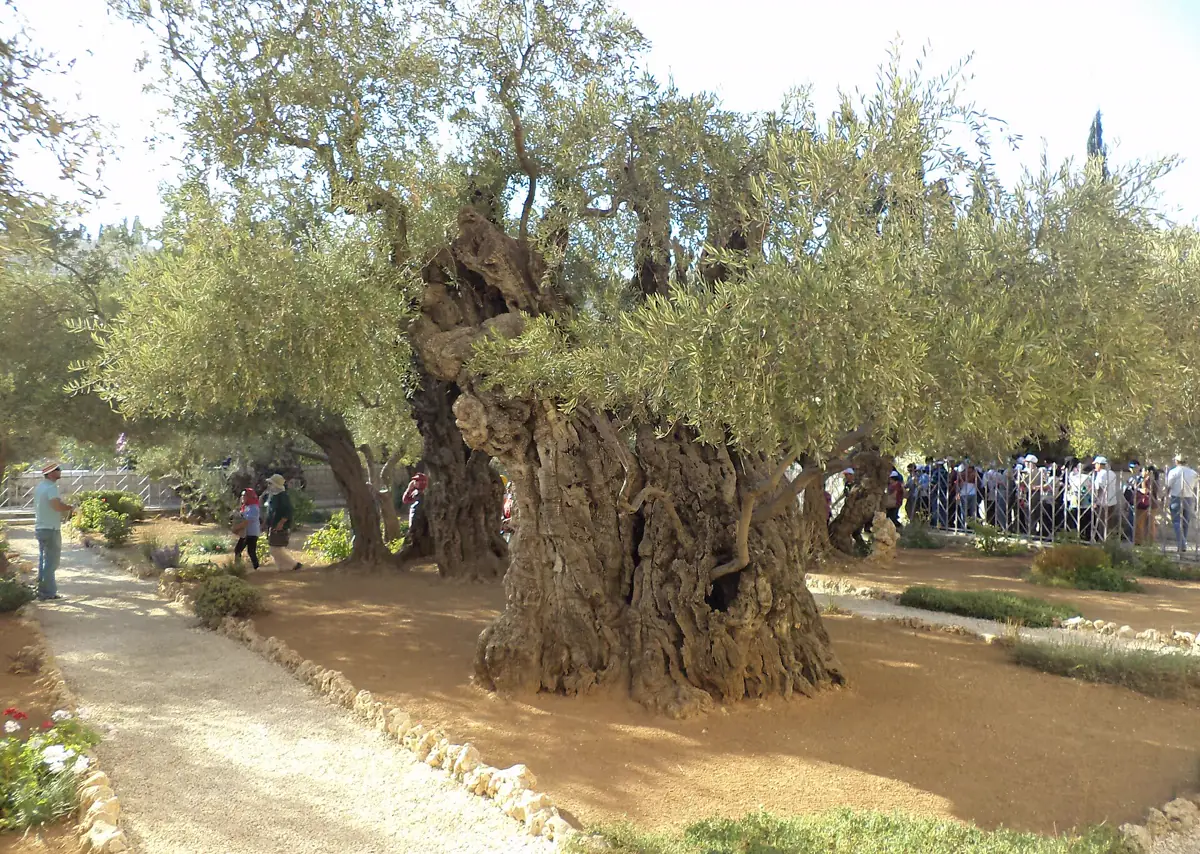
One of the oldest olive trees in the Garden of Gethsemane, rooted through centuries of continuous growth — the grove where Jesus prayed on the night of His arrest.Bogdan Kosar · CC BY-SA 4.0
Medical safety first
This paper is not medical advice. What follows is drawn from public health sources so you can have an informed conversation with yours.
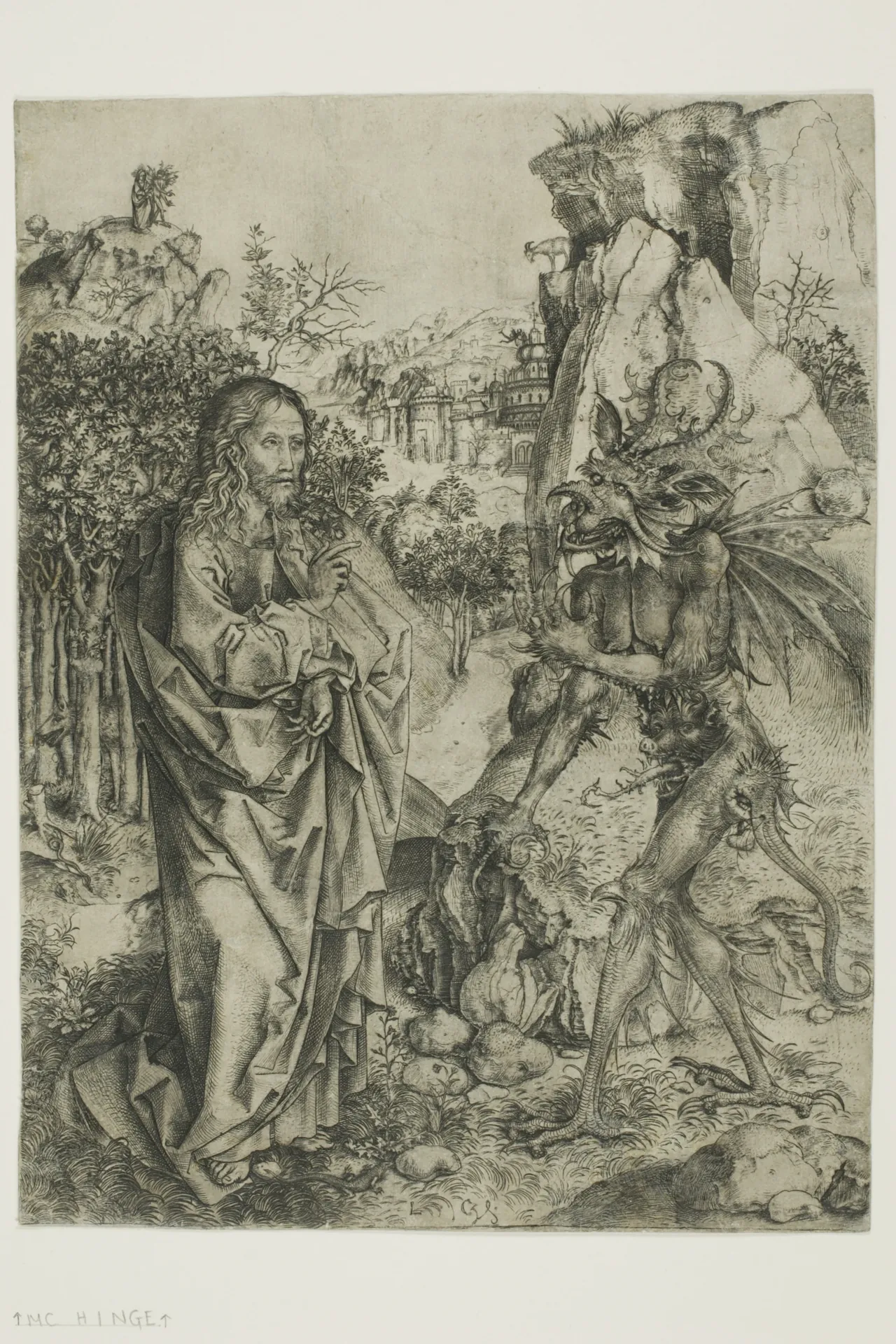
A German engraving of about 1490 showing the Temptation of Christ, the wilderness fast of forty days that stands behind every shorter fast a believer keeps.The Temptation of Christ · c. 1490 · Art Institute of Chicago · CC0 · museum record · Galeria Regni
Talk to your doctor before you begin if any of these apply to you:
You have diabetes, or take insulin or any medicine that lowers blood sugar. The UK's National Health Service lists skipping or delaying meals as a cause of low blood sugar in people with diabetes and advises, "Do not skip or delay meals."8 A partial fast changes what and when you eat, and your doses may need to change with it.
You take any regular medication, especially for blood pressure, heart conditions, mood, seizures or blood thinning, or medicine that must be taken with food. Never stop or change a medicine for a fast without your doctor.
You are pregnant or breastfeeding.
You are under eighteen. Young people should choose a non-food fast (see below) unless a doctor and parents agree otherwise.
You are underweight, frail, elderly, recovering from illness or surgery, or have kidney or liver disease.
You have ever had an eating disorder, or you notice that you are drawn to fasting to control your weight or punish yourself. A five-year study of 496 adolescent girls published in 2008 found that fasting for weight control (going a day without eating) generally predicted the later onset of binge eating and bulimia more strongly than ordinary dieting did.9 If food is a battleground for you, a food fast is not the right weapon. Fast from something else and tell someone you trust.
If your doctor advises against changing your diet, keep the fast in another way. Scripture's heart for fasting is humbling yourself before God and seeking Him. You can do that by giving up social media, television, games, or a habit that has grown too large, and giving the time to prayer and the word. God sees the heart.
Why a partial fast
This guide uses a partial fast in the pattern of Daniel 10: plain food, no "pleasant bread", no meat, no wine. It is not the only biblical way to fast, but for three weeks it is the wise one. Scripture does record long total fasts (Moses, Elijah and the Lord Jesus fasted forty days), but those were extraordinary events, not patterns given to every believer. A water-only fast of three weeks is a serious medical undertaking. The UK's National Institute for Health and Care Excellence (NICE) lists having eaten little or nothing for more than five days among the risk factors for refeeding syndrome, a dangerous shift in the body's salts and fluids when eating starts again.10 No one should attempt a long total fast without medical supervision.
A partial fast lets you keep working, caring for your family and serving at church, which is what most of us must do, while still denying yourself every day.
There is even some research on this kind of fast. In 2010 a team at the University of Memphis led by Richard Bloomer published a study of 43 adults who kept a twenty-one-day "Daniel Fast" of fruits, vegetables, whole grains, legumes, nuts and seeds, with no animal products. They reported that the fast was well tolerated, and that average total cholesterol fell from about 171 to 139 mg/dL and average blood pressure from about 115/72 to 106/67. The authors also noted a fall in HDL ("good") cholesterol and called for larger, randomised studies.11 That is one small study, not a promise, and health is not the purpose of a spiritual fast. But it does suggest that a sensible partial fast is not a danger to a healthy adult.
The food guide
| Eat freely | Set aside for the 21 days | | --- | --- | | Vegetables, fresh or frozen | Meat, poultry and fish | | Fruit, fresh or frozen | Dairy and eggs (or keep them if your doctor advises protein) | | Whole grains: oats, brown rice, whole-wheat bread | White sugar, sweets, desserts and soft drinks | | Beans, lentils, chickpeas | Fried food and fast food | | Nuts, seeds and their butters | Alcohol | | Olive oil, herbs, salt and spices | Caffeine (taper it first: see below) | | Water, and herbal tea | Your personal "pleasant bread": the food you reach for for comfort |
These are guidelines, not law. Scripture does not give a menu for a Daniel-style fast, and you are free to adjust. Someone who works a physical job may need more food than someone at a desk. If you are told by a doctor to keep eggs or fish for protein, keep them. The point is to set aside pleasure and comfort, not to make yourself ill.
Drink plenty of water. The NHS lists headache, light-headedness, tiredness, dark yellow urine and peeing less often than usual among the signs of dehydration.12
Taper the caffeine
If you drink coffee, tea or energy drinks every day, do not stop all at once on day one. A 2004 review of 66 studies by the researchers Laura Juliano and Roland Griffiths found that caffeine withdrawal symptoms begin 12 to 24 hours after the last dose, peak at 20 to 51 hours, and can last 2 to 9 days. Headache occurred in about half of people in the experimental studies, and symptoms appeared even in people taking as little as 100 mg a day, roughly one cup of coffee.13 Cut your caffeine by about half for several days before you begin, then stop. You will spare yourself a miserable first week.
Preparing your soul
Name your purpose. Before you begin, write down why you are fasting. Daniel set his heart to understand. Ezra sought "a right way for us, and for our little ones" (Ezra 8:21). Your list might include a sin you want to be free of, people you want to see saved, a decision you need wisdom for, a burden you want to give to God. Keep the list short enough to pray through every day.
Confess. Daniel's fast in chapter 9 was almost all confession. Spend time before day one asking God to search you: "Search me, O God, and know my heart: try me, and know my thoughts: And see if there be any wicked way in me, and lead me in the way everlasting" (Psalm 139:23-24). Confess what He shows you. "If we confess our sins, he is faithful and just to forgive us our sins, and to cleanse us from all unrighteousness" (1 John 1:9).
Clear out what belongs to darkness. When the gospel came to Ephesus, new believers "which used curious arts brought their books together, and burned them before all men" (Acts 19:19). If you still have tarot cards, crystals kept for power, occult books or anything else tied to the practices God forbids, get rid of them before you begin.
Forgive. "And when ye stand praying, forgive, if ye have ought against any" (Mark 11:25). A warfare fast carried out with a grudge is self-defeating.
Tell someone. Jesus said to fast in secret (Matthew 6:17-18), and that means not advertising it. But it does not mean being alone. Tell your spouse, a pastor or a trusted believer what you are doing and why, so someone can pray for you and check on you. If you are married, agree on the fast together (1 Corinthians 7:5).
Plan the time. Fasting frees up time: meals, snacks, cooking. Decide in advance where that time will go. A fast that fills the gap with more scrolling is just a diet.
Fast with your church if you can. If your church is keeping a corporate fast, join it. Scripture's great fasts were often shared: Esther with all the Jews in Shushan, Ezra with the returning exiles, the church at Antioch together.
A daily rhythm
Daniel prayed "three times a day" (Daniel 6:10). You may find the same rhythm helpful.
Morning: read the day's passage, pray through your list, and give the day to God.
Midday or mealtimes: when you would have eaten your usual lunch or reached for a snack, stop and pray for a few minutes. Let hunger be the bell.
Evening: read the passage again, give thanks, confess the day's failures, and pray for the people on your list.
Forty-five minutes to an hour in total is a good aim for most working people. More is good if you have it. Less is better than nothing. Do not measure the fast by hours logged.
Here is the fast itself. Each day has a passage to read slowly, a few lines to think on, and a prayer to pray in your own words. The prayers are addressed to God, because that is who Daniel prayed to. Where Scripture tells us to resist the devil, the prayers do that too, in the words Scripture gives.
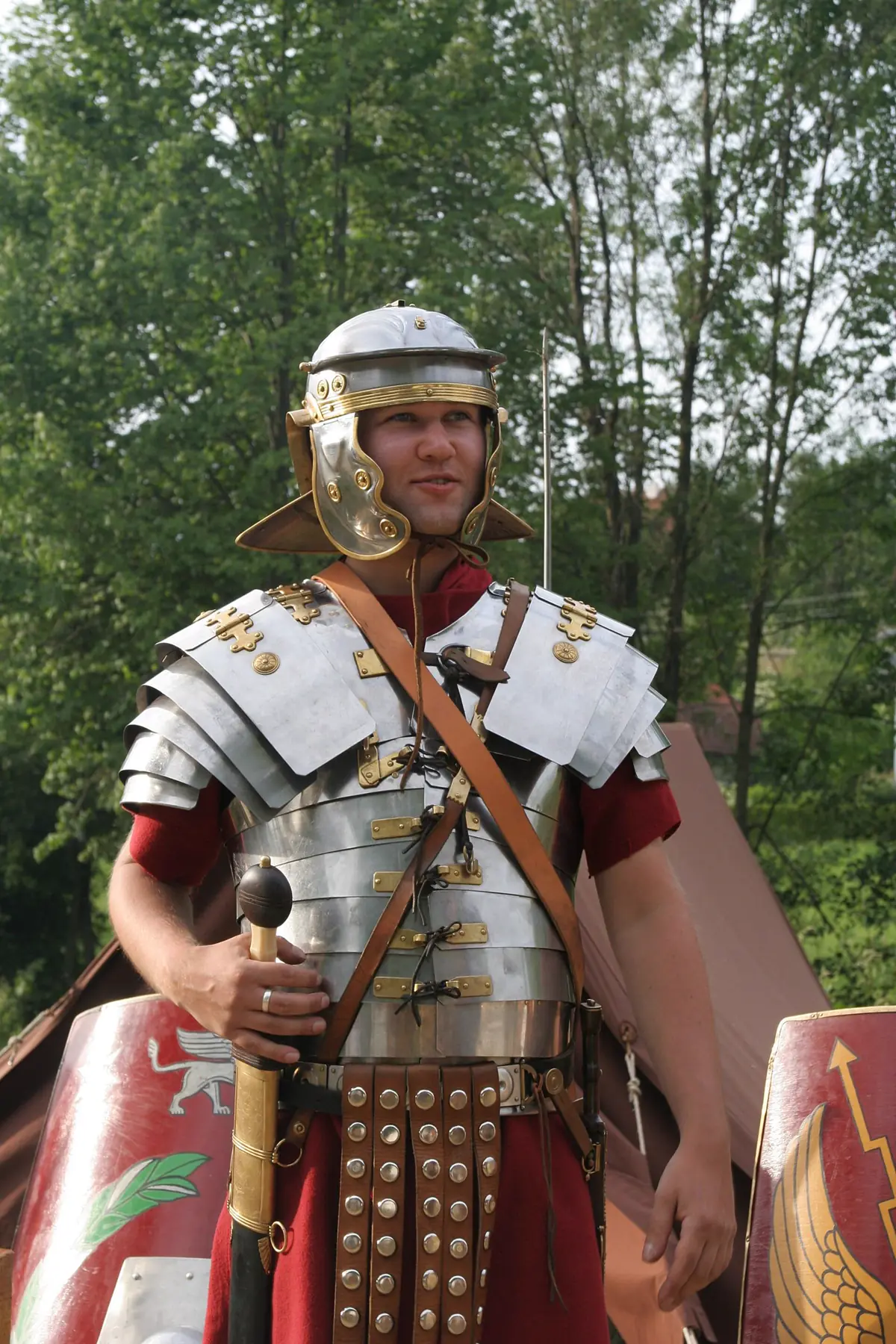
The Roman siege ramp at Masada (73 AD), still standing against the western cliff — a legion’s entire engineering effort aimed at one fortress.Carole Raddato · CC BY-SA 2.0Reconstructed lorica segmentata — the segmented plate of a 1st-century Roman legionary, the kit Paul was looking at when he wrote Ephesians 6.MatthiasKabel · CC BY-SA 3.0
The three weeks follow a simple shape. Week one is about humbling: coming to God honestly. Week two is about standing: the armour of God and the war we are in. Week three is about walking: freedom, love and the life that follows.
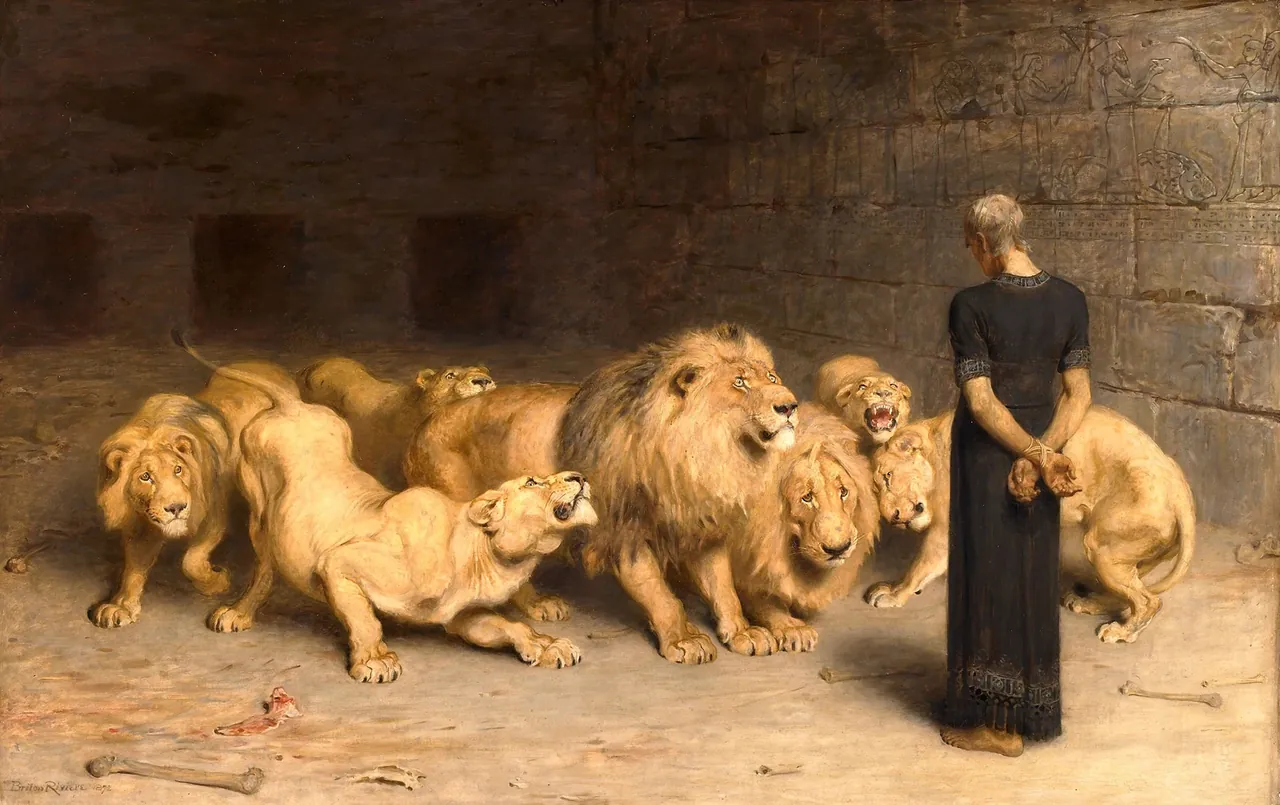
Daniel in the Lions' Den, painted in 1872, showing the man who kept praying three times a day, the rhythm this guide borrows for each day of the fast.Daniel in the Lions' Den, by Briton Rivière, warmed image · 1872 · Wikimedia Commons · Public domain · museum record · Galeria Regni
Daniel was heard "from the first day." You do not need to build up to God's attention. He hears you today. Write your purpose for the fast at the top of a page, and date it.
Pray: Father, I set my heart to seek You for these three weeks. I am not doing this to earn anything. I come because You are worth seeking. Hear me from the first day, as You heard Daniel, and teach me what You want me to understand. In Jesus' name.
Today you will probably feel the first real hunger, and perhaps the first headache. Let it teach you what God taught Israel in the wilderness: we live by His word.
Pray: Lord, every time I feel hungry today, turn my mind to You. Feed me with Your word. Thank You that the Lord Jesus was hungry too and did not sin.
Notice how much of Daniel's prayer is "we have sinned." He confessed the sins of his people as his own. Spend time today confessing your own sins honestly and specifically.
Pray: O Lord, I do not come to You for my righteousness but for Your great mercies. I confess my sin (name it). Forgive me, cleanse me, and give me grace to turn from it.
Day 4 — A clean heart
Read: Psalm 51.
David wrote this psalm after his great fall. It shows that confession is not grovelling but hope: "Create in me a clean heart, O God; and renew a right spirit within me" (Psalm 51:10).
Pray: Create in me a clean heart, O God. Restore to me the joy of Your salvation. Where I have hidden things from You, I bring them into the light.
God's people fasted and quarrelled. God wanted a fast that set others free. Ask today: who around me is carrying a heavy burden? Who is hungry? Do one concrete thing for that person this week, perhaps with the money you are saving on food.
Pray: Lord, make my fast the kind You choose. Show me whose burden I can lift. Keep me from being harsh with my family because I am hungry.
Jesus taught that alms, prayer and fasting are all to be done for the Father who sees in secret. The temptation by now may be to let people know how hard you are working. Keep it between you and God.
Pray: Father, You see in secret. Let this fast be for You alone. Take away any wish to be admired for it. Our Father which art in heaven, hallowed be Thy name.
Unforgiveness gives "place to the devil." Before you put on the armour next week, let go of what you are holding against others. Forgiving does not mean pretending a wrong did not happen. It means handing the debt to God.
Pray: Lord, I forgive (name them) as You have forgiven me. I give You the debt. Bless them, and heal what they broke in me.
Paul's first instruction is not to fight but to be strong "in the Lord, and in the power of his might." The strength is His, not yours. A week in, you may be tired. That is the right moment to learn this.
Pray: Lord, I have no strength of my own for this fight. Be my strength. I put on the whole armour You give, so that I can stand.
The devil is "a liar, and the father of it." His first weapon is a lie: about God, about you, about your sin. Truth is the belt that holds the armour together. Write down one lie you have believed, and the verse that answers it.
Pray: Lord, Your word is truth. Show me the lies I have believed and replace them with what You have said. If the Son makes me free, I am free indeed.
The accuser says you are too guilty to pray. The gospel says there is "no condemnation to them which are in Christ Jesus." Your righteousness before God is Christ's, given to you. Your daily obedience is the breastplate worn.
Pray: Father, I stand before You in the righteousness of Christ, not my own. When I am accused, let me answer with the cross. Help me walk today in the obedience that keeps my heart guarded.
The shoes of the armour are "the preparation of the gospel of peace." Standing firm and being ready to share the good news go together. Pray today for one person by name who does not know Christ, and ask God for an opening to speak.
Pray: Lord, make my feet ready with the gospel. Save (name). Give me courage and gentleness to speak of You when the door opens.
The "fiery darts of the wicked" are many: doubt, fear, sudden temptation, discouragement. Faith is the shield that quenches them. Faith is not a feeling. It is trusting what God has said, especially when you feel nothing.
Pray: Lord, I believe; help my unbelief. When the darts come today, let me lift the shield of trusting You.
The helmet guards the mind. Paul calls it "the hope of salvation" elsewhere. A mind that knows it belongs to Christ is hard to frighten. If anxious or dark thoughts are pressing on you, tell someone today (see Part 6).
Pray: Lord Jesus, I am Yours. No one can pluck me out of Your hand. Guard my mind today. Take every thought captive to Your obedience.
The only weapon in the armour is the word of God, and Jesus showed how to use it: "It is written." Choose one verse from this fast that answers your besetting temptation, write it on a card and learn it by heart.
Pray: Lord, hide Your word in my heart, that I might not sin against You. When I am tempted, bring the right Scripture to my mind. In the name of Jesus I resist the devil, and I submit myself to You.
The armour ends with prayer "always ... for all saints." Spend today's prayer time mostly on others: your church, your pastor, Christians suffering for their faith, the people on your list.
Pray: Lord, I pray for (name them). Strengthen Your church. Give our pastors boldness to make known the mystery of the gospel.
Jesus gives His people real authority over the enemy, and then tells them not to rejoice in it most. Rejoice today that your name is written in heaven.
Pray: Thank You, Lord, that my name is written in heaven. Thank You for the authority You give Your people. Keep me from pride, and let my joy be in You.
Jesus warned of a house "empty, swept, and garnished" that is filled again with worse. Freedom is not only getting something out but letting Christ fill the room. What good habits will you put in the place of the old ones after this fast?
Pray: Lord, do not let my life be empty and swept only. Fill it with Your word, Your Spirit and Your people. I yield myself to You as one alive from the dead.
You may be nearing the end of the fast without the answer you hoped for. Paul learned "in whatsoever state I am, therewith to be content." Habakkuk rejoiced in God with an empty field. Contentment in God is itself a victory over the enemy.
Pray: Lord, if You give what I have asked, I will thank You. If You do not, I will still rejoice in You. You are my portion.
Day 20 — Thanksgiving
Read: Psalm 103.
Count what God has done during these three weeks: sins confessed, people forgiven, a verse learned, a prayer answered, a temptation resisted, a lesson about your own heart. Write them down.
Pray: Bless the LORD, O my soul, and forget not all His benefits. Thank You for (list them). Thank You for meeting me in this fast.
The answer Daniel received was not the end of his story. It was a vision "for many days", and the book closes with God telling him to go his way and rest, and stand in his lot at the end. Your fast ends today. Your walk with God does not.
Pray: Father, thank You that You heard me from the first day. I give You everything I have asked, and I trust You with the answers. Keep me walking with You after this fast as closely as I have walked in it. "Fear not: peace be unto thee, be strong" (Daniel 10:19) — let me hear that word from You today. In Jesus' name.
This part matters because almost everyone who fasts for three weeks has hard days. Knowing what is normal, what is a warning, and what is spiritual will keep you from quitting too soon, or pressing on when you should stop.
What is normal
In the first few days, hunger, irritability, tiredness and headache are common, especially if you have cut caffeine and sugar. Many people find the second week easier as the body adjusts, though this varies from person to person. A low mood on some days is normal. So is feeling nothing spiritual at all.
When to stop and get help
Stop the fast and contact a doctor, or call emergency services, if you have any of these:
Signs of low blood sugar, such as shaking, sweating, a racing heart, confusion or blurred vision, especially if you have diabetes.14 Eat something with sugar at once.
Fainting, severe dizziness when you stand that does not pass, or chest pain.
Signs of serious dehydration: confusion, being very sleepy or hard to wake, fast breathing or fast heart rate, pale or blotchy skin.15
Thoughts of harming yourself or of suicide. Call or text 988, the Suicide & Crisis Lifeline, or 911 if you are in immediate danger.16
Any sense that you are using the fast to punish your body or to lose weight, or that you cannot stop. Talk to your doctor and someone you trust.
Breaking a fast for your health is not failure. John Wesley put it bluntly: "For we may not offer God murder for sacrifice, or destroy our bodies to help our souls."17 "What? know ye not that your body is the temple of the Holy Ghost which is in you, which ye have of God, and ye are not your own?" (1 Corinthians 6:19).
"I don't feel anything"
This is the most common discouragement, and the least serious. Fasting is not a machine for producing spiritual feelings. Daniel did not know a battle was being fought for him until he was told. The work God does in a fast is often quiet: a sin you notice for the first time, a softening towards someone, a verse that sticks, a little more hunger for His word. Keep going. Measure the fast by whether it is turning you towards God, not by what you feel.
When it feels like attack
Some days you may feel oppressed: heavy, afraid, tempted, troubled by dark thoughts or bad dreams. Some of this is the ordinary effect of tiredness and low blood sugar. Some of it may be the enemy. Either way, the answer is the same as Scripture's: submit to God, resist the devil, draw near.
Do not panic. "For God hath not given us the spirit of fear; but of power, and of love, and of a sound mind" (2 Timothy 1:7).
Speak Scripture, as Jesus did. Psalm 91, Psalm 27, Romans 8:31-39 and 1 John 4:4 are good places to stand.
Pray simply. You do not need special words. "Lord, help me" is enough. In the name of Jesus, you may tell the enemy to leave, as Jesus did, and then turn back to God.
Turn on the lights, literally and spiritually. Tell your spouse or a friend. Ask them to pray with you.
Rest. Elijah, under attack and exhausted, was given food and sleep by God before he was given anything else (1 Kings 19:5-8).
Get help if it goes on. Talk to your pastor. See a doctor if sleep, mood or anxiety are seriously affected.
Do not go looking for demons, and do not let the fast turn into an obsession with them. "Notwithstanding in this rejoice not, that the spirits are subject unto you; but rather rejoice, because your names are written in heaven" (Luke 10:20). Keep your eyes on Christ.
When you break the fast early
If you give in on day four, or day sixteen, you have not lost God's favour. You never earned it by fasting. Confess what needs confessing, receive His mercy, and decide whether to pick up where you left off. "It is of the LORD’s mercies that we are not consumed, because his compassions fail not. They are new every morning: great is thy faithfulness" (Lamentations 3:22-23). Few things humble us more than finding out how weak we are, and humility was the point all along.
When family and work get harder
A hungry person can be a short-tempered person. Warn your household in advance that you may be tired, and ask them to forgive you. Isaiah 58 reminds us that a fast which leads to "strife and debate" is not the one God chose. If the fast is making you unkind, ease it (eat a little more) rather than take it out on others.
A testimony about fasting
One guest on my podcast tells of a short fast, not a long one, that she says changed everything.
Brittany Sivels told her story on The King Is Coming Show (TKIC #52): two decades in homosexuality and lust, and then, in her telling, a three-day fast that changed everything. Watch it in her own words: https://www.youtube.com/watch?v=JJ0SsSLQgEg Brittany's account of what happened to her, shared as her testimony — weigh it for yourself.
Her fast was three days, not twenty-one. The length was never the point.
This part matters because the days after a fast are where its fruit is kept or lost. Jesus' warning about the swept house (Matthew 12:43-45) is about what happens after something is cleared out.
Ending gently
After a partial fast like this one, you do not need a long reintroduction, but go gradually. If you have been without meat, dairy or sugar for three weeks, bring them back over several days in small amounts. Rich, heavy or sugary meals on day twenty-two will likely make you feel unwell. If you fasted more strictly, or for some days took no food at all, go more slowly and talk to your doctor, because of the refeeding risk mentioned in Part 4.
Feasting is biblical too
Scripture does not end with fasting. When Ezra read the law and the people wept, Nehemiah told them, "Go your way, eat the fat, and drink the sweet, and send portions unto them for whom nothing is prepared: for this day is holy unto our LORD: neither be ye sorry; for the joy of the LORD is your strength" (Nehemiah 8:10). Zechariah foresaw the fasts of Israel turned to "joy and gladness, and cheerful feasts" (Zechariah 8:19). Jesus said His disciples would fast while the bridegroom was away (Matthew 9:15), and Scripture ends with a feast: "Blessed are they which are called unto the marriage supper of the Lamb" (Revelation 19:9).
So end with thanksgiving. Share a meal with people you love, and send a portion to someone in need. Every fast is a small sign that we are waiting for the King, and every feast a small taste of the day He comes.
Keeping what you were given
Keep the rhythm. If you met God every morning for three weeks, keep meeting Him. Even fifteen minutes in the word and prayer each day will hold what you gained.
Keep the verse. Hold on to the Scripture you learned on Day 14. Add one a week.
Keep fasting, briefly. The early church kept regular weekly fasts. A single meal or a single day once a week or once a month will serve you better than another three-week fast next year with nothing in between.
Keep the doors shut. Do not bring back what you got rid of. Do not return to the sins you confessed. If you fall, confess quickly.
Keep the people. Stay close to your church. "Not forsaking the assembling of ourselves together, as the manner of some is" (Hebrews 10:25).
Keep the list. Go on praying for the people and needs you named. Note answers as they come, whether in a week or in years. The vision "is for many days."
Daniel's three weeks have become a symbol of spiritual warfare, and in one sense they are. A war was being fought in the unseen world while an old man mourned by the Tigris. But Daniel's part in it was not to fight. It was to humble himself, to grieve for God's people, to set his heart to understand, and to pray. God heard him on the first day, and God sent the help.
That is what a Christian fast is. It is not a lever, a formula or a number. It does not force God's hand or guarantee a result. It is a believer, or a church, laying aside the bread of desires for a time in order to seek the God they desire more. It is joined to confession, to forgiveness, to mercy for the poor, and to the armour God gives: truth, righteousness, the gospel, faith, salvation, the word and prayer.
The war is real, but it is already won. "But thanks be to God, which giveth us the victory through our Lord Jesus Christ" (1 Corinthians 15:57). You do not fast to win. You fast because you belong to the One who has.
If you do not yet belong to Him, that is where to begin, before any fast. The gospel is not a discipline you perform but a gift you receive: "For by grace are ye saved through faith; and that not of yourselves: it is the gift of God: Not of works, lest any man should boast" (Ephesians 2:8-9). Peter's word on the day of Pentecost still stands: "Repent, and be baptized every one of you in the name of Jesus Christ for the remission of sins, and ye shall receive the gift of the Holy Ghost" (Acts 2:38). I decided to read the Bible for one reason: to disprove it, so I'd have an excuse to stop going to church for good. It did the opposite. Then one day I got on my knees and prayed: "Jesus, if you are real, show me — and I'll serve you." That is my story; yours can begin the same way.
If you want to go further, the companion paper Fasting and Prayer sets out the wider biblical and historical teaching on fasting. You can read the King James Bible free at kylelauriano.com/library, and my story, and those of the guests on The King Is Coming Show, at kylelauriano.com. Seek Him. He is near to all who call on Him in truth.
1Albert Barnes, Notes on the Book of Daniel (1853), on Daniel 10:2. Online: https://biblehub.com/commentaries/barnes/daniel/10.htm.↩
2Barnes, Notes on the Book of Daniel, on Daniel 10:3. The 1611 margin note on verse 3 reads "Heb. bread of desires"; it can be seen in the 1611 Reader at kylelauriano.com/library.↩
3Barnes, Notes on the Book of Daniel, on Daniel 10:4.↩
4Barnes, Notes on the Book of Daniel, on Daniel 10:13.↩
5Andrew Murray, With Christ in the School of Prayer (1885), Thirteenth Lesson, "Prayer and Fasting; Or, The Cure of Unbelief." Online: https://www.ccel.org/ccel/murray/prayer.xiii.html.↩
6John Calvin, Institutes of the Christian Religion (1559), 4.12.19, trans. Henry Beveridge (1845). Online: https://www.ccel.org/ccel/calvin/institutes.vi.xiii.html.↩
7John Wesley, Sermon 27, "Upon Our Lord's Sermon on the Mount, Discourse VII" (1748), IV.2. Online: https://www.ccel.org/ccel/wesley/sermons.v.xxvii.html.↩
9Eric Stice, Kendra Davis, Nicole P. Miller and C. Nathan Marti, "Fasting Increases Risk for Onset of Binge Eating and Bulimic Pathology: A 5-Year Prospective Study," Journal of Abnormal Psychology 117, no. 4 (2008): 941–946, https://doi.org/10.1037/a0013644.↩
10National Institute for Health and Care Excellence, Nutrition Support for Adults: Oral Nutrition Support, Enteral Tube Feeding and Parenteral Nutrition, Clinical Guideline CG32 (2006, updated 2017). https://www.nice.org.uk/guidance/cg32.↩
11Richard J. Bloomer, Mohammad M. Kabir, Robert E. Canale, John F. Trepanowski, Kate E. Marshall, Tyler M. Farney and Kelley G. Hammond, "Effect of a 21 Day Daniel Fast on Metabolic and Cardiovascular Disease Risk Factors in Men and Women," Lipids in Health and Disease 9 (2010): 94, https://doi.org/10.1186/1476-511X-9-94.↩
13Laura M. Juliano and Roland R. Griffiths, "A Critical Review of Caffeine Withdrawal: Empirical Validation of Symptoms and Signs, Incidence, Severity, and Associated Features," Psychopharmacology 176, no. 1 (2004): 1–29, https://doi.org/10.1007/s00213-004-2000-x.↩
The Bible says something is fighting you. It names it.
Seven passages in the 1611 King James, one a day — the armour, the princes over the nations, the war in heaven — with the page, a work of art, a clip, and a real person who says they were delivered. Free.
This material is drawn from testimony and Scripture — not "proof" in the academic sense. It's written for believers who are already grounded in the faith. If you're still exploring the basics, I'd encourage you to start with the Skeptic resources first. This content is about protection and authority in Christ — it ends on protection, never fear. "For God hath not given us the spirit of fear; but of power, and of love, and of a sound mind" (2 Timothy 1:7, KJV).
"Is not this the fast that I have chosen? to loose the bands of wickedness, to undo the heavy burdens, and to let the oppressed go free, and that ye break every yoke?" — Isaiah 58:6 (KJV)