A study of what the King James Bible teaches about the devil, about Christ's victory over him, and about how an ordinary believer stands and resists.
Abstract
Is the devil real, and if he is, what is a Christian supposed to do about him? This paper answers from the King James Bible first, and second from the believers who have studied the same question for two thousand years: Irenaeus, Athanasius, Augustine, Martin Luther, Thomas Brooks, William Gurnall, John Bunyan and C. S. Lewis, with the historical setting of Ephesus and the Roman soldier's kit drawn from Polybius, Livy and Clinton Arnold. It covers who Satan and the evil spirits are and are not; the victory Christ won in the wilderness, in His ministry, at the cross and in His resurrection; the ways the enemy works; the whole armour of God piece by piece; and what Scripture actually tells a believer to do under attack. It closes with the guardrails that keep spiritual warfare biblical. Its conclusion is that the believer's fight is real but is fought from victory, not for it. It is written for new believers, for those coming out of the occult, and for anyone who wants the foundations before the advanced questions.
What’s inside
·Introduction
Part 1Part 1: The Enemy
Part 2Part 2: The Victory of Christ
Part 3Part 3: How the Enemy Works
Part 4Part 4: The Whole Armour of God
Part 5Part 5: Resisting the Devil
Part 6Part 6: The Believer's Standing
Part 7Part 7: Guardrails
·Conclusion
Research paper · 9 chapters · 17 notes · October 2026
Key Scriptures
“Behold, I give unto you power to tread on serpents and scorpions, and over all the power of the enemy”
Luke 10:19
“And these signs shall follow them that believe; In my name shall they cast out devils”
Mark 16:17
“For we wrestle not against flesh and blood, but against principalities, against powers, against the rulers of the darkness of this world”
Ephesians 6:12
“Resist the devil, and he will flee from you”
James 4:7
“Greater is he that is in you, than he that is in the world”
About 45 minutes · 9 parts · the PDF has the same text
Introduction
3 min read
Most people who pick up a paper on spiritual warfare come to it for one of two reasons. Some are afraid: something is wrong in their life or their home, and they wonder whether it is more than bad luck. Others are curious: they have heard sermons or watched videos about demons and want to know what is true. Both deserve a straight answer from Scripture.
The answer of the Bible is that there is a real devil, a real host of evil spirits, and a real war. It is also that the war has a Victor, and that He is not the devil. A Christian does not fight for victory. He fights from it.
Two errors
C. S. Lewis put the danger on either side of this subject better than anyone. In the preface to The Screwtape Letters (1942) he wrote: "There are two equal and opposite errors into which our race can fall about the devils. One is to disbelieve in their existence. The other is to believe, and to feel an excessive and unhealthy interest in them. They themselves are equally pleased by both errors and hail a materialist or a magician with the same delight."1
The first error is common among educated people in the West. The second is common in parts of the church. This paper tries to walk the narrow road between them: to take the enemy as seriously as Scripture does, and to take Christ far more seriously still.
What this paper is
This is the foundations paper. It covers who the enemy is, what Christ has done to him, how he works, the armour God gives, and how a believer resists. A companion paper, Spiritual Warfare: Deliverance Ministry — Scripture, History and Guardrails, takes up the harder subject of deliverance ministry — casting out evil spirits — with its history and its guardrails. The foundations come first for a reason. Deliverance without foundations is how people get hurt.
Seven parts follow:
Part 1 — the enemy: who Satan and the evil spirits are, and who they are not.
Part 2 — the victory of Christ: what Jesus did to the devil.
Part 3 — how the enemy works: his devices, and the doors people open to him.
Part 4 — the whole armour of God, piece by piece.
Part 5 — resisting the devil: what Scripture tells a believer to do.
Part 6 — the believer's standing: what the enemy can and cannot do to a child of God.
Part 7 — guardrails: what this ministry does not teach, and why.
A word about me
My own story is this. "When real life hit — a lost job, a pregnant wife, constant fights — I went looking for peace anywhere I could find it. New Age, crystals, astral projection, tarot, angel numbers. None of it held. So I swung back hard to religion, said the rosary every night, and still felt nothing. Eventually I gave up and called myself an atheist. I decided to read the Bible for one reason: to disprove it, so I'd have an excuse to stop going to church for good." It did the opposite. I came to faith in 2022, and my wife came to faith a month later. The rest of the story is at kylelauriano.com/about.
I mention it because the things the New Age offers are not neutral. Scripture names them, and Part 3 says why.
A note on Scripture: every verse in this paper is quoted from the King James Bible. You can read it free in the 1611 Reader at kylelauriano.com/library. A KJV with Strong's Concordance will take you further into this subject than any book about demons.
This part matters because you cannot resist an enemy you misunderstand. If you think Satan is a cartoon, you will ignore him. If you think he is God's equal, you will fear him. Scripture tells us neither.
A real, personal enemy
The Bible does not treat the devil as a symbol for evil in general. It speaks of him as a person who thinks, speaks, plans and acts. He speaks to Eve in the garden. He speaks to God in the book of Job. He speaks to Jesus in the wilderness. Jesus speaks back to him, and about him, as a real being.
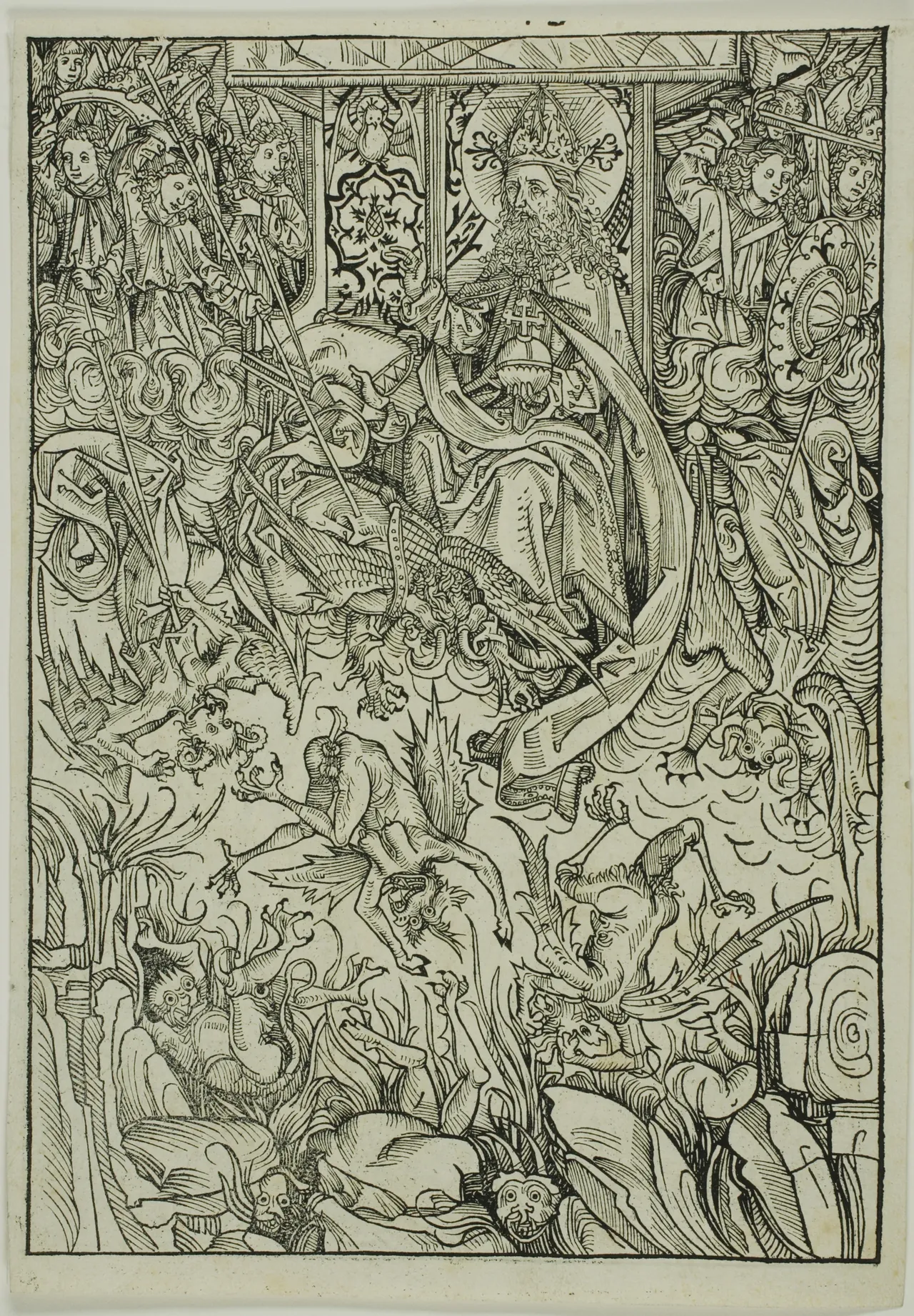
A German woodcut of 1491 from the Treasury, or Schatzbehalter, showing the Fall of Lucifer and the Rebel Angels, beside the account of where the enemy came from.The Fall of Lucifer and the Rebel Angels (verso); The Gathering of the Angels (recto), pages three and two from the Treasury (Schatzbehalter) · 1491 · Art Institute of Chicago · CC0 · museum record · Galeria Regni
The Lord's sharpest description of him is in John 8: "Ye are of your father the devil, and the lusts of your father ye will do. He was a murderer from the beginning, and abode not in the truth, because there is no truth in him. When he speaketh a lie, he speaketh of his own: for he is a liar, and the father of it" (John 8:44).
Two words there sum up his work: murderer and liar. He wants death, and he gets it by deception. That is how he worked in Eden, and it is how he works still.
His names
Scripture gives the enemy many names, and each tells us something about him.
| Name | Where | What it shows | | --- | --- | --- | | Satan ("adversary") | Job 1:7; Zechariah 3:1 | He opposes God's people | | The devil ("slanderer") | Matthew 4:1–11; 1 Peter 5:8 | He accuses and slanders | | The serpent | Genesis 3:1; Revelation 12:9 | He deceives by subtlety | | The tempter | Matthew 4:3 | He entices to sin | | The accuser of our brethren | Revelation 12:10 | He charges believers before God | | The prince of this world | John 12:31; 14:30; 16:11 | He has a kingdom among those who reject God | | The god of this world | 2 Corinthians 4:4 | He blinds unbelievers | | The prince of the power of the air | Ephesians 2:2 | He works in "the children of disobedience" | | The wicked one | 1 John 2:13; 5:18 | He is evil through and through |
Notice two things. First, almost every name describes opposition, accusation or deception. The devil creates nothing. He is a parasite on what God has made. Second, his "kingdom" is real but limited. He is "the god of this world" only in the sense that the world which rejects God follows him: "In whom the god of this world hath blinded the minds of them which believe not, lest the light of the glorious gospel of Christ, who is the image of God, should shine unto them" (2 Corinthians 4:4).
Where he came from
God did not create a devil. He created good beings, and one of them fell. Scripture gives us less detail on this than many people assume, and we should not go beyond it.
Two Old Testament passages have long been read by Christians as looking past an earthly king to the fall of Satan himself. Isaiah 14 is addressed to the king of Babylon:
“How art thou fallen from heaven, O Lucifer, son of the morning! how art thou cut down to the ground, which didst weaken the nations! For thou hast said in thine heart, I will ascend into heaven, I will exalt my throne above the stars of God: I will sit also upon the mount of the congregation, in the sides of the north: I will ascend above the heights of the clouds; I will be like the most High. Yet thou shalt be brought down to hell, to the sides of the pit.” (Isaiah 14:12-15)
Ezekiel 28 is addressed to the king of Tyre, but speaks of one who was "the anointed cherub that covereth" and was "perfect in thy ways from the day that thou wast created, till iniquity was found in thee" (Ezekiel 28:14-15).
Christians have differed on how far these passages describe Satan directly. What they show clearly is the shape of his sin: pride. "I will be like the most High." That is the same lie he told Eve: "ye shall be as gods" (Genesis 3:5). Paul warns that a new convert put into leadership too soon may fall "into the condemnation of the devil" (1 Timothy 3:6) — that is, the judgment that came on the devil's pride.
The New Testament adds that angels sinned and were judged: "For if God spared not the angels that sinned, but cast them down to hell, and delivered them into chains of darkness, to be reserved unto judgment" (2 Peter 2:4); and "the angels which kept not their first estate, but left their own habitation, he hath reserved in everlasting chains under darkness unto the judgment of the great day" (Jude 1:6).
Some readers will know the book called 1 Enoch, which Jude quotes in verses 14–15 and which tells a long story about fallen angels. It is a real witness to what many Jews believed before Christ, and it is worth knowing as history. It is not Scripture, and nothing in this paper rests on it.
Evil spirits
The Gospels call the enemy's servants "devils", "unclean spirits", "evil spirits" and "foul spirits". Paul calls them "principalities" and "powers" and "the rulers of the darkness of this world" (Ephesians 6:12). Scripture does not give a full map of how they are organised, and teachers who claim to know the ranks and names of demons are claiming more than God has told us. "The secret things belong unto the LORD our God" (Deuteronomy 29:29).
What Scripture does show is enough:
They are real. Jesus cast them out and spoke of them as real.
They are under Satan. Jesus spoke of "Satan" casting out "Satan" as a kingdom divided against itself (Matthew 12:26).
They stand behind idolatry. "But I say, that the things which the Gentiles sacrifice, they sacrifice to devils, and not to God: and I would not that ye should have fellowship with devils" (1 Corinthians 10:20).
They deceive. "Now the Spirit speaketh expressly, that in the latter times some shall depart from the faith, giving heed to seducing spirits, and doctrines of devils" (1 Timothy 4:1).
They know who Jesus is, and fear Him. "And devils also came out of many, crying out, and saying, Thou art Christ the Son of God. And he rebuking them suffered them not to speak: for they knew that he was Christ" (Luke 4:41).
What the devil is not
This section may be the most important in Part 1, because fear grows wherever these truths are forgotten.
He is not God's opposite number. The Christian faith is not a contest between two equal powers, one good and one evil. God is the Creator; the devil is a creature. God is everywhere; the devil is not. God knows all things; the devil does not. When the LORD asks Satan, "Whence comest thou?", Satan answers, "From going to and fro in the earth, and from walking up and down in it" (Job 1:7). He has to travel. God does not.
He is on a leash. In Job, Satan can touch nothing until God permits it, and then only as far as God permits. "Behold, all that he hath is in thy power; only upon himself put not forth thine hand" (Job 1:12). And later: "Behold, he is in thine hand; but save his life" (Job 2:6). Athanasius, writing the life of the desert monk Antony in the fourth century, drew the same lesson from Job: the devil "was not the strong man, but God who delivered Job to him to be tried," and "although willing he could not prevail against one just man."2
He is already judged. Jesus said, on the night before the cross, "Of judgment, because the prince of this world is judged" (John 16:11). The sentence has been passed. Part 2 explains how.
He is not behind everything. James puts the source of most temptation closer to home: "But every man is tempted, when he is drawn away of his own lust, and enticed" (James 1:14). Much of what goes wrong in life is the fruit of our own sin, of other people's sin, of a fallen world, or of a tired or sick body. A believer who blames the devil for everything will never repent of anything.
Angels
A word is needed about the other side. Scripture shows God's holy angels as real, powerful and busy. When Elisha's servant saw an army around their city, the prophet said, "Fear not: for they that be with us are more than they that be with them." And when God opened the young man's eyes, "behold, the mountain was full of horses and chariots of fire round about Elisha" (2 Kings 6:16-17).
But angels are servants, not saviours. "Are they not all ministering spirits, sent forth to minister for them who shall be heirs of salvation?" (Hebrews 1:14). God sends them; we do not command them. When John fell down before an angel, the angel stopped him: "See thou do it not: for I am thy fellowservant, and of thy brethren the prophets, and of them which keep the sayings of this book: worship God" (Revelation 22:9). Paul warned against "worshipping of angels" (Colossians 2:18). We pray to the Father, in the name of the Son, and leave the angels to Him.
This part matters most of all. Spiritual warfare that begins with the devil goes wrong. Spiritual warfare that begins with Christ goes right. The New Testament does not tell believers to win a victory over Satan. It tells them that Christ has won it, and calls them to stand in it.
The first promise
The first promise of a Saviour in the Bible is a promise of war and victory. God said to the serpent in Eden:
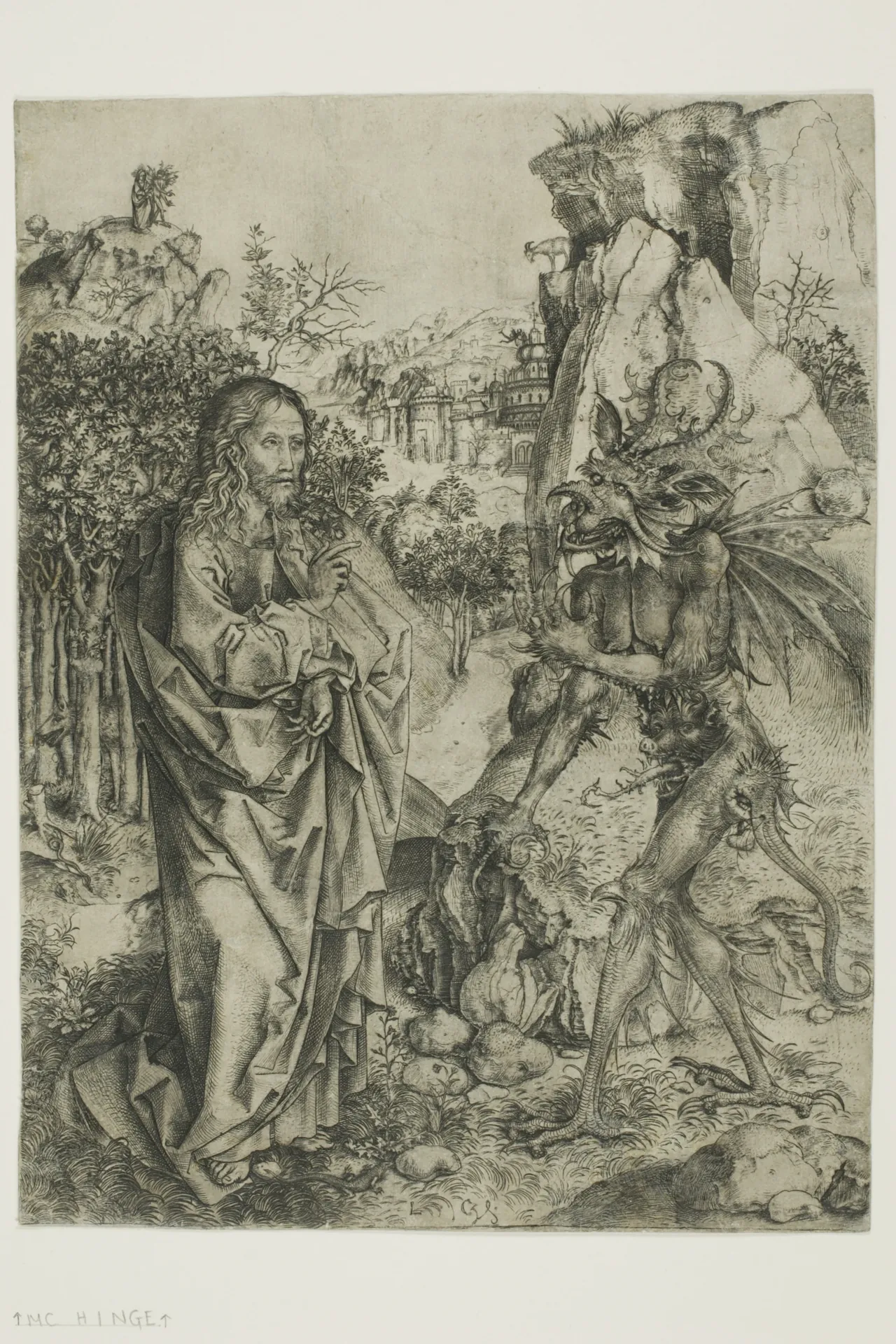
A German engraving of about 1490 showing the Temptation of Christ, set beside His victory in the wilderness, where He answered the devil from Scripture.The Temptation of Christ · c. 1490 · Art Institute of Chicago · CC0 · museum record · Galeria Regni
“And I will put enmity between thee and the woman, and between thy seed and her seed; it shall bruise thy head, and thou shalt bruise his heel.” (Genesis 3:15)
The serpent would wound the woman's Seed. The Seed would crush the serpent's head. The whole Bible after that is the story of God keeping that promise.
Irenaeus of Lyons, writing around AD 180, saw Christ's whole life as the undoing of Adam's defeat. Christ, he wrote, "has therefore, in His work of recapitulation, summed up all things, both waging war against our enemy, and crushing him who had at the beginning led us away captives in Adam, and trampled upon his head," and he pointed straight to Genesis 3:15.3
Victory in the wilderness
Where Adam fell in a garden, Christ stood in a desert. Adam was well fed and fell over food; Christ had fasted forty days and refused it. "And when the tempter came to him, he said, If thou be the Son of God, command that these stones be made bread. But he answered and said, It is written, Man shall not live by bread alone, but by every word that proceedeth out of the mouth of God" (Matthew 4:3-4).
Three times the devil tempted Him. Three times Jesus answered with Scripture from Deuteronomy. And at the end: "Then saith Jesus unto him, Get thee hence, Satan: for it is written, Thou shalt worship the Lord thy God, and him only shalt thou serve. Then the devil leaveth him, and, behold, angels came and ministered unto him" (Matthew 4:10-11).
Irenaeus noticed that Jesus used no other weapon: "the Lord repulsed him by the commandment of the law."4 That matters for us. The Son of God, who could have destroyed the tempter with a word of power, chose to fight as a man, with the word of God that every believer also has.
Victory in His ministry
When Jesus began to preach, He began to cast out devils, and He told the people what it meant. "But if I cast out devils by the Spirit of God, then the kingdom of God is come unto you. Or else how can one enter into a strong man's house, and spoil his goods, except he first bind the strong man? and then he will spoil his house" (Matthew 12:28-29).
Luke's version makes the picture sharper: "When a strong man armed keepeth his palace, his goods are in peace: But when a stronger than he shall come upon him, and overcome him, he taketh from him all his armour wherein he trusted, and divideth his spoils" (Luke 11:21-22).
Satan is strong. Christ is stronger. Every person freed in the Gospels was a piece of the strong man's "goods" taken back. Peter later summed up the whole ministry in one sentence: "How God anointed Jesus of Nazareth with the Holy Ghost and with power: who went about doing good, and healing all that were oppressed of the devil; for God was with him" (Acts 10:38).
When the seventy disciples came back from their mission, they were excited that "even the devils are subject unto us through thy name." Jesus answered, "I beheld Satan as lightning fall from heaven" (Luke 10:17-18). And then He turned their joy in a better direction, which Part 5 will come back to.
Victory at the cross
The decisive battle was not fought in a synagogue or a graveyard. It was fought on a cross.
Jesus said, as the cross came near, "Now is the judgment of this world: now shall the prince of this world be cast out" (John 12:31). And: "the prince of this world cometh, and hath nothing in me" (John 14:30). Satan had no claim on the sinless Son of God. He had a claim on us — our sin, our guilt, our death. At the cross, Christ took all of that on Himself.
Paul describes what happened in the language of a Roman triumph, where a victorious general led his defeated enemies through the streets in chains:
“And having spoiled principalities and powers, he made a shew of them openly, triumphing over them in it.” (Colossians 2:15)
Hebrews explains why Christ had to become man to do it:
“Forasmuch then as the children are partakers of flesh and blood, he also himself likewise took part of the same; that through death he might destroy him that had the power of death, that is, the devil; And deliver them who through fear of death were all their lifetime subject to bondage.” (Hebrews 2:14-15)
And John says the same thing in one line: "For this purpose the Son of God was manifested, that he might destroy the works of the devil" (1 John 3:8).
How did the cross defeat the devil? Scripture's answer is that it took away his weapons. The accuser accuses us of sin; but sin has been paid for. "There is therefore now no condemnation to them which are in Christ Jesus" (Romans 8:1). He holds people by the fear of death; but Christ has passed through death and come out the other side. Revelation shows the result: "And they overcame him by the blood of the Lamb, and by the word of their testimony; and they loved not their lives unto the death" (Revelation 12:11).
The Swedish bishop Gustaf Aulén, in a well-known study first published in English in 1931, argued that this note of victory was the main way the church fathers spoke of the atonement: Christ's work as a "victory over the powers which hold mankind in bondage: sin, death, and the devil."5 Christians have rightly held that the cross is also a sacrifice for sin, and that it is because Christ bore our sin that He disarmed the enemy. The two belong together. The victory comes through the substitution.
Victory in the resurrection and ascension
The empty tomb is the proof of the victory. Paul prays that believers will know "the exceeding greatness of his power to us-ward who believe, according to the working of his mighty power, Which he wrought in Christ, when he raised him from the dead, and set him at his own right hand in the heavenly places, Far above all principality, and power, and might, and dominion, and every name that is named, not only in this world, but also in that which is to come: And hath put all things under his feet, and gave him to be the head over all things to the church" (Ephesians 1:19-22).
Read that slowly. The same words — "principality, and power" — that Paul uses in Ephesians 6 for the enemies we wrestle are used here for the beings Christ is seated far above. And the power that raised Him is "to us-ward who believe."
Martin Luther put this into a hymn that the Reformation sang in the face of real danger. In "Ein feste Burg ist unser Gott" (written between about 1527 and 1529), the third stanza says that though the world were full of devils, the prince of this world can do us no harm, because he is judged, and ein Wörtlein kann ihn fällen — in Frederic Henry Hedge's English, "one little word shall fell him."6 The "little word" is not a magic phrase. It is the word of God, and ultimately the Word made flesh.
Already and not yet
If Christ has won, why is there still a war? Because Scripture speaks of the victory as won and as still to be completed. Satan is judged, but not yet thrown into the lake of fire. Believers are delivered, but still living in a world where he works. Paul could write to the Romans, "And the God of peace shall bruise Satan under your feet shortly" (Romans 16:20) — a promise still on its way.
Revelation 20 speaks of Satan being bound for a thousand years "that he should deceive the nations no more, till the thousand years should be fulfilled: and after that he must be loosed a little season" (Revelation 20:3). Christians have read this passage in different ways. Augustine, in The City of God, read the thousand years as the whole age of the church from Christ's first coming, and that reading became the common one in the West.7 I read it differently. I read Revelation 20 literally. I believe Satan was bound when the temple fell in AD 70; that the thousand years were the medieval age, about 500 to 1500; and that the little season began about 1500 and is the age we live in now. I set no dates. This is my conviction; weigh it for yourself. Whatever one's reading, the practical point is the same for every believer: the enemy is real, active and limited, and his end is fixed.
This part matters because Paul expected believers to know the enemy's methods: "Lest Satan should get an advantage of us: for we are not ignorant of his devices" (2 Corinthians 2:11). Ignorance is not innocence here. It is an open flank.
Brooks and the devices of Satan
In 1652 the London Puritan Thomas Brooks published a small book built on that verse, Precious Remedies Against Satan's Devices. It is still in print. In his dedication Brooks wrote that "Christ, the Scripture, your own hearts, and Satan's devices, are the four prime things that should be first and most studied and searched."8 Notice the order. Christ comes first; the devil's devices come last.
Brooks's first device is the one the serpent used in Eden: "To present the bait and hide the hook; to present the golden cup, and hide the poison; to present the sweet, the pleasure, and the profit that may flow in upon the soul by yielding to sin, and by hiding from the soul the wrath and misery that will certainly follow the committing of sin."9 Every temptation still works that way. It shows you the bait. It never shows you the hook.
Deception
The enemy's first weapon is a lie. In Eden he began with a question — "Yea, hath God said, Ye shall not eat of every tree of the garden?" (Genesis 3:1) — and moved to a flat denial: "Ye shall not surely die" (Genesis 3:4). Paul feared the same thing for the Corinthians: "But I fear, lest by any means, as the serpent beguiled Eve through his subtilty, so your minds should be corrupted from the simplicity that is in Christ" (2 Corinthians 11:3).
His lies are often religious. "And no marvel; for Satan himself is transformed into an angel of light" (2 Corinthians 11:14). The most dangerous deceptions are not obvious evil but counterfeit good: a spiritual experience that bypasses Christ, a teaching that sounds holy but denies the gospel, "doctrines of devils" (1 Timothy 4:1). That is why John says, "Beloved, believe not every spirit, but try the spirits whether they are of God: because many false prophets are gone out into the world" (1 John 4:1). The test he gives is Christ: "Every spirit that confesseth that Jesus Christ is come in the flesh is of God" (1 John 4:2).
Temptation
The enemy tempts. He tempted Christ, and he tempts Christ's people. But he works with what is already there. Brooks's "bait" works because we are hungry for it. That is why the answer to temptation is never only "rebuke the devil". It is also to deal with our own desires — to watch, to flee, to make no provision for the flesh. Paul gives the promise: "There hath no temptation taken you but such as is common to man: but God is faithful, who will not suffer you to be tempted above that ye are able; but will with the temptation also make a way to escape, that ye may be able to bear it" (1 Corinthians 10:13).
Accusation
After temptation comes accusation. The same enemy who says "it's nothing" before the sin says "it's unforgivable" after it. Zechariah saw it in a vision: "Satan standing at his right hand to resist him. And the LORD said unto Satan, The LORD rebuke thee, O Satan; even the LORD that hath chosen Jerusalem rebuke thee: is not this a brand plucked out of the fire?" (Zechariah 3:1-2). Joshua the high priest stood in filthy garments and had no answer of his own. God answered for him.
That is the believer's position. You do not answer the accuser with your record. You answer him with Christ's. "Who shall lay any thing to the charge of God's elect? It is God that justifieth" (Romans 8:33).
Fear
The enemy rules by fear. Hebrews says the devil held people "through fear of death" (Hebrews 2:15). Much of what passes for spiritual warfare today actually feeds this fear — stories of demons behind every object and every illness, until the believer is more conscious of the devil than of God. Athanasius records Antony telling his monks that "since the Lord visited earth, the enemy is fallen and his powers weakened," and urging them not to frame fears for themselves, saying, "I am afraid lest a demon should come and overthrow me."10 A believer who is always afraid of the devil has already given him something.
Division
Paul's warning about Satan's devices in 2 Corinthians 2:11 comes in a passage about forgiving a repentant brother. Unforgiveness in a church is a door the enemy walks through. So is anger nursed overnight: "Be ye angry, and sin not: let not the sun go down upon your wrath: Neither give place to the devil" (Ephesians 4:26-27). The word "place" means a foothold — a piece of ground.
Hindrance and affliction
Scripture also shows the enemy hindering God's work and afflicting God's people. Paul wrote, "Wherefore we would have come unto you, even I Paul, once and again; but Satan hindered us" (1 Thessalonians 2:18). He spoke of "a thorn in the flesh, the messenger of Satan to buffet me" (2 Corinthians 12:7). Luke records a woman "whom Satan hath bound, lo, these eighteen years" (Luke 13:16).
But notice what God did with Paul's thorn. Paul prayed three times for it to go. God said, "My grace is sufficient for thee: for my strength is made perfect in weakness" (2 Corinthians 12:9). God used the enemy's affliction to keep His apostle humble. The devil is never outside God's purposes, even when he is fighting them.
Doors people open: the occult
Scripture is blunt about one kind of open door. God told Israel:
“There shall not be found among you any one that maketh his son or his daughter to pass through the fire, or that useth divination, or an observer of times, or an enchanter, or a witch. Or a charmer, or a consulter with familiar spirits, or a wizard, or a necromancer. For all that do these things are an abomination unto the LORD: and because of these abominations the LORD thy God doth drive them out from before thee.” (Deuteronomy 18:10-12)
Divination, fortune-telling, spells, contacting the dead, seeking spirit guides — God forbids them not because they are silly but because they are real contact with the wrong spirits. "Regard not them that have familiar spirits, neither seek after wizards, to be defiled by them: I am the LORD your God" (Leviticus 19:31). Isaiah asks the obvious question: "should not a people seek unto their God? for the living to the dead? To the law and to the testimony: if they speak not according to this word, it is because there is no light in them" (Isaiah 8:19-20).
Paul names "witchcraft" among the works of the flesh, right beside idolatry (Galatians 5:20). And he tells the Corinthians that pagan worship is fellowship with devils: "Ye cannot drink the cup of the Lord, and the cup of devils" (1 Corinthians 10:21).
In modern dress these things go by gentler names: tarot, astrology, crystals, spirit guides, Ouija boards, astral projection, "angel numbers", séances, some forms of energy healing. They promise peace. In my own story: New Age, crystals, astral projection, tarot, angel numbers. None of it held.
Others who have been further in tell the same story. Two guests on my show have spoken about it.
Mike Shreve told his story on The King Is Coming Show (TKIC #46): a kundalini and yoga guru with 300 students — until, in his telling, one prayer ended it all, and he was born again on a Tampa roadside. Watch it in his own words: youtube.com/watch?v=oqAq58bDC4k Mike's account of what happened to him, shared as his testimony — weigh it for yourself.
Steve Kang told his story on The King Is Coming Show (TKIC #49): he chanted eight hours a day to reach nirvana, and, in his telling, woke up in hell instead. Watch it in his own words: youtube.com/watch?v=46SP1FgXfbY Steve's account of what happened to him, shared as his testimony — weigh it for yourself.
Spiritual experience is not the same thing as the Holy Ghost. The answer for anyone coming out of the occult is the one the believers at Ephesus found: confession, and a fire. Part 5 comes back to it.
Not every trouble is the devil
Having said all that, one more thing must be said, and said firmly. The New Testament does not see a demon behind every problem. Matthew lists the people brought to Jesus with care: "all sick people that were taken with divers diseases and torments, and those which were possessed with devils, and those which were lunatick, and those that had the palsy" (Matthew 4:24). Sickness and possession are listed separately. Some illnesses in the Gospels are tied to evil spirits; most are not.
So with us. Depression, anxiety, psychosis, epilepsy and addiction have real medical sides, and a believer who calls everything "spiritual" will keep sick people away from the doctor. Paul's companion Luke was "the beloved physician" (Colossians 4:14). Using medicine is not a lack of faith. The companion paper takes this up in detail.
This part matters because it is the New Testament's fullest single passage on spiritual warfare, and because nearly every phrase in it has been turned into something it is not. Read slowly, it is simple, and enough.
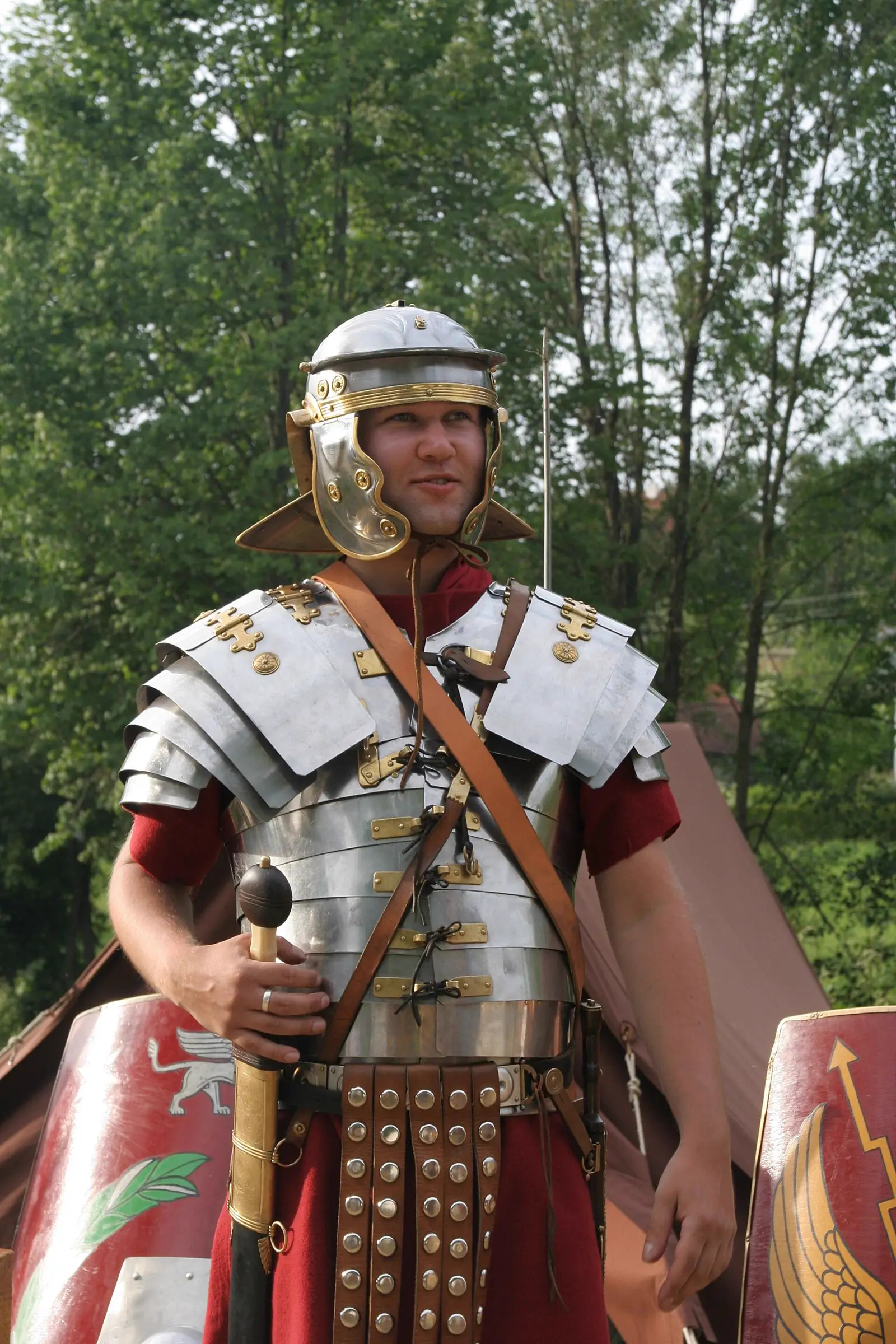
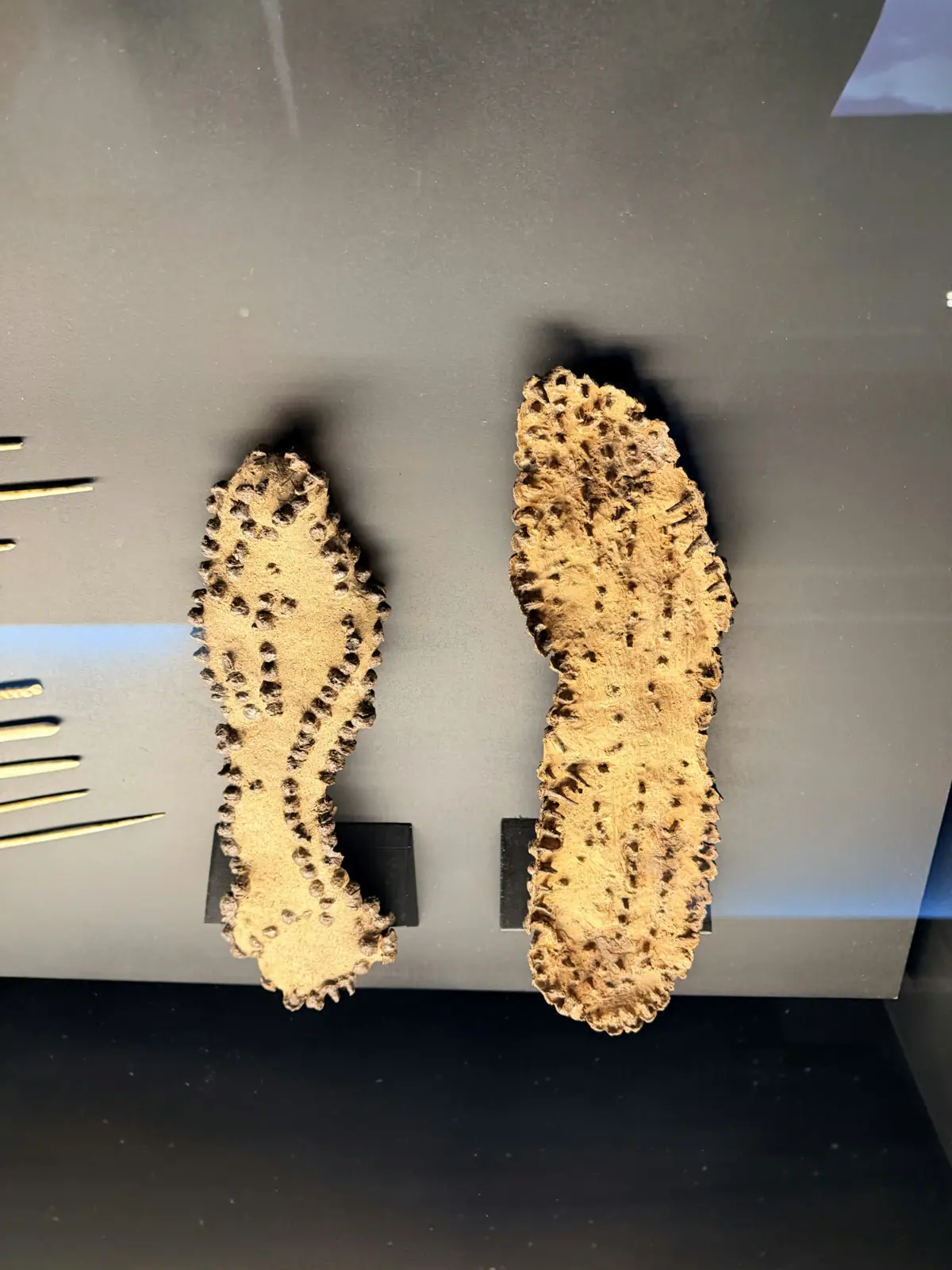
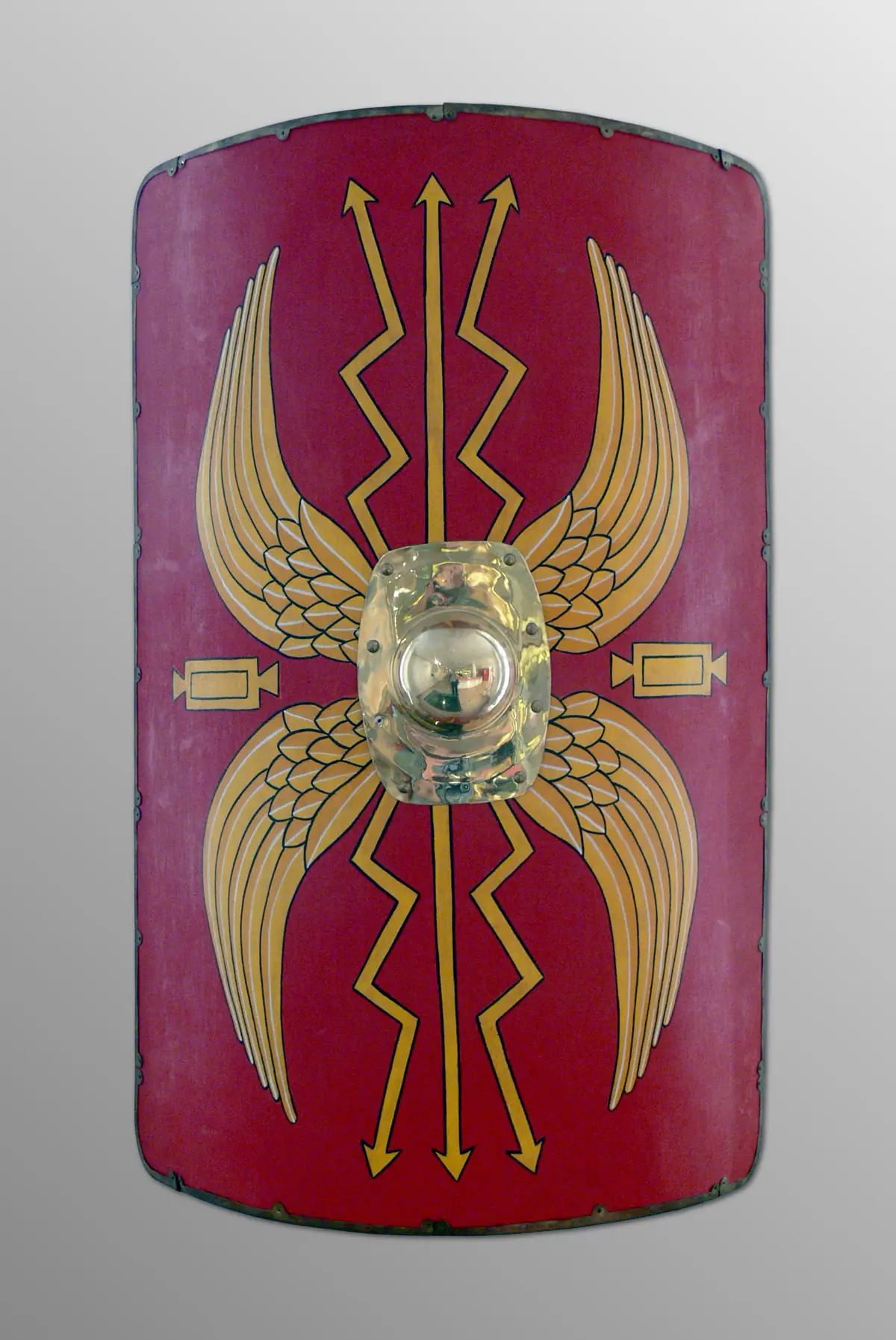
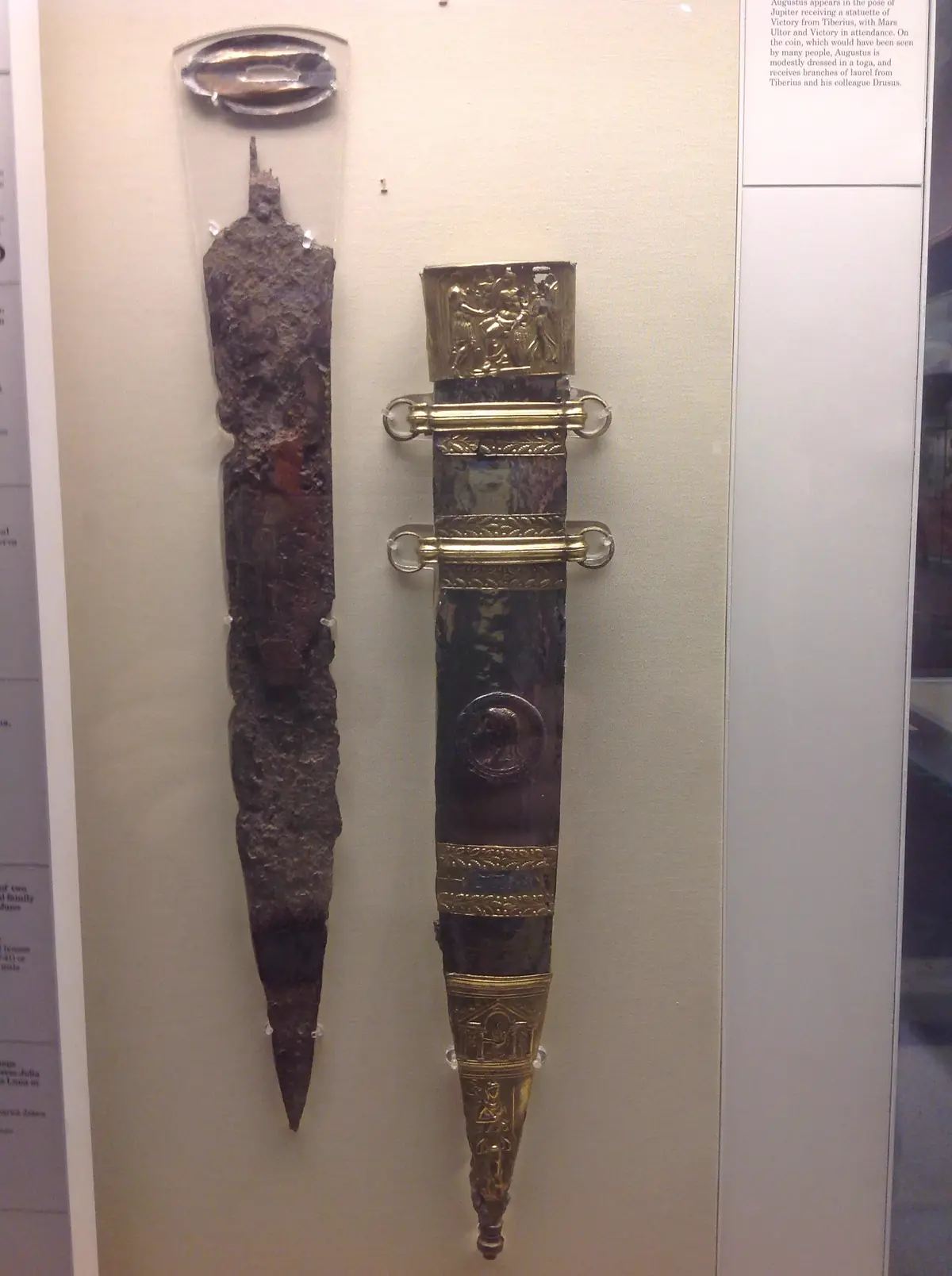
Hobnailed soles of Roman caligae — the studded marching boots behind “your feet shod with the preparation of the gospel of peace” (Ephesians 6:15).Wikimedia Commons · CC BY 4.0A reconstructed Roman scutum — the full-body shield, soaked before battle against fire arrows, behind Paul’s “shield of faith” (Ephesians 6:16).Wolfgang Sauber · CC BY-SA 3.0A 1st-century Roman gladius (the Mainz sword) — the short two-edged blade behind “the sword of the Spirit, which is the word of God” (Ephesians 6:17).Jononmac46 · CC BY-SA 4.0
The passage
“Finally, my brethren, be strong in the Lord, and in the power of his might. Put on the whole armour of God, that ye may be able to stand against the wiles of the devil. For we wrestle not against flesh and blood, but against principalities, against powers, against the rulers of the darkness of this world, against spiritual wickedness in high places. Wherefore take unto you the whole armour of God, that ye may be able to withstand in the evil day, and having done all, to stand.” (Ephesians 6:10-13)
Three things stand out before we look at any single piece.
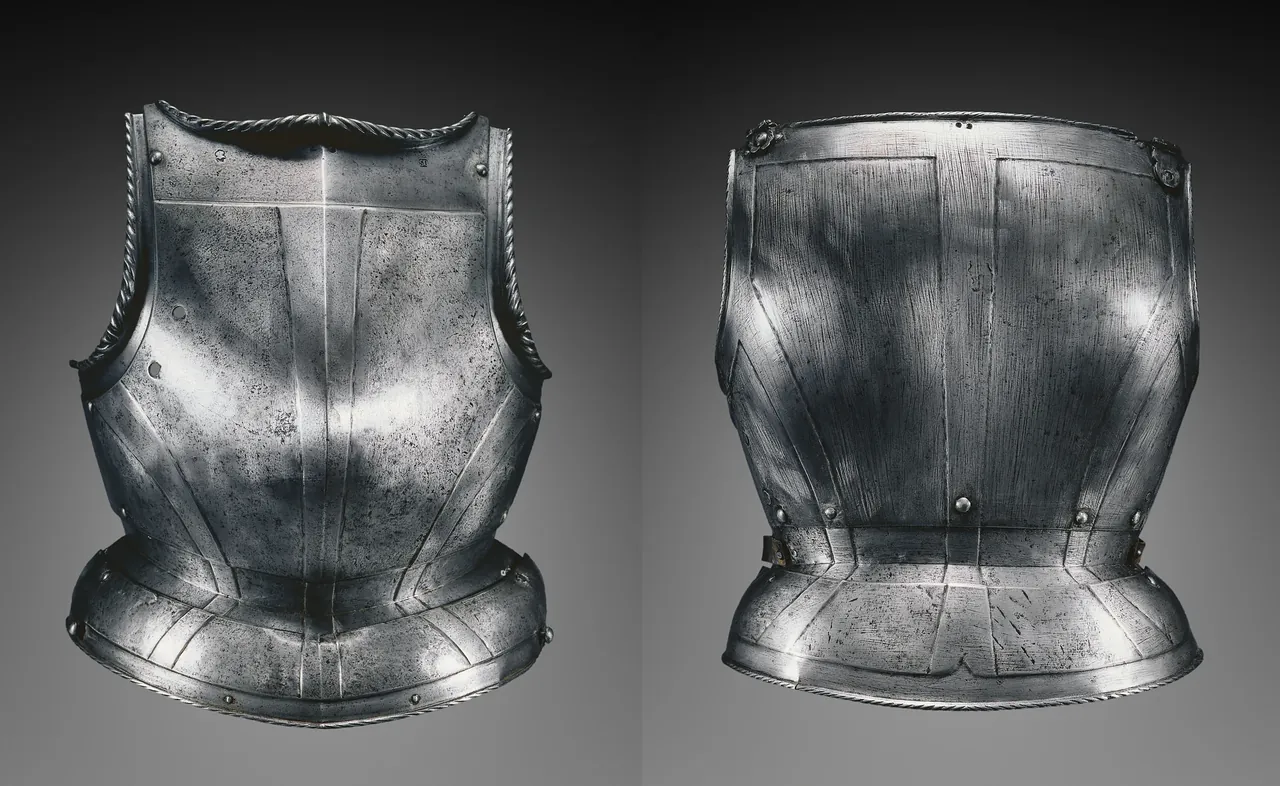
A steel breast and backplate made in Landshut, Germany, in the mid-1500s, a real piece of armour beside the study of the breastplate of righteousness.Breast and Backplate from an Armor · mid-1500s · Cleveland Museum of Art · CC0 · museum record · Galeria Regni
The strength is God's. "Be strong in the Lord, and in the power of his might." Paul does not say "be strong." He says be strong in the Lord. The armour is "the whole armour of God". Isaiah describes God Himself wearing a breastplate of righteousness and a helmet of salvation (Isaiah 59:17). We wear what He wears.
The enemy is not people. "We wrestle not against flesh and blood." The people who oppose you are not your real enemy. That does not mean evil people are innocent; it means the war behind them is spiritual, and so are the weapons. "For though we walk in the flesh, we do not war after the flesh: (For the weapons of our warfare are not carnal, but mighty through God to the pulling down of strong holds;) Casting down imaginations, and every high thing that exalteth itself against the knowledge of God, and bringing into captivity every thought to the obedience of Christ" (2 Corinthians 10:3-5).
The goal is to stand. The word "stand" or "withstand" comes four times in Ephesians 6:11–14. The believer is not sent out to hunt demons. He is told to hold the ground Christ has already taken.
Ephesus
The letter was written to a city that knew all about spirits. Ephesus was home to the great temple of Artemis and was famous across the ancient world for magic. Clinton E. Arnold's study Ephesians, Power and Magic (1989) showed how strongly that setting shaped the letter: Ephesus gave its name to the Ephesia grammata, the "Ephesian letters", a set of magical words used as charms, and Arnold argues that Paul's language about "principalities" and "powers" speaks to believers who had lived in fear of such forces.11
That matters for how we read the armour. Paul was writing to people who had used spells for protection. He did not give them a Christian spell. He gave them Christ, truth, righteousness, the gospel, faith, salvation, the word and prayer.
The girdle of truth
"Stand therefore, having your loins girt about with truth" (Ephesians 6:14). A Roman soldier's belt held his tunic and his gear together; without it he could not move freely. Truth is first because the enemy is "a liar, and the father of it" (John 8:44). This means the truth of God's word believed, and it also means a truthful life. A believer living a lie has loosened his own belt.
The breastplate of righteousness
"And having on the breastplate of righteousness" (Ephesians 6:14). The breastplate covered the heart. The righteousness here is first the righteousness of Christ counted to us by faith — the only answer to the accuser — and then the righteous living that grows from it. A believer who trusts Christ's righteousness but lives carelessly is wearing his breastplate with a hole in it.
The shoes of the gospel of peace
"And your feet shod with the preparation of the gospel of peace" (Ephesians 6:15). A soldier who cannot keep his footing cannot fight. The gospel gives the believer solid ground: peace with God through Christ. When everything else shakes, that does not.
The shield of faith
"Above all, taking the shield of faith, wherewith ye shall be able to quench all the fiery darts of the wicked" (Ephesians 6:16). The Greek historian Polybius describes the Roman infantry shield of the period as two and a half feet wide and four feet long, made of two planks glued together and covered with canvas and calf-skin, with iron edging at the rims.12 It covered most of a man. Livy describes a fire-weapon such a shield faced — a missile whose shaft "was wrapped in tow and then smeared with pitch", set alight, and so frightening that even if it only stuck in the shield, "it forced the soldier to throw away his shield and left him defenceless".13
That is the picture. The devil's darts are meant to make you drop your faith — a sudden doubt, a flash of fear, a burning accusation. Faith is not a feeling that you work up. It is trust in what God has said, held up between you and the dart. And it does more than stop the dart. It quenches it.
The helmet of salvation
"And take the helmet of salvation" (Ephesians 6:17). In 1 Thessalonians 5:8 Paul calls it "for an helmet, the hope of salvation." The helmet guards the head — the mind — and many of the enemy's attacks land there, especially attacks on assurance. The helmet is the settled hope of a believer whose salvation rests on Christ: "My sheep hear my voice, and I know them, and they follow me: And I give unto them eternal life; and they shall never perish, neither shall any man pluck them out of my hand" (John 10:27-28).
The sword of the Spirit
"And the sword of the Spirit, which is the word of God" (Ephesians 6:17). This is the one plainly offensive weapon, and it is the one Jesus used in the wilderness. Notice whose sword it is: the Spirit's. The word is powerful because the Holy Ghost wields it, not because we pronounce it a certain way or repeat it a certain number of times. A believer who knows his Bible has a sword. A believer who does not has only a scabbard.
That is why the old advice is still the best: read it, memorise it, meditate on it. "Thy word have I hid in mine heart, that I might not sin against thee" (Psalm 119:11). Jesus did not look up Deuteronomy in the wilderness. It was already in Him.
Prayer
"Praying always with all prayer and supplication in the Spirit, and watching thereunto with all perseverance and supplication for all saints" (Ephesians 6:18). Paul does not call prayer a piece of armour, but he ends the passage with it, and the grammar ties it to everything before. The armour is put on in prayer. And it is prayer "for all saints" — nobody in this passage fights alone.
Gurnall and Bunyan
Two English Puritans took this passage further than anyone. William Gurnall preached through it for years at Lavenham in Suffolk, and the sermons became The Christian in Complete Armour, published in three volumes between 1655 and 1662.14 It is long, and it rewards the reader who keeps going.
John Bunyan put the same truth into a story. In The Pilgrim's Progress (1678), Christian meets the fiend Apollyon in the Valley of Humiliation. Apollyon throws a flaming dart, "but Christian had a shield in his hand, with which he caught it." The fight goes on for more than half a day; Christian is wounded, falls, and loses his sword. Then, as Apollyon prepares the last blow, Christian "nimbly stretched out his hand for his sword, and caught it," answering with the words of the prophet — "Rejoice not against me, O mine enemy: when I fall, I shall arise" (Micah 7:8) — and gives Apollyon a deadly thrust, and follows it with "Nay, in all these things we are more than conquerors through him that loved us" (Romans 8:37). Apollyon spreads his wings and flies away — and Bunyan puts James 4:7 in the margin.15
Bunyan understood that the believer's weapon is the word, that he may be knocked down, and that the word in the mouth of a fallen man who gets back up is enough.
This part matters because it is where the paper becomes practical. Scripture does not leave believers guessing about what to do under attack. It gives a short list, and every item on it is something an ordinary Christian can do today.
Submit first
The best-known verse on the subject is James 4:7, and it is almost always quoted in half. Here is all of it, with the verse after:
“Submit yourselves therefore to God. Resist the devil, and he will flee from you. Draw nigh to God, and he will draw nigh to you. Cleanse your hands, ye sinners; and purify your hearts, ye double minded.” (James 4:7-8)
The order matters. Submission to God comes before resistance to the devil. A believer who is shouting at the devil while holding on to sin is not resisting; he is making noise. James's next words are about cleansing hands and purifying hearts. Spiritual warfare begins with repentance.
Stand firm in the faith
Peter says the same thing in his own way:
“Be sober, be vigilant; because your adversary the devil, as a roaring lion, walketh about, seeking whom he may devour: Whom resist stedfast in the faith, knowing that the same afflictions are accomplished in your brethren that are in the world.” (1 Peter 5:8-9)
Three instructions. Be sober — clear-headed, not drunk on anything, including spiritual excitement. Be vigilant — awake, watching. Resist stedfast in the faith — not by technique, but by holding on to what you believe. And one comfort: you are not the only one. The same afflictions are happening to believers all over the world.
Close the doors
"Neither give place to the devil" (Ephesians 4:27). If there is known sin, confess it and forsake it. "He that covereth his sins shall not prosper: but whoso confesseth and forsaketh them shall have mercy" (Proverbs 28:13). And John writes, "If we confess our sins, he is faithful and just to forgive us our sins, and to cleanse us from all unrighteousness" (1 John 1:9).
If there has been occult involvement, deal with it the way the Ephesians did:
“And many that believed came, and confessed, and shewed their deeds. Many of them also which used curious arts brought their books together, and burned them before all men: and they counted the price of them, and found it fifty thousand pieces of silver. So mightily grew the word of God and prevailed.” (Acts 19:18-20)
Notice what they did. They confessed openly. They got rid of the objects, even at great cost. And the result was not a spectacle but the growth of the word of God. If you have tarot cards, spell books, Ouija boards, charms or idols, get rid of them. Not because the objects have power in themselves, but because keeping them keeps the door ajar, and because getting rid of them is how repentance becomes real.
If there is bitterness, forgive. If there is anger, settle it before the sun goes down.
Use the word
Do what Jesus did: answer the lie with "It is written." When the accusation comes, answer it with Romans 8:1. When fear comes, answer it with 2 Timothy 1:7: "For God hath not given us the spirit of fear; but of power, and of love, and of a sound mind." When the temptation comes, answer it with the specific word that meets it.
This is not a magic formula. Speaking Scripture does not work by being spoken. It works because it is true, and because the Spirit who inspired it uses it. That is why the word must be believed, not only recited.
Pray
Jesus taught His disciples to pray every day, "And lead us not into temptation, but deliver us from evil" (Matthew 6:13). That one line is a whole prayer of spiritual warfare. He prayed for His people in the same terms on the night before He died: "I pray not that thou shouldest take them out of the world, but that thou shouldest keep them from the evil" (John 17:15). And Paul gives the promise: "But the Lord is faithful, who shall stablish you, and keep you from evil" (2 Thessalonians 3:3).
Pray to the Father, in the name of Jesus, with your own words. You do not need a script.
Let the Lord rebuke him
What do we say to the devil, if anything? Scripture gives a surprising answer. When Michael the archangel disputed with the devil, he "durst not bring against him a railing accusation, but said, The Lord rebuke thee" (Jude 1:9). If the chief of the holy angels would not rail at the devil in his own authority, believers should not either. Jesus did command the devil directly: "Get thee hence, Satan" (Matthew 4:10). And the apostles, as the companion paper shows, commanded evil spirits to leave "in the name of Jesus Christ." But the posture is humble, brief and Christ-centred. It is not a shouting match.
Antony gave the same counsel to his monks in the fourth century. When evil spirits spoke — even when they seemed to speak about holy things, "concerning fasting" — he told them not to listen: "So let us neither hear them as being strangers to us, nor give heed to them."16 We do not argue with the devil. We answer him with God's word and turn back to God.
Fast, humbly
Fasting is part of the believer's life. Jesus said "when ye fast", not "if" (Matthew 6:16), and He told His disciples that a certain kind of evil spirit "goeth not out but by prayer and fasting" (Matthew 17:21). (That verse, and Mark 9:29 with its words "and fasting", stand in the 1611 and the Received Text; many modern versions drop or footnote them. You can see that difference and others at kylelauriano.com/library/changes.)
But fasting is not a lever on God. It is humbling ourselves before Him. Jesus warned against fasting for show (Matthew 6:16-18). Isaiah says the fast God chooses is "to loose the bands of wickedness, to undo the heavy burdens, and to let the oppressed go free" (Isaiah 58:6). Fast to seek God, not to force Him. And if you have a medical condition, talk to your doctor before a long fast.
Do not fight alone
The armour passage ends with prayer "for all saints". Jesus prayed for Peter by name: "Simon, Simon, behold, Satan hath desired to have you, that he may sift you as wheat: But I have prayed for thee, that thy faith fail not: and when thou art converted, strengthen thy brethren" (Luke 22:31-32). If you are under heavy attack, tell mature believers in your church, and ask them to pray. James tells the sick to "call for the elders of the church; and let them pray over him" (James 5:14). Serious oppression belongs in the care of the church, not on a stranger's livestream.
Rejoice in the right thing
When the seventy came back thrilled that the devils were subject to them, Jesus said: "Notwithstanding in this rejoice not, that the spirits are subject unto you; but rather rejoice, because your names are written in heaven" (Luke 10:20).
That is the last word on resisting the devil. Your joy is not in your power over him. It is in your place with God.
A simple pattern
Pulling Part 5 together, here is what a believer under spiritual attack can do today:
Turn to God. Tell Him plainly what is happening. Submit yourself to Him.
Confess and forsake any known sin. Forgive anyone you need to forgive.
Get rid of any occult objects, books or practices.
Answer the lie with the specific truth of Scripture. Write the verses down if you need to.
Pray "deliver us from evil", in your own words, in Jesus' name.
Tell someone mature in your church and ask for prayer.
Keep going — to church, to the Lord's table, to your Bible. Stand.
See a doctor if there are physical or mental symptoms. This is not unbelief.
This part matters because fear thrives on uncertainty. Many believers have been told that a Christian can be owned by a demon without knowing it, and they live in dread. Scripture's teaching on the believer's standing is the cure for that dread.
Delivered and transferred
Paul describes conversion as a change of kingdoms: "Who hath delivered us from the power of darkness, and hath translated us into the kingdom of his dear Son" (Colossians 1:13). At his conversion Paul was sent to the Gentiles "To open their eyes, and to turn them from darkness to light, and from the power of Satan unto God, that they may receive forgiveness of sins" (Acts 26:18). A believer has moved house. He is no longer under the old landlord.
Sealed and indwelt
The believer is "sealed with that holy Spirit of promise" (Ephesians 1:13). His body is God's dwelling: "What? know ye not that your body is the temple of the Holy Ghost which is in you, which ye have of God, and ye are not your own? For ye are bought with a price: therefore glorify God in your body, and in your spirit, which are God's" (1 Corinthians 6:19-20). Paul asks elsewhere, "what agreement hath the temple of God with idols? for ye are the temple of the living God" (2 Corinthians 6:16).
Kept
John writes: "We know that whosoever is born of God sinneth not; but he that is begotten of God keepeth himself, and that wicked one toucheth him not. And we know that we are of God, and the whole world lieth in wickedness" (1 John 5:18-19). And: "Ye are of God, little children, and have overcome them: because greater is he that is in you, than he that is in the world" (1 John 4:4).
Attack, yes; ownership, no
Put those texts together and the answer to the frightening question is clear. A born-again believer cannot be possessed — owned, inhabited and controlled — by an evil spirit. He belongs to Christ.
But Scripture is just as clear that believers can be attacked. Satan desired to sift Peter. A messenger of Satan buffeted Paul. Satan hindered Paul's travel. The devil walks about seeking whom he may devour — and Peter wrote that to Christians. The whole armour passage assumes that believers will face "the evil day". A believer can be tempted, deceived, accused, oppressed, harassed and afflicted. He can give the devil a foothold through unconfessed sin. What he cannot be is the devil's property.
Some Christian teachers disagree, and say that believers can be "demonized" in a deeper sense. That is a real debate, and it is honest to say so. When the Lausanne Movement brought evangelical practitioners and theologians together in Nairobi in August 2000 for a consultation called "Deliver Us From Evil", their statement recorded that they could not fully agree: it said there is "no direct evidence that demons need to be cast out of believers", while also allowing that a believer "may be afflicted physically by a demonic spirit", and admitted, "We were unable to resolve this tension in our consultation."17 This ministry's position is the one given above: attack and oppression, yes; possession and ownership, no. The companion paper explains how that shapes the way we pray for a struggling believer.
Not afraid
Here is what that means in practice. You do not need to fear that the devil can snatch you. "And I give unto them eternal life; and they shall never perish, neither shall any man pluck them out of my hand. My Father, which gave them me, is greater than all; and no man is able to pluck them out of my Father's hand" (John 10:28-29). Paul's list of things that cannot separate believers from God's love includes the very beings we wrestle: "For I am persuaded, that neither death, nor life, nor angels, nor principalities, nor powers, nor things present, nor things to come, Nor height, nor depth, nor any other creature, shall be able to separate us from the love of God, which is in Christ Jesus our Lord" (Romans 8:38-39).
That assurance is real, and it is for those who are really in Christ. Scripture also tells professing believers to "give diligence to make your calling and election sure" (2 Peter 1:10), and its warnings against falling away are serious. The safe place is not a past experience but a present trust in Christ. "These things have I written unto you that believe on the name of the Son of God; that ye may know that ye have eternal life" (1 John 5:13).
If you are not yet His
If you are reading this and you are not a Christian, the issue is not first the devil. It is God. Scripture says that before Christ we all "walked according to the course of this world, according to the prince of the power of the air, the spirit that now worketh in the children of disobedience" (Ephesians 2:2). The way out is not a ritual. It is the gospel: "repentance toward God, and faith toward our Lord Jesus Christ" (Acts 20:21). Paul puts it this way: "For by grace are ye saved through faith; and that not of yourselves: it is the gift of God: Not of works, lest any man should boast" (Ephesians 2:8-9). And Peter told the first hearers what to do: "Repent, and be baptized every one of you in the name of Jesus Christ for the remission of sins, and ye shall receive the gift of the Holy Ghost" (Acts 2:38).
Deliverance begins there. The strong man's house is plundered one rescued sinner at a time.
This part matters because spiritual warfare is one of the easiest subjects in the Christian life to abuse. This ministry teaches that the gifts of the Spirit and deliverance from evil spirits are for today. Because that is true, the guardrails matter just as much as the permissions. Each of these is taught, not from taste, but from the text.
No conversations with demons
Jesus silenced evil spirits even when they were telling the truth about Him: "and suffered not the devils to speak, because they knew him" (Mark 1:34). When a slave girl with "a spirit of divination" followed Paul shouting true things about him, Paul did not welcome the advertising; he was "grieved", and cast the spirit out (Acts 16:16-18). Evil spirits are not a source of information. The devil "abode not in the truth" (John 8:44), and his servants are no better. We do not interview them.
No commanding or praying to angels
Prayer is to the Father in the name of the Son. Angels are sent by God, not summoned by us (Hebrews 1:14). Scripture forbids their worship (Colossians 2:18; Revelation 22:8-9).
No curses, and no "sending curses back"
Some warfare teaching tells believers to "return" curses to the people who sent them. Jesus said the opposite: "Bless them that curse you, and pray for them which despitefully use you" (Luke 6:28). Paul: "Bless them which persecute you: bless, and curse not" (Romans 12:14). And: "Dearly beloved, avenge not yourselves, but rather give place unto wrath: for it is written, Vengeance is mine; I will repay, saith the Lord" (Romans 12:19). Proverbs adds a word of comfort for the frightened: "As the bird by wandering, as the swallow by flying, so the curse causeless shall not come" (Proverbs 26:2).
No formulas
There is no phrase, declaration or ritual that works by being said. The sons of Sceva in Acts 19 had the right words — "We adjure you by Jesus whom Paul preacheth" — and no relationship with Jesus, and the result was a beating (Acts 19:13-16). Pleading the blood is not an incantation; the blood of Christ is the ground of our standing before God, received by faith. Words of Scripture spoken in faith are the sword of the Spirit; the same words recited as a charm are what the Ephesians burned.
No guarantees, and no number codes
God is not bound by our techniques, our fasts, or our counting of days. Teachers who promise "breakthrough guaranteed" in so many days, or who build systems on the supposed meaning of numbers, are going beyond Scripture. Daniel's prayer was answered after "one and twenty days" (Daniel 10:13), but Daniel did not invent a twenty-one-day formula; he simply kept praying. We pray, obey, and trust God with the result.
No conspiracy without evidence
Fear spreads through stories that cannot be checked. A believer should not pass on claims about the secret demonic meaning of a holiday, a logo or a product unless the claim has real evidence behind it. "Prove all things; hold fast that which is good" (1 Thessalonians 5:21). Spreading rumours is not discernment.
No obsession
Finally, the guardrail Lewis named. A believer who thinks about the devil more than about Christ has already lost ground. The New Testament letters give a few paragraphs to the devil and chapter after chapter to Christ, the gospel, holiness and love. That proportion is itself a lesson.
The foundations of spiritual warfare are not secret. They are on the surface of the text.
There is a real enemy. He is a liar and a murderer, proud and fallen, active and limited. He works by deception, temptation, accusation, fear and division, and he uses the doors people open to him — sin, bitterness, and the occult above all.
There is a greater Victor. Christ resisted him in the wilderness with the word of God, plundered his house in the Gospels, disarmed him at the cross, and rose far above every principality and power. His people overcome "by the blood of the Lamb, and by the word of their testimony" (Revelation 12:11).
There is armour, and it is God's: truth, righteousness, the gospel of peace, faith, salvation, the word, and prayer.
And there is a plain path for the believer under attack: submit to God, resist the devil, close the doors, use the word, pray, do not fight alone, see the doctor where the body or mind is sick, and rejoice that your name is written in heaven.
A next step
If this paper has helped you, three things will help more:
Read Ephesians through in one sitting, then read Ephesians 6:10–18 every morning for a week, in the 1611 Reader at kylelauriano.com/library.
If you have been involved in the occult, tell a pastor or a mature believer, and get rid of the objects this week.
When you are ready, the companion paper, Spiritual Warfare: Deliverance Ministry — Scripture, History and Guardrails, takes up deliverance ministry, its history in the early church, and the guardrails that keep it biblical.
An invitation
I came to disprove God. He met me instead — and I couldn't unsee what time it is. If you are tired of looking for peace in the wrong places, the peace Christ gives is not a technique and not a feeling you have to work up. It is a Person. "Draw nigh to God, and he will draw nigh to you" (James 4:8).
1C. S. Lewis, The Screwtape Letters (London: Geoffrey Bles, 1942), preface; quoted at https://www.thecatholicthing.org/2018/07/03/preface-to-the-screwtape-letters/.↩
2Athanasius, Life of Antony 29, trans. H. Ellershaw, in Nicene and Post-Nicene Fathers, Second Series, vol. 4, ed. Philip Schaff and Henry Wace (Buffalo, NY: Christian Literature Publishing, 1892). Online: https://www.newadvent.org/fathers/2811.htm.↩
3Irenaeus, Against Heresies 5.21.1, trans. Alexander Roberts and William Rambaut, in Ante-Nicene Fathers, vol. 1, ed. Alexander Roberts, James Donaldson and A. Cleveland Coxe (Buffalo, NY: Christian Literature Publishing, 1885). Online: https://www.newadvent.org/fathers/0103521.htm.↩
5Gustaf Aulén, Christus Victor: An Historical Study of the Three Main Types of the Idea of Atonement, trans. A. G. Hebert (London: SPCK, 1931; New York: Macmillan, 1969), 20.↩
6Martin Luther, "Ein feste Burg ist unser Gott" (1527–1529), stanza 3. German text in German History in Documents and Images (German Historical Institute, Washington, DC), https://germanhistorydocs.org/de/von-den-reformationen-bis-zum-dreissigjaehrigen-krieg-1500-1648/martin-luther-eine-feste-burg-ist-unser-gott-1527-1529.pdf. English: "A Mighty Fortress Is Our God," trans. Frederic Henry Hedge (1852), stanza 3, Hymnary.org, https://hymnary.org/text/a_mighty_fortress_is_our_god_a_bulwark.↩
7Augustine, The City of God 20.7–9, trans. Marcus Dods, in Nicene and Post-Nicene Fathers, First Series, vol. 2, ed. Philip Schaff (Buffalo, NY: Christian Literature Publishing, 1887). Online: https://www.newadvent.org/fathers/120120.htm.↩
8Thomas Brooks, Precious Remedies Against Satan's Devices (1652), "The Epistle Dedicatory," in The Works of Thomas Brooks, ed. Alexander B. Grosart, vol. 1 (Edinburgh: James Nichol, 1866). Online: https://archive.org/details/completeworksoft01broouoft.↩
9Brooks, Precious Remedies, Device 1, in Works, 1:12–13.↩
11Clinton E. Arnold, Ephesians, Power and Magic: The Concept of Power in Ephesians in Light of Its Historical Setting, Society for New Testament Studies Monograph Series 63 (Cambridge: Cambridge University Press, 1989), 15–16 on the Ephesia grammata.↩
12Polybius, Histories 6.23.2–4, trans. W. R. Paton, Loeb Classical Library (1923). Online: https://penelope.uchicago.edu/Thayer/E/Roman/Texts/Polybius/6*.html.↩
13Livy, History of Rome 21.8, trans. Canon Roberts, Everyman's Library (London: J. M. Dent, 1905). Online: https://www.yorku.ca/pswarney/3131/Livius-21.htm.↩
14William Gurnall, The Christian in Complete Armour, 3 vols. (London, 1655–1662). On its origin as sermons on Ephesians 6:10–20 at Lavenham, see the CCEL author page, https://ccel.org/ccel/gurnall.↩
15John Bunyan, The Pilgrim's Progress from This World to That Which Is to Come (London: Nathaniel Ponder, 1678), the fight with Apollyon. Online: https://www.gutenberg.org/ebooks/131.↩
17Lausanne Committee for World Evangelization and Association of Evangelicals in Africa, "Deliver Us From Evil: Consultation Statement" (Nairobi, August 16–22, 2000), "Areas of Tension." Online: https://lausanne.org/content/statement/deliver-us-from-evil-consultation-statement.↩
The Bible says something is fighting you. It names it.
Seven passages in the 1611 King James, one a day — the armour, the princes over the nations, the war in heaven — with the page, a work of art, a clip, and a real person who says they were delivered. Free.
This material is drawn from testimony and Scripture — not "proof" in the academic sense. It's written for believers who are already grounded in the faith. If you're still exploring the basics, I'd encourage you to start with the Skeptic resources first. This content is about protection and authority in Christ — it ends on protection, never fear. "For God hath not given us the spirit of fear; but of power, and of love, and of a sound mind" (2 Timothy 1:7, KJV).