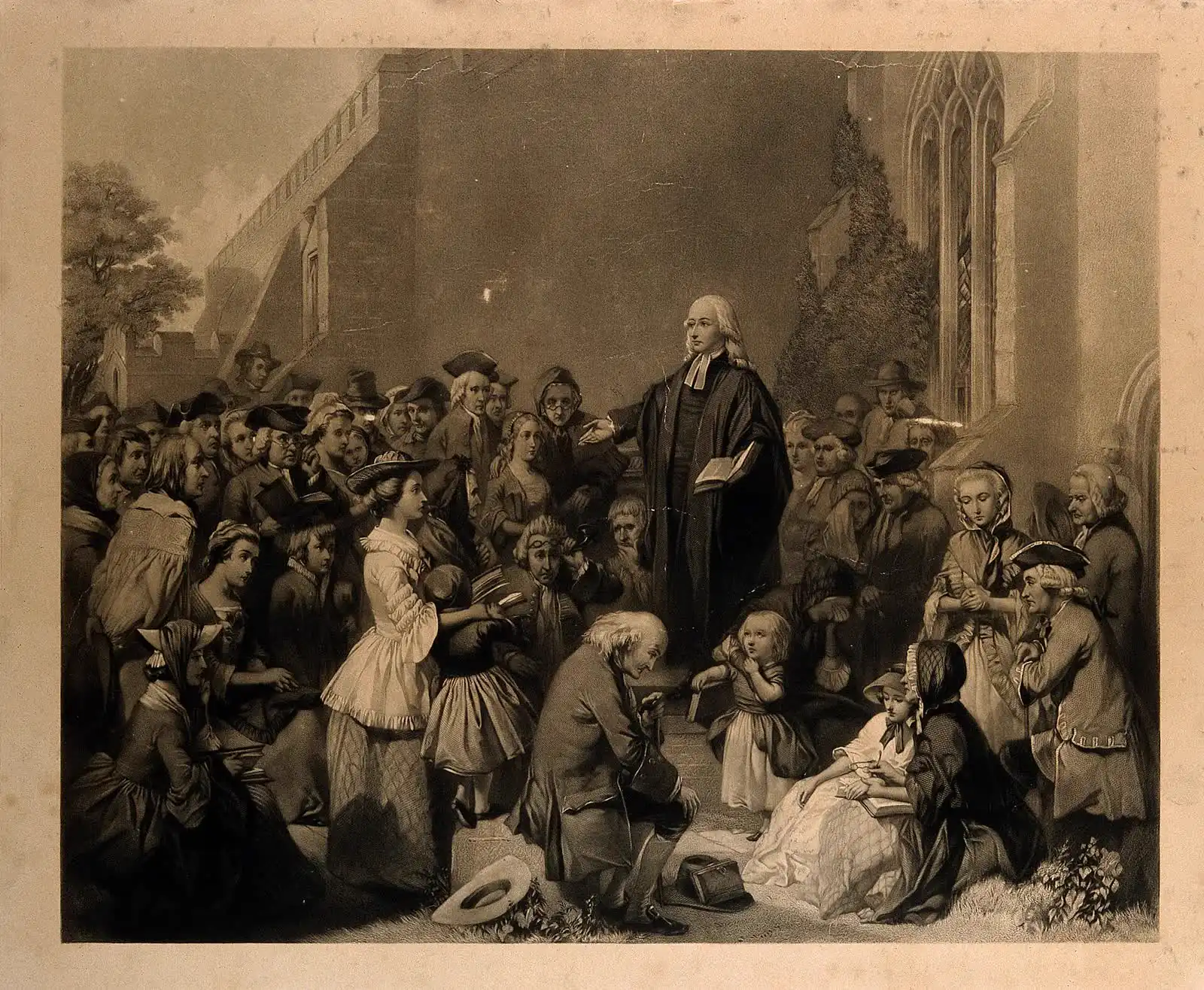
Open-air preaching before a gathered crowd

Witness · Guide

Wellcome Collection · CC BY 4.0

Back to Research Hub

Street Evangelism

Read the paper (PDF)·or read it here ↓

PERSONAL WITNESS IN PUBLIC PLACES — WISELY, LAWFULLY, LOVINGLY

A study of how to share the gospel with strangers in streets, parks and public places — from Scripture and history, with real guidance on United States law and on safety.

Abstract

Can an ordinary Christian talk to strangers about Christ in public, and should they? This paper answers from the King James Bible first — Wisdom crying in the streets, the Lord at the well, the seventy sent two by two, Paul in the marketplace, at the riverside and before the magistrates of Philippi — and second from the field preachers who took the gospel outdoors: George Whitefield, John Wesley at Wednesbury, and C. H. Spurgeon's practical counsel on street work. It then gives a method for real conversations with strangers, a chapter on the law in the United States drawn from the Supreme Court's public-forum decisions (Hague, Cantwell, Murdock, Schneider, Ward, Watchtower v. Stratton, McCullen and others) and from federal regulation, and a chapter on safety and de-escalation. The conclusion is that street witness is biblical, lawful in most public places, and best done gently, in pairs, with no pressure. It is written for believers and church teams who want to go out and do it well.

What’s inside

  1. Introduction
  2. Part 1: The Street in Scripture
  3. Part 2: Gospel in the Open Air: Lessons from History
  4. Part 3: Preparing Heart and Hands
  5. Part 4: Conversations with Strangers: A Method
  6. Part 5: Your Rights and the Law in the United States
  7. Part 6: Safety and De-escalation
  8. Part 7: Going Out as a Team and Keeping Going
  9. Conclusion

Research paper · 9 chapters · 47 notes · October 2026

"Go out into the highways and hedges, and compel them to come in, that my house may be filled." — Luke 14:23 (KJV)Read in the 1611 →

Read the paper here

About 46 minutes · 9 parts · the PDF has the same text

Introduction

2 min read

Somewhere near you today, someone will sit on a bench, wait for a bus, walk a dog, or stand outside a hospital with nothing to do but think. Many of them have never had a real conversation with a Christian about Christ. Most of them never will, unless someone starts one.

Street evangelism means exactly that: starting conversations about the gospel with people you do not know, in the places where they are. It is not shouting at passers-by, and it is not cornering anyone. At its best it is one believer, usually with a partner, offering good news to one person who is free to say no.

What this paper is

This is a study and a field guide. It argues from the King James Bible first. It draws on the record left by men who did this work for decades and wrote down what they learned. And because street witness happens in public, it gives real guidance on the law in the United States, from the decisions of the Supreme Court and the text of federal rules, and on keeping yourself and others safe.

Seven parts follow. Part 1 looks at the street in Scripture. Part 2 looks at the history of gospel work in the open air. Part 3 covers preparation of heart and hands. Part 4 is a method for conversations with strangers. Part 5 is the law. Part 6 is safety and de-escalation. Part 7 is how to go out as a team and keep going.

A note before the law chapter: this paper explains the law in general terms so that you can act with confidence and courtesy. It is general information, not legal advice; laws vary by place, and they change. It is current as of October 2026. Part 5 tells you how to find the rule where you live. If you are facing a real dispute, talk to a lawyer.

A word about me

I was raised Roman Catholic but never really connected — I went through the motions, fell asleep in the pews, and faked being sick to skip Mass. Eventually I gave up and called myself an atheist. I decided to read the Bible for one reason: to disprove it, so I'd have an excuse to stop going to church for good. It did the opposite.

I came to faith in 2022, and my wife came to faith a month later. Today we're raising three kids in a home that was transformed — and I haven't stopped telling people since. That is my story, and the rest of it is at kylelauriano.com/about. I mention it because the people you will meet in public places are often where I was: going through the motions, or calling themselves atheists. Someone has to tell them otherwise.

Every verse in this paper is quoted from the King James Bible. You can read it free in the 1611 Reader at kylelauriano.com/library.

Part 1 — The Street in Scripture

5 min read

This part matters because many Christians assume that faith belongs indoors — in a church, a home, a small group — and that taking it into the street is a modern, slightly embarrassing invention. Scripture says otherwise. From Proverbs to Acts, God's word goes out where people are.

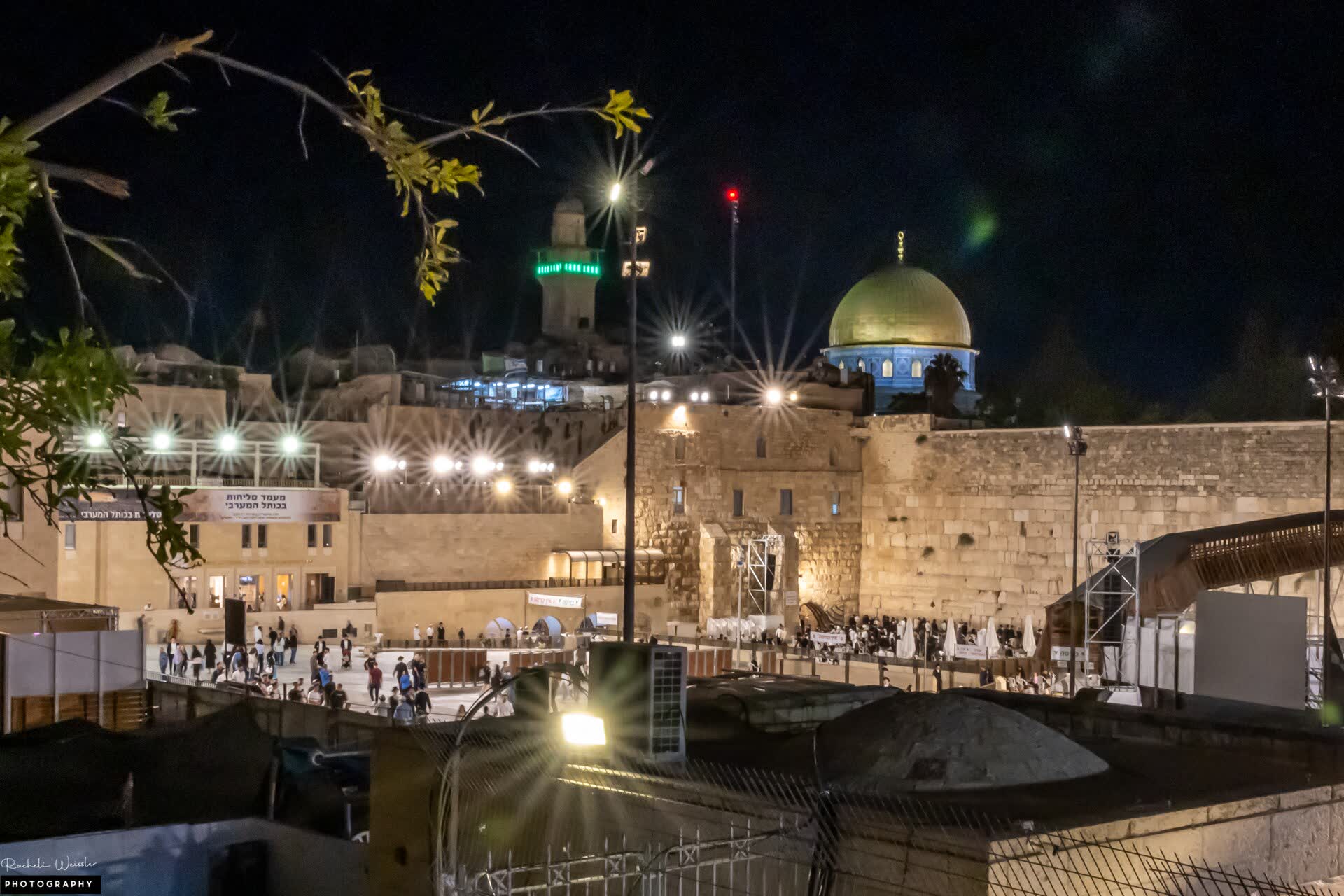
The Western Wall in Jerusalem with worshippers in prayer
The Western Wall in Jerusalem — Herodian stones of the Second Temple platform where prayer has not stopped in two thousand years.רחל וייסלר · CC BY 2.5

Wisdom in the streets

Proverbs pictures Wisdom herself as a public speaker: "Wisdom crieth without; she uttereth her voice in the streets: She crieth in the chief place of concourse, in the openings of the gates: in the city she uttereth her words, saying" (Proverbs 1:20-21). The "chief place of concourse" is the busiest spot in town; the "openings of the gates" were where business and law were done. God's truth is not shy about public places.

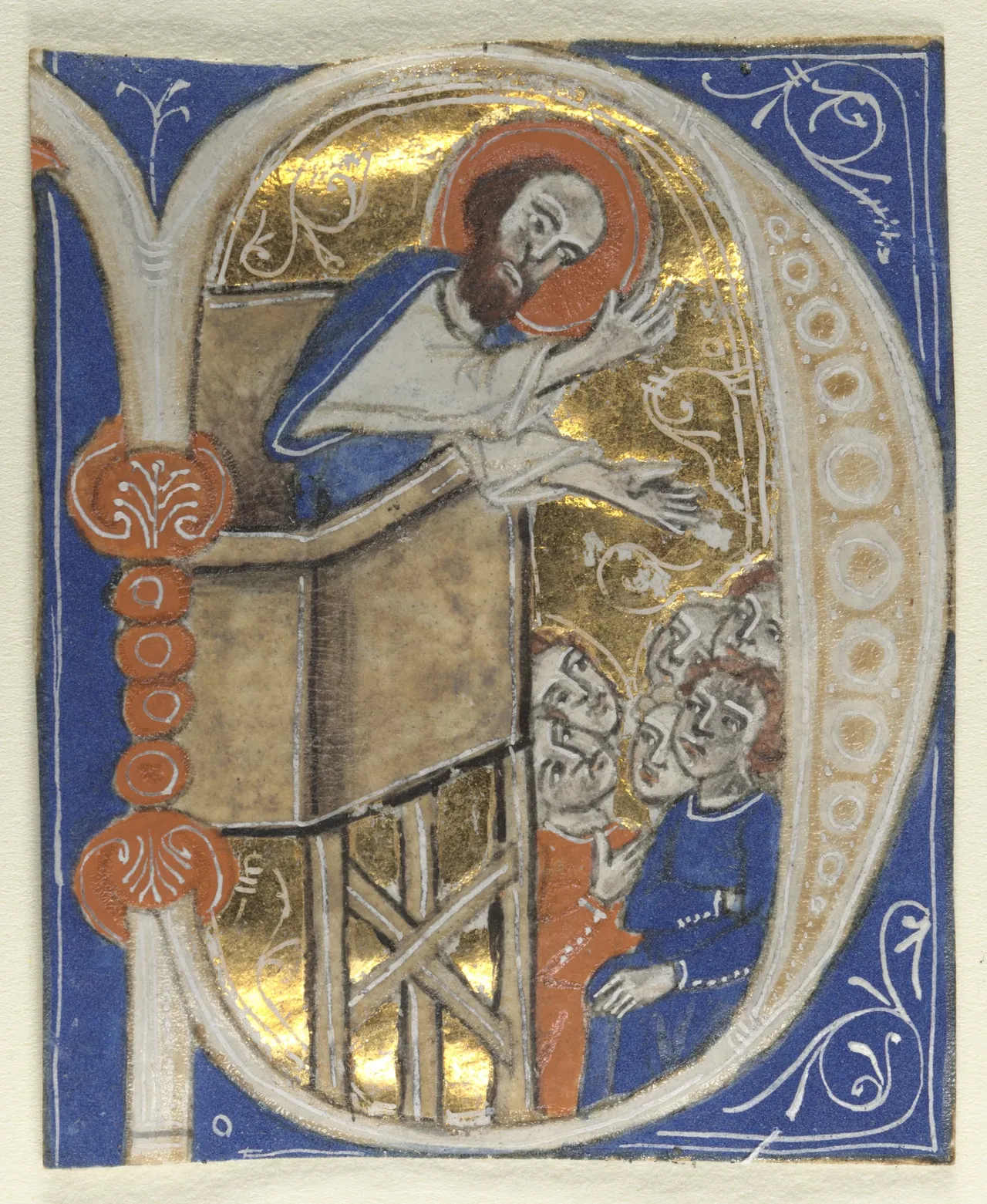
Historiated Initial Excised from a Bible: St. Paul Preaching
A thirteenth-century Italian Bible initial of St. Paul preaching to a small crowd of listeners, beside the account of Paul reasoning daily in the marketplace.Historiated Initial Excised from a Bible: St. Paul Preaching · 1200s · Cleveland Museum of Art · CC0 · museum record · Galeria Regni

The Lord at the well

The longest recorded conversation Jesus had with one person took place at a public well, in the heat of the day, with a stranger. It began with a request: "There cometh a woman of Samaria to draw water: Jesus saith unto her, Give me to drink." (John 4:7). She was surprised He spoke to her at all, and He turned the conversation: "Jesus answered and said unto her, If thou knewest the gift of God, and who it is that saith to thee, Give me to drink; thou wouldest have asked of him, and he would have given thee living water." (John 4:10).

He began with something ordinary — water. He spoke to someone His culture expected Him to ignore. He was honest about her life without humiliating her. And He told her plainly who He was. The result reached a whole town, because she went back and said, "Come, see a man, which told me all things that ever I did: is not this the Christ?" (John 4:29).

Sent two and two

When the Lord sent out the seventy, He sent them in pairs: "After these things the LORD appointed other seventy also, and sent them two and two before his face into every city and place, whither he himself would come." (Luke 10:1). He was frank about the danger: "Go your ways: behold, I send you forth as lambs among wolves." (Luke 10:3).

He told them to begin with peace: "And into whatsoever house ye enter, first say, Peace be to this house. And if the son of peace be there, your peace shall rest upon it: if not, it shall turn to you again." (Luke 10:5-6). And He told them what to do when they were refused — not to argue, not to stay and force it, but to move on with a clear word: "But into whatsoever city ye enter, and they receive you not, go your ways out into the streets of the same, and say, Even the very dust of your city, which cleaveth on us, we do wipe off against you: notwithstanding be ye sure of this, that the kingdom of God is come nigh unto you." (Luke 10:10-11).

Pairs. Peace first. Honesty about danger. Freedom to refuse, and freedom to leave. That is still the pattern.

"Go out quickly into the streets and lanes"

In the parable of the great supper, when the invited guests made excuses, the master said to his servant: "Go out quickly into the streets and lanes of the city, and bring in hither the poor, and the maimed, and the halt, and the blind." (Luke 14:21). When there was still room, he said: "Go out into the highways and hedges, and compel them to come in, that my house may be filled." (Luke 14:23).

That word "compel" needs care, because it has been misused in history to justify forcing religion on people. In the parable, the servant has no power to force anyone; he has only an invitation. The word describes urgent, insistent invitation to people who would assume they were not welcome — the poor, the maimed, travellers on the road. Spurgeon, preaching on open-air work, read it exactly this way: we must actually go "into the streets and lanes and highways", because there are people "whom we shall never reach unless we pursue them into their own domains."1 The compulsion is love's urgency, not force.

Matthew's version of a similar parable adds the scope: "Go ye therefore into the highways, and as many as ye shall find, bid to the marriage." (Matthew 22:9). Bid — invite. As many as you find.

Paul in the marketplace

In Athens, Paul did not wait for the philosophers to come to the synagogue: "Therefore disputed he in the synagogue with the Jews, and with the devout persons, and in the market daily with them that met with him." (Acts 17:17). "Daily", and "with them that met with him" — whoever happened to be there. That is street evangelism in one verse.

The riverside at Philippi

At Philippi there was no synagogue, so Paul's team went looking for people already seeking God: "And on the sabbath we went out of the city by a river side, where prayer was wont to be made; and we sat down, and spake unto the women which resorted thither." (Acts 16:13). They sat down. They spoke. And "a certain woman named Lydia, a seller of purple, of the city of Thyatira, which worshipped God, heard us: whose heart the Lord opened, that she attended unto the things which were spoken of Paul." (Acts 16:14).

Notice how ordinary it was. No platform, no amplifier. A group of men sat down with a group of women at a place of prayer and talked.

A chariot on a desert road

Philip's encounter with the Ethiopian was a conversation with a stranger on a public road, prompted by God: "Then the Spirit said unto Philip, Go near, and join thyself to this chariot." (Acts 8:29). Philip went near, heard what the man was reading, and asked him a question about it. That is the shape of most good street conversations: notice, approach, ask.

God meets people in public places

Conversions in Scripture happen on roads (Saul, Acts 9), at wells (John 4), in prisons (Acts 16), from a tree to a dinner table (Zacchaeus, Luke 19) and at riversides (Lydia). Christians still tell stories of meeting God in unlikely public places.

Mike Shreve told his story on The King Is Coming Show (TKIC #46): a kundalini and yoga guru — until, in his telling, he was born again on a Tampa roadside. Watch it in his own words: youtube.com/watch?v=oqAq58bDC4k Mike's account of what happened to him, shared as his testimony — weigh it for yourself.

The point is not that you must stand on a roadside. It is that God is not confined to buildings, and neither is His gospel.

Part 2 — Gospel in the Open Air: Lessons from History

5 min read

This part matters because others have done this before us, at greater cost, and wrote down what they learned. Their records are practical in a way modern manuals often are not.

The field preachers

In early 1739, with Bristol's pulpits closed to him, George Whitefield went out to the coal-mining district of Kingswood and began, in the words of his biographer John Gillies, "to preach to about a hundred colliers". The crowds grew into the thousands. Whitefield's own memory of those first days was of "the white gutters made by their tears, which plentifully fell down their black cheeks, as they came out of their coal-pits."2 He went outdoors because the people were outdoors, and many of them, Gillies wrote, "had never been in a church in their lives."

John Wesley followed him that spring, having admitted that he could scarcely reconcile himself "to this strange way of preaching in the fields". On 2 April 1739 he wrote: "At four in the afternoon, I submitted to be more vile and proclaimed in the highways the glad tidings of salvation".3 If you feel that talking to strangers about God is beneath your dignity or outside your temperament, you are in good company. Wesley felt it too, and did it anyway, for the rest of his life.

Wesley and the mob at Wednesbury

Wesley's journal for 20 October 1743 records what happened when a mob surrounded the house where he was staying in Wednesbury, in the English Midlands, crying "Bring out the minister; we will have the minister." What he did next is a lesson in calm. "I desired one to take their captain by the hand and bring him into the house. After a few sentences interchanged between us, the lion became a lamb." He asked the captain to bring in one or two of the angriest; "in two minutes they were as calm as he."4

Later that night a second mob from Walsall seized him and dragged him through the streets. He kept talking to whoever could hear, asking, "What evil have I done? Which of you all have I wronged in word or deed?" When his voice failed, he prayed aloud — and the man who had led the mob turned and said, "Sir, I will spend my life for you: follow me, and not one soul here shall touch a hair of your head." He reached safety "having lost only one flap of my waistcoat and a little skin from one of my hands."5

Two things stand out. First, Wesley's instinct was to make personal contact with the angriest person — to turn a crowd back into individuals. Second, he never answered violence with violence or insult with insult. His questions were simple and fair: what have I done wrong? Modern de-escalation training teaches much the same thing (Part 6). But note too what Wesley himself admitted: his friends had urged him to stay in the house when he had told them "Now is the time for us to go" — and he gave way to them, "though I foresaw what would follow." There is wisdom in leaving when you sense it is time.

Spurgeon's practical counsel

C. H. Spurgeon trained hundreds of preachers at his Pastors' College in London, and his lectures on open-air work are full of plain common sense that applies to every kind of street witness, not only preaching. Three of his remarks are worth carrying with you.

Personal talk does more than speeches. "More good may be done by personal talk to one than by a rhetorical address to fifty."6 In The Soul-Winner he wished that every open-air preacher were "accompanied by a batch of persons who would drive his nails home for him by personal conversation", and called for believers who would "deal with individual cases in the singular by pointed personal warnings and encouragements."7 Most of what this paper teaches is exactly that: personal conversation.

Do not obstruct, and do not inconvenience. "Do not purposely interfere with the thoroughfare," he told his students.8 And: "Always inconvenience yourself rather than your audience: your Master would have done so. Even in the streets of London a concern for the convenience of your hearers is one of the things which conciliates a crowd more than anything."9

Be courteous, and keep to Christ. "One constant rule is to be always courteous and good tempered, for if you become cross or angry it is all over with you. Another rule is to keep to your subject, and never be drawn into side issues. Preach Christ or nothing".10 With sceptics, "your business is not to argue but to proclaim the gospel."11

He also warned against useless noise. He described two zealous men who bawled hymns and exhortations outside a family's door every Sunday afternoon with hardly ever a hearer, so that the family complained "they are compelled to lose their few hours of quiet because two good men think it their duty to perform a noisy but perfectly useless service."12 Zeal that annoys the neighbours and reaches no one is not faithfulness.

On tracts

Spurgeon was a great believer in tracts, with a condition: "Some tracts would not convert a beetle: there is not enough in them to interest a fly. Get good striking tracts, or none at all. But a telling, touching gospel tract may often be the seed of eternal life; therefore, do not go out without your tracts."13 He also insisted they were never a substitute for speaking: "A tract is a useful thing, but a living word is better. Your eye, and face, and voice will all help. Do not be so cowardly as to give a piece of paper where your own speech would be so much better."14

Lessons from history

  • The street reaches people the church building never will. That was true for Kingswood colliers and is true for your city.
  • Calm and courtesy disarm hostility more often than argument does.
  • Personal conversation is the heart of it. Speeches and tracts serve conversations; they do not replace them.
  • Consideration for others is part of the witness. Do not block, do not annoy, do not shout at people's homes.
  • Go with others. None of these men worked alone.

Part 3 — Preparing Heart and Hands

3 min read

This part matters because what you carry inside will shape every conversation more than anything you say. A believer who goes out angry, proud or frightened will show it. A believer who goes out prayed-up, clear on the gospel and at peace will show that too.

Facing the fear

Almost everyone is afraid the first time. Paul himself said he came to Corinth "in weakness, and in fear, and in much trembling" (1 Corinthians 2:3). Scripture does not tell you the fear will vanish; it tells you what to put beside it. "For God hath not given us the spirit of fear; but of power, and of love, and of a sound mind." (2 Timothy 1:7).

To Paul in Corinth the Lord said: "Be not afraid, but speak, and hold not thy peace: For I am with thee" (Acts 18:9-10). Speak afraid if you have to. The fear usually shrinks after the first conversation, because most people are far kinder than we imagine.

Pray before you go

The apostles under threat prayed for boldness, not for safety: "grant unto thy servants, that with all boldness they may speak thy word" (Acts 4:29). Before you go out, pray:

  • for the people you will meet, that God would open hearts as He opened Lydia's;
  • for boldness and clear words;
  • for love, so that you see people rather than targets;
  • for wisdom about whom to approach and when to leave;
  • for protection, for you and for them.

Know the gospel you are carrying

You do not need a theology degree, but you do need to be able to say the gospel clearly in a few minutes. Paul's summary is the core: "how that Christ died for our sins according to the scriptures; And that he was buried, and that he rose again the third day according to the scriptures" (1 Corinthians 15:3-4). Around that core:

Practise it aloud with your partner until you can say it in your own words without notes, in two minutes, and also in ten.

Know your own story

Have a short version of your testimony ready: what you were, how you came to Christ, what has changed. Thirty seconds to two minutes. Keep it true and keep it pointed at Christ. The site's papers Share Your Story and Share Your Testimony will help.

What to carry

  • A pocket King James Bible or the 1611 Reader on your phone (kylelauriano.com/library).
  • Good tracts or cards — short, clear, with Scripture and a way to find a church or read more. Read every one yourself before you hand it out.
  • A simple card with your church's name and service times, if your church is willing.
  • Water, a charged phone, and some identification.
  • Nothing that looks like a sales pitch. No clipboards that suggest a survey you are not really doing. Paul "renounced the hidden things of dishonesty, not walking in craftiness" (2 Corinthians 4:2).

Go as you are

You do not need a costume. Spurgeon warned his students that affected holiness invites mockery: "The less you are like a parson the more likely you are to be heard".15 Dress as you would to meet a friend. Be a normal, kind person who has good news.

Part 4 — Conversations with Strangers: A Method

6 min read

This part matters because a conversation with a stranger is not a sermon aimed at one person. It is a meeting between two people, one of whom has something to give. Everything below is a method, not a script. Use it to stay honest and clear, and then be yourself.

The slopes of the Mount of Beatitudes above the Sea of Galilee
The slopes above the Sea of Galilee at the traditional Mount of Beatitudes — the natural amphitheater where the Sermon on the Mount was preached.Obendorf · CC0

The shape of a good conversation

Most good street conversations follow the shape of the Lord's at the well and Philip's on the road:

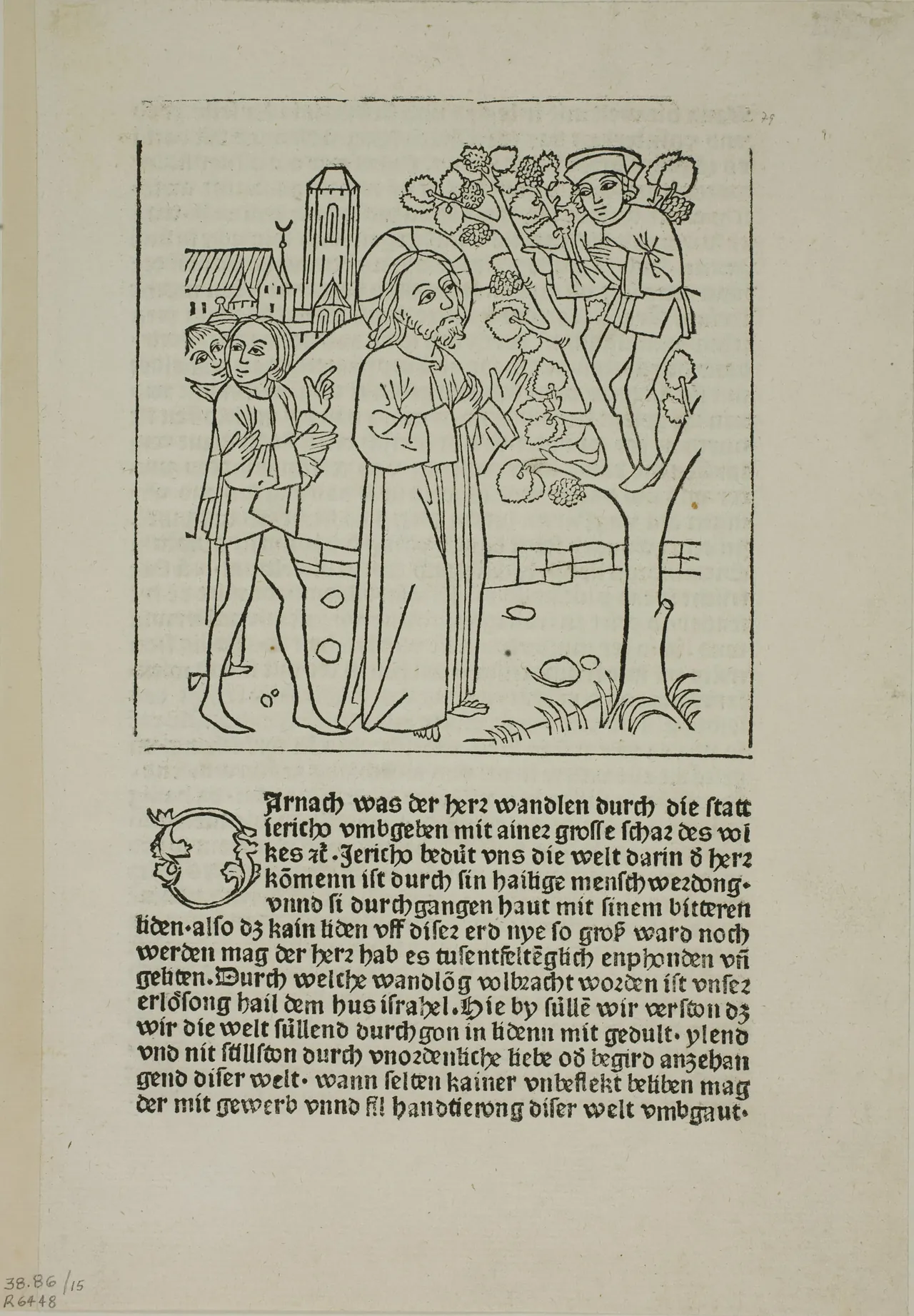
Jesus Calling Zacchaeus from Geistliche Auslegung des Lebens Jesu Christi (The Spiritual Interpretation of the Life of Christ), Plate 15 from Woodcuts from Books of the 15th Century
A German woodcut of about 1485 showing Jesus calling Zacchaeus from the tree in a crowded street, beside this method for honest conversations with strangers.Jesus Calling Zacchaeus from Geistliche Auslegung des Lebens Jesu Christi (The Spiritual Interpretation of the Life of Christ), Plate 15 from Woodcuts from Books of the 15th Century · c. 1485, portfolio assembled 1929 · Art Institute of Chicago · CC0 · museum record · Galeria Regni

| Stage | What you do | Scripture pattern | |---|---|---| | Notice | See the person; read the moment | "Go near, and join thyself to this chariot" (Acts 8:29) | | Open | A friendly, honest opening | "Give me to drink" (John 4:7) | | Ask | A real question, then listen | "Understandest thou what thou readest?" (Acts 8:30) | | Turn | Move gently to spiritual things, with permission | "If thou knewest the gift of God" (John 4:10) | | Tell | The gospel, and your story | "preached unto him Jesus" (Acts 8:35) | | Invite | A response, freely given or refused | "Repent ye, and believe the gospel" (Mark 1:15) | | Leave well | Thanks, a next step, peace | "Peace be to this house" (Luke 10:5) |

Reading the moment

Not every person is free to talk at every moment. Good signs: someone sitting or waiting with time on their hands, making eye contact, relaxed. Poor moments: someone rushing, on a phone call, in an argument, working (do not distract staff from their jobs), clearly distressed in a way that needs help more than a conversation, or obviously intoxicated.

Children deserve special care. Do not approach minors who are alone. If you speak with a child, do it only with their parent or guardian present and willing, and speak to the parent first.

Opening honestly

People can tell when they are being manoeuvred. The simplest openings are honest ones:

  • "Hi — we're from a church nearby, and we're out talking to people about faith today. Would you be open to a quick conversation?"
  • "Can I ask you a question? What do you think happens after we die?"
  • "We're giving these out — it's a short piece on who Jesus is. Would you like one?"

Some believers prefer to start with ordinary conversation and move to faith later. That is fine, as long as it is genuine. Do not pretend to be lost, run a fake survey, or pose as something you are not. "For our exhortation was not of deceit, nor of uncleanness, nor in guile" (1 Thessalonians 2:3).

Asking permission, and meaning it

Before you move to the gospel, ask: "Can I share what I believe about that?" or "Would you mind if I told you why I'm a Christian?" If they say no, thank them, wish them well, and let them go. That is not failure; it is respect. The Lord let the rich young ruler walk away (Mark 10:22). A person who has been treated with respect may well talk to the next Christian they meet.

Listening

"He that answereth a matter before he heareth it, it is folly and shame unto him." (Proverbs 18:13). Ask what they believe and why. Ask about their background. Many people have a church story, often a painful one. Listen to it. You will learn what they actually need to hear.

Good questions:

  • "Do you have any spiritual background?"
  • "Who do you think Jesus was?"
  • "What do you mean by that?" and "How did you come to that conclusion?" (Gregory Koukl's two "Columbo" questions)16
  • "If you found out Christianity was true, would you want to follow Christ?"

Telling the gospel in a few minutes

When you have permission, say it plainly. One way:

God made you, and you matter to Him. But all of us have sinned — we've lied, hurt people, lived as if He doesn't exist — and the Bible says the wages of sin is death, and after death comes judgment. God didn't leave us there. He sent His Son, Jesus, who lived without sin, died on the cross for our sins, and rose from the dead on the third day. Because of that, God offers forgiveness and eternal life as a free gift. Not because we earn it, but by grace, through faith. He calls us to turn from our sin and trust Christ. Can I show you where it says that?

Then show them: Romans 3:23, Romans 6:23, Romans 5:8, Ephesians 2:8-9, and Mark 1:15 are enough. Let them read the words themselves if they will.

Add your story briefly, if you have not already. And be honest about the cost. Following Christ means a new Master. "Therefore if any man be in Christ, he is a new creature: old things are passed away; behold, all things are become new." (2 Corinthians 5:17).

Inviting a response

It is right to ask: "Does that make sense? Is there anything stopping you from trusting Christ?" If they want to pray, help them talk to God in their own words; no form of words is magic. If they believe, help them take next steps: a King James Bible or the 1611 Reader, the Gospel of John, a sound church, baptism (Acts 2:38), and a way to stay in touch if they want it.

If they are not ready, do not push. Offer a tract or a card, tell them you will pray for them, and mean it. "I have planted, Apollos watered; but God gave the increase." (1 Corinthians 3:6).

Some hypothetical conversations

These are illustrations, not real people.

Suppose a man waiting for a bus says, "I don't really believe in anything." You ask how he came to that. Perhaps he says he was raised in church and it felt fake. You thank him for being honest, and you say you understand: plenty of people go through the motions. Then you ask whether he has ever looked at who Jesus actually is, apart from the church he grew up in. If his bus comes, you hand him a card with the Gospel of John and say, "If you ever want to read it with fresh eyes, start there."

Suppose a young woman says angrily, "Christians are the most judgmental people I know." You do not defend Christians in general. You say, "I'm sorry. Some of us have been. I have been." Then you ask what happened. Often there is a real hurt. Listen. If she is willing, you might say that Jesus was hardest on religious people who looked down on others, and gentlest with people who knew they needed Him. If she is not willing, wish her well.

Suppose an older man on a park bench tells you his wife died last year. Stop. The gospel is not a script to run past grief. "I'm so sorry. What was her name?" Let him talk. Then, if it seems right, you can ask whether he has any hope about death, and gently tell him about the One who said, "I am the resurrection, and the life" (John 11:25). Offer to pray with him. Ask whether he has people around him. If he seems in despair, make sure he knows that help is available — in the United States he can call or text 988, the Suicide & Crisis Lifeline.

Suppose a group of teenagers starts mocking. Do not perform for the crowd and do not get drawn into a show. Stay friendly. Often one of them will hang back afterwards with a real question. If not, wish them well and move on. Spurgeon's rule applies: "always courteous and good tempered".

Suppose a person from another religion is happy to talk. Ask about their beliefs and listen carefully. Find out what they believe about God, sin and salvation. Then explain, respectfully and clearly, what makes the gospel different: that salvation is a gift of grace through the death and resurrection of Christ, not something we earn, and that Jesus said, "no man cometh unto the Father, but by me" (John 14:6). Do not mock their faith. Do not water down yours.

Leaving well

Every conversation ends. End it with thanks, with peace, and with a next step if they want one. If they gave you their contact details freely, follow up as you promised — once or twice, not endlessly. If they did not, do not ask for more than they offer. Never record or photograph someone without their clear permission.

Part 5 — Your Rights and the Law in the United States

17 min read

This part matters because many believers stay silent in public out of a vague fear that it is "not allowed". In most public places in the United States, it is. The Supreme Court has said so repeatedly — and many of the leading cases were brought by religious people, especially Jehovah's Witnesses in the 1930s and 1940s, who handed out literature and preached in streets and doorways and were arrested for it. Knowing what the law protects will give you confidence. Knowing what it allows the government to regulate will keep you courteous and out of trouble.

Current as of October 2026. This chapter is general information, not legal advice, and laws vary by place. State constitutions, state laws and city or county ordinances add their own rules, and they change. Decisions of the United States Supreme Court bind every court in the country; a decision of a federal court of appeals (a "circuit") binds only the states in that circuit, and a state court's decision binds only that state. This chapter says which is which.

To find the rule where you live: search your city's or county's code of ordinances (most are online through the city or county website, or through Municode or American Legal Publishing) for "noise", "amplified sound", "permit", "parks" and "solicitation"; then call the city permit office or the parks department and ask. For a national park, call the park superintendent's office. When in doubt, ask, and if you face a real dispute, consult a lawyer.

The Christian and the law

Scripture tells believers to honour the authorities: "Submit yourselves to every ordinance of man for the Lord's sake" (1 Peter 2:13), and "Put them in mind to be subject to principalities and powers, to obey magistrates, to be ready to every good work, To speak evil of no man, to be no brawlers, but gentle, shewing all meekness unto all men." (Titus 3:1-2). Paul tells us to pray for rulers so "that we may lead a quiet and peaceable life in all godliness and honesty." (1 Timothy 2:2).

There is a limit. When the Sanhedrin forbade the apostles to preach at all, "Peter and the other apostles answered and said, We ought to obey God rather than men." (Acts 5:29). But that was a ban on the gospel itself. A rule about where you may stand, how loud your speaker may be, or when a park closes is not that. Obey it.

And Scripture shows that a believer may use his legal rights. When the magistrates at Philippi had Paul and Silas beaten and jailed without trial, and then tried to release them quietly, Paul refused: "They have beaten us openly uncondemned, being Romans, and have cast us into prison; and now do they thrust us out privily? nay verily; but let them come themselves and fetch us out." (Acts 16:37). Later he asked a centurion, "Is it lawful for you to scourge a man that is a Roman, and uncondemned?" (Acts 22:25), and in the end he appealed to Caesar (Acts 25:11). Knowing and calmly asserting your rights is not unspiritual. Paul did it for the sake of the gospel and the young church left behind.

Public forums: streets, sidewalks and parks

The foundation of the law here is the idea of the "public forum". In Hague v. CIO (1939), Justice Owen Roberts wrote, in an opinion joined by one other justice that the whole Court later adopted, that streets and parks "have immemorially been held in trust for the use of the public, and, time out of mind, have been used for purposes of assembly, communicating thoughts between citizens, and discussing public questions."17 In 1983 the Court restated the rule: in such "quintessential public forums, the government may not prohibit all communicative activity." To exclude speech because of its content, the government must show that the rule is "necessary to serve a compelling state interest" and narrowly drawn.18

What this means in practice: on a public sidewalk or in a public park, you generally have a right to talk to people about Christ, to hand out literature, and to hold a sign, subject to neutral rules about time, place and manner (below). The government cannot ban religious speech there because of what it says.

What the government may regulate: time, place and manner

The government may make rules about how, when and where people speak in public forums, as long as the rules are neutral about the message. The Court's test, stated in Ward v. Rock Against Racism (1989), is that such restrictions must be "justified without reference to the content of the regulated speech," "narrowly tailored to serve a significant governmental interest," and must "leave open ample alternative channels for communication of the information."19

So a city may, for example, limit amplified sound near homes at night, require you not to block a doorway or crosswalk, set park hours, or require a permit for a large event. It may not make a rule that applies only to religious speakers, or only to Christians. In 1972 the Court put the key question simply: whether the manner of expression "is basically incompatible" with the normal activity of a particular place at a particular time.20

The same principle covers permits for marches and large gatherings. In Cox v. New Hampshire (1941), the Court upheld the convictions of Jehovah's Witnesses who marched on the streets of Manchester without the special license a state law required for a "parade or procession", because the Court found the license requirement a reasonable, non-discriminatory rule about the time, place and manner of using the streets.21

Handing out literature

The right to hand out tracts in public is one of the most strongly protected. In Lovell v. City of Griffin (1938), the Court struck down an ordinance in Griffin, Georgia, that required written permission from the city manager to distribute any literature; the case involved Alma Lovell, a Jehovah's Witness. The Court treated pamphlets and leaflets as part of the freedom of the press, pointing to their place in history.22

In Schneider v. State (1939), the Court struck down bans on handing out leaflets in several cities, holding that "the purpose to keep the streets clean and of good appearance is insufficient to justify an ordinance which prohibits a person rightfully on a public street from handing literature to one willing to receive it." Cities may instead punish "those who actually throw papers on the streets."23

And in Murdock v. Pennsylvania (1943), striking down a license tax on Jehovah's Witnesses who sold religious books door to door in Jeannette, Pennsylvania, the Court wrote words every street evangelist should know: "The hand distribution of religious tracts is an age-old form of missionary evangelism — as old as the history of printing presses." Such activity, it said, "occupies the same high estate under the First Amendment as do worship in the churches and preaching from the pulpits." And: "A state may not impose a charge for the enjoyment of a right granted by the federal constitution."24

Practical notes:

  • Offer, do not force. Hand literature to people who will take it. Do not stuff it into hands, car windows or bags.
  • Pick up any tracts that end up on the ground. Schneider protects handing out literature; it does not protect littering.
  • Do not block entrances, sidewalks or traffic.

Asking for money

Asking for donations is treated differently from speaking or leafleting. In International Society for Krishna Consciousness v. Lee (1992), the Court held that the terminals of the New York-area airports were not public forums and upheld a ban on soliciting funds inside them; in a companion decision, Lee v. ISKCON, it left standing the lower court's ruling that a ban on handing out literature there was unconstitutional.25 In 1987 the Court had already struck down a Los Angeles airport rule banning all "First Amendment activities", in a case brought by a Jews for Jesus minister who had been told to stop leafleting.26

The simplest course for street witness: do not ask anyone for money. Free truth. If you are not asking for anything, a whole category of rules and suspicions simply falls away.

Fairs, festivals and booths

At large events, organisers and governments may confine distribution and sales to booths. In Heffron v. ISKCON (1981), the Court upheld a Minnesota State Fair rule requiring groups to distribute and sell literature only from rented booths, noting that the rule did not prevent representatives "from walking about the fairgrounds" and talking with people face to face.27 So at a fair, expect to rent a booth for literature, and expect to be free to talk.

Door to door

Door-to-door witness is protected too. In Martin v. City of Struthers (1943), the Court struck down a ban on ringing doorbells to deliver literature; it said the decision whether to receive visitors belongs to each householder, and indicated that a city may make it an offence to ring the bell of a householder who has made clear that he does not want callers.28 In Watchtower Bible & Tract Society v. Village of Stratton (2002), the Court struck down a village ordinance requiring a permit before anyone could go door to door to promote a "cause", writing that it is "offensive — not only to the values protected by the First Amendment, but to the very notion of a free society" to require a citizen to tell the government and get a permit before speaking to her neighbours. The Court also noted that a resident's "No Solicitation" sign and "unquestioned right to refuse to engage in conversation with unwelcome visitors" give "ample protection for the unwilling listener."29

Practical notes: respect "No Soliciting" and "No Trespassing" signs; leave the first time you are asked; do not return to a house that has said no; and visit at reasonable hours.

Offensive messages, angry crowds and the "heckler's veto"

The gospel offends some people. The law does not let the government silence a peaceful speaker just because listeners are angry. In Cantwell v. Connecticut (1940), Jesse Cantwell, a Jehovah's Witness, played a record attacking the Catholic Church to two men on a New Haven street; they were angered, and he was convicted of breach of the peace. The Court reversed, finding his conduct peaceful and no clear and present danger to public order. "In the realm of religious faith, and in that of political belief, sharp differences arise," the Court observed.30 The same case struck down a law requiring an official to approve a cause as "religious" before anyone could solicit for it.

In 1992 the Court added that "Speech cannot be financially burdened, any more than it can be punished or banned, simply because it might offend a hostile mob" — striking down a county permit scheme that let officials charge more for events expected to draw a hostile crowd.31 And in 2015 the full United States Court of Appeals for the Sixth Circuit, in Bible Believers v. Wayne County (a federal appeals decision that binds only the courts of that circuit: Michigan, Ohio, Kentucky and Tennessee), held that sheriff's deputies violated the First Amendment rights of a group of street preachers when they removed them from the Arab International Festival in Dearborn, Michigan, after part of the crowd threw plastic bottles and debris at them. The court called it a "heckler's veto", and said that "police cannot punish a peaceful speaker as an easy alternative to dealing with a lawless crowd that is offended by what the speaker has to say."32 Courts outside that circuit are not bound by it, so do not assume every court will see a hostile crowd the same way.

Two cautions belong right beside those cases.

First, the protection has limits. In Chaplinsky v. New Hampshire (1942), the Court upheld the conviction of a Jehovah's Witness who called a city marshal abusive names on a Rochester, New Hampshire street, defining "fighting words" as "those which by their very utterance inflict injury or tend to incite an immediate breach of the peace."33 And in Feiner v. New York (1951), the Court upheld the conviction of a street-corner speaker in Syracuse who refused three police requests to stop when the crowd grew restless, while also saying that "the police cannot be used as an instrument for the suppression of unpopular views."34 Personal insults, threats and refusing a lawful police order are not protected the way peaceful speech is, and they can get you arrested.

Second, and more important for a Christian: what the law permits is not the measure of what is wise or loving. The Bible Believers case protected people who carried signs attacking Islam at a festival full of Muslim families. The court was right that the government could not silence them. That does not make their approach a model for anyone who wants Muslims to hear the gospel. Scripture's standard is higher than the First Amendment's: "Give none offence, neither to the Jews, nor to the Gentiles, nor to the church of God" (1 Corinthians 10:32). Peter warned believers not to suffer "as a busybody in other men's matters", but only "as a Christian" (1 Peter 4:15-16). If people are offended by the cross, so be it. Do not give them anything else to be offended by.

Private property: malls, stores and campuses

The First Amendment restrains the government, not private owners. A privately owned shopping centre is generally not a public forum under the federal Constitution: in Hudgens v. NLRB (1976), the Court held that the federal guarantee of free expression "has no part to play" in a dispute over picketing inside a private mall, following its 1972 decision in Lloyd Corp. v. Tanner.35 Some states go further under their own constitutions: in PruneYard Shopping Center v. Robins (1980), the Court held that California could protect reasonable leafleting and petitioning in private shopping centres, since a state may adopt "individual liberties more expansive than those conferred by the Federal Constitution."36

Practical notes:

  • On private property — stores, malls, private parking lots, private universities — ask the owner or manager first, and leave when asked. Going back after being told to leave can be trespass.
  • The public sidewalk outside a store is usually a public forum. Stay on it, and do not block the entrance.
  • Public university campuses are government property, but they are not all open in the same way. Many have designated outdoor areas and rules for non-students. Check the rules, and ask the student life office if you are unsure.

Outside abortion clinics

Many believers offer help and the gospel outside abortion clinics. This area has special rules. In Hill v. Colorado (2000), the Court upheld a Colorado law that, within 100 feet of a health care facility's entrance, forbids knowingly approaching within eight feet of another person without consent to hand out a leaflet, show a sign, or engage in "oral protest, education, or counseling."37 In McCullen v. Coakley (2014), all nine justices agreed that Massachusetts' 35-foot fixed buffer zones around clinic entrances were unconstitutional, though they split on the reasons; the Court's opinion held that the zones "burden substantially more speech than necessary" to achieve the state's interests.38 On 24 February 2025 the Court declined to hear two cases asking it to overrule Hill (Coalition Life v. City of Carbondale and Turco v. City of Englewood); Justices Thomas and Alito said they would have taken them up.39 A refusal to hear a case is not a ruling on the merits, so Hill still stands, and whether it will last is unsettled. Local buffer-zone laws vary widely. Learn the exact rules for the place you intend to go before you go, and keep to them precisely.

National parks and federal land

In areas of the National Park System, federal regulation treats speechmaking, "holding vigils or religious services" and similar expression as "demonstrations" when the conduct "is reasonably likely to attract a crowd or onlookers"; the term does not include "casual park use by visitors or tourists that is not reasonably likely to attract a crowd or onlookers." Under 36 C.F.R. § 2.51, "Demonstrations involving 25 persons or fewer may be held without a permit within designated park areas", provided, among other conditions, that the group does not unreasonably interfere with permitted events or park programs and uses only hand-carried signs, with no "stages, platforms, or structures". Larger groups need a permit from the park superintendent.40 Handing out tracts falls under the next section, 36 C.F.R. § 2.52, which has the same 25-person small-group exception and is likewise limited to the designated areas.41 The designated areas are marked on a map kept at the superintendent's office, and the parks in and around Washington, D.C., have their own longer rule (36 C.F.R. § 7.96).42 Two believers quietly talking with visitors will usually not draw a crowd, but if you plan to hand out literature or speak to a group, call the park first and ask where the designated areas are.

Amplification and noise

You do not need a speaker for personal conversations, and usually you should not use one. Where amplification is used, cities may regulate it neutrally. The Court has struck down a rule in Lockport, New York, that left loudspeaker permits to the police chief's discretion with no standards (Saia v. New York, 1948), and upheld a Trenton, New Jersey, rule against sound trucks emitting "loud and raucous noises" (Kovacs v. Cooper, 1949, with no single majority opinion).43 Noise rules are mostly local, and they differ from town to town: read your city's noise ordinance before you bring any amplifier. The site's paper on Public Witness treats open-air preaching and amplification more fully.

When a police officer or official approaches you

  • Be polite and calm. Smile. Thank them for their work. You are both on the same side of keeping the peace.
  • Listen to what they are asking. Often there has been a complaint, and a small adjustment (moving away from a doorway, turning down a speaker) settles it.
  • Ask, respectfully, what rule applies. "Officer, can you tell me which ordinance I'm violating? I want to comply."
  • If they order you to move, stop or leave, comply first and dispute later. Leave when asked, and sort it out afterwards rather than argue. Arguing on the street rarely helps and can turn a misunderstanding into an arrest. Note the officer's name and badge number, the time and place.
  • Recording police: often allowed, but not settled everywhere. In Glik v. Cunniffe (2011), the federal appeals court for the First Circuit held that "a citizen's right to film government officials, including law enforcement officers, in the discharge of their duties in a public space" is protected by the First Amendment, while noting that the right "may be subject to reasonable time, place, and manner restrictions"; the court said its view "accords with the decisions of numerous circuit and district courts."44 That decision binds only the First Circuit (Maine, Massachusetts, New Hampshire, Rhode Island and Puerto Rico). The Supreme Court has not decided the question, and state recording laws differ. Where the law allows, record openly and politely, keep your distance, and never interfere.
  • Get advice afterwards if you believe your rights were violated. Christian legal organisations and civil-liberties groups can often tell you whether a local rule is lawful.

Recording people

Audio recording of private conversations is governed by state law. Federal law allows a person who is a party to a conversation to record it (18 U.S.C. § 2511(2)(d)), but the Reporters Committee for Freedom of the Press counts "about 11 states" that primarily require the consent of all parties — among them California, Florida, Illinois, Maryland, Massachusetts, Pennsylvania and Washington.45 In public places where people have no reasonable expectation of privacy, the rules differ again. State laws change and have exceptions, so look up your own state's rule before you record anyone. The simplest and kindest rule: do not record or film anyone you are witnessing to without their clear permission, and never post a stranger's face online without it.

Before you go: a legal checklist

  • Find your local rule. Look up your city or county ordinances on permits, parks, solicitation and amplified sound (the city or county website, Municode or American Legal Publishing).
  • Call the office. Ask the permit office or the parks department what applies to the place you plan to go. For a national park, call the superintendent's office and ask for the designated areas.
  • Carry a printed copy of the rule you are relying on, and the name of the person you spoke to.
  • Stay on public sidewalks and public ground. Leave private property when asked.
  • Never block passage — doorways, crosswalks, sidewalks, traffic.
  • If a police officer asks you to leave, leave. Be courteous, ask which rule applies, and sort it out afterwards rather than argue on the spot.
  • Record politely, and only where the law allows. Ask permission before you record anyone you are talking with.

The law at a glance

| Activity in a public forum | General rule | Key authority | |---|---|---| | Talking with people about Christ | Protected; cannot be banned for its religious content | Hague (1939); Perry (1983) | | Handing out tracts | Strongly protected; littering may be punished | Lovell (1938); Schneider (1939); Murdock (1943) | | Rules about time, place, manner | Allowed if content-neutral, narrowly tailored, with alternatives | Ward (1989); Grayned (1972) | | Asking for money | May be restricted more, especially in non-public forums | ISKCON v. Lee (1992) | | Literature at fairs | May be confined to booths; walking and talking still allowed | Heffron (1981) | | Door to door | Protected; permit schemes struck down; respect signs and refusals | Martin (1943); Stratton (2002) | | Hostile crowd | Government may not silence a peaceful speaker for the crowd's anger | Cantwell (1940); Forsyth (1992); Bible Believers (6th Cir. 2015, binds that circuit only) | | Insults, threats, defying lawful orders | Not protected the way peaceful speech is; can lead to arrest | Chaplinsky (1942); Feiner (1951) | | Private malls and stores | No federal right; some states protect leafleting | Hudgens (1976); PruneYard (1980) | | Clinic entrances | Special buffer-zone rules; check locally | Hill (2000); McCullen (2014) | | National parks | Groups of 25 or fewer, in designated areas only, no permit needed (other conditions apply) | 36 C.F.R. §§ 2.51, 2.52 | | Large events, parades | Permits may be required, neutrally administered | Cox v. New Hampshire (1941) |

Paul reminded a riotous crowd in Ephesus, through the town clerk's words, that "the law is open, and there are deputies" (Acts 19:38). In the United States the law is open too. Use it gratefully, and never let it become the measure of your conduct. Love is.
Part 6 — Safety and De-escalation

4 min read

This part matters because the Lord who sent His disciples "as lambs among wolves" (Luke 10:3) also told them to "be ye therefore wise as serpents, and harmless as doves" (Matthew 10:16). Courage and caution are not opposites. The apostles were bold, and they also left town when they had to.

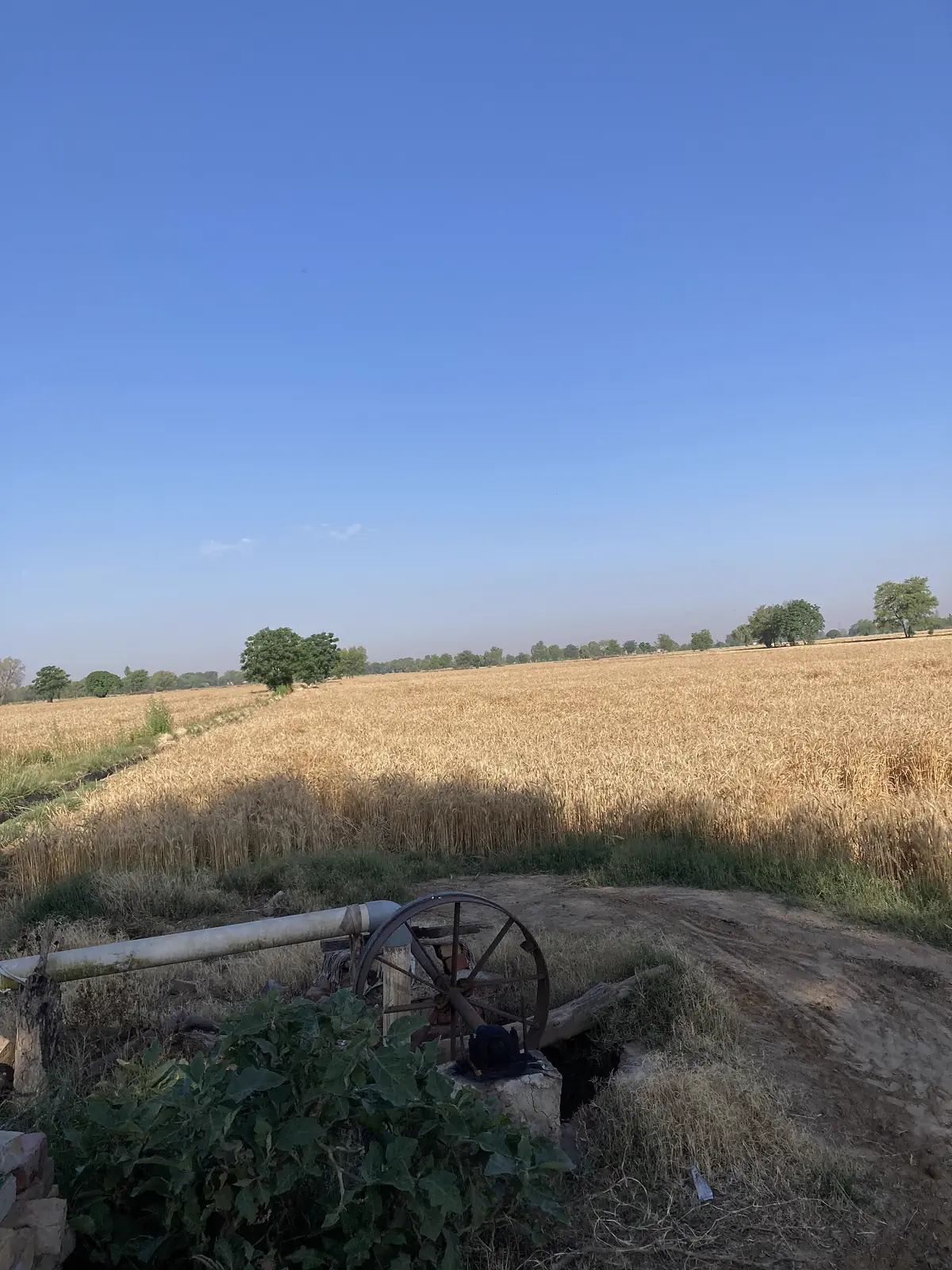
A wheat field at harvest time
Wheat at harvest — the image Jesus reached for when He said the harvest is plentiful but the workers are few (Matthew 9).Chparveshtaak · CC BY-SA 4.0

Prudence in Scripture

The New Testament is full of believers taking sensible precautions:

  • When Paul's life was threatened in Damascus, "the disciples took him by night, and let him down by the wall in a basket." (Acts 9:25).
  • When an assault was planned in Iconium, Paul and Barnabas "were ware of it, and fled unto Lystra and Derbe, cities of Lycaonia, and unto the region that lieth round about: And there they preached the gospel." (Acts 14:6-7). They fled, and they kept preaching.
  • When a riot filled the theatre at Ephesus, Paul wanted to go in, "the disciples suffered him not", and friends among the city's leaders sent "desiring him that he would not adventure himself into the theatre." (Acts 19:30-31). He listened to them.
  • The Lord Himself said, "But when they persecute you in this city, flee ye into another" (Matthew 10:23).

And Proverbs puts it simply: "A prudent man foreseeth the evil, and hideth himself: but the simple pass on, and are punished." (Proverbs 22:3).

Before you go

  • Go in pairs, at least. The Lord sent the seventy "two and two" (Luke 10:1). The Preacher saw why: "Two are better than one; because they have a good reward for their labour. For if they fall, the one will lift up his fellow" (Ecclesiastes 4:9-10).
  • Tell someone where you are going and when you expect to be back. Check in afterwards.
  • Choose places wisely. Busy public places in daylight are best for beginners. Know the area.
  • Know your exits. Notice where you could step away to if you needed to.
  • Carry a charged phone and know the address or cross-streets of where you are, in case you must call 911.
  • Agree on a signal with your partner that means "time to go", and honour it without debate.

During the conversation

  • Keep a comfortable distance. An arm's length or more. Do not crowd anyone; do not let anyone crowd you.
  • Stay in the open. Do not follow anyone into a car, a building, an alley or a private home you do not know.
  • One talks, one watches. While one of you is in conversation, the other prays and keeps an eye on the surroundings.
  • Keep valuables out of sight. Spurgeon told a comic story of a preacher who closed his eyes to pray in a London street while a "kind friend" held his hat, Bible and umbrella — and opened them to find friend, hat and Bible gone. His advice: a brother should go with you, "that one may watch while the other prays."46
  • Do not give out your home address or other personal details. A church address or a ministry contact is enough.

When not to engage

  • Someone intoxicated or high. You cannot have a real conversation, and things can turn quickly.
  • Someone in a mental-health crisis. Be kind and calm, and point to help. In the United States, the 988 Suicide & Crisis Lifeline can be reached by call or text; if anyone is in immediate danger, call 911.
  • Someone already angry at someone else — a couple arguing, a heated group.
  • Minors on their own. Do not approach children without their parent or guardian present.
  • Anyone who has clearly said no. Respect it at once.
  • When your instinct says leave. Do not argue with it. Leave.

De-escalation: a soft answer

"A soft answer turneth away wrath: but grievous words stir up anger." (Proverbs 15:1). Most hostile moments on the street are words, and most can be calmed. A simple sequence:

1. Stay calm yourself. Breathe. Pray silently. Keep your hands visible and relaxed. 2. Lower your voice. Speak slowly and quietly. Do not match their volume. 3. Acknowledge the feeling. "I can see this really bothers you." You are not agreeing with their argument; you are recognising a person. 4. Do not argue or defend yourself. You do not need to win. "That's fair. I'm not here to fight." 5. Give them space. Step back if they step forward. Let them have the last word if they want it. 6. Offer an exit. "I'll let you go. I hope you have a good day." Then walk away calmly, together with your partner. 7. Never touch, never threaten, never insult. "Bless them which persecute you" is not optional (Romans 12:14; compare Matthew 5:44).

Remember Wesley at Wednesbury: he took the mob's captain by the hand and talked to him as a man, and the crowd became people again. You will rarely face a mob. But the principle holds: turn a confrontation back into a conversation, or end it.

If something goes wrong

  • Leave first, sort it out later. Your safety, your partner's and the other person's matter more than finishing a conversation.
  • If you are threatened or assaulted, call 911. Do not retaliate.
  • Write down what happened as soon as you can: time, place, what was said, witnesses.
  • Tell your church leaders. Debrief and pray together. Consider whether that place or time should be avoided.
  • Forgive. "Bless them that curse you, and pray for them which despitefully use you" (Luke 6:28 and Matthew 5:44).

Part 7 — Going Out as a Team and Keeping Going

2 min read

This part matters because street witness done alone, once, usually stays once. Done with others, regularly, it becomes a ministry. And most people come to Christ through more than one conversation; the follow-up matters as much as the first word.

Planning an outing

A simple plan for a small group:

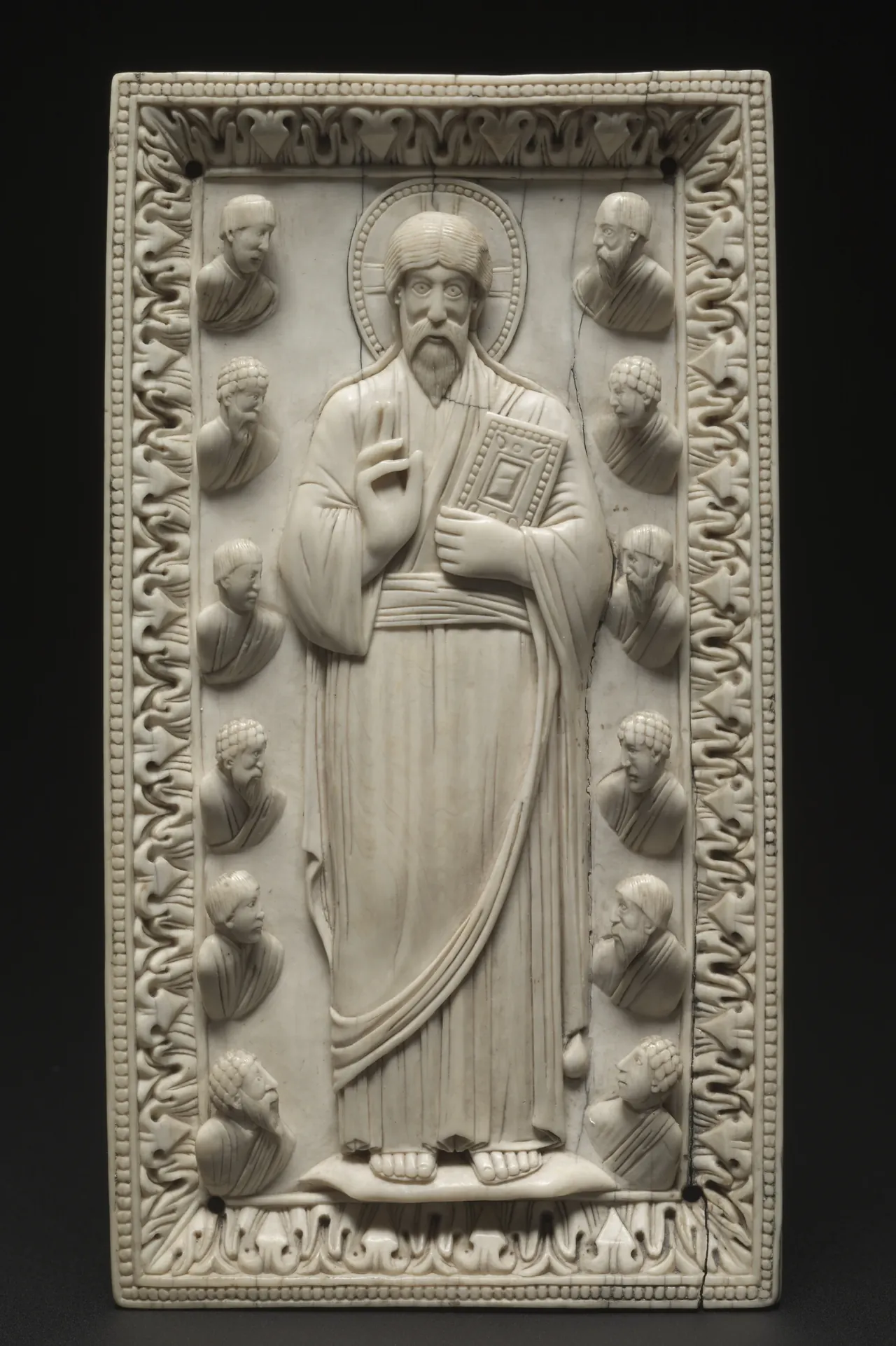
Christ's Mission to the Apostles
An Ottonian ivory of about 970 to 980 from Milan showing Christ's Mission to the Apostles, set beside the counsel on going out as a team.Christ's Mission to the Apostles · c. 970–980 · Cleveland Museum of Art · CC0 · museum record · Galeria Regni

| Step | What to do | Time | |---|---|---| | Choose a place | A public park, a busy sidewalk, a market — check any local rules | Beforehand | | Form pairs | Mix experienced and new; agree who leads first | Beforehand | | Pray together | For the people you will meet, for boldness, for safety | 15–30 minutes | | Review | The gospel outline, the safety signal, the meeting point | 10 minutes | | Go out | Pairs within sight of each other where possible | 1–2 hours | | Debrief | What happened, who you met, what was hard, what you learned | 30 minutes | | Pray again | For each person by first name | 10 minutes |

Roles on a team

  • Conversationalists in pairs, who do most of the talking.
  • Intercessors, who pray — on site or at home.
  • A leader, who knows the plan, the rules for that place, and the safety signal; who speaks to any official who approaches; and who calls time.
  • A follow-up contact, who handles any names and numbers people freely give, and makes sure promises are kept.

Follow-up

The parable of the sower is a sober guide. Some seed falls by the way side and is snatched away; some springs up quickly on stony ground and withers; some is choked by cares; and some falls into good ground (Matthew 13:3-8). You cannot control which. You can water what grows. If someone wants to know more:

  • Point them to the Gospel of John and a King James Bible, or the free 1611 Reader at kylelauriano.com/library.
  • Give them your church's details, and offer to meet them there.
  • If they gave you a way to contact them, follow up within a few days, kindly, once or twice.
  • Pray for them by name.

Keeping going

  • Go regularly. The same place at the same time builds familiarity; regulars become conversations.
  • Measure faithfulness, not results. Spurgeon was impatient with "this counting of unhatched chickens, this exhibition of doubtful spoils."47 You went; you spoke; you were kind. That is faithfulness.
  • Expect mixed results. Some will mock, some will want to hear again, some will believe, exactly as in Athens (Acts 17:32-34).
  • Rest. The Lord told His tired disciples, "Come ye yourselves apart into a desert place, and rest a while" (Mark 6:31).
  • Rejoice. "I say unto you, that likewise joy shall be in heaven over one sinner that repenteth" (Luke 15:7).

Conclusion

2 min read

Street evangelism is not a modern stunt. It is as old as Wisdom crying in the chief place of concourse, as old as a conversation at a well, as old as Paul in the market "daily with them that met with him". It is protected by the law of the United States in most public places, thanks in large part to believers who were arrested for handing out tracts and took their cases to the Supreme Court. And it is best done the way the Lord taught: in pairs, with peace, with honesty about the cost, and with freedom for every hearer to say no.

You will be afraid. Go anyway, with a partner. You will be refused. Bless them and move on. You will meet someone, sooner or later, who has been waiting for a Christian to say something. Say it.

A next step

  • Find a partner from your church and agree to go out once in the next month.
  • Learn the gospel outline in Part 3 and practise it aloud with your partner.
  • Read the local rules for one public park or sidewalk near you.
  • Pray for the people you will meet, by place, before you know their names.
  • After your first outing, write down what you learned, and go again.

An invitation

If you are reading this and you are not a Christian, perhaps someone handed you this paper, or perhaps you are curious what makes people stand on street corners and talk about Jesus. It is this: we believe He died for our sins and rose from the dead, and that He offers forgiveness and new life to anyone who turns to Him. "For whosoever shall call upon the name of the Lord shall be saved." (Romans 10:13).

I decided to read the Bible for one reason: to disprove it, so I'd have an excuse to stop going to church for good. It did the opposite. Then one day I got on my knees and prayed: "Jesus, if you are real, show me — and I'll serve you." You can pray as honestly as that, wherever you are reading this.

"Come unto me, all ye that labour and are heavy laden, and I will give you rest." (Matthew 11:28)

Notes and sources

  1. 1C. H. Spurgeon, Lectures to My Students, Second Series (London: Passmore and Alabaster, 1885), 78. Online: https://archive.org/details/secondseriesofle00spuriala. ↩
  2. 2John Gillies, Memoirs of the Life of the Reverend George Whitefield (New-London, CT: S. Green for Cornelius Davis, 1798), 29. Online: https://archive.org/details/memoirsoflifeofr00gill_2. ↩
  3. 3John Wesley, The Journal of John Wesley (Chicago: Moody Press, 1951), entries for 31 March and 2 April 1739. Online: https://ccel.org/ccel/wesley/journal. ↩
  4. 4Wesley, Journal, entry for 20 October 1743 ("A Mob at Wednesbury"). ↩
  5. 5Wesley, Journal, 20 October 1743 ("Wesley in Danger"). ↩
  6. 6Spurgeon, Lectures to My Students, Second Series, 87. ↩
  7. 7C. H. Spurgeon, The Soul-Winner; or, How to Lead Sinners to the Saviour (New York: Fleming H. Revell, 1895), 175. Online: https://archive.org/details/soulwinnerorhowt00spur. ↩
  8. 8Spurgeon, Lectures to My Students, Second Series, 87. ↩
  9. 9Spurgeon, Lectures to My Students, Second Series, 85. ↩
  10. 10Spurgeon, Lectures to My Students, Second Series, 93. ↩
  11. 11Spurgeon, Lectures to My Students, Second Series, 94. ↩
  12. 12Spurgeon, Lectures to My Students, Second Series, 88. ↩
  13. 13Spurgeon, The Soul-Winner, 176–177. ↩
  14. 14Spurgeon, The Soul-Winner, 243. ↩
  15. 15Spurgeon, Lectures to My Students, Second Series, 91. ↩
  16. 16Gregory Koukl, Tactics: A Game Plan for Discussing Your Christian Convictions (Grand Rapids: Zondervan, 2009); Greg Koukl, "The Columbo Tactic," Stand to Reason, February 28, 2013, https://www.str.org/w/the-columbo-tactic. ↩
  17. 17Hague v. Committee for Industrial Organization, 307 U.S. 496, 515 (1939) (opinion of Roberts, J., joined by Black, J.), quoted in Perry Education Association v. Perry Local Educators' Association, 460 U.S. 37, 45 (1983). Online: https://www.law.cornell.edu/supremecourt/text/307/496. ↩
  18. 18Perry Education Association v. Perry Local Educators' Association, 460 U.S. 37, 45 (1983). Online: https://www.law.cornell.edu/supremecourt/text/460/37. ↩
  19. 19Ward v. Rock Against Racism, 491 U.S. 781, 791 (1989). Online: https://www.law.cornell.edu/supremecourt/text/491/781. ↩
  20. 20Grayned v. City of Rockford, 408 U.S. 104, 116 (1972). Online: https://www.law.cornell.edu/supremecourt/text/408/104. ↩
  21. 21Cox v. New Hampshire, 312 U.S. 569 (1941). Online: https://www.law.cornell.edu/supremecourt/text/312/569. ↩
  22. 22Lovell v. City of Griffin, 303 U.S. 444 (1938). Online: https://www.law.cornell.edu/supremecourt/text/303/444. ↩
  23. 23Schneider v. State (Town of Irvington), 308 U.S. 147 (1939). Online: https://www.law.cornell.edu/supremecourt/text/308/147. ↩
  24. 24Murdock v. Pennsylvania, 319 U.S. 105 (1943). Online: https://www.law.cornell.edu/supremecourt/text/319/105. ↩
  25. 25International Society for Krishna Consciousness v. Lee, 505 U.S. 672 (1992); Lee v. International Society for Krishna Consciousness, 505 U.S. 830 (1992). Online: https://www.law.cornell.edu/supremecourt/text/505/672. ↩
  26. 26Board of Airport Commissioners of Los Angeles v. Jews for Jesus, Inc., 482 U.S. 569 (1987). Online: https://www.law.cornell.edu/supremecourt/text/482/569. ↩
  27. 27Heffron v. International Society for Krishna Consciousness, 452 U.S. 640 (1981). Online: https://www.law.cornell.edu/supremecourt/text/452/640. ↩
  28. 28Martin v. City of Struthers, 319 U.S. 141 (1943). Online: https://www.law.cornell.edu/supremecourt/text/319/141. ↩
  29. 29Watchtower Bible & Tract Society of New York, Inc. v. Village of Stratton, 536 U.S. 150 (2002). Online: https://www.law.cornell.edu/supremecourt/text/536/150. ↩
  30. 30Cantwell v. Connecticut, 310 U.S. 296 (1940). Online: https://www.law.cornell.edu/supremecourt/text/310/296. ↩
  31. 31Forsyth County v. Nationalist Movement, 505 U.S. 123 (1992). Online: https://www.law.cornell.edu/supremecourt/text/505/123. ↩
  32. 32Bible Believers v. Wayne County, 805 F.3d 228 (6th Cir. 2015) (en banc). Opinion: https://www.opn.ca6.uscourts.gov/opinions.pdf/15a0258p-06.pdf. ↩
  33. 33Chaplinsky v. New Hampshire, 315 U.S. 568 (1942). Online: https://www.law.cornell.edu/supremecourt/text/315/568. ↩
  34. 34Feiner v. New York, 340 U.S. 315 (1951). Online: https://www.law.cornell.edu/supremecourt/text/340/315. ↩
  35. 35Hudgens v. National Labor Relations Board, 424 U.S. 507 (1976); Lloyd Corp. v. Tanner, 407 U.S. 551 (1972). Online: https://www.law.cornell.edu/supremecourt/text/424/507. ↩
  36. 36PruneYard Shopping Center v. Robins, 447 U.S. 74 (1980). Online: https://www.law.cornell.edu/supremecourt/text/447/74. ↩
  37. 37Hill v. Colorado, 530 U.S. 703 (2000). Online: https://www.law.cornell.edu/supremecourt/text/530/703. ↩
  38. 38McCullen v. Coakley, 573 U.S. 464 (2014). Online: https://www.law.cornell.edu/supremecourt/text/12-1168. ↩
  39. 39Supreme Court of the United States, Order List of February 24, 2025: Coalition Life v. City of Carbondale, No. 24-57, certiorari denied (Thomas, J., dissenting from the denial; Alito, J., would grant); Turco v. City of Englewood, No. 23-1189, certiorari denied (Thomas and Alito, JJ., would grant). Online: https://www.supremecourt.gov/orders/courtorders/022425zor_6k47.pdf. ↩
  40. 4036 C.F.R. § 2.51, "Demonstrations and designated available park areas," current text on the Electronic Code of Federal Regulations, accessed October 2026. Online: https://www.ecfr.gov/current/title-36/chapter-I/part-2/section-2.51. ↩
  41. 4136 C.F.R. § 2.52, "Sale of printed matter and the distribution of printed matter and other message-bearing items," eCFR, accessed October 2026. Online: https://www.ecfr.gov/current/title-36/chapter-I/part-2/section-2.52. ↩
  42. 4236 C.F.R. § 7.96, "National Capital Region," eCFR, accessed October 2026. Online: https://www.ecfr.gov/current/title-36/chapter-I/part-7/section-7.96. ↩
  43. 43Saia v. New York, 334 U.S. 558 (1948); Kovacs v. Cooper, 336 U.S. 77 (1949). Online: https://www.law.cornell.edu/supremecourt/text/334/558 and https://www.law.cornell.edu/supremecourt/text/336/77. ↩
  44. 44Glik v. Cunniffe, 655 F.3d 78, 82–85 (1st Cir. 2011). Opinion: http://media.ca1.uscourts.gov/pdf.opinions/10-1764P-01A.pdf. ↩
  45. 4518 U.S.C. § 2511(2)(d), https://www.law.cornell.edu/uscode/text/18/2511; Reporters Committee for Freedom of the Press, "Introduction to the Reporter's Recording Guide," accessed October 2026, https://www.rcfp.org/introduction-to-reporters-recording-guide/. ↩
  46. 46Spurgeon, Lectures to My Students, Second Series, 92. ↩
  47. 47Spurgeon, The Soul-Winner, 13. ↩

Bring your questions on street evangelism to the Scripture Desk →

The Last Judgement, John Martin, 1853

Keep reading · Seven mornings by email

Seven people who say they met Jesus. What happened, in their own words.

Seven testimonies from The King Is Coming Show, one a morning — the story as they tell it, the verse the story lands on in the 1611 King James, and the page itself. Then the teaching that explains it. Free.

Start the seven days

Free. One a morning. Unsubscribe with one tap.

Where I'm honest with you

This is practical teaching, not proof. It's drawn from Scripture and from walking this road myself. If you're still weighing the basics — whether God is real, whether the Bible can be trusted — I'd encourage you to start with the Skeptic resources in the Research Hub before diving in here.

"Go out into the highways and hedges, and compel them to come in, that my house may be filled." — Luke 14:23 (KJV)