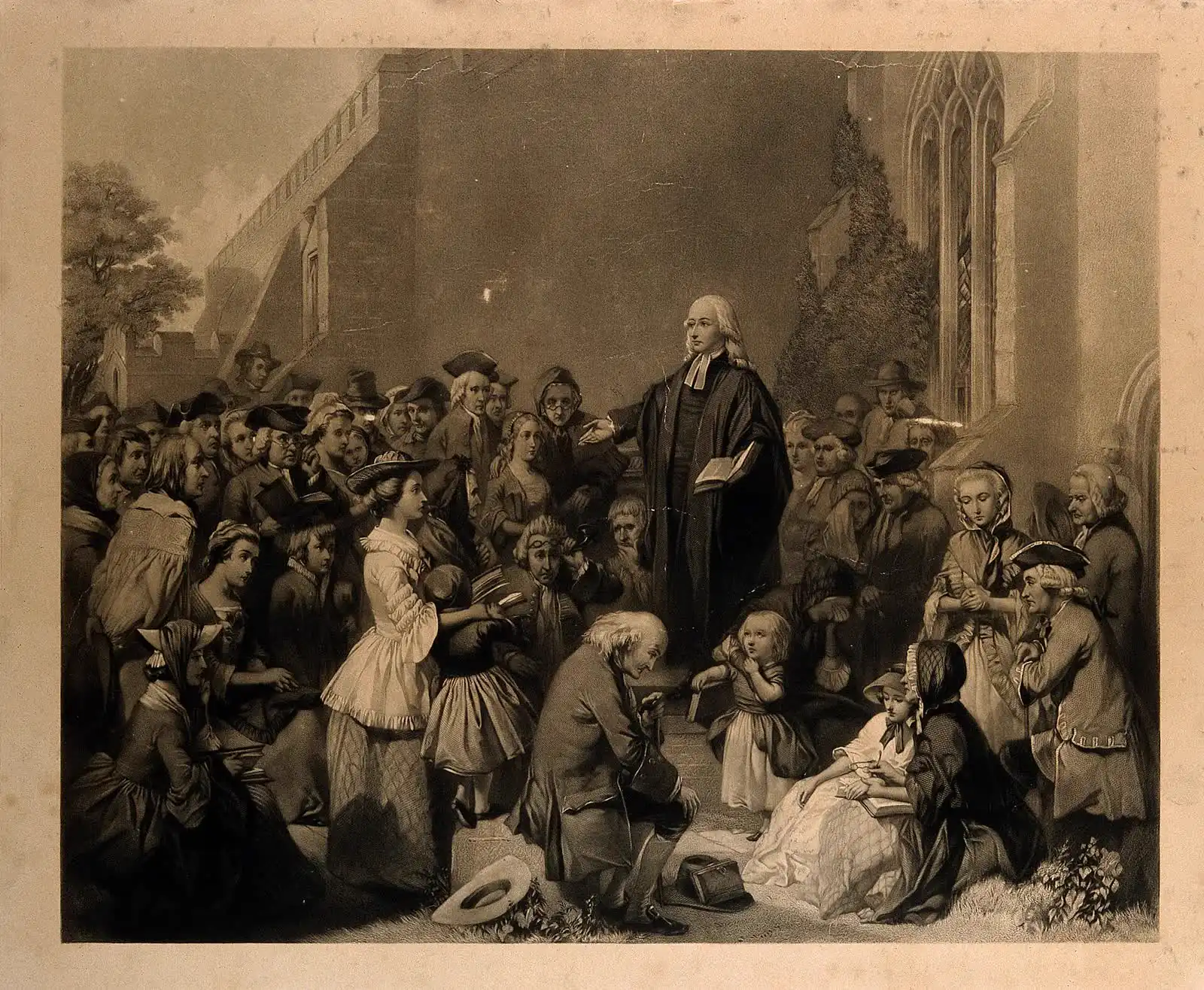
Open-air preaching before a gathered crowd

Witness · Guide

Wellcome Collection · CC BY 4.0

Back to Research Hub

Online Evangelism

Read the paper (PDF)·or read it here ↓

THE GOSPEL ON SCREENS — HONEST, PATIENT AND HUMAN

A study of how to share Christ online without losing the truth, the person or yourself — from Scripture, church history and current, sourced platform figures.

Abstract

Billions of people now spend part of every day on social platforms. Should Christians witness there, and if so, how? This paper answers from the King James Bible first — Paul's letters carried between churches, his warning about forged letters, John's preference for "face to face" — and second from history: Benjamin Franklin printing George Whitefield's sermons, Franklin's own observation that what is written remains, and C. H. Spurgeon's counsel that "paper and ink are never better used than in soul-winning." It gives current figures with their sources and dates (DataReportal, Meta, YouTube, Pew Research Center) and says what those numbers do and do not mean. It then sets out principles (no clickbait, no fake engagement, honest testimony), what to make, how to handle comments and private messages, how to protect yourself and others, and how to move people from a screen to a church. The conclusion is that the internet is a real mission field, and the gospel gets no algorithm edit. It is written for believers, creators and churches who want to witness online faithfully.

What’s inside

  1. Introduction
  2. Part 1: The Field: Who Is Online
  3. Part 2: Letters, Presses and Screens: The Church Has Always Used Media
  4. Part 3: Principles: The Gospel Gets No Algorithm Edit
  5. Part 4: What to Make: Content That Serves
  6. Part 5: Conversations in Comments and Messages
  7. Part 6: Guarding the Messenger
  8. Part 7: From Screen to Church: Digital Discipleship
  9. Conclusion

Research paper · 9 chapters · 18 notes · October 2026

"Their sound went into all the earth, and their words unto the ends of the world." — Romans 10:18 (KJV)Read in the 1611 →

Read the paper here

About 30 minutes · 9 parts · the PDF has the same text

Introduction

2 min read

The people you want to reach are on their phones. So, probably, are you. The question is not whether Christians will be online; we already are. The question is whether we will be there as witnesses, and what kind.

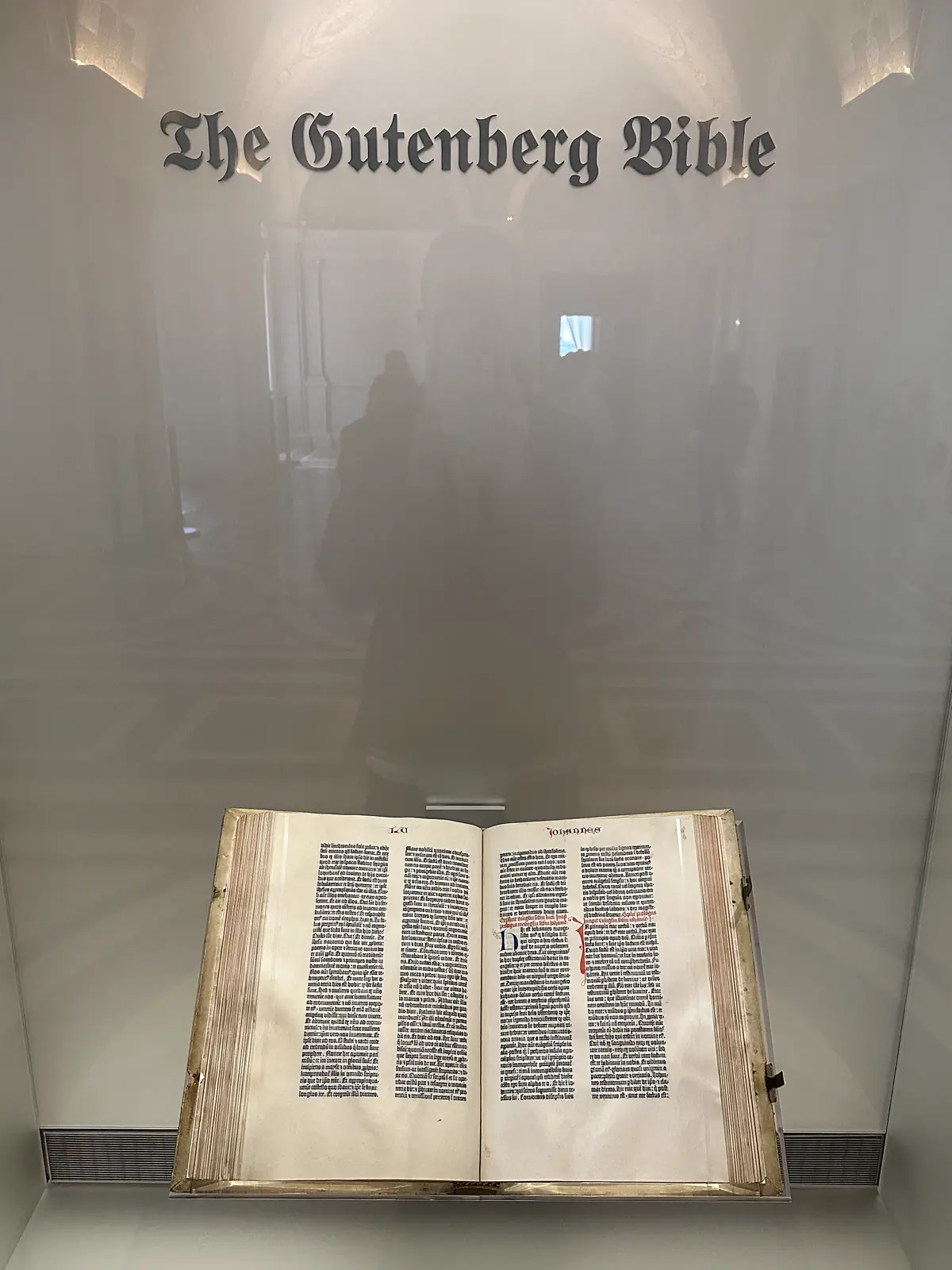
The Gutenberg Bible in the Library of Congress
The Gutenberg Bible (c. 1455, Library of Congress) — the first major printed book, the moment Scripture began to multiply beyond the copyists.APK · CC BY 4.0

Online evangelism has two opposite temptations. One is to treat the internet as a megaphone: post verses, rack up views, call it ministry. The other is to treat it as a trap so dangerous that faithful Christians should keep their faith off it. Scripture gives a better path: use every honest means to make Christ known, and refuse every dishonest one.

What this paper is

This is a study, not a growth-hacking manual. It argues from the King James Bible first. Where history helps — and the church has been using new media since Paul's letters — the history is given with its source. Where figures help, they are named with their source and date, and their limits are stated.

Seven parts follow. Part 1 looks at the field: who is online, with current figures. Part 2 shows that the church has always used the media of its day. Part 3 sets out the principles that must not bend. Part 4 covers what to make. Part 5 covers conversations in comments and private messages. Part 6 is about guarding the messenger. Part 7 is about moving people from a screen to a church.

A word about me

My own testimony lives online. My testimony video is at youtube.com/watch?v=FR7cNUiaAqU, and the full story is at kylelauriano.com/about. In short: Eventually I gave up and called myself an atheist. I decided to read the Bible for one reason: to disprove it, so I'd have an excuse to stop going to church for good. It did the opposite.

I came to faith in 2022, and my wife came to faith a month later. Today we're raising three kids in a home that was transformed — and I haven't stopped telling people since. On The King Is Coming Show, my podcast, guests tell their stories in their own words.

Every verse in this paper is quoted from the King James Bible. You can read it free in the 1611 Reader at kylelauriano.com/library.

Part 1 — The Field: Who Is Online

2 min read

This part matters because it is easy either to exaggerate or to dismiss the online world. The numbers are large, but they are also easy to misread. A witness should know both what they show and what they do not.

Global figures

DataReportal, which compiles global digital statistics, reported that at the start of October 2026 there were 5.81 billion social media "user identities" worldwide, which it describes as close to 7 in 10 people on Earth. It also cautions that these figures "may not represent unique individuals", because one person can hold several accounts.1

The platforms' own reports give a sense of scale:

| Platform | Figure | Source and date | |---|---|---| | Meta (Facebook, Instagram, WhatsApp, Messenger) | 3.60 billion "daily active people" across its apps, average for June 2026 | Meta second-quarter 2026 results, July 29, 20262 | | YouTube | Over 20 million videos uploaded daily; Shorts averaging over 200 billion daily views | YouTube official press page, 20263 | | TikTok | "More than 1 billion people around the world now come to TikTok every month" | TikTok newsroom, September 27, 2021 (the company's most recent headline user figure found for this paper)4 |

In the United States

The Pew Research Center's social media fact sheet, published October 19, 2026, from a survey of 5,511 U.S. adults conducted from January 30 to June 18, 2026, found that 84 percent of American adults say they ever use YouTube, 70 percent Facebook and 51 percent Instagram.5

And the spiritual landscape those users live in has shifted. Pew's 2023–24 Religious Landscape Study, a survey of 36,908 Americans, found that 62 percent of U.S. adults describe themselves as Christians — nine points lower than in 2014 — and 29 percent are religiously unaffiliated: atheists, agnostics or "nothing in particular". Pew also reported that the decline "has slowed" and may have levelled off since about 2019.6

What the numbers mean, and what they do not

They mean that most of your neighbours, coworkers and relatives are reachable on at least one platform, and that people who would never walk into a church may watch a video about Jesus at two in the morning.

They do not mean that reach is the same as relationship. A view is not a conversation. A follower is not a disciple. A billion users does not mean a billion people will see your post; most posts are seen by very few. And no figure measures what matters most: whether anyone met Christ.

The Lord Jesus looked at crowds and saw people: "But when he saw the multitudes, he was moved with compassion on them, because they fainted, and were scattered abroad, as sheep having no shepherd." (Matthew 9:36). Behind every number is a person like that. Keep your eyes there.

Part 2 — Letters, Presses and Screens: The Church Has Always Used Media

4 min read

This part matters because some Christians feel that online ministry is a compromise — a lesser, modern substitute for "real" ministry. The New Testament itself is largely a collection of letters, written to be copied, carried and read aloud far from their authors. The church has always used the media of its day. It has also always faced the dangers that come with them.

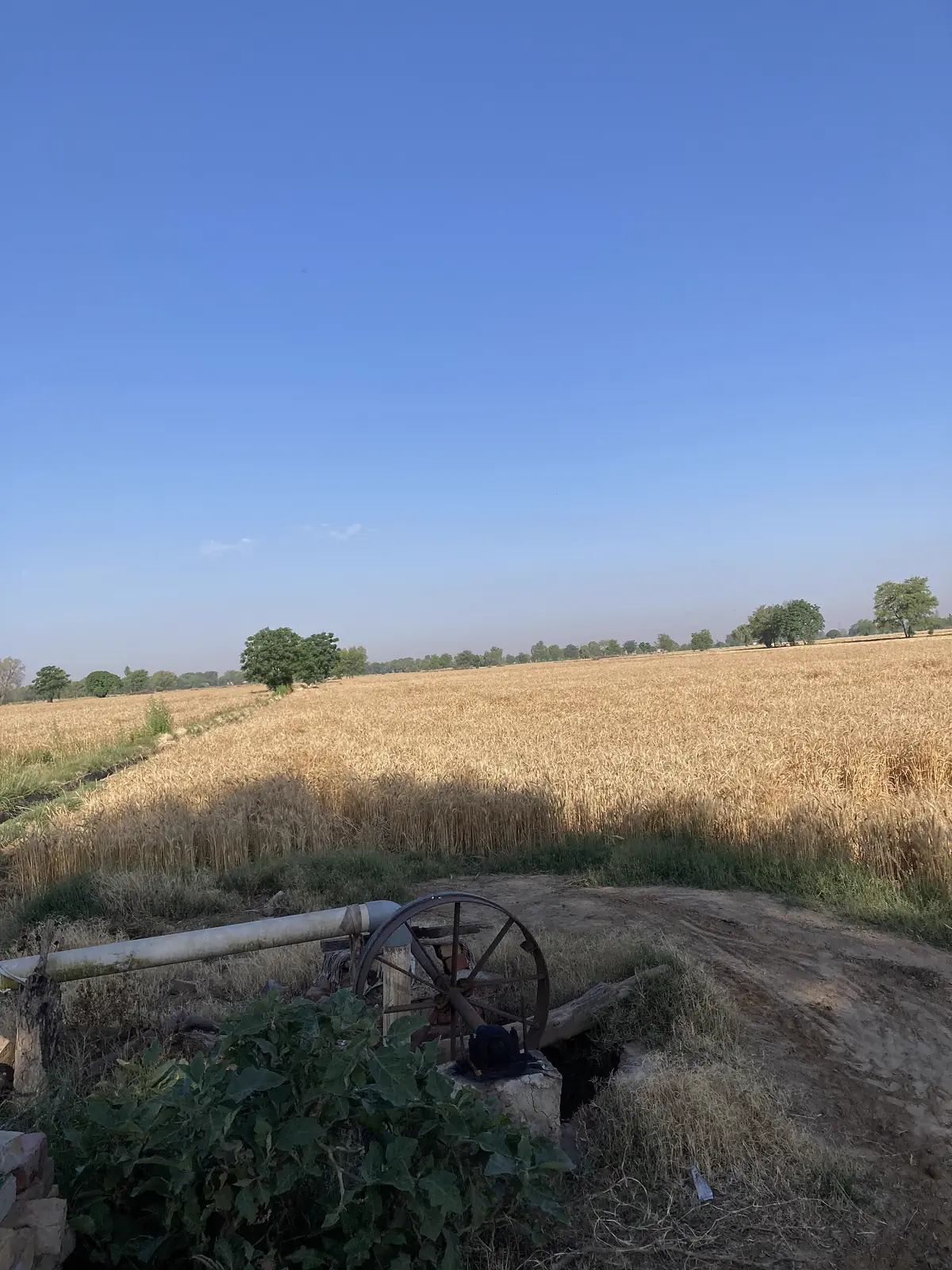
A wheat field at harvest time
Wheat at harvest — the image Jesus reached for when He said the harvest is plentiful but the workers are few (Matthew 9).Chparveshtaak · CC BY-SA 4.0
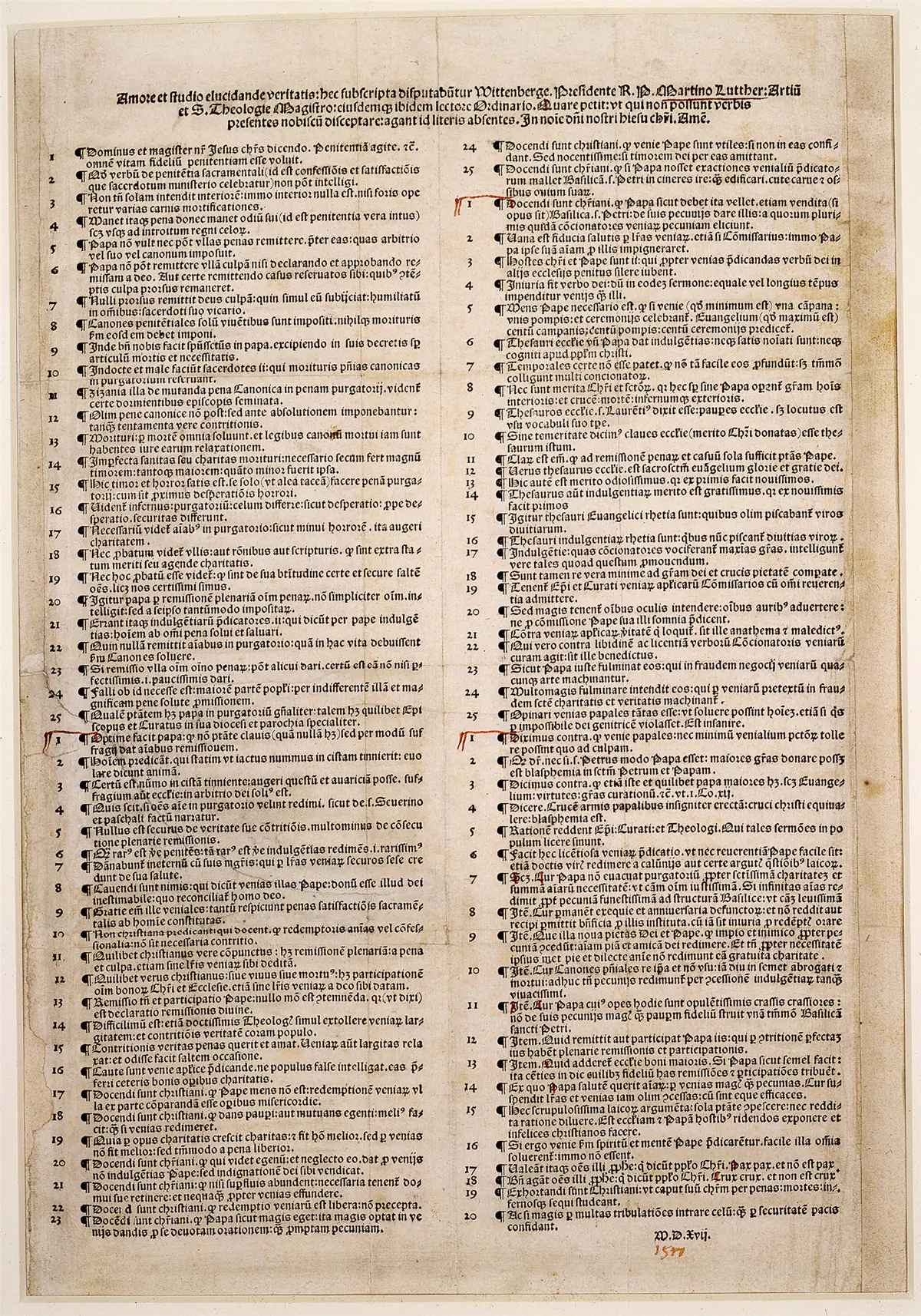
The printed text of Luther’s 95 Theses
The printed Ninety-five Theses (1517) — a church-door dispute that a new medium carried across Europe in weeks.Martin Luther, 1517 · Public domain

Paul's letters

Paul wrote letters because he could not be everywhere. He expected them to travel: "And when this epistle is read among you, cause that it be read also in the church of the Laodiceans; and that ye likewise read the epistle from Laodicea." (Colossians 4:16). A letter to one church was meant for others, too. That is not far from "share this".

Fol. 455v, Thessalonians II, historiated initial P, Paul seated with a sword, talking to the bust of God above
A thirteenth-century Bible page from southern France opening Paul's second letter to the Thessalonians, the letter in which he warned the church against letters falsely sent in his name.Fol. 455v, Thessalonians II, historiated initial P, Paul seated with a sword, talking to the bust of God above · c. 1275–1300 · Cleveland Museum of Art · CC0 · full page · museum record · Galeria Regni

Forgeries and authenticity

Paul also knew that writing can be faked. He warned the Thessalonians not to be shaken "neither by spirit, nor by word, nor by letter as from us, as that the day of Christ is at hand." (2 Thessalonians 2:2). Someone was circulating false claims under his name. His answer was a mark of authenticity: "The salutation of Paul with mine own hand, which is the token in every epistle: so I write." (2 Thessalonians 3:17).

The online world is full of the same problem: fake quotations, invented "Bible verses", doctored images, accounts impersonating real ministers. A faithful online witness checks before sharing, and makes sure that what goes out under his own name is genuinely his and genuinely true.

Face to face is better

John, writing his short letters, made a revealing comment: "Having many things to write unto you, I would not write with paper and ink: but I trust to come unto you, and speak face to face, that our joy may be full." (2 John 1:12). In his third letter he said almost the same thing: "But I trust I shall shortly see thee, and we shall speak face to face." (3 John 1:14).

Writing was good. It carried the gospel and the apostles' teaching across the empire. But John knew it was not the whole thing. Online ministry is the same: real, useful, and incomplete. Part 7 of this paper is about that.

The printer and the preacher

In the eighteenth century, the great new medium was print, and the revival preachers used it fully. Benjamin Franklin, who heard George Whitefield in Philadelphia in 1739, was also his printer; he wrote that he was "employed in printing his Sermons and Journals".7 Whitefield's preaching was spread not only by his voice but by newspapers and books.

Franklin also noticed the danger. Whitefield's "writing and printing from time to time gave great advantage to his enemies," he wrote. Things said in the moment of preaching "might have been afterwards explain'd or qualifi'd", or even denied, "but litera scripta manet" — the written word remains. Critics attacked his printed words "with so much appearance of reason as to diminish the number of his votaries".8

That is exactly the internet. What you post remains — screenshotted, archived, quoted out of context years later. Franklin's lesson is not "never publish"; it is "publish carefully, because you cannot take it back."

Athens and the feed

Luke describes Athens in a sentence that could describe a social media feed: "(For all the Athenians and strangers which were there spent their time in nothing else, but either to tell, or to hear some new thing.)" (Acts 17:21). Paul did not refuse to enter that culture. He "disputed … in the market daily with them that met with him" (Acts 17:17). But he did not let it set his message either. The philosophers called him a "babbler" and "a setter forth of strange gods", Luke says, "because he preached unto them Jesus, and the resurrection." (Acts 17:18).

That is the posture for online witness. Go where people are talking. Learn how they talk. Speak in a way they can hear. And then say the old thing — Jesus and the resurrection — even when it sounds strange to them, because it is the only new thing that lasts.

Spurgeon and "paper and ink"

In the nineteenth century, C. H. Spurgeon's sermons were printed and sold around the world, and he urged ordinary believers to write for Christ. In The Soul-Winner he wrote: "Paper and ink are never better used than in soul-winning. Much has been done by this method. Could not you do it? Will you not try?"9 He added at once that the best sermon of all is a holy life — "preaching with your feet," as he put it, "by your life, and conduct, and conversation."10

Both halves apply online. Write and record for Christ. And make sure the person behind the screen is living what the screen says.

The lesson of history

  • The medium serves the message. Letters, presses, radio, video: the gospel has used them all and been changed by none.
  • Authenticity matters. From Paul's signature to your account, people need to know what is genuinely from you.
  • What is published remains. Write as if it will be read in ten years by your worst critic, because it may be.
  • Face to face is still the goal. Media extend the witness; they do not replace the church.

Part 3 — Principles: The Gospel Gets No Algorithm Edit

3 min read

This part matters because the online world rewards things Scripture forbids: exaggeration, outrage, flattery, vanity metrics. A Christian creator will feel constant pressure to bend. These principles do not bend.

1. Tell the truth, including in titles and thumbnails

Paul "renounced the hidden things of dishonesty, not walking in craftiness, nor handling the word of God deceitfully" (2 Corinthians 4:2). Online, the most common form of craftiness is the misleading headline: the title that promises something the video does not deliver, the thumbnail that implies a scandal that is not there, the clip cut to say something the speaker did not mean.

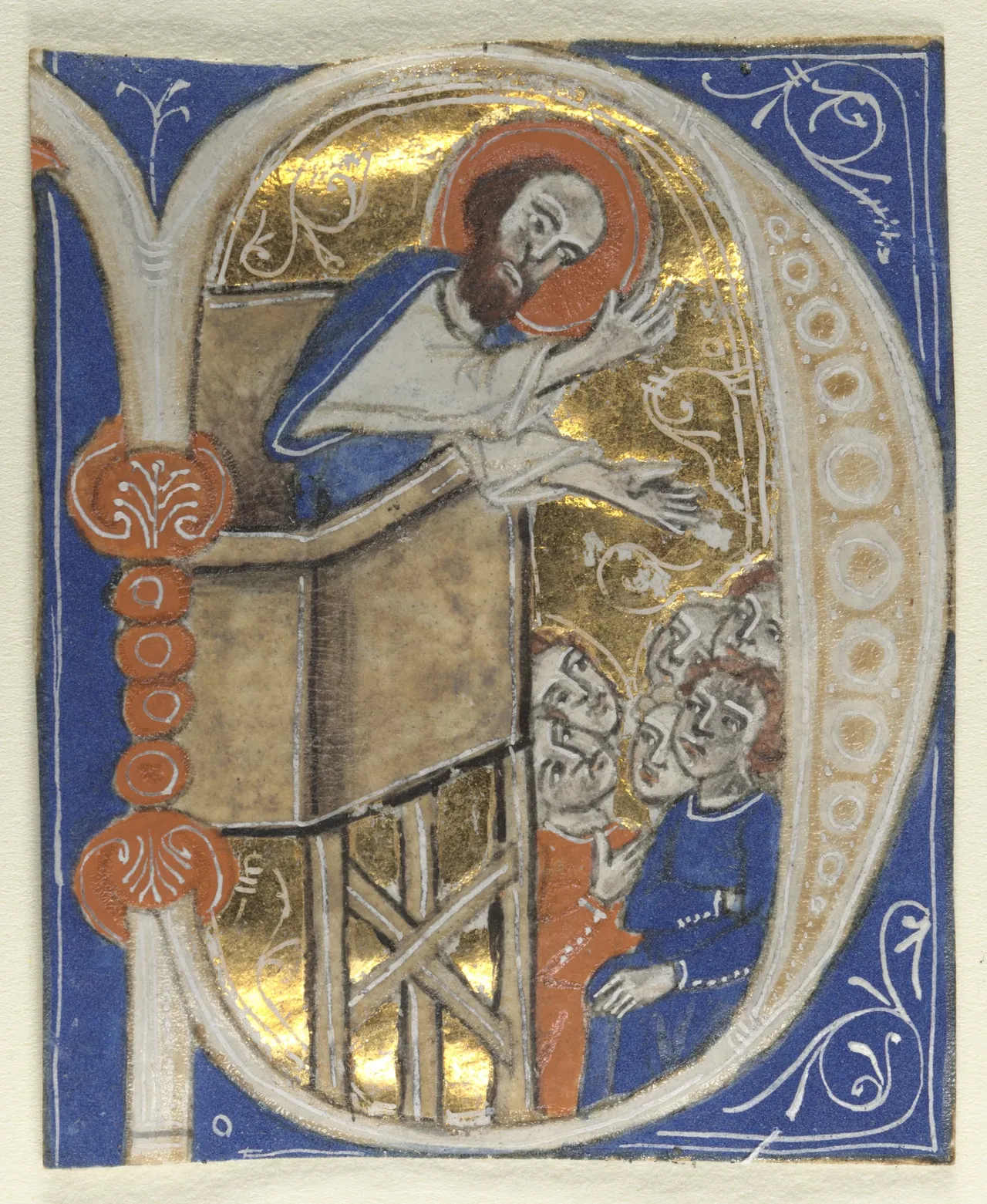
Historiated Initial Excised from a Bible: St. Paul Preaching
A thirteenth-century Italian Bible initial of Paul preaching from a raised pulpit to a crowd, a reminder that the messenger points to Christ and not to himself.Historiated Initial Excised from a Bible: St. Paul Preaching · 1200s · Cleveland Museum of Art · CC0 · museum record · Galeria Regni

A title may be sharp. It may not be false. "Lying lips are abomination to the LORD: but they that deal truly are his delight." (Proverbs 12:22). A lie that gets views costs the witness.

2. Present testimony as testimony

Testimonies are among the most powerful things you can share online. They are also easy to overstate. When a guest says, "God told me" or "I saw heaven", that is their account; you did not see it. This ministry's rule is simple: a guest's experience is presented as their account — "in her telling", "he says he heard" — and every testimony carries a short line inviting the viewer to weigh it.

Here is how that looks in practice:

Sy Garte told his story on The King Is Coming Show (TKIC #47): three generations of atheists — until, in his telling, a vision on a Pennsylvania highway. Watch it in his own words: youtube.com/watch?v=h-a_uZBKgDk Sy's account of what happened to him, shared as his testimony — weigh it for yourself.

That is not doubt. It is honesty about who saw what. It also respects the viewer, who is told plainly what kind of claim is being made. "Prove all things; hold fast that which is good." (1 Thessalonians 5:21).

3. No fake engagement

Buying followers, paying for views, swapping subscriptions, using bots to post comments: all of these create a false impression of how many people are listening. YouTube's own policy says it "doesn't allow anything that artificially increases the number of views, likes, comments, or other metrics", and it names "sub4sub" trades, and the promotion of third-party services that inflate views, likes or subscribers, among the things it does not allow.11 For a Christian, the deeper reason is that it is a lie told with numbers. "Providing for honest things, not only in the sight of the Lord, but also in the sight of men." (2 Corinthians 8:21).

4. Do not preach yourself

"For we preach not ourselves, but Christ Jesus the Lord; and ourselves your servants for Jesus' sake." (2 Corinthians 4:5). Every platform pushes you to build a personal brand. Some of that is harmless — people need a face and a name to trust. But watch your heart. The Lord warned, "Take heed that ye do not your alms before men, to be seen of them" (Matthew 6:1). And Proverbs: "Let another man praise thee, and not thine own mouth" (Proverbs 27:2). If your content is more about you than about Him, change it.

5. Do not chase approval

"For do I now persuade men, or God? or do I seek to please men? for if I yet pleased men, I should not be the servant of Christ." (Galatians 1:10). Algorithms reward what people already want. The gospel tells people what they need, including what they do not want to hear: sin, judgment, repentance. Do not cut those out to grow faster. The gospel gets no algorithm edit.

6. Quote Scripture accurately

The internet is full of verses that are not verses, and real verses with the wrong reference. Check every one. This ministry quotes the King James Bible, word for word, with the reference. If you paraphrase, say so, and do not put quotation marks around it. A free, searchable King James text is at kylelauriano.com/library.

7. Count honestly, and do not worship counts

Spurgeon defended accurate church statistics — "they do much good if they are accurate, and if men use them lawfully" — and in the same breath condemned "this public bragging, this counting of unhatched chickens, this exhibition of doubtful spoils."12 Track your numbers if they help you serve better. Never inflate them, never boast of them, and never confuse them with souls.

8. No pressure, online either

Manipulation works online as well as off: countdown timers on salvation, guilt-heavy captions, "type AMEN or you're ashamed of Jesus", emotional music engineered to produce a response. Spurgeon's warning holds: "Do not aim at sensation and 'effect.'" Feelings may come; "pray do not plan their production."13 Present the truth clearly, invite a response honestly, and leave people free.

Part 4 — What to Make: Content That Serves

5 min read

This part matters because good intentions do not make good content. If you are going to put the gospel online, put it there clearly, accurately and with care. What follows is practical.

Make it plain

"And the LORD answered me, and said, Write the vision, and make it plain upon tables, that he may run that readeth it." (Habakkuk 2:2). Online, people are "running" — scrolling past at speed. Make your point quickly and clearly. One idea per post. Short sentences. If someone sees only the first few seconds, what will they take away?

Kinds of content that serve the gospel

| Kind | What it does | Cautions | |---|---|---| | Testimony | Shows what Christ has done in a real life | Present as the person's account; get consent; do not embellish | | Scripture read aloud | Lets the word speak for itself | Read accurately; give the reference | | Short teaching | Explains one text or one truth | Stay in context; do not overreach | | Answering a question | Meets a real objection with a real answer | Be fair to the other side; cite sources | | The gospel explained | Sets out sin, Christ, repentance and faith | Keep every part; do not soften repentance or hell | | Long conversation or interview | Gives room for depth | Edit honestly; never cut to change meaning | | Invitation | Points to a next step — a Gospel to read, a church to visit | No pressure; make the step easy |

Short and long

Short videos and posts reach people who would never watch an hour. Long videos and articles give room for questions, context and real stories. Use both if you can. Let short pieces point to long ones, and let long ones point to the Bible and a church. Spurgeon told street preachers that each point must be "complete in itself" because the audience is always changing; the same is true of a feed, where people arrive in the middle.14

Captions and accessibility

Many people watch without sound, and some cannot hear. Add accurate captions. If Scripture appears on screen, make sure the words match the reference exactly. Keep text large enough to read on a phone.

Consent and privacy

  • Get permission before posting anyone's face, voice or story. A testimony is a gift; treat it that way.
  • Protect guests. If someone has shared something that could expose them to harm — where they live or work, a person who threatens them — leave it out unless they clearly agree, and even then think twice.
  • Never post a stranger's face from street outreach without their permission.
  • Be careful with children. Do not post minors without their parents' clear permission, and never post details that reveal where a child lives or goes to school.

Other people's work

This section and the one on recording below are general information, current as of October 2026, not legal advice; laws vary by place and change. For copyright, the U.S. Copyright Office (copyright.gov) is the place to check; for recording, look up your own state's law.

Much online content uses music, film clips or images made by others. In the United States, "fair use" can allow limited use of copyrighted material for purposes such as commentary, teaching or criticism. The law sets out four factors a court weighs: "the purpose and character of the use, including whether such use is of a commercial nature or is for nonprofit educational purposes"; "the nature of the copyrighted work"; "the amount and substantiality of the portion used in relation to the copyrighted work as a whole"; and "the effect of the use upon the potential market for or value of the copyrighted work."15 Fair use is decided case by case. The U.S. Copyright Office says plainly that "there is no formula" guaranteeing that any set percentage, number of seconds or number of words may be used without permission, so the common rules of thumb ("under thirty seconds is fine", "credit the owner and you're covered") are not the law.16 Being a ministry, or not making money, does not by itself make a use fair. When in doubt, ask permission, use licensed material, or make your own.

Writing a plain gospel post

Here is one example of how the whole gospel can fit in a short post, with every part kept and every verse quoted exactly. Adapt the words; keep the substance.

God made you, and one day every one of us will stand before Him. The Bible says, "For all have sinned, and come short of the glory of God" (Romans 3:23). That includes me. But the same Bible says God "commendeth his love toward us, in that, while we were yet sinners, Christ died for us." (Romans 5:8). Jesus died for our sins, was buried, and rose again the third day. Forgiveness is a gift, not a wage: "For by grace are ye saved through faith; and that not of yourselves: it is the gift of God" (Ephesians 2:8). He calls you to turn from your sin and trust Him: "Repent ye, and believe the gospel." (Mark 1:15). If you want to talk, message me. If you want to read it for yourself, start with the Gospel of John.

Notice what it does not do. It does not promise health or wealth. It does not leave out sin. It does not pressure. It invites.

Telling your testimony on video

If you record your own story, a few practical points help:

  • Write it out first. Then put the notes away and tell it naturally. Two to five minutes is enough for a first version.
  • Three movements: what your life was like, how you came to Christ, and what has changed. Keep Christ at the centre, not your past.
  • Tell the truth. Do not add drama. Where you describe something you believe God did, say it as your experience, honestly.
  • End with an invitation, not a sales pitch: a Gospel to read, a church to visit, a way to ask questions.
  • Check it with someone you trust before you post it. Ask whether it is clear, true, and pointing to Christ.

The site's papers Share Your Story and Testimony Video go further.

A sample week

If you want a rhythm, keep it simple and sustainable. For example:

  • One longer piece — a testimony, a teaching on one passage, or an answer to a common question.
  • Two or three short pieces drawn from it, each complete on its own, each pointing back to the longer one.
  • One plain gospel post, with the verses.
  • Time set aside to answer comments and messages — which is where Part 5 begins.

Consistency matters more than volume. One honest post a week for a year will do more than a burst of daily posts for a month followed by silence.

Part 5 — Conversations in Comments and Messages

5 min read

This part matters because publishing is only half of online witness. The other half — often the more important half — is the conversation that follows: comments, replies, and private messages from people who are struggling or curious. That is where the person-to-person work of evangelism happens online.

Read before you reply

"He that answereth a matter before he heareth it, it is folly and shame unto him." (Proverbs 18:13). Read the whole comment. Look at what the person has actually said, not what you expect them to say. Many online arguments are two people answering things the other never claimed.

"Wherefore, my beloved brethren, let every man be swift to hear, slow to speak, slow to wrath" (James 1:19). Online that means: slow to post. Wait before you reply to anything that makes you angry.

Speak with grace and salt

"Let your speech be alway with grace, seasoned with salt, that ye may know how ye ought to answer every man." (Colossians 4:6). Grace means kindness, even to the rude. Salt means flavour and truth — not bland, not evasive.

"Let no corrupt communication proceed out of your mouth, but that which is good to the use of edifying, that it may minister grace unto the hearers." (Ephesians 4:29). That includes the keyboard. Mockery, sarcasm and "owning" an opponent may win applause from your side. They do not minister grace.

Answering, and knowing when to stop

Proverbs gives two instructions side by side that look contradictory: "Answer not a fool according to his folly, lest thou also be like unto him. Answer a fool according to his folly, lest he be wise in his own conceit." (Proverbs 26:4-5). Wisdom is knowing which applies. Some comments deserve a clear, short answer so that others reading are not misled. Some deserve no answer at all, because answering would only drag you down to their level.

A rule of thumb:

  • Honest question? Answer it, briefly and kindly, with a verse or a source.
  • Honest objection? Answer once, fairly. Offer a longer resource.
  • Mockery? Usually ignore it, or reply once with grace and leave it.
  • Abuse, threats, slurs, spam? Remove and block. You are not obliged to host them.
  • The conversation going in circles? Stop. "In the multitude of words there wanteth not sin: but he that refraineth his lips is wise." (Proverbs 10:19).

Remember that every public reply has a silent audience. You may not persuade the person arguing with you. You may help the person reading who never comments.

Private messages

People will write to you privately with things they would never say in public: doubts, sins, grief, thoughts of suicide. This is holy ground. Treat it that way.

  • Reply personally. No copy-and-paste scripts.
  • Listen first. Ask questions before giving answers.
  • Point to Christ, and to Scripture. Then to a local church.
  • Know your limits. You are not a counsellor, a doctor or a lawyer unless you are one. Say so, and help them find one.
  • Never ask for money in a private message, and never let anyone think help depends on giving.
  • Keep it appropriate. Do not carry on private, intimate conversations with someone of the opposite sex in a way you would not want your spouse or church to see. Bring in others.
  • Children: do not carry on private message conversations with minors. If a young person writes to you, encourage them to talk to a parent or a trusted adult at their church, and keep your replies public or with a parent included.

When someone is in danger

If someone tells you they are thinking of ending their life, take it seriously. Stay calm, tell them you are glad they told you, and urge them to get help now. In the United States they can call or text 988, the Suicide & Crisis Lifeline, and if they are in immediate danger, they should call 911. If you know where they are and believe they are in immediate danger, you may need to call for help yourself. Most platforms also have a way to report a user at risk.

Recording and screenshots

If you move a conversation to a phone or video call, do not record it without the other person's clear consent. Federal law allows a person who is a party to a call to record it (18 U.S.C. § 2511(2)(d)), but the Reporters Committee for Freedom of the Press counts "about 11 states" that primarily require the consent of everyone in the conversation, among them California, Florida, Illinois, Pennsylvania and Washington.17 When the people on a call are in different states, courts disagree about which state's law governs, and the Reporters Committee advises assuming the stricter law applies. The safe course is always the same: ask first, and record only with a clear yes. And do not post screenshots of private messages without permission. Someone who wrote to you in confidence trusted you.

Some hypothetical exchanges

These are illustrations, not real people.

Suppose someone comments on a testimony video: "This is just a brain chemical thing." You might thank them for watching, say you understand why they would think that, and ask whether they have ever looked at the evidence for the resurrection of Jesus — because that is what the whole faith stands or falls on, as Paul himself admitted in 1 Corinthians 15:14. Then link a resource. If they mock, leave it.

Suppose a believer comments angrily under a sceptic's video, and you are tagged. Resist the urge to pile on. You might reply once, to the sceptic, with a fair summary of their point and a short, kind answer, and then step back. The people reading will notice the difference between a Christian who argues to win and one who answers to help.

Suppose someone asks, "If God is real, why did my sister die?" This is not a debate. Do not answer with an argument in a comment box. Say you are sorry, ask her name if they want to share it, and offer to talk privately. Grief needs presence before it needs answers.

Suppose someone messages you late at night: "I used to be a Christian. I don't know if God would take me back." You might begin by asking what happened. Then show them the promise, "him that cometh to me I will in no wise cast out" (John 6:37), and the father of the prodigal running to meet his son (Luke 15:20). Pray with them, in writing if that is all you have. Ask if there is a church near them, and offer to help them find one.

Suppose a commenter quotes a "Bible verse" that is not in the Bible. Correct it gently: "I don't think that's in Scripture — I couldn't find it. Here's a verse that says something close…" and give the real one with its reference.
Part 6 — Guarding the Messenger

4 min read

This part matters because the online world does not only test what you say; it shapes who you are. The same tools that carry the gospel can draw a believer into pride, anger, comparison, distraction and sin. A witness who loses his own soul has nothing left to give.

Guard your heart

"Keep thy heart with all diligence; for out of it are the issues of life." (Proverbs 4:23). The psalmist made a resolution that every Christian online could adopt: "I will set no wicked thing before mine eyes: I hate the work of them that turn aside; it shall not cleave to me." (Psalm 101:3). Use filters and accountability if you need them. Close the app when it is pulling you somewhere you should not go.

Guard your time

"See then that ye walk circumspectly, not as fools, but as wise, Redeeming the time, because the days are evil." (Ephesians 5:15-16). Online ministry can swallow every spare hour, and the scroll can masquerade as work. Decide in advance how much time you will spend, and when. Protect time for prayer, for Scripture, for your family and your church — the things that make your witness real.

Guard your rest

The Lord told His busy disciples, "Come ye yourselves apart into a desert place, and rest a while" (Mark 6:31). There were "many coming and going". There always will be online. You are allowed to log off. Many creators take one day a week entirely away from their screens. The work will be there when you return; you may not be, if you never stop.

Guard your pride

Views and likes are a powerful drug. A post that does well can puff you up; a post that flops can crush you. Neither is the measure of your faithfulness. "Charity suffereth long, and is kind; charity envieth not; charity vaunteth not itself, is not puffed up" (1 Corinthians 13:4). Do not compare your ministry to anyone else's. Rejoice when Christ is preached, even by people you would not choose: Paul did, writing, "notwithstanding, every way, whether in pretence, or in truth, Christ is preached; and I therein do rejoice, yea, and will rejoice." (Philippians 1:18).

Guard your tongue

"Even so the tongue is a little member, and boasteth great things. Behold, how great a matter a little fire kindleth!" (James 3:5). Online, one careless post can kindle a fire you cannot put out. And the Lord's warning covers keyboards: "But I say unto you, That every idle word that men shall speak, they shall give account thereof in the day of judgment." (Matthew 12:36).

Before you post, ask: Is it true? Is it kind? Is it necessary? Would I say it to this person's face? "Finally, brethren, whatsoever things are true, whatsoever things are honest, whatsoever things are just, whatsoever things are pure, whatsoever things are lovely, whatsoever things are of good report; if there be any virtue, and if there be any praise, think on these things." (Philippians 4:8).

Guard your family and your safety

  • Do not post your home address, your children's school, or your daily routine.
  • Think before posting live locations. Post about where you were, not where you are.
  • Secure your accounts with strong passwords and two-step sign-in, so no one can post in your name. Remember Paul's "token in every epistle" (2 Thessalonians 3:17): your followers need to be able to trust that what comes from your account is from you.
  • Expect some hostility. "Blessed are ye, when men shall revile you, and persecute you, and shall say all manner of evil against you falsely, for my sake." (Matthew 5:11). Do not answer abuse in kind. Block, report and move on. If anyone threatens you or your family, keep records and report it to the platform and to the police.

Guard your name

The internet makes it easy to say things under a made-up name that you would never say under your own. Scripture allows no such double life: "For there is nothing covered, that shall not be revealed; neither hid, that shall not be known. Therefore whatsoever ye have spoken in darkness shall be heard in the light; and that which ye have spoken in the ear in closets shall be proclaimed upon the housetops." (Luke 12:2-3). Write anonymously, if you must, only what you would sign. And keep your temper: "He that hath no rule over his own spirit is like a city that is broken down, and without walls." (Proverbs 25:28).

Guard your integrity

The person online and the person at home must be the same. Paul told Timothy, "Let no man despise thy youth; but be thou an example of the believers, in word, in conversation, in charity, in spirit, in faith, in purity." (1 Timothy 4:12). Titus was told to show "Sound speech, that cannot be condemned; that he that is of the contrary part may be ashamed, having no evil thing to say of you." (Titus 2:8). Spurgeon's "preaching with your feet" is the test. If your family would laugh at your online persona, fix your life before your content.

Part 7 — From Screen to Church: Digital Discipleship

3 min read

This part matters because the Great Commission is not "go and get views". It is "teach all nations, baptizing them … Teaching them to observe all things whatsoever I have commanded you" (Matthew 28:19-20). Baptism cannot be done through a screen. Neither can the Lord's Supper, or a hand on a shoulder, or a meal. Online witness should always be pointing somewhere offline.

What the first church did

"And they continued stedfastly in the apostles' doctrine and fellowship, and in breaking of bread, and in prayers." (Acts 2:42). Teaching can happen online. Prayer can, partly. Fellowship, in its full sense, and the breaking of bread need bodies in a room.

The writer to the Hebrews warns against drifting away from that: "And let us consider one another to provoke unto love and to good works: Not forsaking the assembling of ourselves together, as the manner of some is; but exhorting one another: and so much the more, as ye see the day approaching." (Hebrews 10:24-25). An online audience is not a church, and watching a stream is not the same as belonging to a congregation. Say so plainly to the people you reach.

A pathway

When someone online shows real interest in Christ, help them take steps like these:

1. Read a Gospel. Point them to the Gospel of John or Mark, in a King James Bible or the free 1611 Reader at kylelauriano.com/library. "But these are written, that ye might believe that Jesus is the Christ, the Son of God; and that believing ye might have life through his name." (John 20:31). 2. Talk with them. Answer questions by message, or by a video call if appropriate. 3. Explain the gospel and invite a response. Repentance toward God and faith toward our Lord Jesus Christ (Acts 20:21). 4. Connect them with a local church. Help them find one near them that believes and preaches the Bible. The site's paper Finding a Church can help. If you know believers in their town, introduce them. 5. Baptism. Explain it from Acts 2:38 and encourage them to be baptised through that church. 6. Keep in touch. Encourage them, pray for them, and let the local church do what you cannot.

Online groups as a bridge

Online Bible studies and prayer groups can be a real help — for people who are housebound, isolated, in places with no sound church nearby, or not yet ready to walk into a building. Use them as a bridge, not a destination. Keep them small enough for real conversation. Read the text together. Pray for each other by name. And keep pointing members toward a local congregation.

For churches online

Many churches now stream their services and post sermons. A few principles help a church's online presence serve evangelism rather than replace the gathered church:

  • Welcome the online visitor by name, as it were. Say plainly at the start of a stream that you are glad they are watching, and tell them how to find you in person.
  • Make the next step easy. A clear address, service times, and a real person who answers messages within a day or two.
  • Preach the gospel in every sermon. Someone watching may never have heard it. Do not assume the camera audience is the same as the room.
  • Respect privacy. Do not film or stream people who have not agreed to be on camera, especially children, during baptisms, prayer times or personal moments.
  • Measure honestly. A "view" may be a few seconds from a passing scroll. Count real contacts, real visits and real conversations, and keep Spurgeon's warning about "doubtful spoils" in mind.
  • Do not let the stream become the church. Encourage those who are able to come in person. For those who cannot — the sick, the housebound, those far away — arrange visits, calls and, where possible, the Lord's Supper with elders present.

Patience

Online ministry tempts us to expect instant results, because everything else online is instant. The kingdom does not work that way. The Lord said it is "as if a man should cast seed into the ground; And should sleep, and rise night and day, and the seed should spring and grow up, he knoweth not how." (Mark 4:26-27). A video you posted three years ago may be the one someone watches tonight. Sow, and leave the growth to God.

Following up honestly

Do not inflate results. Someone who typed "I prayed the prayer" in a comment may be truly converted, or may not; only time will show. Spurgeon's warning about "certifying in half a minute that which will need the testing of a lifetime" applies online with full force.18 Rejoice in every sign of life, and then help it grow.

Conclusion

2 min read

The internet is a real mission field. It reaches people who would never enter a church and gives the gospel a hearing at hours and in places no preacher could go. It is also a place of deception, vanity and noise. The answer is not to stay off it, and not to play by its rules. It is to be there as Christians: honest, patient and human.

Paul's letters crossed the Roman world. Whitefield's sermons crossed an ocean in print. Spurgeon told ordinary believers that "paper and ink are never better used than in soul-winning." Now the paper is a screen. The message is the same: Christ died for our sins, was buried, and rose again the third day, and He calls everyone to repent and believe.

A next step

  • Look at your own accounts. Is there anything there that contradicts your witness? Remove it.
  • Write one plain post this week explaining the gospel, with the verses.
  • If you have a testimony, write or record it truthfully, and share it with the people who know you.
  • Answer one honest question in a comment thread with grace and salt.
  • Decide how much time you will give to online ministry each week, and guard the rest.

An invitation

If you found this paper online and you are not a Christian, then this is the most important part. Behind all the noise of the internet is a simple, true message: God made you, you have sinned against Him, and He sent His Son to die for sinners and rise again. He offers forgiveness and new life to anyone who turns to Him. "For whosoever shall call upon the name of the Lord shall be saved." (Romans 10:13).

I decided to read the Bible for one reason: to disprove it, so I'd have an excuse to stop going to church for good. It did the opposite. You do not have to understand everything to begin. You can pray honestly, as I did: "Jesus, if you are real, show me — and I'll serve you." Then find a church that believes the Bible, and walk in the door. Face to face is where this was always meant to lead.

"Come unto me, all ye that labour and are heavy laden, and I will give you rest." (Matthew 11:28)

Notes and sources

  1. 1DataReportal, "Global Social Media Statistics," data for October 2026. https://datareportal.com/social-media-users. ↩
  2. 2Meta Platforms, "Meta Reports Second Quarter 2026 Results," July 29, 2026. https://investor.atmeta.com/investor-news/press-release-details/2026/Meta-Reports-Second-Quarter-2026-Results/default.aspx. ↩
  3. 3YouTube, "YouTube Official Blog — Press," accessed October 2026. https://blog.youtube/press/. ↩
  4. 4TikTok Newsroom, announcement of 1 billion monthly users, September 27, 2021. https://newsroom.tiktok.com/en-us/1-billion-people-on-tiktok. ↩
  5. 5Pew Research Center, "Americans' Use of Social Media in 2026" (fact sheet), October 19, 2026 (survey of 5,511 U.S. adults, January 30–June 18, 2026). https://www.pewresearch.org/internet/fact-sheet/social-media/. ↩
  6. 6Pew Research Center, "Decline of Christianity in the U.S. Has Slowed, May Have Leveled Off," February 26, 2025 (2023–24 Religious Landscape Study, fielded July 17, 2023–March 4, 2024). https://www.pewresearch.org/religion/2025/02/26/decline-of-christianity-in-the-us-has-slowed-may-have-leveled-off/. ↩
  7. 7Benjamin Franklin, Autobiography of Benjamin Franklin, ed. Frank Woodworth Pine (New York: Henry Holt, 1916), ch. XI. Online: https://www.gutenberg.org/ebooks/20203. ↩
  8. 8Franklin, Autobiography, ch. XI. ↩
  9. 9C. H. Spurgeon, The Soul-Winner; or, How to Lead Sinners to the Saviour (New York: Fleming H. Revell, 1895), 244. Online: https://archive.org/details/soulwinnerorhowt00spur. ↩
  10. 10Spurgeon, The Soul-Winner, 244. ↩
  11. 11YouTube Help, "Fake engagement policy," accessed October 2026. https://support.google.com/youtube/answer/3399767. ↩
  12. 12Spurgeon, The Soul-Winner, 11–13. ↩
  13. 13Spurgeon, The Soul-Winner, 14. ↩
  14. 14C. H. Spurgeon, Lectures to My Students, Second Series (London: Passmore and Alabaster, 1885), 89. Online: https://archive.org/details/secondseriesofle00spuriala. ↩
  15. 1517 U.S.C. § 107, accessed October 2026. Online: https://www.law.cornell.edu/uscode/text/17/107. ↩
  16. 1718 U.S.C. § 2511(2)(d), https://www.law.cornell.edu/uscode/text/18/2511; Reporters Committee for Freedom of the Press, "Introduction to the Reporter's Recording Guide," accessed October 2026, https://www.rcfp.org/introduction-to-reporters-recording-guide/. ↩
  17. 18Spurgeon, The Soul-Winner, 13. ↩

Bring your questions on online ministry to the Scripture Desk →

The Last Judgement, John Martin, 1853

Keep reading · Seven mornings by email

Seven people who say they met Jesus. What happened, in their own words.

Seven testimonies from The King Is Coming Show, one a morning — the story as they tell it, the verse the story lands on in the 1611 King James, and the page itself. Then the teaching that explains it. Free.

Start the seven days

Free. One a morning. Unsubscribe with one tap.

Where I'm honest with you

This is practical teaching, not proof. It's drawn from Scripture and from walking this road myself. If you're still weighing the basics — whether God is real, whether the Bible can be trusted — I'd encourage you to start with the Skeptic resources in the Research Hub before diving in here.

"How beautiful are the feet of them that preach the gospel of peace, and bring glad tidings of good things!" — Romans 10:15 (KJV)