CONFESSING CHRIST IN THE OPEN AIR, AT EVENTS AND BEFORE THE WATCHING WORLD
A study of bold, public gospel witness — open-air preaching, outreach events and leading a team — from Scripture and the field preachers, with sourced guidance on U.S. law, safety and a gentle spirit.
Abstract
Level 3 on the site's growth path moves from personal conversations to public witness: speaking of Christ where many can hear. Is that biblical, and how should it be done? This paper answers from the King James Bible first — Christ's call to confess Him "before men", Ezra reading the law in the street with helpers who "gave the sense", Peter at Pentecost, Paul on the stairs at Jerusalem after asking leave to speak — and second from the open-air preachers who left records: George Whitefield, whose voice Benjamin Franklin calculated could be heard by more than thirty thousand; John Wesley on his father's tombstone; and C. H. Spurgeon, who preached to 23,654 people in the Crystal Palace and taught his students to speak in "a quiet, penetrating, conversational style". It gives a method for open-air preaching, a plan for outreach events and teams, a chapter on U.S. law for public proclamation (amplified sound, permits, parks, hostile crowds), and a chapter on suffering well. It is written for believers and church teams ready to witness publicly, boldly and gently.
What’s inside
·Introduction
Part 1Part 1: Confessing Christ Before Men
Part 2Part 2: Public Proclamation in Scripture
Part 3Part 3: The Field Preachers: Whitefield, Wesley and Spurgeon
Part 4Part 4: Preaching in the Open Air Today: A Method
Part 5Part 5: Events, Campaigns and Teams
Part 6Part 6: The Law for Public Proclamation in the United States
Part 7Part 7: Suffering Well and Staying Gentle
·Conclusion
Research paper · 9 chapters · 41 notes · October 2026
About 38 minutes · 9 parts · the PDF has the same text
Introduction
2 min read
There is a kind of witness that happens in private: a word to a friend, a conversation over coffee, a story told to a coworker. The site's Level 2 paper, Share Your Story, is about that, and it is where most believers should begin.
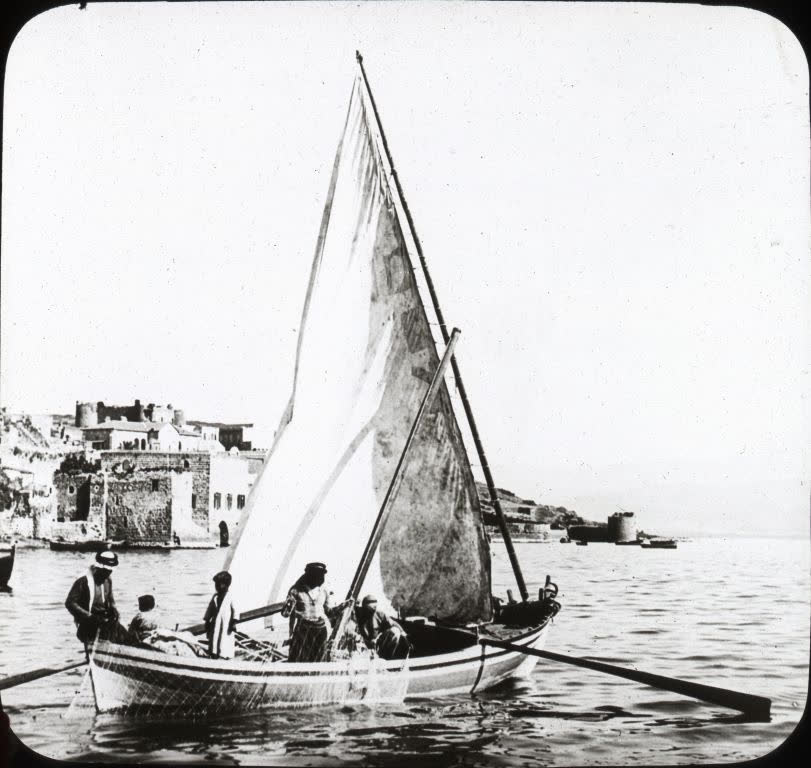
Fishing boats on the Sea of Galilee — the working world of the first disciples, called off these waters into a movement.OSU Special Collections & Archives · Public domain
There is another kind that happens in the open, where many can hear: a sermon in a park, a Scripture reading on a street corner, a team at a festival, a public confession of Christ that everyone around you can see. That is Level 3, and it is the subject of this paper.
Public witness scares most of us. It should not be done carelessly. But it is not a modern stunt, and it is not only for a few loud personalities. The Bible is full of it, the history of the church is full of it, and the law of the United States protects it in most public places. Done well, it is one of the plainest ways the church obeys the Lord's words: "What I tell you in darkness, that speak ye in light: and what ye hear in the ear, that preach ye upon the housetops." (Matthew 10:27).
What this paper is
This is a study and a working guide. It argues from the King James Bible first. It draws second on the field preachers who left careful records — Whitefield, Wesley and Spurgeon — and on the eyewitnesses who heard them. And because public witness happens in public, it gives guidance on the law in the United States from the Supreme Court's decisions and from federal regulation, and on safety.
Seven parts follow. Part 1 is about confessing Christ before men. Part 2 looks at public proclamation in Scripture. Part 3 studies the field preachers. Part 4 gives a method for open-air preaching today. Part 5 covers events, campaigns and teams. Part 6 is the law. Part 7 is about suffering well and keeping a gentle spirit.
The law chapter explains general principles. It is general information, not legal advice; laws vary by place, and it is current as of October 2026. Part 6 tells you how to find the rule where you live. In a real dispute, talk to a lawyer. For the law on one-to-one conversations, leafleting and door-to-door work, see the companion paper, Street Evangelism.
A word about me
I was raised Roman Catholic but never really connected — I went through the motions, fell asleep in the pews, and faked being sick to skip Mass. Eventually I gave up and called myself an atheist. I decided to read the Bible for one reason: to disprove it, so I'd have an excuse to stop going to church for good. It did the opposite. I came to faith in 2022, and my wife came to faith a month later. Today we're raising three kids in a home that was transformed — and I haven't stopped telling people since.
That last line is the whole reason for this paper. When Christ changes a life, it is not meant to stay hidden. The full story is at kylelauriano.com/about.
Every verse in this paper is quoted from the King James Bible. You can read it free in the 1611 Reader at kylelauriano.com/library.
This part matters because public witness begins not with a technique but with a conviction: that Christ is worth confessing openly, whatever it costs. Without that, every method in this paper is just noise.
The Lord's own words
"Whosoever therefore shall confess me before men, him will I confess also before my Father which is in heaven. But whosoever shall deny me before men, him will I also deny before my Father which is in heaven." (Matthew 10:32-33). Mark records a sharper form: "Whosoever therefore shall be ashamed of me and of my words in this adulterous and sinful generation; of him also shall the Son of man be ashamed, when he cometh in the glory of his Father with the holy angels." (Mark 8:38).
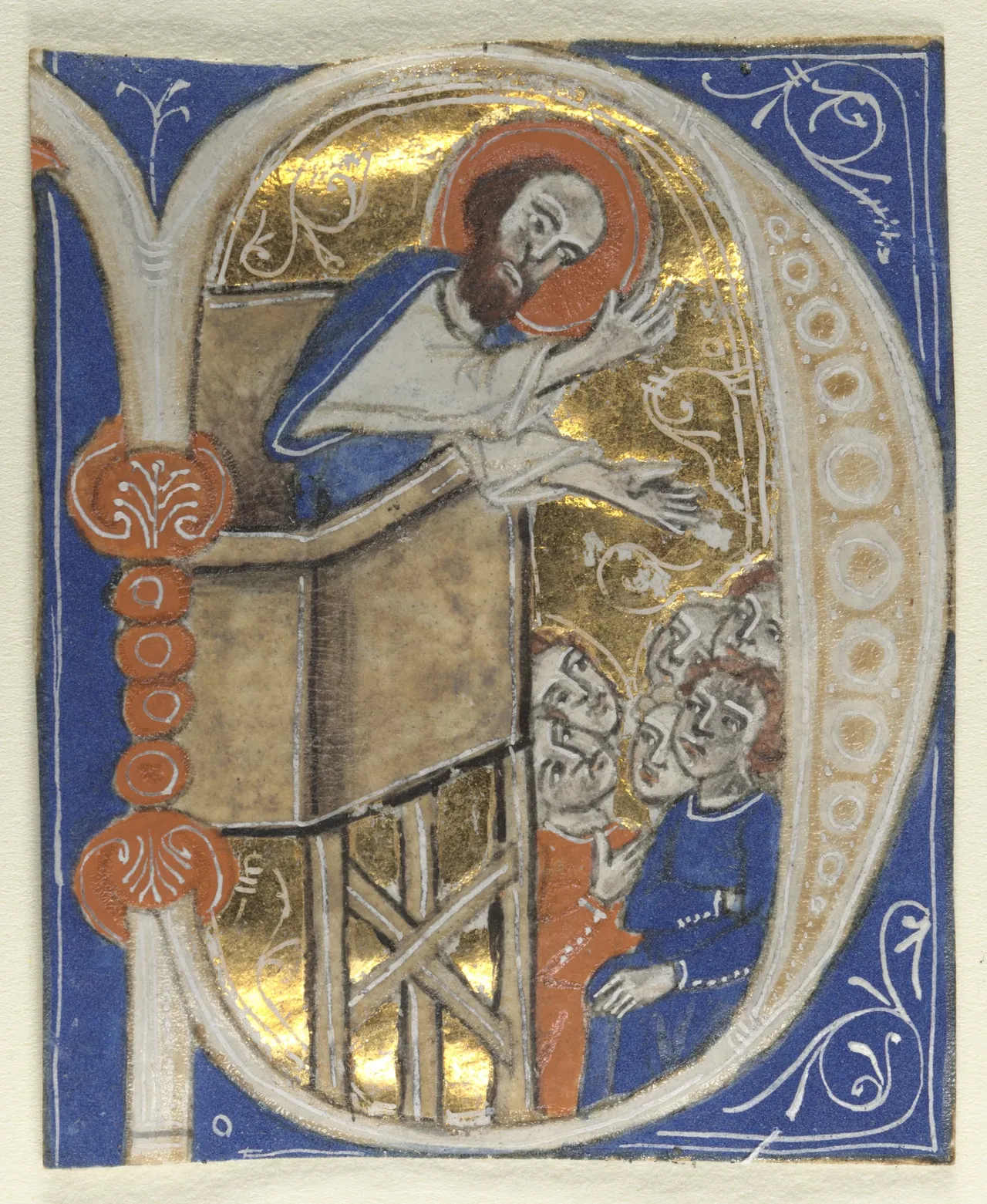
A historiated initial cut from an Italian Bible of the 1200s, showing Paul preaching to a crowd, the apostle who was not ashamed of the gospel.Historiated Initial Excised from a Bible: St. Paul Preaching · 1200s · Cleveland Museum of Art · CC0 · museum record · Galeria Regni
Not every believer is called to preach to crowds. But every believer is called not to be ashamed. Paul's confession is the heart of Level 3: "For I am not ashamed of the gospel of Christ: for it is the power of God unto salvation to every one that believeth" (Romans 1:16).
A light on a hill
The Lord described His people as something that cannot be hidden: "Ye are the light of the world. A city that is set on an hill cannot be hid." He went on: "Let your light so shine before men, that they may see your good works, and glorify your Father which is in heaven." (Matthew 5:14-16). Public witness is not only speaking. It is a visible life — good works that people see — joined to words that explain whose works they are.
"We cannot but speak"
When the authorities in Jerusalem forbade the apostles to speak in Jesus' name, Peter and John answered: "Whether it be right in the sight of God to hearken unto you more than unto God, judge ye. For we cannot but speak the things which we have seen and heard." (Acts 4:19-20). After they were beaten for it, "they departed from the presence of the council, rejoicing that they were counted worthy to suffer shame for his name. And daily in the temple, and in every house, they ceased not to teach and preach Jesus Christ." (Acts 5:41-42).
Public and private — "in the temple, and in every house". Level 3 does not replace Level 2. It adds to it.
Boldness is prayed for
Public boldness in the New Testament is not a personality type. It is a gift asked for. The apostles prayed, "grant unto thy servants, that with all boldness they may speak thy word" (Acts 4:29), and Luke records that afterwards "they spake the word of God with boldness." (Acts 4:31). Paul, an experienced preacher, asked others to pray "that I may open my mouth boldly, to make known the mystery of the gospel" (Ephesians 6:19).
Timothy, by most readings a timid young man, was told: "For God hath not given us the spirit of fear; but of power, and of love, and of a sound mind. Be not thou therefore ashamed of the testimony of our Lord" (2 Timothy 1:7-8). Power, love and a sound mind — all three are needed in public witness. Power without love is harsh. Love without power is silent. Either without a sound mind is foolish.
The test of motive
Before you stand up in public, ask why. Paul's answer was "necessity": "For though I preach the gospel, I have nothing to glory of: for necessity is laid upon me; yea, woe is unto me, if I preach not the gospel!" (1 Corinthians 9:16). He also knew that some preached "Christ even of envy and strife" (Philippians 1:15). Public witness tempts the flesh: the platform, the attention, the thrill of controversy, the video that goes viral. Search your heart. If you want to be seen, stay home and pray until you want Christ to be seen instead.
This part matters because Scripture does not merely permit public proclamation; it models it, again and again, in streets, gates, hillsides, temple courts and city stairs. Each example teaches something practical.
Wheat at harvest — the image Jesus reached for when He said the harvest is plentiful but the workers are few (Matthew 9).Chparveshtaak · CC BY-SA 4.0
Wisdom at the gates
Proverbs pictures Wisdom as a public preacher: "Doth not wisdom cry? and understanding put forth her voice? She standeth in the top of high places, by the way in the places of the paths. She crieth at the gates, at the entry of the city, at the coming in at the doors. Unto you, O men, I call; and my voice is to the sons of man." (Proverbs 8:1-4). Where are the people? At the gates, on the paths, at the doors. That is where Wisdom goes.
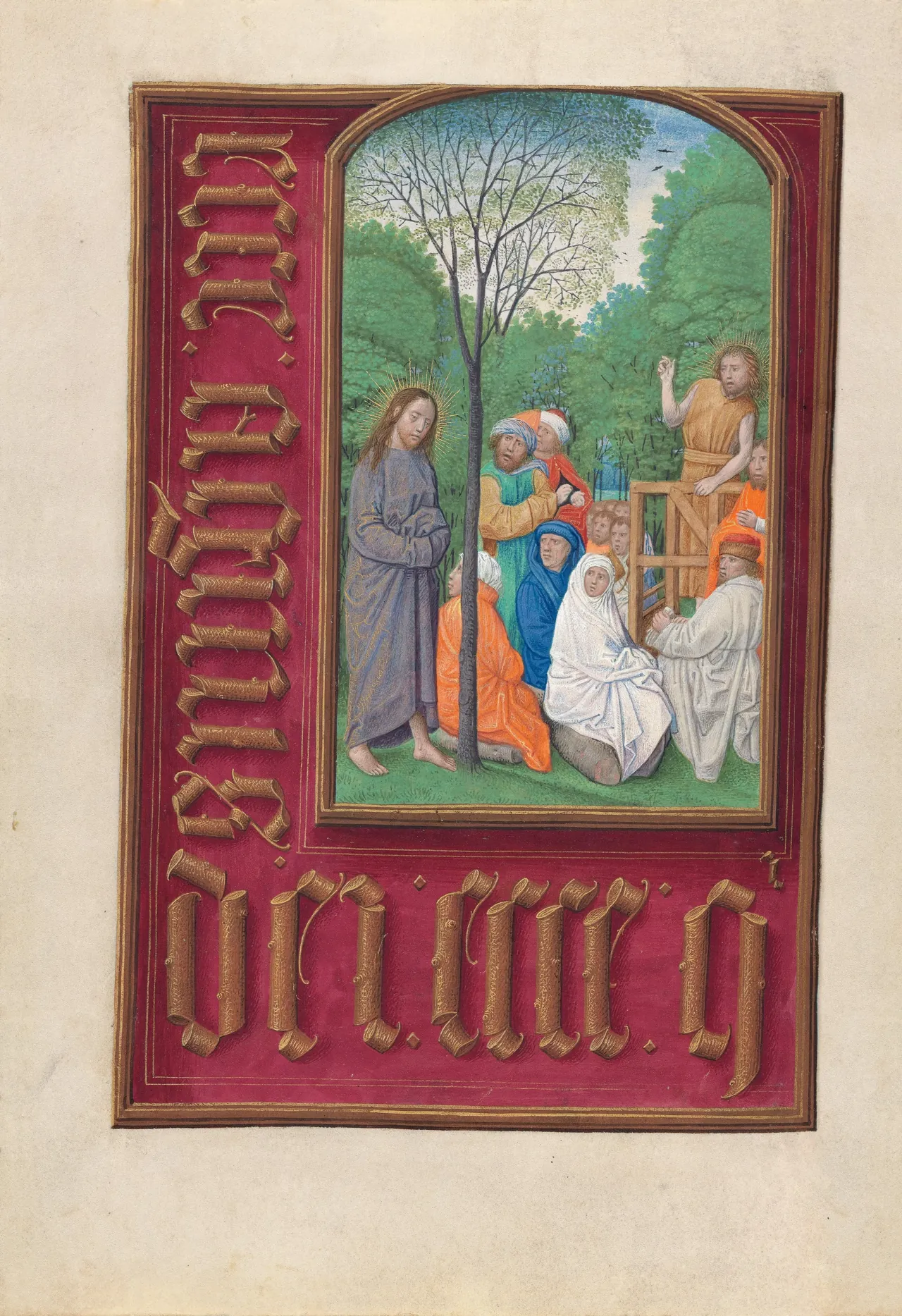
A Flemish miniature of about 1500 showing John the Baptist preaching outdoors to a listening crowd, the wilderness preaching this part describes.Hours of Queen Isabella the Catholic, Queen of Spain: Fol. 169v, St. John the Baptist Preaching · c. 1500 · Cleveland Museum of Art · CC0 · museum record · Galeria Regni
Ezra in the street before the water gate
One of the most instructive public readings in Scripture is Ezra's. "And all the people gathered themselves together as one man into the street that was before the water gate; and they spake unto Ezra the scribe to bring the book of the law of Moses" (Nehemiah 8:1). He read "from the morning until midday", and "the ears of all the people were attentive unto the book of the law." (Nehemiah 8:3).
What makes this a model for public witness is what happened next. Ezra was not alone. A team of Levites moved among the people and explained what was read: "So they read in the book in the law of God distinctly, and gave the sense, and caused them to understand the reading." (Nehemiah 8:8). One reads publicly; others explain personally. Spurgeon would later say almost exactly the same thing about open-air preaching (Part 3).
Jonah in Nineveh
Jonah's preaching was brief and blunt: "And Jonah began to enter into the city a day's journey, and he cried, and said, Yet forty days, and Nineveh shall be overthrown. So the people of Nineveh believed God, and proclaimed a fast, and put on sackcloth, from the greatest of them even to the least of them." (Jonah 3:4-5). A reluctant preacher, a short message, a city that repented. God's word does not depend on the preacher's eloquence.
John the Baptist and the Lord Jesus
"In those days came John the Baptist, preaching in the wilderness of Judaea, And saying, Repent ye: for the kingdom of heaven is at hand." (Matthew 3:1-2). People went out to hear him.
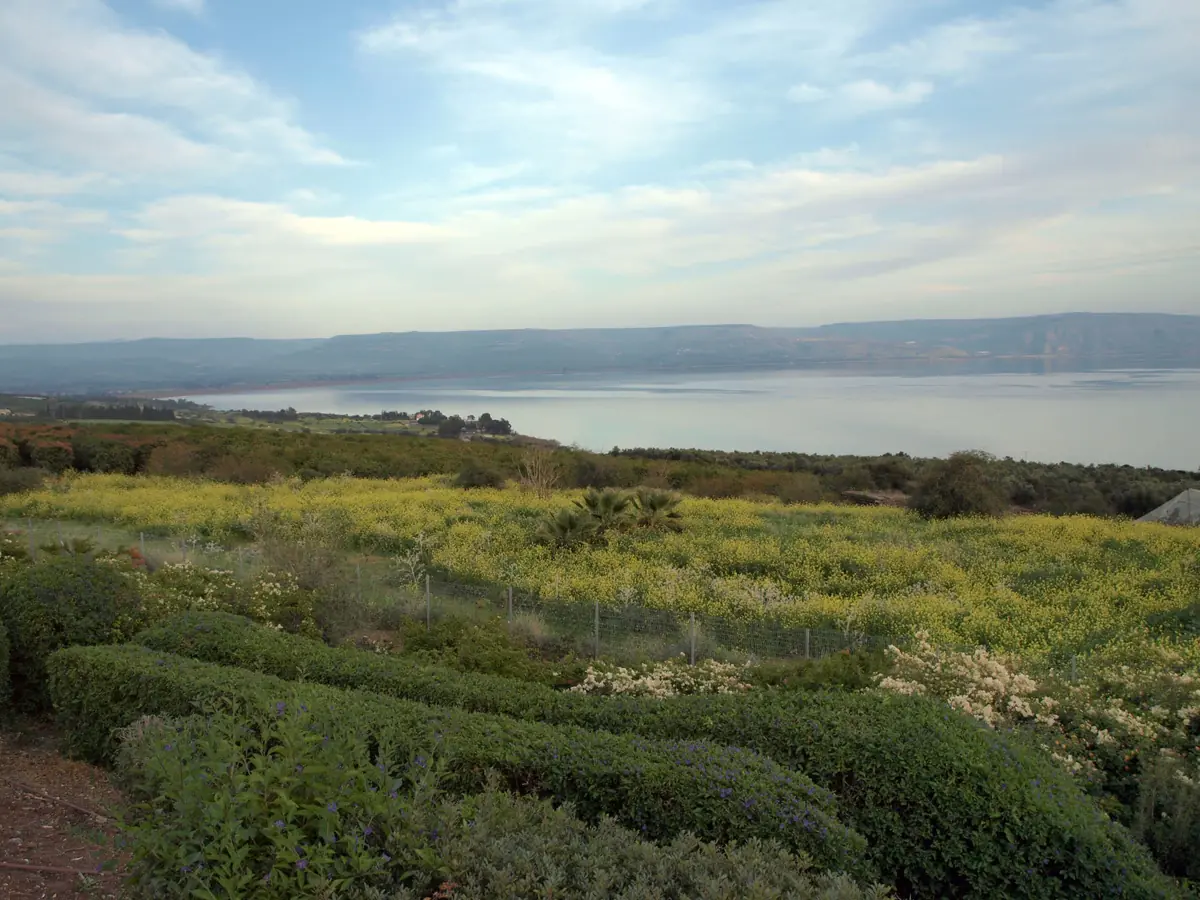
The Lord's greatest recorded sermon was preached outdoors: "And seeing the multitudes, he went up into a mountain: and when he was set, his disciples came unto him: And he opened his mouth, and taught them, saying" (Matthew 5:1-2). He used whatever the setting gave Him. When the crowd pressed Him at the lake, "he entered into one of the ships, which was Simon's, and prayed him that he would thrust out a little from the land. And he sat down, and taught the people out of the ship." (Luke 5:3). The water carried His voice. At the feast in Jerusalem, "Jesus stood and cried, saying, If any man thirst, let him come unto me, and drink." (John 7:37). And Mark notes simply, "And the common people heard him gladly." (Mark 12:37).
Peter at Pentecost and in Solomon's porch
Pentecost was public proclamation to a festival crowd: "But Peter, standing up with the eleven, lifted up his voice, and said unto them, Ye men of Judaea, and all ye that dwell at Jerusalem, be this known unto you, and hearken to my words" (Acts 2:14). He stood with the eleven — a team, not a lone voice.
After the healing at the temple gate, a crowd gathered in Solomon's porch, and Peter immediately turned attention away from himself: "Ye men of Israel, why marvel ye at this? or why look ye so earnestly on us, as though by our own power or holiness we had made this man to walk?" (Acts 3:12). A public witness who draws attention to himself has missed the point.
Paul at Lystra: "We also are men"
At Lystra the crowd tried to worship Paul and Barnabas as gods. "Which when the apostles, Barnabas and Paul, heard of, they rent their clothes, and ran in among the people, crying out, And saying, Sirs, why do ye these things? We also are men of like passions with you, and preach unto you that ye should turn from these vanities unto the living God, which made heaven, and earth, and the sea, and all things that are therein" (Acts 14:14-15). Days later the same region stoned Paul and left him for dead; "Howbeit, as the disciples stood round about him, he rose up, and came into the city: and the next day he departed with Barnabas to Derbe." (Acts 14:20). Crowds are fickle. Praise and stones can come from the same people.
Paul on the stairs: asking leave to speak
When Paul was arrested in the temple and the Roman commander was taking him into the barracks, Paul asked permission to address the crowd: "I beseech thee, suffer me to speak unto the people. And when he had given him licence, Paul stood on the stairs, and beckoned with the hand unto the people. And when there was made a great silence, he spake unto them in the Hebrew tongue" (Acts 21:39-40).
He asked the authority first. He waited for silence. He spoke in the crowd's own language. Then he told his testimony — how he had persecuted the church and how Christ met him (Acts 22). The crowd heard him until he spoke of being sent to the Gentiles, and then "lifted up their voices, and said, Away with such a fellow from the earth" (Acts 22:22). Even the best public witness can end in uproar. That is not failure.
Paul before Festus
When Paul spoke of the resurrection before the governor, Festus interrupted: "Paul, thou art beside thyself; much learning doth make thee mad. But he said, I am not mad, most noble Festus; but speak forth the words of truth and soberness." (Acts 26:24-25). Notice Paul's answer to an insult: courtesy ("most noble Festus") and a calm claim to "truth and soberness". That is the tone for every public witness.
What Scripture teaches about public proclamation
| Example | Lesson | |---|---| | Wisdom at the gates (Proverbs 8) | Go where people pass | | Ezra and the Levites (Nehemiah 8) | Read publicly, explain personally; work as a team | | Jonah (Jonah 3) | A short, plain message can be enough | | The Lord in the boat (Luke 5) | Use the setting; let your voice carry naturally | | Peter with the eleven (Acts 2) | Stand together | | Peter in Solomon's porch (Acts 3) | Turn attention from yourself to Christ | | Lystra (Acts 14) | Crowds turn; stay humble and faithful | | The stairs (Acts 21) | Ask leave of the authority; wait for quiet; speak their language | | Festus (Acts 26) | Answer insults with courtesy and sober truth |
Part 3 — The Field Preachers: Whitefield, Wesley and Spurgeon
6 min read
This part matters because three men in particular took public preaching further than anyone since the apostles, and left records detailed enough to learn from. They were not perfect, but they were faithful, and much of what they learned still applies.
The slopes above the Sea of Galilee at the traditional Mount of Beatitudes — the natural amphitheater where the Sermon on the Mount was preached.Obendorf · CC0
Whitefield: "a mountain for his pulpit"
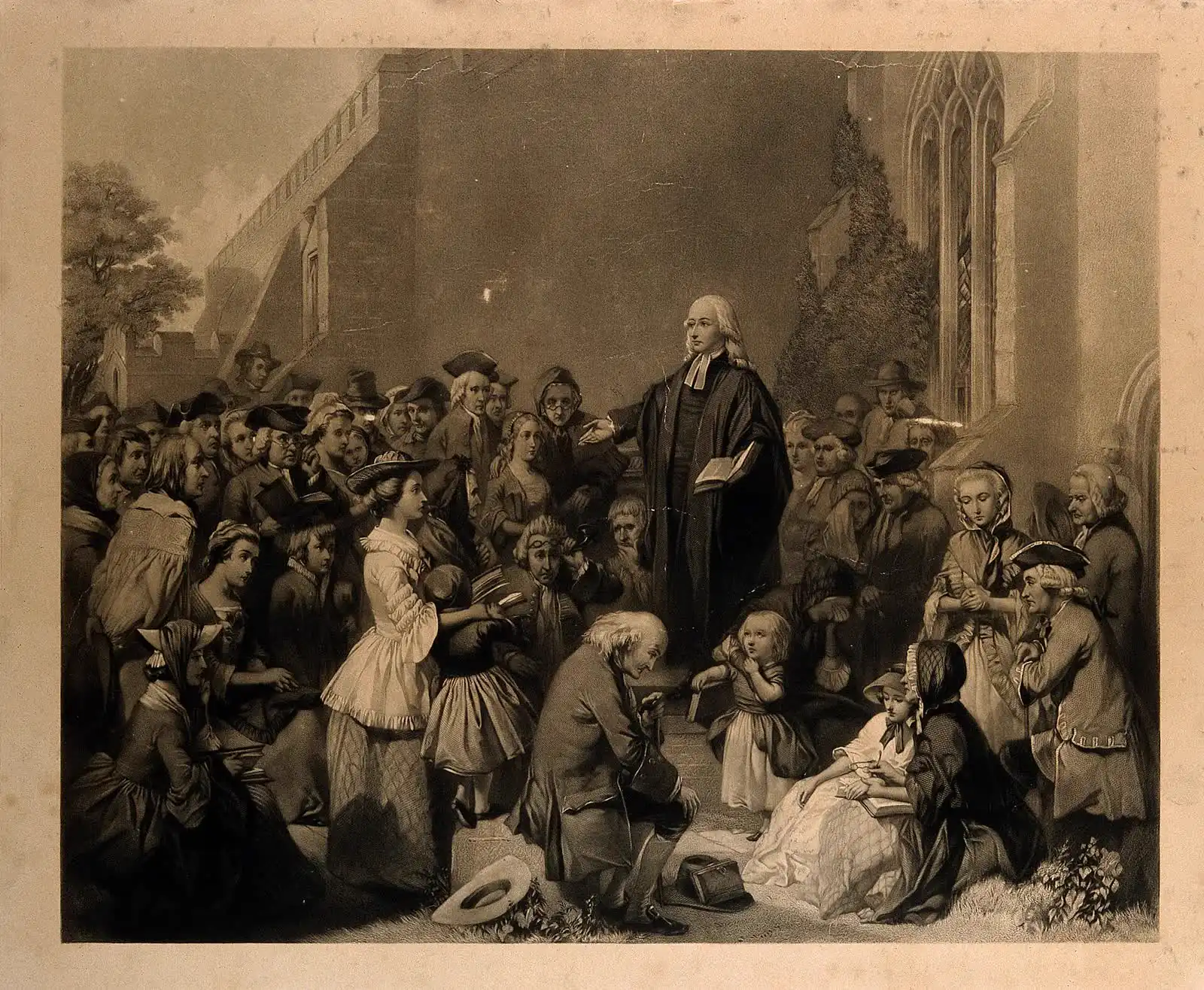
In early 1739 George Whitefield, refused the pulpits of Bristol, went to the colliers of Kingswood and preached in the open. He wrote that he thought it might be doing the service of his Creator, "who had a mountain for his pulpit, and the heavens for his sounding board; and who, when his Gospel was refused by the Jews, sent his servants into the highways and hedges."1 His biographer recorded that the crowds grew to near twenty thousand, and that sometimes, Whitefield admitted, "when twenty thousand people were before me, I had not, in my own apprehension, a word to say, either to God or to them. But I was never totally deserted".2
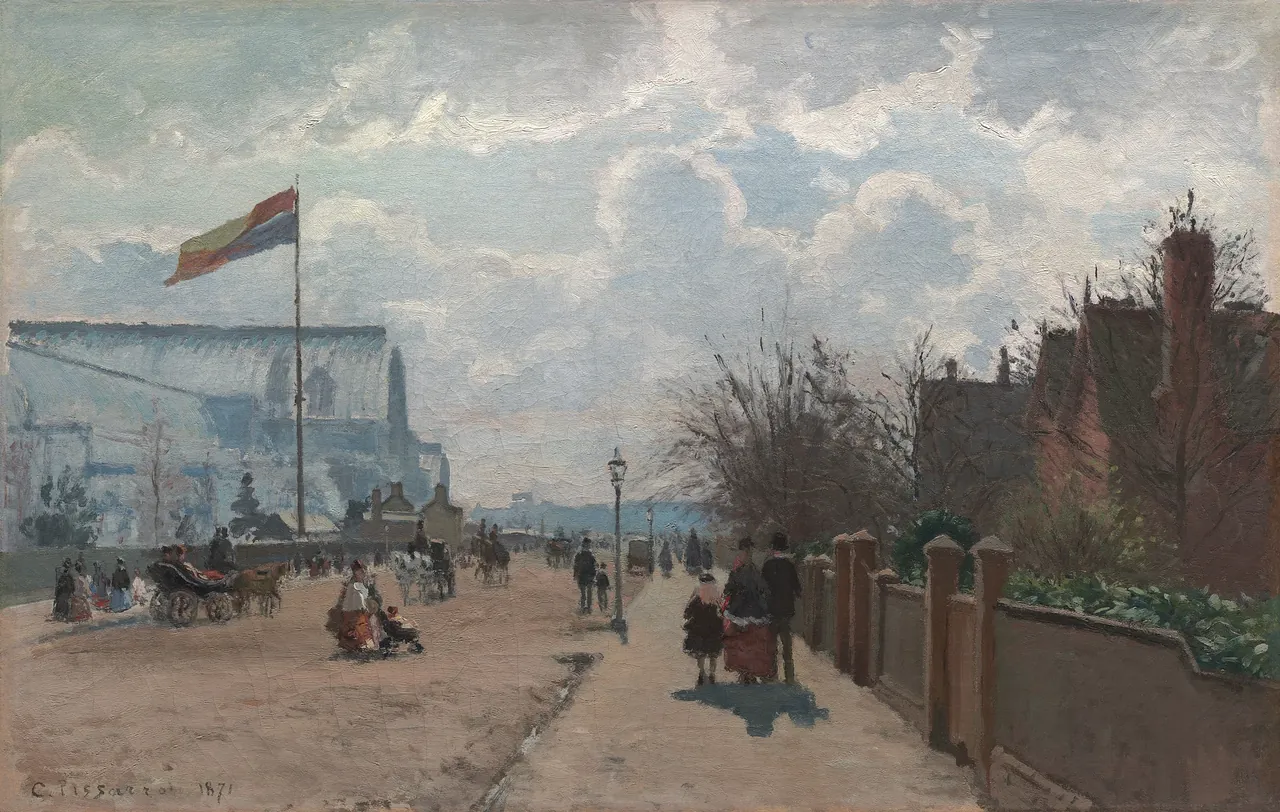
An 1871 oil painting of the Crystal Palace at Sydenham, the great glass hall where Spurgeon preached to his largest congregation in 1857.The Crystal Palace · 1871 · Art Institute of Chicago · CC0 · museum record · Galeria Regni
Those words should encourage anyone who has ever felt empty before speaking. The great preacher felt it too, with twenty thousand people in front of him.
Franklin's calculation
The most careful eyewitness account of Whitefield's voice comes from Benjamin Franklin, a sceptic. In Philadelphia, Whitefield "preach'd one evening from the top of the Courthouse steps, which are in the middle of Market-street". Franklin, curious "how far he could be heard", walked backwards down the street until the preacher's voice was obscured by noise near Front Street. Then he did the arithmetic: "Imagining then a semicircle, of which my distance should be the radius, and that it were fill'd with auditors, to each of whom I allow'd two square feet, I computed that he might well be heard by more than thirty thousand."3
Franklin added two observations every public speaker should notice. Whitefield "had a loud and clear voice, and articulated his words and sentences so perfectly, that he might be heard and understood at a great distance", and his hearers, "however numerous, observ'd the most exact silence."4 Clarity carried further than volume, and a quiet crowd made it possible.
Wesley: the world as his parish
John Wesley began field preaching in Bristol on 2 April 1739, having "submitted to be more vile and proclaimed in the highways the glad tidings of salvation, speaking from a little eminence in a ground adjoining to the city, to about three thousand people."5 When critics complained that he preached in other men's parishes, he answered: "I look upon all the world as my parish; thus far I mean, that, in whatever part of it I am, I judge it meet, right, and my bounden duty to declare unto all that are willing to hear, the glad tidings of salvation."6
In June 1742, refused the pulpit of the church at Epworth where his father had been rector, he announced through a friend in the churchyard that he would preach there at six. "Accordingly at six I came and found such a congregation as I believe Epworth never saw before. I stood near the east end of the church, upon my father's tombstone, and cried, 'The kingdom of heaven is not meat and drink; but righteousness, and peace, and joy in the Holy Ghost'" (his rendering of Romans 14:17).7
Spurgeon at the Crystal Palace
C. H. Spurgeon preached mostly indoors, to a congregation that filled the Metropolitan Tabernacle, but he also preached outdoors often and taught others to do it. His largest congregation under one roof was on Wednesday, 7 October 1857, a national day of fasting and prayer, "when 23,654 persons assembled in the Crystal Palace", the great glass exhibition hall at Sydenham.8
His Autobiography records something that happened a day or two before. To test the building's acoustics, he stood where the pulpit would be and "cried in a loud voice, 'Behold the Lamb of God, which taketh away the sin of the world.'" A workman in one of the galleries, who knew nothing of what was going on, heard it; in the account Spurgeon later received, "they came like a message from Heaven to his soul", and he went home and, after a season of struggle, "found peace and life by beholding the Lamb of God."9 One sentence of Scripture, spoken into an empty hall. That is the account as Spurgeon gives it, told years later at the man's deathbed; it is a reminder that we never know who is listening.
Spurgeon's open-air counsel
Spurgeon's lectures to his students on open-air preaching are the most practical thing ever written on the subject. Some of his counsel is about the England of his day, but much of it is timeless.
Why go outdoors at all. "The great benefit of open-air preaching is that we get so many new comers to hear the gospel who otherwise would never hear it."10
Speak, do not shout. "It will be very desirable to speak so as to be heard, but there is no use in incessant bawling." Instead: "A quiet, penetrating, conversational style would seem to be the most telling. Men do not bawl and halloa when they are pleading in deepest earnestness".11
Be short and clear. "Out of doors verbosity is not admired, you must say something and have done with it". Because the crowd keeps changing, "each point must be complete in itself." "Short sentences of words and short passages of thought are needed for out of doors."12
Be natural. "The less you are like a parson the more likely you are to be heard". He warned against "primness, demureness, formality, sanctimonious long-windedness, and the affection of superiority", and against "the wild-raving-maniac action which some are so fond of".13
Do not preach to nobody. He described two zealous men who bawled hymns and exhortations outside a family's door every Sunday with hardly a hearer, so that the family lost "their few hours of quiet because two good men think it their duty to perform a noisy but perfectly useless service." His dry verdict: "it must be viewed as an essential part of a sermon that somebody should hear it".14
Bring a team. "If a number of friends will go with you and make a ring around you it will be a great acquisition, and if these can sing it will be still further helpful. The friendly company will attract others, will help to secure order".15 In The Soul-Winner he wished every open-air preacher could be "accompanied by a batch of persons who would drive his nails home for him by personal conversation".16 That is Nehemiah 8 again: one reads, others give the sense.
Do not obstruct; care for your hearers. "Do not purposely interfere with the thoroughfare". "Always inconvenience yourself rather than your audience: your Master would have done so."17
A checklist. Spurgeon quoted with approval a list of "Qualifications for Open-Air Preachers" from a tract of the Open Air Mission:
1. A good voice. 2. Naturalness of manner. 3. Self-possession. 4. A good knowledge of Scripture and of common things. 5. Ability to adapt himself to any congregation. 6. Good illustrative powers. 7. Zeal, prudence, and common sense. 8. A large, loving heart. 9. Sincere belief in all he says. 10. Entire dependence on the Holy Spirit for success. 11. A close walk with God by prayer. 12. A consistent walk before men by a holy life.
His comment: "If any man has all these qualifications, the Queen had better make a bishop of him at once, yet there is no one of these qualities which could well be dispensed with."18
What the field preachers teach
Go where people are, especially those who would never enter a church.
Clarity carries further than volume. Whitefield was heard because he articulated; Spurgeon warned against bawling.
Short, complete points suit a changing crowd.
Natural, humble manner wins a hearing; affectation invites ridicule.
Work as a team: speakers, singers, and above all people ready for personal conversation.
Care for the hearers and the neighbours. Do not block the way, do not torment a street with noise.
Depend on God. Even Whitefield sometimes stood before thousands with nothing to say, and "was never totally deserted".
Part 4 — Preaching in the Open Air Today: A Method
4 min read
This part matters because good intentions do not make a good open-air sermon. Public speaking outdoors has its own demands, and the gospel deserves to be spoken well. What follows is a method for a short open-air message, built on Scripture and the lessons above.
Prepare the message
Keep it short: ten to fifteen minutes is plenty outdoors, and five minutes can be enough. Choose one text and one main point. Make sure the whole gospel is there — God, sin, Christ crucified and risen, repentance and faith — because someone may hear only this once.
A simple shape:
1. Opening (under a minute). Something that stops people: a question, a short story, a striking verse read slowly. "What do you think happens one second after you die?" Or simply: "I want to read you something Jesus said." 2. The text. Read it clearly from the King James Bible, with the reference. Let Scripture be heard on its own before you explain it. 3. The problem. Sin and judgment, plainly but without contempt. "For all have sinned, and come short of the glory of God" (Romans 3:23). 4. The rescue. Christ's death and resurrection. "How that Christ died for our sins according to the scriptures; And that he was buried, and that he rose again the third day according to the scriptures" (1 Corinthians 15:3-4). 5. The call. Repent and believe. "Repent ye, and believe the gospel." (Mark 1:15). 6. The invitation. Tell people that some of your team are nearby and would be glad to talk, pray or give them something to read. Then stop.
Spurgeon's rule applies to every section: each point should be "complete in itself", because people arrive and leave all the time.
Use your voice well
Articulate. Clarity carries further than loudness. Speak slowly enough to be understood at the back.
Do not shout continuously. Spurgeon's "quiet, penetrating, conversational style" is the goal. Vary your volume.
Mind the wind and the noise. Spurgeon advised speaking so that the wind carries your voice toward the people, not against them, and choosing a spot with a wall or rising ground in front of you, not endless open space.19 Avoid standing beside traffic or loud machinery.
Consider whether you need amplification at all. For a small crowd, a natural voice is better. If you use a speaker, keep it at a level that reaches your listeners without filling the street — and follow the local noise rules (Part 6).
Choose the place
Where people pause, not where they rush: parks, plazas, outside events, transit stops with seating.
Where you will not block anything: keep entrances, crosswalks and sidewalks clear.
Where your team can stand together and people can step aside to talk.
Not under someone's window every week. Remember Spurgeon's two "good men" and their "perfectly useless service".
Where it is lawful. Check the rules for that park, plaza or sidewalk (Part 6).
Read Scripture aloud
One of the simplest and most powerful forms of public witness is public reading of the Bible. Ezra did it for hours. Paul told Timothy, "Till I come, give attendance to reading, to exhortation, to doctrine." (1 Timothy 4:13). A team can read a Gospel aloud in a public place, in turns, with others nearby ready to "give the sense" to anyone who stops. It requires no great speaker, and it lets God's own words do the work.
Hecklers and interruptions
Interruptions are normal. Spurgeon's rules are still the best: "One constant rule is to be always courteous and good tempered, for if you become cross or angry it is all over with you. Another rule is to keep to your subject, and never be drawn into side issues. Preach Christ or nothing".20 With a genuine sceptic, "your business is not to argue but to proclaim the gospel", and sometimes the best answer is a question.21
Practical steps:
Stay calm and friendly. The crowd is watching you more than the heckler.
Answer once, briefly, if the interruption is a real question. Offer to talk afterwards.
Do not trade insults. "Not rendering evil for evil, or railing for railing: but contrariwise blessing" (1 Peter 3:9).
Let a team member step in quietly to talk personally with a persistent interrupter, away from the speaker.
If someone becomes threatening, stop, keep your distance, and let your team leader decide whether to leave or call for help (Part 6 and Part 7).
Invite, do not pressure
End with a clear invitation and no manipulation. You might say: "If you want to talk about any of this, or if you'd like someone to pray with you, some of my friends here would be glad to. If not, thank you for listening." Spurgeon's warning against planned emotion applies outdoors as much as in: "pray do not plan their production."22 People who come forward should be met by someone who will listen, explain and help, not hurried through a formula.
This part matters because public witness is rarely a one-person work. Most effective public outreach is done by a team, under leadership, with prayer, preparation and follow-up. That is how Peter stood "with the eleven", how Ezra read with the Levites around him, and how Spurgeon's preachers went out with friends to "make a ring" and "drive the nails home".
Kinds of public outreach
| Kind | What it involves | Best for | |---|---|---| | Open-air preaching | A short message in a public place, with a team for conversations | Teams with at least one gifted speaker | | Public Scripture reading | Reading a book of the Bible aloud in turns | Any team; no speaker required | | Booth or table | At a fair, festival or market, with literature and conversation | Events where booths are available | | Community event | A free concert, cookout or service day with a clear gospel moment | Churches with resources to host | | Prayer walk or prayer station | Offering to pray with passers-by | Teams of mature, gentle believers | | Visible service | Practical help in the community, done in Christ's name | Every church, alongside proclamation |
Planning an outreach
1. Pray first, together, and keep praying throughout. 2. Choose the place and time, and check the rules: permits, booth fees, noise limits, park hours (Part 6). 3. Choose a leader who knows the plan and the rules, carries any permit, and speaks for the team to officials. 4. Train the team briefly: the gospel outline, how to start a conversation, what to do if someone wants to pray, safety rules, and the meeting point. 5. Prepare materials: good tracts, Gospels of John or King James New Testaments, cards with your church's details. Read every piece yourself. 6. Plan the follow-up before you go: who will contact people who ask for it, and how quickly. 7. Debrief afterwards and pray for the people you met.
Roles on the day
Leader — oversees, keeps time, handles officials and problems.
Speaker or readers — if there is preaching or public reading.
Conversationalists — in pairs, ready to talk with anyone who stops. In most outreach, this is where the real work is done.
Intercessors — praying, on site or at home.
Hosts — at a booth or event, greeting people and offering materials.
Follow-up contact — keeps any details people freely give, and makes sure promises are kept.
Partner with local churches
If you are reaching people in a place, they will need a church in that place. Work with sound local congregations where you can. Invite them to join the outreach, give out their details, and send interested people to them. An outreach that leaves no church behind it has missed the point of the commission (Matthew 28:20).
Measuring honestly
It is good to know what happened: how many conversations, how many people asked for follow-up, how many came to church. Spurgeon defended accurate counting: statistics "do much good if they are accurate, and if men use them lawfully". But he condemned inflated reports as "this counting of unhatched chickens, this exhibition of doubtful spoils."23 Report what you know, not what you hope. A "decision" at a festival may be the beginning of a life with Christ or only a moment; time will tell.
Visible love alongside visible words
The Lord said, "Let your light so shine before men, that they may see your good works" (Matthew 5:16). Public proclamation without love looks like noise. Public service without proclamation leaves people grateful but uninformed. Do both. Give a cup of water and say whose name you give it in.
Part 6 — The Law for Public Proclamation in the United States
9 min read
This part matters because public preaching and outreach events raise legal questions that one-to-one conversations do not: amplified sound, permits, crowds, booths and parks. In most public places, the law protects you. It also lets governments set neutral rules, and a wise witness keeps them.
Current as of October 2026. This chapter is general information, not legal advice, and laws vary by place. State and local rules add their own requirements, and they change. Decisions of the United States Supreme Court bind the whole country; a decision of a federal court of appeals (a "circuit") binds only the states in that circuit; a state court's decision binds only that state. This chapter says which is which.
To find the rule where you live: search your city's or county's code of ordinances (usually online through the city or county website, or through Municode or American Legal Publishing) for "noise", "amplified sound", "sound permit", "parks" and "special events"; then call the city permit office or the parks department and ask what applies to the exact place you have in mind. For a national park, call the superintendent's office. Consult a lawyer in a real dispute. For leafleting, door-to-door work and private property, see Street Evangelism, Part 5.
The principle: public forums
The Supreme Court has long recognised that streets and parks "have immemorially been held in trust for the use of the public, and, time out of mind, have been used for purposes of assembly, communicating thoughts between citizens, and discussing public questions." In these "quintessential public forums, the government may not prohibit all communicative activity", and content-based restrictions must be "necessary to serve a compelling state interest".24
But the government may set rules of time, place and manner that are "justified without reference to the content of the regulated speech", "narrowly tailored to serve a significant governmental interest", and that "leave open ample alternative channels for communication".25 Most practical questions about public preaching come down to this test.
Amplified sound
Sound is the most common source of trouble for public preachers. The Supreme Court has addressed it several times.
In Saia v. New York (1948), a Jehovah's Witness minister was convicted for using a loudspeaker in a Lockport park without the police chief's permission. The Court struck down the ordinance because it gave the chief unchecked discretion with no standards, calling it a prior restraint, and said: "Loud-speakers are today indispensable instruments of effective public speech."26
In Kovacs v. Cooper (1949), the Court upheld a Trenton ordinance forbidding sound trucks that emit "loud and raucous noises" on the streets, treating it as a nuisance rule rather than a licensing scheme. There was no single majority opinion, so the case shows the outcome more clearly than the reasoning.27
In Ward v. Rock Against Racism (1989), the Court upheld New York City's requirement that performers at the Central Park bandshell use the city's sound equipment and technician, to control volume for nearby residents and park users.28
In Grayned v. City of Rockford (1972), the Court upheld an ordinance against noise that disturbs a school in session, asking whether the manner of expression "is basically incompatible" with the normal activity of a place at a particular time.29
What this means: a city generally cannot give an official unlimited discretion to decide who may use a speaker, and cannot ban amplification only for religious speakers. But it can set neutral limits on volume, hours and places — near homes at night, near schools in session, in hospital zones. Noise rules are mostly local and differ from town to town: some cities require a sound permit, some set volume limits, some forbid amplification in certain places. Find your city's noise ordinance before you bring a speaker, keep well within it, and turn down at once if asked. Spurgeon's verdict on noise that reaches no one and annoys everyone stands: "perfectly useless service".
Permits for events and marches
For a few people talking or preaching on a sidewalk, no permit is usually needed. For larger events, marches or anything that uses a stage, a permit may be required. In Cox v. New Hampshire (1941), the Court upheld the conviction of Jehovah's Witnesses who marched in single file through Manchester without the license required for parades, because the licensing board could consider only time, place and manner and had to act without unfair discrimination.30
But permit schemes have limits. In Forsyth County v. Nationalist Movement (1992), the Court struck down a scheme that let an administrator vary the permit fee according to how much police protection a hostile audience might require, holding that "Speech cannot be financially burdened, any more than it can be punished or banned, simply because it might offend a hostile mob."31
Practical notes:
Ask the city or parks department what permits are needed for your event, and apply early.
Carry the permit and know its conditions.
Be gracious with officials. Paul asked the commander for "licence" before he spoke from the stairs (Acts 21:39-40). Asking permission where permission is lawfully required is not compromise; it is courtesy.
Fairs and festivals
At fairs and festivals, organisers may confine literature distribution to booths. In Heffron v. ISKCON (1981), the Court upheld a Minnesota State Fair rule requiring groups to distribute and sell literature only from rented booths, while noting that representatives could still walk about the fairgrounds and talk with people.32 Rent a booth if you want to hand out materials, and be ready to talk anywhere.
National parks
In the National Park System, speechmaking, "holding vigils or religious services" and similar expression count as "demonstrations" under 36 C.F.R. § 2.51 when the conduct "is reasonably likely to attract a crowd or onlookers" — which open-air preaching nearly always is. "Demonstrations involving 25 persons or fewer may be held without a permit within designated park areas", provided, among other conditions, that the group does not unreasonably interfere with permitted events or park programs and uses only hand-carried signs, with no "stages, platforms, or structures". Larger groups need a permit, and the superintendent must issue a permit or a written denial within ten days of receiving a complete application.33 Handing out literature is governed by § 2.52, which has the same 25-person exception within the designated areas.34 The designated areas are marked on a map at the superintendent's office, and the parks in and around Washington, D.C., have their own longer rule (36 C.F.R. § 7.96).35 Call the park before you go.
Hostile crowds
The gospel sometimes draws an angry crowd. The law says the government may not silence a peaceful speaker simply because listeners are angry. In Cantwell v. Connecticut (1940), the Court reversed the breach-of-the-peace conviction of a Jehovah's Witness whose phonograph record angered two listeners, finding his conduct peaceful.36 In Bible Believers v. Wayne County (2015), the full United States Court of Appeals for the Sixth Circuit held that sheriff's deputies violated the rights of street preachers by removing them from the Arab International Festival in Dearborn, Michigan, after part of the crowd threw plastic bottles and debris at them — a "heckler's veto". The court said that "police cannot punish a peaceful speaker as an easy alternative to dealing with a lawless crowd that is offended by what the speaker has to say."37 That decision binds only the courts of the Sixth Circuit (Michigan, Ohio, Kentucky and Tennessee); courts elsewhere are not bound by it.
The limits matter just as much:
Fighting words — insults "which by their very utterance inflict injury or tend to incite an immediate breach of the peace" — were held unprotected in Chaplinsky v. New Hampshire (1942), where a Jehovah's Witness was convicted for calling a city marshal abusive names to his face.38
Refusing a lawful police order when a crowd is getting out of hand can be punished. In Feiner v. New York (1951), the Court upheld the conviction of a Syracuse street-corner speaker who refused three police requests to stop, while affirming that "the police cannot be used as an instrument for the suppression of unpopular views."39
For a Christian, the legal floor is not the standard. A message may be lawful and still be unloving. Paul's rule is higher: "Giving no offence in any thing, that the ministry be not blamed" (2 Corinthians 6:3). The offence of the cross is unavoidable. Every other offence is ours to avoid.
When an official approaches
Be courteous. Thank them. Listen to the concern.
Ask what rule applies, respectfully.
Comply first with any order to lower the volume, move, stop or leave. Leave when asked, and sort it out afterwards rather than argue; raise disagreements later, calmly, through proper channels.
Write down names, badge numbers, time and place if you believe your rights were violated, and seek advice afterwards.
Recording police is often allowed, but not settled everywhere. In Glik v. Cunniffe (2011), the federal appeals court for the First Circuit held that "a citizen's right to film government officials, including law enforcement officers, in the discharge of their duties in a public space" is protected by the First Amendment, subject to "reasonable time, place, and manner restrictions", and said its view "accords with the decisions of numerous circuit and district courts."40 It binds only the First Circuit (Maine, Massachusetts, New Hampshire, Rhode Island and Puerto Rico); the Supreme Court has not decided the question, and state recording laws differ. Where the law allows, record openly and politely, at a distance, without interfering.
Before you go: a legal checklist
Find your local rule. Look up your city or county ordinances on permits, special events, parks and amplified sound.
Call the office. Ask the permit office or parks department what applies to the place and time you plan, and whether you need a sound permit. For a national park, ask the superintendent's office for the designated areas.
Carry a printed copy of the rule, and of any permit, with the name of the person you spoke to.
Stay on public sidewalks and public ground, and leave private property when asked.
Never block passage — doorways, crosswalks, sidewalks, traffic.
If a police officer asks you to leave or to turn down, do it. Be courteous, ask which rule applies, and sort it out afterwards rather than argue.
Record politely, and only where the law allows.
Paul's example
Paul knew Roman law and used it — not to win arguments, but to protect the gospel and the churches. At Philippi he refused to be released quietly after an illegal beating: "They have beaten us openly uncondemned, being Romans, and have cast us into prison; and now do they thrust us out privily? nay verily; but let them come themselves and fetch us out." (Acts 16:37). And when a riot broke out against the Christians at Ephesus, it was a city official who calmed it by reminding the crowd that "the law is open, and there are deputies" (Acts 19:38), and that complaints should be settled "in a lawful assembly" (Acts 19:39).
We have the same law open to us. Use it gratefully. Respect it carefully. Never treat it as the measure of what love requires.
The law at a glance
| Question | General answer | Key authority | |---|---|---| | May I preach in a public park or on a sidewalk? | Generally yes; content cannot be the reason to stop you | Hague (1939); Perry (1983) | | May the city limit my volume, hours or place? | Yes, if the rules are neutral, narrowly tailored, with alternatives | Ward (1989); Kovacs (1949); Grayned (1972) | | May an official decide at will who uses a speaker? | No; unchecked discretion is struck down | Saia (1948) | | Do I need a permit for a march or large event? | Often yes, if neutrally administered | Cox (1941) | | May they charge more because people may be angry? | No | Forsyth (1992) | | At a fair, may they confine literature to booths? | Yes; you may still walk and talk | Heffron (1981) | | In a national park? | 25 or fewer, in designated areas only, hand-held signs: no permit (other conditions apply) | 36 C.F.R. §§ 2.51, 2.52 | | If a crowd turns hostile? | Police may not silence a peaceful speaker to appease them; you must obey lawful orders | Bible Believers (6th Cir. 2015, binds that circuit only); Feiner (1951) | | Insults and threats? | Not protected the way peaceful speech is; can lead to arrest | Chaplinsky (1942) |
This part matters because public witness exposes you. People will mock, shout, film you to ridicule you, and occasionally threaten. How you respond is part of the witness — often the part people remember.
Suffer as a Christian, not as a busybody
Peter drew a clear line: "If ye be reproached for the name of Christ, happy are ye; for the spirit of glory and of God resteth upon you". But, he went on, "let none of you suffer as a murderer, or as a thief, or as an evildoer, or as a busybody in other men's matters. Yet if any man suffer as a Christian, let him not be ashamed; but let him glorify God on this behalf." (1 Peter 4:14-16).
There is a world of difference between being opposed for Christ and being opposed because you were rude, loud, obstructive or contemptuous. "For what glory is it, if, when ye be buffeted for your faults, ye shall take it patiently? but if, when ye do well, and suffer for it, ye take it patiently, this is acceptable with God." (1 Peter 2:20). Make sure that if you are opposed, it is for the gospel and nothing else.
Bless, do not rail
"But I say unto you, Love your enemies, bless them that curse you, do good to them that hate you, and pray for them which despitefully use you, and persecute you" (Matthew 5:44). This is not a technique for winning crowds. It is obedience. It also happens to be the most powerful public witness there is.
Recall Wesley at Wednesbury in 1743. A mob surrounded the house where he was staying, crying for the minister. He asked for their captain to be brought in; "After a few sentences interchanged between us, the lion became a lamb." Later, dragged through the streets of Walsall, he kept asking, "What evil have I done? Which of you all have I wronged in word or deed?" — and the man who had led the mob ended by protecting him.41 Calm, courteous, personal: that was his whole defence.
Be wise as serpents
Gentleness is not naivety. The Lord said, "be ye therefore wise as serpents, and harmless as doves" (Matthew 10:16), and "when they persecute you in this city, flee ye into another" (Matthew 10:23). At Ephesus, when the theatre filled with a rioting crowd, Paul's friends "suffered him not" to go in, and city leaders who were his friends sent "desiring him that he would not adventure himself into the theatre." (Acts 19:30-31). He listened.
For public outreach that means:
Never go alone. Work as a team with a leader.
Agree on a signal to leave, and leave when it is given.
Keep the team together and in sight of each other.
Do not let a confrontation draw you into a crowd or away from your team.
Never touch anyone in anger; never retaliate.
If anyone is threatened or hurt, call 911. Write down what happened afterwards.
Watch for people in crisis. If someone seems at risk of harming themselves, stay with them if it is safe, and help them reach the 988 Suicide & Crisis Lifeline (call or text 988) or emergency services.
Protect children and the vulnerable. Do not single out children in a crowd, and do not use anyone's distress as a sermon illustration.
Pray for those in authority
"I exhort therefore, that, first of all, supplications, prayers, intercessions, and giving of thanks, be made for all men; For kings, and for all that are in authority; that we may lead a quiet and peaceable life in all godliness and honesty." (1 Timothy 2:1-2). Pray for the police who patrol where you preach, the officials who issue your permits, and the neighbours who hear you. Treat them as people you want to see saved, not as obstacles.
When opposition comes, the gospel spreads
Paul wrote from prison that his chains had helped the gospel: "But I would ye should understand, brethren, that the things which happened unto me have fallen out rather unto the furtherance of the gospel; So that my bonds in Christ are manifest in all the palace, and in all other places; And many of the brethren in the Lord, waxing confident by my bonds, are much more bold to speak the word without fear." (Philippians 1:12-14).
And he told the Philippians to stand together "in nothing terrified by your adversaries" (Philippians 1:28). Fear is natural. It does not have to rule.
Remember those who suffer more
In many countries, public witness costs far more than ridicule. "Remember them that are in bonds, as bound with them; and them which suffer adversity, as being yourselves also in the body." (Hebrews 13:3). Pray for persecuted believers, and let their courage shame our timidity.
Public witness is not for show-offs, and it is not only for the naturally bold. It is for believers who are not ashamed of Christ and are willing to say so where others can hear — wisely, lawfully, gently.
Scripture gives us Wisdom at the gates, Ezra in the street with helpers giving the sense, Jonah in Nineveh, the Lord preaching from a boat, Peter standing with the eleven, and Paul on the stairs, asking leave to speak and waiting for silence. History gives us Whitefield on a hill above the coal pits, Wesley on his father's tombstone, and Spurgeon crying "Behold the Lamb of God" into an empty hall. Each of them was afraid at some point. Each of them was faithful.
The same Lord stands with us. Paul could write at the end of his life: "Notwithstanding the Lord stood with me, and strengthened me; that by me the preaching might be fully known, and that all the Gentiles might hear" (2 Timothy 4:17).
A next step
Read Nehemiah 8, and Acts 21 and 22, and note what Ezra and Paul did.
Join, or gather, a small team from your church for one public outreach in the next two months.
Find the noise and permit rules for one public place near you.
If you are called to speak, write a ten-minute open-air message on one text, with the whole gospel in it, and practise it aloud.
If you are not a speaker, offer to be a conversationalist, a reader or an intercessor. The team needs you more than it needs another voice.
An invitation
If you are not a Christian and you have stopped to read this — perhaps because someone was preaching where you were — then thank you for listening this far. Here is the message in one breath: God made you; you have sinned against Him, as we all have; Christ died for sinners and rose again; and He calls you to turn from your sin and trust Him. "For whosoever shall call upon the name of the Lord shall be saved." (Romans 10:13).
I decided to read the Bible for one reason: to disprove it, so I'd have an excuse to stop going to church for good. It did the opposite. Then one day I got on my knees and prayed: "Jesus, if you are real, show me — and I'll serve you." You can pray as honestly as that, right where you are.
"How beautiful upon the mountains are the feet of him that bringeth good tidings, that publisheth peace; that bringeth good tidings of good, that publisheth salvation; that saith unto Zion, Thy God reigneth!" (Isaiah 52:7)
1John Gillies, Memoirs of the Life of the Reverend George Whitefield (New-London, CT: S. Green for Cornelius Davis, 1798), 29 (Whitefield's manuscript, quoted in a note). Online: https://archive.org/details/memoirsoflifeofr00gill_2.↩
3Benjamin Franklin, Autobiography of Benjamin Franklin, ed. Frank Woodworth Pine (New York: Henry Holt, 1916), ch. XI. Online: https://www.gutenberg.org/ebooks/20203.↩
8C. H. Spurgeon, C. H. Spurgeon's Autobiography, compiled by his wife and his private secretary, vol. 2 (Cincinnati: Curts & Jennings, 1899), 239. Online: https://archive.org/details/autobiographyofc02inspur.↩
10C. H. Spurgeon, Lectures to My Students, Second Series (London: Passmore and Alabaster, 1885), 78. Online: https://archive.org/details/secondseriesofle00spuriala.↩
16C. H. Spurgeon, The Soul-Winner; or, How to Lead Sinners to the Saviour (New York: Fleming H. Revell, 1895), 175. Online: https://archive.org/details/soulwinnerorhowt00spur.↩
24Perry Education Association v. Perry Local Educators' Association, 460 U.S. 37, 45 (1983), quoting Hague v. Committee for Industrial Organization, 307 U.S. 496, 515 (1939) (opinion of Roberts, J.). Online: https://www.law.cornell.edu/supremecourt/text/460/37.↩
25Ward v. Rock Against Racism, 491 U.S. 781, 791 (1989). Online: https://www.law.cornell.edu/supremecourt/text/491/781.↩
26Saia v. New York, 334 U.S. 558 (1948). Online: https://www.law.cornell.edu/supremecourt/text/334/558.↩
27Kovacs v. Cooper, 336 U.S. 77 (1949). Online: https://www.law.cornell.edu/supremecourt/text/336/77.↩
28Ward v. Rock Against Racism, 491 U.S. 781 (1989). Online: https://www.law.cornell.edu/supremecourt/text/491/781.↩
29Grayned v. City of Rockford, 408 U.S. 104, 116 (1972). Online: https://www.law.cornell.edu/supremecourt/text/408/104.↩
30Cox v. New Hampshire, 312 U.S. 569 (1941). Online: https://www.law.cornell.edu/supremecourt/text/312/569.↩
31Forsyth County v. Nationalist Movement, 505 U.S. 123 (1992). Online: https://www.law.cornell.edu/supremecourt/text/505/123.↩
32Heffron v. International Society for Krishna Consciousness, 452 U.S. 640 (1981). Online: https://www.law.cornell.edu/supremecourt/text/452/640.↩
3336 C.F.R. § 2.51, "Demonstrations and designated available park areas," current text on the Electronic Code of Federal Regulations, accessed October 2026. Online: https://www.ecfr.gov/current/title-36/chapter-I/part-2/section-2.51.↩
3436 C.F.R. § 2.52, "Sale of printed matter and the distribution of printed matter and other message-bearing items," eCFR, accessed October 2026. Online: https://www.ecfr.gov/current/title-36/chapter-I/part-2/section-2.52.↩
3536 C.F.R. § 7.96, "National Capital Region," eCFR, accessed October 2026. Online: https://www.ecfr.gov/current/title-36/chapter-I/part-7/section-7.96.↩
36Cantwell v. Connecticut, 310 U.S. 296 (1940). Online: https://www.law.cornell.edu/supremecourt/text/310/296.↩
37Bible Believers v. Wayne County, 805 F.3d 228 (6th Cir. 2015) (en banc). Opinion: https://www.opn.ca6.uscourts.gov/opinions.pdf/15a0258p-06.pdf.↩
38Chaplinsky v. New Hampshire, 315 U.S. 568 (1942). Online: https://www.law.cornell.edu/supremecourt/text/315/568.↩
39Feiner v. New York, 340 U.S. 315 (1951). Online: https://www.law.cornell.edu/supremecourt/text/340/315.↩
Seven people who say they met Jesus. What happened, in their own words.
Seven testimonies from The King Is Coming Show, one a morning — the story as they tell it, the verse the story lands on in the 1611 King James, and the page itself. Then the teaching that explains it. Free.
This is practical teaching, not proof. It's drawn from Scripture and from walking this road myself. If you're still weighing the basics — whether God is real, whether the Bible can be trusted — I'd encourage you to start with the Skeptic resources in the Research Hub before diving in here.