A study of how Scripture and history raise up leaders who make disciples — what a leader is, how one is formed and released, the honest arithmetic of multiplication, and what stops it.
Abstract
Level 4 asks a believer to disciple one person. Level 5 asks the next question: how do disciples become leaders who disciple others, so that the work outgrows any one person? This paper answers from the King James Bible first — Jethro's counsel to Moses, the seven of Acts 6, the qualifications of 1 Timothy 3 and Titus 1, the chains of Moses and Joshua, Elijah and Elisha, Barnabas, Paul and Timothy, and the four generations of 2 Timothy 2:2. It draws second on primary sources: the Didache's instruction to appoint leaders "not lovers of money," and John Wesley's account of how the Methodists tested and trained lay leaders by grace, gifts and fruit, with membership figures from Luke Tyerman's life of Wesley. It works the arithmetic of multiplication honestly, setting a textbook illustration beside the real growth rate Rodney Stark estimated for the early church. The conclusion is that leaders are multiplied not by programmes but by faithful men and women who share their lives, give real work, release others early under oversight, and refuse to make themselves the centre. It is written for believers who have discipled others and are ready to raise up leaders.
What’s inside
·Introduction
Part 1Part 1: Why One Leader Is Not Enough
Part 2Part 2: The Four Generations, and the Honest Arithmetic
Part 3Part 3: What a Leader Is
Part 4Part 4: How Leaders Have Been Made
Part 5Part 5: Releasing and Overseeing
Part 6Part 6: What Stops Multiplication
Part 7Part 7: A Plan for Multiplying Leaders
·Conclusion
Research paper · 9 chapters · 20 notes · October 2026
"And he gave some, apostles; and some, prophets; and some, evangelists; and some, pastors and teachers; for the perfecting of the saints." — Ephesians 4:11–12 (KJV)Read in the 1611 →
About 31 minutes · 9 parts · the PDF has the same text
Introduction
2 min read
Every disciple-maker reaches a limit. There are only so many hours in a week, only so many people one person can know well. A believer who has discipled two or three others will soon find more people wanting help than he can give it to. That is a good problem. It is also the point at which many ministries stall.
The answer Scripture gives is not to work harder, and not to hand people a book instead of a friend. It is to raise up others who can do what you do — and who will in turn raise up others. Paul put it in one sentence to Timothy: "And the things that thou hast heard of me among many witnesses, the same commit thou to faithful men, who shall be able to teach others also" (2 Timothy 2:2).
What this paper is
This is Level 5 on the site's growth path. Level 4, Disciple Someone, gave a twelve-week path for discipling one person. This paper is about what comes after: how the disciples you make become leaders who make disciples. Level 6, Launch a Movement, looks at what happens when that multiplication spreads through a whole region. The companion paper Discipling Others lays the foundation for all three.
It has seven parts. Part 1 shows from the Old and New Testaments why one leader is never enough. Part 2 studies the four generations of 2 Timothy 2:2 and works the arithmetic of multiplication honestly. Part 3 asks what a leader is, according to Scripture. Part 4 traces how leaders have actually been made, from Moses to the Methodists. Part 5 covers releasing leaders and overseeing them. Part 6 names what stops multiplication. Part 7 sets out a simple plan.
A word on the word "leader". In this paper it means any believer who takes responsibility for the spiritual care of others: a Sunday school teacher, a small-group leader, a parent, a deacon, a pastor, an elder. Where Scripture speaks of the particular office of elder or bishop, the paper says so. Most of what follows applies to every kind of Christian leader; some of it applies only to those who hold office in the church.
A note on Scripture: every verse is quoted from the King James Bible, free to read in the 1611 Reader at kylelauriano.com/library.
This part matters because the temptation of every effective leader is to keep doing it all himself. Scripture shows that this is not faithfulness but a failure that harms the leader and the people alike.
Jethro's counsel
The first great lesson in leadership multiplication in the Bible comes from a father-in-law. Moses, newly free from Egypt, sat from morning to evening judging the disputes of the whole nation. Jethro watched him and spoke plainly:
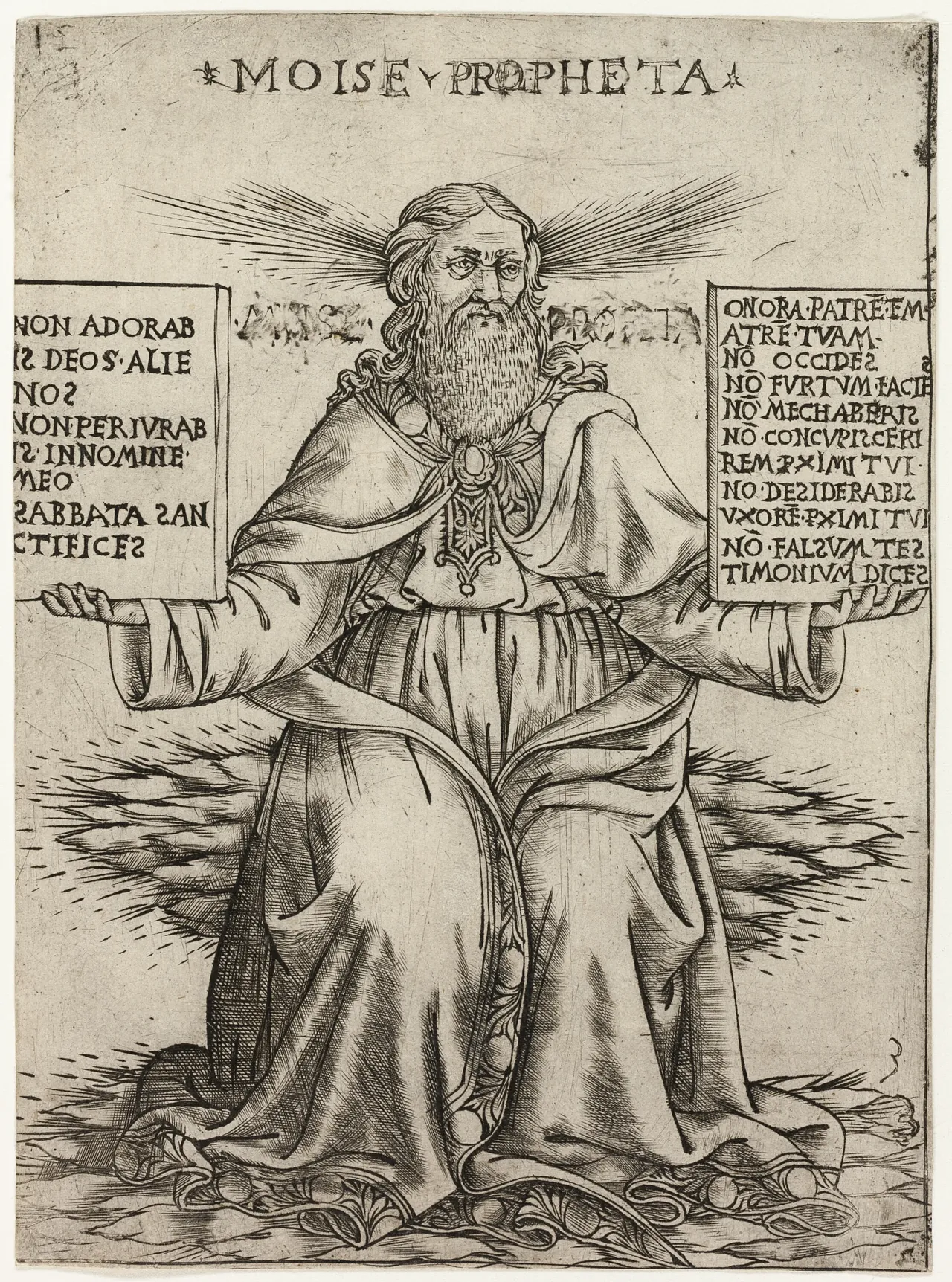
An Italian engraving of about 1470, The Prophet Moses, holding the tablets of the law, the leader Jethro told not to carry the work alone.The Prophet Moses · c. 1470 · Art Institute of Chicago · CC0 · museum record · Galeria Regni
"The thing that thou doest is not good. Thou wilt surely wear away, both thou, and this people that is with thee: for this thing is too heavy for thee; thou art not able to perform it thyself alone." (Exodus 18:17-18)
Jethro's counsel had three parts. First, Moses was to keep the work only he could do: "Be thou for the people to God-ward, that thou mayest bring the causes unto God: And thou shalt teach them ordinances and laws, and shalt shew them the way wherein they must walk, and the work that they must do" (Exodus 18:19-20). Second, he was to find others: "Moreover thou shalt provide out of all the people able men, such as fear God, men of truth, hating covetousness; and place such over them, to be rulers of thousands, and rulers of hundreds, rulers of fifties, and rulers of tens" (Exodus 18:21). Third, he was to share the load: "every great matter they shall bring unto thee, but every small matter they shall judge: so shall it be easier for thyself, and they shall bear the burden with thee" (Exodus 18:22).
And the result would be good for everyone: "then thou shalt be able to endure, and all this people shall also go to their place in peace" (Exodus 18:23). A leader who will not share the work wears himself out, and the people are poorly served while he does.
Notice also the qualities Jethro named for the new leaders: able, God-fearing, truthful, and "hating covetousness". Ability alone was not enough. Character came first.
The seventy elders
Later, in the wilderness, Moses again cried that the burden was too heavy, and the Lord answered: "Gather unto me seventy men of the elders of Israel... and I will take of the spirit which is upon thee, and will put it upon them; and they shall bear the burden of the people with thee, that thou bear it not thyself alone" (Numbers 11:16-17). When two of the seventy prophesied in the camp, young Joshua wanted Moses to stop them. Moses' reply is the heart of a multiplying leader: "Enviest thou for my sake? would God that all the LORD's people were prophets, and that the LORD would put his spirit upon them!" (Numbers 11:29).
A leader who wants to keep the gifts to himself will never multiply. A leader who longs for others to have what he has will.
The seven of Acts 6
The New Testament has its own version of Jethro's counsel. As the church in Jerusalem grew, "when the number of the disciples was multiplied, there arose a murmuring of the Grecians against the Hebrews, because their widows were neglected in the daily ministration" (Acts 6:1). The apostles did not try to do more. They said, "It is not reason that we should leave the word of God, and serve tables. Wherefore, brethren, look ye out among you seven men of honest report, full of the Holy Ghost and wisdom, whom we may appoint over this business. But we will give ourselves continually to prayer, and to the ministry of the word" (Acts 6:2-4).
The seven were chosen, prayed over, and set apart with the laying on of hands (Acts 6:5-6). And Luke records the result in the very next verse: "And the word of God increased; and the number of the disciples multiplied in Jerusalem greatly" (Acts 6:7). Raising up new leaders did not slow the work. It released it. Two of the seven, Stephen and Philip, went on to become the church's first martyr and its first recorded evangelist beyond Jerusalem.
Jesus prepared to leave
The greatest Leader of all built His whole ministry around leaving. He told the Twelve, "It is expedient for you that I go away: for if I go not away, the Comforter will not come unto you" (John 16:7), and promised, "He that believeth on me, the works that I do shall he do also; and greater works than these shall he do; because I go unto my Father" (John 14:12). He spent three years preparing a small group to carry on without His bodily presence. Every Christian leader should hold his place with the same open hand.
Part 2 — The Four Generations, and the Honest Arithmetic
5 min read
This part matters because 2 Timothy 2:2 is the most quoted verse in discussions of multiplication, and the arithmetic built on it is often stated loosely. Both deserve a careful look.
Four links in a chain
"And the things that thou hast heard of me among many witnesses, the same commit thou to faithful men, who shall be able to teach others also" (2 Timothy 2:2). Count the people: Paul, Timothy, faithful men, others also. The verse describes four generations of believers, each passing on to the next what it received.
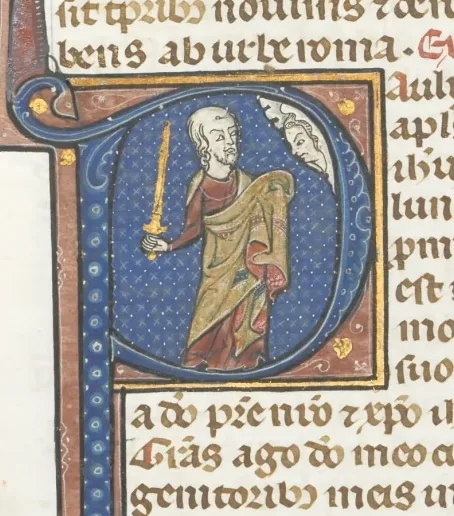
A manuscript page from southern France, about 1275 to 1300, opening Second Timothy, the letter that names the four links of Paul, Timothy, faithful men and others.Fol. 457v, Timothy II, historiated initial P, Paul talking to the bust of God above · c. 1275–1300 · Cleveland Museum of Art · CC0 · full page · museum record · Galeria Regni
Three words carry the weight.
"Heard of me among many witnesses." What Timothy passed on was not his own invention but the apostolic teaching he had received publicly, before witnesses. Multiplication begins with faithfulness to the word.
"Commit." The Greek word is paratithēmi (Strong's G3908), which Strong defines as "to place alongside," and "by implication, to deposit (as a trust or for protection)."1 The teaching is a trust placed in another's keeping.
"Faithful men, who shall be able to teach others also." Timothy is to choose people with two qualities: faithfulness (character) and ability to teach (capacity). He is to choose them with the next generation in view.
The chain is not unique to Paul. Scripture repeatedly speaks of faith handed from one generation to the next: "One generation shall praise thy works to another, and shall declare thy mighty acts" (Psalm 145:4). And it warns of what happens when the chain breaks. Israel "served the LORD all the days of Joshua, and all the days of the elders that outlived Joshua" (Judges 2:7). Then: "there arose another generation after them, which knew not the LORD, nor yet the works which he had done for Israel" (Judges 2:10). Joshua had been discipled by Moses. There is no record that Joshua raised up a Joshua.
Addition and multiplication
Christian teachers have long illustrated 2 Timothy 2:2 with a comparison between adding converts and multiplying disciples. One widely circulated message on the theme was Dawson Trotman's Born to Reproduce, given in 1955 by the founder of the Navigators.2 The illustration is worth working out carefully, because it is often stated carelessly.
Suppose two hypothetical believers.
The evangelist leads one thousand people to Christ every day, without a single day off, for years on end. After one year he has reached 365,000 people. That is addition: the total grows by the same amount each year.
The disciple-maker spends a whole year with one person, discipling them until they can disciple someone else. At the end of the year there are two of them. The next year each of the two disciples one more: four. Then eight. That is multiplication: the total doubles each year. After n years there are 2 to the power n disciples.
Here is how the two compare. The evangelist's figure is 365,000 times the number of years; the disciple-maker's is 2 multiplied by itself that many times.
For twenty-three years the evangelist is far ahead. In the twenty-fourth year the disciple-maker passes him, and after that the gap becomes enormous. By the thirty-third year the doubling figure is larger than the population of the world, which the United Nations reported passed eight billion on 15 November 2022.3
What the illustration shows, and what it does not
The illustration shows three true things. First, multiplication is slow at the start. After five years of faithful work the disciple-maker has thirty-two people to show for it; the evangelist has nearly two million. Anyone who measures by early results will choose addition every time. Second, multiplication eventually outruns anything addition can do. Third, the difference depends entirely on whether each generation keeps reproducing. If the chain breaks at any link — if the "faithful men" do not "teach others also" — multiplication stops.
The illustration does not show what will actually happen. It is a model, not a forecast. No real movement doubles cleanly every year for thirty years. People die, drift away, take longer than a year, or never disciple anyone. And of course evangelism and disciple-making are not rivals; the apostles preached to crowds and discipled individuals. The point is not that we should stop preaching. It is that preaching which does not lead to disciples who make disciples will always be limited by the preacher's own lifespan.
What real growth looked like
For a sober comparison, look at real history. The sociologist Rodney Stark, in The Rise of Christianity (1996), estimated how fast the church must have grown to go from about a thousand believers in AD 40 to the five to seven and a half million that historians estimate for the year 300. His answer was a rate of about 40 percent per decade — 3.42 percent a year.4 At that rate a group doubles roughly every twenty years, not every year. (One point four times one point four is one point nine six, so two decades nearly doubles it.)
That is far slower than the textbook doubling. Yet over 260 years, at that steady rate, Stark's model reaches 6,299,832 Christians by the year 300 — about a tenth of the Roman Empire's estimated sixty million people.5 The real lesson of early church history is not that multiplication is fast. It is that ordinary faithfulness, kept up generation after generation, changes the world. Level 6 looks at Stark's figures in full.
The real point
The arithmetic is a servant, not a master. "I have planted, Apollos watered; but God gave the increase" (1 Corinthians 3:6). We do not multiply leaders by calculation, and God is not bound to our charts. But the arithmetic does teach patience. A disciple-maker who invests deeply in a few faithful people, and teaches them to do the same, is doing the slow work that has the greatest long-term reach. The world will not notice it for years. Judges 2:10 shows what happens when no one does it.
This part matters because the quality of a multiplying movement depends on the quality of its leaders. Multiply the wrong people and you multiply the wrong things. Scripture is clear about what to look for.
Character before capacity
The most detailed lists of leadership qualifications in the New Testament are in Paul's letters to Timothy and Titus, written for the choosing of elders (also called bishops, or overseers):
"A bishop then must be blameless, the husband of one wife, vigilant, sober, of good behaviour, given to hospitality, apt to teach; Not given to wine, no striker, not greedy of filthy lucre; but patient, not a brawler, not covetous; One that ruleth well his own house, having his children in subjection with all gravity; (For if a man know not how to rule his own house, how shall he take care of the church of God?) Not a novice, lest being lifted up with pride he fall into the condemnation of the devil. Moreover he must have a good report of them which are without; lest he fall into reproach and the snare of the devil." (1 Timothy 3:2-7)
Titus 1:6-9 gives a similar list, adding "not selfwilled, not soon angry," "a lover of good men, sober, just, holy, temperate," and "Holding fast the faithful word as he hath been taught, that he may be able by sound doctrine both to exhort and to convince the gainsayers" (Titus 1:7-9).
Read the lists slowly and notice the proportions. Almost every item is about character: self-control, gentleness, honesty with money, faithfulness in marriage, a well-ordered home, a good reputation with outsiders. Only one item — "apt to teach" — is a skill. A leader is first a certain kind of person.
The same standard, every age
The earliest Christian manual outside the New Testament, the Didache, gives the same emphasis in one sentence: "Therefore, appoint for yourselves bishops and deacons worthy of the Lord, men meek, and not lovers of money, and truthful and proven."6 Meek, not lovers of money, truthful, proven. Jethro's "able men, such as fear God, men of truth, hating covetousness" (Exodus 18:21) says nearly the same thing fifteen centuries earlier. The Acts 6 apostles asked for "men of honest report, full of the Holy Ghost and wisdom" (Acts 6:3). Across the whole Bible and into the early church, the qualities are the same: godliness, honesty, freedom from the love of money, and a proven record.
Not a novice
"Not a novice, lest being lifted up with pride he fall into the condemnation of the devil" (1 Timothy 3:6). And of deacons: "let these also first be proved; then let them use the office of a deacon, being found blameless" (1 Timothy 3:10). Paul also warned Timothy, "Lay hands suddenly on no man, neither be partaker of other men's sins" (1 Timothy 5:22).
There is a real tension here, and Part 5 takes it up: Paul also appointed elders in new churches on the same journey on which the churches were planted (Acts 14:21-23). But the principle is clear. Leadership given too soon to an untested person feeds pride and invites a fall. A multiplying leader must be willing to release people early into small responsibilities, and slow to give large ones.
Grace, gifts and fruit
John Wesley, who in the eighteenth century oversaw thousands of lay leaders, put the tests in a form that is still useful. Before receiving a man as one of his travelling preachers, he wrote in his Plain Account of the People Called Methodists, the Methodists asked three questions:
"First, Do they know in whom they have believed? Have they the love of God in their hearts? Do they desire to seek nothing but God? And are they holy, in all manner of conversation? Secondly, Have they gifts, as well as grace, for the work? Have they (in some tolerable degree) a clear, sound understanding? Have they a right judgment in the things of God? Have they a just conception of salvation by faith? And has God given them any degree of utterance? Can they express themselves justly, readily, clearly? Thirdly, Have they success? Do they not only so speak (where trial was made) as to convince and affect the hearers? But have any received remission of sins by their means?"7
"Those in whom these three marks undeniably concur," he added, "we gladly receive to assist us in the work."8 Grace, gifts, and fruit. Grace without gifts makes a godly person who should serve in some other way. Gifts without grace make a dangerous leader. Both, with no fruit, suggest that the time or the place is not yet right. All three together mark someone ready for more.
A servant, not a lord
Above every list stands the Lord's own word: "Ye know that they which are accounted to rule over the Gentiles exercise lordship over them; and their great ones exercise authority upon them. But so shall it not be among you: but whosoever will be great among you, shall be your minister: And whosoever of you will be the chiefest, shall be servant of all. For even the Son of man came not to be ministered unto, but to minister, and to give his life a ransom for many" (Mark 10:42-45).
Peter, who had heard those words, later wrote to elders: "Feed the flock of God which is among you, taking the oversight thereof, not by constraint, but willingly; not for filthy lucre, but of a ready mind; Neither as being lords over God's heritage, but being ensamples to the flock" (1 Peter 5:2-3). A Christian leader is one who goes first in serving, not one who is served.
Women and leadership
Scripture speaks to the place of women in the church's leadership, and its words should be read as written. "Let the woman learn in silence with all subjection. But I suffer not a woman to teach, nor to usurp authority over the man, but to be in silence" (1 Timothy 2:11-12). The qualifications of an elder include "the husband of one wife" (1 Timothy 3:2). At the same time, the New Testament names women who served the church with distinction: Phebe, "a servant of the church which is at Cenchrea... a succourer of many" (Romans 16:1-2); Priscilla, who with her husband Aquila "expounded unto him the way of God more perfectly" to Apollos (Acts 18:26); and the older women of Titus 2, who are to be "teachers of good things; That they may teach the young women" (Titus 2:3-4).
Churches have differed in how they apply these texts to particular roles, and this paper does not rule for the reader on every application. What is plain is that the work of raising up leaders includes raising up women to disciple women, and that the texts are not to be explained away as merely cultural.
This part matters because Scripture does not only tell us what leaders should be; it shows us, again and again, how one leader formed another. And the history of the church shows those patterns working on a large scale.
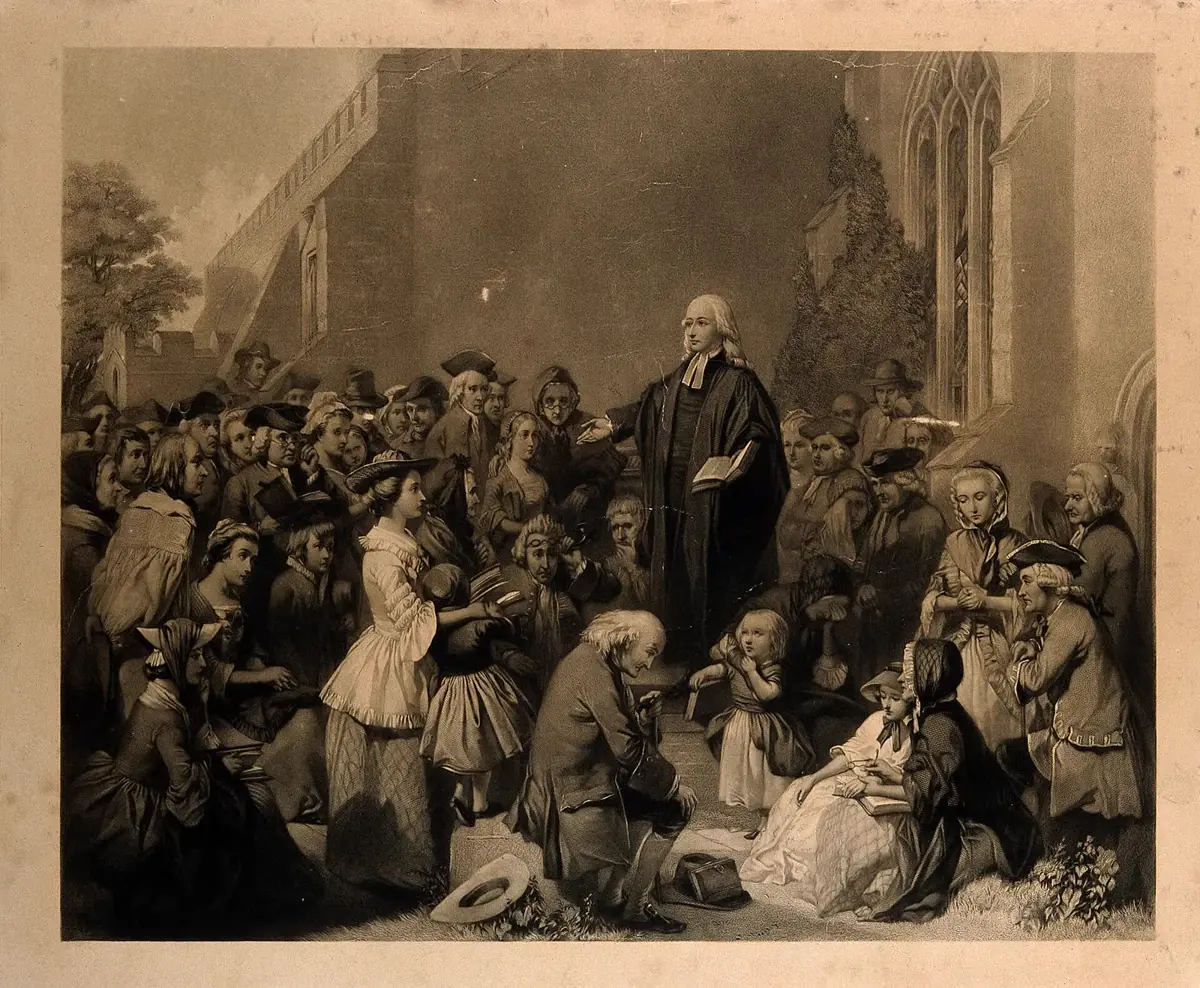
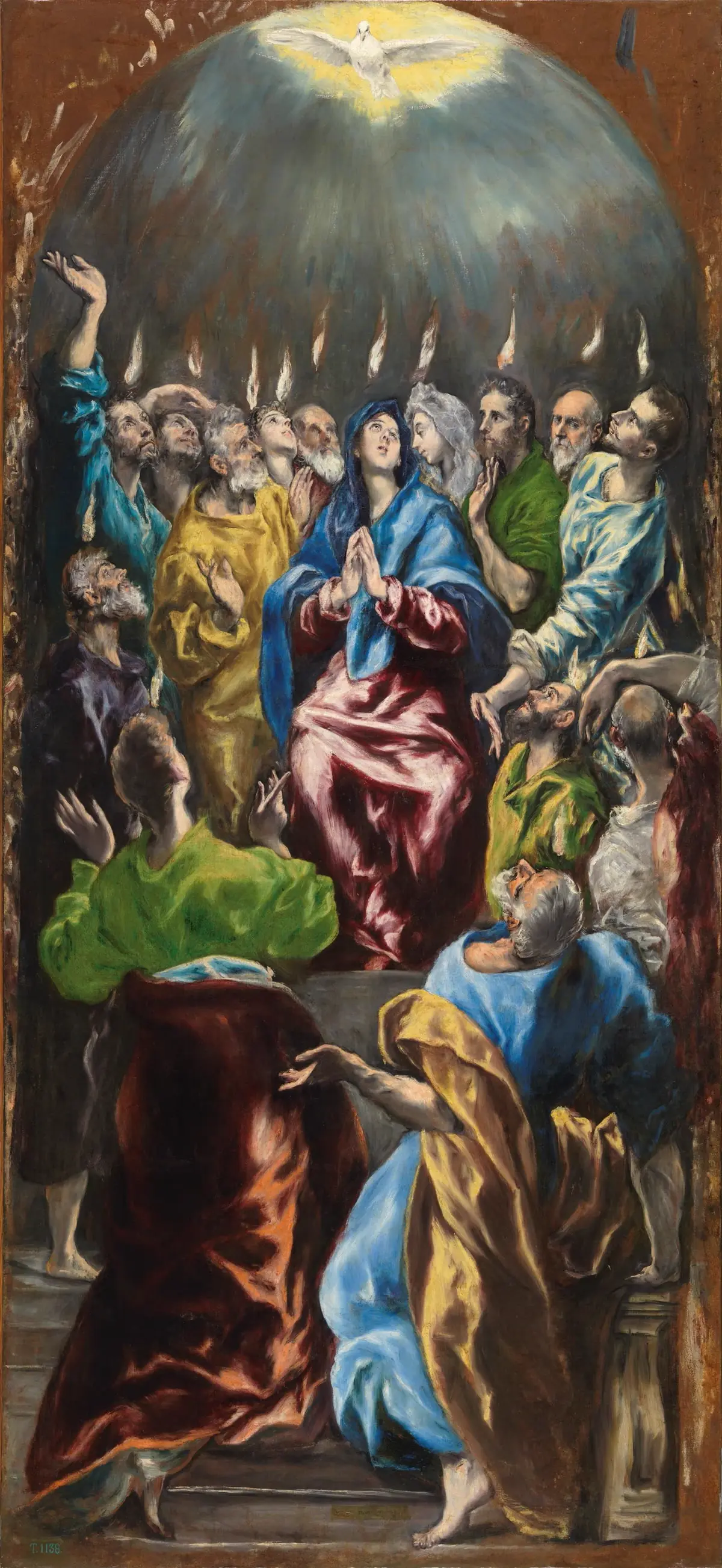
John Wesley preaching in the open air (18th-century engraving) — the message carried outside the building to wherever people already were.Wellcome Collection · CC BY 4.0El Greco’s Pentecost (c. 1600) — the descent of the Spirit that turned a locked upper room into a world movement.El Greco, c. 1600 · Public domain
Moses and Joshua
Joshua first appears as a fighter (Exodus 17) and then as Moses' "minister" — his personal assistant. "And Moses rose up, and his minister Joshua: and Moses went up into the mount of God" (Exodus 24:13). When Moses met with God in the tabernacle, "his servant Joshua, the son of Nun, a young man, departed not out of the tabernacle" (Exodus 33:11). For forty years Joshua watched Moses up close.
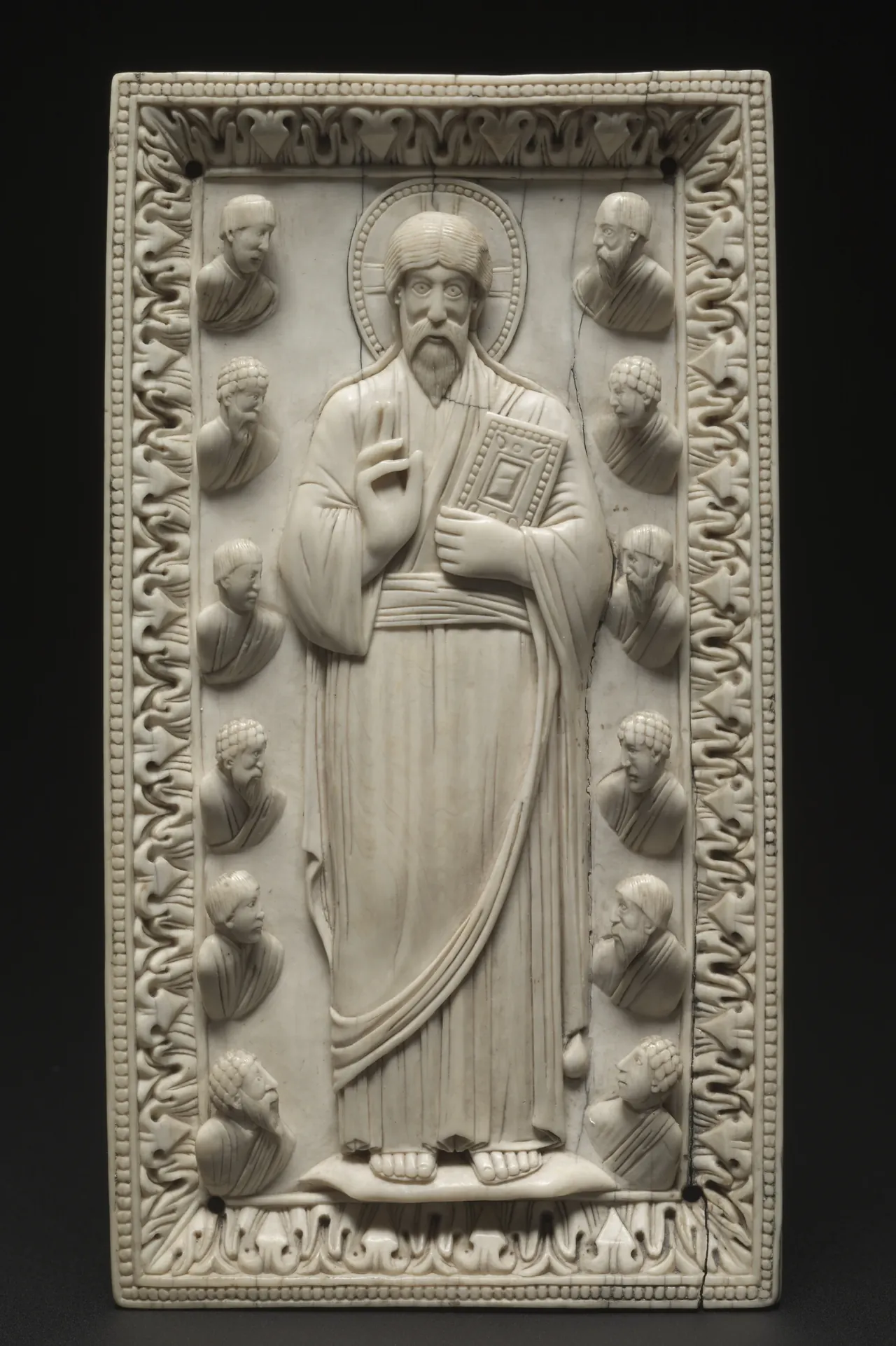
An ivory of Christ's Mission to the Apostles, carved in Milan about 970 to 980, Christ among the Twelve He chose, trained and sent out.Christ's Mission to the Apostles · c. 970–980 · Cleveland Museum of Art · CC0 · museum record · Galeria Regni
At the end, the Lord told Moses to transfer authority publicly: "Take thee Joshua the son of Nun, a man in whom is the spirit, and lay thine hand upon him; And set him before Eleazar the priest, and before all the congregation; and give him a charge in their sight. And thou shalt put some of thine honour upon him, that all the congregation of the children of Israel may be obedient" (Numbers 27:18-20). And it worked: "And Joshua the son of Nun was full of the spirit of wisdom; for Moses had laid his hands upon him: and the children of Israel hearkened unto him" (Deuteronomy 34:9).
Three lessons: proximity over many years; a public charge before the people; and the deliberate sharing of honour — "put some of thine honour upon him." A leader who never lets others see him trust his successor will leave a successor nobody trusts.
Elijah and Elisha
Elijah found Elisha ploughing and "cast his mantle upon him" (1 Kings 19:19). Elisha burned his ploughing gear, "arose, and went after Elijah, and ministered unto him" (1 Kings 19:21). Years later, as Elijah was about to be taken, he asked, "Ask what I shall do for thee, before I be taken away from thee. And Elisha said, I pray thee, let a double portion of thy spirit be upon me" (2 Kings 2:9). When Elisha returned alone, the other prophets said, "The spirit of Elijah doth rest on Elisha" (2 Kings 2:15).
A leader worth following makes the next generation hungry for more of God than he himself had — and is glad when they get it.
Barnabas, Saul and Mark
Barnabas, whose name means "The son of consolation" (Acts 4:36), is the great encourager of the New Testament, and his story shows how one generous leader can raise up another greater than himself. When the newly converted Saul came to Jerusalem, the disciples "were all afraid of him, and believed not that he was a disciple. But Barnabas took him, and brought him to the apostles" (Acts 9:26-27). Later, sent to Antioch, Barnabas saw the work growing and "departed... to Tarsus, for to seek Saul: And when he had found him, he brought him unto Antioch. And it came to pass, that a whole year they assembled themselves with the church, and taught much people" (Acts 11:25-26). Within a few chapters the order of names changes from "Barnabas and Saul" to "Paul and his company" (Acts 13:13). Barnabas did not resent it.
Barnabas also gave a second chance. John Mark left Paul and Barnabas partway through their first journey (Acts 13:13). When Barnabas wanted to take him again, "the contention was so sharp between them, that they departed asunder one from the other: and so Barnabas took Mark, and sailed unto Cyprus" (Acts 15:39). Barnabas's patience was vindicated: years later Paul wrote from prison, "Take Mark, and bring him with thee: for he is profitable to me for the ministry" (2 Timothy 4:11). Leaders are sometimes made out of people who first failed.
Paul and his company
Paul almost never travelled alone. Acts 20:4 lists seven men who accompanied him into Asia, from four different regions. He called Timothy "my own son in the faith" (1 Timothy 1:2) and Titus "mine own son after the common faith" (Titus 1:4). He left Titus in Crete "that thou shouldest set in order the things that are wanting, and ordain elders in every city, as I had appointed thee" (Titus 1:5) — a leader he had trained, sent to raise up more leaders. That is 2 Timothy 2:2 in action.
Not everyone stayed the course. "For Demas hath forsaken me, having loved this present world" (2 Timothy 4:10). Even the best leader-maker loses some.
Jesus and the Twelve
Behind all of these stands the pattern of Jesus, set out in the companion paper Discipling Others. He chose after prayer (Luke 6:12-13), kept the Twelve "with him" (Mark 3:14), sent them out with real authority (Luke 9:1-2), heard their report (Mark 6:30), corrected and restored them (John 21:15-17), and finally commissioned them to make disciples of all nations (Matthew 28:19-20). One generation of eleven men, trained for about three years, carried the gospel into the Roman world.
The Methodist lay leaders
The clearest large-scale example in church history of 2 Timothy 2:2 being worked out deliberately may be the early Methodist movement in England and America. John Wesley was an ordained clergyman, but almost all the leadership of the movement was lay. There were leaders of classes of "about twelve persons," leaders of bands, stewards, visitors of the sick, schoolmasters, and travelling preachers he called "assistants."9 The structure echoes Jethro's "rulers of tens."
Wesley trained his assistants by rule and by example. Among the rules he set them, printed in the Plain Account, were these: "Be diligent. Never be unemployed a moment." "Believe evil of no one." "Speak evil of no one." "Tell every one what you think wrong in him, and that plainly, and as soon as may be." "You are the servant of all." And: "Take no money of any one. If they give you food when you are hungry, or clothes when you need them, it is good: but not silver or gold. Let there be no pretence to say, We grow rich by the Gospel."10
The movement sent leaders across the Atlantic. At the Methodist conference of 1771, Francis Asbury and Richard Wright "were sent as a reinforcement to America."11 Asbury became one of the chief leaders of Methodism in America.
The figures Wesley's biographer Luke Tyerman compiled from the conference minutes show how far the lay leadership reached. At the conference of 1770 there were 50 circuits, 120 travelling preachers and 29,406 members.12 By the end of Wesley's life, the figures for 1790 were:
Tyerman gives the totals; the preachers and members in the three rows add up to them.13 The travelling preachers were only the most visible leaders. Each member also belonged to a class with its own lay leader. If classes averaged the "about twelve" of the General Rules — an estimate, not a recorded figure — a membership of 134,549 implies something on the order of eleven thousand class leaders, nearly all of them ordinary working men and women meeting a dozen people each week. That, more than the preaching of one man, is how the movement held together.
This part matters because many leaders do the first half of multiplication well — they train others — and then never let them lead. Others release people and then abandon them. Scripture shows both a quick release and continuing care.
Released early
On their first journey Paul and Barnabas preached in Lystra, Iconium and Antioch of Pisidia, and then came back through the same towns on the way home, "Confirming the souls of the disciples, and exhorting them to continue in the faith... And when they had ordained them elders in every church, and had prayed with fasting, they commended them to the Lord, on whom they believed" (Acts 14:22-23).
Those churches were young, planted on the same journey, and yet Paul and Barnabas appointed elders from among the converts and left. They trusted the Holy Ghost, the word, and the people God had raised up. On his way to Jerusalem years later, Paul told the Ephesian elders the same: "And now, brethren, I commend you to God, and to the word of his grace, which is able to build you up" (Acts 20:32).
How does this square with "Not a novice" (1 Timothy 3:6)? Several things are true at once. Some of the early converts — especially Jews and God-fearing Gentiles from the synagogue — already knew the Scriptures well. The appointments were made with prayer and fasting. The new elders were not left without oversight; Paul returned, wrote, and sent others. And the warnings to Timothy came later, in a settled church, where there was less need to appoint the newly converted. The principle that emerges is this: release people early into responsibility suited to their maturity, and keep the weightier offices for those who have been proved.
Overseen afterwards
Release does not mean abandonment. "And some days after Paul said unto Barnabas, Let us go again and visit our brethren in every city where we have preached the word of the LORD, and see how they do" (Acts 15:36). Later he "went over all the country of Galatia and Phrygia in order, strengthening all the disciples" (Acts 18:23). He wrote letters, sent Timothy and Titus, and carried what he called "that which cometh upon me daily, the care of all the churches" (2 Corinthians 11:28).
Jesus did the same with the Twelve. When they came back from their mission, "the apostles gathered themselves together unto Jesus, and told him all things, both what they had done, and what they had taught" (Mark 6:30). Reporting back was built into the pattern. So was rest (Mark 6:31).
Wesley's system worked the same way. His assistants were to "meet the Leaders of the Bands and Classes, weekly," and to "visit the classes... once a month."14 Leaders were not left on their own. They were seen, asked, helped, and — when needed — corrected.
Sent by the church
Leaders in the New Testament were not self-appointed. At Antioch, "As they ministered to the Lord, and fasted, the Holy Ghost said, Separate me Barnabas and Saul for the work whereunto I have called them. And when they had fasted and prayed, and laid their hands on them, they sent them away" (Acts 13:2-3). When they finished the journey, they came back to the same church and "rehearsed all that God had done with them" (Acts 14:27). Multiplying leaders should happen inside the life of a local church, under its elders, with its prayer and its blessing — not as a private network beside it.
The practice of oversight
What does good oversight look like in practice? Scripture and experience suggest a simple rhythm.
Regular meeting. Meet with those you have released, individually or together, on a regular schedule. Ask the same question Wesley's leaders asked: how does your soul prosper? Then ask about their work.
Hearing the report. Let them tell "all things, both what they had done, and what they had taught" (Mark 6:30). Rejoice in fruit; ask about difficulties.
Watching doctrine and life. "Take heed therefore unto yourselves, and to all the flock" (Acts 20:28). Paul warned the Ephesian elders that "of your own selves shall men arise, speaking perverse things, to draw away disciples after them" (Acts 20:30). Oversight protects the flock.
Correcting early. Wesley's rule — "Tell every one what you think wrong in him, and that plainly, and as soon as may be"15 — saves much grief.
Restoring the fallen. Some will stumble. Mark did. Peter did. Restoration, where there is repentance, is part of the pattern (Galatians 6:1).
This part matters because most ministries do not fail to multiply for lack of method. They fail because something in the leader's heart, or in the culture around him, quietly prevents it.
The need to be needed
The most common obstacle is the leader who cannot let go. Sometimes it is pride; sometimes it is fear; sometimes it is a genuine love that has become possessive. John names one example: "Diotrephes, who loveth to have the preeminence among them, receiveth us not" (3 John 1:9). A leader who loves preeminence will never raise up anyone who might equal him. John the Baptist had the opposite spirit: "He must increase, but I must decrease" (John 3:30).
Perfectionism
Some leaders never release anyone because no one is ever ready. They wait for disciples to be as mature as they are — forgetting that they themselves were released before they were ready. Jesus sent the Twelve to preach while they still did not understand His death. Paul appointed elders on the same journey on which the churches were planted (Acts 14:21-23). A good leader gives real work early, accepts imperfect results, and coaches through them.
Celebrity
At Corinth, believers attached themselves to favourite teachers: "I am of Paul; and I of Apollos; and I of Cephas" (1 Corinthians 1:12). Paul refused the role. "Who then is Paul, and who is Apollos, but ministers by whom ye believed, even as the Lord gave to every man?" (1 Corinthians 3:5). A ministry built around one gifted person may grow large, but it rarely multiplies, because everyone is watching the one at the front rather than learning to do the work themselves. Wesley's rule for his preachers was blunt: "You are the servant of all."16
Burnout
Jethro warned Moses, "Thou wilt surely wear away" (Exodus 18:18). Jesus told His disciples to "rest a while: for there were many coming and going, and they had no leisure so much as to eat" (Mark 6:31). Leaders who never rest, and never share the load, eventually collapse — and often take the work with them. Multiplication is itself the cure for burnout, because it spreads the burden.
Money
Jethro's leaders were to be "hating covetousness" (Exodus 18:21). Elders are to be "not greedy of filthy lucre" (1 Timothy 3:3). The Didache asked for leaders "not lovers of money."17 Wesley told his preachers, "Take no money of any one."18 The love of money "is the root of all evil" (1 Timothy 6:10), and few things kill a multiplying ministry faster than leaders who see people as a source of income. Scripture does teach that "they which preach the gospel should live of the gospel" (1 Corinthians 9:14); the line is between being supported and being greedy.
Measuring the wrong things
What a ministry measures, it will pursue. If the only numbers that matter are attendance and offerings, leaders will be raised up to draw crowds and raise funds. Scripture's measures are different: continuing in the word (John 8:31), love (John 13:35), fruit that remains (John 15:16), and — for multiplication — whether those you train are training others. A useful question for any leader is not "How many come to my group?" but "How many people are now leading who were not leading a year ago — and are any of them raising up leaders themselves?"
Moral failure
The saddest obstacle is the leader who falls. Paul's warning to the Ephesian elders began with themselves: "Take heed therefore unto yourselves" (Acts 20:28). To Timothy: "Take heed unto thyself, and unto the doctrine" (1 Timothy 4:16). Every leader needs his own accountability — someone who asks him the hard questions. Wesley's bands, where believers met "to speak each of us in order, freely and plainly, the true state of our soul,"19 were open to preachers too. A leader who is accountable to no one is a danger to everyone.
This part matters because principles need a path. What follows is a simple, flexible plan drawn from the patterns above. Like Wesley's classes, it is "prudential, not essential"20 — adapt it to your church and your people.
Wheat at harvest — the image Jesus reached for when He said the harvest is plentiful but the workers are few (Matthew 9).Chparveshtaak · CC BY-SA 4.0
Step 1 — Pray for labourers
Jesus' first instruction about the shortage of leaders was not to recruit but to pray: "The harvest truly is plenteous, but the labourers are few; Pray ye therefore the Lord of the harvest, that he will send forth labourers into his harvest" (Matthew 9:37-38). Begin there, and keep praying. Leaders are God's gift to His church (Ephesians 4:11-12).
Step 2 — Look among those you have discipled
The best future leaders are usually people you already know well — those you have discipled through Level 4 or who have grown under your care. Look for Wesley's three marks: grace (a real and growing walk with God), gifts (some ability to understand and explain the word, and to care for others), and fruit (some evidence that God uses them). Look for Paul's two: faithful, and able to teach others. Ask your pastor and others what they see.
Step 3 — Invite them into a small group of future leaders
Jesus chose twelve and spent extra time with three. Paul travelled with a small company. Gather two to six potential leaders, of your own sex where the work is close and personal, and meet with them regularly — weekly or fortnightly — for a set period, perhaps a year. Read Scripture together, especially the passages in this paper. Pray together. Share your own life and ministry, including the hard parts.
Step 4 — Let them watch, then help, then lead
Jesus' disciples watched Him, then were sent out to do what they had seen, then reported back. A simple progression follows that pattern:
| Stage | What happens | |---|---| | Watch | They come with you as you disciple, teach, visit or lead. Afterwards, talk about what happened and why. | | Help | They take part: lead the prayer, read and explain a passage, follow up with someone. You stay alongside. | | Lead | They lead while you watch, and you talk it through afterwards. | | Go | They lead on their own, and report back regularly. | | Multiply | They begin the same process with someone else. |
Do not rush the stages, and do not get stuck in them. Some people move quickly; some take years. Mark took years. The aim is the last line.
Step 5 — Release them under oversight
When someone is ready to lead — a Level 4 discipling relationship, a small group, a ministry team — release them publicly, with the church's knowledge and prayer. Follow the pattern of Moses with Joshua: a charge given "in their sight," and "some of thine honour" put on them (Numbers 27:19-20). Then keep meeting. Keep asking how their soul prospers and how the work is going.
Step 6 — Track generations, not attendance
Keep a simple record — on paper or in your head — of the chain. Whom have you discipled? Whom have they discipled? Is anyone in the third or fourth generation? A hypothetical example:
| Generation | Who | Doing what | |---|---|---| | 1 | You | Meeting with three leaders weekly | | 2 | Three leaders you trained | Each discipling one or two people through Level 4 | | 3 | Those they disciple | Beginning to help someone else | | 4 | "Others also" | The goal of 2 Timothy 2:2 |
When the fourth generation appears, you are seeing 2 Timothy 2:2 happen. When it does not, ask where the chain is breaking and why.
Step 7 — Keep yourself accountable and rested
Have someone who asks you the hard questions. Take a weekly day of rest. Take time away. Keep your own Bible reading and prayer alive. "Take heed unto thyself" (1 Timothy 4:16) is the first line of every leadership plan.
A three-year horizon
Jesus spent about three years with the Twelve. Paul spent about three years at Ephesus ("by the space of three years I ceased not to warn every one night and day with tears," Acts 20:31), and from that base "all they which dwelt in Asia heard the word of the Lord Jesus" (Acts 19:10). Three years is a sensible horizon for multiplying leaders: long enough for real formation, short enough to keep urgency. Ask, at the start: in three years, by God's grace, who might be leading who is not leading now? Then pray, invest, and wait.
One leader is never enough. Moses learned it from Jethro; the apostles learned it in Acts 6; Paul built his whole ministry on it. The work of God is meant to pass from faithful hands to faithful hands, generation after generation: "the same commit thou to faithful men, who shall be able to teach others also" (2 Timothy 2:2).
We have seen what kind of people to look for: godly, honest, free from the love of money, proven, able to teach — servants, not lords. We have seen how leaders have been made: by years of nearness, by real work given early, by public trust, by patient restoration after failure. We have seen that the arithmetic of multiplication is slow at first and enormous in the end, and that real history moved more slowly than the textbook — but still changed the world. And we have seen what stops it: the need to be needed, perfectionism, celebrity, exhaustion, money, the wrong measures, and the leader's own fall.
None of this is new. It is the pattern of Moses and Joshua, Elijah and Elisha, Barnabas and Saul, Paul and Timothy, Jesus and the Twelve. The question is whether we will follow it.
A next step
Look at the people you have discipled. Pray over their names. Ask the Lord which of them shows grace, gifts and fruit. Then invite one to two others into a small group of future leaders, and begin with this paper's passages: Exodus 18, Acts 6, 1 Timothy 3, Titus 1, 2 Timothy 2. Level 6, Launch a Movement, looks at what God has done when this kind of multiplication spread across whole regions.
An invitation
If you have read this far and you are not yet sure you belong to Christ, leadership is not your first need — the Saviour is. "For all have sinned, and come short of the glory of God" (Romans 3:23). And again, "For the wages of sin is death; but the gift of God is eternal life through Jesus Christ our Lord" (Romans 6:23). Repent and believe the gospel, and ask a believer to disciple you. Read the Scriptures free at kylelauriano.com/library. Free truth. No pressure.
1James Strong, The Exhaustive Concordance of the Bible (New York: Hunt & Eaton, 1890), Greek Dictionary, no. 3908, as served in the study tools of the site's 1611 Reader, kylelauriano.com/library.↩
2Dawson Trotman, Born to Reproduce, originally a 47-minute message given in 1955; later transcribed and published by NavPress. https://www.navigators.org/resource/born-to-reproduce/.↩
3United Nations, "Population," Global Issues. https://www.un.org/en/global-issues/population.↩
4Rodney Stark, The Rise of Christianity: A Sociologist Reconsiders History (Princeton: Princeton University Press, 1996), 6–7. Stark's starting figure of 1,000 Christians in AD 40 is his own deliberately conservative assumption.↩
5Stark, Rise of Christianity, 6–7, table 1.1. The 60 million population figure is the estimate Stark adopts from the scholarly literature.↩
6Didache 15.1, trans. M. B. Riddle, in Ante-Nicene Fathers, vol. 7, ed. Alexander Roberts, James Donaldson and A. Cleveland Coxe (Buffalo: Christian Literature Publishing, 1886). Online: https://www.newadvent.org/fathers/0714.htm.↩
7John Wesley, A Plain Account of the People Called Methodists. In a Letter to the Reverend Mr. Perronet, 2nd ed. (London: W. Strahan, 1749), IX.4. Spelling modernised. Online: https://wesleyscholar.com/wp-content/uploads/2019/02/Plain-Account-People-Called-Methodists-1749.pdf.↩
9Wesley, Plain Account, IX.1. The class size is from John Wesley, The Nature, Design, and General Rules of the United Societies (1743), https://www.umc.org/en/content/the-general-rules-of-the-methodist-church.↩
11Luke Tyerman, The Life and Times of the Rev. John Wesley, M.A., Founder of the Methodists, vol. 3 (New York: Harper & Brothers, 1872), under the year 1771. Online: https://www.gutenberg.org/ebooks/76882.↩
12Tyerman, Life and Times, 3:under the year 1770.↩
13Tyerman, Life and Times, 3:under the year 1790. The mission stations had nineteen missionaries appointed, which with the 294 and 228 makes 541 preachers; 71,568, 57,631 and 5,350 make 134,549 members. Tyerman's worldwide total of 240 circuits is eleven more than the 115 and 114 he itemises; he does not say where the other eleven were.↩
Seven people who say they met Jesus. What happened, in their own words.
Seven testimonies from The King Is Coming Show, one a morning — the story as they tell it, the verse the story lands on in the 1611 King James, and the page itself. Then the teaching that explains it. Free.
This is practical teaching, not proof. It's drawn from Scripture and from walking this road myself. If you're still weighing the basics — whether God is real, whether the Bible can be trusted — I'd encourage you to start with the Skeptic resources in the Research Hub before diving in here.