A study of how God raised up leaders in Scripture, how Jesus trained the twelve, and a complete, workable path for finding, testing, training and releasing leaders in a church today, with assessments that add up.
Abstract
Every generation of leaders dies, and the church is always one generation from needing new ones. How did God provide them in Scripture, and how should a church raise them now? This paper studies the Bible's pattern of succession (Moses and Joshua, Elijah and Elisha, Barnabas and Saul, Paul and Timothy), the way the Lord Jesus chose and trained the twelve (drawing on A. B. Bruce's The Training of the Twelve and Robert E. Coleman's The Master Plan of Evangelism, both credited), and Paul's charge in 2 Timothy 2:2. From these it builds a complete path for a local church: seeing and testing potential, the invitation, a first year of foundations and first responsibility, a second year aimed at multiplication, a careful release, and honest handling of failure. It includes three assessment tools whose scoring is set out in full and checked arithmetically, and it sets the work against current data on pastoral strain (Barna Group, 2022). It is written for pastors, elders and ministry leaders who want to hand on what they have received.
What’s inside
·Introduction
Part 1Part 1: The Bible's Pattern of Succession
Part 2Part 2: How Jesus Trained the Twelve
Part 3Part 3: Seeing and Testing Potential
Part 4Part 4: The First Year: Invitation, Foundations and First Responsibility
Part 5Part 5: Multiplication: Year Two and Beyond
Part 6Part 6: Assessment Tools That Add Up
Part 7Part 7: Release, Oversight and When It Goes Wrong
·Conclusion
Research paper · 9 chapters · 3 notes · October 2026
"And the things that thou hast heard of me among many witnesses, the same commit thou to faithful men, who shall be able to teach others also." — 2 Timothy 2:2 (KJV)Read in the 1611 →
About 51 minutes · 9 parts · the PDF has the same text
Introduction
3 min read
Every leader in your church will one day stop leading. Some will move away. Some will grow old. Some will burn out. Some, sadly, will fall. And all of them, in time, will die. The only question is whether, when they go, there will be others ready to take up the work.
Scripture is honest about what happens when there are not. After the great generation that entered the promised land, "Israel served the LORD all the days of Joshua, and all the days of the elders that overlived Joshua" (Joshua 24:31). But the next sentence of Israel's story is one of the saddest in the Bible: "And also all that generation were gathered unto their fathers: and there arose another generation after them, which knew not the LORD, nor yet the works which he had done for Israel" (Judges 2:10). One faithful generation was not enough. Joshua had been trained by Moses; there is no record that Joshua trained anyone to take his place.
The strain on today's leaders
The need is not theoretical. In March 2022 the Barna Group surveyed 510 Protestant senior pastors in the United States and found that 42 percent had seriously considered quitting full-time ministry in the previous year, up from 29 percent in January 2021. Among those who had considered it, 56 percent named "the immense stress of the job", 43 percent said they felt "lonely and isolated", and 38 percent cited current political divisions.1
Those figures come from one survey, at the tail of an unusually hard period, and they describe what pastors considered, not what they did. But they make a point Scripture made long ago. "Thou wilt surely wear away," Jethro told Moses, "for this thing is too heavy for thee; thou art not able to perform it thyself alone" (Exodus 18:18). A church that leans its whole weight on one or two people is not only failing to prepare for the future. It is wearing out the leaders it has. Loneliness and stress are exactly what shared leadership is meant to relieve.
What this paper is
This paper studies how God raised up leaders in Scripture and how the Lord Jesus trained His disciples, and from that builds a practical path that a local church can actually follow. It is meant to be used. The later parts include a timeline, a curriculum, questions for conversations and three assessment tools. The scoring of each tool is set out in full, and the arithmetic has been checked so that the bands add up and the totals mean what they say.
It has two companions. Biblical Leadership studies the leader's heart from Moses, Nehemiah, the upper room and Peter's charge to the elders. Church Leadership deals with the offices of the local church and the qualifications of 1 Timothy 3 and Titus 1. This paper is about the process: how leaders are found, formed and sent.
Two credits are owed at the start. The Scottish scholar A. B. Bruce's The Training of the Twelve, first published in 1871, traced in detail how Jesus formed His apostles, and this paper draws on it. And Robert E. Coleman's The Master Plan of Evangelism (Revell, 1964 edition) summed up the Lord's method in eight words — selection, association, consecration, impartation, demonstration, delegation, supervision and reproduction.2 Part 2 follows Coleman's framework because it describes the Gospel accounts well, and it is his framework, not this paper's.
How to read it
Part 1 traces the Bible's pattern of succession. Part 2 studies how Jesus trained the twelve. Part 3 deals with seeing and testing potential. Part 4 sets out the first year: the invitation, three months of foundations, and nine months of growing responsibility. Part 5 covers the second year and the aim of multiplication. Part 6 gives the assessment tools. Part 7 deals with release, ongoing oversight, and what to do when it goes wrong. You can read it through, or go straight to the part you need and return to the rest.
Every verse is quoted from the King James Bible. You can read it free in the 1611 Reader at kylelauriano.com/library.
This part matters because God's way of providing leaders is not mainly through programmes or institutions. It is through people walking with people. Again and again Scripture shows an older leader taking a younger one alongside, letting him watch, giving him work, and finally handing on the charge in public. The pattern is consistent enough to learn from.
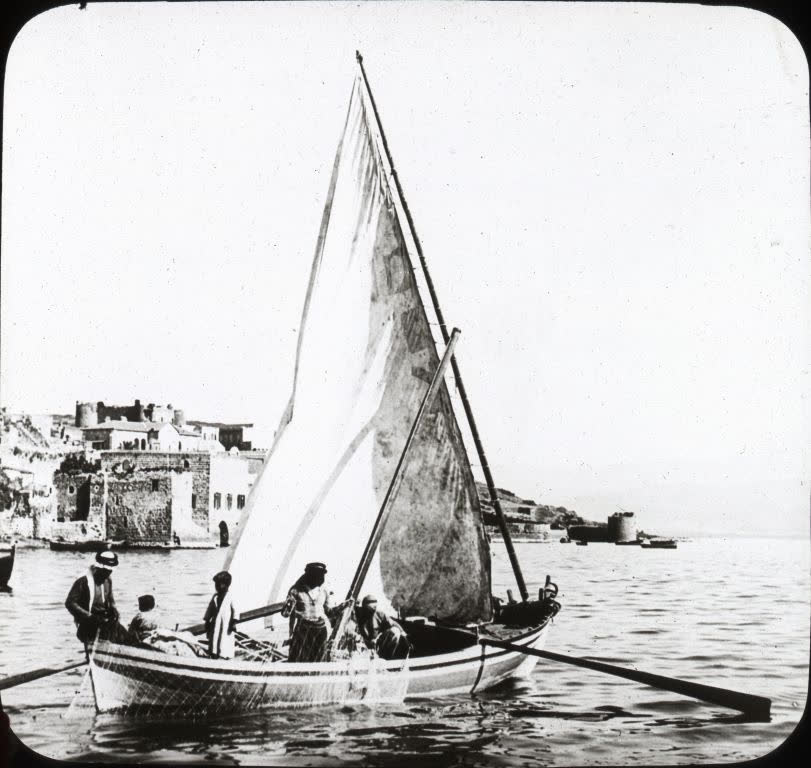
The slopes above the Sea of Galilee at the traditional Mount of Beatitudes — the natural amphitheater where the Sermon on the Mount was preached.Obendorf · CC0
Moses and Joshua: forty years of apprenticeship
Joshua first appears in Scripture as a man given a task. At Rephidim, "Moses said unto Joshua, Choose us out men, and go out, fight with Amalek" (Exodus 17:9). Moses stood on the hill with the rod of God; Joshua fought in the valley. And the Lord told Moses to record the victory "and rehearse it in the ears of Joshua" (Exodus 17:14). From the beginning, God was concerned that the younger man learn the lesson.
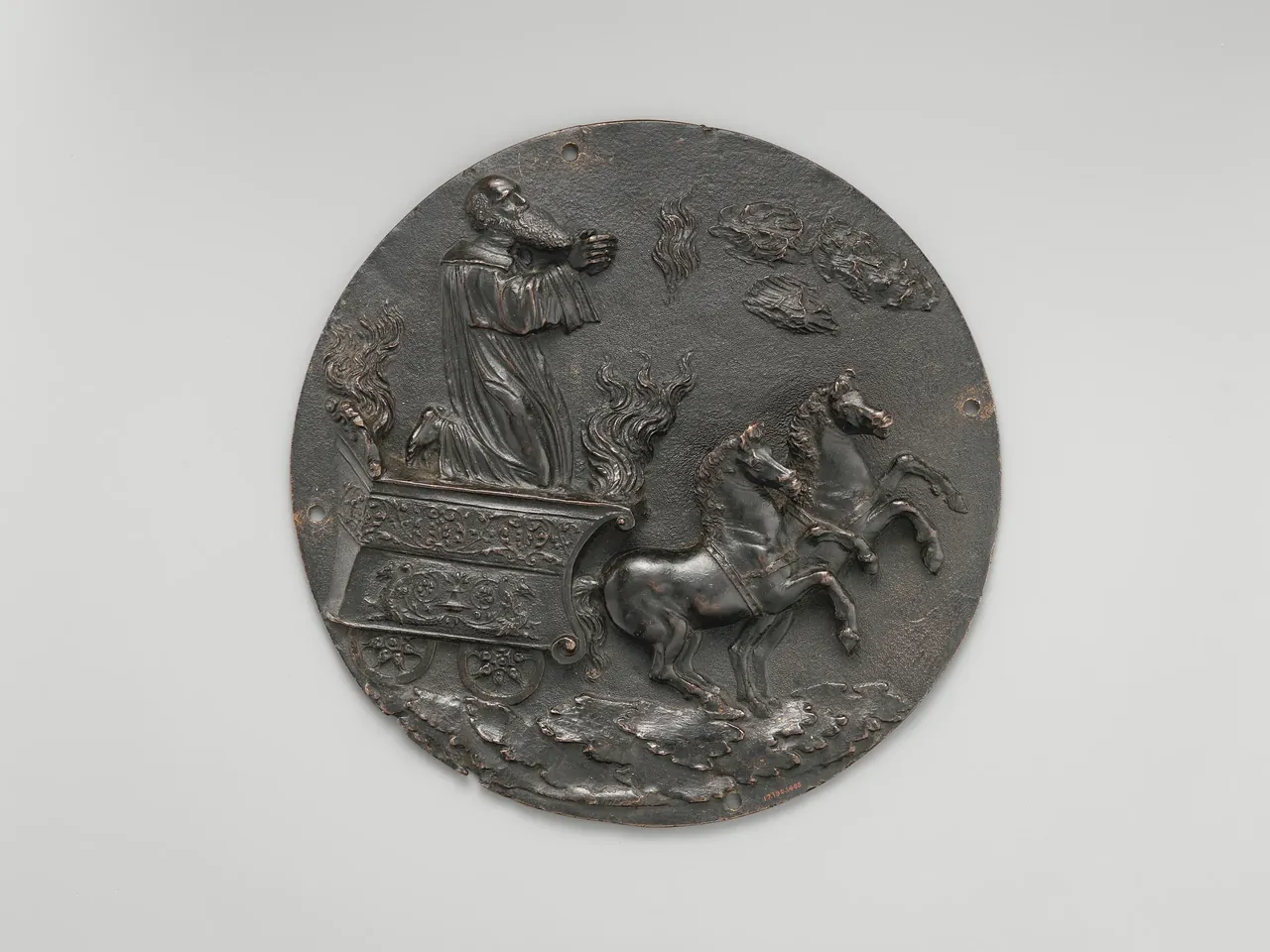
A partially gilt bronze of about 1520 showing Elijah carried up in the fiery chariot, the parting at which Elisha took up his master's mantle.Elijah in the Fiery Chariot · ca. 1520 · The Metropolitan Museum of Art · CC0 · museum record · Galeria Regni
Then Joshua became Moses' "minister" — his personal assistant. "And Moses rose up, and his minister Joshua: and Moses went up into the mount of God" (Exodus 24:13). He went part of the way up Sinai with Moses. He stayed near the tabernacle where Moses met with God: "the LORD spake unto Moses face to face ... And he turned again into the camp: but his servant Joshua, the son of Nun, a young man, departed not out of the tabernacle" (Exodus 33:11). He was there; he watched; he learned what it was to be near the presence of God.
He also made mistakes. When Eldad and Medad prophesied in the camp, "Joshua the son of Nun, the servant of Moses, one of his young men, answered and said, My lord Moses, forbid them" (Numbers 11:28). Moses corrected him gently and generously (Numbers 11:29). Apprentices are allowed to be wrong; that is part of how they learn.
When the time came for Moses to die, he did not leave the succession to chance. He asked God for a leader, and God named Joshua:
"Let the LORD, the God of the spirits of all flesh, set a man over the congregation, Which may go out before them, and which may go in before them, and which may lead them out, and which may bring them in; that the congregation of the LORD be not as sheep which have no shepherd. And the LORD said unto Moses, Take thee Joshua the son of Nun, a man in whom is the spirit, and lay thine hand upon him; And set him before Eleazar the priest, and before all the congregation; and give him a charge in their sight. And thou shalt put some of thine honour upon him, that all the congregation of the children of Israel may be obedient." (Numbers 27:16-20)
Notice the elements: a man already marked by the Spirit; the laying on of hands; a public charge "in their sight"; and the transfer of "some of thine honour" so that the people would follow him. Moses was told to "charge Joshua, and encourage him, and strengthen him" (Deuteronomy 3:28). And he did, before all Israel: "Be strong and of a good courage ... And the LORD, he it is that doth go before thee; he will be with thee, he will not fail thee, neither forsake thee: fear not, neither be dismayed" (Deuteronomy 31:7-8).
The result is stated at the start of Joshua's leadership: "Joshua the son of Nun was full of the spirit of wisdom; for Moses had laid his hands upon him: and the children of Israel hearkened unto him" (Deuteronomy 34:9). And God's own word to the new leader echoed the old one's: "as I was with Moses, so I will be with thee: I will not fail thee, nor forsake thee" (Joshua 1:5).
From the battle at Rephidim to the plains of Moab was about forty years. Joshua's training was long, close and practical. And yet, as we saw in the introduction, the chain broke after him. Raising one successor is not enough; the successor must raise others.
Elijah and Elisha: the mantle and the double portion
Elijah found his successor at the plough. "He departed thence, and found Elisha the son of Shaphat, who was plowing with twelve yoke of oxen before him, and he with the twelfth: and Elijah passed by him, and cast his mantle upon him" (1 Kings 19:19). Elisha was not idle when he was called; he was working. And his response was total: he slaughtered his oxen, burned the equipment to cook them, fed the people, "Then he arose, and went after Elijah, and ministered unto him" (1 Kings 19:21).
What did that ministry involve? Years later, when a king asked for a prophet, a servant described Elisha this way: "Here is Elisha the son of Shaphat, which poured water on the hands of Elijah" (2 Kings 3:11). Elisha's apprenticeship was service — the humble, daily work of attending his master. That is how he was known.
At the end, Elisha refused to leave Elijah's side, though Elijah tested him three times. Then came the request: "Elijah said unto Elisha, Ask what I shall do for thee, before I be taken away from thee. And Elisha said, I pray thee, let a double portion of thy spirit be upon me" (2 Kings 2:9). The double portion was the firstborn son's share of the inheritance (Deuteronomy 21:17). Elisha was asking to be Elijah's true heir. And when Elijah was taken, Elisha took up the fallen mantle, struck the Jordan, and asked, "Where is the LORD God of Elijah?" The waters parted, and the sons of the prophets said, "The spirit of Elijah doth rest on Elisha" (2 Kings 2:14-15).
The lesson is not that the mantle was magic. It is that Elisha's question was the right one. He did not ask, "Where is Elijah?" He asked, "Where is the LORD God of Elijah?" A trainee who depends on his mentor will be lost when the mentor goes. A trainee who has learned to depend on his mentor's God will carry on.
David and Solomon: preparing what you will not see finished
David wanted to build the temple and was not permitted. Instead, he prepared for his son to build it. "Solomon my son is young and tender, and the house that is to be builded for the LORD must be exceeding magnifical ... I will therefore now make preparation for it. So David prepared abundantly before his death" (1 Chronicles 22:5). And he charged him: "Be strong and of good courage, and do it: fear not, nor be dismayed: for the LORD God, even my God, will be with thee; he will not fail thee, nor forsake thee, until thou hast finished all the work" (1 Chronicles 28:20).
Some of the most important work a leader does is preparation for a work he will never see completed. That requires humility. It is one thing to train someone to help you; it is another to train someone to do, after you, what you were not allowed to do.
Barnabas and Saul: the one who took a risk
In the New Testament the first great developer of leaders is not Paul but Barnabas. When the newly converted Saul came to Jerusalem, "they were all afraid of him, and believed not that he was a disciple. But Barnabas took him, and brought him to the apostles, and declared unto them how he had seen the Lord in the way" (Acts 9:26-27). Barnabas vouched for a former persecutor when no one else would.
Years later, when the church at Antioch was growing among the Gentiles, Barnabas was sent to help. He saw the need and remembered Saul: "Then departed Barnabas to Tarsus, for to seek Saul: And when he had found him, he brought him unto Antioch. And it came to pass, that a whole year they assembled themselves with the church, and taught much people" (Acts 11:25-26). He went looking for a leader, brought him into the work, and served alongside him for a year.
Luke describes Barnabas as "a good man, and full of the Holy Ghost and of faith" (Acts 11:24). His name meant "son of consolation" (Acts 4:36). And it is worth noticing what happened to the order of their names. At first it is "Barnabas and Saul" (Acts 13:2). Within a few chapters it is "Paul and Barnabas" (Acts 13:43). The man Barnabas raised up came to lead him, and there is no hint that Barnabas resented it. That is the mark of a true developer of leaders.
Barnabas and Mark: a second chance
Barnabas also gave a second chance to a young man who had failed. John Mark set out with Paul and Barnabas on their first journey but turned back partway: "John departing from them returned to Jerusalem" (Acts 13:13). When Barnabas wanted to take him again, Paul refused, "And the contention was so sharp between them, that they departed asunder one from the other: and so Barnabas took Mark, and sailed unto Cyprus" (Acts 15:39).
Scripture does not tell us who was right in that quarrel, and both men had reasons. But it does tell us how the story ended. Years later, writing from prison near the end of his life, Paul asked for Mark: "Take Mark, and bring him with thee: for he is profitable to me for the ministry" (2 Timothy 4:11). The young man who had quit had become, through Barnabas's patience, a man Paul wanted beside him. Many Christians since the early church have identified him as the writer of the Gospel of Mark.
A leader who develops others will face this question many times: when someone fails, do you give up on him or give him another season? There is no rule that answers it every time. But Barnabas's patience with Mark is in the Bible for a reason.
Paul and Timothy: "my own son in the faith"
The fullest picture of leadership development in the New Testament is Paul and Timothy.
He was chosen with care. Paul met Timothy on his second journey: "a certain disciple was there, named Timotheus ... Which was well reported of by the brethren that were at Lystra and Iconium. Him would Paul have to go forth with him" (Acts 16:1-3). Timothy was already a disciple, already known and respected by two churches. Paul did not recruit a stranger.
He came from a godly home. Paul reminded him of "the unfeigned faith that is in thee, which dwelt first in thy grandmother Lois, and thy mother Eunice" (2 Timothy 1:5), and "that from a child thou hast known the holy scriptures" (2 Timothy 3:15). Mothers and grandmothers raise up leaders long before any church does.
He was with Paul. "But thou hast fully known my doctrine, manner of life, purpose, faith, longsuffering, charity, patience, Persecutions, afflictions" (2 Timothy 3:10-11). Timothy learned Paul's teaching, but also his manner of life, his patience and his sufferings. He saw how Paul lived, not only what he taught.
He was sent. Paul trusted Timothy with real missions: to Corinth, "who shall bring you into remembrance of my ways which be in Christ" (1 Corinthians 4:17); to Thessalonica, "to establish you, and to comfort you concerning your faith" (1 Thessalonians 3:2); to Philippi (Philippians 2:19). He asked the churches to receive him without despising his youth (1 Corinthians 16:10-11).
He was commended. "For I have no man likeminded, who will naturally care for your state ... But ye know the proof of him, that, as a son with the father, he hath served with me in the gospel" (Philippians 2:20-22). "As a son with the father." The relationship was affectionate, personal and lasting.
He was charged in writing. Paul's two letters to Timothy are, among other things, a mentor's letters to a protégé who now leads on his own: "Let no man despise thy youth; but be thou an example of the believers" (1 Timothy 4:12). And: "Study to shew thyself approved unto God, a workman that needeth not to be ashamed, rightly dividing the word of truth" (2 Timothy 2:15). And again: "Watch thou in all things, endure afflictions, do the work of an evangelist, make full proof of thy ministry" (2 Timothy 4:5).
He was told to do the same. And then the verse that holds this whole paper together:
"And the things that thou hast heard of me among many witnesses, the same commit thou to faithful men, who shall be able to teach others also." (2 Timothy 2:2)
Count the generations. Paul taught Timothy. Timothy is to commit it to faithful men. They are to teach others also. Four generations in one sentence: Paul, Timothy, faithful men, others. The goal of Paul's investment in Timothy was not Timothy alone. It was Timothy's investment in others who would invest in others. Part 5 returns to this verse.
What the pattern teaches
Across these stories, the same elements recur:
God provides the leader; the older leader recognises him. Joshua was "a man in whom is the spirit"; Timothy was "well reported of by the brethren".
Training happens by proximity. Joshua stayed by the tabernacle; Elisha poured water on Elijah's hands; Timothy "fully knew" Paul's manner of life.
Real work is given early. Joshua fought Amalek; Saul taught for a year at Antioch; Timothy was sent to troubled churches.
Failure is not always final. Joshua was corrected; Mark was given another chance.
The handover is public. Hands were laid on Joshua "in their sight"; Timothy was charged "before many witnesses".
The trainee must depend on God, not the trainer. "Where is the LORD God of Elijah?"
The goal is the next generation, and the one after. The absence of any recorded successor to Joshua is as instructive as Moses' success.
This part matters because the Lord Jesus did not leave His mission to a crowd. He gave His three years of public ministry largely to a small group of men, and He trained them so thoroughly that within a generation they had carried the gospel across the Roman world. His method is the model for every church.
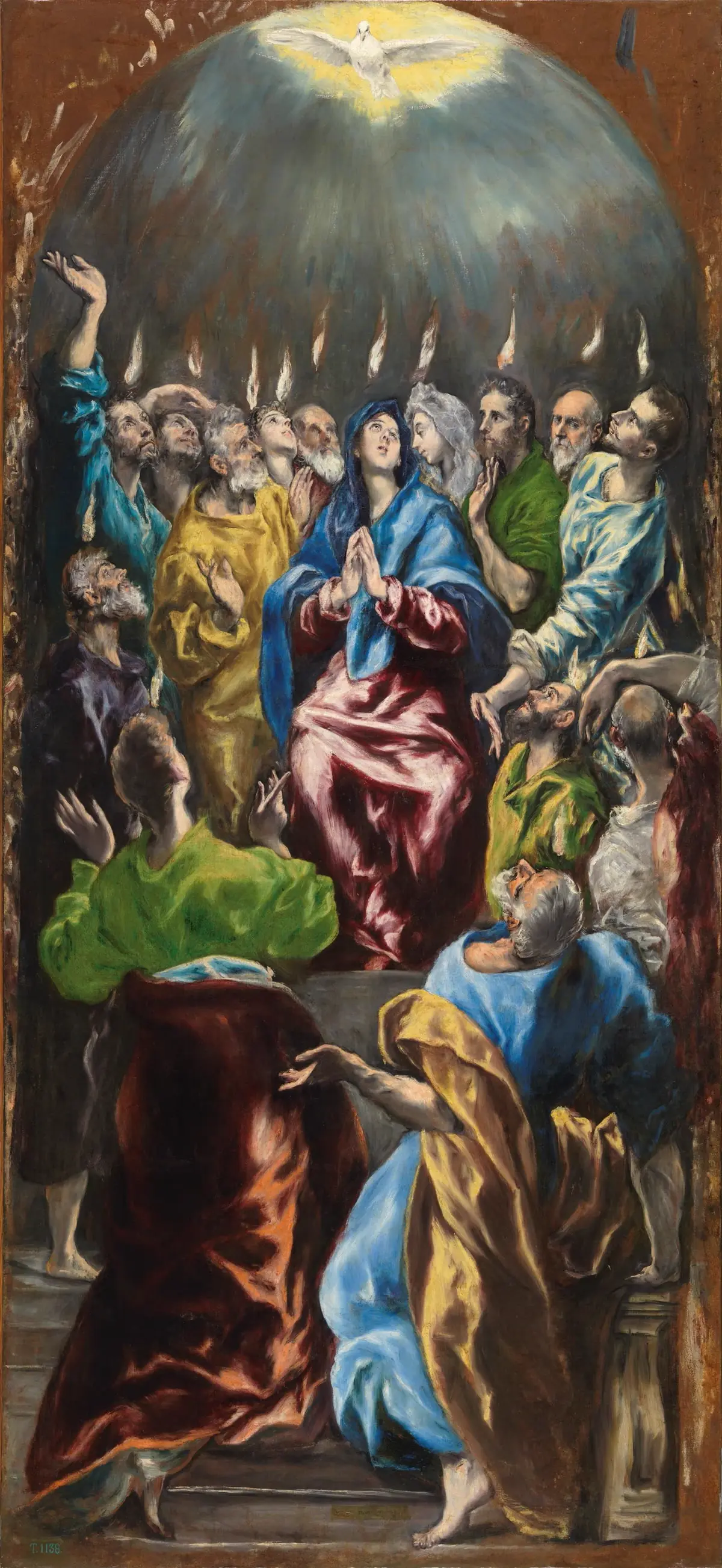
El Greco’s Pentecost (c. 1600) — the descent of the Spirit that turned a locked upper room into a world movement.El Greco, c. 1600 · Public domain
Robert E. Coleman's The Master Plan of Evangelism organised the Gospel evidence under eight headings, and this part follows them, giving each its texts.
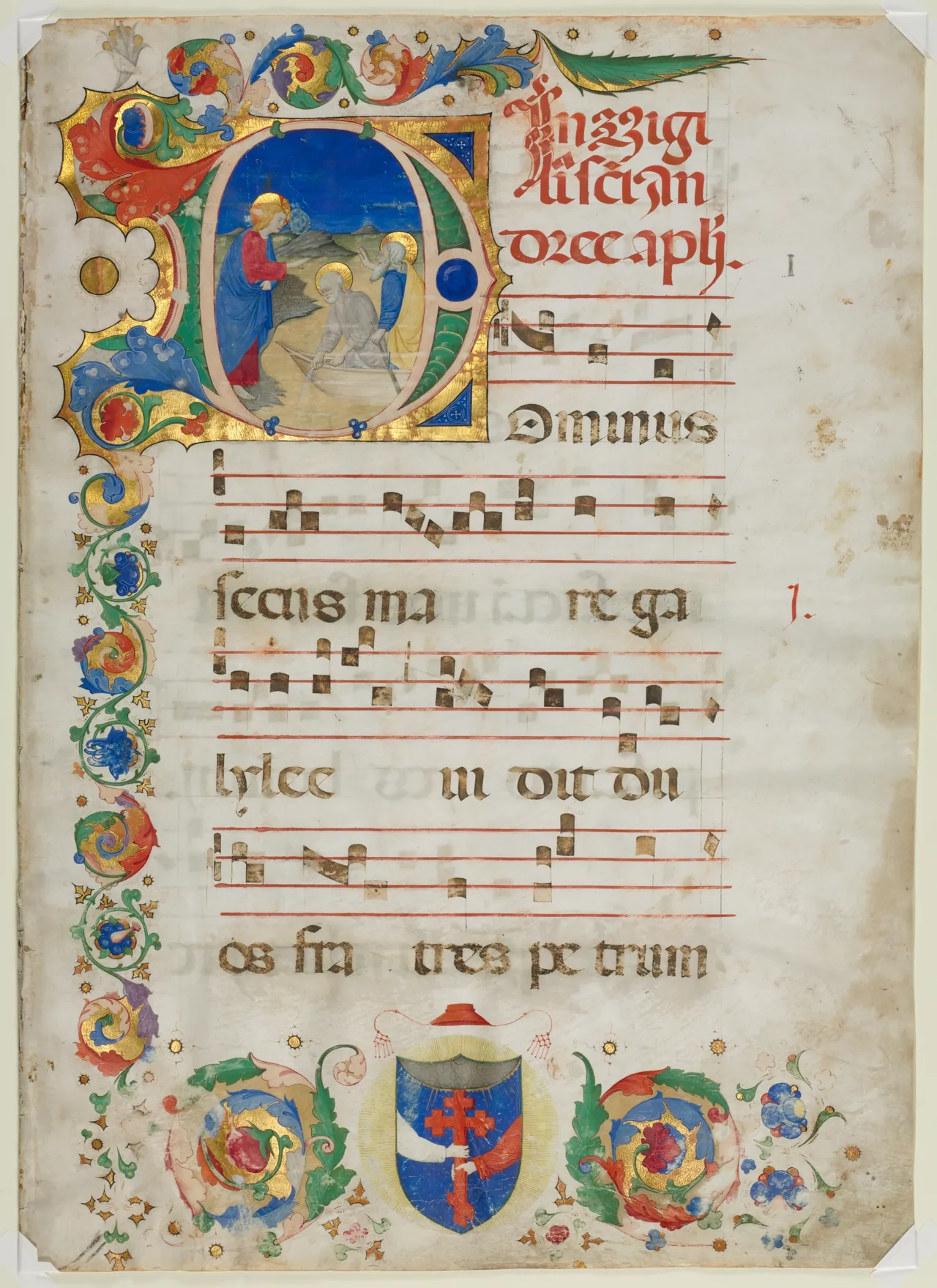
An Italian antiphonary page of about 1425 to 1450 with an initial showing the calling of Peter and Andrew, the first of the few Jesus chose to train.Bifolium Excised from an Antiphonary: Initial D[ominus Iesus] with the Calling of Peter and Andrew · c. 1425–1450 · Cleveland Museum of Art · CC0 · museum record · Galeria Regni
1. Selection: He chose a few
Jesus did not begin with a campaign. He began with a few men. "And he goeth up into a mountain, and calleth unto him whom he would: and they came unto him. And he ordained twelve, that they should be with him, and that he might send them forth to preach" (Mark 3:13-14).
He chose after prayer. Luke tells us that before naming the twelve, "he went out into a mountain to pray, and continued all night in prayer to God. And when it was day, he called unto him his disciples: and of them he chose twelve" (Luke 6:12-13). If the Son of God prayed all night before choosing His leaders, we should not choose ours after a single meeting.
And He chose ordinary men. When Peter and John later stood before the council, the rulers "perceived that they were unlearned and ignorant men" (Acts 4:13) — that is, men without formal religious training. Jesus did not look for the most impressive candidates. He looked for men He could make into something: "Follow me, and I will make you fishers of men" (Matthew 4:19).
2. Association: "that they should be with him"
The first purpose of the twelve, in Mark's words, was "that they should be with him" (Mark 3:14). Preaching and sending came after. Before they were taught a curriculum, they were given a companion.
The first disciples began this way. When two of John the Baptist's followers asked Jesus where He was staying, "He saith unto them, Come and see. They came and saw where he dwelt, and abode with him that day" (John 1:39). And one of them, Andrew, immediately found his brother Simon "and he brought him to Jesus" (John 1:41-42). Association led straight into reproduction.
Through three years the twelve travelled with Jesus, ate with Him, watched Him with the crowds and with individuals, saw Him pray and saw Him tired. "When they were alone, he expounded all things to his disciples" (Mark 4:34). The public teaching was for everyone; the private explanation was for those who stayed close.
The apostles' boldness was later traced to exactly this: the rulers "took knowledge of them, that they had been with Jesus" (Acts 4:13). No programme can replace time spent with a mature believer. This is the most demanding part of raising leaders, and the most often skipped.
3. Consecration: He asked for obedience
Jesus did not lower the cost to keep His followers. "If any man will come after me, let him deny himself, and take up his cross daily, and follow me" (Luke 9:23). When many turned back after a hard saying, He asked the twelve, "Will ye also go away?" (John 6:67). He was training men whose loyalty was to Him, not to an easy life.
Leaders cannot be raised from people who want the title without the cross. One of the first things a trainer must look for, and ask for, is a willingness to obey Christ when it costs.
4. Impartation: He gave Himself
Jesus did not only give the disciples information; He gave them Himself, and promised them His Spirit. "As my Father hath sent me, even so send I you" (John 20:21). Paul described his own ministry the same way: "we were willing to have imparted unto you, not the gospel of God only, but also our own souls, because ye were dear unto us" (1 Thessalonians 2:8). Raising a leader costs the trainer something of himself — time, attention, affection, and prayer.
5. Demonstration: He showed them how
The disciples learned to pray by watching Jesus pray. "And it came to pass, that, as he was praying in a certain place, when he ceased, one of his disciples said unto him, Lord, teach us to pray" (Luke 11:1). They did not ask Him to teach them to preach or to heal. They had watched Him pray, and they wanted that.
He demonstrated service at the basin and then said, "For I have given you an example, that ye should do as I have done to you" (John 13:15). He demonstrated compassion, patience with critics, courage before enemies and dependence on the Father. Paul followed the same method: "Those things, which ye have both learned, and received, and heard, and seen in me, do" (Philippians 4:9). "Learned, and received, and heard, and seen." A trainee must see the work done before he does it.
6. Delegation: He gave them work
Then Jesus sent them. "Then he called his twelve disciples together, and gave them power and authority over all devils, and to cure diseases. And he sent them to preach the kingdom of God, and to heal the sick" (Luke 9:1-2). Mark adds that He sent them "by two and two" (Mark 6:7) — never alone. And "they went out, and preached that men should repent" (Mark 6:12).
He gave them instructions before they went (Matthew 10), and He gave them a sober warning: "Behold, I send you forth as sheep in the midst of wolves: be ye therefore wise as serpents, and harmless as doves" (Matthew 10:16). Later He sent out seventy more, again in pairs (Luke 10:1).
A. B. Bruce, writing of this first mission, called it "partly, without doubt, an educational experiment for their own benefit", though its direct design was to meet the needs of the people.3 That is exactly what delegation in training is: real work, for real people, that also forms the worker.
7. Supervision: He called them back and debriefed
Jesus did not send His disciples out and forget them. They came back and reported. "And the apostles, when they were returned, told him all that they had done. And he took them, and went aside privately" (Luke 9:10). Mark adds His care for them: "Come ye yourselves apart into a desert place, and rest a while: for there were many coming and going, and they had no leisure so much as to eat" (Mark 6:31).
When the seventy came back rejoicing that "even the devils are subject unto us through thy name" (Luke 10:17), Jesus redirected their joy: "Notwithstanding in this rejoice not, that the spirits are subject unto you; but rather rejoice, because your names are written in heaven" (Luke 10:20). Supervision includes correcting not only what trainees do but what they find their identity in.
He also corrected failures directly. When the disciples could not heal a boy, they asked privately, "Why could not we cast him out?" and He told them, "Because of your unbelief" (Matthew 17:19-20). When James and John wanted to call down fire on a Samaritan village, "he turned, and rebuked them, and said, Ye know not what manner of spirit ye are of" (Luke 9:55). When the twelve argued about greatness, He sat down and taught them again: "If any man desire to be first, the same shall be last of all, and servant of all" (Mark 9:35). When Peter tried to turn Him from the cross, He said, "Get thee behind me, Satan" (Matthew 16:23).
None of these corrections ended the relationship. The trainees stayed; the training went on.
8. Reproduction: He expected them to make disciples
The final goal was always reproduction. "All power is given unto me in heaven and in earth. Go ye therefore, and teach all nations, baptizing them in the name of the Father, and of the Son, and of the Holy Ghost: Teaching them to observe all things whatsoever I have commanded you" (Matthew 28:18-20). "Teach all nations" — literally, make disciples of them. Those whom Jesus had discipled were now to disciple others, teaching them everything He had taught them, including, by implication, to disciple others in turn.
And He told them to pray for more workers: "The harvest truly is plenteous, but the labourers are few; Pray ye therefore the Lord of the harvest, that he will send forth labourers into his harvest" (Matthew 9:37-38). Raising up leaders begins with prayer, because the Lord of the harvest is the one who sends.
What His method teaches
Put simply, Jesus chose a few after prayer; kept them with Him; asked for their obedience; gave them Himself; showed them how; sent them out in pairs; called them back to report and be corrected; and expected them to do the same with others. The rest of this paper is an attempt to apply that method to a local church.
This part matters because the first mistake in raising leaders is usually made at the start: choosing the wrong people, for the wrong reasons, too quickly. Scripture gives clear guidance on what to look for and how to test it.
Look at the heart, not the appearance
When Samuel went to anoint a king from Jesse's sons, he was impressed by the eldest. "But the LORD said unto Samuel, Look not on his countenance, or on the height of his stature; because I have refused him: for the LORD seeth not as man seeth; for man looketh on the outward appearance, but the LORD looketh on the heart" (1 Samuel 16:7). The one God chose was not even in the room. "There remaineth yet the youngest, and, behold, he keepeth the sheep" (1 Samuel 16:11).
Churches often look for leaders the way Samuel first looked: at presence, confidence, speaking ability, education, success in business. These are not worthless, but they are not the first thing. The first thing is the heart. Charisma attracts followers; character keeps them safe.
Character before charisma
What character should we look for? The qualifications for elders and deacons in 1 Timothy 3 and Titus 1 (studied in detail in Church Leadership) are the best guide for any leadership in the church, because they describe mature Christian character. Jethro's four marks are a good short summary: "able men, such as fear God, men of truth, hating covetousness" (Exodus 18:21). The apostles' marks for the first servants of the church were "men of honest report, full of the Holy Ghost and wisdom" (Acts 6:3).
In practice, five qualities are worth watching for in anyone you consider training.
Faithfulness in small things. "He that is faithful in that which is least is faithful also in much" (Luke 16:10). The Lord's praise in the parable is "thou hast been faithful over a few things, I will make thee ruler over many things" (Matthew 25:21). Who shows up when they say they will? Who does the unglamorous job without complaint? Elisha was known as the man who "poured water on the hands of Elijah". Faithfulness in the small is the best predictor of faithfulness in the large.
Teachability. "Whoso loveth instruction loveth knowledge: but he that hateth reproof is brutish" (Proverbs 12:1). And again, "Rebuke a wise man, and he will love thee. Give instruction to a wise man, and he will be yet wiser" (Proverbs 9:8-9). A person who cannot receive correction cannot be trained. Watch how someone responds when you point out a mistake. Defensiveness is a warning; gratitude is a good sign.
Love for people. Does this person notice those who are hurting? Do others come to them for help? Barnabas was "a good man" and his name meant consolation. The shepherd must love the sheep.
Love for the word. A leader in Christ's church must handle Scripture. Is this person reading it, growing in it, applying it? Timothy had known the Scriptures "from a child".
A good report. Timothy was "well reported of by the brethren that were at Lystra and Iconium" (Acts 16:2). What do others say? Not only the people who like this person, but those who work with them, live near them, and see them on ordinary days.
Gifts and fruit
Spiritual gifts are real, and part of seeing potential is noticing how God has gifted someone (Romans 12:6-8; 1 Peter 4:10). Some are evident teachers; some have a gift for mercy, or administration, or encouragement. A wise trainer helps people find where they fit.
But gifts and fruit are not the same. A gifted person with little fruit of the Spirit is dangerous in leadership, because gifts draw people and character determines what happens to them. The fruit of the Spirit — "love, joy, peace, longsuffering, gentleness, goodness, faith, Meekness, temperance" (Galatians 5:22-23) — is the filter through which every gift should be viewed.
Do not hurry
Paul's warnings are direct. "Not a novice, lest being lifted up with pride he fall into the condemnation of the devil" (1 Timothy 3:6). Of deacons: "And let these also first be proved" (1 Timothy 3:10). And of all: "Lay hands suddenly on no man, neither be partaker of other men's sins" (1 Timothy 5:22).
The reason is that character takes time to show. Paul says so in the same chapter: "Some men's sins are open beforehand, going before to judgment; and some men they follow after. Likewise also the good works of some are manifest beforehand; and they that are otherwise cannot be hid" (1 Timothy 5:24-25). Some faults are obvious at once; others only appear over months. Some good qualities shine immediately; others emerge slowly. Only time and close observation reveal the whole person.
So the path set out in Part 4 deliberately starts small and moves slowly. It gives the trainee real responsibility early, but it does not give him a title or authority over others until he has been proved.
Where to look
Potential leaders are usually already serving somewhere. Look among:
Those already doing small tasks faithfully — the people who set up chairs, follow up visitors, care for children.
Those whom others naturally go to for help, prayer or advice.
Those who ask good questions about the Bible and want to go deeper.
Those who have been through hardship and come out with their faith strengthened.
Those who bring others — like Andrew, who "first findeth his own brother Simon ... And he brought him to Jesus" (John 1:41-42).
And pray. "Pray ye therefore the Lord of the harvest, that he will send forth labourers" (Matthew 9:38). The best list of potential leaders is one you have prayed over for weeks before you speak to anyone on it.
A word on roles
This paper is about leadership in many forms: small group leaders, ministry team leaders, those who teach children or youth, those who lead outreach, those who will one day serve as deacons or elders. Women lead in many of these ministries, and the New Testament is full of women labouring in the gospel (Romans 16; Philippians 4:2-3), including older women charged to teach younger women (Titus 2:3-5). The specific qualifications and order for the office of elder, including what 1 Timothy 2 and 3 say about men and women, are set out in the companion paper Church Leadership. Every church should apply this paper's path within the order it holds from Scripture.
Part 4 — The First Year: Invitation, Foundations and First Responsibility
6 min read
This part matters because a good beginning shapes everything that follows. It sets out the invitation, the first three months of foundations, and nine months of gradually increasing responsibility. The timeline is a guide, not a law; some will move faster and some slower. What matters is the order: relationship, then foundations, then responsibility, then authority.
The invitation
Jesus called His disciples personally. So should we. A public appeal for "anyone interested in leadership" will draw some good people and some who should not lead. A personal invitation, after prayer, allows you to choose as Jesus did.
The conversation might cover five things.
1. What you have seen. Tell them specifically what you have noticed: their faithfulness, their care for others, their growth. Be honest and concrete. Do not flatter.
2. What you are inviting them to. Explain plainly: a season of being trained, meeting regularly, serving alongside you, and growing toward a particular kind of leadership. Be clear that it is a season of development, not an appointment.
3. What it will cost. Tell them the time involved, the expectations, and the spiritual cost. Jesus did not hide the cross; neither should you. "Not by constraint, but willingly" (1 Peter 5:2) requires that they know what they are agreeing to.
4. What they fear. Ask. Many potential leaders feel unqualified. Moses said, "Who am I?" (Exodus 3:11) and "I am not eloquent" (Exodus 4:10). Timothy seems to have been timid (2 Timothy 1:7). Listen, and answer from Scripture and from what you have seen.
5. A time to pray. Do not ask for an answer on the spot. Ask them to pray and talk with their spouse or family, and set a time to meet again. A decision made after prayer will hold better under pressure.
Questions worth asking in that conversation:
How did you come to faith, and what has God been teaching you lately?
Where do you feel most useful in serving others?
What would make this hard for you in this season of life?
Is there anything in your life that would make this a bad time — a crisis, a struggle, a conflict that needs resolving first?
What would you hope to learn?
If they say yes, agree together on a few simple commitments: how often you will meet, for how long, and what they will do between meetings.
Months 1–3: Foundations
The first three months focus on the trainee's own walk with God, because everything else rests on it. Meet weekly if possible, for an hour or so, and let them be with you as you serve. The work is mostly reading, prayer, conversation and observation.
Month 1 — Prayer and the presence of God
Week 1. Why prayer comes first. Read Mark 1:35, Luke 6:12-13 and Acts 6:4. Talk about how Jesus and the apostles prioritised prayer.
Week 2. Learning to pray. Read Luke 11:1-13. Pray together using the pattern of the Lord's Prayer.
Week 2. Reading the Bible well. Read Nehemiah 8:8. Practise reading a passage slowly, asking what it says, what it means and how it applies. Introduce a KJV with Strong's Concordance and the free 1611 Reader at kylelauriano.com/library.
Week 3. Meditating on Scripture. Read Joshua 1:8 and Psalm 1:1-3. Biblical meditation means filling the mind with God's word and turning it over, not emptying the mind. Choose a passage to memorise.
Week 4. Handling the word for others. Read 2 Timothy 2:15 and Acts 18:24-28. Prepare and share a short explanation of a passage with the mentor.
Assignment: read one Gospel through, and memorise a short passage chosen together.
Month 3 — Christian character
Week 1. The fruit of the Spirit. Read Galatians 5:16-26. Ask honestly which fruit is weakest.
Week 4. Forgiveness and relationships. Read Matthew 18:15-35 and Ephesians 4:29-32. If there is anyone the trainee needs to forgive or be reconciled with, talk about it.
Assignment: a written plan for growth in one area of character, with one person to be honest with about it.
Throughout these months, the trainee should also be with you as you serve — sitting in on a visit, helping set up a meeting, watching how you handle a hard conversation (where confidentiality allows). This is the "association" and "demonstration" of Part 2.
At the end of three months, use the Foundations Review in Part 6 to decide together whether to continue.
Months 4–12: From watching to doing
Now the trainee begins to lead, gradually. The pattern follows Jesus' own: first they watched Him, then they went out in pairs while He was near, then they reported back, and finally they were sent with authority. A simple way to describe the stages is:
1. I do it; you watch. 2. I do it; you help. 3. You do it; I help. 4. You do it; I watch. 5. You do it; you train someone else to watch.
The last stage leads into Part 5.
Months 4–6: Assisting
Co-lead a small part of something with the mentor: open a group in prayer, lead one discussion, teach one short section.
Take on a defined assisting role in a ministry.
Make a few small decisions, with the mentor's input beforehand.
After every responsibility, debrief: what went well, what did not, what you learned. Like the disciples returning to Jesus, "told him all that they had done" (Luke 9:10).
Months 7–9: Leading with oversight
Lead something with the mentor present: a whole group meeting, a ministry task, a visit.
The mentor observes and gives honest feedback afterward, encouraging first and then correcting.
The trainee begins to handle problems as they arise, with support available.
A visible leadership role begins to emerge, though without a title yet.
Months 10–12: Leading with check-ins
The trainee leads independently, with regular check-ins rather than constant presence.
The mentor steps back but stays available, and still prays for and with them.
The trainee begins to develop their own approach rather than copying the mentor's.
Near the end of the year, use the Leadership Readiness Assessment in Part 6.
Training for the specific ministry
Alongside this general growth, give training specific to the ministry the trainee will lead. For example:
Small group leadership: leading discussion around Scripture; caring for members between meetings; handling difficult moments; recognising when someone needs more help than the group can give; preparing a group to multiply.
Teaching (children, youth or adults): preparing a lesson from the text; explaining clearly; asking good questions; safeguarding practices required by your church.
Mercy and care: visiting the sick and grieving; practical help; confidentiality; knowing when to refer to elders, a doctor or a counsellor.
Administration and service: organising people and resources; handling money with two-person accountability (2 Corinthians 8:20-21); communicating clearly.
Outreach: sharing the gospel plainly; following up new believers; working in pairs as Jesus sent His disciples.
Debriefing well
The single most valuable habit in training leaders is the debrief. Jesus did it after the first mission. It need not be long. Three questions are enough:
1. What happened? (Facts, not feelings yet.) 2. What went well, and why? (Encourage specifically.) 3. What would you do differently, and what did you learn about God, others or yourself? (Correct gently but clearly.)
End by praying together about what was learned. A trainee who is debriefed after every responsibility for a year will learn more than one who attends a dozen training seminars.
This part matters because the goal of training a leader is not one more leader. It is a leader who will raise others. Paul's charge to Timothy reaches four generations deep, and a church that stops at one generation will find itself, like Israel after Joshua, with no one ready.
"And the things that thou hast heard of me among many witnesses, the same commit thou to faithful men, who shall be able to teach others also." (2 Timothy 2:2)
The verse names four links in the chain:
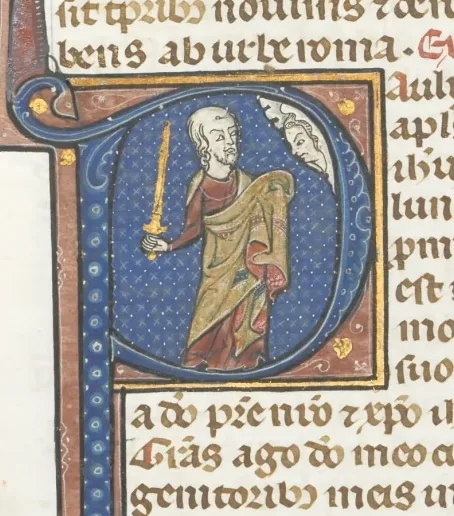
A thirteenth-century Bible page from southern France opening Paul's second letter to Timothy, the letter that sets out four generations of faithful teachers.Fol. 457v, Timothy II, historiated initial P, Paul talking to the bust of God above · c. 1275–1300 · Cleveland Museum of Art · CC0 · full page · museum record · Galeria Regni
| Generation | Who | What they do | |---|---|---| | 1 | Paul | taught Timothy "among many witnesses" | | 2 | Timothy | commits it "to faithful men" | | 3 | Faithful men | must "be able to teach" | | 4 | Others also | receive it and, in turn, carry it on |
Three things about the verse are worth noticing.
What is passed on is "the things that thou hast heard of me". It is the apostolic teaching, the faith "once delivered unto the saints" (Jude 1:3) — not the trainer's opinions or methods. Paul elsewhere calls it "that which is committed to thy trust" (1 Timothy 6:20).
The qualification is faithfulness. Timothy is to choose "faithful men", trustworthy people who will hold what they receive without changing it. Talent is secondary.
The test is whether they can teach others. A leader is not fully trained until he is able to train someone else.
The arithmetic of multiplication
It helps to see why multiplication matters, though the arithmetic below is an illustration, not a promise. Real churches lose people to moves, illness, burnout and sin, and real training is never this tidy.
Addition. Suppose one gifted leader trains two new leaders every year, and they lead ministries but never train anyone themselves. After ten years there are 1 + (2 × 10) = 21 leaders.
Multiplication. Now suppose one leader trains just one new leader in a year, and from then on every trained leader trains one more each year. The number of leaders doubles each year: 1, 2, 4, 8, 16, 32, 64, 128, 256, 512, and after ten years 2¹⁰ = 1,024.
Notice that for the first two years addition looks better. Multiplication is slower to start, because it waits for each new leader to be ready to train. Only in the third year does it overtake. That is why churches often choose addition: it shows results sooner. But over time the difference is enormous.
No church will see 1,024 leaders from one. Most of the chain will break somewhere. The point is not the number but the principle: a leader who trains leaders who train leaders will, over time, do far more than a leader who only trains followers.
Year two: training the trainer
In the second year, the aim is to prepare the new leader to raise others. Meet less often — perhaps fortnightly or monthly — and focus on four areas, a quarter of the year each.
Quarter 1 — Vision and planning
Read Nehemiah 1–2 and talk about how Nehemiah carried a burden to God before he planned.
Help the leader think about the ministry they lead: what it is for, what it should look like in a year, and what needs to change.
Practise sharing a vision with others plainly, without pressure or manipulation, as Nehemiah did: "come, and let us build" (Nehemiah 2:17).
Quarter 2 — Building a team
Read Exodus 18 and Acts 6.
Help the leader identify who serves with them, what each person's gifts are, and how the load can be shared.
Practise delegation that hands over real responsibility, not only tasks.
This part matters because assessment helps a mentor and trainee see honestly where growth is happening and where it is not. But a poorly designed tool can do harm. If the scoring bands do not match the possible totals, or if a high total can hide a serious character problem, the tool will mislead. The three tools below have been designed so that every possible score falls into exactly one band, and so that character is never outweighed by competence.
Use them as conversation aids, not verdicts. Ask the trainee to score themselves first, then score separately as mentor, and compare. The most useful part of any assessment is the conversation about the differences.
Tool 1 — The Foundations Review (end of month 3)
Score each of the five questions from 1 to 5:
1 = rarely or not at all
2 = occasionally
3 = often, but inconsistently
4 = consistently
5 = consistently, and others notice it
| # | Question | Score (1–5) | |---|---|---| | 1 | Spiritual growth. Are they keeping a daily time in prayer and the word, and growing from it? | ___ | | 2 | Engagement. Are they eager, prepared for meetings and doing the assignments? | ___ | | 3 | Character. Are they showing godly character at home, at work and at church? | ___ | | 4 | Teachability. Do they receive feedback well and change as a result? | ___ | | 5 | Reliability. Do they do what they say they will do? | ___ | | | Total | ___ / 25 |
The possible totals. With five questions scored 1 to 5, the lowest possible total is 5 × 1 = 5 and the highest is 5 × 5 = 25.
Decision bands. Every total from 5 to 25 falls into exactly one band:
| Total | What it suggests | |---|---| | 21–25 | Continue to months 4–12. | | 15–20 | Continue with a focused plan for the lowest-scoring area. | | 10–14 | Extend the foundations for another one to three months before adding responsibility. | | 5–9 | Redirect. This may not be the right season or role. Keep discipling them. |
Check: 5–9, 10–14, 15–20 and 21–25 cover every whole number from 5 to 25 with no gap and no overlap (5 + 5 + 6 + 5 = 21 possible totals, and 25 − 5 + 1 = 21).
The character rule. Regardless of the total, if question 3 (Character) or question 5 (Reliability) is scored 1 or 2, do not move on to leading responsibilities. Extend the foundations at least, and talk honestly about what you have seen. A trainee can score 4s and 5s on the other three questions and reach a total of, say, 5 + 4 + 2 + 5 + 5 = 21 — in the "continue" range — while still showing a character problem. The rule prevents the total from hiding it.
Tool 2 — The Leadership Readiness Assessment (end of year 1, and yearly after)
This tool has six areas with four items each: 24 items in all. Score each item from 1 to 5 using the same scale as Tool 1.
A. Spiritual foundation
| Item | Score | |---|---| | A1. Clear personal faith in Christ, able to give the gospel plainly | ___ | | A2. Growing in prayer and the word | ___ | | A3. Shows the fruit of the Spirit (Galatians 5:22-23) | ___ | | A4. Sound in doctrine; holds fast the faithful word | ___ | | Area A total (4–20) | ___ |
B. Character
| Item | Score | |---|---| | B1. Humble and teachable | ___ | | B2. Honest and trustworthy, including with money | ___ | | B3. Takes responsibility for mistakes | ___ | | B4. Consistent at home, at work and at church | ___ | | Area B total (4–20) | ___ |
C. Competence
| Item | Score | |---|---| | C1. Communicates clearly | ___ | | C2. Makes sound decisions | ___ | | C3. Organises and plans | ___ | | C4. Relates well to people | ___ | | Area C total (4–20) | ___ |
D. Capacity
| Item | Score | |---|---| | D1. Has time available for the role | ___ | | D2. Health and energy are adequate | ___ | | D3. Family situation supports it | ___ | | D4. Free of a present crisis that needs their attention first | ___ | | Area D total (4–20) | ___ |
E. Calling
| Item | Score | |---|---| | E1. Others recognise God's gifting in them for this | ___ | | E2. Willing, not pressed, to take responsibility (1 Peter 5:2) | ___ | | E3. Cares about the people and the mission | ___ | | E4. Growing in confidence in God, not in self | ___ | | Area E total (4–20) | ___ |
F. Multiplication
| Item | Score | |---|---| | F1. Interested in developing others | ___ | | F2. Shares credit and responsibility | ___ | | F3. Already helping someone else grow | ___ | | F4. Glad when others succeed | ___ | | Area F total (4–20) | ___ |
Overall total: ___ / 120
The possible totals
Each area has four items scored 1 to 5, so each area total runs from 4 × 1 = 4 to 4 × 5 = 20. Six areas give an overall total from 6 × 4 = 24 to 6 × 20 = 120. The lowest possible score is 24, not zero, and the bands below start there.
Readiness bands
The bands are set by the average score per item. The average is the total divided by 24.
| Overall total | Average per item | What it suggests | |---|---|---| | 102–120 | 4.25 to 5.00 | Ready to be released to lead, with ordinary oversight — if the character gates below are also met. | | 84–101 | 3.50 to 4.21 | Ready for more responsibility with coaching. Continue leading with check-ins. | | 60–83 | 2.50 to 3.46 | Continue developing in the present role before adding more. | | 24–59 | 1.00 to 2.46 | Not now. Redirect to a role that fits this season, and keep discipling. |
Check: 24–59, 60–83, 84–101 and 102–120 cover every whole number from 24 to 120, with no gap and no overlap (36 + 24 + 18 + 19 = 97 possible totals, and 120 − 24 + 1 = 97). The averages: 59 ÷ 24 ≈ 2.46 and 60 ÷ 24 = 2.50; 83 ÷ 24 ≈ 3.46 and 84 ÷ 24 = 3.50; 101 ÷ 24 ≈ 4.21 and 102 ÷ 24 = 4.25.
The character gates
The overall total can be misleading, because high scores in competence or capacity can make up for low scores in character. Scripture never allows that trade. So two gates apply before anyone is released to lead on their own, whatever the total:
1. No item in Area A (Spiritual foundation) or Area B (Character) may be scored 1 or 2. 2. Area A and Area B must each total at least 16 out of 20 (an average of 4 per item).
A trainee who scores in the top band but fails a gate is not ready to be released. They may continue in the next band down while the area of concern is worked on.
Capacity is not worth
Area D measures the season of someone's life, not their value or their godliness. A faithful believer caring for a dying parent, or with a new baby, may score low on capacity and be wholly fit in every other way. A low score in Area D usually means "not yet" or "a smaller role for now", never "not good enough".
A worked example
Suppose a hypothetical trainee is scored at the end of the first year as follows:
| Area | Item scores | Area total | |---|---|---| | A. Spiritual foundation | 5, 4, 4, 5 | 18 | | B. Character | 4, 4, 3, 4 | 15 | | C. Competence | 4, 3, 4, 5 | 16 | | D. Capacity | 3, 4, 4, 4 | 15 | | E. Calling | 4, 4, 5, 3 | 16 | | F. Multiplication | 3, 3, 4, 4 | 14 | | Overall | | 94 |
A total of 94 falls in the 84–101 band: ready for more responsibility with coaching. Now check the gates. No item in Areas A or B is scored 1 or 2, so gate 1 is passed. Area A totals 18, which passes gate 2. But Area B totals 15, one short of 16, so gate 2 is not passed for character. The lowest item is B3, "takes responsibility for mistakes", scored 3.
So the result is: continue leading with check-ins, do not yet release to lead alone, and make B3 the focus of the coming months. The conversation might begin with Proverbs 28:13: "He that covereth his sins shall not prosper: but whoso confesseth and forsaketh them shall have mercy." In this example, Area F (14) is also worth discussing, since the next stage is training others.
Tool 3 — The Character Checklist (before any appointment to office)
Before anyone is considered for a recognised office such as deacon or elder, the church should go through the qualifications of 1 Timothy 3 and Titus 1 item by item. This tool is not scored. A number would suggest that strength in one quality can make up for weakness in another, and Paul's lists do not work that way. Each item is answered Yes, Not yet, or Unsure — ask others.
| Qualification (KJV) | Text | Yes / Not yet / Unsure | |---|---|---| | Blameless | 1 Tim 3:2; Titus 1:6-7 | ___ | | The husband of one wife | 1 Tim 3:2, 12; Titus 1:6 | ___ | | Vigilant, sober, of good behaviour | 1 Tim 3:2 | ___ | | Given to hospitality | 1 Tim 3:2; Titus 1:8 | ___ | | Apt to teach (for elders) | 1 Tim 3:2; Titus 1:9 | ___ | | Not given to wine | 1 Tim 3:3, 8; Titus 1:7 | ___ | | No striker, not a brawler, patient | 1 Tim 3:3; Titus 1:7 | ___ | | Not greedy of filthy lucre, not covetous | 1 Tim 3:3, 8; Titus 1:7 | ___ | | Rules his own house well | 1 Tim 3:4-5, 12 | ___ | | Not a novice | 1 Tim 3:6 | ___ | | A good report of them which are without | 1 Tim 3:7 | ___ | | Grave, not doubletongued (for deacons) | 1 Tim 3:8 | ___ | | Holding the mystery of the faith in a pure conscience | 1 Tim 3:9 | ___ | | First proved | 1 Tim 3:10 | ___ | | Not selfwilled, not soon angry | Titus 1:7 | ___ | | A lover of good men, just, holy, temperate | Titus 1:8 | ___ | | Holding fast the faithful word | Titus 1:9 | ___ |
How to use it. Any "Not yet" means the person is not presently ready for that office, however strong the rest of the list. Any "Unsure" means the church should ask those who know the person best before going further. Paul's warning governs the whole process: "Lay hands suddenly on no man, neither be partaker of other men's sins" (1 Timothy 5:22).
Part 7 — Release, Oversight and When It Goes Wrong
5 min read
This part matters because release is not the end of training. Jesus sent His disciples out and called them back. Paul sent Timothy and kept writing to him. A leader released without ongoing support is a leader set up to struggle. And because people are people, this part also deals honestly with what to do when training does not go as hoped.
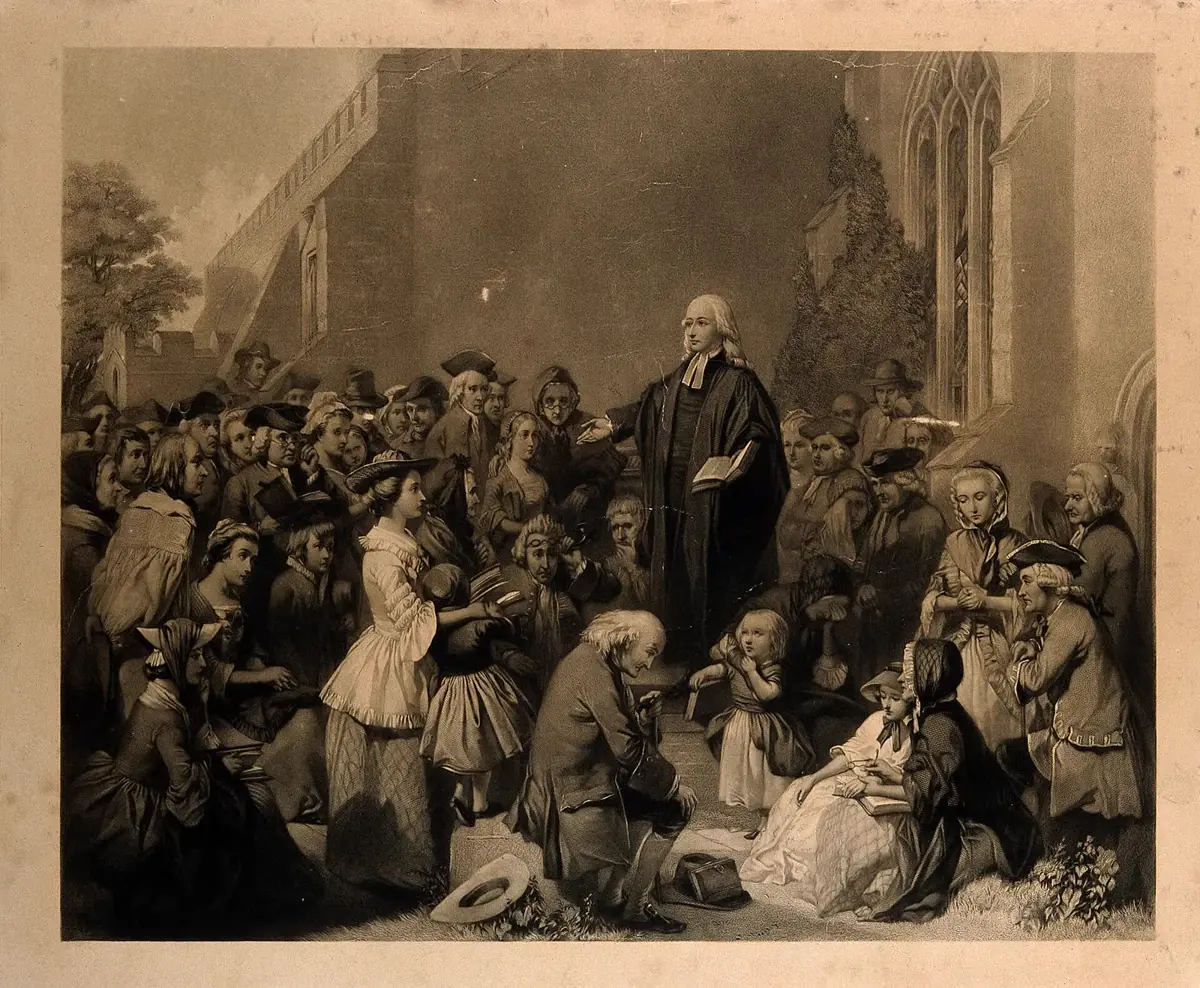
John Wesley preaching in the open air (18th-century engraving) — the message carried outside the building to wherever people already were.Wellcome Collection · CC BY 4.0
Before release
Before releasing a leader to lead on their own, confirm three things:
Competence. Have they been trained for this specific role? Have they done it under supervision, and done it well? Do they understand what is expected?
Commitment. Are they willing, not pressed? Do they understand the time and cost? Have they discussed it with their family?
Alignment. Do they hold the church's teaching and accept its oversight? Are they in step with the leaders they will serve under?
And, for any recognised office, the character gates of Part 6 and the Character Checklist must be met.
Make the role clear
Many leaders struggle not because they are unfit but because no one told them clearly what they were responsible for. Write down, briefly:
The role and its scope. What exactly are they leading, and what is outside their responsibility?
The core responsibilities. Three to five main things.
The time involved. Hours a week, meetings to attend, length of commitment (for example, one year, then reviewed).
Who they answer to. Name the person or body.
Support available. Who they can call, what resources they have, how often they will meet with their overseer.
What faithfulness looks like. Not numbers to hit, but signs of a healthy ministry: people cared for, the word taught, problems raised early.
What comes next. How they might grow further, including training someone else.
Release gradually
Jesus' disciples went from watching, to going out in pairs while He was near, to being sent with authority after His resurrection, to leading the church after His ascension. A gradual release protects both the leader and the people.
First month after release: weekly check-ins; the overseer attends at least once.
Months 2–3: fortnightly check-ins.
Months 4–6: monthly check-ins.
After six months: regular meetings as for any leader, with a yearly review using Tool 2.
At each stage, the debrief questions of Part 4 still apply: what happened, what went well, what would you do differently.
Make it public
Moses charged Joshua "in the sight of all Israel" (Deuteronomy 31:7). The seven in Acts 6 were set before the apostles, who "prayed" and "laid their hands on them" (Acts 6:6). Timothy received his gift "with the laying on of the hands of the presbytery" (1 Timothy 4:14).
When a leader is released, tell the church. Pray for them publicly. This honours the leader, makes clear who is responsible for what, and invites the whole church to pray for and support them. Moses was told to "put some of thine honour upon him, that all the congregation ... may be obedient" (Numbers 27:20). A public commissioning does that.
Ongoing oversight
Every leader needs ongoing accountability and care. At a minimum:
Regular meetings with an overseer, to pray, debrief, and talk honestly about life and ministry.
A yearly review using Tool 2, scored by the leader and the overseer.
Someone to tell the truth. Every leader needs a Nathan (2 Samuel 12:7). The proverb is true: "Iron sharpeneth iron; so a man sharpeneth the countenance of his friend" (Proverbs 27:17).
Rest. Jesus told His returning disciples, "Come ye yourselves apart into a desert place, and rest a while" (Mark 6:31). Overseers should watch for exhaustion. Barna's 2022 survey found stress and loneliness at the top of the reasons pastors gave for considering quitting; regular care is part of the answer.
Encouragement. "Let us consider one another to provoke unto love and to good works" (Hebrews 10:24).
When it goes wrong
Not every trainee will become a leader. Not every leader will stay faithful. Scripture prepares us for both.
When a trainee is not ready
Sometimes the assessments, and honest observation, show that someone is not ready. Say so, kindly and clearly, with specific reasons. Distinguish "not yet" from "not this role" from "not now because of your season of life". Keep discipling them; the relationship does not depend on their becoming a leader. The goal was always that they grow in Christ.
When a trainee quits
John Mark turned back at Perga (Acts 13:13). Paul would not take him again; Barnabas would. Years later Paul wrote, "Take Mark, and bring him with thee: for he is profitable to me for the ministry" (2 Timothy 4:11). When someone quits, find out why. It may be fear, a crisis, a conflict, or simply a wrong fit. Some will come back in a later season. Leave the door open where you can.
When a leader needs correcting
Jesus corrected His disciples often and directly, and none of them left because of it (except Judas, who had already chosen). Paul "withstood" Peter "to the face, because he was to be blamed" (Galatians 2:11) — an apostle corrected by another in public, over a matter that touched the gospel. Correction is part of leadership development, not the end of it. Use Matthew 18:15: begin privately, and aim to "gain thy brother".
When a leader falls
When a leader falls into serious sin, the church must follow the texts on accountability: accusations established by witnesses, sin rebuked openly, no partiality (1 Timothy 5:19-21). The companion papers Biblical Leadership and Church Leadership discuss this further. The fallen leader is to be restored "in the spirit of meekness" (Galatians 6:1) if they repent. Restoration to fellowship and restoration to office are different questions; the second requires that the person again be "blameless", which takes time. Raising leaders includes the painful work of removing some, and the hopeful work of restoring others.
Succession: training your own replacement
The hardest test of a leader is whether he will train someone to replace him. Moses asked God for a successor (Numbers 27:15-17). David prepared for Solomon (1 Chronicles 22:5). Paul, near his death, poured his last letter into Timothy (2 Timothy 4:6-7).
If you lead something in your church, ask: if I could not continue tomorrow, who would carry it on? If the answer is "no one", your first leadership task is clear. Begin now with Part 3. Pray, look, invite.
With few resources
None of this requires money, staff or a building. Jesus trained the twelve while walking the roads of Galilee. Paul trained Timothy while travelling, working and sometimes in prison. A small church with no budget can do everything in this paper with a Bible, a notebook, a regular time to meet, and a willingness to let someone come alongside. The most important resource is the trainer's time and life. "Those things, which ye have both learned, and received, and heard, and seen in me, do" (Philippians 4:9).
God has always raised up leaders through leaders. Moses took Joshua with him for forty years and laid hands on him before all Israel. Elijah cast his mantle on a ploughman who learned to pour water on his hands. Barnabas vouched for a persecutor, went to Tarsus to find him, and later gave a second chance to a young man who had quit. Paul took a well-reported young believer from Lystra and made him a son in the faith. And the Lord Jesus chose twelve ordinary men after a night of prayer, kept them with Him, showed them how, sent them out in pairs, called them back, corrected them, restored them, and sent them into all the world.
The path set out here follows that pattern: pray and look; choose for character and faithfulness; invite personally and honestly; lay foundations of prayer, the word and character; give responsibility gradually, with a debrief after every step; aim from the start at multiplication; assess honestly, with tools that add up and never let competence outweigh character; release carefully and publicly; keep caring for those you release; and handle failure with both honesty and patience.
And remember that the chain broke after Joshua. A generation arose "which knew not the LORD" (Judges 2:10). The best way to make sure the next generation knows Him is to give your life, as Paul did, to faithful people who will be able to teach others also.
Your next step
1. Pray. This week, ask the Lord of the harvest to send labourers, and to show you whom to invest in. 2. Look. Write down two or three names of people already serving faithfully. 3. Watch. Spend the next month noticing their character, teachability and love for people. 4. Invite. After prayer, have the conversation in Part 4 with one of them. 5. Begin. Start the first three months of foundations.
An invitation
Raising up leaders begins with being raised up yourself — not by a mentor first, but by Christ. If you are not sure you know Him, the call is the same one the disciples heard by the lake: "Follow me" (Matthew 4:19). The apostles preached "repentance toward God, and faith toward our Lord Jesus Christ" (Acts 20:21). Peter told the first crowd, "Repent, and be baptized every one of you in the name of Jesus Christ for the remission of sins, and ye shall receive the gift of the Holy Ghost" (Acts 2:38). And the Lord who called fishermen still promises, "him that cometh to me I will in no wise cast out" (John 6:37).
1Barna Group, "Pastors Share Top Reasons They've Considered Quitting Ministry in the Past Year," April 27, 2022, https://www.barna.com/research/pastors-quitting-ministry/. Survey of 510 U.S. Protestant senior pastors, March 10–16, 2022; comparison survey of 413, January 22–27, 2021.↩
2Robert E. Coleman, The Master Plan of Evangelism (Westwood, NJ: Fleming H. Revell, 1964). The eight principles are the titles of the book's eight chapters, in Coleman's order.↩
3A. B. Bruce, The Training of the Twelve, 2nd ed. (Edinburgh: T. & T. Clark, 1877), ch. 8, "First Attempts at Evangelism," 96. Online: https://archive.org/details/trainingoftwel00bruc.↩
Seven people who say they met Jesus. What happened, in their own words.
Seven testimonies from The King Is Coming Show, one a morning — the story as they tell it, the verse the story lands on in the 1611 King James, and the page itself. Then the teaching that explains it. Free.
This is practical teaching, not proof. It's drawn from Scripture and from walking this road myself. If you're still weighing the basics — whether God is real, whether the Bible can be trusted — I'd encourage you to start with the Skeptic resources in the Research Hub before diving in here.