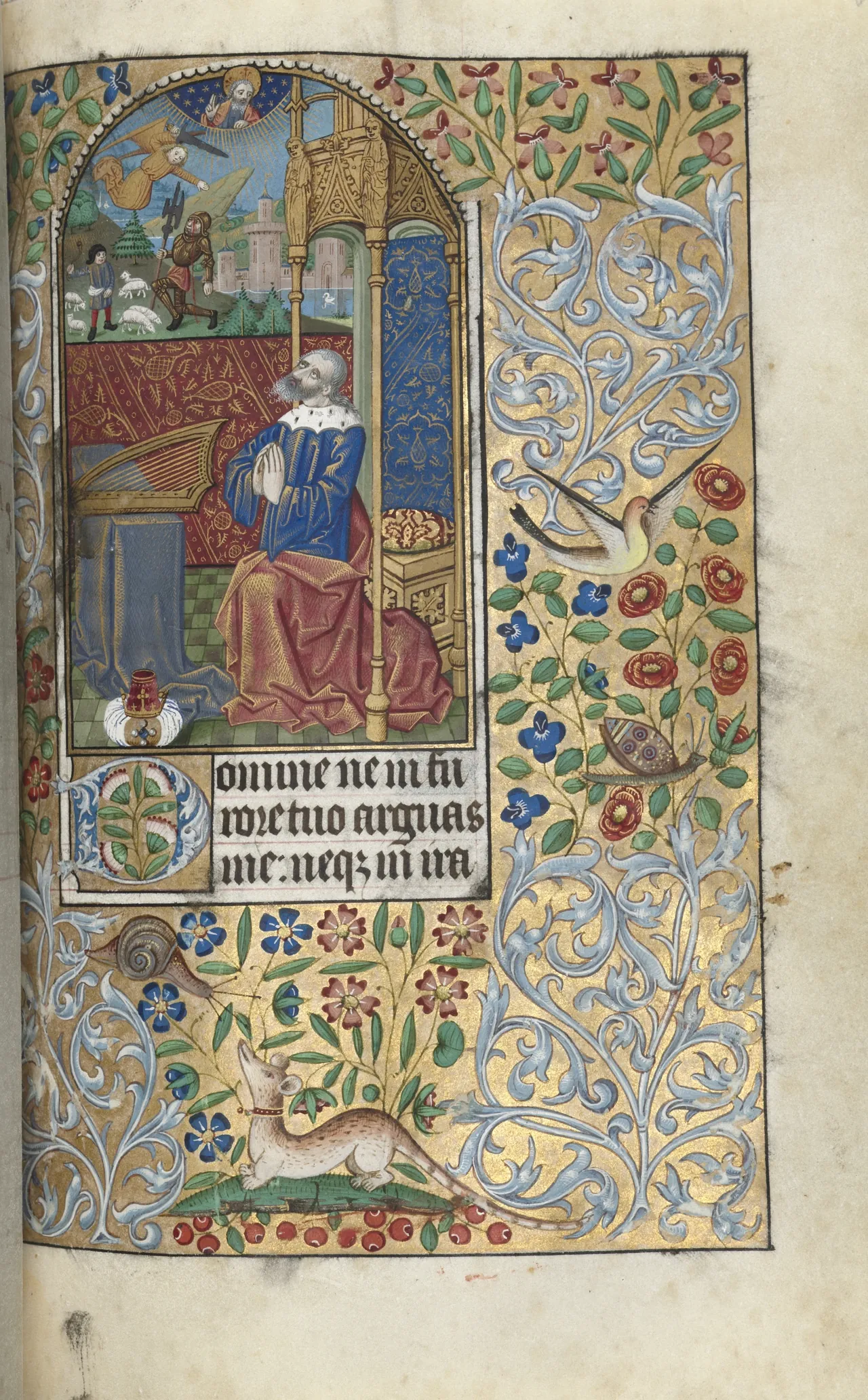
SERVANTS WHO GO FIRST, FROM MOSES TO THE UPPER ROOM
A study of what the Bible means by leading, drawn from Moses and Jethro, Nehemiah at the wall, Jesus with the basin and towel, and Peter's charge to the elders.
Abstract
What does God mean by a leader? The world answers with power, position and results. This paper answers from the King James Bible, by walking slowly through four places where Scripture shows leadership being done: Moses at the judgment seat and his father-in-law's counsel (Exodus 18), Nehemiah rebuilding the wall of Jerusalem, the Lord Jesus washing His disciples' feet (John 13), and Peter's charge to the elders (1 Peter 5). Alongside the text it sets the history behind it (Josephus, the Elephantine papyri) and the pastors of the church who wrote on leading God's people: Augustine, Gregory the Great, Richard Baxter, Robert Murray M'Cheyne, Charles Spurgeon and C. S. Lewis. Its conclusion is that biblical leadership is service that goes first: a shepherd's care, a steward's faithfulness and a servant's towel, carried by people who are themselves under Christ. It is written for anyone who leads others, in a home, a workplace, a ministry or a church.
What’s inside
·Introduction
Part 1Part 1: What Scripture Means by Leading
Part 2Part 2: Moses and Jethro: The Leader Who Could Not Do It Alone
Part 3Part 3: Nehemiah: Prayer, Plan and the Wall
Part 4Part 4: The Basin and the Towel: Jesus Washing Feet
Part 5Part 5: The Shepherd's Charge: Peter to the Elders
Part 6Part 6: The Inner Life of the Leader
Part 7Part 7: When Leaders Fall, and How God Restores
·Conclusion
Research paper · 9 chapters · 19 notes · October 2026
About 61 minutes · 9 parts · the PDF has the same text
Introduction
3 min read
Everyone leads someone. A father leads his household. A mother leads her children. A foreman leads a crew, a teacher a classroom, a believer the friend he is bringing to Christ. A pastor leads a congregation. Most of us lead without the title, and many of us lead without ever being asked whether we are ready.
So the question of what God means by a leader is not a question for a few professionals. It touches nearly every Christian. And it matters, because the answer the world gives is loud. Leadership, we are told, is about vision, influence, results and growth. Some of that is not wrong. But the Bible's picture is strange to modern ears. Its greatest leader is a man who calls himself "servant of all". Its model of authority is a shepherd who knows the sheep by name. Its highest throne was reached by way of a cross.
What this paper is
This is a study, not a seminar. It does not offer seven secrets or a leadership system. It reads Scripture, slowly, at four places where the Bible shows leadership being done:
Moses and Jethro (Exodus 18): a faithful man about to break under a load he was never meant to carry alone.
Nehemiah (Nehemiah 1–13): a layman, a royal servant, who prayed, planned, built and kept going under attack.
Jesus with the basin and towel (John 13): the Lord of glory doing a slave's work on the night He was betrayed.
Peter's charge to the elders (1 Peter 5): a restored failure telling shepherds how to shepherd.
Around these four it gathers what the rest of the Bible says about the leader's heart, and what the church's own pastors learned when they tried to live it. Augustine of Hippo, Gregory the Great, Richard Baxter, Robert Murray M'Cheyne and Charles Spurgeon all wrote about leading God's people, and their words are quoted here from their own books. Where history helps us read the text — who Sanballat was, what a basin of water meant at a Jewish supper — the history is given with its source.
This paper is about leadership wherever a Christian does it. A companion paper, Church Leadership, deals with the offices of the local church — elders, bishops, deacons — and the qualifications of 1 Timothy 3 and Titus 1 in detail. Another, Raising Up Leaders, deals with how leaders are found, trained and released. This one asks the first question underneath both: what kind of person does God use to lead?
How to read it
Seven parts follow. Part 1 sets out what Scripture means by leading. Parts 2 to 5 take the four great passages in turn. Part 6 turns to the inner life of the leader, and Part 7 to what happens when leaders fall, and how God restores them. You can read it straight through or go to the part you need.
Every verse in this paper is quoted from the King James Bible. You can read it free in the 1611 Reader at kylelauriano.com/library, and a KJV with Strong's Concordance is the best study tool most believers will ever need. Where a Greek word is explained, the number given is its number in Strong's.
A word about the writer. I was raised Roman Catholic but never really connected — I went through the motions, fell asleep in the pews, and faked being sick to skip Mass. Eventually I gave up and called myself an atheist. I decided to read the Bible for one reason: to disprove it, so I'd have an excuse to stop going to church for good. It did the opposite. I came to faith in 2022, and my wife came to faith a month later. That is all I will say about myself here. A paper on leadership written by a man who once set out to disprove the Bible has only one authority worth having, and it is not his own. It is the book he set out to disprove.
This part matters because the word "leader" carries so much freight from business and politics that we can read it into the Bible without noticing. Before we look at Moses or Nehemiah, we need to hear the words Scripture itself uses, and the one sharp line Jesus drew between His way and the world's.
The Bible rarely says "leader"
It may surprise a modern reader how seldom the King James Bible uses the word "leader" at all, and how often it reaches for other pictures. The pictures it prefers tell us what God thinks leading is.
The shepherd. This is the oldest and the richest. God is "the shepherd of Israel", and He calls the men He sets over His people shepherds — in the King James often "pastors", from the Latin word for shepherd. When God chose a king for Israel, He went to the sheepfold for him:
"He chose David also his servant, and took him from the sheepfolds: From following the ewes great with young he brought him to feed Jacob his people, and Israel his inheritance. So he fed them according to the integrity of his heart; and guided them by the skilfulness of his hands." (Psalm 78:70-72)
Notice the two things the psalm praises: "the integrity of his heart" and "the skilfulness of his hands". Character and competence, in that order. A shepherd who is skilful but has no heart for the sheep is a hireling. A shepherd who loves the sheep but cannot find water, fend off wolves or bind a broken leg will watch them die. God wants both, and He names the heart first.
The prophets measured Israel's rulers by the same picture, and found them wanting. Ezekiel's charge against the shepherds of his day is one of the most searching passages on leadership in the Bible:
"Woe be to the shepherds of Israel that do feed themselves! should not the shepherds feed the flocks? Ye eat the fat, and ye clothe you with the wool, ye kill them that are fed: but ye feed not the flock. The diseased have ye not strengthened, neither have ye healed that which was sick, neither have ye bound up that which was broken, neither have ye brought again that which was driven away, neither have ye sought that which was lost; but with force and with cruelty have ye ruled them." (Ezekiel 34:2-4)
The sin of these leaders was not that they led. It was that they led for themselves. They took the milk, the meat and the wool, and gave nothing back. And God's answer was not to abolish shepherds but to come Himself: "Behold, I, even I, will both search my sheep, and seek them out" (Ezekiel 34:11). He promised "one shepherd over them ... even my servant David" (Ezekiel 34:23) — a promise the New Testament sees fulfilled in the Son of David, who said, "I am the good shepherd: the good shepherd giveth his life for the sheep" (John 10:11).
The steward. The second picture is the household manager, the trusted servant who runs the master's estate while the master is away. Paul uses it of himself and every minister: "Let a man so account of us, as of the ministers of Christ, and stewards of the mysteries of God. Moreover it is required in stewards, that a man be found faithful" (1 Corinthians 4:1-2). The Greek word is oikonomos (Strong's G3623), "a house-distributor (i.e. manager), or overseer". A steward has real authority — he gives the other servants their portion — but none of it is his. Everything he handles belongs to someone else, and one day he will give an account.
The servant. The third picture is the one Jesus pressed hardest, and it is the subject of the next section.
"But so shall it not be among you"
Twice in the Gospels the disciples argued about which of them was the greatest. Once it was on the road to Jerusalem, after James and John asked for the seats at Jesus' right and left hand. Once, astonishingly, it was at the Last Supper itself (Luke 22:24). Both times Jesus answered by drawing a line between two kinds of leading:
"Ye know that they which are accounted to rule over the Gentiles exercise lordship over them; and their great ones exercise authority upon them. But so shall it not be among you: but whosoever will be great among you, shall be your minister: And whosoever of you will be the chiefest, shall be servant of all. For even the Son of man came not to be ministered unto, but to minister, and to give his life a ransom for many." (Mark 10:42-45)
Two Greek words carry the weight. "Minister" in verse 43 is diakonos (G1249), "an attendant, i.e. ... a waiter (at table or in other menial duties)". "Servant" in verse 44 is doulos (G1401), "a slave". Jesus did not say that the great among you should have a servant's attitude while keeping a master's place. He said the way up is down: the one who wants to be first must take the place of the table-waiter and the slave.
Luke's account adds a detail that bites: "The kings of the Gentiles exercise lordship over them; and they that exercise authority upon them are called benefactors" (Luke 22:25). The Greek word is euergetes (G2110), "a worker of good, i.e. ... a philanthropist". In the Greek-speaking world it was a title of honour; one of the Ptolemies who ruled Egypt was even known by it, Ptolemy Euergetes. The rulers of the nations dominated, and then were praised as givers, as if domination were a gift. Jesus' answer cuts through the flattery: "But ye shall not be so: but he that is greatest among you, let him be as the younger; and he that is chief, as he that doth serve ... I am among you as he that serveth" (Luke 22:26-27).
This is the heart of biblical leadership, and every other part of this paper hangs from it. It does not mean leaders have no authority; we will see in Part 5 that they do. It means their authority has a different shape. It is exercised for the good of the led, at the cost of the leader, under the eye of the Master.
A word on "servant leadership"
Many readers will know the phrase "servant leadership" from management books. It was coined by Robert K. Greenleaf, who spent his working life in management at AT&T, in an essay first published in 1970 called The Servant as Leader. Greenleaf wrote that "the servant-leader is servant first", and he proposed a test: "The best test, and difficult to administer, is: Do those served grow as persons?"1
That is a good question for any Christian leader to ask, and it is fair to credit Greenleaf for putting it so sharply. But a Christian should notice the difference between the essay and the Gospel. For Greenleaf, serving is a better way to lead. For Jesus, serving is what He came to do, and He did it to the point of death — "to give his life a ransom for many" (Mark 10:45). The servant-leadership of the New Testament is not a technique that happens to work. It is the shape of the cross pressed into the life of everyone who follows the crucified Lord. The Christian leader serves not because it is effective but because his Master did, and because he will answer to Him.
Leading under authority
One more thing must be said before we turn to the passages. Every leader in Scripture is also led. Moses led Israel, but he was "faithful in all his house" as a servant (Hebrews 3:5). David ruled, but the last words of David remind us who ruled him: "He that ruleth over men must be just, ruling in the fear of God" (2 Samuel 23:3). Peter wrote to elders as "also an elder" (1 Peter 5:1), and pointed them to "the chief Shepherd" (1 Peter 5:4).
This is a great safety. A leader who knows he is under authority will not easily become a tyrant, because he knows his own Master is watching. And he will not easily despair, because the outcome is not finally his to carry. Paul could say both "we preach not ourselves, but Christ Jesus the Lord; and ourselves your servants for Jesus' sake" (2 Corinthians 4:5) and "we have this treasure in earthen vessels, that the excellency of the power may be of God, and not of us" (2 Corinthians 4:7). Servant, and earthen vessel. That is the biblical leader's view of himself.
Part 2 — Moses and Jethro: The Leader Who Could Not Do It Alone
7 min read
This part matters because more good leaders are broken by doing too much than by doing too little. The first lesson Scripture gives on organising God's people is not about ambition. It is about a faithful man who was wearing himself out, and the humility it took to hear correction from his father-in-law.
The scene at the judgment seat
Exodus 18 comes right after the deliverance from Egypt and the first battle in the wilderness. Israel has crossed the sea, eaten the manna, drunk water from the rock and defeated Amalek. Moses is at the height of his calling. And his father-in-law, Jethro, the priest of Midian, comes to visit and watches him work:
"And it came to pass on the morrow, that Moses sat to judge the people: and the people stood by Moses from the morning unto the evening. And when Moses' father in law saw all that he did to the people, he said, What is this thing that thou doest to the people? why sittest thou thyself alone, and all the people stand by thee from morning unto even?" (Exodus 18:13-14)
Moses' answer is entirely sincere: "Because the people come unto me to enquire of God: When they have a matter, they come unto me; and I judge between one and another, and I do make them know the statutes of God, and his laws" (Exodus 18:15-16). He is not lazy and he is not proud. He is doing good work, God's work, for God's people. And it is killing him.
Jethro's diagnosis is blunt:
"The thing that thou doest is not good. Thou wilt surely wear away, both thou, and this people that is with thee: for this thing is too heavy for thee; thou art not able to perform it thyself alone." (Exodus 18:17-18)
Notice who is wearing away: "both thou, and this people". The leader who does everything himself does not only exhaust himself. He exhausts the people, who stand in line from morning to evening, and he stunts them, because no one else ever learns to judge a matter. Over-functioning feels like faithfulness. Jethro calls it "not good".
Jethro's counsel
What follows is the first organisational plan in the Bible, and it is worth reading in full:
"Hearken now unto my voice, I will give thee counsel, and God shall be with thee: Be thou for the people to God-ward, that thou mayest bring the causes unto God: And thou shalt teach them ordinances and laws, and shalt shew them the way wherein they must walk, and the work that they must do. Moreover thou shalt provide out of all the people able men, such as fear God, men of truth, hating covetousness; and place such over them, to be rulers of thousands, and rulers of hundreds, rulers of fifties, and rulers of tens: And let them judge the people at all seasons: and it shall be, that every great matter they shall bring unto thee, but every small matter they shall judge: so shall it be easier for thyself, and they shall bear the burden with thee." (Exodus 18:19-22)
There are four movements in it.
First, Moses keeps what only he can do. "Be thou for the people to God-ward" — he is to stand before God for them and bring the hard causes to the Lord. Delegation does not mean the leader abandons his calling. It means he guards it.
Second, Moses teaches. "Thou shalt teach them ordinances and laws, and shalt shew them the way wherein they must walk, and the work that they must do." Before anyone else judges, the people must know the standard. A leader who wants others to share the load must first give them the truth to carry it with.
Third, Moses chooses others by character. Jethro's four qualifications are striking for what they leave out. He does not ask for eloquence, education or charm. He asks for "able men, such as fear God, men of truth, hating covetousness". Capacity, reverence, honesty and freedom from greed. Three of the four are matters of character. Centuries later Paul's lists for elders and deacons would sound the same note (1 Timothy 3:1-13; Titus 1:5-9). God's people have always needed leaders who are trustworthy before they are impressive.
Fourth, the load is shared by scale. Thousands, hundreds, fifties and tens. The small matters are settled close to the people; the great matters rise to Moses. The goal is stated plainly: "so shall it be easier for thyself, and they shall bear the burden with thee."
And verse 23 adds a condition that is easy to miss: "If thou shalt do this thing, and God command thee so". Jethro does not present his counsel as a law from heaven. He submits it to God. Wise counsel from outside — even from a Midianite priest — is still to be weighed before the Lord.
The humility to listen
"So Moses hearkened to the voice of his father in law, and did all that he had said" (Exodus 18:24). That sentence is as instructive as the plan. Moses had spoken with God at the burning bush. He had confronted Pharaoh and seen the sea part. He could easily have said, "I take my instructions from the Lord, not from my wife's father." He did not. Scripture says elsewhere that "the man Moses was very meek, above all the men which were upon the face of the earth" (Numbers 12:3), and here we see what that meekness looked like in practice: a great leader taking correction from an older man and changing the way he worked.
The book of Proverbs puts it simply: "Where no counsel is, the people fall: but in the multitude of counsellors there is safety" (Proverbs 11:14). Leaders who cannot be told anything are dangerous, however gifted they are.
The burden returns
The lesson did not stay learned. In Numbers 11, after the people complained about the manna, Moses cried out to God in words that any exhausted leader will recognise:
"I am not able to bear all this people alone, because it is too heavy for me. And if thou deal thus with me, kill me, I pray thee, out of hand, if I have found favour in thy sight; and let me not see my wretchedness." (Numbers 11:14-15)
God's answer echoed Jethro's: "Gather unto me seventy men of the elders of Israel ... and I will take of the spirit which is upon thee, and will put it upon them; and they shall bear the burden of the people with thee, that thou bear it not thyself alone" (Numbers 11:16-17). This time the sharing of the load is not only practical but spiritual. God Himself equips the seventy.
And when two of the seventy, Eldad and Medad, prophesied in the camp instead of at the tabernacle, and young Joshua wanted Moses to stop them, Moses gave one of the most generous answers a leader has ever given: "Enviest thou for my sake? would God that all the LORD's people were prophets, and that the LORD would put his spirit upon them!" (Numbers 11:29). He was not threatened by others being used by God. He wished it for all of them.
Forty years later, in his farewell address, Moses told the story again: "I am not able to bear you myself alone" (Deuteronomy 1:9), he said, and then: "How can I myself alone bear your cumbrance, and your burden, and your strife? Take you wise men, and understanding, and known among your tribes, and I will make them rulers over you" (Deuteronomy 1:12-13). Notice the new phrase: "known among your tribes". The people were to put forward men whose character they had seen. Leaders were not imposed from nowhere; they were recognised from among those who knew them.
What Moses teaches leaders
Moses is not a flawless model. In Numbers 20, worn out and angry, he struck the rock and spoke to the people as "ye rebels", and the Lord said, "Because ye believed me not, to sanctify me in the eyes of the children of Israel, therefore ye shall not bring this congregation into the land" (Numbers 20:10-12). A lifetime of faithfulness did not exempt him from the consequences of one moment of self-assertion before the people. Leaders are held to account for how they represent God in public.
But taken as a whole, his life gives at least five lessons that every Christian leader needs:
Faithfulness can become foolishness when it refuses help. Doing everything yourself is not a virtue. "Thou art not able to perform it thyself alone."
Keep what only you can do; give away the rest. Moses stayed "to God-ward". He did not stop praying and teaching so that he could manage.
Choose by character. "Able men, such as fear God, men of truth, hating covetousness."
Let others carry real weight. The rulers of tens judged real cases. Delegation that hands over tasks but never trust is not delegation.
Be glad when God uses others. "Would God that all the LORD's people were prophets."
There is one more. Moses was sustained in his work by people who stood beside him. At the battle with Amalek, "Moses' hands were heavy; and they took a stone, and put it under him, and he sat thereon; and Aaron and Hur stayed up his hands, the one on the one side, and the other on the other side" (Exodus 17:12). Even the greatest prophet of the Old Testament could not hold up his own hands all day. Neither can you.
This part matters because Nehemiah was not a priest, a prophet or a king. He was a layman with a job in a foreign court, and he led one of the great works of restoration in the Bible. His book is the nearest thing in Scripture to a leader's own journal, and it shows prayer and planning, courage and compassion, working together in a real crisis.
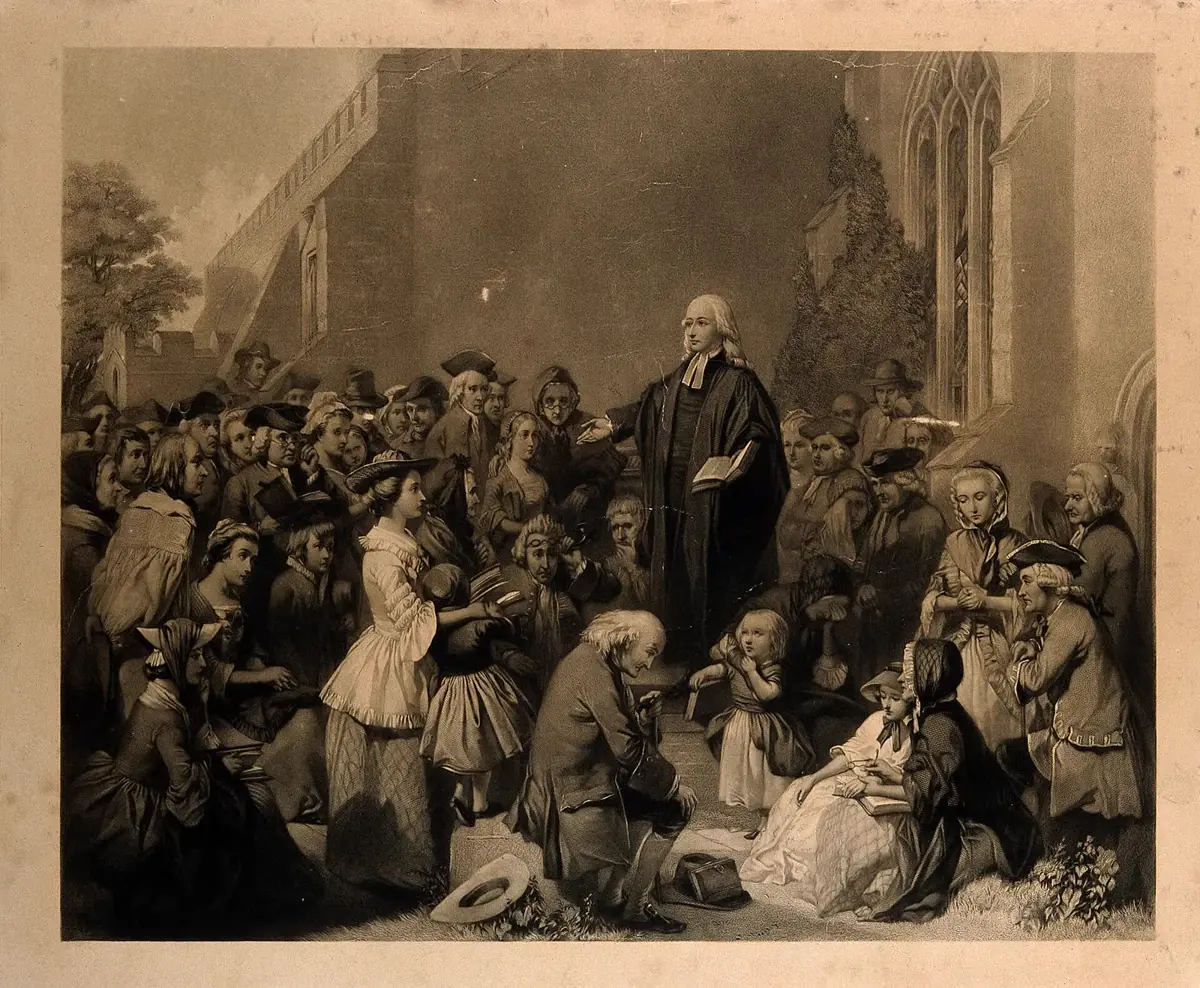
John Wesley preaching in the open air (18th-century engraving) — the message carried outside the building to wherever people already were.Wellcome Collection · CC BY 4.0
The setting
The book of Nehemiah opens "in the twentieth year" of the Persian king Artaxerxes (Nehemiah 2:1). Most historians identify him as Artaxerxes I, which places Nehemiah's journey to Jerusalem in the middle of the fifth century before Christ, about ninety years after the first exiles returned from Babylon. The temple had been rebuilt, but the city was still exposed. When Nehemiah's brother came from Judah, the report was grim:
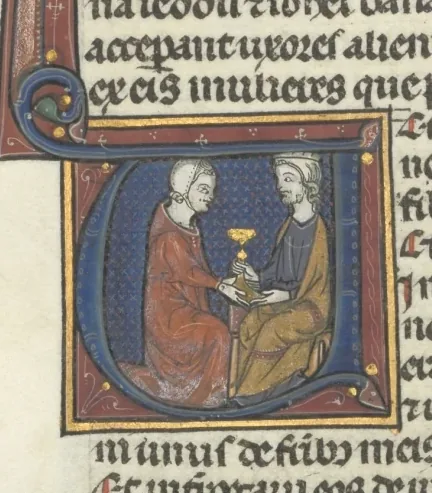
The opening of Nehemiah in a thirteenth-century Bible from southern France, showing Nehemiah presenting the golden cup to Artaxerxes, the king he served before the wall was built.Fol. 178v, Nehemiah, historiated initial V, Nehemiah presenting the golden cup to Artaxerxes · c. 1275–1300 · Cleveland Museum of Art · CC0 · full page · museum record · Galeria Regni
"The remnant that are left of the captivity there in the province are in great affliction and reproach: the wall of Jerusalem also is broken down, and the gates thereof are burned with fire." (Nehemiah 1:3)
Nehemiah's enemies in the book are real men known from outside the Bible. Chief among them is "Sanballat the Horonite" (Nehemiah 2:19). Among the Aramaic papyri found at Elephantine, an island in the Nile where a Jewish garrison lived under Persian rule, is a letter written in the seventeenth year of King Darius II (407 BC) to the Persian governor of Judah. Its writers mention that they have also written to "Delaiah and Shelemiah, the sons of Sanballat the governor of Samaria".2 A generation after Nehemiah, Sanballat's family still held power in Samaria — just as the book of Nehemiah describes him speaking "before his brethren and the army of Samaria" (Nehemiah 4:2).
The Jewish historian Josephus, writing near the end of the first century AD, retells Nehemiah's story in his Antiquities of the Jews. He adds colour — trumpeters stationed every five hundred feet, Nehemiah going "about the compass of the city by night, being never discouraged" — and he praises him as "a man of a good and righteous disposition, and very ambitious to make his own nation happy". Josephus also differs from Scripture: he dates Nehemiah to Xerxes rather than Artaxerxes, and says the wall took two years and four months, where Nehemiah's own record says "fifty and two days" (Nehemiah 6:15).3 Where they part, this paper follows the book of Nehemiah, written by the man who was there. But Josephus is a useful witness that the Jewish people of Jesus' day remembered Nehemiah as a model of a righteous leader.
He wept before he worked
The first thing Nehemiah did with the bad news was not to make a plan. "And it came to pass, when I heard these words, that I sat down and wept, and mourned certain days, and fasted, and prayed before the God of heaven" (Nehemiah 1:4). The chronology of the book suggests those "certain days" stretched across about four months, from the month Chisleu (Nehemiah 1:1) to the month Nisan (Nehemiah 2:1).
His prayer in chapter 1 is a model. He confesses the sins of Israel — "both I and my father's house have sinned" (Nehemiah 1:6) — not standing above the people but with them. He pleads God's own promises back to Him. And he ends with something practical: "prosper, I pray thee, thy servant this day, and grant him mercy in the sight of this man. For I was the king's cupbearer" (Nehemiah 1:11).
Here is the first lesson of Nehemiah. Biblical leadership begins with a burden — a grief over what is broken — carried first to God. A leader who has never wept over the thing he wants to fix will usually fix it for his own sake. A leader who has prayed over it for four months will be ready when the door opens.
The arrow prayer and the prepared plan
The door opened in the king's presence. Nehemiah's face gave him away: "Why is thy countenance sad, seeing thou art not sick? this is nothing else but sorrow of heart. Then I was very sore afraid" (Nehemiah 2:2). To be sad before a Persian king could be dangerous. Then came the question: "For what dost thou make request?" And Nehemiah writes, "So I prayed to the God of heaven. And I said unto the king ..." (Nehemiah 2:4-5).
Between the king's question and his answer there was time only for a silent cry to God. But that arrow prayer rested on months of praying, and on months of thinking. Nehemiah knew exactly what to ask for: permission to go, a time when he would return (Nehemiah 2:6), letters of safe passage to the governors beyond the river (2:7), and timber from the king's forest for the gates, the wall and his own house (2:8). He had worked out what the job would take before anyone asked him.
And then he gave the credit where it belonged: "And the king granted me, according to the good hand of my God upon me" (Nehemiah 2:8).
Prayer and planning are not rivals. Nehemiah did both, and he did them in the right order. He prayed until God gave him the burden; he planned until he knew what the burden required; and when the moment came he prayed again and spoke.
Seeing the problem with his own eyes
When he reached Jerusalem, Nehemiah did not call a meeting. He waited three days, then went out by night with a few men to inspect the walls:
"And I arose in the night, I and some few men with me; neither told I any man what my God had put in my heart to do at Jerusalem" (Nehemiah 2:12) "And the rulers knew not whither I went, or what I did; neither had I as yet told it to the Jews, nor to the priests, nor to the nobles, nor to the rulers, nor to the rest that did the work." (Nehemiah 2:16)
There is wisdom in that silence. A new leader who announces his plans before he has seen the ground will either be wrong or be resisted before he begins. Nehemiah looked first. He saw for himself where the rubble was so thick that "there was no place for the beast that was under me to pass" (Nehemiah 2:14). Then, when he knew, he spoke.
Casting the vision
His speech to the leaders of Jerusalem is short:
"Then said I unto them, Ye see the distress that we are in, how Jerusalem lieth waste, and the gates thereof are burned with fire: come, and let us build up the wall of Jerusalem, that we be no more a reproach. Then I told them of the hand of my God which was good upon me; as also the king's words that he had spoken unto me. And they said, Let us rise up and build. So they strengthened their hands for this good work." (Nehemiah 2:17-18)
Notice how he does it. He names the reality they already know: "Ye see the distress that we are in." He uses "we" and "us", not "you". He gives the reason: "that we be no more a reproach." He tells them what God has done — "the hand of my God which was good upon me" — and the practical provision the king has made. And he invites them: "come, and let us build." There is no manipulation in it, no inflated promise, no pressure. The people answered, "Let us rise up and build", because they saw it too.
Chapter 3 then gives a long list of who built which section. It is easy to skip, but it is one of the most important chapters in the book for leaders. The high priest Eliashib and his brethren the priests built the sheep gate (Nehemiah 3:1). Goldsmiths and merchants built. Rulers of districts built. Men built "over against" their own houses. One man, Shallum, built "he and his daughters" (Nehemiah 3:12). Nehemiah did not build the wall. He organised a people to build it, each at the place nearest to them, each with a real share of the work. Moses learned to share the burden; Nehemiah began that way.
Opposition: mockery, threat and distraction
Every work of God draws opposition, and Nehemiah faced three kinds.
Mockery. "What do these feeble Jews? will they fortify themselves? ... will they revive the stones out of the heaps of the rubbish which are burned?" (Nehemiah 4:2). Tobiah added, "Even that which they build, if a fox go up, he shall even break down their stone wall" (Nehemiah 4:3). Nehemiah answered with prayer, and kept building: "So built we the wall; and all the wall was joined together unto the half thereof: for the people had a mind to work" (Nehemiah 4:6).
Threat. When mockery failed, the enemies conspired to attack. Nehemiah's response is one of the great balanced verses of Scripture: "Nevertheless we made our prayer unto our God, and set a watch against them day and night, because of them" (Nehemiah 4:9). Prayer and a guard. Faith did not make him careless; caution did not make him faithless. He armed the builders — "every one with one of his hands wrought in the work, and with the other hand held a weapon" (Nehemiah 4:17) — and he steadied the people: "Be not ye afraid of them: remember the LORD, which is great and terrible, and fight for your brethren, your sons, and your daughters, your wives, and your houses" (Nehemiah 4:14).
Distraction. When threat failed, the enemies tried to draw Nehemiah away to a meeting in the plain of Ono, meaning him harm. His answer is a sentence every leader should keep: "I am doing a great work, so that I cannot come down: why should the work cease, whilst I leave it, and come down to you?" (Nehemiah 6:3). They asked four times; four times he gave the same answer. Then came a slanderous open letter, then a false prophet hired to frighten him into hiding in the temple. Through all of it his prayer was short: "Now therefore, O God, strengthen my hands" (Nehemiah 6:9).
"So the wall was finished in the twenty and fifth day of the month Elul, in fifty and two days. And it came to pass, that when all our enemies heard thereof ... they were much cast down in their own eyes: for they perceived that this work was wrought of our God" (Nehemiah 6:15-16). The enemies themselves saw that the credit was God's.
The trouble inside: justice for the poor
The most revealing chapter of Nehemiah for leaders may be chapter 5, because the trouble there did not come from enemies outside the wall. It came from the rich inside. In the middle of the building, "there was a great cry of the people and of their wives against their brethren the Jews" (Nehemiah 5:1). Famine and the king's taxes had driven poor families to mortgage their fields, and some to sell their children into bondage to their wealthier countrymen.
Nehemiah's response shows how a godly leader handles injustice among his own people. "And I was very angry when I heard their cry and these words. Then I consulted with myself, and I rebuked the nobles, and the rulers" (Nehemiah 5:6-7). He was angry, but he did not act in the first heat of it; he "consulted with myself". Then he confronted the powerful publicly, appealed to the fear of God, and called them to restore what they had taken. They agreed, and he made them swear to it before the priests (Nehemiah 5:12).
And then he told the reader something about his own conduct:
"Moreover from the time that I was appointed to be their governor in the land of Judah, from the twentieth year even unto the two and thirtieth year of Artaxerxes the king, that is, twelve years, I and my brethren have not eaten the bread of the governor. But the former governors that had been before me were chargeable unto the people ... but so did not I, because of the fear of God." (Nehemiah 5:14-15) "Yet for all this required not I the bread of the governor, because the bondage was heavy upon this people." (Nehemiah 5:18)
For twelve years Nehemiah refused the allowance that was his by right, because the people were already burdened. He fed a hundred and fifty at his own table at his own cost. He bought no land (Nehemiah 5:16). He did not use his position to enrich himself while others suffered. Paul would later say the same of his own ministry: "I have coveted no man's silver, or gold, or apparel" (Acts 20:33). The right to be supported is real — Paul defends it in 1 Corinthians 9 — but a leader who will lay it down for the sake of the people has a moral authority that cannot be bought.
Building people, not only walls
When the wall was finished, Nehemiah turned to the city's life. He gave charge of Jerusalem to his brother Hanani and to Hananiah, "for he was a faithful man, and feared God above many" (Nehemiah 7:2) — again, character as the qualification. Then, in chapter 8, he stood with Ezra the scribe while the law was read to the people: "So they read in the book in the law of God distinctly, and gave the sense, and caused them to understand the reading" (Nehemiah 8:8). When the people wept at what they heard, the word to them was, "neither be ye sorry; for the joy of the LORD is your strength" (Nehemiah 8:10).
The wall was never the point. A wall around a people who did not know God's word would only have been a tidier ruin. Nehemiah's work ended where all biblical leadership ends: with God's people hearing God's word and rejoicing in Him.
A leader's unfinished work
The last chapter of Nehemiah is not a triumphant ending. Nehemiah had gone back to the Persian court for a time, and when he returned he found that things had slid. The high priest Eliashib had given Nehemiah's old enemy Tobiah a room in the temple courts (Nehemiah 13:7). The Levites had not been paid and had gone back to their fields (Nehemiah 13:10). The Sabbath was being broken for trade, and men of Judah had married foreign wives who did not worship the Lord.
Nehemiah acted with a fierceness that can make a modern reader uncomfortable: he threw Tobiah's furniture out of the chamber, he "contended" with the rulers, and with the men who had married foreign wives "I contended with them, and cursed them, and smote certain of them, and plucked off their hair" (Nehemiah 13:25). Scripture records this honestly without holding up every action as a pattern. Nehemiah was a civil governor with civil powers, under the old covenant, and Christian leaders today are told plainly that the Lord's servant "must not strive; but be gentle unto all men" (2 Timothy 2:24). What is a pattern is his refusal to let the house of God be quietly corrupted, and his willingness to confront it.
And the book ends with a prayer: "Remember me, O my God, for good" (Nehemiah 13:31). He had built a wall in fifty-two days, and a dozen years later he was still fighting the same sins. That is what leadership among real people is like. The work is never finished on this side of glory, and the leader's final appeal is not to his record but to God's mercy.
What Nehemiah teaches leaders
Carry the burden to God before you carry it to people. Months of prayer came before minutes before the king.
Prayer and planning belong together. "We made our prayer unto our God, and set a watch."
See before you speak. Walk the walls yourself.
Say "we" and give God the credit. "Come, and let us build" — "the hand of my God which was good upon me."
Give every person a real share of the work. Chapter 3 is a list of names, and every one mattered.
Do not come down. Distraction is as dangerous as attack.
Guard the poor and refuse to profit from your position. Chapter 5 tested Nehemiah more than the enemies did.
Build people, not only projects. The wall served the word.
Part 4 — The Basin and the Towel: Jesus Washing Feet
8 min read
This part matters because it is the one place in the Gospels where Jesus says plainly, "I have given you an example, that ye should do as I have done to you." If we want to know what leadership looks like in the kingdom of God, we are not left to guess. We are taken into an upper room and shown.
The setting: what the Lord knew
John opens the scene with a sentence so full that it is easy to read past it:
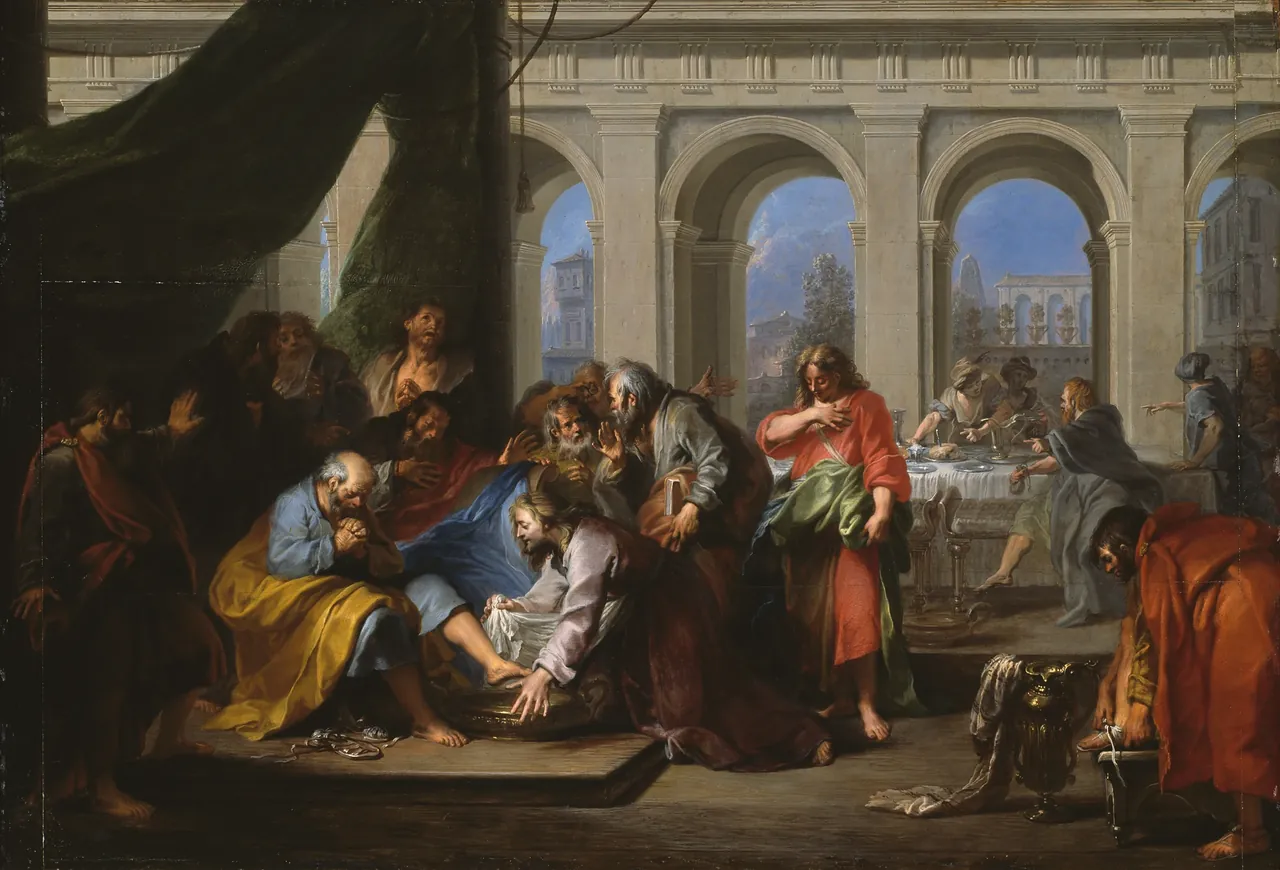
A French oil painting of 1720 to 1730 showing Christ Washing the Feet of His Disciples, the slave's work the Lord took up as an example for every leader.Christ Washing the Feet of His Disciples · 1720–30 · Art Institute of Chicago · CC0 · museum record · Galeria Regni
"Now before the feast of the passover, when Jesus knew that his hour was come that he should depart out of this world unto the Father, having loved his own which were in the world, he loved them unto the end. And supper being ended, the devil having now put into the heart of Judas Iscariot, Simon's son, to betray him; Jesus knowing that the Father had given all things into his hands, and that he was come from God, and went to God; He riseth from supper, and laid aside his garments; and took a towel, and girded himself." (John 13:1-4)
Look at what Jesus knew. He knew His hour had come. He knew Judas would betray Him. And He knew "that the Father had given all things into his hands, and that he was come from God, and went to God." That last clause is the key to the whole passage. Jesus did not wash feet because He had forgotten who He was. He washed feet because He knew exactly who He was. His security was so complete that He had nothing to protect.
This is why insecure leaders cannot serve. A man who is unsure of his standing must keep defending it; he cannot afford to be seen on his knees with a towel. A man who knows that all things are in the Father's hands is free to take the lowest place.
The Scottish scholar A. B. Bruce, whose The Training of the Twelve (first published 1871) is still one of the finest studies of how Jesus formed His disciples, gave this chapter the title "The Master Serving", and the subtitle "another lesson in humility". He noted that from this point John's Gospel turns almost entirely to the "tender, intimate intercourse of the Lord Jesus with 'His own'" in His last hours.4 The washing of feet is the first thing we see when the door of that room opens.
A slave's work
In the dusty world of the ancient Near East, where people walked in sandals on unpaved roads, washing the feet of guests was a basic act of hospitality — and the work of the lowest servant in the house. When David sent for Abigail to be his wife, she answered, "Behold, let thine handmaid be a servant to wash the feet of the servants of my lord" (1 Samuel 25:41). To wash feet was to place yourself beneath the one you washed. To wash the feet of servants was lower still.
In the upper room there seems to have been no servant to do it, and none of the twelve offered. Luke tells us that at that same supper "there was also a strife among them, which of them should be accounted the greatest" (Luke 22:24). It is not hard to imagine why no one picked up the towel. To do it would have been to concede the argument.
So Jesus did it. John slows down to describe every movement: He "riseth from supper, and laid aside his garments; and took a towel, and girded himself. After that he poureth water into a bason, and began to wash the disciples' feet, and to wipe them with the towel wherewith he was girded" (John 13:4-5). Paul would later describe the incarnation in the same shape: Christ Jesus, "being in the form of God ... made himself of no reputation, and took upon him the form of a servant ... he humbled himself, and became obedient unto death, even the death of the cross" (Philippians 2:6-8). The basin in the upper room was a small picture of the whole descent of the Son of God.
Peter's protest
When the Lord came to Peter, Peter resisted. First he asked, "Lord, dost thou wash my feet?" (John 13:6), and then he refused outright: "Thou shalt never wash my feet" (John 13:8). It sounds like humility. It is actually pride of a subtler kind — the pride that will not be served, that wants to keep the proper order of things, that cannot bear to be in someone's debt.
Jesus' reply is sharp: "If I wash thee not, thou hast no part with me" (John 13:8). The washing pointed beyond itself to the cleansing that only He could give, the cleansing of the cross. No one can serve in Christ's kingdom who has not first been served by Christ. The leader who has never let the Lord wash him will try to lead from his own resources, and will end either proud or crushed.
There is a word here for leaders in another sense too. Many leaders find it easy to serve and very hard to be served. They will visit the sick but will not tell anyone when they are sick. They will counsel others but will not be counselled. Peter's protest is their protest. And the Lord's answer is the same: let Me wash you, or you have no part with Me.
"I have given you an example"
When He had finished, Jesus sat down again and explained what He had done:
"Know ye what I have done to you? Ye call me Master and Lord: and ye say well; for so I am. If I then, your Lord and Master, have washed your feet; ye also ought to wash one another's feet. For I have given you an example, that ye should do as I have done to you. Verily, verily, I say unto you, The servant is not greater than his lord; neither he that is sent greater than he that sent him. If ye know these things, happy are ye if ye do them." (John 13:12-17)
Three things stand out.
Jesus does not deny His authority. "Ye call me Master and Lord: and ye say well; for so I am." Servant leadership is not the abolition of authority. Jesus remains Lord. But His lordship is exercised by serving, and the lower His servants are, the less excuse they have to refuse the towel: "The servant is not greater than his lord."
The example is binding. "Ye also ought to wash one another's feet." Christians have differed over whether this commands a literal rite of foot-washing; some churches practise it, and most take it as a command to the humble service it pictures. Either way, the command cannot be reduced to a ceremony performed once a year. It is a way of life.
The blessing is in the doing. "If ye know these things, happy are ye if ye do them." Most leaders know these things. The question is whether we do them — whether we pick up the towel when there is no one watching and nothing to gain.
He washed Judas's feet
One detail in the passage should stop every leader in his tracks. "He knew who should betray him; therefore said he, Ye are not all clean" (John 13:11). Judas was in the room. Jesus knew what Judas was about to do. And there is no hint that He passed him over. The hands that would be nailed to the cross washed the feet that would walk out into the night to betray Him.
Here is the measure of the Lord's servanthood. It was not reserved for the deserving, the loyal or the grateful. Leaders are often tempted to serve the people who appreciate them and quietly withdraw from those who oppose them. The Lord washed Judas's feet.
The new commandment
Later that evening, after Judas had gone, Jesus gave the commandment that explains the basin: "A new commandment I give unto you, That ye love one another; as I have loved you, that ye also love one another. By this shall all men know that ye are my disciples, if ye have love one to another" (John 13:34-35). The foot-washing was love made visible. The new commandment is the same love made universal. Christian leadership is, at its root, love that goes first and goes low.
Augustine: "For you I am a bishop, with you I am a Christian"
The church has always needed reminding of the upper room. About four hundred years after it, Augustine, bishop of the North African town of Hippo, preached a sermon on the anniversary of his ordination. He did not celebrate his office. He trembled at it. "What, though," he asked, "is to be dreaded in this office, if not that I may take more pleasure, which is so dangerous, in the honor shown me, than in what bears fruit in your salvation?" And then he gave the church one of its most quoted sentences on leadership:
"Where I'm terrified by what I am for you, I am given comfort by what I am with you. For you I am a bishop, with you, after all, I am a Christian. The first is the name of an office undertaken, the second a name of grace; that one means danger, this one salvation."5
He went on: "So I hope the fact that I have been bought together with you gives me more pleasure than my having been placed at your head; then, as the Lord has commanded, I will be more effectively your servant."6 That is the upper room applied. The leader stands among the people as one who was bought with the same blood and washed by the same Lord. His office is a danger to him; his salvation is his joy. Any leader who reverses those two has forgotten the basin.
What the basin teaches leaders
Serve from security, not for it. Jesus washed feet "knowing that the Father had given all things into his hands."
Do the job no one else will do. The towel was lying there because no one else would pick it up.
Let Christ serve you first. "If I wash thee not, thou hast no part with me."
Keep authority and service together. "Ye call me Master and Lord ... so I am" — and He washed their feet.
Serve the ungrateful too. He washed Judas's feet.
Do it, do not only admire it. "Happy are ye if ye do them."
Part 5 — The Shepherd's Charge: Peter to the Elders
8 min read
This part matters because the man who protested at the basin, and three times denied his Lord, was restored and made a shepherd — and near the end of his life he wrote down what he had learned for the shepherds who came after him. First Peter 5 is leadership taught by someone who had failed, been forgiven and been sent back to work.
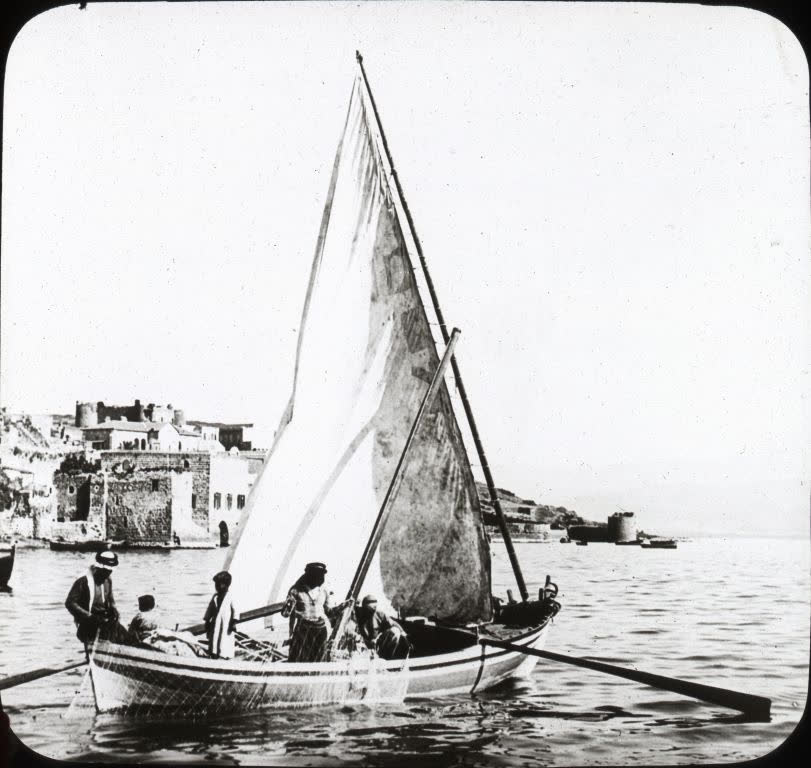
The synagogue at Capernaum, standing on the black-basalt foundations of the 1st-century hall where Jesus taught.שלמה רודד · CC BY 2.5
Peter's own restoration
To read 1 Peter 5 well, we need to remember John 21. After the resurrection, by the Sea of Galilee, Jesus asked Peter three times, "Simon, son of Jonas, lovest thou me?" — once for each denial. Three times Peter answered, and three times the Lord gave him a charge: "Feed my lambs ... Feed my sheep ... Feed my sheep" (John 21:15-17).
The Lord did not restore Peter by telling him his failure did not matter. He restored him by asking about love and giving him work. That is the order: love for Christ first, then care for Christ's sheep. Notice too that the sheep remain Christ's — "my lambs", "my sheep". Peter was never given a flock of his own.
Years before, Jesus had told Peter, "I have prayed for thee, that thy faith fail not: and when thou art converted, strengthen thy brethren" (Luke 22:32). First Peter is that strengthening. The restored shepherd strengthens the other shepherds.
The charge
"The elders which are among you I exhort, who am also an elder, and a witness of the sufferings of Christ, and also a partaker of the glory that shall be revealed: Feed the flock of God which is among you, taking the oversight thereof, not by constraint, but willingly; not for filthy lucre, but of a ready mind; Neither as being lords over God's heritage, but being ensamples to the flock. And when the chief Shepherd shall appear, ye shall receive a crown of glory that fadeth not away." (1 Peter 5:1-4)
"Who am also an elder"
Peter was an apostle, one of the three closest to Jesus, the preacher of Pentecost. He could have written "I command you". He wrote, "I exhort ... who am also an elder." He placed himself alongside them, not above them. It is the same spirit as Augustine's "with you I am a Christian".
"Feed the flock of God which is among you"
The first duty of a shepherd is to feed. The Greek verb is poimaino (G4165), "to tend as a shepherd", which includes feeding, guiding, guarding and caring. It is the same word Jesus used to Peter in John 21:16. A leader in Christ's church must first be a feeder of souls with the word of God. Organising, deciding and administering have their place, but a shepherd who does not feed the sheep is not a shepherd.
And the flock is "the flock of God". Not the pastor's flock, not the elders' flock, not "my ministry". God's.
"Taking the oversight thereof"
The phrase translates episkopeo (G1983), "to oversee", the verb behind the noun episkopos, "bishop" or "overseer". Peter's charge joins the shepherd's work and the overseer's work in one sentence, addressed to the elders. (The companion paper Church Leadership shows how the New Testament uses "elder", "bishop" and "pastor" for the same office.) Oversight means watching: knowing the state of the flock, seeing danger before it arrives, noticing who is missing.
Three contrasts
Peter then gives three pairs, each naming a wrong motive and a right one.
"Not by constraint, but willingly." Some lead because they feel they must; no one else will, or they are expected to. Peter says the work should be taken up freely, from the heart. A leader who serves only from duty grows resentful, and the sheep can tell.
"Not for filthy lucre, but of a ready mind." Some lead for what they get — money, standing, a platform. "Filthy lucre" is shameful gain. Peter does not say elders should never be paid (Paul says the opposite in 1 Timothy 5:17-18), but that money must never be the motive. The right motive is "a ready mind", an eagerness to serve.
"Neither as being lords over God's heritage, but being ensamples to the flock." This is the sharpest. The word for "being lords over" is katakurieuo (G2634), "to lord against, i.e. control, subjugate" — the same word Jesus used in Mark 10:42 for the way Gentile rulers "exercise lordship". Peter is repeating his Master's warning, word for word in the Greek. The alternative is to be tupos (G5179), "ensamples" — a pattern, a model for imitation. Shepherds in the ancient world led their flocks from the front; the sheep followed the shepherd's voice and steps. A Christian leader leads chiefly by being someone worth following. Paul could say, "Be ye followers of me, even as I also am of Christ" (1 Corinthians 11:1). Every leader is saying that, whether he means to or not.
"When the chief Shepherd shall appear"
The charge ends by lifting the elders' eyes. The flock belongs to God, the shepherds serve under "the chief Shepherd", and He will appear. Their reward is not given now, in salary or reputation, but then: "a crown of glory that fadeth not away." Peter had already called Christ "the Shepherd and Bishop of your souls" (1 Peter 2:25). Every under-shepherd will give account to Him.
Clothed with humility
Peter goes straight on:
"Likewise, ye younger, submit yourselves unto the elder. Yea, all of you be subject one to another, and be clothed with humility: for God resisteth the proud, and giveth grace to the humble. Humble yourselves therefore under the mighty hand of God, that he may exalt you in due time: Casting all your care upon him; for he careth for you." (1 Peter 5:5-7)
"Be clothed with humility." The Greek word for "be clothed" is egkomboomai (G1463), which Strong defines as "to engirdle oneself (for labor)", explaining it by "the apron as being a badge of servitude". It is hard not to think of the night when the Lord "took a towel, and girded himself" (John 13:4). The man who once said "Thou shalt never wash my feet" now tells every believer to put humility on like a servant's garment.
And the reason is stark: "God resisteth the proud." The proud leader has God against him. The humble leader receives grace.
Then comes a verse every leader needs: "Casting all your care upon him; for he careth for you." Shepherds carry the cares of the flock. If they carry them alone, they break. Moses broke under that weight; Peter tells elders to throw it onto the Lord. The chief Shepherd cares for His under-shepherds too.
Paul at Miletus: the same charge
Peter's charge has a twin in Paul's farewell to the elders of Ephesus, spoken at Miletus on his way to Jerusalem:
"Take heed therefore unto yourselves, and to all the flock, over the which the Holy Ghost hath made you overseers, to feed the church of God, which he hath purchased with his own blood. For I know this, that after my departing shall grievous wolves enter in among you, not sparing the flock. Also of your own selves shall men arise, speaking perverse things, to draw away disciples after them. Therefore watch, and remember, that by the space of three years I ceased not to warn every one night and day with tears." (Acts 20:28-31)
The same three words appear: elders (Acts 20:17), overseers, and feeding. The same order appears: "unto yourselves" first, then "to all the flock". And there is a warning Peter left implicit: danger will come both from outside ("grievous wolves") and from inside ("of your own selves shall men arise"). A shepherd must watch the flock and must watch himself, because the next false leader may be standing in his own shoes.
Paul also reminded them how he had lived among them: "Serving the LORD with all humility of mind, and with many tears ... I kept back nothing that was profitable unto you, but have shewed you, and have taught you publickly, and from house to house" (Acts 20:19-20). And: "I have coveted no man's silver, or gold, or apparel. Yea, ye yourselves know, that these hands have ministered unto my necessities" (Acts 20:33-34). Humility, tears, teaching in public and in homes, clean hands with money. That is the apostolic portrait of a shepherd.
Gregory the Great: "the art of arts"
In the year 590 a reluctant monk named Gregory was made bishop of Rome. Soon afterwards he wrote a book on the pastor's work, known in English as the Pastoral Rule (or Pastoral Care), which became the standard handbook for shepherds in the Western church for centuries. It opens with a warning against rushing into leadership:
"No one presumes to teach an art till he has first, with intent meditation, learned it. What rashness is it, then, for the unskilful to assume pastoral authority, since the government of souls is the art of arts!"7
Gregory's second book describes the life of the shepherd in a series of chapter headings that read like a commentary on 1 Peter 5. The ruler, he says, should be "pure in thought", "always chief in action", "discreet in keeping silence, profitable in speech", "a near neighbour to every one in compassion, and exalted above all in contemplation", "through humility, a companion of good livers, but, through the zeal of righteousness, rigid against the vices of evildoers", and he "should not set his heart on pleasing men, and yet should give heed to what ought to please them".8 It is the shepherd's balance: close to the people in compassion, close to God in prayer; humble with the faithful, firm with the wolf.
On compassion he wrote that the shepherd should "through the bowels of loving-kindness ... transfer the infirmities of others to himself".9 That is Peter's "feed the flock" and Paul's "night and day with tears" in another century's words.
What Peter teaches leaders
Love Christ before you lead His sheep. "Lovest thou me? ... Feed my sheep."
The flock is God's. You are a steward, not an owner.
Feed first. The word of God is the shepherd's first tool.
Check your motives: willingly, not by constraint; eagerly, not for gain; as an example, not a lord.
Wear humility like a servant's apron. God resists the proud.
Cast your cares on Him. The chief Shepherd cares for the under-shepherds.
Work for the crown that does not fade. It is given at His appearing, not before.
This part matters because every passage we have read points inward. Jethro looked for men who feared God. Nehemiah prayed for four months. Jesus washed feet from a heart secure in the Father. Peter and Paul both said, "Take heed unto yourselves" first. A leader's public work flows from a private life, and when the private life dries up the public work becomes a performance.
The slopes above the Sea of Galilee at the traditional Mount of Beatitudes — the natural amphitheater where the Sermon on the Mount was preached.Obendorf · CC0
"Take heed unto thyself"
Paul's charge to his young delegate Timothy puts the order plainly:
"Let no man despise thy youth; but be thou an example of the believers, in word, in conversation, in charity, in spirit, in faith, in purity. Till I come, give attendance to reading, to exhortation, to doctrine. Neglect not the gift that is in thee ... Meditate upon these things; give thyself wholly to them; that thy profiting may appear to all. Take heed unto thyself, and unto the doctrine; continue in them: for in doing this thou shalt both save thyself, and them that hear thee." (1 Timothy 4:12-16)
"Take heed unto thyself, and unto the doctrine." Life and teaching, in that order. ("Conversation" in the King James means one's whole manner of life, not only speech.) A leader can be sound in doctrine and rotten in life; he can also be warm in life and careless in doctrine. Both will harm the flock. Paul tells Timothy to watch both, and to watch himself first.
Richard Baxter: the oversight of ourselves
In 1656 the English Puritan pastor Richard Baxter, minister at Kidderminster, published The Reformed Pastor, an extended sermon on Acts 20:28 for his fellow ministers. Its first chapter is titled "The Oversight of Ourselves", and it opens with a warning that every Christian leader should read slowly:
"See that the work of saving grace be thoroughly wrought in your own souls. Take heed to yourselves, lest you be void of that saving grace of God which you offer to others, and be strangers to the effectual working of that gospel which you preach."10
Baxter's point is not academic. It is possible to lead others toward a Christ you do not know. Judas preached and healed with the twelve. The Lord warned that many would say on the last day, "Have we not prophesied in thy name?" and hear, "I never knew you" (Matthew 7:22-23). Paul himself said, "I keep under my body, and bring it into subjection: lest that by any means, when I have preached to others, I myself should be a castaway" (1 Corinthians 9:27). The first person a leader must lead to Christ is himself.
Baxter's third warning is just as sharp: "Take heed to yourselves, lest your example contradict your doctrine ... lest you unsay with your lives, what you say with your tongues; and be the greatest hindrances of the success of your own labors."11 The flock hears the sermon on Sunday and watches the man the rest of the week. When the two contradict, they will believe the life.
M'Cheyne: "great likeness to Jesus"
Robert Murray M'Cheyne was a young minister of St Peter's Church, Dundee, who died in 1843 at the age of twenty-nine. His letters and sermons were collected by his friend Andrew Bonar, and they have shaped pastors ever since. In October 1840 he wrote to a friend, Dan Edwards, who was about to go to Germany as a missionary to the Jews and was busy learning German:
"I know you will apply hard to German; but do not forget the culture of the inner man,—I mean of the heart. How diligently the cavalry officer keeps his sabre clean and sharp; every stain he rubs off with the greatest care. Remember you are God's sword,—his instrument ... In great measure, according to the purity and perfections of the instrument, will be the success. It is not great talents God blesses so much as great likeness to Jesus. A holy minister is an awful weapon in the hand of God."12
("Awful" in the older sense: inspiring awe.) Earlier that year, in a letter to his fellow minister William Chalmers Burns, M'Cheyne had written that there were "two things it is impossible to desire with sufficient ardour,—personal holiness, and the honour of Christ in the salvation of souls."13 Those two belong together. A leader who wants the second without the first wants results without likeness to Christ.
Spurgeon: called to holiness before called to ministry
Charles Haddon Spurgeon trained hundreds of young preachers at his Pastors' College in London. The first of his published Lectures to My Students is called "The Minister's Self-Watch", and it makes the same point with his usual bluntness:
"True and genuine piety is necessary as the first indispensable requisite; whatever 'call' a man may pretend to have, if he has not been called to holiness, he certainly has not been called to the ministry."14
In the same lecture Spurgeon quotes Gregory the Great: "The hand that means to make another clean, must not itself be dirty." Gregory's own words in the Pastoral Rule are, "the hand that would cleanse from dirt must needs be clean, lest, being itself sordid with clinging mire, it soil whatever it touches all the more."15 Thirteen centuries apart, the two men said the same thing.
The disciplines of the inner life
What does it mean, practically, for a leader to take heed to himself? Scripture does not give a timetable, but it gives a pattern.
Prayer in secret. Jesus, with crowds pressing on Him, "rising up a great while before day ... departed into a solitary place, and there prayed" (Mark 1:35). Luke says that "he withdrew himself into the wilderness, and prayed" (Luke 5:16). Before He chose the twelve, "he went out into a mountain to pray, and continued all night in prayer to God" (Luke 6:12). If the Son of God needed solitude with the Father before leading, so do we. The apostles, when the work of serving tables threatened to swallow them, said, "we will give ourselves continually to prayer, and to the ministry of the word" (Acts 6:4). Prayer came first in that sentence.
The word of God, meditated on. God's charge to Joshua, the new leader of Israel, was not a strategy but a book: "This book of the law shall not depart out of thy mouth; but thou shalt meditate therein day and night, that thou mayest observe to do according to all that is written therein: for then thou shalt make thy way prosperous, and then thou shalt have good success" (Joshua 1:8). Biblical meditation is not emptying the mind; it is filling it with what God has said, turning it over, and doing it. The blessed man of Psalm 1 does exactly that: "his delight is in the law of the LORD; and in his law doth he meditate day and night" (Psalm 1:2). A leader who reads the Bible only to prepare lessons will soon be teaching from an empty store.
Wisdom asked for. When the young Solomon became king, he asked for one thing: "Give therefore thy servant an understanding heart to judge thy people, that I may discern between good and bad: for who is able to judge this thy so great a people?" (1 Kings 3:9). The promise of James is for every leader: "If any of you lack wisdom, let him ask of God, that giveth to all men liberally, and upbraideth not; and it shall be given him" (James 1:5).
A guarded heart. "Keep thy heart with all diligence; for out of it are the issues of life" (Proverbs 4:23). The leader's heart is the wellspring of everything he does. Pride, envy, lust, bitterness and the love of praise grow there unseen until they come out in public.
The fruit of the Spirit. The qualities most needed in a leader are not skills but fruit: "love, joy, peace, longsuffering, gentleness, goodness, faith, Meekness, temperance" (Galatians 5:22-23). They cannot be manufactured; they grow from abiding in Christ. "He that abideth in me, and I in him, the same bringeth forth much fruit: for without me ye can do nothing" (John 15:5).
The great sin of leaders
Of all the dangers to a leader's inner life, Scripture names pride most often. "Pride goeth before destruction, and an haughty spirit before a fall" (Proverbs 16:18). Paul forbids making a new convert an overseer, "lest being lifted up with pride he fall into the condemnation of the devil" (1 Timothy 3:6). King Uzziah of Judah is a warning written for every successful leader: "as long as he sought the LORD, God made him to prosper" (2 Chronicles 26:5), and then the turn: "But when he was strong, his heart was lifted up to his destruction" (2 Chronicles 26:16). Success was more dangerous to him than any enemy.
C. S. Lewis, the Oxford scholar who came to Christ from atheism and wrote Mere Christianity, called pride "the great sin" and gave a chapter to it. He observed that pride is "essentially competitive": it "gets no pleasure out of having something, only out of having more of it than the next man".16 That is precisely the disciples' argument in the upper room — which of them should be accounted the greatest. Lewis also saw why pride blinds a person to God: "A proud man is always looking down on things and people: and, of course, as long as you are looking down, you cannot see something that is above you."17
And he described the humble person in a way that fits the Lord with the towel. Such a person, Lewis wrote, will not be "a sort of greasy, smarmy person, who is always telling you that, of course, he is nobody". Rather, "He will not be thinking about humility: he will not be thinking about himself at all."18 The cure for a leader's pride is not to think poorly of himself but to forget himself in the service of Christ and His people.
Gregory's painter
Gregory the Great ended his book on pastoral care with a confession that every writer on leadership should copy. Having described at length what a shepherd ought to be, he wrote to the friend who had asked for the book:
"See now, good man, how, compelled by the necessity laid upon me by your reproof, being intent on showing what a Pastor ought to be, I have been as an ill-favoured painter pourtraying a handsome man; and how I direct others to the shore of perfection, while myself still tossed among the waves of transgressions. But in the shipwreck of this present life sustain me, I beseech you, by the plank of your prayer."19
That is the right spirit in which to read a paper like this one. No leader matches the portrait. The point of the portrait is not to make us proud that we resemble it or hopeless that we do not, but to send us to the only Leader who ever did, and to the prayers of one another.
This part matters because leaders do fall, and the Bible does not hide it. Its honesty about Saul, David, Peter and others is a mercy: it warns us of the paths to ruin, and it shows the way back. A paper on leadership that left this out would be dishonest.
Saul: the leader who feared the people
Saul began well. When Samuel later rebuked him, he reminded him of that beginning: "When thou wast little in thine own sight, wast thou not made the head of the tribes of Israel, and the LORD anointed thee king over Israel?" (1 Samuel 15:17). He was humble once. But the humility did not last. He offered sacrifice in Samuel's place because the people were scattering (1 Samuel 13:8-13), and he spared what God had told him to destroy, and then went to Carmel, where "he set him up a place" (1 Samuel 15:12) — a monument to himself. When confronted, his confession revealed the root: "I have sinned: for I have transgressed the commandment of the LORD, and thy words: because I feared the people, and obeyed their voice" (1 Samuel 15:24).
A French manuscript page of about 1470 opening the Penitential Psalms with David penitent, the fallen king whose broken confession shows the way back for leaders.Book of Hours (Use of Rouen): fol. 80r, Opening Penitential Psalms, David Penitent, in the Distance David Slaying Goliath · c. 1470 · Cleveland Museum of Art · CC0 · museum record · Galeria Regni
Saul is the leader who governs by popularity. He watched the crowd more than he listened to God. And when the crowd later sang David's praises louder than his, his fear turned to jealousy and his jealousy to murderous rage. Paul's word answers Saul's sin: "not as pleasing men, but God, which trieth our hearts" (1 Thessalonians 2:4).
David: the leader who stayed home
David was "a man after mine own heart" (Acts 13:22). But the most famous fall in the Bible began with an unguarded season: "And it came to pass, after the year was expired, at the time when kings go forth to battle ... But David tarried still at Jerusalem" (2 Samuel 11:1). The king was not where he should have been. Idleness, then looking, then taking, then covering up — adultery led to murder, and the man who had refused to kill Saul arranged the death of one of his own mighty men.
God sent a prophet. Nathan told a story of a rich man who stole a poor man's only lamb, and when David burned with anger, "Nathan said to David, Thou art the man" (2 Samuel 12:7). Every leader needs a Nathan — someone close enough and brave enough to say "Thou art the man."
David's response is what separates him from Saul. Saul made excuses; David broke. Psalm 51, by its title his prayer after Nathan came to him, is the way back for every fallen leader:
"For I acknowledge my transgressions: and my sin is ever before me. Against thee, thee only, have I sinned, and done this evil in thy sight" (Psalm 51:3-4) "Create in me a clean heart, O God; and renew a right spirit within me. Cast me not away from thy presence; and take not thy holy spirit from me. Restore unto me the joy of thy salvation; and uphold me with thy free spirit. Then will I teach transgressors thy ways; and sinners shall be converted unto thee." (Psalm 51:10-13)
David was forgiven, but the consequences of his sin ran through his family for the rest of his life (2 Samuel 12:10-14). Forgiveness and consequences are both real. A restored leader is not a leader for whom nothing happened.
Diotrephes: the leader who loved first place
Not every fall is dramatic. In his third letter John names a church leader who had quietly turned the church into his own domain: "Diotrephes, who loveth to have the preeminence among them, receiveth us not ... prating against us with malicious words: and not content therewith, neither doth he himself receive the brethren, and forbiddeth them that would, and casteth them out of the church" (3 John 1:9-10).
"Loveth to have the preeminence." That is the whole diagnosis. Diotrephes did not fall into scandal; he fell into control. He gossiped against the apostle, shut out visiting believers and expelled those who disagreed. Many church splits, abusive ministries and bitter congregations begin not with immorality but with a Diotrephes — a leader who must be first. It is the upper-room argument, never repented of.
Peter: the leader who wept and was sent back
Peter's fall was public and complete. He had sworn he would die with Jesus; within hours he swore he did not know Him. "And the Lord turned, and looked upon Peter ... And Peter went out, and wept bitterly" (Luke 22:61-62).
But Jesus had prayed for him before he fell (Luke 22:32), and after the resurrection the angel's message to the women was to "tell his disciples and Peter" (Mark 16:7). The Lord sought him out by the sea, asked him three times about love, and gave him three times the charge to feed the sheep (John 21:15-17). Fifty days after the denial, Peter preached at Pentecost. And when the rulers of Jerusalem later saw his boldness, "they took knowledge of them, that they had been with Jesus" (Acts 4:13).
Peter shows that a fall need not be the end. But it is worth noting how he was restored: by the Lord, personally, through repentance and a renewed confession of love, and with a clear commission. He was not quietly allowed to carry on as if nothing had happened, and he was not thrown away.
How restoration works
Scripture gives the church a gentle and serious way of handling a leader's sin.
Restore gently. "Brethren, if a man be overtaken in a fault, ye which are spiritual, restore such an one in the spirit of meekness; considering thyself, lest thou also be tempted" (Galatians 6:1). The goal is restoration, the manner is meekness, and the attitude is self-watchfulness. Anyone who restores another with contempt has forgotten how near he stands to the same edge. "Wherefore let him that thinketh he standeth take heed lest he fall" (1 Corinthians 10:12).
Take leaders' sin seriously. Paul tells Timothy not to receive an accusation against an elder "but before two or three witnesses", and then: "Them that sin rebuke before all, that others also may fear" (1 Timothy 5:19-20). Leaders are protected from rumour, and they are not protected from truth. When a leader's sin is established, it is dealt with openly, because his example is public. (The companion paper Church Leadership discusses this further.)
Distinguish forgiveness from fitness. Forgiveness is given freely to all who repent. Fitness to lead is a matter of character proven over time. A man who has fallen into gross sin may be fully forgiven and fully restored to fellowship, and still need a long season before he is trusted with leadership again — if ever. The qualification "blameless" (1 Timothy 3:2; Titus 1:6) does not mean sinless, but it does mean a life with no open charge against it. Churches differ in how they apply this to a fallen leader; what Scripture requires of all of them is both mercy and honesty.
Guarding against the fall
The best restoration is the fall that never happens. From the lives we have looked at, a few safeguards stand out:
Stay where you belong. David fell when he stayed home from the battle. Idleness and isolation are dangerous seasons.
Have a Nathan. Put yourself where someone can tell you the truth. "Iron sharpeneth iron; so a man sharpeneth the countenance of his friend" (Proverbs 27:17). The Preacher warns, "Woe to him that is alone when he falleth; for he hath not another to help him up" (Ecclesiastes 4:10).
Fear God more than people. Saul's ruin began with "I feared the people."
Refuse the love of first place. Diotrephes is the warning against control.
Watch your success. Uzziah fell "when he was strong."
Keep the first love. The Lord's word to the leaders of Ephesus is a word for every leader whose work has outlasted his warmth: "thou hast left thy first love. Remember therefore from whence thou art fallen, and repent, and do the first works" (Revelation 2:4-5).
We began with the world's picture of a leader — vision, influence, results. We end with a different picture: a shepherd with a lamb in his arms, a steward giving an account, a governor eating at his own cost, a Lord on His knees with a towel.
The four great passages tell one story. Moses learned that no leader can carry God's people alone, and that the people needed to carry it with him are chosen by character. Nehemiah showed that leadership begins with a burden carried to God, works by prayer and planning together, gives every person a share, protects the poor, refuses to profit, and builds people and not only walls. The Lord Jesus, knowing that all things were in His hands, took the lowest place and told us to do as He had done. And Peter, the restored failure, told the elders to feed God's flock willingly, eagerly and as examples, clothed in humility, until the chief Shepherd appears.
The pastors of the church have said the same. "For you I am a bishop, with you I am a Christian" (Augustine). The government of souls is "the art of arts" (Gregory). "Take heed to yourselves, lest you be void of that saving grace of God which you offer to others" (Baxter). "It is not great talents God blesses so much as great likeness to Jesus" (M'Cheyne). If a man "has not been called to holiness, he certainly has not been called to the ministry" (Spurgeon).
Questions for reflection
Take these slowly, alone or with others who lead beside you:
1. Where am I trying to carry alone something God meant to be shared? Who are the "able men" — or women, in the many spheres where women lead — I should be training and trusting? 2. What burden has God laid on me that I have not yet carried to Him in prayer for more than a few minutes? 3. Is there a towel lying in the room that no one is picking up — a task beneath my position that would serve the people I lead? 4. Do I let others serve me, or am I like Peter at the basin? 5. Which of Peter's three wrong motives — constraint, gain, control — am I most tempted by? 6. Who is my Nathan? Who can tell me "Thou art the man"? 7. Is my private life with God larger or smaller than my public work for Him?
An invitation
Every principle in this paper depends on one thing: that the leader himself has been served by Christ. "If I wash thee not, thou hast no part with me." No one can lead others to a Saviour he has not met.
If you are not sure you know Him, the way is the same for leaders and followers. Scripture calls it "repentance toward God, and faith toward our Lord Jesus Christ" (Acts 20:21). Paul wrote, "For by grace are ye saved through faith; and that not of yourselves: it is the gift of God: Not of works, lest any man should boast" (Ephesians 2:8-9). On the day of Pentecost Peter told the crowd what to do: "Repent, and be baptized every one of you in the name of Jesus Christ for the remission of sins, and ye shall receive the gift of the Holy Ghost" (Acts 2:38). And the Lord's promise stands: "him that cometh to me I will in no wise cast out" (John 6:37).
And if you know Him and you are tired — if you have been sitting at the judgment seat from morning until evening, or building the wall with a sword in one hand — hear the chief Shepherd:
"Come unto me, all ye that labour and are heavy laden, and I will give you rest. Take my yoke upon you, and learn of me; for I am meek and lowly in heart: and ye shall find rest unto your souls. For my yoke is easy, and my burden is light." (Matthew 11:28-30)
1Robert K. Greenleaf, The Servant as Leader (Cambridge, MA: Center for Applied Studies, 1970). The wording quoted is as given by the Greenleaf Center for Servant Leadership, "What Is Servant Leadership?", https://www.greenleaf.org/what-is-servant-leadership/.↩
2Elephantine papyrus, petition to Bagoas (Bagohi), governor of Judah, dated 20 Marheshwan, year 17 of Darius (407 BC); A. E. Cowley, Aramaic Papyri of the Fifth Century B.C. (Oxford: Clarendon Press, 1923), no. 30, line 29. English translation in James B. Pritchard, ed., Ancient Near Eastern Texts Relating to the Old Testament, 3rd ed. (Princeton: Princeton University Press, 1969), 492.↩
3Josephus, Antiquities of the Jews 11.5.6–8, trans. William Whiston. Online: https://www.gutenberg.org/ebooks/2848.↩
4A. B. Bruce, The Training of the Twelve, 2nd ed. (Edinburgh: T. & T. Clark, 1877), ch. 21, "The Master Serving," 331–332. Online: https://archive.org/details/trainingoftwel00bruc.↩
5Augustine, Sermon 340.1, in Sermons (306–340A) on the Saints, trans. Edmund Hill, ed. John E. Rotelle, The Works of Saint Augustine III/9 (Hyde Park, NY: New City Press, 1994), 292.↩
7Gregory the Great, Pastoral Rule 1.1, trans. James Barmby, in Nicene and Post-Nicene Fathers, Second Series, vol. 12, ed. Philip Schaff and Henry Wace (Buffalo, NY: Christian Literature Publishing Co., 1895). Online: https://www.newadvent.org/fathers/36011.htm.↩
12Robert Murray M'Cheyne to Dan Edwards, Dundee, October 2, 1840, in Andrew A. Bonar, Memoir and Remains of the Rev. Robert Murray M'Cheyne (Edinburgh and London: Oliphant Anderson & Ferrier, 1894). Online: https://www.monergism.com/thethreshold/sdg/bonar/MemoirandRemainsRevAndrewBonar.pdf.↩
13M'Cheyne to the Rev. W. C. Burns, June 10, 1840, in Bonar, Memoir and Remains.↩
14C. H. Spurgeon, Lectures to My Students (New York: Robert Carter & Brothers, 1890), Lecture 1, "The Minister's Self-Watch," 14–15. Online: https://archive.org/details/lecturestomystu00unkngoog.↩
Seven people who say they met Jesus. What happened, in their own words.
Seven testimonies from The King Is Coming Show, one a morning — the story as they tell it, the verse the story lands on in the 1611 King James, and the page itself. Then the teaching that explains it. Free.
This is practical teaching, not proof. It's drawn from Scripture and from walking this road myself. If you're still weighing the basics — whether God is real, whether the Bible can be trusted — I'd encourage you to start with the Skeptic resources in the Research Hub before diving in here.