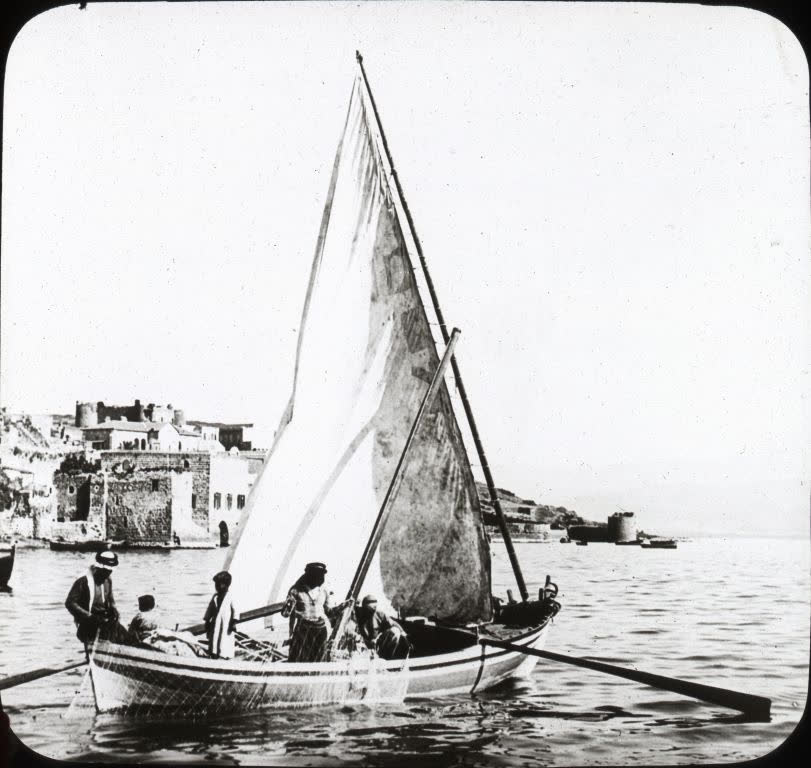
Fishing boats at rest on the Sea of Galilee

Disciple · Guide

OSU Special Collections & Archives · Public domain

Back to Research Hub

Church Leadership

Read the paper (PDF)·or read it here ↓

ELDERS, DEACONS AND THE ORDER OF THE LOCAL CHURCH

A plain study of the offices Christ gave His church, the qualifications in 1 Timothy 3 and Titus 1 word by word, and how leaders are chosen, tested, supported and held to account.

Abstract

How did the apostles order the churches they planted, and what does the King James Bible require of the men who lead them? This paper studies the New Testament texts on church order directly: the one office called elder, bishop and pastor (Acts 20; Titus 1; 1 Peter 5), the deacons (Acts 6; 1 Timothy 3), the qualifications of 1 Timothy 3:1-13 and Titus 1:5-9 taken word by word with their Greek terms from Strong's Concordance, the passages on men and women in the assembly (1 Corinthians 11 and 14; 1 Timothy 2), and the texts on appointing, honouring, correcting and disciplining leaders. It sets beside them the earliest Christian writings after the apostles (1 Clement, the Didache, Ignatius, Polycarp), Pliny's letter to Trajan, and the judgement of Jerome and J. B. Lightfoot that "bishop" and "elder" name one office. It concludes that Christ is the Head, that He gives His church a plurality of qualified, tested shepherds and servants, and that character is the heart of every qualification. It is written for church members, and for those who are or may become elders and deacons.

What’s inside

  1. Introduction
  2. Part 1: Christ the Head and a Body That Serves
  3. Part 2: Elders, Bishops and Pastors: One Office
  4. Part 3: The Qualifications: 1 Timothy 3 and Titus 1
  5. Part 4: Deacons: Servants of the Church
  6. Part 5: Men, Women and Church Order
  7. Part 6: Choosing, Testing and Appointing Leaders
  8. Part 7: Authority, Accountability and Discipline
  9. Conclusion

Research paper · 9 chapters · 16 notes · October 2026

"Feed the flock of God which is among you, taking the oversight thereof, not by constraint, but willingly." — 1 Peter 5:2 (KJV)Read in the 1611 →

Read the paper here

About 50 minutes · 9 parts · the PDF has the same text

Introduction

2 min read

Many Christians have never been taught how a church is meant to be led. They know their pastor's name, and perhaps that there is a board, or a council, or a group of elders. But if you asked what the New Testament says about who should lead a church, how they are chosen, and what they must be, most would not know where to turn.

That matters. A church that does not know Scripture's pattern will borrow one from somewhere else — from business, from politics, from tradition, or from whoever happens to be strongest. Some churches are run like companies with a chief executive. Some are run by a family that has always run them. Some are run by whoever shouts loudest at the members' meeting. And when trouble comes — a moral failure, a doctrinal dispute, a conflict over money — the church discovers that it has no shared understanding of who is responsible or what should happen next.

The apostle Paul wrote one of his letters precisely so that the church would know. "These things write I unto thee," he told Timothy, "that thou mayest know how thou oughtest to behave thyself in the house of God, which is the church of the living God, the pillar and ground of the truth" (1 Timothy 3:14-15). Church order is not a matter of taste. It is part of how the church holds up the truth.

What this paper is

This paper is a study of the New Testament texts on church leadership. It reads them in the King James Bible, explains the key Greek words from Strong's Concordance, and sets beside them the earliest Christian writings after the apostles, so that we can see how the first generations understood what the apostles left them.

It is not a manual for one denomination. Christians who love the Bible have ordered their churches differently: some with bishops over many congregations, some with elders and presbyteries, some with congregations governing themselves. Where Scripture speaks plainly, this paper says so plainly. Where faithful churches differ in how they apply it, it says that briefly and leaves the reader to weigh it with his own church.

The paper has a companion, Biblical Leadership, which studies the leader's heart from Moses, Nehemiah, the upper room and Peter's charge to the elders. Another, Raising Up Leaders, deals with how leaders are found and trained. This one is about the offices and order of the local church.

How to read it

Seven parts follow. Part 1 begins with Christ, the Head, and the body that serves under Him. Part 2 shows that "elder", "bishop" and "pastor" name one office. Part 3 goes through the qualifications of 1 Timothy 3 and Titus 1 word by word. Part 4 studies the deacons. Part 5 sets out what Scripture says about men and women in the order of the church. Part 6 deals with how leaders are chosen, tested and appointed, and Part 7 with authority, accountability and discipline.

Every verse is quoted from the King James Bible. You can read it free in the 1611 Reader at kylelauriano.com/library, and a KJV with Strong's Concordance is the best tool for checking every word explained here. Each Greek word is given with its Strong's number, so you can look it up yourself.

Part 1 — Christ the Head and a Body That Serves

5 min read

This part matters because every question about church leadership is a question about Christ's authority. If we start with the pastor, the board or the denomination, we will get the rest wrong. The New Testament starts with the Lord of the church.

The church belongs to Christ

"Upon this rock I will build my church," said the Lord Jesus, "and the gates of hell shall not prevail against it" (Matthew 16:18). The church is His. He builds it, He owns it and He keeps it. Paul says that God "gave him to be the head over all things to the church, Which is his body" (Ephesians 1:22-23), and again, "he is the head of the body, the church ... that in all things he might have the preeminence" (Colossians 1:18).

Everything else follows from this. No pastor is head of a church. No elder board is head of a church. No congregation is head of itself. Christ is the Head, and every leader in the church is His servant, accountable to Him. Paul could call the church "the church of God, which he hath purchased with his own blood" (Acts 20:28). A leader who forgets whose blood bought the flock will soon treat it as his own.

The foundation is equally fixed. The church is "built upon the foundation of the apostles and prophets, Jesus Christ himself being the chief corner stone" (Ephesians 2:20). Paul says again, "For other foundation can no man lay than that is laid, which is Jesus Christ" (1 Corinthians 3:11). The apostles laid the foundation once, in their teaching, which we now hold in the New Testament. Church leaders do not lay new foundations; they build on the one already laid, and they guard "the faith which was once delivered unto the saints" (Jude 1:3).

Order is a gift, not a cage

The church at Corinth was gifted and chaotic. Its meetings were a jumble of people speaking at once. Paul's answer was not to suppress the gifts but to order them: "For God is not the author of confusion, but of peace, as in all churches of the saints" (1 Corinthians 14:33), and "Let all things be done decently and in order" (1 Corinthians 14:40).

Order in the church is not the opposite of the Spirit's life. It is the form His life takes. The first church in Jerusalem, filled with the Spirit at Pentecost, was not formless: "they continued stedfastly in the apostles' doctrine and fellowship, and in breaking of bread, and in prayers" (Acts 2:42). Teaching, fellowship, the Lord's supper and prayer — a steady pattern, kept faithfully.

Every member serves

Before we look at offices, we must see the whole body, because leaders exist to serve it. Paul describes the church as a body in which every part has a function:

"For as we have many members in one body, and all members have not the same office: So we, being many, are one body in Christ, and every one members one of another. Having then gifts differing according to the grace that is given to us, whether prophecy, let us prophesy according to the proportion of faith; Or ministry, let us wait on our ministering: or he that teacheth, on teaching; Or he that exhorteth, on exhortation: he that giveth, let him do it with simplicity; he that ruleth, with diligence; he that sheweth mercy, with cheerfulness." (Romans 12:4-8)

Notice that "he that ruleth" is in the list. Leading is one gift among many, alongside giving and showing mercy. It is not above the body; it is part of it.

Peter says the same: "As every man hath received the gift, even so minister the same one to another, as good stewards of the manifold grace of God" (1 Peter 4:10). And Paul tells the Ephesians why Christ gave leaders at all:

"And he gave some, apostles; and some, prophets; and some, evangelists; and some, pastors and teachers; For the perfecting of the saints, for the work of the ministry, for the edifying of the body of Christ" (Ephesians 4:11-12)

The leaders equip; the saints do "the work of the ministry". A church in which the pastor does all the ministry and the people watch has turned Ephesians 4 upside down. The body grows, Paul goes on, "by that which every joint supplieth, according to the effectual working in the measure of every part" (Ephesians 4:16).

The gifts of the Spirit, and their guardrails

Paul's fullest teaching on spiritual gifts is in 1 Corinthians 12–14. "Now there are diversities of gifts, but the same Spirit" (1 Corinthians 12:4), and "the manifestation of the Spirit is given to every man to profit withal" (1 Corinthians 12:7). He lists among the gifts wisdom, knowledge, faith, healing, miracles, prophecy, discerning of spirits, tongues and interpretation, and he says all of them are given by "that one and the selfsame Spirit, dividing to every man severally as he will" (1 Corinthians 12:11). The Lord Jesus promised that signs would follow those who believe (Mark 16:17). (Mark 16:9-20 stands in the 1611; many modern editions bracket or question it, and the changes ledger at kylelauriano.com/library/changes shows where the two texts part ways.)

The gifts of the Spirit and deliverance from evil spirits are for today, and guests on my show testify to both. Every gift is tested by the word of God and kept within the limits the word sets. So this paper must also say what the same chapters say about guarding them. Paul's answer to Corinth's disorder had three parts that every church leader needs.

Love governs every gift. Between his two chapters on gifts Paul placed the chapter on love: "Though I speak with the tongues of men and of angels, and have not charity, I am become as sounding brass, or a tinkling cymbal" (1 Corinthians 13:1). A gift exercised without love is noise.

Everything is for building up. The test of any gift in the meeting is whether it edifies the church (1 Corinthians 14:12, 26). What builds up only the person using it belongs in private.

Everything is tested and ordered. Prophecy is to be judged by others (1 Corinthians 14:29); tongues in the meeting require interpretation (14:27-28); speakers take turns, "For God is not the author of confusion" (14:33). Leaders are responsible for this order. They are not to quench the Spirit, and they are not to let His name be attached to confusion, manipulation or claims no one may test. Where churches differ over the gifts — and they do — they should at least agree on these guardrails, because they are in the text.

Two kinds of office

Within this body of serving members, the New Testament names two ongoing offices in the local church. Paul's greeting to Philippi shows them side by side: "to all the saints in Christ Jesus which are at Philippi, with the bishops and deacons" (Philippians 1:1). The saints, the bishops (overseers), and the deacons (servants).

The apostles themselves held a unique, foundational role that ended with them. But in every church they planted they left these two kinds of leaders: men who oversee and shepherd, and men (and, many churches hold, women — see Part 4) who serve the practical needs of the body. The next three parts take them in turn.

Part 2 — Elders, Bishops and Pastors: One Office

7 min read

This part matters because confusion over words has caused a great deal of confusion over churches. In much of the world today, a "bishop" is a senior clergyman over many congregations, a "pastor" is the paid minister of one congregation, and "elders" are lay helpers. The New Testament uses these three words very differently. Seeing how it uses them clears away a great deal of fog.

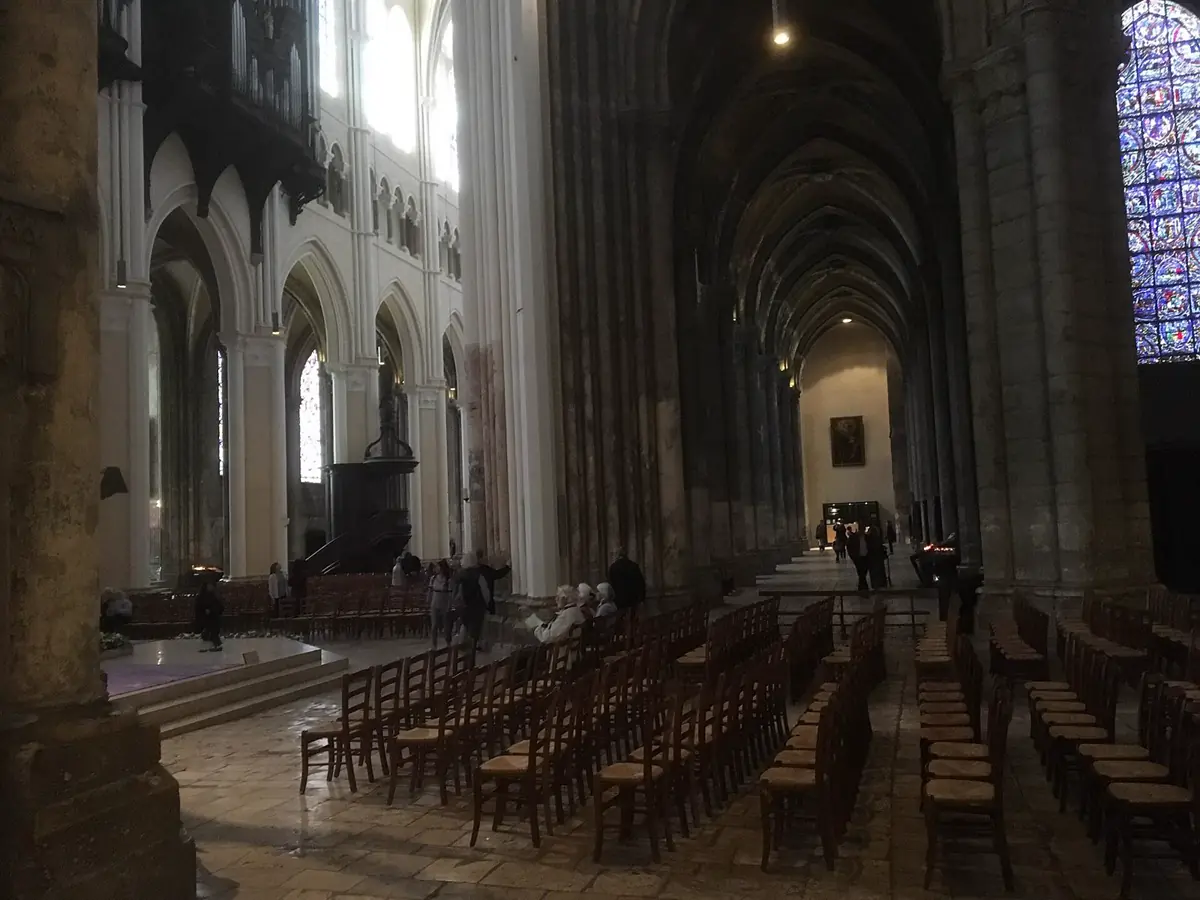
The Gothic nave of Chartres Cathedral
The nave of Chartres Cathedral (13th century) — built across generations by workers who knew they would never see it finished.Stephen Taber · CC BY-SA 4.0

Three words, one group of men

The clearest evidence is in Acts 20. Paul, on his way to Jerusalem, stopped at Miletus: "And from Miletus he sent to Ephesus, and called the elders of the church" (Acts 20:17). When they came, he said to these same men:

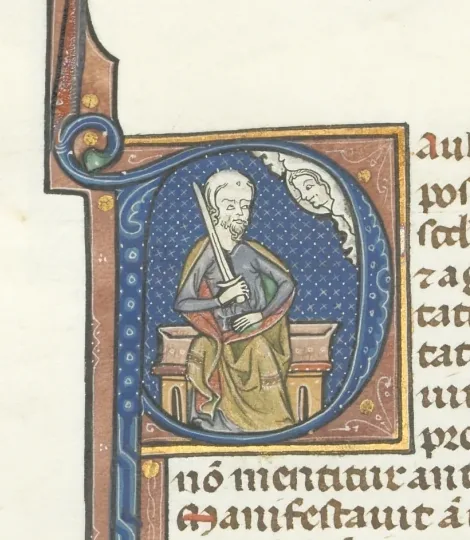
Fol. 458v, Titus, historiated initial P, Paul seated with a sword
The opening of Titus in a thirteenth-century Bible from southern France, with Paul seated in the initial, the letter that charges Titus to ordain elders in every city.Fol. 458v, Titus, historiated initial P, Paul seated with a sword · c. 1275–1300 · Cleveland Museum of Art · CC0 · full page · museum record · Galeria Regni
"Take heed therefore unto yourselves, and to all the flock, over the which the Holy Ghost hath made you overseers, to feed the church of God, which he hath purchased with his own blood." (Acts 20:28)

The men called "elders" in verse 17 are called "overseers" in verse 28, and told "to feed" — to shepherd — the church. The word for "overseers" is episkopos (G1985), the same word translated "bishop" elsewhere. The word for "feed" is poimaino (G4165), "to tend as a shepherd", the verb from poimen (G4166), "shepherd, pastor".

Titus 1 shows the same thing. Paul tells Titus to "ordain elders in every city" (Titus 1:5), lists their qualifications, and then explains: "For a bishop must be blameless, as the steward of God" (Titus 1:7). The elder of verse 5 is the bishop of verse 7. Paul does not change the subject; he changes the word.

Peter does the same. "The elders which are among you I exhort, who am also an elder ... Feed the flock of God which is among you, taking the oversight thereof" (1 Peter 5:1-2). The elders are told to shepherd (poimaino) and to oversee (episkopeo, G1983).

So the New Testament has one office described by three words:

| KJV word | Greek | Strong's | What it stresses | |---|---|---|---| | Elder | presbuteros | G4245 | Maturity and dignity: "a senior" | | Bishop, overseer | episkopos | G1985 | The work of oversight: "a superintendent" | | Pastor, shepherd | poimen | G4166 | The work of care: "a shepherd" |

"Elder" says what the man is: mature, proven, respected. "Bishop" says what he does: he watches over the church. "Pastor" says how he does it: as a shepherd feeds and guards the flock. In the New Testament the noun "pastors" appears for church leaders only once, in Ephesians 4:11, but the verb "feed" (shepherd) is used of the elders in both Acts 20:28 and 1 Peter 5:2.

What the early church and the scholars saw

This is not a new reading. Jerome, the great Latin scholar of the late fourth century and translator of the Vulgate, argued it in a letter against deacons who were putting themselves above presbyters (elders). Citing Philippians 1:1, Acts 20:28 and Titus 1:5-7, he wrote that "the apostle clearly teaches that presbyters are the same as bishops", and that the Titus passage "clearly proves a bishop and a presbyter to be the same".1 He explained the later custom of one bishop presiding over the other presbyters as a remedy: "When subsequently one presbyter was chosen to preside over the rest, this was done to remedy schism."2

Fifteen centuries later the Anglican bishop and scholar J. B. Lightfoot of Cambridge — who later became bishop of Durham — reached the same conclusion in his commentary on Philippians. His detached note on the subject opens:

"It is a fact now generally recognised by theologians of all shades of opinion, that in the language of the New Testament the same officer in the Church is called indifferently 'bishop' (ἐπίσκοπος) and 'elder' or 'presbyter' (πρεσβύτερος)."3

In his longer essay "The Christian Ministry" in the same volume, Lightfoot concluded that the later office of a single bishop over the presbyters grew out of the eldership itself: "the episcopate was formed not out of the apostolic order by localisation but out of the presbyteral by elevation".4 That a future bishop could write this is a measure of how clear the New Testament evidence is.

Always in the plural

A second feature of the New Testament pattern is just as consistent. Wherever the number of elders in a local church is indicated, it is plural.

  • Paul and Barnabas "ordained them elders in every church" (Acts 14:23) — elders, plural, in each church.
  • Titus was to "ordain elders in every city" (Titus 1:5).
  • Paul "called the elders of the church" at Ephesus (Acts 20:17).
  • The sick are told, "let him call for the elders of the church" (James 5:14).
  • The church at Jerusalem had "the apostles and elders" (Acts 15:6), and the relief money from Antioch was sent "to the elders" (Acts 11:30).
  • Philippi had "bishops and deacons" (Philippians 1:1).

The New Testament never shows a local church led by one elder alone. This does not mean every elder has the same gifts or role. Paul writes, "Let the elders that rule well be counted worthy of double honour, especially they who labour in the word and doctrine" (1 Timothy 5:17). Among the elders some labour especially in preaching and teaching, and these may be supported by the church ("The labourer is worthy of his reward", 1 Timothy 5:18). Many churches call such a man "the pastor". But Scripture sets him within a body of elders, not above it.

The wisdom of this is plain. Shared oversight protects the church from one man's blind spots, protects the man from isolation and pride, and spreads the weight of care. It is Jethro's counsel to Moses in Exodus 18 carried into the church: "thou art not able to perform it thyself alone."

The witness of the first generations

The earliest Christian writings outside the New Testament show the same two offices, and then show the change that Jerome and Lightfoot describe.

First Clement. Around the end of the first century, the church at Rome wrote to the church at Corinth, which had removed its leaders in a dispute. The letter, traditionally ascribed to Clement of Rome, recalls that the apostles, preaching through countries and cities, "appointed the first fruits [of their labours], having first proved them by the Spirit, to be bishops and deacons of those who should afterwards believe."5 It adds that the apostles foresaw "that there would be strife on account of the office of the episcopate", and so gave instructions "that when these should fall asleep, other approved men should succeed them in their ministry." Those so appointed "with the consent of the whole church, and who have blamelessly served the flock of Christ, in a humble, peaceable, and disinterested spirit ... cannot be justly dismissed from the ministry."6 In the same chapter the letter calls these men "presbyters". Bishops and presbyters are still one group; the offices are two, bishops and deacons; and the whole church consents to their appointment.

The Didache. A short early manual of church practice, usually dated to the late first or early second century, says: "Therefore, appoint for yourselves bishops and deacons worthy of the Lord, men meek, and not lovers of money, and truthful and proven; for they also render to you the service of prophets and teachers."7 Again, two offices, and qualifications that echo 1 Timothy 3.

Polycarp. Polycarp of Smyrna, writing to the Philippians in the early second century, gives the duties of deacons and of presbyters, and tells the believers to be "subject to the presbyters and deacons, as unto God and Christ."8 He speaks of no separate bishop at Philippi.

Ignatius. But Ignatius of Antioch, travelling to his martyrdom at Rome in the same years, writes differently. To the church at Smyrna he says: "See that you all follow the bishop, even as Jesus Christ does the Father, and the presbytery as you would the apostles; and reverence the deacons ... Let no man do anything connected with the Church without the bishop."9 Here, in some churches of Asia, there is one bishop above a body of presbyters, with deacons beneath — the threefold pattern that became standard across the church in the following centuries.

The historical picture, then, is this. The New Testament shows a plurality of elders, also called bishops, with deacons. Within a few decades after the apostles, some churches had begun to set one of the elders over the rest as "the bishop". Christians have disagreed ever since about whether that development was a faithful growth or a departure. Episcopal churches (Anglican, Orthodox, Roman Catholic) defend the single bishop; Presbyterian and Reformed churches hold to elders and presbyteries; many Baptist and independent churches stress elders and congregational consent. This paper does not settle that debate for the reader. It asks only that whatever a church's structure, it hold to what all agree the apostles required: qualified men, tested and approved, shepherding together under Christ.

Part 3 — The Qualifications: 1 Timothy 3 and Titus 1

9 min read

This part matters because the New Testament spends more words on what elders must be than on what they must do. Paul gave two lists, one to Timothy at Ephesus and one to Titus in Crete. Almost every item is about character. Only one — "apt to teach" — is a skill, and even that is rooted in faithfulness to the word.

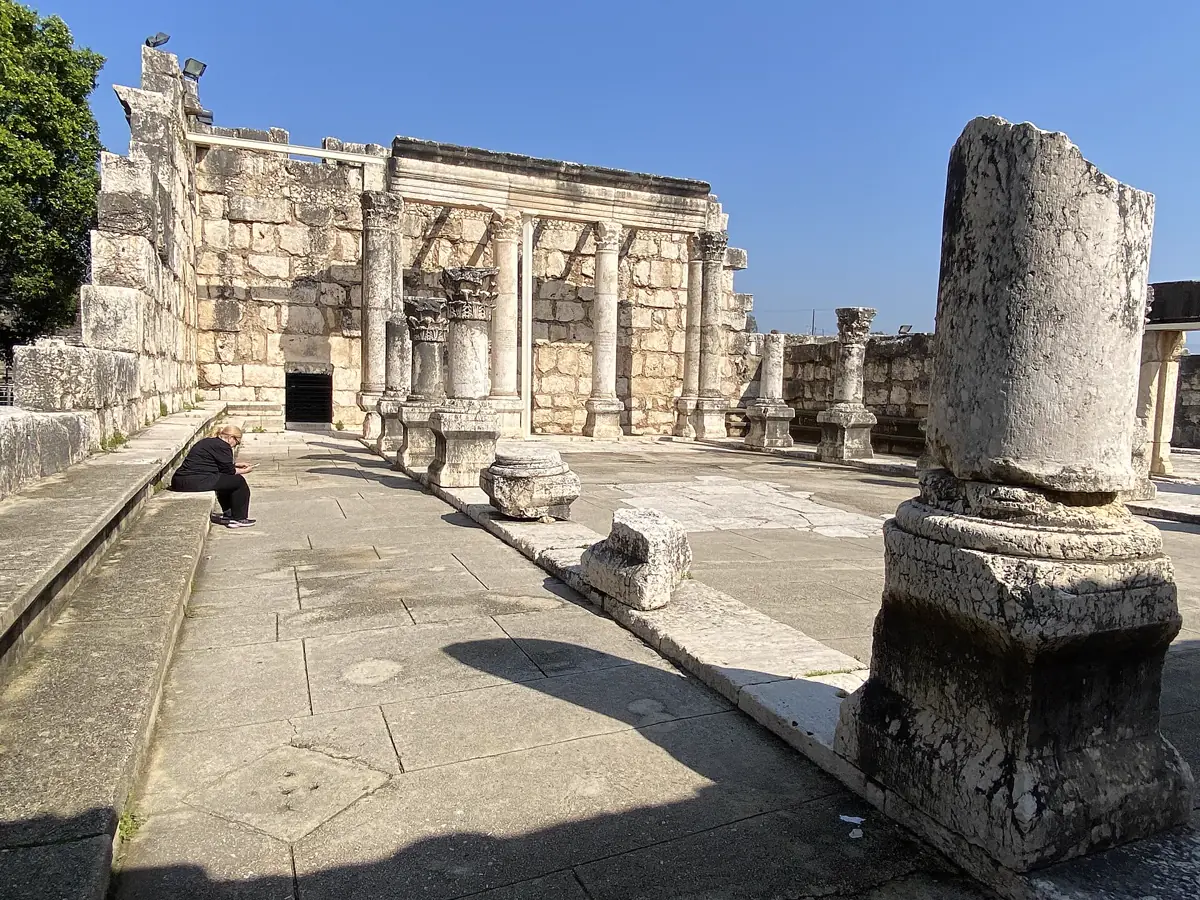
The limestone synagogue ruins at Capernaum
The synagogue at Capernaum, standing on the black-basalt foundations of the 1st-century hall where Jesus taught.שלמה רודד · CC BY 2.5

The two lists

"This is a true saying, If a man desire the office of a bishop, he desireth a good work. A bishop then must be blameless, the husband of one wife, vigilant, sober, of good behaviour, given to hospitality, apt to teach; Not given to wine, no striker, not greedy of filthy lucre; but patient, not a brawler, not covetous; One that ruleth well his own house, having his children in subjection with all gravity; (For if a man know not how to rule his own house, how shall he take care of the church of God?) Not a novice, lest being lifted up with pride he fall into the condemnation of the devil. Moreover he must have a good report of them which are without; lest he fall into reproach and the snare of the devil." (1 Timothy 3:1-7)
"For this cause left I thee in Crete, that thou shouldest set in order the things that are wanting, and ordain elders in every city, as I had appointed thee: If any be blameless, the husband of one wife, having faithful children not accused of riot or unruly. For a bishop must be blameless, as the steward of God; not selfwilled, not soon angry, not given to wine, no striker, not given to filthy lucre; But a lover of hospitality, a lover of good men, sober, just, holy, temperate; Holding fast the faithful word as he hath been taught, that he may be able by sound doctrine both to exhort and to convince the gainsayers." (Titus 1:5-9)

"He desireth a good work"

Paul begins with a word of encouragement: "If a man desire the office of a bishop, he desireth a good work." It is right to want to serve as an elder. But notice that it is a "work", not a title. The man who desires the office should desire the labour, the care and the accountability, not the honour. Gregory the Great, in the sixth century, spent the first book of his Pastoral Rule warning against those who seek the office for the wrong reasons, calling the government of souls "the art of arts".10 The desire is good when it is a desire to serve.

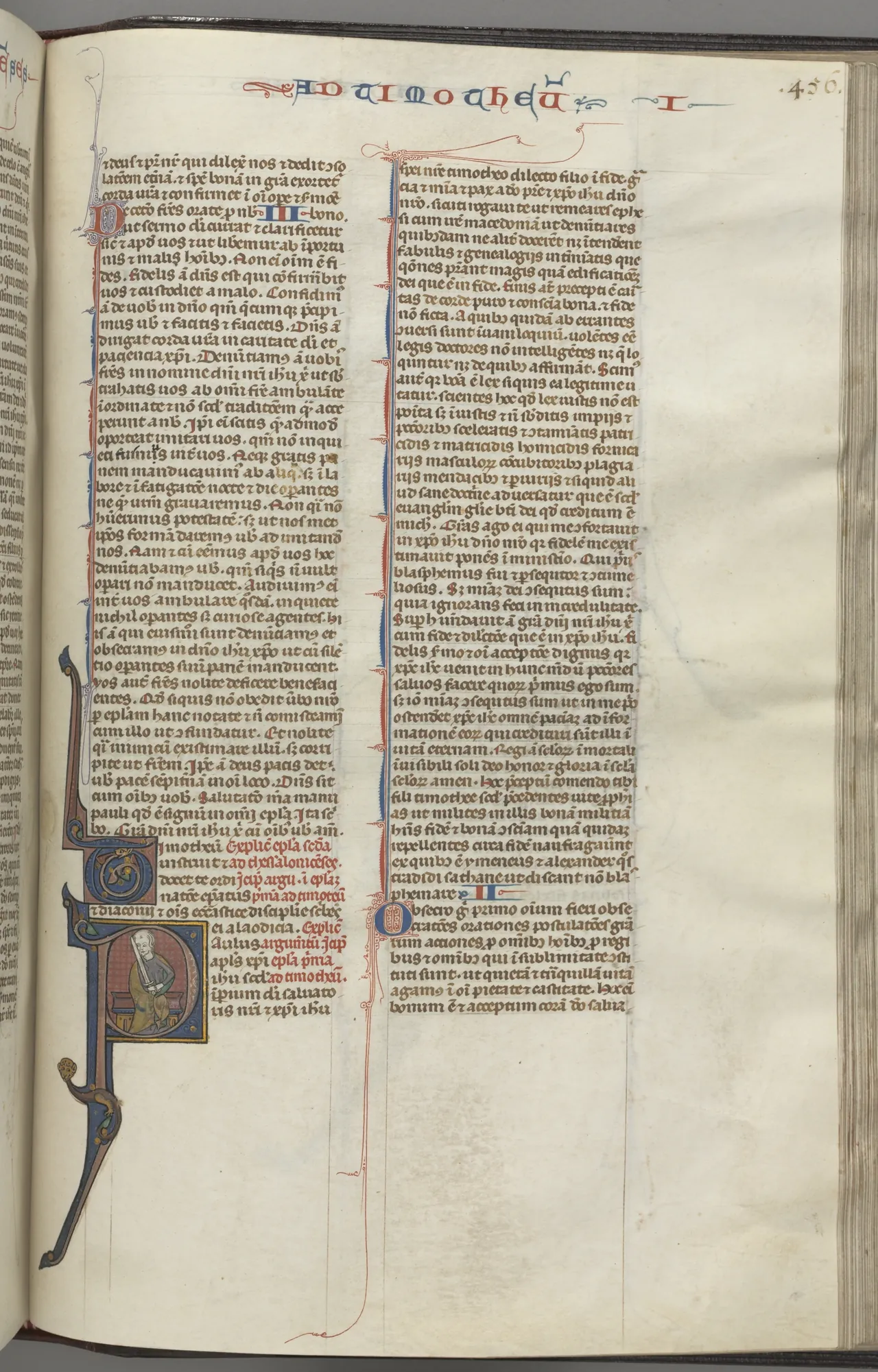
Fol. 456r, Timothy I, historiated initial P, Paul seated
The opening of First Timothy in a thirteenth-century Bible from southern France, with Paul seated in the initial, the letter that sets out the qualifications for a bishop.Fol. 456r, Timothy I, historiated initial P, Paul seated · c. 1275–1300 · Cleveland Museum of Art · CC0 · museum record · Galeria Regni

The qualifications word by word

The table below gathers both lists. The Greek and the short definitions are from Strong's Concordance.

| KJV | Greek (Strong's) | Strong's sense | Where | |---|---|---|---| | blameless | anepilemptos (G423) | "not arrested ... inculpable" | 1 Tim 3:2 | | blameless | anegkletos (G410) | "unaccused ... irreproachable" | Titus 1:6-7 | | the husband of one wife | mias gunaikos aner | literally "a one-woman man" | 1 Tim 3:2; Titus 1:6 | | vigilant | nephalios (G3524) | "sober ... circumspect" | 1 Tim 3:2 | | sober | sophron (G4998) | "safe (sound) in mind, i.e. self-controlled" | 1 Tim 3:2; Titus 1:8 | | of good behaviour | kosmios (G2887) | "orderly ... decorous" | 1 Tim 3:2 | | given to hospitality | philoxenos (G5382) | "fond of guests" | 1 Tim 3:2; Titus 1:8 | | apt to teach | didaktikos (G1317) | "instructive" | 1 Tim 3:2 | | not given to wine | me paroinos (G3943) | not "tippling (a toper)" | 1 Tim 3:3; Titus 1:7 | | no striker | me plektes (G4131) | not "pugnacious (quarrelsome)" | 1 Tim 3:3; Titus 1:7 | | not greedy of filthy lucre | me aischrokerdes (G146) | not "sordid" | 1 Tim 3:3; Titus 1:7 | | patient | epieikes (G1933) | "mild ... gentle" | 1 Tim 3:3 | | not a brawler | amachos (G269) | "peaceable" | 1 Tim 3:3 | | not covetous | aphilarguros (G866) | "unavaricious" | 1 Tim 3:3 | | ruleth well his own house | proistemi (G4291) | "to stand before ... preside" | 1 Tim 3:4 | | not a novice | me neophutos (G3504) | not "newly planted ... a young convert" | 1 Tim 3:6 | | good report of them without | marturia (G3141) | "evidence given", a testimony | 1 Tim 3:7 | | not selfwilled | me authades (G829) | not "self-pleasing ... arrogant" | Titus 1:7 | | not soon angry | me orgilos (G3711) | not "irascible" | Titus 1:7 | | a lover of good men | philagathos (G5358) | "a promoter of virtue" | Titus 1:8 | | just | dikaios (G1342) | "equitable (in character or act)" | Titus 1:8 | | holy | hosios (G3741) | "hallowed (pious, sacred, sure)" | Titus 1:8 | | temperate | egkrates (G1468) | "self-controlled (in appetite, etc.)" | Titus 1:8 | | holding fast the faithful word | antechomai (G472) | "adhere to" | Titus 1:9 |

(In 1 Timothy 3:3 the King James, following the Received Text, includes "not greedy of filthy lucre"; many modern editions built on the Critical Text leave it out of that verse. The 1611 stands as written. You can see other places where the 1611 and the Critical Text part ways at kylelauriano.com/library/changes.)

The list falls naturally into five groups.

1. The governing quality: blameless

Both lists begin here, and Titus says it twice. Paul uses two different words. In 1 Timothy it is anepilemptos, literally "not able to be laid hold of" — there is nothing to grab him by. In Titus it is anegkletos, "unaccused" — no charge stands against him. Neither word means sinless; if it did, no one could serve. They mean that there is no open, unresolved pattern of sin in his life that would give anyone, inside or outside the church, a fair accusation. Every other item on the list fills out what blamelessness looks like.

2. His home

"The husband of one wife." The Greek is literally "a one-woman man". Christians have read this phrase in several ways: that an elder must be married; that he must never have been divorced; that he must never have remarried after his wife's death; or that he must be faithful to his one wife, with no polygamy, adultery or wandering affections. The phrase plainly rules out polygamy and unfaithfulness, and it describes a man whose devotion to his wife is visible and settled. Beyond that, churches that hold Scripture as their authority have applied it differently, especially to men divorced before conversion or wronged by an unfaithful spouse. Each church must weigh the text honestly; what none may do is treat a leader's marriage as a private matter, because Paul has made it a public qualification.

"One that ruleth well his own house, having his children in subjection with all gravity." The verb is proistemi, "to stand before ... preside", the same word Paul uses for elders who "rule well" in 1 Timothy 5:17 and for those "over you in the Lord" in 1 Thessalonians 5:12. Paul's reasoning is direct: "For if a man know not how to rule his own house, how shall he take care of the church of God?" The home is the training ground and the proving ground. Titus adds "having faithful children not accused of riot or unruly". The point is not that an elder's children must be perfect, but that his household is ordered, his children respect him, and they are not living in open rebellion and dissipation while he leads the church.

"Given to hospitality" / "a lover of hospitality." Literally "a lover of strangers". The elder's home is open. In the first century, when Christians travelled between cities and inns were often unsafe and immoral, hospitality was a vital ministry. It still is. A shepherd whose door is always shut cannot know his sheep.

3. His self-control

Several words cluster here: "vigilant" (nephalios, clear-headed, circumspect), "sober" (sophron, sound-minded, self-controlled), "of good behaviour" (kosmios, orderly), "temperate" (egkrates, master of his appetites), "not given to wine" (not a habitual drinker), "not soon angry" (not irascible). Together they describe a man who is not ruled by his appetites, moods or impulses. He thinks clearly. He is not driven by drink, temper or desire.

This matters because elders must make decisions under pressure, handle conflict and care for people in crisis. A man who loses his temper, drinks to cope or cannot control his desires will do harm exactly when the flock most needs a steady hand.

4. His dealings with others

"No striker" and "not a brawler" rule out the violent and the quarrelsome. "Patient" (epieikes) is the positive side: gentle, reasonable, willing to yield where principle does not require standing firm. "Not selfwilled" (authades) rules out the man who must have his own way; Strong's gives "self-pleasing ... arrogant". "A lover of good men" (philagathos) describes a man who delights in goodness wherever he finds it. "Just" means upright in his dealings; "holy" (hosios), devout before God.

And money: "not greedy of filthy lucre" and "not covetous" (aphilarguros, not a lover of silver). Paul names money twice in 1 Timothy 3:3 and once in Titus 1:7. He warns in the same letter that some suppose "that gain is godliness" (1 Timothy 6:5), and he describes false teachers in Crete "teaching things which they ought not, for filthy lucre's sake" (Titus 1:11). The love of money has ruined more ministries than almost any other sin. A man who cannot be trusted with money cannot be trusted with souls.

5. His faith and his teaching

"Apt to teach" (didaktikos) is the one item that is mainly an ability. An elder must be able to teach the word, whether to a congregation, a small group or a single troubled believer. Titus explains what this involves: "Holding fast the faithful word as he hath been taught, that he may be able by sound doctrine both to exhort and to convince the gainsayers" (Titus 1:9). He must hold the truth firmly, encourage the flock with it, and answer those who contradict it. The need was urgent in Crete: "there are many unruly and vain talkers and deceivers ... Whose mouths must be stopped" (Titus 1:10-11).

Not every elder will preach to the whole congregation. But every elder must know the Scriptures well enough to teach, correct and defend them.

"Not a novice." The word is neophutos, "newly planted", a recent convert. The reason Paul gives is pride: "lest being lifted up with pride he fall into the condemnation of the devil" (1 Timothy 3:6). Quick promotion is dangerous to the man promoted. Time reveals character, and roots must grow before a tree can bear weight. Paul gives no number of years, and churches differ; but a church that puts a gifted new believer into eldership because he is talented is doing him no kindness.

"A good report of them which are without." The elder must be well thought of by unbelievers who know him — neighbours, employers, business contacts. If he is known in his town as dishonest, harsh or immoral, he will bring "reproach" on the church and fall into "the snare of the devil" (1 Timothy 3:7).

What is not on the list

It is worth noticing what Paul does not require. He does not require a degree, a seminary education, a certain income, a forceful personality, public speaking flair or a large social following. He does not require that a man be young, or that he be old. He requires character proven over time, a well-ordered home, self-control, gentleness, freedom from greed, and a firm grasp of sound doctrine with the ability to teach it. These are qualities that any believer may grow in by God's grace. They are also qualities that cannot be faked for long.

The qualifications are, in fact, very nearly what Scripture asks of every Christian. Hospitality, self-control, gentleness and freedom from the love of money are commanded of all believers elsewhere. The difference is that an elder must already be an example of them, because his life is the pattern the flock will follow. As Peter put it, elders lead by "being ensamples to the flock" (1 Peter 5:3).

Part 4 — Deacons: Servants of the Church

6 min read

This part matters because the deacons are often misunderstood — treated as a junior board, a finance committee or a stepping-stone to eldership. The New Testament presents them as something both humbler and more honoured: servants who meet the practical needs of the body so that the word of God is not neglected.

Acts 6: the first servants

The pattern for the diaconate is usually traced to Acts 6, although the noun "deacon" does not appear there. The Jerusalem church had grown rapidly, and a complaint arose: "there arose a murmuring of the Grecians against the Hebrews, because their widows were neglected in the daily ministration" (Acts 6:1). The Greek-speaking Jewish believers felt their widows were being overlooked in the daily distribution of food.

The apostles' response is a lesson in church order:

"Then the twelve called the multitude of the disciples unto them, and said, It is not reason that we should leave the word of God, and serve tables. Wherefore, brethren, look ye out among you seven men of honest report, full of the Holy Ghost and wisdom, whom we may appoint over this business. But we will give ourselves continually to prayer, and to the ministry of the word. And the saying pleased the whole multitude: and they chose Stephen, a man full of faith and of the Holy Ghost, and Philip, and Prochorus, and Nicanor, and Timon, and Parmenas, and Nicolas a proselyte of Antioch: Whom they set before the apostles: and when they had prayed, they laid their hands on them." (Acts 6:2-6)

Several things stand out.

The problem was real and practical. Widows were going hungry. The apostles did not dismiss it as unspiritual. Care for the needy was part of the church's life, and neglect of it was a serious matter.

The apostles protected their own calling. "It is not reason that we should leave the word of God, and serve tables." The word "serve" is diakoneo (G1247), and "ministration" in verse 1 is the related noun diakonia. Even "the ministry of the word" in verse 4 uses diakonia. Both the tables and the word are service; the apostles simply recognised that they could not do both well. It is Exodus 18 again.

The congregation chose; the apostles appointed. "Look ye out among you seven men ... whom we may appoint." The whole body was involved in selection, and the leaders confirmed and commissioned. The qualifications were character and spiritual life — "of honest report, full of the Holy Ghost and wisdom" — not merely administrative skill.

The result was growth. "And the word of God increased; and the number of the disciples multiplied in Jerusalem greatly" (Acts 6:7). When practical needs are met by the right people, the word goes forward.

It is worth noticing that the seven all have Greek names. The church seems to have chosen men from the very group that had complained — a wise and generous answer. And two of them, Stephen and Philip, went on to preach powerfully (Acts 7; Acts 8). Serving tables did not shut them out of other ministry.

1 Timothy 3: the deacon's qualifications

Paul's qualifications for deacons follow directly on those for bishops:

"Likewise must the deacons be grave, not doubletongued, not given to much wine, not greedy of filthy lucre; Holding the mystery of the faith in a pure conscience. And let these also first be proved; then let them use the office of a deacon, being found blameless. Even so must their wives be grave, not slanderers, sober, faithful in all things. Let the deacons be the husbands of one wife, ruling their children and their own houses well. For they that have used the office of a deacon well purchase to themselves a good degree, and great boldness in the faith which is in Christ Jesus." (1 Timothy 3:8-13)

"Grave" is semnos (G4586), "venerable, i.e. honorable" — serious and worthy of respect. "Not doubletongued" is me dilogos (G1351), not "telling a different story" to different people. A deacon moves among many members and hears many things; he must not say one thing to one and another to the next. "Not given to much wine" and "not greedy of filthy lucre" echo the elder's list; deacons often handle money and goods for the needy, and must be above suspicion.

"Holding the mystery of the faith in a pure conscience." Deacons are not required to be "apt to teach", but they must hold the faith firmly and live consistently with it. Their service is spiritual service.

"Let these also first be proved." The verb is dokimazo (G1381), "to test ... by implication, to approve". Deacons are tested before they serve. The word "also" implies that elders are tested too (compare 1 Timothy 5:22). How a church tests is not spelled out, but the principle is that no one should be appointed on first impressions.

Their home life is required to be in order, just like the elders'. And Paul ends with a promise: those who serve well "purchase to themselves a good degree, and great boldness in the faith". Faithful service brings honour and confidence. The diaconate is not a lesser calling.

"Even so must their wives": a question churches answer differently

Verse 11 has long been discussed. The King James reads "Even so must their wives be grave, not slanderers, sober, faithful in all things." The Greek word is a form of gune (G1135), which can mean either "wives" or "women". There is no word for "their" in the Greek; the King James translators supplied it, following their reading.

Some Christians read the verse as the King James renders it: qualifications for the wives of deacons, whose character matters because they often share in their husbands' service. Others read it as qualifications for women who serve as deacons, pointing to the "Even so" (the same word, "likewise", that introduces the deacons in verse 8) and to Phoebe in Romans 16.

Paul commends Phoebe to the church at Rome: "I commend unto you Phebe our sister, which is a servant of the church which is at Cenchrea: That ye receive her in the Lord ... for she hath been a succourer of many, and of myself also" (Romans 16:1-2). The word for "servant" is diakonos (G1249), the same word translated "deacon" in 1 Timothy 3; Strong's notes that it can mean technically "a deacon or deaconess". Whether Paul means an office or a general description of her service, the word itself does not settle.

There is early evidence outside the Bible that women served in some recognised capacity. Around AD 112 the Roman governor Pliny the Younger, investigating Christians in the province of Bithynia, wrote to the emperor Trajan that he had tortured "two female slaves, who were said to officiate in their religious rites". The Latin calls them ministrae — a word that corresponds to the Greek diakonoi.11

So churches differ. Some appoint women as deacons; some appoint men as deacons and recognise the wives' share in the work; some have no formal diaconate at all and handle these tasks in other ways. What all must agree on is that the qualifications Paul gives — grave, not slanderers, sober, faithful in all things — matter for anyone who serves the church in these ways. And it should be said clearly that the question of women deacons is a different question from women elders, which the next part addresses. The deacon's office in 1 Timothy 3 does not carry the teaching and ruling of the elder's.

What deacons do today

The New Testament does not give deacons a job description, and wisely so; needs differ by place and time. But Acts 6 and 1 Timothy 3 together suggest the shape:

  • Care for the needy. Widows, the poor, the sick, the elderly, those in crisis.
  • Practical administration. Money, property, supplies, arrangements for worship and fellowship, so that the elders are free for prayer and the word.
  • Service that unites. The seven of Acts 6 healed a division; deacons often see where people are being overlooked.
  • Example. Like the elders, they lead by being a pattern of faithful, humble service. Polycarp told the Philippian deacons to be "blameless before the face of His righteousness, as being the servants of God and Christ, and not of men", walking "according to the truth of the Lord, who was the servant of all."12

Deacons serve under the oversight of the elders, but they are not the elders' assistants in a corporate sense. They are servants of the church and, above all, of Christ.

Part 5 — Men, Women and Church Order

7 min read

This part matters because it is where many churches today feel the most pressure to bend the text. The aim here is simple: to quote what the King James Bible says, plainly and in full; to note what it does not say; and, where faithful churches differ in how they apply it, to say so briefly without ruling for the reader. Scripture is the authority, not this paper and not the spirit of the age.

The vast domed interior of Hagia Sophia
Hagia Sophia, consecrated in 537 AD — for a thousand years the largest church in the world.Ronan Reinart · CC BY-SA 3.0

The equal dignity of men and women

Any honest reading must begin where Scripture begins: "So God created man in his own image, in the image of God created he him; male and female created he them" (Genesis 1:27). Men and women bear God's image equally. In salvation they stand on the same ground: "There is neither Jew nor Greek, there is neither bond nor free, there is neither male nor female: for ye are all one in Christ Jesus" (Galatians 3:28). Husbands are to honour their wives "as being heirs together of the grace of life" (1 Peter 3:7).

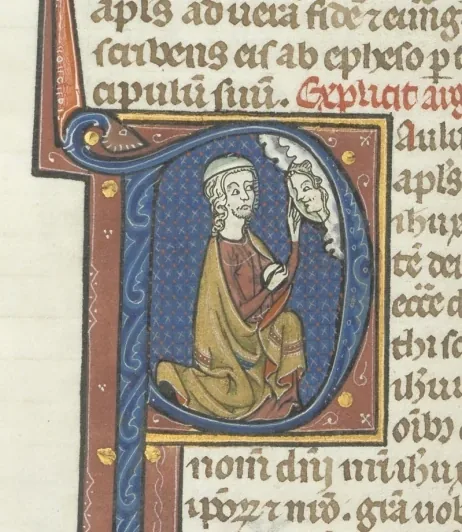
Fol. 440v, Corinthians I, historiated initial P, Paul kneeling talking to the bust of God above
The opening of First Corinthians in a thirteenth-century Bible from southern France, with Paul kneeling before God in the initial, the letter that addresses headship and order in the church.Fol. 440v, Corinthians I, historiated initial P, Paul kneeling talking to the bust of God above · c. 1275–1300 · Cleveland Museum of Art · CC0 · full page · museum record · Galeria Regni

The order of the church never contradicts this equality. The passages below are about roles in the assembly and in the home, not about worth before God.

Women in the ministry of the New Testament

It is also necessary to see how much ministry women did in the New Testament church, because that is part of what the text says.

  • Priscilla, with her husband Aquila, took the eloquent Apollos aside and "expounded unto him the way of God more perfectly" (Acts 18:26). Paul calls them "my helpers in Christ Jesus" (Romans 16:3).
  • Philip's daughters: "the same man had four daughters, virgins, which did prophesy" (Acts 21:9).
  • Phoebe, "a servant of the church which is at Cenchrea", a "succourer of many" (Romans 16:1-2).
  • Mary, "who bestowed much labour on us" (Romans 16:6), and many other women greeted in Romans 16.
  • Euodias and Syntyche, "those women which laboured with me in the gospel" (Philippians 4:2-3).
  • The aged women, who are to be "teachers of good things; That they may teach the young women" (Titus 2:3-4).
  • And 1 Corinthians 11:5 assumes that women pray and prophesy in the gatherings of the church.

Women in the New Testament prayed, prophesied, laboured in the gospel, taught other women, explained the faith privately alongside their husbands, served the church and supported the apostles. None of what follows cancels any of this.

1 Corinthians 11: headship and the covering

"But I would have you know, that the head of every man is Christ; and the head of the woman is the man; and the head of Christ is God. Every man praying or prophesying, having his head covered, dishonoureth his head. But every woman that prayeth or prophesieth with her head uncovered dishonoureth her head: for that is even all one as if she were shaven." (1 Corinthians 11:3-5)

Paul's argument in this chapter rests on several grounds, and it is important to see them as he gives them.

Headship. "The head of every man is Christ; and the head of the woman is the man; and the head of Christ is God" (verse 3). Headship in this verse is not inferiority: the Son is equal with the Father, yet "the head of Christ is God". It is an ordered relationship.

Creation. "For the man is not of the woman; but the woman of the man. Neither was the man created for the woman; but the woman for the man" (verses 8-9). Paul appeals to Genesis 2, not to the customs of Corinth.

The angels. "For this cause ought the woman to have power on her head because of the angels" (verse 10). "Power" here means a sign of authority. Paul does not explain the angels further; the verse shows that worship is watched by heaven.

Mutual dependence. "Nevertheless neither is the man without the woman, neither the woman without the man, in the Lord. For as the woman is of the man, even so is the man also by the woman; but all things of God" (verses 11-12).

Nature. "Doth not even nature itself teach you, that, if a man have long hair, it is a shame unto him? But if a woman have long hair, it is a glory to her: for her hair is given her for a covering" (verses 14-15).

The practice of the churches. "But if any man seem to be contentious, we have no such custom, neither the churches of God" (verse 16).

Because Paul grounds the teaching in headship, creation, the angels and nature, it cannot honestly be set aside as merely a local custom of Corinth. Churches that take the text as authoritative still differ in how they apply the covering. Some ask women to wear a cloth covering in public worship; some understand the long hair of verse 15 to be the covering Paul means; some hold that the principle of headship must be honoured but that its outward sign may differ. Readers should study the passage with their own church. What none may do is treat it as if it were not in the Bible.

1 Corinthians 14: silence in the churches

"Let your women keep silence in the churches: for it is not permitted unto them to speak; but they are commanded to be under obedience, as also saith the law. And if they will learn any thing, let them ask their husbands at home: for it is a shame for women to speak in the church." (1 Corinthians 14:34-35)

These verses stand in the middle of Paul's instructions about ordering the meeting — prophets speaking in turn, prophecy being judged, tongues interpreted. Paul grounds the command in "the law", that is, in the Old Testament Scriptures, and he follows it with a strong claim to authority: "If any man think himself to be a prophet, or spiritual, let him acknowledge that the things that I write unto you are the commandments of the Lord" (1 Corinthians 14:37).

Because 1 Corinthians 11 assumes women pray and prophesy, Christians have long asked how the two chapters fit. Some hold that chapter 14 forbids women from speaking in the judging of prophecy and the authoritative teaching of the meeting, while allowing the praying and prophesying of chapter 11. Some hold that it forbids women from addressing the assembly at all in the gathered meeting. Some apply it to particular parts of the service. Churches differ in application. But the text is to be read as the commandment of the Lord, as Paul says, and not dismissed.

1 Timothy 2: teaching and authority

"Let the woman learn in silence with all subjection. But I suffer not a woman to teach, nor to usurp authority over the man, but to be in silence. For Adam was first formed, then Eve. And Adam was not deceived, but the woman being deceived was in the transgression. Notwithstanding she shall be saved in childbearing, if they continue in faith and charity and holiness with sobriety." (1 Timothy 2:11-15)

This is in the same letter, and only a few verses before, the qualifications for bishops. Paul first says the woman is to "learn" — in his world, a significant statement. Then he says, "I suffer not a woman to teach, nor to usurp authority over the man". The word for "usurp authority" is authenteo (G831), "to act of oneself, i.e. ... dominate". And he grounds it, as in 1 Corinthians 11, in creation and the Fall: "For Adam was first formed, then Eve. And Adam was not deceived, but the woman being deceived was in the transgression."

The connection to the eldership is direct. The elder must be "apt to teach" and must "rule" the church (1 Timothy 3:2, 5; 5:17). He must be "the husband of one wife". Read together, these chapters have led the great majority of churches through history to hold the office of elder or pastor-teacher for qualified men. Many churches today that hold to the authority of Scripture still teach this; others have come to different conclusions. This paper sets the text down as it stands and asks the reader to weigh it under Scripture's authority, not under the pressure of the times.

Living with these texts

Several things can be said to help a church live faithfully with these passages.

Read them whole. The same chapters that limit some roles also assume women's prayer, prophecy and labour in the gospel. A church that honours 1 Timothy 2:12 but forgets Romans 16 has read only half the Bible. A church that celebrates Romans 16 but sets aside 1 Timothy 2 has done the same.

Read them as the word of the Lord. Paul says so himself (1 Corinthians 14:37). The grounds he gives — creation, the Fall, the law, the angels, nature — are not local customs.

Distinguish what the text says from how churches apply it. Faithful churches differ on head coverings, on the extent of 1 Corinthians 14, and on women deacons. They should be able to state their practice from the text and to respect one another.

Keep the gospel central. The same apostle wrote that in Christ "there is neither male nor female" (Galatians 3:28) and "I suffer not a woman to teach, nor to usurp authority over the man" (1 Timothy 2:12). He saw no contradiction between equal standing in salvation and ordered roles in the church. Neither should we.

Part 6 — Choosing, Testing and Appointing Leaders

4 min read

This part matters because most of the damage done by church leaders could have been prevented at the door. The New Testament gives clear principles for how leaders come to their office, and the most important of them is patience.

Who chooses?

The New Testament shows a cooperation between the congregation and its existing leaders, under prayer.

In Acts 1, before Pentecost, the believers needed someone to take Judas's place. "And they appointed two, Joseph called Barsabas ... and Matthias. And they prayed, and said, Thou, Lord, which knowest the hearts of all men, shew whether of these two thou hast chosen ... And they gave forth their lots; and the lot fell upon Matthias" (Acts 1:23-26). The casting of lots happened once, before the Spirit was poured out, for the unique office of apostle; it is not repeated afterward. But the pattern of prayer is.

In Acts 6, the apostles told the church, "look ye out among you seven men", and "the saying pleased the whole multitude: and they chose" them; then the apostles appointed them with prayer and the laying on of hands.

In Acts 14, Paul and Barnabas "ordained them elders in every church, and had prayed with fasting" (Acts 14:23). The word "ordained" is cheirotoneo (G5500), which Strong's defines as "to be a hand-reacher or voter (by raising the hand), i.e. (generally) to select or appoint". Whether the church voted or the apostles appointed is debated; the word itself can carry either sense. But the appointment came with prayer and fasting, and the new elders were "commended ... to the Lord".

In Titus 1:5, Titus is to "ordain elders in every city". The word there is kathistemi (G2525), "to designate, constitute".

In 1 Clement, about forty years after Paul, the Roman church described elders appointed "with the consent of the whole church".13

Churches today differ in how they hold these together. Some have elders appoint elders; some have the congregation elect; many combine the two, with elders nominating and the congregation affirming. What the texts require of all is prayer, the involvement of those who know the candidate, and the confirmation of recognised leaders.

"First be proved"

The single most repeated principle is testing. "And let these also first be proved; then let them use the office of a deacon, being found blameless" (1 Timothy 3:10). An elder must be "Not a novice" (1 Timothy 3:6). And Timothy is told, "Lay hands suddenly on no man, neither be partaker of other men's sins: keep thyself pure" (1 Timothy 5:22).

That last verse is a sobering warning. To appoint someone hastily is to share responsibility for what he does. The elders who rush a man into leadership become "partaker of other men's sins" when he falls. Paul goes on immediately: "Some men's sins are open beforehand, going before to judgment; and some men they follow after. Likewise also the good works of some are manifest beforehand; and they that are otherwise cannot be hid" (1 Timothy 5:24-25). Time reveals both sin and goodness. That is why testing takes time.

The Didache asked for men "truthful and proven".14 First Clement says the apostles appointed bishops and deacons "having first proved them by the Spirit".15 The early church kept the same principle.

What testing looks like

The New Testament does not prescribe a process, but its principles suggest one. A church considering someone for eldership or the diaconate might ask:

Has he been known over time? Moses asked for men "known among your tribes" (Deuteronomy 1:13). Timothy was "well reported of by the brethren that were at Lystra and Iconium" (Acts 16:2) before Paul took him. Leaders should come from among those whose lives the church has watched.

Does his life match each qualification? Go through 1 Timothy 3 and Titus 1 honestly, item by item. Ask those who know him: his wife, his children (where appropriate), his employer, his neighbours, other members.

Has he already been serving? The best evidence that someone will serve well in an office is that he is already serving well without one. Stephen and Philip were "full of the Holy Ghost and wisdom" before they were appointed.

Is his doctrine sound? An elder must "hold fast the faithful word". A church should examine what he believes and whether he can teach it and defend it.

Does he understand and accept the work? He should know what he is taking on and be willing, not pressed — "not by constraint, but willingly" (1 Peter 5:2).

Has the church prayed? Every appointment in Acts was surrounded by prayer, and often by fasting.

The laying on of hands

When the seven were chosen, "when they had prayed, they laid their hands on them" (Acts 6:6). When Barnabas and Saul were sent out from Antioch, "when they had fasted and prayed, and laid their hands on them, they sent them away" (Acts 13:3). Timothy received a gift "with the laying on of the hands of the presbytery" (1 Timothy 4:14) — the body of elders — and "by the putting on of my hands" (2 Timothy 1:6), Paul's.

The laying on of hands was a public act of identification and commissioning, accompanied by prayer. It was not magic; it did not create a man's fitness. It recognised it before the church and before God, and set him apart for the work. Many churches still practise it at the appointment of elders and deacons, and it is a fitting way to mark the seriousness of the charge.

Part 7 — Authority, Accountability and Discipline

7 min read

This part matters because leaders without authority cannot lead, and leaders without accountability become dangerous. The New Testament gives both, and holds them together. It also gives the church a way to deal with sin, in leaders and members alike, that is neither soft nor cruel.

The real authority of elders

Elders have real authority, given by Christ. "Obey them that have the rule over you, and submit yourselves: for they watch for your souls, as they that must give account, that they may do it with joy, and not with grief: for that is unprofitable for you" (Hebrews 13:17). The words "have the rule" translate hegeomai (G2233), "to lead ... (with official authority)". "Submit" is hupeiko (G5226), "to surrender".

Paul asks the Thessalonians "to know them which labour among you, and are over you in the Lord, and admonish you; And to esteem them very highly in love for their work's sake" (1 Thessalonians 5:12-13). "Are over you" is proistemi again, the word for ruling a household well.

And elders who rule well, especially those who labour in preaching and teaching, are "counted worthy of double honour" (1 Timothy 5:17) — honour that, as the next verse shows, includes material support: "Thou shalt not muzzle the ox that treadeth out the corn. And, The labourer is worthy of his reward."

So the church is to know its leaders, love them, esteem them, follow them, support them and make their work a joy rather than a grief. Many churches fail here as badly as some leaders fail in the other direction.

The limits of their authority

But the same texts set firm limits.

It is authority under Christ. Elders are stewards, not owners. They "watch for your souls, as they that must give account" (Hebrews 13:17). The flock is "the flock of God" (1 Peter 5:2).

It is authority over the church's life, not over the conscience. Paul, an apostle, wrote, "Not for that we have dominion over your faith, but are helpers of your joy: for by faith ye stand" (2 Corinthians 1:24). Elders teach, guard and correct according to Scripture. They do not invent new rules for their people's private lives or bind consciences where God has not.

It is authority without domination. "Neither as being lords over God's heritage, but being ensamples to the flock" (1 Peter 5:3). Jesus' word to the disciples governs every church leader: "so shall it not be among you" (Mark 10:43). The companion paper Biblical Leadership develops this at length.

It is authority bounded by the word. When leaders teach what is contrary to Scripture, the believer's first obligation is to God. The Bereans were praised because they "searched the scriptures daily, whether those things were so" (Acts 17:11) — even when the teacher was Paul.

John's warning about Diotrephes "who loveth to have the preeminence among them" (3 John 1:9) shows what happens when these limits are ignored: a leader who gossips against true servants of God, refuses hospitality, and casts people out of the church to protect his own position.

Accountability for leaders

Paul gave Timothy specific instructions for handling accusations against elders:

"Against an elder receive not an accusation, but before two or three witnesses. Them that sin rebuke before all, that others also may fear. I charge thee before God, and the Lord Jesus Christ, and the elect angels, that thou observe these things without preferring one before another, doing nothing by partiality." (1 Timothy 5:19-21)

Protection from slander. Leaders are exposed to complaint and rumour. An accusation is not to be entertained without two or three witnesses — the standard of the law (Deuteronomy 19:15) and of Jesus (Matthew 18:16). This protects faithful leaders from being destroyed by gossip.

No cover-up. But when sin is established, "Them that sin rebuke before all, that others also may fear." A leader's sin, especially when it touches his office, is to be dealt with openly. The temptation in many churches is to handle a leader's sin quietly, to protect the ministry's reputation. Paul forbids it. The leader's position makes the public correction more necessary, not less.

No favouritism. "Without preferring one before another, doing nothing by partiality." A popular or gifted leader is not to be treated more gently than an obscure one. Paul's charge is made "before God, and the Lord Jesus Christ, and the elect angels" — the whole court of heaven is watching how the church handles its leaders.

Accountability with money

Paul took remarkable care over money. When he collected relief funds for the poor in Jerusalem, he arranged for representatives of the churches to travel with the gift, explaining: "Avoiding this, that no man should blame us in this abundance which is administered by us: Providing for honest things, not only in the sight of the Lord, but also in the sight of men" (2 Corinthians 8:20-21).

"Not only in the sight of the Lord, but also in the sight of men." It is not enough for leaders to be honest; their handling of money must be seen to be honest. In practice that means at least two unrelated people counting and recording offerings, clear records open to the church's appointed overseers, and no leader having sole, unchecked control of the church's money. These are not signs of distrust. They are Paul's own practice, and they protect the leaders as much as the church.

Church discipline

Discipline is one of the most neglected duties of church leadership, and one of the most misused. Scripture gives a clear path.

Begin privately. The Lord Jesus gave the steps:

"Moreover if thy brother shall trespass against thee, go and tell him his fault between thee and him alone: if he shall hear thee, thou hast gained thy brother. But if he will not hear thee, then take with thee one or two more, that in the mouth of two or three witnesses every word may be established. And if he shall neglect to hear them, tell it unto the church: but if he neglect to hear the church, let him be unto thee as an heathen man and a publican." (Matthew 18:15-17)

The aim at each step is to "gain thy brother". Most matters should end at the first step. Only persistent, unrepentant sin moves on.

Act on public, serious sin. In Corinth a man was living with his father's wife, and the church was proud of its tolerance. Paul was severe: "ye are puffed up, and have not rather mourned, that he that hath done this deed might be taken away from among you" (1 Corinthians 5:2). The church was to act "when ye are gathered together ... with the power of our Lord Jesus Christ, To deliver such an one unto Satan for the destruction of the flesh, that the spirit may be saved in the day of the Lord Jesus" (1 Corinthians 5:4-5). Even this most serious step aimed at the man's salvation. Paul names the kind of open, unrepentant sin that requires it: "if any man that is called a brother be a fornicator, or covetous, or an idolater, or a railer, or a drunkard, or an extortioner" (1 Corinthians 5:11). And he limits it to those within: "For what have I to do to judge them also that are without? do not ye judge them that are within?" (1 Corinthians 5:12).

Deal firmly with divisive teachers. "A man that is an heretick after the first and second admonition reject" (Titus 3:10). False teaching that divides the church is to be confronted, warned twice, and then refused.

Never treat the disciplined as an enemy. "And if any man obey not our word by this epistle, note that man, and have no company with him, that he may be ashamed. Yet count him not as an enemy, but admonish him as a brother" (2 Thessalonians 3:14-15).

Restore the repentant fully. It appears that the Corinthian church eventually acted, and the man repented. Paul's second letter tells them to stop: "Sufficient to such a man is this punishment, which was inflicted of many. So that contrariwise ye ought rather to forgive him, and comfort him, lest perhaps such a one should be swallowed up with overmuch sorrow. Wherefore I beseech you that ye would confirm your love toward him" (2 Corinthians 2:6-8). Discipline that never ends in restoration has forgotten its purpose.

Restore gently. "Brethren, if a man be overtaken in a fault, ye which are spiritual, restore such an one in the spirit of meekness; considering thyself, lest thou also be tempted" (Galatians 6:1).

The whole process belongs to the church, led by its elders. It is not the private weapon of a pastor against his critics, and it is not a public spectacle. It is the church obeying Christ, for the good of the sinner, the purity of the body and the honour of the Lord's name.

Leaders who fall

When an elder or deacon falls into serious sin, the texts above apply with added weight. The accusation must be established by witnesses. The sin must be rebuked before all. The leader, if he repents, is to be forgiven and restored to fellowship with full love. Whether and when he may serve in office again is a separate question, and churches differ on it. But the qualification "blameless" is a present requirement: an elder whose life is under an open, recent charge is not presently qualified, however sincere his repentance. Forgiveness is immediate; trust is rebuilt over time. A church that confuses the two will either crush the repentant or endanger the flock.
Conclusion

3 min read

The New Testament gives the local church a simple, sturdy order. Christ is the Head; the church is His body, purchased with His blood. Every member serves with the gifts the Spirit gives. Over the body Christ sets a plurality of elders — also called bishops and pastors — who shepherd, oversee and teach, and beside them deacons who serve the body's practical needs so that the word goes forward. Both are chosen with the church's involvement, tested before they serve, and appointed with prayer.

The qualifications for both are overwhelmingly about character: blameless, faithful in marriage, ruling the home well, self-controlled, hospitable, gentle, free from the love of money, sound in the faith, not newly converted, well thought of by outsiders. Elders must also be able to teach. These are qualities God grows in His people over time, and the church must be patient enough to see them before it lays on hands.

Men and women share fully in the dignity of God's image and the grace of life, and the New Testament is full of women labouring in the gospel. It also gives an order for the assembly and the eldership, grounded in creation, that the reader should take as the word of the Lord and apply with his church.

Leaders have real authority, which the church should honour, follow and support. That authority is bounded: under Christ, by the word, without domination. Leaders are accountable — protected from slander, corrected openly when sin is proven, transparent with money. And the church, led by its elders, exercises loving discipline whose aim is always restoration.

The earliest Christians after the apostles prayed for leaders like these. The Didache asked for men "meek, and not lovers of money, and truthful and proven". Polycarp asked that presbyters be "compassionate and merciful to all, bringing back those that wander, visiting all the sick, and not neglecting the widow, the orphan, or the poor".16 That is still the prayer.

For church members

1. Do you know who your church's elders are, and do you pray for them by name? 2. Are you making their work "with joy, and not with grief" (Hebrews 13:17)? 3. What gift has God given you to serve the body, and are you using it? 4. If your church were choosing elders tomorrow, would you know what to look for?

For those who lead or may lead

1. Read 1 Timothy 3:1-7 and Titus 1:5-9 slowly. Which qualification is weakest in your life? Who could tell you honestly? 2. Is your home in order? Would your wife and children say you lead them well? 3. How do you handle money? Could your practice stand in "the sight of men" (2 Corinthians 8:21)? 4. Do you lead with other elders, or alone? If alone, what would it take to change that? 5. Are you an example to the flock, or a lord over it?

An invitation

None of this matters if a person does not first belong to Christ. The church is the body of those who have been washed by His blood and raised to new life. If you are not sure that you are one of them, the door is open. The apostles preached "repentance toward God, and faith toward our Lord Jesus Christ" (Acts 20:21). Peter told the first crowd, "Repent, and be baptized every one of you in the name of Jesus Christ for the remission of sins, and ye shall receive the gift of the Holy Ghost" (Acts 2:38). And the promise of the Head of the church still stands: "him that cometh to me I will in no wise cast out" (John 6:37).

Notes and sources

  1. 1Jerome, Letter 146, "To Evangelus," §1, trans. W. H. Fremantle, G. Lewis and W. G. Martley, in Nicene and Post-Nicene Fathers, Second Series, vol. 6, ed. Philip Schaff and Henry Wace (Buffalo, NY: Christian Literature Publishing Co., 1893). Online: https://www.newadvent.org/fathers/3001146.htm. ↩
  2. 2Jerome, Letter 146, §1. ↩
  3. 3J. B. Lightfoot, Saint Paul's Epistle to the Philippians, 4th ed. (London: Macmillan, 1878), detached note, "The Synonymes 'Bishop' and 'Presbyter'," 95. Online: https://archive.org/details/saintpaulsepistl00ligh. ↩
  4. 4Lightfoot, Philippians, "The Christian Ministry," 196. ↩
  5. 5First Epistle of Clement to the Corinthians 42, trans. John Keith, in Ante-Nicene Fathers, vol. 9, ed. Allan Menzies (Buffalo, NY: Christian Literature Publishing Co., 1896). Online: https://www.newadvent.org/fathers/1010.htm. ↩
  6. 61 Clement 44, trans. Keith. ↩
  7. 7Didache 15, trans. M. B. Riddle, in Ante-Nicene Fathers, vol. 7, ed. Alexander Roberts, James Donaldson and A. Cleveland Coxe (Buffalo, NY: Christian Literature Publishing Co., 1886). Online: https://www.newadvent.org/fathers/0714.htm. ↩
  8. 8Polycarp, Epistle to the Philippians 5, trans. Alexander Roberts and James Donaldson, in Ante-Nicene Fathers, vol. 1 (Buffalo, NY: Christian Literature Publishing Co., 1885). Online: https://www.newadvent.org/fathers/0136.htm. ↩
  9. 9Ignatius, Epistle to the Smyrnaeans 8, trans. Alexander Roberts and James Donaldson, in Ante-Nicene Fathers, vol. 1. Online: https://www.newadvent.org/fathers/0109.htm. ↩
  10. 10Gregory the Great, Pastoral Rule 1.1, trans. James Barmby, in Nicene and Post-Nicene Fathers, Second Series, vol. 12 (Buffalo, NY: Christian Literature Publishing Co., 1895). Online: https://www.newadvent.org/fathers/36011.htm. ↩
  11. 11Pliny the Younger, Letters 10.96.8, trans. William Melmoth, rev. F. C. T. Bosanquet. Online: https://www.gutenberg.org/ebooks/2811. Latin text: "ex duabus ancillis, quae ministrae dicebantur," https://www.thelatinlibrary.com/pliny.ep10.html. ↩
  12. 12Polycarp, Epistle to the Philippians 5, trans. Roberts and Donaldson. ↩
  13. 131 Clement 44, trans. Keith. ↩
  14. 14Didache 15, trans. Riddle. ↩
  15. 151 Clement 42, trans. Keith. ↩
  16. 16Polycarp, Epistle to the Philippians 6, trans. Roberts and Donaldson. ↩

Bring your questions on church leadership to the Scripture Desk →

The Last Judgement, John Martin, 1853

Keep reading · Seven mornings by email

Seven people who say they met Jesus. What happened, in their own words.

Seven testimonies from The King Is Coming Show, one a morning — the story as they tell it, the verse the story lands on in the 1611 King James, and the page itself. Then the teaching that explains it. Free.

Start the seven days

Free. One a morning. Unsubscribe with one tap.

Where I'm honest with you

This is practical teaching, not proof. It's drawn from Scripture and from walking this road myself. If you're still weighing the basics — whether God is real, whether the Bible can be trusted — I'd encourage you to start with the Skeptic resources in the Research Hub before diving in here.

"Feed the flock of God which is among you, taking the oversight thereof, not by constraint, but willingly." — 1 Peter 5:2 (KJV)