WHAT A DISCIPLE IS, AND HOW CHRISTIANS HAVE MADE THEM
A study of the command to make disciples — what the word means, how Jesus did it, how the early church and later believers carried it on, and how an ordinary Christian can begin.
Abstract
The last command Jesus gave His followers was "Go ye therefore, and teach all nations" (Matthew 28:19). The word translated teach means to make disciples. What is a disciple, and how is one made? This paper answers from the King James Bible first: the meaning of the word, the terms Jesus set, the pattern He used with the Twelve, and the way the apostles carried it on from house to house. It then follows the work through history from primary sources — the Didache, the church order known as the Apostolic Tradition, Pliny's letter to Trajan, Tertullian, Dionysius of Alexandria, Richard Baxter's personal catechising at Kidderminster, and John Wesley's classes and bands — with Rodney Stark's sociological study of early Christian growth. The conclusion is that disciple-making is not a programme for specialists but the ordinary work of every believer: a life shared, the word taught to be obeyed, and love that watches over another soul. It is written for Christians who have never been discipled, and for those ready to disciple someone else.
What’s inside
·Introduction
Part 1Part 1: What Is a Disciple?
Part 2Part 2: The Commission: "Go Ye Therefore, and Teach All Nations"
Part 3Part 3: How Jesus Made Disciples
Part 4Part 4: How the Apostles and the Early Church Made Disciples
Part 5Part 5: Recovering Personal Discipleship: Baxter and Wesley
Part 6Part 6: The Disciple-Maker
Part 7Part 7: Counterfeits, Obstacles, and Forms That Work
·Conclusion
Research paper · 9 chapters · 30 notes · October 2026
"Go ye therefore, and teach all nations, baptizing them in the name of the Father, and of the Son, and of the Holy Ghost." — Matthew 28:19 (KJV)Read in the 1611 →
About 39 minutes · 9 parts · the PDF has the same text
Introduction
3 min read
Most Christians can tell you when they first believed. Far fewer can tell you who taught them to follow. That gap is the subject of this paper.
The Lord Jesus did not leave His church a building plan, a budget, or a list of programmes. He left a command: "Go ye therefore, and teach all nations, baptizing them in the name of the Father, and of the Son, and of the Holy Ghost: Teaching them to observe all things whatsoever I have commanded you: and, lo, I am with you alway, even unto the end of the world. Amen" (Matthew 28:19-20). The church has always believed that command still stands. The question is whether we are doing it.
It is possible to fill a room every Sunday and make very few disciples. It is possible to know a great deal about the Bible and obey very little of it. And it is possible to be a sincere believer for twenty years without ever having one older Christian sit down with you, open the Scriptures, ask how your soul is doing, and mean it. Many believers live exactly that way, and most of them do not know what they are missing, because no one ever showed them.
What this paper is
This is a study, not a programme. It argues from the King James Bible first, and second from the believers who carried out the command before us and wrote down how they did it. Where a historical claim is made, the source is given in a footnote, and wherever possible it is a primary source — the early church's own manuals, a Roman governor's letter, the journals and accounts of the men who led the work.
The paper has seven parts. Part 1 asks what a disciple is. Part 2 looks closely at the commission itself. Part 3 studies how Jesus made disciples, and Part 4 how the apostles and the early church carried it on. Part 5 tells how two later movements — Richard Baxter's parish in the 1650s and John Wesley's Methodists in the 1740s — recovered personal discipleship and built it into the life of ordinary people. Part 6 turns to the disciple-maker: who can do this, and what kind of person it takes. Part 7 deals with the counterfeits and obstacles, and sets out simple forms that work today.
This paper stands at the head of a short series on the site's growth path. Level 4, Disciple Someone, gives a full twelve-week path for discipling one person. Level 5, Multiply Leaders, studies how disciples become leaders who raise up others. Level 6, Launch a Movement, looks at how the gospel has spread through whole regions. This paper lays the foundation for all three.
A word about me
I was raised Roman Catholic but never really connected — I went through the motions, fell asleep in the pews, and faked being sick to skip Mass. Eventually I gave up and called myself an atheist. I decided to read the Bible for one reason: to disprove it, so I'd have an excuse to stop going to church for good.
It did the opposite. I came to faith in 2022, and my wife came to faith a month later. Today we're raising three kids in a home that was transformed — and I haven't stopped telling people since. The rest of the story is at kylelauriano.com/about. I mention it here because the command in this paper is not abstract to me. The first people any of us are called to disciple are usually the ones under our own roof, and the next are the ones God puts in our path.
A note on Scripture: every verse in this paper is quoted from the King James Bible. You can read it free in the 1611 Reader at kylelauriano.com/library. A KJV with Strong's Concordance is the best study tool most believers will ever need, and this paper uses Strong's numbers where the underlying Greek helps.
This part matters because we cannot make what we cannot define. If "disciple" means only "someone who prayed a prayer", disciple-making will mean getting people to pray it. If it means "someone who knows the Bible", disciple-making will mean classes. Scripture gives a fuller and more demanding picture.
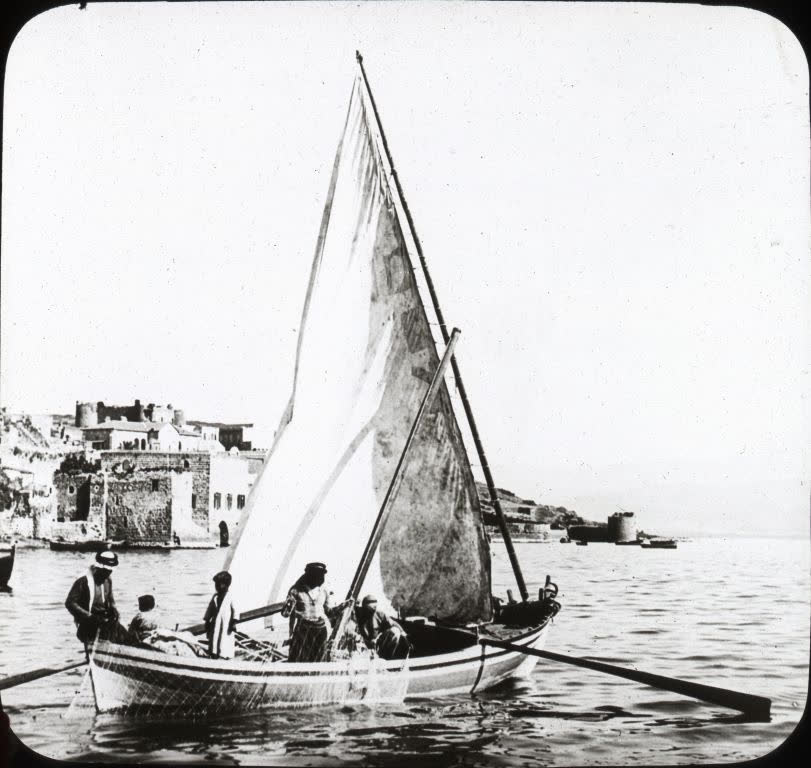
The slopes above the Sea of Galilee at the traditional Mount of Beatitudes — the natural amphitheater where the Sermon on the Mount was preached.Obendorf · CC0
The word
The English word disciple comes from the Latin for a learner. The Greek behind it in the New Testament is mathētēs (Strong's G3101), which Strong defines simply as "a learner, i.e. pupil."1 It is the ordinary word for the followers of Jesus in the Gospels and Acts; in the King James New Testament it stands in more than two hundred and fifty verses.2
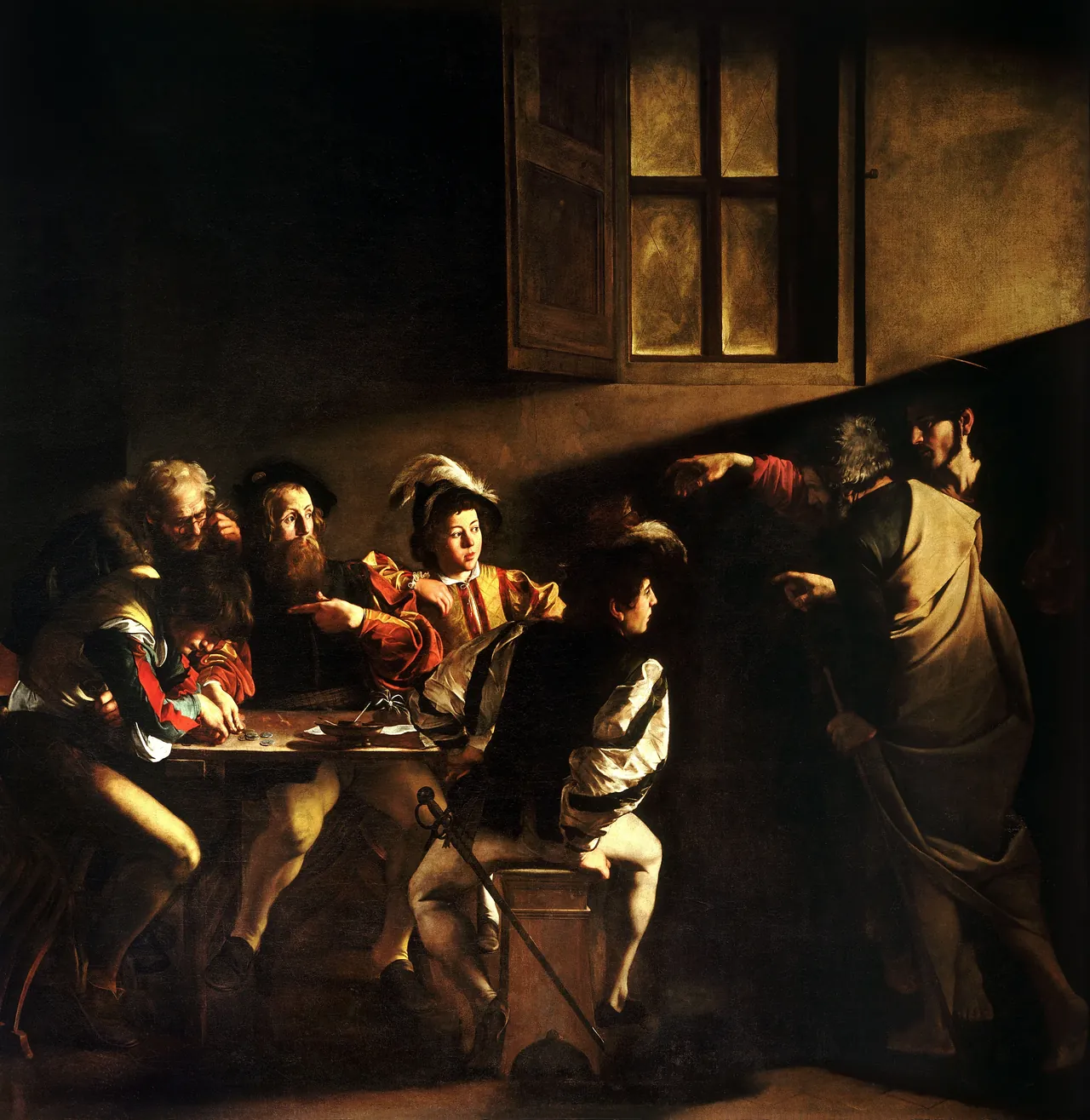
Caravaggio's Calling of Saint Matthew, painted around 1599 to 1600, showing Jesus calling a tax collector from his table to leave all and follow Him.The Calling of Saint Matthew-Caravaggo (1599-1600) · circa 1599-1600 · Wikimedia Commons · Public domain · museum record · Galeria Regni
The verb is rarer. Mathēteuō (G3100) means, in Strong's words, "intransitively, to become a pupil; transitively, to disciple, i.e. enrol as scholar."3 It appears only four times in the New Testament. Joseph of Arimathaea "also himself was Jesus' disciple" (Matthew 27:57) — literally, he had been discipled to Jesus. Every scribe "instructed unto the kingdom of heaven" (Matthew 13:52) is a scribe who has been made a disciple. Paul and Barnabas at Derbe "had preached the gospel to that city, and had taught many" (Acts 14:21). And at the end of Matthew, Jesus says, "Go ye therefore, and teach all nations" (Matthew 28:19).
So the King James translators rendered the command "teach", and that is a faithful word, because a disciple is a learner and to disciple is to teach. But it is a particular kind of teaching: the kind that enrols a person as a pupil of Jesus Christ for life. The next verse uses a different and more common word for teach, didaskō (G1321): "Teaching them to observe all things whatsoever I have commanded you" (Matthew 28:20). The first teaching makes a disciple; the second goes on for the rest of that disciple's life.
A disciple is a follower
In the ancient world, a pupil did not attend a lecture and go home. He attached himself to a teacher and followed him. The Gospels use that language from the first page. "Follow me, and I will make you fishers of men" (Matthew 4:19). Jesus' call was not first to a set of ideas but to Himself: "Take my yoke upon you, and learn of me; for I am meek and lowly in heart: and ye shall find rest unto your souls" (Matthew 11:29).
The goal of following is likeness. "The disciple is not above his master: but every one that is perfect shall be as his master" (Luke 6:40). Paul puts the same thing in the language of God's purpose: those whom God foreknew He "did predestinate to be conformed to the image of his Son" (Romans 8:29). A disciple is a person on the way to becoming like Jesus. Disciple-making is helping someone along that way.
The terms Jesus set
Jesus never hid the cost. In Luke 14, with great crowds following Him, He turned and said three times that a person "cannot be my disciple" unless certain things were true:
"If any man come to me, and hate not his father, and mother, and wife, and children, and brethren, and sisters, yea, and his own life also, he cannot be my disciple. And whosoever doth not bear his cross, and come after me, cannot be my disciple." (Luke 14:26-27)
"So likewise, whosoever he be of you that forsaketh not all that he hath, he cannot be my disciple." (Luke 14:33)
"Hate" here is the Hebrew idiom of preference — the same Lord commands us to honour father and mother. Jesus means that no love, not even the dearest, may stand above love for Him. And "bear his cross" meant one thing to people who had seen Roman crucifixions: walking to your death. Elsewhere He makes it daily: "If any man will come after me, let him deny himself, and take up his cross daily, and follow me" (Luke 9:23).
Dietrich Bonhoeffer, the German pastor executed by the Nazi regime in 1945, wrote the most quoted line on this subject. In R. H. Fuller's English translation of his 1937 book Nachfolge ("Following"), it reads: "When Christ calls a man, he bids him come and die."4 Bonhoeffer was writing against what he called cheap grace — the idea that a person may receive forgiveness and carry on exactly as before. Whatever one makes of the rest of his theology, on this point he was saying what Luke 14 says.
The marks of a disciple
Jesus also named the marks by which His disciples would be known. They are worth memorising, because they are the measure of every disciple-making effort.
Continuing in His word. "If ye continue in my word, then are ye my disciples indeed; And ye shall know the truth, and the truth shall make you free" (John 8:31-32). A disciple stays. A crowd comes and goes.
Love for other believers. "By this shall all men know that ye are my disciples, if ye have love one to another" (John 13:35). Not by our knowledge, our music, or our buildings.
Fruit. "Herein is my Father glorified, that ye bear much fruit; so shall ye be my disciples" (John 15:8). The fruit is first the fruit of the Spirit in character (Galatians 5:22-23), and then the fruit of other lives touched.
Disciples were called Christians
It is easy to forget that "Christian" was not the first name. Luke records that at Antioch, after Barnabas and Saul had taught the church there for a whole year, "the disciples were called Christians first in Antioch" (Acts 11:26). The people the world nicknamed Christians were people who already called themselves disciples. The New Testament knows nothing of a two-tier church, with ordinary Christians below and serious disciples above. Every believer is called to be a disciple. Some are further along than others; none are excused.
Where discipleship begins
Discipleship does not begin with effort. It begins with the gospel. "For by grace are ye saved through faith; and that not of yourselves: it is the gift of God: Not of works, lest any man should boast" (Ephesians 2:8-9). The very next verse tells us what that grace produces: "For we are his workmanship, created in Christ Jesus unto good works, which God hath before ordained that we should walk in them" (Ephesians 2:10).
Paul summed up his own preaching as "repentance toward God, and faith toward our Lord Jesus Christ" (Acts 20:21). On the day of Pentecost Peter told the crowd, "Repent, and be baptized every one of you in the name of Jesus Christ for the remission of sins, and ye shall receive the gift of the Holy Ghost" (Acts 2:38). Jesus told Nicodemus, "Except a man be born again, he cannot see the kingdom of God" (John 3:3).
That order matters for everything that follows. A disciple-maker is not trying to produce a better person by training. He is helping a person who has been born again — or who needs to be — to follow the One who saved him. If the root is missing, no amount of instruction will produce the fruit. The commission itself commands baptism (Matthew 28:19), and teaching to obey after it (Matthew 28:20). Peter's word at Pentecost has already been quoted, and Paul adds: "Therefore we are buried with him by baptism into death: that like as Christ was raised up from the dead by the glory of the Father, even so we also should walk in newness of life" (Romans 6:4).
Part 2 — The Commission: "Go Ye Therefore, and Teach All Nations"
3 min read
This part matters because the commission is the charter of every disciple-maker. It tells us on whose authority we go, what we are to do, and what we are promised. Most of the mistakes Christians make in this work come from forgetting one of its parts.
The authority
The commission begins not with us but with Christ: "All power is given unto me in heaven and in earth" (Matthew 28:18). The command that follows rests on that claim. We do not go because we are qualified, persuasive, or confident. We go because the risen Lord, who holds all authority, sends us. That is the first comfort for the fearful disciple-maker and the first check on the proud one. The work is His.
The command
The sentence has one main command — make disciples — and three words that describe how it is carried out: going, baptizing, and teaching.
Going. "Go ye therefore." The church is sent outward. Jesus had told the disciples, "As my Father hath sent me, even so send I you" (John 20:21). Disciple-making is not only something done to people who come to us; it is something we take to where people are.
Baptizing. "Baptizing them in the name of the Father, and of the Son, and of the Holy Ghost." New disciples are brought publicly into the church, under the name of the triune God.
Teaching to observe. "Teaching them to observe all things whatsoever I have commanded you." Notice the word observe. Jesus did not say, teaching them all things I have commanded you. He said, teaching them to observe — to keep, to obey. The goal of the teaching is not information but obedience.
That one word may be the most neglected in the whole commission. Much of what passes for discipleship today is teaching people to know what Jesus commanded. That is necessary, but it is not the goal. Jesus ended the Sermon on the Mount with the same point: "Therefore whosoever heareth these sayings of mine, and doeth them, I will liken him unto a wise man, which built his house upon a rock" (Matthew 7:24). James says it bluntly: "But be ye doers of the word, and not hearers only, deceiving your own selves" (James 1:22).
The scope
"All nations." The commission was given to eleven Jewish men on a mountain in Galilee, and it reaches every people on earth. Mark records it in another form: "Go ye into all the world, and preach the gospel to every creature" (Mark 16:15). Luke records the order of the advance: "ye shall be witnesses unto me both in Jerusalem, and in all Judaea, and in Samaria, and unto the uttermost part of the earth" (Acts 1:8).
The promise
"And, lo, I am with you alway, even unto the end of the world." The commission ends where it began, with Christ. He sends, and He goes with those He sends. The promise is attached to the command; those who obey the command can lean on the promise.
Does the commission still bind us?
This may seem an odd question, but for long stretches of history many Christians assumed the Great Commission had been fulfilled by the apostles and no longer applied to ordinary believers. In 1792 an English Baptist shoemaker and pastor named William Carey published a short book to answer that assumption. Its first section asked "whether the Commission given by our Lord to his Disciples be not still binding on us." Carey's argument was simple. If the command to teach all nations was only for the apostles, then so was the command to baptize — and every church that baptizes is doing wrong. And if the command was only for the apostles, then so was the promise attached to it, "lo, I am with you alway, even unto the end of the world" (Matthew 28:20) — which the wording itself forbids.5
Carey's logic still holds. The promise "unto the end of the world" outlives the apostles, so the command it is attached to outlives them too. The commission is not a job description for missionaries alone. It is the standing order of the whole church, and every believer has a part in it.
This part matters because Jesus did not only command disciple-making; He showed it. For three years the Son of God poured Himself into a small group of ordinary men, and the way He did it is the pattern for all who follow.
He prayed, and then He chose
Jesus did not choose the Twelve casually. "And it came to pass in those days, that he went out into a mountain to pray, and continued all night in prayer to God. And when it was day, he called unto him his disciples: and of them he chose twelve, whom also he named apostles" (Luke 6:12-13). The first step in disciple-making is prayer, and the second is a deliberate choice of whom to invest in.
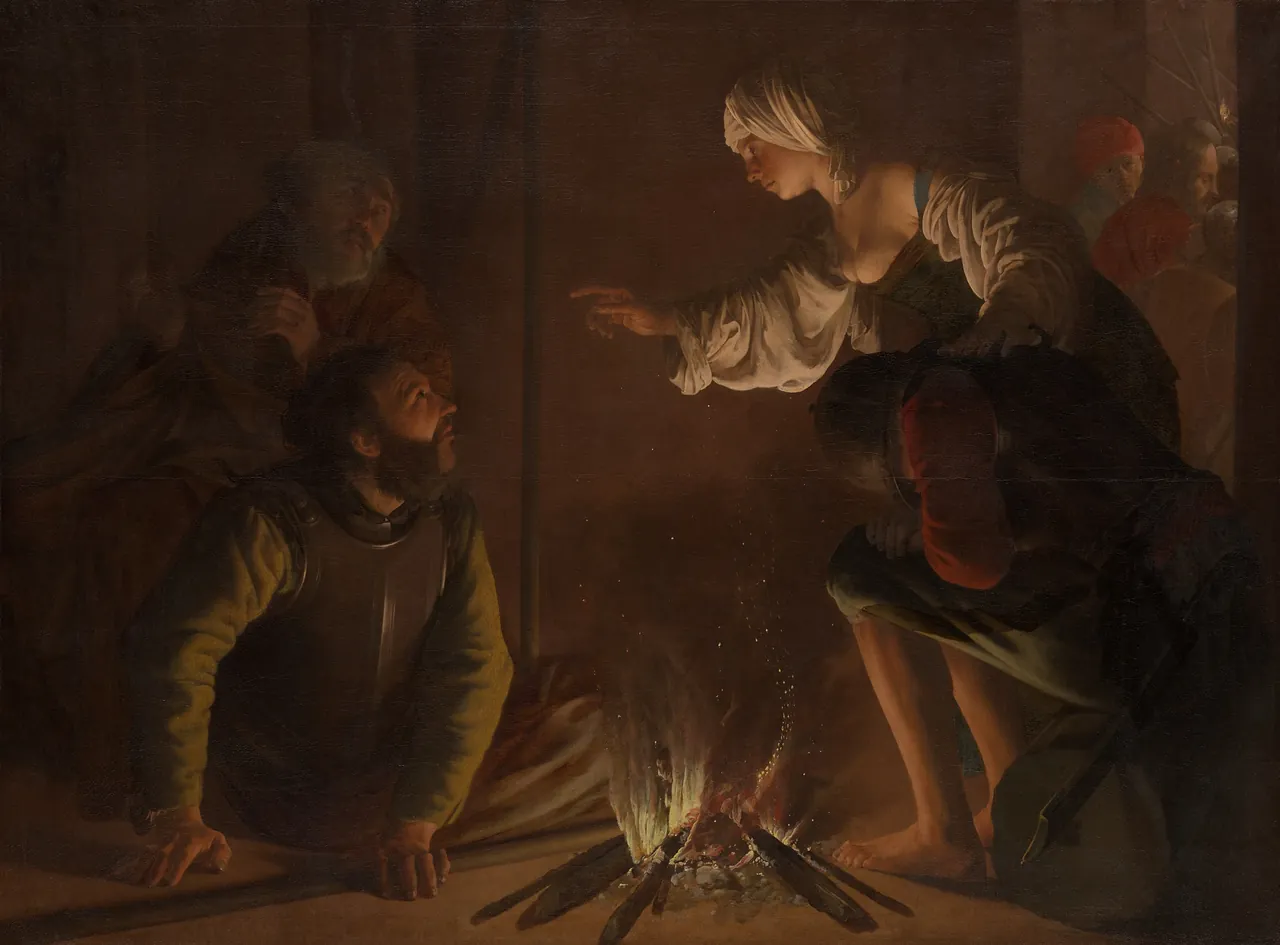
A Netherlandish painting of about 1626 showing the Denial of Saint Peter by the fire, the fall Jesus foresaw and the disciple He later restored.The Denial of Saint Peter · c. 1626 · Art Institute of Chicago · CC0 · museum record · Galeria Regni
The men He chose were not impressive. When the council in Jerusalem later met Peter and John, they "perceived that they were unlearned and ignorant men, they marvelled; and they took knowledge of them, that they had been with Jesus" (Acts 4:13). That last phrase is the whole secret.
"That they should be with him"
Mark gives the purpose of the choice in one sentence: "And he ordained twelve, that they should be with him, and that he might send them forth to preach" (Mark 3:14). Before they were sent, they were with Him. They ate with Him, walked with Him, watched Him pray, heard His answers to enemies, saw Him touch lepers and weep at a tomb. They learned most of what they knew not in lectures but in life.
That is the hardest part of disciple-making for busy people, and the most important. Information can be passed on in a book. Likeness is passed on by presence.
He taught, and He showed
Jesus taught constantly — on hillsides, in boats, in synagogues and in houses — and He explained privately to the Twelve what the crowds heard only in parables. But He also let them watch, and He waited for them to ask. One of the most telling verses in the Gospels is Luke 11:1: "as he was praying in a certain place, when he ceased, one of his disciples said unto him, Lord, teach us to pray, as John also taught his disciples." They had watched Him pray long enough to want what He had. Then He taught them the Lord's Prayer.
He sent them out, and He heard their report
Jesus did not wait until His disciples were perfect to give them work. He sent the Twelve out in pairs, giving them "power and authority over all devils, and to cure diseases," and "sent them to preach the kingdom of God, and to heal the sick" (Luke 9:1-2). Later He sent seventy more, "two and two before his face into every city and place, whither he himself would come" (Luke 10:1).
And when they came back, He listened. "And the apostles gathered themselves together unto Jesus, and told him all things, both what they had done, and what they had taught" (Mark 6:30). He corrected them when they needed it. When the seventy returned rejoicing that the devils were subject to them, He said, "Notwithstanding in this rejoice not, that the spirits are subject unto you; but rather rejoice, because your names are written in heaven" (Luke 10:20). And He cared for them: "Come ye yourselves apart into a desert place, and rest a while" (Mark 6:31).
He corrected them, and He restored them
The Twelve argued about who was greatest (Mark 9:33-35). They tried to send children away. They wanted to call fire down on a Samaritan village. Peter rebuked Jesus, and later denied Him three times. Jesus corrected them plainly and patiently, and He did not give up on them.
Before Peter's fall, Jesus told him, "Simon, Simon, behold, Satan hath desired to have you, that he may sift you as wheat: But I have prayed for thee, that thy faith fail not: and when thou art converted, strengthen thy brethren" (Luke 22:31-32). After the resurrection He met Peter by the lake and asked him three times, "lovest thou me?" — once for each denial — and three times gave him a charge: "Feed my lambs... Feed my sheep... Feed my sheep" (John 21:15-17). Restoration ended in commission. That is how Jesus handles failure in a disciple, and it is how we should.
Coleman's eight principles
In 1963 the American evangelist and seminary professor Robert E. Coleman published a short study of this pattern, The Master Plan of Evangelism, which has stayed in print ever since. Coleman read the Gospels and drew out eight principles of Jesus' method: selection (He chose a few), association (He stayed with them), consecration (He required obedience), impartation (He gave Himself), demonstration (He showed them how to live), delegation (He assigned them work), supervision (He kept checking on them), and reproduction (He expected them to reproduce).6 Coleman did not invent anything; he named what the text shows. His book is worth reading alongside the Gospels.
The pattern in one sentence
Put simply, Jesus chose a few, kept them close, taught them the word, showed them how to live it, gave them real work, listened to their report, corrected and restored them, and then sent them to do the same with others. Every faithful form of discipleship since has been some version of that.
Part 4 — How the Apostles and the Early Church Made Disciples
6 min read
This part matters because the apostles show us what Jesus' pattern looked like once He had ascended, and the first centuries of the church show what it looked like once the apostles were gone. The church that grew from a room of a hundred and twenty to millions across the Roman world did it without buildings, budgets, or legal protection. How?
The first church
Luke's first portrait of the Jerusalem church is short and complete. After about three thousand were baptized at Pentecost, "they continued stedfastly in the apostles' doctrine and fellowship, and in breaking of bread, and in prayers" (Acts 2:42). Four things — teaching, fellowship, the Lord's Supper, and prayer — and the word "stedfastly", which means they kept at it.
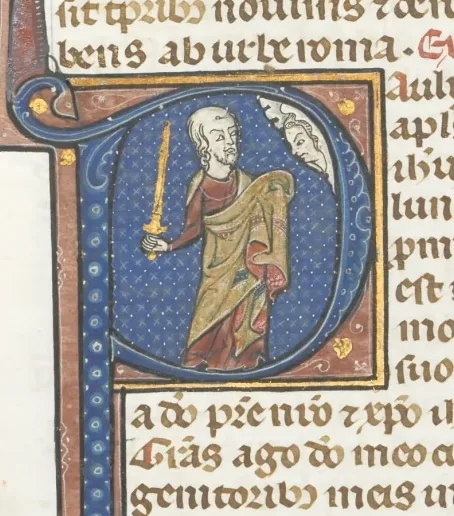
The opening of Second Timothy in a thirteenth-century Bible from southern France, with Paul in the initial, the letter that traces four generations of faithful teachers in one verse.Fol. 457v, Timothy II, historiated initial P, Paul talking to the bust of God above · c. 1275–1300 · Cleveland Museum of Art · CC0 · full page · museum record · Galeria Regni
They met in two places: "continuing daily with one accord in the temple, and breaking bread from house to house" (Acts 2:46). The large gathering and the small one went together. After the first persecution the apostles were found doing the same: "daily in the temple, and in every house, they ceased not to teach and preach Jesus Christ" (Acts 5:42).
Paul: a nurse, a father, a model
Paul describes his own disciple-making in family language. To the Thessalonians he writes: "But we were gentle among you, even as a nurse cherisheth her children: So being affectionately desirous of you, we were willing to have imparted unto you, not the gospel of God only, but also our own souls, because ye were dear unto us" (1 Thessalonians 2:7-8). And a few lines later: "As ye know how we exhorted and comforted and charged every one of you, as a father doth his children, That ye would walk worthy of God" (1 Thessalonians 2:11-12).
Notice "every one of you". Paul's work was personal. To the elders of Ephesus he could say, "I kept back nothing that was profitable unto you, but have shewed you, and have taught you publickly, and from house to house" (Acts 20:20), and "by the space of three years I ceased not to warn every one night and day with tears" (Acts 20:31). His aim was "warning every man, and teaching every man in all wisdom; that we may present every man perfect in Christ Jesus" (Colossians 1:28).
And he was not afraid to offer himself as an example. "Be ye followers of me, even as I also am of Christ" (1 Corinthians 11:1). To the Philippians he wrote, "Those things, which ye have both learned, and received, and heard, and seen in me, do: and the God of peace shall be with you" (Philippians 4:9). He knew that disciples learn as much from what they see as from what they hear.
Four generations in one verse
Near the end of his life, Paul wrote to his son in the faith, Timothy: "Thou therefore, my son, be strong in the grace that is in Christ Jesus. And the things that thou hast heard of me among many witnesses, the same commit thou to faithful men, who shall be able to teach others also" (2 Timothy 2:1-2).
Count the generations in that verse. Paul taught Timothy. Timothy is to commit it to faithful men. Those faithful men are to teach others also. Four links in a chain, and the chain is meant to keep going. That one verse is the seed of the whole series this paper introduces, and Level 5, Multiply Leaders, gives it a full study.
The Two Ways: the Didache
The oldest surviving Christian manual outside the New Testament is a short work called the Didache, or "The Lord's Teaching Through the Twelve Apostles to the Nations." Scholars date it variously, most to the late first or early second century. It is not Scripture, and it is not quoted here as doctrine, but as a witness to how some of the earliest churches discipled new believers.
Its first six chapters are a simple moral instruction that opens: "There are two ways, one of life and one of death; but a great difference between the two ways. The way of life, then, is this: First, you shall love God who made you; second, your neighbour as yourself."7 The teaching that follows is drawn largely from the words of Jesus. Then, in chapter 7, comes a striking instruction about baptism: "Having first said all these things, baptize into the name of the Father, and of the Son, and of the Holy Spirit."8
"Having first said all these things." In at least some early churches, a new convert was taught the way of life before baptism. That is the commission's order — making disciples, baptizing them, teaching them to observe — worked out in practice by the people closest to the apostles.
The catechumenate
By the third century, many churches had formalised this into a period of instruction for "catechumens", from a Greek word meaning those being instructed. A church order traditionally attributed to Hippolytus of Rome, known as the Apostolic Tradition, describes it. Its authorship and date are debated, and its translator noted that its three-year catechumenate "has parallels in later practice, but it represents about the maximum."9 But its instructions are worth reading:
"Let catechumens spend three years as hearers of the word. But if a man is zealous and perseveres well in the work, it is not the time but his character that is decisive."10
Before baptism, the candidates' lives were examined:
"They who are to be set apart for baptism shall be chosen after their lives have been examined: whether they have lived soberly, whether they have honoured the widows, whether they have visited the sick, whether they have been active in well-doing. When their sponsors have testified that they have done these things, then let them hear the Gospel."11
The New Testament does not require a three-year wait — the Ethiopian eunuch was baptized the day he believed (Acts 8:36-38), and the Philippian jailer "the same hour of the night" (Acts 16:33). So we are not bound by the Apostolic Tradition. But two things in it deserve attention. First, discipleship involved a sponsor — a believer who knew the candidate and could testify to his life. Second, what was examined was not knowledge but obedience: sober living, care for widows, visiting the sick, good works. The early church measured disciples by Matthew 28:20 — "teaching them to observe."
What outsiders saw
Some of the best evidence for how the early Christians lived comes from people who did not like them.
Early in the second century, Pliny the Younger, governing the province of Bithynia in what is now northern Turkey, wrote to the emperor Trajan asking how to handle the Christians. He reported that "many persons of every age, every rank, and also of both sexes are and will be endangered," and that "the contagion of this superstition has spread not only to the cities but also to the villages and farms." From those he questioned, he learned that "they were accustomed to meet on a fixed day before dawn and sing responsively a hymn to Christ as to a god."12 The faith had spread through every kind of person and place — not by a few great preachers, but through ordinary people.
Around AD 260, during a great epidemic, Dionysius, bishop of Alexandria, wrote an Easter letter preserved by the historian Eusebius. He described how believers cared for the sick at the cost of their own lives:
"The most of our brethren were unsparing in their exceeding love and brotherly kindness. They held fast to each other and visited the sick fearlessly, and ministered to them continually, serving them in Christ."13
A century later the emperor Julian, who tried to restore paganism, complained in a letter that "the impious Galileans support not only their poor, but ours as well."14 That is John 13:35 — "By this shall all men know that ye are my disciples" — confirmed by an enemy.
Growth through relationships
How did the church grow? The sociologist Rodney Stark, in his 1996 study The Rise of Christianity, argued that it grew the way most successful religious movements grow: through personal relationships. "The basis for successful conversionist movements," he wrote, "is growth through social networks, through a structure of direct and intimate interpersonal attachments." Movements fail, he observed, when they "quickly become closed, or semiclosed networks" and stop forming attachments to outsiders.15
Stark wrote as a sociologist, not a theologian, and Christians will add what he does not: that "God gave the increase" (1 Corinthians 3:6). But the human means he describes is exactly what Scripture shows. The gospel travelled from friend to friend and house to house. That is what disciple-making is. Level 6, Launch a Movement, looks closely at Stark's figures for how fast the church grew.
Part 5 — Recovering Personal Discipleship: Baxter and Wesley
6 min read
This part matters because the church has often lost personal discipleship and had to find it again. Two English ministers of the seventeenth and eighteenth centuries did so in ways that still teach us. Neither invented anything new; both went back to the New Testament and to the way the early church instructed its converts.
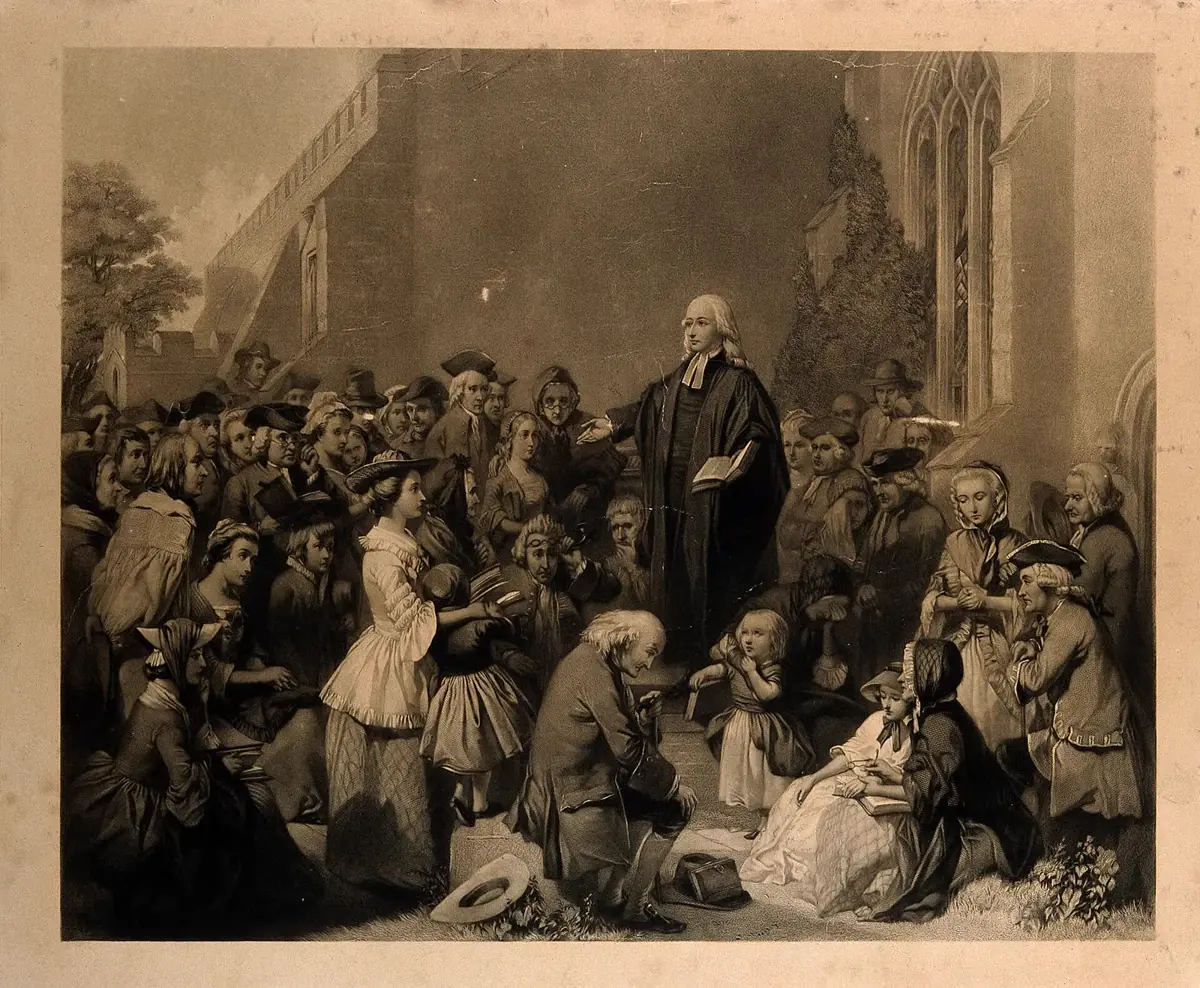
John Wesley preaching in the open air (18th-century engraving) — the message carried outside the building to wherever people already were.Wellcome Collection · CC BY 4.0
Richard Baxter at Kidderminster
Richard Baxter was the Puritan minister of Kidderminster, a weaving town in Worcestershire. In 1656 he published The Reformed Pastor (from the older sense of "reformed": a pastor renewed in his work), an appeal to his fellow ministers to take up the personal instruction of every family in their parishes.
Baxter confessed that he had delayed this work for years because he thought people would scorn it and that the labour would be too great. When he finally began, he found the opposite. He described the routine:
"We spend Monday and Tuesday, from morning almost to night, in the work, taking about fifteen or sixteen families in a week, that we may go through the parish, in which there are upwards of eight hundred families, in a year; and I cannot say yet that one family hath refused to come to me."16
The arithmetic is sound: fifteen or sixteen families a week, over fifty-two weeks, comes to between 780 and 832 families — about the eight hundred he names. And his verdict on the result is one every preacher should sit with: "I find more outward signs of success with most that do come, than from all my public preaching to them."17
Baxter did not stop preaching. But he learned what Paul meant by teaching "publickly, and from house to house" (Acts 20:20). A sermon speaks to a crowd. A conversation speaks to a person. Both are needed, and the second is the one most often neglected.
John Wesley's classes
The best-documented recovery of personal discipleship in the English-speaking world came a century later, among the Methodists. John Wesley (1703–1791), a clergyman of the Church of England, began in 1739 to gather people who had been awakened by the preaching of the gospel into "societies". According to the General Rules he published in 1743, a society was "a company of men having the form and seeking the power of godliness, united in order to pray together," and to "watch over one another in love." There was only one condition for joining: "a desire to flee from the wrath to come, and to be saved from their sins."18
The societies grew quickly, and so did a problem. Wesley could not know how each member was actually living. The solution came by accident. In his Plain Account of the People Called Methodists, written as a letter to Mr. Perronet, vicar of Shoreham in Kent, he told how it happened. In Bristol, on February 15, 1742, he was discussing how to pay off the debt on the society's meeting-house, "when one stood up and said, 'Let every member of the Society give a penny a week till all are paid.' Another answered, 'But many of them are poor, and cannot afford to do it.' 'Then,' said he, 'put eleven of the poorest with me, and if they can give anything, well. I will call on them weekly, and if they can give nothing, I will give for them as well as for myself. And each of you, call on eleven of your neighbours weekly.'"19
It was done. And the men who called on their neighbours each week began to report that this or that person "did not live as he ought." Wesley wrote: "It struck me immediately, 'This is the thing: the very thing we have wanted so long.'"20 The groups of about twelve became "classes", and the person who visited them became the "leader". The job description he wrote is one of the clearest short statements of a disciple-maker's work ever penned:
"It is the business of a Leader: I. To see each person in his class, once a week at the least: in order to enquire how their souls prosper; to advise, reprove, comfort or exhort, as occasion may require; to receive what they are willing to give toward the relief of the poor."21
At first the leaders visited each member at home. But that took more time than most of them had, some members lived with masters or relatives who would not allow the visits, and quarrels between members could not be settled without seeing them face to face. So, Wesley wrote, "it was agreed, that those of each class should meet all together."22 The weekly class meeting was born.
Wesley's description of the result could have been written about Acts 2:
"Many now happily experienced that Christian fellowship, of which they had not so much as an idea before. They began to bear one another's burdens, and naturally to care for each other."23
A "rope of sand"
When critics complained that the societies were "gathering churches out of churches", Wesley answered with a question that still cuts. In the ordinary parish, he asked, who "watched over" the true Christians "in love? Who marked their growth in grace? Who advised and exhorted them from time to time? Who prayed with them and for them as they had need? This, and this alone is Christian fellowship." And then: "are not the bulk of the parishioners a mere rope of sand?"24
A rope of sand looks like a rope, and has no strength at all. That is a congregation of people who sit near each other each week and never watch over one another's souls. Wesley's point was not that the church was wrong to gather. It was that gathering is not the same as fellowship.
The bands
Some members needed more than a class could give. In a class, Wesley noted, "persons of every sort, young and old, men and women, met together," and there were temptations they could not speak of there. So, following the "express advice" of James 5:16 — "Confess your faults one to another, and pray one for another, that ye may be healed" — he divided them "into smaller companies; putting married or single men, and married or single women together." These "bands" agreed to meet weekly, to begin with singing or prayer, and "to speak each of us in order, freely and plainly, the true state of our soul, with the faults we have committed in thought, word or deed, and the temptations we have felt since our last meeting."25
Wesley carefully distinguished this from the Roman Catholic confessional: it was "the confession of several persons conjointly, not to a priest, but to each other."26 The bands were small, single-sex, and voluntary. They were where the hardest work of discipleship happened.
"Prudential, not essential"
The most important thing Wesley said about his own methods may be this. Critics objected that there was no Scripture for classes and bands. Wesley agreed that the specific arrangements were not commanded. The Scripture gives general rules — "Let all things be done decently and in order" (1 Corinthians 14:40) — and leaves particular circumstances to common sense. By changing his methods when they needed changing, he said, "we declare them all to be merely prudential, not essential, not of divine institution. We prevent, so far as in us lies, their growing formal and dead."27
That is wise. The command to make disciples is essential. Watching over one another in love is commanded (Hebrews 3:13; Galatians 6:1-2; James 5:16). But the form — a group of twelve on a Tuesday, a pair over breakfast, a household around a table — is prudential. Any form that does the commanded work is acceptable. Any form that stops doing it should be changed.
What Baxter and Wesley teach us
Preaching is not enough. Both men were powerful preachers, and both found that personal instruction did what preaching alone did not.
Someone must ask. Wesley's leader's first duty was "to enquire how their souls prosper." Most believers have never been asked that question by anyone who expected a true answer.
Ordinary believers can lead. Wesley's class leaders were weavers, shopkeepers and servants. The work did not depend on clergy.
Small and regular beats large and occasional. Once a week, at the least.
Forms serve the work. Keep the substance; change the shape when it hardens.
This part matters because many believers never disciple anyone for one reason: they do not think they qualify. Scripture sets a high bar for character and a low bar for credentials.
You do not have to be perfect
Paul, the greatest disciple-maker of the early church, wrote, "Not as though I had already attained, either were already perfect: but I follow after" (Philippians 3:12). When he said "Be ye followers of me", he finished the sentence: "even as I also am of Christ" (1 Corinthians 11:1). He did not claim to be the destination, only a guide who was further along the road.
The Twelve were sent out to preach while they still misunderstood a great deal. The Samaritan woman ran into her town with the words "He told me all that ever I did," and "many of the Samaritans of that city believed on him for the saying of the woman" (John 4:39). The man freed from the legion of devils was told, "Go home to thy friends, and tell them how great things the Lord hath done for thee" (Mark 5:19). A new believer can begin to help others. A mature believer is commanded to.
But you do have to be following
The qualification that matters is not knowledge but faithfulness. "Moreover it is required in stewards, that a man be found faithful" (1 Corinthians 4:2). Paul told Timothy to look for "faithful men" (2 Timothy 2:2), and he told Timothy himself: "Take heed unto thyself, and unto the doctrine; continue in them: for in doing this thou shalt both save thyself, and them that hear thee" (1 Timothy 4:16). Notice the order: thyself first.
A disciple-maker who is not praying, not in the word, and not in a local church will soon be giving away what he does not have. The minimum is simple: a living faith in Christ, a regular life of prayer and Scripture, membership in a church where you are under the care of elders, and a willingness to be honest about your own struggles.
The heart of a disciple-maker
Scripture names several qualities again and again in those who shepherd others.
Love. Paul was "affectionately desirous" of the Thessalonians and imparted "our own souls" (1 Thessalonians 2:8). Disciple-making without affection becomes management.
Patience. "And the servant of the Lord must not strive; but be gentle unto all men, apt to teach, patient, In meekness instructing those that oppose themselves" (2 Timothy 2:24-25). People grow slowly.
Humility. Jesus forbade His disciples to take the titles of a master: "for one is your Master, even Christ; and all ye are brethren" (Matthew 23:8). The disciple-maker points away from himself. "He must increase, but I must decrease" (John 3:30).
Honesty. "But speaking the truth in love, may grow up into him in all things" (Ephesians 4:15). Love that never says a hard thing is not love.
Dependence on God. "I have planted, Apollos watered; but God gave the increase" (1 Corinthians 3:6). We cannot change a heart. We can only bring a person to the One who can.
Your own household first
The oldest disciple-making command in Scripture is given to parents: "And these words, which I command thee this day, shall be in thine heart: And thou shalt teach them diligently unto thy children, and shalt talk of them when thou sittest in thine house, and when thou walkest by the way, and when thou liest down, and when thou risest up" (Deuteronomy 6:6-7).
Timothy himself was discipled first at home. Paul remembered "the unfeigned faith that is in thee, which dwelt first in thy grandmother Lois, and thy mother Eunice" (2 Timothy 1:5), and reminded him "that from a child thou hast known the holy scriptures" (2 Timothy 3:15). A father or mother who disciples their children is doing the work of the Great Commission at the kitchen table.
Men with men, women with women
Scripture gives a direct instruction for the discipling of women by women. Paul tells Titus that "the aged women likewise" are to be "teachers of good things; That they may teach the young women to be sober, to love their husbands, to love their children, To be discreet, chaste, keepers at home, good, obedient to their own husbands, that the word of God be not blasphemed" (Titus 2:3-5). The text should be read as written. Churches differ in how they apply some of its particulars today, and this paper does not settle that for the reader; but the principle of older women discipling younger women is plain.
Wesley's bands followed the same wisdom, "putting married or single men, and married or single women together."28 As a general rule, the close, confessional work of discipleship is best done man with man and woman with woman. It protects both, and it allows the honesty the work requires. A married couple may disciple another couple together.
Discipled before discipling
The best preparation for discipling others is to be discipled yourself. If no one has ever done this for you, ask. Find a mature believer of your own sex in your church — someone whose life you respect, who knows the word and prays — and ask whether they would meet with you regularly to read the Scriptures and pray. Many will say yes. Some will be surprised and honoured that anyone asked. The chain of 2 Timothy 2:2 has to reach you before it can go through you.
Part 7 — Counterfeits, Obstacles, and Forms That Work
6 min read
This part matters because good things have imitations, and good intentions meet real resistance. Knowing the counterfeits helps us avoid them; naming the obstacles helps us push through them; and simple forms help us actually begin.
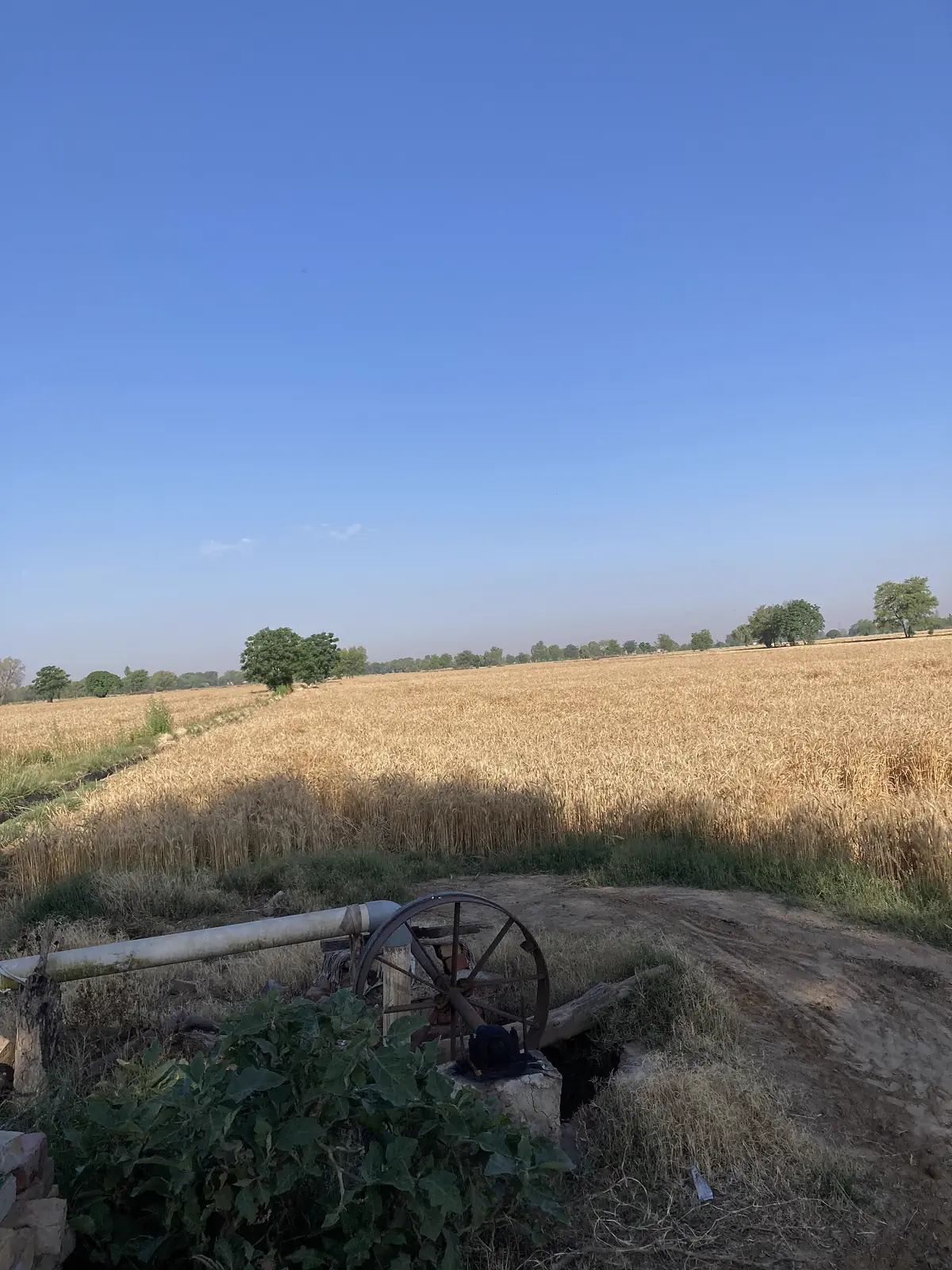
Wheat at harvest — the image Jesus reached for when He said the harvest is plentiful but the workers are few (Matthew 9).Chparveshtaak · CC BY-SA 4.0
Counterfeit 1: information without obedience
The commonest counterfeit is a class that teaches people to know what Jesus said without helping them do it. The commission says "teaching them to observe" (Matthew 28:20). James warns that hearing without doing is self-deception (James 1:22). A disciple-making relationship should always ask not only "What does this passage say?" but "What will you do about it this week?" — and next week, "Did you?"
Counterfeit 2: a programme without a person
Curricula are useful. But a workbook cannot ask how your soul is prospering, notice that you have gone quiet, or pray with you when your marriage is struggling. Wesley's class leaders had a list of members, not a list of lessons. Jesus chose men "that they should be with him" (Mark 3:14). A programme can support discipleship; it cannot replace a person.
Counterfeit 3: outward change without a new heart
It is possible to train someone into Christian behaviour without their ever being born again. The Pharisees were very well discipled in that sense. Jesus said, "Except a man be born again, he cannot see the kingdom of God" (John 3:3). A disciple-maker must keep the gospel at the centre and must never assume that because someone has been baptized, attends church, or knows the vocabulary, they have been converted.
Criselle Mendoza told her story on The King Is Coming Show (TKIC #51): baptized at twelve in Iglesia Ni Cristo, and, in her telling, not saved until 2025. Watch it in her own words: youtube.com/watch?v=_7vjNP6A_z8 Criselle's account of what happened to her, shared as her testimony — weigh it for yourself.
Stories like Criselle's are a reminder to every disciple-maker to ask the plain question early and kindly: "How did you come to faith in Christ? What is your hope for eternal life resting on?" The answer tells you where to begin.
Counterfeit 4: dependence on the leader
At Corinth, the believers had split into fan clubs: "every one of you saith, I am of Paul; and I of Apollos; and I of Cephas; and I of Christ. Is Christ divided? was Paul crucified for you?" (1 Corinthians 1:12-13). A disciple-maker who becomes the centre of a disciple's spiritual life has failed, however much the disciple admires him. The aim is to bring the disciple to stand on his own before God, in the word and in the church, and then to help someone else.
Counterfeit 5: control
The darkest counterfeit is control dressed as discipleship: a leader who decides whom his disciples may marry, where they may work, or whether they may leave, and who treats questions as rebellion. Jesus forbade it in so many words: "Ye know that they which are accounted to rule over the Gentiles exercise lordship over them... But so shall it not be among you: but whosoever will be great among you, shall be your minister" (Mark 10:42-43). Peter told elders to lead "Neither as being lords over God's heritage, but being ensamples to the flock" (1 Peter 5:3). A true disciple-maker gives counsel from Scripture and leaves the conscience free before God.
Obstacle 1: "I don't have time"
Baxter felt this, and his solution was to give two days a week to it. Few of us can do that, but almost everyone can give one hour a week to one person. Disciple-making can also be woven into time already spent: a commute, a lunch break, a walk, the dinner table. Jesus discipled the Twelve largely while travelling. Deuteronomy 6:7 speaks of talking of God's words "when thou walkest by the way."
Obstacle 2: "I don't know enough"
You know more than the person who knows less. You do not need to have every answer; you need to be willing to say, "I don't know, let's look it up together," and to point them to the pastor when a question is beyond you. Open the King James Bible together; use a Strong's Concordance; read the passage aloud and ask what it says. The Holy Ghost is the true teacher: "he shall teach you all things, and bring all things to your remembrance, whatsoever I have said unto you" (John 14:26).
Obstacle 3: hard conversations
Sooner or later a disciple-maker will have to say something unwelcome. Scripture gives both the duty and the manner. The duty: "Moreover if thy brother shall trespass against thee, go and tell him his fault between thee and him alone: if he shall hear thee, thou hast gained thy brother" (Matthew 18:15). The manner: "Brethren, if a man be overtaken in a fault, ye which are spiritual, restore such an one in the spirit of meekness; considering thyself, lest thou also be tempted" (Galatians 6:1). Wesley's leaders were to "advise, reprove, comfort or exhort, as occasion may require."29 All four belong to love.
Obstacle 4: the person who stops coming
Not everyone you disciple will continue. Some of Jesus' own disciples "went back, and walked no more with him" (John 6:66). Pursue them, pray for them, and leave the door open. But do not let one person's drifting stop you from investing in another. Jesus asked the Twelve, after the crowd left, "Will ye also go away?" (John 6:67) — and Peter answered for the faithful few.
Obstacle 5: when a problem is beyond you
A disciple-maker is not a doctor, a lawyer, or a licensed counsellor. When you learn of abuse, of danger to a child, of thoughts of suicide, or of a serious medical or mental-health problem, bring in your pastor and, where needed, the proper authorities and professionals. If someone is in immediate danger, call 911; for thoughts of suicide, call or text 988. Discipleship walks alongside these helps; it does not replace them.
Forms that work today
Here, in keeping with Wesley's principle that forms are "prudential, not essential," are three simple shapes for disciple-making. Each does the commanded work.
One with one
Two believers of the same sex meet weekly for about an hour. They read a passage of Scripture, talk about what it says and what it requires, share honestly how each is doing, decide one step of obedience for the week, and pray. This is the shape of Paul and Timothy, and it is the form Level 4, Disciple Someone, sets out in a twelve-week path.
A small company
Three to twelve believers meet weekly with a leader — a modern class meeting. Each in turn is asked how their soul is prospering. The word is read and applied. Needs are shared and met. Prayer closes the meeting. Smaller, single-sex groups of two to four can meet within it for closer confession and accountability, as the bands did.
The household
A parent or parents gather the family regularly — many families find daily works, even for ten minutes — to read Scripture, talk about it, and pray. Deuteronomy 6:6-7 and Psalm 78 make this the first school of discipleship: "That the generation to come might know them, even the children which should be born; who should arise and declare them to their children: That they might set their hope in God, and not forget the works of God, but keep his commandments" (Psalm 78:6-7).
A simple weekly rhythm
Whatever the form, a disciple-making meeting can follow the same few steps:
| Step | What happens | Scripture behind it | |---|---|---| | Ask | "How does your soul prosper?" Listen to the honest answer. | Hebrews 3:13; Wesley's leader's first duty | | Look back | "Last week you said you would… How did it go?" | James 1:22 | | Read | Read a passage aloud from the King James Bible. Ask what it says. | Nehemiah 8:8; Acts 17:11 | | Apply | Ask what it requires. Choose one step of obedience. | Matthew 28:20 | | Share | Confess faults, name temptations, carry burdens. | James 5:16; Galatians 6:2 | | Pray | Pray for each other by name, and for those you are trying to reach. | Matthew 9:38 |
How to measure it
The world measures a ministry by attendance, money and buildings. Jesus gave different measures: continuing in His word (John 8:31), love for the brethren (John 13:35), and fruit that remains (John 15:16). The Apostolic Tradition asked whether candidates had "lived soberly," "honoured the widows," and "visited the sick."30 Those are still the right questions. Is the person you are discipling more like Christ than a year ago? Are they obeying what they know? Do they love other believers? And — the final test — are they beginning to help someone else?
The command has not changed: "Go ye therefore, and teach all nations, baptizing them in the name of the Father, and of the Son, and of the Holy Ghost: Teaching them to observe all things whatsoever I have commanded you" (Matthew 28:19-20). Neither has the promise: "and, lo, I am with you alway, even unto the end of the world" (Matthew 28:20).
We have seen what a disciple is: a learner who follows Jesus, continues in His word, loves His people, and bears fruit. We have seen how Jesus made disciples: by choosing a few, keeping them close, teaching and showing, sending and listening, correcting and restoring. We have seen the apostles do the same from house to house, the early church teach the way of life before and after baptism, and believers in a plague-stricken city love their neighbours to the point of death. We have seen a Puritan pastor discover that one conversation did more than many sermons, and a Methodist leader discover that a penny a week and a weekly visit could turn a rope of sand into a fellowship.
None of these people were doing anything an ordinary Christian cannot do. That is the point. Disciple-making is not a specialist ministry. It is the normal Christian life, lived with someone else in view.
A next step
If no one has ever discipled you, ask someone this week. If you are being discipled, ask the Lord whom you should begin to help. Write down three names — a family member, a friend, a newer believer in your church — and pray over them for a week, as Jesus prayed all night before He chose. Then ask one of them to meet with you. Level 4, Disciple Someone, will walk you through the first twelve weeks.
An invitation
If you are reading this and you have never come to Christ yourself, this is where everything starts. "For all have sinned, and come short of the glory of God" (Romans 3:23). Yet Scripture goes on, "But God commendeth his love toward us, in that, while we were yet sinners, Christ died for us" (Romans 5:8). Turn from your sin, put your trust in Him, and you will be saved: "That if thou shalt confess with thy mouth the Lord Jesus, and shalt believe in thine heart that God hath raised him from the dead, thou shalt be saved" (Romans 10:9). Then find a Bible-believing church, be baptized, and ask someone to teach you to follow Him. That is how every disciple begins.
You can read the whole Bible free at kylelauriano.com/library, and hear people tell, in their own words, how they came to Christ, on The King Is Coming Show. Free truth. No pressure.
1James Strong, The Exhaustive Concordance of the Bible (New York: Hunt & Eaton, 1890), Greek Dictionary, no. 3101. The Strong's data used throughout is the edition served in the site's 1611 Reader study tools, kylelauriano.com/library.↩
2Count of verses in the King James New Testament where the Strong's tagging in the site's study data assigns G3101 (252 verses). The figure is a verse count, not a count of every occurrence of the word.↩
4Dietrich Bonhoeffer, The Cost of Discipleship, trans. R. H. Fuller, rev. ed. (New York: Macmillan, 1959). The German original, Nachfolge, was published in Munich by Chr. Kaiser in 1937. Later translations render the German line differently; the wording above is Fuller's.↩
5William Carey, An Enquiry into the Obligations of Christians to Use Means for the Conversion of the Heathens (Leicester: Ann Ireland, 1792), sect. 1. Online: https://www.gutenberg.org/ebooks/11449.↩
6Robert E. Coleman, The Master Plan of Evangelism (first published 1963; Grand Rapids: Revell, 2006). The eight principles are the titles of the book's chapters.↩
7Didache 1.1, trans. M. B. Riddle, in Ante-Nicene Fathers, vol. 7, ed. Alexander Roberts, James Donaldson and A. Cleveland Coxe (Buffalo: Christian Literature Publishing, 1886). Online: https://www.newadvent.org/fathers/0714.htm.↩
9Burton Scott Easton, notes to ch. 17 in The Apostolic Tradition of Hippolytus (Cambridge: Cambridge University Press, 1934). Online: https://www.gutenberg.org/ebooks/61614.↩
12Pliny the Younger, Letters 10.96. Online: https://faculty.georgetown.edu/jod/texts/pliny.html.↩
13Dionysius of Alexandria, quoted in Eusebius, Church History 7.22.7, trans. Arthur Cushman McGiffert, in Nicene and Post-Nicene Fathers, 2nd ser., vol. 1 (1890). Online: https://www.newadvent.org/fathers/250107.htm.↩
14Julian, letter to a pagan priest, quoted in Rodney Stark, The Rise of Christianity: A Sociologist Reconsiders History (Princeton: Princeton University Press, 1996), 83–84, from Paul Johnson's and Ayerst and Fisher's collections.↩
18John Wesley, The Nature, Design, and General Rules of the United Societies (1743). Online: https://www.umc.org/en/content/the-general-rules-of-the-methodist-church.↩
19John Wesley, A Plain Account of the People Called Methodists. In a Letter to the Reverend Mr. Perronet, 2nd ed. (London: W. Strahan, 1749), II.3. Spelling modernised. Online: https://wesleyscholar.com/wp-content/uploads/2019/02/Plain-Account-People-Called-Methodists-1749.pdf. The date and the debt on the Bristol meeting-house are from Luke Tyerman, The Life and Times of the Rev. John Wesley, M.A., Founder of the Methodists, vol. 1 (New York: Harper & Brothers, 1872), under the year 1742. Online: https://www.gutenberg.org/ebooks/69582.↩
Seven people who say they met Jesus. What happened, in their own words.
Seven testimonies from The King Is Coming Show, one a morning — the story as they tell it, the verse the story lands on in the 1611 King James, and the page itself. Then the teaching that explains it. Free.
This is practical teaching, not proof. It's drawn from Scripture and from walking this road myself. If you're still weighing the basics — whether God is real, whether the Bible can be trusted — I'd encourage you to start with the Skeptic resources in the Research Hub before diving in here.