How to choose, meet with, teach and send one believer in twelve weeks, following the pattern of Paul and Timothy and the church's long practice of personal instruction.
Abstract
Level 4 on the site's growth path asks a believer to take one person and help them follow Christ. How is that done, week by week? This paper answers from the King James Bible first, taking as its pattern Paul's discipling of Timothy and the charge of 2 Timothy 2:2. It draws second on believers who did this work and wrote down what they learned: Richard Baxter, who found that "half an hour's close discourse" did more for some of his hearers than years of sermons; John Wesley, whose class leaders were charged "to enquire how their souls prosper"; and the early church orders that examined a convert's life, not only his knowledge. It then gives a complete twelve-week path — the gospel and assurance, new birth and baptism, the word, prayer, the Holy Ghost and His gifts, sin and confession, the church, spiritual warfare (guarded), witness, service, suffering, and the commission — with readings, questions and a step of obedience for each week, and a chapter on what to do when it gets hard. It is written for any faithful believer ready to disciple someone.
What’s inside
·Introduction
Part 1Part 1: The Pattern: Paul and Timothy
Part 2Part 2: Before You Begin: Choosing, Inviting, Agreeing
Part 3Part 3: The Weekly Meeting
Part 4Part 4: Weeks 1 to 4: Foundations
Part 5Part 5: Weeks 5 to 8: Walking with God
Part 6Part 6: Weeks 9 to 12: Serving and Sending
Part 7Part 7: When It Gets Hard
·Conclusion
Research paper · 9 chapters · 9 notes · October 2026
"The things that thou hast heard of me among many witnesses, the same commit thou to faithful men, who shall be able to teach others also." — 2 Timothy 2:2 (KJV)Read in the 1611 →
About 37 minutes · 9 parts · the PDF has the same text
Introduction
2 min read
There is a moment in every believer's life when the question changes. For a while it is, "Who will help me grow?" Then one day it becomes, "Whom should I help?" This paper is for that moment.
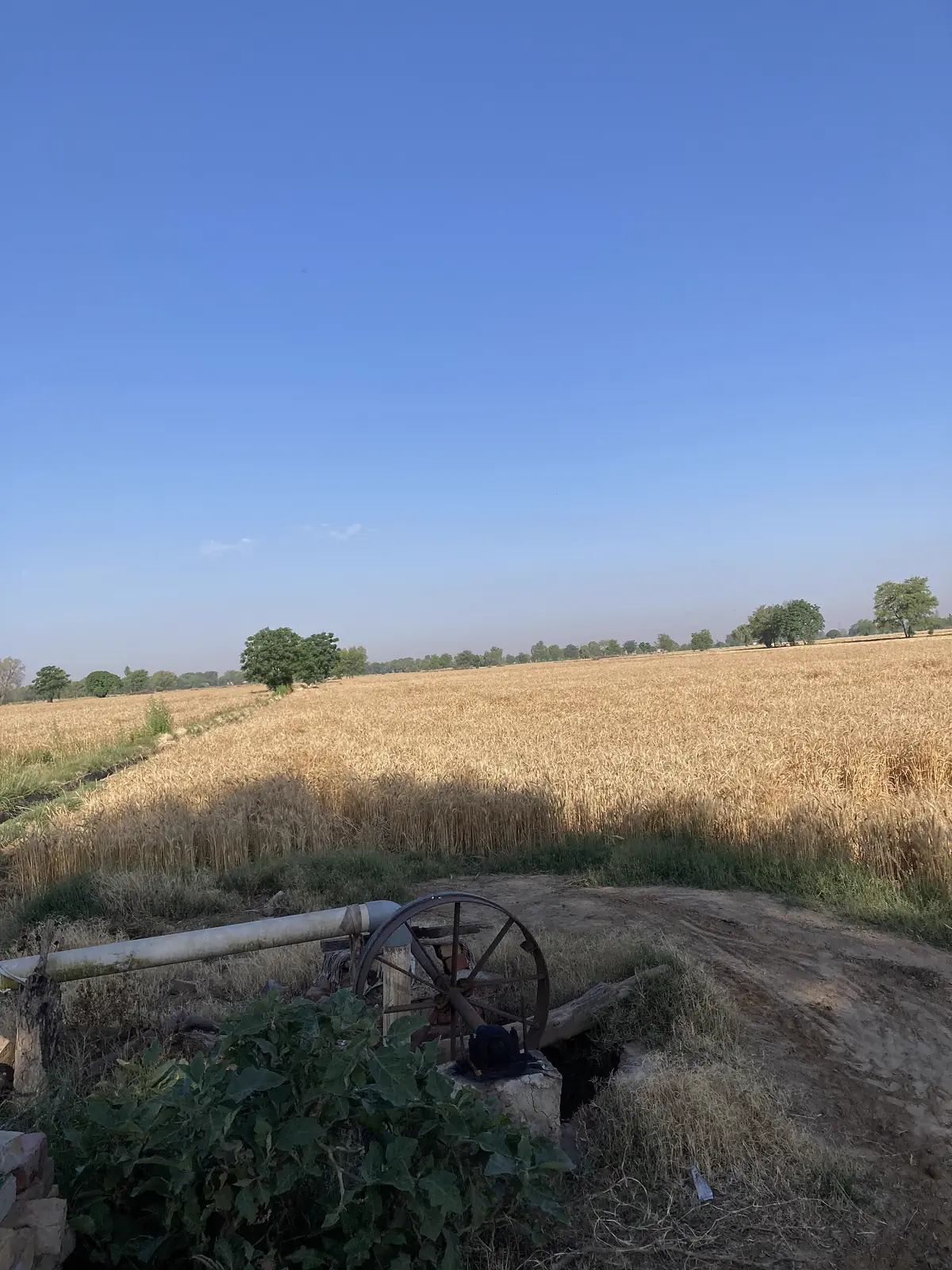
Wheat at harvest — the image Jesus reached for when He said the harvest is plentiful but the workers are few (Matthew 9).Chparveshtaak · CC BY-SA 4.0
The command is the one Jesus gave on the mountain in Galilee: "Go ye therefore, and teach all nations, baptizing them in the name of the Father, and of the Son, and of the Holy Ghost: Teaching them to observe all things whatsoever I have commanded you: and, lo, I am with you alway, even unto the end of the world. Amen" (Matthew 28:19-20). The word translated "teach" in verse 19 is the Greek verb for making a disciple (Strong's G3100).1 The nations are made of persons. The commission is carried out one person at a time.
What this paper is
This is the fourth level on the site's growth path. Levels 1 to 3 dealt with telling your story and bearing witness in public. Level 4 is the first that asks you to take responsibility for another person's growth. Level 5, Multiply Leaders, and Level 6, Launch a Movement, build on it. The companion paper Discipling Others lays the biblical and historical foundation for all of them; this one is the practical tool.
It has seven parts. Part 1 studies the pattern of Paul and Timothy. Part 2 covers how to choose and invite someone, and what to agree on before you start. Part 3 sets out the weekly meeting and the art of asking questions. Parts 4, 5 and 6 give the twelve weeks: four on foundations, four on walking with God, four on serving and being sent. Part 7 deals with what to do when it gets hard.
The twelve weeks are not a magic number. Wesley called methods like these "prudential, not essential" — useful arrangements, not commands.2 Jesus spent about three years with the Twelve; Paul spent years with Timothy. Twelve weeks is a beginning: long enough to lay foundations and form habits, short enough that a busy believer can say yes. Many will want to continue afterwards, and should.
A word about me
I came to disprove God. He met me instead — and I couldn't unsee what time it is. I decided to read the Bible for one reason: to disprove it, so I'd have an excuse to stop going to church for good. It did the opposite. In Matthew I read Jesus' own words and felt the weight of my own sin for the first time. My story is at kylelauriano.com/about. I say it here because anyone can be reached, and anyone who has been reached can begin to help someone else. You do not need to be a pastor to do what this paper describes. You need to be following Christ, and willing to let someone follow with you.
A note on Scripture: every verse here is from the King James Bible. Read it free in the 1611 Reader at kylelauriano.com/library, and use a KJV with Strong's Concordance for study. The readings for each week are given by reference so that you and the person you disciple can read them together from the page.
This part matters because the New Testament gives us one disciple-making relationship in unusual detail. We know how it began, how it grew, what it cost, and how it ended. It is the model this whole paper follows.
How it began
Paul met Timothy on his second missionary journey. "Then came he to Derbe and Lystra: and, behold, a certain disciple was there, named Timotheus, the son of a certain woman, which was a Jewess, and believed; but his father was a Greek: Which was well reported of by the brethren that were at Lystra and Iconium. Him would Paul have to go forth with him" (Acts 16:1-3).
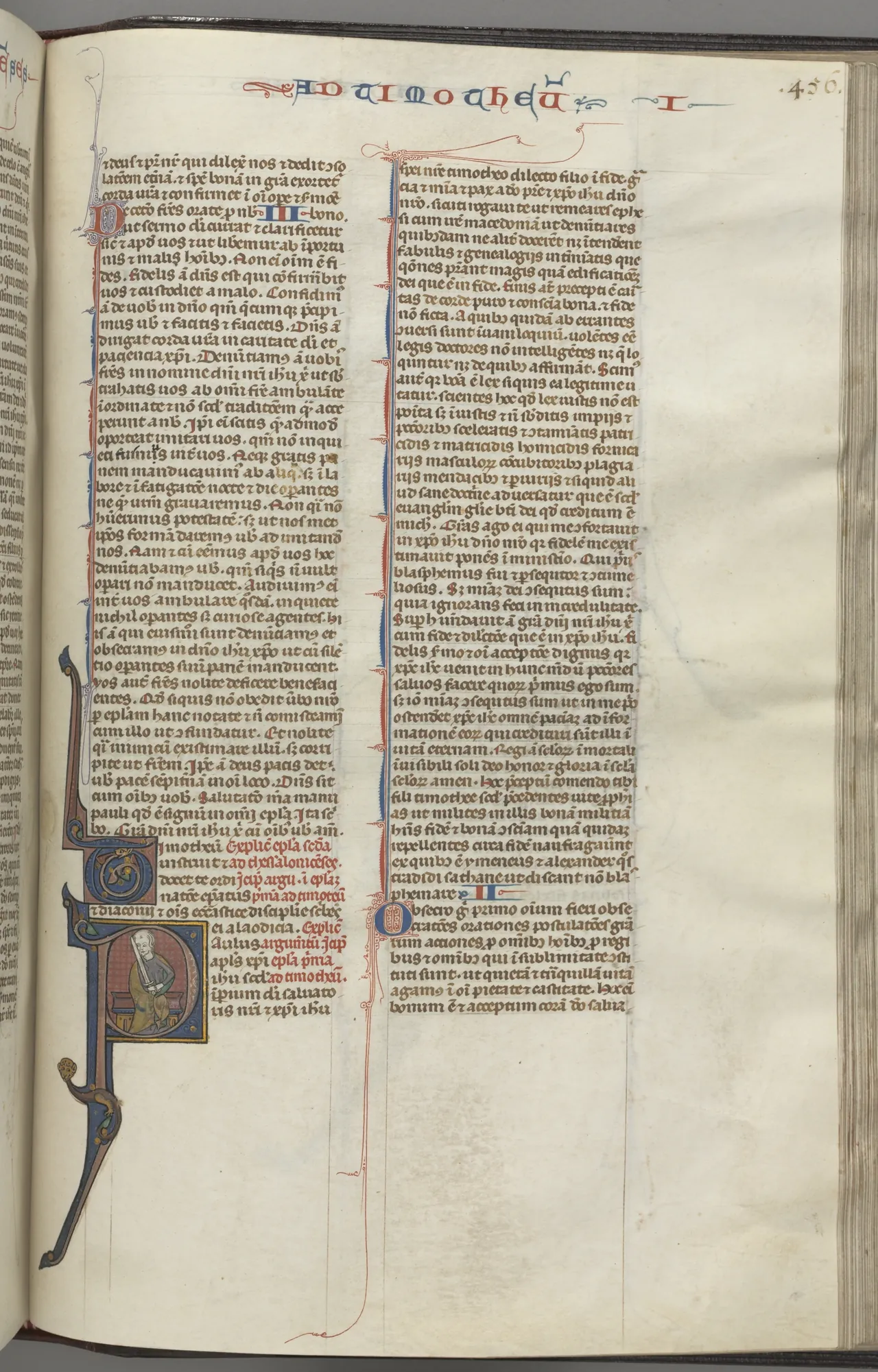
A manuscript page from southern France, about 1275 to 1300, opening First Timothy with an initial of Paul seated, the letter Paul wrote to his son in the faith.Fol. 456r, Timothy I, historiated initial P, Paul seated · c. 1275–1300 · Cleveland Museum of Art · CC0 · museum record · Galeria Regni
Three things stand out. Timothy was already a disciple; Paul did not start from nothing. He had a good report among the believers in two towns; his faithfulness had been seen by others. And Paul chose him — "Him would Paul have to go forth with him." Disciple-making begins with a deliberate choice.
Timothy also had a foundation laid at home. Paul remembered "the unfeigned faith that is in thee, which dwelt first in thy grandmother Lois, and thy mother Eunice" (2 Timothy 1:5), and that "from a child thou hast known the holy scriptures, which are able to make thee wise unto salvation through faith which is in Christ Jesus" (2 Timothy 3:15). Paul built on what two faithful women had begun.
How it grew
Timothy travelled with Paul and watched him. Years later Paul could write, "But thou hast fully known my doctrine, manner of life, purpose, faith, longsuffering, charity, patience" (2 Timothy 3:10). Look at that list. Doctrine is first, but it is not alone. Timothy knew Paul's way of life, his aims, his faith under pressure, his patience with difficult people. He learned by being near.
Then Paul gave him work. He sent Timothy to Corinth: "For this cause have I sent unto you Timotheus, who is my beloved son, and faithful in the Lord, who shall bring you into remembrance of my ways which be in Christ, as I teach every where in every church" (1 Corinthians 4:17). He sent him to Philippi: "For I have no man likeminded, who will naturally care for your state... But ye know the proof of him, that, as a son with the father, he hath served with me in the gospel" (Philippians 2:20-22). By then Timothy could be trusted to carry Paul's ways to others.
What Paul told him
The letters to Timothy are the instructions of a disciple-maker to his disciple, and they read like it. They are personal ("my son"), practical, and full of encouragement. Paul told him not to be intimidated by his youth, but to set an example: "Let no man despise thy youth; but be thou an example of the believers, in word, in conversation, in charity, in spirit, in faith, in purity" (1 Timothy 4:12). He told him to keep at the word: "Till I come, give attendance to reading, to exhortation, to doctrine" (1 Timothy 4:13). And he told him to watch his own life first: "Take heed unto thyself, and unto the doctrine; continue in them: for in doing this thou shalt both save thyself, and them that hear thee" (1 Timothy 4:16).
How it was meant to continue
The relationship was never meant to end with Timothy. "And the things that thou hast heard of me among many witnesses, the same commit thou to faithful men, who shall be able to teach others also" (2 Timothy 2:2). Paul to Timothy, Timothy to faithful men, faithful men to others. The person you disciple in the next twelve weeks is meant, in time, to disciple someone else. That is why Week 12 ends with a commission.
What the church learned later
The church has rediscovered this pattern many times. In 1656 the Puritan pastor Richard Baxter urged his fellow ministers to instruct their people personally, family by family. He had found by experience, he wrote, "that some ignorant persons, who have been so long unprofitable hearers, have got more knowledge and remorse of conscience in half an hour's close discourse, than they did from ten years' public preaching."3 He was not against preaching. He explained the difference: in a sermon "we quite over-run their understandings and memories," but in private "we can take our work gradatim" — step by step — "and take our hearers along with us; and, by our questions, and their answers, we can see how far they understand us, and what we have next to do."4
That is exactly what one-to-one discipleship allows. You can go at the pace of one person, ask questions, hear the answers, and know what to do next.
Part 2 — Before You Begin: Choosing, Inviting, Agreeing
4 min read
This part matters because many discipling relationships fail before the first meeting — the wrong match, unclear expectations, or no real commitment on either side. A little care at the start saves a great deal of grief later.
Pray first
Before Jesus chose the Twelve, "he went out into a mountain to pray, and continued all night in prayer to God. And when it was day, he called unto him his disciples: and of them he chose twelve" (Luke 6:12-13). You do not need to pray all night. But do not choose without praying. Write down the names of three to five people you might disciple, and pray over them by name for a week or two. Ask the Lord whom He would have you invest in now.
Whom to choose
Scripture and experience suggest a few qualities to look for.
Faithful. Paul's word in 2 Timothy 2:2 is "faithful men". Look for someone who keeps their word, shows up, and follows through, even in small things. "He that is faithful in that which is least is faithful also in much" (Luke 16:10).
Hungry. Look for someone who wants to grow. Peter told new believers, "As newborn babes, desire the sincere milk of the word, that ye may grow thereby" (1 Peter 2:2). You cannot give an appetite; you can feed one.
Teachable. Look for someone who receives correction without collapsing or fighting. The Bereans "received the word with all readiness of mind, and searched the scriptures daily, whether those things were so" (Acts 17:11).
Available. Look for someone who can actually give one hour a week for twelve weeks.
Well reported. Timothy "was well reported of by the brethren" (Acts 16:2). Ask your pastor or a mature friend what they see.
You may choose a new believer, or a believer of some years who has never been discipled. You may also find that the person who most needs you is under your own roof. A parent discipling a teenage son or daughter through these twelve weeks is doing exactly what Deuteronomy 6:7 commands: "thou shalt teach them diligently unto thy children."
Man with man, woman with woman
As a rule, disciple someone of your own sex. Scripture gives the pattern for women plainly: "The aged women likewise... teachers of good things; That they may teach the young women" (Titus 2:3-4). John Wesley, who organised thousands of believers into small groups, put the most personal of them together the same way, "putting married or single men, and married or single women together."5 This protects both of you, it removes even the appearance of evil, and it makes room for the honesty that real discipleship requires. A married couple may disciple another married couple together.
How to invite
Keep the invitation simple and honest. Something like: "I've been praying about this, and I'd like to meet with you once a week for twelve weeks to read the Bible together, talk about following Jesus, and pray. Would you be willing?" Tell them what it will involve. Give them time to think and pray. Do not pressure. If they say no or not yet, thank them and keep praying.
What to agree on
At the first meeting, or before it, agree on a few things. Some disciple-makers write them down and both sign; others simply say them aloud. Either is fine.
| Agreement | What it means | |---|---| | Time and place | One hour a week (ninety minutes if you can), same day and place where possible. A home, a quiet coffee shop, a walk, a workplace break room. | | Length | Twelve weeks, then review together whether to continue. | | Preparation | Each week's reading done beforehand, and the week's step of obedience attempted. | | Honesty | Both will be truthful about how they are really doing. | | Confidentiality | What is shared stays between you — with one exception, below. | | Church | Both will be part of a local church and under its elders' care. | | Notice | If either must miss, they will say so ahead of time. |
The exception to confidentiality must be stated plainly at the start: if you learn that someone is in danger — that a child is being harmed, that the person you disciple is thinking of ending their life, or that someone else is at risk — you will get help, and you will tell them you are doing so. Part 7 says more.
Bring your church in
You are not working alone, and you should not work in secret. Tell your pastor or an elder that you are beginning. Ask them to pray. If questions come up that are beyond you, they are your first call. Discipleship belongs inside the life of the church, not beside it. The writer to the Hebrews tells believers to "Obey them that have the rule over you, and submit yourselves: for they watch for your souls, as they that must give account" (Hebrews 13:17). A disciple-maker serves alongside those shepherds, not in competition with them.
This part matters because most of the work of discipleship happens in an ordinary hour, repeated. A clear shape for that hour keeps it from drifting into small talk, and keeps it from hardening into a lecture.
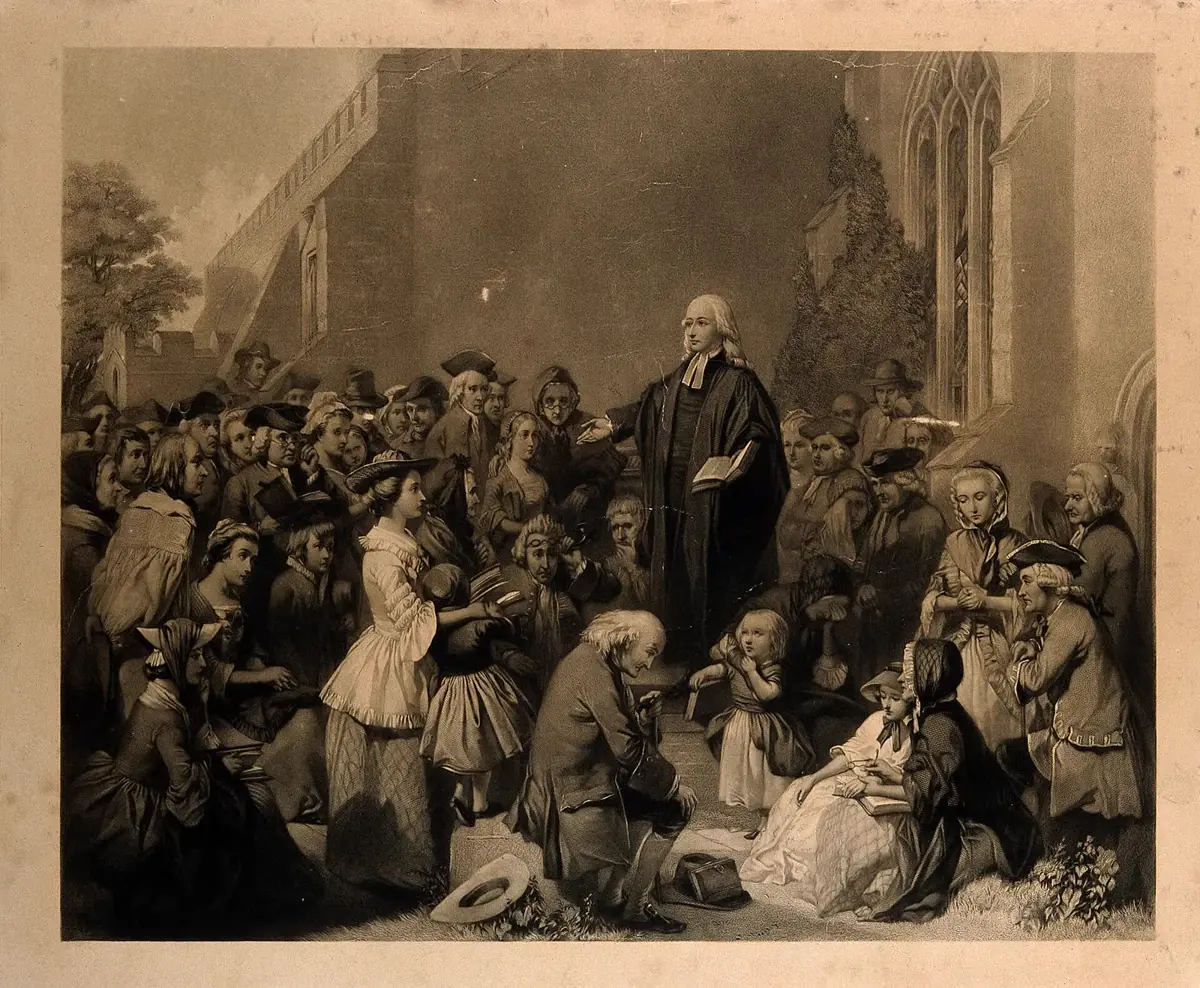
John Wesley preaching in the open air (18th-century engraving) — the message carried outside the building to wherever people already were.Wellcome Collection · CC BY 4.0
The leader's job, in one sentence
When John Wesley organised his class leaders in the 1740s, he wrote their duty in a single sentence: "To see each person in his class, once a week at the least: in order to enquire how their souls prosper; to advise, reprove, comfort or exhort, as occasion may require."6 That is still as good a job description as any. See them weekly. Ask how their soul is. Then give whatever the moment needs: advice, correction, comfort, or encouragement.
The shape of the hour
Here is a shape for a meeting of about an hour. With ninety minutes, lengthen the reading and the prayer.
| Time | Part | What happens | |---|---|---| | 10 min | Ask | "How does your soul prosper this week?" Listen. Share honestly yourself. | | 10 min | Look back | "Last week you said you would… How did it go?" Celebrate obedience; talk through failure without shame. | | 20 min | Read and discuss | Read the week's main passage aloud from the King James Bible. Work through the questions. | | 10 min | Decide | Agree one specific step of obedience for the coming week. Write it down. | | 10 min | Pray | Pray for each other by name, for the step of obedience, and for the people you are each trying to reach. |
Reading the word together
Read the passage aloud. Hearing Scripture read slowly is itself a means of grace; in Nehemiah's day the Levites "read in the book in the law of God distinctly, and gave the sense, and caused them to understand the reading" (Nehemiah 8:8). Then ask three simple questions of every passage:
1. What does it say? Retell it in your own words. Who is speaking, to whom, about what? 2. What does it mean? What does this teach us about God, about Christ, about ourselves? Use a Strong's Concordance when a word needs looking into, and cross-references from the margin. 3. What will I do? What does this passage require of me this week — something to believe, to stop, to start, to confess, to tell someone?
The third question is the one most often skipped, and it is the one the commission insists on: "Teaching them to observe" (Matthew 28:20).
The art of asking
Baxter's insight was that "by our questions, and their answers, we can see how far they understand us, and what we have next to do."7 Good questions are the main tool of a disciple-maker. Jesus asked questions constantly. He asked the Twelve, "But whom say ye that I am?" (Matthew 16:15). In the house at Capernaum He asked, "What was it that ye disputed among yourselves by the way?" (Mark 9:33). By the lake He asked Peter, "Lovest thou me?" (John 21:15).
A few kinds of question are worth practising:
Open questions that cannot be answered yes or no: "What stood out to you?" rather than "Did you like it?"
Heart questions that go beneath behaviour: "What were you afraid of when that happened?" "What do you think you were really wanting?"
Follow-up questions that show you were listening: "You said it was hard. What made it hard?"
Accountability questions asked kindly and specifically: "You said you'd read John each morning. How many mornings did you?"
Application questions: "If you really believed this verse, what would be different on Tuesday?"
Then wait. Silence after a question is not failure; it is thinking. Resist the urge to answer your own question.
Michael Ray Lewis told his story on The King Is Coming Show (TKIC #48): an atheist who mocked Christians — until, in his telling, one question undid him. Watch it in his own words: youtube.com/watch?v=Rd-RdSqeQDk Michael's account of what happened to him, shared as his testimony — weigh it for yourself.
Going first
Wesley's rule for his smallest groups was that the leader should "speak his own state first, and then to ask the rest in order, as many and as searching questions as may be, concerning their state, sins and temptations."8 Going first matters. If you want honesty, model it. You do not need to share everything, but if you only ever ask and never tell, the person you disciple will learn to perform rather than confess. "Confess your faults one to another, and pray one for another, that ye may be healed" (James 5:16) — one to another, both ways.
Between meetings
Disciple-making is not only the hour. Jesus' disciples were "with him" (Mark 3:14). Where you can, include the person you are discipling in ordinary life: invite them to dinner with your family, take them along when you visit someone sick, bring them when you serve at church, pray with them on the phone when something hard happens. A short message mid-week — "Praying for you today; how's the reading going?" — does more than you think. "But exhort one another daily, while it is called To day; lest any of you be hardened through the deceitfulness of sin" (Hebrews 3:13).
This part matters because everything built later stands on these four weeks. A disciple who is unsure of the gospel, has never been baptized, does not read the word, or does not pray will not be able to stand. Do not hurry them.
Each week below gives an aim, a main reading to do together, further readings for the week, a verse to memorise, questions for discussion, and a step of obedience. Adapt the questions to the person. Choose the step together.
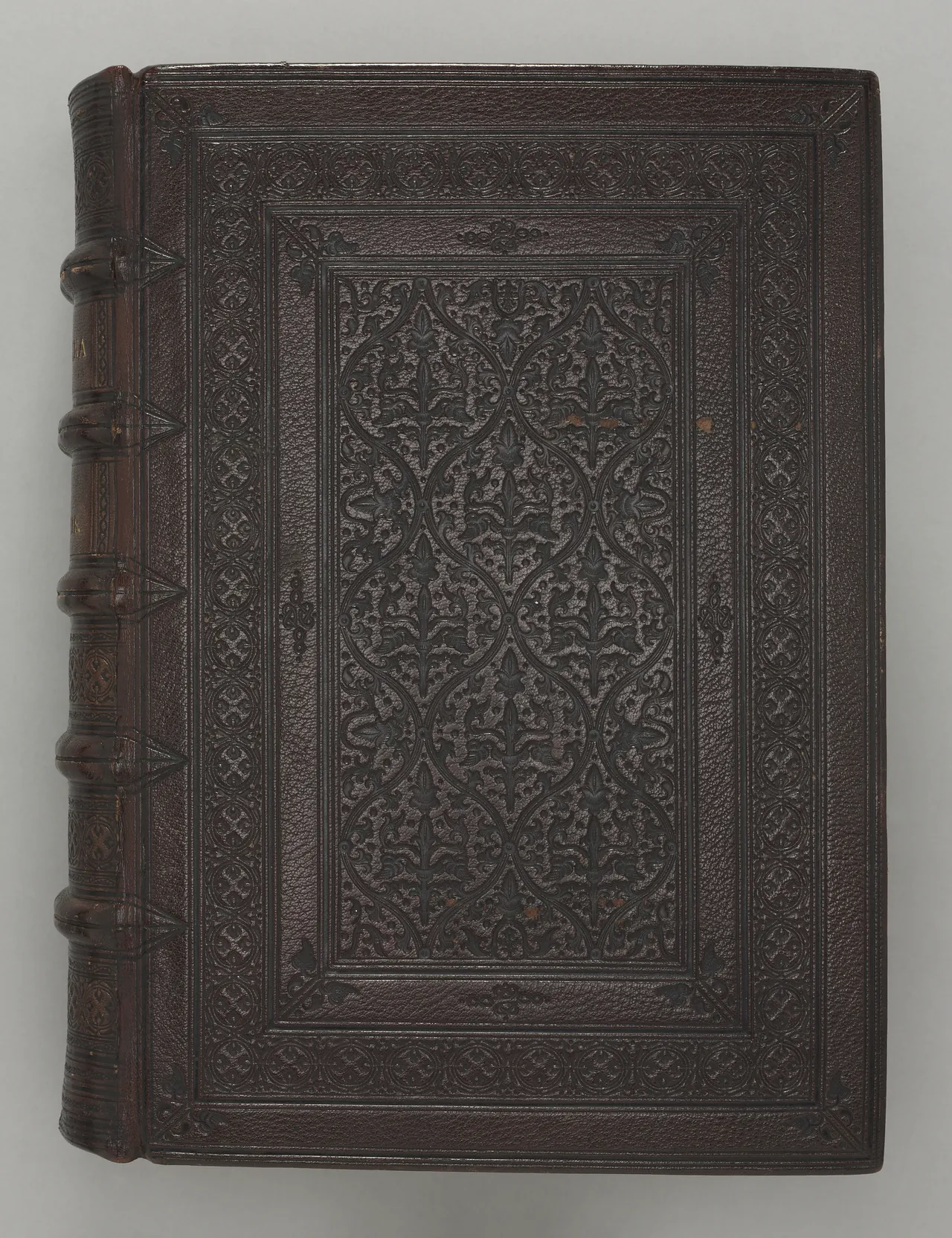
A Gothic Bible in the Latin Vulgate, made in southern France about 1275 to 1300, shown closed, for the week given to the word of God.Gothic Bible (Vulgate) · c. 1275–1300 · Cleveland Museum of Art · CC0 · museum record · Galeria Regni
Week 1 — The Gospel and Assurance
Aim. That the disciple understands the gospel clearly, rests in Christ alone for salvation, and knows both the promises of assurance and the warnings Scripture gives.
Memorise. "For by grace are ye saved through faith; and that not of yourselves: it is the gift of God: Not of works, lest any man should boast" (Ephesians 2:8-9).
Teaching notes. Paul summed up the gospel "first of all": "how that Christ died for our sins according to the scriptures; And that he was buried, and that he rose again the third day according to the scriptures" (1 Corinthians 15:3-4). Begin there. Then ask the plainest question of the whole twelve weeks: how did you come to faith in Christ, and what is your hope resting on?
Scripture gives real assurance. Jesus said of His sheep, "I give unto them eternal life; and they shall never perish, neither shall any man pluck them out of my hand" (John 10:28). John wrote his first letter "unto you that believe on the name of the Son of God; that ye may know that ye have eternal life" (1 John 5:13). Scripture also gives real warnings — Hebrews 6:4-6 is one of the most solemn — and calls believers to "give diligence to make your calling and election sure" (2 Peter 1:10). Teach both as written. Christians have long debated how they fit together; you do not need to settle the debate to take both seriously. The promises are for those who are trusting Christ; the warnings keep us from trusting anything else.
Questions.
In your own words, what is the gospel?
When did you come to trust Christ? What was happening in your life?
What would you say to someone who asked, "How do you know you are going to heaven?"
Which verse this week gave you the most comfort? Which one sobered you?
Step. Write out your story of coming to faith in one page, and bring it next week. (Level 1, Craft Your Testimony, can help.)
Week 2 — New Birth and Baptism
Aim. That the disciple understands what it means to be born again, and has obeyed — or plans to obey — the command to be baptized.
Memorise. "Therefore if any man be in Christ, he is a new creature: old things are passed away; behold, all things are become new" (2 Corinthians 5:17).
Teaching notes. Jesus told a religious leader, "Except a man be born again, he cannot see the kingdom of God" (John 3:3). New birth is God's work, not ours; it is the beginning of a new life with new desires. Baptism is a command of Christ: "baptizing them in the name of the Father, and of the Son, and of the Holy Ghost" (Matthew 28:19). Peter told the crowd at Pentecost, "Repent, and be baptized every one of you in the name of Jesus Christ for the remission of sins, and ye shall receive the gift of the Holy Ghost" (Acts 2:38). Paul writes of it: "Therefore we are buried with him by baptism into death: that like as Christ was raised up from the dead by the glory of the Father, even so we also should walk in newness of life" (Romans 6:4).
When you read Acts 8, note verse 37. In the King James Bible, Philip answers the eunuch's question: "If thou believest with all thine heart, thou mayest. And he answered and said, I believe that Jesus Christ is the Son of God" (Acts 8:37). That verse stands in the 1611; many modern versions remove it. You can see every place they part ways at kylelauriano.com/library/changes.
Questions.
What changed in you when you came to Christ? What desires are new?
Have you been baptized? If not, what is holding you back?
What does it mean to "walk in newness of life" this week?
Step. If not yet baptized, talk to your pastor this week about baptism. If baptized, tell one person what it meant.
Week 3 — The Word of God
Aim. That the disciple trusts Scripture as God's word and builds a daily habit of reading, meditating on and obeying it.
Memorise. "Thy word have I hid in mine heart, that I might not sin against thee" (Psalm 119:11).
Teaching notes. "All scripture is given by inspiration of God, and is profitable for doctrine, for reproof, for correction, for instruction in righteousness: That the man of God may be perfect, throughly furnished unto all good works" (2 Timothy 3:16-17). The blessed man's "delight is in the law of the LORD; and in his law doth he meditate day and night" (Psalm 1:2). Biblical meditation means turning God's words over in the mind, memorising them, praying them back to Him, and asking how to obey them (Joshua 1:8) — not emptying the mind, but filling it with Scripture.
Show the disciple how you read. Agree a simple plan: one chapter of a Gospel a day, starting with Mark or John, using the three questions from Part 3. Show them the 1611 Reader at kylelauriano.com/library and how to look up a word in Strong's Concordance.
Questions.
What has your Bible reading looked like until now? What gets in the way?
What is the difference between reading the Bible and meditating on it?
What is one thing you read this week that you need to do?
Step. Read one chapter of the Gospel of Mark every day this week. Mark one verse each day that you want to remember, and bring them next week.
Week 4 — Prayer
Aim. That the disciple learns to pray simply, honestly and regularly, using the pattern Jesus gave.
Memorise. "Be careful for nothing; but in every thing by prayer and supplication with thanksgiving let your requests be made known unto God. And the peace of God, which passeth all understanding, shall keep your hearts and minds through Christ Jesus" (Philippians 4:6-7).
Teaching notes. The disciples asked Jesus, "Lord, teach us to pray" (Luke 11:1) because they had watched Him. "And he withdrew himself into the wilderness, and prayed" (Luke 5:16). He gave them a pattern: "After this manner therefore pray ye: Our Father which art in heaven, Hallowed be thy name. Thy kingdom come. Thy will be done in earth, as it is in heaven. Give us this day our daily bread. And forgive us our debts, as we forgive our debtors. And lead us not into temptation, but deliver us from evil: For thine is the kingdom, and the power, and the glory, for ever. Amen" (Matthew 6:9-13). Walk through it line by line: worship, His kingdom, daily needs, forgiveness, protection, praise.
Pray together, out loud, at length this week. Many believers have never prayed aloud with another person. Model short, plain prayers. Prayer is talking to our Father, not a performance.
Questions.
When do you pray now? What do you mostly pray about?
Which line of the Lord's Prayer do you most neglect?
What is one worry you need to turn into a request this week?
Step. Set a daily time and place to pray for ten minutes, using the Lord's Prayer as an outline. Keep a short list of requests and note answers.
This part matters because a disciple who has laid foundations now has to walk on them — in the power of the Spirit, against real temptation, inside the family of the church, and in a world where the enemy is real. These four weeks take up the daily fight.
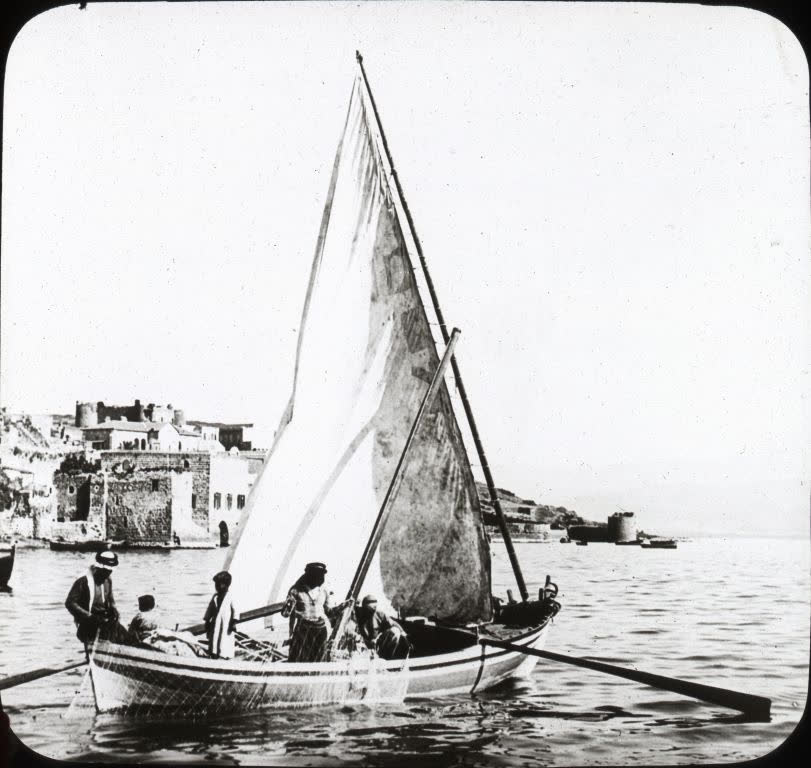
The slopes above the Sea of Galilee at the traditional Mount of Beatitudes — the natural amphitheater where the Sermon on the Mount was preached.Obendorf · CC0
Week 5 — The Holy Ghost and His Gifts
Aim. That the disciple knows the Holy Ghost as a Person who dwells in every believer, depends on Him daily, and understands the gifts of the Spirit as they are taught in Scripture, with its guardrails.
Memorise. "But the fruit of the Spirit is love, joy, peace, longsuffering, gentleness, goodness, faith, Meekness, temperance: against such there is no law" (Galatians 5:22-23).
Teaching notes. Jesus promised "the Comforter, which is the Holy Ghost, whom the Father will send in my name, he shall teach you all things, and bring all things to your remembrance" (John 14:26). The disciples were told to wait for His coming, and then "ye shall receive power, after that the Holy Ghost is come upon you: and ye shall be witnesses unto me" (Acts 1:8). The fruit of the Spirit is character; the gifts of the Spirit are abilities He gives for serving others. "But the manifestation of the Spirit is given to every man to profit withal" (1 Corinthians 12:7).
The gifts of the Spirit are for today. Paul told the church to "desire spiritual gifts" (1 Corinthians 14:1) and "Quench not the Spirit. Despise not prophesyings" (1 Thessalonians 5:19-20). Scripture also sets guardrails, and a disciple-maker should teach them in the same breath. Every gift is for building others up, not for display (1 Corinthians 14:12). Every claim to speak from God is tested by Scripture: "Prove all things; hold fast that which is good" (1 Thessalonians 5:21); and John writes, "believe not every spirit, but try the spirits whether they are of God" (1 John 4:1). No gift guarantees an outcome, and no gift outranks the written word. Above all the gifts stands love, which Paul calls "a more excellent way" (1 Corinthians 12:31), and then describes in the whole of 1 Corinthians 13.
Questions.
How have you known the Holy Ghost at work in you — in conviction, comfort, understanding?
Which fruit of the Spirit is weakest in you right now?
What gifts do others see in you? How might you use them to serve?
Step. Each morning this week, ask the Lord to fill you with His Spirit for that day's work, and note one way you saw Him lead or help.
Week 6 — Sin, Temptation and Confession
Aim. That the disciple understands that temptation is common, that there is a way of escape, and that confessed sin is forgiven — and begins to practise honest confession.
Memorise. "There hath no temptation taken you but such as is common to man: but God is faithful, who will not suffer you to be tempted above that ye are able; but will with the temptation also make a way to escape, that ye may be able to bear it" (1 Corinthians 10:13).
Teaching notes. Every believer still struggles with sin. John writes, "My little children, these things write I unto you, that ye sin not. And if any man sin, we have an advocate with the Father, Jesus Christ the righteous" (1 John 2:1). The promise is plain: "If we confess our sins, he is faithful and just to forgive us our sins, and to cleanse us from all unrighteousness" (1 John 1:9). And confession to God is joined in Scripture to confession to one another: "Confess your faults one to another, and pray one for another, that ye may be healed" (James 5:16).
Look at how Jesus fought temptation in Matthew 4: three times He answered with Scripture. This is one reason Week 3 matters.
This is the week when trust is tested. Go first. Share a real struggle of your own, appropriately. Make it safe to be honest; make it clear that honesty will be met with grace, not shock. The companion paper Overcoming Struggles goes much further into temptation, doubt, fear and addiction.
Questions.
Where are you most often tempted? When and where does it usually happen?
What "way of escape" has God given you that you have not been taking?
Is there anything you have never told anyone that you need to bring into the light?
Step. Identify one specific temptation and one specific way of escape. Text each other once mid-week with an honest update.
Week 7 — The Church and Love
Aim. That the disciple is committed to a local church, understands why, and practises love, forgiveness and reconciliation with other believers.
Memorise. "A new commandment I give unto you, That ye love one another; as I have loved you, that ye also love one another. By this shall all men know that ye are my disciples, if ye have love one to another" (John 13:34-35).
Teaching notes. The first believers "continued stedfastly in the apostles' doctrine and fellowship, and in breaking of bread, and in prayers" (Acts 2:42). The writer to the Hebrews warns against "forsaking the assembling of ourselves together, as the manner of some is" (Hebrews 10:25). A disciple without a church is like a coal taken out of the fire.
Love in the church is tested by conflict. Jesus gave clear steps: "if thy brother shall trespass against thee, go and tell him his fault between thee and him alone" (Matthew 18:15). And if you are the one who has done wrong: "Leave there thy gift before the altar, and go thy way; first be reconciled to thy brother" (Matthew 5:24). Paul sums it up: "And be ye kind one to another, tenderhearted, forgiving one another, even as God for Christ's sake hath forgiven you" (Ephesians 4:32).
Questions.
Are you a committed part of a local church? What would it take to be more committed?
Is there anyone in the church you need to forgive, or ask forgiveness from?
Read 1 Corinthians 13:4-7 aloud, putting your own name in place of "charity". Where does it sound least true?
Step. Do one concrete act of love for someone in your church this week — a meal, a visit, a note, an hour of help.
Aim. That the disciple knows the enemy is real, knows the believer's armour and authority in Christ, and resists him by the means Scripture gives — without fear and without superstition.
Memorise. "Submit yourselves therefore to God. Resist the devil, and he will flee from you" (James 4:7).
Teaching notes. "For we wrestle not against flesh and blood, but against principalities, against powers, against the rulers of the darkness of this world, against spiritual wickedness in high places" (Ephesians 6:12). The answer is not panic but armour: truth, righteousness, the gospel, faith, salvation, and "the sword of the Spirit, which is the word of God," with prayer (Ephesians 6:14-18). Jesus gave His disciples real authority — "Behold, I give unto you power to tread on serpents and scorpions, and over all the power of the enemy" (Luke 10:19) — and Mark 16:17 lists casting out devils among the signs that follow believers. Deliverance from evil spirits is for today, and many believers testify to it.
Teach the guardrails alongside. Jesus told the seventy, "Notwithstanding in this rejoice not, that the spirits are subject unto you; but rather rejoice, because your names are written in heaven" (Luke 10:20). Believers do not converse with demons, summon or command angels, or treat prayers and declarations as magic words. A born-again believer belongs to Christ and can be attacked and oppressed but not owned. Not every struggle is a demon; some are the flesh, some are the world, some are medical. The ordinary weapons are the ones in James 4:7: submit to God, resist the devil. If deeper deliverance ministry seems needed, bring in your pastor and elders.
Questions.
Where do you sense spiritual attack in your life? How have you been responding?
Which piece of the armour in Ephesians 6 do you most neglect?
Is there anything in your home or habits — objects, practices, media — that opened a door you need to close (Acts 19:18-19)?
Step. Pray through Ephesians 6:10-18 each morning this week, putting on each piece by faith.
This part matters because a disciple is not finished when he is stable. Jesus called the Twelve "that they should be with him, and that he might send them forth" (Mark 3:14). These last four weeks turn the disciple outward — to witness, to serve, to endure, and finally to disciple someone else.
Week 9 — Your Story and the Gospel
Aim. That the disciple can tell their own story and explain the gospel simply, and begins to pray for and speak to people who do not know Christ.
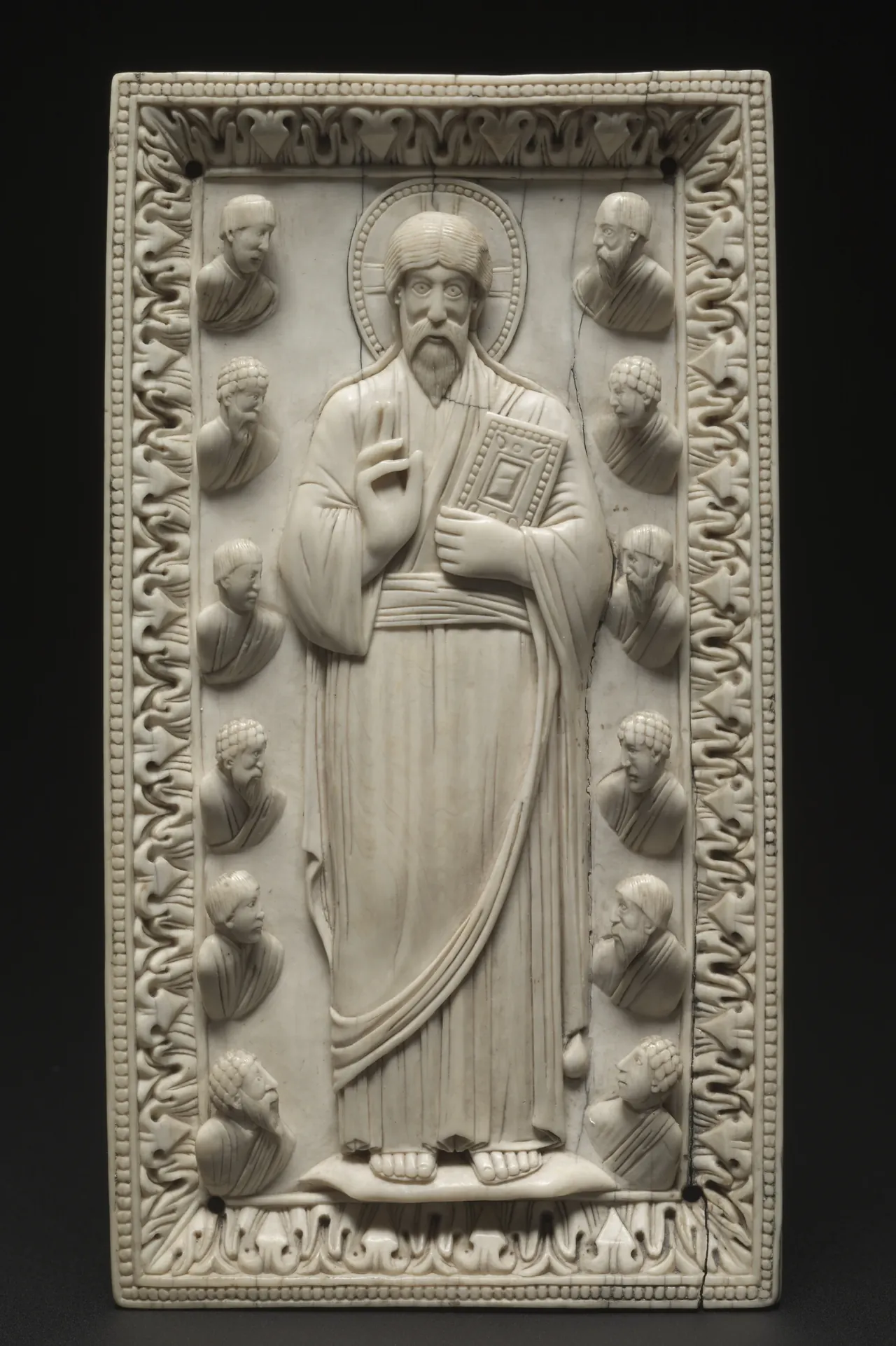
An ivory of Christ's Mission to the Apostles, carved in Milan about 970 to 980, Christ surrounded by the Twelve He sent to make disciples.Christ's Mission to the Apostles · c. 970–980 · Cleveland Museum of Art · CC0 · museum record · Galeria Regni
Memorise. "But sanctify the Lord God in your hearts: and be ready always to give an answer to every man that asketh you a reason of the hope that is in you with meekness and fear" (1 Peter 3:15).
Teaching notes. The man freed from the legion wanted to go with Jesus, but "Jesus suffered him not, but saith unto him, Go home to thy friends, and tell them how great things the Lord hath done for thee, and hath had compassion on thee" (Mark 5:19). The Samaritan woman simply told people what Jesus had done, and "many of the Samaritans of that city believed on him for the saying of the woman" (John 4:39). Paul told his story before a king (Acts 26). A testimony is not a sermon; it is an honest account of what Christ has done, ending with the gospel itself.
Bring out the one-page story from Week 1. Help the disciple shorten it to three minutes: life before, how they came to Christ, life since. Then practise explaining the gospel from a few verses — Romans 3:23, Romans 6:23, Romans 5:8, Romans 10:9-10. Levels 1 to 3 on the growth path cover this in more depth.
Questions.
Who are three people in your life who do not know Christ?
What makes you most afraid of speaking about your faith?
If someone asked you today, "Why do you believe?", what would you say?
Step. Pray daily for your three people by name. Tell your story to one person this week — a believer if that is a first step, an unbeliever if you are ready.
Week 10 — Serving with Your Gifts
Aim. That the disciple sees themselves as a servant, finds a place to serve in the church, and begins to use their gifts for others.
Memorise. "For even the Son of man came not to be ministered unto, but to minister, and to give his life a ransom for many" (Mark 10:45).
Teaching notes. When James and John asked for the best seats in the kingdom, Jesus said, "whosoever will be great among you, shall be your minister: And whosoever of you will be the chiefest, shall be servant of all" (Mark 10:43-44). Paul compares the church to a body: "For as we have many members in one body, and all members have not the same office: So we, being many, are one body in Christ, and every one members one of another" (Romans 12:4-5). Peter adds, "As every man hath received the gift, even so minister the same one to another, as good stewards of the manifold grace of God" (1 Peter 4:10).
The best way to discover gifts is not a questionnaire but service. Try things. Ask others what they see. Serve where there is need, and watch where God brings fruit.
Questions.
Where do you already serve? Where could you start?
What do others say you are good at? Where have you seen God use you?
What keeps you from serving — fear, pride, busyness?
Step. Talk to someone at your church this week about one place you could begin to serve, and if possible, serve together with your disciple-maker once before the twelve weeks end.
Week 11 — Suffering and Perseverance
Aim. That the disciple expects trials, understands God's purposes in them, and is ready to keep following Christ when it costs.
Memorise. "For I am persuaded, that neither death, nor life, nor angels, nor principalities, nor powers, nor things present, nor things to come, Nor height, nor depth, nor any other creature, shall be able to separate us from the love of God, which is in Christ Jesus our Lord" (Romans 8:38-39).
Teaching notes. Jesus never promised an easy road. Paul told Timothy, "Yea, and all that will live godly in Christ Jesus shall suffer persecution" (2 Timothy 3:12). Peter wrote, "Beloved, think it not strange concerning the fiery trial which is to try you, as though some strange thing happened unto you" (1 Peter 4:12). But trials are not wasted: "knowing that tribulation worketh patience; And patience, experience; and experience, hope" (Romans 5:3-4). And God comforts us "that we may be able to comfort them which are in any trouble, by the comfort wherewith we ourselves are comforted of God" (2 Corinthians 1:4) — which is one reason disciples become disciple-makers.
Bonhoeffer's line, in R. H. Fuller's translation, belongs here: "When Christ calls a man, he bids him come and die."9 Bonhoeffer was executed by the Nazi regime in 1945. The call to take up the cross daily (Luke 9:23) is not a metaphor for inconvenience.
Questions.
What is the hardest thing you are facing right now? How is it affecting your faith?
Has following Christ cost you anything yet? What might it cost?
What helps you keep going when you feel like giving up?
Step. Write down one trial you are facing and one promise from this week's readings that speaks to it. Pray it every day.
Week 12 — Commissioned to Make Disciples
Aim. That the disciple understands the commission is theirs, has a plan to keep growing, and is ready — now or soon — to disciple someone else.
Memorise. "And the things that thou hast heard of me among many witnesses, the same commit thou to faithful men, who shall be able to teach others also" (2 Timothy 2:2).
Teaching notes. Go back to where this began. "Go ye therefore, and teach all nations" (Matthew 28:19). The command was given to eleven ordinary men and has passed down an unbroken chain of believers to you, and through you to the person sitting across the table. Jesus said, "Ye have not chosen me, but I have chosen you, and ordained you, that ye should go and bring forth fruit, and that your fruit should remain" (John 15:16). The fruit that remains is a disciple who makes disciples.
Spend part of this meeting looking back over the twelve weeks. What has changed? What habits are in place? What still needs work? Then look forward. Agree together what happens next: continue meeting, meet less often, or move to a small group. And ask the question that makes this Level 4: whom will you begin to pray for, with a view to discipling them?
End by praying over the disciple. Lay a hand on their shoulder if that is natural. Commit them to the Lord as Paul and Barnabas did with the churches: "they commended them to the Lord, on whom they believed" (Acts 14:23).
Questions.
What is the biggest change in you over these twelve weeks?
Which habit — Scripture, prayer, confession, church, witness, service — do you most need to keep strengthening?
Whom could you begin to pray for, with a view to discipling them?
Step. Write down three names and pray over them for two weeks. Then, with your disciple-maker's help, invite one.
This part matters because no discipling relationship runs smoothly for twelve weeks. Jesus' own disciples argued, misunderstood, fell asleep when He asked them to pray, and fled when He was arrested. Expect difficulty; prepare for it.
Missed meetings
Life interrupts. Illness, work, children. One missed meeting is normal. A pattern is a conversation. Ask gently: "We've missed three of the last five weeks. What's going on? Is this still the right time for you?" Sometimes the answer is a real crisis that needs care, not pressure. Sometimes it is that the person was never really committed, and it is better to pause than to drag on. Either way, keep the door open and keep praying. Paul himself refused to take Mark on a second journey after he had left the first, but years later wrote, "Take Mark, and bring him with thee: for he is profitable to me for the ministry" (2 Timothy 4:11). People can come back.
The reading isn't done
If the person rarely does the week's reading or step, ask why before you assume. Some cannot read well and are ashamed to say so; read together in the meeting instead. Some are overwhelmed; shorten the reading. Some have not yet made the word a habit; go back to Week 3 and help them begin with five minutes a day. The goal is not to finish the twelve weeks on schedule. It is "Teaching them to observe" (Matthew 28:20).
Hidden sin comes to light
If the person confesses something serious, your first response matters more than anything you say afterwards. Do not show shock. Thank them for their honesty. Remind them of 1 John 1:9. Then help them take the next right step: confession to God, repentance, restitution where needed, practical steps to avoid the temptation, and — if the sin is serious or ongoing — bringing in a pastor. "Brethren, if a man be overtaken in a fault, ye which are spiritual, restore such an one in the spirit of meekness; considering thyself, lest thou also be tempted" (Galatians 6:1). Note "considering thyself": the disciple-maker is not above the same fall.
Doubt
If the person begins to doubt — about God, the Bible, their salvation — do not panic or scold. Many of God's servants have doubted. The father in Mark 9 cried, "Lord, I believe; help thou mine unbelief" (Mark 9:24). Ask what the doubt is really about. Some doubts are intellectual and have answers; the site's papers on the reliability of the Bible and the evidence for the resurrection can help. Some are emotional, rising from pain or disappointment. Some are spiritual, the fruit of sin. Listen for which kind it is, and keep them in the word and in prayer while you work through it together. Jude's counsel is gentle: "And of some have compassion, making a difference" (Jude 1:22).
Dependence
Sometimes a person begins to lean on the disciple-maker too heavily — calling for every decision, unable to pray or read without help, or speaking of you more than of Christ. This is understandable early on, but it must not become the pattern. Point them back to the Lord and to the church. "Is Christ divided? was Paul crucified for you?" (1 Corinthians 1:13). Encourage their own time with God. Help them form other friendships in the church. The aim is a disciple who can stand, not one who needs you to stand.
Disagreement
You will not agree on everything. Where Scripture is plain, be clear and kind. Where faithful believers have differed, say so, show the texts, and leave room. Your job is not to clone yourself but to bring a person under the authority of God's word. If a serious doctrinal question arises that you cannot settle, take it to your pastor together.
When you are out of your depth
You are not a doctor, a lawyer, or a licensed counsellor, and you should not pretend to be. When you learn of any of the following, bring in your pastor at once and, where needed, the proper authorities:
Any abuse or danger to a child, or to a vulnerable adult. Follow the law where you live and your church's safeguarding policy; do not investigate on your own.
Domestic violence or threats to anyone's safety.
Thoughts of suicide or self-harm. Call or text 988, the Suicide & Crisis Lifeline, or call 911 if there is immediate danger.
Serious addiction, eating disorders, or other medical and mental-health conditions that need professional care alongside spiritual care.
This is the exception to confidentiality you agreed in Part 2. Tell the person you are getting help, and why. Love does not keep secrets that endanger life.
When the person is ahead of you
Sometimes the person you are discipling grows faster than you expected, or turns out to know more than you in some area. Rejoice. Paul called Timothy "my son", but he also called him a fellow worker. Priscilla and Aquila, a tentmaking couple, took the eloquent Apollos aside "and expounded unto him the way of God more perfectly" (Acts 18:26) — and then the brethren sent him on into Achaia, where he "helped them much which had believed through grace" (Acts 18:27). Your aim is not to stay ahead. It is to help someone follow Christ.
Ending well
At the end of twelve weeks, mark the moment. Look back, give thanks, pray, and decide together what comes next. Some relationships will continue for years. Some will change shape. Some will end, with gratitude. Paul's last letter to Timothy closes with greetings, practical requests, and a blessing: "The Lord Jesus Christ be with thy spirit. Grace be with you. Amen" (2 Timothy 4:22). End with a blessing.
Disciple-making is not complicated, but it is costly. It costs an hour a week, a willingness to be known, patience with slow growth, and the humility to point away from yourself. Paul told the Thessalonians that he and his companions were willing to impart "not the gospel of God only, but also our own souls, because ye were dear unto us" (1 Thessalonians 2:8). That is the heart of it.
The pattern is the one Paul gave Timothy, and the church has found it again and again. Baxter found that half an hour's close conversation did what years of sermons had not. Wesley found that a weekly question — how does your soul prosper? — could hold thousands of new believers together. You have twelve weeks laid out in this paper: four to lay foundations, four to walk, four to be sent. None of it requires anything an ordinary faithful believer does not have.
A next step
Pray this week over three names. Ask your pastor to pray with you. Then invite one person to meet for twelve weeks, and begin with Week 1. When those twelve weeks end, help the one you discipled to begin with someone else. Level 5, Multiply Leaders, takes up what happens next.
An invitation
If you are reading this and you have never trusted Christ yourself, start where Week 1 starts. "Christ died for our sins according to the scriptures; And that he was buried, and that he rose again the third day according to the scriptures" (1 Corinthians 15:3-4). Repent and believe. Ask a believer you trust to read the Bible with you. The whole King James Bible is free at kylelauriano.com/library. Free truth. No pressure.
1James Strong, The Exhaustive Concordance of the Bible (New York: Hunt & Eaton, 1890), Greek Dictionary, no. 3100: "to disciple, i.e. enrol as scholar." The companion paper Discipling Others studies the word in full.↩
2John Wesley, A Plain Account of the People Called Methodists, 2nd ed. (London: W. Strahan, 1749), II.9. Online: https://wesleyscholar.com/wp-content/uploads/2019/02/Plain-Account-People-Called-Methodists-1749.pdf.↩
3Richard Baxter, The Reformed Pastor (1656), ch. 3, sect. 2, ed. William Brown (1829). Online: https://ccel.org/ccel/baxter/pastor.↩
Seven people who say they met Jesus. What happened, in their own words.
Seven testimonies from The King Is Coming Show, one a morning — the story as they tell it, the verse the story lands on in the 1611 King James, and the page itself. Then the teaching that explains it. Free.
This is practical teaching, not proof. It's drawn from Scripture and from walking this road myself. If you're still weighing the basics — whether God is real, whether the Bible can be trusted — I'd encourage you to start with the Skeptic resources in the Research Hub before diving in here.
"And the things that thou hast heard of me among many witnesses, the same commit thou to faithful men, who shall be able to teach others also." — 2 Timothy 2:2 (KJV)