A study of what the Bible means by testimony, how the apostles and the saints told theirs, and how to remember, shape and write your own so that it points to Christ and claims no more than is true.
Abstract
What is a Christian testimony, and how should a believer tell one? This paper answers from the King James Bible first — the language of witness in Isaiah, Luke and Acts; the man born blind in John 9; the man from the tombs sent home in Mark 5:19; Paul's three accounts of the Damascus road in Acts 9, 22 and 26; and the overcomers of Revelation 12:11. It then listens to believers who wrote their own stories down — Augustine, John Bunyan, John Wesley, John Newton and C. S. Lewis — and draws out what their accounts share. The conclusion is that a testimony is a truthful report of what the Lord has done for one sinner, told so that the hearer looks past the teller to Christ. It is honest about what was seen and felt, plain about the gospel, and careful never to claim more than the teller knows. The paper ends with a worked example and a set of exercises for writing a first draft. It is written for new believers and for anyone who has never written their story down.
What’s inside
·Introduction
Part 1Part 1: What the Bible Means by Testimony
Part 2Part 2: The Pattern in Scripture
Part 3Part 3: Testimony in the Church's Memory
Part 4Part 4: Remembering Truthfully
Part 5Part 5: The Shape of a Testimony
Part 6Part 6: A Worked Example, and Your First Draft
·Conclusion
Research paper · 8 chapters · 21 notes · October 2026
About 49 minutes · 8 parts · the PDF has the same text
Introduction
2 min read
Most Christians have been asked at some point to "share your testimony", and many of them have felt their stomach drop. Some think their story is too ordinary to be worth hearing. Others think it is too dark to say out loud. Many simply do not know where to begin.
This paper is for them. It is the first of a family of papers on testimony. This one asks the foundation questions: what the Bible means by a testimony, how believers in Scripture and in church history told theirs, and how you can find your own story, put it in order and write it down truthfully. The companion papers take it further — Share Your Testimony on telling it aloud in about three minutes, Share Your Story (Level 2) on moving from your story to the gospel in conversation, Testimony Ministry on gathering and caring for the stories of others, and Testimony Video on recording and publishing one.
What this paper is
This is a study, not a formula. It argues from the King James Bible first. It then listens to believers of earlier centuries who wrote their own conversion down, quoting their words from their own books, because they faced the same questions you face and their answers are wiser than most modern advice.
Six parts follow. Part 1 asks what the Bible means by "witness" and "testimony". Part 2 looks closely at the testimonies Scripture records, above all the man born blind and the apostle Paul. Part 3 hears from Augustine, Bunyan, Wesley, Newton and Lewis. Part 4 is about remembering truthfully, which is harder than it sounds. Part 5 gives the shape of a testimony and shows how to keep Christ at the centre. Part 6 walks through a real example and then hands you the pen.
A word about me
I was raised Roman Catholic but never really connected — I went through the motions, fell asleep in the pews, and faked being sick to skip Mass. Eventually I gave up and called myself an atheist. I decided to read the Bible for one reason: to disprove it, so I'd have an excuse to stop going to church for good. It did the opposite. I came to faith in 2022, and my wife came to faith a month later. Today we're raising three kids in a home that was transformed — and I haven't stopped telling people since.
Part 6 sets out my whole story as a worked example, because it is the one story I can use without borrowing anyone's words. You can also watch me tell it at youtube.com/watch?v=FR7cNUiaAqU, and read it at kylelauriano.com/about.
A note on Scripture: every verse in this paper is quoted from the King James Bible. You can read it free in the 1611 Reader at kylelauriano.com/library. A KJV with Strong's Concordance is the best study tool most believers will ever need.
This part matters because the word "testimony" has drifted. In many churches it has come to mean an inspiring personal story, the more dramatic the better. In Scripture it means something both humbler and weightier. A testimony is the word of a witness. Get that right, and most of the practical questions answer themselves.
A witness, not an advertiser
The New Testament word behind "witness" is the Greek martys. Strong's Concordance numbers it G3144 and defines it as "a witness", noting that by analogy it came to mean "a martyr". In the King James Bible it is translated "witness" twenty-nine times, "martyr" three times and "record" twice.1
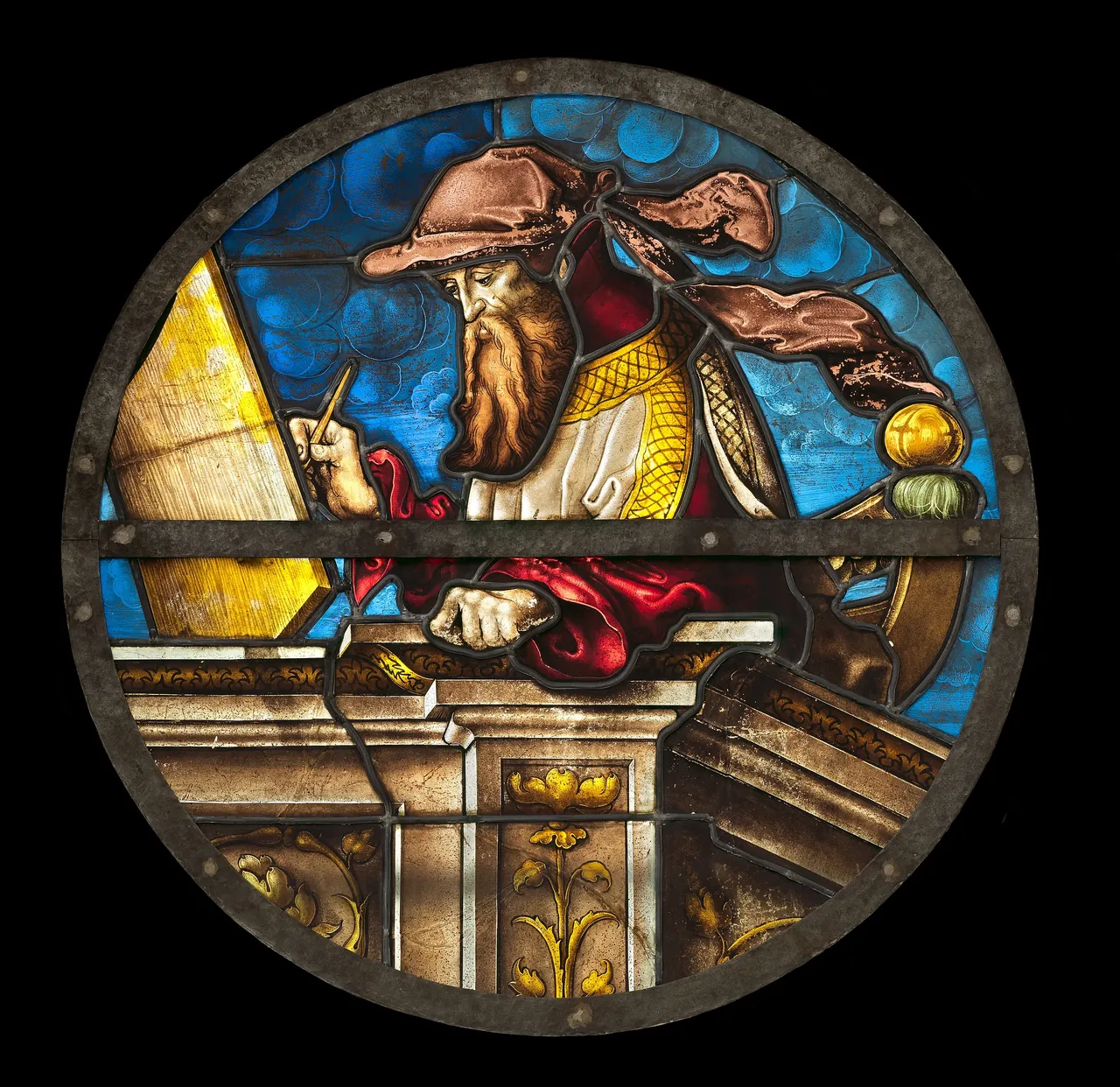
A stained-glass roundel of the prophet Isaiah writing, made in 1533, recalling the prophet through whom the Lord called Israel to be His witnesses before the nations.The Prophet Isaiah · 1533 · The Metropolitan Museum of Art · CC0 · museum record · Galeria Regni
A witness is someone who tells what he has seen and heard. He is not the judge, and he is not the defendant's lawyer. He does not decide the verdict, and he is not paid to make the case look good. His whole value lies in one thing: that he tells the truth about what he knows. A witness who embellishes is worse than no witness at all, because once he is caught in one exaggeration nobody believes the rest.
That is why the ninth commandment matters to this subject: "Thou shalt not bear false witness against thy neighbour" (Exodus 20:16). The command is about courts and neighbours, but its principle runs through all speech. "Lying lips are abomination to the LORD: but they that deal truly are his delight" (Proverbs 12:22). If false witness against a neighbour is sin, false witness about God is not less.
"Ye are my witnesses"
The idea is older than the New Testament. Through Isaiah, the Lord called Israel to be His witnesses before the nations: "Ye are my witnesses, saith the LORD, and my servant whom I have chosen: that ye may know and believe me, and understand that I am he: before me there was no God formed, neither shall there be after me" (Isaiah 43:10).
Notice the order. The witnesses are first to "know and believe" — then to testify. A witness speaks from what he knows. And what Israel was to testify to was not first its own experience but the Lord Himself: that He alone is God.
When the risen Christ sent out His disciples, He used the same language. After opening the Scriptures to them, He said: "Thus it is written, and thus it behoved Christ to suffer, and to rise from the dead the third day: And that repentance and remission of sins should be preached in his name among all nations, beginning at Jerusalem. And ye are witnesses of these things" (Luke 24:46-48). And before His ascension: "ye shall be witnesses unto me both in Jerusalem, and in all Judaea, and in Samaria, and unto the uttermost part of the earth" (Acts 1:8).
"Witnesses unto me." Not witnesses to themselves, their transformation or their spiritual journey, but to Him. This is the first and most important thing to understand about a Christian testimony. It may be full of your own life, but its subject is Christ.
Eyewitnesses and those who came after
The apostles were witnesses in a sense no one after them can be. John wrote: "That which was from the beginning, which we have heard, which we have seen with our eyes, which we have looked upon, and our hands have handled, of the Word of life ... That which we have seen and heard declare we unto you, that ye also may have fellowship with us" (1 John 1:1-3). Peter wrote: "For we have not followed cunningly devised fables, when we made known unto you the power and coming of our Lord Jesus Christ, but were eyewitnesses of his majesty" (2 Peter 1:16). Luke built his Gospel on what "they delivered them unto us, which from the beginning were eyewitnesses, and ministers of the word" (Luke 1:2).
The New Testament scholar Richard Bauckham has argued at length that the Gospels should be read as exactly that — eyewitness testimony, closely based on the accounts of people who knew Jesus personally.2 Whatever one makes of every detail of his argument, the point stands in the text itself: the Christian faith rests on testimony, and the first testimony is the apostles' witness to the life, death and resurrection of Jesus.
Your testimony stands on theirs. You did not see the empty tomb. What you can tell is what happened when the word of those eyewitnesses reached you — what you were, what you heard, what you did, and what has changed. That is a real testimony, and Scripture values it. But it is a second-order witness that points back to the first. When your story and the apostles' testimony seem to pull in different directions, theirs wins.
Two witnesses
Jesus promised that His disciples would not testify alone. "But when the Comforter is come, whom I will send unto you from the Father, even the Spirit of truth, which proceedeth from the Father, he shall testify of me: And ye also shall bear witness, because ye have been with me from the beginning" (John 15:26-27).
There are two witnesses in every faithful testimony: the Holy Ghost, who testifies of Christ, and the believer, who tells what he knows. That is a great comfort for anyone who feels unqualified. You are not responsible for convincing anyone. You are responsible for telling the truth. The Spirit of truth does the convincing.
It is also a warning. The Holy Ghost is "the Spirit of truth". He does not bear witness alongside exaggeration, invention or showmanship. A testimony that bends the facts to sound more impressive has lost its second witness.
The word of their testimony
The verse most often quoted about testimony is Revelation 12:11: "And they overcame him by the blood of the Lamb, and by the word of their testimony; and they loved not their lives unto the death."
Read it in context and three things stand out. First, the enemy is named in the verses before: "the great dragon ... that old serpent, called the Devil, and Satan, which deceiveth the whole world", and "the accuser of our brethren ... which accused them before our God day and night" (Revelation 12:9-10). Testimony is part of a real fight against a real deceiver and accuser.
Second, the order: "by the blood of the Lamb" first, and "by the word of their testimony" second. The victory is won by Christ's death. The believers' testimony is their word about that victory. A testimony that leaves out the blood of the Lamb has nothing to overcome with.
Third, "they loved not their lives unto the death". This is where martys begins to mean "martyr". The witnesses of Revelation are people who would rather die than unsay what they have seen. Most readers of this paper will never face that choice. But the verse sets the tone. Testimony is not a performance for applause. It is a costly word, spoken because it is true.
Why tell it at all?
Scripture does not leave testimony as optional. "Let the redeemed of the LORD say so, whom he hath redeemed from the hand of the enemy" (Psalm 107:2). The psalmist again: "Come and hear, all ye that fear God, and I will declare what he hath done for my soul" (Psalm 66:16). And David: "He brought me up also out of an horrible pit, out of the miry clay, and set my feet upon a rock ... many shall see it, and fear, and shall trust in the LORD" (Psalm 40:2-3). The Lord Jesus said, "Whosoever therefore shall confess me before men, him will I confess also before my Father which is in heaven" (Matthew 10:32).
And when Peter and John were ordered to be silent, they answered: "For we cannot but speak the things which we have seen and heard" (Acts 4:20). The rulers who heard them "perceived that they were unlearned and ignorant men" and "took knowledge of them, that they had been with Jesus" (Acts 4:13). That is the whole qualification. Not eloquence, not education, not a dramatic past — only that you have been with Jesus.
This part matters because the Bible does not only command testimony; it shows us testimonies. If we want to know how to tell ours, the safest teachers are the ones the Holy Ghost chose to record. Two of them deserve close attention: the man born blind in John 9, and the apostle Paul, who told his story at least three times in Acts. Alongside them stands a man most people forget — the man from the tombs in Mark 5.
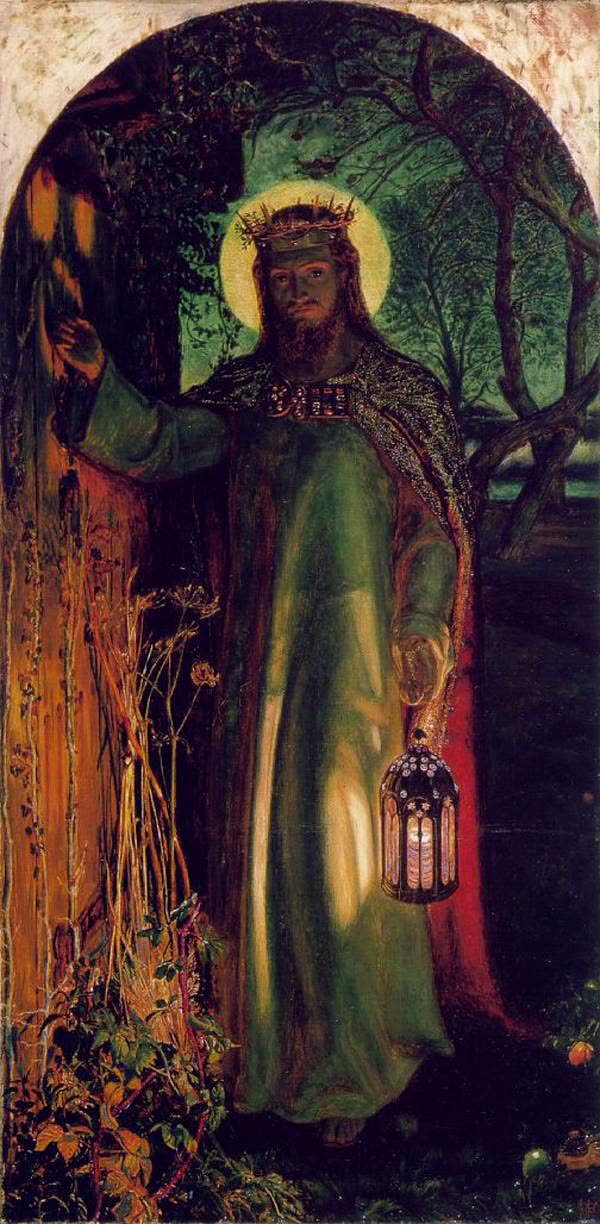
William Holman Hunt’s The Light of the World (1853) — Christ knocking at a door with no outside handle; it only opens from within.William Holman Hunt, 1853 · Public domain
The man born blind: "one thing I know"
John 9 is the longest single conversation in the Gospels about what happened to one person, and it reads like a lesson in giving testimony under pressure.
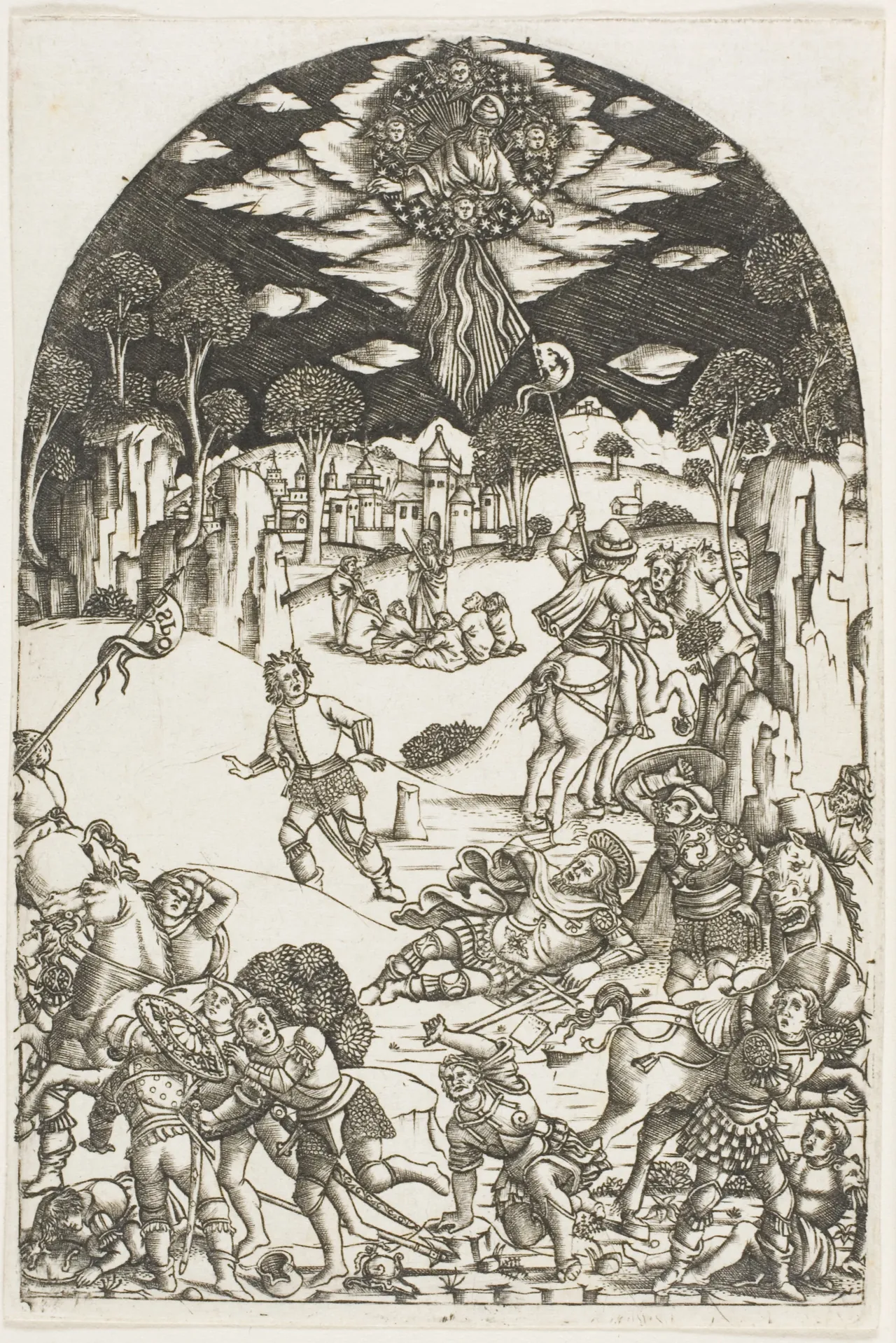
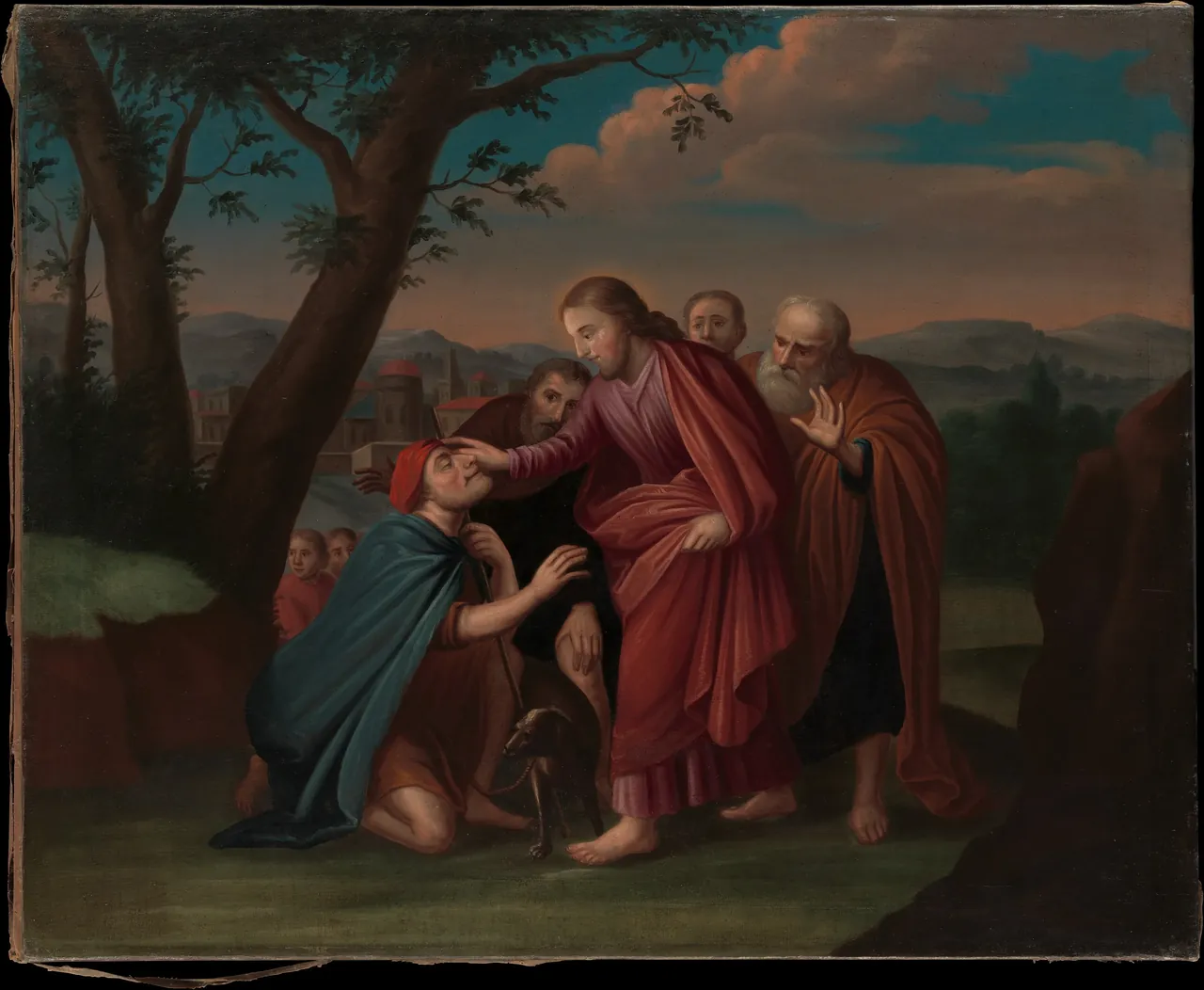
An Italian engraving of the Conversion of Saint Paul, the event Paul retold before crowds and kings, keeping the core of his story the same each time.The Conversion of Saint Paul · n.d. · Art Institute of Chicago · CC0 · museum record · Galeria RegniAn American oil painting of about 1725 to 1730 showing Christ Healing the Blindman, the kind of encounter behind the plain testimony of the man born blind.Christ Healing the Blindman · ca. 1725–30 · The Metropolitan Museum of Art · CC0 · museum record · Galeria Regni
Jesus "spat on the ground, and made clay of the spittle, and he anointed the eyes of the blind man with the clay, And said unto him, Go, wash in the pool of Siloam ... He went his way therefore, and washed, and came seeing" (John 9:6-7). Then the questions begin, and they come from every side: the neighbours, the Pharisees, the man's own parents.
Watch how he answers.
He tells what happened, plainly. Asked "How were thine eyes opened?" he says: "A man that is called Jesus made clay, and anointed mine eyes, and said unto me, Go to the pool of Siloam, and wash: and I went and washed, and I received sight" (John 9:10-11). No adjectives, no drama, no theology he does not yet have. Just the sequence of events.
He admits what he does not know. Asked where Jesus is: "He said, I know not" (John 9:12). Pressed by the Pharisees to agree that Jesus is a sinner: "Whether he be a sinner or no, I know not: one thing I know, that, whereas I was blind, now I see" (John 9:25). He refuses to be pushed beyond his knowledge in either direction. He will not say what the authorities want, and he will not claim more than he knows.
He will not take it back. When they ask him to tell it again, hoping he will change his story, he says: "I have told you already, and ye did not hear: wherefore would ye hear it again?" (John 9:27). His account does not shift to suit the audience.
His understanding grows as he tells it. This is easy to miss. At first Jesus is "A man that is called Jesus" (John 9:11). Then "He is a prophet" (John 9:17). Then he reasons from what happened to him: "If this man were not of God, he could do nothing" (John 9:33). And finally, when Jesus finds him after he has been cast out, "he said, Lord, I believe. And he worshipped him" (John 9:38).
The lesson for us is large. You do not need to understand everything before you can testify. The man born blind told what he knew at each stage, and no more. His testimony was honest at every point, even when his theology was incomplete. And it led him, step by step, to worship.
It cost him. "And they cast him out" (John 9:34). His parents had refused to answer for him "because they feared the Jews: for the Jews had agreed already, that if any man did confess that he was Christ, he should be put out of the synagogue" (John 9:22). The man told the truth anyway. The verse that follows is one of the tenderest in the Gospels: "Jesus heard that they had cast him out; and when he had found him..." (John 9:35). Whoever loses something for telling the truth about Christ will find that Christ comes looking for him.
John Newton heard the echo of this chapter. The first verse of the hymn he published in 1779 in the Olney Hymns ends: "I once was lost, but now am found, / Was blind, but now I see."3 It is the man born blind's sentence, borrowed by a former slave-ship captain to sum up his own life.
The man from the tombs: "Go home to thy friends"
Mark 5 tells of a man "with an unclean spirit, Who had his dwelling among the tombs; and no man could bind him, no, not with chains ... And always, night and day, he was in the mountains, and in the tombs, crying, and cutting himself with stones" (Mark 5:2-5). Jesus cast out the legion of devils that held him, and the townspeople came out "and see him that was possessed with the devil, and had the legion, sitting, and clothed, and in his right mind" (Mark 5:15).
Then something surprising happens. The man begs to go with Jesus — the most natural request in the world. And Jesus says no. "Howbeit Jesus suffered him not, but saith unto him, Go home to thy friends, and tell them how great things the Lord hath done for thee, and hath had compassion on thee. And he departed, and began to publish in Decapolis how great things Jesus had done for him: and all men did marvel" (Mark 5:19-20).
Four things in that command shape every testimony.
"Go home." His first mission field was the people who had known him at his worst. That is often the hardest audience and the most important one. They remember the chains. They can see the change.
"Tell them how great things the Lord hath done for thee." The subject is what the Lord has done. Not how hard he tried, not how far he had fallen, but the Lord's great things.
"And hath had compassion on thee." The Lord's act sprang from His mercy. A testimony that tells only of power and leaves out compassion has missed the heart of it.
"How great things Jesus had done for him." Mark says Jesus told him to tell what "the Lord" had done, and that he went and told what "Jesus" had done. Luke's account says the same: "Return to thine own house, and shew how great things God hath done unto thee. And he went his way, and published throughout the whole city how great things Jesus had done unto him" (Luke 8:39). The man understood whom he had met. When he told what God had done, he named Jesus.
Paul: one story, three tellings
The apostle Paul's conversion is told three times in Acts: once by Luke as narrator (Acts 9), and twice by Paul himself — to a hostile crowd in Jerusalem (Acts 22) and before King Agrippa and the governor Festus in Caesarea (Acts 26). He also refers to it in his letters (Galatians 1:11-24; Philippians 3:4-14; 1 Timothy 1:12-17). No life in the New Testament is told so often from so many angles, and comparing the tellings teaches a great deal.
John Bunyan noticed it. In the preface to his own testimony he wrote that it was "Paul's accustomed manner", even "when tried for his life", "to open before his judges the manner of his conversion: he would think of that day, and that hour, in which he first did meet with grace; for he found it supported him."4
The core does not change
In all three accounts the same core appears: Saul was a persecutor of the church; on the road to Damascus a light from heaven shone round about him; he fell to the earth; he heard a voice saying "Saul, Saul, why persecutest thou me?"; he asked "Who art thou, Lord?"; and the answer was "I am Jesus whom thou persecutest" (Acts 9:4-5; 22:7-8; 26:14-15). Whoever hears any one of the three hears the same essential event.
That is the first lesson. Your testimony should have a fixed core — the facts of what happened — that does not shift from one telling to the next.
The telling fits the hearer
What changes is the emphasis, and it changes with the audience.
To the Jerusalem crowd, who suspected him of betraying the law, Paul spoke "in the Hebrew tongue" (Acts 22:2). He began with his credentials as a strict Jew: "born in Tarsus ... yet brought up in this city at the feet of Gamaliel, and taught according to the perfect manner of the law of the fathers, and was zealous toward God, as ye all are this day" (Acts 22:3). He dwelt on Ananias, "a devout man according to the law, having a good report of all the Jews which dwelt there" (Acts 22:12) — a detail Luke does not stress in Acts 9. Everything is chosen to show this crowd that he had not abandoned the God of Israel.
Before Agrippa, a king Paul called "expert in all customs and questions which are among the Jews" (Acts 26:3), Paul stressed the hope of Israel and the resurrection: "Why should it be thought a thing incredible with you, that God should raise the dead?" (Acts 26:8). He compressed the Ananias episode and gave instead the words of commission he had received, "to open their eyes, and to turn them from darkness to light, and from the power of Satan unto God, that they may receive forgiveness of sins" (Acts 26:18). And he added a phrase from the voice on the road: "it is hard for thee to kick against the pricks" (Acts 26:14).
That phrase is worth a note. In the King James Bible it also stands in Acts 9:5, where the Received Text has it. Many modern versions drop it from Acts 9 and keep it only in Acts 26. The 1611 keeps both. You can see every place where the 1611 and the modern Critical Text part ways at kylelauriano.com/library/changes.
The lesson is not that the facts are negotiable. It is that a faithful witness chooses, from the true things, the ones this hearer most needs. Paul did not invent a single detail for Agrippa. He selected.
Honest differences
Careful readers have long noticed that the accounts differ in small ways. Acts 9:7 says the men with Saul stood "hearing a voice, but seeing no man", while in Acts 22:9 Paul says they "saw indeed the light, and were afraid; but they heard not the voice of him that spake to me." A common explanation is that the men heard a sound but did not understand the words spoken to Saul — much as the crowd in John 12, when the Father spoke from heaven, "heard it, said that it thundered: others said, An angel spake to him" (John 12:29).
The point for our purpose is this: the differences are exactly the kind that real witnesses produce. Rehearsed stories match word for word. Honest accounts given years apart, to different hearers, vary in emphasis and detail while agreeing on the substance. Do not be anxious if you tell your own story slightly differently each time. Be anxious only if the facts change.
What Paul always includes
Across the three tellings, and in his letters, Paul's testimony keeps a recognisable shape:
What he was. "I verily thought with myself, that I ought to do many things contrary to the name of Jesus of Nazareth" (Acts 26:9). He does not hide it; he calls himself "a blasphemer, and a persecutor, and injurious" (1 Timothy 1:13).
What happened. The light, the voice, the question and the answer.
What he did. "Whereupon, O king Agrippa, I was not disobedient unto the heavenly vision" (Acts 26:19). He obeyed: he went into Damascus, received his sight, and was baptized (Acts 9:18; 22:16).
What he now does and preaches. "But shewed first unto them of Damascus, and at Jerusalem, and throughout all the coasts of Judaea, and then to the Gentiles, that they should repent and turn to God, and do works meet for repentance" (Acts 26:20).
The gospel itself. "That Christ should suffer, and that he should be the first that should rise from the dead" (Acts 26:23).
An appeal. "King Agrippa, believest thou the prophets? I know that thou believest" (Acts 26:27). And when Agrippa answered, "Almost thou persuadest me to be a Christian," Paul replied: "I would to God, that not only thou, but also all that hear me this day, were both almost, and altogether such as I am, except these bonds" (Acts 26:28-29).
Before, turning point, after, the gospel, and an invitation. Part 5 builds on that shape.
Why his story is "a pattern"
Paul explained why God saved a man like him: "Howbeit for this cause I obtained mercy, that in me first Jesus Christ might shew forth all longsuffering, for a pattern to them which should hereafter believe on him to life everlasting" (1 Timothy 1:16). His story was given so that others would see how patient Christ is with sinners, and take hope.
That is the purpose of every testimony. Not "look at me", but "look at His longsuffering — if He had mercy on me, He will have mercy on you." Paul's own summary is the right attitude for anyone writing a testimony: "This is a faithful saying, and worthy of all acceptation, that Christ Jesus came into the world to save sinners; of whom I am chief" (1 Timothy 1:15).
And when he told the Galatians his story he paused to swear to it: "Now the things which I write unto you, behold, before God, I lie not" (Galatians 1:20). The churches of Judaea that had never met him "had heard only, That he which persecuted us in times past now preacheth the faith which once he destroyed. And they glorified God in me" (Galatians 1:23-24). That is the goal: that people would glorify God in you.
Others who testified
Scripture is full of smaller testimonies. The Samaritan woman ran into her town saying, "Come, see a man, which told me all things that ever I did: is not this the Christ?" (John 4:29), and "many of the Samaritans of that city believed on him for the saying of the woman" (John 4:39). Andrew "first findeth his own brother Simon, and saith unto him, We have found the Messias" (John 1:41). Philip, met with a sneer about Nazareth, simply said, "Come and see" (John 1:46). Barnabas vouched for the new convert Saul, and "declared unto them how he had seen the Lord in the way" (Acts 9:27).
None of them gave a speech. Each told what he or she knew, and pointed to Jesus.
This part matters because the church did not stop telling testimonies when the New Testament closed. Some of the most read books in Christian history are testimonies, written by believers who knew the dangers of the form — pride, exaggeration, the temptation to dress the story up — and wrestled with them on the page. Five of them are worth hearing.
Augustine: confessing before many witnesses
Augustine of Hippo wrote his Confessions around the end of the fourth century. It is addressed to God throughout, which is the first thing to learn from it: a testimony is told in God's hearing before it is told in anyone else's. Its most famous sentence comes in the first chapter: "Thou awakest us to delight in Thy praise; for Thou madest us for Thyself, and our heart is restless, until it repose in Thee."5
In Book 10 he stops to ask why he is writing his sins down for others to read at all. He knows the danger. He calls human beings "a race, curious to know the lives of others, slothful to amend their own." But he gives a reason that every believer telling a dark past should remember: such confessions, "when read and heard, stir up the heart, that it sleep not in despair and say 'I cannot,' but awake in the love of Thy mercy and the sweetness of Thy grace." And: "the good delight to hear of the past evils of such as are now freed from them, not because they are evils, but because they have been and are not."6
That is the right reason to tell what you were. Not because sin is interesting, but because it "has been and is not". The hearer who thinks "I cannot" needs to hear that you could not either, and that grace did.
Augustine's account of his conversion in Book 8 also shows something about how to report an experience honestly. Weeping in a garden in Milan, he heard a child's voice from a neighbouring house chanting "Take up and read; Take up and read." He records that he could not remember any children's game with those words, and that he took it, in his own phrase, as "interpreting it to be no other than a command from God to open the book". He opened Paul's letter and read the words of Romans 13:13-14, and he writes that "by a light as it were of serenity infused into my heart, all the darkness of doubt vanished away."7
Notice his care. He does not write "God shouted at me from the next garden." He reports what he heard, what he did not know about it, how he interpreted it, and what followed. That is a model of honest testimony, fifteen centuries before anyone wrote rules about it.
Bunyan: "plain and simple"
John Bunyan wrote Grace Abounding to the Chief of Sinners in 1666, while in prison for preaching. It is an account of years of spiritual torment and of the Scriptures that brought him through. Its preface, written to the congregation he could no longer visit, is one of the best short pieces ever written on why and how to tell a testimony.
He gives the reason from Scripture: "It is profitable for Christians to be often calling to mind the very beginnings of grace with their souls."8 He tells his readers to search their memories thoroughly: "look diligently, and leave no corner therein unsearched for that treasure hid, even the treasure of your first and second experience of the grace of God towards you. Remember, I say, the word that first laid hold upon you."9
And then he says something every testimony-writer should pin above the desk. He could, he admits, have written in "a style much higher than this", and "could have adorned all things more than here I have seemed to do, but I dare not: God did not play in tempting of me; neither did I play, when I sunk as into the bottomless pit, when the pangs of hell caught hold upon me; wherefore I may not play in relating of them, but be plain and simple, and lay down the thing as it was."10
"Lay down the thing as it was." That is the whole ethic of testimony in seven words.
Bunyan practised the same care in his allegory The Pilgrim's Progress (1678). At the House Beautiful, three women named Piety, Prudence and Charity ask Christian to tell them "of all things that have happened to you in your pilgrimage" — the book's own picture of a testimony told in the church. When Christian reaches the cross, he says: "I saw one, as I thought in my mind, hang bleeding upon the tree; and the very sight of him made my burden fall off my back."11 "As I thought in my mind." Even in an allegory, Bunyan was careful to mark what was seen with the eyes and what was seen with the heart.
Wesley: "I felt my heart strangely warmed"
On 24 May 1738 John Wesley, already an ordained clergyman and a former missionary to Georgia, went, as he wrote, "very unwillingly to a society in Aldersgate Street, where one was reading Luther's preface to the Epistle to the Romans." His journal continues: "About a quarter before nine, while he was describing the change which God works in the heart through faith in Christ, I felt my heart strangely warmed. I felt I did trust in Christ, Christ alone, for salvation; and an assurance was given me that He had taken away my sins, even mine, and saved me from the law of sin and death."12
Three things in that entry speak to anyone writing a testimony.
First, he told it at once: "I then testified openly to all there what I now first felt in my heart."13
Second, his language is careful. "I felt my heart strangely warmed. I felt I did trust in Christ." He reports what he experienced as experience. The thing he trusts — "Christ alone, for salvation" — he states as the object of his faith.
Third, he was honest about what did not happen. Almost at once, he writes, "the enemy suggested, 'This cannot be faith; for where is thy joy?'" He came to understand that "peace and victory over sin are essential to faith", but that "as to the transports of joy that usually attend the beginning of it ... God sometimes giveth, sometimes withholdeth, them according to the counsels of His own will."14 Many believers have a quiet conversion and wonder whether it counts because they felt no great rush of emotion. Wesley's journal says: it counts. The test is trust in Christ and a changed life, not the size of the feeling.
Newton: a narrative and a hymn
John Newton, who had been a sailor and a slave-trader, told his story in letters to the clergyman Thomas Haweis, published anonymously in London in 1764 as An Authentic Narrative of Some Remarkable and Interesting Particulars in the Life of —.15 Years later, as a pastor in Olney, he wrote the hymn now called "Amazing Grace" to go with a New Year's Day sermon; it was published in the Olney Hymns in 1779.16
The hymn is a testimony compressed into six short verses. It names what he was ("a wretch"), the turning ("The hour I first believed"), the ongoing journey ("Through many dangers, toils and snares, / I have already come"), and the hope ahead ("And grace will lead me home").17 And its hero is not Newton but grace — which is to say, God. Read it slowly and you will notice that Newton never once praises himself.
Lewis: "the most dejected and reluctant convert"
C. S. Lewis, an Oxford don who had been an atheist, described his conversion in Surprised by Joy (1955). His turn came in two stages. In the Trinity Term of 1929, he wrote, "I gave in, and admitted that God was God, and knelt and prayed: perhaps, that night, the most dejected and reluctant convert in all England."18 That was belief in God, not yet faith in Christ. In the same chapter he names two Christian friends, H. V. D. Dyson and J. R. R. Tolkien, who "were later to give me much help in getting over the last stile". And in the last chapter he tells how the final step came, on a drive to Whipsnade zoo: "When we set out I did not believe that Jesus Christ is the Son of God, and when we reached the zoo I did."19
Lewis's honesty is the lesson. He did not paint himself as a seeker who ran gladly to God. He said he was dragged, dejected and reluctant. That candour is part of why his testimony has been trusted by so many sceptics since. People can tell when a story has been polished for effect. They can also tell when it has not.
What these five share
Put the five side by side and a pattern emerges:
| Writer | What he would not do | What he did instead | |---|---|---| | Augustine | Tell sins to entertain the curious | Told them so the despairing would not say "I cannot" | | Bunyan | "Adorn all things" in a higher style | Laid down "the thing as it was", plain and simple | | Wesley | Claim joy he did not feel | Said what he felt, and what he trusted | | Newton | Make himself the hero | Made grace the hero | | Lewis | Pretend he came willingly | Admitted he was "reluctant" |
Each was honest about himself. Each kept the focus on God. Each was careful to distinguish what he experienced from what he interpreted. Those three marks — honesty, God at the centre, and care about claims — are the subject of the rest of this paper.
This part matters because the first enemy of a good testimony is not stage fright; it is memory. Memory is selective, and the heart is not a neutral witness. "The heart is deceitful above all things, and desperately wicked: who can know it?" (Jeremiah 17:9). Before you shape your story, you need to remember it as truly as you can.
Remembering is commanded
Remembering God's dealings is not navel-gazing; it is obedience. "And thou shalt remember all the way which the LORD thy God led thee these forty years in the wilderness, to humble thee, and to prove thee, to know what was in thine heart" (Deuteronomy 8:2). Moses wrote down Israel's journeys stage by stage "by the commandment of the LORD" (Numbers 33:2). David, about to face Goliath, remembered the lion and the bear: "The LORD that delivered me out of the paw of the lion, and out of the paw of the bear, he will deliver me out of the hand of this Philistine" (1 Samuel 17:37).
Bunyan built his preface on exactly those passages. "Have you never a hill Mizar to remember?" he asks his readers. "Have you forgot the close, the milk-house, the stable, the barn, and the like, where God did visit your souls?"20 The places matter, the words matter, the order matters. Remembering them is the raw material of testimony.
Pray before you write
Begin with the psalmist's prayer: "Search me, O God, and know my heart: try me, and know my thoughts: And see if there be any wicked way in me, and lead me in the way everlasting" (Psalm 139:23-24). Ask the Lord to help you remember accurately, to keep you from vanity and from false shame, and to show you what He was doing in your life before you knew it.
The pull toward drama
The most common distortion in testimonies is not lying outright. It is a slow inflation. A hard season becomes "rock bottom". A doubt becomes "I hated God". A quiet prayer becomes "I cried out and heaven opened". Each retelling, the story grows a little, because the bigger version gets a bigger reaction.
Scripture is blunt about this. "Wherefore putting away lying, speak every man truth with his neighbour: for we are members one of another" (Ephesians 4:25). Paul, who had more to boast of than any of us, refused to inflate his story: "For though I would desire to glory, I shall not be a fool; for I will say the truth: but now I forbear, lest any man should think of me above that which he seeth me to be, or that he heareth of me" (2 Corinthians 12:6). And he described the ministry as having "renounced the hidden things of dishonesty, not walking in craftiness, nor handling the word of God deceitfully; but by manifestation of the truth commending ourselves to every man's conscience in the sight of God" (2 Corinthians 4:2).
A simple test: would the people who were there recognise your account? If your parents, your old friends, your spouse heard you tell it, would they nod, or would they wince? If they would wince, change it.
The opposite distortion is real too: shrinking the story out of false modesty or fear. If God truly delivered you from something, say so plainly. Understatement is not humility if it hides what the Lord has done.
Experience and interpretation
Here is the most important skill in this paper, and the one most testimonies neglect: learning to tell the difference between what you experienced and what you concluded from it.
Augustine heard a child's voice; he interpreted it as a command to read. Wesley felt his heart strangely warmed; he trusted Christ. Bunyan's Christian saw the Crucified "as I thought in my mind". None of them was being vague. They were being exact.
In practice it means three kinds of statement:
1. What anyone could have seen. Dates, places, events, what was said, what you did. "I read the Gospel of Matthew." "I got on my knees." "I stopped drinking." State these plainly; they are facts. 2. What you perceived, felt or believed. "I felt the weight of my sin." "I sensed I was not alone." "I believe the Lord was drawing me." Mark these with a word that shows they are yours — I felt, I sensed, I believe, it seemed to me, in my experience. They are true reports of your inner life, and no one can contradict them, but they are not the same as public facts. 3. What God did or said. Here be most careful. Where Scripture tells you what God does — that He forgives those who repent and believe, that "if any man be in Christ, he is a new creature" (2 Corinthians 5:17) — you can say it with full confidence, because you are quoting His word. Where you believe God did something particular in your story — answered a prayer, spoke to you, healed you — say that it is what you believe, and why. "I believe God answered that prayer" is honest. "God told me" stated flat, as if it were as public as the date, claims more than any witness can verify.
This is not doubt, and it is not timidity. It is the care that the man born blind showed when he said "one thing I know" and refused to say more. It protects your hearers, who should not have to accept your interpretation in order to hear the gospel. It protects you, because the day will come when someone asks "How do you know?", and you will be glad you never claimed to know what you only believed. And it protects the name of God, which should never be attached to anything He did not do.
My own story is a good example. I do not say "God touched me with fire." I say what I experienced: "A warmth ran from the top of my head to the soles of my feet. Peace I'd never known, and it didn't leave." What it means, I leave to the hearer and to the Holy Ghost.
Not "true for me"
Care about claims must not slide into the opposite error. Some people, wanting to be humble, end their testimony with "That's my truth" or "It worked for me, and it might work for you." That is not humility; it is relativism, and it quietly denies the gospel.
Your experience is yours. The gospel is not. Christ "died for our sins according to the scriptures; And ... he was buried, and ... he rose again the third day according to the scriptures" (1 Corinthians 15:3-4). That is true for everyone, whether they believe it or not. "Neither is there salvation in any other: for there is none other name under heaven given among men, whereby we must be saved" (Acts 4:12).
So the honest testimony speaks in two registers at once. About itself, it is modest and careful: here is what happened to me, here is what I felt, here is what I believe. About Christ, it is plain and confident: here is what is true, and it is true for you.
Questions for remembering
Take time over these. Write the answers down — rough notes, not polished sentences. You will not use most of them, but you need to see the whole field before you choose.
Before Christ
What did I believe about God, and about myself, before I was converted? (Be specific: "I thought God was a story for children," "I thought I was good enough," "I thought church was the same as faith.")
What was I looking to for peace, worth or meaning?
What was the problem I could not solve?
What did the people closest to me see in me then?
Were there signs, even then, that God was at work — a person, a book, a verse, a restlessness?
The turning
How did I first hear the gospel clearly? Who told me, or what did I read?
What did I come to understand that I had not understood before — about sin, about Christ, about grace?
What did I actually do? (Pray, repent, believe, confess, be baptized — in what order, and how?)
What do I know happened, and what did I feel? Can I tell them apart?
What Scripture was involved?
After
What changed right away? What changed slowly? What is still changing?
What do the people closest to me see now?
What have I had to give up, and what has it cost?
What do I now believe about Christ that I would stake my life on?
The whole
If I had one sentence, like "whereas I was blind, now I see", what would mine be?
Who in my life most needs to hear this?
Protecting other people
Your story will include other people — parents, spouses, former friends, people who hurt you, people you hurt. Scripture's rule for speech applies to them too. "A talebearer revealeth secrets: but he that is of a faithful spirit concealeth the matter" (Proverbs 11:13).
Tell your own sin, not other people's. "I was angry and bitter" is yours to say; "my father was a drunk" may not be, especially if he is alive and could be identified.
Use no names without consent, except your own.
Where someone harmed you, you may say that you were hurt and that the Lord has helped you forgive, without giving details that would identify or shame them.
If your story involves anyone who is in danger — from an abuser, a group they have left, or anyone else — leave out every detail that could locate or identify them. Their safety matters more than the vividness of your story.
If your story involves crimes, especially against others, speak with your pastor before telling it in public.
This part matters because a story without shape is hard to follow and easy to forget. Scripture gives a shape, and Paul's speech before Agrippa shows it in full. This part sets it out, then turns to the most important rule of all: Christ at the centre and the gospel made plain.
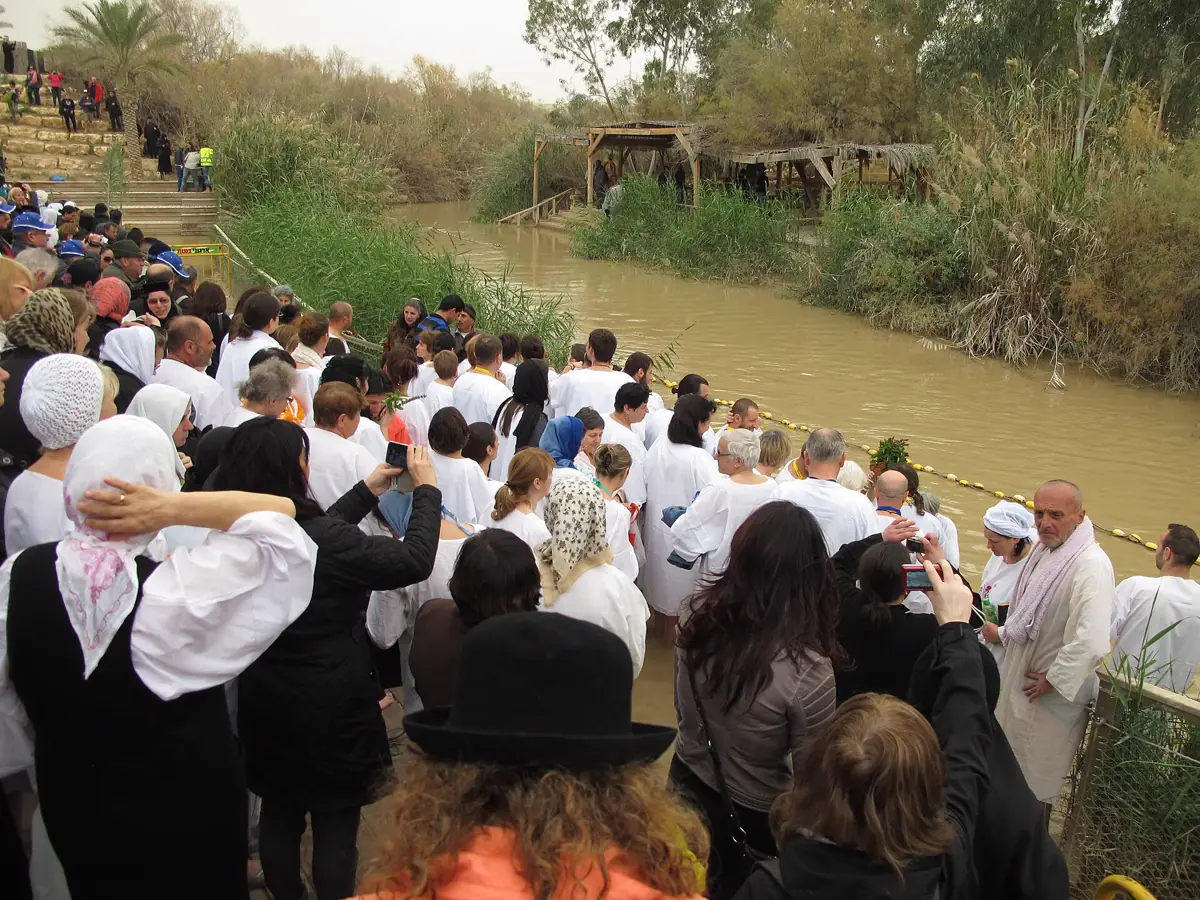
The Jordan River at Qasr el-Yahud, the traditional baptism site — pilgrims still go down into the same water.Ratoncito Perez · CC0
Four movements
A testimony moves in four parts. They are not a formula; they are the natural order of a conversion.
1. Before: what I was
Paul's model is "My manner of life from my youth ... know all the Jews" (Acts 26:4). He told what he believed, how he lived, and why it mattered: he thought he was serving God while fighting God.
The purpose of the "before" is not to shock. It is to show the need. "For we ourselves also were sometimes foolish, disobedient, deceived, serving divers lusts and pleasures" (Titus 3:3) is the honest sum of every unconverted life, but each person's version is different. Some were outwardly wild. Some were outwardly religious. Some were proud of their reason. Show the hearer what you trusted, and why it failed.
Do not glorify sin. Paul asked the Romans, "What fruit had ye then in those things whereof ye are now ashamed? for the end of those things is death" (Romans 6:21). Tell it so that it sounds like what it was — a dead end — not like a highlight reel. Be honest without being graphic. Usually one concrete detail says more than a list.
2. The turning: what happened
This is the hinge. "At midday, O king, I saw in the way a light from heaven" (Acts 26:13). For Paul it was sudden. For many it is slow — a long season of reading, questions, conversations — with a moment, or no clear moment, when they knew they believed.
Whatever your turning was, three things belong in it:
How you heard the gospel. "So then faith cometh by hearing, and hearing by the word of God" (Romans 10:17). Name the means: a person, a book, a sermon, the Bible itself.
What you came to understand. Sin, judgement, Christ crucified and risen, grace. This is where your testimony becomes more than a mood.
What you did. Paul "was not disobedient unto the heavenly vision" (Acts 26:19). Repentance, faith, confession, baptism — say which, and how.
Do not invent a moment if you do not have one. If you came to faith gradually, say so. If you cannot name the day, say that too. What matters is not the date but the reality: that you now trust Christ.
3. After: what has changed
"Having therefore obtained help of God, I continue unto this day" (Acts 26:22). The "after" shows that the turning was real. "Therefore if any man be in Christ, he is a new creature: old things are passed away; behold, all things are become new" (2 Corinthians 5:17).
Be concrete, and be honest about the process. Some things changed at once; others slowly; some are still a fight. Paul himself wrote, years into his ministry, "Not as though I had already attained, either were already perfect: but I follow after" (Philippians 3:12). A testimony that claims every struggle vanished the day you believed will discourage the very people it should help, and will not survive a week of their watching you.
4. The invitation: what this means for you
Paul turned from his story to his hearer: "King Agrippa, believest thou the prophets?" (Acts 26:27). The man from the tombs went home and told "how great things the Lord hath done" — and "all men did marvel" (Mark 5:20). A testimony that ends with "and that's my story" leaves the hearer admiring you. One that ends by turning to Christ leaves them facing Him.
The invitation does not have to be a sermon. It can be a sentence: "What He did for me, He offers to you." The companion paper Share Your Story (Level 2) deals at length with how to move from testimony to the gospel in conversation.
If you were raised in the faith
Many believers cannot remember a time when they did not know about Jesus. Some feel their testimony is second-class next to the dramatic stories. Scripture does not think so.
Paul reminded Timothy of "the unfeigned faith that is in thee, which dwelt first in thy grandmother Lois, and thy mother Eunice; and I am persuaded that in thee also" (2 Timothy 1:5), and that "from a child thou hast known the holy scriptures, which are able to make thee wise unto salvation through faith which is in Christ Jesus" (2 Timothy 3:15). Timothy's testimony was of God's faithfulness through a family and the Scriptures from childhood. The psalmist says the same: "O God, thou hast taught me from my youth: and hitherto have I declared thy wondrous works" (Psalm 71:17).
If this is you, your testimony has a different shape. The "before" may be the moment you realised that knowing about Christ is not the same as trusting Him — or a season of drifting and return — or simply the ordinary sinfulness of a child who needed grace as much as anyone. Be careful here too: being raised in church does not make anyone a Christian. "Except a man be born again, he cannot see the kingdom of God" (John 3:3). Some people discover, long after baptism, that they never personally trusted Christ.
Criselle Mendoza told her story on The King Is Coming Show (TKIC #51): baptized at twelve in Iglesia Ni Cristo, and, in her own telling, not saved until 2025. Watch it in her own words: youtube.com/watch?v=_7vjNP6A_z8 Criselle's account of what happened to her, shared as her testimony — weigh it for yourself.
If you came from unbelief
If you were a sceptic, your hearers may well be sceptics too, and they will listen for whether you were really one. Tell honestly what you believed and why. Tell what moved you — not just feelings, but reasons, evidence, questions answered or left standing. Lewis's honesty about his reluctance is a good model. So is J. Warner Wallace, a cold-case homicide detective whose journey to faith, in his publisher's words, began at the age of 35, when he applied his detective skills to the claims of the Gospels; he later wrote Cold-Case Christianity (2013).21
Michael Ray Lewis told his story on The King Is Coming Show (TKIC #48): an atheist who mocked Christians — until, in his telling, one question undid him. Watch it in his own words: youtube.com/watch?v=Rd-RdSqeQDk Michael's account of what happened to him, shared as his testimony — weigh it for yourself.
Christ at the centre
Every rule in this paper serves one rule: the testimony is about Christ. "For we preach not ourselves, but Christ Jesus the Lord; and ourselves your servants for Jesus' sake" (2 Corinthians 4:5). John the Baptist "was not that Light, but was sent to bear witness of that Light" (John 1:8), and he summed up his whole ministry in seven words: "He must increase, but I must decrease" (John 3:30).
A simple check is to read your draft and underline every sentence where you are the subject of an active verb — "I decided", "I changed", "I turned my life around". Then underline every sentence where Christ is. If you outnumber Him, rewrite it. Compare two versions of the same turning point:
I hit bottom, so I decided to get my life together. I started going to church and reading the Bible, and I changed.
I hit bottom, and I could not fix it. I started reading the Bible, and in it I met a Saviour I had never really known. I asked Him to forgive me and take my life, and He has been changing me ever since.
Both are true of many people. Only the second is a Christian testimony. The first is a self-improvement story with a church in it.
Paul's line is the one to aim for: "I am crucified with Christ: nevertheless I live; yet not I, but Christ liveth in me" (Galatians 2:20). And on the hard work of the Christian life: "But by the grace of God I am what I am ... I laboured more abundantly than they all: yet not I, but the grace of God which was with me" (1 Corinthians 15:10). And again: "God forbid that I should glory, save in the cross of our Lord Jesus Christ" (Galatians 6:14).
The gospel made plain
A testimony is not the gospel. The gospel is the good news about what Christ has done; your testimony is the story of how that news reached you. But a testimony that never makes the gospel plain leaves the hearer knowing that something happened to you without knowing how it could happen to them.
Somewhere in your story, in your own words, these truths should be clear:
God is holy, and we have sinned. "For all have sinned, and come short of the glory of God" (Romans 3:23). And: "For the wages of sin is death" (Romans 6:23).
Christ died for sinners and rose again. "Christ died for our sins according to the scriptures; And that he was buried, and that he rose again the third day according to the scriptures" (1 Corinthians 15:3-4).
Salvation is by grace, not earned. "For by grace are ye saved through faith; and that not of yourselves: it is the gift of God: Not of works, lest any man should boast" (Ephesians 2:8-9).
The response is repentance and faith. Paul described his whole message as "repentance toward God, and faith toward our Lord Jesus Christ" (Acts 20:21). Jesus preached, "repent ye, and believe the gospel" (Mark 1:15).
Baptism is the obedience that follows. On the day of Pentecost, Peter said: "Repent, and be baptized every one of you in the name of Jesus Christ for the remission of sins, and ye shall receive the gift of the Holy Ghost" (Acts 2:38).
You do not need to recite these as a list. Woven into your story — "I came to see that I had sinned against a holy God", "I learned that Jesus had died for exactly that", "I couldn't earn it; I could only receive it" — they make your testimony a doorway rather than a display.
Words that need explaining
Many Christians use words their hearers do not understand: "saved", "born again", "washed in the blood", "accepted Christ", "the Lord laid it on my heart". These are good words, mostly Bible words, but to an outsider they can sound like code. Use them — and then say what they mean. "I was saved — I mean, God forgave me and gave me a new life I hadn't earned." Explaining a word is not watering it down.
Mistakes to avoid
| Mistake | Why it hurts | What to do instead | |---|---|---| | Glorifying the past | Makes sin sound exciting | Tell it as a dead end (Romans 6:21) | | Inflating the story | Breaks trust once noticed | "Lay down the thing as it was" | | Claiming as fact what you believe God did | Claims more than a witness knows | Use I believe, I sensed, it seemed to me | | "That's my truth" | Makes the gospel optional | Be modest about yourself, plain about Christ | | No gospel | Leaves the hearer admiring you | Make sin, Christ, grace and response clear | | Self as hero | Turns testimony into self-help | Count the verbs; let Christ outnumber you | | Exposing others | Shames people who cannot answer | Tell your own sin; no names without consent | | "Everything is perfect now" | Discourages strugglers; easily disproved | Be honest about the ongoing fight (Philippians 3:12) | | Jargon | Shuts out the very people you want | Use the word, then explain it |
This part matters because principles are easier to understand when you see them in a real story. Below is my own testimony, in my own words, with notes on how it follows — and where it could be strengthened by — the pattern above. Then the paper hands you the pen.
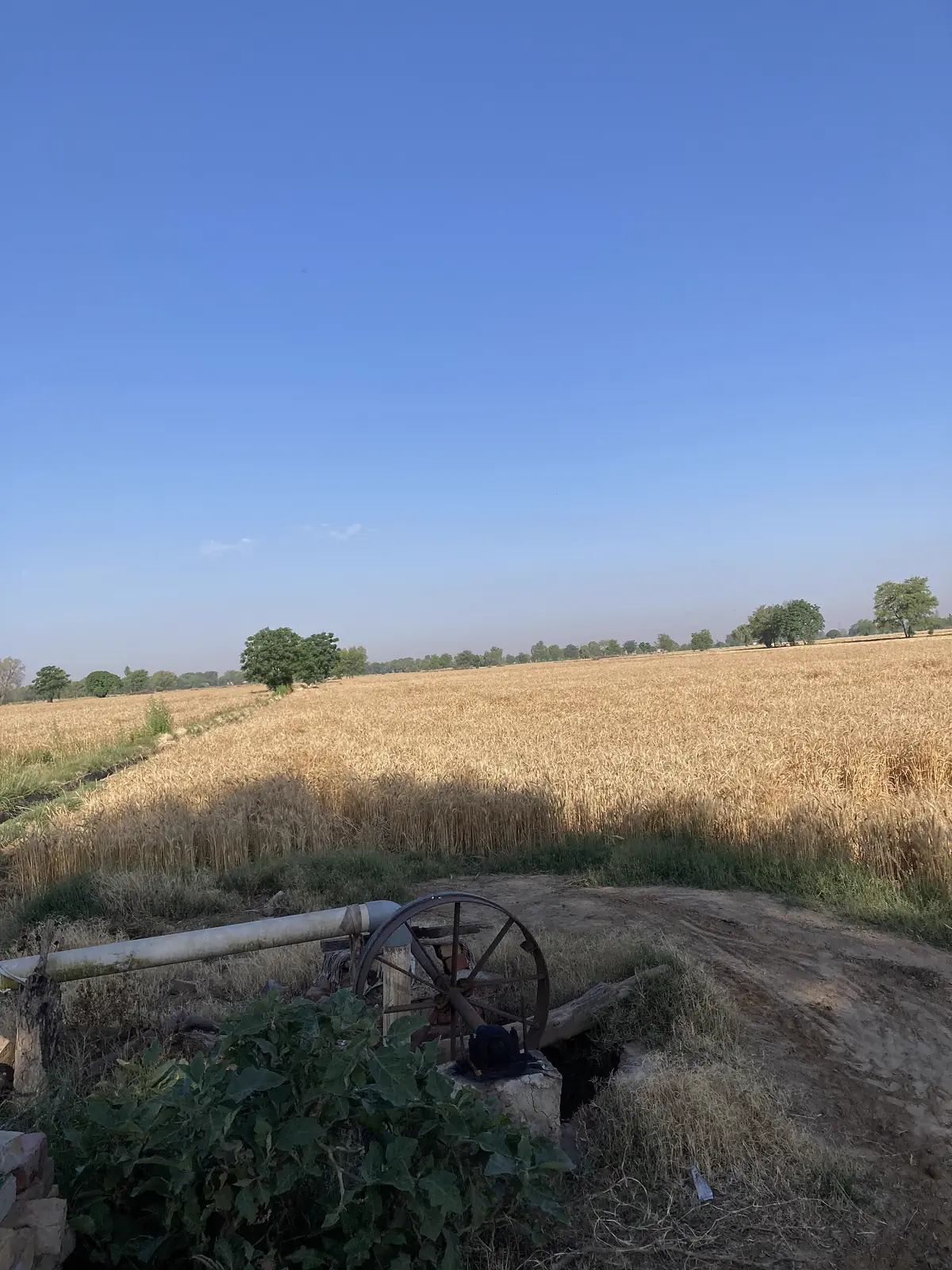
Wheat at harvest — the image Jesus reached for when He said the harvest is plentiful but the workers are few (Matthew 9).Chparveshtaak · CC BY-SA 4.0
My story
I was raised Roman Catholic but never really connected — I went through the motions, fell asleep in the pews, and faked being sick to skip Mass. College was rebellion: parties, drugs, freedom I loved and abused. When real life hit — a lost job, a pregnant wife, constant fights — I went looking for peace anywhere I could find it. New Age, crystals, astral projection, tarot, angel numbers. None of it held. So I swung back hard to religion, said the rosary every night, and still felt nothing. Eventually I gave up and called myself an atheist. I decided to read the Bible for one reason: to disprove it, so I'd have an excuse to stop going to church for good. It did the opposite. Genesis gripped me. In Matthew I read Jesus' own words and felt the weight of my own sin for the first time. I wept at worship music I'd never have been caught listening to. Then one day I got on my knees and prayed: "Jesus, if you are real, show me — and I'll serve you." A warmth ran from the top of my head to the soles of my feet. Peace I'd never known, and it didn't leave. I came to faith in 2022, and my wife came to faith a month later. Today we're raising three kids in a home that was transformed — and I haven't stopped telling people since.
You can watch me tell it at youtube.com/watch?v=FR7cNUiaAqU.
Notes on the example
The "before" has five stages, each a failed answer. Religion without connection; rebellion; New Age, crystals and the rest; religion again; unbelief. Each is told in a sentence or two, with one or two concrete details ("fell asleep in the pews", "said the rosary every night"). No sin is described in a way that makes it attractive. "None of it held" and "still felt nothing" do the work Romans 6:21 does: they show the dead end.
It does not expose anyone. The hard season — "a lost job, a pregnant wife, constant fights" — is named in a few words, without blaming anyone.
The turning comes through Scripture. "Genesis gripped me. In Matthew I read Jesus' own words and felt the weight of my own sin for the first time." This is Romans 10:17 in action: faith came by hearing the word of God. It also shows a sceptic's turning: "I decided to read the Bible for one reason: to disprove it, so I'd have an excuse to stop going to church for good."
The experience is reported as experience. "Felt the weight of my own sin." "A warmth ran from the top of my head to the soles of my feet. Peace I'd never known." These are reports of what happened inside me, told as such. The story does not say what the warmth was. It leaves that with the hearer.
The prayer is quoted exactly. "Jesus, if you are real, show me — and I'll serve you." It is not a model prayer; it is the prayer I actually prayed, and its honesty — "if you are real" — is part of the testimony.
The "after" is concrete and checkable. A date, a wife who came to faith a month later, a home that was transformed, and "I haven't stopped telling people since."
What it leaves for the teller to add. In a written testimony, the text above is complete. When it is told aloud to someone, the natural next step is to turn it toward the hearer and to Christ — to say plainly what the gospel says about sin and about Jesus, and to say that what He did for the teller He offers to the hearer. That is where the four movements finish: before, turning, after, invitation.
Writing your first draft
Now it is your turn. Set aside an hour. Have a Bible, your notes from Part 4, and something to write with.
Step 1: Pray
Ask the Lord, in your own words, to help you remember truly, to keep you from pride and from false shame, and to make your story point to Christ.
Step 2: Write it badly
Using your notes, write the whole story from beginning to end without stopping to fix anything. Do not worry about length. Most first drafts are two or three times too long. That is fine.
Step 3: Find your one sentence
Before editing, write the single sentence that sums up what the Lord has done for you — your version of "whereas I was blind, now I see" (John 9:25). Everything you keep should serve that sentence.
Step 4: Sort the material into four piles
Go through your draft and mark each paragraph: before, turning, after, or invitation. Most people discover that their "before" is far too long and their "turning" too vague. Cut the first; sharpen the second.
Step 5: Check the claims
Read every sentence and ask which kind it is: public fact, your perception, or a claim about what God did. Mark the perceptions with a perception word if they lack one. Ask of every claim about God: is this something Scripture promises, or something I believe He did in my case? If the second, say so.
Step 6: Count the verbs
Underline every active verb whose subject is "I", and every one whose subject is God or Christ. If you are the hero, rewrite.
Step 7: Check the gospel
Does the story make clear, in plain words, that you sinned against a holy God; that Christ died for sinners and rose again; that you were saved by grace and not by your effort; and that the response is repentance and faith? If not, add what is missing in your own words.
Step 8: Check for other people
Remove names and identifying details of anyone who has not agreed to be in your story, and anything that could put anyone at risk.
Step 9: Read it aloud to someone you trust
A mature believer who knows you — ideally someone who knew you before. Ask them three questions: Is it true? Is Christ at the centre? Is anything unclear?
Step 10: Let it rest, then cut
Put it away for a day. Then read it again and cut everything that does not serve your one sentence. A written testimony of 400 to 700 words is plenty for most purposes. The companion paper Share Your Testimony shows how to compress it further into a spoken version of about three minutes.
A worksheet
Use this as a frame for your notes, not a script. Fill in each line in your own words.
My one sentence: ______________________________________
Before - What I believed about God: ______________________________ - What I trusted instead: _________________________________ - Why it failed (one concrete detail): ____________________
The turning - How I heard the gospel: _________________________________ - What I came to understand: ______________________________ - What I did: _____________________________________________ - What I experienced (with a perception word): ____________ - The Scripture that mattered: ____________________________
After - What changed at once: ___________________________________ - What is changing slowly: ________________________________ - What others can see: ____________________________________
The gospel in my words - Sin: ____________________________________________________ - Christ: _________________________________________________ - Grace: __________________________________________________ - Response: _______________________________________________
My invitation (one or two sentences): __________________
People to protect (no names, no identifying details): ______
A Christian testimony is not a performance and not a sales pitch. It is the word of a witness: a truthful report of what the Lord has done for one sinner, told so that the hearer looks past the teller to Christ.
Scripture shows its shape. The man born blind told what happened, admitted what he did not know, refused to change his story, and grew in understanding until he worshipped. The man from the tombs went home and told how great things the Lord had done, and how He had had compassion. Paul told one story many times, keeping the core fixed and choosing from the true things the ones each hearer needed, always ending with Christ and an appeal. The overcomers of Revelation won "by the blood of the Lamb, and by the word of their testimony" (Revelation 12:11) — the blood first, the testimony second.
The church's best testifiers add their wisdom. Augustine told his past so that the despairing would not say "I cannot". Bunyan refused to adorn his story and laid down "the thing as it was". Wesley said what he felt and what he trusted, and admitted the joy he did not feel. Newton made grace the hero. Lewis admitted he was a reluctant convert.
Three marks run through all of them, and they should run through yours: honesty about yourself, care about what you claim, and Christ at the centre.
A next step
Do not finish this paper without writing something. This week:
Work through the questions in Part 4 and write rough answers.
Write your one sentence.
Write a first draft, however rough, using the four movements.
Read it to one believer you trust and ask: Is it true? Is Christ at the centre?
An invitation
If you have read this far and you are not sure you have a testimony — not because your story is ordinary, but because you are not sure you have ever turned to Christ at all — then the most important step is not writing. It is turning. "Repentance toward God, and faith toward our Lord Jesus Christ" (Acts 20:21) is the door, and it is open. In my own story, the prayer was simple: "Jesus, if you are real, show me — and I'll serve you." The Lord to whom I prayed it is the same today: "Jesus Christ the same yesterday, and to day, and for ever" (Hebrews 13:8).
And if you know Him, your story is worth telling. Not because you are remarkable, but because He is.
"Go home to thy friends, and tell them how great things the Lord hath done for thee, and hath had compassion on thee." (Mark 5:19)
1Strong's Concordance, G3144, martys, with King James Version usage counts, Blue Letter Bible, https://www.blueletterbible.org/lexicon/g3144/kjv/tr/0-1/.↩
2Richard Bauckham, Jesus and the Eyewitnesses: The Gospels as Eyewitness Testimony, 2nd ed. (Grand Rapids: Eerdmans, 2017).↩
3John Newton, "Faith's Review and Expectation" ("Amazing grace! (how sweet the sound)"), Olney Hymns (London, 1779), Book 1, Hymn 41. Text online at the Christian Classics Ethereal Library, https://ccel.org/ccel/newton/olneyhymns/olneyhymns.h1_41.html; on the title and numbering, see the Cowper and Newton Museum, https://cowperandnewtonmuseum.org.uk/amazing-grace/.↩
4John Bunyan, Grace Abounding to the Chief of Sinners (1666), preface. Online: https://www.gutenberg.org/ebooks/654.↩
5Augustine, The Confessions of St. Augustine, trans. E. B. Pusey, Book 1, ch. 1. Online: https://www.gutenberg.org/ebooks/3296.↩
6Augustine, Confessions, trans. Pusey, Book 10, ch. 3.↩
7Augustine, Confessions, trans. Pusey, Book 8, ch. 12.↩
11John Bunyan, The Pilgrim's Progress from This World to That Which Is to Come (1678), the House Beautiful. Online: https://www.gutenberg.org/ebooks/131.↩
12John Wesley, The Journal of John Wesley, 24 May 1738. Online: Christian Classics Ethereal Library, https://ccel.org/ccel/wesley/journal.vi.ii.xvi.html.↩
15John Newton, An Authentic Narrative of Some Remarkable and Interesting Particulars in the Life of —— (London: printed by R. Hett for J. Johnson, 1764). Scan of the 1764 second edition: https://archive.org/details/bim_eighteenth-century_an-authentic-narrative-o_newton-john_1764.↩
16Cowper and Newton Museum, "Amazing Grace," https://cowperandnewtonmuseum.org.uk/amazing-grace/.↩
17Newton, "Faith's Review and Expectation," Olney Hymns, Book 1, Hymn 41.↩
18C. S. Lewis, Surprised by Joy: The Shape of My Early Life (London: Geoffrey Bles, 1955), ch. 14.↩
19Lewis, Surprised by Joy, ch. 14 (Dyson and Tolkien) and ch. 15 (Whipsnade).↩
21J. Warner Wallace, Cold-Case Christianity: A Homicide Detective Investigates the Claims of the Gospels (Colorado Springs: David C. Cook, 2013). On his background, see David C Cook, "Cold Case Christianity," https://davidccook.org/?p=25201.↩
Seven people who say they met Jesus. What happened, in their own words.
Seven testimonies from The King Is Coming Show, one a morning — the story as they tell it, the verse the story lands on in the 1611 King James, and the page itself. Then the teaching that explains it. Free.
This is practical teaching, not proof. It's drawn from Scripture and from walking this road myself. If you're still weighing the basics — whether God is real, whether the Bible can be trusted — I'd encourage you to start with the Skeptic resources in the Research Hub before diving in here.