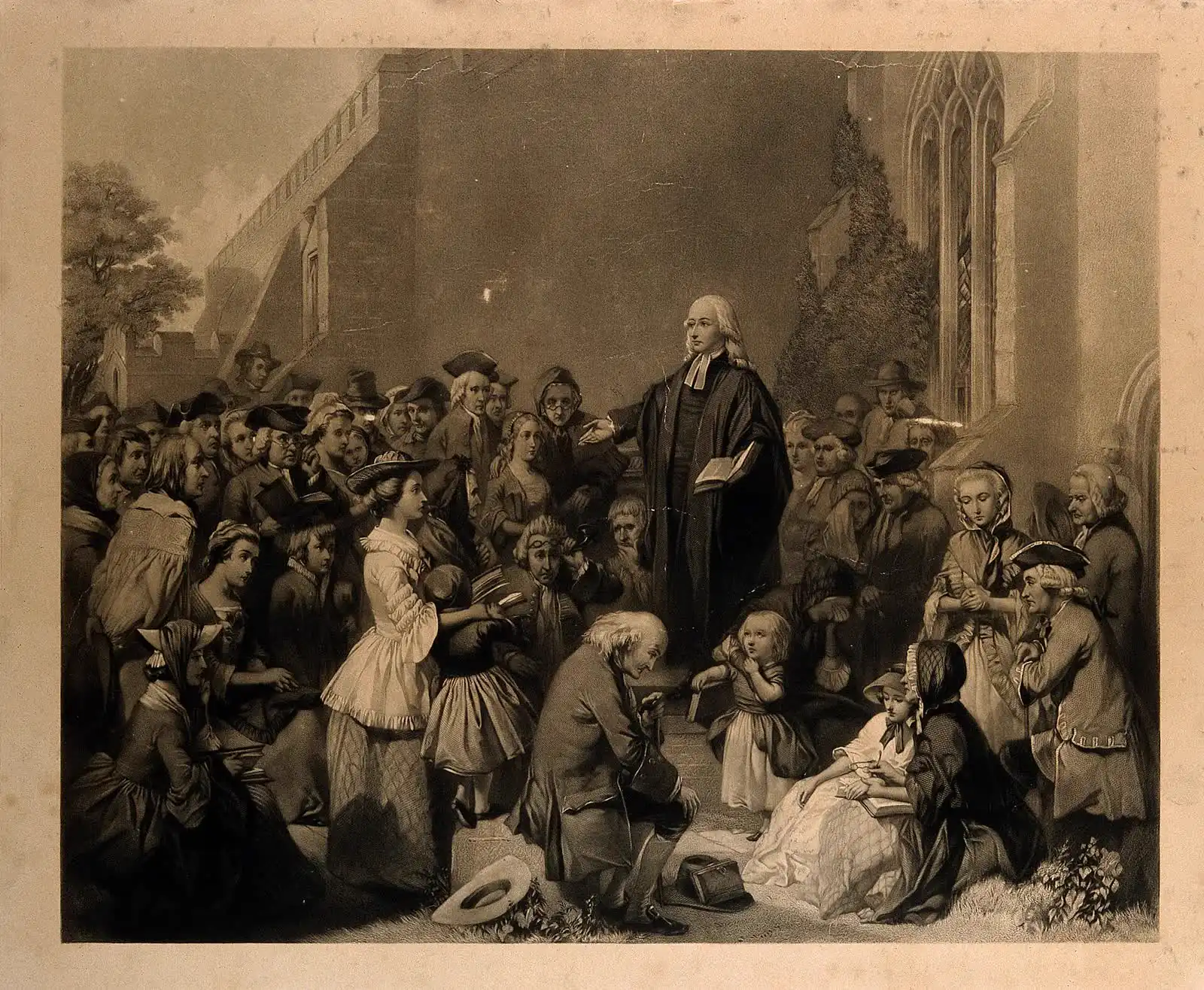
Open-air preaching before a gathered crowd

Disciple · Guide

Wellcome Collection · CC BY 4.0

Back to Research Hub

Share Your Testimony

Read the paper (PDF)·or read it here ↓

HOW TO TELL YOUR STORY ALOUD IN ABOUT THREE MINUTES

A study of the short testimonies in Scripture and a practical method for turning your written story into a spoken one — brief, truthful, centred on Christ, and ready when the door opens.

Abstract

Most opportunities to tell what Christ has done come without warning and last only a few minutes. How can a believer be ready to tell the story well in that time — without reciting a script, without padding, and without claiming more than is true? This paper begins with the short testimonies in the King James Bible: the man born blind's twenty-two words in John 9:25, the commission to the man from the tombs in Mark 5:19, the Samaritan woman's one sentence, and Paul's two defences in Acts 22 and 26, both of them interrupted. It draws on John Bunyan and John Wesley for the spirit of the thing, and then gives a method: measuring your own speaking rate, setting a word budget, cutting to one image per movement, learning the outline rather than the words, handling nerves and questions, and adapting to the setting. A worked example and a four-week practice plan close the paper. It is written for believers who have a story and want to be able to tell it.

What’s inside

  1. Introduction
  2. Part 1: Short Testimonies in Scripture
  3. Part 2: Building a Three-Minute Testimony
  4. Part 3: Cutting to the Bone
  5. Part 4: Learning It Without Reciting
  6. Part 5: Speaking It
  7. Part 6: Settings, Interruptions and Questions
  8. Part 7: A Worked Example and a Practice Plan
  9. Conclusion

Research paper · 9 chapters · 5 notes · October 2026

"And they overcame him by the blood of the Lamb, and by the word of their testimony; and they loved not their lives unto the death." — Revelation 12:11 (KJV)Read in the 1611 →

Read the paper here

About 36 minutes · 9 parts · the PDF has the same text

Introduction

2 min read

The chance to tell someone what Christ has done for you rarely comes with an invitation and a microphone. It comes at a kitchen table, in a break room, in a hospital corridor, in a text that says "Can I ask you something?" It comes when someone notices you have changed and asks why. And it rarely lasts long.

That is why this paper aims at about three minutes. Three minutes is not a biblical number. It is a practical one: long enough to tell the whole story — what you were, what happened, what has changed, and what it means for the listener — and short enough to fit most of the openings God gives. A believer who can tell his story well in three minutes can stretch it to ten when there is time, and shrink it to a sentence when there is not.

What this paper is

This paper is one of a family. Its companion, Craft Your Testimony (Level 1), deals with the foundations: what the Bible means by testimony, how to remember your story truthfully, and how to write a first draft. If you have not yet written your story down, start there. This paper assumes you have a written version, however rough, and shows you how to turn it into a spoken one.

Seven parts follow. Part 1 looks at the short testimonies the Bible records and what their brevity teaches. Part 2 shows how to build a three-minute version, using a word budget based on your own voice. Part 3 is about cutting. Part 4 is about learning the story without reciting it. Part 5 is about speaking it: nerves, voice and emotion. Part 6 deals with different settings, interruptions and questions. Part 7 gives a worked example and a four-week practice plan.

A word about me

Eventually I gave up and called myself an atheist. I decided to read the Bible for one reason: to disprove it, so I'd have an excuse to stop going to church for good. It did the opposite. I came to faith in 2022, and my wife came to faith a month later. Today we're raising three kids in a home that was transformed — and I haven't stopped telling people since. Part 7 uses my own story as the worked example, because it is the one I can use in my own words. You can watch me tell it at youtube.com/watch?v=FR7cNUiaAqU.

A note on Scripture: every verse in this paper is quoted from the King James Bible. You can read it free in the 1611 Reader at kylelauriano.com/library. A KJV with Strong's Concordance is the best study tool most believers will ever need.

Part 1 — Short Testimonies in Scripture

4 min read

This part matters because the Bible's testimonies are short. Not one of them is a forty-minute life story. The Holy Ghost recorded witnesses who said what mattered in very few words, and their economy is the first lesson of this paper.

Twenty-two words

The man born blind, pressed by the Pharisees to denounce Jesus, answered: "Whether he be a sinner or no, I know not: one thing I know, that, whereas I was blind, now I see" (John 9:25). In the King James Bible that is twenty-two words. It contains a before ("I was blind"), an after ("now I see"), an honest limit ("I know not"), and a refusal to be moved ("one thing I know"). It has been quoted for two thousand years.

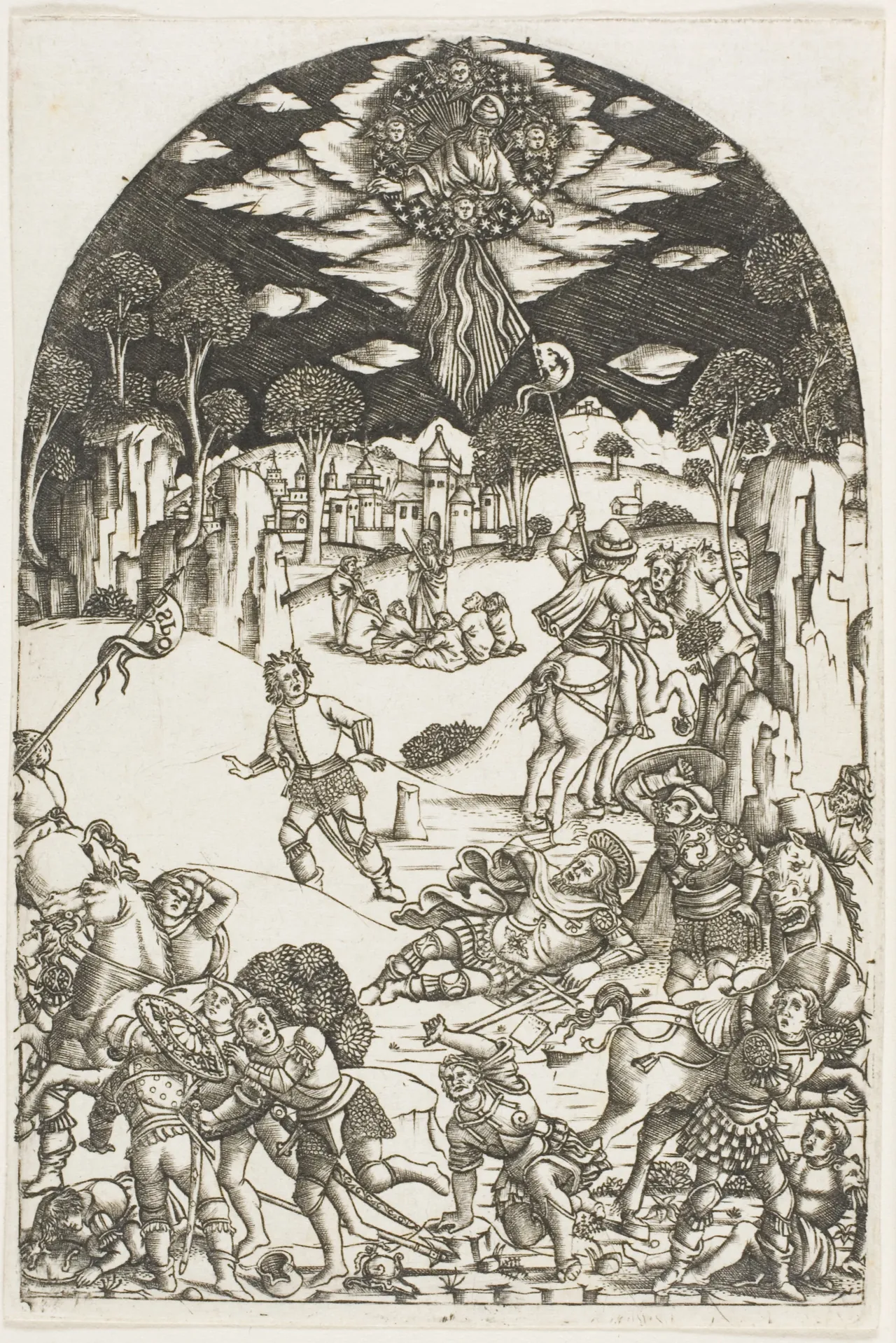
The Conversion of Saint Paul
An Italian engraving of the Conversion of Saint Paul, the light from heaven on the Damascus road, the story Paul made a habit of telling.The Conversion of Saint Paul · n.d. · Art Institute of Chicago · CC0 · museum record · Galeria Regni
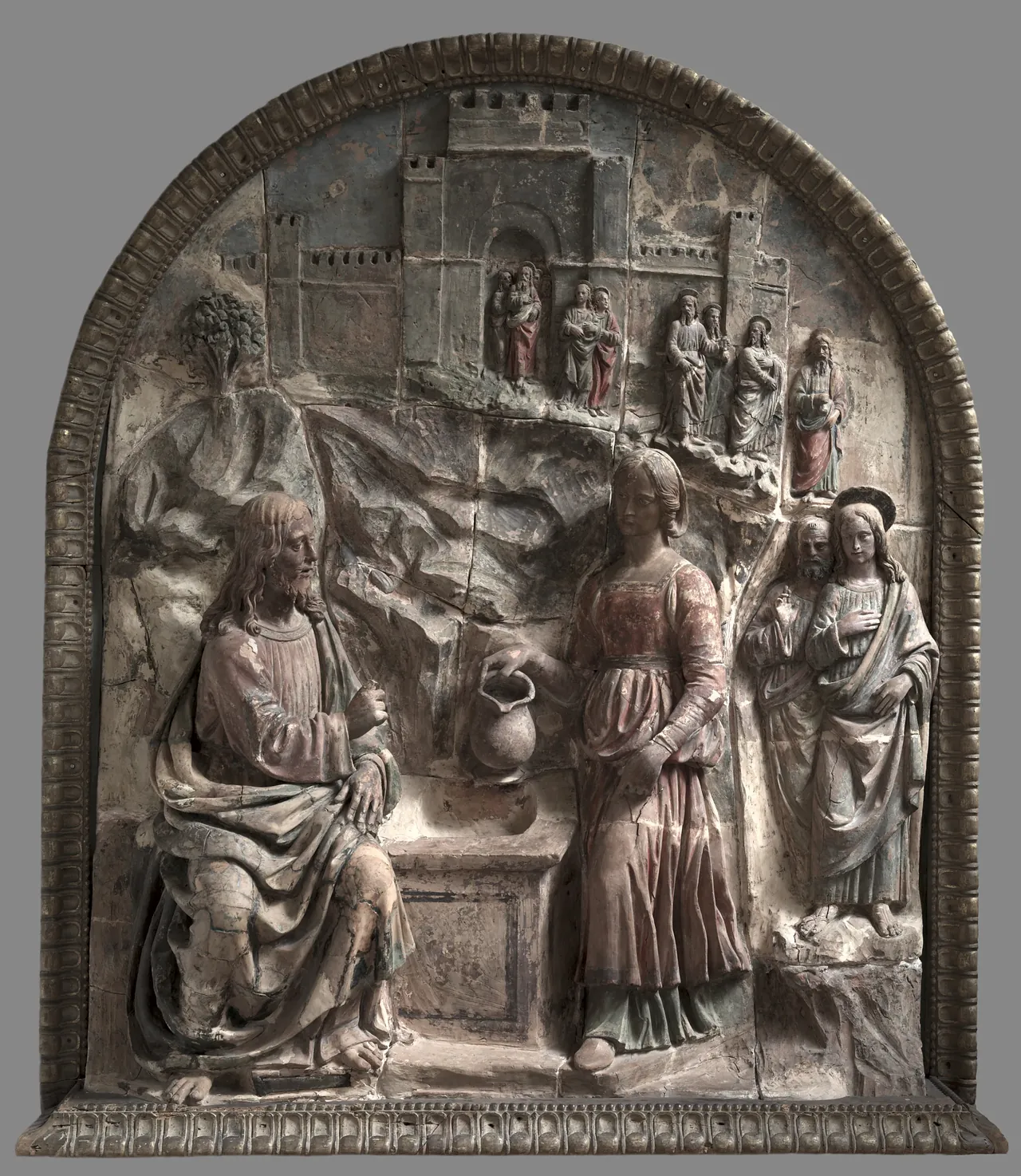
Christ and the Samaritan Woman at the Well
A polychromed terracotta of about 1500 to 1530 by Giovanni della Robbia showing Christ and the Samaritan woman at the well, whose one sentence drew her town to Jesus.Christ and the Samaritan Woman at the Well · c. 1500–1530 · Cleveland Museum of Art · CC0 · museum record · Galeria Regni
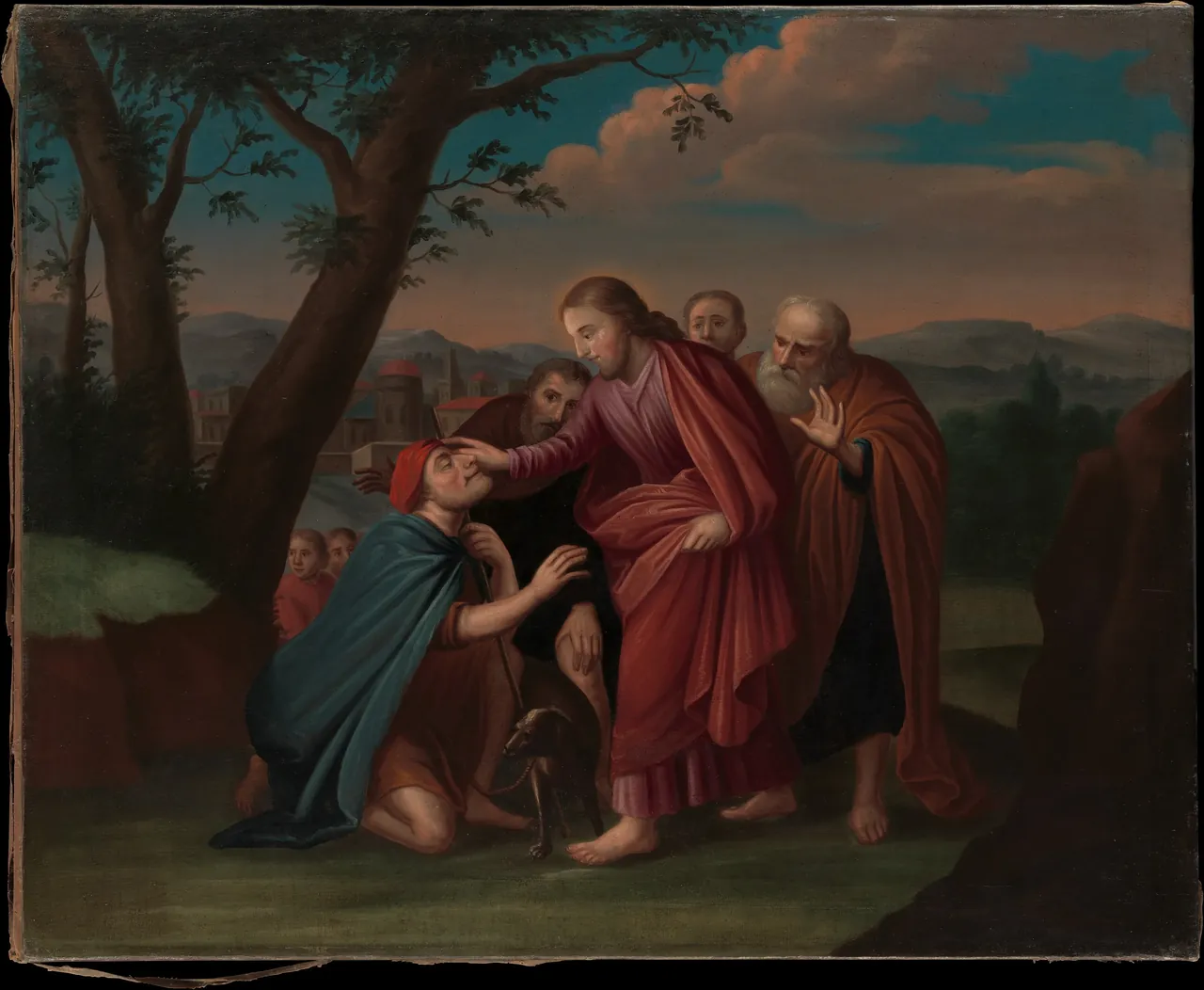
Christ Healing the Blindman
An American oil painting of about 1725 to 1730 showing Christ healing a blind man, whose short testimony began and ended with what he knew.Christ Healing the Blindman · ca. 1725–30 · The Metropolitan Museum of Art · CC0 · museum record · Galeria Regni

A testimony does not need to be long to be complete. It needs to be true and to point the right way.

Twenty-three words of commission

When Jesus sent the man from the tombs home, He gave him the whole content of his testimony in a single sentence: "Go home to thy friends, and tell them how great things the Lord hath done for thee, and hath had compassion on thee" (Mark 5:19). Twenty-three words. The man was not told to explain demonology, recount every night in the tombs, or preach a sermon. He was told to tell what the Lord had done, and that the Lord had been merciful. "And he departed, and began to publish in Decapolis how great things Jesus had done for him: and all men did marvel" (Mark 5:20).

One sentence that emptied a town

The Samaritan woman, after a single conversation with Jesus at a well, "left her waterpot, and went her way into the city, and saith to the men, Come, see a man, which told me all things that ever I did: is not this the Christ?" (John 4:28-29). That is her whole recorded testimony. "And many of the Samaritans of that city believed on him for the saying of the woman" (John 4:39).

Notice what she did. She told one true thing about her experience ("which told me all things that ever I did"). She asked one honest question ("is not this the Christ?"). And she pointed people to Jesus ("Come, see"). Then she got out of the way. Within two days the townspeople were saying, "Now we believe, not because of thy saying: for we have heard him ourselves" (John 4:42). That is the goal of every testimony: that the hearer stops needing yours because he has met the Lord himself.

Paul, interrupted

The two longest testimonies in Acts are Paul's defences in Jerusalem and Caesarea, and both were cut off.

In Jerusalem, Paul told the crowd his story in the Hebrew tongue (Acts 22:1-21). The core of the account — from his upbringing to his baptism, Acts 22:3-16 — runs to under four hundred words in the King James Bible. But when he reached the word "Gentiles", the crowd stopped listening: "And they gave him audience unto this word, and then lifted up their voices, and said, Away with such a fellow from the earth: for it is not fit that he should live" (Acts 22:22).

Before King Agrippa, Paul had a more patient audience. He began graciously — "I think myself happy, king Agrippa, because I shall answer for myself this day before thee" (Acts 26:2) — and told the whole story, through to the gospel itself: "That Christ should suffer, and that he should be the first that should rise from the dead" (Acts 26:23). From his first words to the end of the exchange (Acts 26:2-29) is under seven hundred words. And even there he was interrupted: "Festus said with a loud voice, Paul, thou art beside thyself; much learning doth make thee mad" (Acts 26:24).

Two lessons follow.

Say the most important thing before you are interrupted. Paul reached Christ crucified and risen before Festus broke in. In Jerusalem he had already told the crowd of the risen "Just One" (Acts 22:14) and his own baptism before they stopped him. If you were cut off halfway through, would your hearer have heard the name of Jesus? Would he have heard the cross?

Interruption is not failure. Paul answered Festus calmly — "I am not mad, most noble Festus; but speak forth the words of truth and soberness" (Acts 26:25) — and turned straight back to the king with a question. A testimony is not a speech to be got through. It is a conversation with a person.

Paul's habit

John Bunyan noticed that telling his conversion was Paul's settled practice. In the preface to Grace Abounding, he wrote that it was "Paul's accustomed manner", even "when tried for his life", "to open before his judges the manner of his conversion: he would think of that day, and that hour, in which he first did meet with grace; for he found it supported him."1

That is worth noticing: the testimony supported Paul. Telling it was not only for the hearers. Every time he told it, he remembered what grace had done, and it held him up. The same is true for you. Learning to tell your story well is not only a tool for evangelism. It is a means of remembering, and remembering steadies faith.

The wisdom of few words

Scripture's general counsel on speech points the same way. "In the multitude of words there wanteth not sin: but he that refraineth his lips is wise" (Proverbs 10:19). And: "Seest thou a man that is hasty in his words? there is more hope of a fool than of him" (Proverbs 29:20). Jesus warned against prayers that "think that they shall be heard for their much speaking" (Matthew 6:7), and the same temptation besets testimonies.

And the positive side: "A man hath joy by the answer of his mouth: and a word spoken in due season, how good is it!" (Proverbs 15:23). And: "A word fitly spoken is like apples of gold in pictures of silver" (Proverbs 25:11). A short testimony, well chosen and well timed, is one of those apples of gold.

Part 2 — Building a Three-Minute Testimony

6 min read

This part matters because a spoken testimony is not just a written one read aloud. The ear needs shorter sentences, clearer signposts and fewer details than the eye. This part shows how to build the spoken version from your written draft, starting with a measurement only you can make: how fast you speak.

Measure your own voice

People speak at different speeds, and the same person speaks faster when nervous. Rather than trust a general figure, measure yourself.

1. Choose a passage of narrative Scripture you have not memorised — Acts 22:3-16 works well. 2. Set a timer for one minute. 3. Read aloud at the pace you would use to talk to a friend across a table — not rushed, not performed. 4. When the timer sounds, mark where you stopped and count the words.

That number is your words-per-minute rate. Do it twice and take the average. Multiply by three, and you have your three-minute word budget. Then take off about a tenth, because you will pause, and pauses matter. If you read 140 words in a minute, for example, your budget is about 380 words.

Write the number at the top of your page. It is the most useful number in this paper.

The four movements, budgeted

The companion paper Craft Your Testimony explains the four movements of a testimony, following Paul's speech before Agrippa: before, turning, after, invitation. In a three-minute spoken version, a good balance looks like this:

| Movement | Share of time | What it must do | |---|---|---| | Opening line | about 5% | Tell the listener what kind of story this is | | Before | about 25% | Show what you trusted, and why it failed | | Turning | about 35% | Show how you heard the gospel, what you understood, and what you did | | After | about 25% | Show what has changed, honestly | | Invitation | about 10% | Turn from your story to Christ and to the listener |

The turning gets the most time because it is where the gospel lives. Most first drafts do the opposite: they spend two minutes on the "before", race through the turning, and run out of time before Christ appears. Paul's speeches avoid that. In Acts 26 he gives his "before" in eight verses (Acts 26:4-11) and spends twelve on the light, the voice, the commission, his obedience and the gospel (Acts 26:12-23).

Apply the percentages to your word budget. With a budget of 380 words, you might plan about 20 words for the opening, 95 for the before, 135 for the turning, 95 for the after and 35 for the invitation. These are guides, not laws. But if your "before" is twice as long as your turning, something is wrong.

The opening line

The first sentence tells the listener what is coming and why he should listen. It should be true, short and specific. Some patterns:

  • A sentence that names the change: "I used to think Christians were fools — and then I became one."
  • A sentence that names the question: "People sometimes ask me why I believe, so I'll tell you what happened."
  • A sentence that names the starting point: "I grew up in church, and I didn't know God."

Avoid openings that promise more than the story delivers. If your conversion was quiet, do not open with "You won't believe what happened to me." A sharp opening is fine; a false one is forbidden. The rest of your testimony depends on the hearer trusting you, and he will judge your honesty by the first sentence.

The before, in one picture

In three minutes you have time for one clear picture of your life before Christ — perhaps two. Choose the detail that best shows what you were trusting and why it failed. "I fell asleep in the pews" says more about dead religion than a paragraph of explanation.

Keep it honest without being graphic. Paul's question governs: "What fruit had ye then in those things whereof ye are now ashamed? for the end of those things is death" (Romans 6:21). The point is not what you did, but where it led.

The turning, with the gospel in it

This is the centre. In about a minute and a quarter, the listener should hear:

  • How the gospel reached you. A person, a book, a sermon, the Bible itself. "Faith cometh by hearing, and hearing by the word of God" (Romans 10:17).
  • What you came to understand. Say it in plain words: that you had sinned against a holy God; that Jesus died for sinners and rose again; that you could not earn forgiveness, only receive it.
  • What you did. Repented, believed, prayed, were baptized. Paul: "Whereupon, O king Agrippa, I was not disobedient unto the heavenly vision" (Acts 26:19).

If there was a moment you can name, name it. If there was not, say that it came over time, and say when you knew you trusted Christ. John Wesley's account of the night of 24 May 1738 is a model of plain reporting: "I felt my heart strangely warmed. I felt I did trust in Christ, Christ alone, for salvation."2

The after, honestly

The after shows that the turning was real. Give one or two concrete changes, and be honest that you are still growing. "Not as though I had already attained, either were already perfect: but I follow after" (Philippians 3:12).

There is a test for this movement, and it is not on paper. Bunyan's The Pilgrim's Progress has a character named Talkative, who can discourse on any spiritual subject, but of whom Christian says: "religion hath no place in his heart, or house, or conversation; all he hath lieth in his tongue, and his religion is, to make a noise therewith." The people who know him say he is "A saint abroad, and a devil at home."3 The "after" of your testimony will be checked against your life by everyone who knows you. Make sure it can bear the weight.

The invitation

End by turning from your story to Christ and to the person in front of you. It can be a single sentence. Some honest ways to say it:

  • "What He did for me, He offers to anyone who turns to Him."
  • "I can't make you believe. But I'd be glad to show you where I started reading."
  • "If you ever want to talk about it, I'm here."

Do not end with "So that's my story." End with Him. The companion paper Share Your Story (Level 2) deals with what to do when the conversation keeps going.

A sample outline

Here is a hypothetical outline, built on a 380-word budget, for a person who was raised in church but drifted. It is an illustration only, not a real person's story.

  • Opening (20 words). "I grew up in church. I could recite the prayers. But I didn't know God, and I didn't care to."
  • Before (95 words). Church as habit; leaving at eighteen; living for weekends; the emptiness after a friend's death. One picture: sitting at the funeral unable to pray.
  • Turning (135 words). A coworker who read her Bible at lunch; borrowing it; reading John; John 3:16 understood for the first time; seeing that I had sinned against God, not just broken rules; that Jesus died for exactly that; praying in my car; telling my coworker; being baptized.
  • After (95 words). Reading the Bible daily; returning to church as a believer, not a visitor; forgiveness toward my father; still learning patience.
  • Invitation (35 words). "I spent twenty years near Jesus without knowing Him. If that's you, He hasn't moved. He's still calling."

Part 3 — Cutting to the Bone

4 min read

This part matters because almost every first draft is too long, and the hardest skill in short testimony is choosing what to leave out. Bunyan said he could have "adorned all things" more than he did, "but I dare not".4 The same discipline that keeps a testimony honest keeps it short.

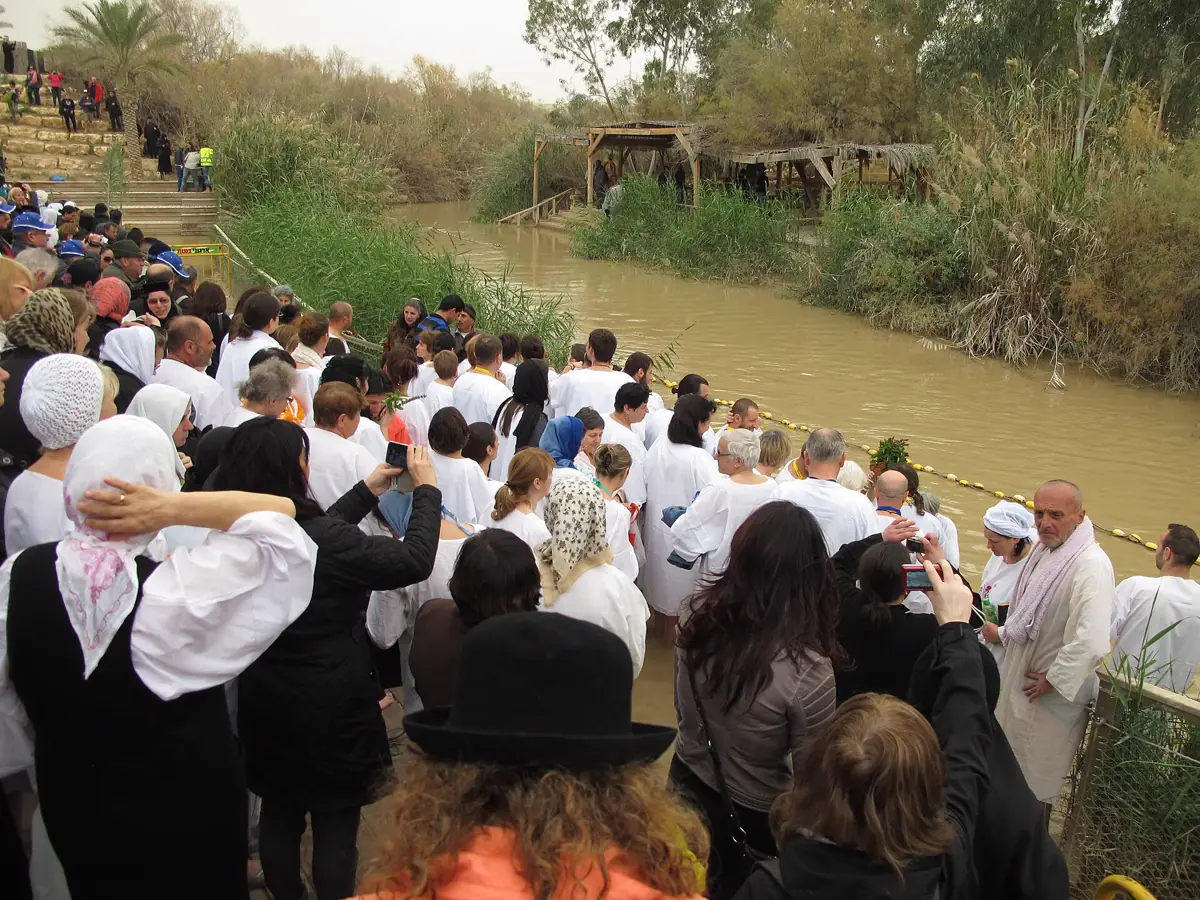
Pilgrims at the Jordan River baptism site of Qasr el-Yahud
The Jordan River at Qasr el-Yahud, the traditional baptism site — pilgrims still go down into the same water.Ratoncito Perez · CC0

What to cut first

Go through your draft with a pen and strike out:

  • Names of other people. In a spoken testimony they slow the story and may expose people who have not consented. "A friend" or "my coworker" is enough.
  • Dates, except one. Keep the date of your conversion if you know it. Cut the rest.
  • Explanations of background. The listener does not need to know which town, which school, which job, unless the story turns on it.
  • Second and third examples. If one detail shows your emptiness, two do not show it twice as well.
  • Detail about sin. Name it honestly; do not describe it.
  • Tangents. Anything that begins "That reminds me..." or "Funnily enough..." can almost always go.
  • Sermons. A testimony is not the place for a theology lecture. Make the gospel plain in your own words, but do not stop the story to preach.
  • Apologies. "I'm not very good at this" and "This probably isn't very interesting" waste time and undercut the story. If God did it, it is interesting.

What never to cut

  • The name of Jesus.
  • What you came to understand about sin and about Christ.
  • What you did in response.
  • One honest picture of before, and one of after.
  • The invitation.

One image per movement

Spoken stories live on images. A listener will forget your summary and remember the picture. So, for each movement, choose one concrete image and let it carry the weight:

  • Before: one thing you did, saw or felt that shows the emptiness.
  • Turning: the place, the words, the page or the prayer.
  • After: one thing that is different now and could be checked.

The man born blind is the master of this. His whole testimony hangs on one image — blind, then seeing — and he never lets it go.

Translate the jargon

Spoken words go past once. If a listener does not understand a word, he has no page to look back at. "Saved", "born again", "under conviction", "accepted the Lord", "the blood", "the Spirit led me" — these are true words, most of them biblical, but to many people they are code. Use them, then say what they mean in the same breath: "I was born again — I mean God gave me a new life, a new heart, things I couldn't have made myself."

The ladder of lengths

Once you have a good three-minute version, you can build every other length from it. Think of it as a ladder.

One sentence (about 10 seconds). Your version of "whereas I was blind, now I see." Mine is the line I use on my site: "I came to disprove God. He met me instead — and I couldn't unsee what time it is." This is for the moment when someone asks a passing question and there is no time for more.

Thirty seconds. One line each for before, turning and after, and an open door: "Can I tell you more some time?" This is for introductions, queues and lifts.

One minute. One picture each for before and after, and the turning in two or three sentences with the gospel in them. This is for a conversation that has room but not much.

Three minutes. The full four movements, as built in Part 2. This is for most planned opportunities: a small group, a baptism, a coffee with a friend who has asked.

Ten minutes. The three-minute version with more of the "turning" — more of how the gospel reached you, what you struggled with, what Scripture meant to you — and more honest detail about the after. This is for a church service or a longer conversation. Resist the temptation to spend the extra seven minutes on the "before".

Each rung down is not a different story. It is the same story with less detail. The core — what you were, what Christ did, what you did, what has changed — stays fixed, just as the core of Paul's three accounts stays fixed in Acts 9, 22 and 26.

A word count check

When you think you are finished, count the words of your three-minute draft and compare it with your budget from Part 2. If you are more than ten per cent over, cut again. Then time it aloud. If you go over three and a half minutes, you will probably go over five when you are nervous and adding details on the spot.

Part 4 — Learning It Without Reciting

3 min read

This part matters because a memorised script sounds memorised. Listeners can tell when a person is reciting, and it makes them wary. But a testimony told with no preparation tends to wander, run long and forget the gospel. The goal is in between: to know the story so well that you can tell it freshly every time.

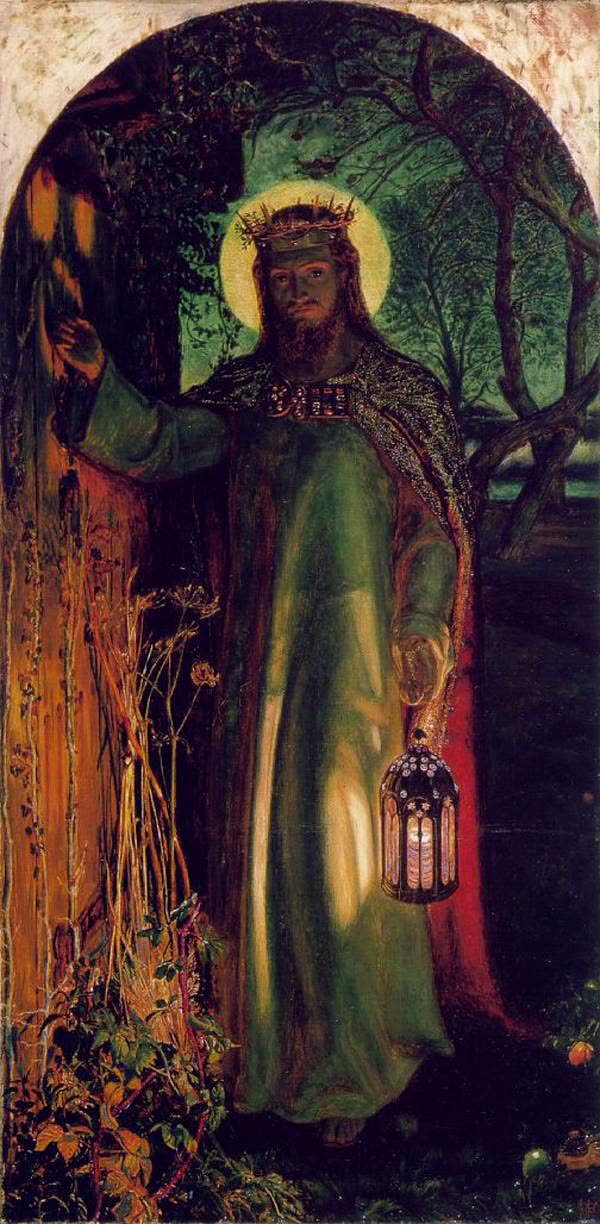
The Light of the World — Christ knocking at a long-shut door
William Holman Hunt’s The Light of the World (1853) — Christ knocking at a door with no outside handle; it only opens from within.William Holman Hunt, 1853 · Public domain

Ready, not rehearsed

Scripture commands readiness: "be ready always to give an answer to every man that asketh you a reason of the hope that is in you with meekness and fear" (1 Peter 3:15). Readiness means preparation.

Some believers point to Jesus' words, "Settle it therefore in your hearts, not to meditate before what ye shall answer: For I will give you a mouth and wisdom, which all your adversaries shall not be able to gainsay nor resist" (Luke 21:14-15), as a reason not to prepare. But read the context: Jesus is speaking of disciples dragged before "synagogues, and into prisons ... before kings and rulers for my name's sake" (Luke 21:12). It is a promise for the persecuted who have no chance to prepare, not a rule against preparing when you can. Paul, who knew that promise, still thought through how to address Agrippa. Prepare, and trust the Lord for the moments preparation cannot reach.

Learn the outline, not the words

Do not memorise your draft word for word. Memorise:

1. Your opening sentence — exactly. It gets you started when your mind goes blank. 2. Your one image for each movement — the picture for before, turning and after. 3. The gospel sentences — the two or three sentences in which you say what you came to understand about sin and Christ. These are too important to improvise; say them the same way each time. 4. Your closing sentence — exactly. It tells you when to stop.

Everything between those anchors you tell in your own words, freshly, each time. That is what makes it sound like a person talking rather than a recording playing.

Anchors on a card

Write the anchors on a small card in a few words each. For example:

  • Open: "I grew up in church..."
  • Before: funeral, couldn't pray
  • Turning: coworker's Bible — John — car — "I sinned against God, Jesus died for that"
  • After: Bible daily — forgave Dad
  • Close: "He hasn't moved."

You will probably never look at the card while you speak. Writing it fixes the order in your mind.

A practice plan

Day 1. Read your draft aloud three times, slowly. Note where you stumble; simplify those sentences.

Day 2. Tell it aloud from the card, without the draft. Time it. Note what you forgot and what you added.

Day 3. Record yourself on your phone, audio only. Listen back once. Ask: Can I hear the four movements? Did I say the name of Jesus? Did I make the gospel plain?

Day 4. Tell it aloud from memory, standing up, as if to a friend. Time it again.

Day 5. Tell it to one person you trust — a spouse, a believing friend, a pastor. Ask them three questions: Was it clear? Was it true to what you know of me? Was Christ at the centre?

Day 6. Make any changes, and tell it once more.

Day 7. Rest. Pray for the people you hope to tell.

After the first week, tell it aloud once or twice a week, and you will keep it. Part 7 gives a fuller four-week plan.

Pray for the door and the words

Paul, an experienced preacher, asked the churches to pray for him in exactly these two things: "praying also for us, that God would open unto us a door of utterance, to speak the mystery of Christ ... That I may make it manifest, as I ought to speak" (Colossians 4:3-4). And again: "that utterance may be given unto me, that I may open my mouth boldly, to make known the mystery of the gospel" (Ephesians 6:19).

Pray for the door: that God would give you opportunities. Pray for the words: that when the door opens, you would speak clearly and boldly. And pray for the hearers, because "God ... hath shined in our hearts, to give the light of the knowledge of the glory of God in the face of Jesus Christ" (2 Corinthians 4:6), and only He can do that for them.

When the moment comes without warning, there is still time to pray. When the Persian king asked Nehemiah what he wanted, Nehemiah wrote: "So I prayed to the God of heaven. And I said unto the king..." (Nehemiah 2:4-5). A silent prayer of one sentence, between the question and the answer, is enough.

Part 5 — Speaking It

4 min read

This part matters because how a story is told affects whether it is heard. None of this is about performance. It is about removing the obstacles — nerves, rushing, mumbling, false emotion — that keep a true story from reaching the listener.

Nerves

If your heart races at the thought of telling your story, you are in good company.

Moses said, "O my LORD, I am not eloquent, neither heretofore, nor since thou hast spoken unto thy servant: but I am slow of speech, and of a slow tongue." The Lord's answer: "Who hath made man's mouth? ... Now therefore go, and I will be with thy mouth, and teach thee what thou shalt say" (Exodus 4:10-12).

Jeremiah said, "Ah, Lord GOD! behold, I cannot speak: for I am a child." The Lord said, "Say not, I am a child ... Be not afraid of their faces: for I am with thee to deliver thee" (Jeremiah 1:6-8).

Paul wrote to the Corinthians, "And I was with you in weakness, and in fear, and in much trembling. And my speech and my preaching was not with enticing words of man's wisdom, but in demonstration of the Spirit and of power: That your faith should not stand in the wisdom of men, but in the power of God" (1 Corinthians 2:3-5). And in Corinth, the Lord spoke to him in a vision: "Be not afraid, but speak, and hold not thy peace: For I am with thee" (Acts 18:9-10).

Fear is not disqualifying. It may even be useful: it keeps you dependent, and it keeps you from showing off. Some practical help:

  • Breathe before you start. One slow breath in and out.
  • Know your first sentence cold. Nerves are worst in the first ten seconds; a sure opening carries you through them.
  • Talk to one person. Even in a group, tell it to one friendly face, then another.
  • Slow down. Nerves speed you up. Deliberately speak more slowly than feels natural.
  • Remember whose story it is. "For we preach not ourselves, but Christ Jesus the Lord" (2 Corinthians 4:5). You are not on trial. He is the subject.

Voice

Pace. Most nervous speakers rush. Your word budget from Part 2 was measured at a calm pace; if you speed up, your three minutes become two and the listener loses the thread. Slow down at the turning and at the gospel sentences.

Pause. A pause after an important sentence lets it land. Pause after your one image of the "before". Pause before you say what you came to understand about Christ. Pause before your invitation. Silence feels long to the speaker and natural to the hearer.

Volume. Speak to be heard by the person farthest from you. In a small room that means a normal conversational voice; in a larger one it means more breath, not more strain.

Plain words. Speak as you would to a friend. Paul before Agrippa did not put on a voice. He said, "I ... speak forth the words of truth and soberness" (Acts 26:25). Truth and soberness is a good description of the right tone.

Eyes and body

Look at people. In a one-on-one conversation, look at the person as you would in any conversation — naturally, not staring. In a group, let your eyes move from person to person. In front of a congregation, pick three or four faces in different parts of the room and speak to each in turn.

Stand or sit still. You do not need to plan gestures; let your hands do what they do when you talk. Avoid pacing, fiddling and gripping a lectern. If you are holding notes, hold them low.

Emotion

Many people cry when they tell their testimony, and many are embarrassed by it. Do not be. Paul reminded the Ephesian elders that "by the space of three years I ceased not to warn every one night and day with tears" (Acts 20:31). Tears are not weakness, and they are not manipulation, if they are real.

The rule is the same as for every other part of a testimony: tell the truth. Let real emotion show, and pause if you need to. If tears come, stop, breathe, and carry on: "Sorry — it still gets me." Listeners do not mind. They usually lean in.

But never manufacture emotion. Do not raise your voice, slow to a whisper or tremble for effect. A listener who catches you performing once will not trust anything else you say. "Let the words of my mouth, and the meditation of my heart, be acceptable in thy sight, O LORD" (Psalm 19:14).

Speak to please God

Paul set the standard for every Christian speaker: "But as we were allowed of God to be put in trust with the gospel, even so we speak; not as pleasing men, but God, which trieth our hearts" (1 Thessalonians 2:4). If you aim to impress your listeners, you will add drama, inflate details and leave out the parts that might offend. If you aim to please God, you will tell the truth, point to Christ and leave the result with Him.

Part 6 — Settings, Interruptions and Questions

7 min read

This part matters because the same story has to work in very different rooms. Paul's Acts 22 and Acts 26 are the same story told to a mob and to a king, and he shaped each telling for its hearers without changing a single fact. "I am made all things to all men, that I might by all means save some" (1 Corinthians 9:22). This part shows how to do the same.

In a church service

You may be asked to share at a baptism, a members' meeting or a Sunday service.

  • Ask how long you have. Then keep to it. Overrunning is a discourtesy to the pastor and the congregation.
  • Know your audience. Most will be believers. Your testimony will encourage them and may reach visitors. Do not assume everyone present is saved.
  • Write it out and show it to your pastor beforehand. This is good order, not censorship. He may catch something unclear or something that would expose another person.
  • Use the ten-minute rung only if asked. Three minutes, told well, is usually better.
  • At a baptism, end with the baptism. Your testimony explains why you are about to obey Christ in this way. "Repent, and be baptized every one of you in the name of Jesus Christ for the remission of sins, and ye shall receive the gift of the Holy Ghost" (Acts 2:38).

In a small group

A small group is the easiest place to practise and the best place to receive honest feedback. Tell the three-minute version, then invite questions. Ask the group to tell you what was clear and what was not.

One to one

Most testimonies are told across a table, and the three-minute version will often come out in pieces, as part of a conversation. That is fine. Listen first: "let every man be swift to hear, slow to speak, slow to wrath" (James 1:19). Answer the question that was asked. Use the one-minute rung, and let the other person ask for more.

Watch for signs that the person wants to keep going — questions, leaning in, "What happened then?" — and signs that he does not — looking away, changing the subject. When the rich young ruler went away grieved, Jesus loved him and let him go (Mark 10:21-22). Respect a closed door. You can always say, "If you ever want to hear the rest, ask me."

At work

Paul's counsel is the right one: "Walk in wisdom toward them that are without, redeeming the time. Let your speech be alway with grace, seasoned with salt, that ye may know how ye ought to answer every man" (Colossians 4:5-6).

  • Do not use paid time for a sermon. Breaks, lunches and after-work conversations are better.
  • Let your work speak first. "In all things shewing thyself a pattern of good works ... Sound speech, that cannot be condemned; that he that is of the contrary part may be ashamed, having no evil thing to say of you" (Titus 2:7-8).
  • When someone asks, answer — briefly and gladly. The thirty-second and one-minute rungs are made for the workplace.

On camera

A recorded testimony is a different medium, with its own rules: no interruptions, no questions, a viewer who can leave at any second. The companion paper Testimony Video covers recording, editing and publishing in detail. Two points belong here. First, the three-minute structure works very well on video. Second, everything you say on camera is permanent and public, so check every claim twice, and leave out every detail that could identify or endanger anyone else.

When you are interrupted

You will be. Someone will laugh, object, change the subject or ask a question halfway through. Paul's example in Acts 26 is the guide.

  • Stay calm. Paul answered Festus without heat: "I am not mad, most noble Festus" (Acts 26:25).
  • Answer briefly, then return. Paul answered in one sentence and turned back to Agrippa.
  • If you lose the thread, go to the next anchor. You do not need to finish every sentence. Jump to your next image, or straight to the gospel sentences.
  • If the moment is gone, end with the door open. "I'd love to finish that story some time."

"A soft answer turneth away wrath: but grievous words stir up anger" (Proverbs 15:1).

Questions people ask

When you finish, there will often be questions. Here are some of the common ones and honest ways to answer them. The governing rule is Peter's: answer "with meekness and fear; Having a good conscience" (1 Peter 3:15-16). And Paul's: "the servant of the Lord must not strive; but be gentle unto all men, apt to teach, patient, In meekness instructing those that oppose themselves" (2 Timothy 2:24-25).

"How do you know it wasn't just emotion?"

This is the question that tests whether you have told your story honestly. If you have reported your experience as experience — "I felt", "I sensed" — you can answer without retreating: "I can only tell you what I experienced. What I can tell you is that it didn't fade, and my life has changed. But my faith doesn't rest on a feeling. It rests on what happened to Jesus — that He died and rose again. That's the thing worth looking into." Then point to the evidence for the resurrection, which the companion paper Share Your Story (Level 2) discusses.

"Isn't that just your experience? It might be true for you, but not for me."

Agree with the first half and gently correct the second. "My experience is mine, you're right. You don't have to take my word for what I felt. But whether Jesus rose from the dead isn't a matter of my experience or yours. Either He did or He didn't, and if He did, it matters for both of us." Do not let a testimony slide into "my truth". Your experience is personal; the gospel is not. "Neither is there salvation in any other: for there is none other name under heaven given among men, whereby we must be saved" (Acts 4:12).

"Did God really speak to you?" / "Did you really hear a voice?"

Answer exactly as carefully as you told it. If you heard words, say what you heard and that you believe it was the Lord, and why. If you mean you sensed something, say so. Never upgrade your account under pressure in either direction — neither inflating it to win the argument nor shrinking it to avoid embarrassment. The man born blind would not be pushed: "one thing I know" (John 9:25).

Many testimonies include experiences like this, and the honest way to tell them is in the teller's own words, as the teller's account. On my show, The King Is Coming Show, guests tell such stories in exactly that way:

Bria Isaac told her story on The King Is Coming Show (TKIC #53): she said she was going to take it to her grave — and then, in her telling, she heard a voice. Watch it in her own words: youtube.com/watch?v=Uk-02EJ6FD0 Bria's account of what happened to her, shared as her testimony — weigh it for yourself.

Notice how the episode title itself is built: "I said, I'm going to take it to my grave — then I heard this voice." It reports what she said and what she heard, in her own first person. That is the right way to tell such a story, and the right way to answer questions about it.

"Why should I believe you?"

"You shouldn't believe me just because I said it. Look into it yourself. Read the Gospel of John and ask God, if He's there, to show you." That is what the Samaritans did: "Now we believe, not because of thy saying: for we have heard him ourselves" (John 4:42).

"What about all the hypocrites in the church?"

"There are plenty, and I've been one. That's why I need a Saviour too." Do not defend bad behaviour, and do not get drawn into a debate about other people. Bring it back to Christ.

"I don't know" is an answer.

If someone asks something you cannot answer, say so. "I don't know, but I'd like to find out. Can I get back to you?" Then do. The man born blind said "I know not" twice (John 9:12, 25) and lost nothing by it.

If your story is quiet

Some believers worry that a three-minute testimony only works for dramatic conversions. It does not. A quiet story — raised by believing parents, trusting Christ as a child, a slow coming to faith — told honestly, has a power of its own, because most of your hearers' lives are quiet too.

Wesley's journal is a help here. Almost as soon as he believed, he wrote, "the enemy suggested, 'This cannot be faith; for where is thy joy?'" He came to understand that the "transports of joy" that sometimes come at the beginning are something "God sometimes giveth, sometimes withholdeth".5 If your story lacks fireworks, do not add them. Tell what is true: what you trusted, what you came to understand, and what has changed.
Part 7 — A Worked Example and a Practice Plan

5 min read

This part matters because it is easier to learn a method by watching it applied. Below is my own story, in my own words, mapped onto the four movements, with the anchors I would carry in my head. Then comes a four-week plan for preparing your own.

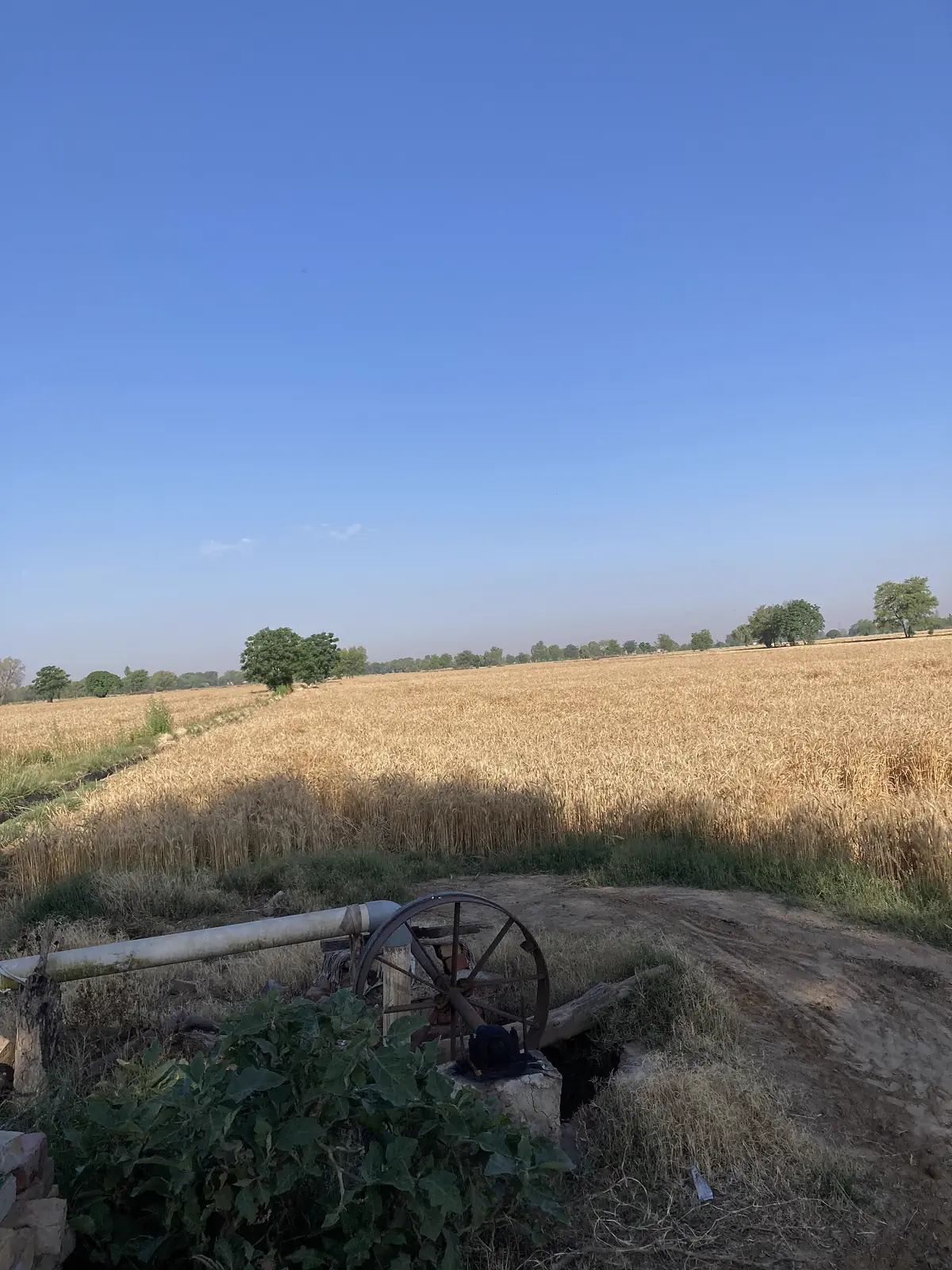
A wheat field at harvest time
Wheat at harvest — the image Jesus reached for when He said the harvest is plentiful but the workers are few (Matthew 9).Chparveshtaak · CC BY-SA 4.0

My story, mapped

My written testimony is 234 words. Here it is, divided into the movements of Part 2.

Before

I was raised Roman Catholic but never really connected — I went through the motions, fell asleep in the pews, and faked being sick to skip Mass. College was rebellion: parties, drugs, freedom I loved and abused. When real life hit — a lost job, a pregnant wife, constant fights — I went looking for peace anywhere I could find it. New Age, crystals, astral projection, tarot, angel numbers. None of it held. So I swung back hard to religion, said the rosary every night, and still felt nothing. Eventually I gave up and called myself an atheist. I decided to read the Bible for one reason: to disprove it, so I'd have an excuse to stop going to church for good.

Turning

It did the opposite. Genesis gripped me. In Matthew I read Jesus' own words and felt the weight of my own sin for the first time. I wept at worship music I'd never have been caught listening to. Then one day I got on my knees and prayed: "Jesus, if you are real, show me — and I'll serve you." A warmth ran from the top of my head to the soles of my feet. Peace I'd never known, and it didn't leave.

After

I came to faith in 2022, and my wife came to faith a month later. Today we're raising three kids in a home that was transformed — and I haven't stopped telling people since.

What the map shows

The "before" is the longest movement. In my written version, the before is about half the words. That works on the page, where a reader can take it in at his own pace. But for a spoken three-minute version I would rebalance it, giving more time to the turning and less to the list of failed answers. One image per stage is enough: the pews, the crystals, the rosary, the decision to disprove the Bible.

The turning comes through Scripture. Genesis, then Matthew, then the weight of sin. That is the place to slow down when speaking it, and the place where, in a spoken version, the gospel sentences belong: saying plainly what I came to see in Jesus' words about sin and about Him.

The experience is reported as experience. "Felt the weight of my own sin." "A warmth ran from the top of my head to the soles of my feet. Peace I'd never known." Those sentences say what happened inside me, and they say no more. If someone asks "What was the warmth?" I can answer honestly, because I never claimed to know more than I do.

The prayer is an anchor. It is quoted exactly, and it is the one sentence I would never paraphrase. Its honesty — "if you are real" — is part of the testimony.

The after is short and concrete. Two sentences: the year and my wife, then three kids and a home transformed. In a spoken version, the invitation follows directly.

My anchors

If I were telling this in three minutes, these are the five anchors I would carry:

1. Open: "I came to disprove God. He met me instead — and I couldn't unsee what time it is." 2. Before: asleep in the pews — crystals and tarot — the rosary and nothing — atheist. 3. Turning: reading to disprove it — Genesis — Matthew, the weight of sin — the prayer, exactly — warmth and peace. 4. After: "I came to faith in 2022, and my wife came to faith a month later." 5. Close: turn to the listener and to Christ.

Your four weeks

Here is a plan for going from a written draft to a ready spoken testimony in a month. It assumes about fifteen minutes a day.

Week 1 — Measure and cut. - Day 1: Measure your speaking rate (Part 2). Write your word budget at the top of your draft. - Day 2: Divide your draft into the four movements. Count the words in each. - Day 3: Cut the "before" to its budget. One image. - Day 4: Rewrite the turning so that it includes how you heard, what you understood about sin and Christ, and what you did. - Day 5: Cut the "after" to one or two concrete changes. Write the invitation. - Day 6: Write your opening sentence and your one sentence (the ten-second rung). - Day 7: Rest. Pray for the people you hope to tell.

Week 2 — Learn it. - Day 1: Make your anchor card. - Days 2–4: Tell it aloud from the card once a day. Time it. - Day 5: Record it, audio only. Listen once. Check: four movements, the name of Jesus, the gospel, the invitation. - Day 6: Tell it from memory, standing up. - Day 7: Rest.

Week 3 — Tell it to people who love you. - Tell it to a believing friend, your spouse, or your pastor. Ask: Was it clear? Was it true to what you know of me? Was Christ at the centre? - Make changes. - Practise the thirty-second and one-minute rungs. - Tell it in a small group if you have one.

Week 4 — Pray for the door. - Each day, pray Colossians 4:3-4 for yourself: for a door, and for the words. - Write down the names of three people you would like to tell. - When the door opens, walk through it.

A last checklist

Before you tell your story, check:

  • My opening sentence is true and short.
  • My "before" has one honest picture, and no glorifying of sin.
  • My turning says how I heard the gospel, what I understood about sin and Christ, and what I did.
  • My experiences are told as experiences, with words like I felt and I believe.
  • I claim nothing about God's action that I cannot stand behind.
  • My "after" is honest about the ongoing fight.
  • The name of Jesus comes early enough that an interruption would not lose it.
  • No one is named or identifiable without consent.
  • My invitation turns to Christ, not to me.
  • I can tell it in three minutes at a calm pace.

Conclusion

1 min read

The Bible's testimonies are short. The man born blind needed twenty-two words. The man from the tombs was given his whole message in one sentence: tell them "how great things the Lord hath done for thee, and hath had compassion on thee" (Mark 5:19). The Samaritan woman said one true thing, asked one honest question, and pointed her town to Jesus. Paul, interrupted twice, made sure his hearers heard of Christ crucified and risen before the crowd or the governor cut him off.

A three-minute testimony follows their example. It is built from your written story with a word budget measured in your own voice. It gives the most time to the turning, where the gospel lives. It cuts every detail that does not serve one picture per movement. It is learned as an outline, not recited as a script. It is told slowly, plainly and truthfully, with real emotion and no performed emotion, reporting experience as experience and the gospel as truth. And it ends by turning the listener toward Christ.

Bunyan said Paul's testimony "supported him". Yours will support you too. Every time you tell it, you remember what grace has done.

A next step

This week: measure your speaking rate, write your word budget at the top of your draft, and cut your "before" to one picture. Next week: make your anchor card. By the end of the month: tell it to one person.

An invitation

If you are reading this and you have no story to tell because you have never turned to Christ, the story can begin today. "Repentance toward God, and faith toward our Lord Jesus Christ" (Acts 20:21) is the door. My own prayer was short: "Jesus, if you are real, show me — and I'll serve you." He hears short prayers. "For whosoever shall call upon the name of the Lord shall be saved" (Romans 10:13).

"I believed, therefore have I spoken." (Psalm 116:10)

Notes and sources

  1. 1John Bunyan, Grace Abounding to the Chief of Sinners (1666), preface. Online: https://www.gutenberg.org/ebooks/654. ↩
  2. 2John Wesley, The Journal of John Wesley, 24 May 1738. Online: Christian Classics Ethereal Library, https://ccel.org/ccel/wesley/journal.vi.ii.xvi.html. ↩
  3. 3John Bunyan, The Pilgrim's Progress from This World to That Which Is to Come (1678), the episode of Talkative. Online: https://www.gutenberg.org/ebooks/131. ↩
  4. 4Bunyan, Grace Abounding, preface. ↩
  5. 5Wesley, Journal, 24 May 1738. ↩

Bring your questions on sharing your testimony to the Scripture Desk →

The Last Judgement, John Martin, 1853

Keep reading · Seven mornings by email

Seven people who say they met Jesus. What happened, in their own words.

Seven testimonies from The King Is Coming Show, one a morning — the story as they tell it, the verse the story lands on in the 1611 King James, and the page itself. Then the teaching that explains it. Free.

Start the seven days

Free. One a morning. Unsubscribe with one tap.

Where I'm honest with you

This is practical teaching, not proof. It's drawn from Scripture and from walking this road myself. If you're still weighing the basics — whether God is real, whether the Bible can be trusted — I'd encourage you to start with the Skeptic resources in the Research Hub before diving in here.

"And they overcame him by the blood of the Lamb, and by the word of their testimony; and they loved not their lives unto the death." — Revelation 12:11 (KJV)