How to write Bible studies, lessons and courses that are faithful to Scripture, clear to the learner and simple enough for others to teach.
Abstract
Most churches and ministries eventually need their own teaching materials: a study for new believers, a course for a small group, a guide a mentor can use one-to-one. How should such materials be written? This paper answers from the King James Bible first, which commands that God's words be taught diligently, read distinctly with the sense given, set out in order and committed to faithful men who can teach others. It then draws on the church's long experience of writing instruction, from the Didache and Augustine's handbook for catechists to Luther's Small Catechism, the Westminster Shorter Catechism and Richard Baxter's household teaching, and on well-established findings in the science of learning on testing and spacing. It argues that good materials put Scripture at the centre, serve the teacher rather than replace him, aim at obedience rather than information, and are tested before they are shared. Practical chapters cover planning a course, writing a Bible study, lesson and discussion templates, clarity and accessibility, copyright, theological review and distribution. It is for pastors, group leaders, mentors and anyone asked to "write something".
What’s inside
·Introduction
Part 1Part 1: Why Write Discipleship Materials? The Biblical Warrant
Part 2Part 2: What the Church Has Learned: A Short History of Teaching Materials
Part 3Part 3: Foundations: Theology Before Design
Part 4Part 4: Planning a Course: Learners, Outcomes and Sequence
Part 5Part 5: Writing the Study, the Lesson and the Leader Notes
Part 6Part 6: Making It Clear, Accessible and Honest
Part 7Part 7: Testing, Reviewing and Sharing
·Conclusion
Research paper · 9 chapters · 16 notes · October 2026
"Study to shew thyself approved unto God, a workman that needeth not to be ashamed, rightly dividing the word of truth." — 2 Timothy 2:15 (KJV)Read in the 1611 →
About 36 minutes · 9 parts · the PDF has the same text
Introduction
2 min read
Sooner or later, someone who teaches the Bible is asked to write something down. A pastor needs a study for new members. A small-group leader wants questions that go deeper than "What did you think?". A mentor wants a simple path for walking a new believer through the basics. A ministry wants a course that others can pick up and teach without the author in the room.
That is a serious task. James warned, "My brethren, be not many masters, knowing that we shall receive the greater condemnation" (James 3:1). Teaching material multiplies a teacher's words. If they are faithful, it multiplies the faithfulness. If they are careless, it multiplies the carelessness — into rooms the author will never see.
What this paper is
This is a study of how to write discipleship materials well. It argues from the King James Bible first: what Scripture itself says about teaching God's word, in what order, to whom, and for what end. It then gathers what the church has learned over two thousand years of writing instruction for believers, quoting the sources themselves. Where modern research on learning helps, it gives the studies by name. Every outside source is footnoted.
Part 1 sets out the biblical warrant. Part 2 is a short history of Christian teaching materials and what they teach us. Part 3 lays the theological foundations. Parts 4 and 5 are practical: planning a course, then writing a Bible study and building lessons, discussion guides and leader notes. Part 6 covers clarity, accessibility and copyright. Part 7 covers review, testing and sharing. A conclusion follows.
What it will not do
It will not teach you to build a brand. Design matters, and Part 6 says how, but a beautiful study with thin Scripture is a decorated empty plate. Nor will it give you a curriculum to copy. It will give you the principles and tools to write one that fits your people.
A word about me
I was raised Roman Catholic but never really connected — I went through the motions, fell asleep in the pews, and faked being sick to skip Mass. Eventually I gave up and called myself an atheist. I decided to read the Bible for one reason: to disprove it, so I'd have an excuse to stop going to church for good. It did the opposite. I came to faith in 2022, and my wife came to faith a month later. The rest of my story is at kylelauriano.com/about.
I mention it because every material we write should send people back to that book, not stand in front of it.
A note on Scripture: every verse in this paper is quoted from the King James Bible. You can read it free in the 1611 Reader at kylelauriano.com/library, and a KJV with Strong's Concordance is the best study tool most believers will ever own.
Part 1 — Why Write Discipleship Materials? The Biblical Warrant
4 min read
This part matters because writing teaching material is not a modern marketing idea. Scripture itself commands that God's word be taught, explained, ordered and passed on. Knowing the warrant keeps us from treating materials as products and reminds us what they are for.
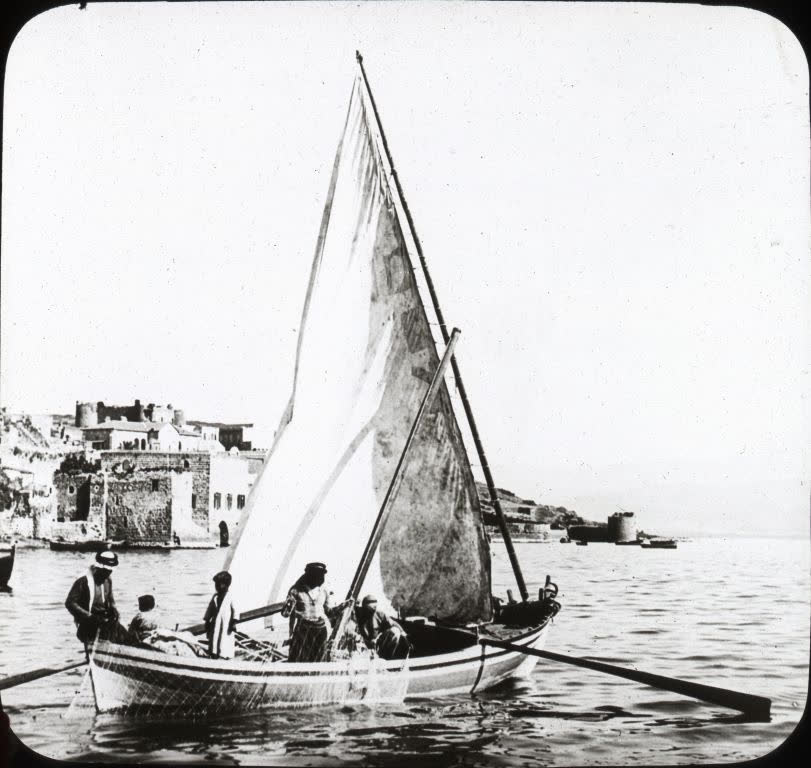
The slopes above the Sea of Galilee at the traditional Mount of Beatitudes — the natural amphitheater where the Sermon on the Mount was preached.Obendorf · CC0
Teach them diligently
Moses gave Israel a pattern of teaching that runs through every ordinary hour: "And these words, which I command thee this day, shall be in thine heart: And thou shalt teach them diligently unto thy children, and shalt talk of them when thou sittest in thine house, and when thou walkest by the way, and when thou liest down, and when thou risest up. And thou shalt bind them for a sign upon thine hand, and they shall be as frontlets between thine eyes. And thou shalt write them upon the posts of thy house, and on thy gates" (Deuteronomy 6:6-9).
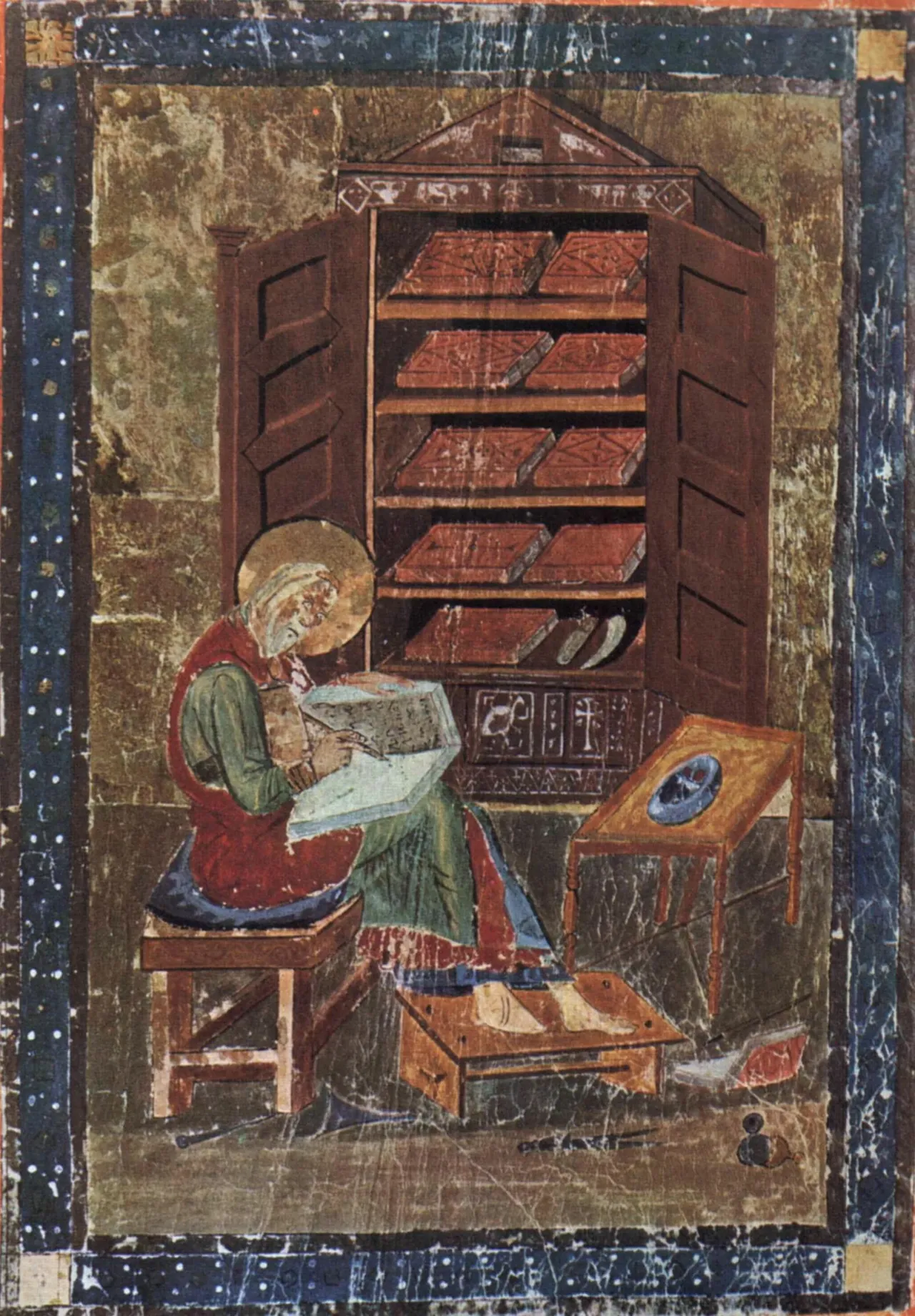
Folio 5r of the Codex Amiatinus, showing Ezra the scribe at work before a cupboard of books, the teacher who prepared his heart to seek, do and teach the law.Codex Amiatinus, folio 5r: Ezra · Wikimedia Commons · Public domain · museum record · Galeria Regni
Notice three things. The words must be in the teacher's heart first. The teaching is diligent and repeated, in every setting of life. And the words are written down, placed where they will be seen. Written aids to teaching are as old as the law.
The psalmist describes the goal across generations: "That the generation to come might know them, even the children which should be born; who should arise and declare them to their children: That they might set their hope in God, and not forget the works of God, but keep his commandments" (Psalm 78:6-7). The aim is not information. It is hope in God, memory of His works, and obedience.
Give the sense
When the exiles returned to Jerusalem, Ezra and the Levites gathered the people and read the law to them. "So they read in the book in the law of God distinctly, and gave the sense, and caused them to understand the reading" (Nehemiah 8:8). Three steps: read it distinctly, give the sense, cause them to understand. That is still the best summary of what a Bible study should do.
Ezra himself is the model teacher: "For Ezra had prepared his heart to seek the law of the LORD, and to do it, and to teach in Israel statutes and judgments" (Ezra 7:10). The order matters. Seek it, do it, then teach it. A writer who has not first studied and obeyed the passage has nothing to give.
Set it forth in order
Luke explains why he wrote his Gospel: "It seemed good to me also, having had perfect understanding of all things from the very first, to write unto thee in order, most excellent Theophilus, That thou mightest know the certainty of those things, wherein thou hast been instructed" (Luke 1:3-4). Theophilus had already been taught. Luke wrote an ordered account so that he would be certain. Order serves certainty. A good course does not scatter truths at random; it arranges them so that each builds on what came before.
Teaching them to observe
The Great Commission defines the aim of all discipleship teaching: "Go ye therefore, and teach all nations, baptizing them in the name of the Father, and of the Son, and of the Holy Ghost: Teaching them to observe all things whatsoever I have commanded you" (Matthew 28:19-20). Not "teaching them all things", but "teaching them to observe all things". The goal is obedience. James puts it bluntly: "But be ye doers of the word, and not hearers only, deceiving your own selves" (James 1:22). And the Lord: "Therefore whosoever heareth these sayings of mine, and doeth them, I will liken him unto a wise man, which built his house upon a rock" (Matthew 7:24).
That one phrase should shape everything you write. Every lesson should ask not only "What does this mean?" but "What will you do?"
Commit them to faithful men
Paul gave Timothy a plan for multiplication: "And the things that thou hast heard of me among many witnesses, the same commit thou to faithful men, who shall be able to teach others also" (2 Timothy 2:2). Materials serve that chain. A good study is one that a faithful believer, not the author, can take and teach to others. If only the writer can teach it, it is a sermon, not a discipleship material.
A curriculum in Scripture
Hebrews contains something close to a list of first lessons. The writer rebukes believers who still need "the first principles of the oracles of God" (Hebrews 5:12), and then names them: "Therefore leaving the principles of the doctrine of Christ, let us go on unto perfection; not laying again the foundation of repentance from dead works, and of faith toward God, Of the doctrine of baptisms, and of laying on of hands, and of resurrection of the dead, and of eternal judgment" (Hebrews 6:1-2). Repentance, faith, baptisms, laying on of hands, resurrection, judgment. That is a foundations course. And the writer expects believers to move beyond it: "let us go on unto perfection".
Paul makes the same distinction: "I have fed you with milk, and not with meat: for hitherto ye were not able to bear it" (1 Corinthians 3:2). Materials must fit where people are, and move them on.
The aim: every man perfect
Paul's description of his own ministry is the aim of every discipleship material: "Whom we preach, warning every man, and teaching every man in all wisdom; that we may present every man perfect in Christ Jesus" (Colossians 1:28). "Perfect" here means mature, complete. The aim is not finished workbooks but mature believers.
A word of caution
All of this is warrant to write. James 3:1 is the warning that comes with it. Materials can mislead as easily as they help. Every writer of Christian teaching should pray Paul's charge over his work: "Take heed unto thyself, and unto the doctrine; continue in them: for in doing this thou shalt both save thyself, and them that hear thee" (1 Timothy 4:16).
Part 2 — What the Church Has Learned: A Short History of Teaching Materials
6 min read
This part matters because we are not the first to do this. For two thousand years Christians have written instruction for new believers, and the best of it is still worth reading. Their successes and failures can save us from reinventing the wheel badly.
The Didache: two ways
One of the oldest Christian teaching documents outside the New Testament is the Didache, or Teaching of the Twelve Apostles. It is not Scripture. But it shows how some early Christians taught new believers. It opens with a simple frame:
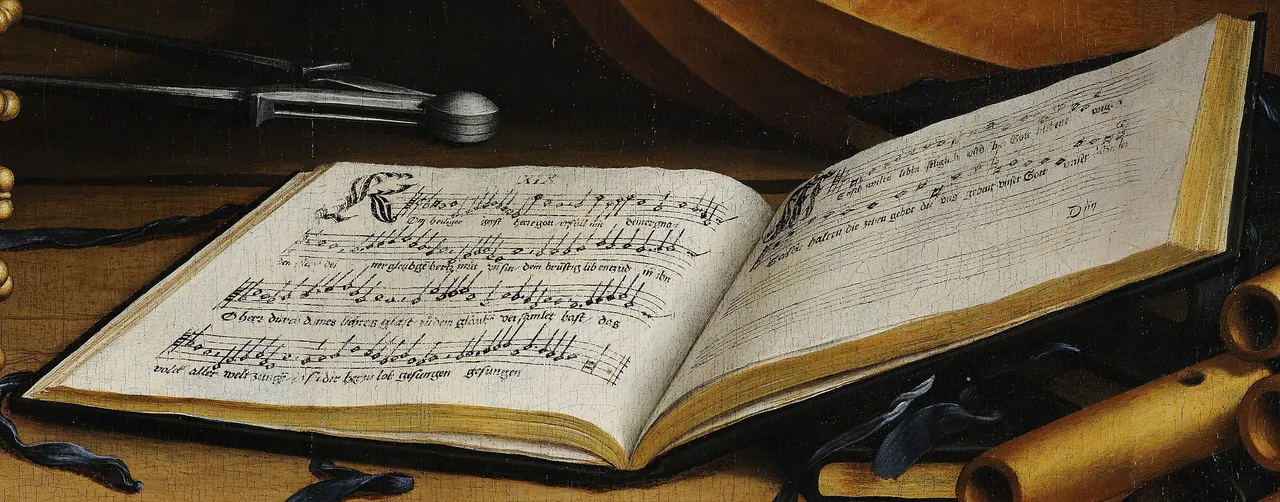
A detail from The Ambassadors, painted in 1533, showing an open Lutheran psalm book, from the same years Luther was writing plain teaching for the household.The Ambassadors - Psalmbook · 1533 · Wikimedia Commons · Public domain · museum record · Galeria Regni
There are two ways, one of life and one of death; but a great difference between the two ways.
It then sets out "the way of life": love God, love your neighbour, and a series of moral instructions drawn largely from the Lord's teaching.1 Only after that does it turn to baptism, and its instruction begins, "Having first said all these things, baptize".2 The teaching came before the baptism. Whatever one thinks of the Didache's other instructions, that order shows that from very early on, believers were taught a definite body of instruction as they entered the church.
Lesson: begin with a clear, memorable frame, and teach the way of life, not only doctrines about it.
Cyril of Jerusalem: lectures for the baptized
In the middle of the fourth century, Cyril, later bishop of Jerusalem, delivered a series of Catechetical Lectures to those preparing for baptism, working through the faith article by article. They survive because they were written down, and they show a teacher taking new believers through the whole faith in order over many sessions.3
Lesson: a course is a series, each part building on the last, aimed at a definite step of faith.
Augustine: the art of catechising
Around the year 400, a deacon of Carthage named Deogratias wrote to Augustine. He was often asked to teach people who wanted to become Christians, and he felt his teaching was dull. Augustine answered with a short handbook, On the Catechising of the Uninstructed. It is still one of the best things ever written on teaching the faith to beginners.
Augustine's first counsel was about content. Teach the whole story of Scripture, he said, but do not try to cover everything:
The narration is full when each person is catechised in the first instance from what is written in the text, In the beginning God created the heaven and the earth, on to the present times of the Church.
But he immediately adds that this does not mean reciting every book. "What we ought to do is, to give a comprehensive statement of all things, summarily and generally, so that certain of the more wonderful facts may be selected" and dwelt on, while "all other details... should be passed over rapidly".4 Teach the whole story, but slow down on the turning points.
His second counsel was about the teacher's heart. He told Deogratias that the key was cheerfulness, and he grounded it in Paul's word about giving: "For if, in the matter of carnal means, God loves a cheerful giver, how much more so in that of the spiritual?"5 He was honest about why teachers grow weary: the material is familiar to them, the hearer seems unmoved, or the teacher is distracted or sad. His remedy for the boredom of repeating the basics was love: "we should endeavor to meet them with a brother's, a father's, and a mother's love; and, if we are once united with them thus in heart, to us no less than to them will these things seem new."6
His third counsel was about the learner. He noticed when a hearer grew tired, and he told the catechist to offer him a seat. He gave separate advice for teaching the well-educated and the unlearned. He knew that the same truth must be taught differently to different people.
Lessons: teach the whole story with the high points slowed down; teach with love and joy; watch the learner and adapt.
Luther: the father and his household
In 1529 Martin Luther published his Small Catechism. It was short, and it was written for the home. Its sections are headed, in one translation, "The Simple Way a Father Should Present Them to His Household".7 For each commandment, each article of the Creed and each petition of the Lord's Prayer, it gives the text, then asks, "What does this mean?", and gives a short answer. On the first commandment: "We must fear, love, and trust God more than anything else."
Lessons: write for the person who will teach, not only for the learner; use a repeated, simple pattern (text, question, answer); keep it short enough to be memorised; put it in the home.
The Westminster Shorter Catechism
In 1647 the Westminster Assembly produced the Shorter Catechism, 107 questions and answers. Its first two are among the best-known sentences in English religious writing:
Q. 1. What is the chief end of man? A. Man's chief end is to glorify God, and to enjoy him forever. Q. 2. What rule hath God given to direct us how we may glorify and enjoy him? A. The Word of God, which is contained in the Scriptures of the Old and New Testaments, is the only rule to direct us how we may glorify and enjoy him.
Whatever tradition you belong to, notice the craft.8 The questions are short and clear. The answers can be memorised. The sequence builds: the first question sets the purpose of life, the second sets the authority for everything that follows. Many Christians who learned it as children could still recite it in old age.
Lessons: begin with the big purpose; establish Scripture as the rule; write answers people can carry in memory.
Baxter: teaching family by family
In the 1650s Richard Baxter, the pastor of Kidderminster in England, and other ministers in Worcestershire agreed together to catechise and personally instruct the families in their parishes. He described the practice in The Reformed Pastor: "We spend Monday and Tuesday, from morning almost to night, in the work, taking about fifteen or sixteen families in a week, that we may go through the parish, in which there are upwards of eight hundred families, in a year".9 He was surprised by the result: "I find more outward signs of success with most that do come, than from all my public preaching to them."
He explained why personal teaching reaches people that preaching misses: "I have found by experience, that some ignorant persons, who have been so long unprofitable hearers, have got more knowledge and remorse of conscience in half an hour's close discourse, than they did from ten years' public preaching."10 And he explained the difference plainly: "In public we may not use such homely expressions, or repetitions, as their dulness requires, but in private we may."
Lessons: materials are a tool for conversation, not a replacement for it; the best teaching is often one-to-one or one-to-a-family; plain words and repetition are not beneath good teaching.
Wesley's classes
In the eighteenth century, John Wesley's Methodist societies were divided into classes of about twelve people, each with a leader whose duty was "to see each person in his class once a week at least" in order "to inquire how their souls prosper" and "to advise, reprove, comfort or exhort, as occasion may require".11 The class meeting was less about content than about accountability. It reminds us that discipleship is not finished when the lesson is taught. Someone must ask, "How is it with your soul?"
What the history teaches
Put the history together and a clear picture emerges.
| Source | What it teaches a writer today | |---|---| | The Didache | A memorable frame; the way of life, not only doctrines; teaching before baptism | | Cyril | A course is an ordered series aimed at a definite step | | Augustine | The whole story, slowed at the turning points; teach with love; adapt to the learner | | Luther | Write for the one who teaches; a simple repeated pattern; for the home | | Westminster | Begin with purpose; Scripture as the rule; answers worth memorising | | Baxter | Materials serve conversation; plain words; personal teaching works | | Wesley | Teaching must be followed by personal care and accountability |
This part matters because a study is only as good as what it teaches. Before you think about layout, length or format, settle what you will teach and how you will handle God's word.
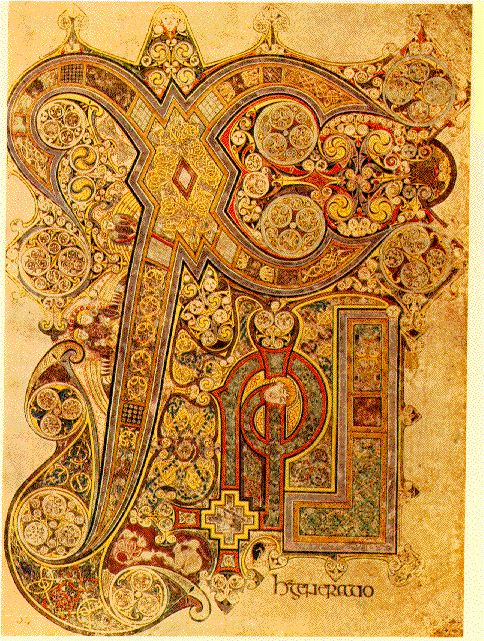
The Chi-Rho page of the Book of Kells (c. 800 AD) — an entire illuminated page given to the first two letters of Christ’s name.Irish monks, c. 800 · Public domain
Scripture is the content
The material does not supply the authority; the Bible does. "All scripture is given by inspiration of God, and is profitable for doctrine, for reproof, for correction, for instruction in righteousness: That the man of God may be perfect, throughly furnished unto all good works" (2 Timothy 3:16-17). Your job is to get people into the text and the text into them.
That means quoting Scripture accurately and giving the reference, so learners can check it. It means printing enough of the text in the material that people actually read it, rather than a list of references they will skip. And it means sending them back to their own Bibles. This ministry uses the King James Bible throughout; the free 1611 Reader at kylelauriano.com/library lets any learner read the passages in full, and the changes ledger at kylelauriano.com/library/changes shows where the 1611 and modern versions differ.
Add nothing, take nothing away
"Every word of God is pure: he is a shield unto them that put their trust in him. Add thou not unto his words, lest he reprove thee, and thou be found a liar" (Proverbs 30:5-6). When you write a summary or a paraphrase, never put it in quotation marks as though it were Scripture. When you quote, quote exactly. A practical rule: check every quoted verse word for word against the Bible before your material is printed. It is easy for a half-remembered verse to slip in, and it is a small dishonesty that multiplies with every copy.
Paul's standard applies to every page: "But have renounced the hidden things of dishonesty, not walking in craftiness, nor handling the word of God deceitfully" (2 Corinthians 4:2).
The gospel at the centre
Paul told the Corinthians, "For I determined not to know any thing among you, save Jesus Christ, and him crucified" (1 Corinthians 2:2). Every discipleship material, whatever its topic — prayer, money, marriage, work — should connect its subject to Christ and His cross. A study on handling money that never mentions grace is a financial seminar with verses. On the road to Emmaus, the risen Lord "beginning at Moses and all the prophets, he expounded unto them in all the scriptures the things concerning himself" (Luke 24:27). That is the pattern.
Teach the whole counsel
Paul could tell the Ephesian elders, "For I have not shunned to declare unto you all the counsel of God" (Acts 20:27). Materials tend to drift toward the comfortable. Over a whole course, make sure learners meet sin, judgment, repentance, holiness and the cost of discipleship as well as grace, comfort and assurance. Where Scripture holds two truths in tension — real assurance and real warnings, for example — teach both texts as written, rather than smoothing one away.
Hard texts and honest differences
Some passages are hard. Peter said of Paul's letters, "in which are some things hard to be understood, which they that are unlearned and unstable wrest, as they do also the other scriptures, unto their own destruction" (2 Peter 3:16). Do not avoid hard texts, and do not pretend they are easy. Quote them plainly. Where sound believers differ on how to apply them, say so briefly and fairly, tell the learner where your church stands and why, and send them to the text.
Where the writer holds a personal conviction that the evidence does not settle, label it as such. Learners should never mistake the author's opinion for the word of God.
Doctrinal boundaries
Before you write a course, write down the doctrinal statement it will teach within. For most churches this already exists. If you are writing for a ministry, agree it with your leaders. Then have someone other than yourself check the finished material against it (Part 7). The writer is the person least able to see his own blind spots.
The life behind the page
Paul wrote to Titus, "In all things shewing thyself a pattern of good works: in doctrine shewing uncorruptness, gravity, sincerity, Sound speech, that cannot be condemned" (Titus 2:7-8). And to the Philippians: "Those things, which ye have both learned, and received, and heard, and seen in me, do" (Philippians 4:9). Learners learn from what they see as well as what they read. A material is not a substitute for a life.
Relationship, not only content
Paul described his ministry in Thessalonica: "But we were gentle among you, even as a nurse cherisheth her children: So being affectionately desirous of you, we were willing to have imparted unto you, not the gospel of God only, but also our own souls, because ye were dear unto us" (1 Thessalonians 2:7-8). Discipleship materials work best in the hands of someone who cares about the person in front of them. Write with that person in mind. Build in time for prayer, for questions, for life. Baxter and Wesley both knew that the conversation matters as much as the content.
Part 4 — Planning a Course: Learners, Outcomes and Sequence
5 min read
This part matters because most poor materials fail before a word is written. They are aimed at no one in particular, try to do everything, and arrive in no order. Planning fixes that.
Know your learner
Augustine adapted his teaching to the person in front of him, and gave separate advice for the educated and the unlearned. Before you write, answer these questions about your learner:
Where are they on the road? A skeptic, a seeker, a new believer, a growing disciple, or a believer being trained to lead? The study Growth Pathway at kylelauriano.com/research describes these seasons.
What do they already know? Can they find a book of the Bible? Do they know the main story? Have they been taught error that needs undoing?
How will they use it? Alone, one-to-one with a mentor, in a small group, in a class?
How much time do they have? Twenty minutes a day? An hour a week?
What will help them read it? Literacy, language, eyesight, age.
Write a one-paragraph description of the person you are writing for, and keep it in front of you. Isaiah's question is the planner's question: "Whom shall he teach knowledge? and whom shall he make to understand doctrine?" (Isaiah 28:9).
Decide the outcomes
Before you plan the content, decide what should be different in the learner when the course is done. Think in three kinds of outcome, following Ezra's order — seek, do, teach:
Know. What should they understand from Scripture? ("Explain from Ephesians 2 why salvation is by grace.")
Believe and love. What should they trust and treasure? ("Rest in Christ's finished work rather than their own performance.")
Do. What should they practise? ("Pray daily using the pattern of the Lord's Prayer.")
Make each outcome specific and observable. "Grow in prayer" is a hope. "Pray for ten minutes each morning this week and record one answer" is an outcome.
A tool for thinking about levels
Educators often use a framework first published in 1956 by Benjamin Bloom and colleagues, and revised in 2001, to describe levels of thinking a lesson can aim at. In the revised version the six levels are Remember, Understand, Apply, Analyze, Evaluate and Create.12 It is a tool, not Scripture, but it helps a writer notice whether every question in a study is only asking learners to remember facts.
| Level | In a Bible study, the learner can… | Example question on Luke 15:11-32 | |---|---|---| | Remember | recall what the text says | What did the younger son ask his father for? | | Understand | explain it in their own words | Why did the father run to meet him? | | Apply | use it in their life | Where do you need to come home this week? | | Analyze | compare and see structure | How is the elder brother like the Pharisees of Luke 15:2? | | Evaluate | judge rightly by Scripture | Is the elder brother's complaint fair? Why or why not? | | Create | produce something new from it | Write a short prayer of return in your own words. |
A healthy study moves through several levels, but always ends at doing: "teaching them to observe".
Scope and sequence
Scope is what the course covers; sequence is the order. Luke wrote "in order" so that Theophilus would know "the certainty" (Luke 1:3-4). Order matters because later truths rest on earlier ones.
Hebrews 6:1-2 gives one natural sequence for a foundations course. Here is an illustration of how a twelve-session course for new believers might be built on it and on Acts 2:42:
A course for growing disciples might take a book of the Bible straight through. A course for training leaders might move through 1 Timothy and Titus. Whatever the course, write the whole outline before you write any single lesson, and check that the order builds.
Pacing
Isaiah describes the pace of learning: "For precept must be upon precept, precept upon precept; line upon line, line upon line; here a little, and there a little" (Isaiah 28:10). Do not cram. A short course done well is better than a long course abandoned. As a rough guide:
Personal daily study: 15–30 minutes, one short passage, a few questions.
One-to-one mentoring: 45–60 minutes weekly, including prayer and life.
Small group: 75–90 minutes weekly, including fellowship, discussion and prayer.
Course length: six to twelve sessions for a focused course; a whole book of the Bible may take longer.
Build in review
Learning science adds something here that the catechisms knew by instinct. In a widely cited 2006 study, Henry Roediger and Jeffrey Karpicke found that students who were tested on prose passages remembered substantially more a week later than students who spent the same time re-reading them, even though re-reading made the students more confident.13 Another 2006 review by Nicholas Cepeda and colleagues, covering hundreds of experiments, found that spacing learning out over time improves long-term retention compared with cramming it together.14
In practice: begin each session by asking learners to recall, without notes, the main truth and the memory verse from last time. Return to key verses across the course rather than once. That is what a catechism does — question and answer, repeated over years — and what the psalmist did: "Thy word have I hid in mine heart, that I might not sin against thee" (Psalm 119:11).
Part 5 — Writing the Study, the Lesson and the Leader Notes
7 min read
This part matters because the Bible study is the heart of most discipleship material. Get it right and almost any format will work. Get it wrong and no design will save it.
Step 1: Choose the passage
Choose a passage that is a natural unit — a paragraph, a story, a psalm — and that serves your outcomes. Short enough to read aloud and discuss in the time you have; long enough to keep its context. Avoid building a study on a single verse torn from its setting.
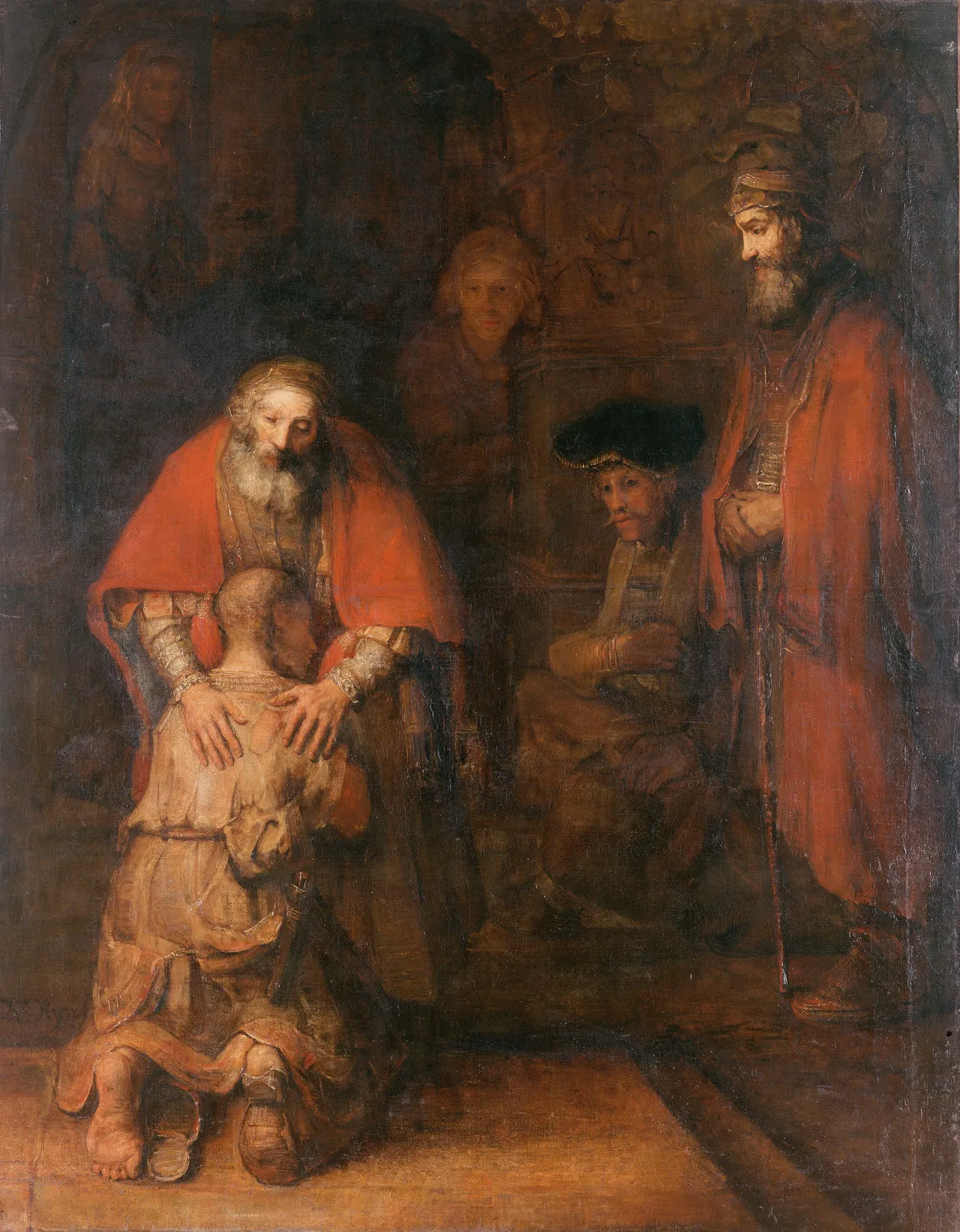
Rembrandt's Return of the Prodigal Son, painted around 1668, showing the father receiving his son, the Luke 15 story this paper uses to model a Bible study.The Return of the Prodigal Son, Rembrandt van Rijn · c. 1668 · Wikimedia Commons · Public domain · museum record · Galeria Regni
Step 2: Study it yourself first
Ezra "prepared his heart to seek the law of the LORD, and to do it, and to teach" (Ezra 7:10). Do the study yourself before you write it for others. Pray first: "Open thou mine eyes, that I may behold wondrous things out of thy law" (Psalm 119:18). Then work through three questions, in this order.
Observation: what does it say? Read the passage several times, slowly. Who is speaking, to whom, when, where? What words repeat? What is commanded, promised, warned? What connecting words — "therefore", "but", "for" — show the logic? Write down what you see before you decide what it means.
Interpretation: what does it mean? What did it mean to its first hearers? How does the surrounding chapter and book shape it? How do other passages of Scripture speak to the same subject? Let Scripture interpret Scripture. Look up key words in a concordance; a KJV with Strong's Concordance lets anyone see the Hebrew or Greek word behind the English. Be careful not to build doctrine on a word study alone. Paul told Timothy, "Study to shew thyself approved unto God, a workman that needeth not to be ashamed, rightly dividing the word of truth" (2 Timothy 2:15).
Application: how should it change us? What does this passage call us to believe, love, stop, start or do? Application must flow from the meaning, not be bolted on. Ask: if the first readers obeyed this, what did it look like? What does obedience look like for us?
Step 3: Write the questions
Jesus taught with questions. He asked His disciples, "Whom do men say that I the Son of man am?" (Matthew 16:13), and when they had answered, He pressed it home: "But whom say ye that I am?" (Matthew 16:15). He answered a lawyer's question with two of His own: "What is written in the law? how readest thou?" (Luke 10:26). Good questions make learners look at the text and think.
Write questions in three groups that follow your own study:
Observation questions send people into the text: - What does Jesus say the father did when he saw his son "a great way off"? - What words does the son plan to say? Which of them does he actually say?
Interpretation questions ask what it means: - Why do you think the father interrupted the son's speech? - Who in Luke 15:1-2 is Jesus answering with this story?
Application questions ask what to do: - Is there anything you are keeping from the Father because you think you must earn your way back? - Who in your life is "a great way off", and how could you show them the Father's welcome this week?
Rules for good questions
Ask open questions. "What does the father do?" invites looking; "Did the father forgive him?" invites "yes".
Ask one thing at a time. Double questions confuse.
Point to the text. Include the verse number so people look rather than guess.
Avoid "guess what I'm thinking". If there is only one right word, it is a quiz, not a discussion.
Move from the text to the heart. Start with what it says; end with what it asks of us.
Leave room for silence. A good question may need thirty seconds of quiet.
Fewer is better. Six to ten questions for a one-hour discussion is plenty.
Step 4: Read the text aloud
Ezra's Levites "read in the book in the law of God distinctly" (Nehemiah 8:8). Paul told churches to read his letters aloud: "I charge you by the Lord that this epistle be read unto all the holy brethren" (1 Thessalonians 5:27). Revelation promises a blessing on "he that readeth, and they that hear" (Revelation 1:3). Build reading aloud into every study. Print the passage in full in the material, or tell everyone to open to it, and have someone read it clearly before any discussion begins.
Step 5: Add a memory verse
Choose one verse from the passage that carries its main truth, and ask learners to memorise it. Begin the next session by reciting it together. Over a twelve-week course, twelve verses carried in the heart will outlast most of what was said.
Step 6: Write the application specifically
End the study with one clear, small, specific response. Not "be more loving", but "this week, write to one person you have been avoiding". Then begin the next session by asking how it went. That is "teaching them to observe".
A Bible study template
| Section | What it contains | |---|---| | Title and passage | A clear title; the reference | | The aim | One sentence: what this study should do in the learner | | Open in prayer | A sentence or two of prayer, or "Pray briefly before you begin" | | Read | The passage printed in full, or "Read aloud: …" | | Background | Three to five sentences of context: who, when, why | | Observe | Three or four questions about what the text says | | Interpret | Two or three questions about what it means, with cross-references | | Apply | Two or three questions about what it asks of us | | Remember | One memory verse | | Respond | One specific act of obedience for the week | | Pray | A closing prompt, linked to the passage |
From study to lesson
A study is usually taught by someone other than the author. Luther wrote "The Simple Way a Father Should Present Them to His Household" — he wrote for the teacher. Good materials equip the leader as well as the learner.
The lesson plan
A lesson plan is the leader's map of a session. It should fit on one or two pages. Here is a simple shape for a sixty-to-ninety-minute session:
| Part | Purpose | Time | |---|---|---| | Welcome and recall | Greet; recite last week's memory verse; ask how the response went | 10 min | | Prayer | Open in prayer | 5 min | | Read | Read the passage aloud | 5 min | | Teach | A short explanation of the passage and its context | 15–20 min | | Discuss | Observation, interpretation and application questions | 20–30 min | | Respond | Agree on the week's act of obedience; introduce the memory verse | 5–10 min | | Pray | Pray for one another and for the week's response | 10 min |
The discussion guide
A discussion guide is for the group. It contains the passage, the questions and space to write. Keep it uncluttered. The group should be looking at the Bible, not at decorations.
Leader notes
Leader notes are what turn a study into something reproducible. They are written for the faithful man of 2 Timothy 2:2 who did not write the material and may not have much training. Good leader notes include:
The aim of the session in one sentence.
Background the leader needs but the group may not: history, geography, key words.
Likely answers to each question, so the leader knows where the text leads, and the one or two things that must not be missed.
Common misunderstandings and how to gently correct them from the text.
Sensitive points. If a passage touches grief, divorce, abuse, addiction or other painful subjects, warn the leader and suggest how to care for people.
Cross-references for further study.
Timing guidance: what to cut if time runs short.
When someone gives a wrong answer
Leaders need help with this, so put it in the notes. Thank the person for answering. Send everyone back to the text: "Let's look again at verse 20. What does it say the father did?" Let the Bible correct, not the leader's authority. If the error is serious, speak with the person privately afterwards. Priscilla and Aquila corrected Apollos this way: they "took him unto them, and expounded unto him the way of God more perfectly" (Acts 18:26).
When someone dominates or goes silent
Note in the leader guide how to draw out quiet members ("Let's hear from someone who hasn't spoken yet") and how to redirect a talker ("Thank you — let's see what others think"). Small things like this make the difference between a group that grows and one that one person runs.
One-to-one materials
Baxter found that "half an hour's close discourse" could reach people that years of preaching had not. Materials for one-to-one discipleship should be even simpler than group studies: a passage, three or four questions, a memory verse, a response, and prayer. Leave plenty of room for the mentor to ask about life. The material is a trellis; the relationship is the vine.
This part matters because a faithful study that no one can read is of little use. Clarity, accessibility and honesty in how you use others' work are part of serving the learner.
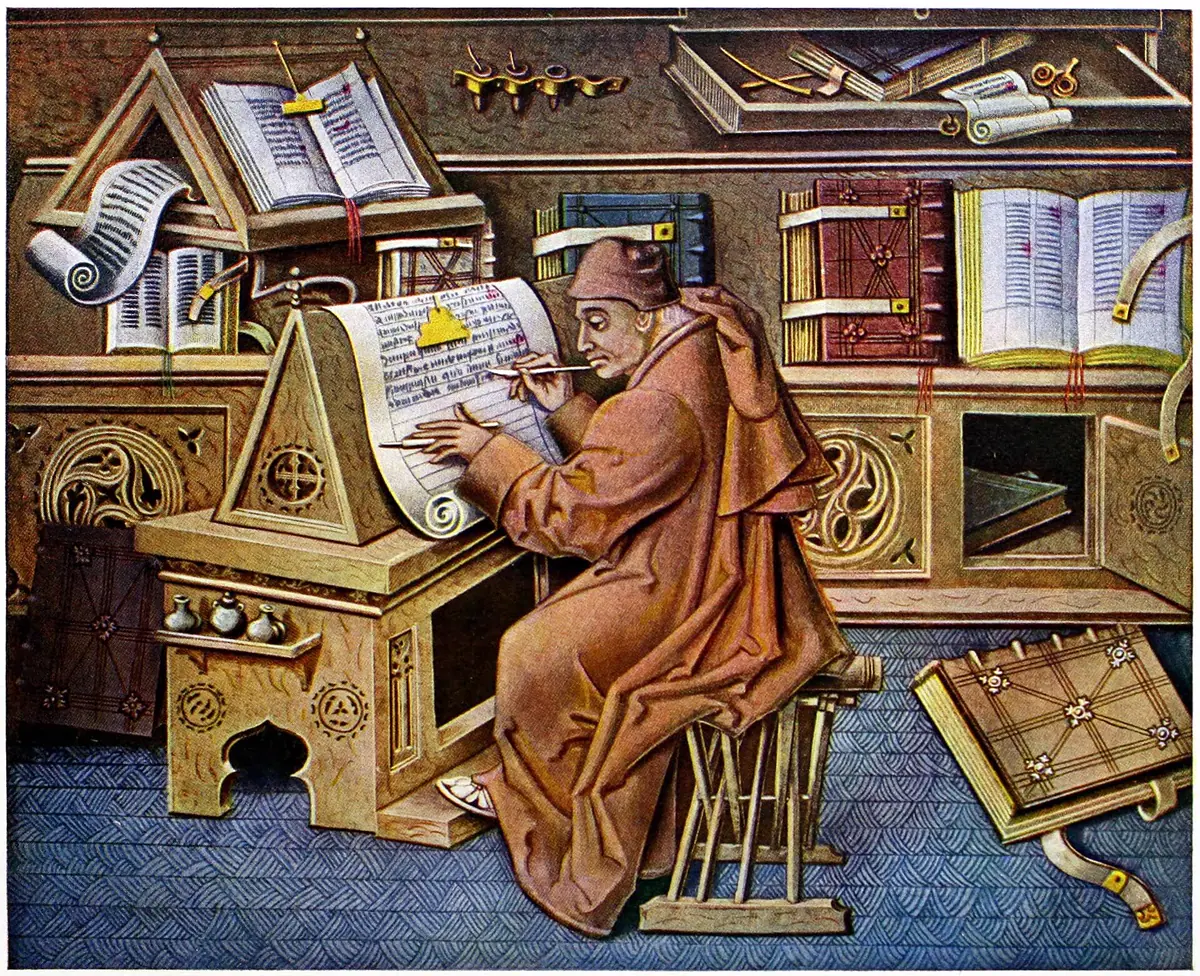
The scribe Jean Miélot at his desk, painted in the 15th century — Scripture copied by hand, line by disciplined line, for a thousand years before print.Jean Le Tavernier, 15th century · Public domain
Make it plain
"And the LORD answered me, and said, Write the vision, and make it plain upon tables, that he may run that readeth it" (Habakkuk 2:2). Plain writing is a kindness.
Short sentences and paragraphs. One idea per paragraph.
Ordinary words. Explain any theological term the first time you use it.
Concrete examples. Clearly hypothetical illustrations ("Suppose a friend asks…") rather than invented "true" stories.
Active voice. "God forgives" is clearer than "forgiveness is extended".
Cut ruthlessly. If a sentence does not serve the aim, remove it.
Paul preferred "five words with my understanding" to "ten thousand words in an unknown tongue" (1 Corinthians 14:19). So should we.
Design that serves the text
Design should help people read the Bible, not compete with it.
Hierarchy. Clear headings so people know where they are.
White space. Room to breathe and to write.
Consistent layout. Every lesson in a course should follow the same pattern, so learners know where to find the passage, the questions and the memory verse — as Luther's catechism repeats "What does this mean?" for every part.
Scripture set apart. Print Bible text so that it stands out clearly from your own words.
Few typefaces and colours. One or two of each is enough.
Accessibility
Some learners have poor eyesight, colour blindness, dyslexia or limited reading. Simple choices help them. For digital materials, the World Wide Web Consortium's accessibility guidelines set a minimum contrast for normal body text: "a contrast ratio of at least 4.5:1".15 Dark text on a light background, a readable size, and no information carried by colour alone are good rules for print too. Offer large-print versions on request, and where you can, an audio version for those who read with difficulty.
Think also of learners who cannot easily buy books, who have no reliable internet, or who speak another first language. A simple printed sheet may serve more people than an app.
Quote honestly
Every Bible verse you quote should be checked word for word against the Bible before it is published, and every reference should be correct. Every quotation from another writer should be checked against its source, and the source should be named. Never put words in someone's mouth. Never present a paraphrase as a quotation. These are small habits, but they are what Paul meant by "nor handling the word of God deceitfully" (2 Corinthians 4:2) — and they apply to men's words too.
Copyright
Writers of Christian materials often use others' work: a quotation, a diagram, a hymn. In the United States, copyright law allows some use without permission under "fair use". The statute lists purposes "such as criticism, comment, news reporting, teaching (including multiple copies for classroom use), scholarship, or research", and requires four factors to be weighed, including "the purpose and character of the use" and "the nature of the copyrighted work".16 Fair use is judged case by case; it is not a blanket permission for churches.
Practical rules:
Quote briefly, and name the source. A sentence or two with credit is usually fine; whole chapters are not.
Ask permission before reproducing substantial portions of anyone's book, song lyrics, artwork or photographs. Most authors and publishers have a permissions process.
Use what is free. Older works long out of copyright — the King James Bible itself, the church fathers, the Reformers, Bunyan, Baxter, Spurgeon, Ryle — are available freely and are often better than recent material.
Make your own diagrams and illustrations rather than copying others'.
Decide how others may use your work. If you want it shared freely, say so on the material.
This is general information, not legal advice. If your ministry publishes widely, take advice.
This part matters because no writer sees all his own mistakes. "Where no counsel is, the people fall: but in the multitude of counsellors there is safety" (Proverbs 11:14). Materials that will be used by others should be checked by others before they go out.
Theological review
Ask a pastor or mature teacher who was not involved in writing to read the whole material with these questions:
Is every quoted verse exact, and every reference correct?
Is the gospel clear and central?
Is anything taught that the passage does not teach?
Are hard texts handled honestly, not explained away?
Are matters on which sound believers differ presented fairly?
Is the author's personal conviction labelled where it goes beyond what Scripture settles?
Does it fit the doctrinal statement it is meant to teach within?
Paul told Timothy to hold "Sound speech, that cannot be condemned" (Titus 2:8). Review is how we get there.
Pilot it
Before you print a hundred copies, teach it once. Use it with a small group or a single learner and watch what happens.
Which questions produced real discussion, and which fell flat?
Where did people get confused?
How long did each part actually take?
Did the application get done?
Could someone other than you lead it from the leader notes?
That last question is the real test. Ask a faithful believer to lead one session from your notes while you sit and observe. Whatever he stumbles on, fix.
Revise
Revise after the pilot, and keep revising after release. Ask leaders and learners for honest feedback at the end of each course: what helped, what confused, what should be cut. Keep a list of corrections and make them in the next printing. Good materials improve over years, as the catechisms did.
Share it
Decide how your material will reach people:
Print suits groups, the elderly, and places without reliable internet. It can be marked up and kept.
Digital files are easy to share and update, and cost nothing to copy. A simple document or PDF is often enough.
Free is often best for ministry materials. This ministry's own studies are offered free at kylelauriano.com/research. "Freely ye have received, freely give" is the Lord's own principle (Matthew 10:8).
Whatever the format, include the date and version on the material, so that when you revise it people know which copy they have.
Train the teachers
The best distribution strategy is people. Paul's chain in 2 Timothy 2:2 runs through faithful men, not through files. When you release a course, teach a group of leaders how to use it. Walk them through the leader notes. Let them lead a session while you watch, and then debrief together. Then send them to teach others. That is how a single study becomes a movement of discipleship.
Build a library slowly
Over years, a church or ministry can build a small library of tested materials: a foundations course, studies through key books, a course on prayer, a course on witness, a leadership course. Build it slowly. One excellent, tested course is worth more than ten hurried ones. Jesus said, "Therefore every scribe which is instructed unto the kingdom of heaven is like unto a man that is an householder, which bringeth forth out of his treasure things new and old" (Matthew 13:52). Draw on the old treasures of the church; add new things only where they help.
Writing discipleship materials is an old and honourable work. Moses told Israel to write God's words on their doorposts. Ezra read the law distinctly and gave the sense. Luke wrote in order so that Theophilus would know the certainty. Paul committed the truth to faithful men who could teach others. And the church, from the Didache to Augustine, Luther, Westminster, Baxter and Wesley, has kept writing ordered, simple, Scripture-filled instruction for those learning to follow Christ.
The principles have not changed. Put Scripture at the centre and quote it exactly. Keep the gospel clear. Know your learner and adapt. Plan outcomes that end in obedience — "teaching them to observe". Order the course so each part builds. Ask good questions and leave room for silence. Build in recall and review. Equip the leader as well as the learner. Make it plain and accessible. Use others' work honestly. Have it checked, test it, revise it, and train faithful people to teach it.
And remember what the material is for. It is not the product. Mature believers are. "That we may present every man perfect in Christ Jesus" (Colossians 1:28).
A next step
Choose one passage you know well and write a single study using the template in Part 5. Teach it once. Ask someone else to lead it from your notes. Revise. You will learn more from that one cycle than from any book on the subject. Related studies at kylelauriano.com/research include Discipling Others, Bible Study Methods and Raising Up Leaders.
An invitation
If you have read this far and you do not yet know the Lord whose word these materials teach, start with the word itself. The gospel is that "Christ died for our sins according to the scriptures; And that he was buried, and that he rose again the third day according to the scriptures" (1 Corinthians 15:3-4), and His call is plain: "repent ye, and believe the gospel" (Mark 1:15). Read the Gospel of John in the free 1611 Reader at kylelauriano.com/library. In my own story, I decided to read the Bible for one reason: to disprove it, so I'd have an excuse to stop going to church for good. It did the opposite. "Come unto me, all ye that labour and are heavy laden, and I will give you rest" (Matthew 11:28). Free truth, no pressure.
1The Didache, 1, trans. M. B. Riddle, in Ante-Nicene Fathers, vol. 7, ed. Alexander Roberts, James Donaldson and A. Cleveland Coxe (Buffalo, NY: Christian Literature Publishing Co., 1886). Online: https://www.newadvent.org/fathers/0714.htm.↩
3Cyril of Jerusalem, Catechetical Lectures, trans. Edwin Hamilton Gifford, in Nicene and Post-Nicene Fathers, Second Series, vol. 7, ed. Philip Schaff and Henry Wace (Buffalo, NY: Christian Literature Publishing Co., 1894). Online: https://www.newadvent.org/fathers/3101.htm.↩
4Augustine, On the Catechising of the Uninstructed, 3.5, trans. S. D. F. Salmond, in Nicene and Post-Nicene Fathers, First Series, vol. 3, ed. Philip Schaff (Buffalo, NY: Christian Literature Publishing Co., 1887). Online: https://www.newadvent.org/fathers/1303.htm.↩
7Martin Luther, The Small Catechism (1529), trans. Robert E. Smith, from the German text in Triglot Concordia (St. Louis: Concordia, 1921), Project Wittenberg, 2002. Online: https://ccel.org/ccel/luther/smallcat.↩
11John Wesley, "The Nature, Design, and General Rules of the United Societies" (1743), as printed by the United Methodist Church, "The General Rules of the Methodist Church," https://www.umc.org/en/content/the-general-rules-of-the-methodist-church.↩
12Benjamin S. Bloom, ed., Taxonomy of Educational Objectives: The Classification of Educational Goals, Handbook I: Cognitive Domain (New York: David McKay, 1956); Lorin W. Anderson and David R. Krathwohl, eds., A Taxonomy for Learning, Teaching, and Assessing: A Revision of Bloom's Taxonomy of Educational Objectives (New York: Longman, 2001).↩
13Henry L. Roediger III and Jeffrey D. Karpicke, "Test-Enhanced Learning: Taking Memory Tests Improves Long-Term Retention," Psychological Science 17, no. 3 (2006): 249–255, https://doi.org/10.1111/j.1467-9280.2006.01693.x.↩
14Nicholas J. Cepeda, Harold Pashler, Edward Vul, John T. Wixted and Doug Rohrer, "Distributed Practice in Verbal Recall Tasks: A Review and Quantitative Synthesis," Psychological Bulletin 132, no. 3 (2006): 354–380, https://doi.org/10.1037/0033-2909.132.3.354.↩
15World Wide Web Consortium, Web Content Accessibility Guidelines (WCAG) 2.2, W3C Recommendation, 12 December 2024, Success Criterion 1.4.3, "Contrast (Minimum)," https://www.w3.org/TR/WCAG22/.↩
Seven people who say they met Jesus. What happened, in their own words.
Seven testimonies from The King Is Coming Show, one a morning — the story as they tell it, the verse the story lands on in the 1611 King James, and the page itself. Then the teaching that explains it. Free.
This is practical teaching, not proof. It's drawn from Scripture and from walking this road myself. If you're still weighing the basics — whether God is real, whether the Bible can be trusted — I'd encourage you to start with the Skeptic resources in the Research Hub before diving in here.