A study of how Jesus and the apostles talked with people, and a practical guide to moving from your story to the gospel itself — listening well, answering honestly, inviting without pressure, and walking with a new believer afterwards.
Abstract
A personal testimony opens doors; the gospel is what must go through them. How does a believer move from "here is what happened to me" to "here is what God has done in Christ, and what it means for you" — naturally, honestly and without manipulation? This paper studies the conversations the King James Bible records: Jesus with Nicodemus and the woman at the well, Philip with the Ethiopian, Paul at Athens and before Agrippa. It draws on real, documented conversions — C. S. Lewis's friendship with Tolkien and Dyson, Rosaria Butterfield's dinner with a pastor's family — and on Barna Group research on Christians' reluctance to share their faith. It then sets out the gospel plainly, answers the most common objections with Scripture and with sound scholarship, shows how to invite a response without pressure, and gives a first-month plan for following up. It is written for believers who have learned to tell their story and want to learn to tell His.
What’s inside
·Introduction
Part 1Part 1: How Jesus and the Apostles Talked with People
Part 2Part 2: Noticing Openings and Listening Well
Part 3Part 3: From Your Story to His Gospel
Part 4Part 4: Questions and Objections
Part 5Part 5: The Invitation without Pressure
Part 6Part 6: After Yes: Walking with a New Believer
Part 7Part 7: Three Conversations
·Conclusion
Research paper · 9 chapters · 8 notes · October 2026
About 43 minutes · 9 parts · the PDF has the same text
Introduction
3 min read
A testimony is a door, not a destination. The companion papers in this family — Craft Your Testimony (Level 1) and Share Your Testimony — show how to find your story, write it truthfully and tell it in about three minutes. This paper picks up where they leave off: at the moment the other person says, "Tell me more."
That moment frightens many believers more than telling their own story. Your story is yours; you know it. But the questions that follow — about God, the Bible, other religions, suffering, hell — feel like an exam you have not studied for. And then there is the hardest moment of all: when someone seems ready, and you do not know what to say next.
Why this matters now
Many Christians have quietly concluded that it is better not to try. In 2019 the Barna Group, in research commissioned by Alpha USA and published as Reviving Evangelism, found that 47 per cent of practising Christian Millennials in the United States agreed at least somewhat that it is wrong to share their personal beliefs with someone of a different faith in the hope that the other person will one day share the same faith. Among practising Christians of Generation X the figure was 27 per cent, and among Boomers 19 per cent.1
The Lord Jesus does not give that option. "Go ye therefore, and teach all nations, baptizing them in the name of the Father, and of the Son, and of the Holy Ghost: Teaching them to observe all things whatsoever I have commanded you: and, lo, I am with you alway, even unto the end of the world" (Matthew 28:19-20). And Paul's logic leaves no room for silence: "How then shall they call on him in whom they have not believed? and how shall they believe in him of whom they have not heard? and how shall they hear without a preacher?" (Romans 10:14).
The reluctance is understandable. Nobody wants to be pushy, arrogant or manipulative. But the answer to bad evangelism is not no evangelism. It is the kind Jesus and the apostles practised: honest, attentive, clear, unhurried and free of pressure.
What this paper is
This paper argues from the King James Bible first, and from real history and sound scholarship second. Seven parts follow. Part 1 studies how Jesus and the apostles actually talked with people. Part 2 is about noticing openings and listening well. Part 3 shows how to move from your story to the gospel, and sets the gospel out plainly. Part 4 deals with questions and objections. Part 5 is about the invitation — how to ask for a response without pressure. Part 6 is about what happens after someone believes. Part 7 walks through three hypothetical conversations to show the whole thing working.
A word about me
I was raised Roman Catholic but never really connected — I went through the motions, fell asleep in the pews, and faked being sick to skip Mass. Eventually I gave up and called myself an atheist. I decided to read the Bible for one reason: to disprove it, so I'd have an excuse to stop going to church for good. It did the opposite. I came to faith in 2022, and my wife came to faith a month later. The full story is at kylelauriano.com/about. I mention it here because it shows something this paper depends on: the word of God does its own work. Our job is to bring people to it.
A note on Scripture: every verse in this paper is quoted from the King James Bible. You can read it free in the 1611 Reader at kylelauriano.com/library. When you give someone a Bible or point them to one, point them to the King James. A KJV with Strong's Concordance is the best study tool most believers will ever need.
Part 1 — How Jesus and the Apostles Talked with People
7 min read
This part matters because the New Testament does not give us a script. It gives us conversations. If we watch how the Lord Jesus and His apostles actually spoke with real people — what they asked, what they said, when they stopped — we learn more than any method can teach.
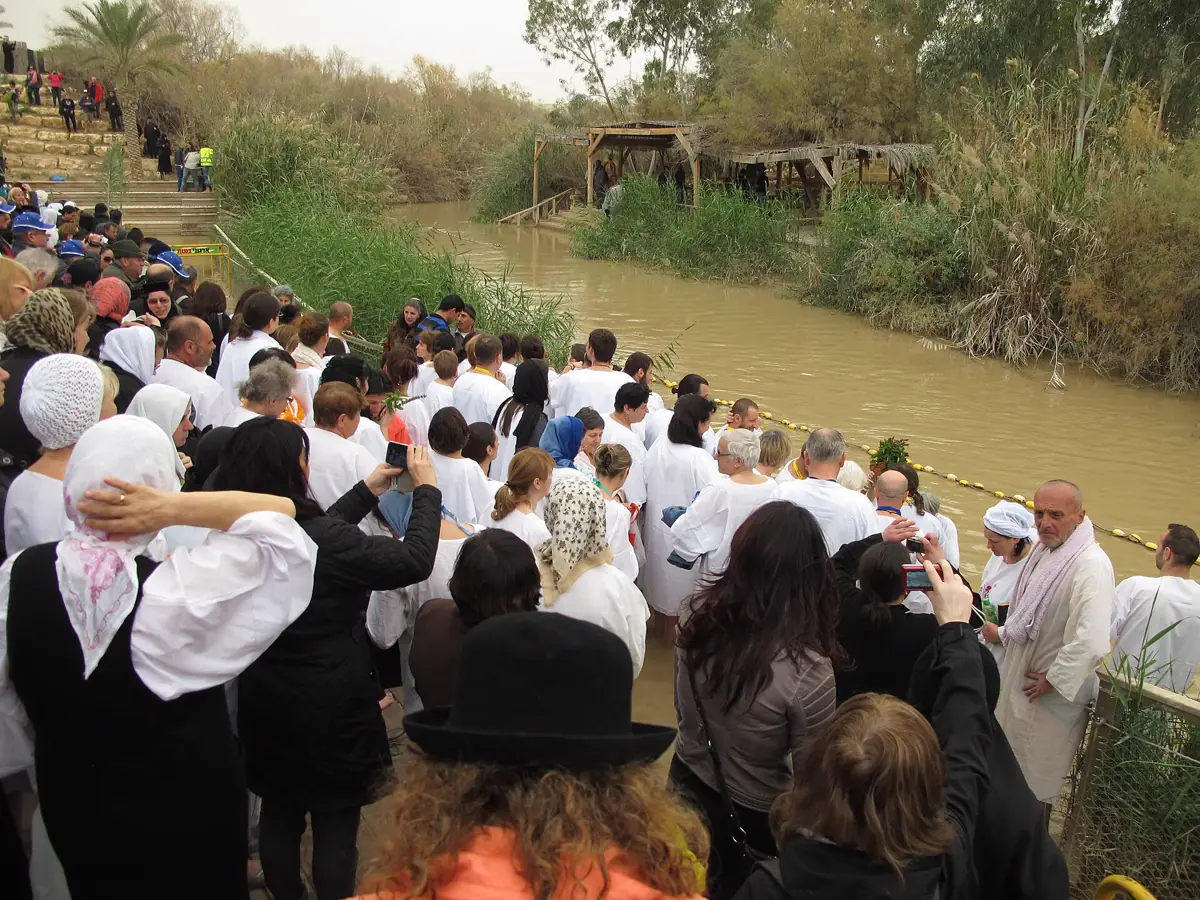
The Jordan River at Qasr el-Yahud, the traditional baptism site — pilgrims still go down into the same water.Ratoncito Perez · CC0Fishing boats on the Sea of Galilee — the working world of the first disciples, called off these waters into a movement.OSU Special Collections & Archives · Public domain
Nicodemus: a ruler at night
"There was a man of the Pharisees, named Nicodemus, a ruler of the Jews: The same came to Jesus by night" (John 3:1-2). He was religious, educated, respected and curious, and he came carefully, after dark. He opened with a compliment: "Rabbi, we know that thou art a teacher come from God."
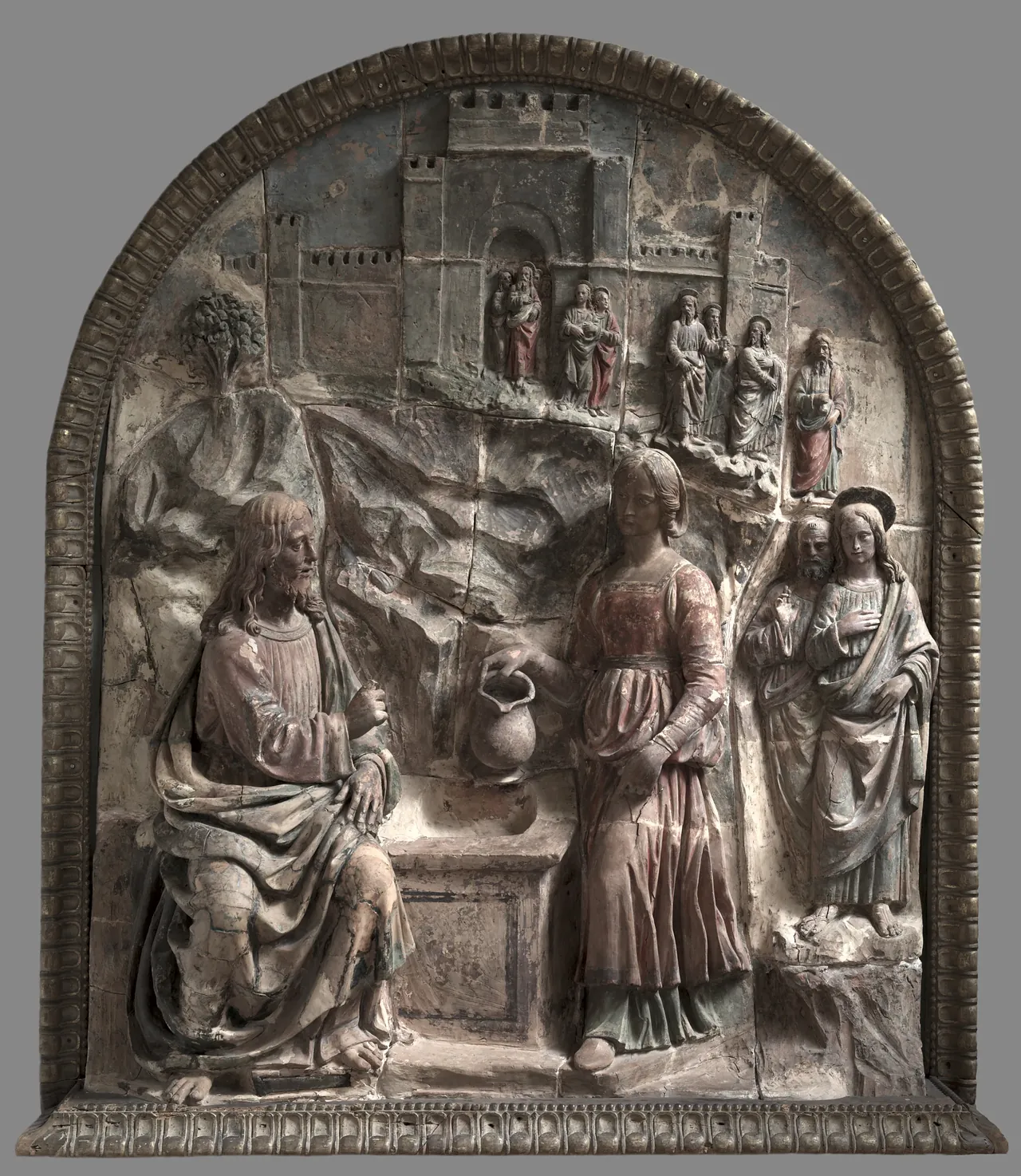
A polychromed terracotta relief of Christ and the Samaritan Woman at the Well by Giovanni della Robbia, about 1500 to 1530, showing the conversation this part studies.Christ and the Samaritan Woman at the Well · c. 1500–1530 · Cleveland Museum of Art · CC0 · museum record · Galeria Regni
Jesus did not trade compliments. He went straight to the heart: "Verily, verily, I say unto thee, Except a man be born again, he cannot see the kingdom of God" (John 3:3). When Nicodemus was confused — "How can a man be born when he is old?" (John 3:4) — Jesus did not simplify the truth away. He explained it, and in the same conversation spoke the most famous sentence in the Bible: "For God so loved the world, that he gave his only begotten Son, that whosoever believeth in him should not perish, but have everlasting life" (John 3:16). He went on, just as plainly: "He that believeth on him is not condemned: but he that believeth not is condemned already" (John 3:18).
The lessons: religious people need the gospel too. Respect and courtesy are not the same as agreement. And love and judgement belong in the same conversation.
Nicodemus does not appear to have believed that night. But he appears twice more in John's Gospel — defending Jesus before the council (John 7:50-51), and bringing spices to bury Him (John 19:39). Some conversations bear fruit years later.
The woman at the well: from water to worship
John 4 is the longest recorded conversation between Jesus and one person, and it is a model of how to talk with someone very unlike you.
He began with an ordinary request. "There cometh a woman of Samaria to draw water: Jesus saith unto her, Give me to drink" (John 4:7). The woman herself said why she was surprised: "for the Jews have no dealings with the Samaritans" (John 4:9). And when the disciples came back, they "marvelled that he talked with the woman" (John 4:27). Jesus crossed both lines with a simple, human need.
He turned the ordinary toward the eternal. "If thou knewest the gift of God, and who it is that saith to thee, Give me to drink; thou wouldest have asked of him, and he would have given thee living water" (John 4:10). He used the thing in front of them — the well — to point beyond it: "Whosoever drinketh of this water shall thirst again: But whosoever drinketh of the water that I shall give him shall never thirst" (John 4:13-14).
He told the truth about her life, without cruelty. "Go, call thy husband, and come hither." When she said she had no husband, He answered, "Thou hast well said, I have no husband: For thou hast had five husbands; and he whom thou now hast is not thy husband" (John 4:16-18). He did not avoid her sin. But He spoke of it in a way that led her toward Him, not away.
He did not follow her detour, but did not dismiss it. She changed the subject to a religious dispute: which mountain was the right place to worship (John 4:20). Jesus answered the question briefly, and turned it back to the real issue: "the true worshippers shall worship the Father in spirit and in truth" (John 4:23).
He told her who He was. "I know that Messias cometh," she said. "Jesus saith unto her, I that speak unto thee am he" (John 4:25-26).
And then she went and told her town (John 4:28-29). The whole conversation took perhaps a quarter of an hour. Ordinary need, eternal meaning, honest truth, a detour gently handled, and Christ revealed.
Philip and the Ethiopian: "Understandest thou what thou readest?"
In Acts 8, Philip was led to a road in the desert where a high official of the queen of Ethiopia was riding home from worship in Jerusalem, reading the prophet Isaiah aloud. "And Philip ran thither to him, and heard him read the prophet Esaias, and said, Understandest thou what thou readest? And he said, How can I, except some man should guide me?" (Acts 8:30-31).
Philip asked a question. He listened to the answer. He went where the man already was — in the passage he was reading: "He was led as a sheep to the slaughter; and like a lamb dumb before his shearer, so opened he not his mouth" (Acts 8:32). Luke goes on: "Then Philip opened his mouth, and began at the same scripture, and preached unto him Jesus" (Acts 8:35).
"Began at the same scripture." Start where the person is. If they are reading Isaiah, start with Isaiah. If they are grieving, start with grief. If they are angry at the church, start there. But do not stay there. Philip began at the same scripture and preached Jesus.
The man asked, "See, here is water; what doth hinder me to be baptized?" And the King James Bible records Philip's answer: "If thou believest with all thine heart, thou mayest. And he answered and said, I believe that Jesus Christ is the Son of God" (Acts 8:36-37). Then "they went down both into the water, both Philip and the eunuch; and he baptized him ... and he went on his way rejoicing" (Acts 8:38-39).
Acts 8:37 — the eunuch's confession — stands in the 1611 and the Received Text. Many modern versions remove it from the text or relegate it to a footnote. You can see this and every other place where the 1611 and the modern Critical Text part ways at kylelauriano.com/library/changes.
Paul at Athens: starting from common ground
Acts 17 shows Paul with an audience that knew nothing of the Old Testament. "His spirit was stirred in him, when he saw the city wholly given to idolatry" (Acts 17:16). He reasoned "in the synagogue with the Jews, and with the devout persons, and in the market daily with them that met with him" (Acts 17:17) — the religious and the ordinary, in their own places.
At the Areopagus, he began with what he had seen: "as I passed by, and beheld your devotions, I found an altar with this inscription, TO THE UNKNOWN GOD. Whom therefore ye ignorantly worship, him declare I unto you" (Acts 17:23). He quoted their own poets: "as certain also of your own poets have said, For we are also his offspring" (Acts 17:28). He spoke of God as Creator, who "hath made of one blood all nations of men" (Acts 17:26).
But he did not stop at common ground. He finished with repentance, judgement and the resurrection: God "now commandeth all men every where to repent: Because he hath appointed a day, in the which he will judge the world in righteousness by that man whom he hath ordained; whereof he hath given assurance unto all men, in that he hath raised him from the dead" (Acts 17:30-31).
And the responses were exactly the three you will meet: "some mocked: and others said, We will hear thee again of this matter ... Howbeit certain men clave unto him, and believed" (Acts 17:32-34). Some will laugh. Some will want to talk again. Some will believe. Paul's faithfulness was the same in all three cases.
Paul before Agrippa: "Almost"
When Paul finished his testimony before King Agrippa, he turned it into a direct, personal question: "King Agrippa, believest thou the prophets? I know that thou believest." Agrippa answered, "Almost thou persuadest me to be a Christian." And Paul said, "I would to God, that not only thou, but also all that hear me this day, were both almost, and altogether such as I am, except these bonds" (Acts 26:27-29).
Paul asked for a response. He was not afraid to make it personal. And when the answer was "almost", he did not argue, pressure or shame. He expressed his longing, and left it there.
What these conversations share
| Conversation | How it began | What was said plainly | How it ended | |---|---|---|---| | Nicodemus (John 3) | He came with a question | "Ye must be born again"; God's love; condemnation | No recorded decision; fruit later | | Woman at the well (John 4) | An ordinary request | Her sin; living water; "I ... am he" | She believed and told her town | | The Ethiopian (Acts 8) | A question about what he read | Jesus from Isaiah 53 | Faith confessed; baptism | | Athens (Acts 17) | What Paul had seen in the city | Creator, repentance, judgement, resurrection | Mockery, delay, faith | | Agrippa (Acts 26) | Paul's testimony | Christ suffered and rose | "Almost" |
In every case: they started where the person was, they made Christ and His claims plain, and they left the outcome to God. "I have planted, Apollos watered; but God gave the increase" (1 Corinthians 3:6).
This part matters because most gospel conversations are not started; they are noticed. People reveal what they are carrying all the time, and a believer who is listening will hear the openings God provides. Listening is also where trust is built. People rarely care what you believe until they believe you care about them.
Swift to hear
"Wherefore, my beloved brethren, let every man be swift to hear, slow to speak, slow to wrath" (James 1:19). Solomon: "He that answereth a matter before he heareth it, it is folly and shame unto him" (Proverbs 18:13). And: "Counsel in the heart of man is like deep water; but a man of understanding will draw it out" (Proverbs 20:5).
Many Christians treat a conversation as a chance to deliver a message. Jesus treated it as a chance to meet a person. He asked questions constantly — "What wilt thou that I should do unto thee?", "Whom say ye that I am?", "Wilt thou be made whole?" Good questions do three things: they show you care, they help you understand, and they help the other person see what they actually believe.
Openings people give
Openings tend to come in a few familiar shapes:
Loss and hardship. Illness, death, divorce, a lost job, a frightening diagnosis. People in pain are often more open than at any other time — and more vulnerable, so they must be treated with special gentleness.
Change. A new baby, a move, a marriage, retirement. Times of change raise the question "What is my life for?"
Questions about you. "You seem different." "Why don't you drink?" "Why do you go to church?" These are direct invitations to tell your story.
Questions about faith. "Do you really believe all that?" "What happens when we die?" "Why does God allow...?"
Strong opinions. Sometimes an opening comes as an attack: "Religion has done more harm than good." Behind many attacks is a real question, or a real hurt.
Spiritual seeking. Interest in the occult, astrology, meditation, "the universe". These are often signs of a real hunger looking in the wrong place. In my own story: New Age, crystals, astral projection, tarot, angel numbers. None of it held.
Reading readiness
Not every opening is an invitation to the whole gospel. Watch for signs.
Signs a person may want to go further: they ask follow-up questions; they share something personal; they keep the conversation going; they say "I've been thinking about this"; they ask what you believe or why.
Signs to slow down: they change the subject; their answers get shorter; they look for an exit; they say "I'm not religious" and leave it there; they are visibly distressed and need comfort more than argument.
When a person is not ready, do not push. Jesus did not chase the rich young ruler down the road. "And he was sad at that saying, and went away grieved: for he had great possessions" (Mark 10:22). Mark says Jesus, before He spoke, "beholding him loved him" (Mark 10:21). Love him, tell him the truth, and let him go if he chooses. Leave the door open: "If you ever want to talk about it, I'd be glad to."
Questions that open doors
Here are questions that tend to help, and that you can ask without sounding like a salesman:
"Do you have any spiritual background?"
"What do you think happens when we die?"
"Who do you think Jesus was?"
"Have you ever read any of the Gospels for yourself?"
"What would you need to see to believe God is real?"
"What do you think is wrong with the world? What would fix it?"
"Can I tell you what changed for me?"
That last question is the bridge from listening to your testimony. Ask permission. People who give it listen differently.
Conversations that took time
The New Testament records some conversations that bore fruit at once. Church history records many that took years, and some of the most famous conversions came through friendship, hospitality and long talk.
C. S. Lewis, an Oxford don who had been an atheist, came first to belief in God in the Trinity Term of 1929, and only later to faith in Christ. In Surprised by Joy he names two Christian friends, H. V. D. Dyson and J. R. R. Tolkien, who "were later to give me much help in getting over the last stile".2 Lewis did not come to faith through a tract or a sermon. He came through reading, argument and friendship, over years, with men who took his objections seriously.
Rosaria Butterfield was, in her own words, "a leftist lesbian professor" of English and women's studies when, in 1997, she wrote an article in the local newspaper attacking the men's ministry Promise Keepers. Among the letters that came back was a kind one from Ken Smith, pastor of the Syracuse Reformed Presbyterian Church — and it invited her to dinner. Her friendship with Ken and his wife, Floy, led her to reconsider what she had believed, and she later told the story in The Secret Thoughts of an Unlikely Convert (2012).3
A dinner invitation. A long friendship. Neither is a technique. Both are a believer opening his life as well as his mouth. Paul described the same thing: "So being affectionately desirous of you, we were willing to have imparted unto you, not the gospel of God only, but also our own souls, because ye were dear unto us" (1 Thessalonians 2:8).
Speech seasoned with salt
"Walk in wisdom toward them that are without, redeeming the time. Let your speech be alway with grace, seasoned with salt, that ye may know how ye ought to answer every man" (Colossians 4:5-6).
Grace and salt. Grace means kindness, patience and respect. Salt means flavour and truth — speech that is not bland, that has something to say. A conversation that is all grace and no salt never gets to the point. A conversation that is all salt and no grace stings and drives people away. Jesus with the woman at the well was full of both.
This part matters because a testimony without the gospel leaves people admiring you. Your story shows that something happened. The gospel shows what happened — what God did in Christ — and why it matters for the person in front of you. The move from one to the other is the most important step in personal evangelism, and the one most often skipped.
Testimony is not the gospel
Your testimony is the story of how the good news reached you. The gospel is the good news itself. Paul's summary is the standard: "Moreover, brethren, I declare unto you the gospel which I preached unto you ... how that Christ died for our sins according to the scriptures; And that he was buried, and that he rose again the third day according to the scriptures" (1 Corinthians 15:1-4).
That is not a feeling, an experience or an opinion. It is a claim about history and about God. If it is true, it is true for everyone, whatever they believe or feel. Paul staked everything on it: "And if Christ be not risen, then is our preaching vain, and your faith is also vain" (1 Corinthians 15:14).
That is why you must never present the gospel as "my truth" or "what works for me". Your experience is yours. The gospel is not. "Neither is there salvation in any other: for there is none other name under heaven given among men, whereby we must be saved" (Acts 4:12).
Building the bridge
The bridge from your story to the gospel is usually one sentence that turns from "what happened to me" to "what is true for you". Some honest ways to make it:
"What I learned is that it wasn't really about me at all. Can I tell you what I mean?"
"The thing that changed me wasn't a feeling. It was finding out what Jesus actually did. Do you know the story?"
"I always thought being a Christian meant being good. It turned out to mean the opposite. Can I explain?"
"I used to think I was basically fine. Then I read what Jesus said, and I wasn't."
Then ask permission and wait for the answer. If it is yes, go on.
The gospel, plainly
Here is the gospel in six parts, each with the Scripture behind it. You do not need to recite them in order or use all the verses. But you should know them well enough to say each part in your own words.
1. God is holy, and He made us for Himself
"For in him we live, and move, and have our being" (Acts 17:28). He is our Creator, and we belong to Him. He is also holy and just; "Shall not the Judge of all the earth do right?" (Genesis 18:25).
2. We have all sinned
"As it is written, There is none righteous, no, not one" (Romans 3:10). And: "For all have sinned, and come short of the glory of God" (Romans 3:23). Sin is not only bad behaviour; it is turning from God to our own way: "All we like sheep have gone astray; we have turned every one to his own way" (Isaiah 53:6).
3. Sin brings judgement
"For the wages of sin is death" (Romans 6:23). Hebrews adds: "And as it is appointed unto men once to die, but after this the judgment" (Hebrews 9:27). Jesus spoke of hell more than anyone in Scripture: "And fear not them which kill the body, but are not able to kill the soul: but rather fear him which is able to destroy both soul and body in hell" (Matthew 10:28). And of the last day: "And these shall go away into everlasting punishment: but the righteous into life eternal" (Matthew 25:46).
Do not soften this. It is the reason the good news is good. A gospel without judgement has nothing to save anyone from. But say it with the tears of the Saviour who "beheld the city, and wept over it" (Luke 19:41), never with satisfaction.
4. Christ died for sinners and rose again
"But God commendeth his love toward us, in that, while we were yet sinners, Christ died for us" (Romans 5:8). Isaiah saw it long before: "But he was wounded for our transgressions, he was bruised for our iniquities: the chastisement of our peace was upon him; and with his stripes we are healed ... and the LORD hath laid on him the iniquity of us all" (Isaiah 53:5-6). Peter: "For Christ also hath once suffered for sins, the just for the unjust, that he might bring us to God" (1 Peter 3:18). Paul: "For he hath made him to be sin for us, who knew no sin; that we might be made the righteousness of God in him" (2 Corinthians 5:21).
And He rose. "He was buried, and ... he rose again the third day according to the scriptures: And that he was seen of Cephas, then of the twelve: After that, he was seen of above five hundred brethren at once" (1 Corinthians 15:4-6).
5. Salvation is a gift, received by repentance and faith
"For by grace are ye saved through faith; and that not of yourselves: it is the gift of God: Not of works, lest any man should boast" (Ephesians 2:8-9). Nothing we do earns it.
But it must be received. Jesus preached: "The time is fulfilled, and the kingdom of God is at hand: repent ye, and believe the gospel" (Mark 1:15). Paul described his whole ministry as "Testifying both to the Jews, and also to the Greeks, repentance toward God, and faith toward our Lord Jesus Christ" (Acts 20:21). Repentance is turning from sin to God — a change of mind that becomes a change of direction. Faith is trusting Christ, and Christ alone, to save. "That if thou shalt confess with thy mouth the Lord Jesus, and shalt believe in thine heart that God hath raised him from the dead, thou shalt be saved" (Romans 10:9).
6. Baptism and a new life follow
On the day of Pentecost, when the crowd asked "Men and brethren, what shall we do?", Peter answered: "Repent, and be baptized every one of you in the name of Jesus Christ for the remission of sins, and ye shall receive the gift of the Holy Ghost" (Acts 2:37-38). Luke records the result: "Then they that gladly received his word were baptized ... And they continued stedfastly in the apostles' doctrine and fellowship, and in breaking of bread, and in prayers" (Acts 2:41-42).
The new believer is "a new creature: old things are passed away; behold, all things are become new" (2 Corinthians 5:17). He is not saved by his new life; he is given a new life because he is saved.
The gospel in one breath
When there is time for only one sentence, it might be this: "God made us and loves us; we have all turned from Him and deserve His judgement; but Jesus died for our sins and rose again, and everyone who turns from sin and trusts Him is forgiven and given new life."
Or in Scripture's own words: "For God so loved the world, that he gave his only begotten Son, that whosoever believeth in him should not perish, but have everlasting life" (John 3:16).
Mistakes in presenting the gospel
Leaving out sin. "Jesus wants to make your life better" is not the gospel. He came "to seek and to save that which was lost" (Luke 19:10).
Leaving out repentance. "Just believe" without turning from sin is not what Jesus or the apostles preached (Luke 13:3; Acts 17:30).
Leaving out the resurrection. Without it, "your faith is vain; ye are yet in your sins" (1 Corinthians 15:17).
Adding works. "Clean up your life, and then God will accept you" reverses the gospel (Ephesians 2:8-9; Titus 3:5).
Promising health, wealth or ease. Jesus promised the opposite: "In the world ye shall have tribulation: but be of good cheer; I have overcome the world" (John 16:33). Prosperity teaching is not the gospel.
Making it about you. "For we preach not ourselves, but Christ Jesus the Lord" (2 Corinthians 4:5).
This part matters because the person you are talking with will have questions, and some of them will be good ones. You do not need to be a scholar to answer honestly. You need to know the main lines of the answer, to say "I don't know" when you don't, and to keep bringing the conversation back to Christ.
Wheat at harvest — the image Jesus reached for when He said the harvest is plentiful but the workers are few (Matthew 9).Chparveshtaak · CC BY-SA 4.0
How to answer
Answer gently. "But sanctify the Lord God in your hearts: and be ready always to give an answer to every man that asketh you a reason of the hope that is in you with meekness and fear" (1 Peter 3:15). Meekness toward the person; fear toward God.
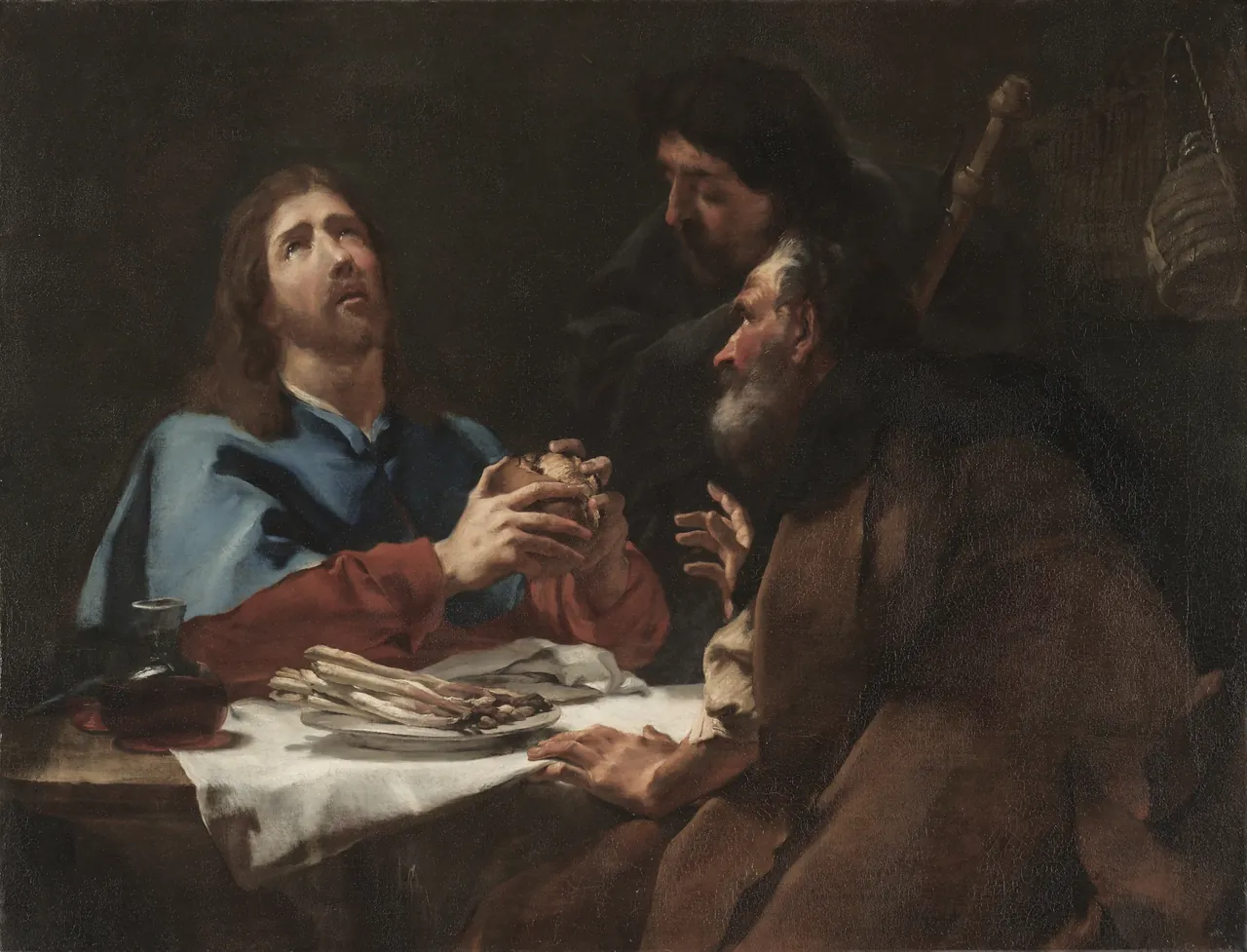
The Supper at Emmaus, an oil painting by Giovanni Battista Piazzetta of about 1720, showing the risen Christ at table with two disciples, beside the question of the resurrection.The Supper at Emmaus · c. 1720 · Cleveland Museum of Art · CC0 · museum record · Galeria Regni
Do not argue to win. "And the servant of the Lord must not strive; but be gentle unto all men, apt to teach, patient, In meekness instructing those that oppose themselves; if God peradventure will give them repentance to the acknowledging of the truth" (2 Timothy 2:24-25). You can win an argument and lose the person.
Find the question behind the question. "Why does God allow suffering?" asked in a seminar is a philosophical question. Asked at a graveside, it is a cry of grief. Answer the one actually being asked.
Say "I don't know" when you don't. Then offer to find out, and do. Honesty about the limits of your knowledge makes everything else you say more credible.
Bring it back to Jesus. Most objections can be explored for hours. In the end, the central question is the one Jesus asked: "But whom say ye that I am?" (Matthew 16:15). If He rose from the dead, many other questions can wait.
"I don't believe in God"
Ask first: "What God don't you believe in?" Many atheists have rejected a caricature that Christians also reject.
Then: Scripture says God's existence is evident in what He has made. "The heavens declare the glory of God; and the firmament sheweth his handywork" (Psalm 19:1). Paul: "For the invisible things of him from the creation of the world are clearly seen, being understood by the things that are made, even his eternal power and Godhead; so that they are without excuse" (Romans 1:20). You can ask: Why is there something rather than nothing? Why is the universe ordered and intelligible? Where do our sense of right and wrong and our longing for meaning come from?
And then tell your story if it fits. Many believers were once atheists. Lewis was one. I was one. I decided to read the Bible for one reason: to disprove it, so I'd have an excuse to stop going to church for good. Lee Strobel, a legal journalist, set out to investigate the evidence for Jesus and published what he found as The Case for Christ in 1998.4 J. Warner Wallace, a cold-case homicide detective, began his journey to faith, in his publisher's words, at the age of 35, when he applied his detective skills to the claims of the Gospels.5
Sy Garte told his story on The King Is Coming Show (TKIC #47): three generations of atheists — until, in his telling, a vision on a Pennsylvania highway. Watch it in his own words: youtube.com/watch?v=h-a_uZBKgDk Sy's account of what happened to him, shared as his testimony — weigh it for yourself.
"The Bible isn't reliable"
Ask: "What have you read about it?" Often the objection is second-hand.
Then two lines of answer. First, the New Testament presents itself as testimony from eyewitnesses and those who knew them: Luke wrote "Even as they delivered them unto us, which from the beginning were eyewitnesses, and ministers of the word" (Luke 1:2); Peter, "we have not followed cunningly devised fables ... but were eyewitnesses of his majesty" (2 Peter 1:16). The New Testament scholar Richard Bauckham has argued at length that the Gospels should be read as exactly that — testimony closely based on the accounts of eyewitnesses.6
Second, Paul, writing to Corinth within a generation of the events, said that the risen Christ "was seen of above five hundred brethren at once; of whom the greater part remain unto this present" (1 Corinthians 15:6) — in effect, "go and ask them".
On the text itself: the King James Bible is translated from the Received Text, the text the Reformation churches read. Where modern versions follow a different Greek text and leave out or change verses, you can see every one of those places, side by side, at kylelauriano.com/library/changes. Point the person to the free 1611 Reader at kylelauriano.com/library and invite them to read one Gospel for themselves. The best answer to "the Bible isn't reliable" is often "Have you read it?"
"How can anyone believe in a resurrection?"
This is the right question, because everything hangs on it. "If Christ be not raised, your faith is vain" (1 Corinthians 15:17).
Gary Habermas and Michael Licona, in The Case for the Resurrection of Jesus (2004), set out an argument built on a small number of historical facts that a wide range of scholars, including many sceptical ones, accept — among them that Jesus died by crucifixion, that His disciples believed He had risen and appeared to them, and that Paul, a persecutor of the church, was converted.7 Paul's own testimony is part of the evidence. Something turned the church's chief enemy into its chief missionary, and he told us what it was: "last of all he was seen of me also" (1 Corinthians 15:8).
Ask: "If He did rise, what would that mean for you?"
"I'm a good person"
Most people believe this, and by human standards many are. The question is what standard God uses.
Jesus raised it beyond outward behaviour: "That whosoever looketh on a woman to lust after her hath committed adultery with her already in his heart" (Matthew 5:28). James says, "For whosoever shall keep the whole law, and yet offend in one point, he is guilty of all" (James 2:10). Isaiah: "all our righteousnesses are as filthy rags" (Isaiah 64:6).
A gentle way in is to ask: "Have you ever lied? Ever taken something that wasn't yours? Ever been angry enough to wish someone harm?" The point is not to shame, but to show that "good" by our standard is not "righteous" by God's. "There is none righteous, no, not one" (Romans 3:10). And then the good news: Christ came for exactly those who are not good enough. "They that be whole need not a physician, but they that are sick" (Matthew 9:12).
"Christians are hypocrites"
Agree that many are, and that you have been one. Jesus was harder on religious hypocrisy than any critic: "Woe unto you, scribes and Pharisees, hypocrites! for ye are like unto whited sepulchres, which indeed appear beautiful outward, but are within full of dead men's bones" (Matthew 23:27). He warned that "Not every one that saith unto me, Lord, Lord, shall enter into the kingdom of heaven" (Matthew 7:21).
Then gently: "The hypocrisy of Christians doesn't tell you whether Jesus rose from the dead. It tells you that we need Him." Do not defend the indefensible. Do not let the conversation become about the church instead of Christ.
"What about other religions?"
Many people assume all religions say the same thing. They do not, and saying so respectfully is a kindness. Jesus said: "I am the way, the truth, and the life: no man cometh unto the Father, but by me" (John 14:6). Peter: "Neither is there salvation in any other" (Acts 4:12). Paul: "For there is one God, and one mediator between God and men, the man Christ Jesus" (1 Timothy 2:5).
The difference is not only in the claims but in the shape. Most religions are, at bottom, ways for people to reach God or enlightenment by effort. The gospel is the news that God has come to us, and done what we could not. "Not by works of righteousness which we have done, but according to his mercy he saved us" (Titus 3:5).
Nabeel Qureshi, raised a devout Muslim, came to Christian faith after long friendship and debate with a Christian friend from his university debate team, David Wood, and told the story in Seeking Allah, Finding Jesus (2014).8 Testimonies from those who have left other religions are among the most powerful you can point people to.
Steve Kang told his story on The King Is Coming Show (TKIC #49): he says he chanted eight hours a day to reach Nirvana — and, in his telling, woke up in hell instead. Watch it in his own words: youtube.com/watch?v=46SP1FgXfbY Steve's account of what happened to him, shared as his testimony — weigh it for yourself.
"I was raised in a church that said only it was right"
Some people's objection to Christianity is really an objection to a group that claimed to be the only true church and controlled them by it. Listen carefully. Do not attack the group or speculate about its motives; tell what Scripture says and let them weigh it. The question is not "which organisation?" but "what did Christ do, and have you trusted Him?" The gospel frees people from depending on any institution for their standing with God: "For by grace are ye saved through faith" (Ephesians 2:8).
Vanessa Sprenger told her story on The King Is Coming Show (TKIC #6): raised in a group that told her it alone was saved. Watch it in her own words: youtube.com/watch?v=3dPK9NJ8GqY Vanessa's account of what happened to her, shared as her testimony — weigh it for yourself.
"If God is good, why is there suffering?"
This is the hardest question, and the most human. If the person is suffering, comfort first; the arguments can wait. Weep with them (Romans 12:15).
When the question is asked to be answered, a few things can be said honestly. Scripture does not pretend suffering is unreal or good; it calls death an enemy (1 Corinthians 15:26). Suffering entered the world through sin, and the whole creation now "groaneth and travaileth in pain together until now" (Romans 8:22). God has not stayed distant from it: in Christ He entered it, suffered and died. And He has promised to end it: "And God shall wipe away all tears from their eyes; and there shall be no more death, neither sorrow, nor crying, neither shall there be any more pain" (Revelation 21:4).
Paul, who suffered more than most, could still write: "For I reckon that the sufferings of this present time are not worthy to be compared with the glory which shall be revealed in us" (Romans 8:18). That is not an explanation of every sorrow. It is a promise that sorrow will not have the last word.
"What about people who have never heard?"
Begin with God's character: "Shall not the Judge of all the earth do right?" (Genesis 18:25). God is more just and more merciful than we are. Scripture says that all people have some knowledge of God through creation (Romans 1:20), and that God placed the nations "That they should seek the Lord, if haply they might feel after him, and find him, though he be not far from every one of us" (Acts 17:27).
Then turn it around, gently. The person asking has heard. "So then every one of us shall give account of himself to God" (Romans 14:12). And the question is the reason Christians go to the nations at all: "how shall they hear without a preacher?" (Romans 10:14).
Further reading to recommend
Have a few trustworthy books ready to recommend or give:
C. S. Lewis, Mere Christianity (1952) — for thoughtful sceptics.
Lee Strobel, The Case for Christ (1998) — for those who want the evidence laid out.
J. Warner Wallace, Cold-Case Christianity (2013) — for those who think like investigators.
Gary Habermas and Michael Licona, The Case for the Resurrection of Jesus (2004) — for the central question.
Nabeel Qureshi, Seeking Allah, Finding Jesus (2014) — for Muslim friends and anyone interested in comparing religions.
Rosaria Butterfield, The Secret Thoughts of an Unlikely Convert (2012) — for those who think Christianity is only for people unlike them.
But above all, recommend the Bible itself. Suggest the Gospel of John, and the free 1611 Reader at kylelauriano.com/library.
This part matters because many believers can tell their story and explain the gospel, but freeze at the point of asking for a response. Others push too hard and leave people feeling manipulated. Scripture shows a better way: a clear, personal invitation, offered with urgency and without pressure, leaving the outcome to God.
Persuade, but do not manipulate
Paul was not shy about persuading. "Knowing therefore the terror of the Lord, we persuade men" (2 Corinthians 5:11). And: "Now then we are ambassadors for Christ, as though God did beseech you by us: we pray you in Christ's stead, be ye reconciled to God" (2 Corinthians 5:20). That is pleading, not polite suggestion.
But he drew a sharp line between persuasion and manipulation. He and his companions "have renounced the hidden things of dishonesty, not walking in craftiness, nor handling the word of God deceitfully; but by manifestation of the truth commending ourselves to every man's conscience in the sight of God" (2 Corinthians 4:2). And he did not trust clever technique: "my speech and my preaching was not with enticing words of man's wisdom, but in demonstration of the Spirit and of power: That your faith should not stand in the wisdom of men, but in the power of God" (1 Corinthians 2:4-5).
The difference: persuasion addresses the conscience with the truth. Manipulation works on emotion, guilt, fear of embarrassment or social pressure to get a result. A "decision" produced by manipulation is not faith, and it often leaves a person inoculated against the real thing.
Not pressure: - Explaining the gospel clearly and asking if they understand. - Saying honestly that you hope they will trust Christ. - Asking directly whether they want to. - Telling them that it matters, and that it is urgent.
Pressure: - Refusing to let the conversation end without a "decision". - Making them feel foolish or rude for saying no. - Promising things God has not promised (health, wealth, an easy life). - Using a crisis to extract a commitment they do not understand. - Counting a repeated prayer as proof of conversion.
God gives the increase
The single truth that frees you from both fear and pushiness is this: you cannot convert anyone. "No man can come to me, except the Father which hath sent me draw him" (John 6:44). Paul: "I have planted, Apollos watered; but God gave the increase. So then neither is he that planteth any thing, neither he that watereth; but God that giveth the increase" (1 Corinthians 3:6-7). Lydia believed because "the Lord opened" her heart (Acts 16:14).
That does not make your words unimportant. God uses them: "faith cometh by hearing" (Romans 10:17). But it means the result is not on your shoulders. You can ask clearly and then rest.
How to ask
When the conversation has reached the gospel and the person seems engaged, ask a simple, honest question. For example:
"Does that make sense?"
"Is there anything stopping you from trusting Christ?"
"Would you like to turn to Him?"
"Where are you with all this?"
Then stop talking and listen.
If they say yes
Make sure they understand what they are saying yes to. Go back over it briefly: that they have sinned against God, that Christ died for their sins and rose again, that they are turning from sin and trusting Him alone. Ask if they believe it.
Then they can pray — not because a prayer saves, but because faith speaks to the One it trusts. "For whosoever shall call upon the name of the Lord shall be saved" (Romans 10:13). Encourage them to pray in their own words. If they want help, you might offer a guide like this, making clear that the words matter less than the heart:
Lord Jesus, I know I have sinned against You, and I deserve Your judgement. I believe You died for my sins and rose again. I turn from my sin, and I trust You to forgive me and save me. Make me Yours. I will follow You.
Mine was much shorter: "Jesus, if you are real, show me — and I'll serve you." The Lord hears honest prayers, whatever their length.
Then do not leave them alone. Part 6 deals with what comes next. And tell them plainly what Scripture says comes next: "Repent, and be baptized every one of you in the name of Jesus Christ for the remission of sins, and ye shall receive the gift of the Holy Ghost" (Acts 2:38).
If they say "maybe" or "not yet"
Many people need time. Nicodemus came by night and believed later. Agrippa said "almost". Respect it.
Thank them for being honest.
Ask what is holding them back. Sometimes it is a question you can help with; sometimes it is a cost they are counting. Jesus told people to count the cost (Luke 14:28).
Offer something to read — a Gospel, a book from Part 4.
Ask if you can talk again, and then do.
Pray for them by name.
Do not hide the urgency. "Behold, now is the accepted time; behold, now is the day of salvation" (2 Corinthians 6:2). But say it as a friend, not as a salesman closing a deal.
If they say no
Some will. Some will mock, as at Athens (Acts 17:32). Jesus loved the rich young ruler and let him walk away (Mark 10:21-22).
Thank them for listening.
Do not argue or shame.
Keep the friendship, if they will have it. Your love for them should not depend on their answer.
Keep praying. "The Lord ... is longsuffering to us-ward, not willing that any should perish, but that all should come to repentance" (2 Peter 3:9).
This part matters because the Great Commission does not end at a decision. "Go ye therefore, and teach all nations, baptizing them ... Teaching them to observe all things whatsoever I have commanded you" (Matthew 28:19-20). Baptizing and teaching. A new believer left alone is like a newborn left on a doorstep. Paul's picture is the right one: "But we were gentle among you, even as a nurse cherisheth her children" (1 Thessalonians 2:7).
The pattern of Acts 2
Acts 2 shows the first converts' first steps: "Then they that gladly received his word were baptized: and the same day there were added unto them about three thousand souls. And they continued stedfastly in the apostles' doctrine and fellowship, and in breaking of bread, and in prayers" (Acts 2:41-42).
A Netherlandish engraving of the Last Supper from about 1485, set beside the breaking of bread that Acts 2 names among the first steps of new believers.The Last Supper · c. 1485 · Art Institute of Chicago · CC0 · museum record · Galeria Regni
Five things: baptism; the apostles' teaching; fellowship; the Lord's Supper; prayer. Every new believer needs all five.
The first week
The same day. Pray with them. Give them a Bible — a King James — or show them the free 1611 Reader at kylelauriano.com/library. Suggest they begin with the Gospel of John. Exchange numbers. Arrange to meet again within a few days.
Within three days. Meet or call. Ask what they have read and what questions they have. Read a chapter of John together.
Before the week is out. Invite them to church with you. Sit with them. Introduce them to your pastor and to a few believers.
The first month
Week 1: Assurance. New believers often doubt within days. Show them what God's word says, not what their feelings say. "My sheep hear my voice, and I know them, and they follow me: And I give unto them eternal life; and they shall never perish, neither shall any man pluck them out of my hand" (John 10:27-28). John: "These things have I written unto you that believe on the name of the Son of God; that ye may know that ye have eternal life" (1 John 5:13).
Teach the warnings too, as Scripture does. "Take heed, brethren, lest there be in any of you an evil heart of unbelief, in departing from the living God. But exhort one another daily" (Hebrews 3:12-13). Peter: "Wherefore the rather, brethren, give diligence to make your calling and election sure: for if ye do these things, ye shall never fall" (2 Peter 1:10). Christians have long debated how the promises and the warnings fit together. A new believer does not need a system; he needs both sets of texts, taken seriously.
Week 2: Baptism. Explain what Scripture says about baptism, and connect them with their church to be baptized. "Repent, and be baptized every one of you in the name of Jesus Christ for the remission of sins" (Acts 2:38). The Ethiopian asked, "what doth hinder me to be baptized?" (Acts 8:36). The Philippian jailer "was baptized, he and all his, straightway" (Acts 16:33). Baptism is the first act of obedience, and it should not be put off.
Week 3: Prayer and the word. Show them how to read a passage and pray it back to God. Encourage a simple daily habit: a chapter of a Gospel and a few minutes of honest prayer. Teach them to meditate on Scripture the biblical way — not emptying the mind, but filling it with God's word: "his delight is in the law of the LORD; and in his law doth he meditate day and night" (Psalm 1:2).
Week 4: Church and telling others. Help them find their place in a church that preaches the Bible. And help them begin to tell their own story. The man from the tombs was sent home the same day: "Go home to thy friends, and tell them how great things the Lord hath done for thee" (Mark 5:19). Give them the companion paper Craft Your Testimony.
The first year
Over the following months, keep meeting — weekly if you can, then less often as they grow. Read through a Gospel together, then Acts, then Romans. Answer questions. Pray together. Help them through their first serious temptation and their first serious doubt. Celebrate their baptism.
And aim to work yourself out of a job. Paul told Timothy: "And the things that thou hast heard of me among many witnesses, the same commit thou to faithful men, who shall be able to teach others also" (2 Timothy 2:2). The goal is not a dependent disciple but one who can disciple someone else.
When a new believer struggles
They will. Some will fall back into old sins; some will doubt; some will stop coming. Do not panic, and do not give up. Paul wrote to churches full of struggling believers, and his tone was nearly always that of a father. Remind them of grace, call them to repentance where it is needed, and keep showing up. Not every story ends well. But many that look hopeless at six months look very different at five years.
This part matters because principles come alive in practice. The three conversations below are hypothetical. They are not real people and not real events; they are illustrations built to show how the principles in this paper might work out in ordinary life. Each one is shortened. Real conversations are slower, messier and longer.
A colleague in grief
Suppose a colleague, whom we will call Sam, returns to work after his mother's funeral. At lunch, you ask how he is.
Sam: Honestly? Not great. Everyone keeps saying she's "in a better place". I don't even know what that means.
You: I'm sorry. That must be hard to hear when you're not sure you believe it. What do you think happens when we die?
Sam: I don't know. I used to think nothing. Now I just don't know.
You: That's honest. Can I tell you why I believe what I believe about it? You can tell me to stop.
Sam: Go on.
You tell your story in about three minutes — what you were, how the gospel reached you, what changed. Then you build the bridge.
You: The thing is, my hope isn't really about a feeling. It's about something that happened. Christians believe Jesus actually died and actually came back to life, and that because of that, death isn't the end for anyone who trusts Him.
Sam: How can you believe something like that?
You: I didn't, for a long time. What changed my mind was reading the Gospels for myself. Have you ever read one?
Sam: Not really.
You: Would you read John if I gave you a copy? It's short. I'd love to hear what you think.
Notice: you listened first, asked permission, told your story briefly, made one clear gospel claim, and offered a next step. You did not try to settle every question over one lunch. The conversation will continue.
A family member who has heard it before
Suppose your sister, who grew up in the same church you did, says at a family meal: "You've got really religious lately."
You: I suppose I have. It's not really religion, though. I went to church for twenty years and didn't know God.
Sister: What's the difference?
You: Before, I thought being a Christian meant being good enough and showing up. What I found out is that none of us is good enough — me least of all — and that Jesus died for exactly that. It's not about what I do for Him. It's about what He did for me.
Sister: That sounds like what we were taught.
You: Maybe it was, and I wasn't listening. For me it was the difference between knowing the words and actually trusting Him. Can I ask you — do you think you're right with God?
Sister: I hope so. I try.
You: I tried too. That was the problem. I'm not trying to preach at you. I just wish someone had asked me that years ago.
Notice: family conversations need special gentleness, because family know you best and remember your worst. You did not lecture; you told what changed for you and asked one honest question. You will probably need to live it for a long time before the words carry weight. "Go home to thy friends" (Mark 5:19) is often the hardest mission field.
A sceptical friend
Suppose a friend who is a convinced atheist asks: "I don't get it. You're smart. How can you believe all this?"
You: That's a fair question. I used to think like you do. I actually started reading the Bible to prove it was nonsense.
Friend: What happened?
You: It didn't go how I expected. I'll tell you the whole story some time if you want. But the short version is, the more I looked at Jesus, the harder it was to dismiss Him. What do you think of Him, as a historical person?
Friend: Probably a real guy. Good teacher. Everything else was added later.
You: That's a common view. The trouble I ran into is that the things He said about Himself don't fit "good teacher". He claimed to forgive sins and to be the only way to God. And the earliest Christians, within a few years, were saying He'd risen from the dead — people who'd known Him and were willing to die for it. Something happened. What do you think it was?
Friend: Hallucinations? Legend?
You: Those are the main options. I've looked at them pretty hard. I'd be glad to go through it with you. Would you read a book on it if I gave you one?
Notice: you took the question seriously, told just enough of your story to show you have been where he is, moved quickly to the central issue — who Jesus is and whether He rose — and offered a resource (perhaps Habermas and Licona, or Strobel, from Part 4). You did not need to win that night.
A testimony opens a door. The gospel is what must go through it.
The conversations in Scripture show how. Jesus began with an ordinary need at a well and ended with "I that speak unto thee am he" (John 4:26). Philip asked a question, "began at the same scripture, and preached unto him Jesus" (Acts 8:35). Paul started from an altar to an unknown God and finished with repentance, judgement and the resurrection. He asked King Agrippa directly, and when the answer was "almost", he let it rest in God's hands.
Church history adds its witness. Lewis came to faith through friends who took his objections seriously. Butterfield came through a dinner invitation. Neither was a technique; both were believers who opened their lives as well as their mouths.
The method that follows is simple to say and lifelong to learn. Listen first. Ask good questions. Tell your story briefly and truthfully. Build the bridge from your story to His. Make the gospel plain — sin, judgement, Christ crucified and risen, repentance and faith, baptism and new life — without softening any of it. Answer questions with meekness and honesty. Invite clearly and without pressure. And when someone believes, walk with them.
You will not do it perfectly. Nobody does. But "God that giveth the increase" (1 Corinthians 3:7) does not need you to be perfect. He needs you to be faithful.
A next step
This week:
Write down the names of three people you would love to see come to Christ. Pray for them by name every day.
Practise the bridge sentence from your story to the gospel until it comes naturally.
Learn the six parts of the gospel in Part 3 well enough to say each in a sentence of your own.
Ask one person one good question from Part 2.
An invitation
If you have read this paper and realised you have never yourself done what it describes — never turned from your sin and trusted Christ — then everything in Part 3 is for you. "Behold, now is the accepted time; behold, now is the day of salvation" (2 Corinthians 6:2). You do not need the right words. Here is the turning point of my story, in my own words. Then one day I got on my knees and prayed: "Jesus, if you are real, show me — and I'll serve you." He has promised: "him that cometh to me I will in no wise cast out" (John 6:37).
"Now then we are ambassadors for Christ, as though God did beseech you by us: we pray you in Christ's stead, be ye reconciled to God." (2 Corinthians 5:20)
1Barna Group, "Almost Half of Practicing Christian Millennials Say Evangelism Is Wrong," 5 February 2019, from the report Reviving Evangelism (commissioned by Alpha USA). Based on online surveys of 992 practising Christians and 1,001 U.S. adults who are not practising Christians, conducted 8–17 May 2018. https://www.barna.com/research/millennials-oppose-evangelism/.↩
2C. S. Lewis, Surprised by Joy: The Shape of My Early Life (London: Geoffrey Bles, 1955), ch. 14 (the Trinity Term of 1929; Dyson and Tolkien) and ch. 15.↩
3Rosaria Champagne Butterfield, The Secret Thoughts of an Unlikely Convert: An English Professor's Journey into Christian Faith (Pittsburgh: Crown & Covenant, 2012); and Rosaria Champagne Butterfield, "My Train Wreck Conversion," Christianity Today, 7 February 2013, https://www.christianitytoday.com/2013/02/my-train-wreck-conversion/.↩
4Lee Strobel, The Case for Christ: A Journalist's Personal Investigation of the Evidence for Jesus (Grand Rapids: Zondervan, 1998).↩
5J. Warner Wallace, Cold-Case Christianity: A Homicide Detective Investigates the Claims of the Gospels (Colorado Springs: David C. Cook, 2013). On his background, see David C Cook, "Cold Case Christianity," https://davidccook.org/?p=25201.↩
6Richard Bauckham, Jesus and the Eyewitnesses: The Gospels as Eyewitness Testimony, 2nd ed. (Grand Rapids: Eerdmans, 2017).↩
7Gary R. Habermas and Michael R. Licona, The Case for the Resurrection of Jesus (Grand Rapids: Kregel, 2004).↩
8Nabeel Qureshi, Seeking Allah, Finding Jesus: A Devout Muslim Encounters Christianity (Grand Rapids: Zondervan, 2014). On his friendship with David Wood, see Michael R. Licona, "Remembering My Friend Nabeel Qureshi," Logos, 18 September 2017, https://www.logos.com/grow/remembering-my-friend-nabeel-qureshi/.↩
Seven people who say they met Jesus. What happened, in their own words.
Seven testimonies from The King Is Coming Show, one a morning — the story as they tell it, the verse the story lands on in the 1611 King James, and the page itself. Then the teaching that explains it. Free.
This is practical teaching, not proof. It's drawn from Scripture and from walking this road myself. If you're still weighing the basics — whether God is real, whether the Bible can be trusted — I'd encourage you to start with the Skeptic resources in the Research Hub before diving in here.