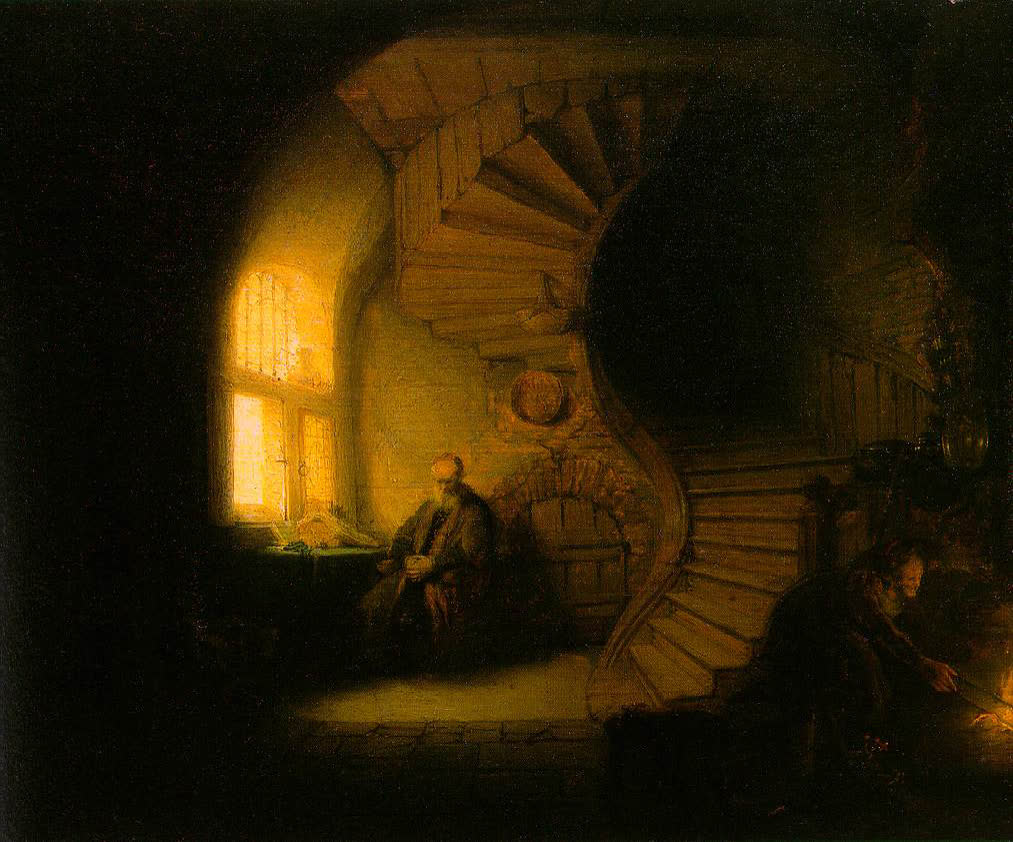
A philosopher in meditation beside a sunlit window

Disciple · Checklist

Rembrandt, 1632 · Public domain

Back to Research Hub

Defending Your Faith

Read the paper (PDF)·or read it here ↓

GIVING A REASON FOR THE HOPE THAT IS IN YOU

A study of the reasons Christians give for believing — God, evil, science, the resurrection, the Bible and the great doctrines — and of how to give them with meekness and fear.

Abstract

What does it mean to "give an answer to every man that asketh you a reason of the hope that is in you" (1 Peter 3:15)? This paper is a working course in Christian apologetics for ordinary believers. It argues from the King James Bible first, and second from the long tradition of Christians who have given reasons for their faith: Justin Martyr, Tertullian, Anselm, Aquinas, Pascal, Newton, C. S. Lewis, Alvin Plantinga and others. It sets out the case for God's existence from creation, design, conscience and desire; answers the problem of evil without softening hell; defends a literal Genesis — six days, a real Adam and Eve, a real Fall, a global Flood — against the myth of a war between science and faith; gives the historical evidence for the resurrection from Paul, the Gospels, Tacitus, Josephus and Pliny; explains why the King James Bible keeps passages such as the end of Mark (16:9–20) and the woman taken in adultery in John 8; and defends the Trinity, the incarnation and the atonement without the analogies that distort them. It closes with practical help for real conversations. It is written for Christians who want to be ready.

What’s inside

  1. Introduction
  2. Part 1: The Case for God
  3. Part 2: Evil, Suffering and Hell
  4. Part 3: Science, Creation and the Flood
  5. Part 4: Jesus in History and the Resurrection
  6. Part 5: Can We Trust the Bible?
  7. Part 6: Defending the Great Doctrines
  8. Part 7: How to Give an Answer
  9. Conclusion

Research paper · 9 chapters · 36 notes · October 2026

"The heart of the righteous studieth to answer." — Proverbs 15:28 (KJV)Read in the 1611 →

Read the paper here

About 49 minutes · 9 parts · the PDF has the same text

Introduction

3 min read

Sooner or later someone will ask you why you believe. It may be a co-worker who thinks faith is for people who have not read enough science. It may be a friend whose child has died and who wants to know where God was. It may be your own teenager, home from a year at university with questions you never had to answer. Or it may be the voice in your own head at three in the morning.

The Bible expects this. Peter wrote to Christians scattered across what is now Turkey, people who were being slandered for their faith: "But sanctify the Lord God in your hearts: and be ready always to give an answer to every man that asketh you a reason of the hope that is in you with meekness and fear" (1 Peter 3:15).

The word translated "answer" is the Greek apologia, a reasoned defence, the kind a man would make in court. That is where the word "apologetics" comes from. It does not mean apologising for the faith. It means explaining and defending it.

Why this matters

Apologetics matters for three reasons.

For the questioner. Many people never consider the gospel because they think it has already been disproved — by science, by the problem of evil, by the claim that the Bible has been changed beyond recognition. Those objections deserve answers. Paul "reasoned in the synagogue every sabbath, and persuaded the Jews and the Greeks" (Acts 18:4). He did not ask people to believe without reasons.

For the church. Jude wrote that it was "needful for me to write unto you, and exhort you that ye should earnestly contend for the faith which was once delivered unto the saints" (Jude 3). Every generation of Christians has to learn why it believes, or its children will not.

For you. Faith is not the same as certainty about every question. But a believer who knows the reasons for the faith stands more firmly when doubts come. Paul's goal was "Casting down imaginations, and every high thing that exalteth itself against the knowledge of God, and bringing into captivity every thought to the obedience of Christ" (2 Corinthians 10:5). Our thoughts need defending too.

What apologetics cannot do

It is just as important to know what apologetics cannot do. It cannot make anyone a Christian. "But the natural man receiveth not the things of the Spirit of God: for they are foolishness unto him: neither can he know them, because they are spiritually discerned" (1 Corinthians 2:14). Arguments can clear away rubble; only God can raise the dead. "So then faith cometh by hearing, and hearing by the word of God" (Romans 10:17).

C. S. Lewis, who knew both sides of the argument, put the matter honestly in Mere Christianity: "I am not asking anyone to accept Christianity if his best reasoning tells him that the weight of the evidence is against it."1 The aim of apologetics is to show that the weight of the evidence is not against it, and then to point to Christ.

A word about me

I was raised Roman Catholic but never really connected — I went through the motions, fell asleep in the pews, and faked being sick to skip Mass. Eventually I gave up and called myself an atheist. I decided to read the Bible for one reason: to disprove it, so I'd have an excuse to stop going to church for good.

It did the opposite. Genesis gripped me. In Matthew I read Jesus' own words and felt the weight of my own sin for the first time. I came to faith in 2022, and my wife came to faith a month later. The rest of my story is at kylelauriano.com/about.

That is part of why I believe the reasons in this paper matter — and why I believe they are not the whole story. I came to disprove God. He met me instead — and I couldn't unsee what time it is.

How this paper is built

Seven parts follow. Part 1 sets out the case for God's existence. Part 2 faces the problem of evil and suffering, and the hard doctrine of hell. Part 3 deals with science and creation. Part 4 gives the historical evidence for the resurrection of Jesus. Part 5 asks whether we can trust the Bible. Part 6 defends the Trinity, the incarnation and the atonement. Part 7 is practical: the different ways Christians have given reasons, and how to have a real conversation with a real person.

A note on Scripture: every verse in this paper is quoted from the King James Bible. You can read it free in the 1611 Reader at kylelauriano.com/library. A KJV with Strong's Concordance is the best study tool most believers will ever need.

Part 1 — The Case for God

8 min read

This part comes first because every other conversation depends on it. If there is no God, there is no point arguing about the resurrection or the Bible. And many people today assume, without ever having examined it, that belief in God is a leftover from a pre-scientific age. It is not. The arguments that follow have been made by some of the best minds in history, and they are still debated in universities today.

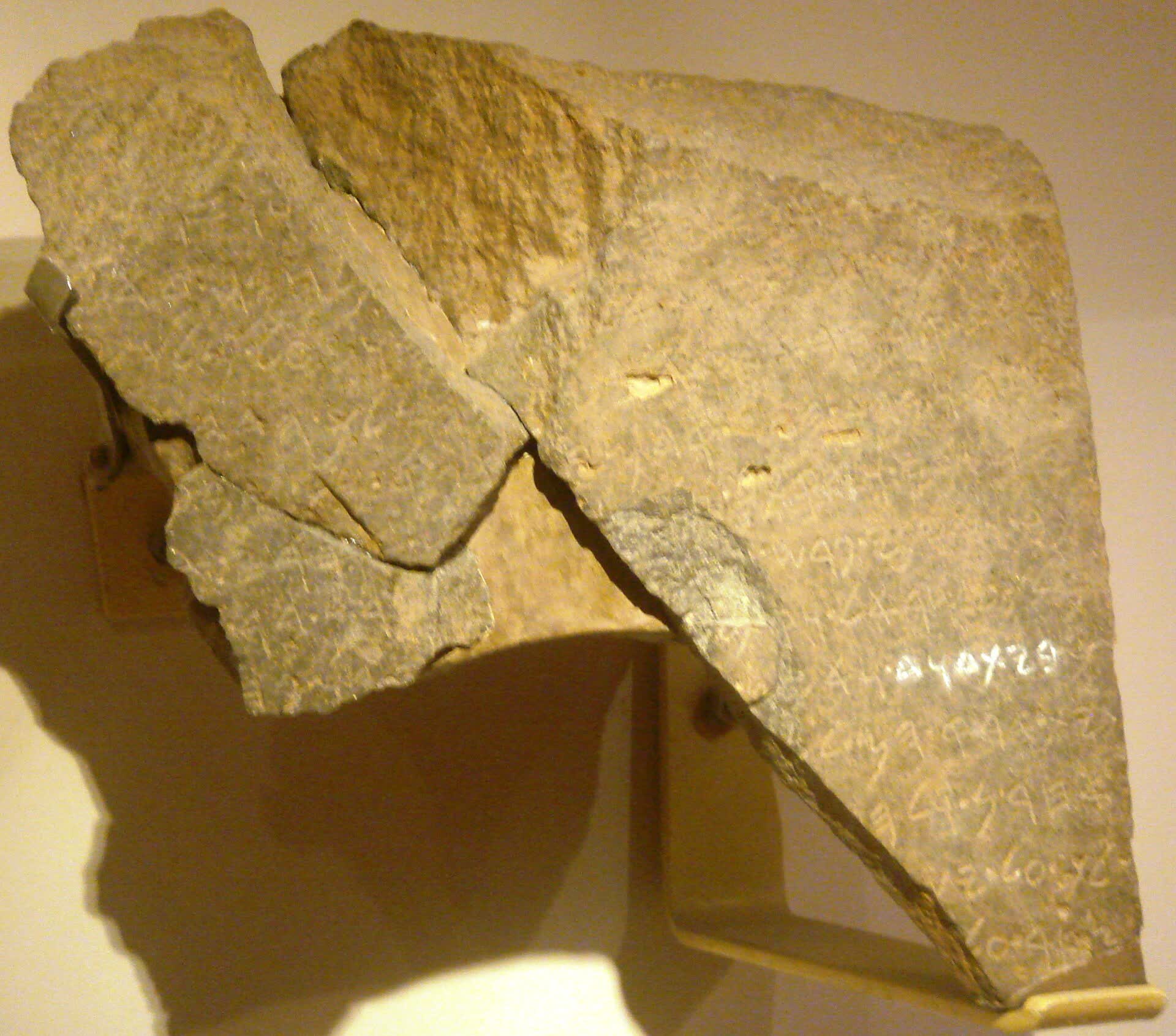
The Tel Dan Stele — basalt fragment inscribed in Aramaic
The Tel Dan Stele (9th century BC, northern Israel) — the first inscription found outside the Bible to name the “House of David.”בית השלום, Hebrew Wikipedia · Attribution

Scripture itself says the evidence for God is all around us. "The heavens declare the glory of God; and the firmament sheweth his handywork" (Psalm 19:1). Paul says the same: "For the invisible things of him from the creation of the world are clearly seen, being understood by the things that are made, even his eternal power and Godhead; so that they are without excuse" (Romans 1:20). The classic arguments are, in a sense, careful ways of saying what those verses say.

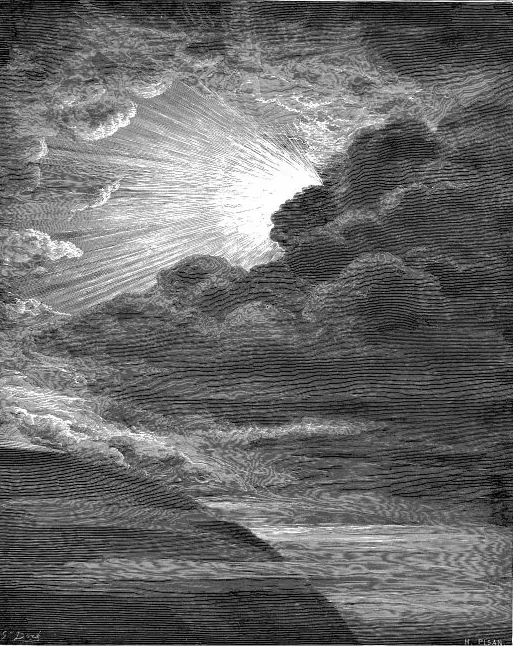
The Creation of Light
An 1866 engraving titled The Creation of Light, illustrating the opening verses of Genesis, where the universe has a beginning because God spoke it into being.The Creation of Light · 1866 · Wikimedia Commons · Public domain · museum record · Galeria Regni

Why is there something rather than nothing?

The first question is the oldest. Why does anything exist at all? The German philosopher and mathematician Gottfried Wilhelm Leibniz put it in exactly those words in 1714: why is there something rather than nothing?2 Everything we see depends on something else for its existence. The table depends on the tree and the carpenter; the tree on the seed, the soil and the sun. But the whole chain cannot be made only of dependent things, or nothing would explain why there is a chain at all. There must be something that exists by the necessity of its own nature — something that does not depend on anything else.

Thomas Aquinas made a similar argument in the thirteenth century. In his Summa Theologica he wrote that "The existence of God can be proved in five ways," and the first is from motion and change. Whatever is changed is changed by another; but the series cannot go back for ever; "Therefore it is necessary to arrive at a first mover, put in motion by no other; and this everyone understands to be God."3

The Bible begins exactly here. "In the beginning God created the heaven and the earth" (Genesis 1:1). God is not one more thing inside the universe. He is the One on whom everything else depends. "Before the mountains were brought forth, or ever thou hadst formed the earth and the world, even from everlasting to everlasting, thou art God" (Psalm 90:2).

The universe had a beginning

A second form of the argument starts from the fact that the universe began. The philosopher William Lane Craig has given it a simple shape, drawn from medieval Islamic and Christian thinkers, which he called the kalam argument: whatever begins to exist has a cause; the universe began to exist; therefore the universe has a cause.4

The first premise is common sense: things do not pop into being out of nothing, uncaused. The second is what the Bible has always said, and it came as a surprise to many scientists in the twentieth century, who had assumed the universe was eternal. The astronomer Robert Jastrow, who described himself as an agnostic, wrote about the discovery that the universe had a beginning in his book God and the Astronomers. "For the scientist who has lived by his faith in the power of reason," he wrote, "the story ends like a bad dream. He has scaled the mountains of ignorance; he is about to conquer the highest peak; as he pulls himself over the final rock, he is greeted by a band of theologians who have been sitting there for centuries."5

Christians should be careful here. Scientific theories change, and the faith does not rest on any one of them. This paper makes no claim about the age of the earth or the universe, either way; Scripture does not give us that number, and we should not pretend it does. What Scripture does say is that the world had a beginning, and that it was made by the word of God: "Through faith we understand that the worlds were framed by the word of God, so that things which are seen were not made of things which do appear" (Hebrews 11:3). A cause that brings space, time and matter into being must itself be outside space, time and matter — spaceless, timeless, immensely powerful. That is a description of the God of Genesis 1:1.

Design

The second family of arguments starts from order and design. Long before modern science, the psalmist marvelled at the human body: "I will praise thee; for I am fearfully and wonderfully made" (Psalm 139:14). In 1802 the English clergyman William Paley put the argument in a famous picture. Suppose, he said, you were crossing a heath and found a watch on the ground. You would not suppose it had always been there, or had come together by chance. Its parts are put together for a purpose; therefore it had a maker. The living world, he argued, shows far more intricate design than any watch.6

Isaac Newton, who did more than anyone to show that the universe runs by mathematical law, did not think those laws made God unnecessary. At the end of his Principia he wrote: "This most beautiful system of the sun, planets, and comets, could only proceed from the counsel and dominion of an intelligent and powerful Being." And he went on: "This Being governs all things, not as the soul of the world, but as Lord over all."7

The modern form of the argument points to how finely balanced the laws and constants of physics are for life to exist at all, and to the information-rich code inside every living cell. Information, in every case we know of, comes from a mind. The Christian need not overstate this. But it is fair to say that the universe looks designed because it was. "By the word of the LORD were the heavens made; and all the host of them by the breath of his mouth" (Psalm 33:6). And again: "For he spake, and it was done; he commanded, and it stood fast" (Psalm 33:9).

The British philosopher Antony Flew argued for atheism for most of his career. Late in life he announced that the evidence, especially the complexity of life and the order of nature, had persuaded him that there is a God, and he set out his reasons in There Is a God (2007). He did not become a Christian; he came to believe in a Creator.8 His change shows that the design argument is not only for believers. It moves honest minds.

The moral law

The third argument starts from conscience. Every human being knows that some things are really wrong — not merely unpleasant, or unpopular, but wrong. Torturing a child for fun is wrong in every culture and every century, whether or not anyone agrees. Paul says this sense of right and wrong is written into us: the Gentiles "shew the work of the law written in their hearts, their conscience also bearing witness" (Romans 2:15).

But if there is a real moral law, binding on everyone, there must be a lawgiver. A law of nature like gravity only describes what does happen; a moral law tells us what ought to happen, and we break it every day. Where does an "ought" come from, in a universe of atoms and chance? It cannot come from evolution, which can tell us only what helped our ancestors survive. It cannot come from society, or we could never say a whole society was wrong — as we say of slavery or genocide.

C. S. Lewis tells how this argument turned against his own atheism. "My argument against God was that the universe seemed so cruel and unjust. But how had I got this idea of just and unjust? A man does not call a line crooked unless he has some idea of a straight line."9 The very complaint that the world is unjust presupposes a standard of justice outside the world.

Desire and the restless heart

The fourth argument is less a proof than a pointer, but it speaks to many people. Human beings have desires that nothing in this world satisfies. We are made for something we have never had. "He hath made every thing beautiful in his time: also he hath set the world in their heart" (Ecclesiastes 3:11).

Blaise Pascal, the seventeenth-century mathematician, put it this way in his Pensées: we try to fill our emptiness with everything around us, "But these are all inadequate, because the infinite abyss can only be filled by an infinite and immutable object, that is to say, only by God Himself."10 Lewis gave the argument its best-known form: "If I find in myself a desire which no experience in this world can satisfy, the most probable explanation is that I was made for another world."11

A note on the ontological argument

There is one more classic argument that you may meet. In the eleventh century Anselm of Canterbury argued in his Proslogion that God is "a being than which nothing greater can be conceived," and that such a being must exist in reality and not only in the mind, since existing in reality is greater.12 Philosophers have argued about it ever since; some find it convincing, many do not. It is worth knowing, but it is rarely the argument that helps a friend at the kitchen table. The others are usually better places to begin.

What the arguments show

None of these arguments, on its own, proves the God of the Bible. Together they show that the belief in God is not irrational, and that the alternative has questions it cannot answer: why there is anything at all, why it began, why it is ordered, why we know right from wrong, and why our hearts are restless. "The fool hath said in his heart, There is no God" (Psalm 14:1). The Bible's word "fool" is not an insult to intelligence. It describes a man who will not follow the evidence where it leads.

But the arguments only bring us to the door. Who God is, and what He has done, we learn from His word and from His Son.

Sy Garte told his story on The King Is Coming Show (TKIC #47): three generations of atheists, and then, in his telling, a vision on a Pennsylvania highway. Watch it in his own words: youtube.com/watch?v=h-a_uZBKgDk Sy's account of what happened to him, shared as his testimony — weigh it for yourself.

Part 2 — Evil, Suffering and Hell

8 min read

No objection to the Christian faith is more common, or more painful, than this one. If God is all-good and all-powerful, why is there so much evil and suffering? This part matters because the question is rarely only intellectual. Often it is asked through tears. A good answer must be true, and it must be gentle.

Two forms of the question

Philosophers distinguish two forms of the problem. The logical problem says that God and evil cannot both exist: a good God would want to prevent evil, an all-powerful God could, so if evil exists, God does not. The emotional or existential problem is the cry of the sufferer: "Why did God let this happen to me?"

The first needs an argument. The second needs a friend, and a cross.

The logical problem

The logical problem assumes that a good and all-powerful God could have no good reason for allowing evil. But that is a large assumption. If God has a reason we cannot see — even one — the contradiction disappears.

The philosopher Alvin Plantinga set out what he called the free will defence in God, Freedom, and Evil (1974). In brief: a world with creatures who freely choose good is more valuable than a world of robots. But if creatures are truly free, it is up to them, not God, whether they choose good or evil. God could create free creatures, or He could guarantee they never do wrong; He could not do both. So it is possible that God has a good reason for allowing moral evil: the value of real freedom and real love.13

The Fall

Scripture gives the deeper reason. God made the world good. "And God saw every thing that he had made, and, behold, it was very good" (Genesis 1:31). There was no death, no suffering, no sin. Then a real man and a real woman, in a real garden, disobeyed a real command: "But of the tree of the knowledge of good and evil, thou shalt not eat of it: for in the day that thou eatest thereof thou shalt surely die" (Genesis 2:17).

Everything changed. God said to Adam, "cursed is the ground for thy sake; in sorrow shalt thou eat of it all the days of thy life; Thorns also and thistles shall it bring forth to thee" (Genesis 3:17-18). Paul explains the whole history of human suffering from that moment: "Wherefore, as by one man sin entered into the world, and death by sin; and so death passed upon all men, for that all have sinned" (Romans 5:12). Even creation itself was affected: "For the creature was made subject to vanity, not willingly, but by reason of him who hath subjected the same in hope" (Romans 8:20).

This is why it matters that Adam and Eve were real and the Fall was a real event. If death and suffering were part of the world from the start, as God's chosen way of making it, then God is the author of the very evils the Bible calls His enemies. But Scripture says the opposite: death is an intruder, the result of sin, "the last enemy that shall be destroyed" (1 Corinthians 15:26). The world is broken because we broke it.

Not every suffering is a punishment

That does not mean every illness or disaster is a punishment for a particular sin. Jesus was asked about a man born blind: "Master, who did sin, this man, or his parents, that he was born blind? Jesus answered, Neither hath this man sinned, nor his parents: but that the works of God should be made manifest in him" (John 9:2-3). When a tower fell and killed eighteen people, He said, "think ye that they were sinners above all men that dwelt in Jerusalem? I tell you, Nay: but, except ye repent, ye shall all likewise perish" (Luke 13:4-5).

Suffering in a fallen world falls on the good and the bad alike. The right response is not to search for someone to blame, but to turn to God.

God brings good out of evil

Scripture also shows that God can take what evil men intend and turn it to good. Joseph's brothers sold him into slavery; years later he said to them, "ye thought evil against me; but God meant it unto good, to bring to pass, as it is this day, to save much people alive" (Genesis 50:20). Paul writes, "And we know that all things work together for good to them that love God, to them who are the called according to his purpose" (Romans 8:28). That is not a promise that everything is good. It is a promise that nothing is wasted.

Lewis, in The Problem of Pain, wrote that pain can be the thing that wakes us from our self-sufficiency: "God whispers to us in our pleasures, speaks in our conscience, but shouts in our pains: it is His megaphone to rouse a deaf world."14

The cross is God's answer

The most important thing a Christian can say about suffering is not an argument at all. It is that God has not stood at a distance from it. He entered it. The Messiah is "a man of sorrows, and acquainted with grief" (Isaiah 53:3). At the grave of His friend, "Jesus wept" (John 11:35). On the cross He bore not only pain but sin, and the wrath that sin deserves.

Every other answer to suffering leaves God above it. The gospel says God took it into Himself. "For we have not an high priest which cannot be touched with the feeling of our infirmities" (Hebrews 4:15). And He promises to end it: "And God shall wipe away all tears from their eyes; and there shall be no more death, neither sorrow, nor crying, neither shall there be any more pain: for the former things are passed away" (Revelation 21:4).

Job: when there is no answer yet

Sometimes we do not know why. The book of Job is the Bible's long honest look at that. Job lost everything and said, "the LORD gave, and the LORD hath taken away; blessed be the name of the LORD" (Job 1:21). Later he argued with God and demanded an answer. When God finally spoke, He did not explain Job's suffering. He showed Job Himself: "Where wast thou when I laid the foundations of the earth? declare, if thou hast understanding" (Job 38:4). And Job said, "I have heard of thee by the hearing of the ear: but now mine eye seeth thee" (Job 42:5).

When you sit with a friend who is suffering, you do not need to have the answer. Job's friends did best when they sat with him in silence for seven days, and worst when they began to explain. "The LORD is nigh unto them that are of a broken heart; and saveth such as be of a contrite spirit" (Psalm 34:18).

The hardest question: hell

There is a sharper form of the problem of evil, and honest Christians must face it. "How can a loving God send anyone to hell?" Many modern Christians have tried to answer by softening the doctrine — by making hell short, or symbolic, or empty. This paper will not do that, because the Lord Jesus did not.

Jesus spoke of hell more than anyone else in the Bible. "And fear not them which kill the body, but are not able to kill the soul: but rather fear him which is able to destroy both soul and body in hell" (Matthew 10:28). He spoke of "the fire that never shall be quenched: Where their worm dieth not, and the fire is not quenched" (Mark 9:43-44). He described a rich man "in hell" who "lift up his eyes, being in torments" (Luke 16:23). And He set the two destinies side by side in a single sentence: "And these shall go away into everlasting punishment: but the righteous into life eternal" (Matthew 25:46).

Some have argued that hell means simply ceasing to exist. But the same word "everlasting" describes both the punishment and the life in that verse, and Revelation speaks of torment "for ever and ever" (Revelation 20:10). The texts will not bear the softer reading.

Why hell is just

How can this be just? The answer begins with God's holiness and the seriousness of sin. We measure the gravity of a crime partly by the dignity of the one wronged. To strike a man is serious; to strike the King is treason. Sin is rebellion against the infinitely holy God who made us and gives us every breath. "For all have sinned, and come short of the glory of God" (Romans 3:23). And sin is paid in kind: "For the wages of sin is death" (Romans 6:23).

Hell is not a place where God loses control, or where He takes pleasure in suffering. It is the place where His justice is fully done. Paul writes that the impenitent heart "treasurest up unto thyself wrath against the day of wrath and revelation of the righteous judgment of God; Who will render to every man according to his deeds" (Romans 2:5-6). Abraham asked, "Shall not the Judge of all the earth do right?" (Genesis 18:25). On the last day, no one will be able to say that God was unfair.

And God does not want anyone there. "As I live, saith the Lord GOD, I have no pleasure in the death of the wicked; but that the wicked turn from his way and live: turn ye, turn ye from your evil ways; for why will ye die, O house of Israel?" (Ezekiel 33:11). Peter says the same: "The Lord is not slack concerning his promise, as some men count slackness; but is longsuffering to us-ward, not willing that any should perish, but that all should come to repentance" (2 Peter 3:9).

The real question is not how God could send anyone to hell. It is how a holy God could forgive anyone at all. The answer is the cross. There God set forth His Son "to be a propitiation through faith in his blood, to declare his righteousness... that he might be just, and the justifier of him which believeth in Jesus" (Romans 3:25-26). Hell shows what sin deserves. The cross shows what love paid so that we need not go there. A Christian who softens hell has also, without meaning to, made the cross small.
Part 3 — Science, Creation and the Flood

5 min read

This part matters because many people believe that science has disproved the Bible — that a person must choose between the laboratory and the church. That belief has driven many young people out of the faith. It rests on a myth, and on a misunderstanding of what Scripture says.

The myth of the war

The idea that Christianity and science have always been at war is surprisingly recent. It was popularised in the late nineteenth century by two books: John William Draper's History of the Conflict between Religion and Science (1874) and Andrew Dickson White's A History of the Warfare of Science with Theology in Christendom (1896).15 Historians of science today, believers and unbelievers alike, regard their picture as badly distorted. In 2009 the historian Ronald Numbers edited a collection of essays by leading scholars, Galileo Goes to Jail and Other Myths about Science and Religion, that took apart one popular myth after another — that medieval Christians thought the earth was flat, for example, or that the church suppressed science as a rule.16

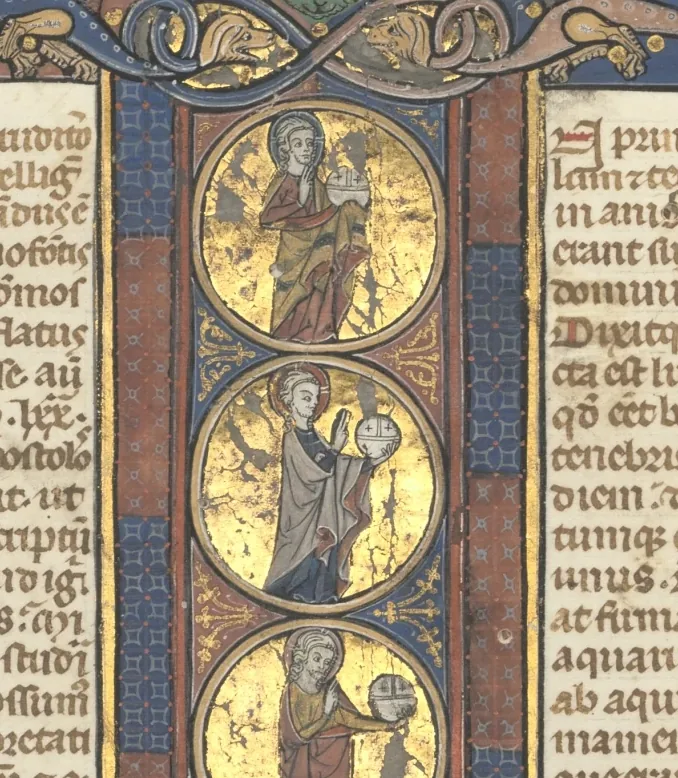
Fol. 1r, Genesis, with a full-length historiated initial I, showing the Creation and the Crucifixion, all on burnished gold grounds, with diapered pink and blue frames and cusped dragon and foliage extensions at top and bottom, on which are perched a vari
The first page of Genesis in a thirteenth-century Bible from southern France, its full-length initial showing the Creation in a column of scenes alongside the Crucifixion.Fol. 1r, Genesis, with a full-length historiated initial I, showing the Creation and the Crucifixion, all on burnished gold grounds, with diapered pink and blue frames and cusped dragon and foliage extensions at top and bottom, on which are perched a vari · c. 1275–1300 · Cleveland Museum of Art · CC0 · full page · museum record · Galeria Regni

That does not mean there has been no conflict. The trial of Galileo in 1633 was real, and the church authorities were wrong. But the conflict was far more tangled — scientific, political and personal — than the simple story allows, and Galileo himself remained a believer.

Science grew in Christian soil

Modern science grew up largely among Christians who believed that a rational God had made an orderly world, and that the world could therefore be studied. Newton, as we saw in Part 1, believed the solar system "could only proceed from the counsel and dominion of an intelligent and powerful Being." Many of the founders of modern physics, chemistry and biology were devout believers. They did not see their work as a threat to God. They saw it as reading the book of His works alongside the book of His word.

That is the biblical view. "The works of the LORD are great, sought out of all them that have pleasure therein" (Psalm 111:2). Science is possible because "he is before all things, and by him all things consist" (Colossians 1:17). A universe made by chance would give us no reason to expect it to obey laws we can discover.

What science can and cannot do

Science is a powerful tool for studying how the natural world works now, by observation and repeatable experiment. It cannot tell us whether there is anything beyond nature, because it studies only nature. It cannot tell us what is right or wrong, or what life is for. And when it reaches back into the unobserved past, it depends on assumptions — that processes have always worked as they do now, at the rates they work now — that cannot themselves be tested by experiment.

So the Christian does not fear real science. He simply refuses to let any human theory overrule the plain word of God. "Where wast thou when I laid the foundations of the earth?" (Job 38:4) is a question every scientist must humbly answer: I was not there. God was, and He has told us.

Creation in six days

Scripture teaches that God created the world in six days. Genesis 1 describes each day with "the evening and the morning" (Genesis 1:31), the ordinary language of a day. The fourth commandment builds the week on it: "For in six days the LORD made heaven and earth, the sea, and all that in them is, and rested the seventh day: wherefore the LORD blessed the sabbath day, and hallowed it" (Exodus 20:11). God's own work week is the pattern for ours.

This paper makes no claim about the age of the earth, either way. Scripture gives genealogies but does not state a date, and Christians who hold to six real days have differed on the arithmetic. What the text does require is clear: six real days, made by the word of God.

A real Adam and Eve

Jesus treated Adam and Eve as real people at the beginning of history. "But from the beginning of the creation God made them male and female" (Mark 10:6). Luke traces Jesus' genealogy back to "Adam, which was the son of God" (Luke 3:38). And Paul's whole argument about salvation depends on Adam being as real as Christ: "For since by man came death, by man came also the resurrection of the dead. For as in Adam all die, even so in Christ shall all be made alive" (1 Corinthians 15:21-22).

That is why the idea that God created through a long process of death and struggle, and that Adam is only a symbol, is not an acceptable way to read Genesis. It is sometimes offered as a way to make peace with science. But it costs too much. It puts death before sin, and so makes God the author of death; it turns Adam into a myth, and so undermines the parallel Paul draws between Adam and Christ; and it sets human theory above the plain sense of the text. If death "entered into the world" by one man's sin (Romans 5:12), death was not there before.

A global Flood

Scripture also teaches a worldwide Flood in the days of Noah. "And the waters prevailed exceedingly upon the earth; and all the high hills, that were under the whole heaven, were covered" (Genesis 7:19). Moses goes on: "And every living substance was destroyed which was upon the face of the ground... and Noah only remained alive, and they that were with him in the ark" (Genesis 7:23).

Jesus spoke of the Flood as history, and made it a warning of His return: "But as the days of Noe were, so shall also the coming of the Son of man be... until the day that Noe entered into the ark, And knew not until the flood came, and took them all away" (Matthew 24:37-39). Peter wrote that scoffers in the last days would deliberately forget it: "For this they willingly are ignorant of, that by the word of God the heavens were of old, and the earth standing out of the water and in the water: Whereby the world that then was, being overflowed with water, perished" (2 Peter 3:5-6).

Christians who study geology have argued that a global flood explains much of what we see in the rock record. Those arguments are worth reading, and like all science they are open to revision. The Christian's confidence does not rest on them. It rests on the word of the One who was there.

How to talk about it

When a friend says science has disproved the Bible, ask him gently which part, and how. Often the objection turns out to be not to the Bible but to a caricature of it. Be honest about what you do not know. Do not claim more than Scripture claims. And remember the order of the argument: the big question is not the age of the rocks but whether there is a God who made them. Start there.

Part 4 — Jesus in History and the Resurrection

6 min read

Everything in Christianity depends on one event. Paul said so himself: "And if Christ be not risen, then is our preaching vain, and your faith is also vain" (1 Corinthians 15:14). This part matters because the resurrection is not a private feeling or a theory about the meaning of life. It is a claim about what happened in Jerusalem in the spring of about AD 30 or 33 — a claim that can be examined.

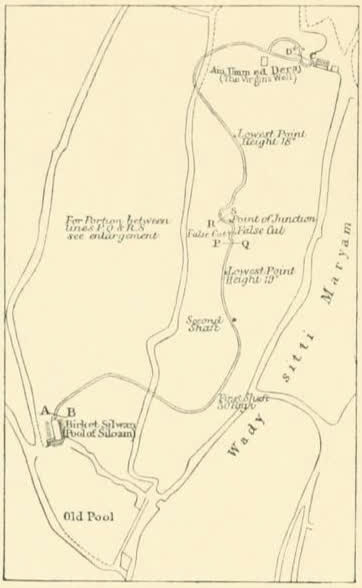
1884 survey sketch of Hezekiah’s tunnel beneath Jerusalem
The 1884 survey sketch of Hezekiah’s tunnel beneath Jerusalem — the 8th-century-BC waterworks whose Siloam Inscription confirms the account in 2 Kings 20.Charles Warren & Claude Conder, 1884 · Public domain
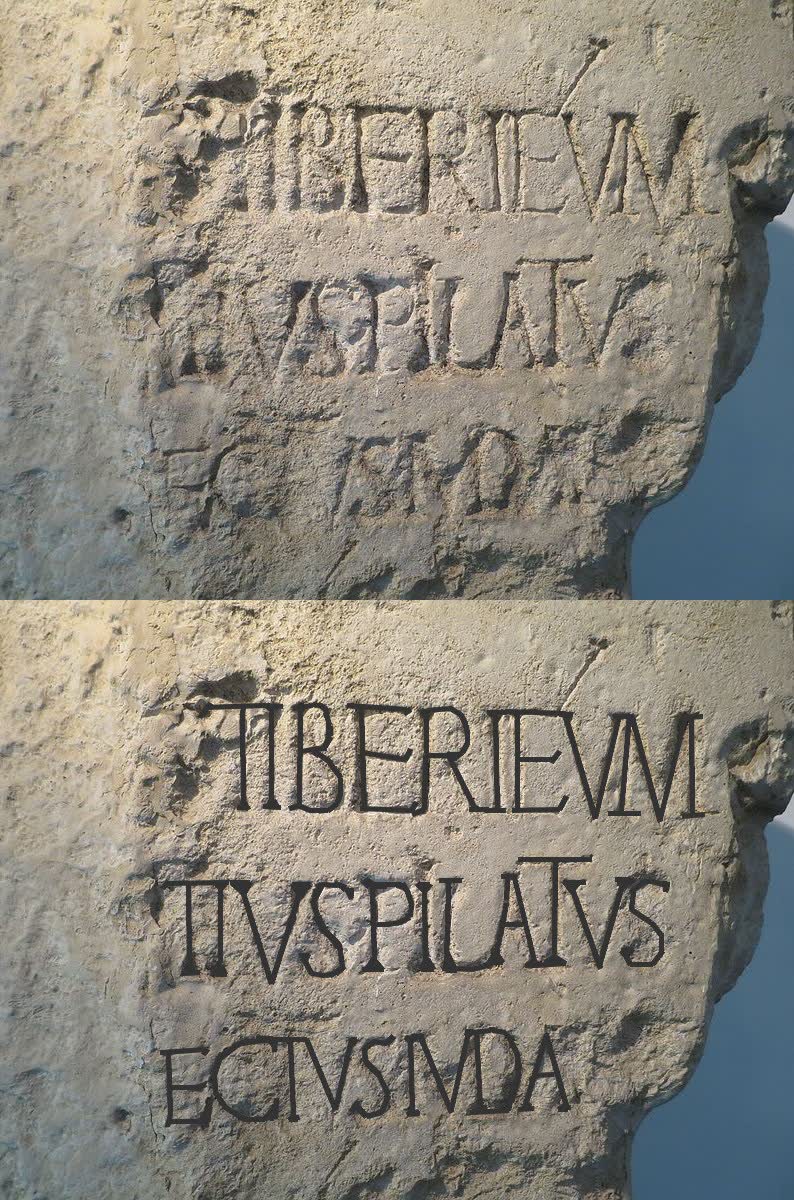
Replica of the Pilate Stone, inscribed with the name of Pontius Pilate
The Pilate Stone (shown in replica; the original, 1st century AD, was found at Caesarea Maritima) — the inscription naming Pontius Pilate, prefect of Judea, the governor of the Gospels.Reinhard Dietrich · CC BY-SA 4.0

The New Testament writers knew this. Luke wrote his Gospel "That thou mightest know the certainty of those things, wherein thou hast been instructed" (Luke 1:4), from what had been handed down by "eyewitnesses, and ministers of the word" (Luke 1:2). Peter wrote, "For we have not followed cunningly devised fables... but were eyewitnesses of his majesty" (2 Peter 1:16). Paul told King Agrippa, "this thing was not done in a corner" (Acts 26:26).

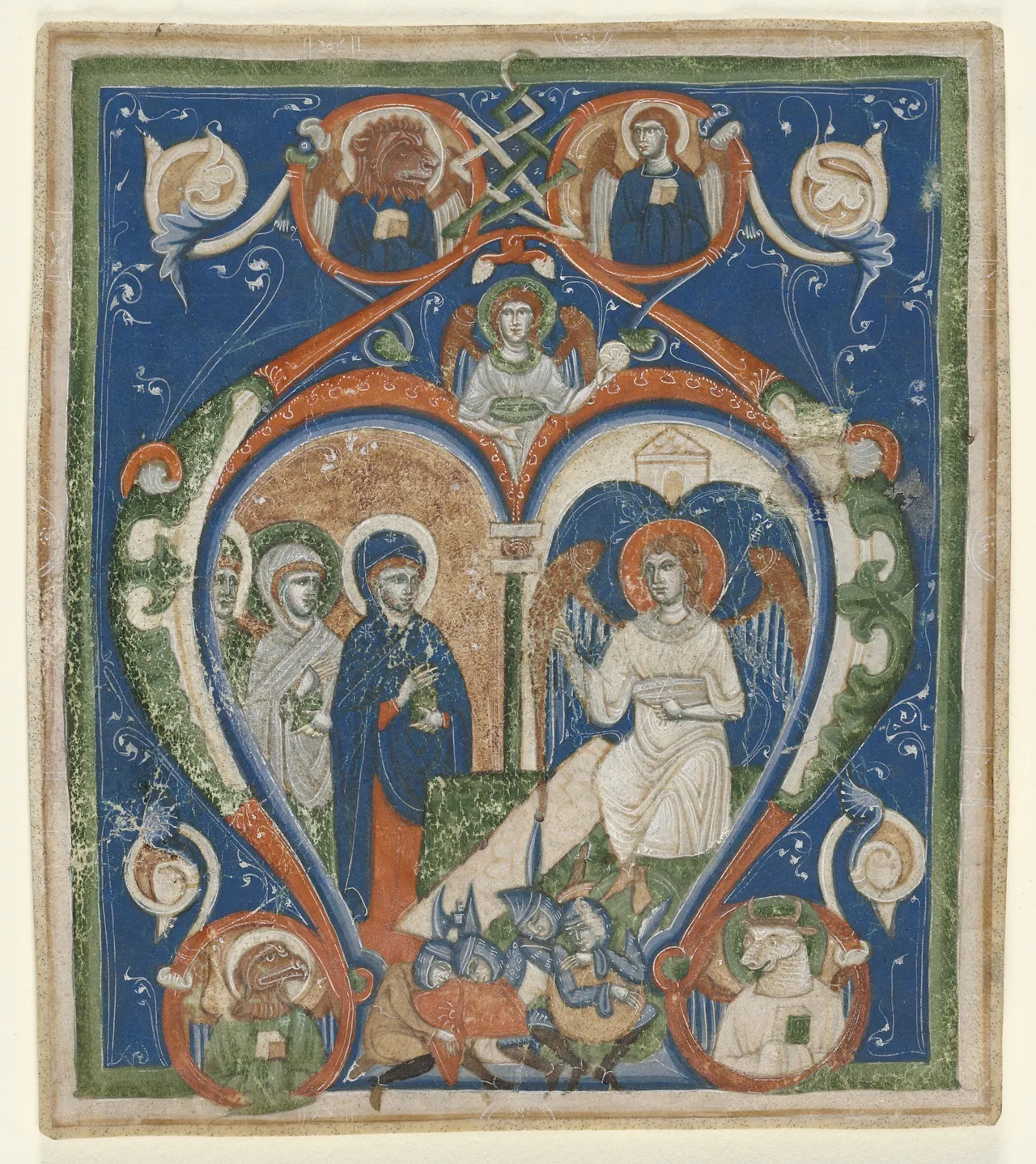
Initial A[ngelus Domini descendit] from an Antiphonary: The Three Marys at the Tomb
An initial from a Sienese antiphonary of about 1280 to 1300 showing the three Marys at the tomb, the women who were the first witnesses of the empty tomb.Initial A[ngelus Domini descendit] from an Antiphonary: The Three Marys at the Tomb · c. 1280–1300 · Cleveland Museum of Art · CC0 · museum record · Galeria Regni

Jesus outside the New Testament

Some people claim that Jesus never existed. Almost no historian of the ancient world, whatever his own beliefs, takes that claim seriously. Besides the New Testament itself, which is a collection of first-century documents, Jesus is mentioned by Roman and Jewish writers who had no reason to promote Christianity.

Tacitus, the Roman historian, wrote in his Annals around AD 116 about Nero's persecution of Christians after the fire of Rome in AD 64. He says that "Christus, from whom the name had its origin, suffered the extreme penalty during the reign of Tiberius at the hands of one of our procurators, Pontius Pilatus," and that the "mischievous superstition" broke out again "not only in Judaea, the first source of the evil, but even in Rome."17

Josephus, the Jewish historian, wrote his Antiquities of the Jews in the 90s AD. He mentions Jesus twice. The longer passage, in Book 18, says that Pilate "had condemned him to the cross." Most scholars believe a Christian copyist later added some phrases to it, but that Josephus wrote its core.18 The shorter passage, in Book 20, is widely accepted as genuine. It tells how the high priest Ananus had "the brother of Jesus, who was called Christ, whose name was James" brought before the Sanhedrin and stoned.19

Pliny the Younger, Roman governor of Bithynia, wrote to the Emperor Trajan around AD 112 asking how to deal with Christians. He reported that they "met on a stated day before it was light, and addressed a form of prayer to Christ, as to a divinity," and bound themselves by oath not to commit "fraud, theft, or adultery."20 Within eighty years of the crucifixion, Christians in what is now Turkey were worshipping Jesus as God.

The earliest testimony

The earliest written testimony to the resurrection is not in the Gospels but in Paul's first letter to the Corinthians, written around AD 55. Paul reminds them of what he had passed on to them, which he himself had "received":

“For I delivered unto you first of all that which I also received, how that Christ died for our sins according to the scriptures; And that he was buried, and that he rose again the third day according to the scriptures: And that he was seen of Cephas, then of the twelve: After that, he was seen of above five hundred brethren at once; of whom the greater part remain unto this present, but some are fallen asleep. After that, he was seen of James; then of all the apostles. And last of all he was seen of me also, as of one born out of due time.” (1 Corinthians 15:3-8)

The language "delivered... received" is the language of handing on a fixed tradition. Many scholars, including sceptical ones, conclude that Paul received this summary within a few years of the crucifixion, probably when he visited Peter and James in Jerusalem (Galatians 1:18-19).21 That puts the claim that Jesus rose and was seen by named witnesses right at the start of the Christian movement — far too early for legend.

The minimal facts

Gary Habermas and Michael Licona, in The Case for the Resurrection of Jesus, set out what they call a "minimal facts" approach: they build the case only on facts that are so well supported that the great majority of scholars who study the subject, including sceptics, accept them.22 Four of them are:

1. Jesus died by crucifixion. Attested by the Gospels, Paul, Tacitus and Josephus. 2. His disciples sincerely believed that He rose and appeared to them. They said so from the beginning, and were willing to suffer for it. "For we cannot but speak the things which we have seen and heard" (Acts 4:20). 3. Paul, a persecutor of the church, was suddenly changed. "For ye have heard of my conversation in time past in the Jews' religion, how that beyond measure I persecuted the church of God, and wasted it" (Galatians 1:13). Paul said the reason was that the risen Jesus appeared to him. 4. James, the brother of Jesus, a sceptic, was suddenly changed. During Jesus' ministry, "neither did his brethren believe in him" (John 7:5). Afterwards James became a leader of the Jerusalem church and, according to Josephus, was stoned for his faith. Paul lists him among the witnesses: "After that, he was seen of James" (1 Corinthians 15:7).

To these they add a fifth fact accepted by a strong majority of scholars: the tomb was found empty. The Christian preaching began in Jerusalem, the city where Jesus was buried. If the body had been there, the authorities could have produced it. Instead, Matthew records that the official story was that "His disciples came by night, and stole him away while we slept" (Matthew 28:13) — a story that admits the tomb was empty.

Women as the first witnesses

There is one more detail that points to truth. All four Gospels say the first witnesses of the empty tomb were women (Matthew 28:1). In that culture, women's testimony was not valued. Josephus, describing Jewish law in his own day, writes: "But let not the testimony of women be admitted, on account of the levity and boldness of their sex."23 Anyone inventing a story to persuade people would not have made women the first witnesses. The Gospels record it because it is what happened.

The alternatives

Sceptics have offered other explanations. Each fails to account for the facts.

The disciples stole the body. Then they died for what they knew was a lie. People will die for a lie they believe; they do not die for one they invented. And it does not explain the conversion of Paul or James.

Jesus did not really die; He revived in the tomb. Roman executioners knew their work. John records that a soldier "with a spear pierced his side, and forthwith came there out blood and water" (John 19:34). And a half-dead man, beaten and crucified, limping out of a tomb, would not have convinced anyone that He had conquered death.

The disciples hallucinated. Hallucinations are private experiences, like dreams; they do not happen to groups of people in the same way at once, still less to "above five hundred brethren at once." They do not explain the empty tomb. And they would not have changed Paul, an enemy who was not looking to see Jesus at all.

It is a legend that grew over time. The creed in 1 Corinthians 15 is far too early for legend. The witnesses were still alive, and Paul invited people to ask them.

The best explanation

The explanation that fits all the facts is the one the disciples gave: "This Jesus hath God raised up, whereof we all are witnesses" (Acts 2:32). Jesus "shewed himself alive after his passion by many infallible proofs, being seen of them forty days" (Acts 1:3). He told Thomas, "Reach hither thy finger, and behold my hands; and reach hither thy hand, and thrust it into my side: and be not faithless, but believing" (John 20:27).

Lee Strobel, an investigative journalist and atheist, set out to disprove the resurrection after his wife became a Christian; he tells the story in The Case for Christ.24 J. Warner Wallace, a cold-case homicide detective, applied the methods of his work to the Gospels in Cold-Case Christianity.25 Both came to believe. The evidence is still there for anyone willing to look.

Part 5 — Can We Trust the Bible?

5 min read

If the Bible is the word of God, everything else follows. If it is not, Christians have no sure word to stand on. This part matters because the most common objection many believers meet is that the Bible has been "changed so many times" that no one can know what it originally said.

What the Bible claims for itself

The Bible claims to be God's word, not merely a record of human religious thought. "All scripture is given by inspiration of God, and is profitable for doctrine, for reproof, for correction, for instruction in righteousness" (2 Timothy 3:16). Peter adds, "For the prophecy came not in old time by the will of man: but holy men of God spake as they were moved by the Holy Ghost" (2 Peter 1:21).

It also claims that God will keep His word. "The words of the LORD are pure words: as silver tried in a furnace of earth, purified seven times. Thou shalt keep them, O LORD, thou shalt preserve them from this generation for ever" (Psalm 12:6-7). Jesus said, "Heaven and earth shall pass away, but my words shall not pass away" (Matthew 24:35). Peter echoes Isaiah: "But the word of the Lord endureth for ever" (1 Peter 1:25).

The position of this paper, and of this ministry, is that God has done what He promised. The King James Bible of 1611, translated from the Hebrew Masoretic text and the Greek Received Text (Textus Receptus), is the word of God in English, inerrant and the final authority.

Fulfilled prophecy

The Bible offers a test that no other book offers. God challenges the idols of the nations: "Shew the things that are to come hereafter, that we may know that ye are gods" (Isaiah 41:23). He says of Himself, "I am God, and there is none like me, Declaring the end from the beginning, and from ancient times the things that are not yet done" (Isaiah 46:9-10).

The prophets wrote centuries before Christ that the Messiah would be born in Bethlehem (Micah 5:2), born of a virgin (Isaiah 7:14), that His hands and feet would be pierced (Psalm 22:16), that He would be "wounded for our transgressions" (Isaiah 53:5), that He would make "his grave with the wicked, and with the rich in his death" (Isaiah 53:9), and that He would be "cut off" before the city and the sanctuary were destroyed (Daniel 9:26). The temple was destroyed by the Romans in AD 70.

Could these prophecies have been written after the events? The Great Isaiah Scroll, found in 1947 in a cave at Qumran near the Dead Sea, contains all sixty-six chapters of Isaiah, including chapter 53. Scholars date it to the second century BC — well over a century before Jesus was born.26

The text has been preserved

The Old Testament was copied by Jewish scribes with extraordinary care, and the Dead Sea Scrolls showed that the text of books such as Isaiah had been preserved with remarkable faithfulness over a thousand years of copying.

The New Testament survives in thousands of Greek manuscripts, in early translations into Latin, Syriac and other languages, and in quotations by early Christian writers — far more evidence than for any other ancient book. The claim that the Bible has been changed beyond recognition does not survive contact with that evidence.

Where the 1611 and modern versions part ways

It is true that the manuscripts differ in places, and that modern translations, based on a different Greek text (the so-called Critical Text), leave out or bracket some passages that the King James Bible contains. The best-known are the end of Mark's Gospel (Mark 16:9-20), the account of the woman taken in adultery (from the last verse of John 7 through John 8:11), and the words of 1 John 5:7: "For there are three that bear record in heaven, the Father, the Word, and the Holy Ghost: and these three are one" (1 John 5:7).

This ministry's position is that these passages stand. They are in the 1611, they are in the Received Text the church read for centuries, and they are Scripture.

Take the end of Mark as an example. Modern versions often print a note saying that the "earliest" manuscripts end at verse 8. But the passage is found in the vast majority of Greek manuscripts, and it was known very early. Irenaeus, bishop of Lyons, writing Against Heresies around AD 180, quotes it by name: "Also, towards the conclusion of his Gospel, Mark says," and he then cites the words of Mark 16:19 — that the Lord, after He had spoken to them, was received up into heaven and sat on the right hand of God.27 In the nineteenth century the Oxford scholar John William Burgon wrote a full book in its defence, The Last Twelve Verses of the Gospel According to S. Mark (1871).28 The King James Bible reads, as the church has read for most of its history: "So then after the Lord had spoken unto them, he was received up into heaven, and sat on the right hand of God" (Mark 16:19).

The account of the woman taken in adultery stands in the 1611 as well, with the Lord's words: "Neither do I condemn thee: go, and sin no more" (John 8:11).

You can see every place where the 1611 and the modern Critical Text part ways, verse by verse, in the changes ledger at kylelauriano.com/library/changes. It is better to know these differences and weigh them than to have a sceptic spring them on you.

Alleged contradictions

Sceptics often produce lists of "contradictions" in the Bible. Most dissolve under careful reading. Two accounts of one event may include different details without contradicting each other, as two honest witnesses to a car accident will. Matthew mentions one angel at the tomb and John two (John 20:12); if there were two, there was certainly one. Numbers may be rounded. Events may be told in topical rather than strict time order.

The right approach is patient. Read the passage in context. Ask whether the two statements really cannot both be true. Use a KJV with Strong's Concordance to check the words. And be willing to say "I don't know yet" — while remembering that many "contradictions" that troubled earlier generations have since been resolved by archaeology and better understanding of the text.

The Bible's power

Finally, the Bible proves itself in a way no argument can. It changes lives. It searches the heart. "For the word of God is quick, and powerful, and sharper than any twoedged sword" (Hebrews 4:12). I decided to read the Bible for one reason: to disprove it, so I'd have an excuse to stop going to church for good. It did the opposite.

Part 6 — Defending the Great Doctrines

6 min read

Sooner or later a friend will move from "Is there a God?" to "What you believe about God makes no sense." The three doctrines most often attacked are the Trinity, the incarnation and the atonement. This part matters because Christians often defend these truths badly — with analogies that actually teach error. It is better to say less, and say it truly.

The Trinity: what it is

The doctrine of the Trinity says three things, all drawn from Scripture.

There is one God. "Hear, O Israel: The LORD our God is one LORD" (Deuteronomy 6:4). God says through Isaiah, "I am the first, and I am the last; and beside me there is no God" (Isaiah 44:6).

The Father, the Son and the Holy Ghost are each God. The Father is God: "But to us there is but one God, the Father, of whom are all things" (1 Corinthians 8:6). The Son is God: "In the beginning was the Word, and the Word was with God, and the Word was God" (John 1:1); of the Son the Father says, "Thy throne, O God, is for ever and ever" (Hebrews 1:8); Thomas worshipped Him: "My LORD and my God" (John 20:28). The Holy Ghost is God: Peter told Ananias that in lying "to the Holy Ghost" he had "not lied unto men, but unto God" (Acts 5:3-4).

The Father, the Son and the Holy Ghost are distinct persons. At Jesus' baptism the Son comes up out of the water, the Spirit descends like a dove, and the Father speaks from heaven: "This is my beloved Son, in whom I am well pleased" (Matthew 3:17). The Son prays to the Father and speaks of "the glory which I had with thee before the world was" (John 17:5). He promises that the Father will send "another Comforter" (John 14:16). One does not pray to oneself, or send oneself, or speak of oneself as "another".

Put those three together and you have the doctrine of the Trinity: one God, eternally existing in three persons. Jesus named the one God with a single name and three persons: "baptizing them in the name of the Father, and of the Son, and of the Holy Ghost" (Matthew 28:19). Paul blessed the church in the same way: "The grace of the Lord Jesus Christ, and the love of God, and the communion of the Holy Ghost, be with you all. Amen" (2 Corinthians 13:14). And the King James Bible states it in a single verse: "For there are three that bear record in heaven, the Father, the Word, and the Holy Ghost: and these three are one" (1 John 5:7).

The ancient church summed it up in the creed that bears Athanasius's name: "That we worship one God in Trinity, and Trinity in Unity; Neither confounding the Persons: nor dividing the Substance."29

Why the popular analogies fail

That last phrase — "Neither confounding the Persons: nor dividing the Substance" — is the key to avoiding the two great errors, and it shows why most popular analogies for the Trinity should not be used.

Water, ice and steam. This is the most common analogy, and it teaches an old heresy called modalism: that God is one person who appears at different times in three modes, as Father, then as Son, then as Spirit. But water cannot be ice and steam and liquid at once in the same way, and the three are not persons who speak to one another. At the baptism of Jesus, all three persons are present at once. The same problem sinks the analogy of a man who is a father, a son and a husband: that is one person in three roles, which is again modalism. This confounds the Persons.

Modalism is not a harmless simplification. The early Christian writer Tertullian, writing around AD 213 against a teacher named Praxeas who taught it, said that Praxeas "put to flight the Paraclete, and he crucified the Father."30 If the Father and the Son are one person, then it was the Father who died on the cross, and the Son's prayers to the Father in Gethsemane were spoken to no one.

An egg (shell, white and yolk), or a three-leafed clover. These teach the opposite error: that each person is one third of God. But the Son is not a third of God; "in him dwelleth all the fulness of the Godhead bodily" (Colossians 2:9). This divides the Substance.

Three separate beings who agree. This is tritheism, three gods, which denies that God is one.

Tertullian, in the same work, put the truth more carefully: the Father, the Son and the Holy Ghost are three, "yet of one substance, and of one condition, and of one power, inasmuch as He is one God."31 It is better to say plainly that the Trinity is beyond our full understanding — as we should expect if God is infinite and we are not — than to make it understandable by making it false.

"The Trinity was invented at Nicaea"

A common objection is that the Trinity was invented by the church in the fourth century, at the Council of Nicaea in 325. But the council did not invent the doctrine; it defended it against Arius, who taught that the Son was a created being. The truths it defended were already in the New Testament, and Christians had been baptising in the threefold name, and worshipping Jesus as God, from the beginning. Pliny, as we saw in Part 4, reported around AD 112 that Christians "addressed a form of prayer to Christ, as to a divinity." The word "Trinity" came later; the faith it names did not.

The incarnation

The second great doctrine is that the eternal Son of God became a man. "And the Word was made flesh, and dwelt among us" (John 1:14). Paul writes of Christ, "Who, being in the form of God, thought it not robbery to be equal with God: But made himself of no reputation, and took upon him the form of a servant, and was made in the likeness of men" (Philippians 2:6-7).

Objectors ask how one person could be both God and man. The church answered at the Council of Chalcedon in 451. Christ is "one and the same Christ, Son, Lord, Only-begotten, to be acknowledged in two natures, inconfusedly, unchangeably, indivisibly, inseparably."32 He did not stop being God when He became man; He did not become a mixture of the two; He is not two persons. He is one person, fully God and fully man.

Why did it have to be so? Because only God could save us, and only a man could stand in our place. "Forasmuch then as the children are partakers of flesh and blood, he also himself likewise took part of the same; that through death he might destroy him that had the power of death, that is, the devil" (Hebrews 2:14). And again, "Wherefore in all things it behoved him to be made like unto his brethren, that he might be a merciful and faithful high priest in things pertaining to God, to make reconciliation for the sins of the people" (Hebrews 2:17).

The atonement

The third doctrine is that Christ's death pays for our sins. Scripture teaches that sin requires death: "without shedding of blood is no remission" (Hebrews 9:22). The sacrifices of the Old Testament pointed forward: "For the life of the flesh is in the blood: and I have given it to you upon the altar to make an atonement for your souls" (Leviticus 17:11). Christ fulfilled them: "For even the Son of man came not to be ministered unto, but to minister, and to give his life a ransom for many" (Mark 10:45). Paul puts it most sharply: "For he hath made him to be sin for us, who knew no sin; that we might be made the righteousness of God in him" (2 Corinthians 5:21).

Some object that it is unjust to punish an innocent man for the guilty, and some have even called the cross a kind of "cosmic child abuse". The objection misunderstands the Trinity. The cross is not a Father punishing an unwilling third party. The Son came willingly: "No man taketh it from me, but I lay it down of myself. I have power to lay it down, and I have power to take it again" (John 10:18). The Father, the Son and the Holy Ghost are one God, and so on the cross God Himself bore the penalty He required. The judge stepped down from the bench and paid the fine. That is not injustice. It is love meeting justice. "But God commendeth his love toward us, in that, while we were yet sinners, Christ died for us" (Romans 5:8).

Part 7 — How to Give an Answer

6 min read

Knowing the arguments is half the work. The other half is knowing how to use them with real people. Peter's command ends with the manner: "with meekness and fear" (1 Peter 3:15). This part matters because many Christians win arguments and lose people. Paul warned that knowledge without love is noise: "Though I speak with the tongues of men and of angels, and have not charity, I am become as sounding brass, or a tinkling cymbal" (1 Corinthians 13:1).

Different ways of giving reasons

Christians have defended the faith in different ways, and it helps to know them.

The classical approach begins with reasons for believing in God — the arguments of Part 1 — and then moves to the evidence for Christ. Aquinas is its great example.

The evidential approach goes straight to the historical evidence, especially the resurrection, as in Part 4. Habermas and Licona, Strobel and Wallace work this way. Luke and Paul did too: Paul "reasoned with them out of the scriptures, Opening and alleging, that Christ must needs have suffered, and risen again from the dead" (Acts 17:2-3).

The presuppositional approach, associated with the Reformed theologian Cornelius Van Til and his student Greg Bahnsen, starts from the conviction that every argument rests on assumptions, and that only the God of the Bible makes sense of reason, logic and morality at all. Instead of meeting the unbeliever on "neutral ground," it shows that his own worldview cannot account for the things he takes for granted.33

The testimonial approach simply tells what God has done. The man born blind did not know the answers to the Pharisees' questions, but he knew this: "one thing I know, that, whereas I was blind, now I see" (John 9:25). The Samaritan woman said, "Come, see a man, which told me all things that ever I did: is not this the Christ?" (John 4:29). Paul told his own story three times in Acts.

These approaches are not enemies. Most believers will use all of them at different times. Pascal reminds us why reasons alone are not enough: "The heart has its reasons, which reason does not know."34 A person is not a brain on a stick. He has fears, wounds, loves and pride. Good apologetics speaks to the whole person.

The church has done this from the start. Around AD 155 Justin Martyr addressed his First Apology to the Roman emperor Antoninus Pius, defending Christians against slander and setting out what they believed.35 He was later put to death for his faith. Apologetics has never been a parlour game.

Listen first

"He that answereth a matter before he heareth it, it is folly and shame unto him" (Proverbs 18:13). James agrees: "Wherefore, my beloved brethren, let every man be swift to hear, slow to speak, slow to wrath" (James 1:19).

The first job in any conversation is to understand what the other person actually believes and why. Many objections are not what they first seem. A man who says "I can't believe in a God who allows suffering" may be making a philosophical point — or he may have buried a child. The answer you give must fit the question he is really asking.

Ask good questions

The Christian writer Greg Koukl, in his book Tactics, recommends what he calls the "Columbo" approach, after the television detective who disarmed suspects with innocent questions. Two questions do most of the work: "What do you mean by that?" and "How did you come to that conclusion?"36

The first clarifies. If someone says, "The Bible has been changed," ask what he means. Changed how? By whom? When? The second asks for reasons. If someone says, "Science has disproved God," ask how he came to that conclusion. Often the person has never thought about it, and the question does more good than an argument.

Jesus asked questions constantly. "But whom say ye that I am?" A good question puts the weight of the conversation where it belongs — on the claim, and on the person who made it.

Michael Ray Lewis told his story on The King Is Coming Show (TKIC #48): an atheist who mocked Christians, until, in his telling, one question undid him. Watch it in his own words: youtube.com/watch?v=Rd-RdSqeQDk Michael's account of what happened to him, shared as his testimony — weigh it for yourself.

Answer the person, not just the argument

Different people need different things. Jude wrote, "And of some have compassion, making a difference" (Jude 22).

The honest seeker wants real answers. Give him your best reasons, point him to good books, and above all give him a Gospel to read.

The sceptical intellectual may have read more than you. Do not bluff. Say "I don't know, but I'll find out," and then do. Ask him to apply the same scepticism to his own views.

The wounded person, perhaps hurt by a church or by a Christian, often needs your patience more than your arguments. Acknowledge the wrong done to him. Do not defend what was indefensible. Point him to Christ, who was Himself wounded by religious men.

The relativist who says "That's true for you, but not for me" has made a claim he thinks is true for everyone. Gently point that out. Then ask whether he really believes that nothing is true for everyone — that cruelty to children, for instance, is wrong only for some. Pilate asked, "What is truth?" (John 18:38) while Truth stood in front of him.

The pluralist who says all religions lead to God should be asked whether he has read what the religions actually say. They contradict each other on the most basic points. The companion paper in this series, Comparative Religions, sets out what each of the major faiths teaches in its own words.

Hold firm and stay kind

Scripture calls for both. "But speaking the truth in love, may grow up into him in all things" (Ephesians 4:15). Jesus told His disciples, "Behold, I send you forth as sheep in the midst of wolves: be ye therefore wise as serpents, and harmless as doves" (Matthew 10:16). Do not water down the truth to be liked. Do not harden your tone to win. The goal is not to defeat your friend but to win him.

Know when to stop

Not every conversation ends in agreement. Paul spoke to King Agrippa, who said, "Almost thou persuadest me to be a Christian." Paul answered, "I would to God, that not only thou, but also all that hear me this day, were both almost, and altogether such as I am, except these bonds" (Acts 26:28-29). He did not force it. He prayed and left the rest to God.

Proverbs gives two pieces of advice side by side: "Answer not a fool according to his folly, lest thou also be like unto him. Answer a fool according to his folly, lest he be wise in his own conceit" (Proverbs 26:4-5). Wisdom is knowing which one fits the moment. Some arguments should be answered. Some should be left. Pray for the wisdom to know the difference.

Prepare yourself

You do not have to be a scholar to defend the faith, but you should be a student. Read your Bible daily; the best defence of Scripture is to know it. Learn one good argument for God, one good summary of the resurrection evidence, and your own story, well enough to tell any of them in five minutes. Read a good book or two: Lewis's Mere Christianity, Strobel's The Case for Christ, Habermas and Licona's The Case for the Resurrection of Jesus, Wallace's Cold-Case Christianity, Koukl's Tactics. Find a believer who is further along than you and ask him your hardest questions. And pray before every conversation: the Spirit, not you, convinces of sin and of righteousness.

Conclusion

2 min read

We began with Peter's command: "be ready always to give an answer to every man that asketh you a reason of the hope that is in you with meekness and fear" (1 Peter 3:15). We have seen that the reasons are real. There is good reason to believe in God, from the existence and beginning of the world, from its design, from conscience and from the heart's desire. The problem of evil is serious, but it does not disprove God; the Fall explains it, the cross answers it, and the last day will end it, with justice and with mercy. Science, rightly understood, is no enemy of the faith; Genesis tells us what really happened at the beginning. The resurrection of Jesus is the best explanation of the facts that nearly every historian accepts. The Bible has been kept by God, as He promised. And the great doctrines of the faith, though beyond our full understanding, are neither contradictions nor inventions.

But reasons are not the hope itself. The hope is a Person. The reasons only clear the road to Him.

A next step

  • Choose one part of this paper — the one you would find hardest to answer — and study it this month. Read the Scriptures it cites in the King James Bible, free at kylelauriano.com/library.
  • Write out your own story of coming to faith in a few paragraphs, so you can tell it simply.
  • Learn the summary of the gospel in 1 Corinthians 15:3-8 by heart.
  • Look up one passage in the changes ledger at kylelauriano.com/library/changes so that you know where the 1611 and modern versions differ.
  • Pray for one person by name who has questions, and ask God for an opening.

An invitation

If you are reading this not as a believer but as a questioner, the reasons in this paper are offered to you honestly. But at some point every question comes down to this: what will you do with Jesus? He said, "him that cometh to me I will in no wise cast out" (John 6:37). The way to Him is the way the apostles preached: "repentance toward God, and faith toward our Lord Jesus Christ" (Acts 20:21). Peter told the first crowd who asked what they must do: "Repent, and be baptized every one of you in the name of Jesus Christ for the remission of sins, and ye shall receive the gift of the Holy Ghost" (Acts 2:38).

Here is the turning point of my story, in my own words. Then one day I got on my knees and prayed: "Jesus, if you are real, show me — and I'll serve you." If you are not sure, you can pray that same honest prayer. The father in Mark's Gospel prayed something like it: "Lord, I believe; help thou mine unbelief" (Mark 9:24). Jesus did not turn him away.

“But these are written, that ye might believe that Jesus is the Christ, the Son of God; and that believing ye might have life through his name.” (John 20:31)

Notes and sources

  1. 1C. S. Lewis, Mere Christianity (London: Geoffrey Bles, 1952), Book 3, ch. 11, "Faith." ↩
  2. 2G. W. Leibniz, Principles of Nature and Grace, Based on Reason (1714), §7. ↩
  3. 3Thomas Aquinas, Summa Theologica I, q. 2, a. 3, trans. Fathers of the English Dominican Province, https://www.newadvent.org/summa/1002.htm. ↩
  4. 4William Lane Craig, The Kalam Cosmological Argument (London: Macmillan, 1979); see also William Lane Craig, Reasonable Faith: Christian Truth and Apologetics, 3rd ed. (Wheaton, IL: Crossway, 2008). ↩
  5. 5Robert Jastrow, God and the Astronomers (New York: W. W. Norton, 1978). ↩
  6. 6William Paley, Natural Theology; or, Evidences of the Existence and Attributes of the Deity, Collected from the Appearances of Nature (London: R. Faulder, 1802), ch. 1. ↩
  7. 7Isaac Newton, The Mathematical Principles of Natural Philosophy, Book 3, "General Scholium," trans. Andrew Motte (New York: Daniel Adee, 1846), via Wikisource, https://en.wikisource.org/wiki/The_Mathematical_Principles_of_Natural_Philosophy_(1846)/BookIII-General_Scholium. ↩
  8. 8Antony Flew with Roy Abraham Varghese, There Is a God: How the World's Most Notorious Atheist Changes His Mind (New York: HarperOne, 2007). ↩
  9. 9Lewis, Mere Christianity, Book 2, ch. 1, "The Rival Conceptions of God." ↩
  10. 10Blaise Pascal, Pensées, no. 425, trans. W. F. Trotter (New York: E. P. Dutton, 1958), https://www.gutenberg.org/ebooks/18269. ↩
  11. 11Lewis, Mere Christianity, Book 3, ch. 10, "Hope." ↩
  12. 12Anselm of Canterbury, Proslogion, ch. 2, trans. Sidney Norton Deane (Chicago: Open Court, 1903), via the Internet Medieval Sourcebook, https://sourcebooks.fordham.edu/basis/anselm-proslogium.asp. ↩
  13. 13Alvin Plantinga, God, Freedom, and Evil (New York: Harper & Row, 1974). ↩
  14. 14C. S. Lewis, The Problem of Pain (London: Geoffrey Bles, 1940), ch. 6, "Human Pain." ↩
  15. 15John William Draper, History of the Conflict between Religion and Science (New York: D. Appleton, 1874); Andrew Dickson White, A History of the Warfare of Science with Theology in Christendom, 2 vols. (New York: D. Appleton, 1896). ↩
  16. 16Ronald L. Numbers, ed., Galileo Goes to Jail and Other Myths about Science and Religion (Cambridge, MA: Harvard University Press, 2009). ↩
  17. 17Tacitus, Annals 15.44, trans. Alfred John Church and William Jackson Brodribb (1876), via Wikisource, https://en.wikisource.org/wiki/The_Annals_(Tacitus)/Book_15. ↩
  18. 18Josephus, Antiquities of the Jews 18.3.3, trans. William Whiston, https://www.gutenberg.org/ebooks/2848. On the passage's authenticity, see John P. Meier, A Marginal Jew: Rethinking the Historical Jesus, vol. 1 (New York: Doubleday, 1991). ↩
  19. 19Josephus, Antiquities 20.9.1, trans. Whiston. ↩
  20. 20Pliny the Younger, Letters 10.96 (Letter XCVII, "To the Emperor Trajan," in this edition), trans. William Melmoth, rev. F. C. T. Bosanquet, https://www.gutenberg.org/ebooks/2811. ↩
  21. 21Gary R. Habermas and Michael R. Licona, The Case for the Resurrection of Jesus (Grand Rapids: Kregel, 2004). ↩
  22. 22Habermas and Licona, The Case for the Resurrection of Jesus. ↩
  23. 23Josephus, Antiquities 4.8.15, trans. Whiston. ↩
  24. 24Lee Strobel, The Case for Christ (Grand Rapids: Zondervan, 1998). ↩
  25. 25J. Warner Wallace, Cold-Case Christianity: A Homicide Detective Investigates the Claims of the Gospels (Colorado Springs: David C. Cook, 2013). ↩
  26. 26Eugene Ulrich and Peter W. Flint, with a contribution by Martin G. Abegg Jr., Qumran Cave 1.II: The Isaiah Scrolls, Discoveries in the Judaean Desert 32 (Oxford: Clarendon Press, 2010). ↩
  27. 27Irenaeus, Against Heresies 3.10.5, trans. Alexander Roberts and William Rambaut, in Ante-Nicene Fathers, vol. 1 (Buffalo: Christian Literature Publishing, 1885), https://www.newadvent.org/fathers/0103310.htm. ↩
  28. 28John William Burgon, The Last Twelve Verses of the Gospel According to S. Mark Vindicated Against Recent Critical Objectors and Established (Oxford and London: James Parker, 1871). ↩
  29. 29The Athanasian Creed (Quicunque Vult), §§3–4, in Philip Schaff, The Creeds of Christendom, vol. 2 (New York: Harper & Brothers, 1877), https://ccel.org/ccel/schaff/creeds2.iv.i.iv.html. ↩
  30. 30Tertullian, Against Praxeas 1, trans. Peter Holmes, in Ante-Nicene Fathers, vol. 3 (Buffalo: Christian Literature Publishing, 1885), https://www.newadvent.org/fathers/0317.htm. ↩
  31. 31Tertullian, Against Praxeas 2. ↩
  32. 32The Definition of Chalcedon (451), in Schaff, The Creeds of Christendom, vol. 2, https://ccel.org/ccel/schaff/creeds2.iv.i.iii.html. ↩
  33. 33Cornelius Van Til, The Defense of the Faith (Philadelphia: Presbyterian and Reformed, 1955); Greg L. Bahnsen, Always Ready: Directions for Defending the Faith (Texarkana, AR: Covenant Media Foundation, 1996). ↩
  34. 34Pascal, Pensées, no. 277, trans. Trotter. ↩
  35. 35Justin Martyr, First Apology, trans. Marcus Dods and George Reith, in Ante-Nicene Fathers, vol. 1 (Buffalo: Christian Literature Publishing, 1885), https://www.newadvent.org/fathers/0126.htm. ↩
  36. 36Gregory Koukl, Tactics: A Game Plan for Discussing Your Christian Convictions (Grand Rapids: Zondervan, 2009). ↩

Bring your questions on defending the faith to the Scripture Desk →

The Last Judgement, John Martin, 1853

Keep reading · Seven mornings by email

Seven people who say they met Jesus. What happened, in their own words.

Seven testimonies from The King Is Coming Show, one a morning — the story as they tell it, the verse the story lands on in the 1611 King James, and the page itself. Then the teaching that explains it. Free.

Start the seven days

Free. One a morning. Unsubscribe with one tap.

Where I'm honest with you

Some of the answers in this resource are strong — well-attested, widely accepted, and historically grounded. Others are an honest step of faith — positions I hold because of Scripture and personal experience, not because I can prove them in a lab. I've tried to be clear about which is which. Where I'm less certain, I say so.

"But sanctify the Lord God in your hearts: and be ready always to give an answer to every man that asketh you a reason of the hope that is in you with meekness and fear." — 1 Peter 3:15 (KJV)