A study of how Scripture, and the believers who went before us, teach a Christian to fight temptation, doubt, fear, spiritual attack and despair — and when to reach for help.
Abstract
Why does a Christian, forgiven and indwelt by the Holy Ghost, still struggle — with temptation, with doubt, with fear, with the devil, with addiction, anger and despair? This paper answers from the King James Bible first, and second from the believers who fought the same battles and wrote them down: Augustine, John Owen, Thomas Brooks, William Gurnall, John Bunyan, Charles Spurgeon, Martyn Lloyd-Jones, C. S. Lewis and Corrie ten Boom. It sets the biblical texts in their history (the wilderness, Elijah under the juniper, John the Baptist in Herod's fortress, the magic of Ephesus, the Roman soldier's shield) and, where the struggle is medical as well as spiritual, it gives current public-health figures from SAMHSA, the CDC, NIMH and NIDA. The conclusion is that the struggle is real, normal and winnable — not by technique but by grace, through the means God gives: His word, prayer, confession, the church, and, where needed, the doctor. It is written for believers who are tired of fighting alone, and for those who help them.
What’s inside
·Introduction
Part 1Part 1: Why Believers Struggle
Part 2Part 2: Temptation and the Killing of Sin
Part 3Part 3: When Faith Is Shaken: Doubt
Part 4Part 4: Fear and Anxiety
Part 5Part 5: Spiritual Warfare, Guarded
Part 6Part 6: Addiction, Anger and Despair
Part 7Part 7: You Are Not Meant to Fight Alone
·Conclusion
Research paper · 9 chapters · 36 notes · October 2026
"These things I have spoken unto you, that in me ye might have peace. In the world ye shall have tribulation: but be of good cheer; I have overcome the world." — John 16:33 (KJV)Read in the 1611 →
About 58 minutes · 9 parts · the PDF has the same text
Introduction
2 min read
If you are a Christian and you are struggling, you are not the first. That is worth saying plainly before anything else, because one of the heaviest parts of a struggle is the suspicion that it proves you are a fraud.
Scripture does not let us believe that. The men and women whose names we give our children fought hard and sometimes lost. Elijah, fresh from fire falling on Carmel, lay down under a bush and asked to die. David, a man after God's own heart, fell into adultery and murder. Peter swore he did not know the Lord. Paul wrote that he was "pressed out of measure, above strength, insomuch that we despaired even of life" (2 Corinthians 1:8). And the Lord Jesus Himself "was in all points tempted like as we are, yet without sin" (Hebrews 4:15).
So the question is not whether a Christian will struggle. He will. The question is how a Christian fights — with what weapons, on what ground, with what hope, and with whose help.
What this paper is
This is a study, not a pep talk. It argues from the King James Bible first. Where the history behind a passage helps us read it, the history is given with its source. Where Christians of earlier centuries fought the same battle and wrote down what they learned, their words are quoted from their own books. And where a struggle has a medical side — addiction, depression, thoughts of suicide — the paper gives real figures from the public-health agencies that measure them, with the year.
Seven parts follow — on why believers struggle, on temptation, doubt, fear, spiritual warfare, the heavy struggles of addiction, anger and despair, and on the help God gives through other people. You can read it straight through or go to the part you need. If you are in danger right now — if you are thinking about ending your life — stop reading and call or text 988, the Suicide & Crisis Lifeline, or call 911 if you are in immediate danger. Part 6 says more. The rest of this paper will still be here.
A word about me
I was raised Roman Catholic but never really connected — I went through the motions, fell asleep in the pews, and faked being sick to skip Mass. College was rebellion: parties, drugs, freedom I loved and abused. When real life hit — a lost job, a pregnant wife, constant fights — I went looking for peace anywhere I could find it. New Age, crystals, astral projection, tarot, angel numbers. None of it held.
Eventually I gave up and called myself an atheist. I decided to read the Bible for one reason: to disprove it, so I'd have an excuse to stop going to church for good. It did the opposite. I came to faith in 2022, and my wife came to faith a month later. That is my story, and the rest of it is at kylelauriano.com/about. I mention it here for one reason: the Lord who met me is the same Lord who meets you in your fight.
A note on Scripture: every verse in this paper is quoted from the King James Bible. You can read it free in the 1611 Reader at kylelauriano.com/library. A KJV with Strong's Concordance is the best study tool most believers will ever need.
This part matters because the way you understand your struggle shapes the way you fight it. If you think a real Christian should never be tempted, every temptation will feel like a verdict. If you think the devil is behind every bad mood, you will fight the wrong enemy. Scripture gives a clearer and kinder picture.
Saved, being saved, and yet to be saved
The New Testament speaks of salvation in three tenses. It is finished: "For by grace are ye saved through faith; and that not of yourselves: it is the gift of God: Not of works, lest any man should boast" (Ephesians 2:8-9). It is ongoing: believers are told to "put off concerning the former conversation the old man, which is corrupt according to the deceitful lusts; And be renewed in the spirit of your mind" (Ephesians 4:22-23). And it is still to come, when the body itself is raised and sin is gone for good.
We live between the first and the last. The guilt of sin is dealt with — "There is therefore now no condemnation to them which are in Christ Jesus, who walk not after the flesh, but after the Spirit" (Romans 8:1). The power of sin is broken — "For sin shall not have dominion over you: for ye are not under the law, but under grace" (Romans 6:14). But the presence of sin is not yet removed. That is why the same apostle who wrote Romans 6 also wrote, "For the good that I would I do not: but the evil which I would not, that I do" (Romans 7:19), and then, in the same breath, "O wretched man that I am! who shall deliver me from the body of this death? I thank God through Jesus Christ our Lord" (Romans 7:24-25).
Christians have long debated whether Paul in Romans 7 is describing his life as a believer or his life before Christ under the law. Good men have held both views, and this paper does not need to settle it. What both readings agree on is the shape of the fight Paul names in Galatians: "For the flesh lusteth against the Spirit, and the Spirit against the flesh: and these are contrary the one to the other: so that ye cannot do the things that ye would" (Galatians 5:17). A believer has a conflict an unbeliever does not have, because a believer has the Holy Ghost.
That is the first comfort of this paper. The fact that you are fighting is itself a sign of life. Dead men do not wrestle.
The world, the flesh and the devil
Christian teachers have long summed up the sources of temptation in three words: the world, the flesh and the devil. The phrase is not a verse, but each part of it is in the text.
The world. John writes, "Love not the world, neither the things that are in the world. If any man love the world, the love of the Father is not in him. For all that is in the world, the lust of the flesh, and the lust of the eyes, and the pride of life, is not of the Father, but is of the world" (1 John 2:15-16). "The world" here is not the earth God made, or the people He loves. It is the whole system of desire and value that runs without Him: what everyone around you assumes is normal, what the screen in your hand sells you every hour.
The flesh. James puts the source of temptation closest to home: "But every man is tempted, when he is drawn away of his own lust, and enticed" (James 1:14). The flesh is not the body as such — the body is God's good gift — but the fallen self that still wants its own way.
The devil. And there is a real enemy. Peter writes, "Be sober, be vigilant; because your adversary the devil, as a roaring lion, walketh about, seeking whom he may devour" (1 Peter 5:8). Jesus called him "a liar, and the father of it" (John 8:44). Revelation calls him "the accuser of our brethren" (Revelation 12:10).
The three work together. The devil rarely needs to invent a desire; he works with the ones we have and the ones the world feeds. That is why the answer to temptation is never only "rebuke the devil", and never only "try harder". It is to fight on all three fronts with the weapons God gives.
Temptation is not sin
This needs to be said clearly, because many believers carry shame they were never meant to carry. To be tempted is not to sin. The Lord Jesus was tempted. "For in that he himself hath suffered being tempted, he is able to succour them that are tempted" (Hebrews 2:18).
James traces the line where temptation becomes sin: "Then when lust hath conceived, it bringeth forth sin: and sin, when it is finished, bringeth forth death" (James 1:15). The thought that knocks is not the sin. The welcome we give it is. The old saying has it that you cannot stop birds flying over your head, but you can stop them building a nest in your hair. Whatever its source, it is the point James is making.
The God who knows our frame
One more foundation before we go on. The God we come to in our struggle is not surprised by it. "Like as a father pitieth his children, so the LORD pitieth them that fear him. For he knoweth our frame; he remembereth that we are dust" (Psalm 103:13-14). Of the Messiah Isaiah wrote, "A bruised reed shall he not break, and the smoking flax shall he not quench" (Isaiah 42:3).
That does not make sin small. It makes grace large. And it means the right response to a struggle is not to hide from God until we have cleaned ourselves up, but to come — "Let us therefore come boldly unto the throne of grace, that we may obtain mercy, and find grace to help in time of need" (Hebrews 4:16).
Temptation is the most common struggle in this paper and the one every believer faces every week. It matters because yielding to it is not a private matter. Sin hardens the heart (Hebrews 3:13), damages the people around us, and dulls our joy in God. The good news is that Scripture does not leave us guessing about how temptation works or how to fight it, and the church has centuries of careful writing on exactly this.
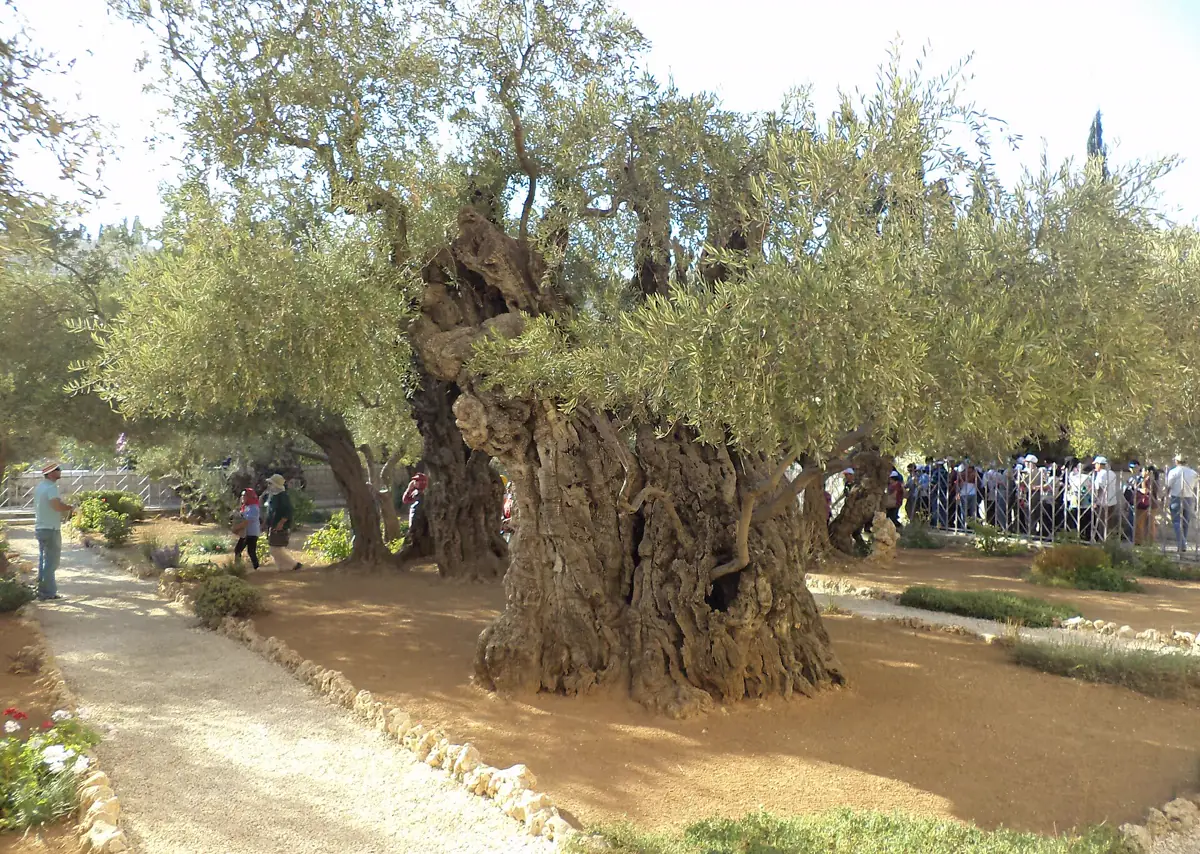
One of the oldest olive trees in the Garden of Gethsemane, rooted through centuries of continuous growth — the grove where Jesus prayed on the night of His arrest.Bogdan Kosar · CC BY-SA 4.0
How temptation works
James gives the anatomy in two verses: "But every man is tempted, when he is drawn away of his own lust, and enticed. Then when lust hath conceived, it bringeth forth sin: and sin, when it is finished, bringeth forth death" (James 1:14-15).
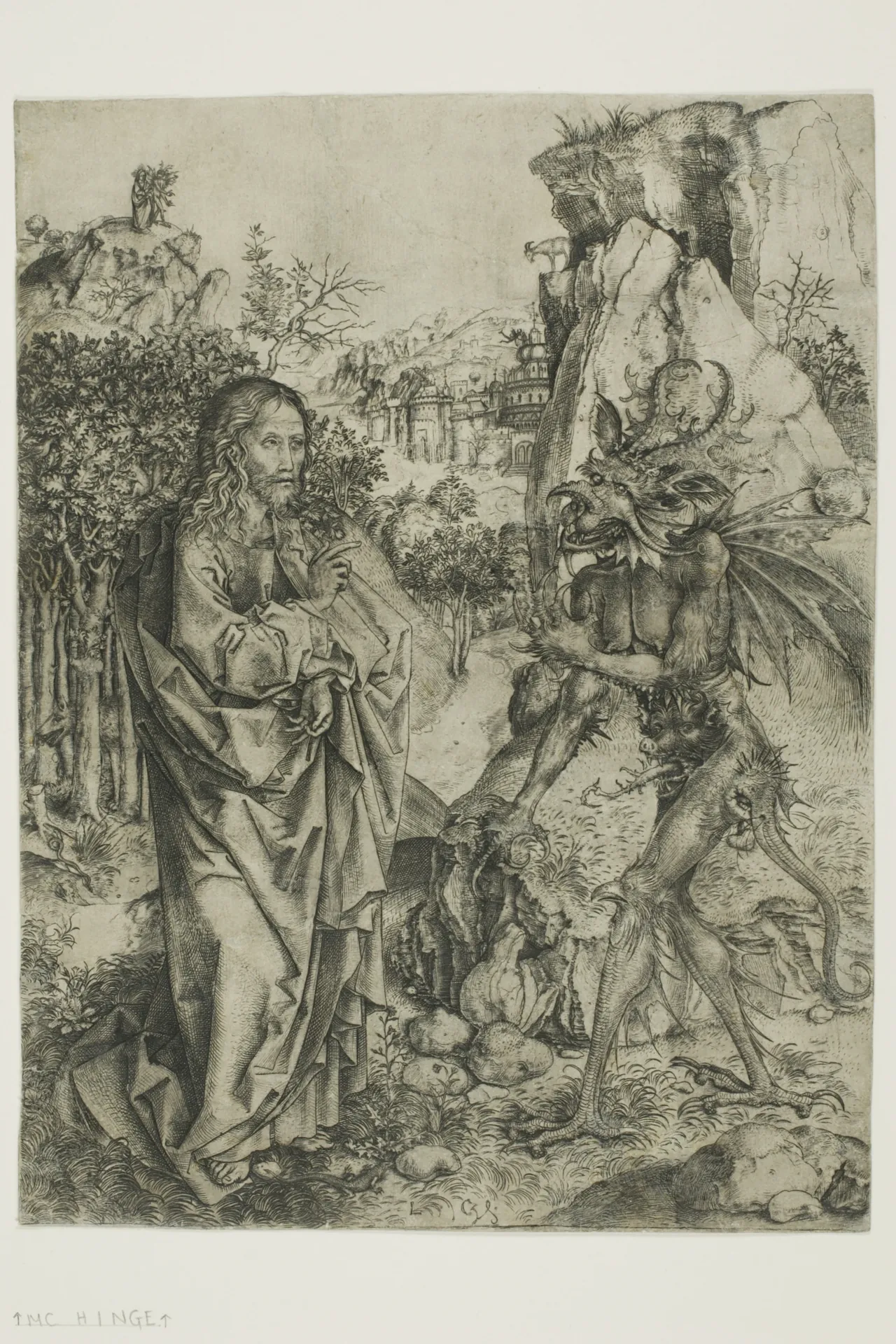
A German engraving of about 1490 showing the devil tempting Christ in the wilderness, the clearest picture Scripture gives of temptation met and resisted.The Temptation of Christ · c. 1490 · Art Institute of Chicago · CC0 · museum record · Galeria Regni
There are four movements here. A desire is stirred. The desire is drawn away and enticed — James uses words from hunting and fishing, a creature lured out of its safe place by bait. The will consents, and sin is conceived. And sin, left to grow, ends in death.
The Puritan Thomas Brooks, in his Precious Remedies Against Satan's Devices (1652), described the devil's first device in the same terms. Satan's first way to draw the soul to sin, Brooks wrote, is "to present the bait and hide the hook; to present the golden cup, and hide the poison; to present the sweet, the pleasure, and the profit that may flow in upon the soul by yielding to sin, and by hiding from the soul the wrath and misery that will certainly follow the committing of sin."1 He pointed to Eden: the serpent promised open eyes and godlike knowledge, and hid the shame that followed.
Brooks's first remedy is simple and old: keep your distance. "Keep at the greatest distance from sin, and from playing with the golden bait that Satan holds forth to catch you," he wrote, and then gave the contrast that every believer should remember: Joseph kept his distance and stood; "David draws near, and plays with the bait, and falls, and swallows bait and hook".2
The way of escape
The single most important promise on temptation is this one: "There hath no temptation taken you but such as is common to man: but God is faithful, who will not suffer you to be tempted above that ye are able; but will with the temptation also make a way to escape, that ye may be able to bear it" (1 Corinthians 10:13).
Notice the context. Paul wrote it to Corinth, a church whose members had come out of idol temples and sexual sin — "such were some of you: but ye are washed, but ye are sanctified, but ye are justified in the name of the Lord Jesus, and by the Spirit of our God" (1 Corinthians 6:11). In chapter 10 he is warning them from Israel's history in the wilderness, a people rescued from Egypt who still fell to idolatry and fornication. The promise of a way of escape is not given to people who have never fallen. It is given to people with a past, standing in the middle of the same pressures.
Three things in the promise are worth holding:
Your temptation is common. Whatever you are facing, others have faced it. The shame that whispers "no one else struggles like this" is lying.
God is faithful. The limit on your temptation is set by Him, not by the tempter. Job's story shows the same thing: Satan could go only as far as the LORD allowed (Job 1:12).
There is a way out. Often it is very ordinary: a door, a phone call, a closed laptop, a walk outside. Joseph's way of escape was his legs: "he left his garment in her hand, and fled, and got him out" (Genesis 39:12).
How Jesus fought
The clearest picture of temptation resisted is the Lord in the wilderness. Mark says, "And immediately the Spirit driveth him into the wilderness. And he was there in the wilderness forty days, tempted of Satan; and was with the wild beasts; and the angels ministered unto him" (Mark 1:12-13).
The forty days echo Israel's forty years. Israel was tested in the wilderness and failed; Jesus was tested in the wilderness and stood. And each time He answered the devil, He quoted from Deuteronomy — the book of Moses' sermons to that same wilderness generation. "It is written, Man shall not live by bread alone, but by every word that proceedeth out of the mouth of God" (Matthew 4:4) is Moses' own lesson about the manna: "that he might make thee know that man doth not live by bread only, but by every word that proceedeth out of the mouth of the LORD doth man live" (Deuteronomy 8:3).
So the Lord fought temptation with Scripture He knew, applied to the exact lie in front of Him. When the devil quoted a psalm out of context, Jesus answered with another text: "It is written again, Thou shalt not tempt the Lord thy God" (Matthew 4:7). And at the end: "Then saith Jesus unto him, Get thee hence, Satan: for it is written, Thou shalt worship the Lord thy God, and him only shalt thou serve. Then the devil leaveth him, and, behold, angels came and ministered unto him" (Matthew 4:10-11).
Luke adds a sober note: "And when the devil had ended all the temptation, he departed from him for a season" (Luke 4:13). Victory over one temptation does not mean the end of temptation. It means you have stood today.
The lesson for us is plain. The psalmist said, "Thy word have I hid in mine heart, that I might not sin against thee" (Psalm 119:11). You cannot quote in the moment what you have never learned. Pick the verses that speak to the temptations you actually face, and learn them by heart.
Mortification: be killing sin
The best book ever written on the daily fight against sin is probably John Owen's Of the Mortification of Sin in Believers. Owen was Dean of Christ Church and Vice-Chancellor of the University of Oxford when he preached the sermons behind it, and it was published in 1656.3 It is a short book on one verse: "For if ye live after the flesh, ye shall die: but if ye through the Spirit do mortify the deeds of the body, ye shall live" (Romans 8:13).
"Mortify" means "put to death". Owen's first point is that this is not optional and not occasional. His most famous line is a summary of the whole book: "Do you mortify; do you make it your daily work; be always at it whilst you live; cease not a day from this work; be killing sin or it will be killing you."4
Why so urgent? Because, Owen says, sin does not take days off: "sin is always acting, always conceiving, always seducing and tempting." And sin never wants just a little: "Sin aims always at the utmost; every time it rises up to tempt or entice, might it have its own course, it would go out to the utmost sin in that kind."5 The lustful look wants adultery. The resentful thought wants murder. That is exactly what Jesus taught when He said that "whosoever looketh on a woman to lust after her hath committed adultery with her already in his heart" (Matthew 5:28).
Owen also insisted that this is not grim self-improvement. His fourth chapter argues "That the life, vigour, and comfort of our spiritual life depend much on our mortification of sin."6 Killing sin is the way to joy, not the way to misery. And it is not done in our own strength. Owen's final directions come down to one: "Set faith at work on Christ for the killing of thy sin." The whole work, he says, is carried on and accomplished by the power of the Spirit — which is exactly what Romans 8:13 says: "if ye through the Spirit do mortify".7
Owen wrote a companion treatise, Of Temptation: The Nature and Power of It (1658), on the Lord's words in Gethsemane: "Watch and pray, that ye enter not into temptation: the spirit indeed is willing, but the flesh is weak" (Matthew 26:41). His point there is that there is a difference between being tempted and entering into temptation — being drawn inside it, so that it begins to rule the heart. Watchfulness and prayer are the guard at that door.8
"Make not provision for the flesh"
Paul's command in Romans 13 has a famous place in church history. "But put ye on the Lord Jesus Christ, and make not provision for the flesh, to fulfil the lusts thereof" (Romans 13:14).
Augustine of Hippo tells us in his Confessions that as a young man he had prayed, "Give me chastity and continency, only not yet." He feared, he says, that God would answer him too soon.9 Years later, in a garden in Milan, weeping over his own delay, he heard a child's voice repeating "Take up and read," opened Paul's letter, and read the verse above. "No further would I read; nor needed I," he wrote.10
Augustine's "not yet" is the voice of every heart that wants to keep the door open just a crack. "Make not provision" means closing it. It means not keeping the bottle in the cupboard "just in case", not keeping the app "for other reasons", not keeping the number of the person you know you should not call. Job said it simply: "I made a covenant with mine eyes; why then should I think upon a maid?" (Job 31:1). The decision is made before the moment comes.
Sexual temptation
Sexual sin deserves its own section, because it is one of the most common struggles in the church and one of the most hidden.
Scripture's command is short: "Flee fornication. Every sin that a man doeth is without the body; but he that committeth fornication sinneth against his own body" (1 Corinthians 6:18). Not "manage it". Not "reason with it". Flee. Paul's other word is stronger still: "Mortify therefore your members which are upon the earth; fornication, uncleanness, inordinate affection, evil concupiscence, and covetousness, which is idolatry" (Colossians 3:5).
But the same chapter of 1 Corinthians that commands flight also gives hope. In the list of those who "shall not inherit the kingdom of God" Paul names fornicators, adulterers, and those given to same-sex sin — and then writes, "And such were some of you: but ye are washed, but ye are sanctified, but ye are justified in the name of the Lord Jesus, and by the Spirit of our God" (1 Corinthians 6:9-11). No pattern of sexual sin is beyond the reach of that washing.
Brittany Sivels told her story on The King Is Coming Show (TKIC #52): two decades in homosexuality and lust, and then, in her telling, a three-day fast. Watch it in her own words: youtube.com/watch?v=JJ0SsSLQgEg Brittany's account of what happened to her, shared as her testimony — weigh it for yourself.
Practical wisdom for this fight follows the texts above:
Cut off access. Jesus' words about the right eye (Matthew 5:29) are not a call to self-harm; they are a call to drastic action. In our time that usually means devices: filters, accountability software, no phone in the bedroom, no browsing alone late at night.
Bring it into the light. Shame grows in secret. "He that covereth his sins shall not prosper: but whoso confesseth and forsaketh them shall have mercy" (Proverbs 28:13). Tell God, and tell one trusted, mature believer of your own sex. Part 7 says more.
Look at what drives it. Loneliness, stress, boredom and pain are often the soil sexual temptation grows in. Paying attention to those is not an excuse; it is wisdom.
Other temptations
The same pattern — know the lie, cut off provision, fight with Scripture, bring it into the light — applies to every temptation. A few others deserve naming.
Covetousness and the love of money. Paul calls covetousness "idolatry" (Colossians 3:5). The cure is contentment grounded in God's presence: "Let your conversation be without covetousness; and be content with such things as ye have: for he hath said, I will never leave thee, nor forsake thee" (Hebrews 13:5). Generosity is the practical knife that cuts this one.
Pride. Pride is the oldest temptation, the one in the serpent's promise that "ye shall be as gods" (Genesis 3:5). It is also the hardest to see in yourself. A good prayer for it is David's: "Search me, O God, and know my heart: try me, and know my thoughts: And see if there be any wicked way in me, and lead me in the way everlasting" (Psalm 139:23-24).
When you fall
Every believer who reads this will fall again at some point. What then?
John wrote his first letter so that believers would not sin — and then immediately added, "And if any man sin, we have an advocate with the Father, Jesus Christ the righteous" (1 John 2:1). Earlier in the letter: "If we confess our sins, he is faithful and just to forgive us our sins, and to cleanse us from all unrighteousness" (1 John 1:9).
There are two kinds of sorrow after a fall. "For godly sorrow worketh repentance to salvation not to be repented of: but the sorrow of the world worketh death" (2 Corinthians 7:10). Worldly sorrow is sorry it got caught, or sorry it feels bad, and it pulls you away from God. Godly sorrow is sorry it grieved the Father, and it runs back to Him. The picture of that return is the prodigal: "But when he was yet a great way off, his father saw him, and had compassion, and ran, and fell on his neck, and kissed him" (Luke 15:20).
Do not let a fall become a reason to stay down. Confess it, receive the forgiveness Christ paid for, make right what you can with anyone you have harmed, close the door that let it in, and get up.
Doubt matters because it attacks the root. Temptation tempts you to disobey God; doubt tempts you to wonder whether He is there, whether He is good, whether the gospel is true, or whether it is true for you. Many believers hide their doubts out of fear. Scripture does not hide them, and neither should we.
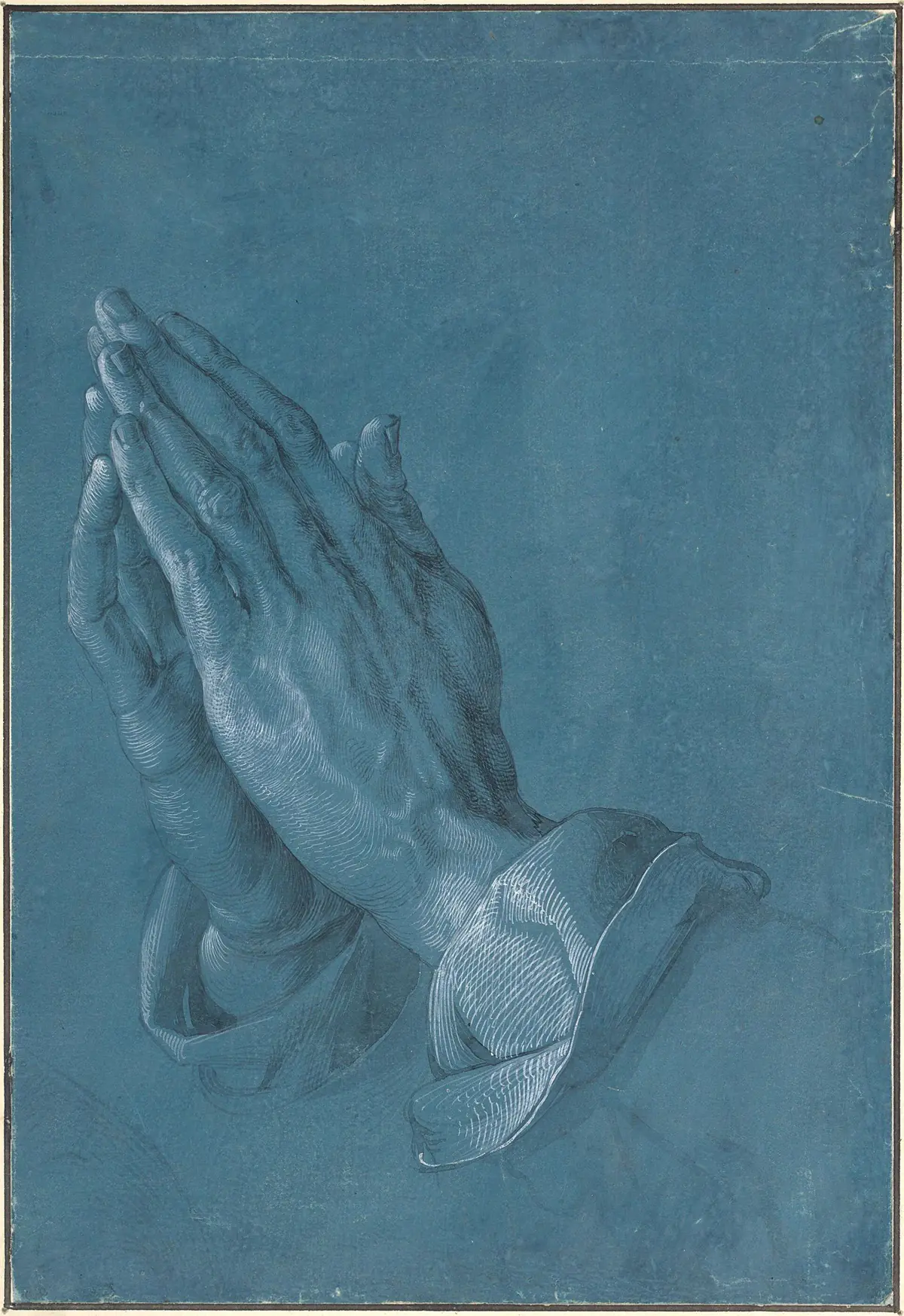
Albrecht Dürer’s Praying Hands (1508) — a working study of hands folded in petition, five centuries old and still legible at a glance.Albrecht Dürer, 1508 · Public domain
Doubters in Scripture
Some of the Bible's clearest pictures of doubt come from its strongest believers.
The psalmist. Psalm 73 is a confession of a man who nearly lost his faith watching the wicked do well: "But as for me, my feet were almost gone; my steps had well nigh slipped. For I was envious at the foolish, when I saw the prosperity of the wicked" (Psalm 73:2-3). His turn came in worship: "When I thought to know this, it was too painful for me; Until I went into the sanctuary of God; then understood I their end" (Psalm 73:16-17).
David. "How long wilt thou forget me, O LORD? for ever? how long wilt thou hide thy face from me? How long shall I take counsel in my soul, having sorrow in my heart daily?" (Psalm 13:1-2). That is a prayer, inspired by the Holy Ghost, given to the church to pray.
John the Baptist. The man who had pointed to Jesus and said "Behold the Lamb of God" (John 1:29) later sat in prison. The Jewish historian Josephus tells us where: Herod Antipas sent John "a prisoner, out of Herod's suspicious temper, to Macherus, the castle I before mentioned, and was there put to death" — the fortress of Machaerus, east of the Dead Sea.11 From that cell John sent a question: "Art thou he that should come, or do we look for another?" (Matthew 11:3).
Jesus did not rebuke him. He sent back evidence and a blessing: "Go and shew John again those things which ye do hear and see: The blind receive their sight, and the lame walk, the lepers are cleansed, and the deaf hear, the dead are raised up, and the poor have the gospel preached to them. And blessed is he, whosoever shall not be offended in me" (Matthew 11:4-6). Those are the signs Isaiah had foretold. Jesus pointed a doubting prophet back to the Scriptures and to what He was doing.
Thomas. "Except I shall see in his hands the print of the nails, and put my finger into the print of the nails, and thrust my hand into his side, I will not believe" (John 20:25). A week later the Lord came and offered exactly what Thomas had asked for: "Reach hither thy finger, and behold my hands; and reach hither thy hand, and thrust it into my side: and be not faithless, but believing." Thomas answered, "My LORD and my God" (John 20:27-28).
The disciples on the mountain. Even at the Great Commission, Matthew is honest: "And when they saw him, they worshipped him: but some doubted" (Matthew 28:17). Jesus gave the commission to all of them.
A desperate father. Perhaps the most honest prayer in the Gospels: "Lord, I believe; help thou mine unbelief" (Mark 9:24). Jesus healed his son.
Doubt and unbelief are not the same
There is a real difference between a believer who is struggling with questions and a person who has decided against Christ. The father in Mark 9 had both belief and unbelief in him, and he brought both to Jesus. That is the right direction.
Scripture also contains serious warnings about falling away (Hebrews 6:4-6), and they should be read as written, not explained away. But the same Lord says of His sheep, "And I give unto them eternal life; and they shall never perish, neither shall any man pluck them out of my hand" (John 10:28). The person who is troubled about whether he has fallen away is usually showing, by that very trouble, that he still cares about Christ. The warnings are a fence on the edge of the cliff; the promises are the ground under your feet. Both are God's word, and this paper does not try to fit them into a system.
Bunyan's long fight
The English Baptist preacher John Bunyan wrote one of the most honest accounts of doubt ever published, Grace Abounding to the Chief of Sinners (1666). For long stretches he was tormented by the thought that he had committed an unforgivable sin. He describes a temptation that would not leave him, running through his mind "Sell Christ for this, or sell Christ for that; sell Him, sell Him" — so persistently that he says he could hardly eat or "stoop for a pin, chop a stick" without it.12
What helped him was Scripture — one text at a time, sometimes one word at a time. He describes a morning when the words of 2 Corinthians 12:9 came to him only in part, "My grace is sufficient", and how he prayed for weeks until the whole sentence, "My grace is sufficient for thee", came home to him with "for thee" included.13 And he clung to John 6:37 — "him that cometh to me I will in no wise cast out" (John 6:37) — answering the devil with it: there is in these words no such exception, he said, but "him that comes, him, any him".14
His final relief came when he saw that his standing before God did not rise and fall with his feelings. "It was not my good frame of heart that made my righteousness better, nor yet my bad frame that made my righteousness worse," he wrote, "for my righteousness was Jesus Christ Himself".15 That is the anchor for every doubting believer. Your faith is weak; your Saviour is not.
Where doubts come from
It helps to ask what kind of doubt you are facing, because different doubts need different help.
| Kind of doubt | What it sounds like | What helps | | --- | --- | --- | | Questions of evidence | "How do I know the Bible is true? Did Jesus really rise?" | Study. The evidence is strong and has been carefully set out by careful writers. | | Pain and disappointment | "I prayed and God did not answer. Does He care?" | Lament, honest prayer, time, the company of believers. Psalm 13 and 73. | | Moods and the body | "Today none of it feels real." | Rest, sleep, food, and remembering that feelings are not facts. | | Accusation | "You are too far gone. You are not really saved." | The promises of the gospel, spoken back. John 6:37; Romans 8:1. | | An unwilling heart | "I do not want to obey, so I would rather it were not true." | Honest repentance. Doubt is sometimes a cover for desire. |
On the third row, C. S. Lewis gave a definition that has helped many: faith, he wrote, "is the art of holding on to things your reason has once accepted, in spite of your changing moods."16 He admitted that as a Christian he had moods when the whole thing looked improbable — and that as an atheist he had had moods when it looked very probable indeed. Moods move. Truth does not.
On the first row, if your questions are about evidence, you are not on your own. The site's study papers on the reliability of the Bible, the historical Jesus and the evidence for the resurrection set out that case; so do writers such as Lee Strobel (The Case for Christ), J. Warner Wallace (Cold-Case Christianity) and Gary Habermas and Michael Licona (The Case for the Resurrection of Jesus). Where your questions are about the text of Scripture itself, every place the 1611 and the modern Critical Text part ways is listed at kylelauriano.com/library/changes.
An atheist and a question
My own story is in the introduction. Eventually I gave up and called myself an atheist. I decided to read the Bible for one reason: to disprove it, so I'd have an excuse to stop going to church for good. It did the opposite. Genesis gripped me. In Matthew I read Jesus' own words and felt the weight of my own sin for the first time. Doubt of that kind rarely ends because someone shouts it down. It ends when a person meets the One the book is about.
Michael Ray Lewis told his story on The King Is Coming Show (TKIC #48): an atheist who mocked Christians — until, in his telling, one question undid him. Watch it in his own words: youtube.com/watch?v=Rd-RdSqeQDk Michael's account of what happened to him, shared as his testimony — weigh it for yourself.
What to do with doubt
Say it to God. The psalms give you the words. Unspoken doubt festers; doubt prayed becomes a conversation with the One who can answer it.
Say it to someone mature. A sound pastor or older believer will not be frightened of your questions.
Keep the means of grace going. Keep reading, keep praying, keep gathering with the church, even when it feels empty. The psalmist's turn came "in the sanctuary".
Do not make big decisions in the fog. A dark season is a bad time to walk away from your church, your marriage or your calling.
Study the real question. Many doubts fade once the question is actually looked at instead of merely feared.
Go back to the centre. When everything feels unstable, hold to the core: Christ died for sinners, He rose, and He receives all who come.
"Fear not" is one of the most repeated commands in Scripture. That tells us two things: God's people have always been afraid, and God has always cared enough to speak to it. This part matters because fear, left alone, shrinks a life. It keeps believers silent, isolated and stuck.
Wise caution and controlling fear
Not all fear is sin. The fear of the LORD is "the beginning of wisdom" (Proverbs 9:10), and ordinary caution — looking both ways, locking the door, saving for a hard month — is part of wisdom. The fear Scripture forbids is the fear that forgets God: the fear that paralyses, that rules decisions, that treats a threat as bigger than the Lord.
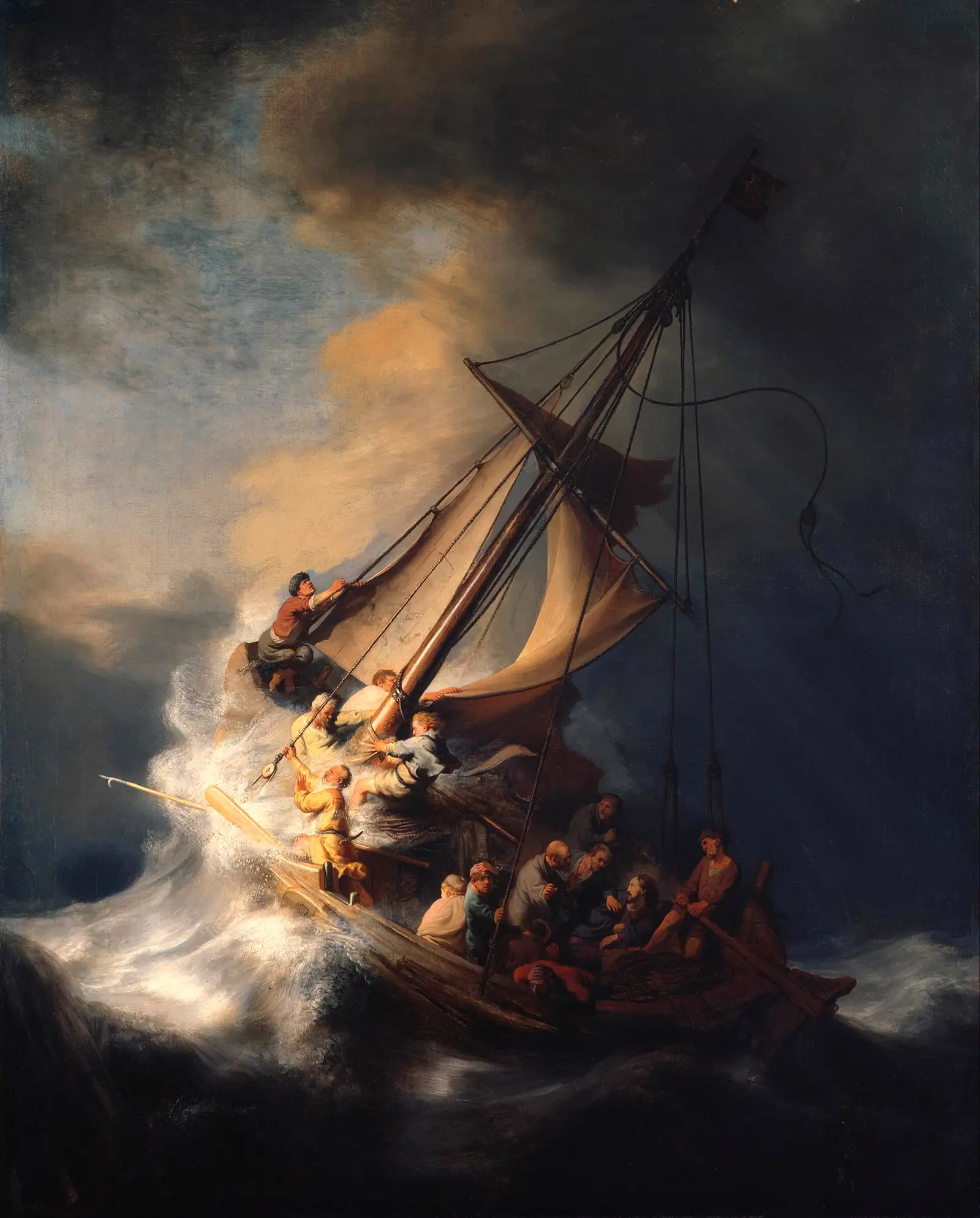
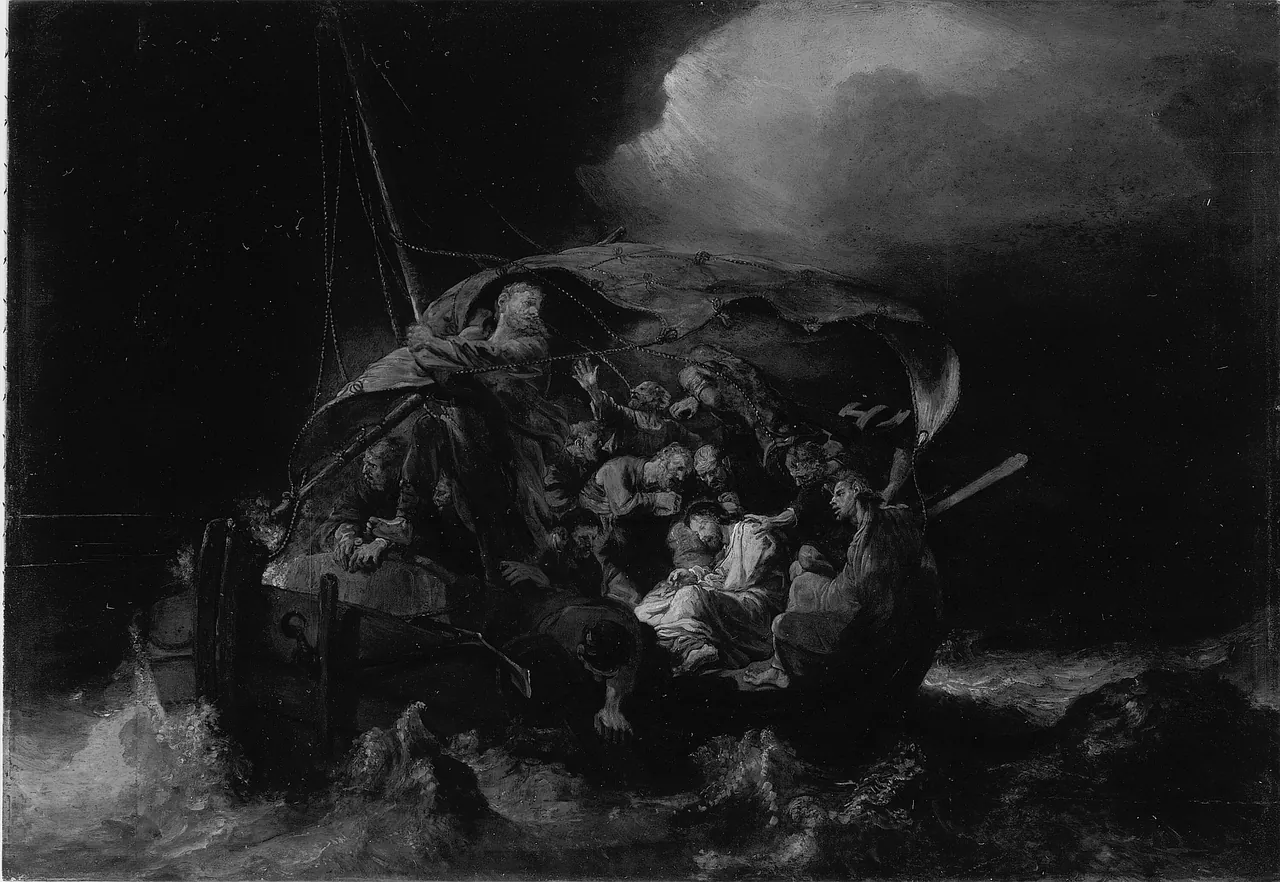
A Danish oil painting of about 1650 showing Christ in the boat with His frightened disciples in the storm, fear answered by His presence.Christ in the Storm · c. 1650 · Art Institute of Chicago · CC0 · museum record · Galeria Regni
Jesus Himself drew the line: "And fear not them which kill the body, but are not able to kill the soul: but rather fear him which is able to destroy both soul and body in hell" (Matthew 10:28). The right fear of God casts out the wrong fear of everything else.
God's answer to fear is His presence
Look at how God speaks to the frightened in Scripture. He rarely says "It will not happen." He usually says "I am with you."
"Have not I commanded thee? Be strong and of a good courage; be not afraid, neither be thou dismayed: for the LORD thy God is with thee whithersoever thou goest." (Joshua 1:9)
"Fear thou not; for I am with thee: be not dismayed; for I am thy God: I will strengthen thee; yea, I will help thee; yea, I will uphold thee with the right hand of my righteousness." (Isaiah 41:10)
David's prayer is a model of how short a fighting prayer can be: "What time I am afraid, I will trust in thee" (Psalm 56:3). He does not say he will never be afraid. He says what he will do when he is.
And when David was at his lowest — his town burned, his family taken, his own men speaking of stoning him — Scripture records: "but David encouraged himself in the LORD his God" (1 Samuel 30:6).
Worry about tomorrow
Much of our fear is about the future. Jesus addressed it directly: "Take therefore no thought for the morrow: for the morrow shall take thought for the things of itself. Sufficient unto the day is the evil thereof" (Matthew 6:34). In the King James, "take no thought" means do not be anxious; it is not a ban on planning. Planning is wise. Worry borrows tomorrow's trouble and spends today's strength on it.
Paul gives the practical path from worry to peace:
"Be careful for nothing; but in every thing by prayer and supplication with thanksgiving let your requests be made known unto God. And the peace of God, which passeth all understanding, shall keep your hearts and minds through Christ Jesus." (Philippians 4:6-7)
"Be careful for nothing" means "be anxious about nothing". The remedy is not to stop caring, but to turn every care into a request, and to do it "with thanksgiving". Peter says the same: "Casting all your care upon him; for he careth for you" (1 Peter 5:7). The word "keep" in Philippians 4:7 is a soldier's word — God's peace stands guard over the heart.
Then Paul tells us where to put our minds: "Finally, brethren, whatsoever things are true, whatsoever things are honest, whatsoever things are just, whatsoever things are pure, whatsoever things are lovely, whatsoever things are of good report; if there be any virtue, and if there be any praise, think on these things" (Philippians 4:8). Isaiah had said it before him: "Thou wilt keep him in perfect peace, whose mind is stayed on thee: because he trusteth in thee" (Isaiah 26:3).
Talking to yourself
The Welsh preacher Martyn Lloyd-Jones, in a famous series of sermons later published as Spiritual Depression: Its Causes and Cure (1965), began with Psalm 42:5 and made an observation that has helped countless anxious believers. "Have you realized that most of your unhappiness in life is due to the fact that you are listening to yourself instead of talking to yourself?" he asked.17 The thoughts that come at us when we wake are not always true. The psalmist does not just listen to his soul; he speaks to it: "Why art thou cast down, O my soul? and why art thou disquieted in me? hope thou in God: for I shall yet praise him for the help of his countenance" (Psalm 42:5).
Paul describes the same fight as taking prisoners: "Casting down imaginations, and every high thing that exalteth itself against the knowledge of God, and bringing into captivity every thought to the obedience of Christ" (2 Corinthians 10:5). In practice that looks like this:
Catch the thought. Name it. "If I lose this job, my family is finished."
Test it. Is it true? Is it certain? What does God say about it?
Answer it with truth. "I may lose this job. I will not lose my Father, and He knows what we need."
Turn it into prayer. Then do the next right thing.
This is not positive thinking. It is not visualising or emptying the mind. It is filling the mind with what God has actually said and setting it against what fear says.
Fear of people
"The fear of man bringeth a snare: but whoso putteth his trust in the LORD shall be safe" (Proverbs 29:25). The fear of what people think keeps many believers silent about Christ and trapped in sin they are afraid to confess. The answer is not to stop caring about people. It is to care more about God's verdict than theirs, and to remember that in Christ His verdict is already in.
Paul told the timid Timothy, "For God hath not given us the spirit of fear; but of power, and of love, and of a sound mind" (2 Timothy 1:7).
Fear of death
Underneath many fears is the oldest one. Hebrews says that Christ took flesh "that through death he might destroy him that had the power of death, that is, the devil; And deliver them who through fear of death were all their lifetime subject to bondage" (Hebrews 2:14-15). A believer will still die, and may still fear the pain of dying. But death has lost its last word. "There is no fear in love; but perfect love casteth out fear: because fear hath torment" (1 John 4:18).
When fear is an anxiety disorder
Some anxiety is not simply a matter of weak faith. Persistent, uncontrollable worry; panic attacks with a racing heart, breathlessness and chest pain; anxiety that keeps you from work, sleep or ordinary life — these can be signs of an anxiety disorder, a real medical condition. Believers get them too.
If that describes you, please see your doctor. Seeking medical help is not a lack of faith. Jesus said, "They that be whole need not a physician, but they that are sick" (Matthew 9:12) — making a spiritual point from an ordinary fact everyone accepted. Paul travelled with "Luke, the beloved physician" (Colossians 4:14), and told Timothy to "use a little wine for thy stomach's sake and thine often infirmities" (1 Timothy 5:23). God gives means. Using them with prayer is not doubting Him; it is receiving from Him.
A good Christian counsellor can also help, especially one who will take Scripture seriously and work alongside your church. Part 7 says more about choosing help well.
This part matters because Scripture is clear that there is a real enemy, and many believers either ignore him or become obsessed with him. Both are dangerous. C. S. Lewis put it well in the preface to The Screwtape Letters (1942): "There are two equal and opposite errors into which our race can fall about the devils. One is to disbelieve in their existence. The other is to believe, and to feel an excessive and unhealthy interest in them. They themselves are equally pleased by both errors and hail a materialist or a magician with the same delight."18
The aim here is to stay between those errors: to take the enemy seriously because Scripture does, and to keep our eyes on Christ, because Scripture does that far more.
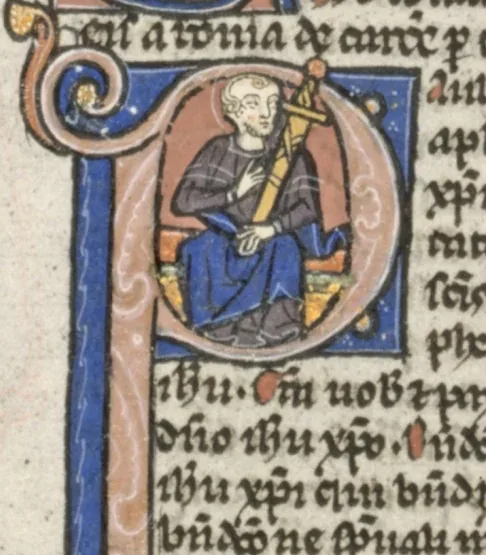
A Latin Bible leaf of about 1250 opening Paul's letter to the Ephesians, its initial showing the apostle holding a sword, the letter of the armour of God.Leaf from a Latin Bible: Initial P with St. Paul Holding a Sword (St. Paul's Epistle to the Ephesians) · c. 1250 · Cleveland Museum of Art · CC0 · full page · museum record · Galeria Regni
Ephesus: a city full of spirits
Paul's fullest teaching on spiritual warfare is in Ephesians, and it helps to know the city. Ephesus was the home of the great temple of Artemis and was famous in the ancient world for magic. Acts records what happened when the gospel came there. Some travelling Jewish exorcists tried to use the name of Jesus like a spell: "We adjure you by Jesus whom Paul preacheth". The evil spirit answered, "Jesus I know, and Paul I know; but who are ye?" and the possessed man overpowered all seven of them, "so that they fled out of that house naked and wounded" (Acts 19:13-16).
Then came repentance on a scale that tells us how deep the magic ran: "And many that believed came, and confessed, and shewed their deeds. Many of them also which used curious arts brought their books together, and burned them before all men: and they counted the price of them, and found it fifty thousand pieces of silver. So mightily grew the word of God and prevailed" (Acts 19:18-20).
Clinton E. Arnold, in his study Ephesians, Power and Magic (1989), showed how strongly that setting shaped the letter. Ephesus gave its name to the Ephesia grammata, the "Ephesian letters", a set of magical words used as charms, and Arnold argues that Paul's language of "principalities" and "powers" speaks directly to believers who had lived in fear of such forces.19 Paul's answer to them was not a better spell. It was Christ, seated "Far above all principality, and power, and might, and dominion" (Ephesians 1:21), and a church standing in Him.
The sons of Sceva are the warning that hangs over this whole subject. The name of Jesus is not a formula. It is His authority, and it belongs to those who belong to Him.
The armour of God
Here is the passage itself:
"Finally, my brethren, be strong in the Lord, and in the power of his might. Put on the whole armour of God, that ye may be able to stand against the wiles of the devil. For we wrestle not against flesh and blood, but against principalities, against powers, against the rulers of the darkness of this world, against spiritual wickedness in high places. Wherefore take unto you the whole armour of God, that ye may be able to withstand in the evil day, and having done all, to stand." (Ephesians 6:10-13)
Notice the verb that repeats: stand. The armour is mostly defensive. The believer is not told to go hunting demons; he is told to hold his ground in Christ. And notice where the strength comes from: "be strong in the Lord, and in the power of his might." The armour is God's armour.
The Puritan William Gurnall, minister of Lavenham in Suffolk, gave this passage a whole work of its own, The Christian in Complete Armour, published in three volumes dated 1655, 1658 and 1662.20 What follows walks through the pieces more briefly.
The girdle of truth. "Stand therefore, having your loins girt about with truth" (Ephesians 6:14). The devil is a liar (John 8:44), so the first piece is truth — both the truth of God's word and a life of honesty. A believer living a double life has loosened his own belt.
The breastplate of righteousness. "And having on the breastplate of righteousness" (Ephesians 6:14). This is the righteousness of Christ given to us, and the righteous living that flows from it. The accuser's charges cannot pierce a heart covered by Christ's righteousness; and a life of obedience gives him fewer openings.
The gospel shoes. "And your feet shod with the preparation of the gospel of peace" (Ephesians 6:15). Peace with God gives sure footing. A soldier who slips cannot fight.
The shield of faith. "Above all, taking the shield of faith, wherewith ye shall be able to quench all the fiery darts of the wicked" (Ephesians 6:16). The Greek historian Polybius describes the Roman infantry shield of Paul's day as two and a half feet wide and four feet long, made of two planks glued together and covered with canvas and calf-skin, with iron edging at the rims.21 It covered most of a man. The Roman historian Livy describes the kind of fire-weapon such a shield faced: a missile whose shaft "was wrapped in tow and then smeared with pitch", set alight, and so frightening that even if it only stuck in the shield, "it forced the soldier to throw away his shield and left him defenceless".22 That is the picture behind Paul's words. The devil's darts are meant to make you drop your faith. The shield God gives does not merely stop them; it quenches them.
The helmet of salvation. "And take the helmet of salvation" (Ephesians 6:17). The battle for the mind is often a battle over assurance. The helmet is the hope of salvation held firmly — not in our performance, but in Christ.
The sword of the Spirit. "And the sword of the Spirit, which is the word of God" (Ephesians 6:17). This is the one clear weapon of attack, and it is the one Jesus used in the wilderness. The word is the Spirit's sword: it is powerful because the Spirit wields it, not because we pronounce it in a certain way.
Prayer. Paul does not call prayer a piece of armour, but he ends with it: "Praying always with all prayer and supplication in the Spirit, and watching thereunto with all perseverance and supplication for all saints" (Ephesians 6:18). The armour is put on in prayer, and the whole church prays for one another.
How the enemy works
Scripture names several ways the devil opposes believers. Each has a scriptural answer.
Temptation. He tempted Eve and he tempted Christ. The answer is the way of escape (1 Corinthians 10:13) and the word hidden in the heart.
Deception. He is "a liar, and the father of it" (John 8:44). The answer is truth, and testing every spiritual claim: "Beloved, believe not every spirit, but try the spirits whether they are of God" (1 John 4:1).
Accusation. He is "the accuser of our brethren". The answer is the blood of Christ: "And they overcame him by the blood of the Lamb, and by the word of their testimony; and they loved not their lives unto the death" (Revelation 12:11).
Division. Paul urged the Corinthians to forgive a repentant brother "Lest Satan should get an advantage of us: for we are not ignorant of his devices" (2 Corinthians 2:11). Unforgiveness in a church is an open door.
Oppression and affliction. Scripture records Satan afflicting Job and binding a daughter of Abraham with sickness. But it also records that he could go only as far as God allowed (Job 1:12).
Not every struggle is a demon
This needs to be said firmly. Not every temptation, bad mood or setback is a direct attack of the devil. James tells us we are tempted by our own lust (James 1:14). Many troubles are the fruit of our own choices, of living in a fallen world, of a tired body or an illness. Depression, anxiety, psychosis and addiction have real medical sides. A believer who blames everything on demons will neglect repentance, wisdom and the doctor. A believer who blames nothing on demons has stopped reading the New Testament. The gift of "discerning of spirits" (1 Corinthians 12:10) exists precisely because the difference is not always obvious — and it is exercised in the church, among mature believers, not alone.
Deliverance is for today
The Lord Jesus cast out devils, and He said that this was a sign of the kingdom: "But if I cast out devils by the Spirit of God, then the kingdom of God is come unto you" (Matthew 12:28). He gave His disciples authority to do the same. When the seventy returned rejoicing that "even the devils are subject unto us through thy name", He said, "Behold, I give unto you power to tread on serpents and scorpions, and over all the power of the enemy: and nothing shall by any means hurt you. Notwithstanding in this rejoice not, that the spirits are subject unto you; but rather rejoice, because your names are written in heaven" (Luke 10:17-20).
And at the end of Mark: "And these signs shall follow them that believe; In my name shall they cast out devils; they shall speak with new tongues" (Mark 16:17). That passage, Mark 16:9–20, stands in the 1611 and in the Received Text; many modern versions bracket or footnote it. You can see that difference and every other at kylelauriano.com/library/changes.
So this paper teaches what Scripture teaches. The gifts of the Spirit and deliverance from evil spirits are for today, and guests on my show testify to both. Every gift is tested by the word of God and kept within the limits the word sets.
Jackie VanTine shared a testimony of faith, deliverance, and marriage under Christ on The King Is Coming Show (TKIC #16). Watch it in Jackie's own words: youtube.com/watch?v=wjU6N7arAbA Jackie's account of what happened, shared as testimony — weigh it for yourself.
Mike Shreve told his story on The King Is Coming Show (TKIC #46): a kundalini and yoga guru with 300 students — until, in his telling, one prayer ended it all, and he was born again on a Tampa roadside. Watch it in his own words: youtube.com/watch?v=oqAq58bDC4k Mike's account of what happened to him, shared as his testimony — weigh it for yourself.
Mike's story echoes a part of mine. When real life hit — a lost job, a pregnant wife, constant fights — I went looking for peace anywhere I could find it. New Age, crystals, astral projection, tarot, angel numbers. None of it held. Spiritual experience is not the same thing as the Holy Ghost. The Ephesian believers who burned their books understood that the first step of deliverance is often a bonfire: getting rid of the objects, practices and books that opened the door.
The guardrails
Because this subject is so easily abused, Scripture's guardrails matter as much as its permissions. Here is what this paper, and this ministry, does not teach, and why.
A born-again believer cannot be possessed. A Christian can be tempted, oppressed, harassed and attacked — Peter was sifted, Paul was buffeted. But a believer belongs to Christ and is the temple of the Holy Ghost. "We know that whosoever is born of God sinneth not; but he that is begotten of God keepeth himself, and that wicked one toucheth him not" (1 John 5:18). Attack, yes. Ownership, no.
We do not converse with demons. Jesus silenced the spirits; He did not interview them. Deliverance is not a conversation and not a source of information.
We do not curse, or "send curses back". Jesus said, "Bless them that curse you, and pray for them which despitefully use you" (Luke 6:28).
We do not command, summon or pray to angels. Prayer is to the Father in the name of the Son. Angels are God's servants, sent at His word.
Words are not magic. There is no formula, declaration or phrase that works by being said. "Pleading the blood" is not an incantation; the blood of Christ is the ground of our standing before God, received by faith. The sons of Sceva had the right words and no relationship. Even Michael the archangel, "when contending with the devil he disputed about the body of Moses, durst not bring against him a railing accusation, but said, The Lord rebuke thee" (Jude 1:9).
No guaranteed outcomes and no number codes. God is not obligated by our techniques, our fasts or our counting of days. We pray, fast, obey and trust Him with the result.
Binding and loosing
Much modern "warfare" prayer is built around the words "I bind you, Satan". It is worth reading what Jesus actually said.
The words appear twice. To Peter: "And I will give unto thee the keys of the kingdom of heaven: and whatsoever thou shalt bind on earth shall be bound in heaven: and whatsoever thou shalt loose on earth shall be loosed in heaven" (Matthew 16:19). And to the disciples, at the end of His teaching on dealing with a brother who sins: "Moreover if thy brother shall trespass against thee, go and tell him his fault between thee and him alone" (Matthew 18:15). If that fails, one or two witnesses are to go; and then comes the church and the promise about binding: "And if he shall neglect to hear them, tell it unto the church: but if he neglect to hear the church, let him be unto thee as an heathen man and a publican. Verily I say unto you, Whatsoever ye shall bind on earth shall be bound in heaven: and whatsoever ye shall loose on earth shall be loosed in heaven" (Matthew 18:17-18).
In both places the setting is the church and its keys: the authority given to the apostles and the church to open the kingdom by the gospel, and to deal with sin and restoration among its members. Neither text mentions binding Satan. Neither gives a prayer formula. Where Jesus does speak of binding "the strong man" (Matthew 12:29), He is describing what He does in casting out devils.
So this paper keeps binding and loosing where the text puts it, and it does not teach prayers that command Satan or "bind" spirits by formula. That is not timidity. It is obedience to the text.
How a believer resists
What, then, does a Christian do under spiritual attack? Scripture's answer is plain and enough.
Submit to God first. "Submit yourselves therefore to God. Resist the devil, and he will flee from you. Draw nigh to God, and he will draw nigh to you" (James 4:7-8). The order matters. Resistance without submission is just noise.
Confess and forsake known sin. "Neither give place to the devil" (Ephesians 4:27). Unconfessed sin is a foothold.
Stand in the faith. "Whom resist stedfast in the faith, knowing that the same afflictions are accomplished in your brethren that are in the world" (1 Peter 5:9).
Use the word. As Jesus did: "It is written."
Pray, and ask others to pray. Jesus taught us to pray "deliver us from evil" (Matthew 6:13). He also prayed for Peter by name: "Simon, Simon, behold, Satan hath desired to have you, that he may sift you as wheat: But I have prayed for thee, that thy faith fail not" (Luke 22:31-32).
Seek the elders. Where there is serious oppression, go to mature, sound leaders in your church. James's instruction about calling the elders (James 5:14) belongs here too. Deliverance ministry is best done by the church, with accountability, and not by a lone stranger with a microphone.
Fast with prayer, humbly. Jesus spoke of a kind that "goeth not out but by prayer and fasting" (Matthew 17:21). Fasting is not a lever; it is humbling ourselves before God.
And remember who has already won:
"And having spoiled principalities and powers, he made a shew of them openly, triumphing over them in it" (Colossians 2:15).
"For this purpose the Son of God was manifested, that he might destroy the works of the devil" (1 John 3:8).
"Greater is he that is in you, than he that is in the world" (1 John 4:4).
The struggles in this part are heavier, and they often need more than a chapter of a study paper. They matter because they can destroy lives and families, and because each has a medical or relational side that a believer must not ignore. This part gives the biblical teaching, the honest facts, and the places to get help.
William Holman Hunt’s The Light of the World (1853) — Christ knocking at a door with no outside handle; it only opens from within.William Holman Hunt, 1853 · Public domain
Addiction
The size of it
Addiction is not a rare problem at the edges of the church. In its 2024 National Survey on Drug Use and Health, the U.S. Substance Abuse and Mental Health Services Administration (SAMHSA) reported that 16.8 percent of Americans aged 12 or older — about 48.4 million people — had a substance use disorder in the past year. About 4.8 million had an opioid use disorder. Only about one in five who needed treatment for substance use received it.23
Drug overdose remains a killer. The CDC's National Center for Health Statistics estimated 80,391 overdose deaths in the United States in 2024 — a fall of almost 27 percent from about 110,000 in 2023, but still tens of thousands of lives.24
Those numbers include people sitting in pews.
What Scripture says
Scripture speaks of drunkenness plainly as sin. "And be not drunk with wine, wherein is excess; but be filled with the Spirit" (Ephesians 5:18). Proverbs paints the trap with an artist's eye: "Look not thou upon the wine when it is red, when it giveth his colour in the cup, when it moveth itself aright. At the last it biteth like a serpent, and stingeth like an adder" (Proverbs 23:31-32). And Paul gives the principle that reaches every addiction, whether to a substance, to pornography, to gambling or to a screen: "All things are lawful unto me, but all things are not expedient: all things are lawful for me, but I will not be brought under the power of any" (1 Corinthians 6:12).
At its root, addiction is a form of worship: looking to a created thing for the comfort, escape or relief that only God can give. That is why Paul sets "be filled with the Spirit" against "be not drunk". The answer to a false filling is a true one.
But Scripture is also full of hope for the addicted. "Drunkards" are in the list in 1 Corinthians 6:10 — and so is the sentence that follows: "And such were some of you: but ye are washed" (1 Corinthians 6:11).
Addiction is also a medical problem
Addiction changes the body and the brain. Stopping some substances suddenly — alcohol and certain prescription drugs in particular — can be medically dangerous. If you are physically dependent, do not try to detox alone; see a doctor.
The National Institute on Drug Abuse (NIDA) notes that relapse rates for substance use disorders are similar to those for other chronic illnesses such as high blood pressure and asthma, and that relapse "doesn't mean treatment has failed".25 That is a sober and hopeful word. A relapse is a reason to return to the fight and adjust the plan, not a reason to give up.
Where to start:
SAMHSA's National Helpline, 1-800-662-HELP (4357). It is free, confidential and open 24 hours a day, 365 days a year. It does not provide counselling, but it refers callers to local treatment, support groups and community services.26
Your doctor. For a medical assessment and safe detox.
Your pastor and church. For the spiritual side of the fight, and for people who will stay with you.
A recovery group. Many believers have been helped by recovery groups. Choose one with care: a group that points you to Christ and keeps you honest is worth more than one that leaves Him out.
The long road
Recovery is rarely a single moment. Even believers who testify to sudden freedom usually walk a long road afterward. The same principles from Part 2 apply, with greater force:
Make no provision. Remove the substance, the dealer's number, the route past the bar.
Know your triggers. Hunger, anger, loneliness and tiredness are common ones. Plan for them.
Replace, do not just remove. An empty house invites the spirit back with seven others (Matthew 12:43–45). Fill your days with Christ, His people and good work.
Stay in the light. Have someone who knows the truth and asks you the hard questions every week.
Make amends. Where your addiction has harmed others, make right what you can.
Anger
Anger is not always sin
"Be ye angry, and sin not: let not the sun go down upon your wrath: Neither give place to the devil" (Ephesians 4:26-27). Paul assumes believers will feel anger, and he does not forbid the feeling. God Himself is angry at evil, and Jesus was angry at the hardness of men's hearts. Anger at injustice can be righteous.
But human anger goes wrong quickly. James is blunt: "Wherefore, my beloved brethren, let every man be swift to hear, slow to speak, slow to wrath: For the wrath of man worketh not the righteousness of God" (James 1:19-20). And Paul lists anger in its sinful forms among the things to put away: "Let all bitterness, and wrath, and anger, and clamour, and evil speaking, be put away from you, with all malice: And be ye kind one to another, tenderhearted, forgiving one another, even as God for Christ's sake hath forgiven you" (Ephesians 4:31-32).
Two angry men
Scripture gives two portraits worth studying. The first is Cain. "And the LORD said unto Cain, Why art thou wroth? and why is thy countenance fallen? If thou doest well, shalt thou not be accepted? and if thou doest not well, sin lieth at the door. And unto thee shall be his desire, and thou shalt rule over him" (Genesis 4:6-7). God warned him that sin was crouching at the door, and that he had to master it. Cain did not, and his anger became murder.
The second is Jonah, angry that God had spared Nineveh and then angry about a plant. God asked him twice, "Doest thou well to be angry?" (Jonah 4:4). The second time Jonah answered, "I do well to be angry, even unto death" (Jonah 4:9). The book ends with God's question hanging in the air. Anger had made a prophet care more about a plant than a city.
In both stories God asks a question. That is a good place to start with your own anger: Why am I angry? Is it for God's glory, or for my pride? What is under it — fear, hurt, shame?
Practical wisdom
Slow down. "He that is slow to anger is better than the mighty; and he that ruleth his spirit than he that taketh a city" (Proverbs 16:32). Leaving the room to pray before you speak is not weakness.
Answer softly. "A soft answer turneth away wrath: but grievous words stir up anger" (Proverbs 15:1).
Deal with it the same day. "Let not the sun go down upon your wrath." Bitterness grows overnight.
Get help if it becomes violence. If your anger has led to threats or violence, you need outside help now — your pastor, a counsellor, and, if anyone is in danger, the authorities. If someone else's anger has made your home unsafe, getting yourself and your children to safety is not a failure of faith. In an emergency, call 911.
Forgiveness
Much long-term anger is unforgiveness. Jesus' teaching is demanding: when Peter asked whether seven times was enough, "Jesus saith unto him, I say not unto thee, Until seven times: but, Until seventy times seven" (Matthew 18:21-22). The parable that follows ends with a solemn warning: "So likewise shall my heavenly Father do also unto you, if ye from your hearts forgive not every one his brother their trespasses" (Matthew 18:35).
Forgiveness is not pretending a wrong was small. It is not the same as trust, which must be rebuilt. It does not mean staying in danger, and it does not cancel the just consequences of a crime. It means releasing your claim to pay the person back, and handing them over to God, the righteous Judge.
Corrie ten Boom, whose family hid Jews from the Nazis and who lost her sister Betsie at the Ravensbrück concentration camp, told of meeting one of the camp's former guards after she spoke at a church in Munich in 1947. He had become a Christian and held out his hand. She later wrote that she could not summon the feeling of forgiveness, but that "Forgiveness is an act of the will, and the will can function regardless of the temperature of the heart." She prayed for help, took his hand, and said, "I forgive you, brother!"27
If she could do it, by grace, so can we. Not in our strength, but by asking the One who forgave us to forgive through us.
Despair, depression and thoughts of suicide
If you are in danger
If you are thinking about ending your life, please do this now: call or text 988, the Suicide & Crisis Lifeline, or chat at chat.988lifeline.org. It is free and confidential, and it is available 24 hours a day, every day of the year.28 If you are in immediate danger, call 911. Then tell someone you trust — a family member, a friend, your pastor. You do not have to carry this alone tonight.
The size of it
A little over 49,300 people in the United States died by suicide in 2023, according to provisional CDC data, and the CDC reports that in the same year an estimated 12.8 million adults seriously thought about suicide, 3.7 million made a plan, and 1.5 million attempted it.29 The National Institute of Mental Health estimates that 21.0 million American adults, 8.3 percent, had at least one major depressive episode in 2021.30
Many of those people are Christians. Depression is not proof that you have no faith.
God's servants in the dark
Scripture is honest about despair. Job cursed the day he was born. So did Jeremiah: "Cursed be the day wherein I was born: let not the day wherein my mother bare me be blessed" (Jeremiah 20:14). One psalm ends without any resolution at all: "Lover and friend hast thou put far from me, and mine acquaintance into darkness" (Psalm 88:18). Paul wrote that in Asia "we were pressed out of measure, above strength, insomuch that we despaired even of life: But we had the sentence of death in ourselves, that we should not trust in ourselves, but in God which raiseth the dead" (2 Corinthians 1:8-9).
The fullest portrait is Elijah. After Carmel, threatened by Jezebel, he ran south past Beersheba, then "went a day's journey into the wilderness, and came and sat down under a juniper tree: and he requested for himself that he might die; and said, It is enough; now, O LORD, take away my life; for I am not better than my fathers" (1 Kings 19:4). The "juniper" here is the rethem or rothem, which Strong defines as "the Spanish broom" — a scrubby desert bush that gives only a little shade.31 That is how low the great prophet had sunk.
Watch what God did. He did not lecture him. "And as he lay and slept under a juniper tree, behold, then an angel touched him, and said unto him, Arise and eat" (1 Kings 19:5). Then a second time: "Arise and eat; because the journey is too great for thee" (1 Kings 19:7). Sleep. Food. Rest. A gentle touch. Only after that came the questions — "What doest thou here, Elijah?" — and Elijah's honest, distorted answer: "I, even I only, am left; and they seek my life, to take it away" (1 Kings 19:10). Then the "still small voice" (1 Kings 19:12), and a correction of the lie that he was alone: "Yet I have left me seven thousand in Israel, all the knees which have not bowed unto Baal" (1 Kings 19:18). And then a new task and a companion, Elisha.
There is a whole ministry to the depressed in that chapter: care for the body, patience, honesty, the presence of God, the truth that you are not alone, and a reason to go on.
Spurgeon's "fainting fits"
Charles Spurgeon, the most famous preacher of Victorian London, suffered from deep and recurring depression. Part of it seems to have followed a disaster at the Surrey Gardens Music Hall in 1856, when someone cried "Fire!" during a service and seven people were crushed to death in the panic; part was linked to the agonising gout he suffered in later life.32 He spoke openly about it to the students he trained. His lecture "The Minister's Fainting Fits" begins: "As it is recorded that David, in the heat of battle, waxed faint, so may it be written of all the servants of the Lord. Fits of depression come over the most of us." He explained why he spoke so frankly: "Knowing by most painful experience what deep depression of spirit means," he wanted younger men "not fancy that some strange thing had happened to them".33
If the Prince of Preachers could be laid low, no believer should be ashamed of it.
Bunyan's Doubting Castle
John Bunyan, who had walked through his own long darkness, put despair at the centre of The Pilgrim's Progress (1678). Christian and his friend Hopeful wander off the King's highway onto an easier path, are caught by Giant Despair, and are thrown into the dungeon of Doubting Castle. There the giant urges them to end their lives: "their only way would be forthwith to make an end of themselves, either with knife, halter, or poison".34
Christian is tempted to agree. Hopeful answers him with reasons to hold on: that the Lord of the country they travel to has said "Thou shalt do no murder"; and that "all the law is not in the hand of Giant Despair. Others, so far as I can understand, have been taken by him, as well as we; and yet have escaped out of his hand."35 Despair always tells you that you are the only one, and that it will always be like this. Both are lies.
And then the escape. After praying through a night, Christian cries out: "What a fool, quoth he, am I, thus to lie in a stinking Dungeon, when I may as well walk at liberty. I have a Key in my bosom called Promise, that will, I am persuaded, open any Lock in Doubting Castle."36 The key was in his pocket the whole time. That is Bunyan's picture of the promises of God — the same promises that had carried him out of his own darkness.
Bunyan's allegory is a picture, not a medical plan. But its pastoral wisdom is real: hold on, refuse despair's counsel, remember that others have come through, pray, and take hold of the promises.
Promises for the dark
These are some of the keys:
"The LORD is nigh unto them that are of a broken heart; and saveth such as be of a contrite spirit" (Psalm 34:18).
"He healeth the broken in heart, and bindeth up their wounds" (Psalm 147:3).
"My flesh and my heart faileth: but God is the strength of my heart, and my portion for ever" (Psalm 73:26).
"We are troubled on every side, yet not distressed; we are perplexed, but not in despair; Persecuted, but not forsaken; cast down, but not destroyed" (2 Corinthians 4:8-9).
"For I am persuaded, that neither death, nor life, nor angels, nor principalities, nor powers, nor things present, nor things to come, Nor height, nor depth, nor any other creature, shall be able to separate us from the love of God, which is in Christ Jesus our Lord" (Romans 8:38-39).
"Come unto me, all ye that labour and are heavy laden, and I will give you rest" (Matthew 11:28).
Depression needs the doctor too
Depression is often spiritual, physical and circumstantial at once. Sleep, illness, medication, hormones, grief and trauma all play a part. A good doctor can look for physical causes and offer treatment. Talking with a trustworthy counsellor can help. Medication, where a doctor recommends it, is one of the means God provides, as surely as Elijah's bread was. None of this replaces prayer, Scripture and the church. All of it can work alongside them.
If you are walking with someone through depression, follow Elijah's pattern: care for the body, listen before you correct, stay close, and remind them gently and often that they are not alone. Paul's instruction fits: "comfort the feebleminded, support the weak, be patient toward all men" (1 Thessalonians 5:14). If they speak of ending their life, take it seriously every time. Ask them directly, stay with them, and help them call or text 988.
Every part of this paper has come back to the same place: other people. That is not an accident. God designed the Christian life to be lived in a body, not in isolation. This part matters because many believers lose battles they could have won simply because no one knew they were fighting.
Why community is a means of grace
"Two are better than one; because they have a good reward for their labour. For if they fall, the one will lift up his fellow: but woe to him that is alone when he falleth; for he hath not another to help him up" (Ecclesiastes 4:9-10).
The New Testament makes it a daily matter: "But exhort one another daily, while it is called To day; lest any of you be hardened through the deceitfulness of sin" (Hebrews 3:13). Sin is deceitful. It is very hard to see through it alone. A brother or sister who knows you can see what you cannot.
And it makes the gathered church essential: "And let us consider one another to provoke unto love and to good works: Not forsaking the assembling of ourselves together, as the manner of some is; but exhorting one another: and so much the more, as ye see the day approaching" (Hebrews 10:24-25). If you do not have a church, finding a sound, Bible-preaching local church is one of the most important steps you can take in any struggle. The site's guide to finding a local church may help.
Confession
"Confess your faults one to another, and pray one for another, that ye may be healed. The effectual fervent prayer of a righteous man availeth much" (James 5:16).
We confess our sins to God for forgiveness (1 John 1:9). We confess our faults to one another for healing. David knew the cost of silence: "When I kept silence, my bones waxed old through my roaring all the day long. For day and night thy hand was heavy upon me" — and the relief of speaking: "I acknowledged my sin unto thee, and mine iniquity have I not hid. I said, I will confess my transgressions unto the LORD; and thou forgavest the iniquity of my sin" (Psalm 32:3-5).
Choose who you confess to wisely. A good confidant is:
Mature in the faith and sound in doctrine.
Trustworthy — someone who keeps confidences.
Of your own sex, especially for sexual struggles.
Honest — willing to ask hard questions and tell you hard truths.
Gentle — "Brethren, if a man be overtaken in a fault, ye which are spiritual, restore such an one in the spirit of meekness; considering thyself, lest thou also be tempted. Bear ye one another's burdens, and so fulfil the law of Christ" (Galatians 6:1-2).
Accountability that works
Accountability is not a weekly report to a policeman. It is a friendship with a purpose. It tends to work best when:
It meets regularly — weekly is good — and does not depend on the struggling person to call.
The questions are specific. Not "How are you doing?" but "Did you look at pornography this week?" or "Did you drink?" or "Have you had thoughts of hurting yourself?"
It includes Scripture and prayer, not only confession.
It is honest about failure and quick to point back to the gospel.
It is willing to bring in more help when a struggle is beyond it.
When to seek professional help
Some struggles need more than a friend and a pastor. Seek help from a doctor or a qualified counsellor when:
You have thoughts of suicide or self-harm (call or text 988 now).
You are physically dependent on alcohol or drugs.
Depression or anxiety is keeping you from work, sleep, eating or ordinary life.
You hear voices, see things others do not, or feel you are losing touch with reality.
Trauma from the past is overwhelming the present.
There is abuse or violence in your home.
You have tried hard, with prayer and accountability, and cannot stop.
Seeking that help is not a lack of faith. It is wisdom, and it is humility.
When you choose a counsellor, ask questions. Will they respect your faith? Will they work alongside your pastor? Do they treat Scripture as true? A counsellor who sees your faith as part of the problem is not the right fit. Many churches keep a list of trusted Christian counsellors and doctors; ask your pastor.
When you are the helper
If someone trusts you with a struggle, that is a sacred thing. A few principles:
Listen first. "Swift to hear, slow to speak" (James 1:19) applies to helpers too.
Point them to Christ. Not to yourself, and not to a technique.
Be specific. "I'll text you Tuesday and Friday" helps more than "Let me know if you need anything."
Know your limits. Abuse, addiction with physical dependence, and thoughts of suicide need more than you. Help them get it.
Keep confidences — except where someone's life or safety is at risk. Then get help, even if they are upset with you.
Keep showing up. Long struggles need long friends.
The Lord Jesus never promised His people a life without struggle. He promised Himself in the middle of it, and the final victory at the end of it. "These things I have spoken unto you, that in me ye might have peace. In the world ye shall have tribulation: but be of good cheer; I have overcome the world" (John 16:33).
Look back over the believers in this paper. Augustine prayed "not yet" for years before he gave up his sin. Bunyan fought the same accusing thought for months. Spurgeon preached to thousands while fighting a darkness he could not explain. Corrie ten Boom could not feel forgiveness and chose it anyway. None of them won by technique. They won because God was faithful to them, and because they kept coming back to His word, to prayer, and to His people.
The same means are given to you: the word of God learned by heart, honest prayer, the daily killing of sin through the Spirit, confession, the church, the armour of God, and — where the body and mind need care — the doctor and the counsellor.
A next step
Do not finish this paper and do nothing. Choose one step for the struggle you face:
If it is temptation, pick one verse that answers it and learn it today, and close one door you have been leaving open.
If it is doubt, write down your question, pray it to God in your own words, and bring it to a mature believer this week.
If it is fear, turn your biggest worry into a prayer with thanksgiving, as Philippians 4:6 says, every time it comes back.
If it is spiritual attack, submit to God, confess any known sin, and ask your elders to pray with you.
If it is addiction, call your doctor or the SAMHSA National Helpline at 1-800-662-4357, and tell one person the truth.
If it is despair, tell someone today. If you are thinking about ending your life, call or text 988 now.
An invitation
If you are reading this and you are not sure you know Christ at all, the fight described here is not first a fight you must win. It begins with surrender. The apostle preached “repentance toward God, and faith toward our Lord Jesus Christ” (Acts 20:21), and that is the door. In my own story, I decided to read the Bible for one reason: to disprove it, so I'd have an excuse to stop going to church for good. It did the opposite. Then one day I got on my knees and prayed: "Jesus, if you are real, show me — and I'll serve you." The Lord I prayed to then is the same today, and His promise still stands: "him that cometh to me I will in no wise cast out" (John 6:37).
And if you know Him and you are tired, remember Christian in the dungeon. The key was in his pocket all along. It is in yours too.
"Come unto me, all ye that labour and are heavy laden, and I will give you rest. Take my yoke upon you, and learn of me; for I am meek and lowly in heart: and ye shall find rest unto your souls. For my yoke is easy, and my burden is light." (Matthew 11:28-30)
1Thomas Brooks, Precious Remedies Against Satan's Devices (1652), in The Complete Works of Thomas Brooks, ed. Alexander B. Grosart, vol. 1 (Edinburgh: James Nichol, 1866), 12–13. Online: https://archive.org/details/completeworksoft01broo.↩
3John Owen, Of the Mortification of Sin in Believers (1656), prefatory note, in The Works of John Owen, ed. William H. Goold, vol. 6. Online: https://ccel.org/ccel/owen/mort/mort.i.ii.html.↩
16C. S. Lewis, Mere Christianity (London: Geoffrey Bles, 1952), book 3, chapter 11, "Faith".↩
17D. Martyn Lloyd-Jones, Spiritual Depression: Its Causes and Cure (Grand Rapids: Eerdmans, 1965), chapter 1; quoted in Justin Taylor, "Talk, Don't Listen, to Yourself," The Gospel Coalition, June 25, 2007, https://www.thegospelcoalition.org/blogs/justin-taylor/talk-dont-listen-to-yourself/.↩
18C. S. Lewis, The Screwtape Letters (London: Geoffrey Bles, 1942), preface; quoted at https://www.thecatholicthing.org/2018/07/03/preface-to-the-screwtape-letters/.↩
19Clinton E. Arnold, Ephesians, Power and Magic: The Concept of Power in Ephesians in Light of Its Historical Setting, Society for New Testament Studies Monograph Series 63 (Cambridge: Cambridge University Press, 1989).↩
20William Gurnall, The Christian in Complete Armour, 3 vols. (London, 1655–1662); "Gurnall, William," in Dictionary of National Biography, ed. Leslie Stephen and Sidney Lee, vol. 23 (London: Smith, Elder, 1890).↩
21Polybius, Histories 6.23.2–4, trans. W. R. Paton, Loeb Classical Library (1923). Online: https://penelope.uchicago.edu/Thayer/E/Roman/Texts/Polybius/6*.html.↩
22Livy, History of Rome 21.8, trans. Canon Roberts. Online: https://www.yorku.ca/pswarney/3131/Livius-21.htm.↩
23Substance Abuse and Mental Health Services Administration, "SAMHSA Releases Annual National Survey on Drug Use and Health," July 28, 2025 (2024 NSDUH results), https://www.samhsa.gov/newsroom/press-announcements/20250728/samhsa-releases-annual-national-survey-on-drug-use-and-health.↩
24National Center for Health Statistics, CDC, "U.S. Overdose Deaths Decrease Almost 27% in 2024," May 14, 2025 (provisional data), https://www.cdc.gov/nchs/pressroom/releases/20250514.html.↩
25National Institute on Drug Abuse, Drugs, Brains, and Behavior: The Science of Addiction, "Treatment and Recovery" (July 2020), https://nida.nih.gov/publications/drugs-brains-behavior-science-addiction/treatment-recovery.↩
26Substance Abuse and Mental Health Services Administration, "National Helpline," https://www.samhsa.gov/find-help/helplines/national-helpline.↩
27Corrie ten Boom, "I'm Still Learning to Forgive," Guideposts (1972); reprinted at https://www.pbs.org/wgbh/questionofgod/voices/boom.html. See also Corrie ten Boom with John and Elizabeth Sherrill, The Hiding Place (Chosen Books, 1971).↩
28988 Suicide & Crisis Lifeline, https://988lifeline.org/. The three-digit 988 number replaced the old ten-digit line in July 2022: American Public Health Association, "Millions Using Suicide, Crisis Lifeline One Year after 988 Launch," Public Health Newswire, July 20, 2023, https://www.apha.org/publications/public-health-newswire/articles/2023/07/20/988-lifeline.↩
29Mike Stobbe, "US Suicides Held Steady in 2023 — at a Very High Level," Associated Press, September 26, 2024, reprinted in the Bangor Daily News, https://www.bangordailynews.com/2024/09/26/nation/us-suicides-held-steady-in-2023-at-a-very-high-level/; Centers for Disease Control and Prevention, "Suicide Data and Statistics," https://www.cdc.gov/suicide/facts/data.html.↩
30National Institute of Mental Health, "Major Depression," https://www.nimh.nih.gov/health/statistics/major-depression (2021 data).↩
31James Strong, The Exhaustive Concordance of the Bible (New York: Hunt & Eaton; Cincinnati: Cranston & Curts, 1890), Hebrew and Chaldee Dictionary, no. 7574 (rethem). Searchable in the study tools of the 1611 Reader at kylelauriano.com/library.↩
32Pearson Johnson, "C. H. Spurgeon and the Minister's Fainting Fits," BJU Seminary CoRE workshop paper (2024), https://seminary.bju.edu/files/2024/02/CH-Spurgeon-and-the-Ministers-Fainting-Fits-CoRE-2024.pdf.↩
33C. H. Spurgeon, "The Minister's Fainting Fits," in Lectures to My Students (Peabody, MA: Hendrickson, 2011), 159; as quoted in Johnson, "C. H. Spurgeon and the Minister's Fainting Fits."↩
It broke once. Seven mornings for the one who was hurt.
Seven pages in the 1611 King James for the person who believed once and was hurt — each with a work of art, one person with a before, and a room on the site built to hold you. Free.
This is practical teaching, not proof. It's drawn from Scripture and from walking this road myself. If you're still weighing the basics — whether God is real, whether the Bible can be trusted — I'd encourage you to start with the Skeptic resources in the Research Hub before diving in here.