GATHERING, GUARDING AND TELLING THE STORIES OF OTHERS
A study of why God's people tell what He has done, and a practical guide for churches and ministries that gather other believers' testimonies — with the safeguards that keep the stories true, the tellers safe, and Christ at the centre.
Abstract
When a church or ministry begins to collect and publish the testimonies of other people, it takes on duties that a believer telling his own story does not have: to the teller, who is vulnerable; to the hearer, who deserves the truth; and to God, whose name is attached to every claim. This paper grounds testimony ministry in the King James Bible — Israel's memorial stones and psalms of remembrance, the apostles reporting "all that God had done", the warnings to "prove all things" and "try the spirits" — and then sets out a working method: purpose and boundaries, finding and preparing tellers, consent and guest safety, pastoral care, the discernment of extraordinary claims, honest framing in titles and on screen, faithful editing, platform law, money and the measurement of fruit. Throughout, it uses the house practices of The King Is Coming Show as a worked example. It is written for pastors, ministry leaders and Christian creators who want to tell other people's stories well.
What’s inside
·Introduction
Part 1Part 1: A People Who Tell What God Has Done
Part 2Part 2: Purpose and Boundaries
Part 3Part 3: Finding, Inviting and Preparing Tellers
Part 4Part 4: Consent, Safety and Care
Part 5Part 5: Telling It True: Discernment and Framing
Part 6Part 6: Recording, Editing and Publishing Honestly
Part 7Part 7: Money, Growth and Fruit
·Conclusion
Research paper · 9 chapters · 9 notes · October 2026
"And they overcame him by the blood of the Lamb, and by the word of their testimony; and they loved not their lives unto the death." — Revelation 12:11 (KJV)Read in the 1611 →
About 37 minutes · 9 parts · the PDF has the same text
Introduction
3 min read
Telling your own testimony is one thing. Telling someone else's is another.
When you tell your own story, you answer for it. You know what happened, you decide what to include, and if you get something wrong, the cost falls mostly on you. When a church, a ministry or a Christian channel gathers and publishes the stories of other people, all of that changes. The teller trusts you with the worst and best moments of his life. The hearer trusts you to tell the truth. And every claim you publish about what God has done carries His name, whether you meant it to or not.
This paper is for people who want to build that kind of ministry — a testimony night in a local church, a recorded series of members' stories, a podcast or channel of conversion accounts. It is the fourth in a family of papers. Craft Your Testimony (Level 1) deals with finding and writing your own story; Share Your Testimony with telling it aloud in about three minutes; Share Your Story (Level 2) with moving from your story to the gospel in conversation. A fifth, Testimony Video, deals with recording and publishing. This paper deals with the stewardship of other people's stories.
What this paper is
This is a study and a working manual. It argues from the King James Bible first. Where history helps, it is cited. Where law and platform policy bear on the work — privacy, children, synthetic media — the paper cites the policies as they are published, checked in October 2026. That material is general information, current as of October 2026, not legal advice; laws vary by state and country, and platform rules change. To find the rule where you live, ask your state's child-protection agency or attorney general's office, or a local attorney, and read the platform's own help pages before you publish.
Seven parts follow. Part 1 shows why God's people have always told what He has done. Part 2 sets the purpose and the boundaries of a testimony ministry. Part 3 deals with finding, inviting and preparing tellers. Part 4 deals with consent, safety and pastoral care. Part 5 deals with discernment and honest framing — how to tell an extraordinary story truthfully. Part 6 deals with recording, editing and publishing. Part 7 deals with money, growth and fruit.
A word about me
I host a podcast called The King Is Coming Show, on which guests tell how they came to Christ. Many of their stories are extraordinary: atheists, gurus, people raised in groups that told them they alone were saved, people who describe visions and near-death experiences. I was raised Roman Catholic but never really connected — I went through the motions, fell asleep in the pews, and faked being sick to skip Mass. Eventually I gave up and called myself an atheist. I decided to read the Bible for one reason: to disprove it, so I'd have an excuse to stop going to church for good. It did the opposite. I came to faith in 2022, and my wife came to faith a month later. Today we're raising three kids in a home that was transformed — and I haven't stopped telling people since.
Running the show has forced us to think hard about how to tell other people's stories well. This paper sets down what we have learned, and the rules we work by, as one worked example among many possible ones. Where I describe our house practice, it is offered as an example, not a law for your church.
A note on Scripture: every verse in this paper is quoted from the King James Bible. You can read it free in the 1611 Reader at kylelauriano.com/library. A KJV with Strong's Concordance is the best study tool most believers will ever need.
This part matters because a testimony ministry is not a modern invention or a marketing strategy. It is one of the oldest habits of God's people, commanded in the law, sung in the psalms and practised by the apostles. Knowing that changes how you build it: not as a content engine, but as an act of remembrance and worship.
Stones that ask a question
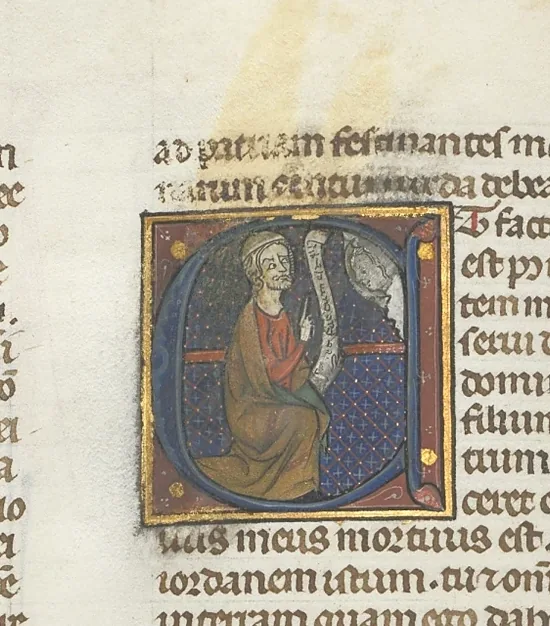
When Israel crossed the Jordan, the Lord commanded Joshua to take twelve stones from the riverbed and set them up at Gilgal. The reason was a question children would ask: "That this may be a sign among you, that when your children ask their fathers in time to come, saying, What mean ye by these stones? Then ye shall answer them, That the waters of Jordan were cut off before the ark of the covenant of the LORD ... and these stones shall be for a memorial unto the children of Israel for ever" (Joshua 4:6-7).
The opening of Joshua in a thirteenth-century Bible from southern France, with Joshua kneeling before God, the book where twelve stones were set up so children would ask.Fol. 76v, Joshua, historiated initial E, Joshua with a scroll kneeling before God · c. 1275–1300 · Cleveland Museum of Art · CC0 · full page · museum record · Galeria Regni
A testimony ministry is a pile of memorial stones. Each story is set up so that someone — a child, a stranger, a doubter — will ask, "What mean ye by these stones?", and hear what the Lord has done.
One generation to another
The psalms make remembrance a duty passed from generation to generation. "We will not hide them from their children, shewing to the generation to come the praises of the LORD, and his strength, and his wonderful works that he hath done ... That the generation to come might know them, even the children which should be born; who should arise and declare them to their children: That they might set their hope in God, and not forget the works of God, but keep his commandments" (Psalm 78:4-7). And again: "One generation shall praise thy works to another, and shall declare thy mighty acts" (Psalm 145:4).
Notice the purpose: "That they might set their hope in God." The aim of remembering is not admiration for the people in the stories, but hope in the God of the stories.
A book of remembrance
Malachi records a quiet scene from a dark time: "Then they that feared the LORD spake often one to another: and the LORD hearkened, and heard it, and a book of remembrance was written before him for them that feared the LORD, and that thought upon his name" (Malachi 3:16). Believers talking to one another about the Lord is something God Himself listens to and records. A testimony night in a small church may be one of the most heavenly things that happens there all year.
The apostles' reports
The early church made a habit of hearing what God had done. When Paul and Barnabas returned from their first journey and "had gathered the church together, they rehearsed all that God had done with them, and how he had opened the door of faith unto the Gentiles" (Acts 14:27). On their way to Jerusalem they passed through Phenice and Samaria, "declaring the conversion of the Gentiles: and they caused great joy unto all the brethren" (Acts 15:3). Years later, when Paul came to James and the elders, "he declared particularly what things God had wrought among the Gentiles by his ministry. And when they heard it, they glorified the Lord" (Acts 21:19-20).
Three things stand out. The report was about what God had done. It was given to the church, gathered. And its fruit was joy and glory to God. Those three marks — God the subject, the church the setting, worship the result — are the best test of any testimony ministry.
Confession that cleared the city
At Ephesus, after a dramatic failure by men who tried to use the name of Jesus as a spell, "fear fell on them all, and the name of the Lord Jesus was magnified. And many that believed came, and confessed, and shewed their deeds. Many of them also which used curious arts brought their books together, and burned them before all men ... So mightily grew the word of God and prevailed" (Acts 19:17-20). Public testimony there took the form of confession and renunciation — believers saying openly what they had done and turning from it. The fruit was that "the name of the Lord Jesus was magnified".
In the church's memory
The church never stopped. John Bunyan wrote Grace Abounding to the Chief of Sinners (1666) from prison as a letter to the congregation he could no longer visit. He told them why: Moses "commanded also that they did remember their forty years' travel in the wilderness", and so Bunyan had written down his own story, and published it, "that, if God will, others may be put in remembrance of what He hath done for their souls, by reading His work upon me."1 That is the purpose of a testimony ministry in one sentence.
John Wesley, on the night of 24 May 1738 when he "felt my heart strangely warmed", recorded that "I then testified openly to all there what I now first felt in my heart."2
The comfort that is passed on
Paul gives perhaps the deepest reason of all: "Blessed be God, even the Father of our Lord Jesus Christ, the Father of mercies, and the God of all comfort; Who comforteth us in all our tribulation, that we may be able to comfort them which are in any trouble, by the comfort wherewith we ourselves are comforted of God" (2 Corinthians 1:3-4). Every testimony is comfort received, passed on. A testimony ministry is a channel for that comfort to reach people who need it.
This part matters because a testimony ministry can drift. Stories that begin as worship can become entertainment; tellers who begin as witnesses can become celebrities; a ministry that begins in a church can become a brand. Writing down your purpose and your boundaries before you begin is the best protection against that drift.
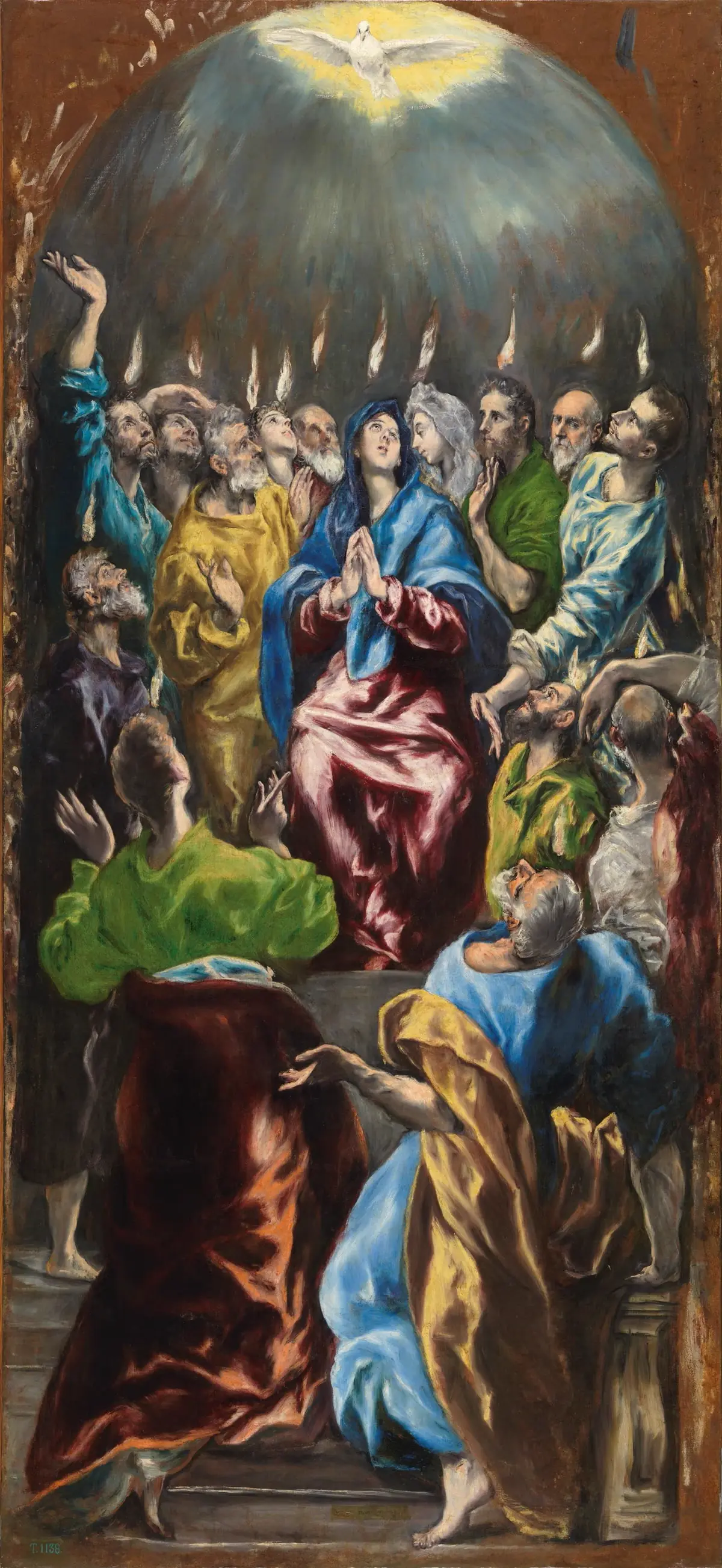
El Greco’s Pentecost (c. 1600) — the descent of the Spirit that turned a locked upper room into a world movement.El Greco, c. 1600 · Public domain
The purpose: Christ magnified
Write your purpose in one or two sentences, and test every decision against it. Ours, at The King Is Coming Show, comes from the first words of the house rules we work by: this is ministry before it is business; the win is truth told and souls reached.
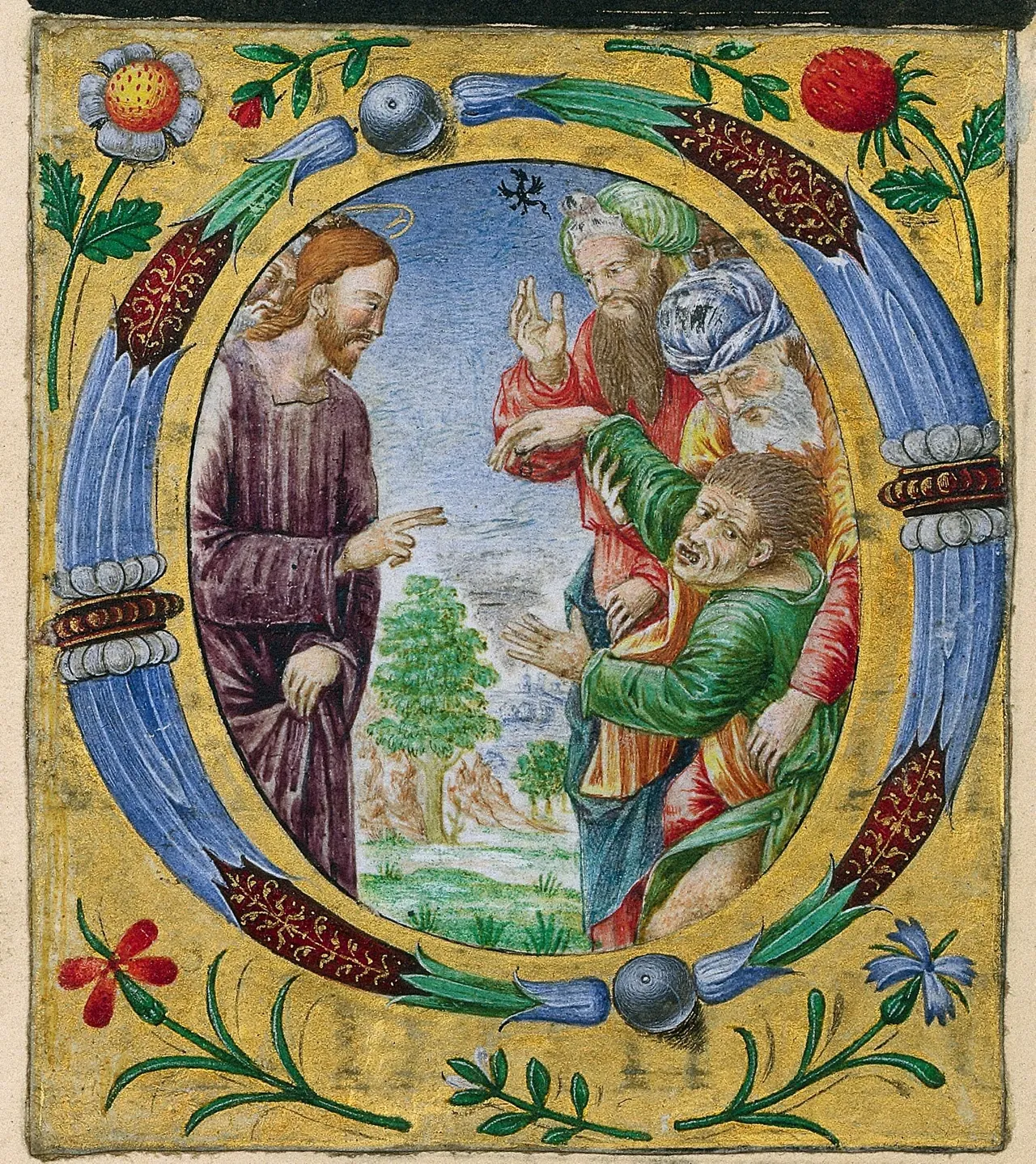
An Italian manuscript initial of about 1520 showing Christ performing an exorcism, like the deliverance after which the Lord sent the man home to tell his friends.Cutting from a Missal: Initial O with Christ Performing an Exorcism · c. 1520 · Cleveland Museum of Art · CC0 · museum record · Galeria Regni
Whatever your words, they should say three things:
1. Christ is the subject. "For we preach not ourselves, but Christ Jesus the Lord; and ourselves your servants for Jesus' sake" (2 Corinthians 4:5). The tellers are witnesses, not heroes. "He must increase, but I must decrease" (John 3:30). 2. Truth is the standard. Nothing published will claim more than is true. "Providing for honest things, not only in the sight of the Lord, but also in the sight of men" (2 Corinthians 8:21). 3. The aim is that people would hope in God and turn to Him. Not views, not followers, not income. "That they might set their hope in God" (Psalm 78:7).
What a testimony ministry is not
It is not entertainment. Extraordinary stories attract attention, and attention is tempting. But a ministry that chooses stories for their shock value, cuts them for drama and titles them for clicks has become something else. Jesus warned against doing good deeds "before men, to be seen of them" (Matthew 6:1). The same applies to telling other people's good news.
It is not a celebrity factory. When the man from the tombs, healed and in his right mind, begged to travel with Jesus, the Lord refused: "Howbeit Jesus suffered him not, but saith unto him, Go home to thy friends" (Mark 5:19). He did not take the most dramatic convert in Galilee on tour. He sent him home. A testimony ministry should send its tellers back into their churches and families, not lift them onto a stage they are not ready for.
It is not a substitute for the church. A testimony ministry serves the church; it does not replace it. If you run a channel or podcast, encourage every viewer toward a local church where the Bible is preached.
It is not prosperity marketing. Testimonies of healing and provision are real, and many guests tell them. But a ministry that presents faith as a route to health and wealth has left the gospel. "Supposing that gain is godliness: from such withdraw thyself. But godliness with contentment is great gain" (1 Timothy 6:5-6).
Under authority
If you are building this in a church, build it under your elders. "Obey them that have the rule over you, and submit yourselves: for they watch for your souls, as they that must give account" (Hebrews 13:17). Elders are charged to "Take heed therefore unto yourselves, and to all the flock" (Acts 20:28). A testimony ministry handles the flock at its most exposed. It needs their oversight.
If you are building an independent ministry, find accountability anyway: a pastor who will read your scripts, a few mature believers who will tell you when you are drifting, and a doctrinal reviewer who will check every Scripture you put on screen. At The King Is Coming Show, every public asset passes a Scripture and doctrine review before it is published.
Doctrinal boundaries
Decide in advance what your ministry will and will not present as true teaching, because your guests will not all agree with you, and their stories will raise questions.
Some of the most common:
The gospel. Salvation by grace through faith in the crucified and risen Christ (Ephesians 2:8-9), received by "repentance toward God, and faith toward our Lord Jesus Christ" (Acts 20:21). A guest whose story implies another way of salvation needs a gentle word from you, on air or in the edit.
Spiritual gifts and deliverance. Many testimonies include healing, tongues, prophecy, visions and deliverance from evil spirits. The gifts of the Spirit and deliverance from evil spirits are for today, and guests on my show testify to both. Every gift is tested by the word of God and kept within the limits the word sets. Jesus said, "And these signs shall follow them that believe; In my name shall they cast out devils" (Mark 16:17); and Paul, "the manifestation of the Spirit is given to every man to profit withal" (1 Corinthians 12:7). (Mark 16:9-20 stands in the 1611; many modern versions bracket it. You can see where the 1611 and the modern Critical Text part ways at kylelauriano.com/library/changes.) But we guard the subject carefully, as Part 5 explains.
Extra-biblical claims. Visions, dreams and near-death accounts are reported as the guest's experience, never treated as new revelation or as doctrine. "To the law and to the testimony: if they speak not according to this word, it is because there is no light in them" (Isaiah 8:20).
Where your church or ministry differs from others on secondary matters, say so plainly in your own material, and do not let a guest's story do your teaching for you.
This part matters because the stories you tell depend on the people you ask, and on how you prepare them. Done carelessly, this stage can hurt people. Done well, it is itself a ministry: many tellers say that preparing their story helped them understand what God had done.
Pray first
"Pray ye therefore the Lord of the harvest, that he will send forth labourers into his harvest" (Matthew 9:38). Pray for the right people to come forward, for the wrong ones to be held back, and for wisdom in telling the difference.
Where to look
Your own church. The best stories are often in the pews: the quiet believer who came to faith in a hospital, the man who left a gang, the woman raised in a cult, the elderly saint who has walked with the Lord for sixty years.
New member and baptism classes. People preparing for baptism are usually ready to tell why.
Referrals. Ask pastors and mature believers you trust.
People who reach out. Some will contact you. Receive them warmly, and check carefully (Part 5).
Do not overlook the quiet stories
Testimony ministries tend to feature the dramatic: the atheist, the addict, the occultist, the near-death experience. Those stories have their place; many of ours are like that. But a ministry that only tells dramatic stories teaches a false lesson — that ordinary conversions are second-class, or that God only works in extremes. Paul reminded Timothy of "the unfeigned faith that is in thee, which dwelt first in thy grandmother Lois, and thy mother Eunice" (2 Timothy 1:5). Make room for Timothys.
Not too soon
Be careful about putting a new convert in front of a large audience. Paul's qualification for church leaders was "Not a novice, lest being lifted up with pride he fall into the condemnation of the devil" (1 Timothy 3:6), and "Lay hands suddenly on no man" (1 Timothy 5:22). Those texts are about appointing elders, not about telling testimonies. But the principle behind them — that sudden prominence is dangerous for the spiritually young — applies. A new believer can and should tell what God has done; the man from the tombs was sent home the same day. But a public platform, a large audience and the attention that follows are different. Consider waiting until a new believer has been walking with Christ, and in a church, for some time; and if you go ahead sooner, surround him with care.
The ask
Make the invitation clear, low-pressure and honest:
Explain what you are asking for: where the story will be told, to whom, how long, and whether it will be recorded and published.
Explain what will happen afterwards: editing, titling, where it will appear, how long it will stay up.
Make clear that they can say no, and that saying no will cost them nothing in your friendship or your church.
Give them time to pray and to talk with their family.
Many will hesitate. Common reasons, and honest answers:
"My story isn't dramatic enough." — Dramatic stories are not the only ones God uses. Tell them about Timothy.
"I'm not a good speaker." — Neither was Moses (Exodus 4:10). We will help you prepare, and we can edit.
"I'm afraid of what people will think." — Take that seriously. Some fears are pride, but some are wisdom (Part 4). Talk it through.
"My family doesn't know all of this." — Then they should hear it from the teller, privately, before they hear it in public.
Preparing the teller
A preparation conversation of an hour or so, a week or more before the recording, serves the teller and the story. In it:
1. Hear the whole story, privately. Let them tell it without interruption. Take notes. 2. Pray together. 3. Help them find the shape. The companion paper Craft Your Testimony sets out four movements — before, turning, after, invitation — following Paul's speech before Agrippa in Acts 26. Help them see their story in that shape. 4. Agree what stays out. Names of other people; identifying details; anything that could endanger anyone; anything they are not ready to say in public. Write it down. 5. Talk about claims. Help them distinguish what they experienced from what they concluded (Part 5). Most tellers find this helpful, not restrictive. 6. Check the gospel. Make sure they can say plainly, in their own words, what they came to understand about sin and about Christ. 7. Explain the process. What the recording will be like, how long it will take, who will be there, what questions you will ask. 8. Give them a way out. Tell them they can change their mind at any point before publication.
Do not script them. The goal is to help them tell their own story truthfully, not to put your words in their mouth.
This part matters more than any other. At The King Is Coming Show we hold one rule above every other consideration, including every rule in this paper: guest safety outranks everything. A story can always be told later, or not at all. A person put in danger by a careless publication cannot be made safe again.
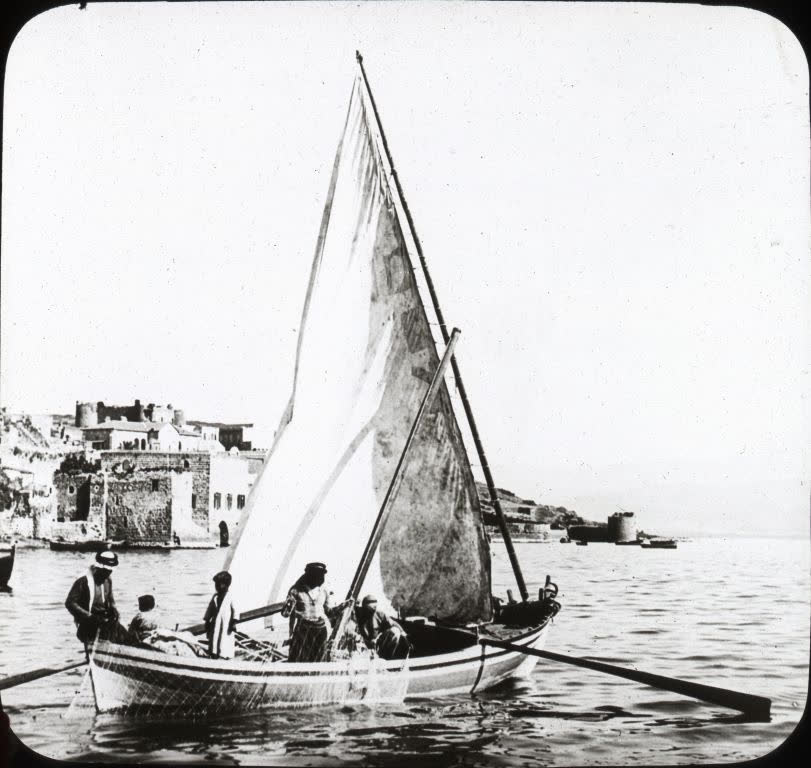
Fishing boats on the Sea of Galilee — the working world of the first disciples, called off these waters into a movement.OSU Special Collections & Archives · Public domain
Consent that is real
Consent means the teller understands what will happen to his story and agrees to it freely. In practice:
Get it in writing. A short release form that says where the story will be used (in church, online, on which platforms), for how long, and how they can withdraw. If you can, have a lawyer or your church's legal adviser review your form; the rules on releases and on using a person's name and image vary from state to state. This paper is general information, not legal advice.
Consent covers the specific use. Agreeing to share at a church service is not agreeing to be on YouTube. Ask again for each new use.
Consent can be withdrawn. Before publication, without question. After publication, take their request seriously and act on it unless there is a very strong reason not to. "He that sweareth to his own hurt, and changeth not" (Psalm 15:4) describes the righteous man keeping his word; keep yours.
Consent for others in the story. If the teller's story names or shows other people, those people have interests too. Remove their names and identifying details unless they have consented.
Platform policy points the same way. YouTube's privacy guidelines allow a person (or, in some cases, a parent, guardian or legal representative acting for them) to request removal of content that uses their name, image or other private details without consent, and say that YouTube weighs whether the person can be uniquely identified — by image, voice, full name, government ID numbers and similar details — as well as consent, public interest and whether the information is already public. At its discretion, YouTube may give the uploader a chance to remove or edit the private information.3 A ministry that respects consent from the beginning will rarely face such a complaint.
Guest safety
Some tellers are at risk because of what they have left: a violent partner, a gang, a controlling religious group, a family that has threatened them for converting, a regime that persecutes Christians. Others are at risk because their story involves crimes, or people who could retaliate.
Before you publish anything, ask:
Has the teller told you of any threat, harassment or danger, past or present?
Does the story contain any identifying detail — a town, a street, an employer, a church, a school, a car, a house, a distinctive tattoo, a family name, a date of a future movement?
Could anyone who wishes the teller harm use what you publish to find them, follow them or hurt them?
If the answer to any of these is yes or maybe, stop. Talk with the teller again, explain what you are concerned about, re-confirm their consent, and agree which details stay and which go. Then edit them out — not just from the words, but from the picture: signs, landmarks, windows, documents, screens. Never publish a location, a schedule or a movement date for anyone under threat. If in doubt, leave it out, or do not publish.
The same applies to people the teller names. A former abuser, a former group's leaders, family members — none should be identifiable unless there is a clear reason, consent where possible, and legal advice where needed.
Children
Testimonies by children and young people need special care.
Parents or guardians consent. In writing, for the specific use.
The child consents too, in terms he or she can understand.
Two adults, always. Never prepare, record or follow up with a child one-on-one. A parent or guardian should be present, and at least two screened adults from your ministry. Anyone on your team who works with children should have passed a background check under your church's child-protection policy.
Protect identity. First names only, no school, no town, no identifying background.
Think about the future. A child cannot foresee how a story told at ten will feel at twenty. Publish less than you could.
Know the platform rules. YouTube requires creators to say whether each video is "made for kids", under an agreement with the US Federal Trade Commission to help creators comply with the Children's Online Privacy Protection Act (COPPA). YouTube says it is the creator's "legal responsibility to comply with COPPA and/or other applicable laws and designate your content accurately", and that under US guidance a child is anyone under thirteen.4 A testimony told by a child for a general audience is not necessarily "made for kids", but you must decide accurately.
Hard stories
Some stories involve abuse, violence, suicide attempts, addiction, or sexual sin. They can be told, and some of the most powerful testimonies are exactly these. But they require care.
Before. Make sure the teller is far enough through the experience to tell it without being re-wounded. Ask whether they have a pastor, counsellor or trusted friend supporting them. Agree what will and will not be said. If the story involves abuse of a child, find out whether it has been reported to the authorities. If a child may still be at risk, report it yourself to the police or your state's child protective services; if a child is in immediate danger, call 911. Do not investigate it yourself, and do not let a church handle it privately instead of reporting it. Every state has a law naming people who are required to report suspected child abuse. According to the federal Child Welfare Information Gateway (current through May 2023), about 29 states specifically name clergy as mandated reporters, and in about 16 more states any person who suspects abuse must report it; in every state anyone may report.5 Laws change, so find out what your state's law requires of you and of your church today, and follow it. For advice or to find where to report, the Childhelp National Child Abuse Hotline is 1-800-422-4453, available by call, text or chat 24 hours a day.6
During. Have someone the teller trusts in the room. Let them stop at any time. Do not push for details. "For it is a shame even to speak of those things which are done of them in secret" (Ephesians 5:12): the purpose is to show what God has done, not to describe what sin did in detail.
After. Follow up within a day or two. Telling a hard story publicly can bring a wave of emotion, and sometimes unwanted attention. Ask how they are. Pray with them. Make sure their church knows and is caring for them.
Do not become a talebearer
A ministry that hears many stories will hear many secrets. "A talebearer revealeth secrets: but he that is of a faithful spirit concealeth the matter" (Proverbs 11:13). And: "Where no wood is, there the fire goeth out: so where there is no talebearer, the strife ceaseth" (Proverbs 26:20). What a teller tells you in preparation and asks you not to publish stays unpublished, and unrepeated.
Care beyond the recording
The teller is not a source of content. He is a brother or sister in Christ. "Bear ye one another's burdens, and so fulfil the law of Christ" (Galatians 6:2). And: "Rejoice with them that do rejoice, and weep with them that weep" (Romans 12:15). Pray for every teller by name before and after. Send them the finished piece before anyone else sees it, if you can. Thank them. Check on them months later. A teller should leave the experience feeling cared for, not used.
This part matters because a testimony ministry publishes claims, and some of those claims are extraordinary: healings, visions, voices, near-death experiences, deliverance from evil spirits. The ministry did not see these things. It is relaying them. How it relays them is a matter of honesty before God and before the audience.
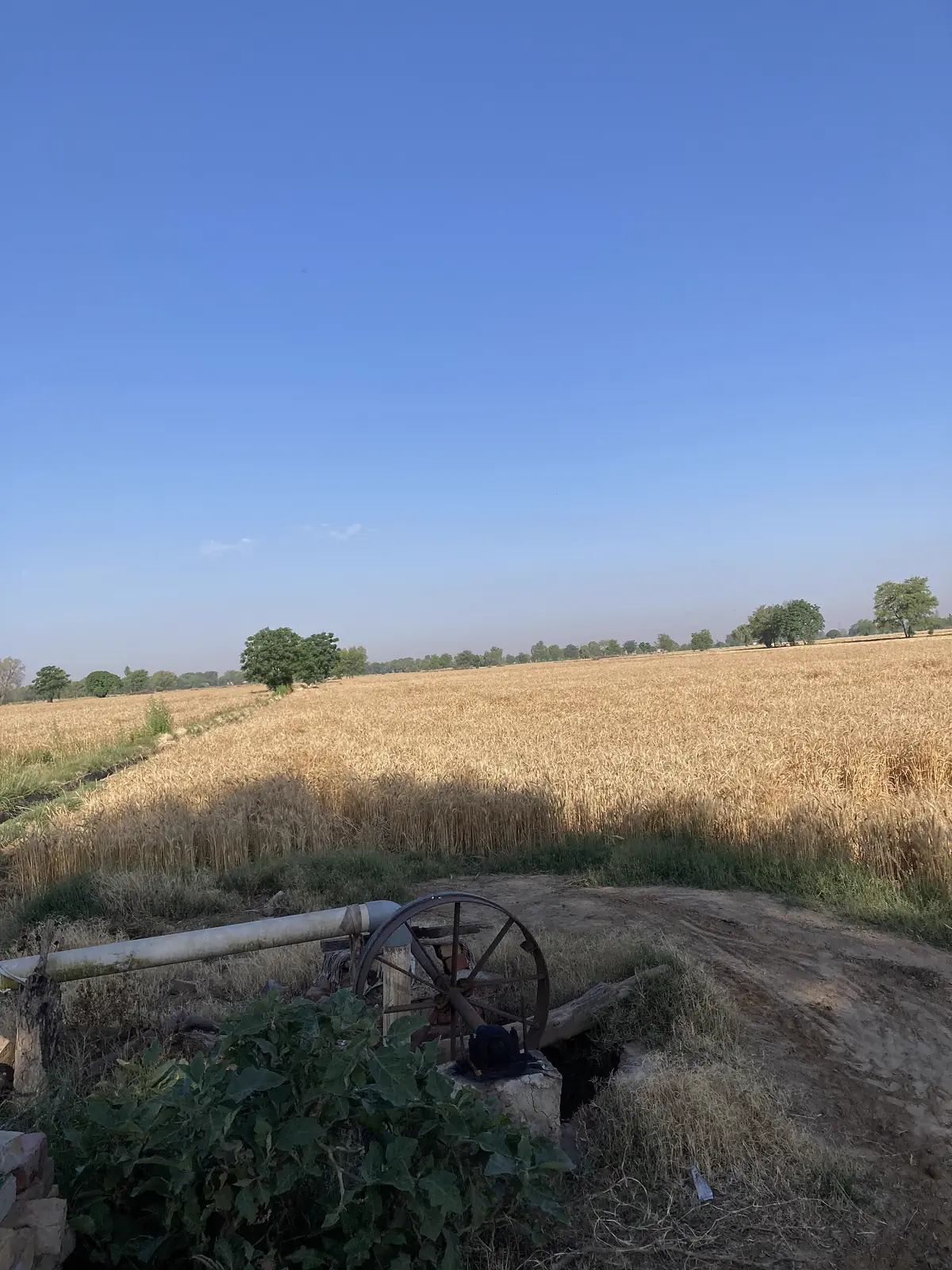
Wheat at harvest — the image Jesus reached for when He said the harvest is plentiful but the workers are few (Matthew 9).Chparveshtaak · CC BY-SA 4.0
Prove all things
Scripture commands discernment, not suspicion and not credulity. "Prove all things; hold fast that which is good" (1 Thessalonians 5:21). John: "Beloved, believe not every spirit, but try the spirits whether they are of God: because many false prophets are gone out into the world" (1 John 4:1). The Bereans "searched the scriptures daily, whether those things were so" (Acts 17:11), and were called noble for it.
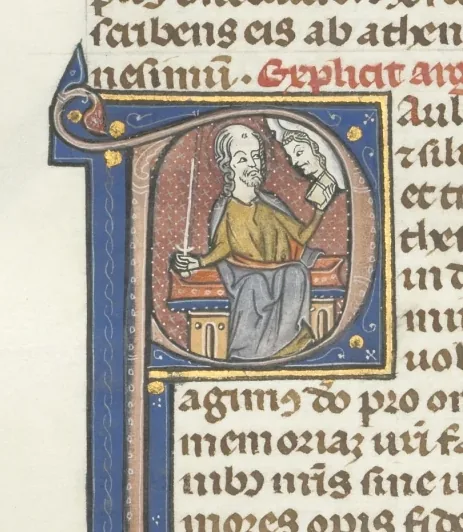
The opening of First Thessalonians in a thirteenth-century Bible from southern France, with Paul seated holding a book, the letter that calls believers to weigh everything they hear.Fol. 454v,Thessalonians I, historiated initial P, Paul seated with a sword and a book, talking to the bust of God above · c. 1275–1300 · Cleveland Museum of Art · CC0 · full page · museum record · Galeria Regni
The law required more than one witness for a serious matter: "at the mouth of two witnesses, or at the mouth of three witnesses, shall the matter be established" (Deuteronomy 19:15). And Proverbs warns: "He that is first in his own cause seemeth just; but his neighbour cometh and searcheth him" (Proverbs 18:17).
None of this means treating tellers as suspects. It means taking reasonable care before you put your ministry's name behind a claim.
Reasonable checks
Ordinary facts. Where a story turns on checkable facts — a medical event, a date, an institution — ask the teller about them, and where it matters, ask whether they can be confirmed. You need not verify every detail of every story. But if the title or the clip turns on a fact, you should be confident of it.
Consistency. Does the story hang together? Has the teller told it the same way before? Honest accounts vary in emphasis, as Paul's three accounts in Acts do, but the core stays fixed.
Character. Do the teller's pastor and church know the story and stand behind the person? "Not a novice" applies here too.
Scripture. Does anything in the story contradict the Bible? "But though we, or an angel from heaven, preach any other gospel unto you than that which we have preached unto you, let him be accursed" (Galatians 1:8). An experience that leads away from the gospel is not from God, however vivid. "And no marvel; for Satan himself is transformed into an angel of light" (2 Corinthians 11:14).
Fruit. Has the teller's life changed in the direction the story claims?
Extraordinary experiences, guarded
Many testimonies include visions, dreams, voices, near-death experiences and deliverance. We do not dismiss them. The gifts of the Spirit and deliverance from evil spirits are for today, and guests on my show testify to both. Every gift is tested by the word of God and kept within the limits the word sets. But we guard the subject in specific ways, and you may find these guardrails useful.
What we present. The teller's account of what he experienced, in his own words, marked as his account. Scripture's teaching on the gifts (1 Corinthians 12), on spiritual warfare (Ephesians 6:10-18: "For we wrestle not against flesh and blood, but against principalities, against powers" — Ephesians 6:12), and on resisting the devil: "Submit yourselves therefore to God. Resist the devil, and he will flee from you" (James 4:7).
What we do not present as teaching, even when a guest's story touches it:
Conversations with demons, or interviewing them for information.
Curses that "return" on anyone. Jesus said, "Bless them that curse you, and pray for them which despitefully use you" (Luke 6:28).
Commanding, summoning or praying to angels. Paul warned against "worshipping of angels, intruding into those things which he hath not seen" (Colossians 2:18).
The claim that a born-again believer can be possessed. Believers can be attacked and oppressed; they are not owned.
Formulas and declarations treated as magic, including phrases used as incantations.
What we keep central. Jesus' own corrective to the seventy, who came back thrilled that devils obeyed them: "Notwithstanding in this rejoice not, that the spirits are subject unto you; but rather rejoice, because your names are written in heaven" (Luke 10:20). The point of a deliverance testimony is not the drama of the deliverance. It is the Saviour who delivers, and the salvation that lasts.
Experience, perception and God's action
The single most important framing rule in a testimony ministry is to distinguish between three kinds of claim. At The King Is Coming Show we call it the three-tier law, and it applies to every title, every thumbnail and every line of text we publish.
Tier 1 — Ordinary, verifiable fact. Medical events, dates, places, who was in the room, what the teller did. These can be stated plainly: Baptized at 12. Two decades in addiction. Three generations of atheists.
Tier 2 — The teller's own perception or belief. What he saw, heard, felt, sensed, believed. These require a perception verb that makes clear whose perception it is: I saw, I heard, I felt, I believe, she says, in his telling.
Tier 3 — Action, speech or identity attributed to God.God healed, Jesus said, an angel appeared, in heaven. These are never stated as fact in a title, in any grammatical person. They appear only behind a Tier 2 marker — "I believe God..." — or inside the teller's own reported words.
The reason is simple. A ministry that publishes "God Healed Her Cancer" as a headline is making a claim in its own voice that it did not witness and cannot verify. If it is true, the ministry has added nothing by stating it flat. If it is mistaken, the ministry has attached God's name to something He did not do — which is close to what the prophets condemned: "they speak a vision of their own heart, and not out of the mouth of the LORD" (Jeremiah 23:16); and Ezekiel, "whereas ye say, The LORD saith it; albeit I have not spoken?" (Ezekiel 13:7). The teller can say what he believes God did; that is his testimony. The ministry relays that he said it.
This is not unbelief. It is the care the man born blind showed when he said "one thing I know" (John 9:25) and no more. And it is the same care the church's best testifiers took with their own stories: Augustine wrote that he took a child's chant as a command to read, "interpreting it to be no other than a command from God"7 — he named his interpretation as interpretation.
Here is how real episode titles of The King Is Coming Show apply the law.
Bria Isaac told her story on The King Is Coming Show (TKIC #53), under the title I said, I'm going to take it to my grave — then I heard this voice. The title gives what she said and what she heard, in her own first person: a Tier 2 perception verb, and no claim in our voice about whose voice it was. Watch it in her own words: youtube.com/watch?v=Uk-02EJ6FD0 Bria's account of what happened to her, shared as her testimony — weigh it for yourself.
Douglas told his story on The King Is Coming Show (TKIC #54), under the title An Engine Part in His Chest — He Heard His Dad Say It's Not His Time. The first half is a Tier 1 medical fact; the second is Tier 2, carried by "He Heard". Watch it in his own words: youtube.com/watch?v=_8nMR1t8HXQ Douglas's account of what happened to him, shared as his testimony — weigh it for yourself.
Mike McKinsey told his story on The King Is Coming Show (TKIC #50), under the title I Thought I Just Had the Flu — Then I Found Myself Somewhere Else. "I thought" and "I found myself" keep the whole experience in his own perception. Watch it in his own words: youtube.com/watch?v=DRUhRPJtmZM Mike's account of what happened to him, shared as his testimony — weigh it for yourself.
And some hypothetical titles, not real episodes, to show the difference:
| Hypothetical title | Problem | Honest version | |---|---|---| | God Healed My Tumour | Tier 3 stated as fact | I Believe God Healed My Tumour — The Scans Changed | | Jesus Appeared to Her in Prison | Tier 3 in our voice | She Says She Saw Jesus in Her Cell | | He Went to Heaven and Came Back | Tier 3 place claim | He Says He Saw Heaven When His Heart Stopped | | The Cult That Brainwashes Children | Motive and general practice in our voice | Raised in a Group That Told Her It Alone Was Saved | | Demons Fled When She Prayed | Tier 3 spiritual event as fact | I Felt Something Leave When I Prayed |
Groups a teller has left
Many testimonies involve a religious group, church or organisation that the teller has left. Telling these stories honestly requires a further set of distinctions, because a real, named group is being described. Our working rule is to ask who is speaking, and to title only what we can hold:
What the teller did, was told, or felt — titleable, in her frame: Baptized at 12 in Iglesia Ni Cristo.
What the group did to her, or to people she knew — titleable in her frame, with a named object.
General claims about the group's practice everywhere — never in the channel's voice.
Claims about the group's motives or intentions — never, in any voice.
The group's published doctrine — may be stated as doctrine, accurately, never as bad faith.
The episode title of TKIC #51 shows the first of these:
Criselle Mendoza told her story on The King Is Coming Show (TKIC #51), under the title Baptized at 12 in Iglesia Ni Cristo. I Wasn't Saved Until 2025. The first sentence is what she did; the second is her own belief about her standing, in her first person. Watch it in her own words: youtube.com/watch?v=_7vjNP6A_z8 Criselle's account of what happened to her, shared as her testimony — weigh it for yourself.
The disclaimer line
Every testimony we publish carries a disclaimer. The full episode carries a full statement; every clip and short carries one line, such as:
Mike's account of what happened to him, shared as his testimony — weigh it for yourself.
The line does three things. It names the story as the teller's account. It reminds the viewer that it is testimony, not doctrine. And it invites the viewer to do what Scripture commands — "Prove all things" — rather than to swallow it whole. It costs almost nothing to include, and it keeps the ministry honest every time.
No misleading titles or thumbnails
A title can be sharp; it must never be false. A thumbnail can be striking; it must never imply something the story does not contain. "Wherefore putting away lying, speak every man truth with his neighbour" (Ephesians 4:25). A lie that gains views costs the witness. We also do not use quotation marks in our titles; attribution is carried by grammar instead — a first-person perception verb, or a colon introducing a verbatim phrase.
Corrections
You will get something wrong. When you do, correct it openly and quickly: fix the title, edit the description, add a pinned note, or take the piece down. "Let your communication be, Yea, yea; Nay, nay" (Matthew 5:37). A ministry that corrects itself publicly earns more trust than one that never admits a mistake.
Part 6 — Recording, Editing and Publishing Honestly
3 min read
This part matters because the way a story is recorded and cut can change its meaning as surely as the way it is titled. Editing is necessary — no one wants to watch three hours of raw footage — but an edit that makes a teller say something he did not mean is a false witness. The companion paper Testimony Video covers the technical side in detail; this part covers the ethics.
The interview
Most testimony recordings are interviews. A simple shape works well:
1. Background (a few minutes). Where they grew up, what they believed about God, what their life was like. Keep it brief. 2. The turning (the heart of it). How they heard the gospel, what they came to understand, what they did, what they experienced. 3. The after. What has changed, and what is still hard. 4. The message. What would they say to someone where they once were?
Good questions are open, short and neutral:
"What did you believe about God back then?"
"What was going on in your life?"
"How did you first hear about Jesus in a way that made sense?"
"What did you understand that you hadn't before?"
"What did you actually do?"
"What did you experience? What do you make of it now?"
"What has changed since? What hasn't?"
"What would you say to someone who is where you were?"
Avoid leading questions that put words in the teller's mouth: "So God was speaking to you, wasn't He?" Let them choose their own words. If they make a Tier 3 claim in their own voice — "God told me..." — that is their testimony, and it is honest to report it as theirs. Do not push them to say more than they would, and do not edit them to say more than they did.
Faithful editing
Cut for length, never for meaning. Removing a tangent is fine. Removing the sentence where the teller says "I'm not sure what it was" so that the story sounds more certain is not.
Keep qualifiers. "I think", "it felt like", "I believe" — these words matter. Do not trim them for pace.
Keep order where order matters. Do not move an answer to sit after a different question.
Do not splice sentences. Joining half of one sentence to half of another to create a statement the teller never made is fabrication, however smooth the cut.
Let the teller see it. Before publication, send the finished piece to the teller and ask whether it fairly represents what they said and meant. Change what they can show is unfair.
Check every Scripture on screen. If you put a verse on screen, quote it exactly from the King James Bible and check it word for word against the text before it ships.
Synthetic media
AI tools can now generate images, voices and footage. A testimony ministry must be especially careful here, because its whole value is that what it shows is real.
Never generate footage or audio that makes a teller appear to say or do something he did not.
Never generate a "re-enactment" of a teller's experience that could be mistaken for real footage, unless it is clearly labelled.
Follow the platform's disclosure rules. YouTube requires creators to disclose content that is realistic and has been generated or meaningfully altered — including making a real person appear to say or do something they did not, altering footage of a real event or place, or generating a realistic scene that did not occur — through the "AI use" setting in YouTube Studio. Minor edits such as colour correction, captions and production help such as script outlines do not require disclosure.8
Before you publish
A short checklist for every piece:
Consent: written, for this use, and still current?
Safety: every identifying detail checked, in the words and the picture?
Children: parental consent, minimal identification, "made for kids" set accurately?
Claims: every title, thumbnail and on-screen line checked against the three tiers?
Groups: no general claims or motives about a named group in our voice?
Disclaimer: present, on every asset?
Scripture: every verse on screen checked word for word against the King James Bible?
Editing: nothing cut or spliced that changes meaning?
Teller: has seen it and is content?
Synthetic media: none that misleads; disclosed where required?
This part matters because every ministry that grows will face questions about money and numbers, and those questions can quietly reshape its purpose. A testimony ministry has a particular temptation: the most sensational stories draw the most attention, and attention can be turned into income. The way to resist that pull is to settle in advance what money is for and what success means.
Money with clean hands
Paul handled the collection for Jerusalem with great care: "Avoiding this, that no man should blame us in this abundance which is administered by us: Providing for honest things, not only in the sight of the Lord, but also in the sight of men" (2 Corinthians 8:20-21). He could say to the Ephesian elders, "I have coveted no man's silver, or gold, or apparel" (Acts 20:33). Peter charged elders to feed the flock "not for filthy lucre, but of a ready mind" (1 Peter 5:2).
Some practical rules:
Never pay for a testimony, and never let money depend on a story's content. Reasonable travel expenses are one thing; payment that rewards a more dramatic story is another.
Keep the books open. If you take donations, account for them. In the United States, the Evangelical Council for Financial Accountability (ECFA) publishes "Seven Standards of Responsible Stewardship" for churches and Christian ministries, and accredits members that meet them.9 Whether or not you seek accreditation, standards like these are a good model. For the tax side, see the companion paper House Church and the IRS's own guide for churches, Publication 1828; this paper gives no tax advice.
Be careful with sponsors. A sponsor must never shape the message. "The gospel gets no algorithm edit" — it is never softened for a sponsor, a guest or a trend.
No prosperity promises. Never suggest that giving to your ministry, or to anyone, will bring health or wealth. "For the love of money is the root of all evil: which while some coveted after, they have erred from the faith" (1 Timothy 6:10).
Growth without compromise
Growth is good when it means more people hearing the gospel. It becomes dangerous when it becomes the goal. Some guardrails:
Do not buy attention. No purchased views, followers or fake engagement.
Do not chase trends that require compromise. If a format works only by exaggeration, it does not work.
Keep the cadence sustainable. Jesus said to His tired disciples, "Come ye yourselves apart into a desert place, and rest a while: for there were many coming and going, and they had no leisure so much as to eat" (Mark 6:31). A ministry that burns out its team serves no one.
Build a team, and share the load. The tasks — finding tellers, preparing them, recording, editing, reviewing for doctrine and safety, publishing, answering comments, caring for tellers afterwards — are too many for one person, and some (doctrinal review, safety review) should not be done by the same person who edits.
Measuring what matters
Platforms measure views, watch time, subscribers. Those numbers tell you something about reach. They tell you nothing about fruit.
"I have planted, Apollos watered; but God gave the increase" (1 Corinthians 3:6). You cannot measure the increase, but you can notice signs of it:
Messages from viewers who say a story helped them turn to Christ, return to church or hold on.
Tellers who have grown through the experience.
Churches that have used the stories to encourage their people.
Believers who have been prompted to tell their own story.
Keep a record of these, with permission, the way Malachi's "book of remembrance" recorded the words of those who feared the Lord. Read it when the numbers are discouraging. And remember the measure Paul used: "Moreover it is required in stewards, that a man be found faithful" (1 Corinthians 4:2). Not successful. Faithful.
The joy that matters most
John wrote, "I have no greater joy than to hear that my children walk in truth" (3 John 1:4). That is the joy of a testimony ministry: not that a story went far, but that someone who heard it is walking in the truth, and that the person who told it is still walking in it too.
A testimony ministry stands in an old line. Israel set up stones so their children would ask what God had done. The psalmists sang His works from one generation to another. The apostles gathered the church and "rehearsed all that God had done" (Acts 14:27), and the brethren rejoiced and glorified the Lord. Bunyan wrote his story from prison "that ... others may be put in remembrance of what He hath done for their souls". When a church or ministry gathers and tells the stories of believers today, it carries on that work.
It also takes on duties. To the teller: real consent, real care, and a safety that outranks every other consideration. To the hearer: the truth, framed honestly, with the teller's experience marked as experience and God's name never attached to what He has not said or done. To God: a ministry in which Christ is the subject, Scripture is the standard, money is handled with clean hands, and success is measured by faithfulness rather than reach.
Built that way, a testimony ministry becomes what Paul described: comfort received from God and passed on, "that we may be able to comfort them which are in any trouble, by the comfort wherewith we ourselves are comforted of God" (2 Corinthians 1:4).
A next step
If you are beginning:
Write your purpose in two sentences, and show it to your pastor.
Draft a consent form and have it reviewed.
Write your safety checklist and your framing rules before you record anything.
Ask one quiet believer in your church to tell their story — and prepare it with them carefully.
An invitation
If you are reading this as someone who has never trusted Christ, every story a testimony ministry tells is, at bottom, an invitation to you. The tellers are not special. The Saviour is. "Repentance toward God, and faith toward our Lord Jesus Christ" (Acts 20:21) is the door, and it is open to you as it was to them.
"One generation shall praise thy works to another, and shall declare thy mighty acts." (Psalm 145:4)
1John Bunyan, Grace Abounding to the Chief of Sinners (1666), preface. Online: https://www.gutenberg.org/ebooks/654.↩
2John Wesley, The Journal of John Wesley (Chicago: Moody Press, 1951), entry for 24 May 1738. Online: Christian Classics Ethereal Library, https://ccel.org/ccel/wesley/journal.↩
3YouTube Help, "YouTube Privacy Guidelines," accessed October 2026, https://support.google.com/youtube/answer/7671399.↩
4YouTube Help, "Determining if your content is 'made for kids'," accessed October 2026, https://support.google.com/youtube/answer/9528076.↩
5Child Welfare Information Gateway, Clergy as Mandatory Reporters of Child Abuse and Neglect (Washington, DC: U.S. Department of Health and Human Services, Children's Bureau, 2023), 1–2, https://artifacts.childwelfare.gov/public/documents/clergy-mandated-reporters.pdf; Child Welfare Information Gateway, Mandatory Reporters of Child Abuse and Neglect (2023), https://artifacts.childwelfare.gov/public/documents/manda.pdf. Both accessed October 2026.↩
6Childhelp National Child Abuse Hotline, https://www.childhelphotline.org/; Childhelp, "Childhelp National Child Abuse Hotline," https://www.childhelp.org/hotline/. Both accessed October 2026.↩
7Augustine, The Confessions of St. Augustine, trans. E. B. Pusey, Book 8, ch. 12. Online: https://www.gutenberg.org/ebooks/3296.↩
8YouTube Help, "Disclosing use of GenAI content," https://support.google.com/youtube/answer/14328491.↩
9Evangelical Council for Financial Accountability, "Seven Standards of Responsible Stewardship," accessed October 2026, https://www.ecfa.org/Content/Standards; on accreditation, ECFA home page, https://www.ecfa.org/.↩
Seven people who say they met Jesus. What happened, in their own words.
Seven testimonies from The King Is Coming Show, one a morning — the story as they tell it, the verse the story lands on in the 1611 King James, and the page itself. Then the teaching that explains it. Free.
This is practical teaching, not proof. It's drawn from Scripture and from walking this road myself. If you're still weighing the basics — whether God is real, whether the Bible can be trusted — I'd encourage you to start with the Skeptic resources in the Research Hub before diving in here.