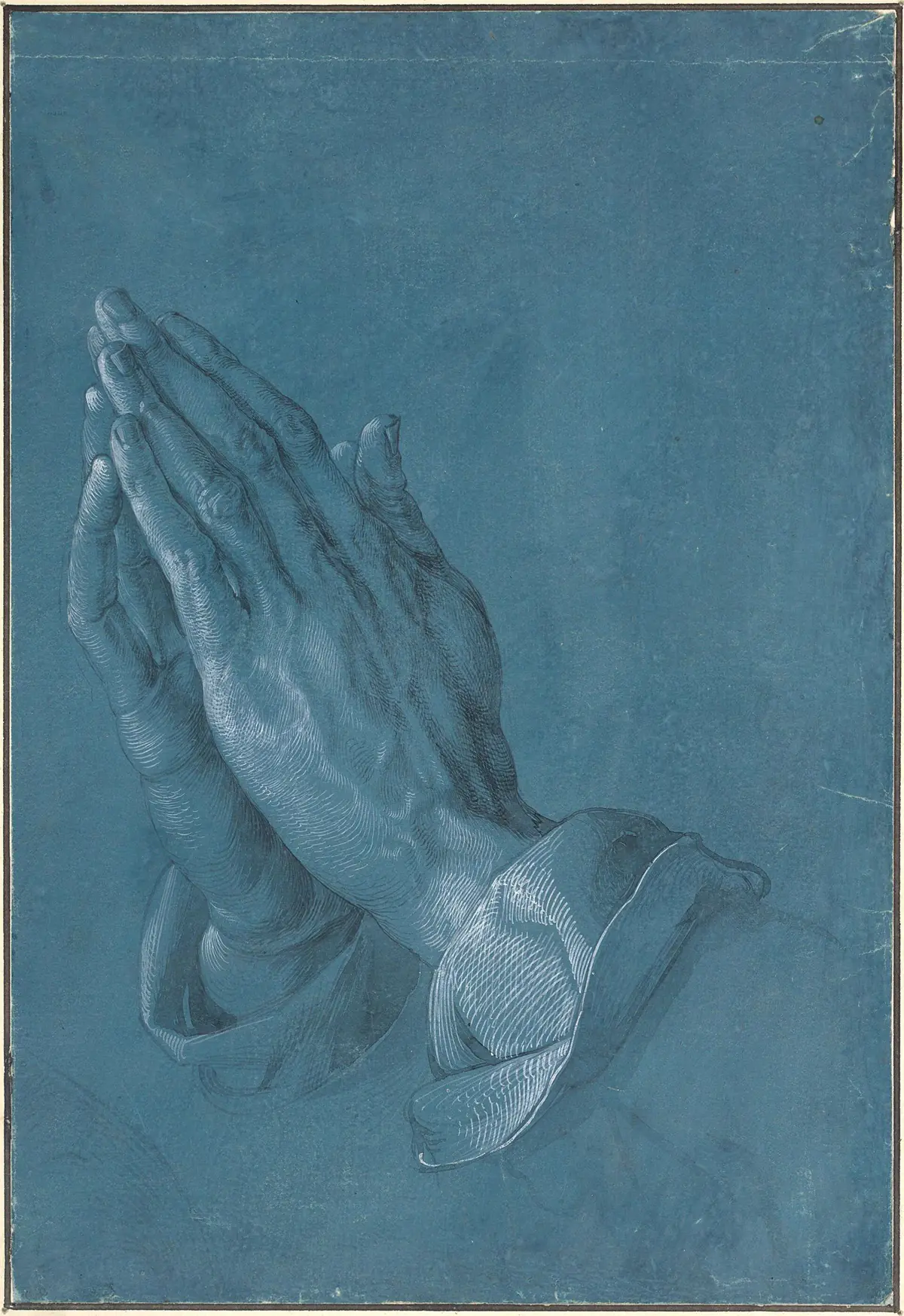
This part matters because people bring all kinds of ideas to prayer: that it is a technique for getting things, a way of calming yourself down, a ritual that works if done correctly. The Bible's idea is simpler and far greater.
The words
The Old Testament's ordinary word for prayer (Strong's H8605, tephillah) is defined as "intercession, supplication," and comes from a root (H6419, palal) meaning, among other things, "to intercede, pray."1 The New Testament's most common verb for praying (Strong's G4336, proseuchomai) means "to pray to God, i.e. supplicate, worship."2 Another word, deesis (G1162), means simply "a petition."3
Prayer, in other words, is asking. It is worship too, and thanks, and confession. But at its root it is a creature speaking to his Creator, a child asking his Father, a beggar asking the King.
Two classic definitions
The Westminster Shorter Catechism, written in 1647, puts it this way:
Prayer is an offering up of our desires unto God, for things agreeable to his will, in the name of Christ, with confession of our sins, and thankful acknowledgment of his mercies.4
John Bunyan, writing from Bedford gaol in 1662, where he was imprisoned for preaching without a licence, defined prayer as "a sincere, sensible, affectionate pouring out of the heart or soul to God, through Christ."5 Sincere: meant. Sensible: aware of what you are saying and of your need. Affectionate: with feeling, not by rote. Pouring out: not a performance but an emptying of the heart.
That phrase echoes the Psalms: "Trust in him at all times; ye people, pour out your heart before him: God is a refuge for us" (Psalm 62:8).
Pray what is really in you
C. S. Lewis, in a book of letters on prayer published shortly after his death, put his finger on the most common mistake: "It is no use to ask God with factitious earnestness for A when our whole mind is in reality filled with the desire for B." And then: "We must lay before Him what is in us, not what ought to be in us."6
This is good news for a seeker. You do not have to pretend to a faith you do not have, or a peace you do not feel, or a goodness you know you lack. You can tell God the truth. The Psalms do it on almost every page: "I poured out my complaint before him; I shewed before him my trouble" (Psalm 142:2).
What prayer is not
It is not performance. "And when thou prayest, thou shalt not be as the hypocrites are: for they love to pray standing in the synagogues and in the corners of the streets, that they may be seen of men" (Matthew 6:5). Jesus told His followers to go into a room, shut the door, and speak to the Father in secret (Matthew 6:6).
It is not vain repetition. "But when ye pray, use not vain repetitions, as the heathen do: for they think that they shall be heard for their much speaking" (Matthew 6:7). Jesus was not forbidding asking twice. He Himself prayed the same words three times in Gethsemane. He was forbidding the idea that words repeated many times build up a force that compels God to act, or that the length of a prayer earns an answer. And He gave the reason: "for your Father knoweth what things ye have need of, before ye ask him" (Matthew 6:8).
Steve Kang told his story on The King Is Coming Show (TKIC #49): he chanted eight hours a day to reach nirvana, and, in his own telling, woke up in hell instead. Watch it in his own words: youtube.com/watch?v=46SP1FgXfbY Steve's account of what happened to him, shared as his testimony — weigh it for yourself.
It is not emptying the mind. Many spiritual practices teach people to clear their minds, repeat a sound, or look inward for the divine. That is not biblical prayer. Biblical prayer is speaking with understanding to a Person who is not you. Paul said, "I will pray with the spirit, and I will pray with the understanding also" (1 Corinthians 14:15). Biblical meditation, likewise, fills the mind with God's word rather than emptying it (Psalm 1:2).
It is not a formula. No set of words saves a person or guarantees an answer. Words matter because they carry the heart; they have no power apart from it.
Prayer comes to God through Christ
Christian prayer is addressed to God the Father, through Jesus Christ the Son, by the help of the Holy Ghost. Jesus said, "Whatsoever ye shall ask the Father in my name, he will give it you" (John 16:23). Praying "in Jesus' name" is not a password tacked on at the end. It means coming to God on the ground of who Jesus is and what He has done, because we have no standing of our own. "For there is one God, and one mediator between God and men, the man Christ Jesus" (1 Timothy 2:5). And He "ever liveth to make intercession for them" that come to God by Him (Hebrews 7:25).
When we do not know how to pray, God helps: "Likewise the Spirit also helpeth our infirmities: for we know not what we should pray for as we ought: but the Spirit itself maketh intercession for us with groanings which cannot be uttered" (Romans 8:26).
Does God hear a seeker?
This is an honest question, and the Bible gives an honest answer.
There are verses that warn us. The man born blind, defending Jesus to the Pharisees, said, "Now we know that God heareth not sinners: but if any man be a worshipper of God, and doeth his will, him he heareth" (John 9:31). Proverbs says, "He that turneth away his ear from hearing the law, even his prayer shall be abomination" (Proverbs 28:9). Isaiah told Israel, "But your iniquities have separated between you and your God, and your sins have hid his face from you, that he will not hear" (Isaiah 59:2).
These verses are about people who cling to sin and refuse to listen to God while still asking Him for things. God is not a servant to be summoned by people who have no intention of obeying Him. "If I regard iniquity in my heart, the Lord will not hear me" (Psalm 66:18).
But the same Bible shows God hearing sinners who turn to Him. The tax collector who prayed, "God be merciful to me a sinner," went home justified (Luke 18:13-14). Cornelius, a Gentile soldier who did not yet know the gospel, was told by an angel, "Thy prayers and thine alms are come up for a memorial before God" (Acts 10:4). God then sent Peter to tell him about Christ. And the promises are wide: "The LORD is nigh unto all them that call upon him, to all that call upon him in truth" (Psalm 145:18). And through Jeremiah: "And ye shall seek me, and find me, when ye shall search for me with all your heart" (Jeremiah 29:13).
So the honest answer is this. God does not promise to grant the wishes of someone who wants His gifts without Him. But He has promised to hear the one who seeks Him, who asks for mercy, who wants the truth. The first prayer a seeker should pray is not for things. It is for God Himself: to know Him, to see the truth, to be forgiven.