The Residue · Psalmes · chapter 118 · verse 24
Psalms 118:24
This is the day which the LORD hath made: we will reioyce, and be glad in it.
The 1611, as printed, with the residue painted on the words: a gold rule under the words reported, the remembered reading above them, a dotted rule where people do not recall the words at all. Open it in the 1611 Reader with the Residue switch on.
What the record shows
Three things, in order: the 1611 page; today’s printing where it parts from the 1611; and an older printed witness to the remembered wording where one has been found.
What others recall
- Reported
Some recall “let us rejoice”, where the King James reads “we will rejoice”.
- Reported
What the 1611 shows
- The 1611, as printed
This is the day which the LORD hath made: we will reioyce, and be glad in it.
- Today’s printing
This is the day which the LORD hath made; we will rejoice and be glad in it.
In the words, the 1611 and today’s printing agree here (spelling aside). The residue for this verse is in what people recall and in the wider record below, not on the 1611 page itself.
- The 1611, as printed
Older printed witnesses
4 verified · in print by 1587
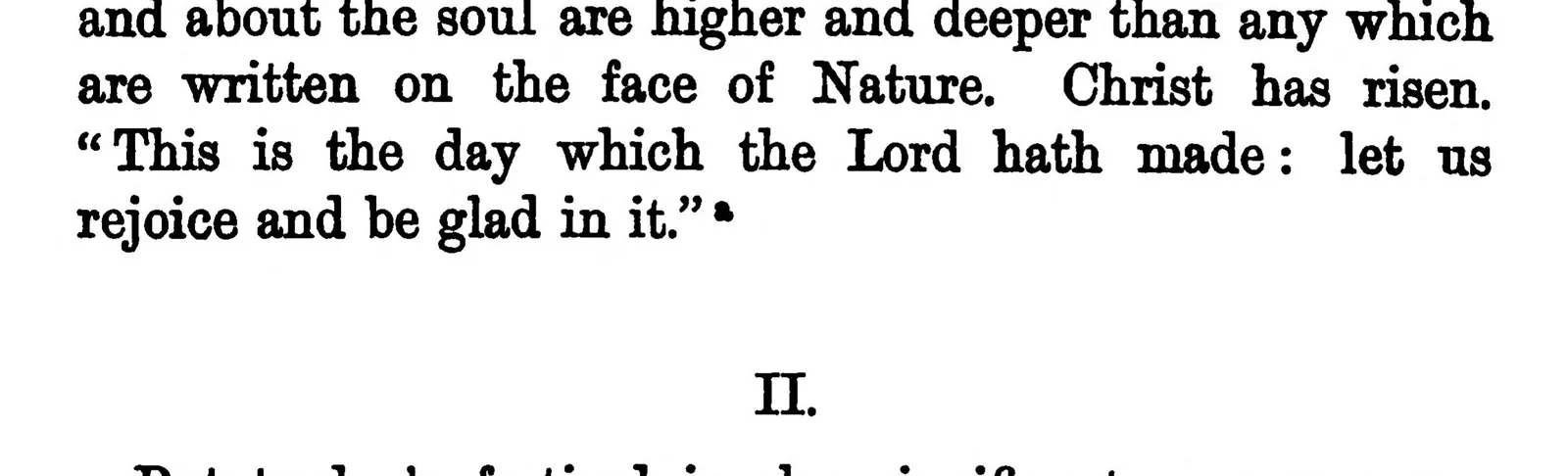
1885““This is the day which the Lord hath made: let us rejoice and be glad in it.” *”Easter in St. Paul's : sermons bearing chiefly on the Resurrection of our Lord, Volume 1 — Liddon, Henry Parry, 1829-1890 (1885). Page 237. Open the page at Internet Archive. Easter in St. Paul's, Volume 1, 1885, scan from Google Books, via archive.org. public domain. English Bible before the King JamesText edition
This is the day, which the Lord hath made: let vs reioyce and be glad in it.
1587 · The Geneva Bible (English Bible before the King James)The Geneva Bible (English Bible before the King James) (1587). Psalms 118:24. Public domain. 
1838“are obvious, namely in the connexion between our baptism, and the death and resurrection of the lord, rom. vi. 3—5. to easter sunday, the great sabbath, that verse was often applied — " this is the day which the lord hath made, let us rejoice and be glad in it.'* — ps. cxviii. 24. stanza 2. — the next most favourite season for the administrar tion of baptism was pentecost, for reasons which are also sufficiently clear : not that there was any obligation to s”Sabbation: Honor Neale, and Other Poems — Richard Chenevix Trench (1838). leaf 197. Open the page at Internet Archive. Sabbation: Honor Neale, and Other Poems, 1838, Oxford University, via archive.org. Public domain (published before 1929). 
1838“ms are obvious, namely in the connexion between our baptism, and the death and resurrection of the lord, rom. vi. 3->-5. to easter sunday, the great sabbath, that verse was often applied — '* this is the day which the lord hath made, let us rejoice and be glad in it." — ps. cxviii. 24. stanza 2.— the next most favourite season for the administration of baptism was pentecost, for reasons which are also sufficiently clear : not that there was any obligation to selec”Sabbation; Honor Neale; and other poems — Richard Chenevix Trench (1838). leaf 195. Open the page at Internet Archive. Sabbation; Honor Neale; and other poems, 1838, Oxford University, via archive.org. Public domain (published before 1929). 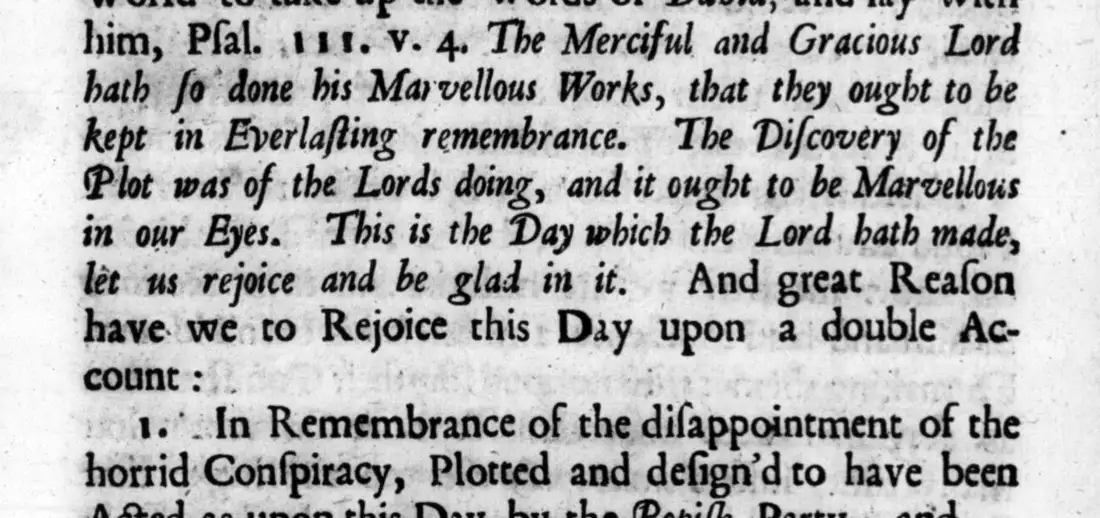
1702“cious lord | bath fo done his marvellous works, that they ought to be kept in everlasting remembrance. the discovery of the © plot was of the lords doing, and it ought to be marvellous in our eyes. this is the day which the lord. hath made, let us rejoice and be glad in it. and great reason have we to rejoice this day upon a double ac- count: 7 14 by la > ag d erer 1. in remembrance of the disappointment of the horrid conspiracy, plotted and design d to have been acted as upon this”Divine providence. A sermon before the Right Honourable the Lord Mayor, ... aldermen and sheriffs of the city of London; preach'd on November 5th. 1702, at St. Paul's church. By Tho. Knaggs, ... 1702 — Knaggs, Thomas. (1702). leaf 20. Open the page at Internet Archive. Divine providence. A sermon before the Right Honourable the Lord Mayor, ... aldermen and sheriffs of the city of London; preach'd on November 5th. 1702, at St. Paul's church. By Tho. Knaggs, ... 1702, 1702, Internet Archive, via archive.org. Public domain (published before 1929). Candidate — not yet verified A page of an older printing that carries the remembered wording shows the wording was in print at that date; a text edition quotes that printing and links the source. Each plate says what the printing is; none is a 1611 page, and none is called a King James Bible unless it is one.
Have a printed source? Send a photo of the page and we will check it twice before anything is shown.
Submit your proofOn the page around it
Psalmes 118, the 1611 as printed. Verses with their own residue are linked.
- 22The stone which the builders refused: is become the head stone of the corner.
- 23This is the LORDS doing: it is marueilous in our eyes.
- 24This is the day which the LORD hath made: we will reioyce, and be glad in it.
- 25Saue now, I beseech thee, O LORD: O LORD, I beseech thee, send now prosperitie.
- 26Blessed be he that commeth in the Name of the LORD: wee haue blessed you out of the house of the LORD.
Share this page
https://www.kylelauriano.com/residue/psalms/118/24