The Giants Were Here — An Evidence Experience
Genesis 6:4 · As the 1611 gave it
‘There were giants in the earth in those dayes; and also after that…’
Skeptics call this mythology. I did too. Then I looked at what legends don’t leave behind.
Choose your walk
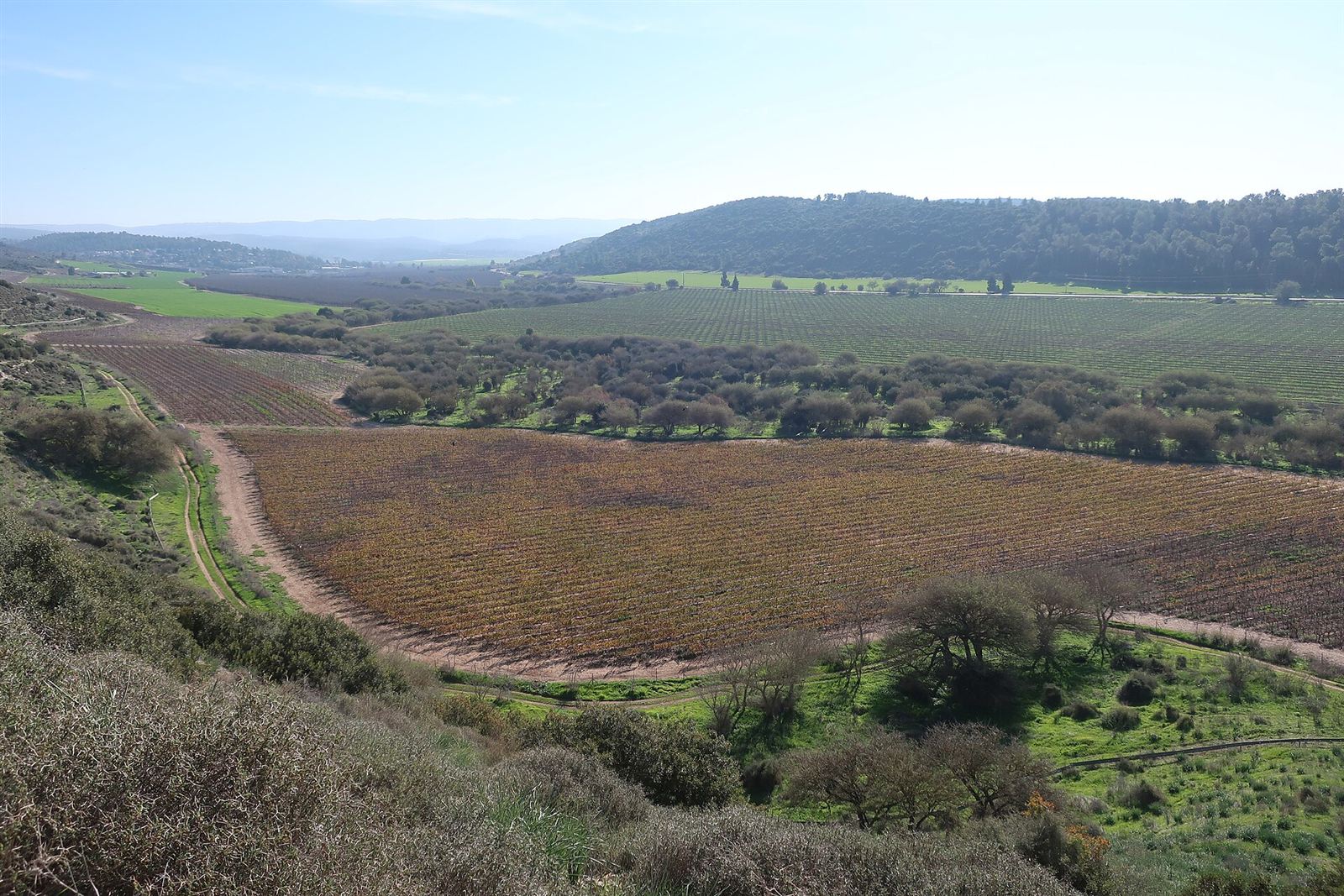
The Valley of Elah
Davidbena, CC0, via Wikimedia Commons
Chapter I · The Valley
This is the Valley of Elah. Not a metaphor — a place. You can drive there.
The Bible says a giant of Gath stood in this valley and mocked an army. It names him: Goliath.
Myths keep their monsters vague and far away. This account gives a name, a hometown, and a battlefield with GPS coordinates.
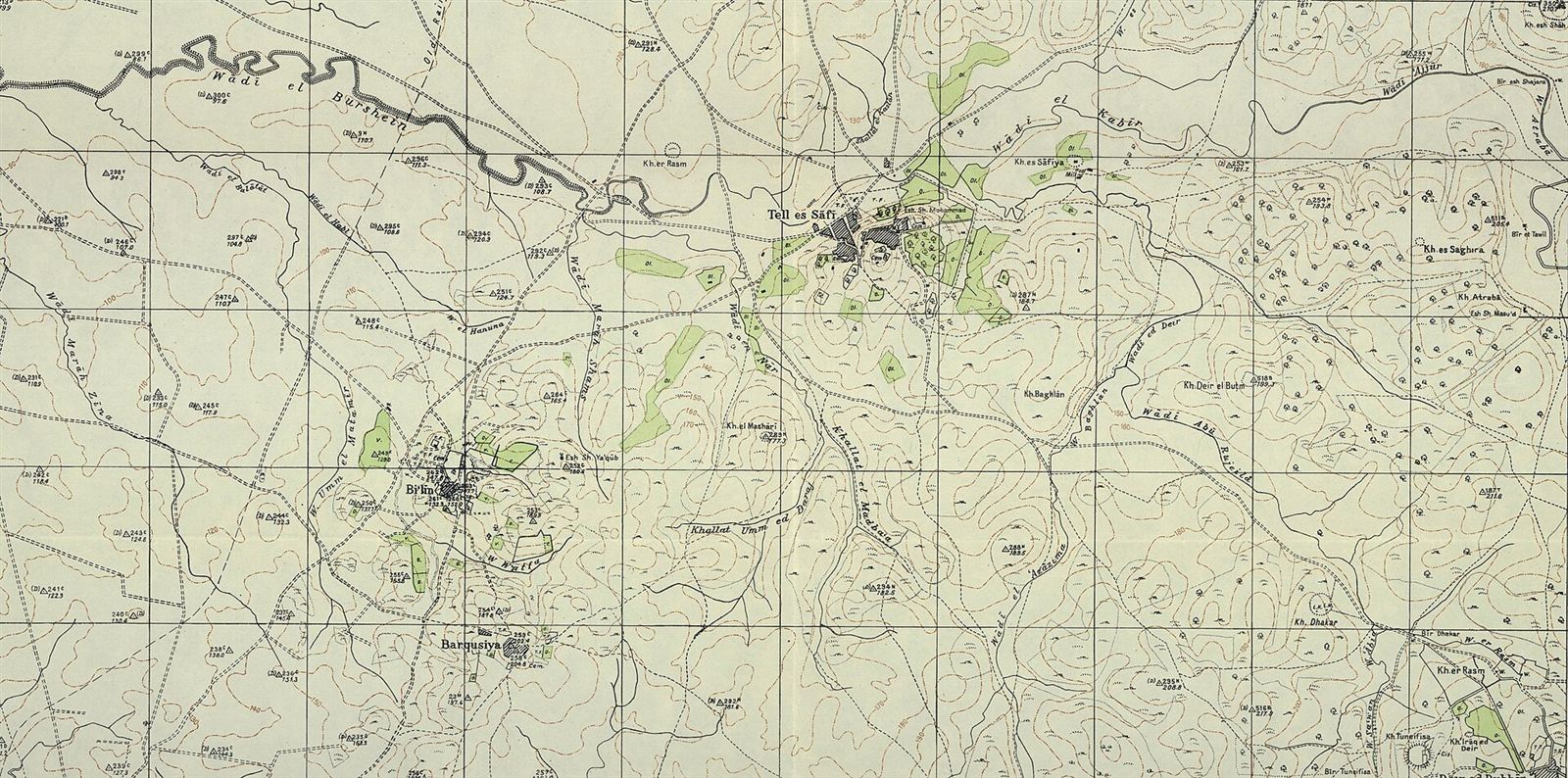
Survey of Palestine, 1948 — Tell es-Sâfi (Gath)
British Mandate Government survey, public domain
Chapter II · The Address
Goliath’s hometown was Gath of the Philistines. Here it is on a British survey map from 1948 — Tell es-Sâfi.
Not a lost city of legend. An address. Surveyors walked it, measured it, printed it.
Archaeologists have been excavating it since 1996. It was one of the largest cities of its age.
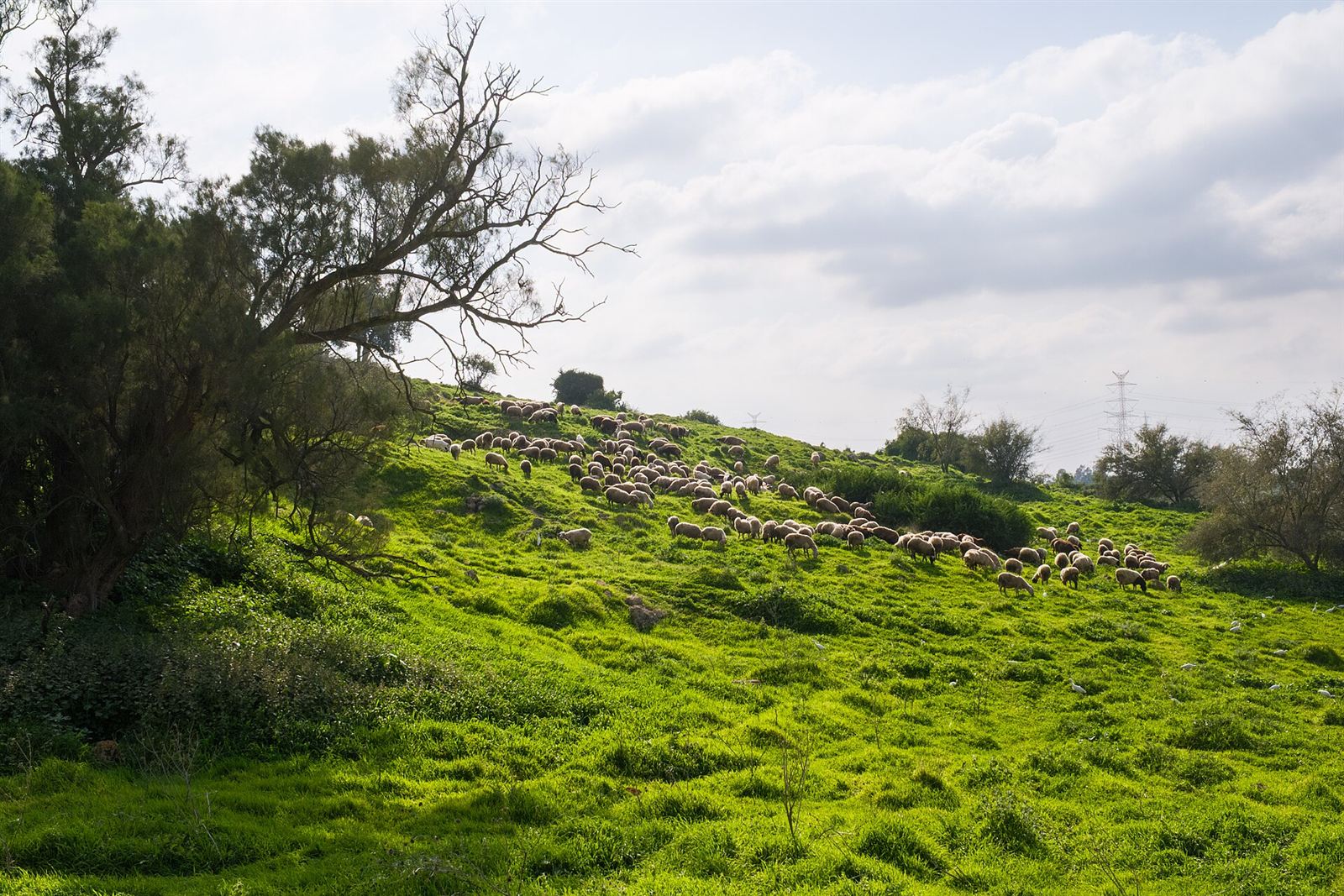
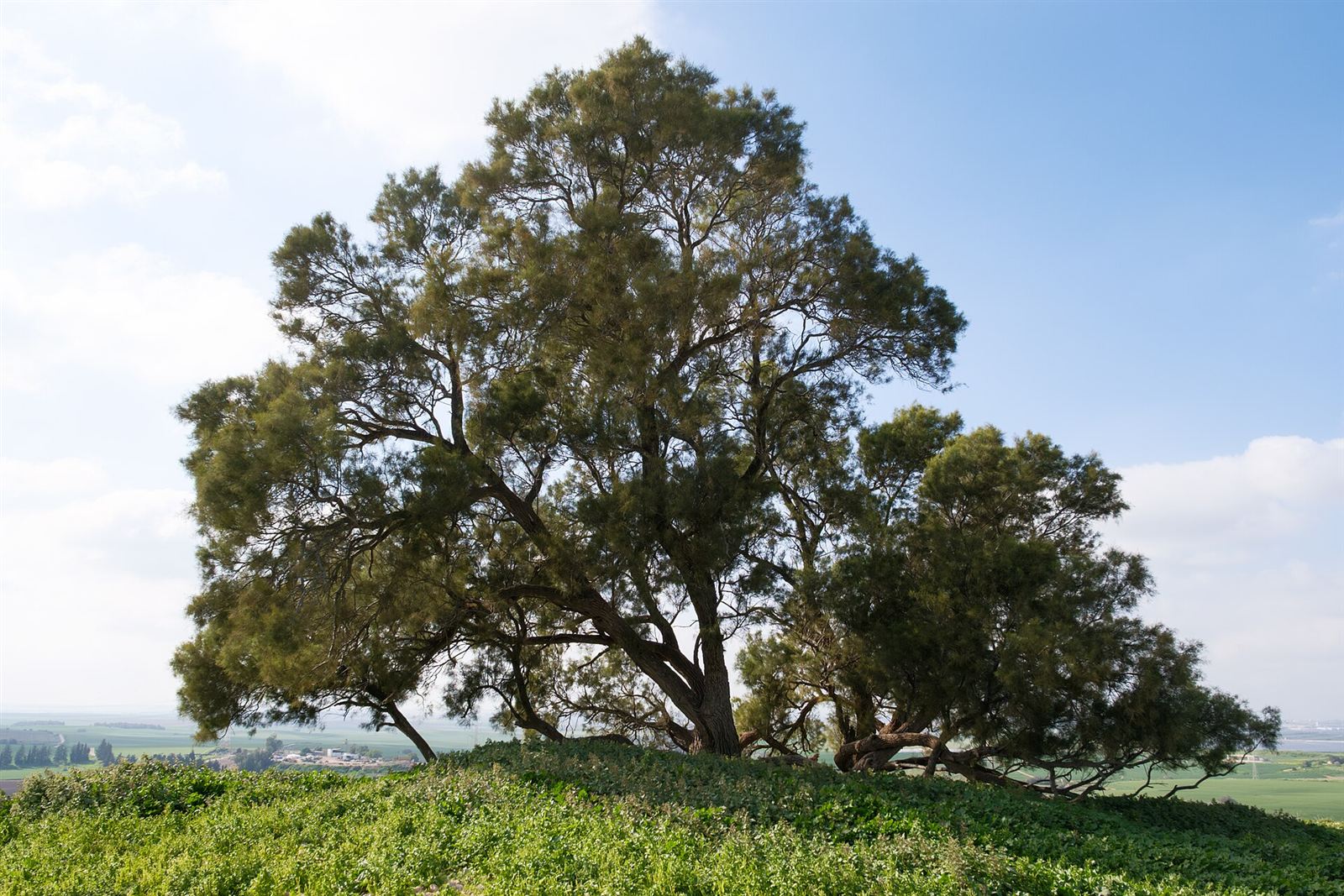
Sheep over buried Gath, Tel Zafit
מקף־עברי, CC BY-SA 4.0, via Wikimedia Commons
Chapter III · The Potsherd
Sheep graze over buried Gath today. Under that grass: a city.
In 2005, excavators pulled up a potsherd inscribed with two names — written in the alphabet and era of the Goliath account.
The 2005 inscription · Tell es-Sâfi/Gath
ʾLWT · WLT
two names linguistically kin to «Goliath» — on pottery, in his city, from his century
The inscription is real; photographs of it are under museum copyright, so we show you the letters, not a stand-in.
That doesn’t prove the man. It proves the world the account describes — names like his, in his town, in his time. Legends don’t usually leave receipts.
Chapter IV · The Measure · 1 Samuel 17:4, as the 1611 gave it
‘whose height was sixe cubites and a spanne.’
A cubit is an elbow-to-fingertip measure; a span, half of one. Choose a manuscript reading and see the man it describes.
Masoretic text: Goliath stands 9′ 9″ against a modern average of five feet nine inches.
The oldest manuscripts disagree on the number. I show you both. Either way he towered over an era whose average man stood near five foot.

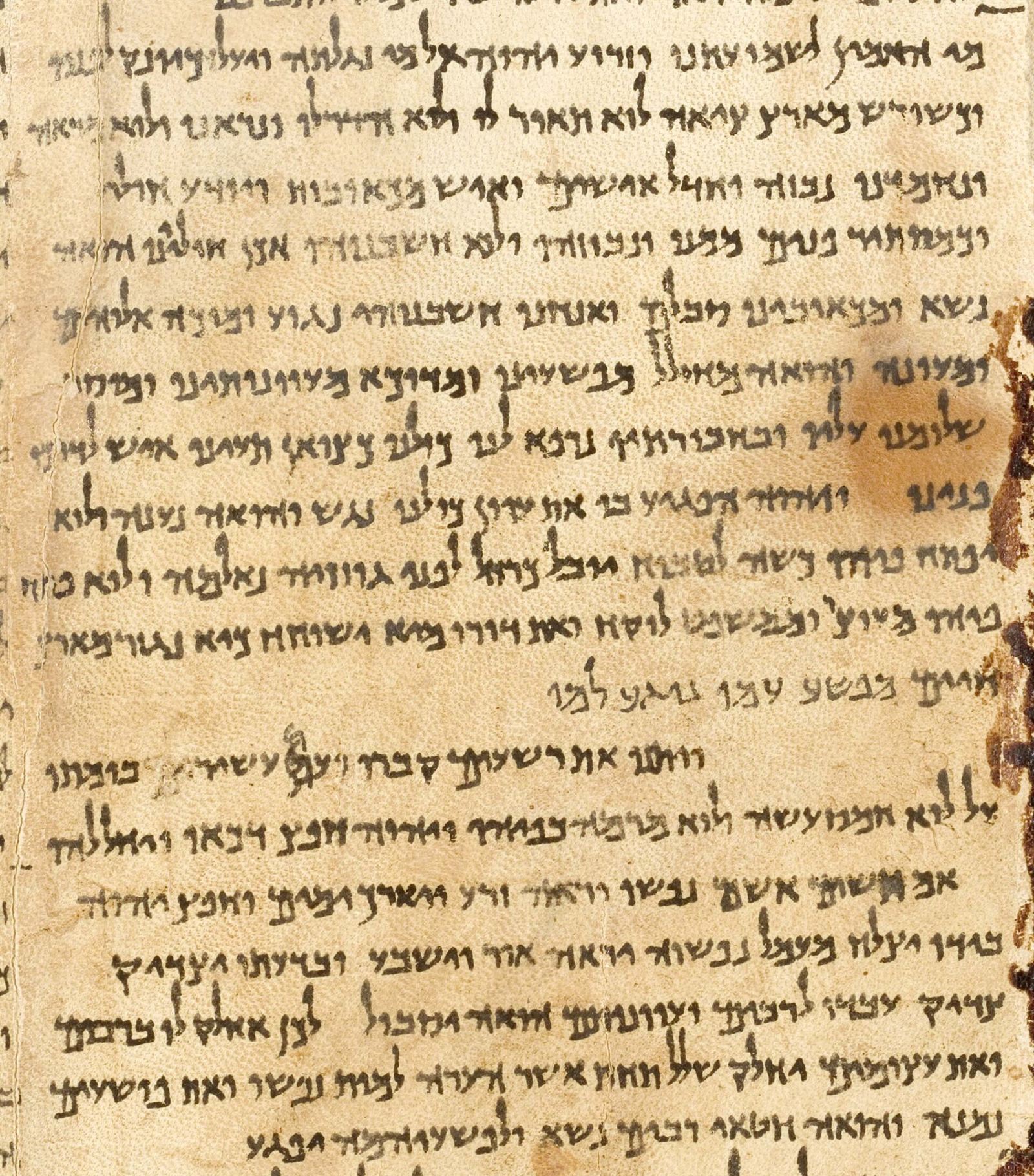
The Great Isaiah Scroll — Qumran, Cave 1
Photograph by Ardon Bar Hama / Google Art Project, public domain
Chapter V · The Scrolls
Skeptics wave off the Book of Enoch — the ancient text that tells the giants’ story in detail — as a late forgery.
Then the Dead Sea caves gave up their scrolls. Among them: eleven copies of Enoch, in Aramaic, written before Christ.
Pictured is the Great Isaiah Scroll from those same caves — the Enoch fragments themselves are under museum copyright. Same caves. Same clay jars. Same silence, two thousand years long.
Jude quoted Enoch in the New Testament. The scrolls proved the book he quoted was already old.
Chapter VI · The Verdict
Here is where I stand — marked as conviction, not consensus. The record is checkable: the city, the names, the texts. What I make of it goes further than the mainstream. You don’t have to land where I land.
But do what broke my own unbelief: look.
Images & Sources
- The Valley of Elah
- Davidbena, CC0, via Wikimedia Commons
- Survey of Palestine map, 1948
- British Mandate Government survey, public domain
- Tel Zafit (Gath) — slopes and site
- מקף־עברי, CC BY-SA 4.0, via Wikimedia Commons
- The Great Isaiah Scroll — full length and column detail
- Photograph by Ardon Bar Hama / Google Art Project, public domain
- Tell es-Safi/Gath Archaeological Project, est. 1996
- The 2005 inscription: Maeir et al., «A Late Iron Age I/early Iron Age II Old Canaanite Inscription from Tell es-Sâfi/Gath»
- Dead Sea Scrolls: eleven Aramaic Enoch manuscripts (4Q201–4Q212)
- The Lachish reliefs, palace of Sennacherib at Nineveh, c. 700 BC — British Museum