REVELATION 20 VERSE BY VERSE, AGAINST THE HISTORY AND THE THREE SCHOOLS
A careful reading of Revelation 20 from the chain to the great white throne, the main ways Christians have read it described fairly, and a timeline from AD 70 to the return of Christ — with no dates set.
Abstract
Where does Revelation 20 sit on the line of history? This paper reads the chapter verse by verse in the King James Bible, setting each phrase beside the Scriptures it echoes and beside the history it may describe. It describes fairly the three main schools of interpretation — premillennial (historic and dispensational), amillennial and postmillennial — in the words and best texts of their own defenders, together with the older preterist and historicist approaches, and the Reformers Martin Luther and John Foxe, who placed the thousand years in the past. It then lays out the timeline I hold as my conviction, and labels it so: Satan bound when the temple fell in AD 70, the thousand years the centuries of Christendom from about 500 to about 1500, the little season since about 1500, and the return of Christ, the resurrection and the judgment still ahead, at an hour no one knows. It ends with what this means for a witness: urgency without date-setting, conviction without contempt, and the gospel plainly told. It is written for believers who speak about the end times with others and want to do it truthfully.
What’s inside
·Introduction
Part 1Part 1: Three Ways of Reading the Thousand Years
Part 2Part 2: Verses 1 to 3: The Binding
Part 3Part 3: Verses 4 to 6: The Reign
Part 4Part 4: Verses 7 to 10: The Loosing
Part 5Part 5: Verses 11 to 15: The Throne
Part 6Part 6: The Timeline Laid Out
Part 7Part 7: A Witness in the Little Season
·Conclusion
Research paper · 9 chapters · 21 notes · October 2026
The timeline, in brief
The reading the paper argues for, after it sets out the three schools fairly. This is my conviction; weigh it for yourself.
The cross
The victory is won: “having spoiled principalities and powers, he made a shew of them openly” (Colossians 2:15).
AD 70
The temple falls. I believe this is when Satan was bound, that he should deceive the nations no more (Revelation 20:1–3).
About 500–1500
The thousand years: the nations of Europe turn from their idols to the name of Christ.
Since about 1500
Loosed a little season (Revelation 20:3, 7–8).
No date set
The glorious appearing of Christ (Titus 2:13), fire from heaven, the great white throne, and a new heaven and a new earth (Revelation 20:9–15; 21:1).
Why these dates do not add up in a simple sum on the standard calendar, and what I make of Gunnar Heinsohn’s chronology, is set out in The Little Season.
About 35 minutes · 9 parts · the PDF has the same text
Introduction
3 min read
Sooner or later, anyone who talks about Jesus will be asked about the end of the world. A friend has seen a video about the mark of the beast. A co-worker wants to know whether the rapture is real. A relative says the church has been predicting the end for two thousand years and has been wrong every time. If you are going to be a witness, you need to be able to say what the Bible says, what Christians disagree about, and what you believe — and to tell the three apart.
Revelation 20 sits at the centre of those conversations. It is the only passage in Scripture that speaks of a "thousand years", and how a person reads it shapes his whole picture of the future. This paper reads it carefully, one verse at a time, so that you can talk about it honestly.
Three rules for reading prophecy
First, Scripture interprets Scripture. Revelation is soaked in the Old Testament; almost every image in chapter 20 — the pit, the chain, the thrones, Gog and Magog, the fire from heaven, the books — appears somewhere else first. We read John best when we read him beside Daniel, Ezekiel and the words of Jesus.
Second, fulfilled prophecy can be checked against history. When Jesus said of the temple, "There shall not be left here one stone upon another, that shall not be thrown down" (Matthew 24:2), He made a claim that history could test, and history confirmed it. Where a reading of Revelation 20 says something has happened, we are entitled to look.
Third, humility. "The secret things belong unto the LORD our God: but those things which are revealed belong unto us and to our children for ever" (Deuteronomy 29:29). Paul, who saw the third heaven, wrote, "For now we see through a glass, darkly" (1 Corinthians 13:12). On some details of Revelation 20, godly readers have disagreed for nineteen centuries. A witness who pretends otherwise loses the trust of the people he is trying to reach.
What I believe
I read Revelation 20 literally. I believe Satan was bound when the temple fell in AD 70; that the thousand years were the medieval age, about 500 to 1500; and that the little season began about 1500 and is the age we live in now. I set no dates. This is my conviction; weigh it for yourself. With every Christian, I believe Christ will return at an hour no one knows, the dead will be raised, and every person will stand before the great white throne.
Here is the timeline at a glance. The rest of the paper explains it.
| Verse | Event | Where I place it | |---|---|---| | 20:1–3 | The dragon bound "that he should deceive the nations no more" | When the temple fell, AD 70 | | 20:4–6 | The saints live and reign with Christ "a thousand years" | The centuries of Christendom, about 500 to 1500 | | 20:7–8 | Satan loosed "a little season" to deceive the nations | From about 1500 to now | | 20:9–10 | Fire from heaven; the devil cast into the lake of fire | Still ahead | | 20:11–15 | The great white throne; the dead judged | Still ahead, at the end |
The dates in that table are not a calculation and do not add up to one. Part 6 explains why, including a question about the calendar itself that I want to be honest about.
A word about me
I was raised Roman Catholic but never really connected — I went through the motions, fell asleep in the pews, and faked being sick to skip Mass. Eventually I gave up and called myself an atheist. I decided to read the Bible for one reason: to disprove it, so I'd have an excuse to stop going to church for good. It did the opposite. I came to faith in 2022, and my wife came to faith a month later. The story is at kylelauriano.com/about. I tell it because a Christian who claims too much quickly loses a listener, and this paper tries not to.
A note on Scripture
Every verse is quoted from the King James Bible. Read it free in the 1611 Reader at kylelauriano.com/library, with a KJV and Strong's Concordance beside you. Two companion papers go deeper: The Millennial Reign (kylelauriano.com/resources/millennial-reign.pdf) on the Scripture and the history of interpretation, and The Historical Evidence (kylelauriano.com/resources/historical-evidence.pdf) on the record of 500 to 1500.
Before we read the chapter, we should meet the people who read it differently from us, and meet them at their best. A witness who can describe another view so fairly that its holders would say "yes, that is what we believe" has earned the right to disagree with it.
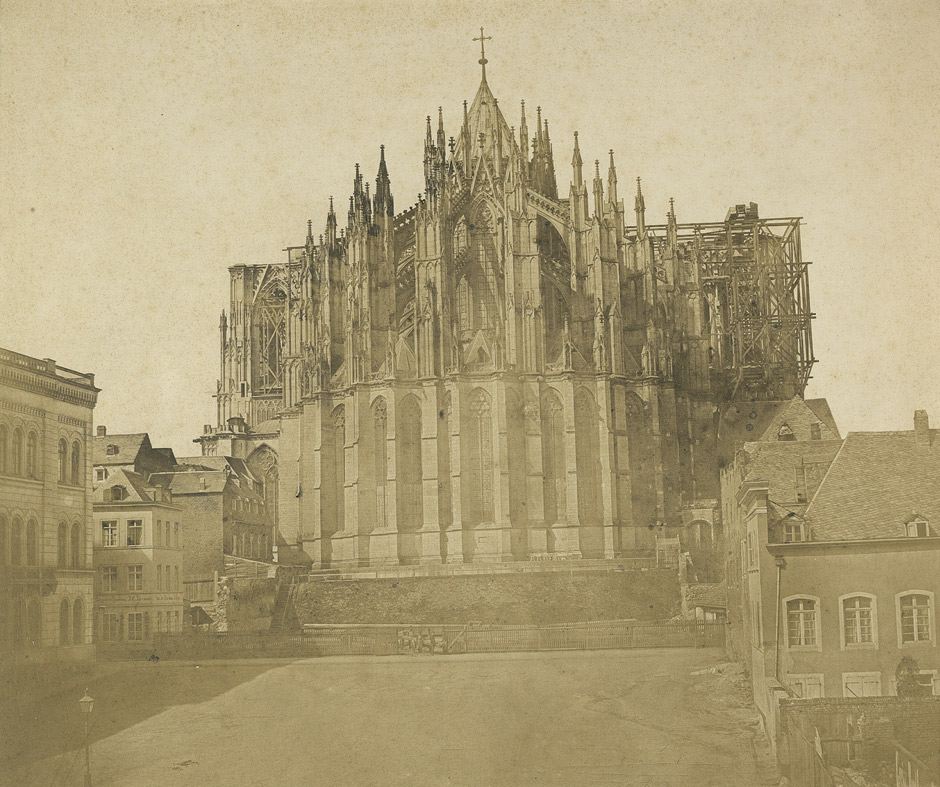
Cologne Cathedral completed in 1880 — the 632-year build finally finished, exactly to the medieval plan.Tony Hisgett · CC BY 2.0The Great Isaiah Scroll (c. 125 BC) unrolled — sixty-six chapters of prophecy copied a century before the events the New Testament reads them against.Photograph by Ardon Bar Hama / Google Art Project · Public domain
Premillennialism
Premillennialism holds that Christ returns before (pre-) the thousand years, and then reigns on the earth for a thousand years before the final judgment and the new creation.
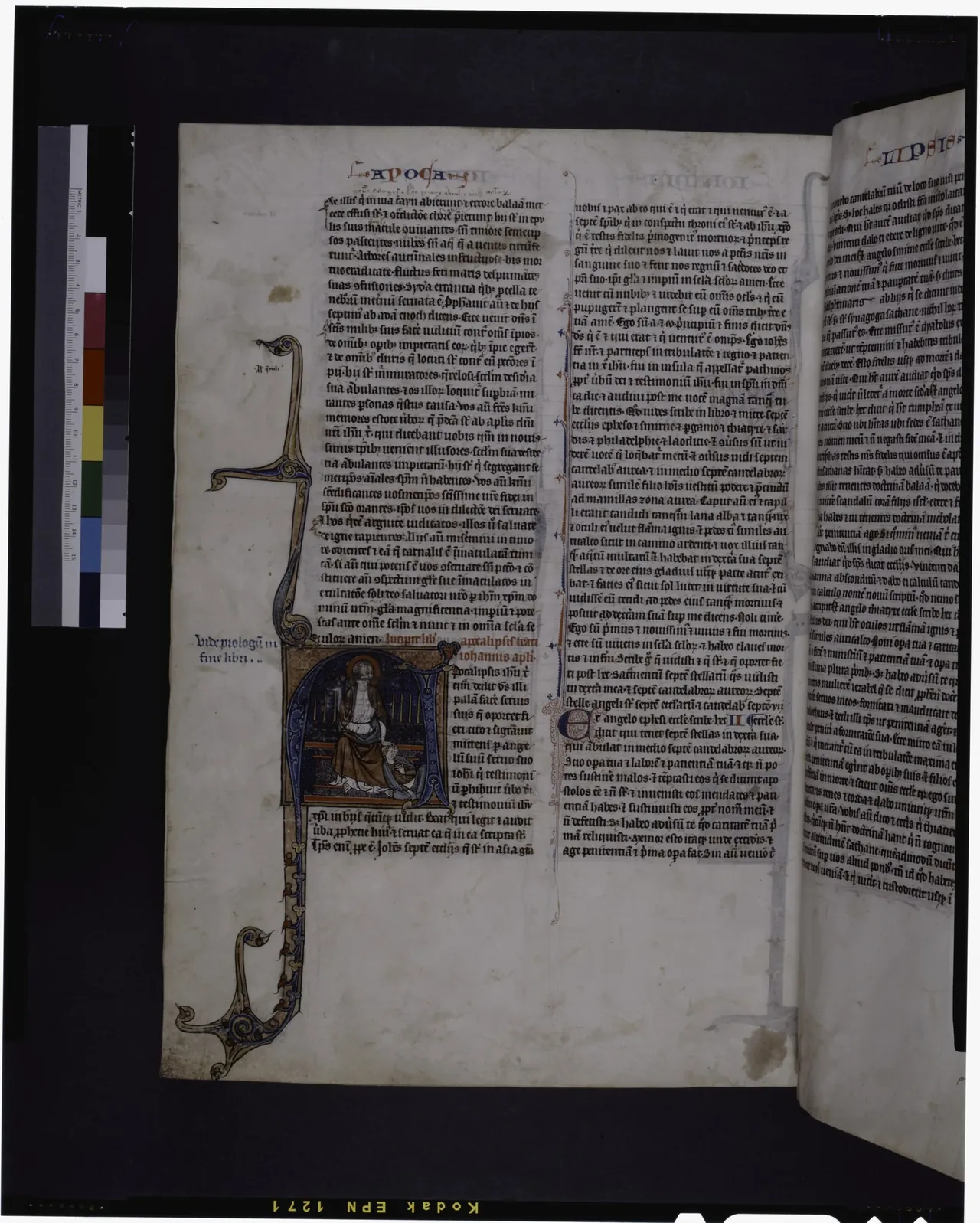
A manuscript page of 1275 opening the Apocalypse, its initial showing John as if asleep in his vision of Christ, the book whose thousand years are read three ways.At the opening of Apocalypse, historiated initial by Hand I of John, as if asleep in his vision of Christ with the two-e · 1275 · Wikimedia Commons · Public domain · museum record · Galeria Regni
Its strongest argument is the order of the text. Revelation 19 shows Christ coming from heaven on a white horse — "he that sat upon him was called Faithful and True, and in righteousness he doth judge and make war" (Revelation 19:11) — and the beast and false prophet "cast alive into a lake of fire burning with brimstone" (Revelation 19:20). Chapter 20 then follows with the binding, the reign, and at the end the devil cast into the lake "where the beast and the false prophet are" (Revelation 20:10). Read straight through, the premillennialist says, the return comes first and the thousand years after.
A second argument rests on the word "lived". In verse 4 the faithful "lived and reigned with Christ a thousand years"; in verse 5 "the rest of the dead lived not again until the thousand years were finished." If the second "lived" is a bodily resurrection, the premillennialist argues, the first must be too. A third is the testimony of the earliest fathers. Justin Martyr, about the middle of the second century, wrote that "I and others, who are right-minded Christians on all points, are assured that there will be a resurrection of the dead, and a thousand years in Jerusalem".1 Papias and Irenaeus held the same hope.
Premillennialists also point to prophecies that seem to describe a world that is better than ours yet not yet perfect, such as Isaiah 65:20: "for the child shall die an hundred years old; but the sinner being an hundred years old shall be accursed." Death and sin still exist there, so it is not heaven; yet life is long and peace is real, so it is not now.
There are two main forms. Historic premillennialism, defended in the twentieth century by George Eldon Ladd, holds the early fathers' basic picture: one people of God, a future return, then the reign.2Dispensational premillennialism, taught by John Nelson Darby and the Plymouth Brethren from the 1830s and spread across America by the Scofield Reference Bible of 1909, adds a sharp distinction between Israel and the church, a rapture of the church before a seven-year tribulation, and a thousand-year reign in which God's promises to national Israel are fulfilled.3 In much of American evangelicalism today, the dispensational view is simply assumed to be what the Bible teaches.
Amillennialism
Amillennialism holds that there is no (a-) future earthly thousand-year reign. The "thousand years" is a symbol for the whole age between Christ's first and second comings, during which Satan is restrained, the gospel goes to the nations, and the souls of the faithful dead reign with Christ in heaven. When Christ returns there is one general resurrection, one judgment, and the new heavens and new earth.
Its strongest arguments are these. First, Revelation is a book of signs, full of numbers that are plainly symbolic — seven spirits, twenty-four elders, a city twelve thousand furlongs on every side — so a symbolic thousand is natural. Second, Revelation often retells the same age from different angles; chapter 20, on this view, steps back to the beginning of the age, as chapter 12 does. Third, Jesus Himself spoke of binding the strong man in His own ministry: "how can one enter into a strong man's house, and spoil his goods, except he first bind the strong man?" (Matthew 12:29). Fourth, the rest of the New Testament seems to teach one resurrection at the last day: "the hour is coming, in the which all that are in the graves shall hear his voice, And shall come forth; they that have done good, unto the resurrection of life; and they that have done evil, unto the resurrection of damnation" (John 5:28-29). The same chapter speaks of a spiritual resurrection now: "The hour is coming, and now is, when the dead shall hear the voice of the Son of God: and they that hear shall live" (John 5:25). The amillennialist reads that as the "first resurrection".
This was the dominant reading of the Western church from the fifth century to the Reformation, thanks above all to Augustine of Hippo. In The City of God Augustine wrote that the first resurrection "regards not the body, but the soul", that the binding of the devil is "his being prevented from the exercise of his whole power to seduce men", and that "the Church even now is the kingdom of Christ, and the kingdom of heaven".4 In the twentieth century the view was defended by, among others, Anthony A. Hoekema in The Bible and the Future.5 I report Augustine's reading here as history. It is not my position.
Postmillennialism
Postmillennialism holds that Christ returns after (post-) the millennium, which is a long golden age brought about within history by the spread of the gospel. Not every person will be saved, but the gospel will so prevail among the nations that righteousness and peace will mark the world for a long age before the Lord returns.
Its strongest texts are the promises of the kingdom's growth. Jesus said the kingdom of heaven "is like to a grain of mustard seed" which "becometh a tree" (Matthew 13:31-32), and "like unto leaven, which a woman took, and hid in three measures of meal, till the whole was leavened" (Matthew 13:33). Paul says of Christ, "For he must reign, till he hath put all enemies under his feet" (1 Corinthians 15:25), echoing the psalm, "Sit thou at my right hand, until I make thine enemies thy footstool" (Psalm 110:1). The Father's promise to the Son is "the heathen for thine inheritance" (Psalm 2:8), and the prophets promise that "the earth shall be full of the knowledge of the LORD, as the waters cover the sea" (Isaiah 11:9).
Its best-known twentieth-century statement is Loraine Boettner's The Millennium (1957).6
The three at a glance
| | Premillennial | Amillennial | Postmillennial | |---|---|---|---| | When Christ returns | Before the thousand years | After the church age | After the golden age | | The thousand years | A future reign on earth | A symbol of the church age | A long future age of gospel triumph | | Satan's binding | At Christ's return | At Christ's first coming | Through the gospel's advance | | First resurrection | Bodily, of the righteous | Spiritual (new birth) or the souls in heaven | Usually spiritual | | Best texts | Revelation 19–20 in order; Isaiah 65:20 | Matthew 12:29; John 5:25–29 | Matthew 13:31–33; Psalm 110:1 |
A standard place to hear each view argued by one of its own defenders, with the others replying, is Robert G. Clouse's The Meaning of the Millennium: Four Views, in which Ladd, Herman A. Hoyt, Boettner and Hoekema each make their case.7
Four older ways of reading Revelation
Cutting across those three schools is an older question: what kind of book Revelation is.
Preterists read most of it as fulfilled in the first centuries — the fall of Jerusalem and the Roman persecutions. The approach was set out in detail by the Spanish Jesuit Luis de Alcazar in 1614, and among Protestants by the Dutch scholar Hugo Grotius and the Englishman Henry Hammond.8Historicists read Revelation as a map of church history from John's day to the end; it was the majority view of the Protestant Reformers. Futurists read most of it as still to come; Darby's dispensationalism is the best-known modern form. Idealists read it as a picture of the timeless struggle between Christ and Satan rather than a sequence of events.
The Reformers who placed the thousand years in the past
Within the historicist tradition, some of the most important Protestants placed the thousand years in the past. Martin Luther, in the preface to Revelation that he wrote for his German Bible from 1530, identified Gog and Magog with the Turks and wrote: "For it is our opinion that this picture, which is separate from the preceding, has been put in because of the Turks, and that the thousand years are to begin at the time when this book was written, and that at that time the devil was bound; though the reckoning need not hold out to the very minute."9 John Foxe, whose Acts and Monuments appeared in 1563, counted Satan's binding from the end of the Roman persecutions and headed the books of his history covering the fourteenth and fifteenth centuries "The last 300 years from the loosing of Satan".10
Where my reading sits
My reading does not belong to any of the three modern schools, and I do not use their labels for it. With the premillennialist, I read Revelation 20 as real events in the order John saw them, and I take the thousand years as a real span with a beginning and an end. With Luther and Foxe, I believe that span lies in the past and that we live in the season after it. With every Christian, I wait for Christ's return, the resurrection and the judgment. I part from Augustine on the nature of the thousand years and from the premillennialist on their place. You will have to decide whether that is faithfulness to the text or a misreading of it. Weigh it for yourself.
"And I saw an angel come down from heaven, having the key of the bottomless pit and a great chain in his hand. And he laid hold on the dragon, that old serpent, which is the Devil, and Satan, and bound him a thousand years, And cast him into the bottomless pit, and shut him up, and set a seal upon him, that he should deceive the nations no more, till the thousand years should be fulfilled: and after that he must be loosed a little season." (Revelation 20:1-3)
This part takes the first three verses phrase by phrase, because everything else in the chapter hangs on them.
"An angel come down from heaven"
The binding is done from heaven, by God's messenger. Satan does not bind himself, and the church does not bind him by a formula. In Revelation 9 a fallen star is given "the key of the bottomless pit" and opens it (Revelation 9:1); here an angel comes down with the same key and shuts it. Heaven holds the key.
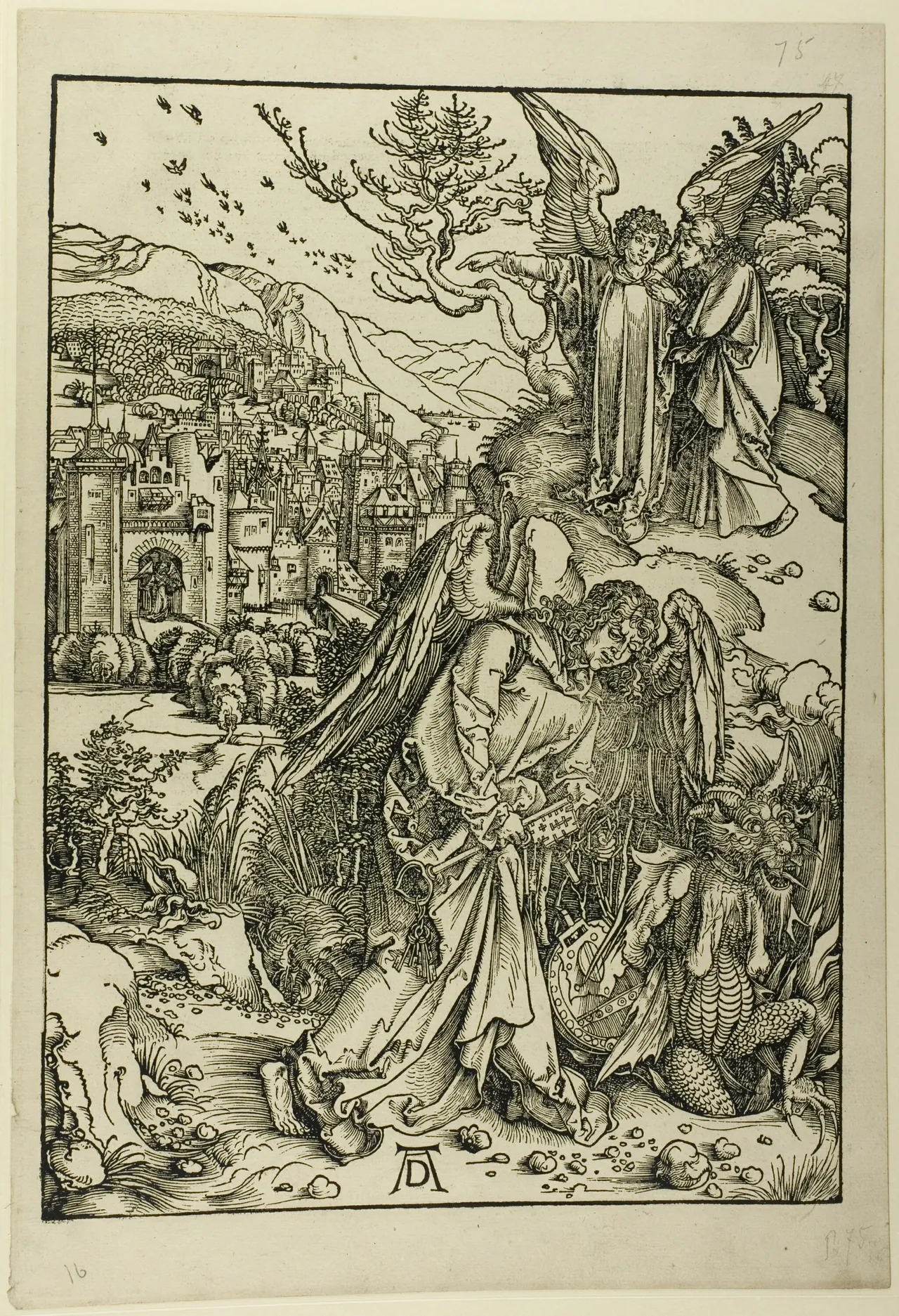
A German woodcut of about 1496 to 1498, published 1511, of the angel with the key of the bottomless pit binding the dragon, the scene of the binding verses.The Angel with the Key of the Bottomless Pit, from The Apocalypse · c. 1496–98; published 1511 · Art Institute of Chicago · CC0 · museum record · Galeria Regni
"The key of the bottomless pit and a great chain"
The "bottomless pit" (the abyss) appears throughout Revelation as the place from which evil rises (Revelation 9:2; 17:8). The demons in Luke 8 "besought him that he would not command them to go out into the deep" (Luke 8:31). Peter and Jude speak of fallen angels held in "chains of darkness" (2 Peter 2:4) and "everlasting chains under darkness unto the judgment of the great day" (Jude 1:6). The key and chain speak of a real restraint, imposed by God, on a real being.
"The dragon, that old serpent, which is the Devil, and Satan"
John gives the dragon four names, the same four he gave in Revelation 12:9, where "the great dragon was cast out, that old serpent, called the Devil, and Satan, which deceiveth the whole world". The serpent of Eden, the accuser, the adversary, the deceiver of the whole world: the same person throughout Scripture.
"Bound him a thousand years"
Here the schools part. The amillennialist and postmillennialist place the binding at the first coming or in the gospel's advance; the premillennialist places it at the second coming. I place it at the fall of the temple in AD 70.
The cross is the victory. "And having spoiled principalities and powers, he made a shew of them openly, triumphing over them in it" (Colossians 2:15). Jesus' own word about binding the strong man (Matthew 12:29) belongs to that defeat. But Revelation 20 is a vision John saw after the cross, of a binding with a stated purpose and a stated time, and Revelation 12 shows the dragon after the cross still raging, "because he knoweth that he hath but a short time" (Revelation 12:12).
Why AD 70? Because Jesus tied the end of the old age to the end of the temple, and said it would happen within a generation: "Verily I say unto you, All these things shall come upon this generation" (Matthew 23:36); and to Jerusalem, "Behold, your house is left unto you desolate" (Matthew 23:38). Hebrews, written before the fall, said the old covenant order was "ready to vanish away" (Hebrews 8:13). Josephus, who watched it happen with the Roman army, records that the temple burned on "the tenth day of the month Lous, [Ab,] upon which it was formerly burnt by the king of Babylon".11 When the old order fell, the way to the nations was opened once for all. That is where I believe the chain fell. The texts lead me there; they do not print the date beside verse 1. This is my conviction; weigh it for yourself.
"That he should deceive the nations no more"
The binding has one stated purpose. It does not say that Satan can tempt no one; Peter's roaring lion still prowls (1 Peter 5:8). It says that he cannot deceive "the nations" — peoples as peoples — as he had. Before Christ, Paul says, God "suffered all nations to walk in their own ways" (Acts 14:16). The deception of the nations was their worship of other gods.
Against history, I believe this is exactly what happened between about 500 and 1500. The peoples of Europe and many beyond it put away their gods; kings were baptized and nations followed; the last pagan state in Europe, Lithuania, was baptized at the end of the fourteenth century; a Christian mission reached the capital of Tang China in 635.12 Those centuries had great sins, including sins committed in Christ's name, and The Historical Evidence records them. But the nations, as nations, were no longer bowing to Woden or Jupiter.
"Till the thousand years should be fulfilled"
The binding is for a fixed span. It ends. Whatever the thousand years are, they are not the whole of history, because history goes on after them. That is why I cannot follow Augustine's suggestion that the thousand might stand "for the whole duration of this world".13 A span that is "fulfilled", and after which something else "must" happen, has an end inside history.
"And after that he must be loosed a little season"
"Must." The release is not a slip in God's plan; it is part of it. And it is "a little season" — short compared with the thousand years, though the text does not say how short. Revelation 6 uses the same phrase of the martyrs under the altar, who are told "that they should rest yet for a little season, until their fellowservants also and their brethren, that should be killed as they were, should be fulfilled" (Revelation 6:11). A little season is a time of waiting, not a countdown.
"And I saw thrones, and they sat upon them, and judgment was given unto them: and I saw the souls of them that were beheaded for the witness of Jesus, and for the word of God, and which had not worshipped the beast, neither his image, neither had received his mark upon their foreheads, or in their hands; and they lived and reigned with Christ a thousand years. But the rest of the dead lived not again until the thousand years were finished. This is the first resurrection. Blessed and holy is he that hath part in the first resurrection: on such the second death hath no power, but they shall be priests of God and of Christ, and shall reign with him a thousand years." (Revelation 20:4-6)
These three verses are the most disputed in the chapter. This part says what they plainly say, how the schools read what they do not plainly say, and where I hold my reading with an open hand.
"I saw thrones, and they sat upon them"
The thrones recall Daniel's vision: "And the kingdom and dominion, and the greatness of the kingdom under the whole heaven, shall be given to the people of the saints of the most High" (Daniel 7:27). Jesus promised the twelve that "in the regeneration when the Son of man shall sit in the throne of his glory, ye also shall sit upon twelve thrones, judging the twelve tribes of Israel" (Matthew 19:28), and Paul asked, "Do ye not know that the saints shall judge the world?" (1 Corinthians 6:2). The risen Christ promised the overcomer, "To him that overcometh will I grant to sit with me in my throne" (Revelation 3:21).
John does not say who "they" are who sit on the thrones. Some read them as the apostles, some as all the saints, some as the martyrs named next. I do not claim to know. What the verse makes plain is that judgment is given to Christ's people in this span. Against history, I note only that for the thousand years every throne in Christendom confessed a King above it — a thing that had never been true before and is not true now.
"The souls of them that were beheaded"
John sees "souls" — the faithful dead — and among them those beheaded "for the witness of Jesus, and for the word of God", and those who refused the beast and his mark. They are the same people he saw under the altar in Revelation 6, who cried "How long, O Lord" and were told to rest "for a little season" (Revelation 6:10-11). Here they are answered. The ones the world killed now reign.
"They lived and reigned with Christ a thousand years"
The reign is shared, it is "with Christ", and it lasts the same thousand years as the binding. The premillennialist reads "lived" as bodily resurrection at Christ's return. The amillennialist reads it as the souls of the faithful dead living and reigning with Christ in heaven during the church age. The postmillennialist usually reads it of the saints' reign through the gospel's triumph.
I hold that the binding and the reign are the same span, and that it is a real span in history. Whether the reigning saints are the martyrs raised, the faithful dead with Christ, or the church on earth sharing His rule, I hold with an open hand. I would rather tell a listener honestly where I am sure and where I am not than claim more than the text gives.
"This is the first resurrection"
Here the schools divide most sharply. The premillennialist says the first resurrection is the bodily raising of the righteous before the reign, and the "rest of the dead" are raised after it. The amillennialist follows the line of Augustine, who said the first resurrection "regards not the body, but the soul",14 and before him Tyconius, who, according to Gennadius, held that the faithful "are raised from the dead bodies of their sins through baptism to the service of eternal life".15 They point to Paul: "Therefore we are buried with him by baptism into death: that like as Christ was raised up from the dead by the glory of the Father, even so we also should walk in newness of life" (Romans 6:4), and "Even when we were dead in sins, hath quickened us together with Christ, (by grace ye are saved;) And hath raised us up together" (Ephesians 2:5-6).
I have not settled this question, and I will not pretend to. What every reading agrees on is in the next verse.
"On such the second death hath no power"
"Blessed and holy is he that hath part in the first resurrection: on such the second death hath no power". Revelation defines the second death plainly: "the lake which burneth with fire and brimstone: which is the second death" (Revelation 21:8). The risen Christ promised every faithful church, "He that overcometh shall not be hurt of the second death" (Revelation 2:11). Whatever the first resurrection is, those who share in it are safe forever. That is the line a witness should never let get lost in the argument.
"Priests of God and of Christ"
The saints of the thousand years are "priests of God and of Christ, and shall reign with him". This is the calling Revelation gives the redeemed from the start: Christ "hath made us kings and priests unto God and his Father" (Revelation 1:6), and the new song says, "And hast made us unto our God kings and priests: and we shall reign on the earth" (Revelation 5:10). Peter calls the church "a royal priesthood" (1 Peter 2:9). Priests offer worship and pray for others. Against history, I note that the centuries from 500 to 1500 were organised around worship to a degree no age before or since has been — the daily round of prayer in thousands of monasteries, and churches raised over lifetimes to lift the mind to God.16 They worshipped with much error. But they knew Whom they were meant to worship.
"And when the thousand years are expired, Satan shall be loosed out of his prison, And shall go out to deceive the nations which are in the four quarters of the earth, Gog and Magog, to gather them together to battle: the number of whom is as the sand of the sea. And they went up on the breadth of the earth, and compassed the camp of the saints about, and the beloved city: and fire came down from God out of heaven, and devoured them. And the devil that deceived them was cast into the lake of fire and brimstone, where the beast and the false prophet are, and shall be tormented day and night for ever and ever." (Revelation 20:7-10)
This part matters most for a witness, because if I am right, it describes the age you and the people you talk to are living in.
Cologne Cathedral photographed in 1855 — still unfinished, the medieval crane waiting on the tower after four centuries.Johann Franz Michiels, 1855 · Public domain
"When the thousand years are expired"
The span ends. The binding was "till the thousand years should be fulfilled"; now they are "expired". Every school agrees that something follows the thousand years. The question is only when.
"Satan shall be loosed out of his prison"
The pit is now called a "prison". The one who held the nations captive was himself held. Now he is let out. He is not stronger than before; he is permitted. God is still sovereign over the loosing as He was over the binding.
I believe the loosing began around 1500. In the late fifteenth and early sixteenth centuries the world of Christendom broke apart. Constantinople fell to the Ottoman Turks in 1453. The printing press put books, including the Bible, in many hands — a great good, and also the means by which every new idea could spread. In 1517 Luther's protest began the Reformation, and within a century the West was divided and at war over the faith. Over the centuries that followed, a new confidence rose that man could explain himself, govern himself and save himself without God. The people who lived through the start of that turn felt it: Luther believed the thousand years were behind him, and Foxe headed his histories of the fourteenth and fifteenth centuries with the loosing of Satan.17 This is my conviction; weigh it for yourself.
"To deceive the nations which are in the four quarters of the earth"
The loosed deceiver does the one thing the binding prevented: he deceives the nations. And now his reach is "the four quarters of the earth" — the whole world. It is worth noticing that the age since 1500 is the first in history in which the nations of every continent have been drawn into one connected world, and the first in which ideas, for good and evil, can move across all of it at once.
The New Testament describes what that deception looks like in the last times. "For men shall be lovers of their own selves, covetous, boasters, proud, blasphemers, disobedient to parents, unthankful, unholy" (2 Timothy 3:2). Paul also warned, "For the time will come when they will not endure sound doctrine; but after their own lusts shall they heap to themselves teachers, having itching ears" (2 Timothy 4:3). Jesus warned that false Christs and false prophets "shall shew great signs and wonders; insomuch that, if it were possible, they shall deceive the very elect" (Matthew 24:24). The Little Season (kylelauriano.com/resources/little-season.pdf) follows those marks through the modern age. I will not list headlines here; headlines change, and a witness who ties his message to this year's news will look foolish next year.
"Gog and Magog"
John borrows the names from Ezekiel, who prophesied against "Gog, the land of Magog, the chief prince of Meshech and Tubal" (Ezekiel 38:2), coming "out of the north parts, thou, and many people with thee" (Ezekiel 38:15), on whom God says, "I will send a fire on Magog" (Ezekiel 39:6). In Ezekiel, Gog is a great invader of a restored people. In Revelation the names are given to "the nations which are in the four quarters of the earth" — not one northern army but the whole deceived world.
Readers have identified Gog and Magog in many ways. Luther named the Turks of his day. Others read them as a final coalition of nations at the end, or as a figure for every power arrayed against God's people. I do not claim to know their identity, and I would counsel any witness against confident identifications. The text tells us what matters: the gathering is the fruit of deception, and it is vast.
"The number of whom is as the sand of the sea"
The phrase is an old one for a host too large to count. It is used of Abraham's seed — "as the sand which is upon the sea shore" (Genesis 22:17) — and of the armies gathered against Joshua, "much people, even as the sand that is upon the sea shore in multitude" (Joshua 11:4). The point is that at the end the people of God will be vastly outnumbered. A witness in the little season should not expect the crowd to be on his side.
"The camp of the saints about, and the beloved city"
The deceived nations surround "the camp of the saints" and "the beloved city". A camp is a pilgrim people's dwelling — Israel in the wilderness lived in a camp. The beloved city recalls the psalm, "The LORD loveth the gates of Zion more than all the dwellings of Jacob" (Psalm 87:2), and the New Testament's "heavenly Jerusalem" (Hebrews 12:22) — what Paul calls "Jerusalem which is above" (Galatians 4:26).
Whether the camp and city are a literal place, the whole people of God on earth, or both, Christians have read differently. I hold this detail open too. What is clear is that the saints are surrounded and do not save themselves.
"Fire came down from God out of heaven"
The end of the little season is not a gradual victory and not a human one. Fire comes "from God out of heaven", as it came at Elijah's word on the captain and his fifty (2 Kings 1:10). And the deceiver himself is "cast into the lake of fire and brimstone, where the beast and the false prophet are". He will never deceive anyone again. Every school agrees on this ending, and so should every witness: the devil's story ends in defeat, and it is God who defeats him.
"And I saw a great white throne, and him that sat on it, from whose face the earth and the heaven fled away; and there was found no place for them. And I saw the dead, small and great, stand before God; and the books were opened: and another book was opened, which is the book of life: and the dead were judged out of those things which were written in the books, according to their works. And the sea gave up the dead which were in it; and death and hell delivered up the dead which were in them: and they were judged every man according to their works. And death and hell were cast into the lake of fire. This is the second death. And whosoever was not found written in the book of life was cast into the lake of fire." (Revelation 20:11-15)
This part matters more than all the others. Every reader of Revelation 20, whatever he thinks about the thousand years, agrees that this is coming.
"A great white throne"
Great, because there is no greater authority. White, because the judgment is pure. The earth and heaven flee from the face of the One on it; there is nowhere left to hide. Jesus said, "When the Son of man shall come in his glory, and all the holy angels with him, then shall he sit upon the throne of his glory: And before him shall be gathered all nations" (Matthew 25:31-32). Paul told the Athenians that God "hath appointed a day, in the which he will judge the world in righteousness by that man whom he hath ordained" (Acts 17:31).
"The dead, small and great"
No one is too small to be noticed and no one too great to be excused. The sea gives up its dead; death and hell give up theirs. Daniel saw it: "And many of them that sleep in the dust of the earth shall awake, some to everlasting life, and some to shame and everlasting contempt" (Daniel 12:2). Hebrews puts it simply: "And as it is appointed unto men once to die, but after this the judgment" (Hebrews 9:27).
"The books were opened ... and another book"
There are books of works, and there is the book of life. The dead are "judged every man according to their works". No one can stand on his works before that throne: "For God shall bring every work into judgment, with every secret thing, whether it be good, or whether it be evil" (Ecclesiastes 12:14). But there is another book. "And whosoever was not found written in the book of life was cast into the lake of fire." Those written in it are written there by grace — "the Lamb's book of life" (Revelation 21:27).
"This is the second death"
Death and hell themselves are thrown into the lake of fire. That is the end of death. For those not written in the book of life, it is also the second death, and Jesus did not soften it: "And these shall go away into everlasting punishment: but the righteous into life eternal" (Matthew 25:46). A witness who talks about Revelation 20 and never reaches verse 15 has not told the truth about the chapter.
And then
Revelation 21 opens with what follows: "And I saw a new heaven and a new earth: for the first heaven and the first earth were passed away" (Revelation 21:1), and the promise that "God shall wipe away all tears from their eyes; and there shall be no more death, neither sorrow, nor crying, neither shall there be any more pain: for the former things are passed away" (Revelation 21:4). That is the end of the timeline, and the beginning of everything else.
Now we can put the verses on the line of history, as I hold it. This part matters because a witness should be able to say plainly what he believes, why, and where his certainty stops.
AD 70: the chain falls
Christ died and rose, and by the cross Satan was defeated. A generation later, as Jesus had said, the temple fell. Josephus, an eyewitness, records that afterward the wall of the city "was so thoroughly laid even with the ground by those that dug it up to the foundation, that there was left nothing to make those that came thither believe it had ever been inhabited".18 The old order was ended, and I believe that is when the chain of Revelation 20 fell on the deceiver of the nations. This is my conviction; weigh it for yourself.
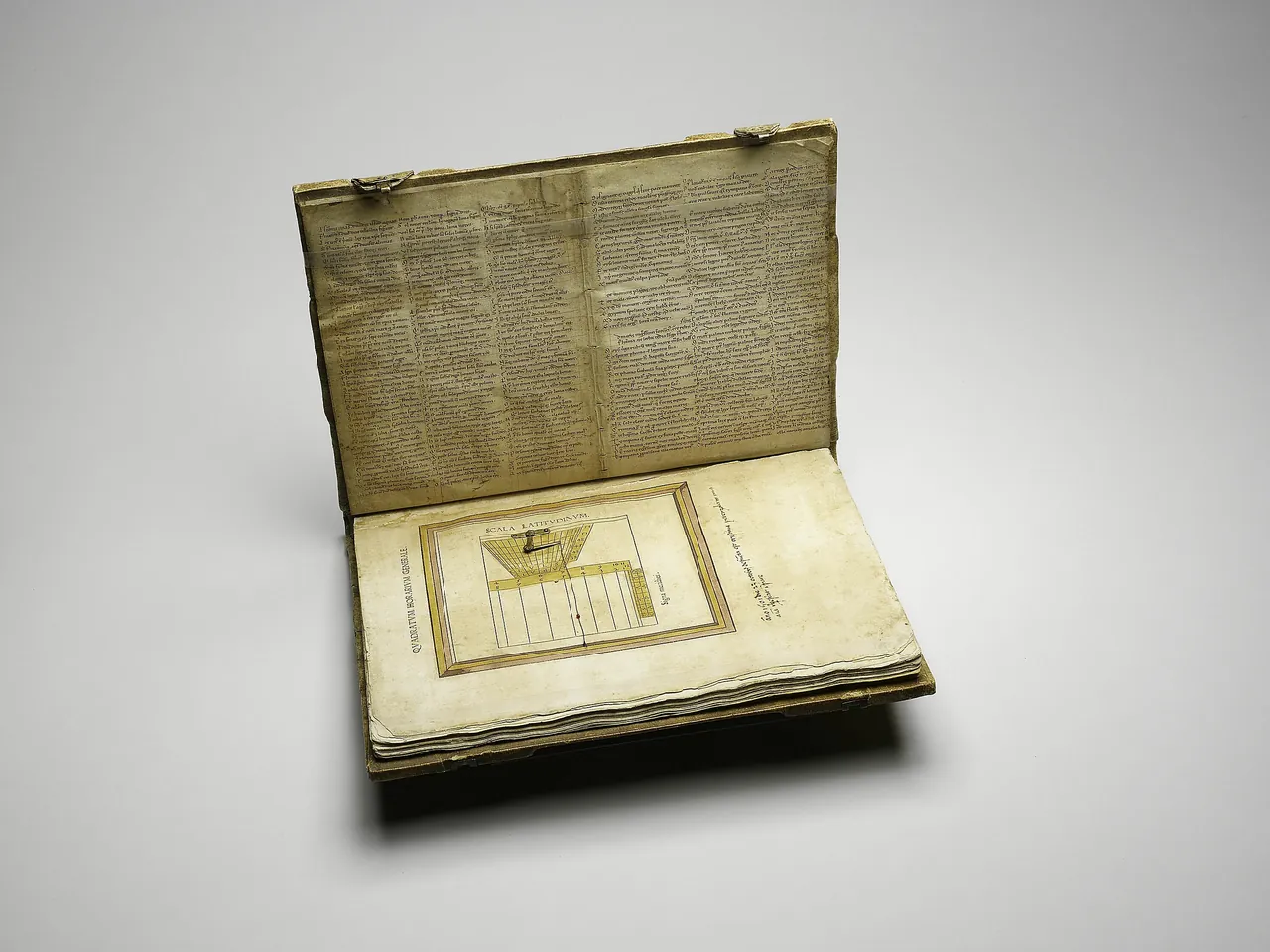
An Italian printed calendar of 1476, woodcut and letterpress bound in pigskin over wooden boards, a reminder that the reckoning of the years was itself made and handed down.Calendar · 1476 · Art Institute of Chicago · CC0 · museum record · Galeria Regni
The calendar question
Here I owe you honesty. If the binding was in AD 70 and the thousand years ran from about 500 to about 1500, the dates on the standard calendar do not line up in a simple sum, and I do not offer one. I hold the standard first-millennium calendar to be unreliable, following Gunnar Heinsohn's argument from stratigraphy. Most historians reject it,19 and their evidence (tree rings, radiocarbon, eclipses) is real and should be weighed.20 This is my conviction; weigh it for yourself. Heinsohn (1943–2023), a German scholar, argued that roughly seven hundred years of first-millennium chronology are phantom years; one of his papers claims that no apartments, latrines or aqueducts were built in Rome for seven hundred years, "from 230 to 930 CE".21 If you find the historians' evidence decisive, you will not share my conviction here.
When you talk about this with others, say it that way: what you hold, what the scholars say against it, and that it is a conviction. A witness loses nothing by being honest about the limits of his evidence. He loses everything by hiding them.
About 500 to about 1500: the thousand years
For these centuries, I believe, the nations were not deceived as they had been. The old gods fell silent across Europe; kings and peoples were baptized; the gospel reached from Ireland to China; the law of the nations answered to the name of Christ; monasteries prayed and copied the Scriptures; and cathedrals rose for a King. The Historical Evidence sets out the documents, and the sins, of those centuries. This is my conviction; weigh it for yourself.
About 1500 to now: the little season
From about 1500, the deceiver was loosed. The unity of Christendom broke; the nations were drawn into one world; and over five centuries the deceptions of the little season have gone out to the four quarters of the earth. The Little Season traces them. This is my conviction; weigh it for yourself.
Still ahead
The gathering against the camp of the saints, the fire from heaven, the devil cast into the lake of fire, the resurrection of the dead, the great white throne and the new heavens and new earth are still ahead. On that, every school agrees with me and I with them.
No dates
I want to be as clear as I can. I do not know when Christ will return, and no one else does either. "But of that day and that hour knoweth no man, no, not the angels which are in heaven, neither the Son, but the Father. Take ye heed, watch and pray: for ye know not when the time is" (Mark 13:32-33). When the disciples asked about the times, the risen Lord said, "It is not for you to know the times or the seasons, which the Father hath put in his own power" (Acts 1:7).
Saying that we live in the little season is saying what kind of time this is, not how long it will last. The phrase "a little season" gives no number of years, and I do not add up numbers from Revelation 20 to produce one. Every generation of date-setters has been wrong, and every wrong date has given the scoffer a reason to laugh. Peter warned that scoffers would come, and gave the answer: "The Lord is not slack concerning his promise, as some men count slackness; but is longsuffering to us-ward, not willing that any should perish, but that all should come to repentance" (2 Peter 3:9). The delay is mercy.
This is a paper for witnesses, so it ends with the people you will talk to. If the little season is the age we live in, how should a Christian speak about the end?
Urgency without date-setting
The New Testament combines two things that date-setters and scoffers both separate: real urgency and no calendar. "And that, knowing the time, that now it is high time to awake out of sleep: for now is our salvation nearer than when we believed. The night is far spent, the day is at hand" (Romans 13:11-12). Jesus said, "Therefore be ye also ready: for in such an hour as ye think not the Son of man cometh" (Matthew 24:44). Jesus compared the end to the days of Noah, when people "were eating and drinking, marrying and giving in marriage, until the day that Noe entered into the ark, And knew not until the flood came" (Matthew 24:38-39). The danger is not that people will miss a date. It is that they will not be ready.
So when someone asks you, "Are we in the end times?", you can answer honestly: the Bible does not give the date, and anyone who gives you one is wrong; but the Bible does tell us what kind of time we are in, and it calls every person to be ready now.
Conviction without contempt
Many of the Christians you meet will hold one of the three schools described in Part 1, and many will hold it firmly. They are your brothers and sisters. They read the same Bible and love the same Lord. You can tell them what you believe, why you believe it, and where you are not sure, without treating them as fools. "But sanctify the Lord God in your hearts: and be ready always to give an answer to every man that asketh you a reason of the hope that is in you with meekness and fear" (1 Peter 3:15).
That means using labels honestly. When you say what the Bible says — that Christ will return, that the dead will be raised, that every person will be judged — say it plainly. When you say what you hold as a reading — where the thousand years fall, when the chain was bound — say "this is my conviction". The listener can tell the difference, and he will trust you more for making it.
Speaking to the skeptic
Skeptics often raise Revelation to make Christianity look ridiculous: dragons, beasts, a lake of fire. Do not start there. Start where Revelation 20 ends — with the throne and the books — and with the Man who will sit on it, whom God raised from the dead (Acts 17:31). Prophecy is a doorway for some people; for most skeptics, the resurrection is the better one.
Some guests on my podcast have told stories from exactly that place. One example:
Michael Ray Lewis told his story on The King Is Coming Show (TKIC #48): an atheist who mocked Christians, and then, in his telling, one question that undid him. Watch it in his own words: youtube.com/watch?v=Rd-RdSqeQDk Michael's account of what happened to him, shared as his testimony — weigh it for yourself.
Questions open doors that arguments close. "Walk in wisdom toward them that are without, redeeming the time. Let your speech be alway with grace, seasoned with salt, that ye may know how ye ought to answer every man" (Colossians 4:5-6).
What the little season asks of us
If the deceiver is loose among the nations, the church's task is the same as it has always been, pressed harder. Preach: "Preach the word; be instant in season, out of season; reprove, rebuke, exhort with all longsuffering and doctrine" (2 Timothy 4:2). Gather: "Not forsaking the assembling of ourselves together, as the manner of some is; but exhorting one another: and so much the more, as ye see the day approaching" (Hebrews 10:25). Watch: "Watch ye therefore, and pray always, that ye may be accounted worthy to escape all these things that shall come to pass, and to stand before the Son of man" (Luke 21:36). And go: "ye shall be witnesses unto me both in Jerusalem, and in all Judaea, and in Samaria, and unto the uttermost part of the earth" (Acts 1:8).
The message itself
Whatever you believe about the timeline, the message is the same in every season. Christ died for sinners and rose again. God commands "all men every where to repent" (Acts 17:30). The gospel is "repentance toward God, and faith toward our Lord Jesus Christ" (Acts 20:21). Salvation is a gift received by faith: "For by grace are ye saved through faith; and that not of yourselves: it is the gift of God: Not of works, lest any man should boast" (Ephesians 2:8-9). And the first preacher of the church told those who asked what to do: "Repent, and be baptized every one of you in the name of Jesus Christ for the remission of sins, and ye shall receive the gift of the Holy Ghost" (Acts 2:38).
The point of Revelation 20, for a witness, is not the chart. It is verse 15. Tell people about the book of life, and about the Lamb who writes names in it.
Revelation 20 tells a story in five movements: the binding, the reign, the loosing, the fire and the throne. Christians have placed the first three in different places on the line of history, and I have tried to describe their readings fairly and to give my own plainly. I read Revelation 20 literally. I believe Satan was bound when the temple fell in AD 70; that the thousand years were the medieval age, about 500 to 1500; and that the little season began about 1500 and is the age we live in now. I set no dates. This is my conviction; weigh it for yourself. The fire, the resurrection and the throne are still ahead, at an hour no one knows.
What is not a matter of conviction is the end of the chapter. Every reader, of every school, will stand before the great white throne. "For we must all appear before the judgment seat of Christ; that every one may receive the things done in his body, according to that he hath done, whether it be good or bad" (2 Corinthians 5:10).
A next step
Read Revelation 19 to 21 straight through in the 1611 Reader at kylelauriano.com/library. Then read Daniel 7, Ezekiel 38 and 39, and Matthew 24 beside it. Write down, for each verse of Revelation 20, what it plainly says and what you would have to add to it to fit your view. That exercise will make you a more honest reader and a better witness. The Millennial Reign and The Historical Evidence will take you further.
An invitation
If you are reading this and you are not sure your name is written in the book of life, you can be sure today — not by understanding the timeline, but by coming to the One who holds it. "Looking for that blessed hope, and the glorious appearing of the great God and our Saviour Jesus Christ" (Titus 2:13) is the posture of every believer in every season. The last prayer of the Bible is the right one to end on: "Surely I come quickly. Amen. Even so, come, Lord Jesus" (Revelation 22:20).
1Justin Martyr, Dialogue with Trypho 80, trans. Alexander Roberts and James Donaldson, in Ante-Nicene Fathers, vol. 1. Online: https://logoslibrary.org/justin/trypho/080.html.↩
2George Eldon Ladd, Crucial Questions about the Kingdom of God (Grand Rapids: Eerdmans, 1952); The Blessed Hope (Grand Rapids: Eerdmans, 1956); and his essay in Robert G. Clouse, ed., The Meaning of the Millennium: Four Views (Downers Grove, IL: InterVarsity Press, 1977).↩
3Ernest R. Sandeen, The Roots of Fundamentalism: British and American Millenarianism, 1800–1930 (Chicago: University of Chicago Press, 1970), on Darby and the Brethren and on The Scofield Reference Bible, ed. C. I. Scofield (New York: Oxford University Press, 1909). The dispensational case is argued by Herman A. Hoyt in Clouse, The Meaning of the Millennium.↩
4Augustine, The City of God 20.6, 20.8 and 20.9, trans. Marcus Dods, in Nicene and Post-Nicene Fathers, First Series, vol. 2, ed. Philip Schaff (Buffalo, NY: Christian Literature Publishing Co., 1887). Online: https://www.newadvent.org/fathers/120120.htm.↩
5Anthony A. Hoekema, The Bible and the Future (Grand Rapids: Eerdmans, 1979); and his essay in Clouse, The Meaning of the Millennium.↩
6Loraine Boettner, The Millennium (Philadelphia: Presbyterian and Reformed, 1957; rev. ed., Phillipsburg, NJ: Presbyterian and Reformed, 1984); and his essay in Clouse, The Meaning of the Millennium.↩
7Robert G. Clouse, ed., The Meaning of the Millennium: Four Views (Downers Grove, IL: InterVarsity Press, 1977).↩
8Luis de Alcazar, Vestigatio arcani sensus in Apocalypsi (Antwerp, 1614), https://archive.org/details/bub_gb_CtAZOb6Ew3UC; and, on Alcazar, Grotius and Hammond, LeRoy Edwin Froom, The Prophetic Faith of Our Fathers, vol. 2 (Washington, DC: Review and Herald, 1948), 506–23.↩
9Martin Luther, "Preface to the Revelation of Saint John" (1530), trans. Charles M. Jacobs, in Works of Martin Luther, vol. 6 (Philadelphia: A. J. Holman Company and The Castle Press, 1932). Public-domain reprint: https://www.wolfmueller.co/wp-content/uploads/2018/02/Prefaces-to-the-Books-of-the-Bible-with-cover.pdf.↩
10John Foxe, Acts and Monuments (1563), Book V, ed. M. Hobart Seymour (1855), modernized by William H. Gross (onthewing.org, 2012). Online: https://www.onthewing.org/user/Foxe%20-%20Acts%20and%20Monuments%20-%205-6.epub.↩
11Josephus, The Wars of the Jews 6.4.5, trans. William Whiston. Online: https://www.gutenberg.org/ebooks/2850.↩
12The documents are set out in The Historical Evidence (kylelauriano.com/resources/historical-evidence.pdf), including the Xi'an stele of 781, in Charles F. Horne, ed., The Sacred Books and Early Literature of the East, vol. 12 (New York: Parke, Austin, and Lipscomb, 1917), 381–392, online at https://sourcebooks.fordham.edu/eastasia/781nestorian.asp.↩
15Gennadius of Marseilles, Lives of Illustrious Men 18, trans. Ernest Cushing Richardson, in Nicene and Post-Nicene Fathers, Second Series, vol. 3 (Buffalo, NY: Christian Literature Publishing Co., 1892). Online: https://www.newadvent.org/fathers/2719.htm.↩
16For example, the verse Abbot Suger set over the doors of Saint-Denis (consecrated 1144): "The dull mind rises to the truth through material things". Suger, De administratione 27, trans. David Burr, https://sourcebooks.fordham.edu/source/sugar.asp.↩
19On his career at the University of Bremen, "Gunnar Heinsohn dies in Gdansk (Nov. 21, 1943 – Feb. 16, 2023)," Q-Mag, https://www.q-mag.org/gunnar-heinsohn-dies-in-gdansk.html; for a scientist's rebuttal, Mike Baillie, "Tree-ring and Radiocarbon Rebuttal of Gunnar's Phantom Time Hypothesis," Q-Mag, https://www.q-mag.org/mike-baillie-tree-ring-and-radiocarbon-rebuttal-of-gunnars-phantom-time-hypothesis.html.↩
20Baillie, "Tree-ring and Radiocarbon Rebuttal"; and, on eclipses against Heribert Illig's related proposal, Dieter B. Herrmann, "Gab es eine Phantomzeit in unserer Chronologie?" in Beiträge zur Astronomiegeschichte, vol. 2, ed. Wolfgang R. Dick and Jürgen Hamel, Acta Historica Astronomiae 5 (Thun and Frankfurt am Main: Harri Deutsch, 1999), 7–10.↩
21Gunnar Heinsohn, "The Stratigraphy of Rome: Benchmark for the Chronology of the First Millennium CE," Q-Mag.org. Online: https://www.q-mag.org/gunnar-heinsohn-the-stratigraphy-of-rome-benchmark-for-the-chronology-of-the-first-millennium-ce.html.↩
A thousand years, on the page. Why I believe they are already behind us.
Seven passages in the 1611 King James, one a day — Revelation 20 and the prophets who saw it — with the page, the cathedrals built for a King, and a real person who says they met him. Free.
This material is drawn from testimony and Scripture — not "proof" in the academic sense. It's written for believers who are already grounded in the faith. If you're still exploring the basics, I'd encourage you to start with the Skeptic resources first. This content is about protection and authority in Christ — it ends on protection, never fear. "For God hath not given us the spirit of fear; but of power, and of love, and of a sound mind" (2 Timothy 1:7, KJV).
"We have also a more sure word of prophecy; whereunto ye do well that ye take heed, as unto a light that shineth in a dark place, until the day dawn, and the day star arise in your hearts." — 2 Peter 1:19 (KJV)