HOW TO READ THE KING JAMES BIBLE, UNDERSTAND IT AND KEEP READING
A plain guide to reading the King James Bible for yourself: why it matters, how its language works, which tools help, where to begin, and how a daily habit takes hold.
Abstract
Many believers own a Bible they rarely open, and many who open the King James put it down because its English feels strange. This paper asks what it takes for an ordinary Christian to read the King James Bible with understanding, and to keep reading it for life. It answers first from Scripture's own account of itself (2 Timothy 3:16–17; Psalm 119; Acts 17:11), and then from the men who made and loved the English Bible: the 1611 translators in their preface "The Translators to the Reader", William Tyndale as John Foxe reported him, R. A. Torrey, George Müller and C. H. Spurgeon. It explains thee and ye, the old words, and the italics; sets out the free tools beside the text in the 1611 Reader (Strong's Concordance, Webster's 1828, Easton's and Matthew Henry); and gives reading plans and honest findings on habit. Its conclusion is that the King James can be read by anyone willing to read daily, prayerfully and in order. It is written for new believers and for anyone starting again.
What’s inside
·Introduction
Part 1Part 1: Why Read the Bible at All
Part 2Part 2: Reading the King James: How Its English Works
Part 3Part 3: Tools Beside the Text
Part 4Part 4: Where to Begin and How to Read
Part 5Part 5: The Habit
Part 6Part 6: Reading Plans
Part 7Part 7: Reading With Others
·Conclusion
Research paper · 9 chapters · 38 notes · October 2026
About 33 minutes · 9 parts · the PDF has the same text
Introduction
2 min read
Most Christians in the English-speaking world own a Bible. Fewer read it, and fewer still read it every day. The reasons are ordinary: no time, no plan, no idea where to start, and, for many who pick up the King James, a feeling that the English itself is a wall.
This paper is written to take that wall down. It is not a course in theology. It is a plain account of how to read the King James Bible for yourself: why it is worth the effort, how its language works, what tools sit beside it, where to begin, and how a habit takes hold and lasts.
The question
The question is simple. What does it take for an ordinary believer, without Greek or Hebrew and without a seminary degree, to read the Bible with understanding and to keep reading it for life?
The answer this paper gives is also simple, though not easy. It takes a Bible you trust, a little help with its language, a sensible place to start, a fixed time each day, prayer, and other believers beside you. Every one of those is within reach of anyone who can read this page.
How the paper argues
It argues from the King James Bible first, because Scripture tells us what Scripture is for. It argues second from the men who made and loved the English Bible and wrote down how they read it: the translators of 1611 in their preface, "The Translators to the Reader"; William Tyndale, as John Foxe reported him; R. A. Torrey, who taught Bible study in Chicago in the 1890s; George Müller of Bristol; and C. H. Spurgeon. Where it gives a statistic, it names the source and the year, and it says honestly what the figure does and does not show.
A word about me
I was raised Roman Catholic but never really connected — I went through the motions, fell asleep in the pews, and faked being sick to skip Mass. Eventually I gave up and called myself an atheist. I decided to read the Bible for one reason: to disprove it, so I'd have an excuse to stop going to church for good. It did the opposite. Genesis gripped me. In Matthew I read Jesus' own words and felt the weight of my own sin for the first time. I came to faith in 2022, and my wife came to faith a month later.
I mention it because it shows something this paper depends on. The Bible does its own work. "So then faith cometh by hearing, and hearing by the word of God" (Romans 10:17). The full story is at kylelauriano.com/about.
A note on Scripture
Every verse in this paper is quoted from the King James Bible. You can read it free in the 1611 Reader at kylelauriano.com/library, in the spelling of 1611 or in modern spelling. Where the 1611 and the modern Critical Text part ways, the verses are listed one by one at kylelauriano.com/library/changes.
This part matters because motive shapes habit. If you read the Bible because you feel you ought to, you will stop when the feeling fades. If you read it because of what it is, you will keep coming back.
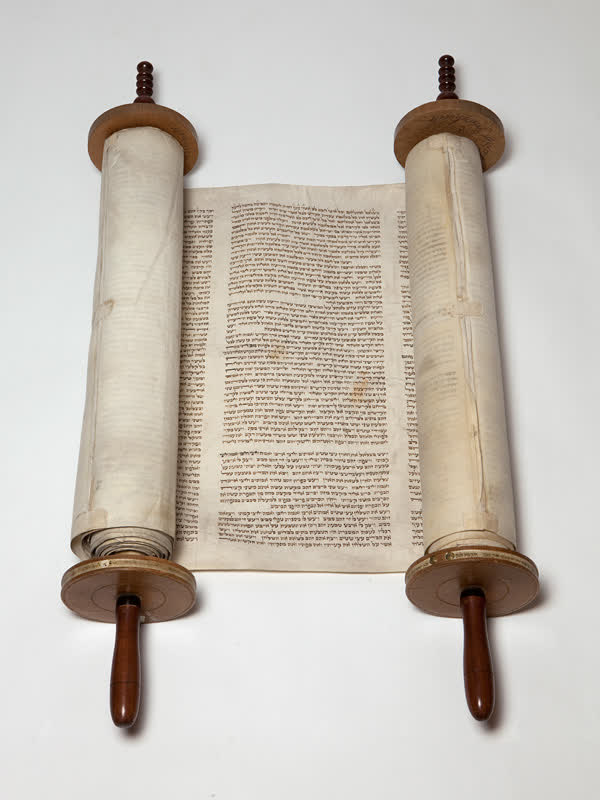
A handwritten Torah scroll (1821) — Scripture copied letter by letter under scribal rules strict enough to count every character.LGLou · CC BY-SA 4.0
What Scripture says it is
The Bible makes plain claims about itself. Paul reminded Timothy that "from a child thou hast known the holy scriptures, which are able to make thee wise unto salvation through faith which is in Christ Jesus" (2 Timothy 3:15). Then he wrote:
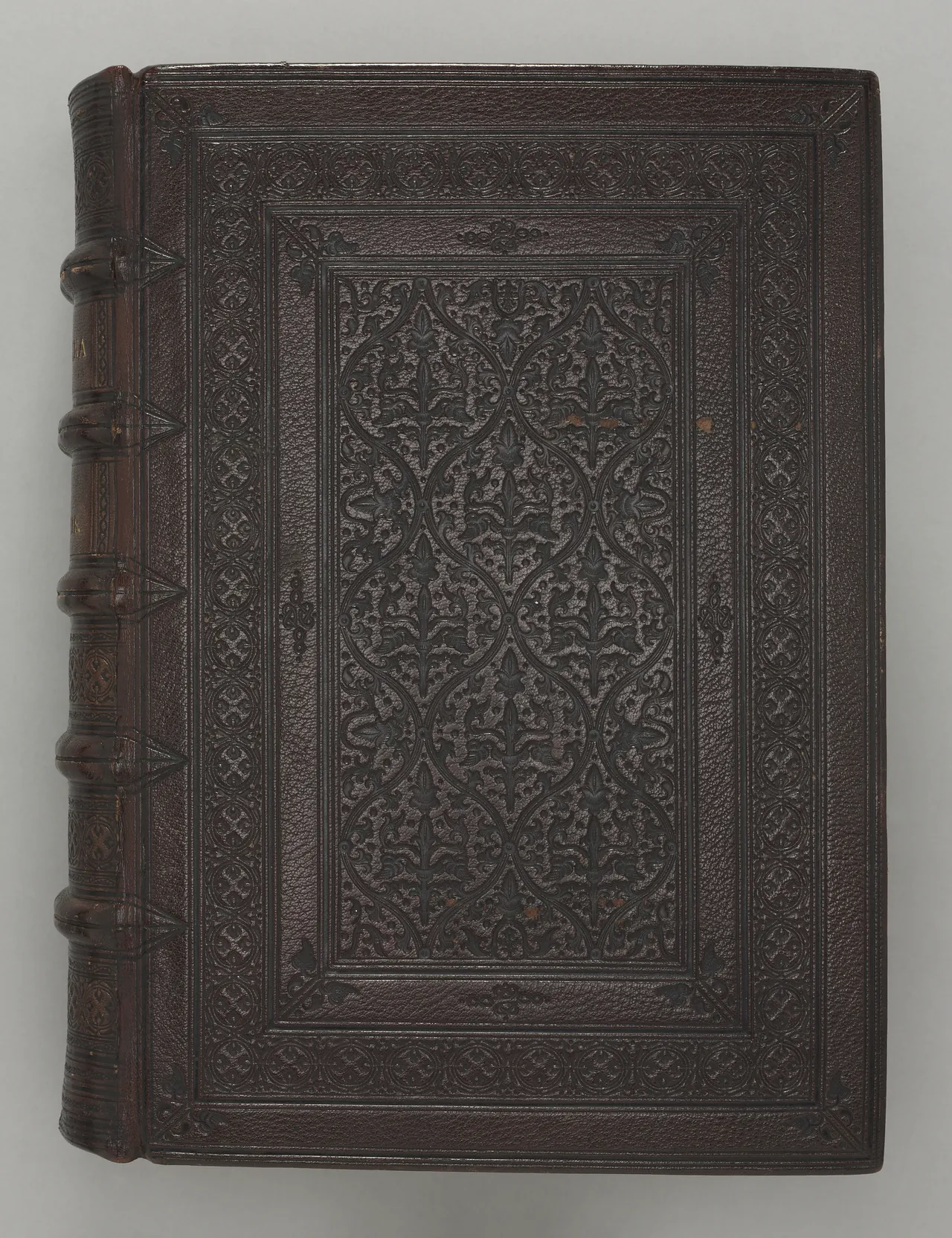
The tooled binding of a Gothic Bible made in southern France around 1275 to 1300, a whole Bible in one volume, the book this paper urges every reader to open.Gothic Bible (Vulgate) · c. 1275–1300 · Cleveland Museum of Art · CC0 · museum record · Galeria Regni
"All scripture is given by inspiration of God, and is profitable for doctrine, for reproof, for correction, for instruction in righteousness: That the man of God may be perfect, throughly furnished unto all good works." (2 Timothy 3:16-17)
Peter adds how it came to be: "For the prophecy came not in old time by the will of man: but holy men of God spake as they were moved by the Holy Ghost" (2 Peter 1:21).
If that is true, then reading the Bible is not reading about God at second hand. It is hearing what God has said. That is why the Lord Jesus answered the devil in the wilderness with Scripture: "It is written, Man shall not live by bread alone, but by every word that proceedeth out of the mouth of God" (Matthew 4:4). He was quoting Deuteronomy 8:3. Bread keeps the body alive; the word keeps the soul alive.
What Scripture does
The Bible also says what it does in the one who reads it.
It gives light. "Thy word is a lamp unto my feet, and a light unto my path" (Psalm 119:105). The same psalm says, "The entrance of thy words giveth light; it giveth understanding unto the simple" (Psalm 119:130).
It converts and makes wise. "The law of the LORD is perfect, converting the soul: the testimony of the LORD is sure, making wise the simple" (Psalm 19:7).
It searches the heart. "For the word of God is quick, and powerful, and sharper than any twoedged sword, piercing even to the dividing asunder of soul and spirit, and of the joints and marrow, and is a discerner of the thoughts and intents of the heart" (Hebrews 4:12). "Quick" here means living.
It guards against sin. "Thy word have I hid in mine heart, that I might not sin against thee" (Psalm 119:11).
It feeds growth. "As newborn babes, desire the sincere milk of the word, that ye may grow thereby" (1 Peter 2:2).
It gives hope. "For whatsoever things were written aforetime were written for our learning, that we through patience and comfort of the scriptures might have hope" (Romans 15:4).
It does not fail. "So shall my word be that goeth forth out of my mouth: it shall not return unto me void, but it shall accomplish that which I please, and it shall prosper in the thing whereto I sent it" (Isaiah 55:11).
None of these promises works like a charm. Reading a chapter does not guarantee a good day. But over months and years, the word of God changes the one who keeps reading it.
What the translators said
The men who made the King James Bible believed this, and said so in the long preface they printed at the front of it in 1611, "The Translators to the Reader." In a section on the praise of the Holy Scriptures they wrote:
If we be ignorant, they will instruct us; if out of the way, they will bring us home; if out of order, they will reform us; if in heaviness, comfort us; if dull, quicken us; if cold, inflame us.1
A little later they called Scripture "a fountain of most pure water springing up unto everlasting life," and gave the reason: "The original thereof being from heaven, not from earth; the author being God, not man."2
Take up and read
The same section of the preface recalls a famous moment in church history. The translators wrote: "Tolle, lege; Tolle, lege, Take up and read, take up and read the Scriptures."3 They were remembering Augustine of Hippo, who in his Confessions tells how, weeping in a garden in Milan over his sins, he heard a child's voice from a neighbouring house "chanting, and oft repeating, 'Take up and read; Take up and read.'" He took it, in his words, as "a command from God to open the book, and read the first chapter I should find." He opened Paul's letter to the Romans at the place that reads:4
"Let us walk honestly, as in the day; not in rioting and drunkenness, not in chambering and wantonness, not in strife and envying. But put ye on the Lord Jesus Christ, and make not provision for the flesh, to fulfil the lusts thereof." (Romans 13:13-14)
Augustine's account is his own, and he tells it as the turning of his life. The point for us is simpler. The Bible is meant to be picked up and read by ordinary people, in their own language, in the middle of their own mess.
The ploughboy
That conviction is why the English Bible exists. John Foxe, in his Acts and Monuments, reports that William Tyndale, in a dispute with a learned man of his day, said that if God spared his life he would "cause a boy that driveth the plough to know more of the Scripture" than the learned man did.5 Tyndale's New Testament was printed in English in the 1520s, and he was put to death in 1536. The King James translators stood on his work and on that of the English Bibles that followed.
You are that ploughboy. The Bible was put into English so that you could read it.
Part 2 — Reading the King James: How Its English Works
7 min read
This part matters because the King James is the Bible most likely to make a new reader stop, and it need not. Its English is older than ours, but it is not a code. A few patterns explain most of what feels strange.
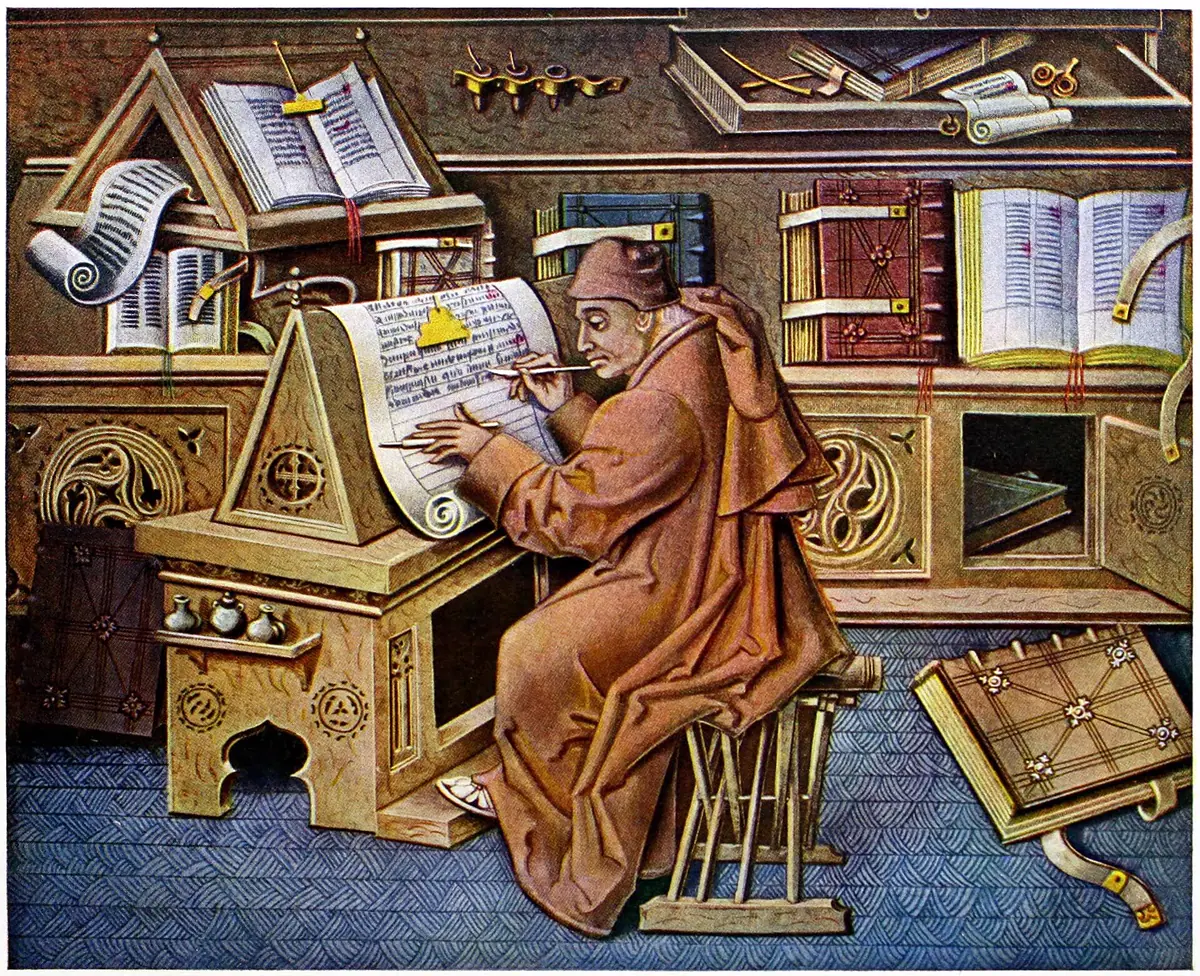
The scribe Jean Miélot at his desk, painted in the 15th century — Scripture copied by hand, line by disciplined line, for a thousand years before print.Jean Le Tavernier, 15th century · Public domain
What the translators were aiming at
The translators did not set out to sound grand. They set out to be understood. In their preface they explained why they kept the familiar church words ("Baptism" and "Church") and also avoided obscure Latin terms, and they gave their aim in one line: "we desire that the Scripture may speak like itself, as in the language of Canaan, that it may be understood even of the very vulgar."6 "Vulgar" in their English meant the common people.
They also explained what translation is for, in a series of pictures:
Translation it is that openeth the window, to let in the light; that breaketh the shell, that we may eat the kernel; that putteth aside the curtain, that we may look into the most Holy place; that removeth the cover of the well, that we may come by the water.7
And they were modest about their own part. They wrote that they "never thought from the beginning, that we should need to make a new Translation, nor yet to make of a bad one a good one," but "to make a good one better, or out of many good ones, one principal good one."8
The English you are reading, in other words, was built to be read by people like you.
Thee, thou, ye and you
The single most useful thing to know about King James English is this: "thou" and "thee" are singular; "ye" and "you" are plural. Modern English uses "you" for both, so we lose the difference. The King James keeps it.
| Number | Subject | Object | Possessive | | --- | --- | --- | --- | | One person | thou | thee | thy, thine | | More than one | ye | you | your |
Noah Webster's American Dictionary of the English Language of 1828 still taught this. He defined "thou" as "the second personal pronoun, in the singular number," and "ye" as "the nominative plural of the second person, of which thou is the singular."9
This is not decoration. It changes meaning. When Jesus speaks to Nicodemus alone and says, "Marvel not that I said unto thee, Ye must be born again" (John 3:7), the "thee" is Nicodemus and the "ye" is everyone. The new birth is not one man's peculiar need. When the Lord warns Peter at the Last Supper, the singular and plural tell you whom He is addressing. Once you notice the pattern, you will see it everywhere.
Verb endings
The other pattern is in the verbs.
-est goes with "thou": thou knowest, thou hast, thou art.
-eth is the ordinary third person singular, our modern "-s": he loveth (he loves), it cometh (it comes), she hath (she has), he doth (he does).
So "He that believeth on the Son hath everlasting life" (John 3:36) is simply "He who believes in the Son has everlasting life." After a week of reading you will stop translating in your head.
Words that have changed
A small number of words in the King James meant something different in 1611 from what they mean now. These are the ones that trip readers, because the word looks familiar. Webster's 1828 is a reliable guide, since it was written when many of the older senses were still remembered.
Prevent. "For this we say unto you by the word of the Lord, that we which are alive and remain unto the coming of the Lord shall not prevent them which are asleep" (1 Thessalonians 4:15). Paul is not saying the living will not hinder the dead; he is saying they will not go before them. Webster gives "to go before; to precede" as the first sense, and notes that in his day all the older senses were obsolete and the word meant only "to hinder."10 The psalmist says, "Mine eyes prevent the night watches, that I might meditate in thy word" (Psalm 119:148): he was awake before the watches of the night.
Let. In most places "let" means allow, as it does today. But Paul wrote to the Romans that he had often purposed to come to them, "(but was let hitherto,)" (Romans 1:13), that is, he had been hindered. Webster lists the sense "to retard; to hinder; to impede" and marks it as "now obsolete, or nearly so."11 That sense is the key to "only he who now letteth will let, until he be taken out of the way" (2 Thessalonians 2:7).
Conversation. "Only let your conversation be as it becometh the gospel of Christ" (Philippians 1:27). Paul is not talking about speech only. Webster's first definition is "general course of manners; behavior; deportment; especially as it respects morals."12
Careful. "Be careful for nothing; but in every thing by prayer and supplication with thanksgiving let your requests be made known unto God" (Philippians 4:6). Paul is not telling us to be careless. Webster's first sense is "full of care; anxious; solicitous," and he cites Luke 10:41, where Jesus tells Martha she is "careful and troubled about many things."13
Charity. In 1 Corinthians 13 the King James reads, "And now abideth faith, hope, charity, these three; but the greatest of these is charity" (1 Corinthians 13:13). Charity here is not giving to the poor; it is love. Webster defines it first as "love, benevolence, good will," and adds that "in a theological sense, it includes supreme love to God, and universal good will to men."14 Strong's Concordance shows that the same Greek word stands behind "charity" here and "love" in many other places.
When a verse does not make sense, suspect a changed word before you suspect the verse. Tap the word in the 1611 Reader and read the Webster's 1828 entry.
The italics
Open almost any printed King James Bible and you will see some words in italics. New readers often take them for emphasis. They are not. They mark words the translators supplied to make the English read, where no single Hebrew or Greek word stands behind them.
Every translation must supply such words, because no two languages line up word for word. Hebrew, for example, often leaves out the verb "to be." The King James is unusual in showing you where it has done so.
The practice has a history. In the first edition of 1611 the main text was printed in heavy black-letter type, and the supplied words were set in a lighter roman type. When later printers set the whole Bible in roman type, they switched the supplied words to italics, and editors in the following century, above all the Oxford edition of 1769, made the marking fuller and more consistent.15 That is why italics in your Bible may not match the 1611 exactly.
Two examples show why the italics are worth noticing.
"For he that speaketh in an unknown tongue speaketh not unto men, but unto God" (1 Corinthians 14:2). The word "unknown" is printed in italics in standard King James editions. If you look up the verse with Strong's numbers in the 1611 Reader, you will see that no Greek word is attached to it.
"Elhanan the son of Jaareoregim, a Bethlehemite, slew the brother of Goliath the Gittite" (2 Samuel 21:19). The words "the brother of" are in italics; the translators supplied them to bring the verse into agreement with 1 Chronicles 20:5, which names Lahmi "the brother of Goliath."
Neither example means the translators were careless. They were honest, and they let you see their work. The translators also said plainly that they had not tied themselves "to an uniformity of phrasing, or to an identity of words," that is, they did not always render one Hebrew or Greek word by one English word, because they judged that a matter of "curiosity" rather than wisdom.16 That is one reason a concordance with Hebrew and Greek numbers is so useful: it shows you when two different English words stand for one original word, and when one English word stands for two.
The 1611 spelling and the modern spelling
The King James most people read today is not spelled as it was in 1611. Spelling and printing were brought up to date in the eighteenth century; the edition prepared at Oxford in 1769 is the basis of most King James Bibles printed now. The words are the same translation. The 1611 Reader lets you read either: the 1611 spelling ("In the beginning God created the Heauen, and the Earth") or the modern spelling ("In the beginning God created the heaven and the earth"), side by side.
You do not have to read the 1611 spelling to read the King James. But it is worth looking at once in a while. It reminds you that this Bible has a history and that the words have been carried to you with care.
This part matters because a few good tools will answer most of the questions a new reader has, and a free set of them sits beside the King James in the 1611 Reader. They help you read the Bible; they do not replace it.
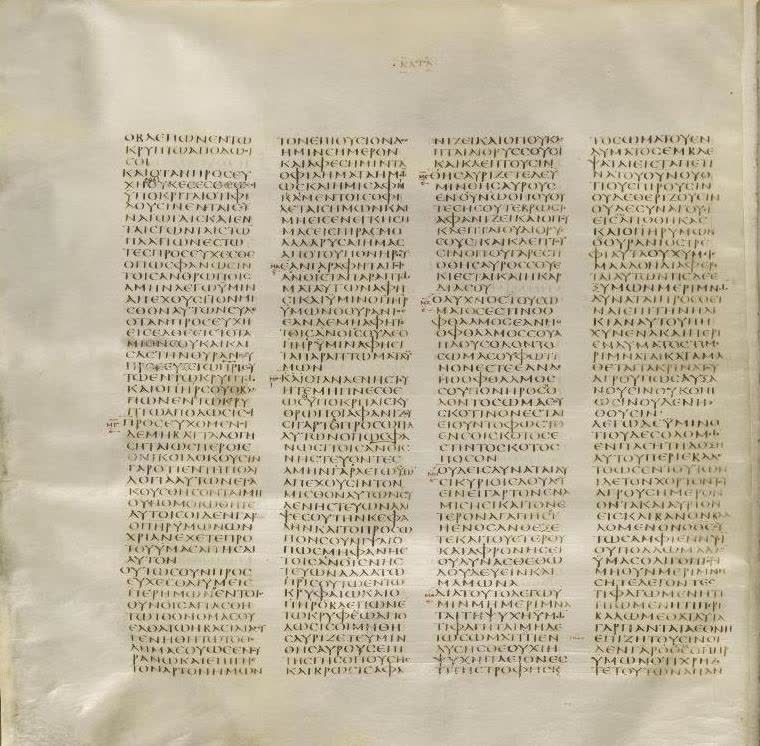
A page of Codex Sinaiticus (4th century AD), the oldest complete Greek New Testament — hand-copied within three centuries of the events it records.Unknown scribe, 4th century · Public domain
The 1611 Reader
The 1611 Reader at kylelauriano.com/library is a free King James Bible built for study. Beside the text, its Study shelf (kylelauriano.com/library/study) carries:
Strong's Exhaustive Concordance, with the Hebrew and Greek word behind each English word, by its Strong's number.
Strong's Hebrew and Greek dictionaries, giving the meaning of each numbered word.
Webster's American Dictionary of 1828, for old English words.
Easton's Bible Dictionary (third edition, 1897), for people, places and customs.
Matthew Henry's Concise Commentary, on every verse.
Cross-references to related passages.
All of these are public domain and free, with no sign-up. Each has a history worth knowing.
Strong's Concordance
James Strong's Exhaustive Concordance of the Bible was first published in 1890.17 It lists every word of the King James Bible and every verse in which it occurs, and it gives each Hebrew and Greek word a number, so that a reader with no knowledge of those languages can find which original word stands behind an English one.
Torrey, writing in 1896, gave his students firm advice: "Altogether, the best Concordance is Strong's 'Exhaustive Concordance of the Bible.'" He told them that the safest way to learn what a Bible word means is not a dictionary but "to study the usage of the word in the Bible itself."18 A concordance makes that possible. Look up every place a word is used, read them together, and you will usually see what it means.
Here is how it works in practice. In John 21 Jesus asks Peter three times, "lovest thou me?" Look up the verses with Strong's numbers and you will find that in the first two questions Jesus uses the Greek verb Strong numbers G25 (agapaō), while Peter answers each time with G5368 (phileō); the third time Jesus uses Peter's word. Strong's own dictionary describes phileō as "to be a friend to," denoting "personal attachment, as a matter of sentiment or feeling," and says the other word "is wider."19 Christians have long discussed how much weight that change bears, and you need not settle it to see the scene. But you can now see what lies under the English, and that is the point of the tool.
Earlier concordances
Strong was not the first. Alexander Cruden's Complete Concordance to the Holy Scriptures was first published in the 1730s and is still printed today.20 For two centuries English-speaking Christians found verses with Cruden, and many still do. Torrey said Cruden's "will do, if one cannot afford a better."21 With a free Strong's online, the question of cost is gone.
Webster's 1828
Noah Webster's American Dictionary of the English Language was published in 1828. It is useful to a King James reader for a simple reason: it was compiled when many of the older senses of words were still known, and it quotes the King James constantly as it defines them. The entries above for "prevent," "let," "conversation," "careful" and "charity" all come from it. When an English word puzzles you, Webster's will usually tell you what it meant to the men who first read it.
Easton's Bible Dictionary
Matthew George Easton's Illustrated Bible Dictionary first appeared in 1893; the third edition of 1897, published three years after Easton's death and carried in the 1611 Reader, holds nearly four thousand entries.22 Use it to look up a place (where was Capernaum?), a person (which Herod?), or a custom (what was a phylactery?). It is old, so treat its archaeology as of its time; but for names, places and the basic facts of the Bible world it is still a sound first stop.
Matthew Henry
Matthew Henry (1662–1714) was a Nonconformist minister at Chester whose Exposition of the Old and New Testaments (1708–1710) has been read for three centuries. He finished the Old Testament and the Gospels and Acts before he died; other ministers completed Romans to Revelation from his notes.23 The 1611 Reader carries the shorter Concise Commentary, drawn from his work.
Henry is warm, practical and devotional. Read him after you have read the passage yourself and thought about it, not before. A commentary is a wise friend's opinion; the text is God's word.
How to use tools without being ruled by them
Three rules keep tools in their place.
1. Text first. Read the passage and ask your own questions before you open anything else. Torrey advised his students to work out their own introduction to a book first, and only then "to compare your results with those reached by others."24 2. Scripture explains Scripture. The best commentary on a verse is usually another verse. The cross-references in the Reader will take you there. 3. Weigh every human voice. The Bereans "searched the scriptures daily, whether those things were so" (Acts 17:11). They did that with an apostle. Do it with every commentator, including this paper.
This part matters because many people start at Genesis, bog down in Leviticus, and quit. Starting well is half the battle.
Begin with John
For a new believer, the best first book is the Gospel of John, because John tells you why he wrote it: "But these are written, that ye might believe that Jesus is the Christ, the Son of God; and that believing ye might have life through his name" (John 20:31). It introduces Jesus in His own words, slowly and clearly. The companion paper 30 Days in God's Word walks through John, then James and 1 John, one chapter a day.
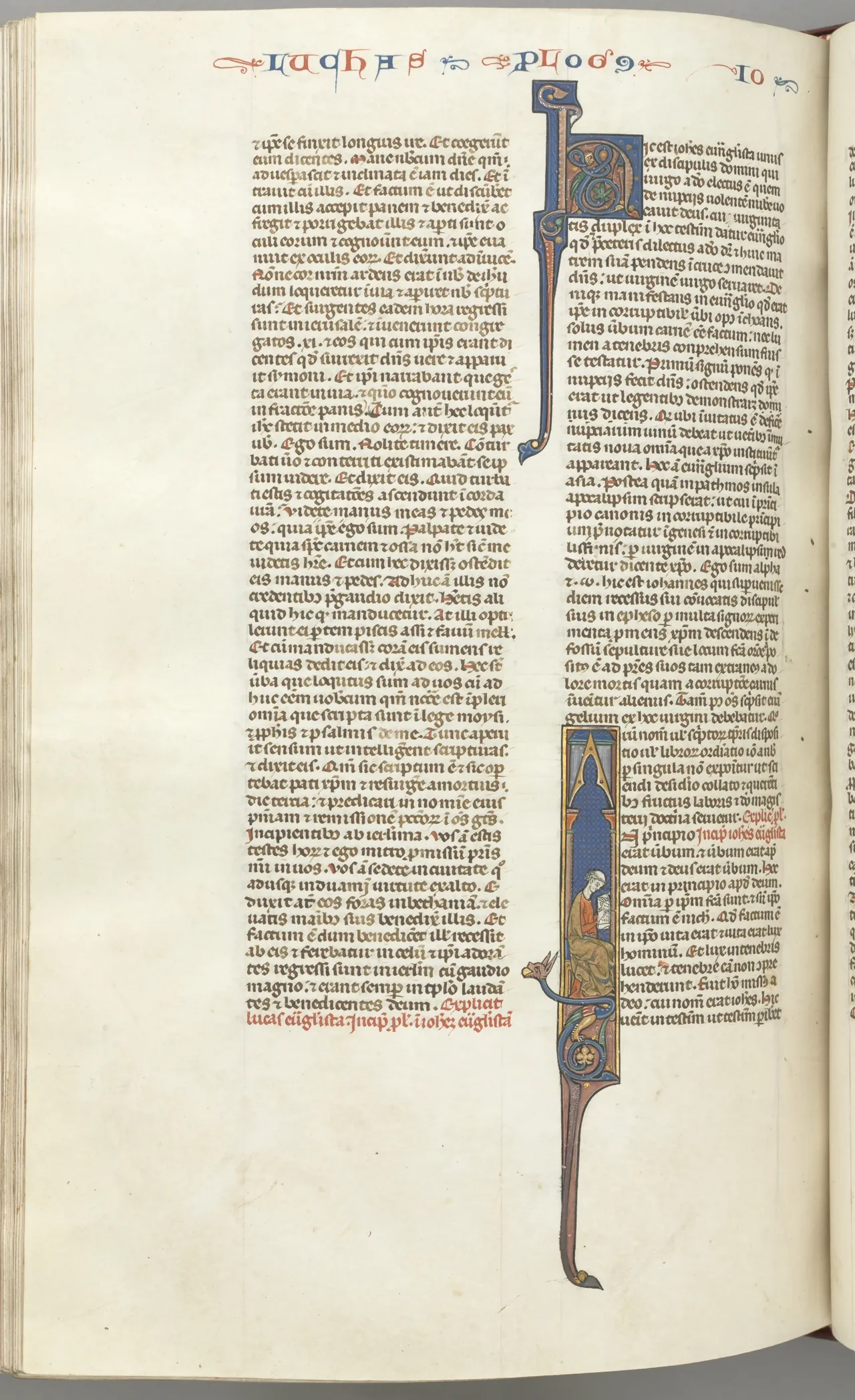
The opening of the Gospel of John in a thirteenth-century Bible from southern France, with John seated writing, the book this part recommends as the place to begin.Fol. 425v, John, historiated initial I, John seated writing · c. 1275–1300 · Cleveland Museum of Art · CC0 · museum record · Galeria Regni
After John, a sensible order for a first year is:
1. Mark — the shortest Gospel, fast and vivid. 2. Acts — what the apostles did after the resurrection. 3. Romans — the gospel explained step by step. 4. Genesis — the beginning of everything, and the key to the rest of the Bible. 5. Psalms and Proverbs alongside — a psalm and a chapter of Proverbs a day. 6. Luke, Matthew, and the shorter letters of Paul, Peter and John. 7. Exodus, Joshua, Judges, 1 and 2 Samuel, Isaiah.
You are not skipping the rest. You are building a frame to hang the rest on. Genesis 1 matters from the start, and so does reading the Old Testament as it was written, as history and as promise. Jesus "beginning at Moses and all the prophets, he expounded unto them in all the scriptures the things concerning himself" (Luke 24:27).
Read whole books
Chapter and verse numbers were added centuries after the books were written. They are a great help for finding a place, but they can chop a book into pieces. Wherever you can, read a whole book, or at least a whole section, in one sitting.
Torrey's first step in studying any book was simply to read it through "without stopping and then reading it through again, and then again, say a dozen times in all, at a single sitting." He admitted that to someone who has never tried it, "it does not seem as if that would amount to much," but he insisted the book "begins to open up."25 You need not read a book a dozen times this week. But read Philippians or 1 John straight through once, start to finish, and you will see what he meant.
Read with a question
Before you read, pray a sentence: "Open thou mine eyes, that I may behold wondrous things out of thy law" (Psalm 119:18). Then read with a few plain questions in mind:
What does it say? Who is speaking, to whom, where, and what happens?
What does it mean? What did it mean to the first hearers? What does it show about God?
What does it ask of me? Is there a promise to believe, a command to obey, a sin to avoid, an example to follow?
The companion paper Bible Study Methods takes these questions further. For daily reading, these three are enough.
Read for the plain sense
The Bible was written to be understood. When Ezra read the law to the people after the exile, "they read in the book in the law of God distinctly, and gave the sense, and caused them to understand the reading" (Nehemiah 8:8). Take words in their ordinary meaning unless the passage itself shows they are figurative. When Jesus says "I am the door" (John 10:9), He is plainly using a picture. When Genesis says "And the evening and the morning were the first day" (Genesis 1:5), it is plainly marking a day.
Know what kind of writing you are reading
The Bible is one book, but it contains many kinds of writing, and each is read a little differently.
| Kind | Where | How to read it | | --- | --- | --- | | History | Genesis to Esther, the Gospels, Acts | What happened, in order; what God did; who obeyed and who did not | | Law | Exodus to Deuteronomy | God's holiness and His covenant with Israel; read it in the light of Christ (Hebrews 10:1–14) | | Poetry and song | Job, Psalms, Song of Solomon | Images, parallel lines, the cries of the heart | | Wisdom | Proverbs, Ecclesiastes | General truths for daily life, not a list of guarantees | | Prophecy | Isaiah to Malachi | God's word to His people; warnings, promises, the coming Messiah | | Letters | Romans to Jude | Teaching to churches and people; follow the argument | | Revelation | Revelation | Visions; much of its imagery is explained in the book itself or in the Old Testament |
Hebrew poetry often says one thing twice in different words: "Thy word is a lamp unto my feet, and a light unto my path" (Psalm 119:105). Proverbs often states what generally happens rather than promising what always happens. A letter of Paul usually builds an argument, so a "therefore" points back to what came before.
Hard passages
You will meet passages you do not understand. Every reader does. The translators of 1611 said so plainly. They wrote that God "in his divine providence" had been pleased "here and there to scatter words and sentences of that difficulty and doubtfulness, not in doctrinal points that concern salvation, (for in such it hath been vouched that the Scriptures are plain) but in matters of less moment." They gave reasons: partly to exercise us, partly "to stir up our devotion to crave the assistance of God's spirit by prayer," and that we might "seek aid of our brethren by conference." And they quoted Augustine: "it is better to make doubt of those things which are secret, than to strive about those things that are uncertain."26
That is good counsel. When you meet a hard passage:
1. Read the chapter before and after. 2. Look up the key words in Strong's and Webster's. 3. Follow the cross-references. 4. Pray about it. 5. Ask a mature believer or your pastor. 6. If it is still unclear, write it down and keep reading. Moses said, "The secret things belong unto the LORD our God: but those things which are revealed belong unto us and to our children for ever" (Deuteronomy 29:29).
Do not let one hard verse keep you from the hundred plain ones around it.
Places where Bibles differ
Some passages that stand in the King James are missing or bracketed in modern versions: the end of Mark (Mark 16:9 to 16:20), the woman taken in adultery (John 7:53 to 8:11), the angel at Bethesda (John 5:4), the Ethiopian's confession (Acts 8:37), and the witness of the Father, the Word and the Holy Ghost (1 John 5:7), among others. These stand in the 1611 and in the Received Text from which it was translated. If a friend's Bible lacks a verse you are reading, you can see every such place, verse by verse, with the 1611 words beside each, at kylelauriano.com/library/changes.
This part matters because reading the Bible once is easy; reading it for forty years is a habit. Habits are built, not wished into being.
Daily
The pattern in Scripture is daily. The Bereans "searched the scriptures daily" (Acts 17:11). The blessed man of Psalm 1 meditates in God's law "day and night" (Psalm 1:2). Joshua was told, "This book of the law shall not depart out of thy mouth; but thou shalt meditate therein day and night" (Joshua 1:8).
Torrey's first "final suggestion" was "Study the Bible daily," and his reasoning has not aged: "Regularity counts for more in Bible study than most people fancy." He warned against the reader who gives much time at some seasons and neglects the Bible "even for days at a time," and said: "It will not do to study the Bible only when we feel like it. It will not do to study the Bible only when we have leisure." His advice to beginners was modest: "Fix upon some time, even if it is no more than fifteen minutes to start with, and hold to it until you are ready to set a longer period."27
A time and a place
Torrey advised giving the Bible "the best portion of the day that you can give to it," not the drowsy minutes before bed or the heavy hour after a meal. He noted that most who had thought about it considered the early hours best, "if they can be secured free from interruption," and he added a line every parent will smile at: "It is well, wherever possible, to lock yourself in and lock the world out."28
The Lord Jesus Himself "in the morning, rising up a great while before day, he went out, and departed into a solitary place, and there prayed" (Mark 1:35). Morning is not a law, and shift workers and parents of newborns must find their own hour. But choose a time and a place, and keep them. A chair, a Bible, a notebook and a pen are all you need.
Read, then pray
George Müller of Bristol, who cared for thousands of orphans without asking anyone but God for money, changed the order of his mornings in the spring of 1841. For years he had prayed first. Then, he wrote, "I saw, that the most important thing I had to do was, to give myself to the reading of the word of God and to meditation on it, that thus my heart might be comforted, encouraged, warned, reproved, instructed." He read slowly, "searching, as it were, into every verse," not for preaching but "for the sake of obtaining food for my own soul," and he found that "after a very few minutes my soul has been led to confession, or to thanksgiving, or to intercession, or to supplication."29
The translators of 1611 had said the same thing two centuries earlier, in a line that sounds like Psalm 1: "Happy is the man that delighteth in the Scripture, and thrice happy that meditateth in it day and night."30
This is biblical meditation: not emptying the mind, but filling it with what God has said and turning it over until it becomes prayer. "O how love I thy law! it is my meditation all the day" (Psalm 119:97).
How long does a habit take?
You may have heard that a habit takes twenty-one days. That figure has no good evidence behind it. The best-known study is by Phillippa Lally and her colleagues at University College London, published in 2010. They asked 96 volunteers to repeat a chosen daily behaviour (eating fruit at lunch, a short run, and the like) for twelve weeks and to record how automatic it felt. For those whose results could be modelled, the median time to reach the plateau of automaticity was 66 days, with a very wide range, from 18 days to 254. Missing one opportunity to perform the behaviour did not materially affect the process.31
Two lessons follow. First, expect the habit to take weeks or months, not days. Second, do not despair over a missed day; pick up where you left off. The researchers themselves caution against putting one number on it, since it varies with the person and the behaviour. Scripture's word for this is not a number but a posture: "Let us not be weary in well doing: for in due season we shall reap, if we faint not" (Galatians 6:9).
Does frequency matter?
The Center for Bible Engagement surveyed tens of thousands of people about how often they engaged with Scripture and how they were living. In a report titled "Understanding the Bible Engagement Challenge: Scientific Evidence for the Power of 4," Arnold Cole and Pamela Caudill Ovwigho reported that reading once or twice a week made little measurable difference, while those who engaged with the Bible four or more times a week reported markedly less loneliness, anger and bitterness in relationships, and markedly more sharing of their faith.32
Read that honestly. It is a survey, not an experiment; it shows that people who read often tend to live differently, not that reading four times a week causes a set result. But it fits what Scripture leads us to expect. A little every day does more than a lot once in a while.
When you miss
You will miss days. When you do, do not try to catch up by reading five chapters, and do not start the whole plan again. Read the next day's reading. The point is not to fill a chart; it is to meet God in His word. "Sufficient unto the day is the evil thereof" (Matthew 6:34), and sufficient unto the day is the reading thereof.
Read aloud, and memorise
Paul told Timothy, "Till I come, give attendance to reading, to exhortation, to doctrine" (1 Timothy 4:13), meaning, in the first place, the public reading of Scripture in church. Reading aloud slows you down and makes you notice words. Try it with a psalm.
Memorise a verse a week. Torrey urged it: "There is nothing better to keep one from sinning than this," and he advised learning verses with their references, "by chapter and verse," so that you can find them again.33 Start with the verse you carry from each day's reading.
Use the spare minutes
Torrey's last suggestion was to use spare moments: the bus, the waiting room, the queue. He told of a man he heard of, a junk dealer in a Canadian city, who kept a Bible open on his shelves and pondered it "in intervals of business."34 Today most of us carry a Bible in our pocket. The 1611 Reader works on a phone, and it can read the chapter aloud to you.
This part matters because a plan answers the question "What shall I read today?" before you have to ask it. There is no single right plan. Choose one that fits your season, and finish it.
The numbers
The King James Bible has 66 books and 1,189 chapters: 929 in the Old Testament and 260 in the New. Those numbers make planning simple.
| Plan | Reading | Chapters a day | Notes | | --- | --- | --- | --- | | First month | John, James, 1 John | 1 | The companion paper 30 Days in God's Word | | New Testament in 90 days | Matthew to Revelation (260 chapters) | about 3 | Good for a fast overview | | New Testament in a year | 260 chapters | about 5 a week | Gentle; leaves room for study | | Psalms in a month | 150 psalms | 5 | Read psalms 1, 31, 61, 91 and 121 on day 1, and so on | | Proverbs in a month | 31 chapters | 1 | The chapter matching the date | | Whole Bible in a year | 1,189 chapters | 3 to 4 | About 15 to 20 minutes a day |
The whole Bible in a year
At about three and a quarter chapters a day, the whole Bible takes a year. Most people find it easier to read from two places at once, for example two chapters of the Old Testament and one of the New each day, with a psalm on the side. Long genealogies and the building instructions in Exodus are lighter reading than they look; read them steadily and you will move through them.
There is a long tradition of such plans. Robert Murray M'Cheyne, minister of St. Peter's Church in Dundee, who died in 1843, published his Daily Bread, "an arrangement of Scripture, that the Bible might be read through in the course of a year"; many still follow it.35 Many churches publish a plan each January. Any plan that takes you through the whole Bible in order, steadily, is a good plan.
Reading in order
Torrey also recommended reading the books "in the order given in the Bible," and argued that it "is the only method by which you are likely to cover the whole Book, and so take in the entire scope of God's revelation."36 He warned that the Bible is many-sided, and that reading only one's favourite parts breeds lopsided believers. Reading straight through, he wrote, "is a great corrective to one-sidedness and crankiness."37
Reading slowly
A plan to read a lot is good. A plan to read a little slowly is also good. Some seasons call for the whole Bible in a year; others call for one book a month, read a chapter a day and read again. Müller read the New Testament "from the beginning," a verse at a time, turning it into prayer. Both ways are honourable. What matters is that you are reading.
A first year
If you want one suggestion for a believer's first year, here it is:
1. January: John, James and 1 John (the 30-day plan). 2. February to April: Mark, Acts and Romans. 3. May to August: Genesis, Exodus and the first half of Psalms. 4. September to December: Luke, the letters of Paul, Peter and John, and Proverbs.
Then, in your second year, read the whole Bible through.
This part matters because the Bible was given to a people, not only to individuals. You can read it alone, and you should; but you were never meant to understand it alone.
The church
The Ethiopian treasurer in Acts 8 was reading Isaiah in his chariot when Philip ran up and asked him, "Understandest thou what thou readest?" He answered honestly: "How can I, except some man should guide me?" (Acts 8:30-31). There is no shame in that answer. God gives teachers to His church, and sitting under faithful preaching of the word is one of the ordinary ways He helps us understand it.
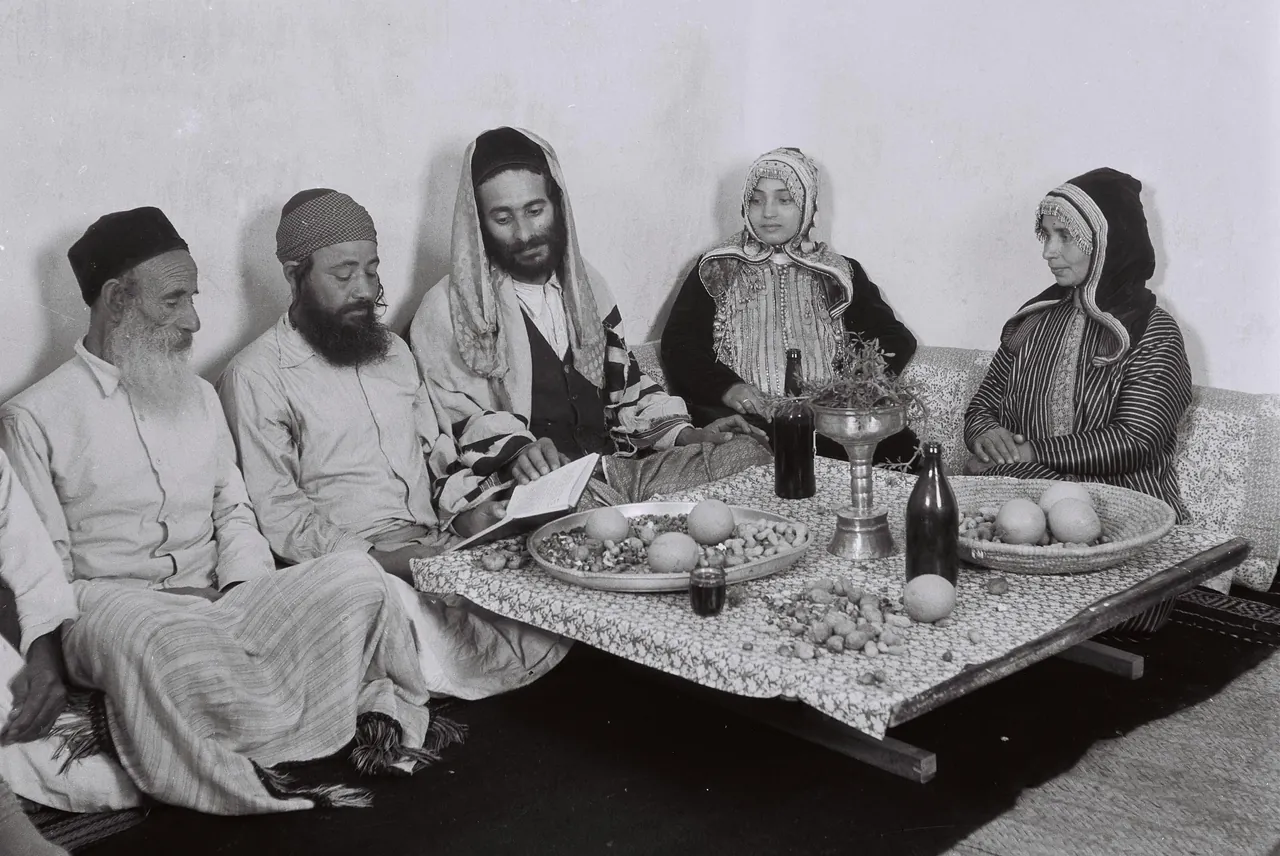
A 1947 photograph of a Yemenite family reading from the Psalms together after a Sabbath meal, a picture of the household reading this part commends.A YEMENITE FAMILY READING FROM THE PSALMS ON SHABBAT AFTER LUNCH.D827-012 · Taken on 1 February 1947 · Wikimedia Commons · Public domain · museum record · Galeria Regni
Paul tells the Colossians, "Let the word of Christ dwell in you richly in all wisdom; teaching and admonishing one another in psalms and hymns and spiritual songs" (Colossians 3:16). The word dwells richly where believers share it with each other.
A reading partner
One of the simplest helps is one other person reading the same plan. Send each other the verse that stopped you that day, or a question you could not answer. "Iron sharpeneth iron; so a man sharpeneth the countenance of his friend" (Proverbs 27:17).
Family reading
If you have children, read the Bible with them. Paul reminded Timothy that "from a child thou hast known the holy scriptures" (2 Timothy 3:15). A chapter at the table, read aloud and talked over in a few sentences, will do more over years than any program. Moses told Israel to speak of God's words "when thou sittest in thine house, and when thou walkest by the way, and when thou liest down, and when thou risest up" (Deuteronomy 6:7).
Weighing what you hear
Reading with others is not the same as believing everything others say. Jesus told the Sadducees, "Ye do err, not knowing the scriptures, nor the power of God" (Matthew 22:29). The remedy for error is more Scripture, not less. Bring what you hear back to the text, as the Bereans did, and ask whether these things are so.
The King James Bible can be read. It was translated, in its makers' own words, "that it may be understood even of the very vulgar," and it has been read, understood and loved for four hundred years by ploughboys, factory workers, mothers, soldiers and prisoners as well as scholars. Its English has a few patterns to learn (thee and ye, -eth and -est, a dozen changed words, the italics), and a free set of tools sits beside it in the 1611 Reader. None of that is beyond you.
What it takes is not cleverness but faithfulness: a time and a place, a plan, a pencil, a short prayer before you read and a longer one after, a friend beside you, and the patience to keep going for weeks and months while the habit takes root. Torrey was right that regularity counts for more than we fancy. Müller was right that reading turns into prayer. And the translators were right about what you will find:
It remaineth, that we commend thee to God, and to the Spirit of his grace, which is able to build further than we can ask or think. He removeth the scales from our eyes, the veil from our hearts, opening our wits that we may understand his word.38
Your first steps
Today: choose a time and a place. Open the 1611 Reader at kylelauriano.com/library, or a printed King James.
Tomorrow: read John 1. Write down one verse.
This week: read John 1–7. Tell one person you have started.
This month: finish the 30-day plan.
This year: read the New Testament, then begin the whole Bible.
An invitation
If you are reading this and you do not yet know Christ, the Bible is not first a book to master. It is God's word calling you. It says that "all have sinned, and come short of the glory of God" (Romans 3:23), and that Christ died for sinners and rose again. It calls you to "repentance toward God, and faith toward our Lord Jesus Christ" (Acts 20:21). And it promises, in the words of the Lord Himself, "him that cometh to me I will in no wise cast out" (John 6:37).
1"The Translators to the Reader," preface to the Authorized Version (1611), section "The Praise of the Holy Scriptures." Modern-spelling text taken from the Oxford reprint of 1833, at https://www.bible-researcher.com/kjvpref.html.↩
2"The Translators to the Reader," "The Praise of the Holy Scriptures."↩
3"The Translators to the Reader," "The Praise of the Holy Scriptures."↩
4Augustine, The Confessions of St. Augustine, trans. E. B. Pusey, book 8, ch. 12. Project Gutenberg ebook 3296, https://www.gutenberg.org/ebooks/3296.↩
5John Foxe, Acts and Monuments (London: John Day, 1570), 1264, as quoted in Jan J. Martin, "William Tyndale, John Foxe, and the 'Boy That Driveth the Plough,'" Religious Educator 17, no. 2 (2016): 86–105, https://rsc.byu.edu/vol-17-no-2-2016/william-tyndale-john-foxe-boy-driveth-plough. Foxe gives the words as reported speech, and the wording differs between his 1563 and 1570 editions.↩
6"The Translators to the Reader," near the end of the preface.↩
7"The Translators to the Reader," section "Translation Necessary."↩
8"The Translators to the Reader," section "The Purpose of the Translators, with Their Number, Furniture, Care, etc."↩
9Noah Webster, An American Dictionary of the English Language (New York: S. Converse, 1828), s.v. "Thou" and "Ye." The text is on the Study shelf of the 1611 Reader, kylelauriano.com/library/study.↩
10Webster, American Dictionary (1828), s.v. "Prevent."↩
11Webster, American Dictionary (1828), s.v. "Let," sense 5. (Webster's entry gives the reference as 2 Thessalonians 2:3; the word itself is in 2:7.)↩
12Webster, American Dictionary (1828), s.v. "Conversation."↩
13Webster, American Dictionary (1828), s.v. "Careful."↩
14Webster, American Dictionary (1828), s.v. "Charity."↩
15David Norton, A Textual History of the King James Bible (Cambridge: Cambridge University Press, 2005).↩
16"The Translators to the Reader," section "Reasons Inducing Us Not to Stand Curiously upon an Identity of Phrasing."↩
17James Strong, The Exhaustive Concordance of the Bible (New York: Hunt & Eaton; Cincinnati: Cranston & Curts, 1890).↩
18R. A. Torrey, How to Study the Bible for Greatest Profit (New York: Fleming H. Revell, 1896), 22–23. Online: https://archive.org/details/howtostudybiblef00torr.↩
19James Strong, "A Concise Dictionary of the Words in the Greek Testament," in The Exhaustive Concordance of the Bible (1890), nos. 25 and 5368.↩
20Alexander Cruden, A Complete Concordance to the Holy Scriptures of the Old and New Testament (London, 1738), https://archive.org/details/bim_eighteenth-century_a-complete-concordance-t_cruden-alexander_1738.↩
29George Müller, A Narrative of Some of the Lord's Dealings with George Müller, Part 3 (London: J. Nisbet & Co.). Project Gutenberg ebook 22148, https://www.gutenberg.org/ebooks/22148.↩
30"The Translators to the Reader," section "The Praise of the Holy Scriptures."↩
31Phillippa Lally, Cornelia H. M. van Jaarsveld, Henry W. W. Potts and Jane Wardle, "How Are Habits Formed: Modelling Habit Formation in the Real World," European Journal of Social Psychology 40, no. 6 (2010): 998–1009, https://doi.org/10.1002/ejsp.674.↩
32As summarised in Jeff Martin, "9 Tangible Benefits of Bible Reading for Your Church," Lifeway Research, January 20, 2021, https://research.lifeway.com/?p=102134. The survey reached about 40,000 people aged 8 to 80.↩
35Andrew A. Bonar, The Biography of Robert Murray M'Cheyne (Grand Rapids: Zondervan). Project Gutenberg ebook 15251, https://www.gutenberg.org/ebooks/15251.↩
The Bible says something is fighting you. It names it.
Seven passages in the 1611 King James, one a day — the armour, the princes over the nations, the war in heaven — with the page, a work of art, a clip, and a real person who says they were delivered. Free.
This is practical teaching, not proof. It's drawn from Scripture and from walking this road myself. If you're still weighing the basics — whether God is real, whether the Bible can be trusted — I'd encourage you to start with the Skeptic resources in the Research Hub before diving in here.