A short, sourced study of what prayer is, how Jesus taught His disciples to pray, what hinders prayer, and how to build a daily habit that lasts.
Abstract
What is prayer, why does God ask us to pray when He already knows what we need, and how does an ordinary believer begin to pray faithfully, day after day? This paper answers from the King James Bible first — the Lord's own teaching in Matthew 6 and Luke 11, the prayers of the Psalms and the apostles — and second from Christians who prayed and wrote down what they learned: the Didache, Tertullian, John Bunyan, the Westminster divines, George Müller, Charles Spurgeon, Andrew Murray and E. M. Bounds. It sets out the foundations only: prayer as access to the Father through the Son by the Spirit; the pattern of the Lord's Prayer; the kinds of prayer the New Testament names; the things Scripture says hinder prayer; and a simple daily habit built on the word of God. Its conclusion is that prayer is not a technique to be mastered but a Father to be trusted. It is written for new believers and for anyone starting again. A fuller study is in the companion paper, Prayer Essentials — Expanded.
What’s inside
·Introduction
Part 1Part 1: What Prayer Is
Part 2Part 2: The Pattern Jesus Gave
Part 3Part 3: The Kinds of Prayer
Part 4Part 4: What Hinders Prayer
Part 5Part 5: When the Answer Has Not Come
Part 6Part 6: Building a Daily Habit
·Conclusion
Research paper · 8 chapters · 22 notes · October 2026
About 29 minutes · 8 parts · the PDF has the same text
Introduction
3 min read
Almost every Christian would say prayer matters. Fewer would say they pray well, or often, or with much confidence that anything happens when they do. That gap between what we believe about prayer and what we actually do is where this paper begins.
The disciples felt it too. They had watched Jesus heal, preach and cast out devils, but the one thing the Gospels record them asking Him to teach them was prayer: "And it came to pass, that, as he was praying in a certain place, when he ceased, one of his disciples said unto him, Lord, teach us to pray, as John also taught his disciples" (Luke 11:1). They did not ask Him to teach them to preach. They had seen Him pray, and they knew they did not pray like that.
That request is still the right place to start. Andrew Murray, the South African pastor whose book on prayer has been in print for more than a century, opened it with the same verse, and wrote that "though in its beginnings prayer is so simple that the feeblest child can pray, yet it is at the same time the highest and holiest work to which man can rise."1 Both halves of that sentence are true. Prayer is simple enough for a child, and deep enough to occupy a lifetime.
What this paper is
This is the short version. It lays the foundations: what prayer is, the pattern Jesus gave, the kinds of prayer Scripture names, what hinders prayer, how to keep praying when the answer has not come, and how to build a daily habit. It argues from the King James Bible first. Where Christians of earlier centuries wrote down what they learned about prayer, their words are quoted from their own books, with notes so you can check them.
A longer companion paper, Prayer Essentials — The Full Study, walks through the great prayers of Scripture one by one, takes the Lord's Prayer phrase by phrase, and gives full chapters to intercession, fasting, spiritual warfare and unanswered prayer. If this paper whets your appetite, go on to that one.
A word about me
I was raised Roman Catholic but never really connected — I went through the motions, fell asleep in the pews, and faked being sick to skip Mass. When real life hit — a lost job, a pregnant wife, constant fights — I went looking for peace anywhere I could find it. New Age, crystals, astral projection, tarot, angel numbers. None of it held. So I swung back hard to religion, said the rosary every night, and still felt nothing. Eventually I gave up and called myself an atheist. I decided to read the Bible for one reason: to disprove it, so I'd have an excuse to stop going to church for good.
It did the opposite. Then one day I got on my knees and prayed: "Jesus, if you are real, show me — and I'll serve you." I came to faith in 2022, and my wife came to faith a month later. The rest of my story is at kylelauriano.com/about. I tell this much here for one reason: saying prayers and praying are not the same thing. The first can be done without touching God. The second can begin in one honest sentence.
Every verse in this paper is quoted from the King James Bible. You can read it free in the 1611 Reader at kylelauriano.com/library. A KJV with Strong's Concordance is the best study tool most believers will ever need, and the Strong's numbers below come from it.
This part matters because what you think prayer is will decide whether you pray. If prayer is a ritual, you will do it when it is expected. If it is a last resort, you will do it in emergencies. If it is a child speaking to a Father who hears, you will do it all the time.
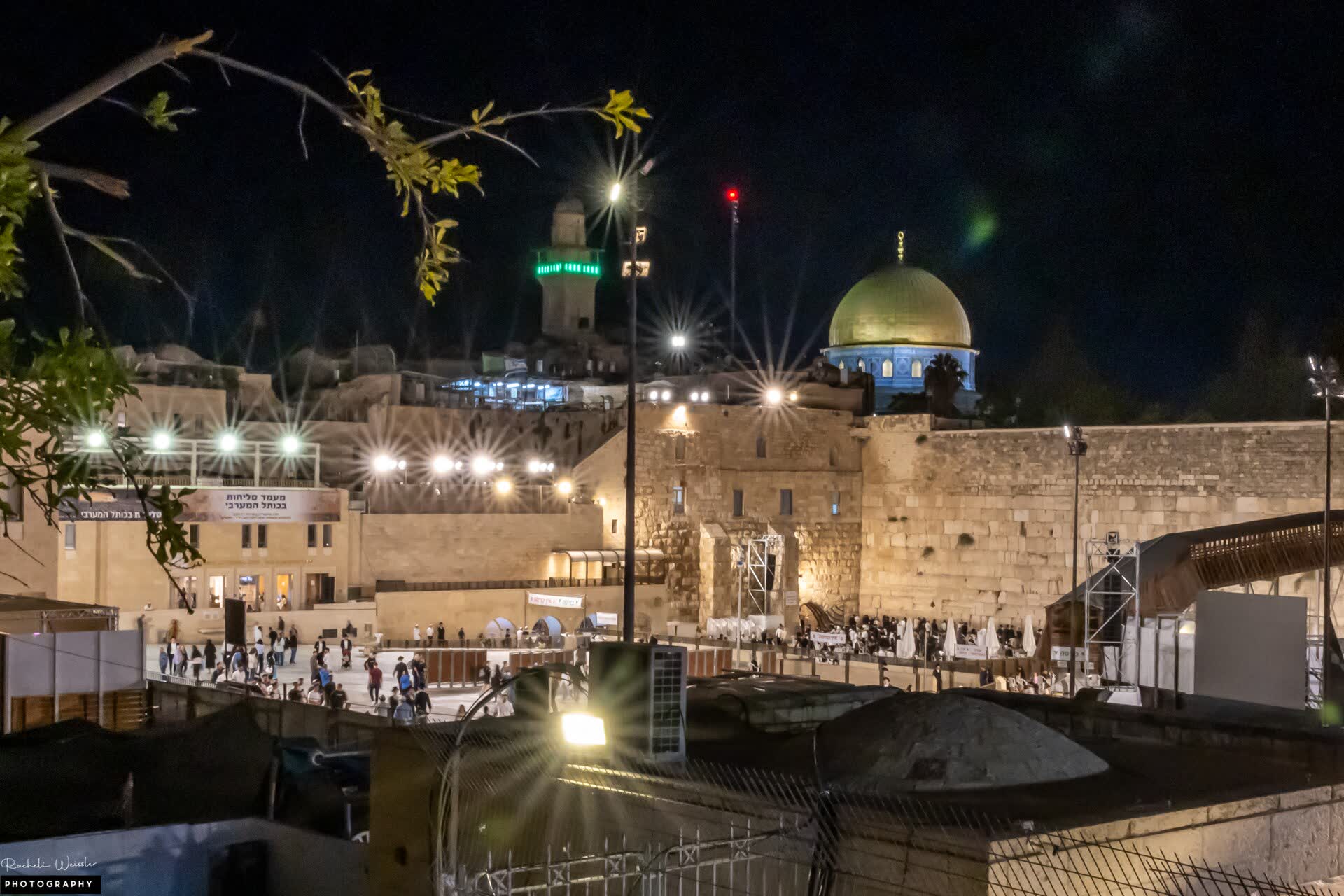
The Western Wall in Jerusalem — Herodian stones of the Second Temple platform where prayer has not stopped in two thousand years.רחל וייסלר · CC BY 2.5
The words Scripture uses
The commonest Hebrew verb for prayer in the Old Testament is palal (Strong's H6419). Strong's gives its root sense as "to judge," and "by extension, to intercede, pray," and the noun from it, tephillah (H8605), is the ordinary word for "prayer."2 It carries the idea of bringing a case before a judge — which is exactly how Abraham, Moses and the psalmists prayed. They reasoned, pleaded and argued their case before God.
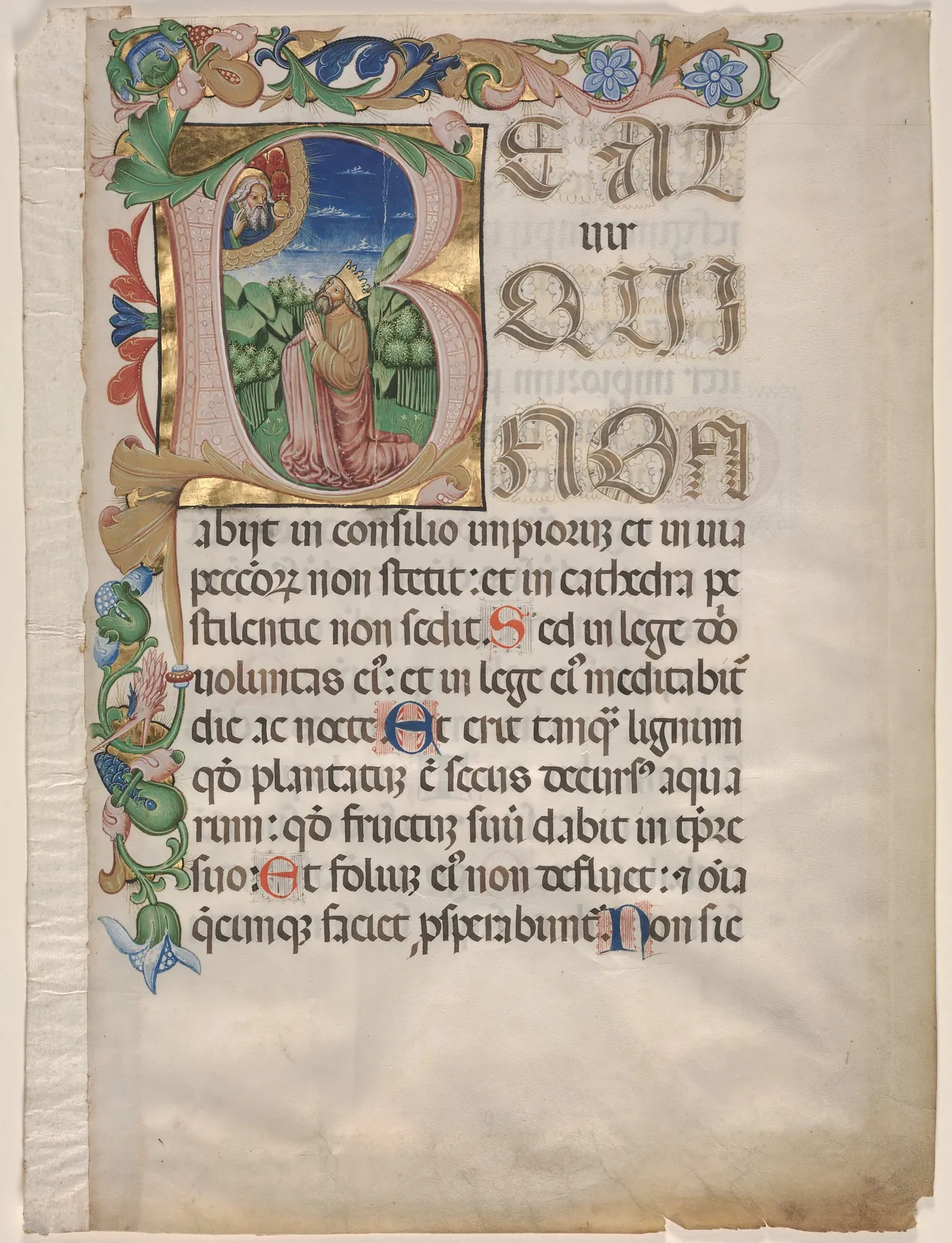
An Italian choir psalter leaf of about 1460 to 1470 with an initial of King David in prayer, the psalmist whose words teach what prayer is.Leaf from a Choir Psalter: Initial B with King David in Prayer · c. 1460–1470 · Cleveland Museum of Art · CC0 · museum record · Galeria Regni
In the New Testament the usual verb is proseuchomai (G4336), "to pray to God, i.e. supplicate, worship," built from euchomai, "to wish; by implication, to pray to God."3 Paul gathers several words together when he tells Timothy what the church should do first of all: "I exhort therefore, that, first of all, supplications, prayers, intercessions, and giving of thanks, be made for all men" (1 Timothy 2:1). Supplications (G1162, deesis) are petitions for a felt need. Prayers (G4335) is the general word. Intercessions (G1783, enteuxis) is, in Strong's words, "an interview, i.e. (specially) supplication": a meeting with someone to plead. Giving of thanks (G2169) is the root of our word "Eucharist."4
So prayer in Scripture is not one thing. It is asking, pleading, thanking, confessing, worshipping and standing in for others. But all of it is speech addressed to God, in the expectation that He hears.
Two classic definitions
Two short definitions from the seventeenth century are still among the best.
The first is John Bunyan's. While in Bedford jail for preaching without a licence, he wrote a little book on 1 Corinthians 14:15, I Will Pray with the Spirit. His definition runs:
Prayer is a sincere, sensible, affectionate pouring out of the heart or soul to God through Christ, in the strength and assistance of the holy Spirit, for such things as God hath promised, or, according to the Word, for the good of the Church, with submission, in Faith, to the Will of God.5
Every phrase is weighed. Sincere — not for show. Sensible — that is, felt, aware of our need. Affectionate — with desire. Through Christ — not in our own name. In the strength of the Spirit — not by our own power. For such things as God hath promised — prayer is anchored in God's word. With submission — the last word belongs to God.
The second is from the Westminster Shorter Catechism of 1647, written to teach children: "Prayer is an offering up of our desires unto God, for things agreeable to his will, in the name of Christ, with confession of our sins, and thankful acknowledgment of his mercies."6 The catechism then adds that "the whole word of God is of use to direct us in prayer; but the special rule of direction is that form of prayer which Christ taught his disciples, commonly called the Lord's prayer."7
Notice what the two definitions share. Prayer is directed to God. It comes through Christ. It is shaped by what God has said. And it is honest — about our desires, our sins and our thanks.
To the Father, through the Son, by the Spirit
Christian prayer has a shape that comes from who God is. Paul puts it in one line: "For through him we both have access by one Spirit unto the Father" (Ephesians 2:18).
To the Father. Jesus taught His disciples to begin, "Our Father which art in heaven" (Matthew 6:9). That was not a formality. "For ye have not received the spirit of bondage again to fear; but ye have received the Spirit of adoption, whereby we cry, Abba, Father" (Romans 8:15). Abba (G5) is an Aramaic word, "father," used in speaking to one's father.8 The God of all the earth lets His children speak to Him like that.
Through the Son. We do not come in our own name. "For there is one God, and one mediator between God and men, the man Christ Jesus" (1 Timothy 2:5). That is why Christians pray "in Jesus' name" — not as a password, but because He is the only reason we are welcome. And He does more than open the door; He prays for us. "Wherefore he is able also to save them to the uttermost that come unto God by him, seeing he ever liveth to make intercession for them" (Hebrews 7:25).
By the Spirit. And when we do not know what to say, we are not left alone. "Likewise the Spirit also helpeth our infirmities: for we know not what we should pray for as we ought: but the Spirit itself maketh intercession for us with groanings which cannot be uttered" (Romans 8:26). Bunyan, who knew something about praying in a prison cell, wrote, "The best Prayers have often more groans than words."9
This is also why Christian prayer goes to God alone. The Westminster Confession says it plainly: worship, and prayer as part of it, "is to be given to God, the Father, Son, and Holy Ghost; and to him alone; not to angels, saints, or any other creature."10 When John fell down before an angel, the angel stopped him: "See thou do it not: I am thy fellowservant, and of thy brethren that have the testimony of Jesus: worship God" (Revelation 19:10).
Why pray if God already knows?
Jesus Himself raised the question: "your Father knoweth what things ye have need of, before ye ask him" (Matthew 6:8). Then why ask?
Scripture's answer is not that prayer informs God. It is that God has chosen to work through the asking of His children. "Ye have not, because ye ask not" (James 4:2). Jesus said the same from the other side: "Ask, and it shall be given you; seek, and ye shall find; knock, and it shall be opened unto you" (Matthew 7:7). The same God who ordains the end ordains the means, and prayer is one of His appointed means.
Charles Spurgeon put it this way in an 1866 sermon on Job's words "I would order my cause before him, and fill my mouth with arguments." Why, he asked, should we plead reasons with God at all? Not "because God is slow to give, not because we can change the divine purpose, not because God needs to be informed of any circumstance," but because "the arguments to be used are for our own benefit, not for his."11 Prayer changes the one who prays. It teaches us what we really want, makes us search God's promises, and humbles us into dependence.
There is a deeper answer too. A Father wants to hear from His children, not only to give them things. "Trust in him at all times; ye people, pour out your heart before him: God is a refuge for us" (Psalm 62:8). Prayer is the conversation of a relationship. A child who only spoke to his father to ask for money would be missing most of what it means to be a son.
This part matters because Jesus did not leave prayer to guesswork. He warned against two wrong ways of praying and then gave a pattern. Most of what we need to know about how to pray is in eleven verses of Matthew 6.
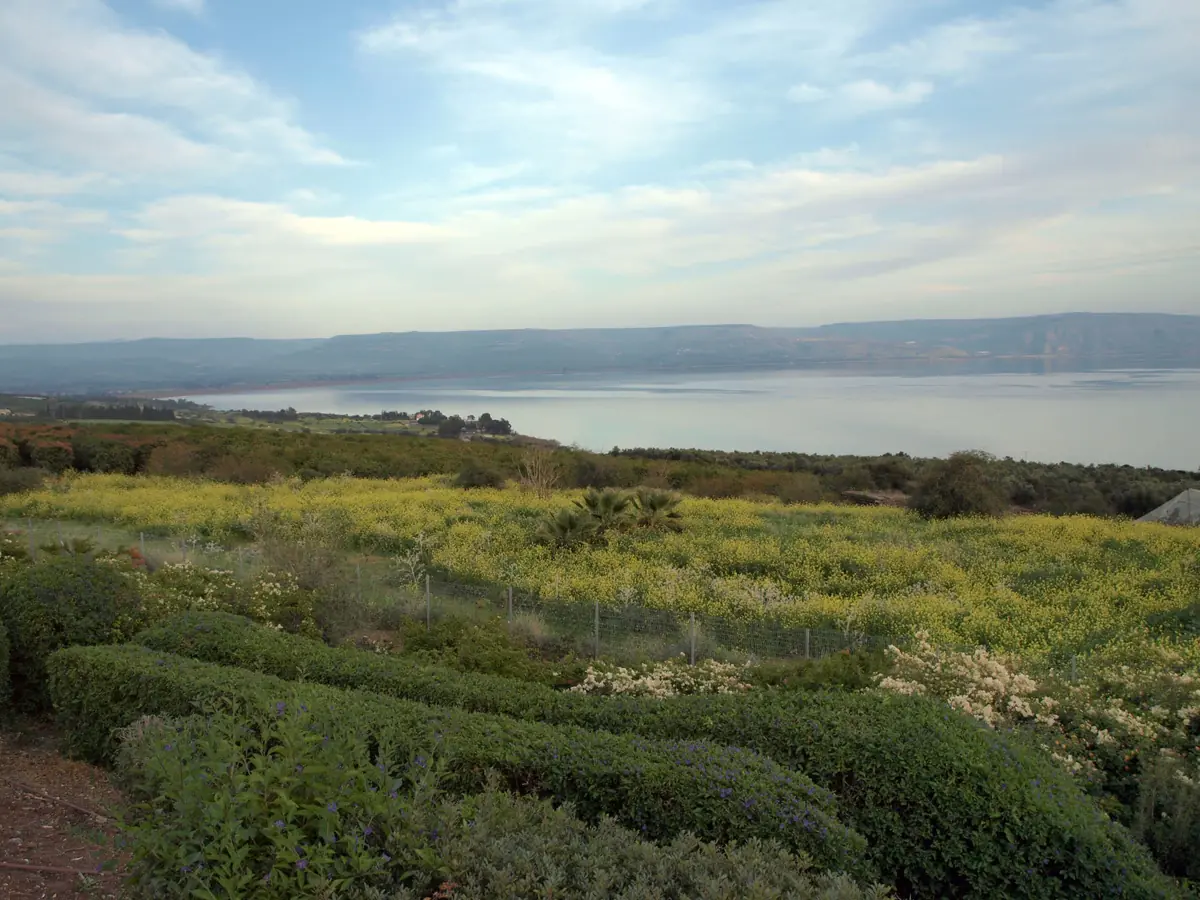
The slopes above the Sea of Galilee at the traditional Mount of Beatitudes — the natural amphitheater where the Sermon on the Mount was preached.Obendorf · CC0
Not for show
"And when thou prayest, thou shalt not be as the hypocrites are: for they love to pray standing in the synagogues and in the corners of the streets, that they may be seen of men. Verily I say unto you, They have their reward" (Matthew 6:5). The first danger is praying to an audience. The hypocrite gets what he wanted — the admiration of the people watching — and nothing more.
The cure is the closet: "But thou, when thou prayest, enter into thy closet, and when thou hast shut thy door, pray to thy Father which is in secret; and thy Father which seeth in secret shall reward thee openly" (Matthew 6:6). Jesus is not forbidding public prayer; the church prays together throughout Acts. He is saying that the root of a praying life is private. What you are alone with God is what you are.
E. M. Bounds, a Methodist pastor and Civil War chaplain who spent his last years writing about prayer, made the same point about preachers: "The real sermon is made in the closet. The man—God's man—is made in the closet."12 It is true of every believer, not only preachers.
Not by many words
"But when ye pray, use not vain repetitions, as the heathen do: for they think that they shall be heard for their much speaking" (Matthew 6:7). The second danger is treating prayer as a technique — as if God could be worn down by volume or unlocked by the right formula repeated enough times.
Jesus is not against persistence; He tells a whole parable to teach "that men ought always to pray, and not to faint" (Luke 18:1). He is against the idea that words work by themselves, like a spell. That is how the nations around Israel prayed to their gods, and it is still how many religions pray today: a chant, a mantra, a set number of repetitions.
Steve Kang told his story on The King Is Coming Show (TKIC #49): he chanted eight hours a day to reach Nirvana — and then, in his telling, he woke up in hell instead. Watch it in his own words: youtube.com/watch?v=46SP1FgXfbY Steve's account of what happened to him, shared as his testimony — weigh it for yourself.
The answer Jesus gives is not a better technique but a better knowledge of God: "Be not ye therefore like unto them: for your Father knoweth what things ye have need of, before ye ask him" (Matthew 6:8). You do not have to persuade a reluctant God. You are speaking to a Father who already cares.
The pattern
"After this manner therefore pray ye: Our Father which art in heaven, Hallowed be thy name. Thy kingdom come. Thy will be done in earth, as it is in heaven. Give us this day our daily bread. And forgive us our debts, as we forgive our debtors. And lead us not into temptation, but deliver us from evil: For thine is the kingdom, and the power, and the glory, for ever. Amen" (Matthew 6:9-13).
Jesus gave the Lord's Prayer as a pattern, not a formula to recite: "After this manner therefore pray ye" (Matthew 6:9). It shows us how to pray, but the one who prays must seek Him with his own heart: "And ye shall seek me, and find me, when ye shall search for me with all your heart" (Jeremiah 29:13). Christians have long prayed the words themselves — the Didache, one of the earliest Christian writings outside the New Testament, tells believers to pray it "thrice in the day"13 — and they are good words to pray when the heart is in them. But the prayer is also a map of everything prayer should cover. The early North African writer Tertullian called it "an epitome of the whole Gospel."14
The order teaches as much as the words:
| The prayer | What it teaches us to pray for | |---|---| | Our Father which art in heaven | Draw near as a child, with reverence and confidence | | Hallowed be thy name | That God be honoured as holy — first of all | | Thy kingdom come | That Christ's rule spread, in hearts and in the world | | Thy will be done | That God's will, not ours, be done — starting with us | | Give us this day our daily bread | Our real needs, one day at a time | | Forgive us our debts, as we forgive | Our sins confessed, and our grudges released | | Lead us not into temptation, deliver us from evil | Protection from sin and from the evil one | | For thine is the kingdom, the power, the glory | Praise that returns everything to God |
Three things stand out. First, God's concerns come before ours: His name, His kingdom, His will. Second, our needs are not shameful — bread, forgiveness and protection are all in it. Third, it is plural: "our," "us." Even in the closet, a Christian prays as one of a family.
The closing words, "For thine is the kingdom, and the power, and the glory, for ever. Amen," stand in the King James Bible and the Received Text. Many modern versions drop or footnote them. The Didache, written long before any of those versions, already closes the prayer with "for Yours is the power and the glory forever."13 You can see this difference and every other at kylelauriano.com/library/changes. The companion paper takes each phrase of the prayer in turn.
A simple shape for daily prayer
Many Christians use a four-part shape to make sure their prayers do not shrink to a shopping list: adoration, confession, thanksgiving and supplication (sometimes remembered as ACTS). It is not a command of Scripture, and nobody should be bound to it, but each part is plainly biblical, and it follows the Lord's Prayer's own movement from God to our needs.
Adoration. Begin with who God is, not with what you want. "Enter into his gates with thanksgiving, and into his courts with praise: be thankful unto him, and bless his name" (Psalm 100:4).
Confession. Name your sins honestly. "If we confess our sins, he is faithful and just to forgive us our sins, and to cleanse us from all unrighteousness" (1 John 1:9).
Thanksgiving. Thank Him for specific mercies. "In every thing give thanks: for this is the will of God in Christ Jesus concerning you" (1 Thessalonians 5:18).
Supplication. Ask — for yourself and for others. "Be careful for nothing; but in every thing by prayer and supplication with thanksgiving let your requests be made known unto God" (Philippians 4:6).
Martin Luther gave a similar shape in 1535 to his barber, Master Peter, who had asked him how to pray. Luther's little letter, known as A Simple Way to Pray, suggested taking one line of the Lord's Prayer, the Ten Commandments or the Creed and turning it into four strands: what it teaches, what it gives you to thank God for, what it shows you to confess, and what it moves you to ask.15 That is not a method of emptying the mind. It is the opposite: filling the mind with God's word and letting the word shape the prayer.
This part matters because many believers only know one kind of prayer — asking — and wonder why prayer feels thin. Scripture shows at least five, and a healthy prayer life has room for all of them.
Adoration and praise
Adoration is telling God who He is. It asks for nothing. The psalms are full of it: "Bless the LORD, O my soul: and all that is within me, bless his holy name" (Psalm 103:1). Praise comes first in the Lord's Prayer — "Hallowed be thy name" — because a right view of God changes every request that follows. A large God makes our troubles their true size.
Confession
Confession is agreeing with God about our sin. David describes what silence did to him and what confession brought: "I acknowledged my sin unto thee, and mine iniquity have I not hid. I said, I will confess my transgressions unto the LORD; and thou forgavest the iniquity of my sin. Selah" (Psalm 32:5).
The tax collector in Jesus' parable prayed seven words, "God be merciful to me a sinner," and Jesus said, "I tell you, this man went down to his house justified rather than the other: for every one that exalteth himself shall be abased; and he that humbleth himself shall be exalted" (Luke 18:13-14). Confession is not grovelling to earn forgiveness. It is coming home on the terms Christ has already paid for.
Thanksgiving
Thanksgiving is remembering what God has done. It is commanded — "In every thing give thanks" — and it is the antidote to anxiety. Paul joins them in one sentence: requests "with thanksgiving," and then "the peace of God, which passeth all understanding, shall keep your hearts and minds through Christ Jesus" (Philippians 4:7). A believer who keeps a record of answered prayer will find thanksgiving comes easier, because he has the evidence in front of him.
Petition
Petition is asking for our own needs. Some Christians feel this is selfish. Jesus did not. "Give us this day our daily bread" is in the model prayer, and He promised: "If ye then, being evil, know how to give good gifts unto your children, how much more shall your Father which is in heaven give good things to them that ask him?" (Matthew 7:11).
The guardrail is in the next phrase of the Lord's Prayer: "Thy will be done." The Westminster divines spoke of desires "for things agreeable to his will," and John says the same: "And this is the confidence that we have in him, that, if we ask any thing according to his will, he heareth us" (1 John 5:14). That is not a loophole that empties the promise. It is the shape of a child's trust: ask boldly, and leave the answer with a Father who knows better.
Intercession
Intercession is asking for others. It is the kind of prayer most often commanded in the New Testament and most often neglected. Paul's "first of all" in 1 Timothy 2:1 is a call to intercession "for all men; For kings, and for all that are in authority" (1 Timothy 2:1-2). Samuel thought it a sin to stop: "Moreover as for me, God forbid that I should sin against the LORD in ceasing to pray for you" (1 Samuel 12:23).
George Müller, the Bristol pastor who cared for thousands of orphans in the nineteenth century without asking anyone but God for money, kept lists of people he prayed for by name. His biographer and friend Arthur T. Pierson wrote that some names were on that list for "one, two, three, four, six, ten years before the answer was given," and that in the year before his death Müller spoke of two men he had prayed for "day by day, for over sixty years."16 Intercession is the long work of love.
Praying with others
Jesus gave a particular promise to believers who pray together: "Again I say unto you, That if two of you shall agree on earth as touching any thing that they shall ask, it shall be done for them of my Father which is in heaven. For where two or three are gathered together in my name, there am I in the midst of them" (Matthew 18:19-20). The first church was born in a prayer meeting — "These all continued with one accord in prayer and supplication" (Acts 1:14) — and kept praying: "And they continued stedfastly in the apostles' doctrine and fellowship, and in breaking of bread, and in prayers" (Acts 2:42).
Church history has its own examples. On September 23, 1857, Jeremiah Lanphier, a layman with a business background, opened a weekday noon prayer meeting in a third-floor room of the North Dutch Reformed Church on Fulton Street in New York. Six people came, and they were late. Within weeks a financial panic hit the city; by the spring of 1858, by one recent account, an estimated ten thousand people were meeting for prayer in at least twenty New York churches and YMCA halls.17 Nobody planned a revival. A few people simply met to pray.
If you can, find even one other believer to pray with regularly. It will strengthen you more than almost anything else in this paper.
This part matters because Scripture is honest that some prayers are not heard, and it tells us why. The point is not to make you anxious about every prayer, but to clear away what you can clear away.
Cherished sin
"If I regard iniquity in my heart, the Lord will not hear me" (Psalm 66:18). The word is regard — to hold on to, to cherish. Every believer still sins. What blocks prayer is sin we are keeping, defending and refusing to give up. Isaiah said it to a whole nation: "Behold, the LORD's hand is not shortened, that it cannot save; neither his ear heavy, that it cannot hear: But your iniquities have separated between you and your God, and your sins have hid his face from you, that he will not hear" (Isaiah 59:1-2).
The way back is not to stop praying until you are good enough. It is to pray the prayer of confession first. David, after his worst sin, prayed: "Create in me a clean heart, O God; and renew a right spirit within me" (Psalm 51:10).
Unforgiveness
Jesus tied our forgiveness of others directly to our praying. Immediately after the Lord's Prayer He said: "For if ye forgive men their trespasses, your heavenly Father will also forgive you: But if ye forgive not men their trespasses, neither will your Father forgive your trespasses" (Matthew 6:14-15). And in Mark: "And when ye stand praying, forgive, if ye have ought against any: that your Father also which is in heaven may forgive you your trespasses" (Mark 11:25).
Forgiveness does not mean pretending a wrong was not a wrong, or trusting someone who is still dangerous. It means releasing the debt to God and refusing to nurse revenge. Often the first prayer that needs praying is for the person who hurt us: "pray for them which despitefully use you, and persecute you" (Matthew 5:44).
Wrong motives
"Ye ask, and receive not, because ye ask amiss, that ye may consume it upon your lusts" (James 4:3). Prayer is not a way to bend God to our appetites. That is why prosperity teaching — the idea that faith is a lever to get wealth and health on demand — has it backwards. The model prayer asks for daily bread, not riches. "Give me neither poverty nor riches; feed me with food convenient for me" (Proverbs 30:8).
Trouble at home
Peter writes to husbands: "Likewise, ye husbands, dwell with them according to knowledge, giving honour unto the wife, as unto the weaker vessel, and as being heirs together of the grace of life; that your prayers be not hindered" (1 Peter 3:7). How a man treats his wife reaches all the way to the throne of God. More broadly, Jesus told worshippers to settle quarrels before they brought their gifts: "first be reconciled to thy brother, and then come and offer thy gift" (Matthew 5:24).
Doubt
"But without faith it is impossible to please him: for he that cometh to God must believe that he is, and that he is a rewarder of them that diligently seek him" (Hebrews 11:6). Faith in prayer is not a feeling of certainty we work up. It is trust in God's character and promises. A father in Mark 9, whose son was tormented, "cried out, and said with tears, Lord, I believe; help thou mine unbelief" (Mark 9:24), and Jesus answered him. Weak faith in a strong God is still faith.
Neglect
The plainest hindrance is simply not praying. "Ye have not, because ye ask not" (James 4:2). Busyness, distraction and the phone in our hand do not usually argue against prayer; they just crowd it out. That is why Part 6 is about habits, not feelings.
This part matters because every praying Christian meets it. You prayed, sincerely, and nothing seemed to happen. Scripture does not hide this experience; it is full of it.
Unanswered is not unheard
Paul prayed three times for his "thorn in the flesh" to be taken away. The answer was no — but it was not silence: "For this thing I besought the Lord thrice, that it might depart from me. And he said unto me, My grace is sufficient for thee: for my strength is made perfect in weakness" (2 Corinthians 12:8-9). God gave Paul something better than what he asked for.
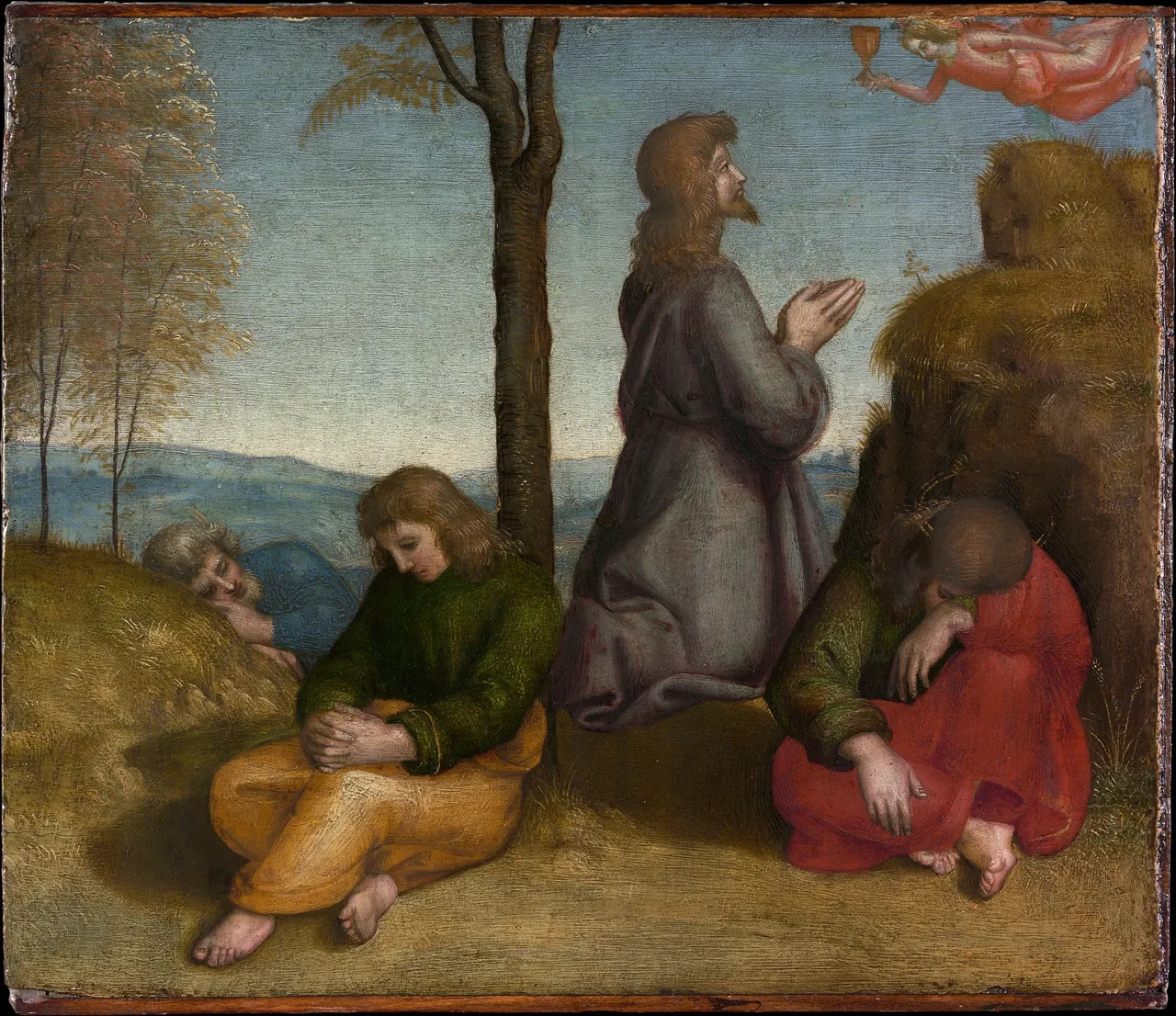
An oil on wood of about 1504 showing the Agony in the Garden, Christ praying while His disciples sleep, the prayer in which the Son yielded to the Father's will.The Agony in the Garden · ca. 1504 · The Metropolitan Museum of Art · CC0 · museum record · Galeria Regni
The Lord Jesus Himself prayed in Gethsemane, "O my Father, if it be possible, let this cup pass from me: nevertheless not as I will, but as thou wilt" (Matthew 26:39). The cup did not pass. The cross followed, and through it, our salvation. The perfect prayer of the perfect Son was answered by the Father's will, not by escape.
Three kinds of answer
Christians have often said that God answers prayer in one of three ways: yes, no, or wait. That is a simplification, but a useful one.
Yes. Many prayers are answered plainly. "I sought the LORD, and he heard me, and delivered me from all my fears" (Psalm 34:4).
No. Some requests are refused because God has something better, as with Paul, or because what we asked would harm us. "For my thoughts are not your thoughts, neither are your ways my ways, saith the LORD" (Isaiah 55:8).
Wait. Many answers are delayed. Jesus told the parable of the persistent widow "to this end, that men ought always to pray, and not to faint" (Luke 18:1).
Keep praying
George Müller is the classic example of patient prayer. Near the end of one of his reports he wrote to his readers:
Should you, however, not at once obtain answers to your prayers, be not discouraged; but continue patiently, believingly, perseveringly to wait upon God... I myself have had to wait upon God concerning certain matters for years, before I obtained answers to my prayers; but at last they came.18
E. M. Bounds wrote of the same patience: "Importunity is made up of the ability to hold on, to press on, to wait with unrelaxed and unrelaxable grasp, restless desire and restful patience."19 And Andrew Murray gave the reason behind the wait: God, he wrote, "trains them, in the school of answer delayed," so that His children learn to trust Him as a Friend.20
When an answer does not come, three things are worth doing. First, examine your heart honestly against Part 4 — not to torment yourself, but to clear away anything that needs clearing. Second, bring the disappointment itself to God; the psalms give you words for it: "How long wilt thou forget me, O LORD? for ever? how long wilt thou hide thy face from me?" (Psalm 13:1). Third, keep praying. The same psalm that begins in complaint ends, "But I have trusted in thy mercy; my heart shall rejoice in thy salvation. I will sing unto the LORD, because he hath dealt bountifully with me" (Psalm 13:5-6).
The companion paper gives a full chapter to unanswered prayer, including David's prayer for his dying son and Habakkuk's song in the empty field.
This part matters because prayer that depends on mood will not last. The men and women of Scripture prayed at set times, and then prayed at all times in between.
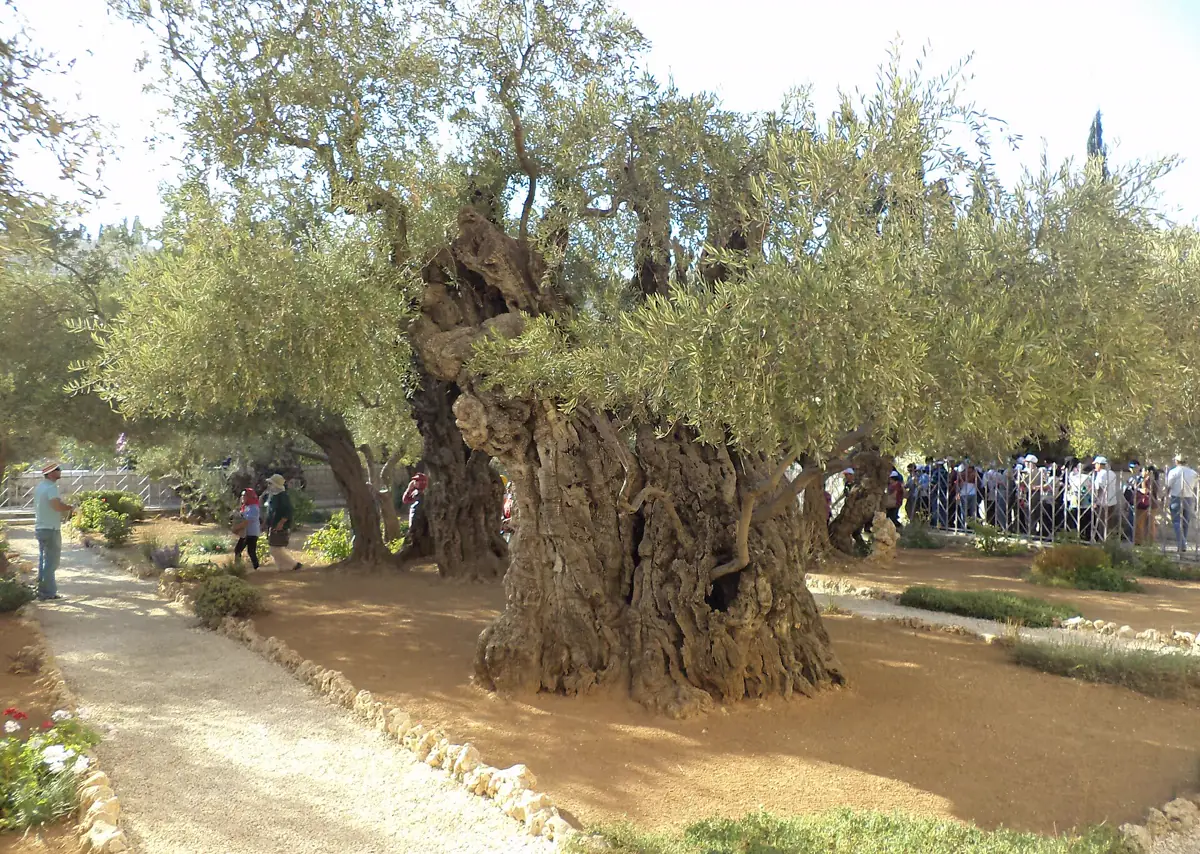
One of the oldest olive trees in the Garden of Gethsemane, rooted through centuries of continuous growth — the grove where Jesus prayed on the night of His arrest.Bogdan Kosar · CC BY-SA 4.0
Set times
Daniel "kneeled upon his knees three times a day, and prayed, and gave thanks before his God, as he did aforetime" (Daniel 6:10) — and kept doing it when it became a crime. David wrote: "Evening, and morning, and at noon, will I pray, and cry aloud: and he shall hear my voice" (Psalm 55:17). Jesus Himself, "in the morning, rising up a great while before day, he went out, and departed into a solitary place, and there prayed" (Mark 1:35).
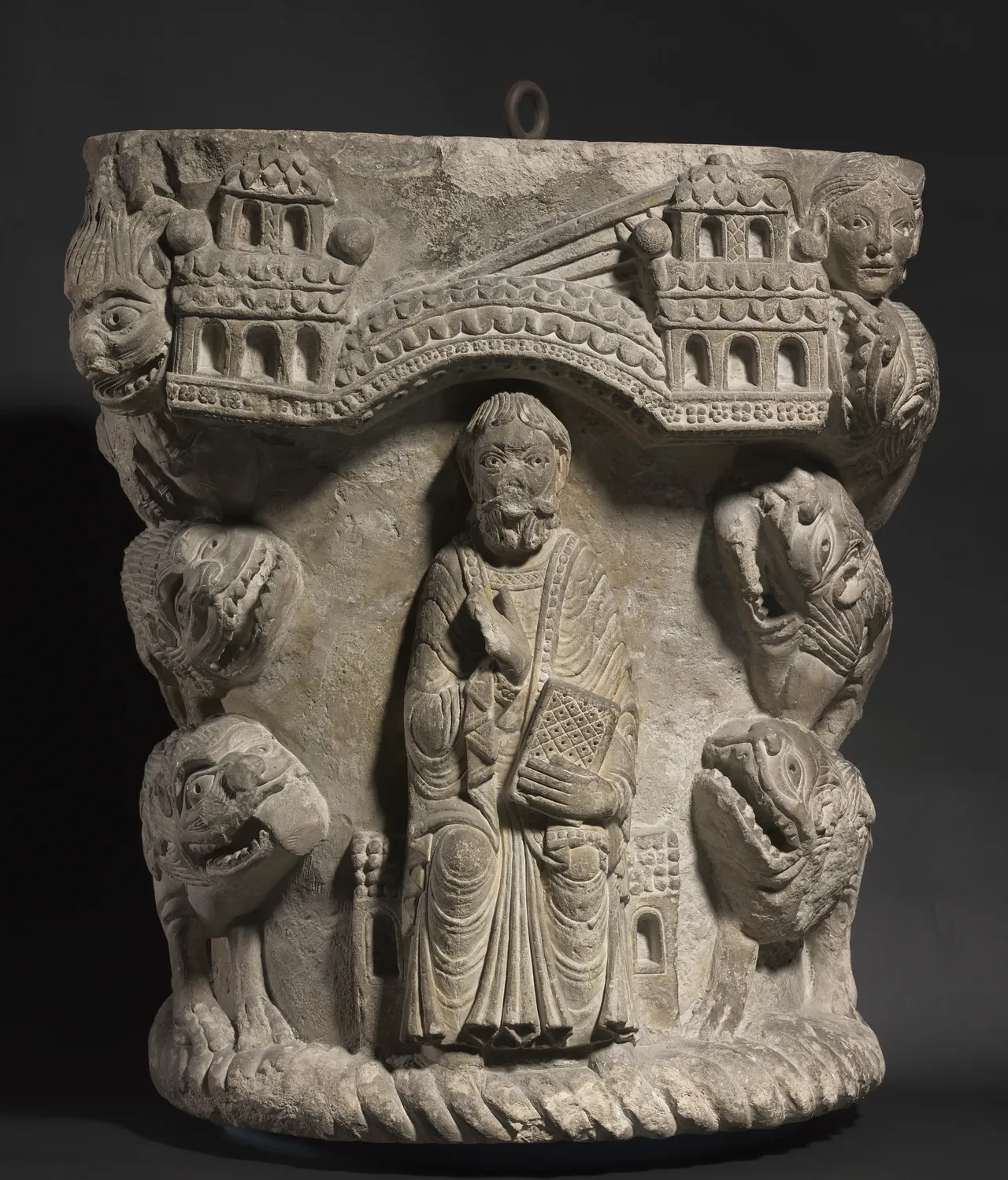
A French limestone carving of about 1125 to 1150 showing Daniel in the lions' den, the man who kept his set times of prayer whatever it cost him.Daniel in the Lion's Den · c. 1125–50 · Cleveland Museum of Art · CC0 · museum record · Galeria Regni
None of these is a rule for you. But they show that the people who prayed most did not leave prayer to chance. Pick a time — for most people, the morning, before the day's noise starts — and a place, and guard them. "My voice shalt thou hear in the morning, O LORD; in the morning will I direct my prayer unto thee, and will look up" (Psalm 5:3).
Posture and place
Scripture does not prescribe one posture for prayer, but it shows many, and each says something. Daniel "kneeled upon his knees" (Daniel 6:10). Jesus assumed His hearers would sometimes stand: "And when ye stand praying, forgive, if ye have ought against any" (Mark 11:25). In Gethsemane He "fell on his face, and prayed" (Matthew 26:39). Paul wrote, "I will therefore that men pray every where, lifting up holy hands, without wrath and doubting" (1 Timothy 2:8). The tax collector would not even lift his eyes, but "smote upon his breast" (Luke 18:13).
The lesson is not that one position is holy and the others are not. It is that the body can help the heart. Kneeling can teach humility when you do not feel humble. Standing can keep a tired believer awake. Walking can help a wandering mind; George Müller wrote that he found it "very beneficial" to walk in the fields before breakfast, New Testament in hand, meditating as he went.21 Use whatever helps you pay attention to God, and do not judge another believer for using something else.
The place matters less than the habit. Jesus' word "closet" (Matthew 6:6) means an inner room, a storeroom — somewhere you can shut the door. For a parent of small children it may be the car before work, or a chair in the kitchen before anyone else is up. What matters is that it is somewhere you can be honest without an audience.
Start with the word
The single most useful thing I know about daily prayer comes from George Müller. For about ten years he had begun each morning by trying to pray. Then, in 1841, he changed the order. He wrote that he "saw more clearly than ever that the first great and primary business to which I ought to attend every day was, to have my soul happy in the Lord," and that the way to it was not to begin with prayer but "to give myself to the reading of the word of God, and to meditation on it."22 He described what happened:
The result I have found to be almost invariably this, that after a very few minutes my soul has been led to confession, or to thanksgiving, or to intercession, or to supplication; so that, though I did not, as it were, give myself to prayer, but to meditation, yet it turned almost immediately more or less into prayer.22
This is the biblical meaning of meditation: not emptying the mind, but filling it with God's word and turning that word over. "But his delight is in the law of the LORD; and in his law doth he meditate day and night" (Psalm 1:2). And the psalmist again: "I will meditate in thy precepts, and have respect unto thy ways" (Psalm 119:15). Read a passage slowly. Ask what it says about God, what it shows you to confess, what it gives you to thank Him for, and what it moves you to ask. Then pray it back to Him. When your mind wanders — and it will — go back to the text. The Bible keeps prayer from drifting.
A simple plan
Here is a plan you can start tomorrow. Adjust it to your life.
1. Choose a time and place. Fifteen minutes is a good start. Consistency matters more than length. 2. Read a short passage. A psalm, or a section of a Gospel. Read it slowly, out loud if it helps. 3. Pray the passage. Turn what you read into adoration, confession, thanksgiving and request. 4. Pray the Lord's Prayer. Slowly, phrase by phrase, adding your own words under each line. 5. Pray through a short list. Your family, your church, a few friends who do not know Christ, those in authority, and one or two needs of your own. 6. Write down requests and answers. Not to record what you imagine God saying, but to record what you asked and what happened. Müller kept such records for decades, and they became the backbone of his thanksgiving.
Praying without ceasing
"Pray without ceasing" (1 Thessalonians 5:17) does not mean being on your knees all day. It means living in a running conversation with God between the set times. Nehemiah, standing before the king with a dangerous request, prayed in the space of a breath: "Then the king said unto me, For what dost thou make request? So I prayed to the God of heaven" (Nehemiah 2:4). Short prayers in the middle of the day — at the start of a task, in a moment of temptation, when someone's name comes to mind — are the fruit of the longer ones.
When you do not feel like it
You will not always feel like praying. Pray anyway. Feelings follow faithfulness far more often than the other way round. Jesus told His sleepy disciples in Gethsemane, "Watch and pray, that ye enter not into temptation: the spirit indeed is willing, but the flesh is weak" (Matthew 26:41). He knew their weakness, and He still told them to pray.
And if you miss a day, or a week, do not punish yourself by staying away. Come back. "Let us therefore come boldly unto the throne of grace, that we may obtain mercy, and find grace to help in time of need" (Hebrews 4:16). That throne is called a throne of grace for a reason.
Prayer is not a technique to be mastered. It is a Father to be trusted. Everything in this paper comes back to that.
You come to Him through Jesus Christ, the one mediator, who lives to intercede for you. You come helped by the Holy Ghost, who prays in you when you have no words. You come shaped by His word, which tells you who He is and what He has promised. You come honestly — with praise, confession, thanks and need. And you keep coming, through yes and no and wait, because He is good.
If you have never prayed — really prayed, not recited — then start there. You do not need special words. Scripture's promise is simple: "For whosoever shall call upon the name of the Lord shall be saved" (Romans 10:13). Turn from your sin, trust in Christ crucified and risen, and tell Him so. The Bible calls that "repentance toward God, and faith toward our Lord Jesus Christ" (Acts 20:21).
Mike Shreve told his story on The King Is Coming Show (TKIC #46): a kundalini and yoga guru with 300 students — until, in his telling, one prayer ended it all, and he was born again on a Tampa roadside. Watch it in his own words: youtube.com/watch?v=oqAq58bDC4k Mike's account of what happened to him, shared as his testimony — weigh it for yourself.
Prayer can begin in one honest sentence. Yours can begin today. And if you have prayed for years and grown tired, begin again tomorrow morning with a psalm, a quiet place and an honest heart. "Call unto me, and I will answer thee, and shew thee great and mighty things, which thou knowest not" (Jeremiah 33:3).
When you are ready to go deeper, the companion paper, Prayer Essentials — The Full Study, is waiting. Free truth, no pressure.
1Andrew Murray, With Christ in the School of Prayer (New York: Fleming H. Revell, n.d.), First Lesson. Online: https://www.ccel.org/ccel/murray/prayer.↩
2James Strong, The Exhaustive Concordance of the Bible (New York: Hunt & Eaton, 1890), Hebrew and Chaldee Dictionary, nos. 6419, 8605.↩
5John Bunyan, I Will Pray with the Spirit, and I Will Pray with the Understanding Also: or, A Discourse Touching Prayer, 2nd ed. (London: printed for the author, 1663), "What Prayer Is." Online transcription: https://distantreader.org/stacks/earlyprint/txt/A30158.txt.↩
8Strong, Exhaustive Concordance, Greek Dictionary, no. 5: "father as a vocative."↩
9Bunyan, I Will Pray with the Spirit, "What it is to pray with the Spirit."↩
10The Westminster Confession of Faith (1646), 21.2. Online: https://www.opc.org/wcf.html.↩
11C. H. Spurgeon, "Order and Argument in Prayer," Sermon No. 700, preached July 15, 1866, Metropolitan Tabernacle, Newington, in The Metropolitan Tabernacle Pulpit, vol. 12. Online (modernized edition): https://answersingenesis.org/education/spurgeon-sermons/700-order-and-argument-in-prayer/.↩
12E. M. Bounds, Power Through Prayer, 12th ed. (London: Marshall Brothers, n.d.), ch. 1. Online: https://www.gutenberg.org/ebooks/65115. On Bounds (1835–1913), chaplain of the Fifth Missouri Regiment in the Civil War, see the biographical note in his Purpose in Prayer (New York: Fleming H. Revell, 1920).↩
13The Didache, ch. 8, trans. M. B. Riddle, in Ante-Nicene Fathers, vol. 7, ed. Alexander Roberts, James Donaldson and A. Cleveland Coxe (Buffalo: Christian Literature Publishing, 1886). Online: https://www.newadvent.org/fathers/0714.htm.↩
14Tertullian, On Prayer, ch. 1, trans. S. Thelwall, in Ante-Nicene Fathers, vol. 3 (Buffalo: Christian Literature Publishing, 1885). Online: https://www.newadvent.org/fathers/0322.htm.↩
15Martin Luther, A Simple Way to Pray (1535), in Luther's Works, vol. 43, Devotional Writings II, ed. Gustav K. Wiencke (Philadelphia: Fortress, 1968).↩
16Arthur T. Pierson, George Müller of Bristol, and His Witness to a Prayer-Hearing God (New York: Fleming H. Revell, 1899), ch. 20. Online: https://www.gutenberg.org/ebooks/26522.↩
17Randy Petersen, "A Prayer Meeting That Went Viral," Christian History 153 (2024). Online: https://christianhistoryinstitute.org/magazine/article/ch153-viral-prayermeeting.↩
18George Müller, quoted in Pierson, George Müller of Bristol, appendix N, "The Wise Sayings of George Müller."↩
19E. M. Bounds, Purpose in Prayer (New York: Fleming H. Revell, 1920), ch. 6. Online: https://www.gutenberg.org/ebooks/66112.↩
20Murray, With Christ in the School of Prayer, Eighth Lesson.↩
21George Müller, The Life of Trust, ed. H. Lincoln Wayland (Boston: Gould and Lincoln, 1861), entry for May 7, 1841.↩
22George Müller, The Life of Trust: Being a Narrative of the Lord's Dealings with George Müller, ed. H. Lincoln Wayland (Boston: Gould and Lincoln, 1861), entry for May 7, 1841. Online: https://www.gutenberg.org/ebooks/27288.↩
The Bible says something is fighting you. It names it.
Seven passages in the 1611 King James, one a day — the armour, the princes over the nations, the war in heaven — with the page, a work of art, a clip, and a real person who says they were delivered. Free.
This is practical teaching, not proof. It's drawn from Scripture and from walking this road myself. If you're still weighing the basics — whether God is real, whether the Bible can be trusted — I'd encourage you to start with the Skeptic resources in the Research Hub before diving in here.