A study of the Bible's promises of assurance and its warnings against falling away, taken together, so that a believer can rest without growing careless and take heed without living in fear.
Abstract
Can a Christian know that he is saved, and if so, how? The question has divided churches since the Reformation, and it troubles believers in every generation. This paper answers from the King James Bible, letting both kinds of text speak at full strength: the promises (John 10:27-29; Romans 8:38-39; 1 John 5:13) and the warnings (Hebrews 6:4-6; 10:26-31; 2 Peter 1:10). It sets the question in its history, from the Council of Trent through the Westminster Confession, John Wesley, John Bunyan and J. C. Ryle, and it gives the marks of a living faith that John's first letter was written to supply. It does not adopt any theological system or ask the reader to. It concludes that assurance is real and meant for every believer, that it rests on Christ and His promise rather than on feelings, and that the warnings are not enemies of assurance but part of the way God keeps His people. It is written for believers who doubt, and for those who have never thought to.
What’s inside
·Introduction
Part 1Part 1: Can a Christian Know?
Part 2Part 2: The Ground: What God Has Promised
Part 3Part 3: The Warnings, Taken at Full Weight
Part 4Part 4: Holding Both Together
Part 5Part 5: The Marks of a Living Faith
Part 6Part 6: When Assurance Is Shaken
Part 7Part 7: Living Assured
·Conclusion
Research paper · 9 chapters · 21 notes · October 2026
About 44 minutes · 9 parts · the PDF has the same text
Introduction
3 min read
"Am I really saved?" Few questions sit closer to the heart of a Christian, and few can do more damage when they are answered badly.
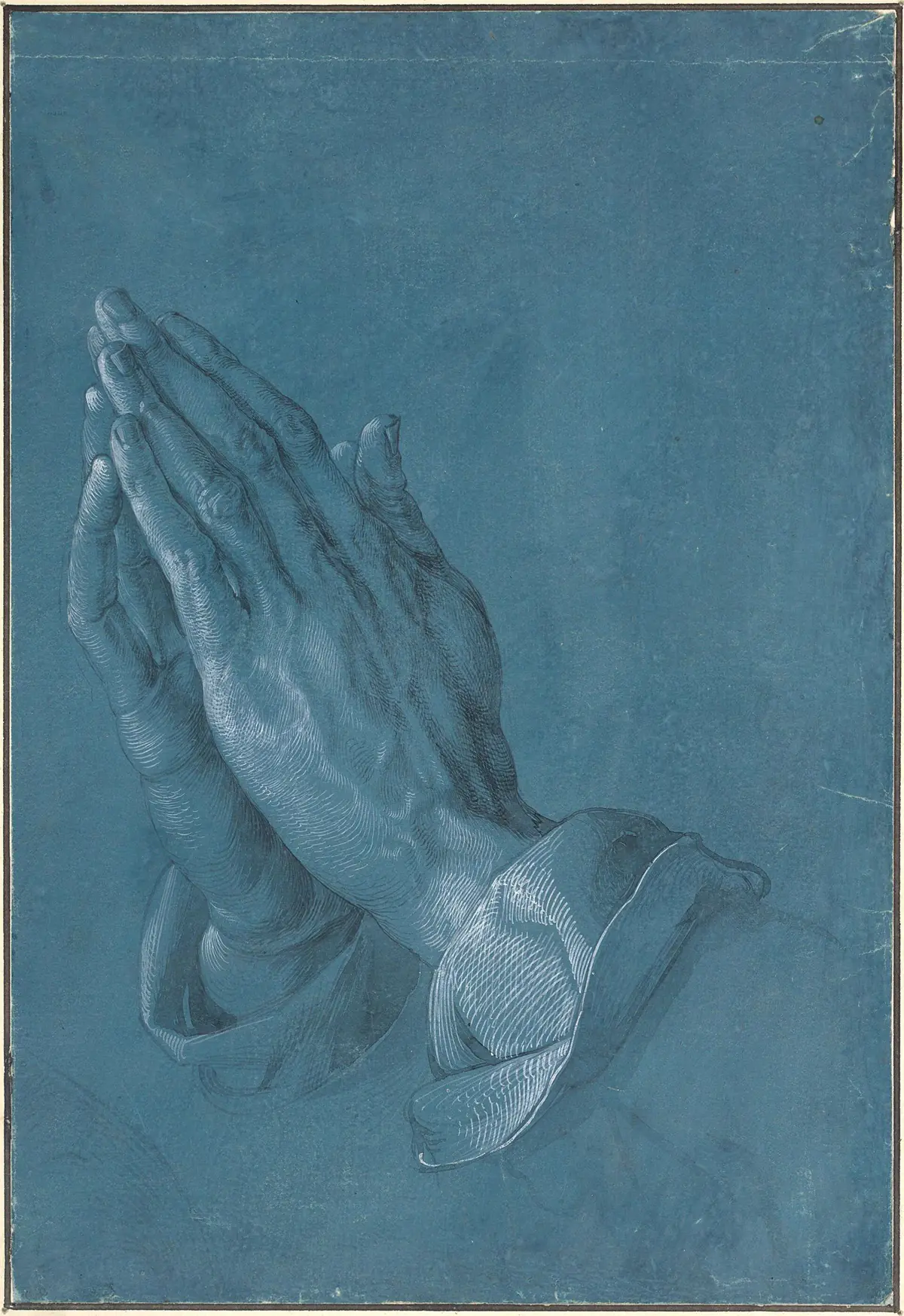
Albrecht Dürer’s Praying Hands (1508) — a working study of hands folded in petition, five centuries old and still legible at a glance.Albrecht Dürer, 1508 · Public domain
Answer it carelessly, and you may tell someone who has never turned from sin that they are safe because they once said a prayer or joined a church. Jesus warned of exactly that: "Not every one that saith unto me, Lord, Lord, shall enter into the kingdom of heaven; but he that doeth the will of my Father which is in heaven" (Matthew 7:21). Answer it fearfully, and you may leave a trembling believer who loves Christ convinced that God is waiting for an excuse to cast him out, though Jesus said, "him that cometh to me I will in no wise cast out" (John 6:37).
Scripture steers between those two ditches. It gives real, settled assurance to those who belong to Christ. And it gives real, sober warnings to those who profess His name. The aim of this paper is to let both speak.
Why this matters to me
I was raised Roman Catholic but never really connected — I went through the motions, fell asleep in the pews, and faked being sick to skip Mass. When real life hit — a lost job, a pregnant wife, constant fights — I went looking for peace anywhere I could find it. New Age, crystals, astral projection, tarot, angel numbers. None of it held. So I swung back hard to religion, said the rosary every night, and still felt nothing.
Eventually I gave up and called myself an atheist. I decided to read the Bible for one reason: to disprove it, so I'd have an excuse to stop going to church for good.
It did the opposite. Genesis gripped me. In Matthew I read Jesus' own words and felt the weight of my own sin for the first time. Then one day I got on my knees and prayed: "Jesus, if you are real, show me — and I'll serve you." A warmth ran from the top of my head to the soles of my feet. Peace I'd never known, and it didn't leave.
That is my story; the rest of it is at kylelauriano.com/about. I tell it here for one reason: assurance does not rest on a feeling, even a real one. It rests on what He has promised. Feelings came and they can fade; His word does not. That is the whole argument of this paper in a sentence.
Teaching the texts, not a system
A word about method. Since the Reformation, Christians have argued over how the promises and warnings fit together. Some hold that everyone truly born again will certainly persevere to the end, and that those who fall away were never truly saved. Others hold that a true believer can, by persistent unbelief, turn away and be lost. Both sides have serious, godly men in them, and both appeal to Scripture.
This paper does not take a side in that debate, and it does not ask you to. It does something simpler and, I think, more useful: it lets every text say what it says, as strongly as it says it. The promises are not softened to make room for the warnings, and the warnings are not explained away to protect the promises. If you hold one of the systems already, you will still find here what the Bible says to you, whichever one you hold.
What this paper is
Seven parts follow. Part 1 asks whether a Christian can know he is saved at all, and gives the history of that question. Part 2 lays the foundation: what God has promised in the gospel. Part 3 takes the warnings at full weight. Part 4 shows how Scripture holds the two together. Part 5 gives the marks of a living faith that John's first letter was written to supply. Part 6 is for those whose assurance has been shaken. Part 7 is about living assured.
A note on Scripture: every verse in this paper is quoted from the King James Bible. You can read it free in the 1611 Reader at kylelauriano.com/library. A KJV with Strong's Concordance is the best study tool most believers will ever need.
This part matters because many believers have been taught, directly or by example, that it is presumptuous to say "I know I am saved." If that were true, the rest of this paper would be pointless. So we begin with the question itself: does God intend His children to know they are His?
The question in history
The question became sharp in the sixteenth century. The Reformers taught that a sinner is justified by faith in Christ, and that faith brings with it a confidence in God's mercy. The Roman Catholic Church answered at the Council of Trent. In its sixth session, on justification, completed in January 1547, the Council taught that while no one should doubt God's mercy or the merit of Christ, each person, considering his own weakness, may fear for his own state, "seeing that no one can know with a certainty of faith, which cannot be subject to error, that he has obtained the grace of God."1 It added that, apart from special revelation, no one can know for certain that he is among the predestined, and it pronounced its anathema on anyone who claimed "an absolute and infallible certainty" of persevering to the end without such a revelation.2
I was raised in that church, and I want to describe its teaching fairly. Trent was not telling Catholics to despair. It was warning against a careless confidence that rests on a feeling of being forgiven rather than on real repentance and faith, and Scripture warns against that too. But it denied that an ordinary believer can have a certainty of faith about his own salvation. That denial is the question this paper has to test by Scripture.
A century later, the Westminster Assembly in London gave the opposite answer. Its Confession of Faith, completed in 1646, devoted a chapter to "the Assurance of Grace and Salvation." It granted that hypocrites "may vainly deceive themselves with false hopes and carnal presumptions." But it taught that those who truly believe in the Lord Jesus, love Him in sincerity, and seek to walk in good conscience before Him "may in this life be certainly assured that they are in the state of grace, and may rejoice in the hope of the glory of God, which hope shall never make them ashamed."3
John Wesley, the eighteenth-century evangelist who differed sharply from the Westminster divines on other questions, agreed with them here. He preached that a believer may know he is a child of God by the witness of God's Spirit, a subject we will come to in Part 5.4 On this point, Christians who disagree about much else have stood together: a believer may know.
What John says
The decisive word belongs to Scripture, and on this question it is unusually plain. The apostle John tells us why he wrote his first letter:
“These things have I written unto you that believe on the name of the Son of God; that ye may know that ye have eternal life, and that ye may believe on the name of the Son of God.” (1 John 5:13)
Compare the purpose John gives for his Gospel: "But these are written, that ye might believe that Jesus is the Christ, the Son of God; and that believing ye might have life through his name" (John 20:31). The Gospel was written so that readers might believe and have life. The letter was written to people who already believe, so that they might know they have it. Not hope, not guess: know.
The same confidence runs through the New Testament. "Being justified by faith, we have peace with God through our Lord Jesus Christ" (Romans 5:1). Paul, facing death, wrote, "for I know whom I have believed, and am persuaded that he is able to keep that which I have committed unto him against that day" (2 Timothy 1:12). Hebrews invites believers to "draw near with a true heart in full assurance of faith" (Hebrews 10:22), and urges them to "shew the same diligence to the full assurance of hope unto the end" (Hebrews 6:11). And Paul says the Holy Ghost Himself testifies within the believer: "The Spirit itself beareth witness with our spirit, that we are the children of God" (Romans 8:16).
So the question is not whether a Christian may know he is saved. Scripture says he may, and that God wants him to. The question is how, and on what ground. That is where the care is needed.
Assurance is not the same as faith
One more distinction before we go on, because it has comforted many troubled believers. Saving faith and the assurance of salvation are related, but they are not the same thing.
The nineteenth-century bishop J. C. Ryle, in his book Holiness, put it in a famous image: "Faith, let us remember, is the root, and assurance is the flower. Doubtless you can never have the flower without the root; but it is no less certain you may have the root and not the flower."5 Ryle was confident that simple faith in Christ will save a man even if he never attains full assurance: such a believer may reach his haven "weather-beaten and tempest-tossed, scarcely realizing his own safety, until he opens his eyes in glory."6
Two centuries earlier the Puritan Thomas Brooks had said the same: "Though a man cannot be saved without faith, yet he may be saved without assurance. God has in many places of the Scripture declared, that without faith there is no salvation; but God has not in any one place of the Scripture declared, that without assurance there is no salvation."7
The Westminster Confession said the same: assurance "doth not so belong to the essence of faith, but that a true believer may wait long, and conflict with many difficulties before he be partaker of it."8
This matters. If you are struggling to feel sure, your struggle is not proof that you have no faith. The poor woman in the crowd who only managed to touch the hem of Jesus' garment was healed as truly as anyone. You are not saved by your assurance. You are saved by Christ, through faith. Assurance is the enjoyment of that salvation, and God wants you to have it. But its absence for a season is not the same as the absence of Christ.
This part matters because assurance is only as strong as what it rests on. If it rests on how well you are doing, it will rise and fall with every good day and bad one. Scripture puts it somewhere else: on Christ, His work and His promise.
The gospel first
Assurance of salvation presupposes salvation, and salvation is God's work, not ours. "For by grace are ye saved through faith; and that not of yourselves: it is the gift of God: Not of works, lest any man should boast" (Ephesians 2:8-9). God justifies the ungodly, not the deserving: "But to him that worketh not, but believeth on him that justifieth the ungodly, his faith is counted for righteousness" (Romans 4:5).
A Netherlandish oil painting of about 1626 showing the Denial of Peter, the apostle whose faith did not finally fail because Christ had prayed for him.The Denial of Saint Peter · c. 1626 · Art Institute of Chicago · CC0 · museum record · Galeria Regni
That gift is received by repentance and faith. Paul summed up his whole preaching as "repentance toward God, and faith toward our Lord Jesus Christ" (Acts 20:21). He wrote to the Romans, "That if thou shalt confess with thy mouth the Lord Jesus, and shalt believe in thine heart that God hath raised him from the dead, thou shalt be saved" (Romans 10:9). When the jailer at Philippi asked what he must do, Paul and Silas answered, "Believe on the Lord Jesus Christ, and thou shalt be saved, and thy house" (Acts 16:31). And on the day of Pentecost Peter told the crowd, "Repent, and be baptized every one of you in the name of Jesus Christ for the remission of sins, and ye shall receive the gift of the Holy Ghost" (Acts 2:38). To Saul of Tarsus, Ananias said, "And now why tarriest thou? arise, and be baptized, and wash away thy sins, calling on the name of the Lord" (Acts 22:16).
Notice that the New Testament never treats baptism as an optional extra or a later stage for the especially keen. Those who believed were baptized, and baptized promptly. Christians have understood the relation of baptism to salvation in different ways, but every reading has to reckon with Acts 2:38 as it stands. If you have trusted Christ and have not been baptized, the plain instruction of Scripture is not to wait: "why tarriest thou?"
The point for assurance is this. You cannot be sure of a salvation you have never received. The first question is not "Do I feel saved?" but "Have I turned from my sin to Christ and trusted Him alone?" If the answer is no, assurance is not what you need. Christ is. If the answer is yes, then the promises that follow are yours.
The promises
Here are the words on which a believer's assurance rests. Read them slowly, and notice how many of them are in the present tense.
“He that believeth on the Son hath everlasting life” (John 3:36)
"Verily, verily, I say unto you, He that heareth my word, and believeth on him that sent me, hath everlasting life, and shall not come into condemnation; but is passed from death unto life" (John 5:24). Not "will have, if all goes well," but hath, and is passed. Again: "Verily, verily, I say unto you, He that believeth on me hath everlasting life" (John 6:47).
Jesus spoke of the security of His sheep in the strongest words in the New Testament:
“My sheep hear my voice, and I know them, and they follow me: And I give unto them eternal life; and they shall never perish, neither shall any man pluck them out of my hand. My Father, which gave them me, is greater than all; and no man is able to pluck them out of my Father's hand.” (John 10:27-29)
He spoke of the Father's will: "And this is the Father's will which hath sent me, that of all which he hath given me I should lose nothing, but should raise it up again at the last day. And this is the will of him that sent me, that every one which seeth the Son, and believeth on him, may have everlasting life: and I will raise him up at the last day" (John 6:39-40).
Paul, at the close of the great eighth chapter of Romans, gathers up every power that might threaten a believer and sets each one aside:
“For I am persuaded, that neither death, nor life, nor angels, nor principalities, nor powers, nor things present, nor things to come, Nor height, nor depth, nor any other creature, shall be able to separate us from the love of God, which is in Christ Jesus our Lord.” (Romans 8:38-39)
The same chapter opens, "There is therefore now no condemnation to them which are in Christ Jesus, who walk not after the flesh, but after the Spirit" (Romans 8:1), and it asks, "Who shall lay any thing to the charge of God's elect? It is God that justifieth. Who is he that condemneth? It is Christ that died, yea rather, that is risen again, who is even at the right hand of God, who also maketh intercession for us" (Romans 8:33-34).
Paul tells the Philippians he is "confident of this very thing, that he which hath begun a good work in you will perform it until the day of Jesus Christ" (Philippians 1:6). He tells the Corinthians that God "shall also confirm you unto the end, that ye may be blameless in the day of our Lord Jesus Christ. God is faithful, by whom ye were called" (1 Corinthians 1:8-9). And the Thessalonians: "Faithful is he that calleth you, who also will do it" (1 Thessalonians 5:24).
Kept by the power of God
Peter writes of an inheritance "reserved in heaven for you, Who are kept by the power of God through faith unto salvation ready to be revealed in the last time" (1 Peter 1:4-5). The inheritance is kept for the believer, and the believer is kept for the inheritance. Both are guarded by God's power, and the means is faith.
Jude closes his short, severe letter, full of warnings about apostates, with a doxology to the One who keeps: "Now unto him that is able to keep you from falling, and to present you faultless before the presence of his glory with exceeding joy" (Jude 1:24).
Christ the intercessor
The believer's security rests not only on what Christ did on the cross but on what He is doing now. "Wherefore he is able also to save them to the uttermost that come unto God by him, seeing he ever liveth to make intercession for them" (Hebrews 7:25).
We see that intercession at work on the night before the cross. Jesus told Peter, "Simon, Simon, behold, Satan hath desired to have you, that he may sift you as wheat: But I have prayed for thee, that thy faith fail not: and when thou art converted, strengthen thy brethren" (Luke 22:31-32). Peter did fall that night; he denied his Lord three times. But his faith did not finally fail, because Christ had prayed for it. "And Peter went out, and wept bitterly" (Luke 22:62). Within weeks he was preaching at Pentecost.
The seal and the oath
Two more images complete the picture. Paul says that believers, having heard the gospel and believed, "were sealed with that holy Spirit of promise, Which is the earnest of our inheritance until the redemption of the purchased possession" (Ephesians 1:13-14), and that they are "sealed unto the day of redemption" (Ephesians 4:30). A seal marked ownership. An earnest was a first instalment, a deposit that pledged the rest.
And Hebrews says that God, to make His promise doubly sure, swore an oath:
“Wherein God, willing more abundantly to shew unto the heirs of promise the immutability of his counsel, confirmed it by an oath: That by two immutable things, in which it was impossible for God to lie, we might have a strong consolation, who have fled for refuge to lay hold upon the hope set before us: Which hope we have as an anchor of the soul, both sure and stedfast” (Hebrews 6:17-19)
Notice where this comes: in the same chapter as the most feared warning in the New Testament. We will come back to that.
Righteousness in heaven
John Bunyan, the seventeenth-century Baptist preacher who wrote The Pilgrim's Progress, spent years tormented by fear that he had lost his soul. His spiritual autobiography, Grace Abounding to the Chief of Sinners (1666), records how relief finally came. As he was walking in a field, fearing that all was not right with him, a sentence came to his mind: "Thy righteousness is in heaven." He saw, he wrote, "with the eyes of my soul, Jesus Christ at God's right hand: there, I say, was my righteousness." And then the discovery that changed everything:
I also saw moreover, that it was not my good frame of heart that made my righteousness better, nor yet my bad frame that made my righteousness worse; for my righteousness was Jesus Christ Himself, The same yesterday, to-day, and for ever.9
"Now did my chains fall off my legs indeed," he continued.10 When he went home to look for the sentence in his Bible and could not find it in those words, he found its substance in 1 Corinthians 1:30: Christ Jesus "of God is made unto us wisdom, and righteousness, and sanctification, and redemption."
That is the ground of assurance. Not your frame of heart, good or bad, but Christ at the right hand of God. "I am crucified with Christ: nevertheless I live; yet not I, but Christ liveth in me: and the life which I now live in the flesh I live by the faith of the Son of God, who loved me, and gave himself for me" (Galatians 2:20).
The thief and the publican
Two short scenes from Luke show how little the sinner brings and how much he receives. A tax collector stood far off in the temple and "smote upon his breast, saying, God be merciful to me a sinner." Jesus said, "I tell you, this man went down to his house justified" (Luke 18:13-14). And a dying thief, with no time left to amend his life, said, "Lord, remember me when thou comest into thy kingdom." Jesus answered, "Verily I say unto thee, To day shalt thou be with me in paradise" (Luke 23:42-43).
Neither man had a record to point to. Both had a Saviour. That is where assurance begins.
This part matters because a paper on assurance that skips the warnings is not teaching the Bible. The same New Testament that says "they shall never perish" also says "take heed lest he fall." The warnings are not few or minor, and they are addressed to church members, not to pagans. They must be read as carefully as the promises.
The Garden Tomb in Jerusalem — a rock-cut burial place of the very kind the Gospels describe, its stone bench still empty.Gary Todd · CC0
Hebrews 6
The passage that has caused more anxiety than any other is this:
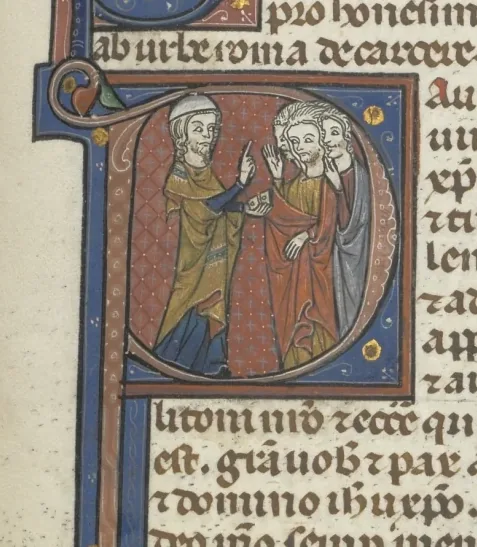
A thirteenth-century Bible page from southern France where Philemon ends and Hebrews begins, the letter whose warnings in chapters 6 and 10 this part weighs in full.Fol. 459r, Philemon, historiated initial P, Paul addressing three men and Hebrews, historiated initial M, Paul seated at a desk, writing · c. 1275–1300 · Cleveland Museum of Art · CC0 · full page · museum record · Galeria Regni
“For it is impossible for those who were once enlightened, and have tasted of the heavenly gift, and were made partakers of the Holy Ghost, And have tasted the good word of God, and the powers of the world to come, If they shall fall away, to renew them again unto repentance; seeing they crucify to themselves the Son of God afresh, and put him to an open shame.” (Hebrews 6:4-6)
The writer continues with a picture from farming: ground that drinks in the rain and brings forth good crops "receiveth blessing from God: But that which beareth thorns and briers is rejected, and is nigh unto cursing; whose end is to be burned" (Hebrews 6:7-8).
Notice what the passage describes. These are people who have been "enlightened," who have "tasted of the heavenly gift," been "made partakers of the Holy Ghost," and "tasted the good word of God, and the powers of the world to come." Whatever else this means, it describes people who have been deeply involved in the life of the church and have experienced the power of the gospel. And it warns that if they "fall away," it is impossible to renew them again to repentance, because they "crucify to themselves the Son of God afresh, and put him to an open shame." The falling away here is not a stumble. It is a public repudiation of Christ, siding with those who crucified Him.
Hebrews 10
The second great warning is even sterner:
“For if we sin wilfully after that we have received the knowledge of the truth, there remaineth no more sacrifice for sins, But a certain fearful looking for of judgment and fiery indignation, which shall devour the adversaries.” (Hebrews 10:26-27)
The writer reasons from the lesser to the greater. Under the law of Moses, a man who despised it "died without mercy under two or three witnesses." "Of how much sorer punishment, suppose ye, shall he be thought worthy, who hath trodden under foot the Son of God, and hath counted the blood of the covenant, wherewith he was sanctified, an unholy thing, and hath done despite unto the Spirit of grace?" (Hebrews 10:28-29). And he ends, "It is a fearful thing to fall into the hands of the living God" (Hebrews 10:31).
Again, notice the description. The sin in view is "wilful," continued after "the knowledge of the truth." It treads the Son of God underfoot, counts His blood unholy, and insults the Spirit of grace. This is not the weakness of a believer who keeps falling into a sin he hates. It is the deliberate, settled rejection of Christ by someone who knows exactly who He is.
The other warnings
Hebrews is not alone. The whole letter is laced with warnings: "How shall we escape, if we neglect so great salvation" (Hebrews 2:3). And again: "Take heed, brethren, lest there be in any of you an evil heart of unbelief, in departing from the living God. But exhort one another daily, while it is called To day; lest any of you be hardened through the deceitfulness of sin. For we are made partakers of Christ, if we hold the beginning of our confidence stedfast unto the end" (Hebrews 3:12-14). And it holds up Esau as a warning, "who for one morsel of meat sold his birthright. For ye know how that afterward, when he would have inherited the blessing, he was rejected: for he found no place of repentance, though he sought it carefully with tears" (Hebrews 12:16-17).
Paul writes in the same way. To the Colossians, he says Christ has reconciled them "to present you holy and unblameable and unreproveable in his sight: If ye continue in the faith grounded and settled, and be not moved away from the hope of the gospel" (Colossians 1:22-23). To the Corinthians: "By which also ye are saved, if ye keep in memory what I preached unto you, unless ye have believed in vain" (1 Corinthians 15:2). Of himself: "But I keep under my body, and bring it into subjection: lest that by any means, when I have preached to others, I myself should be a castaway" (1 Corinthians 9:27). To all of them: "Wherefore let him that thinketh he standeth take heed lest he fall" (1 Corinthians 10:12). To the Gentile believers in Rome, using the image of branches grafted into an olive tree: "Be not highminded, but fear: For if God spared not the natural branches, take heed lest he also spare not thee. Behold therefore the goodness and severity of God: on them which fell, severity; but toward thee, goodness, if thou continue in his goodness: otherwise thou also shalt be cut off" (Romans 11:20-22).
Jesus Himself warned: "But he that shall endure unto the end, the same shall be saved" (Matthew 24:13). In the parable of the sower, He described those on rocky ground "which, when they hear, receive the word with joy; and these have no root, which for a while believe, and in time of temptation fall away" (Luke 8:13). And of the vine and its branches: "If a man abide not in me, he is cast forth as a branch, and is withered; and men gather them, and cast them into the fire, and they are burned" (John 15:6). To the church at Smyrna the risen Christ said, "be thou faithful unto death, and I will give thee a crown of life" (Revelation 2:10).
The Old Testament had already sounded the same note through Ezekiel: "But when the righteous turneth away from his righteousness, and committeth iniquity... shall he live? All his righteousness that he hath done shall not be mentioned" (Ezekiel 18:24).
The examples
Scripture also gives names. Judas Iscariot walked with Jesus for three years, was sent out with the twelve, and kept the common purse. Jesus said in His prayer, "those that thou gavest me I have kept, and none of them is lost, but the son of perdition; that the scripture might be fulfilled" (John 17:12). Paul names Hymenaeus and Alexander, who put away faith and a good conscience and "concerning faith have made shipwreck" (1 Timothy 1:19-20). And in his last letter, with a sadness you can still feel, he wrote, "For Demas hath forsaken me, having loved this present world" (2 Timothy 4:10).
Against these stands Peter, who also fell, and fell badly, but who wept, returned, and was restored: three times asked, "lovest thou me?" and three times told, "Feed my sheep" (John 21:17). The difference between Judas and Peter is not that one sinned and the other did not. Both betrayed their Lord on the same night. The difference is that one despaired and went out to die, and the other wept and came back.
How Christians have read the warnings
Faced with texts like these, Christians have read them in more than one way. It is honest to say so.
Some read the warnings as describing people who professed faith and shared the outward life of the church but were never truly born again. They point to John's words about those who left the church in his day: "They went out from us, but they were not of us; for if they had been of us, they would no doubt have continued with us: but they went out, that they might be made manifest that they were not all of us" (1 John 2:19). They point to Jesus' words to the false disciples on the last day, "I never knew you" (Matthew 7:23), not "I knew you once." And they point to Hebrews 6 itself, where the writer immediately adds, "But, beloved, we are persuaded better things of you, and things that accompany salvation, though we thus speak" (Hebrews 6:9), as though the fruitless ground he described had never had the things that accompany salvation.
Others read the warnings as describing real believers who, by persistent and wilful unbelief, turn away from Christ and are lost. They point to the language of Hebrews 6:4-5 and 10:29, "partakers of the Holy Ghost," "the blood of the covenant, wherewith he was sanctified," and to the "if ye continue" of Colossians 1:23 and the "otherwise thou also shalt be cut off" of Romans 11:22. They argue that the warnings would be empty if the danger they describe could never happen to anyone they address.
This paper does not settle that debate. But it is worth noticing how much both readings share. Neither reading allows a person to treat the warnings as irrelevant to himself. Neither allows a professing Christian to live in open, persistent rebellion and call himself safe. And neither teaches that a believer who hates his sin, keeps coming back to Christ in repentance, and fears that he has fallen away, is the person these passages are describing.
What the warnings are about
Read closely, the great warnings share a common shape. They are not about the ordinary sins and failures of a struggling believer. John says plainly that believers still sin and still have an advocate (1 John 1:8; 2:1). The warnings concern something else:
A turning away from Christ Himself. "An evil heart of unbelief, in departing from the living God" (Hebrews 3:12). Or again: "If they shall fall away... seeing they crucify to themselves the Son of God afresh" (Hebrews 6:6).
Deliberate and continued. "If we sin wilfully after that we have received the knowledge of the truth" (Hebrews 10:26). The writer has in view a settled course of sin against known truth, not a single fall.
Contempt for His sacrifice. Treading the Son of God underfoot and counting His blood "an unholy thing" (Hebrews 10:29).
Hardening. "Lest any of you be hardened through the deceitfulness of sin" (Hebrews 3:13). The danger grows slowly, as the heart grows cold.
This has a pastoral consequence. The person most troubled by Hebrews 6 is usually the person least like the people it describes. A heart that trembles at the thought of having crucified the Son of God afresh is not a heart that has done it with contempt.
Why God warns
Finally, notice the purpose of the warnings. Hebrews 6 is followed at once by "we are persuaded better things of you" (verse 9), by a call to "the full assurance of hope unto the end" (verse 11), and by the oath and the anchor (verses 17-19). Hebrews 10 is followed by "Cast not away therefore your confidence, which hath great recompence of reward," and by this:
“But we are not of them who draw back unto perdition; but of them that believe to the saving of the soul.” (Hebrews 10:39)
The writer warns because he expects his readers to heed the warning. The warnings are not there to make believers doubt the promises. They are one of the means by which God keeps His people from drifting: a guardrail on a mountain road is not an insult to the driver. Those who heed the warning are those who are kept. That is why the same letter can say both "it is impossible... if they shall fall away" and "we are persuaded better things of you."
This part matters because most of us lean one way. Some of us need the promises to stop us from despair; others need the warnings to stop us from drifting. Scripture gives both, often in the same breath, and shows how they work together.
Make your calling and election sure
Peter gives the clearest single passage on how the two fit. He begins with what God has given: "his divine power hath given unto us all things that pertain unto life and godliness" (2 Peter 1:3). Then he calls for effort:
“And beside this, giving all diligence, add to your faith virtue; and to virtue knowledge; And to knowledge temperance; and to temperance patience; and to patience godliness; And to godliness brotherly kindness; and to brotherly kindness charity. For if these things be in you, and abound, they make you that ye shall neither be barren nor unfruitful in the knowledge of our Lord Jesus Christ.” (2 Peter 1:5-8)
The one who lacks these things "is blind, and cannot see afar off, and hath forgotten that he was purged from his old sins" (2 Peter 1:9). And then the conclusion:
“Wherefore the rather, brethren, give diligence to make your calling and election sure: for if ye do these things, ye shall never fall: For so an entrance shall be ministered unto you abundantly into the everlasting kingdom of our Lord and Saviour Jesus Christ.” (2 Peter 1:10-11)
Two things stand side by side. There is a real calling and election, God's work. And there is a real diligence, the believer's work, by which that calling is made "sure," confirmed and evident, so that "ye shall never fall." Peter does not set them against each other. The grace of God is the reason for the effort, and the effort is the evidence of the grace.
The Westminster Confession drew exactly this application: "it is the duty of everyone to give all diligence to make his calling and election sure," and assurance, far from making men careless, enlarges the heart "in strength and cheerfulness in the duties of obedience... so far is it from inclining men to looseness."11
Work out what God works in
Paul says the same thing in different words: "work out your own salvation with fear and trembling. For it is God which worketh in you both to will and to do of his good pleasure" (Philippians 2:12-13). The believer works out what God works in. The fear and trembling are not the fear of a slave who expects to be thrown out, but the reverence of a child who knows Whose work is going on in him.
Keep yourselves; He is able to keep you
Jude does it within eight verses. "But ye, beloved, building up yourselves on your most holy faith, praying in the Holy Ghost, Keep yourselves in the love of God, looking for the mercy of our Lord Jesus Christ unto eternal life" (Jude 1:20-21). Then: "Now unto him that is able to keep you from falling" (Jude 1:24). Keep yourselves; He keeps you. Jude saw no contradiction.
Peter, too: believers "are kept by the power of God through faith" (1 Peter 1:5). God's power does the keeping, but it keeps through faith, not apart from it.
The foundation and the seal
Paul gives perhaps the most compact summary in a single verse: "Nevertheless the foundation of God standeth sure, having this seal, The Lord knoweth them that are his. And, Let every one that nameth the name of Christ depart from iniquity" (2 Timothy 2:19). The seal has two sides. On one: God knows His own. On the other: those who name Christ depart from sin. You cannot read only one side of the seal.
Who needs which word
The promises and the warnings are both for the whole church. But in practice they land differently, and a wise pastor uses them that way.
The promises are bread for the trembling. If you are afraid that you are not saved, and that fear drives you to Christ, you are the person John 6:37 was spoken for. Isaiah has a word for exactly that state: "Who is among you that feareth the LORD, that obeyeth the voice of his servant, that walketh in darkness, and hath no light? let him trust in the name of the LORD, and stay upon his God" (Isaiah 50:10).
The warnings are a wall for the careless. If you are comfortable in a sin you have no intention of leaving, and you quiet your conscience with the thought that you once believed, the warnings are written for you. "Examine yourselves, whether ye be in the faith; prove your own selves" (2 Corinthians 13:5).
The danger is giving each word to the wrong person: comforting the careless with promises and crushing the tender with warnings. That is the mistake Job's friends made, and it is still made.
This part matters because John did not only tell his readers they could know they had eternal life; he told them how. His first letter is full of the word "hereby": "hereby we do know," "hereby know we." These are not hoops to jump through to earn salvation. They are the signs of life by which a living faith can be recognised.
Three witnesses
The Westminster divines held that a believer's assurance has three grounds. They called it "an infallible assurance of faith founded upon the divine truth of the promises of salvation, the inward evidence of those graces unto which these promises are made, the testimony of the Spirit of adoption witnessing with our spirits that we are the children of God."12 Put plainly, they meant the word of promise outside us, the evidence of God's work in us, and the witness of the Spirit with us.
The first we have already seen in Part 2. It is the foundation, and the other two rest on it. Here we take up the second and the third.
The marks in 1 John
John gives several marks of those who truly know God. Taken together, they are a portrait of a living faith.
Believing on the Son. "He that believeth on the Son of God hath the witness in himself... And this is the record, that God hath given to us eternal life, and this life is in his Son. He that hath the Son hath life; and he that hath not the Son of God hath not life" (1 John 5:10-12). The first mark is not a feeling about yourself but faith in Christ. Do you believe that Jesus is the Son of God who died for sinners and rose again, and are you trusting Him?
Keeping His commandments. "And hereby we do know that we know him, if we keep his commandments. He that saith, I know him, and keepeth not his commandments, is a liar, and the truth is not in him" (1 John 2:3-4). This is not sinless perfection. John has just said, "If we say that we have no sin, we deceive ourselves" (1 John 1:8). It is the settled direction of a life: a person who wants to obey, who grieves when he does not, and who keeps getting up.
Confessing sin. "If we confess our sins, he is faithful and just to forgive us our sins, and to cleanse us from all unrighteousness" (1 John 1:9). And "if any man sin, we have an advocate with the Father, Jesus Christ the righteous" (1 John 2:1). A believer is not someone who never sins. He is someone who brings his sin into the light instead of hiding it.
Loving the brethren. "We know that we have passed from death unto life, because we love the brethren. He that loveth not his brother abideth in death" (1 John 3:14). Love for God's people, real and practical, love "in deed and in truth" (1 John 3:18), is one of the plainest marks of new life.
The Spirit given. "And hereby we know that he abideth in us, by the Spirit which he hath given us" (1 John 3:24). And again: "Hereby know we that we dwell in him, and he in us, because he hath given us of his Spirit" (1 John 4:13).
Paul gives the same marks under another name: "But the fruit of the Spirit is love, joy, peace, longsuffering, gentleness, goodness, faith, Meekness, temperance" (Galatians 5:22-23). And Jesus: "Ye shall know them by their fruits" (Matthew 7:16).
When your heart condemns you
Here a warning is needed. A tender conscience can turn these marks into a torture. Do I love enough? Do I obey enough? Is this fruit, or only good manners? Looked at this way, no one ever passes.
John saw this coming, and wrote one of the kindest verses in the Bible: "And hereby we know that we are of the truth, and shall assure our hearts before him. For if our heart condemn us, God is greater than our heart, and knoweth all things" (1 John 3:19-20). The marks are not a scale on which you weigh yourself and find yourself wanting. They are evidence that God is at work. When your heart accuses you, God is greater than your heart. He knows what He has begun in you, even when you cannot see it.
So use the marks rightly. Do not ask, "Have I loved perfectly?" Ask, "Is there in me, however weak, a love for Christ and His people that was not there before, and that I would not give up?" Do not ask, "Have I stopped sinning?" Ask, "Do I hate my sin, and do I bring it to Christ?" "Therefore if any man be in Christ, he is a new creature" (2 Corinthians 5:17). New creatures are often small and weak. They are still alive.
The witness of the Spirit
The third witness is the most mysterious and the most precious. "For ye have not received the spirit of bondage again to fear; but ye have received the Spirit of adoption, whereby we cry, Abba, Father. The Spirit itself beareth witness with our spirit, that we are the children of God" (Romans 8:15-16).
John Wesley preached on this verse more than once. He offered a careful description: "The testimony of the Spirit is an inward impression on the soul, whereby the Spirit of God directly witnesses to my spirit, that I am a child of God; that Jesus Christ hath loved me, and given himself for me; and that all my sins are blotted out, and I, even I, am reconciled to God."13 Wesley knew this from experience. His journal for 24 May 1738 records the evening he went "very unwillingly" to a meeting in Aldersgate Street, London, where someone was reading Luther's preface to Romans: "I felt my heart strangely warmed. I felt I did trust in Christ, Christ alone, for salvation; and an assurance was given me that He had taken away my sins, even mine, and saved me from the law of sin and death."14
But Wesley was just as careful to guard this teaching from abuse. He insisted that the witness of the Spirit and the fruit of the Spirit go together, and drew two inferences. First: "let none ever presume to rest in any supposed testimony of the Spirit which is separate from the fruit of it." Second: "let none rest in any supposed fruit of the Spirit without the witness."15 The inner witness is not a feeling that can stand alone against the evidence of a life. Nor is an outwardly good life a substitute for knowing God as Father.
That is why my own story has to be told carefully. Peace I'd never known, and it didn't leave. But a feeling, however real, is not the ground of assurance. What I have is the word of Christ, the change He has made in my life and my home, and that peace together. The feeling confirmed the promise. It did not replace it.
False assurance
All of this has a darker side, and it must be said. There is such a thing as false assurance, and it is far more dangerous than doubt.
Jesus described people on the last day who will say, "Lord, Lord, have we not prophesied in thy name? and in thy name have cast out devils? and in thy name done many wonderful works?" And He will answer, "I never knew you: depart from me, ye that work iniquity" (Matthew 7:22-23). Paul described people who "profess that they know God; but in works they deny him" (Titus 1:16). James observed that believing God exists is not saving faith: "the devils also believe, and tremble" (James 2:19).
False assurance usually rests on something other than Christ: a prayer said once and never followed, a church membership, a family heritage, a sacrament received without repentance or faith, a spiritual experience, a belief that one belongs to the only true church. None of these, by itself, is Christ.
Two guests on The King Is Coming Show have spoken of trusting in a group or a ritual before they trusted Christ.
Criselle Mendoza told her story on The King Is Coming Show (TKIC #51): baptized at twelve in Iglesia Ni Cristo, and, in her own telling, not saved until 2025. Watch it in her own words: youtube.com/watch?v=_7vjNP6A_z8 Criselle's account of what happened to her, shared as her testimony — weigh it for yourself.
Vanessa Sprenger told her story on The King Is Coming Show (TKIC #6): raised in a group that told her it alone was saved. Watch it in her own words: youtube.com/watch?v=3dPK9NJ8GqY Vanessa's account of what happened to her, shared as her testimony — weigh it for yourself.
The answer to false assurance is not to abandon assurance. It is to make sure it rests on the right thing. Not "I belong to the right group," not "I did the right ritual," but "I have turned from my sin and trusted Christ, and His promise is mine."
This part matters because almost every serious Christian goes through seasons when assurance fades. Some go through long ones. Knowing why it happens, and what Scripture says to it, can keep a dark season from becoming despair.
William Holman Hunt’s The Light of the World (1853) — Christ knocking at a door with no outside handle; it only opens from within.William Holman Hunt, 1853 · Public domain
Why assurance is shaken
The Westminster divines listed the usual causes. True believers, they held, "may have the assurance of their salvation divers ways shaken, diminished, and intermitted; as, by negligence in preserving of it, by falling into some special sin which woundeth the conscience and grieveth the Spirit; by some sudden or vehement temptation, by God’s withdrawing the light of his countenance." Yet the divines added that, "by the operation of the Spirit, this assurance may, in due time, be revived."16
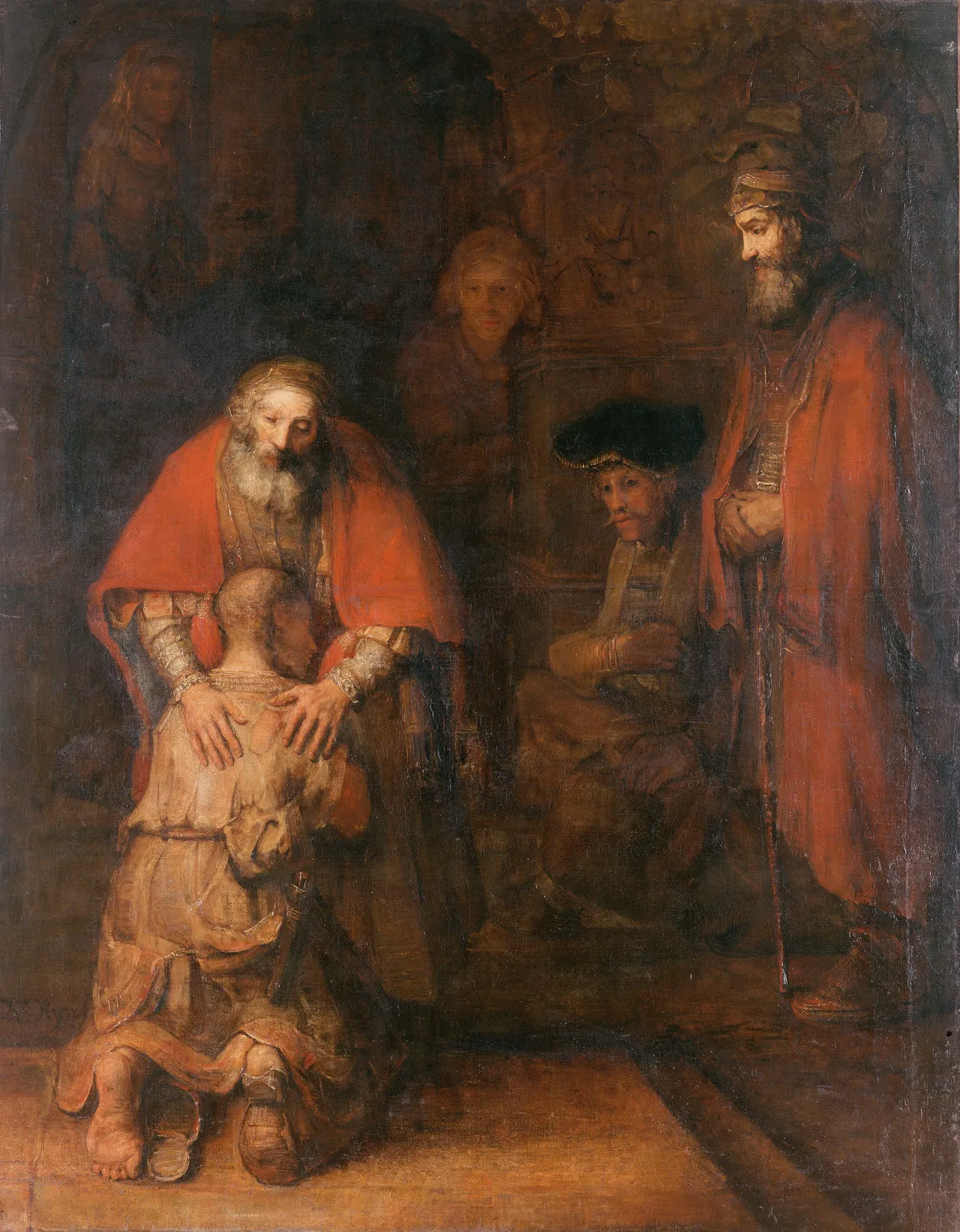
Rembrandt's Return of the Prodigal Son, painted around 1668, showing the father receiving the son who came back, as God receives the believer who returns.The Return of the Prodigal Son, Rembrandt van Rijn · c. 1668 · Wikimedia Commons · Public domain · museum record · Galeria Regni
Four causes, then: neglect, sin, temptation, and seasons of darkness that God permits for His own reasons. Each has its remedy.
When the cause is sin
If assurance has faded because you have fallen into sin, the answer is not to try to feel assured again. It is to repent. "If we confess our sins, he is faithful and just to forgive us our sins" (1 John 1:9).
David is the model. After his adultery with Bathsheba and the murder of her husband, he prayed the fifty-first psalm. Notice what he asked for: "Restore unto me the joy of thy salvation; and uphold me with thy free spirit" (Psalm 51:12). He had lost the joy. He came back for it by the road of confession.
God's discipline of His children is itself a sign that they are His. "My son, despise not thou the chastening of the Lord, nor faint when thou art rebuked of him: For whom the Lord loveth he chasteneth, and scourgeth every son whom he receiveth" (Hebrews 12:5-6). Paul told the Corinthians that when believers are judged by the Lord, "we are chastened of the Lord, that we should not be condemned with the world" (1 Corinthians 11:32). A father does not discipline someone else's child.
And the prodigal son shows how the Father receives those who come back: "But when he was yet a great way off, his father saw him, and had compassion, and ran, and fell on his neck, and kissed him" (Luke 15:20). The son had rehearsed a speech about being made a hired servant. The father did not let him finish it.
When the cause is temptation: Bunyan's ordeal
Some of the darkest seasons have nothing to do with any particular sin. They come as accusations, thoughts pressed on the mind that the believer hates and cannot shake.
John Bunyan's Grace Abounding is the classic record. For a long period he was assaulted by a thought he described as a temptation "to sell and part with this most blessed Christ," pressing on him again and again: "Sell Him, sell Him."17 When, worn out, he felt he had consented, he became convinced that he was like Esau, who sold his birthright and "found no place of repentance, though he sought it carefully with tears" (Hebrews 12:17). For a long season Hebrews 12 and the fear of the unpardonable sin tormented him.18 Every promise of the gospel seemed to accuse him: "you have no part nor lot in this Jesus," he heard within; "you have said in your heart, Let Him go, if He will."19
What brought him out was not a feeling but the word, especially the promise of John 6:37, "him that cometh to me I will in no wise cast out," and at last the sight of his righteousness in heaven described in Part 2. The man who wrote The Pilgrim's Progress knew the Doubting Castle from the inside.
If you are being tormented by thoughts you hate, know this: the fact that you hate them is a sign that they are not the voice of your heart. The accuser is called "the accuser of our brethren" (Revelation 12:10) for a reason. Resist him with the promises, as Bunyan learned to do.
The unpardonable sin
Many believers in this kind of darkness fear they have committed the unpardonable sin. Jesus did speak of it:
“Wherefore I say unto you, All manner of sin and blasphemy shall be forgiven unto men: but the blasphemy against the Holy Ghost shall not be forgiven unto men.” (Matthew 12:31)
Read the context. Mark explains exactly why Jesus said it: "Because they said, He hath an unclean spirit" (Mark 3:30). The scribes had watched Jesus cast out devils by the Spirit of God, and they deliberately called the Holy Ghost's work the work of Satan. It was not a passing thought or a moment of anger. It was the settled, knowing rejection of the clearest evidence God could give, by men who saw it and hated it.
Notice also what Jesus says first: "All manner of sin and blasphemy shall be forgiven unto men" (Matthew 12:31). Mark records it this way: "All sins shall be forgiven unto the sons of men, and blasphemies wherewith soever they shall blaspheme" (Mark 3:28). The warning comes inside a sweeping promise.
A person who has hardened himself so far does not lie awake afraid that he has done it. He does not care. If you are afraid that you have committed the unpardonable sin, and that fear makes you want Christ, that is strong evidence that you have not. Come to Him. His promise has no exceptions for those who come.
When the cause is darkness
Sometimes there is no clear cause at all. God seems far away, prayer feels empty, and the joy has gone. The Westminster divines called it God's "withdrawing the light of his countenance." The psalmists knew it well, and so did many of the most faithful believers in history.
Isaiah 50:10, quoted in Part 4, is for this season: the one "that walketh in darkness, and hath no light" is told, not to manufacture light, but to "trust in the name of the LORD, and stay upon his God." In the dark, lean your weight on what God has said.
It is also worth saying that some darkness has a medical side. Depression can make every spiritual truth feel unreal, and it can make a believer certain he is lost when nothing in his life or faith has changed. If your doubts come with sleeplessness, hopelessness, or a loss of interest in everything, see a doctor as well as your pastor. That is not a lack of faith. And if you are thinking of ending your life, call or text 988, the Suicide & Crisis Lifeline, or call 911 if you are in immediate danger.20
When the cause is doubt
Finally, some believers doubt not their own sincerity but the truth of the gospel itself. That is a different problem, and other papers on this site deal with the evidence for the faith. Here it is enough to say that doubt and faith can live in the same heart. A desperate father once said to Jesus, "Lord, I believe; help thou mine unbelief" (Mark 9:24), and Jesus did not turn him away. He healed his son.
This part matters because assurance is not only something to be found; it is something to be kept. Ryle warned that "Assurance is a most delicate plant. It needs daily, hourly watching, watering, tending, cherishing."21 Here are the means God gives.
Stay in the word
John wrote so that you might know (1 John 5:13). The promises are not in your feelings; they are on the page. Read them, learn them by heart, and go back to them when you are shaken. Bunyan was brought out of years of darkness by particular verses. Have your own. John 5:24, John 6:37, John 10:27-29 and Romans 8:38-39 are a good start.
Keep short accounts
Do not let sin pile up between you and God. Confess it as soon as you know it (1 John 1:9). The longer a sin is hidden, the more it shadows your assurance. "Let us therefore come boldly unto the throne of grace, that we may obtain mercy, and find grace to help in time of need" (Hebrews 4:16).
Stay with God's people
Hebrews links perseverance to the church: "But exhort one another daily, while it is called To day; lest any of you be hardened through the deceitfulness of sin" (Hebrews 3:13). Isolation is where doubts grow and drift begins. Believers who walk together catch each other's drifting. "Brethren, if any of you do err from the truth, and one convert him; Let him know, that he which converteth the sinner from the error of his way shall save a soul from death" (James 5:19-20).
Give diligence
Peter's instruction stands: "give diligence to make your calling and election sure" (2 Peter 1:10). Growth in virtue, knowledge, self-control, patience, godliness, kindness and love does not earn your salvation. It confirms it, to you and to others. A Christian who is growing rarely struggles long with assurance. A Christian who has stopped growing often does.
Watch and pray
Jesus told His sleeping disciples in Gethsemane, "Watch and pray, that ye enter not into temptation: the spirit indeed is willing, but the flesh is weak" (Matthew 26:41). Prayer is where a believer cries "Abba, Father," and where the Spirit's witness is most often felt.
Look to Christ, not to yourself
Above all, keep your eyes where Bunyan learned to keep his: on Christ at the right hand of God. "Looking unto Jesus the author and finisher of our faith" (Hebrews 12:2). Self-examination has its place, and 2 Corinthians 13:5 commands it. But it is never meant to replace looking at Him. You will never find enough in yourself to be sure. You will always find enough in Him.
Press on
Paul, near the end of his life, did not speak as a man who had arrived: "Not as though I had already attained, either were already perfect: but I follow after... I press toward the mark for the prize of the high calling of God in Christ Jesus" (Philippians 3:12-14). Assurance is not a reason to stop running. It is what lets you run without fear.
Can a Christian know he is saved? Scripture says yes. "These things have I written unto you that believe on the name of the Son of God; that ye may know that ye have eternal life" (1 John 5:13).
What we have seen
Assurance is real and meant for every believer. God wrote 1 John so that His children might know. Christians who disagree about much else have agreed on this.
It rests on Christ and His promise, not on our feelings or our performance. "My righteousness was Jesus Christ Himself."
The promises are strong. Christ's sheep "shall never perish." Nothing "shall be able to separate us from the love of God, which is in Christ Jesus our Lord." Believers are "kept by the power of God through faith."
The warnings are real. They are addressed to church members, they describe a wilful and continued turning from Christ, and they are not to be explained away by anyone.
The two belong together. The warnings are one of the means by which God keeps His people. Those who heed them are those who are kept.
A living faith has marks: faith in the Son, a desire to obey, confession of sin, love for the brethren, and the witness of the Spirit. When your heart condemns you, God is greater than your heart.
Assurance can be shaken and restored. Sin, temptation and darkness can cloud it. Repentance, the promises and the people of God restore it.
An invitation
If you are not sure that you have ever truly come to Christ, do not try to settle the question by looking back at a past experience. Settle it now. Turn from your sin and trust Him: repentance toward God and faith toward our Lord Jesus Christ (Acts 20:21). Be baptized, as He commands. And take Him at His word. My own prayer was this: "Jesus, if you are real, show me — and I'll serve you."
And if you know Him but you are afraid, hear what He said to people just like you:
“Come unto me, all ye that labour and are heavy laden, and I will give you rest. Take my yoke upon you, and learn of me; for I am meek and lowly in heart: and ye shall find rest unto your souls. For my yoke is easy, and my burden is light.” (Matthew 11:28-30)
He has also said, "I will never leave thee, nor forsake thee" (Hebrews 13:5). And He has never yet broken His word.
1Council of Trent, Session 6 (13 January 1547), Decree on Justification, chapter 9, in The Canons and Decrees of the Sacred and Oecumenical Council of Trent, trans. J. Waterworth (London: Dolman, 1848), https://www.papalencyclicals.net/councils/trent/sixth-session.htm.↩
2Council of Trent, Session 6, chapter 12 and canon 16.↩
3Westminster Confession of Faith (1646), chapter 18, section 1, Orthodox Presbyterian Church text, https://www.opc.org/wcf.html.↩
4John Wesley, Sermon 10, "The Witness of the Spirit, Discourse I," in Sermons on Several Occasions, https://ccel.org/ccel/wesley/sermons.↩
5J. C. Ryle, Holiness: Its Nature, Hindrances, Difficulties, and Roots (1877; enlarged ed., London: William Hunt, 1879), chapter 7, "Assurance," https://ccel.org/ccel/ryle/holiness.↩
Seven mornings for the person who just prayed: what happened, the first night, the Bible, prayer, church, the pushback, and who to tell — the page in the 1611, one person who says they walked it, and a room on the site each morning. Free.
This is practical teaching, not proof. It's drawn from Scripture and from walking this road myself. If you're still weighing the basics — whether God is real, whether the Bible can be trusted — I'd encourage you to start with the Skeptic resources in the Research Hub before diving in here.
"These things have I written unto you that believe on the name of the Son of God; that ye may know that ye have eternal life, and that ye may believe on the name of the Son of God." — 1 John 5:13 (KJV)