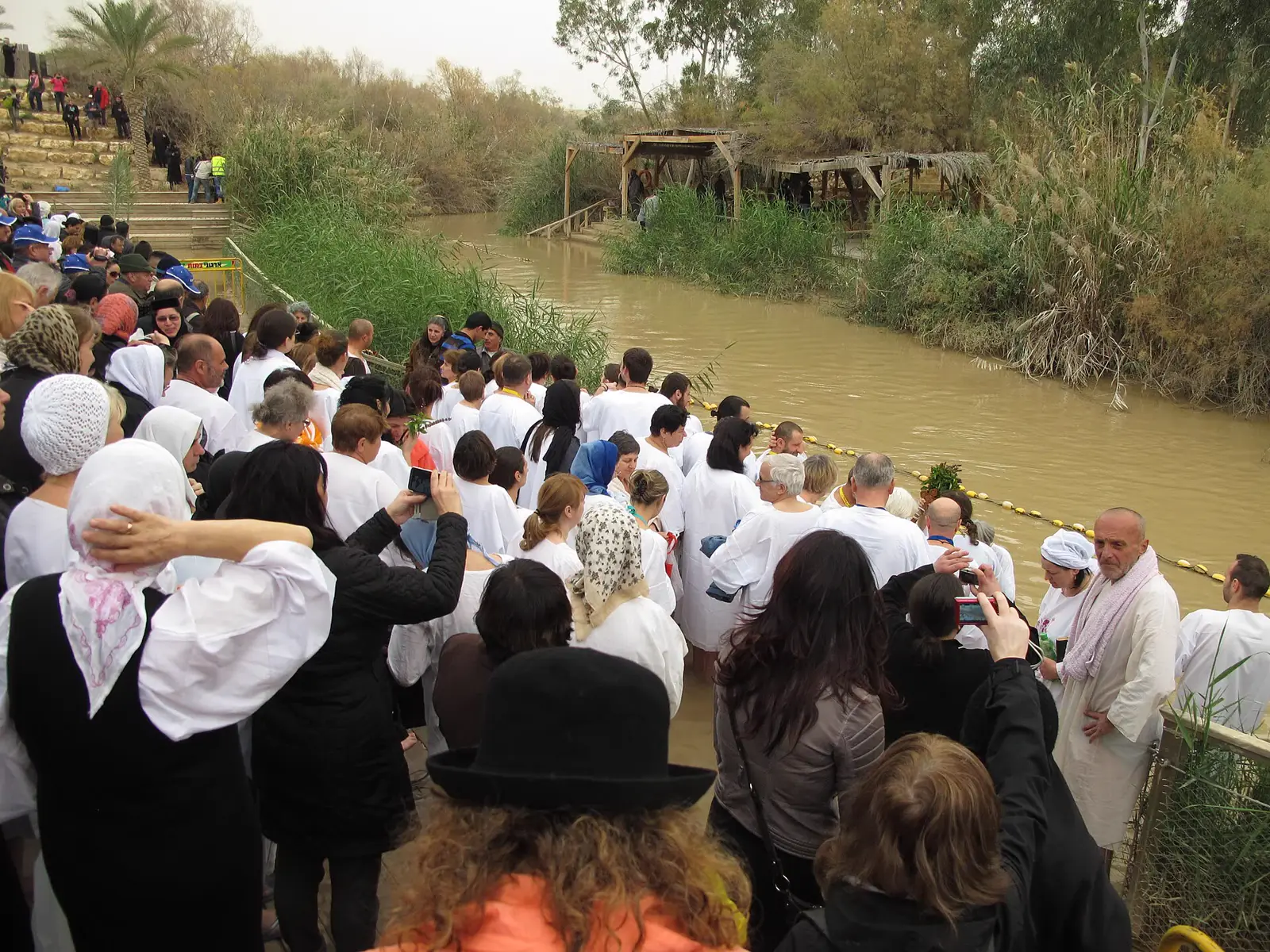
The Jordan River at the traditional site of baptism

Believer · Guide

Ratoncito Perez · CC0

Back to Research Hub

Finding a Church

Read the paper (PDF)·or read it here ↓

WHAT SCRIPTURE TELLS YOU TO LOOK FOR

Why a believer needs a local church, how to tell a sound one from an unsound one by the Bible, and how to visit, join, serve and stay.

Abstract

Many believers today, especially new ones, are unsure whether they need a local church at all, and if they do, how to choose one. This paper answers from the King James Bible first, and second from the church's own history: the earliest descriptions of Christian worship in the Didache and Justin Martyr, the "marks of the church" set out at the Reformation, and current survey data from Gallup on how many Americans belong to a church. It argues that the local church is God's ordinary means of teaching, shepherding, guarding and sending His people; that a sound church is known by the gospel rightly preached, the ordinances kept, faithful and accountable leaders, love, discipline and mission; and that no church is perfect, as the seven churches of Revelation show. It gives clear warning signs, a practical visiting guide and a plain account of joining, serving, handling conflict and, when necessary, leaving well. It is written for new believers, for believers who have moved or been hurt, and for anyone who has drifted away and wants to come home.

What’s inside

  1. Introduction
  2. Part 1: Why You Need a Local Church
  3. Part 2: What Makes a Church a Church
  4. Part 3: The First Questions: The Gospel and the Core of the Faith
  5. Part 4: Preaching, Leaders and the Life of the Body
  6. Part 5: Warning Signs
  7. Part 6: Searching and Visiting
  8. Part 7: Belonging: Joining, Serving and Staying
  9. Conclusion

Research paper · 9 chapters · 12 notes · October 2026

Read the paper here

About 39 minutes · 9 parts · the PDF has the same text

Introduction

2 min read

I was raised Roman Catholic but never really connected — I went through the motions, fell asleep in the pews, and faked being sick to skip Mass. Eventually I gave up and called myself an atheist. I decided to read the Bible for one reason: to disprove it, so I'd have an excuse to stop going to church for good.

It did the opposite. I came to faith in 2022, and my wife came to faith a month later. My story is at kylelauriano.com/about. I tell this part of it here because that same book tells believers not to forsake "the assembling of ourselves together" (Hebrews 10:25). That may surprise you too.

The question

If you have recently come to Christ, you may be wondering whether you need a church at all. You have a Bible. You can pray. There are sermons online. And perhaps your last experience of church was empty, or painful, or both.

Or you may know you need a church but have no idea how to choose one. Every church sign says it believes the Bible. Every website has smiling faces. How do you tell the difference between a church that will feed you and one that will starve you, or worse?

This paper tries to answer both questions from Scripture.

What this paper is

It is a study, not a sales pitch for any denomination. It argues from the King James Bible first. It brings in the church's own history where that helps — the earliest Christian descriptions of worship, and the summaries Protestant churches wrote when they had to answer "What is a true church?" — and it gives one current survey figure with its source. Every outside source is footnoted so you can check it.

Part 1 asks why the local church matters. Parts 2 to 4 set out what to look for: what makes a church a church, the core of the faith a sound church holds, and the life of a healthy congregation. Part 5 gives warning signs. Part 6 is a practical guide to searching and visiting. Part 7 covers joining and serving, and what to do when things go wrong. A conclusion follows.

What it will not do

It will not tell you which denomination to join, or rule for you on every question faithful churches disagree about. It will tell you where Scripture draws lines and where it leaves room. And it will not promise you a perfect church. There is none. The question is not whether a church has faults, but whether it is a true church, faithfully trying to obey Christ, in which you can grow.

A note on Scripture: every verse in this paper is quoted from the King James Bible. You can read it free in the 1611 Reader at kylelauriano.com/library. A KJV with Strong's Concordance is the best study tool most believers will ever own.

Part 1 — Why You Need a Local Church

6 min read

This part matters because if you are not convinced that you need a church, you will give up on the search the first time it gets hard. And it will get hard.

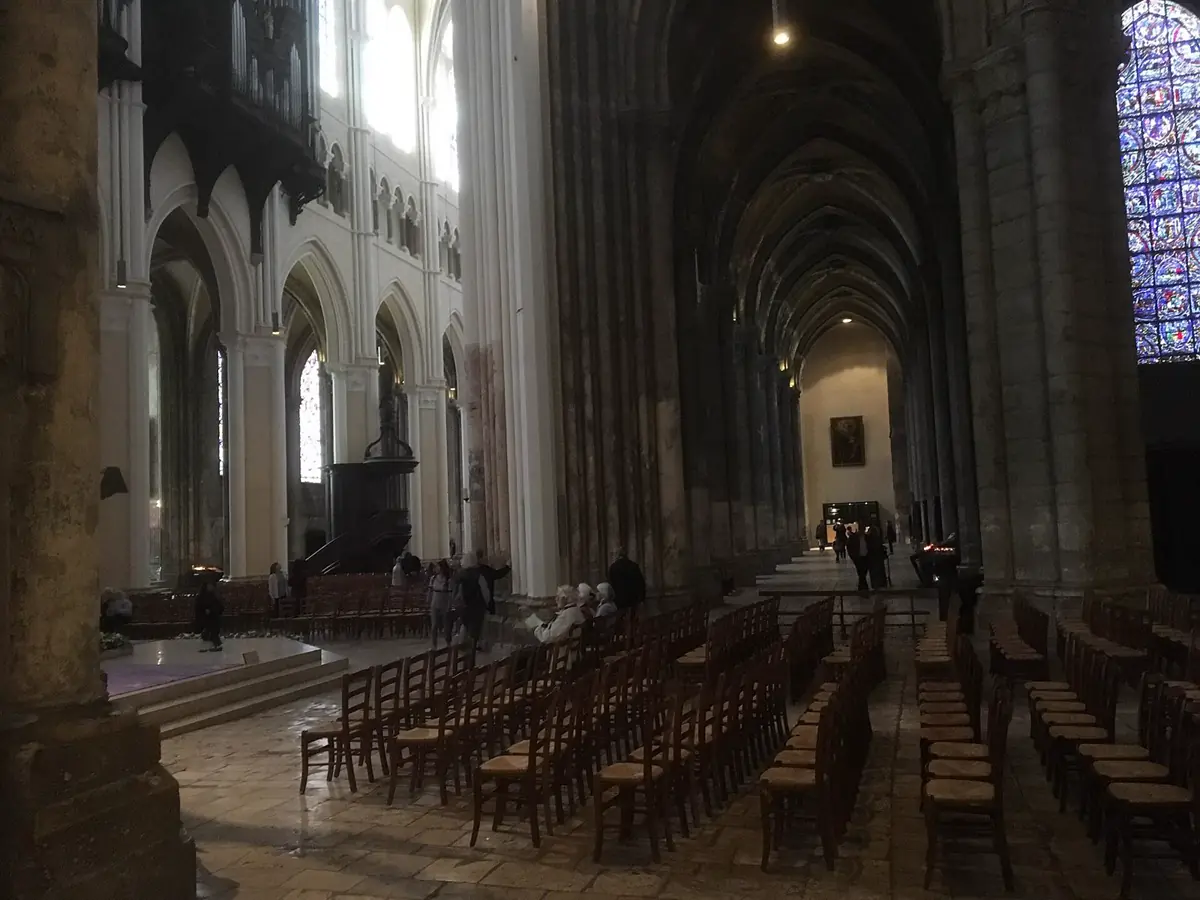
The Gothic nave of Chartres Cathedral
The nave of Chartres Cathedral (13th century) — built across generations by workers who knew they would never see it finished.Stephen Taber · CC BY-SA 4.0
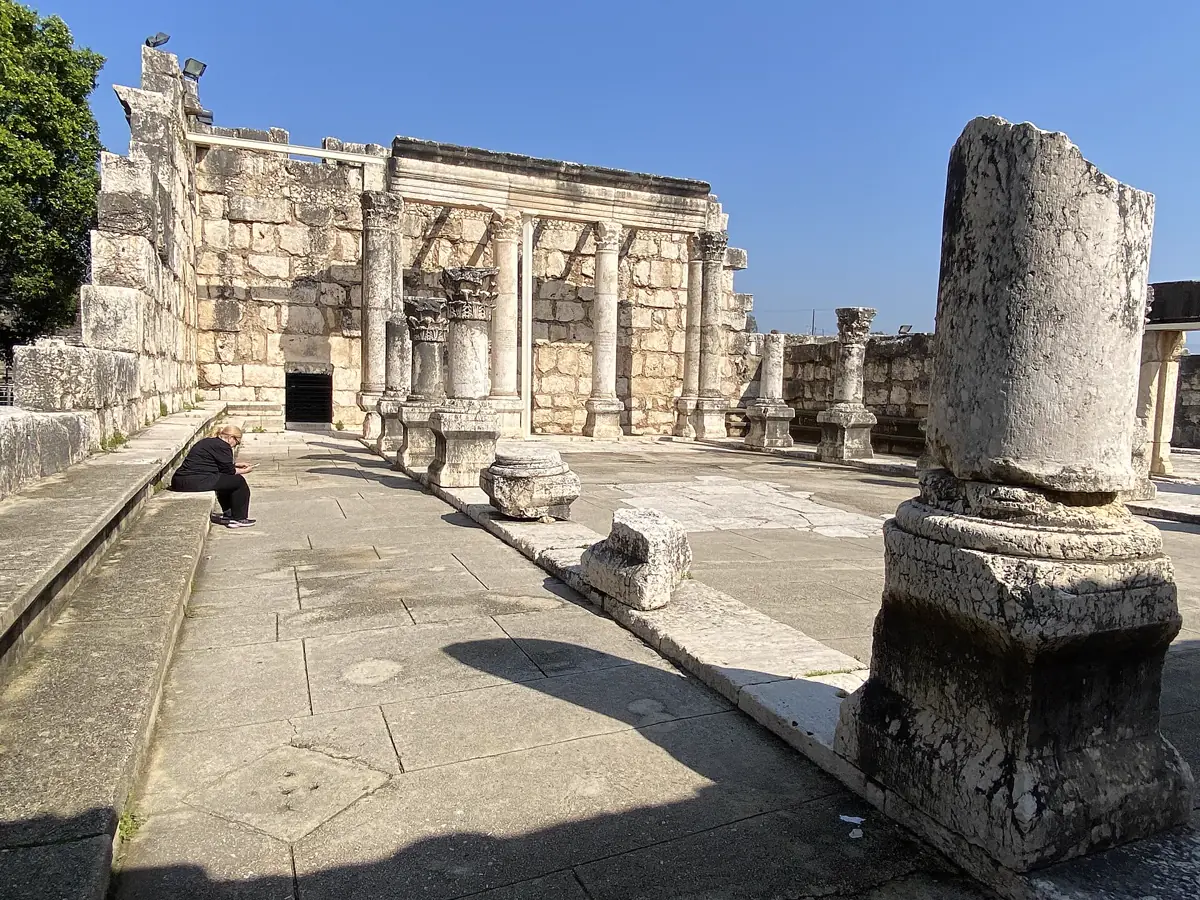
The limestone synagogue ruins at Capernaum
The synagogue at Capernaum, standing on the black-basalt foundations of the 1st-century hall where Jesus taught.שלמה רודד · CC BY 2.5

A command, not a suggestion

The plainest text is in Hebrews: "And let us consider one another to provoke unto love and to good works: Not forsaking the assembling of ourselves together, as the manner of some is; but exhorting one another: and so much the more, as ye see the day approaching" (Hebrews 10:24-25).

Three things are worth noticing. First, it is an instruction, not a tip. Second, it was already a problem in the first century: "as the manner of some is". People were drifting even then. Third, the reason given is not attendance for its own sake but what happens when believers gather: they "consider one another", they "provoke unto love and to good works", they exhort one another. You cannot do any of that alone.

The church is a body, and you are a member

Paul's favourite picture of the church is a body. "For as we have many members in one body, and all members have not the same office: So we, being many, are one body in Christ, and every one members one of another" (Romans 12:4-5). To the Corinthians he pressed the point: "And the eye cannot say unto the hand, I have no need of thee: nor again the head to the feet, I have no need of you" (1 Corinthians 12:21). And again: "And whether one member suffer, all the members suffer with it; or one member be honoured, all the members rejoice with it" (1 Corinthians 12:26).

A hand cut off from the body does not become a free hand. It becomes a dead one. The New Testament does not imagine Christians living their faith alone. It imagines them knit into a local company of believers where they give and receive.

The "one another" life

Count the commands in the New Testament that can only be obeyed in company. "Bear ye one another's burdens" (Galatians 6:2). James adds, "Confess your faults one to another, and pray one for another, that ye may be healed" (James 5:16). Hebrews says, "But exhort one another daily, while it is called To day; lest any of you be hardened through the deceitfulness of sin" (Hebrews 3:13). Paul writes, "Forbearing one another, and forgiving one another, if any man have a quarrel against any" (Colossians 3:13). And Peter: "As every man hath received the gift, even so minister the same one to another, as good stewards of the manifold grace of God" (1 Peter 4:10).

And above all: "A new commandment I give unto you, That ye love one another; as I have loved you, that ye also love one another. By this shall all men know that ye are my disciples, if ye have love one to another" (John 13:34-35). That is the Lord's own test of discipleship, and it needs other disciples to pass it.

Shepherds for your soul

God gives His people shepherds. "And he gave some, apostles; and some, prophets; and some, evangelists; and some, pastors and teachers; For the perfecting of the saints, for the work of the ministry, for the edifying of the body of Christ" (Ephesians 4:11-12). The purpose is maturity, "That we henceforth be no more children, tossed to and fro, and carried about with every wind of doctrine" (Ephesians 4:14).

Hebrews tells believers to "Obey them that have the rule over you, and submit yourselves: for they watch for your souls, as they that must give account" (Hebrews 13:17). That verse assumes something: that you have leaders who know you and watch for your soul. A preacher on a screen in another state cannot watch for your soul. He does not know your name.

The ordinances are given to the church

The Lord gave two ordinances, and both belong to the church gathered. Baptism is the door: "Then they that gladly received his word were baptized: and the same day there were added unto them about three thousand souls" (Acts 2:41). They were baptized and added — to something. The Lord's Supper is the church's shared table: "For we being many are one bread, and one body: for we are all partakers of that one bread" (1 Corinthians 10:17). Neither is a solo act.

What the first Christians did

The first church, Luke says, "continued stedfastly in the apostles' doctrine and fellowship, and in breaking of bread, and in prayers" (Acts 2:42). The habit did not fade after the apostles. A Christian manual from the early centuries, the Didache, told believers: "But every Lord's day gather yourselves together, and break bread, and give thanksgiving after having confessed your transgressions".1 About the middle of the second century, Justin Martyr explained to the Roman emperor that "on the day called Sunday, all who live in cities or in the country gather together to one place", where the Scriptures were read, the leader taught and exhorted, they prayed, and they shared the Lord's Supper.2 Christians in those centuries risked their lives to gather. It did not occur to them that faith could be lived without it.

Where we are now

Our generation is drifting from that habit. Gallup reported in 2021 that in 2020, for the first time since it began measuring, fewer than half of Americans belonged to a church, synagogue or mosque: 47%, down from 70% in 1999 and 73% when Gallup first asked in 1937.3 Those figures cover all religions and all kinds of membership, and they do not measure faith. But they show which way the current runs. If you want to be in a church, you will be swimming against it.

Four common objections

"I can worship God on my own." You can and should worship God on your own, in private prayer and Bible reading. But the New Testament never offers that as a replacement for gathering. Private worship and public worship are not rivals. The believer who prays alone all week is the one who most needs the church on the Lord's day, and the one who gathers with the church is the one best fed for the week alone.

"Churches are full of hypocrites." Every church has sinners in it; that is who churches are for. Some churches have hypocrites in them too, and the Reformation confessions said so plainly: the Belgic Confession speaks of "the company of hypocrites who are mixed among the good in the church and who nonetheless are not part of it, even though they are physically there".4 The Lord knew this would be so. But the presence of hypocrites does not make faithful believers less your family, and it is not a reason to stay away from them. "And why beholdest thou the mote that is in thy brother's eye, but considerest not the beam that is in thine own eye?" (Matthew 7:3).

"I was hurt by a church." That may be true, and if it is, it is a real wound. Part 7 speaks to it more fully. For now: the Lord who was betrayed by one of His own disciples and abandoned by the rest is not careless with the bruised. "A bruised reed shall he not break, and smoking flax shall he not quench" (Matthew 12:20). Being hurt by one church is a reason to choose the next one carefully, not a reason to live without one.

"I watch church online." Online sermons can be a real help, especially for the sick, the housebound and those in places with no faithful church. But watching a sermon is not the same as being a member of a church. A screen cannot baptize you, serve you the Lord's Supper, notice that you are missing, visit you in hospital, or correct you when you drift. Use online teaching as a supplement. Do not let it become a substitute.

God sets the solitary in families

"God setteth the solitary in families" (Psalm 68:6). That is His way. The church is not an optional club for the religiously inclined; it is the family God gives to people who were alone. You need it. And, though you may not feel it yet, it needs you.

Part 2 — What Makes a Church a Church

4 min read

This part matters because before you can tell a good church from a poor one, you need to know what a church is. Not every group that calls itself a church is one, and not every true church is a healthy one.

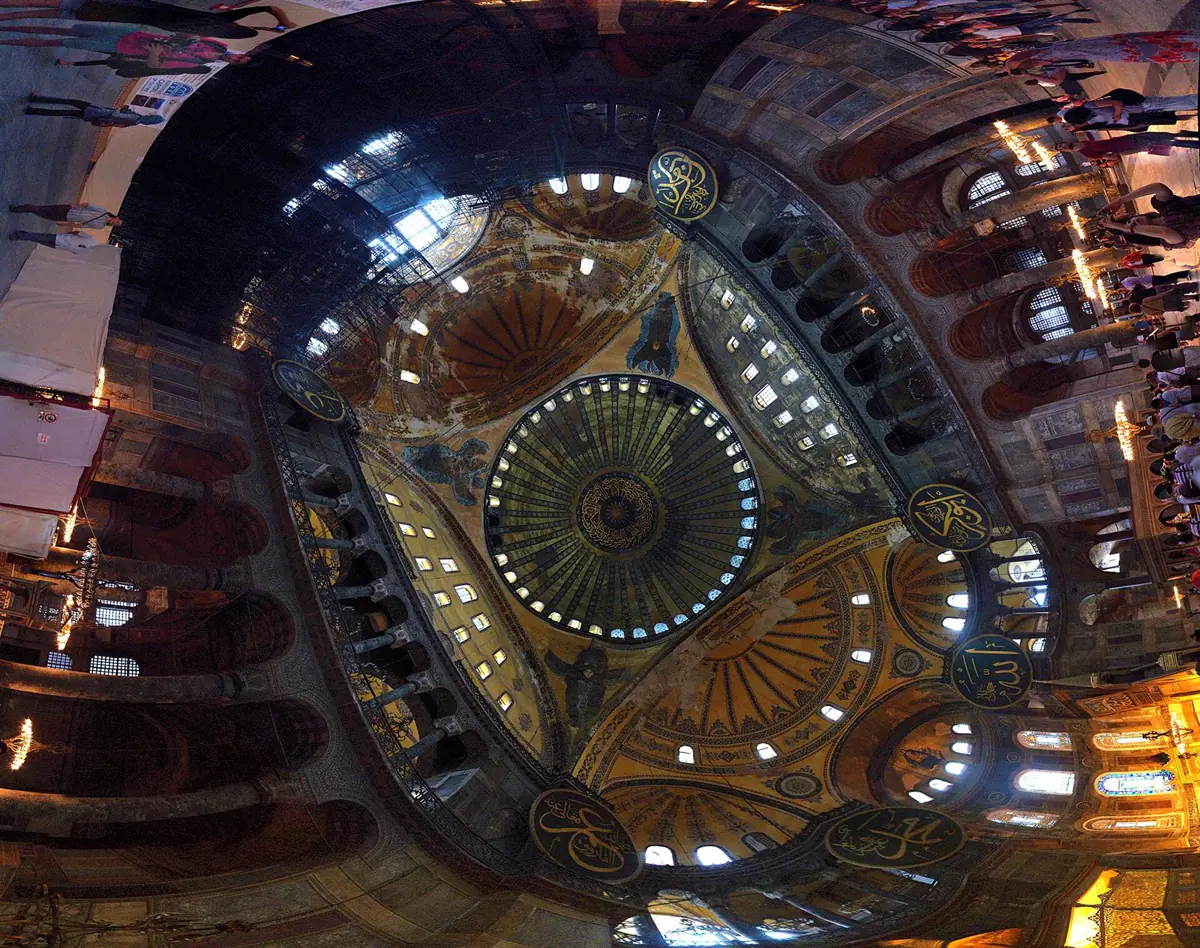
The vast domed interior of Hagia Sophia
Hagia Sophia, consecrated in 537 AD — for a thousand years the largest church in the world.Ronan Reinart · CC BY-SA 3.0

The word

"Church" in the New Testament translates the Greek ekklesia (Strong's G1577), an assembly of people called together.5 It never means a building. Paul writes "Unto the church of God which is at Corinth, to them that are sanctified in Christ Jesus, called to be saints" (1 Corinthians 1:2). The church is people: believers in Christ, gathered.

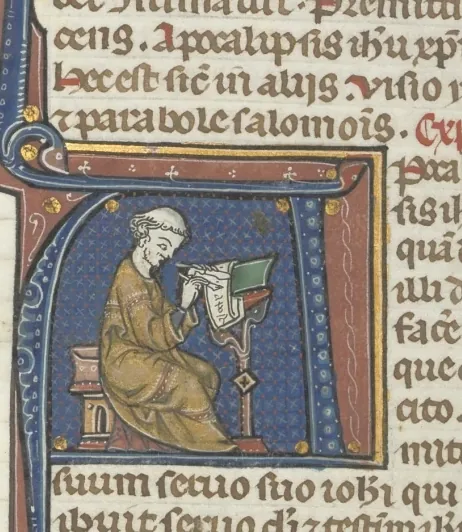
Fol. 482v, Revelations, historiated initial A, John seated at a desk writing to the Seven Churches of Asia
The opening of Revelation in a thirteenth-century Bible from southern France, its initial showing John at a desk writing to the seven churches of Asia, none of them perfect.Fol. 482v, Revelations, historiated initial A, John seated at a desk writing to the Seven Churches of Asia · c. 1275–1300 · Cleveland Museum of Art · CC0 · full page · museum record · Galeria Regni

The pattern of Acts 2

Luke's description of the first church gives the shape: "Then they that gladly received his word were baptized: and the same day there were added unto them about three thousand souls. And they continued stedfastly in the apostles' doctrine and fellowship, and in breaking of bread, and in prayers" (Acts 2:41-42). A church is a company of baptized believers who continue in the apostles' teaching, in fellowship, in the Lord's Supper and in prayer.

The marks of a true church

At the Reformation, Protestant churches had to explain why they were true churches even though they had separated from Rome. Their answers are not Scripture, but they summarise it with care, and they are a useful test.

The Augsburg Confession of 1530 says: "The Church is the congregation of saints, in which the Gospel is rightly taught and the Sacraments are rightly administered."6

The Church of England's Thirty-Nine Articles say: "The visible Church of Christ is a congregation of faithful men, in the which the pure Word of God is preached, and the Sacraments be duly ministered according to Christ's ordinance in all those things that of necessity are requisite to the same."7

John Calvin wrote: "Wherever we see the word of God sincerely preached and heard, wherever we see the sacraments administered according to the institution of Christ, there we cannot have any doubt that the Church of God has some existence".8

And the Belgic Confession of 1561 begins its article on the true church by warning that "all sects in the world today claim for themselves the name of 'the church'", and then names three marks: "The church engages in the pure preaching of the gospel; it makes use of the pure administration of the sacraments as Christ instituted them; it practices church discipline for correcting faults."4

Different traditions, one agreement. A church is known first by the Word of God faithfully preached, then by baptism and the Lord's Supper kept as Christ gave them, and, many add, by loving discipline. Those are the questions to ask before you ask anything about music, programmes or coffee.

No perfect church: the seven churches

The clearest proof that no church is perfect is in the last book of the Bible. The risen Lord, who "walketh in the midst of the seven golden candlesticks" (Revelation 2:1), sends letters to seven real churches in Asia. Look at what He says.

To Ephesus He gives praise: "I know thy works, and thy labour, and thy patience, and how thou canst not bear them which are evil: and thou hast tried them which say they are apostles, and are not, and hast found them liars" (Revelation 2:2). Sound doctrine, tested teachers. And then: "Nevertheless I have somewhat against thee, because thou hast left thy first love" (Revelation 2:4).

To Pergamos: "But I have a few things against thee, because thou hast there them that hold the doctrine of Balaam" (Revelation 2:14). To Thyatira: "Notwithstanding I have a few things against thee, because thou sufferest that woman Jezebel, which calleth herself a prophetess, to teach and to seduce my servants" (Revelation 2:20). To Sardis: "I know thy works, that thou hast a name that thou livest, and art dead" (Revelation 3:1). To Laodicea: "I know thy works, that thou art neither cold nor hot: I would thou wert cold or hot" (Revelation 3:15).

To Philadelphia, weak and faithful: "I know thy works: behold, I have set before thee an open door, and no man can shut it: for thou hast a little strength, and hast kept my word, and hast not denied my name" (Revelation 3:8).

Three lessons follow. First, real churches of Christ can have serious faults; the Lord still calls them His candlesticks. Second, some faults are deadly if not repented of: false teaching tolerated, love lost, a reputation with no life behind it. Third, the Lord values faithfulness over strength. A small church with "a little strength" that keeps His word is worth more than a large one that has "a name that thou livest" and is dead.

So you are not looking for a church without faults. You are looking for a true church that keeps His word, and that, when it is shown its faults, repents.

Part 3 — The First Questions: The Gospel and the Core of the Faith

8 min read

This part matters because the most important thing about a church is what it believes and preaches about Jesus Christ. Paul said a church that preaches a different gospel is not to be followed even if an angel leads it: "But though we, or an angel from heaven, preach any other gospel unto you than that which we have preached unto you, let him be accursed" (Galatians 1:8). Everything else comes after this.

How to find out

Most churches publish a statement of faith, often on their website. Read it. If you cannot find one, ask for it. Then listen to how the church preaches, because a statement on a website is only as good as the pulpit behind it. Like the Bereans, test what you hear by the Scriptures: "they received the word with all readiness of mind, and searched the scriptures daily, whether those things were so" (Acts 17:11).

The core

These are the things a sound church must hold. They are not one tradition's preferences; they are the faith "once delivered unto the saints" (Jude 1:3).

Scripture. The Bible is the inspired word of God and the final authority for faith and life. "All scripture is given by inspiration of God, and is profitable for doctrine, for reproof, for correction, for instruction in righteousness" (2 Timothy 3:16). The Lord prayed, "Sanctify them through thy truth: thy word is truth" (John 17:17). A church that places its own traditions, a later book or a living leader's revelations alongside Scripture, or above it, has stepped off the foundation. The Lord's rebuke to the Pharisees applies: "Howbeit in vain do they worship me, teaching for doctrines the commandments of men" (Mark 7:7). This ministry holds to the King James Bible and the Received Text; you can see where it and the modern Critical Text differ at kylelauriano.com/library/changes.

The Trinity. One God, Father, Son and Holy Ghost. The Lord sent His disciples to baptize "in the name of the Father, and of the Son, and of the Holy Ghost" (Matthew 28:19) — one name, three persons.

The deity and humanity of Christ. "In the beginning was the Word, and the Word was with God, and the Word was God" (John 1:1). John goes on: "And the Word was made flesh, and dwelt among us" (John 1:14). Paul says of Christ, "For in him dwelleth all the fulness of the Godhead bodily" (Colossians 2:9). John gives a test: "Every spirit that confesseth that Jesus Christ is come in the flesh is of God: And every spirit that confesseth not that Jesus Christ is come in the flesh is not of God" (1 John 4:2-3). A group that denies that Jesus is God, or that He truly became man, is not a Christian church, whatever its sign says.

The cross and the resurrection. "For I delivered unto you first of all that which I also received, how that Christ died for our sins according to the scriptures; And that he was buried, and that he rose again the third day according to the scriptures" (1 Corinthians 15:3-4). Christ's death as the sacrifice for sin, and His bodily resurrection, are the heart of the gospel.

Salvation by grace through faith. "For by grace are ye saved through faith; and that not of yourselves: it is the gift of God: Not of works, lest any man should boast. For we are his workmanship, created in Christ Jesus unto good works" (Ephesians 2:8-10). Salvation is God's gift, received by faith, and it produces good works; it is not earned by them.

Repentance and faith. Paul summed up his preaching as "repentance toward God, and faith toward our Lord Jesus Christ" (Acts 20:21). A church that offers forgiveness without repentance has a different gospel from the apostles'.

Baptism. Peter preached, "Repent, and be baptized every one of you in the name of Jesus Christ for the remission of sins, and ye shall receive the gift of the Holy Ghost" (Acts 2:38). The Lord said, "He that believeth and is baptized shall be saved; but he that believeth not shall be damned" (Mark 16:16). Mark 16:9-20 stands in the 1611; you can see where modern versions differ at kylelauriano.com/library/changes. A sound church takes baptism seriously as the Lord's command.

The only way. "I am the way, the truth, and the life: no man cometh unto the Father, but by me" (John 14:6).

The return of Christ and the judgment. The angels told the disciples, "this same Jesus, which is taken up from you into heaven, shall so come in like manner as ye have seen him go into heaven" (Acts 1:11). And the Lord spoke plainly of the judgment: "And these shall go away into everlasting punishment: but the righteous into life eternal" (Matthew 25:46). A church that has quietly dropped hell from its preaching has stopped telling people the truth about what they are being saved from.

Where faithful churches differ

Not every question is a test of a true church. Paul told the Romans, "Him that is weak in the faith receive ye, but not to doubtful disputations" (Romans 14:1), and on some matters, "Let every man be fully persuaded in his own mind" (Romans 14:5). Sound churches differ on many things. Here are some you will meet. You should know where a church stands on them before you join, so you are not surprised later, but you should not expect every faithful church to agree with you.

How baptism is given and to whom. Here, let the texts speak. Of the Lord's own baptism Matthew writes, "And Jesus, when he was baptized, went up straightway out of the water" (Matthew 3:16). When the eunuch asked what hindered him, "Philip said, If thou believest with all thine heart, thou mayest. And he answered and said, I believe that Jesus Christ is the Son of God" (Acts 8:37), and "they went down both into the water, both Philip and the eunuch; and he baptized him" (Acts 8:38). Paul writes, "Therefore we are buried with him by baptism into death" (Romans 6:4). Acts also records whole households baptized: Lydia "was baptized, and her household" (Acts 16:15), and the jailer "was baptized, he and all his, straightway" (Acts 16:33). (Acts 8:37 stands in the 1611; you can see where modern versions drop it at kylelauriano.com/library/changes.)

As a matter of history, churches have practised baptism in more than one way. The Didache told believers to baptize "in living water", and, where there was not enough water, to "pour out water thrice upon the head into the name of Father and Son and Holy Spirit".9 Over the centuries some churches have baptized the infants of believers and others only those who profess faith. Ask a church what it practises and which texts it stands on, then open those texts yourself.

Church government. Some churches are led by elders, some by a pastor and deacons, some by bishops, some by the congregation. Ask how decisions are made and who leaders answer to.

Women in the gathering. Scripture says, "Let your women keep silence in the churches: for it is not permitted unto them to speak; but they are commanded to be under obedience, as also saith the law" (1 Corinthians 14:34), and "But I suffer not a woman to teach, nor to usurp authority over the man, but to be in silence" (1 Timothy 2:12). Those words should be taken as written, not set aside as "merely cultural". Churches that take them seriously still apply them differently. Ask what the church practises and why, from the text.

The gifts of the Spirit. Paul wrote, "Follow after charity, and desire spiritual gifts" (1 Corinthians 14:1), and "Quench not the Spirit. Despise not prophesyings. Prove all things; hold fast that which is good" (1 Thessalonians 5:19-21). The gifts of the Spirit and deliverance from evil spirits are for today, and guests on my show testify to both. Every gift is tested by the word of God and kept within the limits the word sets; Paul's order for them is 1 Corinthians 14, "Let all things be done decently and in order" (1 Corinthians 14:40). Churches differ here; whatever a church believes, look for both openness to the Spirit and the testing the apostle commands.

The order of the last things. Christians have long differed on how to read the prophecies of the end, including Revelation 20. A sound church will hold firmly that Christ will return bodily and judge the living and the dead; it need not share your view of the timeline.

How to weigh a difference

When you meet a difference, ask three questions. Is this about the gospel itself — who Christ is, what He did, how a sinner is saved? If so, it is a line, not a preference. Does the church hold its view from Scripture, and can it show you the texts? A church that can open its Bible and explain itself is worth listening to even where you disagree. And can you in good conscience sit under this teaching, and bring your family under it, without either fighting it every week or pretending to agree? If not, look elsewhere, kindly.

Assurance and the warnings

Scripture gives believers real assurance. The Lord said, "My sheep hear my voice, and I know them, and they follow me: And I give unto them eternal life; and they shall never perish, neither shall any man pluck them out of my hand" (John 10:27-28). John wrote "that ye may know that ye have eternal life" (1 John 5:13). Paul was "persuaded, that neither death, nor life... nor any other creature, shall be able to separate us from the love of God, which is in Christ Jesus our Lord" (Romans 8:38-39). Scripture also gives solemn warnings: "For it is impossible for those who were once enlightened, and have tasted of the heavenly gift, and were made partakers of the Holy Ghost, And have tasted the good word of God, and the powers of the world to come, If they shall fall away, to renew them again unto repentance" (Hebrews 6:4-6); and again, "For if we sin wilfully after that we have received the knowledge of the truth, there remaineth no more sacrifice for sins" (Hebrews 10:26); and Peter's charge to "give diligence to make your calling and election sure" (2 Peter 1:10).

Ask a church how it preaches these texts, and listen for whether it preaches both kinds honestly — giving trembling believers the comfort Christ gives, and giving careless professors the warnings Christ gives — rather than preaching one set and quietly ignoring the other.
Part 4 — Preaching, Leaders and the Life of the Body

4 min read

This part matters because a church can sign a sound statement of faith and still be unhealthy. Once you know a church holds the gospel, the next questions are about how it lives.

Preaching that opens the Bible

Paul's charge to Timothy is the standard for every pulpit: "Preach the word; be instant in season, out of season; reprove, rebuke, exhort with all longsuffering and doctrine. For the time will come when they will not endure sound doctrine; but after their own lusts shall they heap to themselves teachers, having itching ears; And they shall turn away their ears from the truth, and shall be turned unto fables" (2 Timothy 4:2-4).

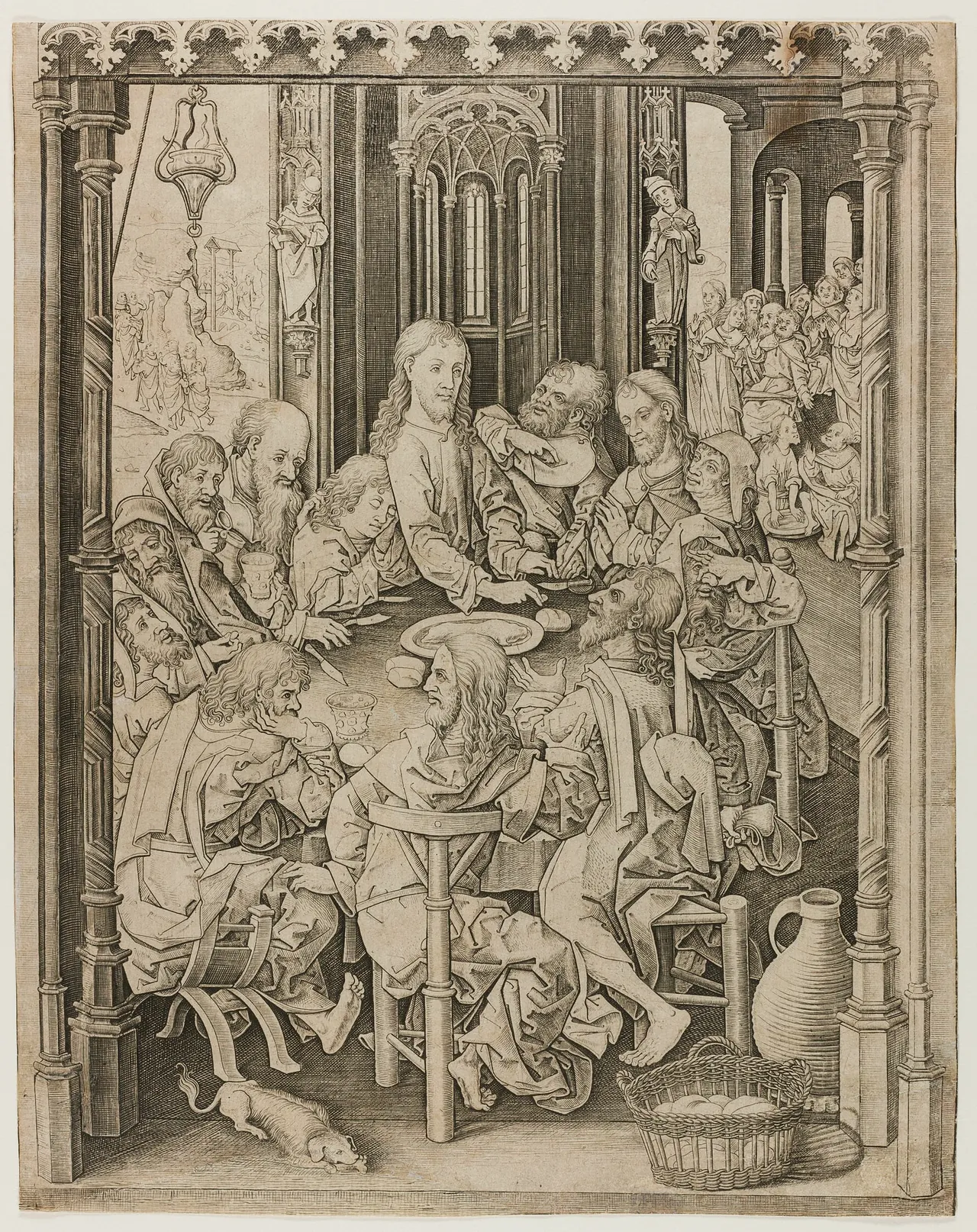
The Last Supper
A Netherlandish engraving of about 1485 showing the Last Supper, where the Lord gave His church the ordinance it keeps in remembrance of Him.The Last Supper · c. 1485 · Art Institute of Chicago · CC0 · museum record · Galeria Regni

Listen for these things over several weeks:

  • Is the Bible open? Does the sermon explain a passage of Scripture, or does it use a verse as a springboard for the preacher's own ideas?
  • Is the whole counsel taught? Over time, do you hear the hard parts — sin, judgment, repentance, holiness — as well as the comforting ones?
  • Is Christ preached? Does the preaching lead to the cross and the risen Lord, or only to self-improvement?
  • Does it reprove and rebuke, as well as exhort? Preaching that never makes anyone uncomfortable is not following Paul's charge.
  • Can you check it? Can you go home, open your Bible, and see that what was preached is what the text says?

Leaders of proven character

Scripture's qualifications for church leaders are mostly about character. "A bishop then must be blameless, the husband of one wife, vigilant, sober, of good behaviour, given to hospitality, apt to teach" (1 Timothy 3:2). Peter charges elders to "Feed the flock of God which is among you, taking the oversight thereof, not by constraint, but willingly; not for filthy lucre, but of a ready mind; Neither as being lords over God's heritage, but being ensamples to the flock" (1 Peter 5:2-3).

Around AD 197, Tertullian described the leaders of the church in Carthage this way: "The tried men of our elders preside over us, obtaining that honour not by purchase, but by established character."10 That is still the right test.

Look for leaders who are humble, approachable, faithful in their own homes, and accountable to others. Ask: who can correct the pastor? If the answer is no one, that is a serious concern, whatever the church's size. Hebrews tells you to "Remember them which have the rule over you, who have spoken unto you the word of God: whose faith follow, considering the end of their conversation" (Hebrews 13:7). You should be able to look at their lives and want to follow their faith.

Prayer

The first church continued "in prayers" (Acts 2:42). Does this church pray — not only a short prayer between songs, but real, unhurried prayer for the sick, the lost, the persecuted and the authorities? Is there a prayer meeting, and do people come to it? A church's prayer meeting tells you much about its heart.

The ordinances kept

Is baptism practised and explained? Is the Lord's Supper kept regularly and reverently, with the self-examination Paul commands (1 Corinthians 11:28)? These are not optional extras; they are marks of a true church.

Love you can see

"By this shall all men know that ye are my disciples, if ye have love one to another" (John 13:35). Watch how people treat each other. Are newcomers welcomed or ignored? Are the poor, the elderly, the disabled and the awkward cared for, or only the attractive and useful? James gives a blunt definition: "Pure religion and undefiled before God and the Father is this, To visit the fatherless and widows in their affliction, and to keep himself unspotted from the world" (James 1:27).

The early church took collections for exactly that. Justin wrote that what was gathered was used to help "the orphans and widows and those who, through sickness or any other cause, are in want, and those who are in bonds and the strangers sojourning among us".2 A healthy church still does.

Discipline that restores

A church that never corrects anyone is not kind; it is negligent. The Lord gave a process for dealing with sin among believers (Matthew 18:15-17), and Paul expected churches to act when a professing believer lived in open, unrepentant sin (1 Corinthians 5:11-13). The aim is always restoration: "Brethren, if a man be overtaken in a fault, ye which are spiritual, restore such an one in the spirit of meekness" (Galatians 6:1). Ask how the church handles serious sin, especially in its leaders. The answer will tell you whether it is safe.

Mission

A healthy church looks outward. Does it preach the gospel to the lost, support missionaries, and equip its members to share their faith? Does it care for its neighbourhood? A church that exists only for itself is drifting toward Laodicea.

Size and style

Large churches can offer much — teaching for every age, many ways to serve. Small churches can offer much too — you will be known, needed and noticed. Neither size is more biblical. Choose by the marks above, not by the music or the building. But be honest about what you need: if you are new to the faith and want to be discipled, a church where you can be known by name and walked with matters more than a church with an impressive stage.

Part 5 — Warning Signs

4 min read

This part matters because some churches will harm you. Jesus warned, "Beware of false prophets, which come to you in sheep's clothing, but inwardly they are ravening wolves. Ye shall know them by their fruits" (Matthew 7:15-16). Paul warned that "Satan himself is transformed into an angel of light" (2 Corinthians 11:14). The warning signs below fall into two groups: those that mean you should not join, and those that mean you should ask hard questions.

Signs that mean "do not join"

A different gospel. If a church adds works to grace as the ground of salvation, or removes repentance from the gospel, or denies the cross and resurrection, it is preaching "another gospel" (Galatians 1:6). Leave it.

A different Jesus. If a church denies that Jesus is God, or that He came in the flesh, or that He rose bodily, it fails the apostle's test (1 John 4:2-3). John is clear about how to receive such teachers: "If there come any unto you, and bring not this doctrine, receive him not into your house, neither bid him God speed" (2 John 1:10).

Another authority beside Scripture. If a church treats a later book, a founder's writings, or a living leader's revelations as equal to or above the Bible, it has another foundation. "Beware lest any man spoil you through philosophy and vain deceit, after the tradition of men, after the rudiments of the world, and not after Christ" (Colossians 2:8).

"Only we are saved." If a group teaches that salvation is found only within its own organisation, so that leaving it means losing your soul, it has replaced Christ with itself. Scripture says salvation is in Christ, "the way, the truth, and the life" (John 14:6) — not in a membership roll.

Vanessa Sprenger told her story on The King Is Coming Show (TKIC #6): in her telling, she was raised in a group that told her it alone was saved. Watch it in her own words: youtube.com/watch?v=3dPK9NJ8GqY Vanessa's account of what happened to her, shared as her testimony — weigh it for yourself.

Teaching that godliness is a way to get rich. Paul described men "supposing that gain is godliness: from such withdraw thyself" (1 Timothy 6:5). Peter warned of false teachers who "through covetousness shall they with feigned words make merchandise of you" (2 Peter 2:3). A church that promises health and wealth in exchange for your giving, or that tells you your poverty or sickness proves a lack of faith, is selling something the apostles never offered. An early Christian manual, the Didache, gave a rule of thumb for travelling preachers: an apostle passing through was to take nothing but bread for the road, and "if he ask money, he is a false prophet".11

Abuse covered up. If a church has hidden sexual abuse, protected an abuser, or discouraged victims from going to the police, do not join it. If you are aware of abuse of a child, report it to the civil authorities; in the United States, the Childhelp National Child Abuse Hotline is (800) 422-4453, and in an emergency call 911.12

Signs that mean "ask hard questions"

Leaders who answer to no one. John wrote of "Diotrephes, who loveth to have the preeminence among them" and who "casteth them out of the church" (3 John 1:9-10). A pastor who cannot be questioned, who treats disagreement as rebellion, or who controls who may speak, is showing the spirit of Diotrephes. The Lord said, "But he that is greatest among you shall be your servant" (Matthew 23:11).

Control over private life. Leaders must shepherd, but shepherds are not "lords over God's heritage" (1 Peter 5:3). Be cautious of a church that tells members whom to marry, where to work, or that they may not talk to former members.

Little Bible in the sermon. If, week after week, the sermon could be given without opening the Bible, the church is drifting toward "itching ears" (2 Timothy 4:3).

Secrecy about money. A healthy church tells its members how money is spent. Paul arranged for the gifts he carried to be handled by others so that no one could blame him: "Providing for honest things, not only in the sight of the Lord, but also in the sight of men" (2 Corinthians 8:21).

A culture that cannot repent. Every church sins. The question is whether it can say so. A church that has never admitted a mistake is either very new or very proud.

Everything is emotion, or nothing is. Worship that is all feeling and no truth, or all truth and no love, is out of balance. Scripture asks for both: "God is a Spirit: and they that worship him must worship him in spirit and in truth" (John 4:24).

Coming out of an unsound group

Some readers are not looking for their first church but their first true one, after years in a group whose teaching differed from Scripture's gospel. That is a hard road. You may be grieving lost friends, unlearning fears, and wondering if you can trust any church again. Go slowly. Find a church that will let you ask questions. Read the Bible for yourself, starting with a Gospel. And know that others have walked this road before you.

Criselle Mendoza told her story on The King Is Coming Show (TKIC #51): baptized at 12 in Iglesia Ni Cristo, and, in her own telling, not saved until 2025. Watch it in her own words: youtube.com/watch?v=_7vjNP6A_z8 Criselle's account of what happened to her, shared as her testimony — weigh it for yourself.

Part 6 — Searching and Visiting

4 min read

This part matters because finding a church is practical work. It takes time, prayer and some courage. Here is a way to go about it.

Pray first

Ask the Lord to lead you. Ask Him to give you discernment and a teachable heart, and to lead you to a church where you can grow and serve. "Except the LORD build the house, they labour in vain that build it" (Psalm 127:1) applies to finding a church home as much as to building one.

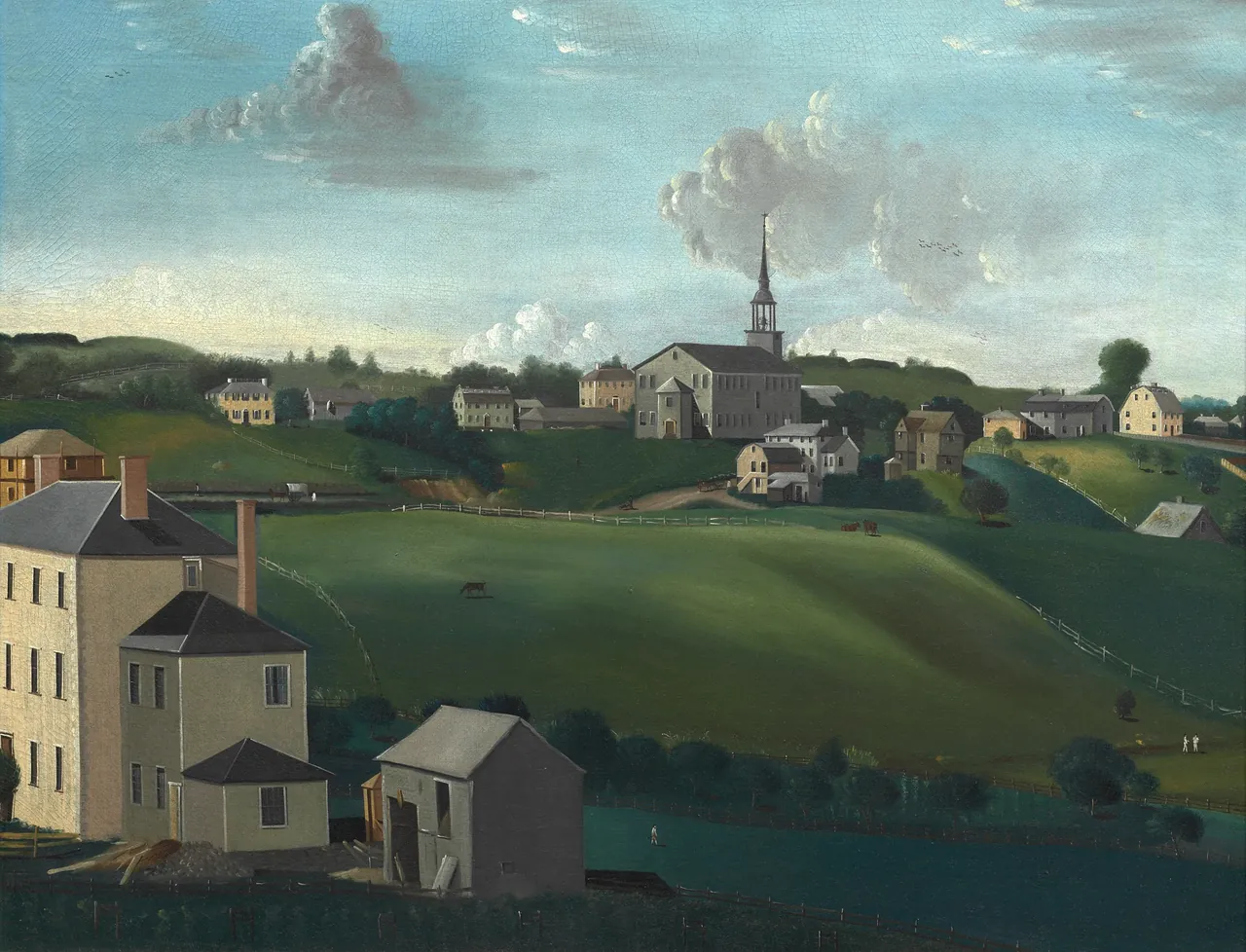
Meetinghouse Hill, Roxbury, Massachusetts
Meetinghouse Hill, Roxbury, Massachusetts, painted in 1799, showing a town gathered around its meetinghouse, the kind of local congregation a believer looks for and visits.Meetinghouse Hill, Roxbury, Massachusetts · 1799 · Art Institute of Chicago · CC0 · museum record · Galeria Regni

Make a short list

Look for churches within a reasonable distance — near enough that you can attend every week, take part in midweek gatherings, and be reached by others when you need help. A church an hour away is hard to belong to.

Ways to find candidates:

  • Ask believers you trust. A mature Christian friend who knows the area is often the best guide.
  • Search online for churches near you and read their websites, especially their statements of faith and "what we believe" pages.
  • Listen to sermons many churches post online before you visit.
  • Ask a pastor you trust elsewhere whether he knows of sound churches in your area.

No directory or website can tell you whether a church is faithful. Use them to find names, then test each church yourself by the marks in Parts 2 to 4.

Before you visit

Read the church's statement of faith and compare it with Part 3. Listen to two or three sermons if they are online. Note any questions you want to ask. Check service times, and if you have children, find out what the church provides for them and what its child-protection policy is. A church that cannot tell you how it keeps children safe should not be trusted with yours.

On the day

Arrive early. Introduce yourself to someone. Take your own Bible, and use it during the sermon. Pay attention to what is said and how it is said, but also to how people treat each other and you. Do not judge a church by one awkward greeting or one weak sermon; every church has off days. But do take note of what you see.

What to watch for

| Question | What to look for | |---|---| | Is the Bible central? | Scripture read aloud; the sermon explains a passage; people carry Bibles | | Is the gospel clear? | Sin, Christ's death and resurrection, repentance and faith are preached plainly | | Is Christ exalted? | The focus is on the Lord, not on the preacher, the band or the building | | Is there prayer? | Real time given to prayer for needs, the lost and the world | | Are the ordinances kept? | Baptism and the Lord's Supper are practised and explained | | Is there love? | Newcomers welcomed; the weak and poor cared for; warmth without pressure | | Are leaders accountable? | More than one leader; clear structure; openness about decisions and money | | Is there mission? | Evangelism, missions support and care for the neighbourhood | | Are children safe? | A written policy; two adults with children; checked volunteers |

Talk to the pastor

After a visit or two, ask to meet the pastor or an elder. A faithful pastor will be glad to talk with someone seeking a church home. Good questions to ask:

  • How did you come to faith, and how did you come to this church?
  • What do you believe the gospel is? (Listen for sin, Christ's death and resurrection, repentance and faith.)
  • How do you decide what to preach?
  • Who are you accountable to? Who can correct you?
  • How does the church handle serious sin, including sin by a leader?
  • How does someone become a member, and what does membership mean here?
  • What would you hope for me if I joined?

Listen to the answers, and to the spirit in which they are given. A pastor who is defensive about accountability, or vague about the gospel, has told you something important.

How many visits?

Plan to visit a church at least three times before deciding, and if possible attend a midweek gathering or small group as well as the Sunday service. One visit shows you a performance; three visits show you a pattern. Do not try a new church every week for a year, though. At some point you must choose, commit and begin to belong. Shopping can become a way of never being known.

Compare honestly

If you are deciding between two or three churches, write down what you have learned about each under the headings in the table above. Pray over it. Talk it over with your spouse or a trusted friend. Then decide — not by which one made you feel best, but by which one most faithfully preaches the Word, keeps the ordinances and loves its people, and where you believe the Lord would have you serve.

Part 7 — Belonging: Joining, Serving and Staying

6 min read

This part matters because attending a church and belonging to it are not the same thing. Many believers attend for years without ever being known. That is not what the New Testament describes.

Membership

The New Testament churches knew who belonged. Three thousand were "added" at Pentecost (Acts 2:41). Paul could tell the Corinthians to deal with sin among those "within" (1 Corinthians 5:12). Elders were told to "Feed the flock of God which is among you" (1 Peter 5:2), and Hebrews says leaders "must give account" for the souls they watch (Hebrews 13:17). Shepherds need to know which sheep are theirs.

Churches handle membership differently. Some have classes, interviews and covenants; some have a simpler process. Whatever form it takes, membership is a public commitment: "I belong to this church; I submit to its teaching and oversight; I will love and serve these people; and I give them the right to correct me." That is a serious thing to promise, which is why you should know a church well before you make it.

Read what you are signing

If the church has a membership class, take it. Read the statement of faith and any membership covenant carefully. Ask about anything you do not understand or cannot agree with. It is far better to raise a question before you join than to discover a disagreement afterwards.

Joining is not always easy

When Saul of Tarsus came to Jerusalem after his conversion, "he assayed to join himself to the disciples: but they were all afraid of him, and believed not that he was a disciple. But Barnabas took him, and brought him to the apostles" (Acts 9:26-27). Even the apostle Paul found it hard to get in. If you feel like an outsider for a while, that is normal. Keep coming. Ask for a Barnabas. And when you have been there a while, be a Barnabas to the next newcomer.

Get to know people

A Sunday service alone will not make you known. Join a small group or Bible study if the church has one. Invite someone for a meal. Arrive early and stay late. "Iron sharpeneth iron; so a man sharpeneth the countenance of his friend" (Proverbs 27:17). Friendships in a church take time; give them time.

Serve

"As every man hath received the gift, even so minister the same one to another, as good stewards of the manifold grace of God" (1 Peter 4:10). Every member has something to give. Ask the leaders where help is needed, and start with whatever is in front of you: setting up chairs, welcoming visitors, helping in the nursery once you have been approved, visiting the sick, cooking a meal. Gifts are often discovered by serving, not before it. Paul lists some of them: "whether prophecy, let us prophesy according to the proportion of faith; Or ministry, let us wait on our ministering: or he that teacheth, on teaching" (Romans 12:6-7). You can learn more in the study Spiritual Gifts at kylelauriano.com/research.

Give

Paul wrote, "Every man according as he purposeth in his heart, so let him give; not grudgingly, or of necessity: for God loveth a cheerful giver" (2 Corinthians 9:7). Giving to your church supports its ministry, its care for the poor and its mission. Give regularly, thoughtfully and cheerfully.

Be discipled, and disciple others

Ask an older believer in the church to meet with you to read the Bible and pray. Titus 2 describes older men and women teaching the younger. And as you grow, look for someone newer than you to help. That is how the church grows: "the things that thou hast heard of me among many witnesses, the same commit thou to faithful men, who shall be able to teach others also" (2 Timothy 2:2).

When things go wrong

Sooner or later, something will go wrong. You will disagree with a decision, be hurt by a member, or wonder whether you should stay. How you handle those moments will shape your faith for years.

When you disagree

Most disagreements in a church are about secondary matters: music, schedules, programmes, how money is spent. Ask whether the issue is a matter of the gospel or a matter of preference. If preference, hold it lightly. "Let nothing be done through strife or vainglory; but in lowliness of mind let each esteem other better than themselves" (Philippians 2:3).

If you believe something is truly wrong, speak to the right person, privately and humbly, and be willing to listen. Pray before you speak. Do not gather a party. Paul pleaded with the Corinthians "that there be no divisions among you" (1 Corinthians 1:10), and warned the Romans to "mark them which cause divisions and offences contrary to the doctrine which ye have learned; and avoid them" (Romans 16:17). Do not become the person he warned about.

When someone sins against you

The Lord's process is clear: "Moreover if thy brother shall trespass against thee, go and tell him his fault between thee and him alone: if he shall hear thee, thou hast gained thy brother" (Matthew 18:15). If that fails, take one or two others; then, if necessary, the church (Matthew 18:16-17). Most conflicts would end at the first step if people took it. Most become church splits because they skipped it.

And forgive. "And be ye kind one to another, tenderhearted, forgiving one another, even as God for Christ's sake hath forgiven you" (Ephesians 4:32). Forgiving does not mean pretending nothing happened, or that trust is instantly restored. It means letting go of the debt, as God let go of yours.

When you have been deeply hurt

Some readers have been wounded badly by a church — spiritually manipulated, publicly shamed, or worse. If that is you, know this: what was done to you was wrong, and the Lord saw it. Through Ezekiel the Lord rebuked the shepherds of Israel because "with force and with cruelty have ye ruled them" (Ezekiel 34:4), and the Good Shepherd goes after the one sheep that is lost (Luke 15:4-5). Peter writes to wounded believers, "For ye were as sheep going astray; but are now returned unto the Shepherd and Bishop of your souls" (1 Peter 2:25).

Healing usually takes time, and it often needs help: a trusted pastor in a different church, a mature Christian friend, and, where there has been trauma, a counsellor. If what happened to you was a crime, it can and should be reported to the police. Do not let one false shepherd persuade you that all shepherds are false. Look carefully, go slowly, and let a faithful church earn your trust.

When to leave

Some reasons to leave a church are serious and right:

  • The gospel is no longer preached, or a core doctrine from Part 3 has been abandoned.
  • Leaders are living in unrepentant sin and the church will not act.
  • Abuse has been covered up.
  • You are being controlled, isolated or spiritually manipulated.
  • You have moved too far away to belong.

Some reasons are not good enough on their own: the music changed; a friend left; you were asked to serve; a sermon offended you. Ask yourself honestly whether you are leaving because of the church's unfaithfulness or your own restlessness.

How to leave well

If you must leave, leave well. Talk to the leaders first and tell them honestly why. Do not slip away without a word, and do not take others with you. Do not spread complaints. Thank them for what was good. Then find another church quickly, rather than drifting for months. A believer between churches is a sheep without a fold, and the wolf knows it.

When there is no sound church near you

Some believers live where there is no sound church within reach. If that is you, pray earnestly for one. Widen your search; a longer drive may be worth it. Gather with even one or two other believers to read Scripture and pray. Use faithful online teaching as a supplement. Ask a sound church elsewhere whether it can counsel you or help plant a work near you. The study Planting a House Church at kylelauriano.com/research discusses how believers have gathered in homes when they had no other option.

When your family opposes you

Some new believers face opposition at home. Be faithful and gentle. Honour your parents and love your spouse. Do not neglect your family in the name of church, and do not neglect Christ in the name of family. The Lord warned that following Him would divide some households; He also commands believers to win them by quiet, steady love. Ask your church to pray for you.

Conclusion

1 min read

The Lord Jesus said, "upon this rock I will build my church; and the gates of hell shall not prevail against it" (Matthew 16:18). He loved the church and "gave himself for it; That he might sanctify and cleanse it with the washing of water by the word, That he might present it to himself a glorious church, not having spot, or wrinkle, or any such thing" (Ephesians 5:25-27). The church you join will have spots and wrinkles. So will you. But it is His, and He is still at work in it.

So pray. Look for a church where the Word of God is faithfully preached, where the gospel of grace is clear, where baptism and the Lord's Supper are kept, where leaders are humble and accountable, where people love one another, where sin is dealt with for restoration, and where the lost are sought. Visit, listen, ask, and test everything by Scripture. Then commit. Join, serve, give, be known, and stay through the hard seasons.

"I was glad when they said unto me, Let us go into the house of the LORD" (Psalm 122:1). May that be your joy too.

A next step

If you are new to the faith, the studies New Believer 101, Baptism Guide and Bible Reading Basics at kylelauriano.com/research will help you as you look for a church home. The free 1611 Reader at kylelauriano.com/library will help you test what you hear.

An invitation

If you are reading this and you are not sure you belong to Christ at all, start there. A church cannot save you; only Christ can. "Come unto me, all ye that labour and are heavy laden, and I will give you rest" (Matthew 11:28). Repent, believe the gospel, and be baptized. Then come home to His people. They are waiting, faults and all. Free truth, no pressure.

Notes and sources

  1. 1The Didache, 14, trans. M. B. Riddle, in Ante-Nicene Fathers, vol. 7, ed. Alexander Roberts, James Donaldson and A. Cleveland Coxe (Buffalo, NY: Christian Literature Publishing Co., 1886). Online: https://www.newadvent.org/fathers/0714.htm. ↩
  2. 2Justin Martyr, First Apology, 67, trans. Marcus Dods and George Reith, in Ante-Nicene Fathers, vol. 1 (Buffalo, NY: Christian Literature Publishing Co., 1885). Online: https://www.newadvent.org/fathers/0126.htm. ↩
  3. 3Jeffrey M. Jones, "U.S. Church Membership Falls Below Majority for First Time," Gallup, March 29, 2021, https://news.gallup.com/poll/341963/church-membership-falls-below-majority-first-time.aspx. ↩
  4. 4The Belgic Confession (1561), Article 29, "The Marks of the True Church," trans. Faith Alive Christian Resources (Grand Rapids: Christian Reformed Church in North America, 2011). Online: https://www.crcna.org/welcome/beliefs/confessions/belgic-confession. ↩
  5. 5James Strong, The Exhaustive Concordance of the Bible (New York: Hunt & Eaton; Cincinnati: Cranston & Curts, 1890), Greek dictionary, no. 1577. ↩
  6. 6The Augsburg Confession (1530), Article VII, "Of the Church," trans. F. Bente and W. H. T. Dau, Concordia Triglotta (St. Louis: Concordia, 1921). Online: https://bookofconcord.org/augsburg-confession/of-the-church/. ↩
  7. 7The Thirty-Nine Articles of Religion, Article XIX, "Of the Church," in The Book of Common Prayer (1662). Online: https://www.churchofengland.org/prayer-and-worship/worship-texts-and-resources/book-common-prayer/articles-religion. ↩
  8. 8John Calvin, Institutes of the Christian Religion, 4.1.9, trans. Henry Beveridge (Edinburgh: Calvin Translation Society, 1845). Online: https://www.ccel.org/ccel/calvin/institutes.vi.ii.html. ↩
  9. 9Didache, 7, trans. Riddle. ↩
  10. 10Tertullian, Apology, 39, trans. S. Thelwall, in Ante-Nicene Fathers, vol. 3 (Buffalo, NY: Christian Literature Publishing Co., 1885). Online: https://www.newadvent.org/fathers/0301.htm. ↩
  11. 11Didache, 11, trans. Riddle. ↩
  12. 12Childhelp National Child Abuse Hotline, https://www.childhelphotline.org/. ↩

Bring your questions on finding a church to the Scripture Desk →

The Celestial City and the River of Bliss, John Martin, 1841

Keep reading · Seven mornings by email

You prayed. Here is the week after.

Seven mornings for the person who just prayed: what happened, the first night, the Bible, prayer, church, the pushback, and who to tell — the page in the 1611, one person who says they walked it, and a room on the site each morning. Free.

Start the seven days

Free. One a morning. Unsubscribe with one tap.

Where I'm honest with you

This is practical teaching, not proof. It's drawn from Scripture and from walking this road myself. If you're still weighing the basics — whether God is real, whether the Bible can be trusted — I'd encourage you to start with the Skeptic resources in the Research Hub before diving in here.

"Not forsaking the assembling of ourselves together, as the manner of some is; but exhorting one another: and so much the more, as ye see the day approaching." — Hebrews 10:25 (KJV)