THE FIRST YEAR: DOUBT, RELATIONSHIPS, TEMPTATION AND CHURCH
A study of the real troubles that test new believers in their first year, read through Jesus' parable of the sower, with Scripture, history and practical help for each.
Abstract
Why do so many people who begin the Christian life with joy fall away within a year, and what keeps others going? Jesus answered that question in the parable of the sower, and this paper uses His four soils as its outline. From the King James Bible it takes up the four troubles that most often test new believers: doubt, broken and changing relationships, the return of old temptations, and the difficulty of finding and staying in a church. It draws on believers who faced the same things and wrote about them, including Thomas Chalmers, C. S. Lewis, Nabeel Qureshi and Rosaria Butterfield; on the standard works of Christian evidence by Lee Strobel, Gary Habermas and Michael Licona, and J. Warner Wallace; and on current research on habit formation and on young adults leaving church. Its conclusion is that the first year is meant to put down roots, not to be painless, and that God gives the means to do it: His word, prayer, the church, and patience. It is written for believers in their first year and those who walk with them.
What’s inside
·Introduction
Part 1Part 1: Four Kinds of Ground: Why the First Year Tests Everyone
Part 2Part 2: When the Birds Come: Doubt
Part 3Part 3: When the Sun Comes Up: Relationships and the Cost
Part 4Part 4: When the Thorns Grow Back: Temptation
Part 5Part 5: Good Ground: Finding and Staying in a Church
Part 6Part 6: Dry Seasons and the Long Obedience
Part 7Part 7: A First-Year Plan
·Conclusion
Research paper · 9 chapters · 12 notes · October 2026
About 39 minutes · 9 parts · the PDF has the same text
Introduction
2 min read
The first weeks of faith are often bright. Sins are forgiven, the Bible is suddenly alive, prayer feels like talking to a friend, and you want to tell everyone. Then, for most believers, something harder arrives. The feelings fade. Old questions come back. A friend mocks you, or a parent is hurt. An old habit you thought was dead comes roaring back. The church you visited seemed cold, or strange, or full of hypocrites.
None of this means you were never saved. Jesus told us it would happen. This paper is about what to do when it does.
What this paper is
This is a study of the real problems of the first year, and it is meant to be practical. It argues from the King James Bible first. Where believers of earlier centuries faced the same troubles and wrote about them, their words are quoted from their own books. Where research can tell us something useful, such as how habits form, or why young adults drift from church, the paper gives the source and the year.
A companion paper, New Believer 101, explains what happened to you when you trusted Christ and lays out your first steps: Bible reading, prayer, telling others, finding a church and baptism. This paper assumes you have read it, or something like it, and takes up what comes next. The Baptism Guide covers baptism in depth, and Overcoming Struggles goes further into the long fight with temptation, fear and despair that every Christian faces for life.
Seven parts follow. Part 1 sets the frame with Jesus' parable of the sower. Parts 2 to 5 take the four great troubles in turn: doubt, relationships, temptation and church. Part 6 deals with dry seasons and the slow work of habit. Part 7 is a plan for the whole first year.
A word about me
This is my story, in the words I have told it before:
I was raised Roman Catholic but never really connected — I went through the motions, fell asleep in the pews, and faked being sick to skip Mass. When real life hit — a lost job, a pregnant wife, constant fights — I went looking for peace anywhere I could find it. New Age, crystals, astral projection, tarot, angel numbers. None of it held. Eventually I gave up and called myself an atheist. I decided to read the Bible for one reason: to disprove it, so I'd have an excuse to stop going to church for good. It did the opposite. I came to faith in 2022, and my wife came to faith a month later.
The full story is at kylelauriano.com/about.
I tell you that only so you know who is writing. I am writing as someone who knows that the God who calls people out of a long way off is faithful to keep them.
A note on Scripture: every verse in this paper is quoted from the King James Bible. You can read it free in the 1611 Reader at kylelauriano.com/library, and a KJV with Strong's Concordance will let you look up the words behind it.
Part 1 — Four Kinds of Ground: Why the First Year Tests Everyone
3 min read
This part matters because Jesus, more than anyone, knew what happens to new believers. He told a story about it, explained the story to His disciples, and the explanation is the best map of the first year ever written.
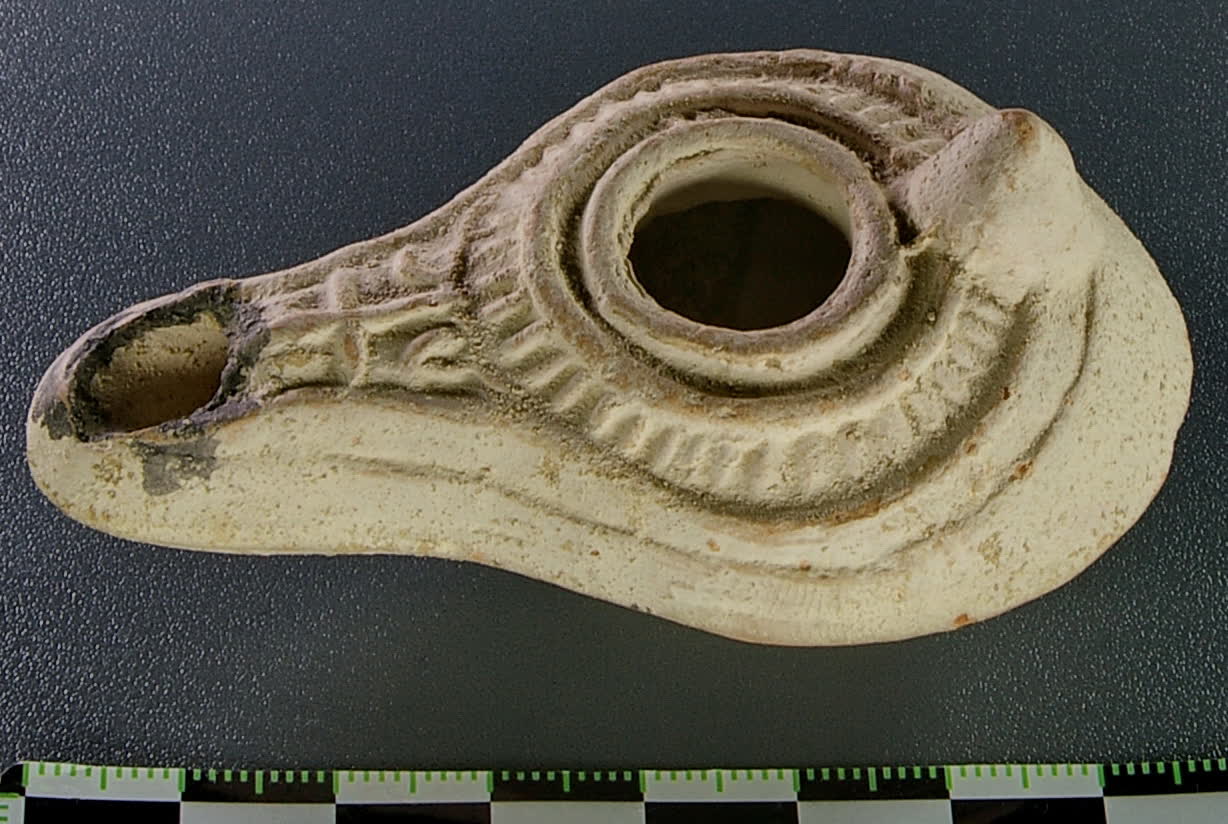
A simple clay oil lamp of the Roman era — trimmed wick and ready oil, the small daily disciplines behind Jesus’ parable of the ten virgins.Johann H. Addicks · CC BY-SA 3.0
The parable
“Hearken; Behold, there went out a sower to sow: And it came to pass, as he sowed, some fell by the way side, and the fowls of the air came and devoured it up. And some fell on stony ground, where it had not much earth; and immediately it sprang up, because it had no depth of earth: But when the sun was up, it was scorched; and because it had no root, it withered away. And some fell among thorns, and the thorns grew up, and choked it, and it yielded no fruit. And other fell on good ground, and did yield fruit that sprang up and increased; and brought forth, some thirty, and some sixty, and some an hundred.” (Mark 4:3-8)
A farmer scattering seed by hand could not help where it fell: on the hard path, on rocky ground with little earth, among thorns, and in good ground. Jesus' hearers knew the sight.
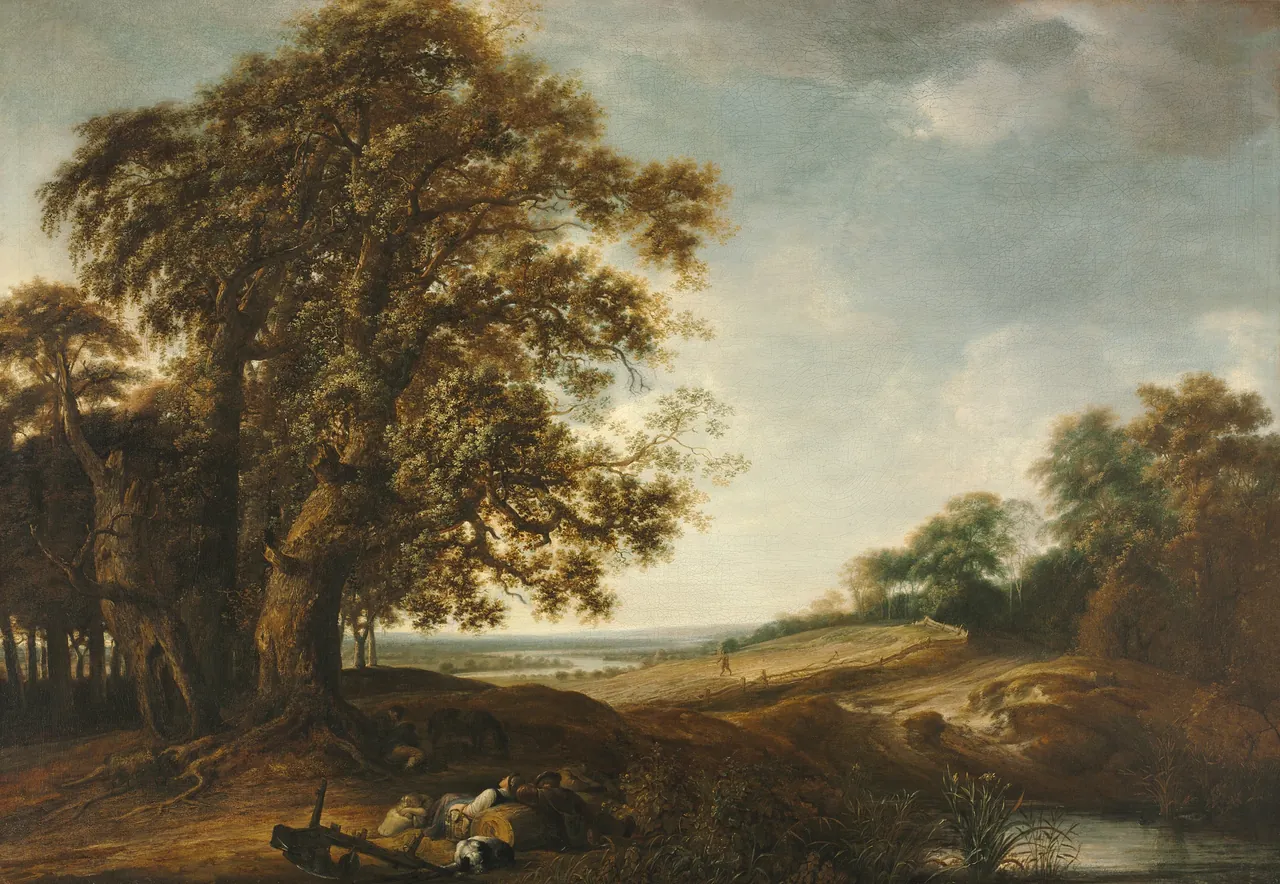
A Dutch oil painting of 1650 to 1653, Sleeping Peasants near Fields, illustrating the parable of the weeds that Jesus told alongside the parable of the sower.Sleeping Peasants near Fields (Parable of the Weeds) · 1650–53 · Cleveland Museum of Art · CC0 · museum record · Galeria Regni
Jesus' explanation
Then, in private, Jesus explained it.
“The sower soweth the word. And these are they by the way side, where the word is sown; but when they have heard, Satan cometh immediately, and taketh away the word that was sown in their hearts. And these are they likewise which are sown on stony ground; who, when they have heard the word, immediately receive it with gladness; And have no root in themselves, and so endure but for a time: afterward, when affliction or persecution ariseth for the word’s sake, immediately they are offended. And these are they which are sown among thorns; such as hear the word, And the cares of this world, and the deceitfulness of riches, and the lusts of other things entering in, choke the word, and it becometh unfruitful. And these are they which are sown on good ground; such as hear the word, and receive it, and bring forth fruit, some thirtyfold, some sixty, and some an hundred.” (Mark 4:14-20)
Four soils, four troubles
Look closely and you will see the four great troubles of the first year.
The wayside: the word taken away. "Satan cometh immediately, and taketh away the word." The enemy's first move is to make you doubt what you heard. Did God really say that? Was it real? That is Part 2.
The stony ground: affliction for the word's sake. These hearers "receive it with gladness", which describes many new believers exactly, but "when affliction or persecution ariseth for the word's sake, immediately they are offended." For most believers in the West, that persecution comes first not from governments but from family and friends. That is Part 3.
The thorns: other things choking the word. "The cares of this world, and the deceitfulness of riches, and the lusts of other things." The old desires and worries grow back up around the young plant. That is Part 4.
The good ground: hearing, receiving, bearing fruit. Luke's version adds two words that matter enormously: "But that on the good ground are they, which in an honest and good heart, having heard the word, keep it, and bring forth fruit with patience" (Luke 8:15). Keeping the word, with patience, over time. That takes roots, and roots grow best in community. That is Part 5, on the church.
What the parable does not say
Two cautions.
First, the parable is not given to make you anxious about which soil you are. Jesus told it so that His disciples would not be surprised, and so they would know what to guard against. If you are worried that you might be stony ground, the very worry often shows the word has gone deeper than the surface.
Second, the parable does not say the good ground has no birds, no sun and no thorns. It says the good ground bears fruit anyway. The difference between the soils is not that some face trouble and some do not. It is depth. Every part of this paper is about putting down roots.
This part matters because almost every new believer doubts, and many think that doubting means they have failed. It does not. But doubt left alone can harden into unbelief, and the first year is when it most needs tending.
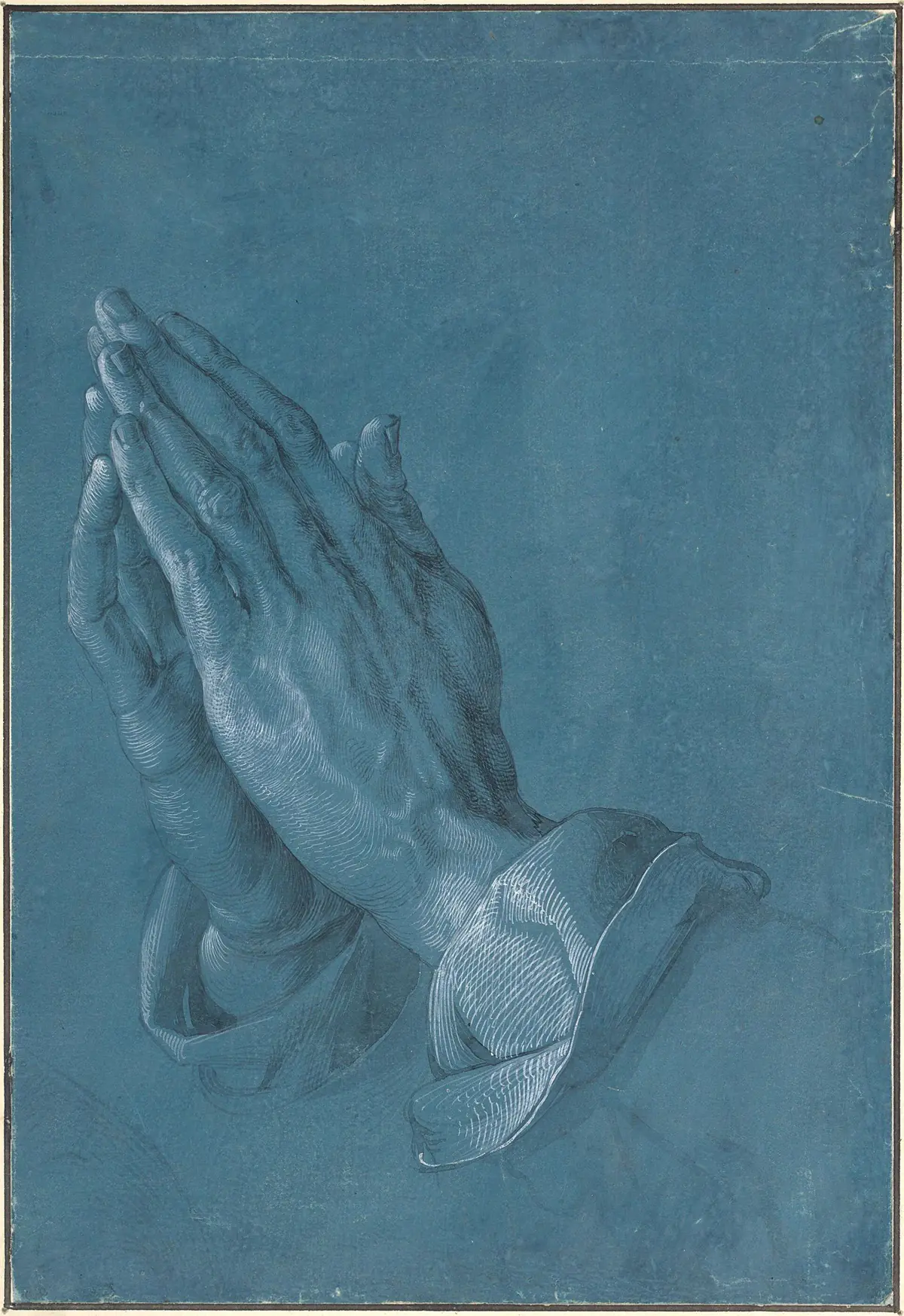
Albrecht Dürer’s Praying Hands (1508) — a working study of hands folded in petition, five centuries old and still legible at a glance.Albrecht Dürer, 1508 · Public domain
Doubters in Scripture
The Bible is remarkably honest about believers who doubted.
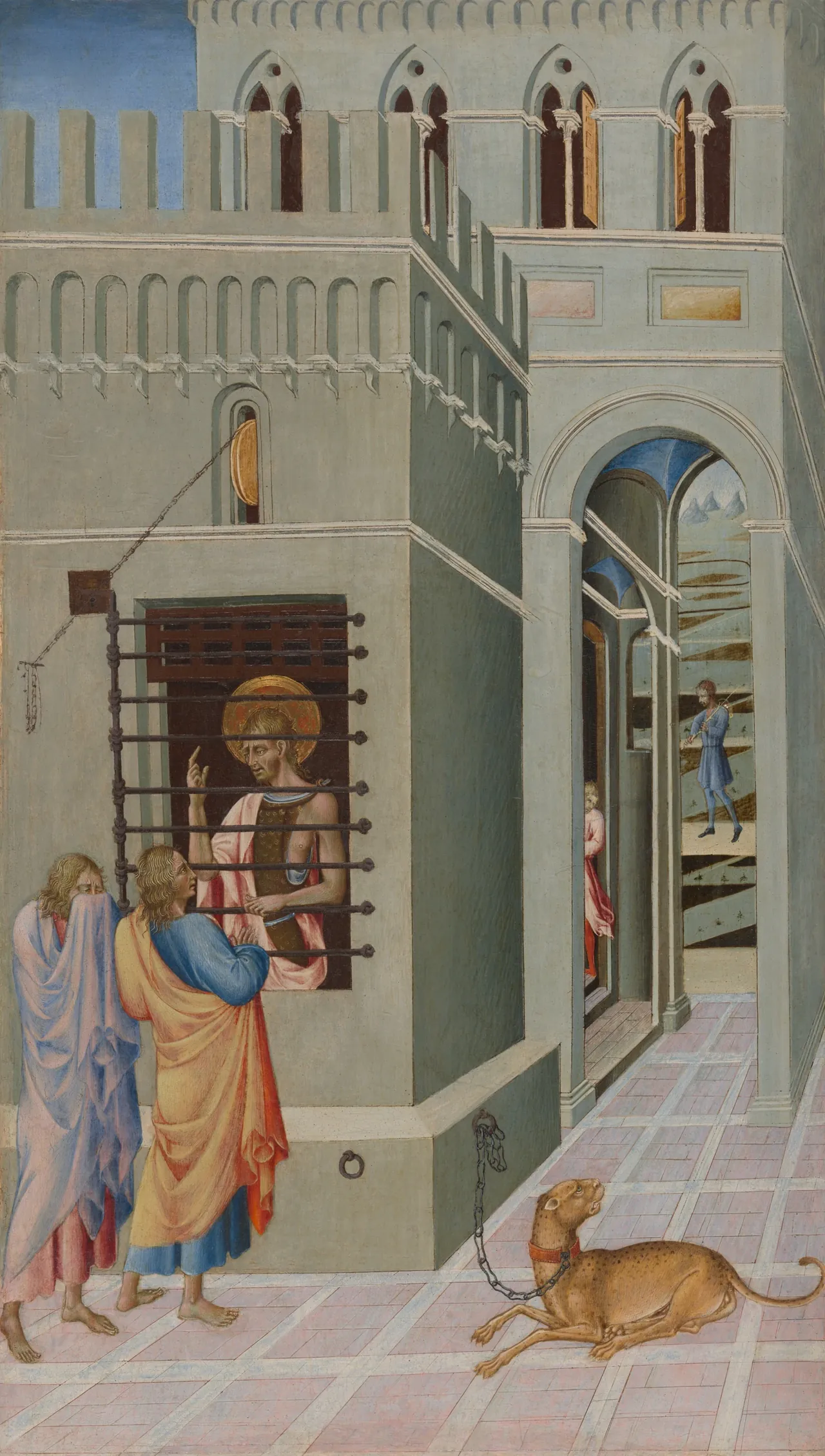
An Italian panel painting of 1455 to 1460 showing John the Baptist in prison visited by two disciples, the prisoner who sent to ask Jesus whether He was the one.Saint John the Baptist in Prison Visited by Two Disciples · 1455–60 · Art Institute of Chicago · CC0 · museum record · Galeria Regni
John the Baptist had baptized Jesus and heard the voice from heaven. Later, in Herod's prison, he sent his disciples to ask Jesus, "Art thou he that should come, or do we look for another?" (Matthew 11:3). Jesus did not rebuke him. He sent back evidence: "Go and shew John again those things which ye do hear and see: The blind receive their sight, and the lame walk, the lepers are cleansed, and the deaf hear, the dead are raised up, and the poor have the gospel preached to them. And blessed is he, whosoever shall not be offended in me" (Matthew 11:4-6). Then He turned to the crowd and praised John.
Thomas said he would not believe in the resurrection unless he could touch the wounds. A week later Jesus appeared and invited him to do exactly that: "Reach hither thy finger, and behold my hands; and reach hither thy hand, and thrust it into my side: and be not faithless, but believing." Thomas answered, "My LORD and my God" (John 20:27-28). Jesus met the doubter where he was, and then pointed beyond him: "blessed are they that have not seen, and yet have believed" (John 20:29).
A desperate father brought his son to Jesus and said, "if thou canst do any thing". Jesus answered, "If thou canst believe, all things are possible to him that believeth. And straightway the father of the child cried out, and said with tears, Lord, I believe; help thou mine unbelief" (Mark 9:23-24). Jesus healed the boy. A mixed, trembling faith was enough.
Asaph, a temple musician, nearly lost his faith watching the wicked prosper: "But as for me, my feet were almost gone; my steps had well nigh slipped. For I was envious at the foolish, when I saw the prosperity of the wicked" (Psalm 73:2-3). He found his way back not by thinking harder alone, but by going to worship: "When I thought to know this, it was too painful for me; Until I went into the sanctuary of God; then understood I their end" (Psalm 73:16-17).
Jude tells believers how to treat such people: "And of some have compassion, making a difference" (Jude 1:22). Doubters are to be helped, not shamed.
Doubt is not the same as unbelief
Doubt is a faith that is struggling. Unbelief is a refusal to believe. The father in Mark 9 had both belief and doubt at once, and he brought both to Jesus. That is the right thing to do with doubt: bring it to Christ, not away from Him.
The New Testament's warnings are about unbelief that turns away: "Take heed, brethren, lest there be in any of you an evil heart of unbelief, in departing from the living God" (Hebrews 3:12). The struggling believer who keeps coming back is not the person that verse describes.
Five kinds of doubt in the first year
It helps to name what kind of doubt you have, because they need different help.
1. "Was it real?"
This usually comes when the first feelings fade. You felt so much at the start; now you feel ordinary. The answer is that your salvation never rested on the feelings. It rests on God's promise to everyone who believes on His Son: "These things have I written unto you that believe on the name of the Son of God; that ye may know that ye have eternal life" (1 John 5:13). New Believer 101, Part 5, takes this up in detail.
C. S. Lewis made a point in Mere Christianity that has helped many people here. He observed that once a person's reason has accepted Christianity, the battle is often not against reason at all but against moods, which will rise and fall whatever the evidence; and he described faith as the habit of holding on to what your reason has accepted in spite of those changing moods.1 Feelings are real, but they are weather. Faith rests on what God has said.
2. "Is it true?"
Sometimes doubt is intellectual. A professor, a friend or a video raises a question you cannot answer: about evolution, other religions, suffering, the reliability of the Bible, the resurrection. This kind of doubt deserves a real answer, and Christianity has always welcomed one. Peter told ordinary believers, "be ready always to give an answer to every man that asketh you a reason of the hope that is in you with meekness and fear" (1 Peter 3:15).
Start with the resurrection, because Paul himself rested everything on it. "And if Christ be not raised, your faith is vain; ye are yet in your sins" (1 Corinthians 15:17). Paul also listed the witnesses who saw the risen Christ: Peter, the twelve, "above five hundred brethren at once; of whom the greater part remain unto this present", James, all the apostles, and finally Paul himself (1 Corinthians 15:5-8). He wrote that within about twenty-five years of the events, while many of those witnesses could still be questioned.
Some good books written by people who asked hard questions themselves:
Lee Strobel, The Case for Christ (1998). Strobel was the legal editor of the Chicago Tribune and an atheist when his wife became a Christian. He set out to investigate the evidence for Jesus and, by his account, came to faith through it.2
Gary R. Habermas and Michael R. Licona, The Case for the Resurrection of Jesus (2004), a careful survey of the historical evidence for the resurrection drawn mostly from facts that sceptical scholars also accept.3
J. Warner Wallace, Cold-Case Christianity (2013). Wallace, a Los Angeles cold-case homicide detective and former atheist, applied the methods he used on unsolved murders to the Gospels.4
Josh McDowell, Evidence That Demands a Verdict, a large reference collection of historical and textual evidence, first published in 1972 and revised several times since.5
The study papers on this site take up several of these questions directly, including whether the Bible is reliable. If a question troubles you, do not bury it. Write it down, ask a mature believer, and look for a serious answer.
3. "Why did God not answer?"
Many new believers pray boldly in the first weeks and then face an unanswered prayer: a loved one not healed, a job not given, a marriage not mended. This can feel like proof that God is not there. The psalms are full of this cry, and God put them in the Bible so that we would have words for it. "Why art thou cast down, O my soul? and why art thou disquieted in me? hope thou in God: for I shall yet praise him for the help of his countenance" (Psalm 42:5). Notice that the psalmist talks to himself: he does not only listen to his feelings; he preaches to them.
John the Baptist was not released from prison. Jesus answered his question, but not his circumstances. Sometimes God's answer to "why?" is not an explanation but Himself.
4. Doubt that follows sin
Sometimes doubt is not really intellectual at all. It grows from a sin we do not want to give up. It is easier to question God than to obey Him. If your doubts have arrived at the same time as a return to an old sin, be honest with yourself about which came first. Confession often clears the mind faster than argument.
5. Doubt from the enemy
Jesus said plainly that "Satan cometh immediately, and taketh away the word". The devil's oldest question is the one he asked Eve: "Yea, hath God said?" (Genesis 3:1). Not every doubt is from him; many are honest questions. But some come as accusations: You are not really saved. God could not forgive that. You are a fraud. Those are lies, and the answer is the one Jesus gave in the wilderness: "It is written" (Matthew 4:4). And James adds: "Resist the devil, and he will flee from you" (James 4:7).
What to do with doubt
1. Name it. Which of the five kinds is it? Write it down. 2. Bring it to God. Pray it honestly: "Lord, I believe; help thou mine unbelief." 3. Bring it to a person. Isolation feeds doubt. Tell a pastor or a mature believer. 4. Keep the means of grace going. Keep reading, keep praying, keep going to church, as Asaph went to the sanctuary. Do not stop eating because you have lost your appetite. 5. Look for real answers to real questions, in good books and from people who know. 6. Remember Peter's answer. When many disciples walked away, Jesus asked the twelve, "Will ye also go away?" Peter answered, "Lord, to whom shall we go? thou hast the words of eternal life" (John 6:67-68). Even when you cannot answer every question, you can ask where else you would go.
Part 3 — When the Sun Comes Up: Relationships and the Cost
7 min read
This part matters because for many new believers the hardest part of the first year is not inside them but around them. Jesus said the stony-ground hearers fall away "when affliction or persecution ariseth for the word's sake". The first place that affliction usually appears is at home.
Jesus was honest about the cost
“Think not that I am come to send peace on earth: I came not to send peace, but a sword. For I am come to set a man at variance against his father, and the daughter against her mother, and the daughter in law against her mother in law. And a man’s foes shall be they of his own household. He that loveth father or mother more than me is not worthy of me: and he that loveth son or daughter more than me is not worthy of me.” (Matthew 10:34-37)
Jesus does not want family division. He is warning that loyalty to Him will sometimes cause it. In Luke He puts it even more starkly: "If any man come to me, and hate not his father, and mother, and wife, and children, and brethren, and sisters, yea, and his own life also, he cannot be my disciple" (Luke 14:26). The word "hate" there is a comparison: next to our love for Christ, every other love must look like hatred. Matthew's version makes the meaning clear: loving family "more than me".
But He also gave a promise: "There is no man that hath left house, or brethren, or sisters, or father, or mother, or wife, or children, or lands, for my sake, and the gospel's, But he shall receive an hundredfold now in this time, houses, and brethren, and sisters, and mothers, and children, and lands, with persecutions; and in the world to come eternal life" (Mark 10:29-30). Notice "with persecutions". And notice "now in this time": the church becomes family.
Two who paid it
Two well-known conversions of recent years show what this can look like.
Nabeel Qureshi grew up a devout Muslim in the United States. At Old Dominion University he became friends with a Christian student, David Wood, and the two spent years debating the historical claims of Christianity and Islam. Qureshi eventually came to faith in Christ, at great cost to himself and to a family he loved, as he tells it. He told the story in Seeking Allah, Finding Jesus (2014). He died of stomach cancer in 2017, at thirty-four.6
Rosaria Butterfield was a professor of English and women's studies at Syracuse University, living as a lesbian, when she wrote a newspaper article criticising the Christian men's movement Promise Keepers. A local pastor, Ken Smith, wrote to her about the article and invited her to dinner. She and the Smiths became friends, and over two years of conversation and Bible reading she came to faith in Christ. She wrote about her conversion, and what it overturned in her life, in The Secret Thoughts of an Unlikely Convert (2012).7
Both stories also show the other side: a Christian friend, a pastor's family, who were willing to sit at a table with someone very different from them for years. The cost of following Christ is often borne inside the church's friendships.
With your parents
If your parents are not believers, or belong to a different faith or a different church, your conversion may feel to them like a rejection. It is not, and you can show them it is not.
The commandment still stands: "Honour thy father and mother; which is the first commandment with promise; That it may be well with thee, and thou mayest live long on the earth" (Ephesians 6:2-3). Conversion does not cancel it; it should make you a better son or daughter. Be more respectful than you were, more helpful, more patient. Do not argue at every meal. Let them see the change before they hear the sermon.
But honour is not the same as obedience in everything. If a parent forbids you to follow Christ, you must obey God first, as the apostles did when they were forbidden to preach. If you are a minor living at home, obey your parents in everything that does not require sin, pray for them, and talk to a pastor about how to handle hard situations wisely.
With a spouse who does not believe
This is one of the hardest situations of all, and Scripture speaks to it directly. Paul writes: "If any brother hath a wife that believeth not, and she be pleased to dwell with him, let him not put her away. And the woman which hath an husband that believeth not, and if he be pleased to dwell with her, let her not leave him" (1 Corinthians 7:12-13). Conversion is not grounds for leaving a marriage. Paul adds a word of hope: "For what knowest thou, O wife, whether thou shalt save thy husband? or how knowest thou, O man, whether thou shalt save thy wife?" (1 Corinthians 7:16).
Peter tells believing wives how this hope is most often fulfilled: "that, if any obey not the word, they also may without the word be won by the conversation of the wives; While they behold your chaste conversation coupled with fear" (1 Peter 3:1-2). "Conversation" in the King James means conduct, the whole way you live. The unbelieving spouse is more often won by a changed life than by pressure.
In my own story, I came to faith in 2022, and my wife came to faith a month later. Many believers wait years. Some wait their whole lives. Pray, love, serve, and do not nag. Talk to your pastor if the marriage is in trouble.
One of our guests has spoken about marriage under Christ.
Jackie VanTine told the story on The King Is Coming Show (TKIC #16): faith, deliverance, and marriage under Christ, in Jackie's own telling. Watch it: youtube.com/watch?v=wjU6N7arAbA Jackie's account of what happened, shared as testimony — weigh it for yourself.
With old friends
Peter describes exactly what happens with old friends: "For the time past of our life may suffice us to have wrought the will of the Gentiles, when we walked in lasciviousness, lusts, excess of wine, revellings, banquetings, and abominable idolatries: Wherein they think it strange that ye run not with them to the same excess of riot, speaking evil of you" (1 Peter 4:3-4).
They think it strange. Some will mock you; some will be hurt; some will be curious. A few will want to know more.
Two truths have to be held together here. On one hand, "Be not deceived: evil communications corrupt good manners" (1 Corinthians 15:33), and "He that walketh with wise men shall be wise: but a companion of fools shall be destroyed" (Proverbs 13:20). If certain friendships are built around the sins you are leaving, the drinking, the drugs, the parties, you will probably have to step back from them, at least for a season, for your own sake. That is not pride; it is wisdom.
On the other hand, Jesus was "a friend of publicans and sinners" (Matthew 11:19). You are not called to despise your old friends, but to love them, pray for them, and when you can, tell them what happened to you. The difference is between going to them as a witness and going back to them as a participant.
A good practical rule for the first year: you may meet old friends for coffee; avoid the old places at the old hours.
Dating and marriage
If you are single, the first year is a vulnerable time. The New Testament's instruction is clear. Paul says a Christian widow is free to marry "only in the Lord" (1 Corinthians 7:39), and the wider principle is stated in 2 Corinthians: "Be ye not unequally yoked together with unbelievers: for what fellowship hath righteousness with unrighteousness? and what communion hath light with darkness?" (2 Corinthians 6:14). A Christian is to marry a Christian.
If you are already in a relationship with an unbeliever and not married, this may be the hardest obedience of your first year. Talk to a pastor. Do not marry someone in the hope of converting them. And if your relationship involves sexual sin, that has to end now, whatever happens to the relationship. Part 4 says more.
Making new friends
The other half of Mark 10:30 is a promise of new family. You need Christian friends, not as a replacement for everyone you knew, but as people who will walk with you. Look for:
A mature believer of your own sex who will meet with you regularly, answer questions and pray with you.
Peers at a similar stage, other new or young believers, so you do not feel alone.
A family in your church who will have you to dinner, as the Smiths did with Rosaria Butterfield.
"If it be possible, as much as lieth in you, live peaceably with all men" (Romans 12:18). Some relationships will cool. Some will end. Some will, in time, be restored and even transformed. Keep loving.
This part matters because the thorns in Jesus' parable do not appear out of nowhere. They were already in the soil. Most new believers discover that the desires of the old life were not removed at conversion; they were only sleeping. When they wake up, it can be terrifying. You are not alone, and you are not without help.
William Holman Hunt’s The Light of the World (1853) — Christ knocking at a door with no outside handle; it only opens from within.William Holman Hunt, 1853 · Public domain
What temptation is
James explains where temptation comes from: "Let no man say when he is tempted, I am tempted of God: for God cannot be tempted with evil, neither tempteth he any man: But every man is tempted, when he is drawn away of his own lust, and enticed. Then when lust hath conceived, it bringeth forth sin: and sin, when it is finished, bringeth forth death" (James 1:13-15).
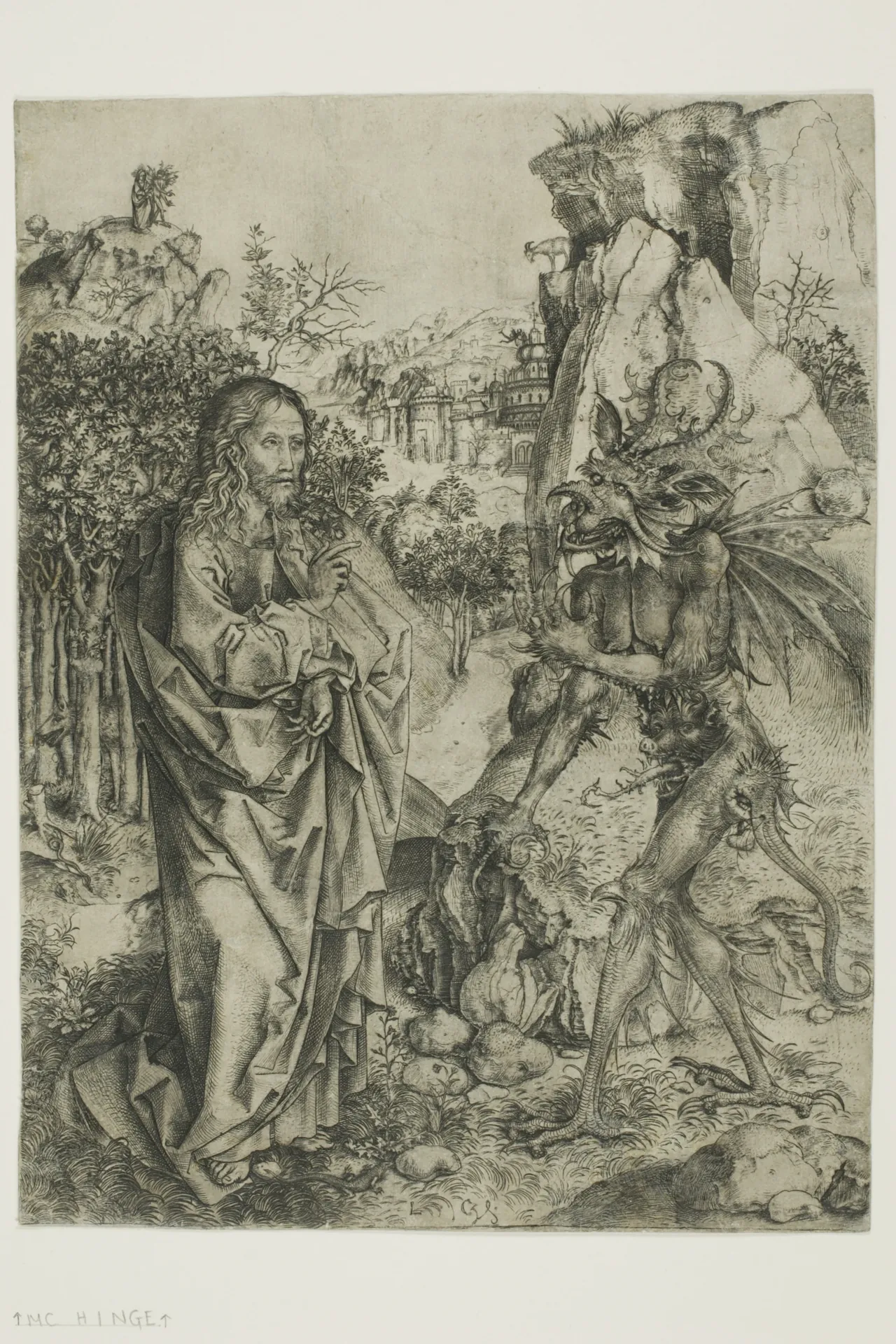
A German engraving of about 1490, The Temptation of Christ, showing the Lord standing firm before the tempter in the wilderness.The Temptation of Christ · c. 1490 · Art Institute of Chicago · CC0 · museum record · Galeria Regni
Notice the stages: a desire, an enticement, a conception, a birth, a death. Temptation is not yet sin. The fight is won or lost in the early stages, before the desire "conceives".
And Paul gives the promise every new believer should memorise: "There hath no temptation taken you but such as is common to man: but God is faithful, who will not suffer you to be tempted above that ye are able; but will with the temptation also make a way to escape, that ye may be able to bear it" (1 Corinthians 10:13). Your temptation is "common to man": not unique, not proof that you are worse than everyone else. And there is always a way out.
The old life returning
Peter's list of the old life in 1 Peter 4:3 could have been written about a modern weekend: "lasciviousness, lusts, excess of wine, revellings, banquetings, and abominable idolatries". The thorns of the first year are usually the same: sexual sin, drink and drugs, anger, lying, and for many readers, the pull of old spiritual practices.
Sexual temptation is the commonest. Pornography especially, because it is private, constant and always one tap away. Substances, if you came out of drink or drugs. Old spiritual practices, if like me you came out of the New Age; the pull back to horoscopes, tarot or "energy" can be surprisingly strong when life is hard. Anger and harsh words, which often grow worse under the stress of family conflict. The cares of this world, as Jesus called them: money worries, ambition, the phone, busyness. These choke the word not by attacking it but by crowding it out.
The expulsive power of a new affection
The Scottish preacher Thomas Chalmers, who led much of the Scottish church in the early nineteenth century, preached a famous sermon called "The Expulsive Power of a New Affection". His point was simple and deep. You cannot defeat a love for the world by willpower alone, by simply trying to empty your heart of it; the heart was not made to be empty. "The heart is not so constituted," he said, "and the only way to dispossess it of an old affection is by the expulsive power of a new one." Of every real change in a person's life he observed, "There is not one of these transformations in which the heart is left without an object." One love is driven out only by a greater.8
That is the heart of the Christian fight against temptation. Not only "stop", but "put on". Paul says the same: "But put ye on the Lord Jesus Christ, and make not provision for the flesh, to fulfil the lusts thereof" (Romans 13:14), and "Walk in the Spirit, and ye shall not fulfil the lust of the flesh" (Galatians 5:16). The more you love Christ, the less room there is for the thorns.
Practical weapons
Chalmers is right that love for Christ is the deepest answer. But Scripture also gives very practical commands.
Flee
When Potiphar's wife tried to seduce Joseph, he did not stay to argue: "he left his garment in her hand, and fled, and got him out" (Genesis 39:12). Paul told Timothy, "Flee also youthful lusts: but follow righteousness, faith, charity, peace, with them that call on the Lord out of a pure heart" (2 Timothy 2:22). Notice the second half: flee from, and follow after, "with them that call on the Lord". Running from sin works best in company.
Make no provision
"Make not provision for the flesh" (Romans 13:14). Provision means planning ahead. If you know what tempts you, remove the supply. Install filters and accountability software on your devices. Delete the numbers. Pour out the bottles. Get rid of the occult objects. Do not keep a little supply "just in case". Change your route home if you have to.
Fill your mind with the word
"Wherewithal shall a young man cleanse his way? by taking heed thereto according to thy word" (Psalm 119:9). And two verses later: "Thy word have I hid in mine heart, that I might not sin against thee" (Psalm 119:11). When Jesus was tempted in the wilderness, He answered each temptation with a verse from Deuteronomy: "It is written, Man shall not live by bread alone, but by every word that proceedeth out of the mouth of God" (Matthew 4:4). Memorise verses that speak to your own temptations, and say them when the temptation comes.
Paul tells the Philippians what to fill their thoughts with: "whatsoever things are true, whatsoever things are honest, whatsoever things are just, whatsoever things are pure, whatsoever things are lovely, whatsoever things are of good report; if there be any virtue, and if there be any praise, think on these things" (Philippians 4:8).
Watch and pray
"Watch and pray, that ye enter not into temptation: the spirit indeed is willing, but the flesh is weak" (Matthew 26:41). Know your weak times: late at night, when tired, when alone, after conflict, after disappointment. Pray before those times, not only during them.
Confess to someone
"Confess your faults one to another, and pray one for another, that ye may be healed" (James 5:16). Secret sin grows. Find one trusted, mature believer of your own sex and tell them the truth about your struggles. Agree to check in regularly, weekly at first, daily if necessary. Many believers have found that the moment they told someone else, the temptation lost half its power.
Remember who is praying for you
"For we have not an high priest which cannot be touched with the feeling of our infirmities; but was in all points tempted like as we are, yet without sin. Let us therefore come boldly unto the throne of grace, that we may obtain mercy, and find grace to help in time of need" (Hebrews 4:15-16). Christ knows what temptation feels like. Go to Him in the moment, boldly.
One of our guests has told a story of long bondage and freedom.
Brittany Sivels told her story on The King Is Coming Show (TKIC #52): two decades in homosexuality and lust, and then, in her telling, a three-day fast that changed everything. Watch it in her own words: youtube.com/watch?v=JJ0SsSLQgEg Brittany's account of what happened to her, shared as her testimony — weigh it for yourself.
When you fall
You will. Every believer does. What matters is what you do next.
"My little children, these things write I unto you, that ye sin not. And if any man sin, we have an advocate with the Father, Jesus Christ the righteous" (1 John 2:1). John does not want you to sin. But he does not tell you that if you sin you are finished. He tells you that you have a defence lawyer in heaven.
"For a just man falleth seven times, and riseth up again" (Proverbs 24:16). The righteous man falls. What marks him out is that he gets up.
When you fall:
1. Do not hide. Confess it to God at once, by name (1 John 1:9). 2. Receive the forgiveness. Do not punish yourself for a week first. Christ has already been punished for it. 3. Tell your accountability partner. 4. Ask what led to it. What was the provision you made? What time, place or feeling set it up? Change that. 5. Get up and go on. The devil wants a fall to become a lifestyle by convincing you that you have already lost. You have not.
When it is more than temptation
Some struggles have a medical side as well as a spiritual one. If you are caught in addiction to alcohol or drugs, or if you are struggling with deep depression, your church should walk with you, and you may also need medical help. Getting it is not a lack of faith. In the United States the SAMHSA National Helpline (1-800-662-4357) is free, confidential and open all day, every day, for treatment referral.9 If you are thinking about ending your life, call or text 988, the Suicide & Crisis Lifeline, or call 911 if you are in immediate danger. Overcoming Struggles goes into these things in depth.
Part 5 — Good Ground: Finding and Staying in a Church
6 min read
This part matters because roots grow in soil, and for the Christian the soil is the church. Many new believers are tempted to think they can grow alone, with a Bible and a podcast. The New Testament knows nothing of that, and neither does the experience of the church through history.
Why you need a church
Paul describes the church as a body. "But now hath God set the members every one of them in the body, as it hath pleased him. And if they were all one member, where were the body? But now are they many members, yet but one body. And the eye cannot say unto the hand, I have no need of thee: nor again the head to the feet, I have no need of you" (1 Corinthians 12:18-21). A hand cut off from the body does not live long.
Hebrews ties church attendance directly to perseverance: "And let us consider one another to provoke unto love and to good works: Not forsaking the assembling of ourselves together, as the manner of some is; but exhorting one another: and so much the more, as ye see the day approaching" (Hebrews 10:24-25). And earlier: "But exhort one another daily, while it is called To day; lest any of you be hardened through the deceitfulness of sin" (Hebrews 3:13). Part of how God keeps you from hardening is other believers.
Research bears out how easily people drift. A 2017 survey of more than two thousand American adults aged twenty-three to thirty, published by Lifeway Research in 2019, found that 66 percent of those who had attended a Protestant church regularly for at least a year as teenagers had dropped out for at least a year between the ages of eighteen and twenty-two. The commonest reasons given were moving to college and simply not going any more (34 percent), finding church members "judgmental or hypocritical" (32 percent), and no longer feeling connected to people in the church (29 percent).10 Those were churchgoing teenagers, not new converts; but notice how many of the reasons are about relationships and habits rather than doctrine. People rarely argue their way out of church. They drift.
What to look for
No church is perfect. Look for these marks.
The Bible preached plainly. Paul told Titus that an elder must be "Holding fast the faithful word as he hath been taught, that he may be able by sound doctrine both to exhort and to convince the gainsayers" (Titus 1:9). You should hear the Bible opened and explained, not just quoted as a springboard for the preacher's ideas. Be like the Bereans, who "searched the scriptures daily, whether those things were so" (Acts 17:11).
The gospel clear. Salvation by grace through faith in the crucified and risen Christ, with real repentance from sin. Paul's warning is severe: "But though we, or an angel from heaven, preach any other gospel unto you than that which we have preached unto you, let him be accursed" (Galatians 1:8).
Sin and hell not softened. A church that never mentions sin, judgment or repentance has stopped preaching the whole Bible. Paul warned that "the time will come when they will not endure sound doctrine; but after their own lusts shall they heap to themselves teachers, having itching ears" (2 Timothy 4:3).
Leaders of good character. 1 Timothy 3 lists the qualifications of an overseer: "blameless, the husband of one wife, vigilant, sober, of good behaviour, given to hospitality, apt to teach; Not given to wine, no striker, not greedy of filthy lucre; but patient, not a brawler, not covetous" (1 Timothy 3:2-3). Notice that most of the list is about character, not gifts.
Real fellowship. People who will learn your name, pray for you, and notice when you are missing.
Warning signs
Jesus warned, "Beware of false prophets, which come to you in sheep's clothing, but inwardly they are ravening wolves. Ye shall know them by their fruits" (Matthew 7:15-16). Here are fruits to watch for.
Prosperity teaching: the message that God's will is for every believer to be rich and healthy, and that giving money to the ministry will unlock it. Paul describes teachers "supposing that gain is godliness: from such withdraw thyself. But godliness with contentment is great gain" (1 Timothy 6:5-6).
A gospel of works: salvation by keeping rules, or by membership in one organisation, rather than by grace through faith.
One group alone is saved: a church or movement that claims to be the only true church, that salvation is found only in its membership, and that leaving it means losing your soul.
Unaccountable leaders: a pastor who cannot be questioned, who controls members' decisions about marriage, work, money or where they live, or who demands secrecy.
Isolation: pressure to cut off family and friends outside the group.
Moral or financial scandal that is covered up rather than dealt with.
One of our guests has spoken about being raised in a group that taught it alone was saved.
Vanessa Sprenger told her story on The King Is Coming Show (TKIC #6): raised in a group that told her it alone was saved, in her own telling. Watch it: youtube.com/watch?v=3dPK9NJ8GqY Vanessa's account of what happened to her, shared as her testimony — weigh it for yourself.
How to find one
1. Ask. If a Christian led you to Christ, ask where they go. Ask other believers you trust. 2. Look and listen. Read the church's statement of faith online. Listen to a few sermons. 3. Visit more than once. One Sunday tells you little. Give a church several weeks. 4. Talk to the pastor. Ask what the church believes about the gospel, the Bible, baptism and the Lord's Supper. A good pastor will be glad you asked. 5. Commit. Once you have found a faithful church, join it. Do not wander from church to church indefinitely, sampling. Roots need to stay in one place to grow.
When the church disappoints you
It will. Churches are made of forgiven sinners, and forgiven sinners still sin. Someone will be rude, or forget you, or say something foolish. A leader may let you down.
Before you leave, try the Bible's way. "Moreover if thy brother shall trespass against thee, go and tell him his fault between thee and him alone: if he shall hear thee, thou hast gained thy brother" (Matthew 18:15). Most hurts in church are never resolved because they are never spoken. And Paul's word for life together is: "Let all bitterness, and wrath, and anger, and clamour, and evil speaking, be put away from you, with all malice: And be ye kind one to another, tenderhearted, forgiving one another, even as God for Christ's sake hath forgiven you" (Ephesians 4:31-32).
Dietrich Bonhoeffer, the German pastor executed by the Nazis in 1945, wrote in Life Together (1939) that the believer who loves his own dream of what Christian community should be more than the actual community God has given him will end up destroying it; Christian fellowship, he argued, is not an ideal we must achieve but a reality God has already created in Christ, which we receive with thanks, faults and all.11 Come expecting forgiven sinners, and you will be less shocked when you find them.
There are real reasons to leave a church: false teaching on the gospel, abuse, a cover-up of serious sin, or a group that shows the warning signs above. If you are in that situation, get counsel from a mature believer outside the church, and find a faithful church to go to.
Serving
You are not only a receiver in the church. Paul says "Now ye are the body of Christ, and members in particular" (1 Corinthians 12:27). Within your first year, find some small way to serve: setting up chairs, welcoming visitors, helping in the nursery, visiting the sick, making meals. Serving puts down roots faster than almost anything else, because it ties you to people.
This part matters because sooner or later, even in good ground, the rain seems to stop. Prayer feels like talking to the ceiling. The Bible reads like a phone book. You are doing all the right things and feeling nothing. This is one of the commonest experiences of the Christian life, and the first year is often when it first arrives.
The seed grows secretly
Jesus told another parable about seed, in the same chapter as the sower:
“And he said, So is the kingdom of God, as if a man should cast seed into the ground; And should sleep, and rise night and day, and the seed should spring and grow up, he knoweth not how. For the earth bringeth forth fruit of herself; first the blade, then the ear, after that the full corn in the ear.” (Mark 4:26-28)
"He knoweth not how." Most growth happens underground and out of sight. A farmer does not dig up the seed every morning to check on it. He sleeps, and rises, and the seed grows. In dry seasons, keep sowing and trust the God who gives the growth.
The psalms of the dry season
God gave us songs for these times. "Why art thou cast down, O my soul? and why art thou disquieted in me? hope thou in God: for I shall yet praise him for the help of his countenance" (Psalm 42:5). Another psalm promises: "The LORD is nigh unto them that are of a broken heart; and saveth such as be of a contrite spirit" (Psalm 34:18). And from the book that is nothing but lament: "It is of the LORD's mercies that we are not consumed, because his compassions fail not. They are new every morning: great is thy faithfulness" (Lamentations 3:22-23).
Pray these. They were written for you.
What tribulation does
Paul says something surprising about hard times: "we glory in tribulations also: knowing that tribulation worketh patience; And patience, experience; and experience, hope: And hope maketh not ashamed; because the love of God is shed abroad in our hearts by the Holy Ghost which is given unto us" (Romans 5:3-5). "Experience" there means proven character. Dry seasons are where roots go down. A tree with water always at the surface grows shallow roots. A tree that has to reach for water grows deep ones.
Habits: what the research says
One reason dry seasons are dangerous is that the early habits of the Christian life, daily reading, daily prayer, weekly church, are still fragile. You may have read that a habit forms in twenty-one days, or forty-two. Those figures do not come from studies of how habits actually form.
The best-known study of how habits actually form in daily life was published in 2010 by Phillippa Lally and colleagues at University College London. They followed ninety-six volunteers who each chose a new eating, drinking or exercise behaviour to carry out daily in the same setting, such as "after breakfast", and recorded every day how automatic it felt. For those whose results could be modelled, the time to reach near-full automaticity ranged from 18 to 254 days, depending on the person and the behaviour. And, importantly for new believers, missing a single opportunity did not materially affect the formation of the habit.12
Two lessons follow. First, expect it to take months, not weeks, before daily Bible reading and prayer feel natural, and do not be discouraged when it is still effortful in month three. Second, if you miss a day, do not quit. A missed day does not undo the habit. Pick it up tomorrow. "His compassions fail not. They are new every morning."
Keep the means of grace
In dry seasons, do not wait to feel like it before you read, pray or go to church. Do them anyway. The psalmist describes the blessed man as one whose "delight is in the law of the LORD; and in his law doth he meditate day and night. And he shall be like a tree planted by the rivers of water, that bringeth forth his fruit in his season" (Psalm 1:2-3). "In his season." Fruit has seasons. So does the feeling of joy. The tree stays by the river all year.
And Paul's encouragement fits exactly: "And let us not be weary in well doing: for in due season we shall reap, if we faint not" (Galatians 6:9).
This part matters because a year is long, and having a rough plan helps. This is not a law, and your year will not look exactly like this. But it gives you a path, season by season, keyed to the troubles in this paper.
Months 1 to 3: Rooting
The aim of the first season is to put down the first roots.
| Area | Aim | |---|---| | Word | Read the Gospel of John, then Mark, then Acts, about a chapter a day | | Prayer | Pray morning and evening, using the Lord's Prayer as a pattern | | Church | Find a faithful church; attend every week | | Baptism | Talk to the pastor and be baptized | | Friend | Find one mature believer of your own sex to meet with regularly | | Temptation | Remove the provision: filters, deleted numbers, cleared shelves | | Relationships | Tell family and close friends, gently; honour your parents |
Months 4 to 6: Strengthening
The aim of the second season is to strengthen the roots through the first dry spell.
| Area | Aim | |---|---| | Word | Read Romans, Ephesians, Philippians, 1 John; memorise one verse a week | | Prayer | Keep a short prayer list; notice answers | | Church | Join a Bible study or small group; join the church as a member | | Service | Find one small way to serve | | Doubt | Write down any honest questions; read one book of Christian evidence | | Accountability | Check in weekly with your friend about temptation |
Months 7 to 9: Deepening
The aim of the third season is to go deeper into the whole Bible.
| Area | Aim | |---|---| | Word | Begin the Old Testament: Genesis, then Psalms and Proverbs alongside | | Study | Use a KJV with Strong's Concordance to look up key words | | Prayer | Pray for unbelieving family and friends by name every day | | Witness | Tell your story to at least one person who does not know Christ | | Reading | Read one classic: Bunyan's The Pilgrim's Progress or Lewis's Mere Christianity |
Months 10 to 12: Bearing fruit
The aim of the fourth season is to begin to give as well as receive.
| Area | Aim | |---|---| | Word | Finish the New Testament; keep going in the Old | | Church | Serve more regularly; welcome newer believers | | Discipleship | Begin meeting with someone newer to the faith than you | | Review | Look back at your first year; write down what God has done | | Reading | Read a book on the Christian life: J. C. Ryle's Holiness or J. I. Packer's Knowing God |
Books for the first year
A short list of sound books, each cited in this paper or its companions:
John Bunyan, The Pilgrim's Progress (1678)
C. S. Lewis, Mere Christianity (1952)
J. C. Ryle, Holiness (1877; enlarged 1879)
J. I. Packer, Knowing God (1973)
Lee Strobel, The Case for Christ (1998)
Dietrich Bonhoeffer, Life Together (1939; English 1954)
And above all of them, the King James Bible, free in the 1611 Reader at kylelauriano.com/library.
Jesus told the parable of the sower so that His disciples would not be surprised. Now you will not be surprised either.
The birds will come: doubts and accusations that try to snatch the word away. The answer is to bring them honestly to Christ and to His people, to look for real answers to real questions, and to keep feeding on the word.
The sun will come up: affliction for the word's sake, most often from people you love. The answer is to honour them, love them, pray for them, and refuse to let any love outrank your love for Christ, trusting His promise of a hundredfold family in His church.
The thorns will grow back: old desires and new worries. The answer is to flee, to make no provision, to hide the word in your heart, to confess to a brother or sister, to get up when you fall, and above all to let a greater love drive out the lesser ones.
And the good ground is not ground without trouble. It is ground with depth: the honest and good heart that hears the word, keeps it, and brings forth fruit with patience. That depth grows in the soil of the church, and it grows slowly, often out of sight.
A next step
Look at Part 7 and decide where you are. Choose one thing from that season to start this week. If you have not found a church, make that the one thing.
An invitation
If you are reading this in a hard season, hear Jesus' own invitation: "Come unto me, all ye that labour and are heavy laden, and I will give you rest. Take my yoke upon you, and learn of me; for I am meek and lowly in heart: and ye shall find rest unto your souls. For my yoke is easy, and my burden is light" (Matthew 11:28-30).
And if you are not sure you have ever truly come to Him, you can come now. Turn from your sin, and trust Jesus Christ, who died for sinners and rose again. He has promised, "him that cometh to me I will in no wise cast out" (John 6:37).
"Being confident of this very thing, that he which hath begun a good work in you will perform it until the day of Jesus Christ" (Philippians 1:6). Free truth, no pressure.
1C. S. Lewis, Mere Christianity (London: Geoffrey Bles, 1952), bk. 3, ch. 11, "Faith."↩
2Lee Strobel, The Case for Christ: A Journalist's Personal Investigation of the Evidence for Jesus (Grand Rapids: Zondervan, 1998).↩
3Gary R. Habermas and Michael R. Licona, The Case for the Resurrection of Jesus (Grand Rapids: Kregel, 2004).↩
4J. Warner Wallace, Cold-Case Christianity: A Homicide Detective Investigates the Claims of the Gospels (Colorado Springs: David C. Cook, 2013).↩
5Josh McDowell, Evidence That Demands a Verdict (San Bernardino, CA: Campus Crusade for Christ, 1972).↩
6Nabeel Qureshi, Seeking Allah, Finding Jesus: A Devout Muslim Encounters Christianity (Grand Rapids: Zondervan, 2014).↩
7Rosaria Champagne Butterfield, The Secret Thoughts of an Unlikely Convert: An English Professor's Journey into the Christian Faith (Pittsburgh: Crown & Covenant, 2012); and her "My Train Wreck Conversion," Christianity Today, February 2013, https://www.christianitytoday.com/2013/02/my-train-wreck-conversion/.↩
8Thomas Chalmers, "The Expulsive Power of a New Affection," in The World's Great Sermons, ed. Grenville Kleiser, vol. 4 (New York: Funk & Wagnalls, 1908). Online: https://www.gutenberg.org/ebooks/44411.↩
9Substance Abuse and Mental Health Services Administration, "National Helpline." https://www.samhsa.gov/find-help/helplines/national-helpline.↩
10Lifeway Research, "Most Teenagers Drop Out of Church as Young Adults," January 15, 2019. https://research.lifeway.com/2019/01/15/most-teenagers-drop-out-of-church-as-young-adults/.↩
11Dietrich Bonhoeffer, Life Together, trans. John W. Doberstein (New York: Harper & Row, 1954), ch. 1, "Community."↩
12Phillippa Lally, Cornelia H. M. van Jaarsveld, Henry W. W. Potts and Jane Wardle, "How Are Habits Formed: Modelling Habit Formation in the Real World," European Journal of Social Psychology 40, no. 6 (2010): 998–1009, https://doi.org/10.1002/ejsp.674.↩
Seven mornings for the person who just prayed: what happened, the first night, the Bible, prayer, church, the pushback, and who to tell — the page in the 1611, one person who says they walked it, and a room on the site each morning. Free.
This is practical teaching, not proof. It's drawn from Scripture and from walking this road myself. If you're still weighing the basics — whether God is real, whether the Bible can be trusted — I'd encourage you to start with the Skeptic resources in the Research Hub before diving in here.
"Being confident of this very thing, that he which hath begun a good work in you will perform it until the day of Jesus Christ." — Philippians 1:6 (KJV)