A study of the foundations of biblical counseling — what it is, where it came from, why Scripture is enough for it, how it understands people, and how it cares for the hurting.
Abstract
What does it mean to counsel someone "biblically", and is the Bible really enough for the troubles people bring? This paper answers from the King James Bible first, and second from the history of Christian soul care: Gregory the Great's Pastoral Rule, Richard Baxter's The Reformed Pastor, the Westminster Confession, and the modern biblical counseling movement begun by Jay Adams and carried on at the Christian Counseling & Educational Foundation (CCEF) by David Powlison, Edward Welch and Paul Tripp. It sets out three foundations — the sufficiency of Scripture, the Bible's account of the human heart, and the tender care God shows to the hurting — and then the basic work of listening, understanding, speaking and walking with someone. It argues that Scripture is sufficient for the care of the soul without pretending to be a medical textbook, and that good counsel is both truthful and gentle. It is written for pastors, church members and anyone who has ever been asked, "Can I talk to you?"
What’s inside
·Introduction
Part 1Part 1: What Biblical Counseling Is, and Where It Came From
Part 2Part 2: The Sufficiency of Scripture
Part 3Part 3: The Heart: How the Bible Understands People
Part 4Part 4: Care for the Hurting
Part 5Part 5: The Work Itself: Listening, Understanding, Speaking, Walking With
Part 6Part 6: The Counselor: Character, Limits and Guardrails
·Conclusion
Research paper · 8 chapters · 23 notes · October 2026
About 44 minutes · 8 parts · the PDF has the same text
Introduction
3 min read
Sooner or later someone will sit down across from you and say, "Can I talk to you about something?" It may be a friend whose marriage is failing, a teenager who cannot stop looking at what he knows is wrong, a widow who cannot get out of bed, a man who is angry all the time and does not know why. What you say next matters.
Most Christians are never trained for that moment. Many assume it belongs to professionals, and they quietly hand the hurting person a phone number. Some rush in with a verse and a quick fix. A few, frightened of saying the wrong thing, say nothing at all. None of those is what the Bible pictures.
The Bible pictures ordinary believers who are "full of goodness, filled with all knowledge, able also to admonish one another" (Romans 15:14). It pictures a church where the word of Christ dwells richly, "teaching and admonishing one another" (Colossians 3:16). It pictures pastors who teach "publickly, and from house to house" (Acts 20:20). And above all it pictures the Lord Jesus, whose name is "Wonderful, Counsellor, The mighty God, The everlasting Father, The Prince of Peace" (Isaiah 9:6).
What this paper is
This is a study of the foundations of biblical counseling. It is not a clinical manual, and it is not a certification course. It asks four questions. What is biblical counseling, and where did the modern movement come from? On what ground does it stand — in particular, is Scripture really sufficient for the problems people bring? How does the Bible understand people, especially the human heart? And how does God care for the hurting, so that we can care for them in His way?
The paper argues from the King James Bible first. Where the history of the church helps, the history is given with its sources: Gregory the Great in the sixth century, Richard Baxter in the seventeenth, the Westminster divines, and the modern biblical counseling movement. Where a writer is quoted, the words come from his own book.
A companion paper, Biblical Counseling (the Witness paper in this series), takes up what this one only touches: counseling in personal ministry and evangelism, crisis care, abuse reporting, and when to refer someone to a doctor or other professional help. If you are facing a crisis right now — if someone is talking about ending his life — do not wait to finish reading. Call or text 988, the Suicide & Crisis Lifeline, or call 911 if anyone is in immediate danger.
A word about me
This paper is not a substitute for professional care. I was raised Roman Catholic but never really connected — I went through the motions, fell asleep in the pews, and faked being sick to skip Mass. When real life hit — a lost job, a pregnant wife, constant fights — I went looking for peace anywhere I could find it. New Age, crystals, astral projection, tarot, angel numbers. None of it held.
Eventually I gave up and called myself an atheist. I decided to read the Bible for one reason: to disprove it, so I'd have an excuse to stop going to church for good. It did the opposite. I came to faith in 2022, and my wife came to faith a month later. The rest of the story is at kylelauriano.com/about.
I tell it here for one reason: hurting people are not short of advice; they are short of truth spoken in love. That is what this paper is about.
A note on Scripture: every verse here is quoted from the King James Bible. You can read it free in the 1611 Reader at kylelauriano.com/library, and a KJV with Strong's Concordance is the best study tool most counselors will ever own.
Part 1 — What Biblical Counseling Is, and Where It Came From
7 min read
This part matters because the words "biblical counseling" mean different things to different people. To some it means a pastor with a Bible. To others it means a particular school with a particular founder. Before we can build, we need to know what we are building and who has built before us.
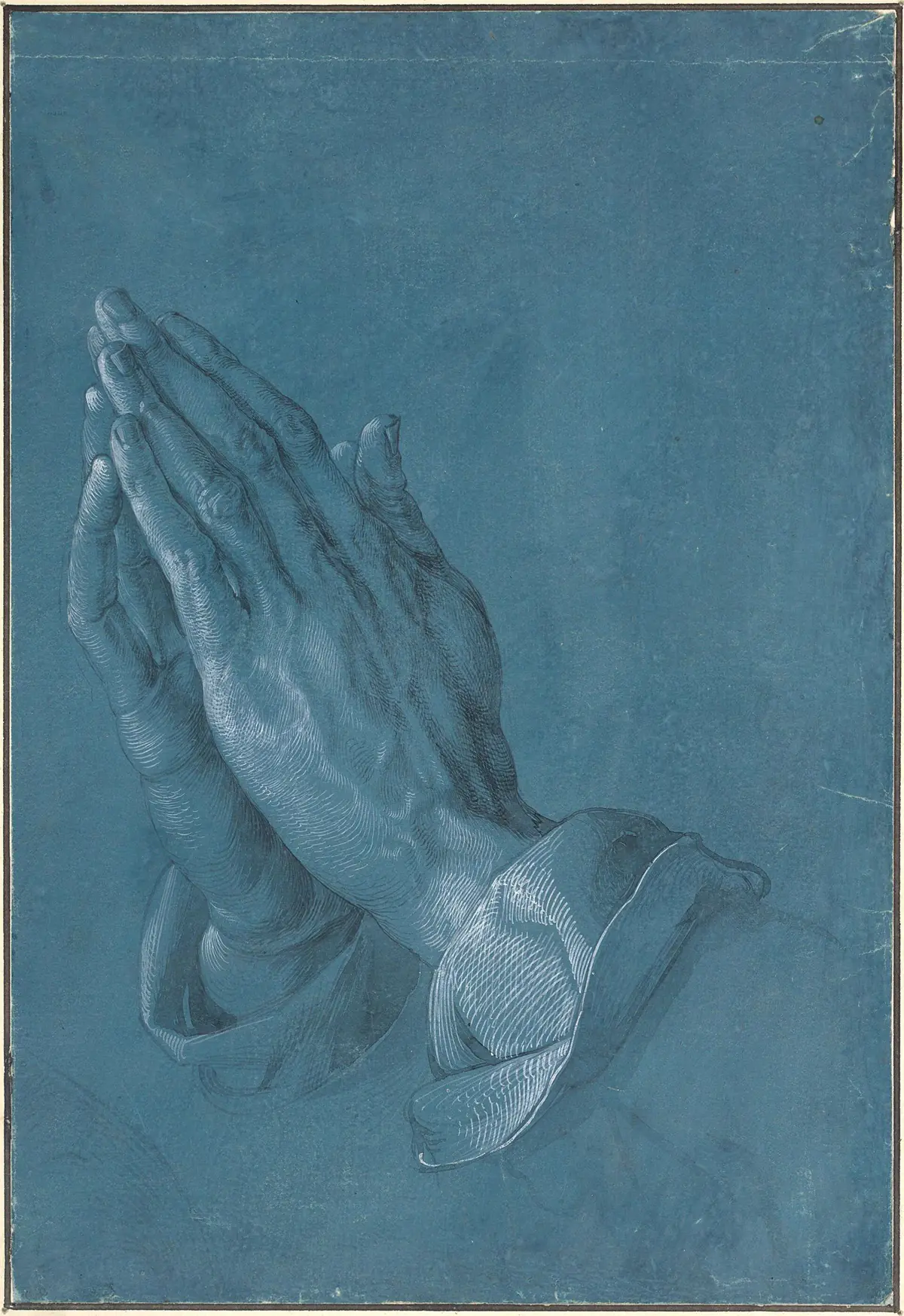
Albrecht Dürer’s Praying Hands (1508) — a working study of hands folded in petition, five centuries old and still legible at a glance.Albrecht Dürer, 1508 · Public domain
A working definition
Biblical counseling is the personal ministry of the word of God to a person in need, by another believer, in the context of a relationship of love, aiming at that person's growth into the likeness of Christ.
Each part of that sentence carries weight.
Personal ministry. Preaching speaks to many; counseling speaks to one. Paul did both. He reminded the Ephesian elders that he had taught them "publickly, and from house to house" (Acts 20:20), and that "by the space of three years I ceased not to warn every one night and day with tears" (Acts 20:31). Every one, not merely everyone.
Of the word of God. The counselor's first resource is not his own experience or a technique. It is what God has said. "Thy testimonies also are my delight and my counsellors" (Psalm 119:24).
By another believer. The New Testament does not reserve this work to a professional class. Paul was "persuaded" that the ordinary Christians at Rome were "able also to admonish one another" (Romans 15:14).
In love. The truth is spoken "in love" (Ephesians 4:15). Counsel without love is noise.
Toward Christlikeness. The goal is not merely that a person feels better, though we pray he will. It is "that we may present every man perfect in Christ Jesus" (Colossians 1:28). The word "perfect" there means mature, complete.
The words the Bible uses
The New Testament has a family of words for this ministry, and each one shows a side of it.
The verb Paul uses in Romans 15:14 and Colossians 1:28 — translated "admonish" and "warning" — is noutheteō (Strong's G3560). It means to put in mind, to warn, to counsel with a view to change. It is the word Paul uses of his own ministry in Acts 20:31, where it comes with tears.1
A second word is parakaleō (Strong's G3870): to call alongside, to exhort, to comfort. It is the root of the name the Lord Jesus gives the Holy Ghost: "another Comforter, that he may abide with you for ever" (John 14:16). The same word can mean "exhort" or "comfort" depending on what the person needs — which is exactly the point. A counselor who only ever comforts, or only ever exhorts, has not yet learned his trade.
Paul puts several of these together in one verse: "Now we exhort you, brethren, warn them that are unruly, comfort the feebleminded, support the weak, be patient toward all men" (1 Thessalonians 5:14). Three kinds of people, three kinds of help, and one virtue — patience — over them all. That verse is a whole counseling manual in miniature, and we will come back to it.
The care of souls in the church's history
Biblical counseling is not new. For most of Christian history the work was called the "care of souls", and it was the ordinary business of pastors and of mature believers.
Gregory the Great
Around 590, soon after he became bishop of Rome, Gregory wrote a handbook for pastors usually called the Pastoral Rule. Its third book is a long study of how different people need different counsel. Gregory pairs them up: the poor and the rich, the joyful and the sad, the impudent and the bashful, the impatient and the patient, the whole and the sick, the silent and the talkative. He opens with this principle:
"One and the same exhortation does not suit all, inasmuch as neither are all bound together by similarity of character. For the things that profit some often hurt others."2
He compares the hearts of hearers to the strings of a harp, which a skilful player strikes "variously" so that they make one tune. The teacher, he says, "ought to touch the hearts of his hearers out of one doctrine, but not with one and the same exhortation."3 One truth; many ways of bringing it home. That is 1 Thessalonians 5:14 in a sixth-century voice.
Richard Baxter
In 1656 the Puritan pastor Richard Baxter published The Reformed Pastor, an exposition of Acts 20:28: "Take heed therefore unto yourselves, and to all the flock." Baxter served the parish of Kidderminster in England, and he and his assistant set out to meet every family in it, one by one. He describes the plan plainly: they spent Monday and Tuesday "from morning almost to night" in the work, "taking about fifteen or sixteen families in a week, that we may go through the parish, in which there are upwards of eight hundred families, in a year."4 He found, he said, "more outward signs of success with most that do come, than from all my public preaching to them."4
Baxter saw that preaching alone was not enough. "A minister," he wrote, "is not to be merely a public preacher, but to be known as a counsellor for their souls, as the physician is for their bodies, and the lawyer for their estates."5 And he drew the obvious lesson from ordinary life: does not a careful shepherd look after every sheep, and "a good physician after every particular patient"?6
Drift and recovery
In the twentieth century, much of the care of souls in the West passed from the church to the new professions of psychiatry and psychotherapy. Many pastors came to believe that the serious problems of the soul belonged to specialists, and seminaries trained ministers to refer rather than to counsel.
The modern biblical counseling movement began as a protest against that drift. Its first leader was Jay E. Adams (1929–2020), a Presbyterian minister who in 1963 was invited to teach homiletics part-time at Westminster Theological Seminary near Philadelphia, and was soon given a course in pastoral theology that included pastoral counseling.7 In 1968 Adams and John Bettler founded the Christian Counseling & Educational Foundation (CCEF) just outside Philadelphia.8 In 1970 Adams published Competent to Counsel, the book that launched the movement.9
Adams named his approach "nouthetic counseling", from the Greek word we met above. He argued that the major secular systems of his day — those of Freud, Rogers and the behaviourists Watson and Skinner — stood in opposition to Scripture, and that a pastor equipped with the word of God was more competent to counsel than the world assumed. His method was direct: admonition, confrontation and biblical instruction aimed at change. He followed it in 1973 with The Christian Counselor's Manual.10 By 1976 he and his followers had formed the National Association of Nouthetic Counselors, known today as the Association of Certified Biblical Counselors.11
The second generation
Adams's books were controversial from the start, and not only among psychologists. Within the movement a younger group of counselors, many of them at CCEF, kept his central conviction — that Scripture is sufficient and the church is called to counsel — while widening his emphases.
The most influential was David Powlison, who died in 2019. He served on CCEF's faculty, was senior editor of its Journal of Biblical Counseling, and was CCEF's executive director from 2014 to 2019.12 His doctoral dissertation at the University of Pennsylvania, in the history of science and medicine, was a history of the movement itself; its core chapters were later published as The Biblical Counseling Movement: History and Context (2010).13 In Seeing with New Eyes (2003) he set out how Scripture reframes the way we understand people.14
Alongside Powlison stood Edward Welch, whose When People Are Big and God Is Small (1997) traced so much of our anxiety to the fear of man, and whose Blame It on the Brain? (1998) carefully distinguished brain disorders from problems of the heart while showing how the two interact.15 Paul David Tripp's Instruments in the Redeemer's Hands (2002) — its subtitle is People in Need of Change Helping People in Need of Change — argued that every believer is an instrument God uses in the lives of others.16
Heath Lambert's The Biblical Counseling Movement after Adams (2011), with a foreword by Powlison, describes this second generation as giving more weight to the counselee as a sufferer as well as a sinner, and to the heart's motives behind behaviour.17 Not everyone agreed with Lambert's account; one reviewer from the Adams side of the movement thought it unfair to Adams and his followers.18 That disagreement is itself instructive. The movement is not a single voice, and a reader should weigh each writer by the Scriptures, as the Bereans did, who "searched the scriptures daily, whether those things were so" (Acts 17:11).
What this paper takes from that history
Three things.
First, the conviction the whole movement shares: God's word is sufficient for the care of the soul, and the church is called to do this work. That is Part 2.
Second, the second generation's emphasis on the heart — that behaviour flows from what we love, trust and fear — which is simply the Bible's own teaching. That is Part 3.
Third, Gregory's old wisdom, sharpened by the movement's later writers: people are sinners and sufferers both, and they need different words at different times. That is Part 4.
This part matters because everything else rests on it. If Scripture is not enough for the care of souls, then biblical counseling is at best a pious supplement to the real thing. If it is enough, then the believer with an open Bible and a loving heart has something no technique can replace.
Rembrandt’s Philosopher in Meditation (1632) — the long, honest work of thinking a hard question through in the light available.Rembrandt, 1632 · Public domain
What the Bible says about itself
Paul's last letter gives the classic statement:
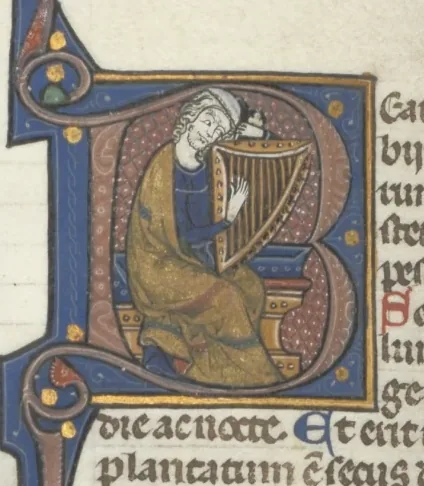
The opening of the Psalms in a thirteenth-century Bible from southern France, with David harping, beginning with the psalm of the man who meditates in God's law.Fol. 214v, Psalm 1, historiated initial 8, David harping · c. 1275–1300 · Cleveland Museum of Art · CC0 · full page · museum record · Galeria Regni
“All scripture is given by inspiration of God, and is profitable for doctrine, for reproof, for correction, for instruction in righteousness: That the man of God may be perfect, throughly furnished unto all good works.” (2 Timothy 3:16-17)
Notice the four uses. Doctrine: what is true. Reproof: where I have gone wrong. Correction: how to get back on the path. Instruction in righteousness: how to walk in it. That is the shape of every good counseling conversation. And notice the goal: "throughly furnished unto all good works". Not partly furnished. Not furnished for some works, with the rest left to other authorities.
Peter says the same from another angle: God's "divine power hath given unto us all things that pertain unto life and godliness, through the knowledge of him that hath called us" (2 Peter 1:3). All things for life and godliness — and they come "through the knowledge of him", which is to say, through what He has revealed.
The nineteenth Psalm describes what that word does in a person:
“The law of the LORD is perfect, converting the soul: the testimony of the LORD is sure, making wise the simple. The statutes of the LORD are right, rejoicing the heart: the commandment of the LORD is pure, enlightening the eyes.” (Psalm 19:7-8)
Converting the soul, making wise, rejoicing the heart, enlightening the eyes. These are exactly the needs that bring people to a counselor: they are lost, confused, sorrowful and blind to what is happening to them.
And the word does not merely inform. "For the word of God is quick, and powerful, and sharper than any twoedged sword, piercing even to the dividing asunder of soul and spirit, and of the joints and marrow, and is a discerner of the thoughts and intents of the heart" (Hebrews 4:12). "Quick" means living. A counselor can see behaviour; only God's word discerns "the thoughts and intents of the heart".
The church's confession
Protestant churches put this conviction into their confessions. The Westminster Confession of Faith (1646), in its first chapter, says:
"The whole counsel of God, concerning all things necessary for his own glory, man's salvation, faith, and life, is either expressly set down in Scripture, or by good and necessary consequence may be deduced from Scripture: unto which nothing at any time is to be added, whether by new revelations of the Spirit or traditions of men."19
The same section goes on to say two careful things: that the inward illumination of the Spirit is necessary for a saving understanding of what Scripture says, and that there are "some circumstances concerning the worship of God and government of the Church, common to human actions and societies, which are to be ordered by the light of nature and Christian prudence, according to the general rules of the Word".20 Sufficiency, in other words, never meant that the Bible tells you what time to hold the service or how to set a broken arm.
What sufficiency claims — and what it does not
Here many arguments go wrong in both directions, so it is worth being precise.
What it claims. Scripture is sufficient for everything that concerns our relationship with God and our walk before Him: who God is, who we are, what has gone wrong with us, what Christ has done, how we are changed, how we should love one another, how to suffer, how to fight sin, how to hope. For the care of the soul — guilt, shame, fear, anger, grief, bitterness, lust, despair, broken relationships — God has not left us without a word.
What it does not claim. Scripture is not a textbook of medicine, chemistry or engineering, and it never pretends to be. The Bible itself honours physicians. Jesus took it for granted that "they that are whole need not a physician; but they that are sick" (Luke 5:31). Paul calls his companion "Luke, the beloved physician" (Colossians 4:14). He told Timothy to "use a little wine for thy stomach's sake and thine often infirmities" (1 Timothy 5:23). Isaiah, a prophet of God, prescribed a poultice of figs for Hezekiah's boil (Isaiah 38:21). A biblical counselor who tells a person with a thyroid disorder, a brain injury or diabetes to stop seeing his doctor has not honoured the sufficiency of Scripture. He has misread it.
Edward Welch's Blame It on the Brain? is valuable precisely here. He argues that the brain and the heart are distinct, that brain problems are real and can be severe, and yet that the brain cannot by itself make a person sin; physical weakness can expose and press on the heart, but it does not replace it.21 We are body and soul together. Scripture speaks with full authority to the soul, and it tells us to care for the body too.
So the practical rule is simple. Use the word of God for every matter of the heart. Send the body to a doctor when the body is sick. Do both at once when both are involved, as they usually are. The companion Witness paper sets out in detail when and how to refer.
Why this matters in the room
Sufficiency is not an abstract doctrine. It changes what happens when someone sits down across from you.
It gives you confidence. You do not need to know everything about psychology to help a believer who is consumed by worry. You have Philippians 4:6-7, Matthew 6, 1 Peter 5:7 and the whole Psalter, and the God who wrote them.
It gives you humility. Your opinions are not sufficient. God's word is. The counselor's authority extends only as far as he faithfully says what Scripture says: "To the law and to the testimony: if they speak not according to this word, it is because there is no light in them" (Isaiah 8:20).
It gives the counselee hope. If the problem is ultimately a matter of the heart before God, then it is not beyond God's reach. "For whatsoever things were written aforetime were written for our learning, that we through patience and comfort of the scriptures might have hope" (Romans 15:4).
Using Scripture well
Believing the Bible is sufficient is not the same as using it well. Three cautions.
Do not use verses as bandages. Handing a grieving mother Romans 8:28 the day after a funeral is not biblical counseling. The verse is true. It is also not the first thing she needs. Proverbs warns that "a word fitly spoken is like apples of gold in pictures of silver" (Proverbs 25:11) — fitly spoken, which means the right word at the right time.
Read the verse in its place. A verse lifted out of its passage can say something its author never meant. Before you bring a text to someone, read the chapter around it. Ask what it meant to its first readers before you ask what it means for this person.
Let the Bible shape the whole conversation, not only the end of it. Biblical counseling is not secular counseling with a verse attached at the end. Scripture should shape the questions you ask, the way you understand what you hear, the hope you hold out and the steps you encourage. Paul's prayer for the Colossians is the model: "Let the word of Christ dwell in you richly in all wisdom" (Colossians 3:16). A counselor in whom the word dwells richly will find that it comes out in everything he says.
Becoming a counselor of the word
If Scripture is the counselor's tool, then the counselor must know it. There is no shortcut.
Read it whole. Read through the Bible regularly, so that you know its story and not only its proverbs. The free 1611 Reader at kylelauriano.com/library is a good place to begin.
Hide it in your heart. "Thy word have I hid in mine heart, that I might not sin against thee" (Psalm 119:11). The verses you have memorised are the ones that will be there when someone is crying in front of you.
Meditate on it. The blessed man's "delight is in the law of the LORD; and in his law doth he meditate day and night" (Psalm 1:2). Biblical meditation is thinking hard and long on what God has said — not emptying the mind, but filling it.
Use the tools. A KJV with Strong's Concordance lets you trace a word through the whole Bible. Look up every place "heart", "fear" or "comfort" appears, and you will learn more about counseling than most books can teach you.
Live it first. "Take heed unto thyself, and unto the doctrine" (1 Timothy 4:16). The counselor who has not wrestled his own sin in the light of Scripture has nothing honest to offer anyone else.
Part 3 — The Heart: How the Bible Understands People
7 min read
This part matters because how you understand a person decides how you will try to help him. If people are only bodies, the answer is always chemistry. If people are only the product of their past, the answer is always insight. If people are only choosers, the answer is always "try harder". The Bible gives a fuller and truer picture, and at its centre is the heart.
Made in the image of God
Begin where the Bible begins. "So God created man in his own image, in the image of God created he him; male and female created he them" (Genesis 1:27). Every person who sits down across from you bears God's image. That is why he has dignity, why his suffering matters, why his sin is so serious, and why he can be restored.
An English stained glass roundel of the prophet Jeremiah from about 1440 to 1450, the prophet who wrote of the deceitful heart that only the LORD can search.Jeremiah · c. 1440–1450 · Cleveland Museum of Art · CC0 · museum record · Galeria Regni
The Psalmist marvels at it: "I will praise thee; for I am fearfully and wonderfully made: marvellous are thy works; and that my soul knoweth right well" (Psalm 139:14). A counselor should feel a measure of that wonder. The person in front of you is not a case. He is a creature God made with care and, if he is in Christ, one for whom Christ died.
The image was marred in the Fall, not erased. Genesis 3 is history, not myth: a real man and a real woman disobeyed a real command, and everything since has been touched by it. That is why the counselor meets both glory and ruin in the same person, often in the same hour.
The heart in Scripture
In the Bible, "heart" does not mean only feelings. It is the inner person: the place where we think, desire, trust, choose and worship. Proverbs makes it the source of everything else: "Keep thy heart with all diligence; for out of it are the issues of life" (Proverbs 4:23).
Jesus said the same about what defiles a person:
“For from within, out of the heart of men, proceed evil thoughts, adulteries, fornications, murders, Thefts, covetousness, wickedness, deceit, lasciviousness, an evil eye, blasphemy, pride, foolishness: All these evil things come from within, and defile the man.” (Mark 7:21-23)
And He applied it to our words: "for of the abundance of the heart his mouth speaketh" (Luke 6:45).
This is the single most important thing a biblical counselor knows about people. Behaviour is the fruit; the heart is the root. A man shouts at his wife. The shouting matters, and it must stop. But it comes from somewhere. What does he want so badly that he is willing to wound her to get it? What is he afraid of losing? What does he believe about himself, about her, about God, in that moment?
The deceitful heart
The heart is not only the source of our lives; it is also hard to read. "The heart is deceitful above all things, and desperately wicked: who can know it? I the LORD search the heart, I try the reins" (Jeremiah 17:9-10).
That has two consequences for counseling.
First, people often do not know why they do what they do. The counselee who says, "I just lose my temper, I don't know why," is usually telling the truth as far as he can see it. Part of the counselor's work is to help him see further.
Second, the counselor's heart is just as deceitful as the counselee's. We are quick to see the mote in a brother's eye and slow to see the beam in our own (Matthew 7:3-5). Only the Lord truly searches hearts. We listen, ask, observe and pray; He sees.
Idols of the heart
Ezekiel gives a phrase that the modern biblical counseling movement has made much of. God says of certain elders of Israel, "these men have set up their idols in their heart, and put the stumblingblock of their iniquity before their face" (Ezekiel 14:3). They may not have had a carved image in the house. The idol was in the heart.
James traces our conflicts to the same source:
“From whence come wars and fightings among you? come they not hence, even of your lusts that war in your members? Ye lust, and have not: ye kill, and desire to have, and cannot obtain: ye fight and war, yet ye have not, because ye ask not.” (James 4:1-2)
"Lusts" here means strong desires — not only sexual ones. Something we want, even something good in itself (respect, comfort, control, a peaceful home, a child's success), grows until it rules us. When it is threatened, we fight. When it is lost, we despair. When we get it, we fear losing it.
David Powlison worked this out into a set of what he called "X-ray questions", first published in the Journal of Biblical Counseling in 1999 and later included in Seeing with New Eyes.22 The idea is to ask questions that see through behaviour to the heart beneath it. In that spirit — these are not his list, but questions of the same kind — a counselor might ask:
What did you want in that moment? What were you afraid of?
What would make you feel that everything is all right?
Where do you run when you are hurting?
Whose opinion of you matters most?
What do you think you deserve? What do you think you cannot live without?
When you imagine the worst thing that could happen, what is it?
The answers often show what a person is really trusting. And that leads straight to the gospel, because the answer to an idol is not merely to stop wanting it, but to want God more. "Create in me a clean heart, O God; and renew a right spirit within me" (Psalm 51:10).
Sinner and sufferer
Here the Bible keeps two truths together that many counselors split apart.
Every person who comes for help is a sinner. "For all have sinned, and come short of the glory of God" (Romans 3:23). Part of what troubles him is his own wrong desires, choices and habits, and he will not be helped by being told otherwise.
Every person who comes for help is also a sufferer. He lives in a fallen world, in a body that is "dust" (Psalm 103:14), among people who sin against him. Many of his troubles were done to him, not by him. A child who was abused did not sin by being abused. A widow's grief is not a moral failure.
A counselor who sees only sin becomes harsh: he lectures the wounded. A counselor who sees only suffering becomes useless: he comforts the guilty in their guilt. Scripture refuses both. It calls sin sin, and it binds up the broken. The same Lord who told a man He had healed, "sin no more" (John 5:14), also "was moved with compassion" on the crowds "because they fainted, and were scattered abroad, as sheep having no shepherd" (Matthew 9:36).
Often the two are tangled. A woman was wronged, and she has grown bitter. A man was humiliated as a boy, and now he humiliates others. The counselor's work is to help untangle them — to comfort the wound and to call the sinful response what it is, gently, in the right order.
Body and soul
The Bible treats a person as body and soul together. "My flesh and my heart faileth: but God is the strength of my heart" (Psalm 73:26). The body affects the soul: Elijah, exhausted and starving after Carmel, asked to die, and the Lord's first remedy was food and sleep (1 Kings 19:4-8). The soul affects the body: David wrote that when he hid his sin, "my bones waxed old through my roaring all the day long" (Psalm 32:3). And "a merry heart doeth good like a medicine: but a broken spirit drieth the bones" (Proverbs 17:22).
So a biblical counselor will always ask about the body. Is he sleeping? Eating? Has he seen a doctor recently? Is he drinking, or taking anything? Has anything changed in his health? These are not unspiritual questions. They are the questions the angel of the Lord was answering when he said to Elijah, "Arise and eat; because the journey is too great for thee" (1 Kings 19:7).
The heart can change
Finally, and most hopefully: the heart can change, because God changes it. "Therefore if any man be in Christ, he is a new creature: old things are passed away; behold, all things are become new" (2 Corinthians 5:17). The believer is told to "put off concerning the former conversation the old man... And be renewed in the spirit of your mind; And that ye put on the new man, which after God is created in righteousness and true holiness" (Ephesians 4:22-24).
That pattern — put off, be renewed, put on — runs through Paul's letters, and it is the shape of real change. It is not only stopping a sin; it is replacing it. The thief must "steal no more: but rather let him labour" (Ephesians 4:28). The liar must not only stop lying but "speak every man truth with his neighbour" (Ephesians 4:25). And the change comes from the inside out, by the Spirit, as the believer beholds the Lord: "we all, with open face beholding as in a glass the glory of the Lord, are changed into the same image from glory to glory, even as by the Spirit of the LORD" (2 Corinthians 3:18).
This is why biblical counseling is full of hope. "He which hath begun a good work in you will perform it until the day of Jesus Christ" (Philippians 1:6).
This part matters because hurting people are the ones who most often come for counsel, and they are the ones most easily hurt by a careless counselor. Scripture is not only true; it is tender. A counselor who has the truth without the tenderness has misrepresented the God who wrote it.
The tenderness of God
When the Lord proclaimed His own name to Moses, this is what He said: "The LORD, The LORD God, merciful and gracious, longsuffering, and abundant in goodness and truth" (Exodus 34:6). Mercy and grace come first. Truth is there, but it is truth wrapped in goodness.
A thirteenth-century Bible initial from southern France showing David in the water appealing to God above, a picture of the sufferer crying out from the depths.Fol. 224v, Psalm 68, historiated initial S, David in the water appealing to God above · c. 1275–1300 · Cleveland Museum of Art · CC0 · full page · museum record · Galeria Regni
Isaiah describes the coming Servant this way: "A bruised reed shall he not break, and the smoking flax shall he not quench" (Isaiah 42:3). A bruised reed is a stem already bent; a smoking flax is a wick barely alight. The Messiah does not snap the one or snuff out the other. Matthew tells us that Jesus fulfilled this word (Matthew 12:18-21).
Jesus' own invitation is the same:
“Come unto me, all ye that labour and are heavy laden, and I will give you rest. Take my yoke upon you, and learn of me; for I am meek and lowly in heart: and ye shall find rest unto your souls.” (Matthew 11:28-29)
"Meek and lowly in heart." That is how the Lord describes His own heart. A counselor who represents Him should be recognisable by the same marks.
And in His first sermon at Nazareth, Jesus read from Isaiah: "he hath sent me to heal the brokenhearted, to preach deliverance to the captives, and recovering of sight to the blind, to set at liberty them that are bruised" (Luke 4:18). The brokenhearted and the bruised are not interruptions to His mission. They are His mission.
The God of all comfort
Paul opens his most personal letter with a description of how comfort works:
“Blessed be God, even the Father of our Lord Jesus Christ, the Father of mercies, and the God of all comfort; Who comforteth us in all our tribulation, that we may be able to comfort them which are in any trouble, by the comfort wherewith we ourselves are comforted of God.” (2 Corinthians 1:3-4)
Notice the order. God comforts us; we comfort others; and the comfort we give is the comfort we received. The counselor is not a source. He is a channel. The best thing he has to offer a hurting person is the comfort God gave him in his own trouble.
That is one reason God lets His servants suffer. The counselor who has walked through grief, or depression, or a broken home, and found God faithful in it, has something to say that no textbook can supply.
Miserable comforters
The Bible also gives us a warning: the three friends of Job.
They began well. When they heard of Job's calamity they came "to mourn with him and to comfort him". When they saw him, "they lifted up their voice, and wept". And then they did the wisest thing they did in the whole book: "they sat down with him upon the ground seven days and seven nights, and none spake a word unto him: for they saw that his grief was very great" (Job 2:11-13).
Then they opened their mouths. For thirty chapters they explained Job's suffering to him: he must have sinned; God is punishing him; if he repents, all will be well. Much of what they said, taken as a general statement, sounds like Proverbs. But it was the wrong word for this man, and in this case it was false. Job answered, "miserable comforters are ye all" (Job 16:2). And at the end the Lord Himself said to Eliphaz, "My wrath is kindled against thee, and against thy two friends: for ye have not spoken of me the thing that is right, as my servant Job hath" (Job 42:7).
The lessons for a counselor are plain:
Presence comes before explanation. The friends' best counsel was silent.
Do not assume you know why someone is suffering. Sometimes suffering is the fruit of sin. Often it is not. Jesus refused the easy explanation when His disciples asked whose sin had made a man blind (John 9:2-3).
True words can be wrongly applied. Being able to quote a verse does not mean you know what God is doing in someone's life.
God cares how we speak about Him to the hurting. The friends thought they were defending God. God was angry with them.
Weep with them that weep
Paul's instruction is short: "Rejoice with them that do rejoice, and weep with them that weep" (Romans 12:15). It is a command to enter into another person's experience instead of standing outside it and commenting.
The Lord did this. At the tomb of Lazarus, knowing that He was about to raise him, "Jesus wept" (John 11:35). He did not hurry past Mary's grief to the miracle. He entered it first.
There is "a time to weep, and a time to laugh; a time to mourn, and a time to dance" (Ecclesiastes 3:4), and "a time to keep silence, and a time to speak" (Ecclesiastes 3:7). Much of the art of counseling is knowing which time it is.
Grief
Grief is the most common suffering a counselor will meet, and one of the most misunderstood.
Scripture does not tell believers not to grieve. It tells them how to grieve: "that ye sorrow not, even as others which have no hope" (1 Thessalonians 4:13). Christian grief is real sorrow, carried with real hope. The Psalms give the grieving words to say: "How long wilt thou forget me, O LORD? for ever? how long wilt thou hide thy face from me? How long shall I take counsel in my soul, having sorrow in my heart daily?" (Psalm 13:1-2). That is a prayer of lament, and it is Scripture. God does not rebuke the honest cry of His children; He gave them the words for it.
So a counselor helping the grieving will:
Let them grieve. Do not rush them to a conclusion. There is no timetable in Scripture for sorrow.
Let them lament. Pray the lament psalms with them — Psalm 13, 42, 88. "Why art thou cast down, O my soul? and why art thou disquieted in me? hope thou in God: for I shall yet praise him" (Psalm 42:5).
Remind them God sees. "Thou tellest my wanderings: put thou my tears into thy bottle: are they not in thy book?" (Psalm 56:8).
Hold out the hope, gently and in time. The resurrection is the believer's great comfort in death. It is not a reason to stop crying; it is the reason crying is not the end.
Watch for despair. Normal grief is heavy but bearable. If a grieving person cannot function for a long time, stops eating or sleeping, or speaks of not wanting to live, that is more than grief. Help him get medical help, and if he speaks of ending his life, help him call or text 988 at once.
Different words for different people
We return to 1 Thessalonians 5:14, because Gregory was right that it is the key to the whole work: "warn them that are unruly, comfort the feebleminded, support the weak, be patient toward all men."
The unruly are those who are out of line — careless, rebellious, unwilling to change. They need warning. To comfort them would be to confirm them in their path.
The feebleminded — the word means the faint-hearted, the discouraged — need comfort. To warn them would crush them further.
The weak need support: someone to hold them up while they walk, practical help, a steady presence.
And all need patience.
The commonest counseling mistake is to give the wrong medicine: to scold the discouraged and soothe the rebellious. Before you speak, ask yourself which of these this person is today. It may change from one week to the next.
Hope that does not shame
The deepest thing a counselor can give a hurting person is hope — not wishful thinking, but the solid expectation that God will keep His word. Paul shows how suffering itself becomes the road to it:
“And not only so, but we glory in tribulations also: knowing that tribulation worketh patience; And patience, experience; and experience, hope: And hope maketh not ashamed; because the love of God is shed abroad in our hearts by the Holy Ghost which is given unto us.” (Romans 5:3-5)
And Jeremiah, sitting in the ruins of Jerusalem, found the same hope:
“This I recall to my mind, therefore have I hope. It is of the LORD’s mercies that we are not consumed, because his compassions fail not. They are new every morning: great is thy faithfulness.” (Lamentations 3:21-23)
He did not find hope by pretending the ruins were not there. He found it by recalling something to mind in the middle of them. That is what a counselor helps a hurting person do.
Part 5 — The Work Itself: Listening, Understanding, Speaking, Walking With
6 min read
This part matters because good doctrine does not help anyone if it never leaves the counselor's head. The foundations of Parts 2 to 4 become counsel in a conversation. That conversation has a shape, and it can be learned.
Listening
James puts listening first: "let every man be swift to hear, slow to speak, slow to wrath" (James 1:19). Proverbs is blunter: "He that answereth a matter before he heareth it, it is folly and shame unto him" (Proverbs 18:13).
Dietrich Bonhoeffer, writing for the small community of seminarians he led in the 1930s, put it this way in Life Together: "The first service that one owes to others in the fellowship consists in listening to them."23 He warned that the one who can no longer listen to his brother will soon no longer be listening to God either.
Good listening is active, not passive. It means:
Giving full attention. Put the phone away. Look at the person. Do not plan your answer while he is still talking.
Letting him finish. "In the multitude of words there wanteth not sin: but he that refraineth his lips is wise" (Proverbs 10:19).
Hearing more than words. Notice what he returns to, what he avoids, what makes his voice change.
Checking that you understood. "So what I'm hearing is... — is that right?" You will often be wrong, and he will be grateful you asked.
Understanding: drawing out the heart
"Counsel in the heart of man is like deep water; but a man of understanding will draw it out" (Proverbs 20:5). The picture is of a well. What is in the heart is real, but it is deep, and it must be drawn up patiently.
The counselor's main tool for this is the good question. Open questions ("What happened?" "How did you respond?" "What were you thinking then?") draw more than closed ones ("Did you get angry?"). Questions about the heart (Part 3) draw more than questions about behaviour alone.
There are four areas a counselor will usually want to understand before he says much:
1. The situation. What is actually happening? Who is involved? What has been tried? 2. The response. How is the person reacting — in his actions, words, thoughts and feelings? 3. The heart. What does he want, fear, believe and trust in this situation? 4. His walk with God. Where is he with the Lord? Is he a believer? Is he reading, praying, part of a church? What does he believe God thinks of him?
The fourth is not an afterthought. For a believer, every problem is lived in relationship with God, and the deepest help is always found there. For someone who is not a believer, this is where the counselor discovers that the first thing he needs is the gospel itself.
Speaking the truth in love
Eventually the counselor must speak. Paul gives the rule: "speaking the truth in love, may grow up into him in all things" (Ephesians 4:15). Truth without love is cruelty. Love without truth is flattery. Both together are what makes a person grow.
Some guides from Scripture for how to speak:
Speak to build up. "Let no corrupt communication proceed out of your mouth, but that which is good to the use of edifying, that it may minister grace unto the hearers" (Ephesians 4:29).
Speak gently. "A soft answer turneth away wrath: but grievous words stir up anger" (Proverbs 15:1). And again: "There is that speaketh like the piercings of a sword: but the tongue of the wise is health" (Proverbs 12:18).
Speak a word in season. Isaiah's Servant says, "The Lord GOD hath given me the tongue of the learned, that I should know how to speak a word in season to him that is weary" (Isaiah 50:4). One true word at the right time is worth an hour of lecture.
Speak honestly, even when it hurts. "Faithful are the wounds of a friend; but the kisses of an enemy are deceitful" (Proverbs 27:6). A counselor who never says anything hard is not a friend.
Speak God's word, not only your own. Your opinion carries no authority. "He that hath my word, let him speak my word faithfully. What is the chaff to the wheat? saith the LORD" (Jeremiah 23:28).
When a person needs to be confronted about sin, Paul's instruction in Galatians is the pattern: "Brethren, if a man be overtaken in a fault, ye which are spiritual, restore such an one in the spirit of meekness; considering thyself, lest thou also be tempted" (Galatians 6:1). Restore — the word was used of setting a bone or mending a net. The aim of confrontation is never to win; it is to mend. And it is done "in the spirit of meekness", by someone who knows he could fall the same way.
Bringing the gospel to bear
At the centre of everything a biblical counselor says is the gospel: "For by grace are ye saved through faith; and that not of yourselves: it is the gift of God: Not of works, lest any man should boast" (Ephesians 2:8-9). Paul summarised his whole message as "repentance toward God, and faith toward our Lord Jesus Christ" (Acts 20:21).
The gospel is not only for the day a person is saved. It speaks to every problem a believer faces:
To guilt, it says: "There is therefore now no condemnation to them which are in Christ Jesus" (Romans 8:1), and "If we confess our sins, he is faithful and just to forgive us our sins, and to cleanse us from all unrighteousness" (1 John 1:9).
To shame, it says that Christ bore our shame on the cross, and that the Father runs to meet the returning son: "when he was yet a great way off, his father saw him, and had compassion, and ran, and fell on his neck, and kissed him" (Luke 15:20).
To enslaving sin, it says: "For sin shall not have dominion over you: for ye are not under the law, but under grace" (Romans 6:14).
To fear, it says that God is "our refuge and strength, a very present help in trouble" (Psalm 46:1).
To suffering, it says that "our light affliction, which is but for a moment, worketh for us a far more exceeding and eternal weight of glory" (2 Corinthians 4:17).
Do not soften the gospel's call. Repentance is real turning from sin, and the gospel offers no forgiveness to the person who intends to keep the sin. But do not forget its comfort either. The same grace that teaches us "denying ungodliness and worldly lusts" is the grace "that bringeth salvation" (Titus 2:11-12).
Walking with: doers of the word
Counsel that stays in the counselor's office is incomplete. James is plain: "be ye doers of the word, and not hearers only, deceiving your own selves" (James 1:22).
So good counsel ends with something to do. Not a heavy programme, but a clear next step that puts the truth into practice:
Read a passage every day this week and write down one thing it says about God.
Ask your wife's forgiveness, specifically, for what you said on Tuesday.
When you feel the panic rising, pray Philippians 4:6-7 aloud and call me.
Throw away what you have been hiding.
Come to church on Sunday and sit with us.
And then the counselor walks with the person. He checks in. He prays. He notices progress and says so. He does not give up when the person stumbles. "And let us not be weary in well doing: for in due season we shall reap, if we faint not" (Galatians 6:9).
Prayer
Finally, the whole work is soaked in prayer. The counselor cannot change a heart. Only God can. So he prays before the conversation, during it (often silently), and after it. He prays with the person, so that the person hears someone bring his trouble to God. And he teaches the person to pray: "Casting all your care upon him; for he careth for you" (1 Peter 5:7).
James ties confession, prayer and healing together: "Confess your faults one to another, and pray one for another, that ye may be healed. The effectual fervent prayer of a righteous man availeth much" (James 5:16). There is no technique in counseling as powerful as that.
Part 6 — The Counselor: Character, Limits and Guardrails
5 min read
This part matters because in counseling, the counselor is part of the help. A person can quote all the right verses and still do harm if his heart is wrong, if he does not know his limits, or if he ignores the guardrails Scripture sets.
William Holman Hunt’s The Light of the World (1853) — Christ knocking at a door with no outside handle; it only opens from within.William Holman Hunt, 1853 · Public domain
Character before skill
When Paul lists what the church should look for in its overseers, nearly every item is a matter of character, not skill (1 Timothy 3:1-7; Titus 1:5-9). The same is true of anyone who would counsel. James warns, "be not many masters, knowing that we shall receive the greater condemnation" (James 3:1) — teaching others brings stricter judgment, not less.
The wisdom a counselor needs is described in James 3:17: "the wisdom that is from above is first pure, then peaceable, gentle, and easy to be intreated, full of mercy and good fruits, without partiality, and without hypocrisy." Read that list slowly. It describes a person you would want to talk to when your life was falling apart.
Some marks of a good counselor:
Humility. He knows he is "in need of change" himself, as Tripp's subtitle puts it. He considers himself, "lest thou also be tempted" (Galatians 6:1).
Love. "Charity suffereth long, and is kind... Beareth all things, believeth all things, hopeth all things, endureth all things" (1 Corinthians 13:4-7). Counseling is often long-suffering, literally.
Honesty. He does not flatter, and he does not pretend to know what he does not know.
Discretion. "A talebearer revealeth secrets: but he that is of a faithful spirit concealeth the matter" (Proverbs 11:13).
A living walk with God. He is reading, praying, confessing his own sin, and accountable to others.
Knowing your limits
No counselor is competent for everything. Moses tried to be, and his father-in-law Jethro told him the truth: "The thing that thou doest is not good. Thou wilt surely wear away, both thou, and this people that is with thee: for this thing is too heavy for thee; thou art not able to perform it thyself alone" (Exodus 18:17-18). Jethro's solution was to share the work among others.
Proverbs gives the principle: "Where no counsel is, the people fall: but in the multitude of counsellors there is safety" (Proverbs 11:14). A wise counselor brings others in — his pastor, other mature believers, and, where the problem needs it, a doctor or other professional.
There are situations in which a lay counselor should always bring in more help, and quickly:
Any talk of suicide or self-harm. (Call or text 988 together.)
Any danger to a child, a vulnerable adult, or a spouse. (This may also be a matter for the police or child protective services, and in many places the law requires a report.)
Signs of a medical problem — sudden changes in mood, thinking or behaviour; confusion; hearing or seeing things others do not; severe changes in sleep or appetite.
Physical dependence on alcohol or drugs, where stopping suddenly can itself be dangerous.
Anything you do not understand and are not equipped to handle.
The companion Witness paper treats each of these in detail, with the numbers to call and the steps to take. For now the principle is enough: knowing your limits is not a failure of faith in Scripture's sufficiency. It is obedience to Scripture's own wisdom.
Confidentiality and its limits
People will tell a counselor things they have never told anyone. Guard that trust. Do not share what you hear as a "prayer request". Do not discuss it with your spouse unless the person has agreed.
But confidentiality has limits, and it is honest to say so at the start. If someone tells you that he intends to harm himself or someone else, or that a child is being abused, you cannot keep that secret. Tell people this before they confide, not after: "I will keep what you tell me private, with one exception: if someone is in danger, I will have to get help." That is not a betrayal. It is love for the person and for whoever is in danger.
Guardrails
Some practical guardrails protect both the counselor and the counselee:
Men counsel men; women counsel women wherever possible, especially in matters of marriage and sexuality. Paul's instruction that the older women should teach the younger (Titus 2:3-5) is wise here. Where a pastor must counsel a woman, he should do so with others nearby, never alone behind a closed door, and preferably with his wife or another mature woman involved.
Work under authority. A lay counselor should be accountable to his church's leaders, who "watch for your souls, as they that must give account" (Hebrews 13:17).
Do not create dependence. The goal is to point a person to Christ and to his church, not to make him need you.
Do not promise outcomes. You can promise that God is faithful. You cannot promise that a marriage will be saved or a prodigal will return by a certain date.
A word on spiritual warfare
The Bible is clear that believers face a real enemy: "For we wrestle not against flesh and blood, but against principalities, against powers, against the rulers of the darkness of this world, against spiritual wickedness in high places" (Ephesians 6:12). Deliverance from evil spirits is part of the ministry of Christ and of His church today, and the gifts of the Spirit have not ceased.
But a counselor must be guarded here. Not every struggle is a demon. Much of what troubles people is their own flesh, the pressure of the world, the weakness of the body, or the sins of others against them. A counselor who sees the devil behind every problem will miss the real one. And a born-again believer, though he can be attacked and oppressed, belongs to Christ and cannot be owned by the enemy.
The Bible's instruction to the believer is simple and sufficient: "Submit yourselves therefore to God. Resist the devil, and he will flee from you" (James 4:7). Peter says the same of the devil: "Whom resist stedfast in the faith" (1 Peter 5:9). There are no formulas, no conversations with spirits, no incantations, and no guaranteed outcomes — only humble submission to God, confession of sin, the word of God, and prayer. Where there is a real spiritual problem, the counselor should bring in his pastor and the elders of his church, not handle it alone.
We began with a moment: someone sits down across from you and says, "Can I talk to you?"
You do not need to be a professional to answer that well. You need to know the God who is the "Wonderful, Counsellor" (Isaiah 9:6). You need His word, which is "profitable for doctrine, for reproof, for correction, for instruction in righteousness" (2 Timothy 3:16), and sufficient for the soul's every need. You need to understand that the person in front of you is made in God's image, has a heart from which "are the issues of life" (Proverbs 4:23), and is both a sinner and a sufferer. And you need to care for him as God cares for the hurting — not breaking the bruised reed, weeping with him when he weeps, giving him the word that fits the hour.
Then you need to do the simple things: listen first, ask good questions, speak the truth in love, point him to Christ, give him a next step, walk with him, and pray. And know when to bring others in.
The church has done this work for two thousand years, from Paul's tears in Ephesus to Gregory's harp-strings to Baxter's eight hundred families. The modern biblical counseling movement has called the church back to it. You can take your place in it.
A next step
Read 1 Thessalonians 5:14 every day this week and ask which of the three kinds of people you are meeting.
Read one of the books in the bibliography, slowly, with your Bible open.
Talk to your pastor about how your church cares for its hurting members, and offer to help.
Read the companion Witness paper before you face a crisis, not during one.
An invitation
If you are reading this not as a counselor but as someone who needs counsel — if you are the one who is hurting — the invitation is for you first. "Come unto me, all ye that labour and are heavy laden, and I will give you rest" (Matthew 11:28). The Lord who spoke those words is "meek and lowly in heart". He will not break you. Talk to Him today. Then talk to a believer you trust. And if you do not yet know Him, the free papers at kylelauriano.com will show you the way.
1James Strong, The Exhaustive Concordance of the Bible (New York: Hunt & Eaton, 1890), Greek dictionary, entries 3560 (noutheteō) and 3870 (parakaleō). Strong's numbers are also given in the free tools at kylelauriano.com/library.↩
2Gregory the Great, The Book of Pastoral Rule 3, prologue, trans. James Barmby, in Nicene and Post-Nicene Fathers, 2nd series, vol. 12, ed. Philip Schaff and Henry Wace (Buffalo: Christian Literature Publishing Co., 1895). Online: https://www.newadvent.org/fathers/36013.htm.↩
4Richard Baxter, The Reformed Pastor (1656), ed. William Brown, dedication. Online: https://www.ccel.org/ccel/b/baxter/pastor/cache/pastor.txt. Brown's edition abridges Baxter's text; the quotations here are from it.↩
5Baxter, The Reformed Pastor, ed. Brown, on "the oversight of the flock", section 1.↩
6Baxter, The Reformed Pastor, ed. Brown, on "the oversight of the flock", section 1.↩
7Institute for Nouthetic Studies, "Jay E. Adams (1929–2020)," https://nouthetic.org/jay-e-adams-1929-2020/ (born January 30, 1929, in Baltimore; died November 14, 2020).↩
8Christian Counseling & Educational Foundation, "Beliefs & History," https://ccef.org/about/beliefs-and-history: "In 1968, Jay Adams and John Bettler started the Christian Counseling & Educational Foundation just outside of Philadelphia."↩
9Jay E. Adams, Competent to Counsel (Phillipsburg, NJ: Presbyterian and Reformed, 1970).↩
10Jay E. Adams, The Christian Counselor's Manual (Phillipsburg, NJ: Presbyterian and Reformed, 1973). On Adams's critique of Freud, Rogers and Watson/Skinner in Competent to Counsel, see Institute for Nouthetic Studies, "Jay E. Adams (1929–2020)."↩
11Institute for Nouthetic Studies, "Jay E. Adams (1929–2020)"; and Institute for Nouthetic Studies, "Are You Affiliated with Any of the Other Organizations That Have the Words Nouthetic or Biblical Counseling in Their Title?", https://nouthetic.org/faq-items/are-you-affiliated-with-any-of-the-other-organizations-that-have-the-words-nouthetic-or-biblical-counseling-in-their-title/ ("the Association of Certified Biblical Counselors (formerly the National Association of Nouthetic Counselors)").↩
13David Powlison, The Biblical Counseling Movement: History and Context (Greensboro, NC: New Growth Press, 2010). On the book as his revised dissertation, see Christian Counseling & Educational Foundation, "The Biblical Counseling Movement: History and Context," https://ccef.org/book/biblical-counseling-movement-history-and-context ("The core chapters originally composed David's Ph.D. dissertation").↩
14David Powlison, Seeing with New Eyes: Counseling and the Human Condition Through the Lens of Scripture (Phillipsburg, NJ: P&R, 2003).↩
15Edward T. Welch, When People Are Big and God Is Small (Phillipsburg, NJ: P&R, 1997); Edward T. Welch, Blame It on the Brain? Distinguishing Chemical Imbalances, Brain Disorders, and Disobedience (Phillipsburg, NJ: P&R, 1998; 2nd ed. 2024).↩
16Paul David Tripp, Instruments in the Redeemer's Hands: People in Need of Change Helping People in Need of Change (Phillipsburg, NJ: P&R, 2002).↩
17Heath Lambert, The Biblical Counseling Movement after Adams (Wheaton, IL: Crossway, 2011).↩
18Donn Arms, review of The Biblical Counseling Movement after Adams, by Heath Lambert, January 30, 2012, https://nouthetic.org/book-review-2-2/.↩
19The Westminster Confession of Faith (1646), 1.6. Online: https://www.ccel.org/creeds/westminster.htm.↩
21Welch, Blame It on the Brain? (1998), 43–51; see the summary in Aimee Byrd, "Blame It on the Brain?," reformation21, August 1, 2012, https://reformation21.org/blame-it-on-the-brain/, which gives Welch's first application as: the brain cannot make a person sin or keep a person from following Jesus in faith and obedience (49).↩
22David Powlison, "X-Ray Questions: Drawing Out the Whys and Wherefores of Human Behaviors," Journal of Biblical Counseling 18, no. 1 (Fall 1999), https://ccef.org/jbc-article/x-ray-questions-drawing-out-the-whys-and-wherefores-of-human-behaviors; revised as chapter 7 of Seeing with New Eyes (2003).↩
23Dietrich Bonhoeffer, Life Together, trans. John W. Doberstein (New York: Harper & Row, 1954), chap. 4, "Ministry", on the ministry of listening. The book was written in 1938 and published in German in 1939.↩
It broke once. Seven mornings for the one who was hurt.
Seven pages in the 1611 King James for the person who believed once and was hurt — each with a work of art, one person with a before, and a room on the site built to hold you. Free.
This is practical teaching, not proof. It's drawn from Scripture and from walking this road myself. If you're still weighing the basics — whether God is real, whether the Bible can be trusted — I'd encourage you to start with the Skeptic resources in the Research Hub before diving in here.